Molecular shapes and intermolecular forces (1)
ရေ (H₂O) က molecule သေးသေးလေးပါ။ သူ့ညီအစ်ကို H₂S က −60 °C မှာ ဆူတယ်။ ရေကတော့ 100 °C မှ ဆူပြီး ရေခဲက ရေပေါ်မှာ ပေါ်တယ်။ အဖြေက molecule ရဲ့ ပုံသဏ္ဌာန်နဲ့ molecule တွေကြားက ဆွဲအားမှာ ရှိတယ်။
VSEPR: electron pairs push apart
electron pair တွေ အဝေးဆုံး နေချင်ကြတယ်
ပူဖောင်း ချည်ကြည့်ရအောင်
ပူဖောင်း ၂ လုံး — ဆန့်ကျင်ဘက် ထွက်၊ မျဉ်းဖြောင့် 180°။ပူဖောင်း နှစ်လုံးကို ကြိုး တစ်နေရာတည်းမှာ ချည်ကြည့်ပါ။ သူတို့က ဆန့်ကျင်ဘက် နှစ်ဖက်ကို ကန်ထွက်သွားပြီး မျဉ်းဖြောင့် ဖြစ်တယ်။ ကြားက ထောင့်က 180°။
၃ လုံး — ပြားပြား တြိဂံ၊ 120° စီ။သုံးလုံး ချည်ရင် ပြားပြား တြိဂံ ဖြစ်သွားတယ်။ တစ်လုံးနဲ့ တစ်လုံး ကြားက ထောင့်က 120° စီ။
၄ လုံး — 3D ထွက်၊ ဘယ် ၂ လုံးကြား မဆို 109.5°။လေးလုံး ချည်ရင် ပြားပြား မနေတော့ဘူး။ တစ်လုံး အပေါ်ထောင်ပြီး သုံးလုံးက ခြေထောက်လို အောက်ဖြန့်တယ်။ ဘယ်ပူဖောင်း နှစ်လုံးကို ယူယူ သူတို့ကြားက ထောင့်က 109.5° အတူတူပဲ။
ပူဖောင်းတွေ တွန်းပြီး အဝေးဆုံး နေရာ ကိုယ်တိုင် ရှာတယ်။ဘယ်သူမှ စီမပေးဘူး။ ပူဖောင်းတွေက ကိုယ်ထည်ချင်း ထိပြီး အချင်းချင်း တွန်းလို့ အဝေးဆုံး ဖြစ်မယ့် နေရာ (as far apart as possible) ကို ကိုယ့်ဘာသာ ရှာသွားတာ။ ဒါက ဥပမာ ပုံပါ။
electron pair တွေက negative charge တူလို့ repel တယ်။တကယ့် အကြောင်းရင်းက ဒီမှာ။ atom တစ်လုံးရဲ့ ပတ်လည်က electron pair (electron အတွဲ) တွေက ထိလို့ တွန်းတာ မဟုတ်ဘူး။ အားလုံး negative (အနုတ်) charge တူလို့ လျှပ်စစ်အားနဲ့ တစ်ခုနဲ့ တစ်ခု repel (တွန်းကန်) တယ်။ ဒါကြောင့် ပူဖောင်းတွေလိုပဲ အဝေးဆုံး နေရာ ယူကြတယ်။
pair ရေတွက်ရင် molecule ရဲ့ shape နဲ့ ထောင့် ရမယ်။ဒါကြောင့် molecule တွေမှာ ပုံသဏ္ဌာန် (shape) ရှိတယ်။ ဒီ PART မှာ pair တွေကို ရေတွက်ရုံနဲ့ shape နဲ့ ထောင့်ကို ခန့်မှန်းတတ်အောင် လုပ်မယ်။
ဘာကို ရေတွက်မလဲ — electron domain
VSEPR = အပြင် shell က electron pair တွေ တွန်းကန်လို့ shape ဖြစ်တာ။ဒီ အယူအဆရဲ့ နာမည်က VSEPR theory ပါ။ Valence Shell Electron Pair Repulsion — central atom ပတ်လည်က အပြင်ဆုံး shell electron pair တွေ အချင်းချင်း တွန်းကန်ပြီး အဝေးဆုံး နေရာ ယူလို့ molecule ရဲ့ shape ဖြစ်လာတယ် ဆိုတဲ့ သီအိုရီ။
အလယ်က atom = central atom။ CO₂ မှာ C။molecule ရဲ့ အလယ်မှာ ရှိပြီး တခြား atom တွေ လာချိတ်တဲ့ atom ကို central atom (ဗဟို atom) လို့ ခေါ်တယ်။ CO₂ မှာ C က central atom ပါ။
central atom ပတ်လည် electron စုနေတဲ့ နေရာ ၁ ခု = electron domain (ပူဖောင်း ၁)။central atom ပတ်လည်မှာ electron တွေ စုနေတဲ့ နေရာ တစ်ခု (ဦးတည်ရာ တစ်ခု) ကို electron domain (နယ်မြေ — electron စုနေတဲ့ နေရာ) လို့ ခေါ်တယ်။ bond တစ်ခု ဒါမှမဟုတ် lone pair တစ်ခုက domain တစ်ခု။ domain တစ်ခုက ပူဖောင်း တစ်လုံးနဲ့ တူတယ်။
atom ၂ လုံး မျှသုံးတဲ့ electron ၂ လုံး = bonding pair။atom နှစ်လုံးကြားမှာ bond ဖွဲ့ဖို့ မျှသုံးထားတဲ့ electron နှစ်လုံး (pair တစ်စုံ) ကို bonding pair (bond ဖွဲ့တဲ့ အတွဲ) လို့ ခေါ်တယ်။ single bond မှာ pair 1 စုံ၊ double မှာ 2 စုံ၊ triple မှာ 3 စုံ ပါတယ်။
single၊ double၊ triple ဘာပဲ ဖြစ်ဖြစ် bond ၁ ခု = domain ၁။pair ဘယ်နှစုံ ပါပါ အဲဒီ pair တွေ အားလုံးက atom နှစ်လုံးကြား နေရာ တစ်ခုတည်းမှာ စုပြီး ဦးတည်ရာ တစ်ခုတည်းကို ညွှန်တယ်။ ဒါကြောင့် single၊ double၊ triple ဘာပဲ ဖြစ်ဖြစ် bond တစ်ခုကို domain 1 ခုပဲ ရေတွက်တယ်။
central atom ပေါ်က bond မဖွဲ့တဲ့ pair = lone pair၊ သူလည်း domain ၁။bond မဖွဲ့ဘဲ atom တစ်လုံးပေါ်မှာ ကျန်နေတဲ့ electron pair ကို lone pair (တစ်ကိုယ်တော် အတွဲ) လို့ ခေါ်တယ် (သင်ခန်းစာ 9)။ central atom ပေါ်က lone pair တစ်ခုက domain 1 ခု။ အပြင် atom (O, F လို) ပေါ်က lone pair တွေကိုတော့ central atom ရဲ့ domain ထဲ မထည့်ဘူး။
CO₂: C ပေါ်မှာ double bond ၂၊ lone pair ၀ → domain ၂၊ linear 180°။CO₂ ကို ရေကြည့်: central atom C မှာ O နှစ်လုံးနဲ့ double bond 2 ခု ရှိပြီး C ပေါ်မှာ lone pair မရှိဘူး။ O ပေါ်မှာ lone pair တွေ ရှိပေမဲ့ မရေဘူး။ C ပတ်လည် domain 2 ခု ဆိုတော့ ပူဖောင်း နှစ်လုံးလို linear (မျဉ်းဖြောင့်) 180° ဖြစ်တယ်။
🤔 How many electron domains are around the carbon atom in HCN (H–C≡N)?
🔍 မေးခွန်း ဖြည်မယ်
electron domains = အလယ် atom ပတ်လည်မှာ electron စုနေတဲ့ နေရာ (bond ဒါမှမဟုတ် lone pair)။ around the carbon atom = carbon atom ပတ်လည်မှာ။
မေးနေတာ — HCN ထဲက carbon ပတ်လည် electron domain အရေအတွက်။
C မှာ H နဲ့ single bond 1 ခု၊ N နဲ့ triple bond 1 ခု ရှိတယ်။
triple bond မှာ pair 3 စုံ ပါပေမဲ့ C–N ကြား နေရာ တစ်ခုတည်း — domain 1 ခုပဲ။
စုစုပေါင်း 2 ခု — linear 180°။
4 က triple bond ကို 3 ခု ရေမိတာ။
domain 2 နဲ့ 3 — linear နဲ့ trigonal planar
BeCl₂: bond ၂၊ lone pair ၀ → domain ၂။ကဲ domain တစ်ခုချင်း တိုးပြီး ဆောက်ကြည့်မယ်။ BeCl₂ မှာ Be က Cl နှစ်လုံးနဲ့ bond 2 ခု ဖွဲ့ပြီး lone pair မကျန်ဘူး — domain 2 ခု။
central atom ပတ်လည် domain ၂ ခုပဲ → linear၊ bond angle 180°။central atom ပတ်လည်မှာ domain 2 ခုပဲ ရှိရင် သူတို့က ဆန့်ကျင်ဘက် နှစ်ဖက်ကို ထွက်တယ်။ shape က linear၊ bond angle (bond နှစ်ခုကြား ထောင့်) က 180°။
BF₃: bond ၃၊ lone pair ၀ → domain ၃။BF₃ မှာ B က F သုံးလုံးနဲ့ bond 3 ခု ဖွဲ့ပြီး lone pair မကျန်ဘူး — domain 3 ခု။
domain ၃ → trigonal planar (ပြားပြား တြိဂံ)၊ 120°။domain 3 ခုက ပြားပြား တြိဂံ ဖြစ်အောင် ဖြန့်တယ်။ ဒါကို trigonal planar (ပြားပြား တြိဂံ) လို့ ခေါ်ပြီး bond angle က 120°။
domain 4 — tetrahedral (3D)
CH₄: bond ၄ → domain ၄။ 3D မှာ စီမှ အဝေးဆုံး ဖြစ်တယ်။CH₄ မှာ C က H လေးလုံးနဲ့ bond 4 ခု ဖွဲ့တယ် — domain 4 ခု။ စာရွက်ပေါ် ပြားပြား စီရင် bond တွေကြား 90° ပဲ ခွာနိုင်တယ်။ 3D မှာ စီရင် 109.5° ထိ ခွာနိုင်လို့ ပိုဝေးတယ်။ ဒါကြောင့် 3D ထွက်သွားတယ်။
wedge = ကိုယ့်ဘက် ထွက်၊
dash = စာရွက် နောက် ဝင်၊
မျဉ်းရိုး = စာရွက်ပေါ်။3D ကို စာရွက်ပေါ် ဆွဲဖို့ သင်္ကေတ သုံးမျိုး သုံးတယ်။
ချွန်ရာကနေ ကျယ်လာတဲ့ ထူထူ တြိဂံ wedge bond က စာရွက်ထဲကနေ ကိုယ့်ဘက် (toward you) ထွက်လာတာ။ အစင်းစင်း dash bond က စာရွက် နောက်ဘက် (away) ဝင်သွားတာ။ မျဉ်းရိုး bond က စာရွက်ပေါ်မှာပဲ။
domain ၄ ခုလုံး bond (lone pair ၀) → tetrahedral၊ 109.5°။ CCl₄ လည်း ဒီပုံ။domain 4 ခုက 3D မှာ အညီ ဖြန့်တယ်။ ဒါက tetrahedral (တြိဂံ မျက်နှာ လေးခု ရှိတဲ့ tetrahedron) ပုံ၊ bond angle 109.5°။ domain 4 ခုလုံး bond ဖြစ်ပြီး lone pair မရှိလို့ atom တွေလည်း ဒီ tetrahedral ပုံ အတိုင်းပဲ စီတယ်။ CCl₄ လည်း ဒီပုံပဲ။
ထောင်ချောက်: ပြားပြား ဆွဲရင် 90° — မှား၊ 3D က 109.5°။ထောင်ချောက်: H လေးလုံးကို စာရွက်ပေါ် ပြားပြား ကြက်ခြေခတ် ထားရင် 90° ပဲ ရမယ်။ 3D မှာ 109.5° က ပိုဝေးလို့ 90° က မှားတယ်။
🤔 Silicon is in group 14, like carbon. Which describes a silane molecule, SiH₄? (adapted from IMAT 2017 Q43)
🔍 မေးခွန်း ဖြည်မယ်
Which describes = ဘယ်ဟာက မှန်အောင် ဖော်ပြလဲ။ silane, SiH₄ = silicon နဲ့ hydrogen မော်လီကျူး။
bonding pairs = bond ဖွဲ့တဲ့ electron အတွဲ။ lone pairs = bond မဖွဲ့တဲ့ အတွဲ။ ဒီဂရီ = bond ထောင့်။
မေးနေတာ — bonding pair၊ lone pair နဲ့ ထောင့် — သုံးခုလုံး မှန်တဲ့ option။
Si မှာ valence electron 4 လုံး ရှိပြီး H လေးလုံးနဲ့ bond 4 ခု ဖွဲ့လို့ အကုန် သုံးပြီးပြီ — bonding pair 4၊ lone pair 0။
CH₄ လို tetrahedral 109.5°။
90° က ပြားပြား ဆွဲမိတဲ့ ထောင်ချောက်။
IMAT 2016 Q41 — 180° ဘယ်မှာ ရှိလဲ
📝 IMAT 2016 · Question 41
Which of the following molecules contain bond angles of 180° in their gaseous states? (Atomic numbers: H = 1; Be = 4; C = 6; Cl = 17)
1 BeCl2
2 C2H2
3 CCl4
1 — BeCl₂: domain ၂ → linear 180° ✓။1 — BeCl₂: Be မှာ bond 2 ခု၊ lone pair 0 — domain 2 ခု ဆိုတော့ linear၊ 180° ✓။
2 — C₂H₂: C ၂ လုံး၊ တစ်လုံးချင်း စစ်ရမယ်။2 — C₂H₂ (ethyne): H–C≡C–H ပါ။ molecule တစ်ခုမှာ central atom တစ်လုံးထက် ပိုရှိနိုင်တယ်။ ဒီမှာ C နှစ်လုံးလုံး central atom ဖြစ်လို့ C တစ်လုံးချင်းစီရဲ့ ပတ်လည် domain ကို သီးသန့် ရေတွက်ရမယ်။
C တစ်လုံးစီ: single ၁ + triple ၁ = domain ၂ → 180° ✓။C တစ်လုံးမှာ H နဲ့ single bond 1 ခု၊ ဘေးက C နဲ့ triple bond 1 ခု — C တစ်လုံးစီမှာ domain 2 ခုစီ။ ဒါကြောင့် linear၊ 180° ✓။
3 — CCl₄: C မှာ bond 4 ခု၊ lone pair 0 — tetrahedral၊ 109.5° ✗။
ဒါဆို 1 နဲ့ 2 မှာပဲ 180° ရှိတယ်။ ရွေးစရာ ငါးခုကို ကြည့်ရအောင်။
အဖြေ D — 1 and 2 only။ CCl₄ ကို ပြားပြား ထင်တာ ထောင်ချောက်။အဖြေ D — 1 and 2 only။ A နဲ့ E က 1 သို့မဟုတ် 2 ကို လွတ်သွားတာ။ B နဲ့ C က CCl₄ မှာ 180° ရှိတယ်လို့ ထင်တာ — CCl₄ ကို စာရွက်ပေါ် ကြက်ခြေခတ် ပြားပြား ဆွဲလိုက်ရင် ဆန့်ကျင်ဘက် Cl နှစ်လုံးကြား 180° လို့ မြင်ရလို့ပါ။ 3D tetrahedral မှာတော့ Cl–C–Cl ထောင့် အားလုံး 109.5°။
domain 5 နဲ့ 6
PCl₅: Cl ၃ လုံး ခါးပတ်လို ဝိုင်း = equatorial။domain 5 ခု — PCl₅။ Cl သုံးလုံးက ခါးပတ်လို ပြားပြား ဝိုင်းပတ်နေတယ်။ ဒီ ခါးပတ် နေရာတွေကို equatorial (အီကွေတာ၊ ခါးပတ်) လို့ ခေါ်တယ်။
အပေါ်၊ အောက် ဝင်ရိုးပေါ်က Cl ၂ လုံး = axial။ကျန်တဲ့ Cl နှစ်လုံးက ခါးပတ်ရဲ့ အပေါ်နဲ့ အောက် ဝင်ရိုးပေါ်မှာ နေတယ်။ ဒါကို axial (ဝင်ရိုး) လို့ ခေါ်တယ်။
ထောင့် ၃ မျိုး: 90°၊ ခါးပတ်ထဲ 120°၊ axial ချင်း 180°။axial နဲ့ equatorial ကြား 90°၊ ခါးပတ်ထဲမှာ equatorial ချင်း 120° (120° in the belt)။ axial နှစ်လုံးက တစ်ကြောင်းတည်း ဆန့်ကျင်ဘက်မှာ ဆိုတော့ သူတို့ကြား 180° (180° axial–axial)။ ထောင့် သုံးမျိုး ရှိတယ်။
အလယ် တြိဂံ ခါးပတ် + အပေါ် ၁ လုံး၊ အောက် ၁ လုံး = trigonal bipyramidal။ပုံတစ်ခုလုံး ကြည့်ရင် အလယ်မှာ Cl သုံးလုံးရဲ့ တြိဂံ ခါးပတ်၊ အပေါ်မှာ Cl တစ်လုံး၊ အောက်မှာ Cl တစ်လုံး။ အပြင်ဘက် atom တွေကို မျဉ်းဆက်ရင် တြိဂံ ပိရမစ် နှစ်ခုကို အောက်ခြေ တြိဂံချင်း ကပ်ထားသလို ဖြစ်လို့ trigonal bipyramidal (တြိဂံ ပိရမစ် အမွှာ) လို့ ခေါ်တယ်။
SF₆: F ၆ လုံး — အပေါ် အောက် ဘယ် ညာ ရှေ့ နောက်။domain 6 ခု — SF₆။ F ခြောက်လုံးက အပေါ်၊ အောက်၊ ဘယ်၊ ညာ၊ ရှေ့၊ နောက် ခြောက်ဖက်ကို ညီညီ ထွက်တယ်။
octahedral: ဘေးချင်းကပ် F ၂ လုံးကြား 90°၊ ဆန့်ကျင်ဘက် F ၂ လုံးကြား 180°။ဒါက octahedral (မျက်နှာ ရှစ်ခု) ပုံ။ ဘေးချင်း ကပ်နေတဲ့ F နှစ်လုံး (ဥပမာ အပေါ် F နဲ့ ညာ F) ကြား 90°။ ဆန့်ကျင်ဘက်မှာ ရှိတဲ့ F နှစ်လုံး (အပေါ် F နဲ့ အောက် F) ကြားကတော့ 180° (90° and 180°)။
🤔 PF₅ has five P–F bonds and no lone pair on P. Which bond angles are found in PF₅?
🔍 မေးခွန်း ဖြည်မယ်
five P–F bonds = P–F bond ၅ ခု။ no lone pair on P = P ပေါ်မှာ lone pair မရှိဘူး။ Which bond angles are found = ဘယ် bond ထောင့်တွေ တွေ့ရလဲ။
only ကို သတိထား — ဒီ ထောင့်တွေ ပဲ၊ တခြား ထောင့် မပါဘူး လို့ ဆိုလိုတယ်။
မေးနေတာ — PF₅ ထဲမှာ တွေ့ရတဲ့ bond ထောင့် အားလုံး — မလွတ်၊ မပို။
P မှာ domain 5 ခု၊ lone pair 0 — trigonal bipyramidal။
axial–equatorial 90°၊ equatorial ချင်း 120°၊ axial ချင်း 180°။
109.5° က domain 4 ခု (tetrahedral)၊ 90° နဲ့ 180° ပဲ ရှိတာက octahedral။
🎮 Which shape? — sort fast 🔥
🔁 ပြန်စစ်မယ် — အဖြေ မကြည့်ခင် စဉ်းစားပါ
🤔 What is the shape of BeCl₂?
🔍 မေးခွန်း ဖြည်မယ်
What is the shape = ပုံသဏ္ဌာန် ဘာလဲ။ BeCl₂ = Be ကို အလယ်မှာထားပြီး Cl ၂ ခု ချိတ်ထားတဲ့ မော်လီကျူး။
မေးနေတာ — BeCl₂ မော်လီကျူးရဲ့ ပုံသဏ္ဌာန် အမည်။
Be မှာ bond 2 ခု၊ lone pair 0 — domain 2 ခု ဆိုတော့ linear 180°။
🤔 What is the bond angle in BF₃?
🔍 မေးခွန်း ဖြည်မယ်
bond angle = bond ၂ ခုကြား ထောင့်။ BF₃ = B ကို အလယ်မှာထားပြီး F ၃ ခု ချိတ်ထားတဲ့ မော်လီကျူး။
မေးနေတာ — BF₃ ရဲ့ F–B–F ထောင့် ဒီဂရီ။
B မှာ domain 3 ခု — trigonal planar 120°။
🤔 What is the H–C–H bond angle in CH₄?
🔍 မေးခွန်း ဖြည်မယ်
H–C–H bond angle = H၊ C၊ H သုံးခုကြား ထောင့် (C က အလယ်မှာ)။ CH₄ = methane။
မေးနေတာ — methane ရဲ့ H–C–H ထောင့် ဒီဂရီ။
domain 4 ခု၊ lone pair 0 — tetrahedral 109.5°။
90° က ပြားပြား ဆွဲမိတဲ့ ထောင်ချောက်။
🤔 In methanal, H₂C=O, the carbon atom forms two C–H single bonds and one C=O double bond. How many electron domains surround the carbon atom?
🔍 မေးခွန်း ဖြည်မယ်
methanal, H₂C=O = C တစ်လုံးမှာ H ၂ လုံးနဲ့ O တစ်လုံး ချိတ်ထားတဲ့ molecule။ forms = ဖွဲ့တယ်။ single bond / double bond = bond တစ်ထပ် / နှစ်ထပ်။
How many electron domains surround the carbon atom? = carbon atom ကို electron domain ဘယ်နှခု ဝိုင်းထားလဲ။
မေးနေတာ — C ပတ်လည် domain အရေအတွက်။
C–H single bond 2 ခု = domain 2။
C=O double bond မှာ pair 2 စုံ ပါပေမဲ့ နေရာ တစ်ခုတည်း — domain 1။
C ပေါ် lone pair 0။
စုစုပေါင်း 3 — BF₃ လို trigonal planar။
4 က double bond ကို 2 ခု ရေမိတာ။
🎉 shape ရပြီ။ ဒါပေမဲ့ H₂O က ဘာလို့ ကွေးနေလဲ?🎉 bond တွေချည်းပဲ ရှိရင် shape ရပြီ။ ဒါပေမဲ့ ရေ (H₂O) က atom 3 လုံးပါပေမဲ့ ဖြောင့်မနေဘူး၊ ကွေးနေတယ်။ ဘာလို့လဲ? နောက် PART မှာ။
Lone pairs bend molecules
မမြင်ရတဲ့ lone pair က shape ကို ကွေးစေတယ်
CO₂ ဖြောင့်တယ်၊ H₂O ကွေးတယ်
CO₂ ကို ပြန်ကြည့်ပါ။ atom 3 လုံး မျဉ်းဖြောင့် (straight) တန်းနေတယ်။
H₂O မှာ atom ၃ လုံး၊ ဒါပေမဲ့ bent။ ဘာလို့လဲ?ရေ H₂O မှာလည်း atom 3 လုံးပဲ ပါတယ်။ ဒါပေမဲ့ ဖြောင့်မနေဘဲ ကွေး (bent) နေတယ်။ ဘာလို့လဲ?
atom အရေအတွက် တူတယ် — မမြင်ရတဲ့ တစ်ခုခု ကွာတယ်။atom အရေအတွက် (3 atoms) တူတယ်။ ဒါဆို ကွာတာက မမြင်ရတဲ့ အရာ တစ်ခုခု ဖြစ်ရမယ်။
O ပေါ်က lone pair ၂ ခုက O–H bond ၂ ခုကို တွန်းလို့ ကွေးတယ်။အဖြေ — O ပေါ်မှာ lone pair 2 ခု (2 lone pairs on O) ရှိတယ်။ မမြင်ရတဲ့ ပူဖောင်း နှစ်လုံးလို O ပတ်လည်မှာ နေရာယူပြီး O–H bond နှစ်ခုကို တွန်းထားတယ်။ ဒါကြောင့် H–O–H က 180° မဖြောင့်ဘဲ ကွေးနေတယ်။
lone pair က shape ကို ဘယ်လို ပြောင်းလဲ လေ့လာမယ်။ဒီ PART မှာ lone pair တွေ shape ကို ဘယ်လို ပြောင်းလဲ၊ lone pair ကို ဘယ်လို ရေတွက်မလဲ ဆိုတာ လေ့လာမယ်။
lone pair က ပိုဖောင်းတယ်
CH₄ မှာ domain 4 ခုလုံး bond (lone pair 0) — tetrahedral၊ 109.5°။
NH₃: domain ၄၊ တစ်ခုက lone pair — nucleus ၁ လုံးပဲ ဆွဲလို့ ပိုကျယ်၊ ပိုတွန်း။NH₃ မှာလည်း domain 4 ခု ရှိတယ်။ ဒါပေမဲ့ တစ်ခုက lone pair ဖြစ်တယ်။ bonding pair ကို nucleus နှစ်လုံးက ဆွဲထားလို့ atom နှစ်လုံးကြားမှာ ဆွဲဆန့်ထားသလို ရှိတယ်။
bonding pair = atom ၂ လုံးကြား၊
lone pair = N နားမှာ ကျယ်ကျယ်။lone pair ကိုတော့ N ရဲ့ nucleus တစ်လုံးတည်းက ဆွဲထားလို့ N နားမှာ ကပ်ပြီး ပိုကျယ်ကျယ် ပြန့်နေတယ်။
ဒါကြောင့် lone pair ရဲ့ တွန်းအားက bonding pair ထက် ပြင်းပြီး နေရာ ပိုယူတယ်။
lone pair တွန်းလို့ H–N–H 109.5° → 107°။lone pair က N–H bond သုံးခုကို တွန်းလို့ H–N–H bond angle က 109.5° ကနေ 107° လောက်ကို ကျုံ့သွားတယ်။
H₂O: lone pair ၂ ခု — ပိုတွန်း၊ H–O–H 104.5°။H₂O မှာ lone pair 2 ခု ဖြစ်လို့ O–H bond တွေကို ပိုတွန်းတယ်။ H–O–H bond angle က 104.5° လောက်ထိ ကျုံ့တယ်။
domain ၄ ခုစီ — domain စီပုံ (electron တွေ စီပုံ) က tetrahedral။CH₄၊ NH₃၊ H₂O သုံးခုလုံးမှာ electron domain 4 ခုစီ ရှိတယ်။ electron domain တွေ ဘယ်လို စီထားလဲကို domain စီပုံ (electron domain arrangement) လို့ ခေါ်တယ်။ သုံးခုလုံးမှာ domain စီပုံက tetrahedral ချည်းပဲ (arranged tetrahedrally)။
molecular shape = atom တွေပဲ ကြည့်: CH₄ tetrahedral၊ NH₃ trigonal pyramidal၊ H₂O bent။ဒါပေမဲ့ molecular shape ကို နာမည်ပေးတဲ့အခါ atom တွေကိုပဲ ကြည့်တယ် (shape = atoms only)။ lone pair ကို ဖျောက်လိုက်ရင် NH₃ က N ထိပ်ဆုံး၊ H သုံးလုံး အောက်ခြေ တြိဂံ ဖြစ်တဲ့ ပိရမစ် — trigonal pyramidal။ H₂O က V ပုံ ကွေး — bent။
lone pair ရှိရင် domain စီပုံ ≠ molecular shape။ဒါကြောင့် lone pair ရှိရင် domain စီပုံနဲ့ molecular shape က မတူဘူး။ lone pair မရှိတဲ့ CH₄ မှာပဲ နှစ်ခုလုံး tetrahedral တူတယ်။
🤔 The amide ion, NH₂⁻, has 4 electron domains around N: 2 bonds and 2 lone pairs. Which H–N–H angle do you expect?
🔍 မေးခွန်း ဖြည်မယ်
amide ion, NH₂⁻ = charge −1 ion။ 4 electron domains around N = N ပတ်လည် electron စုရာ ၄ ခု။ 2 bonds and 2 lone pairs = bond ၂ ခု၊ lone pair ၂ စုံ။
Which … angle do you expect? = ဘယ် ထောင့် ဖြစ်မယ်လို့ ခန့်မှန်းလဲ။ like = … လိုပဲ။
မေးနေတာ — lone pair ၂ စုံ ရှိတာကို ထည့်တွက်ပြီး H–N–H ထောင့် ခန့်မှန်း။
domain 4 ခုထဲက lone pair 2 ခု — ရေ (H₂O) လိုပဲ bent။
lone pair နှစ်ခု ပိုတွန်းလို့ ထောင့်က ရေနဲ့ နီးတဲ့ 104–105° လောက် (အတိအကျ မတူနိုင်)။
107° က lone pair 1 ခု (NH₃)၊ 109.5° က lone pair 0 (CH₄)။
lone pair ရေတွက်နည်း — လေးဆင့် (NH₃)
lone pair ဘယ်နှခု ရှိလဲ ရေတွက်နည်း လေးဆင့်ကို NH₃ နဲ့ လုပ်ကြည့်မယ်။ ① central atom N က group 15 ဖြစ်လို့ valence electron 5 လုံး ရှိတယ်။
② H သုံးလုံးနဲ့ single bond 3 ခု (3 bonds) ဖွဲ့တယ်။ single bond တစ်ခုမှာ N က electron 1 လုံး၊ H က 1 လုံး ထည့်လို့ N ရဲ့ electron 3 လုံး သုံးတယ်။
③ N မှာ ကျန်တဲ့ 5 − 3 = 2 လုံးက bond မဖွဲ့ဘဲ pair တစ်စုံ ဖြစ်တယ်: 5 − 32 = 1 — lone pair 1 ခု။
④ domain = bond 3 + lone pair 1 = 4။ domain စီပုံ tetrahedral၊ lone pair 1 ခုကြောင့် molecular shape က trigonal pyramidal၊ 107°။
ဒီ လေးဆင့် = Lewis structure ရဲ့ အတိုချုံ့ — မသေချာရင် Lewis နဲ့ စစ်။ဒီ လေးဆင့်က Lewis structure (သင်ခန်းစာ 9) ကို ဆွဲပြီး central atom ပေါ်က လွတ်နေတဲ့ pair ကို ရေတာနဲ့ အတူတူပဲ — အမြန်နည်းပါ။ ဒီသင်ခန်းစာက H၊ halogen (F, Cl …) နဲ့ O ချိတ်တဲ့ molecule တွေမှာ မှန်တယ်။ ထူးဆန်းတဲ့ molecule တွေ့ရင် Lewis structure ဆွဲပြီး စစ်ပါ။
လေးဆင့်ကို ထပ်လုပ် — SO₂
ကဲ SO₂ နဲ့ ထပ်လုပ်မယ်။ ① S က group 16 ဖြစ်လို့ valence electron 6 လုံး ရှိတယ်။
② Lewis structure မှာ S က O နှစ်လုံးနဲ့ double bond 2 ခု ရေးလေ့ ရှိတယ်။ double bond တစ်ခုက S ရဲ့ electron 2 လုံး သုံးလို့ 2 + 2 = 4 လုံး သုံးတယ်။
③ ကျန်တာ 6 − 4 = 2 လုံး၊ 6 − 42 = 1 — lone pair 1 ခု။
④ domain = bond 2 + lone pair 1 = 3 → domain စီပုံ trigonal planar။ တစ်ခုက lone pair ဆိုတော့ atom တွေပဲ ကြည့်ရင် bent၊ ထောင့်က 120° ထက် နည်းတယ် (119° လောက်)။
တကယ့် SO₂ မှာ S–O bond ၂ ခု တူတယ် (resonance)။ domain ၃ မပြောင်း။တကယ့် SO₂ မှာ S–O bond နှစ်ခုက အရှည် အတူတူ — double ဘယ်ဘက်မှာ ရေးရေး resonance (သင်ခန်းစာ 9) ကြောင့် ပျမ်းမျှ ဖြစ်နေတယ်။ ဘယ်လို ရေးရေး S ပေါ်က lone pair 1 ခုနဲ့ domain 3 ခု မပြောင်းလို့ shape က bent ပဲ။
ထောင်ချောက်: SO₂ မှာ S ပေါ် lone pair ရှိလို့ ကွေးတယ်။ထောင်ချောက်: SO₂ က CO₂ လို O=X=O ပုံ ရေးထားလို့ linear ထင်ရတယ်။ S မှာ lone pair ရှိလို့ ကွေးတယ် (not linear)။ နောက်ကတ်က NO₂⁻ (nitrite ion) လည်း ဒီလိုပဲ ကွေးတယ်။
🎯 Random molecules: find the shape and the bond angle with the 4 steps
IMAT 2022 Q48 — ion ရဲ့ shape (PH₄⁺)
📝 IMAT 2022 · Question 48
Phosphorus is in Group V of the Periodic Table.
What is the shape and the bond angle for the PH4+ ion?
| shape made by the atoms in the PH4+ ion | H–P–H bond angle in PH4+ | |
|---|---|---|
| row 1 | tetrahedral | 109.5° |
| row 2 | trigonal bipyramidal | 120° |
| row 3 | tetrahedral | 90° |
| row 4 | trigonal planar | 120° |
| row 5 | trigonal bipyramidal | 109.5° |
PH₄⁺ ကို လေးဆင့်နဲ့ စစ်မယ်။ ① P က group 15 (Group V) ဖြစ်လို့ valence electron 5 လုံး ရှိတယ်။
+ charge 1 = ion တစ်ခုလုံးမှာ electron 1 လုံး လျော့တယ်။ ရေတွက်ရာမှာ ဒီ 1 လုံးကို central atom ရဲ့ electron ထဲက နုတ်တွက်တယ်: 5 − 1 = 4 လုံး။
② H လေးလုံးနဲ့ bond 4 ခု ဖွဲ့ရင် 4 လုံးလုံး သုံးပြီးပြီ။ ③ lone pair 0။ ④ domain 4 ခု (4 bonds, 0 lone pairs)။
domain 4 ခု၊ lone pair 0 — CH₄ လိုပဲ tetrahedral၊ bond angle 109.5°။
ရွေးစရာ ငါးခုမှာ row နံပါတ်နဲ့ shape၊ ထောင့် တွဲထားတယ်။
C နဲ့ E က charge မေ့ပြီး domain ၅ ခု ထင်တာ။C နဲ့ E (trigonal bipyramidal) က + charge ကို မေ့ပြီး P ရဲ့ electron 5 လုံးကို domain 5 ခု ထင်တာ။ တကယ်က 4 လုံးပဲ ကျန်ပြီး H လေးလုံးနဲ့ bond 4 ခု ဖွဲ့လို့ domain 4 ခုပဲ။
အဖြေ D — tetrahedral 109.5°။ PH₄⁺ မှာ bond ၄ ခု။အဖြေ D — row 1 (tetrahedral, 109.5°)။ A က shape tetrahedral မှန်ပေမဲ့ ထောင့် 90° မှားတယ် — 90° က ကြက်ခြေခတ် ပြားပြား ဆွဲမှ ရတဲ့ ထောင့်၊ tetrahedral က 109.5°။ B (trigonal planar) က domain 3 ခုရဲ့ ပုံ — PH₄⁺ မှာ bond 4 ခု ရှိလို့ မဖြစ်နိုင်ဘူး။
🤔 In which of BF₃, NH₄⁺ and CO₂ does the central atom share all of its outer-shell electrons, leaving no lone pair? (adapted from IMAT 2022 Q41)
🔍 မေးခွန်း ဖြည်မယ်
central atom = အလယ် atom။ share all of its outer-shell electrons = အပြင် electron အားလုံး bond ထဲ မျှသုံး။ leaving no lone pair = lone pair မကျန်ဘူး။
only ကို သတိထား — ရေးထားတဲ့ ဟာတွေ ပဲ၊ ကျန်တာ မပါဘူး။ none of them = တစ်ခုမှ မဟုတ်ဘူး။
မေးနေတာ — ၃ ခုထဲ အလယ် atom မှာ lone pair မကျန်တဲ့ ဟာ အားလုံး။
BF₃: B 3 လုံး၊ F သုံးလုံးနဲ့ bond 3 ခုမှာ 3 လုံးလုံး သုံး — lone pair 0။
NH₄⁺: N 5 − 1 (+) = 4၊ bond 4 ခုမှာ 4 လုံး — 0။
CO₂: C 4၊ double bond 2 ခုမှာ 2 + 2 = 4 — 0။
ဒါကြောင့် all three။
ion တွေရဲ့ shape — charge ကိုပါ ရေတွက်
ion:
− charge ၁ ခု = electron ၁ လုံး ပို၊
+ charge ၁ ခု = ၁ လုံး လျော့။PH₄⁺ မှာ လုပ်ခဲ့သလို ion တွေရဲ့ shape ကိုလည်း လေးဆင့်နဲ့ ရှာမယ်။
charge က ion တစ်ခုလုံးရဲ့ electron စုစုပေါင်းကို ပြောတာ။ ① မှာ − charge တစ်ခုစီအတွက် central atom ရဲ့ electron မှာ 1 လုံး ပေါင်း၊ + charge တစ်ခုစီအတွက် 1 လုံး နုတ်ပြီး တွက်တယ်။
O က ၂ လုံး၊ H က ၁ လုံး သုံး၊ ကျန်တာ ÷ 2 = lone pair (lp)။② O တစ်လုံးက central atom ရဲ့ electron 2 လုံး သုံးတယ် (SO₂ မှာလို)၊ H တစ်လုံးက 1 လုံး သုံးတယ်။ ③ ကျန်တာကို 2 နဲ့ စားရင် lone pair။ ပုံထဲက lp ဆိုတာ lone pair ရဲ့ အတိုပါ။ ဒါက ဒီ ion တွေအတွက် Lewis structure ရဲ့ အတိုချုံ့နည်း — မသေချာရင် Lewis structure ဆွဲပြီး စစ်ပါ။
H₃O⁺ — O 6 − 1 = 5။ H သုံးလုံး 3 လုံး သုံးပြီး 5 − 32 = lone pair 1။ domain 4 ခု၊ lone pair 1 — NH₃ လို trigonal pyramidal၊ 107° လောက်။
NH₂⁻ (amide ion) — N 5 + 1 = 6။ H နှစ်လုံး 2 လုံး သုံးပြီး 6 − 22 = lone pair 2။ domain 4 ခု၊ lone pair 2 — ရေလို bent၊ 104.5° လောက်။
NO₂⁻ (nitrite ion) — N 5 + 1 = 6။ O နှစ်လုံး 4 လုံး သုံးပြီး lone pair 1။ domain 3 ခု — SO₂ လို bent၊ 120° ထက် နည်း။ resonance ကြောင့် N–O bond ၂ ခု တူတယ်။ ozone (O₃) လည်း ဒီပုံ။
CO₃²⁻ (carbonate) — C 4 + 2 = 6။ O သုံးလုံး 6 လုံး သုံးလို့ lone pair 0။ domain 3 ခု — trigonal planar၊ 120°။
NO₃⁻ (nitrate) — N 5 + 1 = 6၊ O သုံးလုံး 6 လုံး — lone pair 0၊ domain 3 ခု — trigonal planar 120°။ resonance (သင်ခန်းစာ 9) ကြောင့် N–O bond သုံးခု တူလို့ တြိဂံ ညီညီ ဖြစ်တယ်။
SO₄²⁻ (sulfate) — S 6 + 2 = 8။ O လေးလုံး 8 လုံး သုံးလို့ lone pair 0။ domain 4 ခု — tetrahedral၊ 109.5°။
| ion (same 4 steps as PH₄⁺) | central atom electron ± charge | used by bond | lone pair | domain | shape |
|---|---|---|---|---|---|
| H₃O⁺ | O: 6 − 1 = 5 | 3 H → 3 | 1 | 4 | trigonal pyramidal, 107° (like NH₃) |
| NH₂⁻ (amide ion) | N: 5 + 1 = 6 | 2 H → 2 | 2 | 4 | bent, 104.5° (like H₂O) |
| NO₂⁻ (nitrite ion) | N: 5 + 1 = 6 | 2 O → 4 | 1 | 3 | bent, < 120° (like SO₂ and ozone, O₃) |
| CO₃²⁻ (carbonate) | C: 4 + 2 = 6 | 3 O → 6 | 0 | 3 | trigonal planar, 120° |
| NO₃⁻ (nitrate) | N: 5 + 1 = 6 | 3 O → 6 | 0 | 3 | trigonal planar, 120° (resonance: 3 equal N–O bond) |
| SO₄²⁻ (sulfate) | S: 6 + 2 = 8 | 4 O → 8 | 0 | 4 | tetrahedral, 109.5° |
ဇယားက ion ခြောက်ခုကို တစ်နေရာတည်း စုထားတာ။ ဇယား မကြည့်ခင် ion တစ်ခုချင်း ကိုယ်တိုင် အရင် တွက်ကြည့်ပြီးမှ တိုက်စစ်ပါ။
🤔 Use the four steps. What is the shape of the ammonium ion, NH₄⁺, compared with ammonia, NH₃?
🔍 မေးခွန်း ဖြည်မယ်
Use the four steps = ပုံသဏ္ဌာန် ရှာတဲ့ အဆင့် ၄ ဆင့်ကို သုံးပါ။ ammonium ion, NH₄⁺ = ammonium ion။ compared with ammonia = NH₃ နဲ့ နှိုင်းယှဉ်ရင်။
မေးနေတာ — NH₄⁺ နဲ့ NH₃ နှစ်ခုလုံးရဲ့ ပုံသဏ္ဌာန် (နဲ့ ထောင့်) မှန်တဲ့ option။
NH₃: N 5၊ H သုံးလုံး 3 လုံး — lone pair 1၊ trigonal pyramidal။
အဲဒီ lone pair က electron 2 လုံးလုံးကို H⁺ ဆီ ပေးပြီး N–H bond အသစ် (dative bond) ဖွဲ့တယ်။
NH₄⁺ မှာ lone pair 0၊ tetrahedral။
👉 domain ၅၊ ၆ မှာ lone pair ပါရင်ကော? SF₄၊ XeF₄။👉 domain 5 ခု၊ 6 ခုမှာ lone pair ပါလာရင်ကော? IMAT မှာ SF₄၊ XeF₄ လို ထူးဆန်းတဲ့ ပုံတွေ ပေါ်တယ်။
domain 5၊ 6 မှာ lone pair — seesaw၊ T၊ square planar
SF₄ — S က 6 လုံး၊ F လေးလုံး 4 လုံး သုံးပြီး 6 − 42 = lone pair 1။ domain 5 ခု ဖြစ်လို့ PCl₅ လို trigonal bipyramidal ပုံ စီတယ်။
domain ၅ ခု စီပုံမှာ lone pair က ပိုချောင်တဲ့ equatorial နေရာ ယူတယ်။lone pair က ဘယ်နေရာ ယူမလဲ? axial နေရာမှာ 90° ကပ်နေတဲ့ domain သုံးခု ရှိပေမဲ့ equatorial (ခါးပတ်) နေရာမှာ 90° ကပ်နေတဲ့ domain နှစ်ခုပဲ ရှိလို့ ပိုချောင်တယ်။ ဒါကြောင့် domain 5 ခု (trigonal bipyramidal) စီပုံမှာ lone pair တွေ equatorial မှာ ထိုင်ပြီး တွန်းအား နည်းအောင် နေတယ်။
SF₄ ရဲ့ atom တွေ = ချိန်ခွင်လှေကား — seesaw shape။SF₄ ရဲ့ atom တွေကိုပဲ ကြည့်ရင် ကလေးကစားတဲ့ ချိန်ခွင်လှေကား လို ဖြစ်လို့ seesaw shape လို့ ခေါ်တယ်။
ClF₃ — Cl (group 17) က 7 လုံး၊ F သုံးလုံး 3 လုံး သုံးပြီး 7 − 32 = lone pair 2။ နှစ်ခုလုံး equatorial မှာ ထိုင်လို့ F သုံးလုံးက T စာလုံးပုံ — T-shaped။
Br (Z 35) နဲ့ I (Z 53) က halogen (group 17) တွေ — period 4 နဲ့ 5 မှာ Cl ရဲ့ အောက်မှာ။ Xe (xenon, Z 54) က noble gas (group 18) ရဲ့ period 5 မှာ ရှိတယ်။
noble gas တွေက အပြင် shell ပြည့်လို့ ပုံမှန် ဓာတ်မပြုဘူး။
Xe က atom ကြီးလို့ အပြင် electron တွေ nucleus နဲ့ ဝေးပြီး ဆွဲအား ပျော့တယ်။ ဒါကြောင့် electron အပြင်းဆုံး ဆွဲတဲ့ F နဲ့ဆိုရင် XeF₂၊ XeF₄ လို compound ဖွဲ့နိုင်တယ်။
XeF₂ — Xe 8 လုံး၊ F နှစ်လုံး 2 လုံး သုံး၊ 8 − 22 = lone pair 3။ bond 2 + lone pair 3 = domain 5။ equatorial သုံးနေရာ အကုန် lone pair ယူလို့ F နှစ်လုံးက axial — linear 180°။
I₃⁻ ion လည်း ဒီပုံပဲ — အလယ် I က 7 + 1 = 8 လုံး၊ I နှစ်လုံး 2 လုံး သုံး၊ lone pair 3 — linear။
BrF₅: Br 7 လုံး၊ F ငါးလုံး 5 လုံး၊ lone pair 1။ bond 5 + 1 = domain 6 — domain စီပုံ octahedral။ lone pair နေရာမှာ atom မရှိလို့ F ငါးလုံး: လေးထောင့် အောက်ခြေ + ထိပ် ၁ လုံး — square pyramidal။
XeF₄ — Xe 8 လုံး၊ F လေးလုံး 4 လုံး၊ lone pair 2၊ domain 6။ lone pair ၂ ခုက F လေးထောင့်ရဲ့ အပေါ် တစ်ခု၊ အောက် တစ်ခု — 180° ခွာ ထိုင်လို့ F လေးလုံးက ပြားပြား လေးထောင့် — square planar။
| molecule | central atom electron − used by F | lone pair | domain | shape |
|---|---|---|---|---|
| SF₄ | S: 6 − 4 = 2 | 1 (equatorial) | 5: trigonal bipyramidal, like PCl₅ | seesaw |
| ClF₃ | Cl (group 17): 7 − 3 = 4 | 2 (equatorial) | 5 | T-shaped |
| XeF₂ | Xe: 8 − 2 = 6 | 3 (all equatorial) | 5 | linear, 180° (F axial) |
| I₃⁻ | I: 7 + 1 = 8, 8 − 2 = 6 | 3 | 5 | linear, 180° |
| BrF₅ | Br: 7 − 5 = 2 | 1 | 6: octahedral | square pyramidal |
| XeF₄ | Xe: 8 − 4 = 4 | 2 (180° apart) | 6: octahedral | square planar |
ဇယားက molecule ခြောက်ခုကို တစ်နေရာတည်း စုထားတာ — ကိုယ်တိုင် အရင် တွက်ပြီးမှ တိုက်စစ်ပါ။ ကျန်တဲ့ electron ကို 2 နဲ့ စားရင် lone pair ရတယ်။
🤔 Iodine pentafluoride, IF₅, has the same number of valence electrons on its central atom as BrF₅. What is its shape?
🔍 မေးခွန်း ဖြည်မယ်
Iodine pentafluoride, IF₅ = I တစ်ခု၊ F ၅ ခု။ the same number of valence electrons = အပြင် electron အရေအတွက် တူတယ်။
on its central atom = အလယ် atom ပေါ်မှာ။ as BrF₅ = BrF₅ နဲ့။
မေးနေတာ — IF₅ ရဲ့ ပုံသဏ္ဌာန် အမည် (lone pair ကိုပါ ထည့်တွက်)။
I (group 17) က 7 လုံး၊ F ငါးလုံး 5 လုံး သုံး — lone pair 1၊ domain 6 ခု။
octahedral နေရာ တစ်ခုကို lone pair ယူလို့ square pyramidal။
atom 6 လုံးမှာ lone pair မရှိမှ octahedral။
👉 square planar မှတ်ထား — AlCl₃ မေးခွန်းမှာ ထောင်ချောက်။👉 ခုနက square planar ကို မှတ်ထားပါ — IMAT ရဲ့ AlCl₃ မေးခွန်းမှာ ထောင်ချောက် အဖြစ် ပါတယ်။
IMAT 2021 Q48 — AlCl₃ နဲ့ Al₂Cl₆
📝 IMAT 2021 · Question 48
Which row gives the correct shapes around the aluminium centres in AlCl3 and Al2Cl6 molecules?
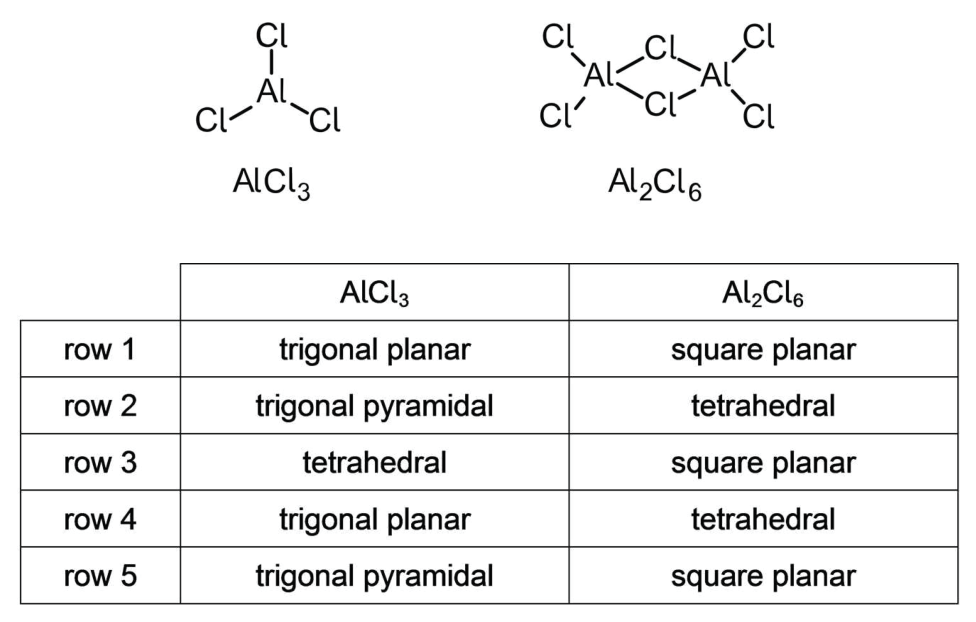
[atomic numbers: Al = 13; Cl = 17]
AlCl₃: bond ၃၊ lone pair ၀ → trigonal planar။AlCl₃ — Al က group 13 ဖြစ်လို့ electron 3 လုံး ရှိတယ်။ Cl သုံးလုံးနဲ့ bond 3 ခု ဖွဲ့ပြီး lone pair 0 — domain 3 ခု၊ trigonal planar (planar)။
Al ပတ်လည် electron ၆ လုံးပဲ — octet (၈) မပြည့်၊ pair ၁ စုံ ထပ်ယူနိုင်။bond 3 ခုမှာ electron 2 လုံးစီ ဆိုတော့ Al ပတ်လည်မှာ electron 6 လုံးပဲ ရှိတယ်။ atom အများစုလို 8 လုံး (octet၊ သင်ခန်းစာ 9) မပြည့်ဘူး — incomplete octet။ ဒါကြောင့် electron pair တစ်စုံ ထပ်လက်ခံနိုင်တဲ့ နေရာ လွတ် (empty) ကျန်နေတယ်။
Al₂Cl₆: AlCl₃ တစ်ခုစီက Cl ၁ လုံးက lone pair ကို တခြား Al ဆီ ပေး — dative bond ၂ ခု။Al₂Cl₆ မှာ AlCl₃ နှစ်ခု ပူးတယ်။ AlCl₃ တစ်ခုစီက Cl တစ်လုံးက သူ့ lone pair ကို တခြား AlCl₃ ရဲ့ Al ဆီ ပေးပြီး dative bonds (pair တစ်ဖက်တည်းက ပေးတဲ့ bond၊ သင်ခန်းစာ 9) ဖွဲ့တယ်။ ဒီ Cl နှစ်လုံးက Al နှစ်လုံးကြား တံတား ဖြစ်နေလို့ bridging Cl (တံတား Cl) လို့ ခေါ်တယ်။
Al တစ်လုံးစီ: အစွန် Cl ၂ + တံတား Cl ၂ = bond ၄၊ lone pair ၀ → tetrahedral။အခု Al တစ်လုံးစီမှာ အစွန်က Cl နှစ်လုံးနဲ့ တံတား Cl နှစ်လုံး — bond 4 ခု (4 each)၊ lone pair 0 — domain 4 ခု ဆိုတော့ tetrahedral။ ပုံထဲမှာ ပြားပြား ဆွဲထားပေမဲ့ 3D မှာ tetrahedral ပါ။
IMAT 2021 Q48 — row ငါးခုနဲ့ တိုက်
AlCl₃ trigonal planar၊ Al₂Cl₆ tetrahedral — row နဲ့ တိုက်။ဒါဆို AlCl₃ က trigonal planar၊ Al₂Cl₆ က tetrahedral ဖြစ်ရမယ်။ row ငါးခုနဲ့ တိုက်ကြည့်မယ်။
အဖြေ C — row 4။ lone pair မရှိလို့ pyramidal မဖြစ်။အဖြေ C — row 4။ B နဲ့ D က lone pair မရှိဘဲ trigonal pyramidal ယူတာ မှားတယ်။ VSEPR မှာ square planar က XeF₄ လို domain 6 ခု (bond 4၊ lone pair 2) ကနေ ရတဲ့ ပုံ။ Al မှာ domain 3 ခု ဒါမှမဟုတ် 4 ခုပဲ ရှိလို့ square planar ပါတဲ့ A၊ B၊ E မှားတယ်။
🔁 ပြန်စစ်မယ် — အဖြေ မကြည့်ခင် စဉ်းစားပါ
🤔 What is the H–N–H bond angle in NH₃?
🔍 မေးခွန်း ဖြည်မယ်
H–N–H bond angle = H၊ N၊ H သုံးခုကြား ထောင့် (N က အလယ်မှာ)။ NH₃ = ammonia။
မေးနေတာ — ammonia ရဲ့ H–N–H ထောင့် ဒီဂရီ။
domain 4 ခု၊ lone pair 1 ခု — trigonal pyramidal 107°။
104.5° က lone pair 2 ခုရှိတဲ့ ရေ။
🤔 What is the shape of a water molecule?
🔍 မေးခွန်း ဖြည်မယ်
What is the shape = ပုံသဏ္ဌာန် ဘာလဲ။ water molecule = ရေ မော်လီကျူး H₂O။
မေးနေတာ — ရေ မော်လီကျူးရဲ့ ပုံသဏ္ဌာန် အမည်။
O မှာ bond 2 ခုနဲ့ lone pair 2 ခု — atom တွေကိုပဲ ကြည့်ရင် bent။
tetrahedral က domain တွေ စီထားပုံ။
🤔 How many lone pairs are on the sulfur atom in SO₂?
🔍 မေးခွန်း ဖြည်မယ်
How many lone pairs = lone pair (bond မဖွဲ့တဲ့ electron အတွဲ) ဘယ်နှစုံလဲ။ on the sulfur atom = sulfur atom ပေါ်မှာ (O ပေါ်က မဟုတ်)။
မေးနေတာ — SO₂ ထဲက S atom ပေါ်မှာ lone pair ဘယ်နှစုံလဲ။
6 − 42 = 1။
ဒါကြောင့် SO₂ က bent ဖြစ်ပြီး CO₂ လို linear မဟုတ်ဘူး။
🤔 What is the shape of the tetrahydridoborate ion, BH₄⁻? (B is in group 13)
🔍 မေးခွန်း ဖြည်မယ်
What is the shape = ပုံသဏ္ဌာန် ဘာလဲ။ tetrahydridoborate ion, BH₄⁻ = B တစ်ခုမှာ H ၄ ခု ချိတ်ထားပြီး charge −1 ion။ (B is in group 13) = B က ကော်လံ 13။
မေးနေတာ — BH₄⁻ ion ရဲ့ ပုံသဏ္ဌာန် အမည်။
B 3 + 1 (− charge) = 4 လုံး။
H လေးလုံးနဲ့ bond 4 ခု — 4 လုံးလုံး သုံးလို့ lone pair 0၊ domain 4 ခု — tetrahedral 109.5°။
trigonal planar က − charge ကို မေ့ပြီး BH₃ လို ထင်တာ။
| electron domains | lone pairs | molecular shape (atoms only) | bond angle | example |
|---|---|---|---|---|
| 2 | 0 | linear | 180° | CO₂, BeCl₂ |
| 3 | 0 | trigonal planar | 120° | BF₃ |
| 3 | 1 | bent | < 120° | SO₂ |
| 4 | 0 | tetrahedral | 109.5° | CH₄ |
| 4 | 1 | trigonal pyramidal | about 107° | NH₃ |
| 4 | 2 | bent | about 104.5° | H₂O |
| 5 | 0 | trigonal bipyramidal | 90°, 120°, 180° | PCl₅ |
| 5 | 1 | seesaw | less than 90° and 120° | SF₄ |
| 5 | 2 | T-shaped | a little under 90° | ClF₃ |
| 5 | 3 | linear | 180° | XeF₂ |
| 6 | 0 | octahedral | 90°, 180° | SF₆ |
| 6 | 1 | square pyramidal | a little under 90° | BrF₅ |
| 6 | 2 | square planar | 90°, 180° | XeF₄ |
PART 1–2 တစ်ခုလုံး ဒီဇယား တစ်ခုတည်းမှာ။ domain အရေအတွက်က electron တွေ စီပုံကို ပြောတယ်။ lone pair ရှိရင် atom တွေပဲ ကြည့်တဲ့ molecular shape က အဲဒီ စီပုံနဲ့ မတူဘူး။
🎉 shape ရပြီ။ bond polar နဲ့ shape ပေါင်းပြီး polar လား ဆုံးဖြတ်တယ်။🎉 shape ရပြီ။ shape က ဘာအတွက် အရေးကြီးလဲ? molecule တစ်ခုလုံး charge ခွဲနေလား (polar လား) ကို bond တွေ polar ဖြစ်မဖြစ်နဲ့ shape နှစ်ခု ပေါင်းပြီး ဆုံးဖြတ်တယ်။ နောက် PART။
Shape decides polarity
shape က polar ဖြစ်မဖြစ် ဆုံးဖြတ်တယ်
ကြိုးဆွဲပွဲ — polar လား non-polar လား
ကြိုးဆွဲပွဲ: အားတူ ဆွဲရင် အလယ် မရွေ့ — equal pulls cancel။ကြိုးဆွဲပွဲ ကို စဉ်းစားပါ။ နှစ်ဖက်က အားတူတူ (equally) ဆွဲရင် ကြိုးအလယ်က အမှတ်က မရွေ့ဘူး — equal pulls cancel။
CO₂: O က bond ထဲက electron ကို ပိုဆွဲလို့ C=O တစ်ခုစီ polar၊ မြှားက O ဘက် ညွှန်။bond ထဲက electron ကို atom တစ်လုံး ဆွဲနိုင်အားကို electronegativity (electron ဆွဲအား၊ သင်ခန်းစာ 9) လို့ ခေါ်တယ်။ O ရဲ့ electronegativity က C ထက် ကြီးတယ်။ ဒါကြောင့် C=O bond တစ်ခုစီမှာ O ဘက်က δ− (နည်းနည်း negative)၊ C ဘက်က δ+ (နည်းနည်း positive) ဖြစ်ပြီး polar bond ဖြစ်တယ်။ ဆွဲအားကို δ− ဘက် ညွှန်တဲ့ မြှား (dipole arrow) နဲ့ ပြတယ်။
CO₂ linear — မြှား ၂ ခု ချေလို့ non-polar။ဒါပေမဲ့ CO₂ က linear ဖြစ်လို့ မြှား နှစ်ခုက ဆန့်ကျင်ဘက်ကို အားတူ ဆွဲတယ်။ တစ်ခုက တစ်ခုကို ချေသွား (each pull cancels the other) လို့ molecule တစ်ခုလုံး non-polar ဖြစ်တယ်။
H₂O: O–H မြှား ၂ ခု O ဘက် ညွှန်၊ ကွေးလို့ တစ်ကြောင်းတည်း မဟုတ်။H₂O မှာလည်း O က H ထက် electron ပိုဆွဲလို့ O–H bond နှစ်ခုစလုံး polar ဖြစ်ပြီး မြှား နှစ်ခုစလုံး O ဘက်ကို ညွှန်တယ်။ ဒါပေမဲ့ molecule က ကွေးနေလို့ မြှား နှစ်ခုက တစ်ကြောင်းတည်း ဆန့်ကျင်ဘက် မဟုတ်ဘဲ ထောင့်ချိုးနဲ့ ညွှန်တယ်။
ပေါင်းရင် O ဘက် net dipole ကျန်တယ်။ထောင့်ချိုးနဲ့ ဆွဲတဲ့ bond dipoles (bond တစ်ခုချင်းရဲ့ dipole) နှစ်ခု ပေါင်းလိုက်ရင် O ဘက်ကို ညွှန်တဲ့ net dipole (စုစုပေါင်း မြှား) ကျန်တယ်။
net dipole ကျန် = polar molecule။ net dipole ရဲ့ အရွယ်နဲ့ ဦးတည်ရာ = dipole moment။net dipole ကျန်တဲ့ molecule ကို polar molecule လို့ ခေါ်တယ် — ရေက polar ပါ။ net dipole ဘယ်လောက် ကြီးလဲ၊ ဘယ်ဘက် ညွှန်လဲကို dipole moment (dipole အား — net dipole ရဲ့ အရွယ်နဲ့ ဦးတည်ရာ) လို့ ခေါ်တယ်။ ရေမှာ ဒီ dipole က ကွေးနေတဲ့ shape ကြောင့် အမြဲ ရှိနေလို့ permanent dipole (အမြဲ ရှိတဲ့ dipole) လို့လည်း ခေါ်တယ်။
polar လား — သုံးဆင့် စစ်နည်း
① bond polar လား? electronegativity ကွာရင် polar bond။polar လား မေးရင် သုံးဆင့် စစ်မယ်။ ① bond တွေ polar လား? atom နှစ်မျိုးရဲ့ electronegativity ကွာရင် polar bond (polar bonds)။
② shape ကို VSEPR နဲ့ ရှာ — central atom ပေါ်က lone pair ပါ ရေ။② molecule ရဲ့ shape ကို VSEPR နဲ့ ရှာ။ central atom ပေါ်က lone pair တွေကို ထည့်ရေမှ shape မှန်မယ်။ lone pair ရှိရင် shape က အများအားဖြင့် ညီညာမှု ပျက်တယ် — ဒါပေမဲ့ အမြဲ မဟုတ်ဘူး (ခဏနေ XeF₂)။
③ bond dipole တွေ ပေါင်းကြည့် — ချေရင် non-polar၊ ကျန်ရင် polar။③ bond dipole မြှားတွေကို shape ပေါ်မှာ ပေါင်းကြည့်။ အားလုံး ချေသွားရင် non-polar၊ net dipole ကျန်ရင် polar။ ဒါက တကယ့် စည်းမျဉ်း တစ်ခုတည်းပါ။
ချေမှု အမြန်စစ်: ပတ်လည် atom အကုန် တူ + shape ညီညာ → ချေ။အမြန် စစ်နည်း: ပတ်လည်က atom တွေ အကုန် တူပြီး (outer atoms all same) shape က ညီညာရင် (linear, trigonal planar, tetrahedral, trigonal bipyramidal, octahedral, square planar) မြှားတွေ အချင်းချင်း ချေတယ်။
NF₃: N–F polar ✓၊ lone pair ၁ ခု → pyramidal။NF₃ နဲ့ စမ်းမယ်။ ① N–F bond တွေ polar ✓။
② N မှာ bond 3 ခုနဲ့ lone pair 1 ခု ရှိလို့ shape က ပိရမစ် (trigonal pyramidal)။
③ pyramidal မှာ N–F dipole ၃ ခု မချေ — net dipole ကျန်၊ polar ✓။③ ပိရမစ်မှာ F သုံးလုံးက အောက်ဘက်မှာ စုနေလို့ N–F dipole မြှား သုံးခု မချေဘဲ အောက် F ဘက်ကို စုပေါင်းသွားတယ်။ net dipole ကျန်လို့ polar ✓။
CCl₄: tetrahedral၊ Cl ၄ လုံး တူ — dipole ၄ ခု ချေ၊ non-polar။CCl₄: ① C–Cl bond polar ✓။
② lone pair မရှိဘူး — tetrahedral။
③ ပတ်လည်မှာ Cl လေးလုံးလုံး တူပြီး tetrahedral က ညီညာလို့ dipole လေးခု ချေသွားတယ် — non-polar။
CH₂Cl₂: tetrahedral ပေမဲ့ C–Cl နဲ့ C–H dipole မတူ — မချေ၊ polar။CH₂Cl₂: lone pair မရှိဘူး၊ tetrahedral ပဲ။ ဒါပေမဲ့ ပတ်လည်မှာ H နှစ်လုံးနဲ့ Cl နှစ်လုံး ရောနေတယ် (mixed)။ C–Cl dipole က C–H dipole ထက် အများကြီး ပြင်းလို့ မြှားတွေ အပြည့် မချေဘူး — net dipole ကျန်လို့ polar။
lone pair နဲ့ atom ရောတာက ညီညာမှု ပျက်စေနိုင်၊ ဆုံးဖြတ်တာက net dipole။အတိုချုပ်: lone pair ရှိတာ၊ ပတ်လည် atom မတူတာက ညီညာမှုကို ပျက်စေနိုင်တယ်။ ဒါပေမဲ့ polar လား ဆုံးဖြတ်တာက bond dipole တွေ ပေါင်းလိုက်ရင် net dipole ကျန်မကျန် ပဲ။
XeF₂၊ XeF₄: lone pair ရှိပေမဲ့ F တွေ ညီညီ — dipole ချေ၊ non-polar။ဒါကို ပြတဲ့ ဥပမာ: PART 2 က XeF₂ က linear — F နှစ်လုံးရဲ့ dipole ဆန့်ကျင်ဘက် ဖြစ်လို့ ချေတယ်။ XeF₄ က square planar — ဆန့်ကျင်ဘက် F အတွဲတွေရဲ့ dipole ချေတယ်။ lone pair တွေလည်း ဆန့်ကျင်ဘက်မှာ ညီညီ ထိုင်လို့ နှစ်ခုလုံး non-polar။
🤔 Which of these molecules has an overall dipole moment: PF₃, BeF₂, CF₄, PF₅, SF₆? (adapted from IMAT 2023 Q44)
🔍 မေးခွန်း ဖြည်မယ်
overall dipole moment = မော်လီကျူး တစ်ခုလုံးမှာ δ⁺ ဘက် နဲ့ δ⁻ ဘက် ကျန်နေတာ (bond dipole တွေ မချေဘူး)။ (adapted from …) = IMAT မေးခွန်းကို ပြင်ထားတာ။
မေးနေတာ — ၅ ခုထဲက တစ်ခုလုံး polar ဖြစ်တဲ့ မော်လီကျူး — ပုံသဏ္ဌာန်ကိုပါ စဉ်းစားပါ။
P (5) က bond 3 ခု ဖွဲ့ပြီး lone pair 1 ကျန်လို့ NF₃ လို ပိရမစ် — P–F dipole ၃ ခု မချေ၊ polar။
BeF₂ (linear)၊ CF₄ (tetrahedral)၊ PF₅ (trigonal bipyramidal)၊ SF₆ (octahedral) က F တွေ ညီညီ စီလို့ ချေတယ်။
လေ့ကျင့်ခန်း — SO₂၊ BF₃ နဲ့ NF₃၊ CHCl₃၊ SF₄
SO₂: polar bond၊ lone pair ၁ → ကွေး၊ polar။သုံးဆင့်ကို molecule အသစ် ငါးခုနဲ့ လေ့ကျင့်မယ်။ SO₂ — ① S–O bond တွေ polar ✓။
② S ပေါ်မှာ lone pair 1 ခု ရှိလို့ ကွေးတယ်။
③ S–O မြှား နှစ်ခု ထောင့်ချိုး ဖြစ်လို့ မချေဘူး — polar။
BF₃: lone pair မရှိ၊ F ၃ လုံး 120° ညီ — non-polar။BF₃ — B–F bond တွေ အရမ်း polar ✓။ ဒါပေမဲ့ B မှာ lone pair မရှိဘူး၊ F သုံးလုံး တူပြီး 120° စီ ညီညီ ခွာနေလို့ မြှား သုံးခု ချေတယ် (③ cancel) — non-polar။
NF₃ နဲ့ BF₃: central atom မှာ F ၃ လုံးစီ (AX₃)၊ ဒါပေမဲ့ lone pair မတူ။NF₃ — BF₃ လိုပဲ central atom တစ်လုံးမှာ F သုံးလုံး ချိတ်ထားတယ် — AX₃ (ဗဟို atom A တစ်လုံးမှာ atom X သုံးလုံး)။ ဒါပေမဲ့ BF₃ ရဲ့ B ပေါ်မှာ lone pair 0၊ NF₃ ရဲ့ N ပေါ်မှာ lone pair 1 ခု ရှိတယ်။
NF₃: lone pair ကြောင့် pyramidal → N–F dipole မချေ — polar။N ပေါ်က lone pair ကြောင့် NF₃ က ပိရမစ် ဖြစ်တယ်။ ပိရမစ်မှာ N–F မြှား သုံးခု မချေလို့ polar။ polar ဖြစ်တာ lone pair ကြောင့် တိုက်ရိုက် မဟုတ်ဘဲ shape ကြောင့် မြှားတွေ မချေလို့ပါ။ atom တူတိုင်း shape မတူဘူး — lone pair ကို အမြဲ ရေတွက်ပါ။
CHCl₃: tetrahedral ပေမဲ့ H နဲ့ Cl ရောလို့ polar။CHCl₃ (chloroform) — C မှာ lone pair မရှိဘူး၊ tetrahedral။ ဒါပေမဲ့ ပတ်လည်မှာ H တစ်လုံးနဲ့ Cl သုံးလုံး ရောနေတယ် (mixed)။ C–H dipole နဲ့ C–Cl dipole အား မတူလို့ မချေဘူး (③ no cancel) — polar။
SF₄ — PART 2 က seesaw။ lone pair ကြောင့် F တွေ ညီညီ မစီ — S–F dipole မချေ၊ polar။
🤔 Which of these has a permanent dipole: H₂S, CS₂, PH₃?
🔍 မေးခွန်း ဖြည်မယ်
Which of these = ဒီထဲက ဘယ်ဟာလဲ။ permanent dipole = အမြဲ ရှိနေတဲ့ δ⁺ / δ⁻ ဘက် ခွဲမှု။ only ကို သတိထား — ရေးထားတဲ့ ဟာ ပဲ။
မေးနေတာ — ၃ ခုထဲက permanent dipole ရှိတဲ့ ဟာ အားလုံး — မလွတ်၊ မပို။
H₂S: bent — H–S dipole ၂ ခု ထောင့်ချိုးလို့ မချေ။
PH₃: pyramidal — P–H bond က polar နည်းနည်းပဲ ဖြစ်ပေမဲ့ မချေလို့ dipole သေးသေး ကျန်။
ဒါကြောင့် H₂S and PH₃။
CS₂ က S=C=S linear — ချေတယ်။
👉 ဒီ စစ်နည်းနဲ့ IMAT မေးခွန်း သုံးပုဒ် ဖြေမယ်။
🎮 Polar or non-polar molecule? — sort fast 🔥
IMAT 2019 Q47 — CO₂၊ H₂O၊ NH₃
📝 IMAT 2019 · Question 47
Which of the following molecules have an overall permanent dipole moment?
1 CO2
2 H2O
3 NH3
[C is in Group IV, N is in Group V, O is in Group VI]
1 — CO₂ linear၊ မြှား ချေ — dipole မရှိ ✗။1 — CO₂ က linear၊ O နှစ်လုံး တူလို့ C=O မြှား နှစ်ခု ချေတယ်။ dipole မရှိဘူး ✗။
2 — H₂O bent၊ မြှား မချေ — dipole ✓။2 — H₂O မှာ O ပေါ်မှာ lone pair 2 ခု ရှိလို့ bent ဖြစ်တယ်။ O–H မြှား နှစ်ခုစလုံး O ဘက် ညွှန်ပေမဲ့ တစ်ကြောင်းတည်း မဟုတ်လို့ မချေဘူး — net dipole က O ဘက် ညွှန်တယ် ✓။
3 — NH₃ pyramidal — dipole ✓။3 — NH₃ မှာ N ပေါ်မှာ lone pair 1 ခု ရှိလို့ trigonal pyramidal ဖြစ်တယ်။ N–H မြှား သုံးခု အပြည့် မချေလို့ net dipole ကျန်တယ် ✓။
အဖြေ D — 2 and 3 only။ဒါကြောင့် 2 and 3 only — အဖြေ D။ A၊ C၊ E က CO₂ ကို ထည့်ထားလို့ မှားတယ်။ B (none of them) က polar နှစ်ခုကို လွတ်သွားလို့ မှားတယ်။
IMAT 2018 Q46 — shape နဲ့ polarity row
📝 IMAT 2018 · Question 46
Which row correctly shows the shape of each molecule and whether the molecule is polar (i.e. has a permanent dipole moment) or non-polar?
[Atomic numbers: H = 1; B = 5; C = 6; N = 7; O = 8; F = 9; P = 15; Cl = 17]
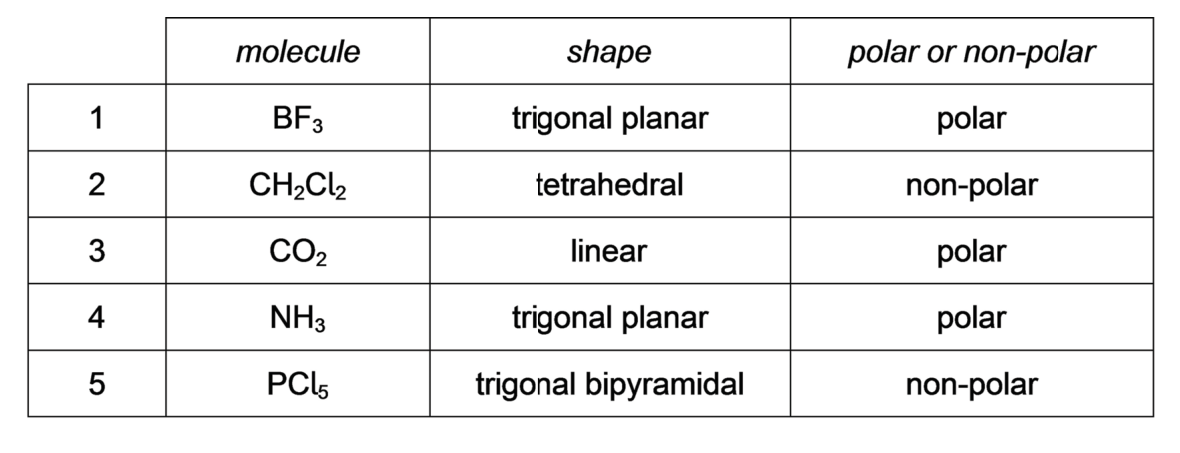
row တစ်ခုမှာ shape ရော polar ပါ မှန်ရမယ်။ A ကနေ စစ်မယ်။row တစ်ခုစီမှာ shape နဲ့ polar/non-polar နှစ်ခုလုံး မှန်ရမယ်။ ရွေးစရာ A ကနေ E အထိ အစဉ်လိုက် စစ်မယ်။
A — PCl₅: trigonal bipyramidal ✓၊ non-polar ✓။A — row 5၊ PCl₅: domain 5 ခု၊ lone pair 0 — trigonal bipyramidal ✓။ Cl ငါးလုံး တူတယ်။ ခါးပတ်က P–Cl မြှား သုံးခုက 120° စီ ခွာလို့ ချေ၊ axial မြှား နှစ်ခုက ဆန့်ကျင်ဘက်မို့ ချေတယ် — non-polar ✓။
B — CH₂Cl₂: H နဲ့ Cl ရောလို့ polar ဖြစ်ရမယ် ✗။B — row 2၊ CH₂Cl₂: tetrahedral ✓။ ဒါပေမဲ့ C–H နဲ့ C–Cl မြှား အား မတူလို့ မချေဘူး — polar ဖြစ်ရမယ်၊ non-polar ✗။
C — CO₂: dipole ချေလို့ non-polar ဖြစ်ရမယ် ✗။C — row 3၊ CO₂: linear ✓။ dipole နှစ်ခု ချေလို့ non-polar ဖြစ်ရမယ်၊ polar ✗။
D — NH₃: trigonal pyramidal ဖြစ်ရမယ်၊ planar ✗။D — row 4၊ NH₃: lone pair 1 ခုကြောင့် trigonal pyramidal ဖြစ်ရမယ်၊ trigonal planar ✗။ polar ကတော့ မှန်တယ်။
E — BF₃: non-polar ဖြစ်ရမယ် ✗။ အဖြေ A။E — row 1၊ BF₃: trigonal planar ✓။ B–F bond သုံးခုလုံး အရမ်း polar ပေမဲ့ F သုံးလုံး 120° စီ ညီညီ ခွာလို့ မြှား သုံးခု ချေတယ် — non-polar ဖြစ်ရမယ်၊ polar ✗။ ဒါကြောင့် အဖြေ A (row 5)။
IMAT 2014 Q52 — dipole အပြင်းဆုံး နှစ်ခု
📝 IMAT 2014 · Question 52
Which two of the following molecular substances in the gaseous state have the strongest permanent molecular dipole?
GeH4 ICl SiF4 CH2Cl2 CO2
Ge (germanium, Z 32) က group 14 မှာ C နဲ့ Si ရဲ့ အောက် period 4 မှာ ရှိတယ်။ valence electron 4 လုံးစီ တူလို့ GeH₄ က CH₄ လိုပဲ tetrahedral။
permanent dipole ရှိ = polar molecule။ dipole 0 တွေ ဖယ်ရင် ကျန်တာ အပြင်းဆုံး။“permanent molecular dipole” ရှိတဲ့ molecule က polar molecule ပဲ။ မေးခွန်းက ‘strongest’ (အပြင်းဆုံး) နှစ်ခုကို မေးတယ်။ ငါးခုထဲက သုံးခုမှာ dipole 0 ဆိုရင် ကျန်တဲ့ နှစ်ခုက အလိုလို အပြင်းဆုံး — dipole moment ဂဏန်း နှိုင်းယှဉ်စရာ မလိုဘူး။
GeH₄: tetrahedral၊ H ၄ လုံး တူ — dipole 0။ငါးခုကို သုံးဆင့်နဲ့ စစ်မယ်။ GeH₄: tetrahedral၊ H လေးလုံး တူလို့ မြှားတွေ ချေ — dipole 0။
SiF₄: polar bond ပေမဲ့ tetrahedral ညီလို့ dipole 0။SiF₄: Si–F bond တွေ အရမ်း polar ပေမဲ့ F လေးလုံး တူတဲ့ tetrahedral ဖြစ်လို့ ချေသွားတယ် — dipole 0။
CO₂: linear၊ ချေတယ် — dipole 0။
ICl: I နဲ့ Cl မတူ — Cl ပိုဆွဲလို့ dipole ရှိတယ်။ICl မှာ I နဲ့ Cl atom နှစ်လုံး၊ bond တစ်ခုတည်း ရှိတယ်။ Cl က electron ပိုဆွဲလို့ dipole မြှားက Cl ဘက် ညွှန်တယ်။ ချေပေးမယ့် ဆန့်ကျင်ဘက် bond မရှိလို့ dipole ကျန်တယ်။
CH₂Cl₂: tetrahedral ပေမဲ့ C–Cl နဲ့ C–H မြှား အား မတူ — မချေ၊ dipole ရှိ။
dipole ရှိတာ ICl နဲ့ CH₂Cl₂ နှစ်ခုပဲ — ဒါကြောင့် သူတို့က အပြင်းဆုံး။ ရွေးစရာ ကြည့်ရအောင်။
အဖြေ D။ polar bond ရှိတိုင်း polar molecule မဟုတ်ဘူး။အဖြေ D။ A၊ B၊ C၊ E က CO₂၊ SiF₄ သို့မဟုတ် GeH₄ ပါလို့ မှားတယ် — polar bond ရှိတိုင်း polar molecule မဟုတ်ဘူး။
🔁 ပြန်စစ်မယ် — အဖြေ မကြည့်ခင် စဉ်းစားပါ
🤔 Is CO₂ a polar molecule?
🔍 မေးခွန်း ဖြည်မယ်
Is … a polar molecule? = … က polar မော်လီကျူး (တစ်ခုလုံး charge ခွဲ) လား။ dipoles cancel = bond dipole တွေ အပြန်အလှန် ချေသွားတယ်။
မေးနေတာ — Yes / No နဲ့ အကြောင်းရင်း — နှစ်ခုလုံး မှန်တဲ့ option။
C=O bond တွေ polar ပေမဲ့ linear ဖြစ်လို့ ချေတယ် — non-polar။
🤔 Is NF₃ a polar molecule?
🔍 မေးခွန်း ဖြည်မယ်
Is … a polar molecule? = … က polar မော်လီကျူး လား။ pyramidal = ပိရမစ် ပုံ။ trigonal planar = အပြားညီ တြိဂံ ပုံ။ ionic = ion bond။
မေးနေတာ — Yes / No နဲ့ အကြောင်းရင်း — နှစ်ခုလုံး မှန်တဲ့ option။
N မှာ lone pair 1 ခု ရှိလို့ ပိရမစ်။
ပိရမစ်မှာ N–F dipole သုံးခု မချေလို့ polar — lone pair ရှိရုံနဲ့ မဟုတ်ဘဲ shape ကြောင့်။
BF₃ က lone pair မရှိလို့ပဲ ပြားတာ။
N–F က polar covalent၊ ionic မဟုတ်ဘူး။
🤔 Is CCl₄ a polar molecule?
🔍 မေးခွန်း ဖြည်မယ်
Is … a polar molecule? = … က polar မော်လီကျူး လား။ dipoles cancel = bond dipole တွေ အပြန်အလှန် ချေသွားတယ်။ lone pair on C = C ပေါ်မှာ lone pair။
မေးနေတာ — Yes / No နဲ့ အကြောင်းရင်း — နှစ်ခုလုံး မှန်တဲ့ option။
C–Cl bond တစ်ခုချင်းက polar ဖြစ်တယ်။
ဒါပေမဲ့ C မှာ lone pair မရှိဘူး၊ Cl လေးလုံး တူပြီး tetrahedron ပုံ ညီညီ စီထားလို့ dipole လေးခု ချေတယ် — non-polar။
bond polar ဖြစ်တိုင်း molecule polar မဖြစ်ဘူး။
🤔 Is CH₂Cl₂ a polar molecule?
🔍 မေးခွန်း ဖြည်မယ်
Is … a polar molecule? = … က polar မော်လီကျူး လား။ do not cancel = မချေဘူး။ a tetrahedron always cancels = tetrahedral ပုံ ဆိုတာနဲ့ အမြဲ ချေတယ်။
မေးနေတာ — CH₂Cl₂ (H ၂ ခု၊ Cl ၂ ခု) — Yes / No နဲ့ အကြောင်းရင်း မှန်တဲ့ option။
tetrahedral ဖြစ်ပေမဲ့ ပတ်လည် atom (H နှစ်လုံး၊ Cl နှစ်လုံး) မတူလို့ C–H နဲ့ C–Cl dipole မချေဘူး — polar။
tetrahedron က ပတ်လည် atom လေးလုံး တူမှပဲ ချေတယ်။
C ပေါ် lone pair မရှိပေမဲ့ non-polar မဖြစ်ဘူး။
🎉 polar ပြောတတ်ပြီ။ ဒါက ဆူမှတ်ကို ဆုံးဖြတ်တယ်။🎉 polar ဖြစ်မဖြစ် ပြောတတ်ပြီ။ ဒါက ဘာ အသုံးဝင်လဲ? molecule တွေ အချင်းချင်း ဘယ်လောက် ကပ်ကပ် ဆွဲထားလဲ — ဆူမှတ်ကို ဆုံးဖြတ်တယ်။ နောက်ဆုံး PART။