Biotechnology (1)
DNA ကို ကတ်ကြေးနဲ့ ဖြတ်၊ ကော်နဲ့ ကပ်ပြီး bacteria (ဘက်တီးရီးယား) ကို လူ့ insulin ထုတ်ခိုင်းတဲ့ နည်းပညာ။ DNA ကို မိတ္တူ ပွားတာနဲ့ ဖတ်တာက 43B မှာ။
DNA scissors and glue
DNA ကို ဖြတ်ပြီး ပြန်ကပ်မယ်
ဝက်ကနေ bacteria ဆီ — insulin ပဟေဠိ
insulin (သကြား လျှော့ ဟော်မုန်း) — အရင်က ဝက်၊ နွားက။ဆီးချို (diabetes) လူနာ အများအပြား insulin (သွေးထဲ သကြား လျှော့တဲ့ ဟော်မုန်း) ဆေးကို နေ့တိုင်း ထိုးရတယ်။ 1982 မတိုင်ခင် (before 1982) ဒီဆေးကို ဝက်နဲ့ နွားရဲ့ ပန်ကရိယ (pancreas) ကနေ ထုတ်ယူခဲ့ရတယ်။
ဝက် insulin က amino acid တစ်လုံး ကွာ၊ ဓာတ်မတည့်တာ ဖြစ်။ဝက် insulin က လူ့ insulin နဲ့ amino acid တစ်လုံး ကွာတယ် (1 amino acid different)။ တိရစ္ဆာန် အများကြီး သတ်ရပြီး လူနာ တချို့မှာ ဓာတ်မတည့်တာလည်း ဖြစ်တယ်။
today — bacteria က human insulin ထုတ်ပေးနေတယ်။ဒီနေ့ (today) ကတော့ သံကန်ကြီးထဲက bacteria (ဘက်တီးရီးယား) တွေက လူ့ insulin (human insulin) အစစ်ကို ထုတ်ပေးနေတယ်။
pancreas မရှိ၊ human gene မရှိ — ဘယ်လို (how?) ထုတ်လဲ?ဒါပေမဲ့ bacteria မှာ ပန်ကရိယ (pancreas) မရှိဘူး၊ လူ့ gene (human gene) လည်း မရှိဘူး။ ဒါဆို လူ့ insulin ကို ဘယ်လို (how?) ထုတ်တတ်သွားတာလဲ?
human gene ကို bacteria ထဲ ထည့် — cut နဲ့ paste လို။အဖြေက — လူ့ insulin gene (human gene) ကို bacteria ထဲ ထည့်ပေးလိုက်တာ။ ဒါလုပ်ဖို့ DNA ကို ဖြတ် (cut) တတ်ပြီး ကပ် (paste) တတ်ရမယ်။
👉 DNA ကို ဘာနဲ့ ဖြတ်မလဲ? ကတ်ကြေးကို bacteria ပေးတယ်။👉 မျက်စိနဲ့ မမြင်ရတဲ့ DNA ကြိုးကို ဘာနဲ့ ဖြတ်မလဲ? အံ့သြစရာက — ကတ်ကြေးကို bacteria ကိုယ်တိုင်က ပေးတယ်။
bacteria ရဲ့ ကတ်ကြေး — restriction enzyme
📝 IMAT 2026 · Question 18
Restriction enzymes are:
phage ဆိုတဲ့ virus က bacteria ကို တိုက်တယ်။bacteria တွေမှာ ရန်သူ ရှိတယ်။ phage (ဖေ့ချ်) ဆိုတဲ့ virus က bacteria ကို ကပ်ပြီး တိုက်တယ် (သင်ခန်းစာ 30A)။
phage DNA ကို ထိုးထည့်ပြီး phage အသစ် ထုတ်ခိုင်း။phage က သူ့ DNA (phage DNA) ကို bacteria ထဲ ထိုးထည့်တယ်။ အဲဒီ DNA က bacteria ကို phage အသစ်တွေ ထုတ်ခိုင်းမှာ။
phage DNA ဖြတ်တဲ့ restriction enzyme (DNA ကတ်ကြေး enzyme)bacteria မှာ ကတ်ကြေး enzyme တစ်မျိုး ရှိတယ်။ ဝင်လာတဲ့ phage DNA ကို ဖြတ်ပစ်တယ်။ ဒီ enzyme ကို restriction enzyme (DNA ကတ်ကြေး enzyme) လို့ ခေါ်တယ်။
phage blocked — ပွားတာ restrict လို့ restriction။phage DNA အပိုင်းပိုင်း ပြတ်သွားလို့ phage မပွားနိုင်တော့ဘူး (phage blocked)။ ပွားတာကို ကန့်သတ် (restrict) လို့ restriction လို့ နာမည် ရတယ်။
အလယ်က ဖြတ်လို့ endonuclease (အလယ်က ဖြတ်တဲ့ enzyme)ဒီ ကတ်ကြေးက DNA ကြိုးရဲ့ အလယ်ကနေ (inside) ဖြတ်တယ်။ ဒါကြောင့် endonuclease (အလယ်က ဖြတ်တဲ့ enzyme) လို့ ခေါ်တယ် — endo = အတွင်း၊ နောက်က အပိုင်းက nucleic acid (DNA, RNA) ကို ဖြတ်တဲ့ enzyme ဆိုတဲ့ အဓိပ္ပာယ်။
အစွန်းက စားတာ exonuclease (အစွန်းက စားတဲ့ enzyme)ကြိုးရဲ့ အစွန်း (end) ကနေ တစ်လုံးချင်း ဖြုတ်စားတဲ့ enzyme ကတော့ exonuclease (အစွန်းက စားတဲ့ enzyme) ဖြစ်တယ်။ restriction enzyme က exonuclease မဟုတ်ဘူး။
IMAT 2026 Q18 ရဲ့ ရွေးချယ်စရာ တစ်ခုစီ — enzyme တစ်ခုစီ ဘာလုပ်လဲ ကြည့်ပြီး DNA ကို အလယ်က ဖြတ်တဲ့ တစ်ခုကို ရှာပါ။
✍️ restriction enzyme က DNA ကို အလယ်ကနေ ဖြတ်လို့ endonuclease ✓ — အဖြေ C။
ligase က ဖြတ်တာ မဟုတ်ဘဲ ဆက်တာ ✗။ isomerase က ပုံစံ ပြောင်း၊ oxidoreductase က electron လွှဲ၊ transferase က အုပ်စု ရွှေ့တယ် — DNA မဖြတ်ဘူး ✗။
👉 ဒါဆို ဒီ ကတ်ကြေးက ဘယ်နေရာကို ဖြတ်ရမယ်ဆိုတာ ဘယ်လို သိလဲ?
ကတ်ကြေး ရှာတဲ့ နေရာ — recognition site
recognition site (enzyme မှတ်မိတဲ့ အစဉ်) — base 4–8။ကတ်ကြေးက နေရာတိုင်းမှာ မဖြတ်ဘူး။ DNA တလျှောက် လျှောက်ပြီး base ၄ လုံးကနေ ၈ လုံးအထိ ရှိတဲ့ သီးသန့် အစဉ် တစ်ခုကိုပဲ ရှာတယ်။ အဲဒီ အစဉ်ကို recognition site (enzyme မှတ်မိတဲ့ အစဉ်) လို့ ခေါ်တယ်။
EcoRI က GAATTC ကိုပဲ ရှာ (E. coli ဆီက)။ဥပမာ EcoRI ဆိုတဲ့ restriction enzyme က GAATTC ကိုပဲ ရှာတယ်။ E. coli ဆိုတဲ့ bacteria ဆီက ရလို့ Eco လို့ နာမည် ပါတာ (R နဲ့ I ကို ခဏနေ ရှင်းမယ်)။
အပေါ်ကြိုးကို 5′ ကနေ 3′ ဘက် — ဘယ်ကနေ ညာ — ဖတ်ကြည့်ပါ။ GAATTC ရတယ်။
အောက်ကြိုး 5′ → 3′ ဖတ်လည်း GAATTC။အောက်ကြိုးက ပြောင်းပြန် ဦးတည်တယ် (သင်ခန်းစာ 38A)။ သူ့ရဲ့ 5′ ကနေ 3′ ဘက် — ညာကနေ ဘယ် — ဖတ်ရင်လည်း GAATTC ပဲ ထွက်တယ်။
madam လို palindrome (နှစ်ဘက် ဖတ်လည်း တူတဲ့ အစဉ်)‘madam’ ကို နောက်ပြန် ဖတ်လည်း madam ပဲ။ ဒီလို နှစ်ဘက် ဖတ်လည်း တူတဲ့ အစဉ်ကို palindrome (နှစ်ဘက် ဖတ်လည်း တူတဲ့ အစဉ်) လို့ ခေါ်တယ်။ restriction site အများစုက palindrome ဖြစ်တယ်။
own DNA မှာ methyl တံဆိပ် ကပ်လို့ ကတ်ကြေး skip။bacteria ကိုယ်ပိုင် DNA (own DNA) ထဲမှာလည်း GAATTC ရှိတယ်။ ဒါပေမဲ့ အဲဒီမှာ methyl (CH₃) တံဆိပ်လေး ကပ်ထားလို့ ကတ်ကြေးက ကျော်သွားတယ် (skip)။
🤔 Which of these sequences could be the recognition site of a restriction enzyme (it reads the same on both strands, 5′→3′)?
🔍 မေးခွန်း ဖြည်မယ်
sequences = base အစဉ်တွေ။ could be = ဖြစ်နိုင်တဲ့။ recognition site = enzyme မှတ်မိတဲ့ အစဉ်။
it reads the same on both strands, 5′→3′ = ကြိုး နှစ်ချောင်းစလုံးကို 5′ ကနေ 3′ ဖတ်ရင် တူတယ်။
မေးနေတာ — အစဉ် လေးခုထဲက ဘယ်ဟာကို နှစ်ကြိုးစလုံး 5′→3′ ဖတ်ရင် တူတူ ထွက်လဲ။
GGATCC ရဲ့ အတွဲ ကြိုး CCTAGG ကို ညာကနေ ဘယ် ဖတ်ရင် GGATCC ပြန်ရလို့ palindrome ✓ (BamHI ရဲ့ site)။
GGATCA → TGATCC ✗၊ GAATTA → TAATTC ✗၊ AAGCTA → TAGCTT ✗ — မတူဘူး။
🎮 Reads the same on both strands? — sort fast 🔥
👉 EcoRI က site ကို ဘယ်လို ဖြတ်လဲ?👉 site ကို တွေ့ပြီ။ EcoRI က အဲဒီ site ကို ဘယ်လို ဖြတ်လဲ? ဖြတ်ပုံက ထူးဆန်းတယ်။
လှေကားထစ် ဖြတ်ချက် — sticky end
ကျောရိုးကို phosphodiester bond (ကျောရိုး bond) နဲ့ ဆက်။DNA ကို လှေကားလို မြင်ကြည့်ပါ။ ကြိုး တစ်ချောင်းစီရဲ့ ဘောင် — ကျောရိုး (backbone) — ကို ခိုင်တဲ့ phosphodiester bond (ကျောရိုးကို ဆက်ထားတဲ့ ခိုင်တဲ့ bond) တွေနဲ့ ဆက်ထားတယ် (သင်ခန်းစာ 27A)။
လှေကားထစ် = base pairs၊ အားနည်းတဲ့ H bonds။လှေကားထစ်တွေကတော့ base အတွဲ (base pairs) တွေ ဖြစ်ပြီး အားနည်းတဲ့ H bonds (hydrogen bond) တွေနဲ့ပဲ ချိတ်ထားတယ်။
အပေါ်ကြိုး G နဲ့ A ကြား phosphodiester bond ဖြတ်။EcoRI က အပေါ်ကြိုးမှာ G နဲ့ A ကြားက ကျောရိုးကို ဖြတ်တယ် — phosphodiester bond တစ်ခုကို ဖြတ်တာ။
အောက်ကြိုးလည်း ဖြတ် — 4 လုံး ရွေ့လို့ လှေကားထစ်ပုံ။အောက်ကြိုးမှာလည်း A နဲ့ G ကြားကို ဖြတ်တယ်။ ဒါပေမဲ့ အပေါ်ကြိုးနဲ့ တစ်တန်းတည်း မကျဘဲ ၄ လုံး ရွေ့နေတယ်။ ဖြတ်ကြောင်းက လှေကားထစ်ပုံ ဖြစ်တယ်။
🤔 Only the 4 base pairs between the two cuts now hold the pieces together. When they let go, what will each piece end carry?
🔍 မေးခွန်း ဖြည်မယ်
Only = ... ပဲ။ between the two cuts = ဖြတ်ကြောင်း နှစ်ခုကြား။ hold the pieces together = အပိုင်းတွေကို ဆွဲထားတယ်။
When they let go = သူတို့ လွှတ်လိုက်ရင်။ each piece end carry = အပိုင်း တစ်ခုစီရဲ့ အစွန်းမှာ ဘာ ပါမလဲ။
မေးနေတာ — base pair ၄ တွဲ ကွာသွားရင် အစွန်းမှာ ဘာ ကျန်မလဲ။
ဖြတ်ကြောင်း နှစ်ခုကြားက A–T ၄ တွဲ ကွာထွက်လို့ အပိုင်းတိုင်းမှာ ကြိုး တစ်ချောင်းတည်း AATT အမြီး ကျန်တယ်။
blunt end က တစ်တန်းတည်း ဖြတ်မှ ရတယ်။
G က ဖြတ်ကြောင်း တစ်ဖက်မှာ ကျန်လို့ အမြီးထဲ မပါဘူး။
H bonds ၈ ခုပဲ ကျန်လို့ အလိုလို ကွာ — backbone ပဲ ဖြတ်။ဖြတ်ကြောင်း နှစ်ခုကြားမှာ A–T base pairs ၄ တွဲ (H bonds ၈ ခု) ပဲ ကျန်တယ်။ အားနည်းလို့ အလိုလို ကွာထွက်သွားတယ် (H bonds let go)။ enzyme က ကျောရိုး (backbone) ကိုပဲ ဖြတ်တယ်၊ H bonds ကို ဖြတ်စရာ မလိုဘူး။
AATT အမြီး = sticky end (ကပ်စေး အစွန်း)ဒါကြောင့် အပိုင်းတိုင်းရဲ့ အစွန်းမှာ ကြိုး တစ်ချောင်းတည်း ပါတဲ့ AATT အမြီး ကျန်တယ်။ ဒီ အမြီးကို sticky end (ကပ်စေး အစွန်း) လို့ ခေါ်တယ်။
ညီညီ ဖြတ်တာ blunt end (တုံးတဲ့ အစွန်း)တချို့ enzyme တွေကတော့ ကြိုး နှစ်ချောင်းကို တစ်တန်းတည်း ညီညီ ဖြတ်တယ်။ အမြီး မပါတဲ့ ဒီ အစွန်းကို blunt end (တုံးတဲ့ အစွန်း) လို့ ခေါ်တယ်။
👉 EcoRI တစ်မျိုးတည်း မဟုတ်ဘူး — တခြား ကတ်ကြေးတွေ ဘယ်လို ဖြတ်လဲ?
ကတ်ကြေး လေးမျိုး — sticky နဲ့ blunt
နာမည်ကို ဒီလို ဖတ်ပါ — ပထမ စာလုံးတွေက enzyme ရလာတဲ့ bacteria နာမည်၊ ရောမ ဂဏန်းက အဲဒီ bacteria ဆီမှာ ဘယ်နှခုမြောက် တွေ့တဲ့ enzyme လဲ ဆိုတာ။
EcoRI — G^AATTC၊ AATT အမြီး — sticky။restriction enzyme တွေ ရာနဲ့ချီ ရှိပြီး တစ်ခုစီက ကိုယ်ပိုင် site ကို ရှာတယ်။ EcoRI က G နဲ့ A ကြား (G^AATTC) ဖြတ်လို့ AATT အမြီး ကျန်တယ် — sticky။ ပုံမှာ အနီမျဉ်းက ဖြတ်ကြောင်းပါ။
BamHI — G^GATCC၊ GATC အမြီး — sticky။BamHI (Bacillus ဆီက) က GGATCC ကို G^GATCC ဖြတ်လို့ GATC အမြီး ကျန်တယ် — sticky။
HindIII — A^AGCTT၊ AGCT အမြီး — sticky။HindIII (Haemophilus influenzae ဆီက တတိယ enzyme) က AAGCTT ကို A^AGCTT ဖြတ်လို့ AGCT အမြီး ကျန်တယ် — sticky။
SmaI — CCC^GGG၊ အမြီး မကျန် — blunt end။SmaI (Serratia ဆီက) ကတော့ CCC^GGG — ကြိုး နှစ်ချောင်းကို တစ်တန်းတည်း ဖြတ်လို့ အမြီး မကျန်ဘူး။ ဒါက blunt end (တုံးတဲ့ အစွန်း)။
same enzyme → tails match။ မတူတဲ့ အမြီး မတွဲ။စည်းမျဉ်း — enzyme တူရင် အမြီး တူလို့ ကိုက်တယ် (same enzyme → tails match)။ AATT နဲ့ GATC လို မတူတဲ့ အမြီးက base မတွဲနိုင်ဘူး။
blunt end အချင်းချင်း ligase နဲ့ ဆက်ရ — harder။blunt end တွေကတော့ ဘယ် blunt end နဲ့ မဆို ligase (DNA ကော် enzyme) နဲ့ ဆက်လို့ ရတယ်။ ဒါပေမဲ့ ကိုင်ထားပေးတဲ့ အမြီး မရှိလို့ ဆက်ရတာ ပိုခက်တယ် (harder)။
🤔 A plasmid is cut with BamHI (G^GATCC) and a gene is cut with HindIII (A^AGCTT). Will the sticky ends of the gene and the plasmid pair with each other?
🔍 မေးခွန်း ဖြည်မယ်
is cut with = ... နဲ့ ဖြတ်ထားတယ်။ plasmid ကို BamHI၊ gene ကို HindIII — enzyme မတူဘူး။
Will … pair with each other? = အချင်းချင်း base တွဲမလား။
မေးနေတာ — GATC အမြီးနဲ့ AGCT အမြီး တွဲနိုင်လား၊ ဘာကြောင့်လဲ။
GATC နဲ့ AGCT ကို ဆန့်ကျင်ဘက် တန်းစီရင် G–A၊ A–G … မကိုက်ဘူး (A–T၊ G–C ပဲ တွဲ)။
ဒါကြောင့် plasmid နဲ့ gene ကို enzyme တူတူနဲ့ ဖြတ်ရတယ်။
ligase က base တွဲပြီးမှ ဆက်တာ။
HindIII က sticky ပဲ။
👉 sticky end နှစ်ခု တွေ့ရင် ဘာဖြစ်မလဲ?👉 sticky end နှစ်ခု တွေ့ရင် ဘာဖြစ်မလဲ? ကော်လို enzyme တစ်မျိုးနဲ့ ဆက်ကြည့်မယ်။
ကော် enzyme — DNA ligase
📝 IMAT 2019 · Question 33
Which statement about an enzyme involved in genetic modification is correct?
human DNA နဲ့ bacteria DNA ကို EcoRI နဲ့ — AATT tails တူ။လူ့ DNA (human DNA) နဲ့ bacteria DNA ကို EcoRI တစ်မျိုးတည်းနဲ့ ဖြတ်ထားတယ် ဆိုပါစို့။ နှစ်ခုလုံးမှာ AATT အမြီး (tails) တူတူ ထွက်တယ်။
AATT နဲ့ TTAA complementary — အလိုလို တွဲ။အမြီး နှစ်ခု နီးလာရင် AATT နဲ့ TTAA က complementary (ဖြည့်ဖက်) ဖြစ်လို့ AATT ရဲ့ မျက်နှာချင်းဆိုင် (opposite) မှာ TTAA လာရင် H bonds နဲ့ အလိုလို (by themselves) တွဲတယ်။ enzyme မလိုဘူး (no enzyme needed)။
ပြောင်းပြန် ဘာလို့ ကိုက်လဲ? antiparallel ဖြစ်လို့။TTAA နဲ့ AATT က စာလုံး ပြောင်းပြန် ဖြစ်နေတာ ဘာလို့ ကိုက်လဲ? ကြိုး နှစ်ချောင်းက ဦးတည်ရာ ပြောင်းပြန် (antiparallel, သင်ခန်းစာ 38A) ဖြစ်လို့ပါ — အောက်ကပုံမှာ ကြည့်ပါ။
အပေါ်ကြိုးက 5′ → 3′ ညာဘက်၊ အောက်ကြိုးက ဘယ်ဘက် စီးတယ်။ အမြီး တစ်ခုစီကို သူ့ 5′ အစွန်းကနေ ဖတ်ရင် နှစ်ခုလုံး AATT — ဒါကြောင့် အောက်ဆုံးလို ချော်ဝင်လာရင် A–T, T–A တွဲပြီး GAATTC ပြန်ဖြစ်တယ်။
ကျောရိုးမှာ gap နှစ်ခု ကျန်၊ မခိုင်သေး။ဒါပေမဲ့ ကျောရိုးမှာ ပြတ်ရာ (gap) နှစ်ခု ကျန်နေသေးတယ်။ အားနည်းတဲ့ H bonds လေးတွေနဲ့ပဲ ကပ်ထားလို့ မခိုင်သေးဘူး။
DNA ligase (DNA ကော် enzyme) က gap ကို ပြန်ဆက်။DNA ligase (DNA ကော် enzyme) က အဲဒီ ပြတ်ရာ နှစ်ခုမှာ phosphodiester bond ကို ပြန်ဆက်ပေးတယ်။ အခုမှ ကြိုး တစ်ချောင်းလုံး ခိုင်သွားတယ်။
ရင်းမြစ် နှစ်ခု ပေါင်းတာ recombinant DNA (ပြန်ပေါင်း DNA)မတူတဲ့ ရင်းမြစ် နှစ်ခုက DNA ကို ပေါင်းထားတဲ့ ကြိုးကို recombinant DNA (ပြန်ပေါင်း DNA) လို့ ခေါ်တယ်။
✍️ ဘယ် bond ကို ဘယ်သူ လုပ်လဲ တစ်ကြောင်းချင်း စီမယ်။ restriction enzyme က phosphodiester bond ကို ဖြတ် (breaks) တယ် — အဖြေ A ✓။
sticky end ကြားက H bonds က base တွေ တွေ့ရင် ကိုယ့်ဘာသာ ဖြစ် (form by themselves) တယ်။ enzyme က H bond ကို ဆောက်တာ (C, E) ဒါမှမဟုတ် H bond ကိုပဲ ဖြတ်တာ (D) မဟုတ်ဘူး ✗။
DNA ligase က phosphodiester bond ကို ဆောက် (makes) တယ်၊ ဖြတ်တာ မဟုတ်ဘူး — B ✗။ ကတ်ကြေးက ဖြတ်၊ ကော်က ဆက် လို့ မှတ်ပါ။
👉 ပြန်ပိတ်ရင် အမြီး ဘယ်လို ကိုက်ရမလဲ? IMAT မေးဖူး။👉 ဖြတ်ပြီး ပြန်ပိတ်ရင် ကွင်းရဲ့ အမြီး နှစ်ဖက်က ဘယ်လို ကိုက်ရမလဲ? IMAT က ဒီလို မေးဖူးတယ်။
IMAT 2016 Q31 — ကွင်းရဲ့ အမြီး နှစ်ဖက်
📝 IMAT 2016 · Question 31
The diagram represents a whole DNA plasmid that has been cut open using a single restriction enzyme:
What are the bases in positions 1, 2, 3, 4 and 5 respectively?

✍️ plasmid DNA ကို enzyme တစ်မျိုးတည်းနဲ့ ဖွင့်ထားတယ်။ ဘယ်ဘက် အစွန်းမှာ အပေါ်ကြိုး အမြီး AACGA၊ ညာဘက်မှာ အောက်ကြိုး အမြီး 1–5 ရှိတယ်။
ကွင်း ပြန်ပိတ်ရင် (close the ring) ညာဘက် အမြီးက ဘယ်ဘက် အမြီးရဲ့ အောက်ကို ရောက်လာတယ်။ enzyme တစ်မျိုးတည်း ဖြတ်ထားလို့ နှစ်ခုက complementary ဖြစ်ရမယ်။
A ရဲ့ အတွဲက T၊ C ရဲ့ အတွဲက G။ AACGA ကို တစ်လုံးချင်း တွဲရင် T T G C T ရတယ် — အဖြေ D။
U (uracil) က RNA မှာပဲ ရှိတယ် (RNA only)။ DNA မှာ U မပါလို့ U ပါတဲ့ A, B, C ✗ (သင်ခန်းစာ 27A)။
E: T C G T T က အက္ခရာ မှန်ပေမဲ့ အစဉ် ပြောင်းပြန် ဖြစ်နေလို့ ✗။ အတွဲကို နေရာ တစ်ခုချင်း ကိုက်ရမယ်။
👉 plasmid ကွင်းကို အများကြီး ဖြတ်ရင် ဘယ်နှပိုင်းလဲ?👉 ဒီ plasmid ကွင်းကို နေရာ အများကြီးမှာ ဖြတ်ရင် အပိုင်း ဘယ်နှပိုင်း ရမလဲ?
plasmid ကွင်းကို ဖြတ်ရင် အပိုင်း ဘယ်နှပိုင်း
plasmid (bacteria ထဲက DNA ကွင်းလေး) — gene သယ်မယ်။bacteria ထဲမှာ chromosome ကြီး အပြင် DNA ကွင်းလေးတွေ ရှိတယ်။ ဒါကို plasmid (bacteria ထဲက DNA ကွင်းလေး) လို့ ခေါ်တယ် (သင်ခန်းစာ 30B)။ ဒီ သင်ခန်းစာမှာ gene သယ်တဲ့ ယာဉ် ဖြစ်လာမယ် (will carry a gene)။
ကြိုးဖြောင့် (line) ကို တစ်ချက် ဖြတ်ရင် ၂ ပိုင်း ရတယ် (1 cut → 2)။
ring ကို တစ်ချက် ဖြတ် — 1 cut → 1။ကွင်း (ring) ကို တစ်ချက် ဖြတ်ရင်တော့ ကြိုး တစ်ချောင်းပဲ ရတယ် (1 cut → 1)။ ပွင့်သွားရုံပဲ။
🤔 Predict from the two pictures: a circular plasmid is cut at 4 sites, and a linear DNA molecule is cut at 4 sites. How many fragments does each give?
🔍 မေးခွန်း ဖြည်မယ်
Predict = ကြိုတင် ခန့်မှန်းပါ။ circular = ကွင်းပုံ။ linear = ကြိုးဖြောင့်။ cut at 4 sites = နေရာ ၄ ခုမှာ ဖြတ်။
fragments = အပိုင်းအစတွေ။ each give = တစ်ခုစီက ပေးတဲ့။
မေးနေတာ — ကွင်းက အပိုင်း ဘယ်နှခု၊ ကြိုးဖြောင့်က ဘယ်နှခု။
ကွင်းမှာ အစ အဆုံး မရှိလို့ ဖြတ်မှတ် 4 ခုက အပိုင်း 4 ခုပဲ ပေးတယ် (ဖြတ်မှတ် တစ်ခုစီကြားမှာ အပိုင်း တစ်ခု)။
ကြိုးဖြောင့်မှာ အစွန်း နှစ်ဖက် ပွင့်နေလို့ 4 + 1 = 5 ပိုင်း ရတယ်။
ကွင်း n ဖြတ် → n ပိုင်း၊ ကြိုးဖြောင့် → n + 1။ဒါကြောင့် ကွင်းကို n နေရာ ဖြတ်ရင် n ပိုင်း၊ ကြိုးဖြောင့်ကို n နေရာ ဖြတ်ရင် n + 1 ပိုင်း ရတယ်။
👉 အပိုင်း တစ်ခုစီရဲ့ အရှည် ဘယ်လို တွက်မလဲ?👉 အပိုင်း အရေအတွက် သိပြီ။ အပိုင်း တစ်ခုစီရဲ့ အရှည်ကိုရော ဘယ်လို တွက်မလဲ?
IMAT 2014 Q38 — အပိုင်းတွေရဲ့ အရှည်
📝 IMAT 2014 · Question 38
A circular bacterial plasmid consists of 1000 base pairs (bp). A specific restriction enzyme has three recognition sites within this plasmid. The sites are at 150 bp, 250 bp and 950 bp. After complete restriction, what size are the fragments?
✍️ ကွင်းကို နာရီ မျက်နှာလို ဆွဲမယ်။ 0 (= 1000 bp) ကို အပေါ်ဆုံးမှာ ထားပြီး 150, 250, 950 မှာ ဖြတ်မှတ် ချမယ်။ ဖြတ်မှတ် ၃ ခု — ကွင်းမို့ အပိုင်း ၃ ခု။
ပထမ အပိုင်း (150 ကနေ 250): 250 − 150 = 100 bp
ဒုတိယ အပိုင်း (250 ကနေ 950): 950 − 250 = 700 bp
တတိယ အပိုင်းက 0 ကို ဖြတ်ကျော်တယ်: (1000 − 950) + 150 = 50 + 150 = 200 bp
စစ်ဆေး: 100 + 700 + 200 = 1000 ✓ — အဖြေ A (100, 200 and 700 bp only)။
ထောင်ချောက်: 50 နဲ့ 150 ကို အပိုင်း နှစ်ခု မထင်နဲ့။ 0 မှာ ဖြတ်မှတ် မရှိလို့ (no cut at 0) တစ်ဆက်တည်း 200 ဖြစ်တယ် — C, D, E ✗။
👉 bacteria ကို insulin ထုတ်ခိုင်းကြည့်မယ်။👉 ဖြတ်တတ်၊ ကပ်တတ်၊ အပိုင်း တွက်တတ်ပြီ။ ဒါတွေနဲ့ bacteria ကို insulin ထုတ်ခိုင်းကြည့်ရအောင်။
🔁 ပြန်စစ်မယ် — အဖြေ မကြည့်ခင် စဉ်းစားပါ
🤔 Which kind of cut end can be joined by ligase to any other end of the same kind, whatever enzyme made it?
🔍 မေးခွန်း ဖြည်မယ်
kind of cut end = ဖြတ်ထားတဲ့ အစွန်း အမျိုးအစား။ can be joined by ligase = ligase နဲ့ ဆက်လို့ ရတယ်။
to any other end of the same kind = အမျိုးတူ ဘယ်အစွန်းနဲ့ မဆို။ whatever enzyme made it = ဘယ် enzyme က ဖြတ်ဖြတ်။
မေးနေတာ — enzyme မတူလည်း အမျိုးတူချင်း ဆက်လို့ ရတဲ့ အစွန်း။
blunt end မှာ base တွဲရမယ့် အမြီး မရှိလို့ ဘယ် blunt end နဲ့ မဆို ဆက်လို့ ရတယ် (ခက်ပေမဲ့)။
sticky end က အမြီး ကိုက်မှ — enzyme တူမှ ဆက်လို့ ရတယ်။
🤔 Why are the plasmid and the human gene cut with the same restriction enzyme?
🔍 မေးခွန်း ဖြည်မယ်
Why = ဘာကြောင့်။ are … cut with the same restriction enzyme = ကတ်ကြေး enzyme တစ်မျိုးတည်းနဲ့ ဖြတ်ထားတယ်။
option တွေက so that (… ဖြစ်အောင်) နဲ့ စ — ရည်ရွယ်ချက်ကို ရွေးရမယ်။
မေးနေတာ — enzyme တူတူ သုံးတဲ့ ရည်ရွယ်ချက်။
enzyme တူရင် အမြီး တူလို့ base တွဲနိုင်တယ်။
ပြီးမှ ligase က ကျောရိုးကို ဆက်ရတယ် — ligase လိုသေးတယ်။
intron ဖြုတ်တာ cDNA နဲ့။
🤔 A sticky end has the single-stranded tail 5′-AATT. Which tail can pair with it?
🔍 မေးခွန်း ဖြည်မယ်
single-stranded tail = ကြိုး တစ်ချောင်းတည်း ထွက်နေတဲ့ အမြီး။ 5′-AATT = 5′ ဘက်ကနေ ဖတ်ရင် AATT။
Which tail can pair with it? = ဘယ် အမြီးက သူနဲ့ base တွဲနိုင်လဲ။ opposite it = သူ့ မျက်နှာချင်းဆိုင်မှာ။
မေးနေတာ — AATT နဲ့ base တွဲမယ့် အဖော် အမြီး။
A က T နဲ့ပဲ တွဲလို့ (A က A နဲ့ မတွဲ) AATT ရဲ့ ဖြည့်ဖက်က TTAA။
DNA မှာ U မပါဘူး။
blunt end မှာ အမြီး မပါဘူး။
🤔 A circular plasmid is cut at 3 sites. How many fragments are made?
🔍 မေးခွန်း ဖြည်မယ်
circular plasmid = ကွင်းပုံ plasmid။ cut at 3 sites = နေရာ ၃ ခုမှာ ဖြတ်တယ်။
How many fragments are made? = အပိုင်းအစ ဘယ်နှခု ထွက်လဲ။
မေးနေတာ — ကွင်းကို ၃ နေရာ ဖြတ်ရင် အပိုင်း အရေအတွက်။
ကွင်းမှာ ဖြတ်မှတ် n ခု → အပိုင်း n ခု။
4 ဆိုတာ ကြိုးဖြောင့် အတွက် (n + 1)။
The bacterial insulin factory
bacteria insulin စက်ရုံ
insulin စက်ရုံ — gene, vector, host
ပစ္စည်း သုံးခု — ပထမ human insulin gene။PART 1 ရဲ့ ပဟေဠိကို အခု ဖြေမယ်။ bacteria ကို လူ့ insulin ထုတ်ခိုင်းဖို့ ပစ္စည်း သုံးခု လိုတယ်။ ပထမက လူ့ insulin gene (human insulin gene) ပဲ။
ဒုတိယ vector (gene သယ်ဆောင်သူ) = plasmidဒုတိယက gene ကို bacteria ထဲ သယ်သွားမယ့် ယာဉ် — vector (gene သယ်ဆောင်သူ)။ ဒီမှာ plasmid ကွင်းကို vector အဖြစ် သုံးတယ် (= plasmid)။
တတိယ host (gene ဖတ်ပေးတဲ့ အိမ်ရှင်) = E. coliတတိယက gene ကို ဖတ်ပြီး insulin ထုတ်ပေးမယ့် အိမ်ရှင် — host (gene ကို လက်ခံ ဖတ်ပေးတဲ့ အိမ်ရှင်) (host = E. coli)။ အူထဲမှာ နေတဲ့ bacteria တစ်မျိုး ဖြစ်တယ်။
လူ့ gene ကို bacteria တန်းမဖတ်နိုင် — ဘာလို့လဲ?gene က vector ထဲ ဝင်ပြီး vector က host ထဲ ဝင်မယ်။ ဒါပေမဲ့ ပထမဆုံး ပြဿနာ — လူ့ gene ကို bacteria က တန်းဖတ်လို့ မရဘူး။ ဘာလို့လဲ (reads it?)
intron ပြဿနာ — mRNA ကနေ cDNA
လူ့ gene မှာ exon တွေကြား intron ညှပ်နေ။လူ့ insulin gene ထဲမှာ protein အတွက် အပိုင်း (exon) တွေကြား protein မဖြစ်တဲ့ အပိုင်း (intron) တွေ ညှပ်နေတယ် (သင်ခန်းစာ 39A)။
intron ဖြတ်ထုတ်တာ splicing (intron ဖြတ်၊ exon ဆက်)ကျွန်တော်တို့ cell (our cells) က gene ကို mRNA ကူးပြီး intron တွေကို ဖြတ်ထုတ်တယ်။ ဒါကို splicing (intron ဖြတ်ထုတ်ပြီး exon ဆက်ခြင်း) လို့ ခေါ်တယ်။
bacteria — no splicing → wrong protein။bacteria က splicing မလုပ်တတ်ဘူး (no splicing)။ intron ပါတဲ့ gene ကို ထည့်ရင် intron ကိုပါ ဖတ်ပြီး protein အမှား (wrong protein) ထွက်မယ်။
pancreas ထဲက intron မပါတဲ့ insulin mRNA ယူ။ဒါကြောင့် ပန်ကရိယ (pancreas) cell ထဲက intron ဖြုတ်ပြီးသား insulin mRNA ကို ယူတယ်။
plasmid က DNA ဖြစ်လို့ RNA → DNA reverse ကူးရ။mRNA ကို bacteria ထဲ တန်း မထည့်ဘူး — plasmid က DNA ဖြစ်လို့ RNA ကနေ DNA ကို ပြောင်းပြန် (reverse) ပြန်ကူးရမယ်။
reverse transcriptase (RNA → DNA ကူး enzyme) — HIV ဆီက။ဒီအလုပ်ကို reverse transcriptase (RNA ကနေ DNA ကူးတဲ့ enzyme) က လုပ်တယ် — HIV လို virus တွေဆီက ရတယ် (သင်ခန်းစာ 30A)။
cDNA (mRNA ကနေ ကူးထားတဲ့ DNA) — intron မပါ။ရလာတဲ့ DNA ကို cDNA (complementary DNA — mRNA ကနေ ကူးထားတဲ့ DNA) လို့ ခေါ်တယ် — intron မပါဘူး။
🤔 A scientist cuts the human growth-hormone gene straight from a chromosome and puts it into E. coli. Why would the bacterium make a faulty protein?
🔍 မေးခွန်း ဖြည်မယ်
straight from a chromosome = chromosome ထဲက တိုက်ရိုက်။ puts it into E. coli = E. coli ထဲ ထည့်တယ်။
Why would … make a faulty protein? = protein အမှား ဘာကြောင့် ထုတ်မလဲ။ faulty = မှားနေတဲ့။
မေးနေတာ — chromosome ထဲက gene ကို bacteria က မှားဖတ်တဲ့ အကြောင်းရင်း။
chromosome ထဲက gene မှာ intron ပါတယ်။
bacteria က splicing မလုပ်တတ်လို့ intron ကိုပါ ဖတ်ပြီး protein အမှား ထွက်တယ်။
bacteria က DNA ဖတ်တတ်တယ်၊ plasmid က DNA ကွင်း။
👉 gene အများကြီး bacteria ထဲ သိမ်းလို့ ရလား?👉 gene တစ်ခုထက် များတယ် — gene အများကြီးကို bacteria ထဲ သိမ်းထားလို့ ရလား?
gene စာကြည့်တိုက် — genomic နဲ့ cDNA library
library တစ်ခု — ပထမ နည်း genome အားလုံး ယူ။gene တစ်ခုကို ရှာချင်ရင် DNA အပိုင်း အများကြီးကို bacteria ထဲ သိမ်းထားတဲ့ စာကြည့်တိုက် (library) တစ်ခု အရင် လုပ်တယ်။ ပထမ နည်း — cell တစ်လုံးရဲ့ DNA အားလုံး (genome) ကို ယူတယ်။
genome ကို အပိုင်း ထောင်ချီ ဖြတ်၊ introns ပါ။restriction enzyme နဲ့ genome တစ်ခုလုံးကို အပိုင်းအစ ထောင်ချီ ဖြတ်တယ်။ introns (မီးခိုးရောင်) တွေလည်း ပါသွားတယ်။
အပိုင်း တစ်ခုစီကို plasmid တစ်ခုစီထဲ ထည့်ပြီး bacteria ထဲ ပို့တယ်။
genomic library (genome အပိုင်းတွေ သိမ်းတာ) — introns ပါ။ဒါကို genomic library (genome တစ်ခုလုံးရဲ့ အပိုင်းတွေကို bacteria ထဲ သိမ်းထားတာ) လို့ ခေါ်တယ် — gene အားလုံး (all genes) ပါပြီး introns လည်း ပါတယ်။
ဒုတိယ — pancreas ထဲက mRNA (used genes) ပဲ ယူ။ဒုတိယ နည်း — ပန်ကရိယ (pancreas) လို cell တစ်မျိုးထဲက mRNA တွေကိုပဲ ယူတယ်။ အဲဒီ cell က တကယ် သုံးနေတဲ့ gene (used genes) တွေရဲ့ mRNA ပဲ ရှိတယ်။ အရေပြား cell ဆိုရင် keratin (အရေပြား protein) mRNA များတယ်။
RT နဲ့ mRNA ကို cDNA ပြန်ကူး။reverse transcriptase (RT) နဲ့ mRNA တစ်ခုစီကို cDNA ပြန်ကူးတယ် (အပေါ်က အခန်းမှာ တွေ့ခဲ့ပြီ)။
cDNA library (mRNA က gene တွေ သိမ်းတာ) — no introns။cDNA တစ်ခုစီကို plasmid ထဲ ထည့်ရင် cDNA library (mRNA ကနေ ကူးထားတဲ့ gene တွေ သိမ်းတာ) ရတယ်။ အဲဒီ cell သုံးတဲ့ gene တွေပဲ ပါပြီး introns မပါ (no introns) ဘူး။
protein ထုတ် — cDNA၊ introns လေ့လာ — genomic။ဒါကြောင့် bacteria ကို လူ့ protein ထုတ်ခိုင်းချင်ရင် cDNA library က gene ကို ယူတယ်။ gene ရဲ့ introns နဲ့ control (ဖွင့်ပိတ်) အပိုင်းကို လေ့လာချင်ရင် genomic library ကို သုံးတယ်။
🤔 A cDNA library is made from human skin cells. Which of these would it NOT contain?
🔍 မေးခွန်း ဖြည်မယ်
is made from = ... ကနေ လုပ်ထားတယ်။ human skin cells = လူ့ အရေပြား cell။
Which … would it NOT contain? = ဘယ်ဟာ မပါမလဲ — NOT ကို သတိထားပါ။
မေးနေတာ — အရေပြား cDNA library ထဲမှာ မရှိမယ့် တစ်ခု။
cDNA က intron ဖြုတ်ပြီးသား mRNA ကနေ ကူးလို့ intron မပါဘူး။
exon တွေက mRNA ထဲ ပါလို့ cDNA ထဲ ပါတယ်။
အရေပြား cell က keratin (ဆံပင်၊ အရေပြား protein) ကို ထုတ်လို့ သူ့ mRNA ပါတယ်။
👉 cDNA ကို plasmid ထဲ ဘယ်လို ထည့်မလဲ?👉 cDNA ရပြီ။ plasmid ထဲ ဘယ်လို ထည့်မလဲ? PART 1 က ကတ်ကြေးနဲ့ ကော်ကို ပြန်သုံးမယ်။
gene ကို plasmid ထဲ ကပ်ခြင်း
ဆေးခံ gene = marker (ဆေးခံ gene အမှတ်အသား)plasmid ထဲမှာ antibiotic (ပဋိဇီဝ ဆေး) ကို ခံနိုင်တဲ့ gene တစ်ခု ပါတယ်။ ဒါကို marker (ဆေးခံ gene အမှတ်အသား) လို့ ခေါ်တယ် — နောက်မှ သုံးမယ်။
EcoRI နဲ့ plasmid ဖြတ်ဖွင့် — sticky ends နှစ်ဖက်။EcoRI နဲ့ plasmid ကို တစ်နေရာမှာ ဖြတ်ဖွင့် (open) လိုက်တယ်။ ကွင်းက sticky ends နှစ်ဖက်နဲ့ ပွင့်နေပြီ။
cDNA ကိုလည်း same enzyme နဲ့ ဖြတ်။cDNA ရဲ့ အစွန်း နှစ်ဖက်မှာ EcoRI site ပါအောင် ထည့်ထားပြီး တူညီတဲ့ enzyme (same enzyme) နဲ့ ဖြတ်တယ်။ ဒါမှ sticky ends တွေ ကိုက်မယ်။
gene ဝင်ပြီး base pairs တွဲ၊ ligase ဆက်။ရောလိုက်တော့ gene က ကွင်းရဲ့ ပွင့်ရာထဲ ဝင်ပြီး sticky ends တွေ base ချင်း တွဲ (base pairs) တယ်။ ligase က ကျောရိုးကို ဆက်ပေးတယ်။
recombinant plasmid (လူ့ gene ပါတဲ့ plasmid)လူ့ gene ပါသွားတဲ့ ဒီ ကွင်းကို recombinant plasmid (လူ့ gene ပါတဲ့ plasmid) လို့ ခေါ်တယ်။
gene ထည့်ရုံနဲ့ မလုံလောက်သေးဘူး — ပုံကို အဆင့်လိုက် ကြည့်ပါ။
bacteria က human promoter ကို မမှတ်မိဘူး။bacteria ရဲ့ RNA polymerase (gene ကို mRNA ကူးတဲ့ enzyme) က bacteria promoter (gene ရဲ့ ‘စ’ မှတ်) ကိုပဲ မှတ်မိတယ်။ လူ့ promoter (human promoter) ကို မမှတ်မိဘူး။
gene ကို bacteria promoter နောက်မှာ ထည့်။ဒါကြောင့် insulin gene ကို plasmid ထဲက bacteria promoter ရဲ့ နောက်မှာ တန်းထည့်တယ်။
expression vector (gene ထုတ်အောင် ပြင်တဲ့ plasmid)ဒီလို ထုတ်ဖို့ ပြင်ထားတဲ့ plasmid ကို expression vector (gene ကို ထုတ်ပေးအောင် ပြင်ထားတဲ့ plasmid) လို့ ခေါ်တယ်။ ori ကတော့ plasmid ကိုယ်တိုင် မိတ္တူ ကူးခံရတဲ့ (is copied) အစ နေရာ။
🤔 A human gene is put into a plasmid with no bacterial promoter in front of it. What happens inside E. coli?
🔍 မေးခွန်း ဖြည်မယ်
with no bacterial promoter in front of it = သူ့ရှေ့မှာ bacteria promoter မရှိဘဲ။
What happens inside E. coli? = E. coli ထဲမှာ ဘာ ဖြစ်မလဲ။
မေးနေတာ — promoter မရှိရင် gene ကို ဘာ ဖြစ်မလဲ။
bacteria ရဲ့ RNA polymerase က bacteria promoter ကိုပဲ မှတ်မိလို့ promoter မရှိရင် gene ကို mRNA မကူးဘူး။
plasmid ကူးတာ ori ရဲ့ အလုပ်၊ bacteria ရှင်တာ marker ကြောင့်၊ intron မပါတာ cDNA ကြောင့်။
🎯 Match each part of the insulin factory with its job
👉 ကွင်း အဆင်သင့် ဖြစ်ပြီ။ bacteria ကို ဒီ ကွင်း ဘယ်လို စားခိုင်းမလဲ?
bacteria ထဲ ထည့်ခြင်း — transformation
📝 IMAT 2026 · Question 19
A bacterium is said to be transformed when:
ပထမ E. coli ကို CaCl₂ ရေအေး (0 °C) ထဲ ထား။ဒီ plasmid ကို E. coli ထဲ ထည့်ရမယ်။ ပထမ E. coli ကို calcium chloride (CaCl₂) ပါတဲ့ ရေအေး (0 °C) ထဲ ထားတယ်။
42 °C heat shock — membrane ခဏ ပွင့်။ပြီးရင် 42 °C ရေထဲ စက္ကန့် အနည်းငယ် နှစ်တယ် — heat shock (အပူ ရုတ်တရက် ပေးခြင်း)။ cell membrane ခဏ ပွင့်သွားတယ်။
ပွင့်ချိန် plasmid DNA ကို စုပ်ယူ။ပွင့်တဲ့ အခိုက်မှာ bacteria က ပတ်ဝန်းကျင် (environment) အရည်ထဲက plasmid DNA ကို တိုက်ရိုက် စုပ်ယူတယ်။
transformation (ပတ်ဝန်းကျင်က DNA ယူခြင်း)ပတ်ဝန်းကျင်က DNA ကို bacteria က တိုက်ရိုက် ယူတာကို transformation (ပတ်ဝန်းကျင်က DNA ကို ယူခြင်း) လို့ ခေါ်တယ်။ သဘာဝမှာလည်း သေတဲ့ cell က ကျတဲ့ DNA ကို ယူတတ်တယ်။
1928 Griffith က ပထမဆုံး တွေ့ခဲ့တယ်။ဒါကို 1928 မှာ ဗြိတိန် bacteria ပညာရှင် Frederick Griffith (ဖရက်ဒရစ် ဂရစ်ဖစ်) က ကြွက်နဲ့ pneumonia (အဆုတ်ရောင်) bacteria စမ်းရင်း ပထမဆုံး တွေ့ခဲ့တယ် (သင်ခန်းစာ 38A)။
virus သယ်တာ transduction (virus က DNA သယ်ပို့ခြင်း)virus (phage) က DNA ကို သယ်လာပေးတာကတော့ transduction (virus က DNA သယ်ပို့ခြင်း) ဖြစ်တယ် — transformation မဟုတ်ဘူး။
pilus နဲ့ လွှဲတာ conjugation (pilus နဲ့ DNA လွှဲခြင်း)bacteria နှစ်ကောင် pilus (ပြွန်ချောင်း) နဲ့ ချိတ်ပြီး DNA လွှဲတာကတော့ conjugation (pilus နဲ့ DNA လွှဲခြင်း) ဖြစ်တယ် (သင်ခန်းစာ 30B)။
IMAT 2026 Q19 — ပတ်ဝန်းကျင်က DNA ကို ယူတာ ဘယ်ဟာလဲ ရှာပါ၊ ကျန်တာတွေ ဘာလို့ မဆိုင်လဲ ကြည့်ပါ။
✍️ transformed ဆိုတာ ပတ်ဝန်းကျင် (environment) ကနေ ပြင်ပ DNA ကို တိုက်ရိုက် ယူထားတာ — အဖြေ E ✓။
A က bacteria ကို ဖမ်းစားတဲ့ သွေးဖြူ cell — ကိုယ်ခံအား အလုပ် ✗။ plant cell wall (B) နဲ့ anaerobic (C) က DNA ယူတာနဲ့ မဆိုင် ✗။ mutagens (D) က ကိုယ့် DNA ကို ပြောင်းတာ၊ DNA အသစ် မဝင် ✗။
👉 cell အနည်းငယ်ပဲ ယူတယ် — ဘယ်လို ရှာမလဲ?👉 ဒါပေမဲ့ cell အများကြီးထဲက အနည်းငယ်ပဲ (ထောင်ချီထဲက တစ်ခုလောက် ဒါမှမဟုတ် ပိုနည်း) plasmid ယူနိုင်တယ်။ ယူထားတဲ့ cell ကို ဘယ်လို ရှာမလဲ?
plasmid ယူထားတဲ့ cell ကို ရွေးခြင်း — selection
bacteria အားလုံးကို antibiotic agar ပေါ် ဖြန့်။bacteria အားလုံးကို antibiotic ပါတဲ့ အစာ (agar) ပြားပေါ် ဖြန့်လိုက်တယ်။
no plasmid — marker မရှိလို့ သေ။plasmid မယူခဲ့တဲ့ cell (no plasmid) တွေမှာ marker မရှိလို့ antibiotic ကြောင့် သေ (die) တယ်။
colony (မြင်ရတဲ့ cell အစု) ရှင် — selection (ရွေးခြင်း)plasmid ယူထားတဲ့ cell မှာ marker ပါလို့ အသက်ရှင်ပြီး colony (cell တစ်လုံးက ပွားလာတဲ့ မျက်စိနဲ့ မြင်ရတဲ့ အစု) တွေ (colonies) ဖြစ်လာတယ်။ ဒါကို selection (လိုတဲ့ cell ကိုပဲ ရှင်စေပြီး ရွေးခြင်း) လို့ ခေါ်တယ်။
empty plasmid ကောင်လည်း ရှင် — gene ဝင်လား ထပ်စစ်။ဒါပေမဲ့ gene မဝင်ဘဲ ပြန်ပိတ်သွားတဲ့ empty plasmid ယူထားတဲ့ cell လည်း marker ပါလို့ ရှင်တယ် (both survive)။ gene ဝင်မဝင် ထပ်စစ်ရမယ်။
gene ကို lacZ အလယ် ထည့် — ဝင်ရင် lacZ broken။နည်းလမ်း တစ်ခုက gene ကို plasmid ထဲက lacZ gene ရဲ့ အလယ်မှာ ထည့်တာ။ gene ဝင်ရင် lacZ ပျက် (broken) သွားတယ်။
🤔 Predict: on a plate with X-gal, a working lacZ turns a colony blue. Which colonies will carry the inserted gene?
🔍 မေးခွန်း ဖြည်မယ်
on a plate with X-gal = X-gal ပါတဲ့ ပြားပေါ်မှာ။ a working lacZ = ကောင်းနေတဲ့ lacZ။ turns a colony blue = colony ကို အပြာ ဖြစ်စေတယ်။
Which colonies will carry the inserted gene? = ထည့်လိုက်တဲ့ gene ပါတာ ဘယ် colony တွေလဲ။
မေးနေတာ — gene ဝင်ထားတဲ့ colony တွေရဲ့ အရောင်။
gene ဝင်ရင် lacZ ပျက်လို့ enzyme မထွက်ဘူး — X-gal ကို အပြာ မပြောင်းနိုင်ဘဲ colony က white ဖြစ်တယ်။
blue က lacZ ကောင်းနေတဲ့ empty plasmid။
plasmid ပါတဲ့ cell တွေ အားလုံး ရှင်တယ် — အကုန် မသေဘူး။
X-gal ပေါ် blue = lacZ ကောင်း၊ white = gene ဝင်။X-gal ပါတဲ့ ပြားပေါ်မှာ lacZ ကောင်းတဲ့ colony က အပြာ (blue)၊ lacZ ပျက်တဲ့ — gene ဝင်ထားတဲ့ — colony က အဖြူ (white)။ အဖြူကို ရွေးယူတယ်။
lacZ → β-galactosidase → X-gal ကို ခွဲ → အပြာ။ဘာလို့ အပြာ ဖြစ်လဲ? lacZ gene က β-galactosidase (lactose ကို ခွဲတဲ့ enzyme) ကို ထုတ်တယ်။ X-gal က ဒီ enzyme ခွဲရင် အပြာ ပစ္စည်း ထွက်တဲ့ အရောင်မဲ့ (colourless) ဓာတု ပစ္စည်း ဖြစ်တယ်။
၁ lacZ → enzyme (β-galactosidase)။ ၂ enzyme က X-gal ကို ခွဲလို့ အပြာ ထွက်တယ်။ ၃ gene က lacZ အလယ်ကို ဝင်ပြီး ဖျက်လို့ enzyme မထွက်၊ X-gal မခွဲ — colony အဖြူ ကျန်တယ်။
👉 အဖြူ colony ကို ရွေးပြီးပြီ။ insulin ကို တန်နဲ့ချီ ဘယ်လို ရမလဲ?
fermenter — gene ကနေ insulin အထိ
📝 IMAT 2013 · Question 40
The direct product of transcription of recombinant DNA can be:
fermenter ထဲ — မိနစ် 20 တိုင်း နှစ်ဆ ပွား။အဖြူ colony ကို fermenter (အကြီးစား မွေးကန်) ထဲ ထည့်တယ်။ bacteria တွေ binary fission (တစ်ကောင်က နှစ်ကောင် ကွဲခြင်း) နဲ့ မိနစ် 20 လောက်တိုင်း နှစ်ဆ ပွားပြီး သန်းထောင်ချီ ဖြစ်လာတယ်။
insulin gene ကို mRNA ကူး — transcription။cell တိုင်းထဲမှာ plasmid ပေါ်က insulin gene ကို mRNA အဖြစ် ကူးတယ် (the gene is transcribed) — transcription (သင်ခန်းစာ 39A)။
ribosome က codon ဖတ်ပြီး insulin ဆောက် — translation။ribosome က mRNA ကို codon အလိုက် ဖတ်ပြီး amino acid တွေ ဆက်ကာ insulin protein ဆောက်တယ် — translation။
genetic code universal — amino acid အစဉ် အတိအကျ တူ။genetic code က သက်ရှိ အားလုံးနီးပါးမှာ တူတူ (universal) ဖြစ်လို့ bacteria က လူ့ codon ကို လူ့ cell နဲ့ အတူတူ ဖတ်တယ်။ ဒါကြောင့် amino acid အစဉ်က လူ့ insulin နဲ့ အတိအကျ တူတယ်။
"နီးပါး" — mitochondria မှာ ခြွင်းချက် ရှိလို့။"နီးပါး" ဆိုတာ mitochondria နဲ့ protists အနည်းငယ်မှာ ခြွင်းချက် ရှိလို့ပါ (သင်ခန်းစာ 39B)။
insulin ကို purify — ပဟေဠိ ဖြေပြီ။နောက်ဆုံး insulin ကို ခွဲထုတ်ပြီး သန့်စင် (purify) တယ်။ 1982 ကစပြီး ဒီနေ့ ဆေးဆိုင်က insulin အများစုက ဒီလို (bacteria ဒါမှမဟုတ် yeast နဲ့) လာတာ — ပဟေဠိ ဖြေပြီ။
✍️ transcription က DNA ကို template အဖြစ် သုံးပြီး RNA ကူးတာ။ ဒါကြောင့် တိုက်ရိုက် ထွက်ကုန်က mRNA — အဖြေ D ✓။
insulin, antibody, primary structure တို့က protein — translation ပြီးမှ ရတယ် ✗။ DNA ကနေ DNA ကူးတာက replication ✗။
insulin protein ကို အနီးကပ် ကြည့်ရအောင် — chain နှစ်ချောင်း။
A chain (21) နဲ့ B chain (30)။insulin protein မှာ chain နှစ်ချောင်း ရှိတယ် — A chain (amino acid 21 လုံး) နဲ့ B chain (30 လုံး)။
disulfide bridge (S–S) နှစ်ခုက ချိတ်။disulfide bridge (S–S — cysteine နှစ်လုံးရဲ့ sulfur ချင်း ချိတ်) နှစ်ခုက chain နှစ်ချောင်းကို ချိတ်ထားတယ်။
bacteria မချိတ်တတ်လို့ A gene နဲ့ B gene သီးခြား။လူ့ cell က chain ရှည် တစ်ချောင်းတည်း လုပ်၊ ခေါက်ပြီး S–S ချိတ်ပြီးမှ အလယ်ပိုင်းကို ဖြတ်ထုတ်တယ်။ bacteria က ဒီလို မလုပ်နိုင်လို့ 1982 ရဲ့ ပထမ နည်းမှာ A gene နဲ့ B gene ကို E. coli အုပ်စု နှစ်ခုထဲ သီးခြား ထည့်တယ်။
chain တစ်ချောင်းစီကို သန့်စင်ပြီးမှ ရောပြီး ချိတ်စေ (join A + B) တယ်။
👉 insulin စက်ရုံ ပြီးပြီ။ ဒီ နည်းနဲ့ တခြား ဆေး ဘာတွေ လုပ်လဲ?
insulin အပြင် — hGH, factor VIII, hepatitis B vaccine
ပထမ — hGH၊ အရပ် မရှည်တဲ့ ကလေးတွေအတွက်။insulin ပြီးရင် ဒီ နည်းနဲ့ ဆေး အများကြီး လုပ်တယ်။ ပထမ — human growth hormone (hGH = human Growth Hormone)။ ကိုယ်တိုင် လုံလောက်အောင် မထုတ်နိုင်လို့ (growth hormone deficiency) အရပ် မရှည်တဲ့ ကလေးတွေကို ပေးတယ်။
အရင်က dead donors ဆီက — နည်း၊ ရောဂါ ကူး။အရင်က hGH ကို ကွယ်လွန်သူ (dead donors) ရဲ့ ဦးနှောက်အောက်က ဂလင်း (gland) သေးသေးလေးကနေ ထုတ်ခဲ့ရတယ်။ နည်းတယ်၊ ဦးနှောက် ရောဂါ ကူးတာလည်း ဖြစ်ခဲ့တယ်။
GM bacteria က ဘေးကင်းကင်း များများ ထုတ်။GM bacteria (gene ပြင်ထားတဲ့ bacteria) က အန္တရာယ် ကင်းကင်း များများ ထုတ်ပေးတယ်။
ဒုတိယ — factor VIII (clotting protein)၊ haemophilia A။ဒုတိယ — factor VIII (factor eight) က သွေးခဲအောင် လုပ်တဲ့ protein (clotting protein)။ မရှိရင် haemophilia A (သွေး မတိတ်တဲ့ ရောဂါ, သင်ခန်းစာ 37B) ဖြစ်တယ်။
သွေးလှူက HIV ကူးခဲ့၊ အခု GM cell က virus မပါ။အရင်က လှူထားတဲ့ သွေးကနေ ယူလို့ HIV, hepatitis virus ကူးတာ ဖြစ်ခဲ့တယ်။ ဒီနေ့ GM mammal cell တွေက virus မပါတဲ့ factor VIII ထုတ်ပေးတယ်။
တတိယ — hepatitis B vaccine၊ yeast က surface protein only။တတိယ — hepatitis B (အသည်း ရောင်တဲ့ virus) ကာကွယ်ဆေး (vaccine)။ virus ရဲ့ မျက်နှာပြင် protein gene ကို yeast (တဆေးမှို) ထဲ ထည့်ပြီး protein ပဲ (surface protein only) ထုတ်ခိုင်းတယ်။
virus gene မပါလို့ vaccine က safe။ကိုယ်ခံအားက ဒီ protein ကို မှတ်မိပြီး virus ကို ကာကွယ်တယ်။ virus gene လုံးဝ မပါလို့ ရောဂါ မဖြစ်စေနိုင်ဘူး (safe)။ vaccine တချို့ကတော့ အပူပေး (heated) သတ်ထားတဲ့ ဒါမှမဟုတ် အားပျော့ (weakened) virus ကို သုံးတယ်။
🤔 A vaccine against human papillomavirus (HPV) is made by GM yeast that make only the virus coat protein. Why can it not cause the infection?
🔍 မေးခွန်း ဖြည်မယ်
is made by GM yeast = gene ပြင်ထားတဲ့ yeast က လုပ်တယ်။ only the virus coat protein = virus ရဲ့ အခွံ protein ပဲ။
Why can it not cause the infection? = ဒီ vaccine က ရောဂါ ဘာကြောင့် မဖြစ်စေနိုင်လဲ။
မေးနေတာ — vaccine ထဲ ဘာ မပါလို့ ဘေးကင်းလဲ။
hepatitis B vaccine လိုပဲ yeast က virus ရဲ့ protein တစ်မျိုးတည်း ထုတ်တယ် — virus gene မပါလို့ virus အသစ် မပွားနိုင်ဘူး။
ကိုယ်ခံအားကတော့ coat protein ကို မှတ်မိသွားတယ်။
👉 တိရစ္ဆာန် တစ်ကောင်လုံး ဆေးစက်ရုံ လုပ်လို့ ရလား?👉 bacteria နဲ့ yeast အပြင် တိရစ္ဆာန် တစ်ကောင်လုံးကို ဆေးစက်ရုံ လုပ်လို့ ရလား?
နို့ထဲက ဆေး — pharming
human gene ကို milk promoter နောက် ဆက်။လူ့ protein gene (human gene) ကို ဆိတ်ရဲ့ နို့ protein gene ရဲ့ promoter (milk promoter) နောက်မှာ ဆက်တယ်။ promoter ဆိုတာ gene ကို ဘယ်မှာ ဖွင့်မလဲ ဆုံးဖြတ်တဲ့ အစ အပိုင်း။
ဆိတ်ရဲ့ fertilised egg ထဲ ထိုးထည့်။အဲဒီ DNA ကို ဆိတ်ရဲ့ မျိုးအောင်ပြီးသား ဥ (fertilised egg) ထဲ အပ်သေးသေးနဲ့ ထိုးထည့်တယ်။ ဥ က ကွဲပွားတိုင်း gene ပါသွားတယ်။
transgenic (တခြား species gene ပါ) goatgene ဝင်သွားတဲ့ ဥက မွေးလာတဲ့ ဆိတ်ရဲ့ cell တိုင်းမှာ လူ့ gene ပါတယ် — transgenic (တခြား species ရဲ့ gene ပါတဲ့) goat။
🤔 The human gene is in every cell of the goat. Predict: with a milk-protein promoter in front of it, where will the human protein be made?
🔍 မေးခွန်း ဖြည်မယ်
is in every cell = cell တိုင်းမှာ ရှိတယ်။ with a milk-protein promoter in front of it = သူ့ရှေ့မှာ နို့ protein promoter ရှိရင်။
where will the human protein be made? = လူ့ protein ကို ဘယ်မှာ ထုတ်မလဲ။
မေးနေတာ — ဒီ promoter က gene ကို ဘယ် နေရာမှာ ဖွင့်မလဲ။
promoter က gene ကို ဘယ် cell မှာ ဖွင့်မလဲ ဆုံးဖြတ်တယ်။
milk protein promoter က နို့အိမ် (udder) cell မှာပဲ ဖွင့်လို့ protein က နို့ထဲ ထွက်တယ် — gene က cell တိုင်းမှာ ရှိပေမဲ့ ပိတ်ထားတယ်။
udder only မှာ ပွင့်လို့ protein နို့ထဲ ထွက်။milk promoter ကြောင့် gene က နို့အိမ် (udder only) မှာပဲ ပွင့်တယ်။ ဒါကြောင့် လူ့ protein က နို့ထဲ ထွက်လာပြီး ဆိတ်ကို မထိခိုက်ဘူး။
နို့က protein သန့်စင် — antithrombin။နို့ကို ညှစ်ပြီး protein ကို ခွဲထုတ် သန့်စင် (medicine) တယ်။ ဥပမာ — antithrombin (သွေးခဲ မလွန်အောင် ထိန်းတဲ့ protein)။
pharming (တိရစ္ဆာန်နဲ့ ဆေးထုတ်ခြင်း)ဒီလို လယ်ယာ တိရစ္ဆာန်နဲ့ ဆေးထုတ်တာကို pharming (pharmaceutical + farming — လယ်ယာ တိရစ္ဆာန်နဲ့ ဆေးထုတ်ခြင်း) လို့ ခေါ်တယ်။
👉 IMAT က အဆင့်တွေ အစဉ် စီခိုင်းဖူးတယ်။👉 ဆေး လုပ်ပုံ သိပြီ။ IMAT က gene ပြုပြင်ခြင်း အဆင့်တွေကို အစဉ်လိုက် စီခိုင်းဖူးတယ်။
IMAT 2016 Q32 — အဆင့်တွေကို စီခြင်း
📝 IMAT 2016 · Question 32
Below are some steps involved in the production of transgenic plants. Which one of the following options gives a correct order for these steps?
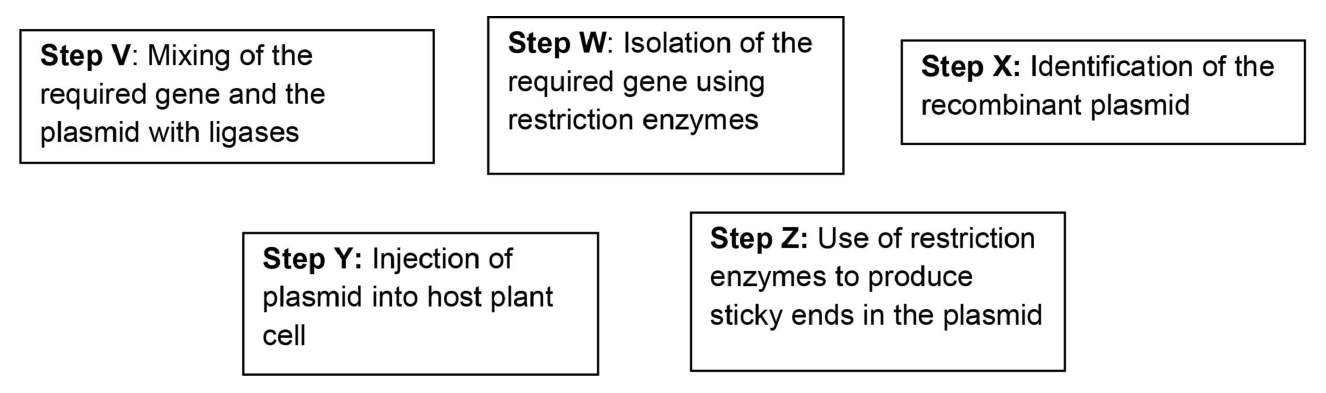
✍️ ကတ် ၅ ကတ် ရှိတယ်: Z plasmid ဖြတ်၊ W gene ဖြတ်၊ V ligase နဲ့ ဆက်၊ X recombinant ရှာ၊ Y အပင် cell ထဲ ထည့်။
အရင်ဆုံး ဖြတ်ရမယ် (cut first) — plasmid ကို ဖွင့် (Z)၊ gene ကို ဖြတ်ထုတ် (W)။ ဒီ နှစ်ခုက ဘယ်ဟာ အရင် လုပ်လုပ် ရတယ်။
ဖြတ်ပြီးမှ ligase နဲ့ ဆက် (join) လို့ ရတယ် (V)။
ဆက်ပြီးမှ recombinant plasmid ဟုတ်မဟုတ် စစ် (check) တယ် (X)။
မှန်တဲ့ plasmid ကိုသာ အပင် cell ထဲ ထည့် (insert) တယ် (Y)။ Z → W → V → X → Y — အဖြေ A။
B နဲ့ D က မဆက်ရသေးခင် recombinant ကို စစ်နေတယ် (check before join) ✗ — မဆက်ရင် recombinant မရှိသေးဘူး။
C က plasmid မဖွင့်ခင် ဆက်နေတယ် ✗။ E က မစစ်ခင် အပင်ထဲ ထည့်နေတယ် ✗။ ဖြတ် → ဆက် → စစ် → ထည့် လို့ မှတ်ပါ။
👤 လူပုဂ္ဂိုလ်များ
1928 Griffith — ဗြိတိန် bacteria ပညာရှင်။ bacteria က ပတ်ဝန်းကျင် DNA ကို ယူတဲ့ transformation ကို ပထမဆုံး တွေ့ခဲ့တယ်။
🔁 ပြန်စစ်မယ် — အဖြေ မကြည့်ခင် စဉ်းစားပါ
🤔 Which enzyme makes DNA from an mRNA template?
🔍 မေးခွန်း ဖြည်မယ်
makes DNA = DNA ကို လုပ်တယ်။ from an mRNA template = mRNA ကို ပုံစံ (template) အဖြစ် သုံးပြီး။
မေးနေတာ — mRNA ကနေ DNA ကို လုပ်ပေးတဲ့ enzyme ရဲ့ နာမည်။
RNA → DNA ပြောင်းပြန် ကူးလို့ reverse transcriptase။
ရလာတာက cDNA (intron မပါ)။
🤔 In gene cloning, a plasmid is used as a…
🔍 မေးခွန်း ဖြည်မယ်
gene cloning = gene ကို bacteria ထဲ ထည့်ပြီး ပွားခြင်း။ is used as a… = ... အဖြစ် သုံးတယ်။
မေးနေတာ — plasmid ရဲ့ အလုပ် (gene နဲ့ ဘာ လုပ်လဲ) ရဲ့ နာမည်။
gene ကို သယ်တဲ့ ယာဉ် — vector။
host က E. coli၊ marker က antibiotic ခံ gene၊ promoter က gene ရဲ့ ‘စ’ မှတ်။
🤔 Two bacteria are joined by a thin tube and a plasmid passes from one to the other. This is called:
🔍 မေးခွန်း ဖြည်မယ်
are joined by a thin tube = ပြွန် ပါးပါးလေးနဲ့ ချိတ်ထားတယ်။ passes from one to the other = တစ်ကောင်ကနေ နောက်တစ်ကောင်ဆီ ကူးသွားတယ်။
This is called = ဒါကို ... လို့ ခေါ်တယ်။
မေးနေတာ — bacteria ချင်း ချိတ်ပြီး DNA လွှဲတဲ့ နည်းရဲ့ နာမည်။
pilus (ပြွန်ချောင်း) နဲ့ ချိတ်ပြီး လွှဲတာ conjugation။
ပတ်ဝန်းကျင်က တိုက်ရိုက် ယူတာ transformation၊ phage သယ်တာ transduction။
🤔 Which gene library contains the introns of human genes?
🔍 မေးခွန်း ဖြည်မယ်
gene library = DNA အပိုင်းတွေ bacteria ထဲ သိမ်းထားတဲ့ စာကြည့်တိုက်။ contains = ပါဝင်တယ်။
the introns of human genes = လူ့ gene တွေရဲ့ intron တွေ။
မေးနေတာ — intron ပါတဲ့ library ဘယ်ဟာလဲ (both = နှစ်ခုလုံး၊ neither = ဘယ်ဟာမှ)။
genome တစ်ခုလုံးကို ဖြတ်ထည့်လို့ genomic library မှာ intron ပါတယ်။
cDNA က mRNA ကနေ ကူးလို့ intron မပါဘူး။
🤔 Factor VIII made by genetically modified cells is given to people with:
🔍 မေးခွန်း ဖြည်မယ်
made by genetically modified cells = gene ပြင်ထားတဲ့ cell တွေက ထုတ်တဲ့။ is given to people with = ... ရောဂါ ရှိသူတွေကို ပေးတယ်။
မေးနေတာ — factor VIII (သွေးခဲ protein) ကို ဘယ် ရောဂါ ရှိသူ လိုလဲ။
factor VIII က သွေးခဲ protein — မရှိရင် haemophilia A။
diabetes အတွက် insulin၊ အရပ် မရှည်ရင် hGH၊ hepatitis B အတွက် vaccine။
🤔 Why can a bacterium make human insulin from a human gene?
🔍 မေးခွန်း ဖြည်မယ်
Why can … make = ဘာကြောင့် ထုတ်နိုင်လဲ။ from a human gene = လူ့ gene ကနေ။
မေးနေတာ — bacteria က လူ့ gene ကို လူ့ cell နဲ့ အတူတူ ဖတ်နိုင်တဲ့ အကြောင်းရင်း။
codon တစ်ခုစီက သက်ရှိ အားလုံးနီးပါးမှာ amino acid တူတူ — universal။
pancreas မရှိ၊ intron ရှိ၊ protein လုပ်တာ ribosome။