Electric charges, fields and capacitors
ပူဖောင်းကို ဆံပင်နဲ့ ပွတ်ရင် နံရံမှာ ကပ်နေတယ်၊ နံရံကနေ 1 cm ခွာရင် ပြုတ်ကျတယ်။ ဆေးရုံက defibrillator (နှလုံး လျှပ်စီး စက်) က 200 J ကို ခဏချင်း ပေးတယ်။
ဒီ ပဟေဠိ တွေကို charge၊ Coulomb's law၊ field၊ potential နဲ့ capacitor တို့နဲ့ ဖြေမယ်။
Electric charge
charge (လျှပ်ဓာတ်) — ပူဖောင်း ပဟေဠိ
ပူဖောင်းက နံရံမှာ ဘာလို့ ကပ်နေလဲ?
ပူဖောင်းကို ဆံပင်နဲ့ rub — ဆံပင် hair stands up။ကလေးဘဝက ဒီ မျက်လှည့်ကို လုပ်ဖူးလား? ပူဖောင်းကို ဆံပင်နဲ့ rub (ပွတ်) လိုက်တယ်။ ဆံပင်မျှင်တွေ hair stands up — ထောင်လာပြီး ပူဖောင်းဆီ လိုက်လာတယ်။
နံရံမှာ ကပ် — no glue၊ မကျဘူး။ ဘာ ကိုင်ထားလဲ?ပြီးတော့ ပူဖောင်းကို wall (နံရံ) မှာ ကပ်လိုက်တယ်။ no glue — ကော် မပါဘူး။ ဒါပေမဲ့ ပြုတ်မကျဘူး။ ဘာက ကိုင်ထားလဲ?
🤔 A balloon rubbed on hair stays stuck on a wall. What most likely holds it there?
ပွတ်လိုက်မှ ကပ်တာမို့ ပွတ်တာက ပူဖောင်းကို တစ်ခုခု ပြောင်းလိုက်တယ်။
ဒီ PART မှာ ဘာ ပြောင်းလဲ ကြည့်ရင် လျှပ်စစ်အား ဖြစ်ကြောင်း တွေ့ရမယ်။
ပူဖောင်းမှာ သံလိုက် မပါ၊ ကော်လည်း မပါဘူး။
အဖြေမှာ charge နဲ့ electron ပါတယ်။အဖြေမှာ စကားလုံး နှစ်လုံး ပါတယ် — charge နဲ့ electron။ ဒီ PART ဆုံးရင် ပူဖောင်း ကပ်တာကို ကိုယ်တိုင် ရှင်းပြနိုင်မယ်။
👉 ပွတ်ရင် ဘာ ဝင်လာလဲ? atom ထဲ ချောင်းမယ်။👉 ပွတ်လိုက်တဲ့ အခိုက်မှာ ပူဖောင်းထဲ ဘာ ဝင်လာလဲ? ဖြေဖို့ atom ထဲကို အရင် ချောင်းကြည့်ရမယ်။
atom ထဲမှာ — proton (+) နဲ့ electron (−)
အရာအားလုံးကို atom လေးတွေနဲ့ ဖွဲ့ထားတယ်။အရာဝတ္ထု အားလုံး — ပူဖောင်း၊ ဆံပင်၊ နံရံ — ကို atom (အက်တမ်) ဆိုတဲ့ အမှုန်လေးတွေနဲ့ ဖွဲ့ထားတယ်။ တစ်လုံးကို ချဲ့ကြည့်မယ်။
nucleus ထဲ proton (+) နဲ့ neutron (0)။အလယ်မှာ nucleus (နျူကလိယပ်) ရှိတယ်။ အထဲက အနီလုံးတွေက proton — သူတို့မှာ အပေါင်း (+) လျှပ်ဓာတ် ပါတယ်။ မီးခိုးရောင်တွေက neutron၊ လျှပ်ဓာတ် မပါဘူး။
အပြင်မှာ electron (−) လှည့်နေ။အပြင်ဘက်မှာ electron (အီလက်ထရွန်) အဝါလေးတွေ လှည့်နေတယ် — သူတို့မှာ အနုတ် (−) လျှပ်ဓာတ် ပါတယ်။
လျှပ်ဓာတ် ပမာဏ = charge (လျှပ်ဓာတ်) q၊ ယူနစ် Cဒီ လျှပ်ဓာတ် ပမာဏကို charge (လျှပ်ဓာတ်) လို့ ခေါ်တယ်။ q ဒါမှမဟုတ် Q နဲ့ ရေးပြီး ယူနစ်က coulomb (C)။
proton +e၊ electron −e၊ e = 1.6 × 10⁻¹⁹ C။proton တစ်လုံးက +e၊ electron တစ်လုံးက −e။ e = 1.6 × 10⁻¹⁹ C — 1 C ရဖို့ electron သန်း သန်း သန်း ချီ လိုတယ်။
e = elementary charge (အသေးဆုံး charge) — 1.5e မရှိ။e ကို elementary charge (အသေးဆုံး charge) လို့ ခေါ်တယ်။ charge တိုင်းက 1e၊ 2e၊ 3e … ပဲ ဖြစ်နိုင်တယ်။ 1.5e လို အပိုင်းအစ မရှိဘူး။
3 protons + 3 electrons = 0 — neutral။ပုံထဲက atom မှာ 3 protons၊ 3 electrons ရှိတယ်။ +3 − 3 = 0 — အပေါင်း အနုတ် ချေသွားလို့ neutral (လျှပ်ဓာတ် ကြားနေ) ဖြစ်တယ်။ ပုံမှန် atom တိုင်း ဒီလိုပဲ။
📝 IMAT 2026 Q53 → သင်ခန်းစာ 3။ electron ဆုံးရင် စမ်းမယ်။📝 IMAT 2026 Q53 (hydrogen atom ရဲ့ charge) → သင်ခန်းစာ 3 မှာ အပြည့် ဖြေထားတယ်။ ဒီမှာ atom က electron တစ်လုံး ဆုံးရင် ဘာ ဖြစ်လဲ စမ်းကြည့်မယ်။
electron ဆုံး/ရ — charge ရှိတဲ့ atom = ion။atom က electron ဆုံးရင် ဒါမှမဟုတ် ရရင် + နဲ့ − မညီတော့လို့ charge ရှိလာတယ်။ charge ရှိတဲ့ atom ကို ion (အိုင်းယွန်း) လို့ ခေါ်တယ်။
🤔 A sodium atom has 11 protons and 11 electrons. It loses one electron and becomes a sodium ion, Na⁺. What is the charge of the ion?
proton 11 လုံး (+11e)၊ electron 10 လုံး (−10e) ကျန်လို့ +11e − 10e = +1e = +1.6 × 10⁻¹⁹ C။
electron (−) ဆုံးရင် အပေါင်း၊ ရရင် အနုတ် ဖြစ်တယ်။
1.76 × 10⁻¹⁸ C က proton 11 လုံးရဲ့ charge ကိုပဲ ယူမိတာ။
👉 atom တိုင်း 0 ဆိုရင် ပူဖောင်းမှာ charge ဘယ်က ရလာလဲ?
ပွတ်ရင် electron ကူးတယ်
hair နဲ့ balloon — + 4, − 4 စီ၊ 0 ပဲ။စမယ် — hair (ဆံပင်) မှာရော balloon (ပူဖောင်း) မှာရော + 4 ခု − 4 ခု ရှိတယ်လို့ ထားပါ။ နှစ်ခုလုံး 0 ပဲ။
ပွတ် → 2 electrons ဆံပင်က ပူဖောင်းဆီ ကူး။ပွတ်လိုက်တော့ မျက်နှာပြင် နှစ်ခု အရမ်း ကပ်သွားတယ်။ ပူဖောင်းရဲ့ rubber က electrons ကို ပိုမြဲမြဲ ဆွဲထားနိုင်လို့ 2 electrons ဆံပင်ကနေ ပူဖောင်းဆီ ခုန်ကူးသွားတယ်။
ပူဖောင်း −2၊ ဆံပင် +2။အခု ပူဖောင်းမှာ − 6 ခု၊ + 4 ခု — −2 ဖြစ်သွားတယ်။ ဆံပင်မှာ − 2 ခုပဲ ကျန်လို့ +2 ဖြစ်တယ်။
total 0 = conservation of charge (charge ထိန်းသိမ်းမှု)total (စုစုပေါင်း) ကြည့် — −2 + 2 = 0။ charge အသစ် မဖြစ်ဘူး၊ နေရာ ရွှေ့ရုံပဲ။ ဒါကို conservation of charge (charge ထိန်းသိမ်းမှု) လို့ ခေါ်တယ်။
⚠ protons move မဟုတ် — electrons ပဲ ရွေ့။⚠ ဆံပင် + ဖြစ်တာ protons move — protons ဝင်လာလို့ မဟုတ်ဘူး။ protons တွေက nucleus ထဲ ချုပ်ထားတယ်။ electrons ဆုံးသွားလို့ +။ ပွတ်ရင် ရွေ့တာ electrons ပဲ။
−2 နဲ့ +2 — attract၊ ဆံပင် လိုက်လာ။−2 ပူဖောင်းနဲ့ +2 ဆံပင် — charge မတူရင် attract (ဆွဲငင်) တယ်။ ဆံပင်က ပူဖောင်းဆီ လိုက်လာတာ ဒါကြောင့်။
ဆံပင် အကုန် + — repel၊ ထောင်လာ။ဆံပင်မျှင် တစ်ချောင်းချင်းကတော့ အားလုံး + ချည်း။ charge တူရင် repel (တွန်းထုတ်) တယ် — ဒါကြောင့် ဆံပင်တွေ တစ်ချောင်းနဲ့ တစ်ချောင်း ခွာပြီး ထောင်လာတယ်။
🤔 A balloon becomes negatively charged after being rubbed on hair. What has happened?
ရွေ့နိုင်တာ electron ပဲ — proton တွေ nucleus ထဲ ချုပ်ထားတယ်။
charge ကို ဖန်တီးလို့ မရလို့ ပူဖောင်း ရတဲ့ electron က ဆံပင်ဆီကပဲ လာတယ်။
👉 သတ္တု ဇွန်း ပွတ်ရင် ဘာလို့ charge မကျန်လဲ?👉 ပူဖောင်းကို ပွတ်ရင် charge ကျန်တယ်။ လက်ထဲ ကိုင်ထားတဲ့ သတ္တု ဇွန်းကို ပွတ်ရင်ကော ဘာလို့ မကျန်လဲ?
conductor နဲ့ insulator — charge ရွေ့နိုင်လား
metal ထဲ free electrons — charge ပြန့်သွား။metal (သတ္တု) ထဲမှာ atom နဲ့ မချိတ်ဘဲ လွတ်လွတ် ပြေးနိုင်တဲ့ free electrons (လွတ်နေတဲ့ အီလက်ထရွန်) တွေ ရှိတယ်။ charge ပေးလိုက်ရင် ဇွန်း တစ်ခုလုံး ပြန့်သွားတယ်။
charge ရွေ့ခွင့်ပေး = conductor (လျှပ်ကူးပစ္စည်း)ဒီလို charge ရွေ့ခွင့်ပေးတဲ့ ပစ္စည်းကို conductor (လျှပ်ကူးပစ္စည်း) လို့ ခေါ်တယ်။ သတ္တု အားလုံး၊ ဆားရည်၊ လူ့ခန္ဓာကိုယ် စတာတွေပါ။
plastic, ဖန်, rubber — charge stays put။plastic (ပလတ်စတစ်)၊ ဖန်၊ rubber ထဲမှာတော့ electrons တွေ atom နဲ့ ချိတ်နေလို့ မပြေးနိုင်ဘူး။ ပွတ်တဲ့ နေရာမှာပဲ stays put — ကပ်နေတယ်။
insulator (လျှပ်ကာပစ္စည်း) — ပူဖောင်း charge ကျန်။ဒီလို ပစ္စည်းကို insulator (လျှပ်ကာပစ္စည်း) လို့ ခေါ်တယ်။ ပူဖောင်းက insulator မို့ ပွတ်တဲ့ နေရာမှာ charge ကျန်တာ။
ဇွန်း ကိုင်ပွတ်ရင် body → earth စီး။လက်ထဲ ကိုင်ထားတဲ့ သတ္တု ဇွန်းကို rub လုပ်ရင်ကော? charge က လက်၊ ကိုယ်ခန္ဓာ ဖြတ်ပြီး မြေကြီးထဲ စီးဆင်းသွားတယ် — body → earth။
မြေကြီးဆီ လမ်းပေး = earthing (မြေစိုက်ခြင်း)charge ကို မြေကြီးဆီ လမ်းပေးတာကို earthing (မြေစိုက်ခြင်း) လို့ ခေါ်တယ်။ မြေကြီးက အလွန်ကြီးလို့ charge ဘယ်လောက် ဝင်ဝင် လက်ခံနိုင်တယ်။
🤔 You rub a metal spoon held in your bare hand with a cloth. Why does it stay uncharged?
သတ္တုထဲမှာ electron တွေ လွတ်လွတ် ရွေ့နိုင်တယ်။
ဒါကြောင့် ဇွန်းက charge ရတာနဲ့ လက်နဲ့ ခန္ဓာကိုယ် (conductor) ကို ဖြတ်ပြီး မြေကြီးဆီ ချက်ချင်း စီးသွားတယ် (earthing)။
ပလတ်စတစ် လက်ကိုင် တပ်ပြီး ကိုင်ရင်တော့ charge ထွက်ပေါက် မရှိလို့ ဇွန်းပေါ်မှာ ကျန်တယ်။
ဒါကြောင့် သတ္တုကို ပွတ်ရင်လည်း electron ရတာ၊ ဆုံးတာ ဖြစ်တယ်ဆိုတာ သိရတယ်။
ပိတ်စက electron အားလုံးကို ပြန်ယူတာ မဟုတ်ဘူး။
👉 charge ရှိတဲ့ သတ္တုလုံး နှစ်လုံး ထိလိုက်ရင် ဘာ ဖြစ်မလဲ?
✍️ သတ္တုလုံး နှစ်လုံး ထိရင် charge ခွဲဝေတယ်
✍️ identical metal (အရွယ်တူ သတ္တု) လုံး နှစ်လုံး — +6 nC နဲ့ −2 nC ကို ကပ်လိုက်မယ်။ nC (nanocoulomb) ဆိုတာ 1 nC = 10⁻⁹ C။
touch (ထိ) လိုက်တော့ conductor ဖြစ်လို့ electrons − လုံးကနေ + လုံးဆီ စီးသွားတယ်။ နှစ်လုံး ညီသွားတဲ့အထိ စီးတယ်။
charge ပျောက်တာ မရှိလို့ total (စုစုပေါင်း) ကို အရင် ပေါင်းမယ် — +6 + (−2) = +4 nC။
အရွယ်တူမို့ တစ်ဝက်စီ ခွဲယူတယ် — each = +4 nC ကို 2 နဲ့ စား = +2 nC စီ။
🤔 Two identical metal spheres carry +8 nC and −2 nC. They touch and are then separated. What is the charge on each?
total = +8 + (−2) = +6 nC၊ အရွယ်တူ သတ္တုမို့ တစ်ဝက်စီ +3 nC။
+5 က လက္ခဏာ မေ့ပြီး 8 + 2 ကို တစ်ဝက် ယူတာ၊ +6 က တစ်ဝက် မခွဲတာ။
insulator ၂ လုံး ထိ — no change။plastic (insulator) လုံး နှစ်လုံး ထိရင်ကော? charge မရွေ့နိုင်လို့ no change — Q₁ က Q₁၊ Q₂ က Q₂ အတိုင်း ကျန်တယ်။
👉 IMAT က ဒီ ကွာခြားချက်ကို တကယ် မေးခဲ့တယ်။
✍️ IMAT 2023 — insulator လုံး နှစ်လုံး ထိရင်
📝 IMAT 2023 · Question 60
Two perfectly insulating spheres charged respectively with Q1 and Q2 and with a respective radius of R1 and R2 are placed in contact.
What will the charge on the sphere of radius R1 now be?
စကားလုံး တစ်လုံးကို ဝိုင်းထားပါ — perfectly insulating (လုံးဝ လျှပ်ကာ)။ စက်လုံး နှစ်လုံးက insulator။
insulator ထဲမှာ charges can't move — ထိလည်း ဘာမှ မကူးဘူး။
ဒါကြောင့် R₁ စက်လုံးမှာ မူလ Q₁ ပဲ ကျန်တယ် → အဖြေ D။
E (Q₂) ဆို charge အကုန် နေရာ လဲမှ ရမယ်၊ C (0) ဆို charge ပျောက်ရမယ် — conservation of charge နဲ့ ဆန့်ကျင်တယ်။
A နဲ့ B က R (စက်လုံး အချင်းဝက်) ပါတဲ့ ပုံသေနည်းတွေ။ ဒီလို ခွဲဝေတာ သတ္တုလုံး မှာပဲ ဖြစ်တယ်။
ထိနေတဲ့ သတ္တုလုံး နှစ်လုံးက potential တူအောင် charge ပြန်စီလို့ charge က R နဲ့ အချိုးကျ ခွဲတယ် (PART 3 မှာ ကြည့်မယ်)။ insulator မှာ charge မရွေ့လို့ ဒီ ပုံသေနည်းတွေ မသုံးရဘူး။
👉 နံရံ charge မရှိ — ဘာလို့ ဆွဲလဲ?👉 ကဲ — ပူဖောင်း ပဟေဠိ ပြန်သွားမယ်။ နံရံက insulator ပဲ၊ charge လည်း မရှိဘူး။ ဘာလို့ ဆွဲလဲ?
polarisation — charge မရှိတဲ့ နံရံကို ဘာလို့ ဆွဲလဲ
− ပူဖောင်း နံရံနား — wall: 0။− ဖြစ်နေတဲ့ ပူဖောင်းကို နံရံနား ယူလာမယ်။ wall: 0 — နံရံ တစ်ခုလုံးရဲ့ charge က 0 ပဲ။
atom တိုင်း + nucleus နဲ့ − electron တိမ် ရှိ။ဒါပေမဲ့ 0 ဆိုတာ ဘာမှ မရှိတာ မဟုတ်ဘူး။ နံရံ atom တစ်လုံးချင်းမှာ + nucleus နဲ့ − electron တိမ်တိုက် တူတူ ရှိနေတယ်။
electrons pushed away — နည်းနည်း ယိမ်း။ပူဖောင်းရဲ့ − က electron တိမ်တွေကို နည်းနည်း electrons pushed away — နောက်ဆုတ်အောင် တွန်းတယ်။ atom မှာ ကျန်နေတုန်းပဲ၊ ဘက်ပဲ နည်းနည်း ယိမ်းသွားတာ။
နီးခြမ်း နည်းနည်း +၊ ဝေးခြမ်း နည်းနည်း −။ဒါကြောင့် ပူဖောင်းဘက် ခြမ်းက နည်းနည်း +၊ ဝေးတဲ့ ခြမ်းက နည်းနည်း − ဖြစ်လာတယ်။
near +: strong pull၊ far −: weak push — ဆွဲ နိုင်။near +: strong pull — နီးတဲ့ + ကို ဆွဲတာ ပြင်းတယ်။ far −: weak push — ဝေးတဲ့ − ကို တွန်းတာ အားနည်းတယ်။ ဆွဲတာ နိုင်လို့ ပူဖောင်း ကပ်နေတယ်။
+ − ဘက်ခွဲ = polarisation (charge ဘက်ခွဲခြင်း)charge နီးလာလို့ ပစ္စည်းထဲက + နဲ့ − ဘက်ခွဲ စီသွားတာကို polarisation (charge ဘက်ခွဲခြင်း) လို့ ခေါ်တယ်။ ပဟေဠိ ဖြေပြီ — ကော် မလိုဘူး!
📷 ဆံပင်နဲ့ ပွတ်ထားတဲ့ charged comb (charge ရှိ ခေါင်းဖြီး) ကို ရေစီးကြောင်းနား ယူလာတယ်။ မထိဘဲနဲ့ water bends — ရေက ခေါင်းဖြီးဘက် ကွေးလာတယ်။
OpenStax University Physics Volume 2, Figure 5.2 (CC BY 4.0)
🤔 A charged comb bends a thin stream of water towards it, although the water has no net charge. Why?
ပူဖောင်းနဲ့ နံရံလိုပဲ ဖြစ်တယ်။
ခေါင်းဖြီး နီးလာရင် ရေ မော်လီကျူးတွေ ဘက်ခွဲ စီတယ် (polarisation)။
နီးတဲ့ ဆန့်ကျင်ဘက် charge ကို ဆွဲတာက ဝေးတဲ့ charge ကို တွန်းတာထက် ပြင်းလို့ ရေ ကွေးတယ်။
ရေမှာ net charge မရှိဘူးလို့ မေးခွန်းက ပြောထားတယ်။
ဒါကြောင့် ခေါင်းဖြီးက electron ပေးတာ မဟုတ်သလို ရေက charge ရသွားတာလည်း မဟုတ်ဘူး။
gravity (ကမ္ဘာ ဆွဲအား) ကလည်း ခေါင်းဖြီးနဲ့ မဆိုင်ဘူး။
👉 မြေနဲ့ ဆက်ထားတဲ့ သတ္တုကိုကော?👉 ကြားနေ ပစ္စည်းကို charge က အမြဲ ဆွဲတယ်။ မြေနဲ့ ဆက်ထားတဲ့ သတ္တုကိုကော?
မြေစိုက်ထားတဲ့ သတ္တုကို charge က အမြဲ ဆွဲတယ်
+ rod ကို earthed metal နား ယူလာ။+ charge ရှိတဲ့ rod (ချောင်း) ကို metal (သတ္တု) ပြားနား ယူလာမယ်။ သတ္တုကို ဝါယာနဲ့ မြေကြီးထဲ ဆက်ထားတယ် — earthed (မြေစိုက်ထား)။
electrons come up — မြေကနေ တက်လာ။rod ရဲ့ + က electrons ကို ဆွဲတယ်။ မြေကြီးကနေ electrons come up — electrons က ဝါယာ ဖြတ်ပြီး သတ္တုဆီ တက်လာတယ်။
သတ္တု − → attract၊ − rod ဆိုလည်း ဆွဲ။သတ္တုမှာ − charge စုလာလို့ rod နဲ့ attract ဖြစ်တယ်။ rod က − ဆိုရင် electrons က မြေထဲ ဆင်းသွားပြီး သတ္တု + ဖြစ်တယ် — ဒါလည်း ဆွဲပဲ။
charged + earthed → always attractcharged + earthed → always attract — charge ရှိတဲ့ ပစ္စည်းက ကြားနေ ပစ္စည်း၊ မြေစိုက် ပစ္စည်းကို ဘယ်တော့မှ မတွန်းဘူး၊ ဆွဲပဲ ဆွဲတယ်။
📝 IMAT 2014 Q60 → သင်ခန်းစာ 75။ ဒီမှာ လျှပ်စစ်ပဲ။📝 IMAT 2014 Q60 (မြေစိုက်ထားတဲ့ သံလိုက် ပုစ္ဆာ) → သင်ခန်းစာ 75 မှာ သံလိုက်ကို သင်ပြီးမှ အပြည့် ဖြေမယ်။ ဒီမှာ လျှပ်စစ် အပိုင်းကိုပဲ စမ်းမယ်။
🤔 A negatively charged rod is held near an earthed metal sphere. What happens?
rod ရဲ့ − က sphere ထဲက electron တွေကို မြေကြီးထဲ တွန်းချတယ်။
sphere မှာ + ကျန်လို့ rod နဲ့ ဆွဲတယ်။
မြေစိုက်ထားလို့ charge မကျန်ဘူး ထင်ရင် မှားတယ် — rod နီးနေသရွေ့ ဆန့်ကျင်ဘက် charge ရှိနေတယ်။
👉 ဘယ်လောက် ပြင်းလဲ? PART 1 ပြန်စစ်မယ်။👉 ဆွဲတယ်၊ တွန်းတယ် သိပြီ။ ဘယ်လောက် ပြင်းလဲ? PART 1 ကို အရင် ပြန်စစ်ကြည့်မယ်။
🔁 ပြန်ကြည့်မယ် — PART 1
🤔 What is the net charge of a neutral atom?
proton အရေအတွက် = electron အရေအတွက် ဖြစ်လို့ +e တွေ −e တွေ ချေပြီး 0 ပဲ။
1.6 × 10⁻¹⁹ C က proton တစ်လုံးရဲ့ charge။
🤔 A glass rod rubbed with silk becomes positively charged. What has happened?
glass + ဖြစ်တာ electron ဆုံးလို့ — silk ဆီ ကူးသွားတယ်။
proton မရွေ့ဘူး၊ charge အသစ်လည်း မဖြစ်ဘူး (conservation of charge)။
silk က − ဖြစ်တယ်။
🤔 Identical metal spheres with +5 nC and −9 nC touch and are separated. What is the charge on each?
total = +5 + (−9) = −4 nC၊ အရွယ်တူ သတ္တုမို့ တစ်ဝက်စီ −2 nC။
+2 က လက္ခဏာ မှားတာ၊ −4 က တစ်ဝက် မခွဲတာ။
🤔 A charged rod attracts small pieces of paper. Some pieces touch the rod and then jump away from it. Why?
အစမှာ paper ကို polarisation နဲ့ ဆွဲတယ်။
ထိလိုက်တော့ rod ရဲ့ charge တချို့ paper ဆီ ကူးလို့ charge တူ ဖြစ်သွားပြီး repel (တွန်း) တယ်။
Coulomb's law
Coulomb's law — charge နှစ်ခုကြား force
1 cm ခွာရုံနဲ့ ဘာလို့ ပြုတ်ကျလဲ?
နံရံမှာ ကပ်နေတဲ့ ပူဖောင်းကို 1 cm away — 1 cm လောက်ပဲ ဆွဲခွာလိုက်မယ်။
1 cm ခွာ — falls! ဘာလို့ မြန်မြန် ကျလဲ?ချက်ချင်း falls — ပြုတ်ကျတယ်! 1 cm ဆိုတာ ဘာမှ မဟုတ်သလောက်ပဲ။ ဆွဲအား ဘာလို့ ဒီလောက် မြန်မြန် ကျသွားလဲ?
🤔 Two charges are moved twice as far apart. Predict: what happens to the force between them?
အကွာ 2 ဆ ဆိုရင် force က တစ်ဝက် မဟုတ်ဘဲ 4 ပုံ 1 ပုံ ကျတယ်။
ဘာလို့လဲ ဆိုတာ ဒီ PART မှာ ကြည့်မယ်။
ပူဖောင်း မြန်မြန် ကျတာ ဒါကြောင့်။
👉 charge နှစ်ခုကို slider နဲ့ ခွာကြည့်ပြီး force ကို တိုင်းမယ်။
အကွာ 2 ဆ → force 4 ပုံ 1 ပုံ
+, + repel — equal + opposite။P နဲ့ Q — charge တူ (+, +) နှစ်ခု။ repel — တွန်းကန်ကြတယ်။ မြှားနှစ်ခု အရှည် တူပြီး ဘက် ဆန့်ကျင်တယ် — equal + opposite (Newton's third law)။
အခု r (အကွာအဝေး) = 0.1 m။ ဒီ force ကို F₀ လို့ မှတ်ထားမယ် — F = 1 × F₀။
👆 Move the slider to double r. By what fraction does the force fall?
r ကို 0.2 m (2 ဆ) လုပ်လိုက်တယ်။ မြှား တစ်ဝက် မကဘူး — F = 0.25 × F₀၊ 4 ပုံ 1 ပုံပဲ ကျန်တယ်။
r × 3 (0.3 m) ဆိုရင် 0.11 × F₀ — 9 ပုံ 1 ပုံ။ စည်းမျဉ်းက r × 2 → F4 — force က r² နဲ့ ပြောင်းပြန် ကျတယ်။
q × 2 → F × 2 — F ∝ q₁q₂charge ဘက်ကကော? P ကို 2q လုပ်လိုက်ရင် တွန်းအား 2 ဆ — q × 2 → F × 2။ ဆိုလိုတာ force က charge နှစ်ခု မြှောက်လဒ် q₁q₂ နဲ့ အချိုးကျတယ် — F ∝ q₁q₂။
👉 ဒါပေမဲ့ ဘာလို့ r² လဲ? r မဟုတ်ဘဲ ဘာလို့ နှစ်ထပ်?
ဘာလို့ r² လဲ — မီးသီး အလင်းလို ပြန့်တယ်
force က မီးသီး အလင်းလို ဘက်တိုင်း ပြန့်။charge ရဲ့ သြဇာ (force) က မီးသီး အလင်းလို ဘက်တိုင်းကို ပြန့်ထွက်တယ်။ မျဉ်းဝါတွေက charge ကနေ ထွက်တဲ့ သြဇာ အစုလေးပါ။
r အကွာမှာ ဒီ မျဉ်းစုက 1 square (စတုရန်း တစ်ကွက်) ကို ဖြတ်တယ်။
2r မှာ 4 squares ဖုံး။2r အကွာမှာ မျဉ်းစု အတူတူက 4 squares — အလျား 2 ဆ၊ အနံ 2 ဆ — ကို ဖုံးအောင် ပြန့်သွားတယ်။
each: 14။မျဉ်း အရေအတွက် မပြောင်းဘူး၊ နေရာ 4 ဆ ကျယ်သွားတယ်။ ဒါကြောင့် each: 14 — စတုရန်း တစ်ကွက်ချင်း 4 ပုံ 1 ပုံပဲ ရတယ်။
area = 4πr² — r ၂ ဆ → F 14 (like light)။ပတ်ပတ်လည် ကြည့်ရင် စက်လုံး မျက်နှာပြင်ပေါ် ပြန့်တာ — area = 4πr²။ r 2 ဆ ဆို area 4 ဆ၊ force 4 ပုံ 1 ပုံ။ like light — မီးသီးနဲ့ ဝေးရင် မှိန်တာလည်း ဒီ အကြောင်းပဲ။
👉 ဒီ စည်းမျဉ်း နှစ်ခုကို ပုံသေနည်း တစ်ကြောင်းတည်းနဲ့ ရေးမယ်။
Coulomb's law — F = kq₁q₂r²
Coulomb's law (Coulomb ရဲ့ ဥပဒေ): F = kq₁q₂r²စည်းမျဉ်း နှစ်ခု ပေါင်းလိုက်ရင် — F = kq₁q₂r²။ ဒါကို Coulomb's law (Coulomb ရဲ့ ဥပဒေ) လို့ ခေါ်တယ်။
F (N)၊ q₁, q₂ (C)၊ r (m)။F: force (အား၊ N)၊ q: charge (C) — q₁ နဲ့ q₂ က charge နှစ်ခု၊ r: distance (အကွာအဝေး၊ m)။
k = 9 × 10⁹ N m² C⁻² — µC, nC သုံး။k က ကိန်းသေ — k = 9 × 10⁹ N m² C⁻²။ ကြီးလိုက်တာ! 1 C စီ 1 m ခွာရင် force 9 × 10⁹ N — ဒါကြောင့် လက်တွေ့ charge တွေက µC၊ nC လောက်ပဲ။
k = 14πε₀၊ ε₀ = permittivity (လျှပ်ကွင်း ဖြတ်ခွင့်ကိန်း)စာအုပ်တချို့က k = 14πε₀ လို့ ရေးတယ် — နာမည် နှစ်ခု၊ ကိန်းတစ်ခုတည်း။ ε₀ = 8.85 × 10⁻¹² C² N⁻¹ m⁻² ကို လေဟာနယ်ရဲ့ permittivity (လျှပ်ကွင်း ဖြတ်သန်းခွင့်ကိန်း) လို့ ခေါ်တယ်။
ε₀ ယူနစ် C² N⁻¹ m⁻² = F/m။ε₀ ရဲ့ ယူနစ်က k ရဲ့ ယူနစ် N m² C⁻² ကို ပြောင်းပြန် လှန်ထားတာ — C² N⁻¹ m⁻²။ PART 4 မှာ farad (F) သင်ပြီးရင် ဒီ ယူနစ်ကို F/m လို့လည်း ရေးတယ်။
👉 ဒီ ဥပဒေကို ဘယ်သူ ဘယ်လို တွေ့ခဲ့လဲ?
Coulomb — ဝါယာ လိမ်တဲ့ ချိန်ခွင်နဲ့ တိုင်းတယ်
Coulomb (1736–1806) — ပြင်သစ် ပညာရှင်၊ အင်ဂျင်နီယာ။Charles-Augustin de Coulomb (ချားလ်စ် အော်ဂတ်စတင် ဒီ ကူလုံ၊ 1736–1806) က ပြင်သစ် ရူပဗေဒ ပညာရှင်နဲ့ စစ်တပ် အင်ဂျင်နီယာ ဖြစ်တယ်။
1785 — torsion balance နဲ့ ဝါယာ လိမ်။သူက 1785 မှာ torsion balance (ဝါယာ လိမ်တဲ့ ချိန်ခွင်) ကို သုံးတယ်။ ဝါယာ ချည်ထားတဲ့ တံလေးရဲ့ အစွန်းက charge ရှိ ဘောလုံးကို တခြား ဘောလုံးက တွန်းရင် ဝါယာ လိမ်သွားတယ်။
လိမ်ထောင့်ကနေ ဥပဒေ တွေ့ — C ယူနစ် သူ့ နာမည်။လိမ်တဲ့ ထောင့်ကနေ force ကို တိုင်းပြီး ဒီ ဥပဒေကို တွေ့ခဲ့တယ်။ ဒါကြောင့် ဥပဒေကိုရော charge ယူနစ် coulomb (C) ကိုရော သူ့ နာမည် ပေးထားတာ။
gravity နဲ့ ပုံစံ တူ၊ လျှပ်စစ်အား 10⁴² ဆ ပြင်း။gravity F = Gm₁m₂r² နဲ့ ပုံစံ တူတယ်။ ဒါပေမဲ့ gravity က ဆွဲပဲ ဆွဲတယ်၊ ပြီးတော့ electron နှစ်လုံးကြား လျှပ်စစ်အားက gravity ထက် 10⁴² ဆလောက် ပြင်းတယ်။
👉 ဂဏန်း အစစ် ထည့်ပြီး တွက်ကြည့်မယ်။
✍️ +2 µC နဲ့ +3 µC — force တွက်မယ်
✍️ +2 µC နဲ့ +3 µC ကို 0.3 m ခွာထားတယ်။ force ဘယ်လောက်လဲ?
အရင်ဆုံး ယူနစ် ပြောင်း — µC (microcoulomb) ဆိုတာ 1 µC = 10⁻⁶ C။
q₁q₂ = 2 × 10⁻⁶ × 3 × 10⁻⁶ = 6 × 10⁻¹² C²။
r² = 0.3² = 0.09 m² — r ကို နှစ်ထပ် တင်ဖို့ မမေ့နဲ့။
F = 9 × 10⁹ × 6 × 10⁻¹² ကို 0.09 နဲ့ စား — အပေါ်က 0.054 ထွက်ပြီး 0.054 ကို 0.09 နဲ့ စားတယ်။
F = 0.6 N။ charges တူ (+, +) မို့ repel — တွန်းအား။
🤔 The distance between two point charges is tripled. What happens to the force between them?
F က r² နဲ့ ပြောင်းပြန် — r 3 ဆ ဆို r² 9 ဆ၊ force F9။
F3 က r ကို နှစ်ထပ် မတင်မိတာ၊ 3F နဲ့ 9F က ဝေးရင် အား ကြီးမယ် ထင်တာ။
👉 IMAT က ဂဏန်း အစစ် မတွက်ခိုင်းဘဲ “ဘယ်နှဆ” မေးလေ့ ရှိတယ်။
✍️ IMAT 2019 — ဘယ်နှဆ ပြောင်းလဲ (အချိုး နည်းလမ်း)
📝 IMAT 2019 · Question 59
Two charged particles P and Q are 0.10 m apart. The charge on P is 1.50 × 10⁻⁷ C and the charge on Q is 1.50 × 10⁻⁷ C. Particle P experiences an electrostatic force of magnitude F because it is near to the charge on particle Q.
The distance between the two particles is increased to 0.20 m. The charge on P is increased to 4.50 × 10⁻⁷ C and the charge on Q is increased to 6.00 × 10⁻⁷ C.
What is the magnitude of the force that particle P experiences now?
k နဲ့ 10⁻⁷ ကို မတွက်နဲ့ — ဘယ်နှဆ ပြောင်းလဲပဲ ကြည့်မယ်။ ① P ရဲ့ charge 1.5 ကနေ 4.5 — × 3။
② Q ရဲ့ charge 1.5 ကနေ 6.0 — × 4။
③ r 0.10 ကနေ 0.20 — × 2၊ r² ဆိုတော့ × 4။
④ charge တွေကို မြှောက်၊ r² နဲ့ စား — F × 3 × 4 ကို 4 နဲ့ စား = 3F → အဖြေ C။
မှားတဲ့ အဖြေ တစ်ခုချင်းက ချော်တဲ့ အဆင့် တစ်ခုစီ — 12F က r forgotten၊ 6F က r not squared၊ F4 က charges forgotten၊ 3F4 က Q forgotten။
👉 ဆား ရေထဲ ဘာလို့ ပျော်လဲ?👉 force က ကြားထဲမှာ ဘာ ရှိလဲ ပေါ်မှာလည်း မူတည်တယ်။ ဆားခဲက လေထဲမှာ မာပြီး ရေထဲမှာ ဘာလို့ ပျော်လဲ?
dielectric — ရေထဲမှာ ဆား ဘာလို့ ပျော်လဲ
vacuum — Na⁺, Cl⁻ strong pull၊ ဆားခဲ မာ။ဆား (NaCl) ထဲမှာ Na⁺ နဲ့ Cl⁻ ion တွေ ရှိတယ်။ vacuum (လေဟာနယ်) မှာ charges မတူလို့ strong pull — အပြင်းအထန် ဆွဲတယ်။ ဆားခဲ မာနေတာ ဒီ အားကြောင့်။
ရေထဲ O က Na⁺ ဘက်၊ H က Cl⁻ ဘက် လှည့်။water (ရေ) ထဲ ထည့်လိုက်တယ်။ ရေ မော်လီကျူးမှာ O ဘက်က နည်းနည်း −၊ H ဘက်က နည်းနည်း +။ Na⁺ ဘက်ကို O (အနီ) တွေ လှည့်လာပြီး Cl⁻ ဘက်ကို H (အဖြူ) တွေ လှည့်လာတယ်။
weak pull — ဆားခဲ ပြို ပျော်။ion တစ်ခုချင်းကို ဆန့်ကျင်ဘက် charges အလွှာ ဝိုင်းထားသလို ဖြစ်လို့ သူ့ သြဇာ တစ်စိတ် ချေသွားတယ် — weak pull။ ဆားခဲ ပြိုပြီး ပျော်သွားတာ ဒါကြောင့်။
dielectric (ကြားခံ လျှပ်ကာ)၊ dielectric constant εᵣဒီလို force ကို ချေပေးတဲ့ ကြားခံ insulator ကို dielectric (ကြားခံ လျှပ်ကာ) လို့ ခေါ်တယ်။ force လျော့တဲ့ အဆက dielectric constant εᵣ — F = kq₁q₂εᵣr²။
εᵣ = relative permittivity — ယူနစ် မရှိ။εᵣ ကို relative permittivity လို့လည်း ခေါ်တယ် — နာမည် နှစ်ခု၊ အရာ တစ်ခုတည်း။ ယူနစ် မရှိဘူး၊ အဆ တစ်ခုပဲ။
vacuum 1၊ air ≈ 1၊ water 80။vacuum မှာ 1၊ air မှာ ≈ 1၊ oil, paper မှာ 2–4၊ water မှာ 80 လောက်။ ရေထဲမှာ ion ကြား ဆွဲအား 80 ပုံ 1 ပုံ ကျတယ်။
⚠ εᵣ က force ကို စားတယ်။⚠ εᵣ က force ကို စားတယ်၊ မြှောက်တာ မဟုတ်ဘူး။ ion တွေ ပျော်တာ (force နည်းသွားတာ) ကို ပြန်တွေးရင် မမှားတော့ဘူး။
👉 အရင် ဥပမာ 0.6 N ကို ရေထဲ ထည့်ကြည့်မယ်။
✍️ ရေထဲမှာ force — εᵣ နဲ့ စား
✍️ လေထဲမှာ 0.6 N နဲ့ တွန်းနေတဲ့ +2 µC၊ +3 µC (0.3 m) ကို ရေ (εᵣ = 80) ထဲ ထည့်ရင်?
F = 0.6 N ကို 80 နဲ့ စား = 0.0075 N။
ထပ်ကိန်း ပုံစံနဲ့ ရေးရင် = 7.5 × 10⁻³ N။
⚠ 0.6 × 80 = 48 N လို့ မြှောက်မိရင် force ကြီးသွားမယ် — ရေက ion တွေကို ခွဲပေးတာနဲ့ ဆန့်ကျင်တယ်။
🤔 Two ions attract each other with a force F in air. They are placed the same distance apart in water (εᵣ ≈ 80). What is the force now?
dielectric ထဲမှာ F = kq₁q₂εᵣr² — force ကို εᵣ နဲ့ စားတယ်: F80။
80F က မြှောက်မိတာ၊ F9 က εᵣ ကို r² နဲ့ ရောတာ။
👉 PART 2 ပြီးပြီ — ပြန်စစ်ကြည့်မယ်။
🔁 ပြန်ကြည့်မယ် — PART 2
🤔 Coulomb's law gives the force between two point charges as…
charge နှစ်ခု မြှောက်ပြီး r နှစ်ထပ် နဲ့ စားတယ် — F = kq₁q₂r²။
🤔 The force between two charges is 8 N. One charge is halved and the distance between them is halved. What is the new force?
charge 12 → F × 12၊
r 12 → r² 14 → F × 4။
8 × 12 × 4 = 16 N။
32 N က charge 12 ကို မေ့တာ၊ 8 N က r ကို နှစ်ထပ် မတင်တာ။
🤔 One charge is tripled and the other doubled at the same distance. The force becomes…
force က q₁q₂ နဲ့ အချိုးကျ — 3 × 2 = 6F။
ပေါင်းတာ (5F) မဟုတ်ဘဲ မြှောက်ရတယ်။
🤔 Two ions in a liquid attract with a force 20 times smaller than in a vacuum at the same distance. What is the dielectric constant of the liquid?
F = kq₁q₂εᵣr² — force က εᵣ ဆ ကျတယ်။
20 ဆ ကျရင် εᵣ = 20။
εᵣ က 1 ထက် အမြဲ ကြီးတယ် (vacuum = 1)။
Electric field and potential
field (လျှပ်ကွင်း) နဲ့ potential (လျှပ်စစ် အမြင့်)
electric field — မထိဘဲ ဘယ်လို တွန်းလဲ
Q နား +q — no contact တွန်းခံရ၊ ဘယ်လို?PART 3 ရဲ့ ပဟေဠိ — charge ကြီး Q နား charge လေး +q ကို ထားလိုက်ရင် တွန်းခံရတယ်။ no contact — မထိဘဲနဲ့! ဘယ်လို တွန်းတာလဲ?
ပတ်လည် နေရာ = electric field (လျှပ်ကွင်း)Q က သူ့ ပတ်လည် နေရာ တစ်ခုလုံးကို ပြောင်းထားတယ်လို့ စဉ်းစားတယ်။ ဒီ နေရာကို electric field (လျှပ်ကွင်း) လို့ ခေါ်တယ်။ ထဲ ရောက်လာတဲ့ charge တိုင်း force ခံရတယ်။
E = Fq — N/C။field ဘယ်လောက် ပြင်းလဲ တိုင်းဖို့ +q လေး ထားပြီး force ကို q နဲ့ စားတယ် — E = Fq၊ 1 C ပေါ် ကျတဲ့ force။ ယူနစ် N/C။
vector — near: strong၊ far: weak။field မှာ ပမာဏ ရော ဘက် ရော ရှိလို့ vector (မြှားနဲ့ ပြရတဲ့ ပမာဏ) ဖြစ်တယ်။ near: strong — နီးရင် မြှား ရှည်၊ far: weak — ဝေးရင် တို။
🤔 A 2 µC test charge feels a force of 0.01 N at a point. What is the electric field there?
E = Fq = 0.01 N ကို 2 × 10⁻⁶ C နဲ့ စား = 5000 N/C။
2 × 10⁻⁸ က မြှောက်မိတာ၊ 0.005 က µC ကို C မပြောင်းတာ။
👉 field ကို မျဉ်းနဲ့ ဘယ်လို ပုံဖော်လဲ?👉 မြှား သန်းချီ မဆွဲနိုင်ဘူး။ field ကို မျဉ်း နည်းနည်းနဲ့ ဘယ်လို ပုံဖော်လဲ?
field lines — + ကနေ ထွက်၊ − ထဲ ဝင်
+ နဲ့ − တစ်စုံ = dipole။+ charge နဲ့ − charge တစ်စုံ ယူမယ် — ဒါကို dipole (charge တစ်စုံ) လို့ ခေါ်တယ်။
force ဦးတည်ရာ ဆက်ဆွဲ = field lines (လျှပ်ကွင်း မျဉ်း)အမှတ်တိုင်းမှာ + charge လေး ပေါ် ကျမယ့် force ရဲ့ ဦးတည်ရာကို ဆက်ပြီး ဆွဲလိုက်ရင် ကွေးကွေး မျဉ်းတွေ ရတယ်။ ဒါကို field lines (လျှပ်ကွင်း မျဉ်း) လို့ ခေါ်တယ်။
① out of +၊ into −။စည်းမျဉ်း ① — field lines out of + (အပေါင်းကနေ ထွက်) ပြီး into − (အနုတ်ထဲ ဝင်) တယ်။
② crowded: strong။② crowded: strong — မျဉ်း စိပ်တဲ့ နေရာမှာ field ပြင်းတယ်။ charge နှစ်ခုကြားမှာ အစိပ်ဆုံးမို့ အပြင်းဆုံး။
③ never cross။③ never cross — field lines နှစ်ကြောင်း ဘယ်တော့မှ မဖြတ်ဘူး။ ဖြတ်ရင် အဲဒီ အမှတ်မှာ ဘက် နှစ်ဘက် ရှိရမှာမို့ မဖြစ်နိုင်ဘူး။
🤔 A single negative point charge sits alone in space. What do its field lines look like?
field lines က + ကနေ ထွက်ပြီး − ထဲ ဝင်တယ်။
− charge တစ်ခုတည်းဆိုရင် ဝေးဝေးကနေ သူ့ဆီ တည့်တည့် ဝင်လာတဲ့ မျဉ်းတွေ ဖြစ်တယ် — မြှားတွေ အထဲ ညွှန်တယ်။
field lines က ဘယ်တော့မှ မဖြတ်ဘူး။
👉 field line ပေါ်မှာ charge လေး ထားရင် force က ဘယ်ဘက် ညွှန်မလဲ?
field line ပေါ်က force — tangent အတိုင်း
force က line ရဲ့ tangent အတိုင်း = E ဦးတည်ရာ။one field line ကို ချဲ့ကြည့်မယ်။ test charge (+ charge လေး) ကို line ပေါ် ထားရင် force က line ရဲ့ tangent (ထိရုံ ထိတဲ့ ဖြောင့်မျဉ်း) အတိုင်း ကျတယ် — tangent = E ရဲ့ ဦးတည်ရာ။
electron ဆို force opposite။electron (−) ကို အဲဒီ နေရာမှာ ထားရင် force က opposite — ဆန့်ကျင်ဘက် ညွှန်တယ်။
⚠ field line ≠ charge လမ်းကြောင်း။⚠ field line က charge သွားမယ့် လမ်းကြောင်း မဟုတ်ဘူး။ ကွေးတဲ့ line မှာ လွှတ်ရင် အရှိန်ကြောင့် real path က line ကို အတိအကျ မလိုက်ဘဲ အပြင်ဘက် ထွက်သွားတယ်။
plate ကြား ဖြောင့် line — path = straight line။plate နှစ်ချပ်ကြားက field line တွေက ဖြောင့်တယ်။ အဲဒီမှာပဲ charge ရဲ့ path = straight line — line အတိုင်း သွားတယ်။
👉 charge တစ်ခုတည်းရဲ့ field ကို ဂဏန်းနဲ့ ဘယ်လို တွက်လဲ?
point charge ရဲ့ field — E = kQr²
point charge Q ရဲ့ field ကို r မှာ တွက်မယ်။point charge (အစက်လေး တစ်ခုလို charge) Q တစ်ခု ရှိတယ်။ သူ့ field ကို r အကွာမှာ တွက်ချင်တယ်။
test charge q ပေါ်က force က Coulomb's law — F = kQqr²။
E = Fq ဆိုတော့ q နဲ့ စားလိုက်ရင် q ပျောက်သွားတယ် — E = kQr²။ field က Q နဲ့ r ပေါ်ပဲ မူတည်တယ်၊ test charge ပေါ် မမူတည်ဘူး။
force လိုပဲ r × 2 → E4 — 4 ပုံ 1 ပုံ ကျတယ်။
👉 charge ရတဲ့ energy ကို တောင်ပေါ် ဘောလုံးလို စဉ်းစား။👉 field က charge ကို တွန်းပြီး ရွေ့စေရင် charge က energy ရတယ်။ ဒီ energy ကို တောင်ပေါ်က ဘောလုံးလို စဉ်းစားမယ်။
potential — လျှပ်စစ် “အမြင့်”
high မှာ ဘောလုံး — rolls down။တောင်ပေါ် high (အမြင့်) မှာ ဘောလုံး တင်ထားရင် လွှတ်လိုက်တာနဲ့ rolls down — လိမ့်ဆင်းတယ်။ အပေါ် ပြန်တင်ဖို့ အလုပ် လုပ်ရတယ်။
+ ပြား high V၊ − ပြား low V — + charge လိမ့်ဆင်း။+ charge နဲ့ − charge တင်ထားတဲ့ သတ္တုပြား နှစ်ချပ်ကြားက + charge လည်း ဒီလိုပဲ — + ပြားဘက်က high V (အမြင့်)၊ − ပြားဘက်က low V (အနိမ့်)။ လွှတ်လိုက်ရင် − ဘက် “လိမ့်ဆင်း” တယ်။
1 C ရဲ့ energy = electric potential (လျှပ်စစ် အမြင့်) Vနေရာ တစ်ခုမှာ 1 C ရှိမယ့် energy ကို electric potential (လျှပ်စစ် အမြင့်၊ V) လို့ ခေါ်တယ်။ ယူနစ် volt — 1 V = 1 J/C။
earth: 0 V။တောင်မှာ ပင်လယ်ရေမျက်နှာကို 0 m ယူသလို earth: 0 V — မြေကြီး (ဒါမှမဟုတ် charge နဲ့ အလွန်ဝေးတဲ့ နေရာ) ကို 0 V လို့ ယူတယ်။
voltage — W = qVနေရာ နှစ်ခုကြား potential ကွာခြားချက်ကို potential difference — voltage — လို့ ခေါ်တယ် (နာမည် နှစ်ခု၊ အရာ တစ်ခုတည်း)။ charge q ကို voltage V ဖြတ်ရွှေ့ရင် energy W = qV။
battery က voltage ကို အမြဲ ထိန်းပေး။battery ဆိုတာ သူ့ ဖျား နှစ်ဖက်ကြား voltage တစ်ခုကို အမြဲ ထိန်းပေးထားတဲ့ ကိရိယာ။ ဒီ voltage ကို battery voltage လို့ ခေါ်တယ်။
👉 ပြားကြား field ကို voltage ကနေ ဘယ်လို တွက်မလဲ?👉 ပြား နှစ်ချပ်ကို battery နဲ့ ဆက်ရင် ပြားကြား field ကို ဒီ voltage ကနေ ဘယ်လို တွက်မလဲ?
ပြား နှစ်ချပ်ကြား — uniform field, E = Vd
ပြား ၂ ချပ်ကို battery ဆက် — ဘယ် +၊ ညာ −။သတ္တုပြား နှစ်ချပ်ကို ယှဉ်ထားပြီး battery (ဓာတ်ခဲ) နဲ့ ဆက်တယ်။ ဘယ်ပြား +၊ ညာပြား − ဖြစ်လာတယ်။ battery က ပြား နှစ်ချပ်ကြား voltage V ကို ထိန်းထားတယ်။
line ပြိုင်၊ ညီ = uniform field (ညီညာ လျှပ်ကွင်း)ပြားကြားမှာ field lines တွေ ပြိုင်ပြီး အကွာ ညီတယ်။ ဆိုလိုတာ ဘယ်နေရာမှာ မဆို ပြင်းအား တူတယ် — uniform field (ညီညာ လျှပ်ကွင်း)။
E = Vd (d = gap)ဒီ field ကို E = Vd နဲ့ တွက်တယ်။ V က ပြားကြား voltage၊ d = gap — ပြားကြား အကွာ (m)။ ဘာလို့ ဒီ ပုံသေနည်း ဖြစ်လဲ — အောက်က ပုံမှာ အဆင့်လိုက် ရှာမယ်။
📐 E = Vd ဘယ်က လာလဲ — +q ကို + ပြားကနေ − ပြားအထိ ရွှေ့ကြည့်မယ်။
✍️ +q ကို + ပြားကနေ − ပြားအထိ d ရွေ့တယ်။ field က F = qE နဲ့ တွန်းလို့ work = force × အကွာ = qEd။
potential ဘက်က ကြည့်ရင် +q က V ကနေ 0 V ကို ဆင်းလို့ energy qV ပေးတယ် (W = qV)။
energy တစ်ခုတည်းကို နည်း နှစ်မျိုးနဲ့ တွက်တာမို့ qEd = qV။ နှစ်ဖက်ကို qd နဲ့ စားရင် E = Vd။
ယူနစ်: V/m = (J/C)/m။ J = N m ဆိုတော့ (N m)/(C m) — m ချေပြီး N/C ကျန်တယ်။ ဒါကြောင့် V/m နဲ့ N/C က ယူနစ် တစ်ခုတည်း။
+ charge က + → − plate ဘက် တွန်းခံ။+ charge ကို ကြားထဲ ထားရင် field lines အတိုင်း + → − plate ဘက် တွန်းခံရတယ်။
electron ကတော့ ဆန့်ကျင်ဘက် — e⁻ → + plate ဆွဲခံရတယ်။
F = qE same everywhere — a ညီညီ။force F = qE က ပြားကြား ဘယ်နေရာမှာ ထားထား same everywhere — တူတူပဲ။ ဒါကြောင့် charge က ကျောက်ခဲ ပြုတ်ကျသလို acceleration (အရှိန်) ညီညီနဲ့ ရွေ့တယ်။
① point charge → kQr²၊
② ပြား → Vd။ဘယ် ပုံသေနည်း ရွေးမလဲ — ① ပုံမှာ charge အစက် တစ်ခု → kQr²။
② ပြား နှစ်ချပ် → Vd။ ပုံကို အရင် ကြည့်ပါ။
👉 ဂဏန်းနဲ့ စမ်းကြည့်မယ်။
✍️ 1000 V၊ 2 mm — E နဲ့ F
✍️ ပြား နှစ်ချပ်ကို 2 mm ခွာပြီး 1000 V ဆက်ထားတယ်။ field နဲ့ electron ခံရတဲ့ force?
mm ကို m အရင် ပြောင်း — d = 2 mm = 0.002 m။
E = 1000 V ကို 0.002 m နဲ့ စား = 5 × 10⁵ V/m။
electron charge e နဲ့ မြှောက် — F = eE = 1.6 × 10⁻¹⁹ × 5 × 10⁵ = 8 × 10⁻¹⁴ N။
⚠ mm မပြောင်းဘဲ 1000 ကို 2 နဲ့ စားရင် 500 — 1000 ဆ မှားတယ်။
🤔 Two parallel plates 5 mm apart are connected to 100 V. What is the electric field between them?
d = 5 mm = 0.005 m — E = 100 ကို 0.005 နဲ့ စား = 2 × 10⁴ V/m။
20 V/m က mm ကို m မပြောင်းမိတာ၊ 500 က V × d (d ကို mm နဲ့ 5 ယူပြီး) မှား မြှောက်တာ။
👉 point charge ပတ်လည် potential ကြည့်မယ်။👉 potential က ပြားကြားမှာ ဘယ်လို ပြန့်လဲ? point charge တစ်ခု ပတ်လည်ကနေ အရင် ကြည့်မယ်။
equipotential — အမြင့်တူ စက်ဝိုင်းတွေ
နီး potential မြင့်၊ ဝေး နိမ့်။point charge Q တစ်ခုတည်းကို ကြည့်မယ်။ နီးရင် potential မြင့်၊ ဝေးရင် နိမ့်တယ်။
V = kQr — ⚠ r, not r²။V = kQr။ ⚠ r, not r² — potential က r တစ်ထပ်နဲ့ပဲ စားတယ်။ field (kQr²) နဲ့ မရောပါနဲ့။ Q အနုတ် ဆို V လည်း အနုတ်။
V တူ စက်ဝိုင်း = equipotential (potential တူ) surfacepotential တူတဲ့ နေရာတွေကို ဆက်ဆွဲရင် Q ကို ဗဟိုထားတဲ့ စက်ဝိုင်းတွေ ရတယ် — equipotential surface (potential တူ မျက်နှာပြင်)။
field lines က equipotential ကို ⊥ ဖြတ်။field lines က equipotential တွေကို ⊥ — ထောင့်မှန် — ဖြတ်တယ်။ field က potential မြင့်ရာကနေ နိမ့်ရာဆီ ညွှန်တယ်။
contour map လို — အမတ်ဆုံး လမ်း ဆင်း။မြေပုံပေါ်က အမြင့်တူ contour map (ကွန်တို မျဉ်း) လိုပဲ — ဘောလုံးက contour နဲ့ ထောင့်မှန် အမတ်ဆုံး လမ်းအတိုင်း လိမ့်ဆင်းတယ်။
along it: W = 0။equipotential တစ်ခုတည်း တစ်လျှောက် ရွှေ့ရင် V မပြောင်းလို့ along it: W = 0 — အလုပ် မလုပ်ရဘူး။ တောင်ကို contour အတိုင်း ပတ်လျှောက်ရင် မတက် မဆင်းသလိုပဲ။
scalar — V တွေ ရိုးရိုး ပေါင်း။potential က ဘက် မရှိ (scalar) လို့ charge အများကြီး ရှိရင် V တွေကို လက္ခဏာနဲ့ ရိုးရိုး ပေါင်းရုံပဲ။ conductor တစ်ခုလုံးကလည်း potential တူတယ်။
🤔 A charge of 2 µC is moved along an equipotential surface at 50 V. How much work is done?
equipotential တစ်လျှောက် ΔV = 0 — W = qΔV = 0။
100 µJ က ကွာခြားမှု အစား potential 50 V ကိုယ်တိုင် သုံးမိတာ။
👉 ပြား နှစ်ချပ်ကြားမှာကော equipotential တွေ ဘယ်လို ပုံ ရှိလဲ?
ပြားကြား equipotential — V ညီညီ ကျတယ်
ပြား 100 V နဲ့ 0 V — uniform field။ပြား နှစ်ချပ်ကို 100 V နဲ့ ဆက်ထားတယ်။ + ပြားက 100 V၊ − ပြားက 0 V။ ပြားကြား field မြှားတွေ ဖြောင့်ပြီး ပြိုင်တယ် (uniform field)။
equipotential ပြား: 75, 50, 25 V။V တူတဲ့ နေရာတွေကို ဆက်ဆွဲရင် ဒီတစ်ခါ စက်ဝိုင်း မဟုတ်ဘဲ ပြားနဲ့ ပြိုင်တဲ့ မျက်နှာပြင်ပြား တွေ ရတယ် — 75 V၊ 50 V၊ 25 V။
အကွာ တူ — 25 V စီ ကျ။သူတို့ကြား အကွာ တူတယ်။ ပြားကြား အကွာရဲ့ 4 ပုံ 1 ပုံ ရွှေ့တိုင်း V က 25 V စီ ကျတယ်။
V–x ဂရပ် — မျဉ်းဖြောင့် ကျ။အောက်က ဂရပ်မှာ x (+ ပြားကနေ အကွာ) နဲ့ V ကို ဆွဲထားတယ်။ V က မျဉ်းဖြောင့် တစ်ကြောင်းအတိုင်း ညီညီ ကျတယ်။
slope ပမာဏ = E = Vd။V ညီညီ ကျတာ field ညီတာနဲ့ အတူတူပဲ — 1 m ရွှေ့တိုင်း ကျတဲ့ V က E = Vd။ ဂရပ်ရဲ့ စောင်း (slope) ပမာဏက E ပဲ။
field က equipotential ကို ⊥ ဖြတ်။အရင် ပုံမှာလိုပဲ field က equipotential တွေကို ထောင့်မှန် (⊥) ဖြတ်တယ်။ field က V မြင့်ရာကနေ နိမ့်ရာဆီ ညွှန်တယ်။
🤔 Two parallel plates 10 cm apart are at 200 V and 0 V. What is the potential at a point 2.5 cm from the 0 V plate?
E = 200 V0.10 m = 2000 V/m။
0 V ပြားကနေ 0.025 m တက်ရင် V = 2000 × 0.025 = 50 V။
150 V က 200 V ပြားကနေ တိုင်းမိတာ၊ 100 V က အလယ်မှတ်။
👉 kQr နဲ့ kQr² ကို ဥပမာ တစ်ခုတည်းမှာ ယှဉ်တွက်ကြည့်မယ်။
✍️ V = kQr နဲ့ E = kQr² ယှဉ်တွက်
✍️ +2 nC charge။ kQ = 9 × 10⁹ × 2 × 10⁻⁹ = 18 ကို အရင် တွက်ထားမယ်။
r = 0.3 m မှာ V = 18 ကို 0.3 နဲ့ စား = 60 V။
E = 18 ကို 0.3² = 0.09 နဲ့ စား = 200 N/C။
r = 0.6 m (2 ဆ ဝေး) မှာ V = 18 ကို 0.6 နဲ့ စား = 30 V — half (တစ်ဝက်)။
E = 18 ကို 0.36 နဲ့ စား = 50 N/C — a quarter (4 ပုံ 1 ပုံ)။ V က r နဲ့၊ E က r² နဲ့ ကျတယ်။
👉 electron ကို 1000 V ဖြတ်ပြီး ပစ်လိုက်ရင် energy ဘယ်လောက် ရလဲ?
✍️ electron 1000 V ဖြတ်ရင် — W = qV
✍️ အရင် ပြားတွေ (2 mm၊ 1000 V) ထဲမှာ electron က − ပြားကနေ + ပြားဆီ 1000 V အပြည့် ဖြတ်သွားတယ်။ energy ဘယ်လောက် ရလဲ?
W = qV = 1.6 × 10⁻¹⁹ × 1000 = 1.6 × 10⁻¹⁶ J။
electron တစ်လုံး 1 V ဖြတ်ရင် ရတဲ့ 1.6 × 10⁻¹⁹ J ကို electronvolt (eV) လို့ ခေါ်တယ် — 1 eV = 1.6 × 10⁻¹⁹ J။ ဒါကြောင့် ဒီ energy = 1000 eV။
check: force × အကွာ နဲ့ စစ်ကြည့် — F × d = 8 × 10⁻¹⁴ × 0.002 = 1.6 × 10⁻¹⁶ J။ တူတယ်! ✓
👉 ဒီ energy ရတော့ electron ဘယ်လောက် မြန်သွားမလဲ?
✍️ p.d. ဖြတ်ပြီး အရှိန်တက် — v = √(2qVm)
✍️ electron တစ်လုံး − ပြားမှာ ငြိမ်နေတယ် (u = 0)။ ပြား နှစ်ချပ်ကြား 1000 V။ + ပြား ရောက်ရင် ဘယ်လောက် မြန်မလဲ?
+ ပြားက electron (−) ကို ဆွဲလို့ ကြားမှာ အရှိန် တိုးလာတယ်။ ခုနက တွက်ခဲ့သလို 1000 V ဖြတ်ပြီး energy qV = 1.6 × 10⁻¹⁶ J ရတယ်။
ဒီ energy အကုန် ရွေ့လျား energy (kinetic energy, 12mv²၊ သင်ခန်းစာ 69) ဖြစ်သွားတယ် — 12mv² = qV။
v ကို ရှာမယ် — နှစ်ဖက်ကို 2 နဲ့ မြှောက်ပြီး m နဲ့ စား: v² = 2qVm။ ပြီးမှ square root (√) ယူ: v = √(2qVm)။
electron ရဲ့ mass m = 9.1 × 10⁻³¹ kg။ v² = 2 × 1.6 × 10⁻¹⁶9.1 × 10⁻³¹ ≈ 3.5 × 10¹⁴ m²/s²။
v = √(3.5 × 10¹⁴) ≈ 1.9 × 10⁷ m/s — အလင်းနှုန်း (3 × 10⁸ m/s) ရဲ့ 6% လောက်!
⚠ V က 4 ဆ ဖြစ်မှ v က 2 ဆ ဖြစ်တယ် — v က √V နဲ့ အချိုးကျလို့။
🤔 A proton and an electron are each accelerated from rest through the same p.d. Which statement is true?
charge ပမာဏ e တူလို့ energy qV တူတယ်။
12mv² တူရင် m ငယ်တဲ့ electron က ပိုမြန်တယ် — proton က electron ထက် 1840 ဆ လောက် လေးတယ်။
👉 electron ကို ပြားကြား ဘေးတိုက် ပစ်ထည့်ရင်ကော?
electron beam — ပြားကြားမှာ ကွေးတဲ့ လမ်း
electron gun — u နဲ့ ပြားကြား ဝင်။electron gun (electron ပစ်စက်) က electron တွေကို အရှိန် u နဲ့ ညာဘက် ပစ်လွှတ်တယ်။ သူတို့ ပြား နှစ်ချပ်ကြား ဝင်လာတယ် — အပေါ်ပြား +၊ အောက်ပြား −။
F = eE — + ပြား (အပေါ်) ဘက် ဆွဲ။ပြားကြား field က uniform မို့ electron ပေါ် force F = eE နေရာတိုင်း တူတူ ကျတယ်။ electron က − ဖြစ်လို့ force က + ပြားဘက် (အပေါ်) ဆွဲတယ်။
ရေပြင်ညီ u မပြောင်း။force က ဒေါင်လိုက်ပဲ ရှိလို့ ရေပြင်ညီ အရှိန် u မပြောင်းဘူး — အချိန်တူတိုင်း ညာဘက် တူတူ ရွေ့တယ်။
ဒေါင်လိုက် a = eEm။ဒေါင်လိုက်မှာတော့ acceleration a = eEm ညီညီ ရှိလို့ အပေါ် ရွေ့တာ ပိုပို များလာတယ်။
လမ်းကြောင်း = parabola (ပစ်ဘောလုံး လမ်းလို ကွေး)ဒါကြောင့် လမ်းကြောင်းက parabola (ပစ်လိုက်တဲ့ ဘောလုံး လမ်းလို ကွေး) ဖြစ်တယ် — သင်ခန်းစာ 66 က projectile နဲ့ ပုံစံ တူတယ်။
ပြားက ထွက် — မျဉ်းဖြောင့် ဆက်သွား။ပြားကနေ ထွက်သွားရင် force မရှိတော့လို့ နောက်ဆုံး ဦးတည်ရာအတိုင်း မျဉ်းဖြောင့် ဆက်သွားတယ်။
V ကြီး ပိုကွေး၊ u မြန် နည်းနည်း ကွေး။ပြားကြား V ကြီးလေ E ကြီး၊ force ကြီးလို့ ပိုကွေးလေ။ u မြန်လေ ပြားကြားမှာ ကြာချိန် နည်းလို့ နည်းနည်းပဲ ကွေးလေ။
TV အဟောင်း, oscilloscope — electron beam ညွှန်။TV အဟောင်း နဲ့ oscilloscope (လျှပ်စစ် လှိုင်း ပြစက်) တွေက ဒီ နည်းနဲ့ electron beam ကို ညွှန်ပြီး ပုံ ဆွဲတယ်။
🤔 An electron beam passes between two parallel plates. The p.d. between the plates is doubled. What happens to the force on each electron and to the bending of the beam?
E = Vd — V 2 ဆ ဆို E 2 ဆ၊
F = eE လည်း 2 ဆ၊ beam ပိုကွေးတယ်။
ရေပြင်ညီ အရှိန် u က ဒေါင်လိုက် force ပေါ် မမူတည်ဘူး။
👉 charge နှစ်ခု နီးနီး ထားရင် energy ဘယ်လောက် သိုထားလဲ?
charge နှစ်ခုရဲ့ energy — U = kq₁q₂r
q₂ အလွန် ဝေး — U = 0။q₁ ကို နေရာမှာ ချုပ်ထားတယ်။ q₂ က အလွန် ဝေးတဲ့ နေရာမှာ ရှိတယ် — အဲဒီမှာ force မရှိသလောက်မို့ energy U = 0 လို့ ယူတယ်။
+ + repel — တွန်းဖို့ အား လို။q₂ ကို q₁ ဆီ တွန်းယူလာမယ်။ နှစ်ခုလုံး + မို့ repel ဖြစ်လို့ တွန်းဖို့ အား လိုတယ်။
work = electric potential energy (နေရာ energy) Uအကွာ r ရောက်တဲ့အထိ တွန်းခဲ့တဲ့ work က ပျောက်မသွားဘူး — charge နှစ်ခုကြားမှာ electric potential energy (နေရာကြောင့် ရှိတဲ့ energy၊ U) အဖြစ် သိုထားတယ်။
spring ဖိထားသလို — လွှတ်ရင် ပြန်ထွက်။spring ကို ဖိထားသလိုပဲ — လွှတ်လိုက်ရင် charge တွေ ခွာပြေးပြီး energy ပြန်ထွက်လာတယ်။
U = kq₁q₂r ⚠ r တစ်ထပ်ပဲ။ဒီ energy က U = kq₁q₂r။ ⚠ r တစ်ထပ်ပဲ — force ပုံသေနည်းလို နှစ်ထပ် မတင်ရဘူး။ V = kq₁r ကို q₂ နဲ့ မြှောက်တာ (U = q₂V) လည်း ဖြစ်တယ်။
✍️ PART 2 က +2 µC နဲ့ +3 µC (0.3 m): U = 9 × 10⁹ × 6 × 10⁻¹²0.3 = 0.0540.3 = 0.18 J။
+ + → U အပေါင်း။q₁q₂ ကို လက္ခဏာနဲ့ ထည့်တွက်ရင် charge တူ (+ +) မှာ U အပေါင်း — လွှတ်လိုက်ရင် ခွာပြေးပြီး energy ပြန်ထုတ်တယ်။
+ − → U အနုတ်။charge မတူ (+ −) မှာ U အနုတ် — သူတို့ ကိုယ်တိုင် ဆွဲကပ်နေလို့ ခွဲဖို့ အပြင်က work ထည့်ရမယ်။
🤔 Charges of +4 µC and −1 µC are 0.2 m apart. What is their electric potential energy? (k = 9 × 10⁹ N m² C⁻²)
U = kq₁q₂r = 9 × 10⁹ × (4 × 10⁻⁶) × (−1 × 10⁻⁶)0.2 = −0.0360.2 = −0.18 J။
−0.9 J က r² (0.04) နဲ့ စားမိတာ၊ −0.036 J က r နဲ့ မစားမိတာ၊ +0.18 J က လက္ခဏာ မေ့တာ။
👉 charge တစ်ခုထက် များရင် field နဲ့ potential ကို ဘယ်လို ပေါင်းမလဲ?
charge နှစ်ခုရဲ့ field — ထပ်ပေါင်းနည်း နဲ့ null point
+Q နဲ့ +4Q 30 cm ခွာ — ကြားက field?+Q နဲ့ +4Q ကို 30 cm ခွာထားတယ်။ သူတို့ကြားက အမှတ် တစ်ခုမှာ field ဘယ်လောက်လဲ?
vector ပေါင်း = superposition (ထပ်ပေါင်းခြင်း)charge တစ်ခုချင်းရဲ့ field ကို သီးသန့် တွက်ပြီး မြှား (vector) အဖြစ် ပေါင်းတယ်။ ဒါကို superposition (ထပ်ပေါင်းခြင်း) လို့ ခေါ်တယ်။
Q field ညာ၊ 4Q field ဘယ် — ဆန့်ကျင်။+Q ရဲ့ field က Q ကနေ ခွာတဲ့ဘက် (ညာ)၊ +4Q ရဲ့ field က 4Q ကနေ ခွာတဲ့ဘက် (ဘယ်) ညွှန်တယ် — ဘက် ဆန့်ကျင်တယ်။
✍️ ပမာဏ တူတဲ့ နေရာမှာ ချေပြီး E = 0 ဖြစ်မယ်။ Q ကနေ x အကွာမှာ 4Q နဲ့ အကွာ r₂ = 30 − x ဖြစ်လို့ kQx² = 4kQr₂²။
k နဲ့ Q ချေ၊ နှစ်ဖက် square root ယူ: r₂ = 2x၊ ဆိုတော့ 30 − x = 2x → 3x = 30 → x = 10 cm။
null point (field သုည အမှတ်) — အငယ်ဘက် ပိုနီး။ဒီ အမှတ်ကို null point (field သုည အမှတ်) လို့ ခေါ်တယ်။ charge အငယ်ဘက်ကို ပိုနီးတယ်။
+q, −q အလယ် V = 0။potential ကတော့ ဘက် မရှိ (scalar) — လက္ခဏာနဲ့ ရိုးရိုး ပေါင်းတယ်။ +q နဲ့ −q ရဲ့ အလယ်မှတ်မှာ V = kqr − kqr = 0။
⚠ V = 0 ≠ E = 0။ဒါပေမဲ့ အဲဒီမှာ E က 0 မဟုတ်ဘူး — field နှစ်ခုလုံး −q ဘက် ညွှန်လို့ ပေါင်းသွားတယ်။ ⚠ V = 0 ဆိုတာ E = 0 လို့ မဆိုလိုဘူး။
🤔 A +1 nC charge is at x = 0 and a +9 nC charge is at x = 40 cm. At what point between them is the electric field zero?
9 nC နဲ့ အကွာ r₂ = 40 − x ဆိုရင် kQx² = 9kQr₂² → r₂ = 3x၊
40 − x = 3x → x = 10 cm။
null point က charge ငယ်ဘက်ကို ပိုနီးတယ်။
30 cm က charge ကြီးဘက် မှားယူတာ၊ 20 cm က အလယ်မှတ်။
👉 charge ကို သတ္တုလုံး တစ်လုံးပေါ် တင်ရင် ဘယ်မှာ နေမလဲ?
သတ္တုလုံးပေါ်က charge — အထဲမှာ field သုည
metal shell ကို +Q ပေး။အထဲ ဗလာ ဖြစ်တဲ့ metal shell (သတ္တု အခွံ) တစ်ခုကို charge +Q ပေးမယ်။ R က သူ့ အချင်းဝက်။
charge အကုန် outer surface ပေါ်။charge တွေ တစ်ခုနဲ့ တစ်ခု repel လို့ အဝေးဆုံး ရောက်အောင် ပြေးကြတယ်။ conductor ထဲမှာ charge ရွေ့နိုင်လို့ အကုန် outer surface (အပြင် မျက်နှာပြင်) ပေါ် ရောက်သွားတယ်။
conductor အထဲ E = 0။ငြိမ်သွားရင် conductor အထဲမှာ E = 0။ field ရှိနေရင် free electron တွေ ဆက်ရွေ့နေမှာမို့ — ရွေ့တာ ရပ်သွားတယ် ဆိုတာ field မရှိတော့လို့ပဲ။
ဗလာထဲ E = 0 — equipotential။အထဲ ဗလာ နေရာမှာလည်း E = 0။ E = 0 ဆိုတော့ conductor တစ်ခုလုံး potential တူတယ် (equipotential)။
အပြင် — ဗဟိုမှာ point charge ရှိသလို။အပြင်ဘက်မှာတော့ field lines တွေ ဗဟိုကနေ ဖြောင့်ဖြောင့် ထွက်တယ် — charge အကုန် ဗဟိုမှာ point charge အဖြစ် ရှိသလိုပဲ။
r ≥ R: E = kQr²ဒါကြောင့် အပြင်ဘက် (r ≥ R) မှာ E = kQr²၊ r ကို ဗဟိုကနေ တိုင်းတယ်။ မျက်နှာပြင်ပေါ်မှာ E = kQR²။
မိုးကြိုး — သတ္တု ကားထဲ ဘေးကင်း။ဒါကို အသုံးချတာ — မိုးကြိုးပစ်ခံရတဲ့ သတ္တု ကားထဲက လူ ဘေးကင်းတယ်။ charge က ကိုယ်ထည် အပြင်ကနေ မြေကြီးဆီ စီးပြီး အထဲမှာ field မရှိဘူး။
🤔 A hollow metal sphere of radius 10 cm carries a charge of +2 nC. What is the electric field at its centre?
conductor အထဲ (ဗလာ နေရာ ပါ) E = 0။
1800 N/C က kQR² (မျက်နှာပြင်ပေါ်က field) ကို ဗဟိုမှာ မှားသုံးတာ၊
180 က kQR (potential ပုံသေနည်း)။
👉 အလုံး ၂ လုံး ဝါယာဆက်ရင် charge ဘယ်လို ခွဲမလဲ?👉 အရွယ် မတူတဲ့ သတ္တုလုံး နှစ်လုံးကို ဝါယာနဲ့ ဆက်ရင် charge ဘယ်လို ခွဲမလဲ?
✍️ ဝါယာနဲ့ ဆက်ထားတဲ့ သတ္တုလုံး — Q ∝ R
✍️ R₁ = 1 cm နဲ့ R₂ = 3 cm သတ္တုလုံး နှစ်လုံးကို ရှည်တဲ့ ဝါယာနဲ့ ဆက်ထားတယ်။ charge စုစုပေါင်း 8 nC။ တစ်လုံးချင်း ဘယ်လောက် ရမလဲ?
ဝါယာ ဆက်ထားလို့ conductor တစ်ခုတည်း ဖြစ်သွားတယ်။ charge က potential တူတဲ့အထိ စီးတယ်။
လုံး တစ်လုံးရဲ့ potential က V = kQR (point charge လိုပဲ)။ တူရမယ်: kQ₁R₁ = kQ₂R₂ → Q₁Q₂ = R₁R₂။ charge က R နဲ့ အချိုးကျ (Q ∝ R)။
R₁ : R₂ = 1 : 3 ဆိုတော့ 8 nC ကို 1 : 3 ခွဲ — Q₁ = 2 nC၊ Q₂ = 6 nC။
အလုံးငယ် field 3 ဆ ပြင်း (2 နဲ့ 0.67)။မျက်နှာပြင်ပေါ်က field E = kQR² ကို နှိုင်းကြည့်မယ် (k နဲ့ ယူနစ် ချန်ထား): အလုံးငယ် 21² = 2၊ အလုံးကြီး 63² ≈ 0.67။ အလုံးငယ်မှာ 3 ဆ ပြင်းတယ်။
ချွန်ရာ field အပြင်းဆုံး — မိုးကြိုးလွှဲ ထိပ် ချွန်။ချွန်တဲ့ နေရာ (R ငယ်) မှာ field အပြင်းဆုံးမို့ မီးပွား ထွက်လွယ်တယ်။ မိုးကြိုးလွှဲ ထိပ်ကို ချွန်ထားတာ ဒါကြောင့်။
R ပါ ပုံသေနည်း — သတ္တုလုံး အတွက်ပဲ။PART 1 က IMAT 2023 ပုစ္ဆာရဲ့ A၊ B လို R ပါတဲ့ ပုံသေနည်းတွေက ဒီလို သတ္တုလုံး တွေအတွက်ပဲ — လျှပ်ကာ လုံးတွေမှာ မသုံးရဘူး။
🤔 Two metal spheres of radii 2 cm and 3 cm are joined by a long wire and share a total charge of 10 nC. What charge is on the larger sphere?
Q ∝ R — 2 : 3 ခွဲ: 10 × 35 = 6 nC။
5 nC က တစ်ဝက်စီ မှားခွဲတာ၊ 4 nC က အလုံးငယ်ရဲ့ charge။
👉 PART 3 ပြီးပြီ — ပြန်စစ်ကြည့်မယ်။
🔁 ပြန်ကြည့်မယ် — PART 3
🤔 The electric field at a point is defined as…
E = Fq — 1 C ပေါ် ကျတဲ့ force (N/C)။
energy per charge က potential (V)။
🤔 Two parallel plates are d apart with voltage V across them. The field between them is…
ပြားကြား field က uniform — E = Vd နေရာတိုင်း တူတယ်။
🤔 At distance r from a point charge Q, the potential is…
potential က r တစ်ထပ် — V = kQr။
kQr² က field။
🤔 Charges +q and −q are fixed a distance apart. At the midpoint between them, which statement is true?
V က scalar — kqr − kqr = 0။
E က vector — နှစ်ခုလုံး −q ဘက် ညွှန်လို့ ပေါင်းသွားတယ်၊ သုည မဟုတ်ဘူး။
Capacitors
capacitor — charge နဲ့ energy သိုတဲ့ ကိရိယာ
defibrillator — 200 J ကို ဘယ်မှာ သိုထားလဲ?
နှလုံး VF — ECG မျဉ်း ပုံမမှန်။ဆေးရုံမှာ လူနာ တစ်ယောက်ရဲ့ နှလုံးက ပုံမှန် မခုန်တော့ဘဲ တုန်နေတယ် (Ventricular Fibrillation, VF)။ ECG (ElectroCardioGram — နှလုံး လျှပ်စစ် မှတ်တမ်း) မျဉ်းက ပုံမမှန် လှိုင်းကွေး ဖြစ်နေတယ်။
⚠ ECG flat ဆို shock မပေးရ။⚠ ECG မျဉ်း ပြားသွားရင် (flat) shock ပေးလို့ မရဘူး — ရုပ်ရှင်ထဲမှာပဲ ဖြစ်တာ။
defibrillator — 200 J ကို in ms ပစ်။ဆရာဝန်က defibrillator (နှလုံး လျှပ်စီး စက်) ရဲ့ ပြား နှစ်ခုကို ရင်ဘတ်ပေါ် တင်ပြီး 200 J ကို in ms — မီလီစက္ကန့် အနည်းငယ်အတွင်း ပစ်လွှတ်တယ်။
SA node က ပုံမှန် ပြန်စ — beats again!shock က ပုံမမှန်တဲ့ လှုပ်ရှားမှု အကုန်ကို တစ်ပြိုင်နက် ရပ်လိုက်တော့ နှလုံးရဲ့ ကိုယ်ပိုင် ခုန်နှုန်း ထိန်းစက် SA node (Sino Atrial node — ညာဘက် အပေါ်ခန်းက ဆဲလ်အစု) က ပုံမှန် ပြန်စတယ် — beats again!
battery: too slow — capacitor ထဲ ကြိုသို။battery: too slow — ဓာတ်ခဲက energy ကို ဖြည်းဖြည်းပဲ ထုတ်ပေးနိုင်တယ်။ ဒီ energy ကို capacitor ဆိုတဲ့ ကိရိယာထဲ ကြိုသိုထားပြီး တစ်ခါတည်း လွှတ်တာ။
👉 capacitor ဆိုတာ ဘာလဲ? 200 J တွက်မယ်။👉 capacitor ဆိုတာ ဘာလဲ? ဒီ PART ဆုံးရင် 200 J ကို ကိုယ်တိုင် တွက်ပြနိုင်မယ်။
capacitor — charge သိုတဲ့ ပြား နှစ်ချပ်
capacitor (charge သိုကိရိယာ) = two metal platescapacitor (charge သိုလှောင်ကိရိယာ) ဆိုတာ two metal plates — သတ္တုပြား နှစ်ချပ် — ကို ကြားမှာ insulator ခံပြီး နီးနီး ထားတာပဲ။
battery က electrons ကို ဘယ်ပြားက ညာပြား ပို့။battery နဲ့ ဆက်လိုက်ရင် battery က ဘယ်ပြားက electrons ကို ဝါယာ ပတ်ပြီး ညာပြားဆီ ပို့တယ်။ ပြားကြား insulator ကိုတော့ electrons ဘယ်တစ်လုံးမှ မဖြတ်ဘူး။
+Q, −Q — ⚠ Q = ပြား တစ်ချပ်ရဲ့ charge။ဘယ်ပြား +Q၊ ညာပြား −Q ဖြစ်လာတယ်။ ⚠ Q ဆိုတာ ပြား တစ်ချပ်ပေါ်က charge ပါ — capacitor တစ်ခုလုံး ပေါင်းရင် 0 ပဲ။
Q = CV — C = capacitance (charge ဆံ့နိုင်စွမ်း)voltage ပိုမြင့်လေ charge ပိုသိုလေ — Q = CV။ C ကို capacitance (charge ဆံ့နိုင်စွမ်း) လို့ ခေါ်တယ် — 1 V မှာ ဘယ်နှ coulomb သိုလဲ။
ယူနစ်က farad (F) — 1 F = 1 C/V။
µF, nF, pF ကို သုံးတယ်။1 F က အရမ်း ကြီးလို့ လက်တွေ့မှာ µF (10⁻⁶ F)၊ nF (10⁻⁹ F)၊ pF (10⁻¹² F) ကို သုံးတယ်။
symbol — မျဉ်းတို ၂ ချောင်း ယှဉ်။circuit ပုံမှာ capacitor ကို မျဉ်းတို နှစ်ချောင်း ယှဉ်ထားတဲ့ symbol နဲ့ ရေးတယ် — ပြား နှစ်ချပ်လိုပဲ။
📷 electronic ပစ္စည်းတွေထဲက real capacitors (capacitor အစစ်) တွေ။ ခြေထောက် နှစ်ချောင်းက ပြား နှစ်ချပ်နဲ့ ဆက်ထားတယ်။ အထဲမှာ ပြားနဲ့ insulator ကို လိပ်ထားတာ။
OpenStax University Physics Volume 2, Figure 8.4 (CC BY 4.0)
🤔 A capacitor stores 6 µC when connected to 3 V. What is its capacitance?
C = Q/V = 6 µC ကို 3 V နဲ့ စား = 2 µF။
18 က မြှောက်မိတာ၊ 0.5 က V/Q ပြောင်းပြန် စားတာ။
👉 capacitance ကို ဘယ်လို ကြီးအောင် လုပ်မလဲ?
C = εᵣε₀Ad — ကျယ်လေ၊ နီးလေ၊ dielectric ထည့်လေ
C = εᵣε₀Adပြားညီ capacitor အတွက် C = εᵣε₀Ad။ A က ပြား area (m²)၊ d က ပြားကြား အကွာ (m)၊ ε₀ = 8.85 × 10⁻¹² F/m (PART 2 က ε₀ ပဲ)၊ εᵣ က ကြားက insulator ရဲ့ dielectric constant။
① bigger A — ပြား ကျယ်လေ charge ထားစရာ နေရာ များလေ၊ C ↑။
② smaller d → C ကြီး။② smaller d — ပြား နီးလေ + နဲ့ − အပြန်အလှန် ပိုပြင်းပြင်း ဆွဲထားလို့ charge ပိုထိန်းနိုင်လေ၊ C ကြီးလေ။ d က အောက်မှာ — စားတယ်။
③ dielectric ထည့် → C × εᵣ။③ dielectric (ပလတ်စတစ်၊ စက္ကူ) ထည့်ရင် PART 2 က ရေ မော်လီကျူးတွေလို molecule တွေ လှည့်ပြီး field တစ်စိတ် ချေတယ်။ voltage တူတူမှာ charge ပိုသိုနိုင်လို့ C × εᵣ။
🤔 The distance between the plates of a parallel-plate capacitor is doubled and a dielectric with εᵣ = 4 is inserted. By what factor does the capacitance change?
εᵣ ကြောင့် × 4၊ d 2 ဆ (အောက်မှာ) ကြောင့် 2 နဲ့ စား — 4 ကို 2 နဲ့ စား = × 2။
× 8 က d ကို မြှောက်မိတာ — C က d နဲ့ ပြောင်းပြန်။
👉 ဂဏန်းနဲ့ တွက်ကြည့်မယ်။
✍️ ပြားညီ capacitor — 177 pF
✍️ ပြား area 0.02 m²၊ ကြား 1 mm၊ ကြားမှာ air (လေ၊ εᵣ = 1)။ C ဘယ်လောက်လဲ?
d = 1 mm = 0.001 m။ Ad = 0.02 ကို 0.001 နဲ့ စား = 20 m။
C = ε₀ × 20 = 8.85 × 10⁻¹² × 20 = 1.77 × 10⁻¹⁰ F = 177 pF။ ပြား 0.02 m² ဆိုတာ စာအုပ်တစ်အုပ်စာ — သိုတာ နည်းနည်းလေးပဲ။
εᵣ = 5 ရှိတဲ့ ပလတ်စတစ် ထည့်ရင် C = 5 × 177 = 885 pF။
👉 charge သိုတာ သိပြီ။ energy ဘယ်လောက် သိုလဲ?
capacitor ထဲက energy — ဘာလို့ 12QV
V–Q ဂရပ် — မူလမှတ်က မျဉ်းဖြောင့်။charge ကို တစ်နည်းနည်းချင်း ထည့်တယ်လို့ စဉ်းစားမယ်။ Q = CV ဆိုတော့ V–Q ဂရပ်က မူလမှတ်ကနေ စတဲ့ မျဉ်းဖြောင့် — charge များလေ V မြင့်လေ။
early: small V၊ last: full V။early: small V — အစ charge တွေက voltage နည်းနည်းပဲ ဖြတ်ရလို့ လွယ်တယ်။ last: full V — နောက်ဆုံး charge တွေက V အပြည့် ဖြတ်ရတယ်။
V က 0 ကနေ V အထိ ညီညီ တက်လို့ ပျမ်းမျှ voltage က V2 ပဲ။
W = 12QV — တြိဂံ area။ဒါကြောင့် သိုထားတဲ့ energy W = Q × V2 = 12QV။ ဂရပ်အောက်က တြိဂံ area (12 × အခြေ × အမြင့်) ပဲ။
Q = CV ကို အစားထိုးရင် W = 12CV² = Q²2C။ V 2 ဆ ဆို energy 2² = 4 ဆ။
ဘယ်ဘက်က 100 µF capacitor ကို 1000 V ထားကြည့် —
Q = 0.10 C၊
W = 50 J။
👆 Increase the voltage. If V doubles, how many times greater is the energy?
V ကို 2000 V (2 ဆ) — Q = 0.20 C (2 ဆ)၊ W = 200 J — 4 ဆ!
battery QV ပေး — 12QV ပဲ သို၊ ကျန် အပူ။battery က charge Q ကို V အပြည့်နဲ့ ပို့လို့ QV ပေးတယ်။ capacitor ထဲ တစ်ဝက် 12QV ပဲ ရောက်ပြီး ကျန် တစ်ဝက်က ဝါယာထဲ အပူ ဖြစ်သွားတယ်။
🤔 A 20 µF capacitor is charged to 300 V. How much energy does it store?
W = 12CV² = 12 × 20 × 10⁻⁶ × 300² = 12 × 20 × 10⁻⁶ × 9 × 10⁴ = 0.9 J။
1.8 J က 12 မေ့တာ၊ 0.003 J က V ကို နှစ်ထပ် မတင်တာ၊
0.006 က Q = CV (charge)။
👉 defibrillator ရဲ့ 200 J ကို အဆင့်လိုက် ပြန်တွက်ကြည့်မယ်။
✍️ defibrillator — 100 µF၊ 2000 V → 200 J
✍️ defibrillator ထဲက capacitor — 100 µF ကို 2000 V အထိ charge သွင်းထားတယ်။
C = 100 × 10⁻⁶ = 10⁻⁴ F။
Q = CV = 10⁻⁴ × 2000 = 0.2 C။
W = 12CV² — V ကိုပဲ နှစ်ထပ် တင်တယ်၊ C ကို မတင်ဘူး။
(2000)² = 4 × 10⁶ ဆိုတော့ 12 × 10⁻⁴ × 4 × 10⁶ = 200 J။ ပဟေဠိ ဖြေပြီ!
check: 12QV = 12 × 0.2 × 2000 = 200 J — တူတယ် ✓
⚠ 12 forgotten — 12 မေ့ရင် 400 J ဆိုတဲ့ အမှား ရတယ်။
📷 ဆေးရုံ၊ လေဆိပ်တွေမှာ ချိတ်ထားတဲ့ defibrillator။ pads (ပြား နှစ်ခု) ကို ရင်ဘတ်ပေါ် ကပ်ပြီး shock button နှိပ်ရင် capacitor inside — အထဲက capacitor က 200 J ကို တစ်ခါတည်း လွှတ်တယ်။
OpenStax University Physics Volume 2, Figure 8.16 (CC BY 4.0)
👉 charge သွင်းထားတဲ့ capacitor ထဲ dielectric ထည့်ရင် ဘာ ပြောင်းမလဲ?
dielectric ထည့်ရင် — battery ဆက်ထား နဲ့ ဖြုတ်ထား
ဘယ် — battery ဆက်ထား၊ ညာ — isolated။capacitor နှစ်ခု — ဘယ်ဘက်ကို battery နဲ့ ဆက်ထားဆဲ၊ ညာဘက်ကို charge သွင်းပြီးမှ battery ဖြုတ်ထားတယ် (isolated)။
dielectric ထိုး — C × εᵣ။နှစ်ခုလုံးထဲကို dielectric (εᵣ) ပြား ထိုးထည့်မယ်။ C = εᵣε₀Ad ဖြစ်လို့ နှစ်ခုလုံး C × εᵣ ဖြစ်တယ်။ ကျန်တာတွေ ဘယ်လို ပြောင်းလဲ ဆိုတာ နှစ်ခုမှာ မတူဘူး။
ဆက်ထား: V မပြောင်း၊ Q × εᵣ။battery ဆက်ထားရင် battery က V ကို ထိန်းထားလို့ V မပြောင်းဘူး။ Q = CV ဖြစ်လို့ Q က εᵣ ဆ တက်တယ် — battery က charge ထပ်ပို့ပေးတယ်။
energy W = 12CV² ကလည်း εᵣ ဆ တက်တယ်။
ဖြုတ်ထား: Q မပြောင်း၊ Vεᵣ။battery ဖြုတ်ထားရင် charge ဘယ်ကိုမှ မသွားနိုင်လို့ Q မပြောင်းဘူး။ V = Q/C ဖြစ်လို့ V က εᵣ နဲ့ စား ကျတယ်။
W = Q²2C — ÷ εᵣ ကျ။energy W = Q²2C — C ကြီးလာလို့ εᵣ နဲ့ စား ကျတယ်။ ပျောက်တဲ့ energy က dielectric ကို အထဲ ဆွဲသွင်းတဲ့ work ဖြစ်သွားတယ်။
⚠ ① connected → V ကိန်းသေ
② isolated → Q ကိန်းသေ⚠ ပုစ္ဆာမှာ “still connected” လား “disconnected / isolated” လား အရင် ရှာပါ — ① ဆက်ထား → V ကိန်းသေ။
② ဖြုတ်ထား → Q ကိန်းသေ။
🤔 A capacitor is charged and then disconnected from the battery. Its plates are then pulled apart to twice the separation. What happens to the voltage and to the stored energy?
d 2 ဆ → C တစ်ဝက်။
ဖြုတ်ထားလို့ Q ကိန်းသေ — V = Q/C 2 ဆ၊
W = Q²2C လည်း 2 ဆ။
ဆွဲငင်နေတဲ့ ပြားတွေကို ခွာဖို့ လုပ်ရတဲ့ work က energy ထဲ ဝင်သွားတယ်။
👉 capacitor တစ်ခုတည်း မလောက်ရင် ဘယ်လို ဆက်မလဲ?
parallel နဲ့ series — capacitor ဆက်ပုံ
3 နဲ့ 6 µF — ပထမ parallel။ပုံထဲက ဂဏန်း 3 နဲ့ 6 က capacitance (µF)။ battery တစ်ခုနဲ့ capacitor နှစ်ခုကို ဆက်နည်း နှစ်မျိုး ရှိတယ်။ ပထမ — parallel (ယှဉ်ပြိုင်)။
parallel: same V၊ C = C₁ + C₂ (bigger plate)။parallel မှာ နှစ်ခုစလုံး battery ခေါင်း နှစ်ဖက်နဲ့ တိုက်ရိုက် ဆက်နေလို့ same V — voltage တူတယ်။ charge တွေ ပေါင်းရလို့ C = C₁ + C₂။ bigger plate — ပြား ကျယ်လာသလိုပဲ။
ဒုတိယ — series (တန်းစီ)။ ဝါယာ လမ်းကြောင်း တစ်ကြောင်းတည်း။
series: same Q — ဘာလို့လဲ?series မှာ same Q — capacitor တိုင်းမှာ charge တူတယ်။ ဘာလို့ တူလဲ — အောက်က ပုံမှာ ကြည့်ပါ။
🔍 series မှာ Q ဘာလို့ တူလဲ — ကြားက ပြား နှစ်ချပ်နဲ့ ဝါယာက ဘယ်ကိုမှ မဆက်ထားတဲ့ ကျွန်း။
battery က ဘယ်အစွန်ဆုံး ပြားကို +Q၊ ညာအစွန်ဆုံး ပြားကို −Q ပေးတယ်။
ကြားက ကျွန်း — charge 0 အမြဲ။ကြားက C₁ ရဲ့ ညာပြား၊ C₂ ရဲ့ ဘယ်ပြား နဲ့ သူတို့ကြား ဝါယာက ဘယ်ကိုမှ မဆက်ထားတဲ့ ကျွန်း (isolated island)။ သူ့ charge စုစုပေါင်း 0 ပဲ အမြဲ ဖြစ်ရမယ်။
ဘယ်အစွန် −Q၊ ညာအစွန် +Q။+Q က ကျွန်းထဲက electrons ကို ဘယ်ဘက်အစွန်ဆီ ဆွဲလို့ (PART 1 polarisation လို) ဘယ်ဘက်အစွန် −Q ဖြစ်တယ်။ electrons ဆုံးတဲ့ ညာဘက်အစွန်မှာ +Q ကျန်တယ် (−Q + Q = 0)။
1C = 1C₁ + 1C₂ဒါကြောင့် capacitor တိုင်းမှာ +Q နဲ့ −Q — charge တူတယ်။ voltage တွေ ပေါင်းရပြီး V = Q/C ဆိုတော့ 1C = 1C₁ + 1C₂။
wider gap — C ငယ်၊ C ငယ် voltage ပိုယူ။wider gap — ပြားကြား ဝေးလာသလို C ငယ်သွားတယ်။ C ငယ်တဲ့ capacitor က voltage ပိုယူတယ်။
① ခွဲ → parallel C ပေါင်း
② ဆက်တိုက် → 1C ပေါင်း။ဘယ် ပုံသေနည်း ရွေးမလဲ — ① လမ်း ခွဲထွက်ရင် parallel → C ပေါင်း။
② လမ်း တစ်ကြောင်းတည်း ဆက်တိုက်ဆို series → 1C ပေါင်း။
👉 3 µF နဲ့ 6 µF ကို 12 V နဲ့ ဆက်ပြီး တွက်ကြည့်မယ်။
✍️ 3 µF နဲ့ 6 µF — parallel 9၊ series 2
✍️ 3 µF နဲ့ 6 µF ကို 12 V battery နဲ့ ဆက်မယ်။ parallel: C = 3 + 6 = 9 µF။
charge Q = CV = 9 × 12 = 108 µC။
series: 1C = 13 + 16 = 26 + 16 = 36 = 12 — ဒါကြောင့် C = 2 µF။ အငယ်ဆုံး 3 µF ထက်တောင် ငယ်တယ်။
Q = 2 × 12 = 24 µC — each (တစ်ခုချင်းစီ) မှာ ဒီ charge အတူတူ။
V₁ = 24 ကို 3 နဲ့ စား = 8 V၊ V₂ = 24 ကို 6 နဲ့ စား = 4 V၊ ပေါင်း 12 V ✓ — C ငယ်တဲ့ capacitor က voltage ပိုယူတယ်။
🤔 Capacitors of 2 µF and 4 µF are connected in series to a 12 V battery. What is the voltage across the 2 µF capacitor?
1C = 12 + 14 = 34 → C = 43 µF၊
Q = 43 × 12 = 16 µC။
2 µF ပေါ် V = 162 = 8 V (4 µF ပေါ် 4 V၊ ပေါင်း 12 ✓)။
4 V က C ကြီးတဲ့ ဘက်ရဲ့ voltage။
👉 IMAT 2012 — capacitor ၃ ခု ပုံ ၃ မျိုး။👉 IMAT 2012 က ဒီ capacitor သုံးခုကို ပုံ သုံးမျိုးနဲ့ ဆက်ပြီး မေးခဲ့တယ်။
✍️ IMAT 2012 — capacitor သုံးခု ဆက်ပုံ သုံးမျိုး
📝 IMAT 2012 · Question 76
Three identical capacitors are connected as follows:
Which of the following shows the order of increasing capacitance (smallest first)?
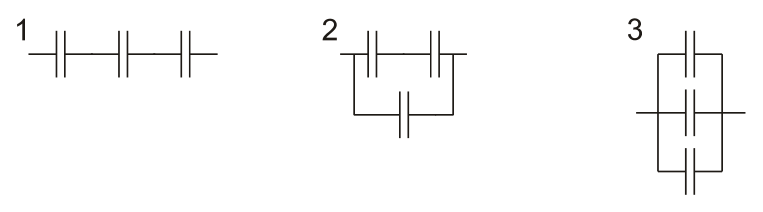
capacitor တစ်ခုစီကို C လို့ ထားမယ်။ ① သုံးခုလုံး series — 1C ပေါင်း = 3C၊ ဒါကြောင့် C3။
② အပေါ် လမ်းမှာ series နှစ်ခု (C2)၊ အောက် လမ်းမှာ တစ်ခု (C) — parallel မို့ ပေါင်း: C2 + C = 1.5C။
③ သုံးခုလုံး parallel — C + C + C = 3C။
အငယ်ကနေ စီရင် C3 < 1.5C < 3C → 1, 2, 3 → အဖြေ E။ series နဲ့ parallel ပုံသေနည်း ပြောင်းပြန် သုံးမိရင် 3, 2, 1 (D) ကို ရွေးမိမယ်။
👉 capacitor ကို resistor ဖြတ်ပြီး discharge လုပ်ရင် ဘယ်လောက် ကြာမလဲ?
discharge — capacitor က battery လို current ပို့တယ်
charge ပြည့်နေတဲ့ capacitor C ကို resistor R နဲ့ ဆက်လိုက်တယ်။
resistor — charge စီးတာ ဟန့်၊ ယူနစ် Ω။resistor (ခုခံပစ္စည်း) ဆိုတာ charge စီးတာကို ဟန့်ထားတဲ့ ပစ္စည်း — R ကြီးလေ စီးရ ခက်လေ။ ယူနစ် ohm (Ω)၊ 1 kΩ = 1000 Ω (အသေးစိတ် သင်ခန်းစာ 74)။
current I — capacitor က R ဖြတ် တွန်း = discharge။ဝါယာထဲ တစ်စက္ကန့်မှာ စီးတဲ့ charge ကို current (လျှပ်စီး၊ I) လို့ ခေါ်တယ်။ capacitor က battery လို current I ကို R ဖြတ် တွန်းပို့တယ် — ဒါကို discharge (charge ထုတ်ခြင်း) လို့ ခေါ်တယ်။
👉 charge ဘယ်လောက် မြန်မြန် ကုန်မလဲ?
RC — exponential decay နဲ့ time constant
Q များ → current ကြီး၊ နည်းလာ → နှေး — ကွေးမျဉ်း။အစမှာ Q များလို့ V = Q/C မြင့်ပြီး current ကြီးတယ်၊ Q မြန်မြန် ကျတယ်။ Q နည်းလာလေ V နိမ့်၊ current နည်း၊ ကျတာ နှေးလေ — ကွေးကွေး ကျတဲ့ မျဉ်း ရတယ်။
exponential decay — Q = Q₀ e−xဒီ ပုံစံကို exponential decay လို့ ခေါ်တယ်: Q = Q₀ e−x၊ x က t ကို RC နဲ့ စားတာ (e ≈ 2.718၊ သင်ခန်းစာ 57)။ Q က သုည ကို ဘယ်တော့မှ အတိအကျ မရောက်ဘူး။
τ = RC = time constant (အချိန် ကိန်းသေ) — τ မှာ 37% ကျန်RC ကို time constant (အချိန် ကိန်းသေ၊ τ — “tau” လို့ ဖတ်) လို့ ခေါ်တယ်: τ = RC။ τ တစ်ခု ကြာတိုင်း Q က 37% (e⁻¹ ≈ 0.37 ဆ) ကျန်တယ်။
2τ 14%၊ 3τ 5%။2τ မှာ 0.37 × 0.37 ≈ 14%၊ 3τ မှာ 5% လောက် ကျန်တယ်။ R ကြီးလေ (current နည်း)၊ C ကြီးလေ (charge များ) ကြာလေ။
✍️ C = 100 µF၊ R = 10 kΩ: τ = RC = 100 × 10⁻⁶ × 10 × 10³ = 1 s။ 1 s မှာ 37%၊ 2 s မှာ 14% ကျန်တယ်။ ယူနစ် Ω × F = s။
charge သွင်း — τ မှာ 63%။charge သွင်းတဲ့ အခါ ပြောင်းပြန် — Q က 0 ကနေ တက်ပြီး τ မှာ အပြည့်ရဲ့ 63% (100 − 37) ရောက်တယ်။
defibrillator — စက္ကန့် အနည်းငယ် သွင်း၊ ms ထုတ်။defibrillator က ဒီလို စက္ကန့် အနည်းငယ် ကြာအောင် charge သွင်းပြီး ms အတွင်း ထုတ်တယ် — လူ့ ခန္ဓာကိုယ်ရဲ့ R ငယ်လို့ τ တိုတယ်။
🤔 A 200 µF capacitor discharges through a 50 kΩ resistor. What is the time constant?
τ = RC = 50 × 10³ Ω × 200 × 10⁻⁶ F = 10 s။
10 000 s က k နဲ့ µ ကို 10 ရဲ့ ထပ်ကိန်း မပြောင်းဘဲ 50 × 200 မြှောက်မိတာ။
👉 ပဟေဠိ သုံးခုကို ပြန်ကြည့်မယ်။
ပဟေဠိ သုံးခု — ဖြေပြီးပြီ
🎉 ပဟေဠိ ① — ပူဖောင်း နံရံမှာ ကပ်တာ polarisation ကြောင့်။
② 1 cm ခွာရင် ကျ — F ∝ 1r²။ပဟေဠိ ② — 1 cm ခွာရင် ကျတာ force က r² နဲ့ ပြောင်းပြန် ကျလို့ (F ∝ 1r²)။
ပဟေဠိ ③ — defibrillator ရဲ့ 200 J က capacitor ထဲက 12CV²။
👉 PART 4 ကို ပြန်စစ်ပြီး သင်ခန်းစာ ပြီးမယ်။
👤 လူပုဂ္ဂိုလ်များ
1785 Coulomb — ပြင်သစ် ရူပဗေဒ ပညာရှင်၊ torsion balance (ဝါယာ လိမ်တဲ့ ချိန်ခွင်) နဲ့ charge နှစ်ခုကြား force ကို တိုင်းပြီး F = kq₁q₂r² ကို တွေ့ခဲ့တယ်။ charge ယူနစ် coulomb (C) က သူ့ နာမည်။
🔁 ပြန်ကြည့်မယ် — PART 4
🤔 A capacitor of capacitance C is connected to voltage V. The charge on each plate is…
Q = CV။
12CV² က energy။
🤔 Which change increases the capacitance of a parallel-plate capacitor?
C = εᵣε₀Ad — d ငယ်လေ၊ A ကြီးလေ၊ dielectric ထည့်လေ C ကြီးလေ။
🤔 The energy stored in a capacitor is…
W = 12QV = 12CV² — V–Q တြိဂံရဲ့ area။
12 မေ့ရင် 2 ဆ မှားမယ်။
🤔 Two identical capacitors are connected to the same battery, first in series and then in parallel. Which arrangement stores more charge in total?
series C2၊
parallel 2C — C က 4 ဆ ကွာလို့ V တူရင် Q = CV လည်း parallel က 4 ဆ။