Carbohydrates and lipids (2)
ကိုယ်က သိမ်းတဲ့ glucose နဲ့ မစားနိုင်တဲ့ glucose
Glycogen and cellulose
ကိုယ်က သိမ်းတဲ့ glucose နဲ့ မစားနိုင်တဲ့ glucose
ချည်ထည်ကလည်း glucose ပဲ
cotton, paper, wood — ဘာနဲ့ လုပ်ထားလဲ?ချည် (cotton) အင်္ကျီ၊ စက္ကူ (paper)၊ သစ်သား (wood) — ဒါတွေ ဘာနဲ့ လုပ်ထားလဲ?
သုံးခုလုံး glucose chains — ထမင်းနဲ့ အုတ်ခဲ တူ။အံ့သြစရာ — သုံးခုလုံး glucose ကြိုးရှည်တွေ (glucose chains) နဲ့ပဲ လုပ်ထားတာ။ ထမင်းနဲ့ အုတ်ခဲ အတူတူပဲ။
cow က မြက်ကနေ energy ရ။နွား (cow) က မြက်ကို စားပြီး အဲဒီ glucose ကို energy အဖြစ် သုံးနိုင်တယ်။
လူ မရ — glucose တူတူ ဘာလို့လဲ?ဒါပေမဲ့ လူက မြက်၊ စက္ကူ ဘယ်လောက် ဝါးဝါး energy မရဘူး။ glucose တူတူကို ဘာလို့ တစ်ယောက် သုံးနိုင်ပြီး တစ်ယောက် မသုံးနိုင်လဲ? ဒီ PART မှာ ဖြေမယ်။
တိရစ္ဆာန်ရဲ့ သိုလှောင်ရုံ — glycogen
liver ထဲ glycogen (တိရစ္ဆာန် glucose သိုလှောင်ကြိုး)တိရစ္ဆာန်တွေ (လူ အပါအဝင်) က ပိုတဲ့ glucose ကို starch နဲ့ မသိမ်းဘူး။ glycogen (ဂလိုက်ကိုဂျင်) အဖြစ် အသည်း (liver) ထဲမှာ သိမ်းတယ်။
muscle ထဲမှာလည်း glycogen၊ မှိုလည်း သုံး။အရိုးကို ဆွဲတဲ့ ကြွက်သား (skeletal muscles) ထဲမှာလည်း glycogen သိမ်းတယ်။ မှိုတွေလည်း glycogen ကို သုံးတယ်။
နေရာ နှစ်ခု — အလုပ် မတူလို့။ဘာလို့ ဒီ နှစ်နေရာမှာ အများဆုံး သိမ်းလဲ — အလုပ် မတူလို့ပါ။ အသည်းက ခန္ဓာကိုယ် တစ်ခုလုံးရဲ့ စားနပ်ရိက္ခာ ဂိုဒေါင်။
အသည်း — ညဘက် glucose ပြန်ဖြို သွေးထဲ လွှတ်။ထမင်း မစားတဲ့ ညဘက်မှာ သူ့ glycogen ကို glucose ပြန်ဖြိုပြီး သွေးထဲ လွှတ်ပေးလို့ ဦးနှောက် အပါအဝင် cell တိုင်း glucose ရနေတယ်။
ကြွက်သား — ကိုယ့်အလုပ် အတွက်ပဲ၊ သွေးထဲ မပြန်ပေး။ကြွက်သားကတော့ ကိုယ့်အိမ်က ထမင်းအိုး — သူ့ glycogen ကို ပြေးတဲ့၊ မ တဲ့ သူ့အလုပ်အတွက်ပဲ သုံးပြီး သွေးထဲ မပြန်ပေးဘူး။ တခြား cell တွေမှာ နည်းနည်းပဲ ရှိတယ်။
အဆီ cell — fat၊ အပင် — starch။အဆီ cell တွေက glycogen မဟုတ်ဘဲ fat ကို သိမ်းတယ် (PART 2)၊ အပင်တွေက glycogen မလုပ်ဘဲ starch ကို သိမ်းတယ်။
🤔 After a night without food, blood glucose stays steady. Which organ breaks down its glycogen and releases glucose into the blood?
🔍 မေးခွန်း ဖြည်မယ်
After a night without food = ည တစ်ညလုံး မစားဘဲ နေပြီးနောက်။ stays steady = မကျဘဲ တည်ငြိမ်နေတယ်။ breaks down … and releases … into the blood = … ကို ဖြိုပြီး သွေးထဲ လွှတ်ပေးတယ်။
မေးနေတာ — ခန္ဓာကိုယ် တစ်ခုလုံးအတွက် glucose ကို သွေးထဲ ပြန်ထည့်ပေးတဲ့ အင်္ဂါ ဘယ်ဟာလဲ။
အသည်းက ခန္ဓာကိုယ် တစ်ခုလုံးရဲ့ ဂိုဒေါင် — glycogen ကို glucose ဖြိုပြီး သွေးထဲ လွှတ်ပေးတယ်။
ကြွက်သားမှာလည်း glycogen ရှိပေမဲ့ ကိုယ့်အလုပ်အတွက်ပဲ သုံးပြီး သွေးထဲ မပေးဘူး။
fat tissue က fat ကို သိမ်းတယ်၊ ဦးနှောက်က glucose ကို သုံးတဲ့ဘက်။
glycogen — 8–12 လုံးတိုင်း ကိုင်းခွ၊ ပိုထူ။glycogen က amylopectin (သင်ခန်းစာ 24A) လိုပဲ 1,4 ကြိုးမှာ 1,6 ကိုင်းတွေ ခွထားတယ်။ ဒါပေမဲ့ glucose 8–12 လုံးမှာ တစ်ခါ ကိုင်းခွလို့ (branch every 8–12) ချုံပုတ်လို ပိုထူတယ်။
ကိုင်းများ ends များ — energy မြန်မြန် ရ။ကိုင်း များလေ အစွန်း (ends) များလေ။ enzyme တွေက အစွန်း အများကြီးကနေ တစ်ပြိုင်နက် glucose ကို ဖြတ်ထုတ်လို့ ပြေးတဲ့အခါ energy မြန်မြန် ရတယ်။
homopolysaccharide (အုတ်ခဲ တစ်မျိုးတည်း)monomer (အုတ်ခဲ) တစ်မျိုးတည်း — glucose ချည်းပဲ — နဲ့ ဆောက်ထားလို့ homopolysaccharide (homo = တူ) လို့ ခေါ်တယ်။ starch နဲ့ cellulose လည်း homo ပါပဲ။
IMAT 2025 Q44 — glycogen
📝 IMAT 2025 · Question 44
Glycogen:
IMAT — Glycogen က ဘာလဲ?glycogen အကြောင်း IMAT မှာ တကယ် ထွက်ခဲ့တဲ့ မေးခွန်း တစ်ခု ကြည့်မယ်။ Glycogen က ဘာလဲ?
“homopolysaccharide” ✔glucose တစ်မျိုးတည်းနဲ့ ဆောက်ထားလို့ “homopolysaccharide” က အဖြေ မှန်ပါ။
“heteropolysaccharide” ✗ — တစ်မျိုးတည်း။“heteropolysaccharide” ဆိုရင် monomer မတူတာ နှစ်မျိုး (hetero = ကွဲ) လိုတယ်။ glycogen မှာ glucose တစ်မျိုးတည်းမို့ မှားတယ်။
“disaccharide” ✗ — ထောင်ချီ ပါ။“disaccharide” ဆိုတာ sugar နှစ်လုံးပဲ။ glycogen မှာ ထောင်ချီ ပါလို့ မှားတယ်။
“animal and plant cells” ✗ — အပင် starch။“animal and plant cells” — အပင်က starch နဲ့ သိမ်းတယ်၊ glycogen မသုံးဘူး။ မှားတယ်။
“polypeptide” ✗ — protein ပါ။“polypeptide” ဆိုတာ amino acid ကြိုး — protein ပါ (သင်ခန်းစာ 25)။ carbohydrate မဟုတ်လို့ မှားတယ်။
ဖြောင့်ပြီး ခိုင်တဲ့ ကြိုး — cellulose
cellulose (β-glucose ကြိုး) — every 2nd flipped။cellulose (ဆဲလူလို့စ်) ကလည်း glucose ကို 1,4 ချိတ်နဲ့ ဆက်ထားတာပဲ။ ဒါပေမဲ့ β-glucose ပါ။ β ကို ချိတ်ဖို့ တစ်လုံးကျော် တစ်လုံး ဇောက်ထိုး လှန်ရတယ် (every 2nd flipped)။
straight chain — စပရိန်ရဲ့ ဆန့်ကျင်ဘက်။လှန်လှန် ဆက်တော့ ကြိုးက မလိမ်ဘဲ ဖြောင့်ဖြောင့် (straight chain) ဖြစ်တယ်။ amylose ရဲ့ စပရိန်နဲ့ ဆန့်ကျင်ဘက်ပါ။
ဘေးချင်း hydrogen bond အများကြီး။ဖြောင့်တဲ့ ကြိုးတွေ ဘေးချင်း ကပ်ပြီး OH တွေကြားမှာ hydrogen bond (H ချိတ် — သင်ခန်းစာ 10B) အများကြီး ဖြစ်ပြီး ကြိုးတွေကို together (အတူတူ) ချည်ထားတယ်။
fibre ဖြစ် — cell wall ရဲ့ သံချောင်း။ကြိုး ရာချီ စုပြီး ခိုင်တဲ့ အမျှင် (fibre) ဖြစ်တယ်။ အဲဒီ အမျှင်တွေက အပင် cell ရဲ့ cell wall (ဆဲလ်နံရံ) ကို ဆောက်တယ် — အိမ်ရဲ့ သံချောင်းလိုပါ။
cotton, paper — အများဆုံး organic molecule။ချည် (cotton) နဲ့ စက္ကူ (paper) က cellulose နီးပါး သက်သက်ပါ။ ကမ္ဘာပေါ်မှာ အများဆုံး ရှိတဲ့ organic molecule ပါ။
ပဟေဠိ ဖြေပြီ — ဘာလို့ ချည်ကို မစားနိုင်လဲ
enzyme = သော့ — amylase က α bond နဲ့ ကိုက်။ပဟေဠိ ဖြေမယ်။ enzyme ဆိုတာ သော့နဲ့ သော့ခလောက်လို ပုံ ကိုက်မှ အလုပ်လုပ်တယ်။ ကိုယ့် amylase က starch ရဲ့ α bond နဲ့ ကိုက်လို့ ဖြတ်နိုင်တယ်။
enzyme က ဖြတ်ပေးတဲ့ molecule = substrate (ဓာတ်ပြုခံ molecule) — amylase ရဲ့ substrate က starch။
β-1,4 — amylase နဲ့ မကိုက်၊ ဖြတ်မရ။cellulose ရဲ့ glucose တွေကြားက β-1,4 bond ကတော့ ပုံ မတူလို့ amylase နဲ့ မကိုက်ဘူး။ ဖြတ်မရဘူး။
cellulase (cellulose ဖြတ် enzyme) — လူ မထုတ်နိုင်cellulose ရဲ့ β-1,4 bond ကို ဖြတ်တဲ့ enzyme ကို cellulase (ဆဲလူလေ့စ်) လို့ ခေါ်တယ်။ လူ့ခန္ဓာကိုယ်က cellulase မထုတ်နိုင်ဘူး (no cellulase in humans)။
lactose ရဲ့ β bond ကိုတော့ lactase ဖြတ်နိုင်။β bond တိုင်း ဖြတ်မရတာ မဟုတ်ဘူး — နို့ထဲက lactose ရဲ့ β bond ကိုတော့ ကိုယ့် lactase က ဖြတ်နိုင်တယ်။
နွား အစာအိမ်ထဲ bacteria က cellulase ထုတ်။နွားရဲ့ အစာအိမ်ထဲမှာ bacteria (ဘက်တီးရီးယား) တွေ နေတယ်။ သူတို့က cellulase ထုတ်ပေးလို့ နွားက မြက်ကို ချေနိုင်တာပါ။
လူအတွက် cellulose = dietary fibre — အူ ကူ။ကိုယ့်အတွက်တော့ cellulose က မချေဘဲ ဖြတ်သွားတဲ့ အစာ အမျှင် (dietary fibre) ပါ။ အူ လှုပ်ရှားမှုကို ကူညီလို့ ကျန်းမာရေး ကောင်းတယ်။
🤔 Human lactase can cut the β bond in lactose, but it cannot digest cellulose. What does this show?
🔍 မေးခွန်း ဖြည်မယ်
can cut = ဖြတ်နိုင်တယ်။ but it cannot digest = ဒါပေမဲ့ ချေဖျက်လို့ မရဘူး။ What does this show? = ဒါက ဘာကို ပြလဲ (ဒီ အချက်ကနေ ဘာ သင်ခန်းစာ ရလဲ)။
မေးနေတာ — β bond ချင်း တူပေမဲ့ lactase က တစ်ခုကို ဖြတ်နိုင်ပြီး တစ်ခုကို မဖြတ်နိုင်တာ enzyme အကြောင်း ဘာကို ပြောလဲ။
β bond ချင်း တူပေမဲ့ molecule ပုံ မတူဘူး။
enzyme က သော့နဲ့ သော့ခလောက်လို ကိုယ့် substrate ပုံ နဲ့ပဲ ကိုက်တယ် — lactase က lactose နဲ့၊ cellulase က cellulose နဲ့။
glucose ကနေ အခွံ — chitin
ပိုးကောင် အခွံ = chitin (N ပါတဲ့ β-1,4 ကြိုး)ပိုးကောင်တွေရဲ့ အပြင် အခွံ မာမာက ဘာနဲ့ လုပ်ထားလဲ? သူလည်း glucose မိသားစုပါ။ chitin (ကိုင်တင်) ကြိုးက cellulose လိုပဲ β-1,4 ချိတ်နဲ့ ဖြောင့်ဖြောင့် ဆက်ထားတယ်။
ring တိုင်း N ပါ အုပ်စု — C, H, O + N။ကွာတာ တစ်ခုက ring တစ်ခုစီမှာ N ပါတဲ့ အုပ်စု တစ်ခု ကပ်နေတယ် (OH တစ်ခုရဲ့ နေရာမှာ)။ ဒါကြောင့် chitin မှာ C, H, O အပြင် N ပါတယ်။
insect အခွံ၊ crab shell၊ fungi cell wall။ကြိုးတွေ hydrogen bond နဲ့ ကပ်ပြီး ခိုင်တဲ့ အလွှာ ဖြစ်တယ် — ပိုးကောင် (insect) ရဲ့ အပြင် အရိုးစု (outer skeleton) လို အခွံ၊ ကဏန်း ခွံ (crab shell)၊ မှို (fungi — mushroom လို) ရဲ့ cell wall ပါ။
🤔 Which of these is NOT built from straight β-1,4 chains?
🔍 မေးခွန်း ဖြည်မယ်
is NOT built from = … နဲ့ ဆောက်ထားတာ မဟုတ်တဲ့ (NOT ကို သတိထား)။ straight β-1,4 chains = β-1,4 ချိတ်နဲ့ ဖြောင့်ဖြောင့် ဆက်ထားတဲ့ ကြိုးတွေ။
မေးနေတာ — ဒီ လေးခုထဲက ဖြောင့်တဲ့ β-1,4 ကြိုး မဟုတ်တဲ့ တစ်ခုကို ရွေးပါ။
cotton (ချည်) က cellulose၊ ပိုးကောင် အခွံနဲ့ မှို cell wall က chitin — နှစ်မျိုးလုံး ဖြောင့်တဲ့ β-1,4 ကြိုး။
starch ကတော့ α-glucose ကို α-1,4 (+ α-1,6) နဲ့ ဆက်ထားတာ (သင်ခန်းစာ 24A)။
👉 polysaccharide တွေ တစ်နေရာတည်း ယှဉ်ကြည့်မယ်။👉 polysaccharide တွေ အများကြီး တွေ့ခဲ့ပြီ — တစ်နေရာတည်းမှာ ယှဉ်ကြည့်မယ်။
polysaccharide လေးမျိုး ယှဉ်ကြည့်
amylose — α 1,4၊ spring၊ အပင် starch။amylose — α-glucose ကို 1,4 ချိတ် တစ်မျိုးတည်းနဲ့ ဆက်ပြီး စပရိန်လို လိမ်ထားတယ်။ အပင်ရဲ့ starch ပါ။
amylopectin — α 1,4 + 25 လုံးတိုင်း 1,6 ကိုင်း။amylopectin — α 1,4 ကြိုးမှာ glucose 25 လုံးလောက်တိုင်း 1,6 ကိုင်း ခွတယ်။ သူလည်း အပင်ရဲ့ starch ပါ။
glycogen — 8–12 လုံးတိုင်း ကိုင်း၊ တိရစ္ဆာန်။glycogen — amylopectin လိုပဲ၊ ဒါပေမဲ့ 8–12 လုံးတိုင်း ကိုင်းခွလို့ ပိုထူတယ်။ တိရစ္ဆာန်ရဲ့ အသည်း၊ ကြွက်သားထဲက သိုလှောင်ရုံပါ (မှိုလည်း glycogen သုံးတယ်)။
cellulose — β 1,4၊ ဖြောင့်၊ cell wall၊ ကိုင်း မရှိ။cellulose — β-glucose ကို 1,4 နဲ့ ဆက်လို့ ကြိုး ဖြောင့်ပြီး အမျှင် ဖြစ်တယ်။ အပင် cell wall ပါ။ ကိုင်းခွဲမှု မရှိဘူး။
α/β၊ 1,6 ကိုင်း၊ နေရာ — 👉 တွက်ချက် မေးခွန်း ကြည့်မယ်။မှတ်ရန် — α/β ဘယ်ဟာ၊ 1,6 ကိုင်း ရှိမရှိ၊ ဘယ်နေရာ — ဒီ သုံးချက် မေးတတ်တယ်။ 👉 ကဲ IMAT ရဲ့ တွက်ချက် မေးခွန်း တစ်ခု ကြည့်မယ်။
IMAT 2011 Q43 — glucose 5 လုံး ကြိုး
📝 IMAT 2011 · Question 43
What would be the chemical formula of a polysaccharide made up of five glucose monomers?
✍️ glucose 5 လုံး ကြိုးတန်း ဆွဲကြည့်ပါ။
5 လုံးကို ဆက်ဖို့ ချိတ် 4 ခု လိုတယ် (ကြားတွေ ရေတွက်)။ ချိတ် တစ်ခု = ရေ တစ်ခု — H₂O 4 ခု ထွက်တယ်။
glucose 5 လုံး ပေါင်း: 5 × C₆H₁₂O₆ = C₃₀H₆₀O₃₀။
ရေ 4 ခု နုတ် — H 8 လုံး၊ O 4 လုံး (H₈O₄)။
H 60 − 8 = 52၊ O 30 − 4 = 26 — အဖြေ C₃₀H₅₂O₂₆။
C₃₀H₆₀O₃₀ က ရေ ထုတ်ဖို့ မေ့ရင် ရတဲ့ ထောင်ချောက်ပါ (no water out)။
C₆H₁₂O₆, C₅H₁₀O₅, (CHn₋₁O)₂ — မှား။C₆H₁₂O₆ က glucose တစ်လုံးပဲ၊ C₅H₁₀O₅ က pentose (ribose) ပါ။ ကျန်တဲ့ (CHn₋₁O)₂ ကလည်း atom 30 လုံး မပေးလို့ မှားတယ်။
👆 Change the number of glucose units. Water lost = · formula C H O
🤔 What is the formula of a chain of 3 glucose units?
🔍 မေးခွန်း ဖြည်မယ်
formula = ဓာတုဖော်မြူလာ (C, H, O ဘယ်နှလုံးစီ)။ a chain of 3 glucose units = glucose 3 လုံး ဆက်ထားတဲ့ ကြိုး။
မေးနေတာ — glucose 3 လုံး ချိတ်ပြီးရင် molecule တစ်ခုလုံးရဲ့ ဖော်မြူလာ ဘာလဲ (ချိတ်တိုင်း ထွက်တဲ့ ရေကို မမေ့နဲ့)။
3 × C₆H₁₂O₆ = C₁₈H₃₆O₁₈။
ချိတ် 2 ခု → H₂O 2 ခု (H₄O₂) နုတ် → C₁₈H₃₂O₁₆။
C₁₈H₃₄O₁₇ က ရေ တစ်ခုပဲ နုတ်ထားတာ။
IMAT 2012 Q45 — ဘယ် OH တွေ ချိတ်လဲ
📝 IMAT 2012 · Question 45
If a glucose molecule became incorporated as a non-terminal component of starch, which two regions, labelled i to v, would be involved in forming glycosidic bonds?
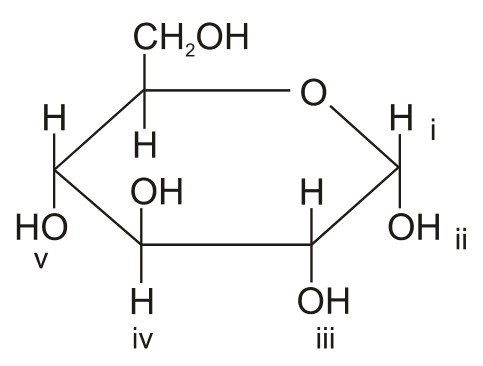
စာမေးပွဲ ပုံကို ပြန်ဆွဲထားတယ်။ i မှ v အထိ အုပ်စု ငါးခု ရှိတယ်။
① ring O ရှာ — C1 … C5 နံပါတ်။အဆင့် ① — ring O ကို ရှာ၊ သူ့ညာ ကပ်လျက်ကနေ C1, C2, C3, C4, C5 နံပါတ် တပ်တယ်။
② အလယ် glucose — C1 နဲ့ C4 သုံး။အဆင့် ② — ကြိုးရဲ့ အလယ် (non-terminal) glucose ဆိုတော့ ရှေ့ကို တစ်ချိတ်၊ နောက်ကို တစ်ချိတ် လိုတယ်။ starch ကြိုးက 1,4 ချိတ်မို့ C1 နဲ့ C4 ကို သုံးတယ်။
③ C1 ပေါ်က OH = ii ✔အဆင့် ③ — C1 ပေါ်က OH က ii ✔ (ချိတ်က OH တွေကြားမှာ ဖြစ်တယ်၊ H နဲ့ မဖြစ်ဘူး)။
C4 ပေါ်က OH က v ✔ — အဖြေ “ii and v”။
i, iv = H ✗၊ iii = C2 OH ✗။i နဲ့ iv က H တွေမို့ ချိတ် မဖွဲ့ဘူး ✗။ iii က C2 ရဲ့ OH — starch မှာ မသုံးဘူး ✗။
🤔 In a branch point of amylopectin, the extra bond of the glucose uses the OH on…
🔍 မေးခွန်း ဖြည်မယ်
branch point = ကိုင်းခွတဲ့ နေရာ။ the extra bond = ပိုလာတဲ့ ချိတ် (ကြိုးမှာ ပုံမှန် ချိတ်အပြင် နောက်ထပ် တစ်ခု)။ uses the OH on… = … ပေါ်က OH ကို သုံးတယ်။
မေးနေတာ — ကိုင်းခွဖို့ glucose ရဲ့ ဘယ်နံပါတ် carbon ပေါ်က OH နဲ့ ချိတ်လဲ။
ကိုင်းခွတာက 1,6 ချိတ် — CH₂OH ထဲက C6 ရဲ့ OH ကို သုံးတယ်။
🔎 ကြိုကြည့်မယ် — cell ရဲ့ အထဲ (nucleolus, Golgi apparatus ပါ)
cell ထဲက နေရာတွေ — သင်ခန်းစာ 28, 29 မှာ အပြည့်။နောက် scene တွေမှာ cell ရဲ့ အထဲက နေရာတွေ ပါလာမယ်။ အဲဒါတွေကို သင်ခန်းစာ 28, 29 မှာ အပြည့် သင်မှာ ဖြစ်လို့ ဒီမှာ ပုံနဲ့ ကြိုကြည့်ထားမယ်။
အခန်းငယ်လေး = cell (သက်ရှိရဲ့ အသေးဆုံး အခန်း)သစ်ရွက် တစ်ရွက်ကို အရမ်း ချဲ့ကြည့်ရင် အခန်းငယ်လေးတွေ စီထားတာ တွေ့ရတယ်။ အဲဒီ အခန်း တစ်ခန်းကို cell (သက်ရှိရဲ့ အသေးဆုံး အခန်း) လို့ ခေါ်တယ်။
လူ့ခန္ဓာကိုယ်လည်း cell တွေနဲ့ပဲ ဆောက်ထားတာ။
အစိမ်း အထူ = cell wall (မာတဲ့ အပြင်နံရံ) — အပင်မှာပဲအခန်းမှာ နံရံ ရှိသလို cell မှာလည်း အကာ ရှိတယ်။ အပြင်ဆုံး အစိမ်း အထူက အပင် cell မှာပဲ ရှိတဲ့ cell wall (မာတဲ့ အပြင်နံရံ)။
ပါးပါးလေး = membrane (cell ကို ပတ်ထားတဲ့ အရေပြား)သူ့အတွင်းဘက်ကပ်ရက် ပါးပါးလေးက membrane (cell တစ်လုံးလုံးကို ပတ်ထားတဲ့ အရေပြား) — ဘာ ဝင်၊ ဘာ ထွက် ကို သူ စစ်ပြီး things (ပစ္စည်းတွေ) leaking out (ယိုထွက်) မဖြစ်အောင် ထိန်းတယ်။ တိရစ္ဆာန် cell မှာ wall မရှိဘူး၊ membrane ပဲ ရှိတယ်။
ခရမ်း အလုံး = nucleus (DNA သိမ်းတဲ့ ရုံးခန်း)အထဲက ခရမ်းရောင် အလုံးက nucleus (ညွှန်ကြားချက် စာအုပ် သိမ်းတဲ့ ရုံးခန်း)။ cell က ဘာ ဆောက်ရမလဲ ဆိုတဲ့ ပုံစံတွေ (DNA) ဒီထဲမှာ ရှိတယ်။
nucleus ထဲက အစက် နက်နက် = nucleolus (ribosome အတွက် RNA လုပ်တဲ့ နေရာ)။
လိမ္မော် အလုံးရှည် = mitochondrion (စွမ်းအင် မီးဖို)cell က အလုပ် လုပ်ဖို့ စွမ်းအင် လိုတယ်။ လိမ္မော်ရောင် အလုံးရှည်က mitochondrion (စွမ်းအင် ထုတ်တဲ့ မီးဖို)။ glucose (အပြာ ခြောက်ထောင့်) ကို cell ထဲမှာ အရင် ခွဲထားတဲ့ အပိုင်းတွေ ဝင်လာရင် သူ ဆက်ချေပြီး အဝါ အကြွေစေ့လေးတွေ အများစုကို ထုတ်ပေးတယ်။
အစိမ်း အလုံး = chloroplast (glucose ချက်တဲ့ မီးဖိုချောင်)အစိမ်း အလုံးက အပင် cell မှာပဲ ရှိတဲ့ chloroplast (နေရောင် — sunlight — နဲ့ glucose ချက်တဲ့ မီးဖိုချောင်)။ တိရစ္ဆာန်က အစာ စားရတယ်၊ အပင်က ဒီမှာ ကိုယ်တိုင် ချက်တယ်။
ခရမ်း အလွှာ = Golgi (ထုပ်ပိုး ပို့တဲ့ စာတိုက်)ခရမ်း အလွှာ ထပ်ထပ်က Golgi (ထုပ်ပိုးပြီး ပို့တဲ့ စာတိုက်)။ cell က ဆောက်ထားတဲ့ ပစ္စည်းတွေကို ဒီမှာ အမှတ်တံဆိပ် ကပ်၊ ထုပ်ပြီး လိုတဲ့ နေရာ ပို့တယ်။ နာမည် အပြည့်က Golgi apparatus ပါ။
အဝါ အကြွေစေ့ကို ATP (cell သုံးနိုင်တဲ့ စွမ်းအင် အကြွေ) လို့ ခေါ်တယ်။
glucose = ငွေစက္ကူကြီး — mitochondrion က အကြွေ လဲပေး။glucose က ငွေစက္ကူ အကြီးလို တိုက်ရိုက် သုံးမရဘူး၊ mitochondrion က အကြွေ လဲပေးမှ ကြွက်သား လှုပ်တာ၊ ပစ္စည်း ဆောက်တာတွေမှာ သုံးလို့ ရတယ်။
အပြည့်အစုံက သင်ခန်းစာ 27 နဲ့ 44 မှာ။
🤔 A cell loses all of its mitochondria. What can it no longer do well?
🔍 မေးခွန်း ဖြည်မယ်
loses all of its … = သူ့ရဲ့ … အားလုံး ပျောက်သွားတယ်။ can no longer do = မလုပ်နိုင်တော့ဘူး။ well = ကောင်းကောင်း။
မေးနေတာ — mitochondrion မရှိတော့ရင် cell က ဘယ်အလုပ်ကို ကောင်းကောင်း မလုပ်နိုင်တော့မလဲ။
mitochondrion က glucose ကို ATP အကြွေ လဲပေးတဲ့ မီးဖို — မရှိရင် စွမ်းအင် မလောက်တော့ဘူး။
ယိုမထွက်အောင် ထိန်းတာက membrane၊ DNA သိမ်းတာက nucleus၊ နေရောင်နဲ့ glucose ချက်တာက chloroplast။
👉 နေရာတွေ သိပြီ။ အခု carbohydrate က ဒီနေရာတွေထဲ ဘယ်မှာ ရှိလဲ ကြည့်မယ်။
cell ထဲမှာ carbohydrate ဘယ်မှာ ရှိလဲ
📝 IMAT 2017 Q26 (အပင် cell ရဲ့ အစိတ်အပိုင်း လေးခုမှာ carbohydrate monomer ပါလား) → သင်ခန်းစာ 29 မှာ အပြည့် ဖြေထားတယ်။ ဒီမှာ နေရာ တစ်ခုချင်း သင်ပြီး တိရစ္ဆာန် cell နဲ့ မေးခွန်း အသစ် လုပ်မယ်။
cell wall = cellulose။carbohydrate တွေ cell ထဲ ဘယ်နေရာမှာ ရှိလဲ? IMAT က မကြာခဏ မေးတယ်။ အပင် cell ရဲ့ cell wall က cellulose ပါ။
membrane အပြင် sugar chains — နာမည်ကတ်ပြား။cell membrane (ဆဲလ်အမြှေး) ရဲ့ အပြင်ဘက်မှာ protein တွေပေါ် sugar ကြိုးတိုလေးတွေ (sugar chains) ကပ်နေတယ် — cell ချင်း မှတ်မိဖို့ နာမည်ကတ်ပြားလိုပါ။
nucleolus — RNA (ribose) လုပ်။nucleus ထဲက nucleolus (နျူကလီယိုလပ်စ်) က ribosome ဆောက်ဖို့ RNA လုပ်တယ်။ RNA မှာ ribose ပါလို့ carbohydrate အုတ်ခဲ ရှိတယ်။
mitochondrion — ATP ထုတ်၊ DNA, RNA ပါ။mitochondrion (မိုက်တိုကွန်ဒရီးယား) က glucose ကနေ ရတဲ့ အပိုင်းတွေကို ချေပြီး ATP ထုတ်တယ်။ သူ့မှာ ကိုယ်ပိုင် DNA, RNA လည်း ရှိတယ် (deoxyribose, ribose)။
chloroplast — glucose ဆောက်၊ starch သိမ်း။အရွက် cell မှာ chloroplasts (ကလိုရိုပလတ်တွေ) အများကြီး ရှိတယ်။ သူတို့က နေရောင်နဲ့ glucose ကို ဆောက်ပြီး starch အစေ့လေးတွေ အဖြစ် သိမ်းတယ်။
Golgi — protein ပေါ် sugar ကြိုး တပ်။Golgi (ဂေါ်လ်ဂျီ) apparatus က protein တွေပေါ် sugar ကြိုး တပ်ပေးပြီး ထုပ်ပိုး ပို့တဲ့ နေရာ ပါ (သင်ခန်းစာ 29)။
🤔 The following are found in a human liver cell:
1. a glycogen granule
2. a ribosome
3. the nucleus
4. a fat (triglyceride) droplet
Which of them contain molecules built from carbohydrate monomers?
🔍 မေးခွန်း ဖြည်မယ်
The following are found in … = အောက်ပါတို့ကို … ထဲမှာ တွေ့ရတယ်။ Which of them contain … = အဲဒီထဲက ဘယ်ဟာတွေမှာ … ပါလဲ။
built from carbohydrate monomers = sugar အုတ်ခဲ (glucose, ribose, deoxyribose) နဲ့ ဆောက်ထားတဲ့။
မေးနေတာ — 1 ကနေ 4 တစ်ခုချင်းရဲ့ molecule ထဲမှာ sugar အုတ်ခဲ ပါ၊ မပါ စစ်ပြီး ပါတဲ့ ဟာတွေကို ရွေးပါ။
1 ✓ glycogen = glucose polymer။
2 ✓ ribosome ထဲက RNA မှာ ribose။
3 ✓ nucleus ထဲက DNA မှာ deoxyribose။
4 ✗ triglyceride က glycerol + fatty acid — sugar မပါဘူး။
ဒါကြောင့် 1, 2 and 3 only။
နေရာ 6 ခုလုံး carbohydrate monomer ပါ။ဒါကြောင့် ပုံထဲက နေရာ 6 ခုလုံးမှာ carbohydrate monomer (glucose, ribose, deoxyribose လို sugar အုတ်ခဲ) ပါတဲ့ molecule ရှိတယ်။
polymer ကြီး ဒါမှမဟုတ် ribose လို အပိုင်း။sugar က polymer ကြီး (cellulose, starch) ဖြစ်ချင် ဖြစ်မယ်၊ RNA ထဲက ribose လို အပိုင်း ဖြစ်ချင် ဖြစ်မယ်။
fat droplet ထဲက triglyceride က lipid ပါ — glycerol မှာ OH 3 ခု ပါပေမဲ့ sugar မဟုတ်ဘူး။
ထောင်ချောက် — glycerol က sugar မဟုတ်၊ lipid။ထောင်ချောက်: fat droplet ထဲက glycerol က OH 3 ခု ပါပေမဲ့ sugar မဟုတ်ဘူး — triglyceride က lipid ပါ (PART 2)။
IMAT 2016 Q37 — organelle သုံးခု
📝 IMAT 2016 · Question 37
In which of the following organelles do carbohydrates play a relevant role?
1 mitochondria
2 Golgi apparatus
3 chloroplasts
mitochondrion — glucose ကနေ ATP ✔mitochondrion (မိုက်တိုကွန်ဒရီးယား) — glucose ကို cell ထဲမှာ အပိုင်းပိုင်း ခွဲပြီး ရတဲ့ အပိုင်းတွေကို ဆက်ချေပြီး ATP ထုတ်တယ် ✔။
Golgi — protein ပေါ် sugar ကြိုး၊ polysaccharide ✔Golgi apparatus — အလွှာ ထပ်ထားတဲ့ အိတ်ပြားလေးတွေ။ protein ပေါ်ကို sugar ကြိုးတိုလေးတွေ တပ်ပေးတယ်၊ အပင်မှာ cell wall အတွက် polysaccharide ထုတ်တယ် ✔ (သင်ခန်းစာ 29)။
chloroplast — glucose ဆောက်၊ starch သိမ်း ✔chloroplast — နေရောင်နဲ့ glucose ကို ဆောက်ပြီး starch အစေ့လေးတွေ အဖြစ် သိမ်းတယ် ✔။
သုံးခုလုံးမှာ carbohydrate အရေးပါတယ် — အဖြေ “1, 2 and 3”။
🔁 ပြန်စစ်မယ် — အဖြေ မကြည့်ခင် စဉ်းစားပါ
🤔 Where do animals store glycogen?
🔍 မေးခွန်း ဖြည်မယ်
Where = ဘယ်နေရာမှာ။ store = သိုလှောင်ထားတယ်။
မေးနေတာ — တိရစ္ဆာန်တွေ (လူ အပါအဝင်) glycogen ကို ခန္ဓာကိုယ်ရဲ့ ဘယ်နေရာတွေမှာ သိမ်းလဲ။
glycogen ကို အသည်း (ခန္ဓာကိုယ် တစ်ခုလုံးအတွက် ဂိုဒေါင်) နဲ့ ကြွက်သား (ကိုယ့်အလုပ်အတွက်) မှာ သိမ်းတယ်။
အဆီ cell က fat ကို သိမ်းတယ်၊ cell wall နဲ့ chloroplast က အပင်မှာပဲ ရှိပြီး အပင်က starch ကို သိမ်းတယ်။
🤔 Which polysaccharide is made of β-glucose?
🔍 မေးခွန်း ဖြည်မယ်
polysaccharide = sugar အုတ်ခဲ အများကြီး ဆက်ထားတဲ့ ကြိုးရှည်။ is made of = … နဲ့ လုပ်ထားတယ်။
မေးနေတာ — α-glucose မဟုတ်ဘဲ β-glucose နဲ့ ဆောက်ထားတဲ့ polysaccharide ဘယ်ဟာလဲ။
cellulose = β-glucose, ဖြောင့်ပြီး H ချိတ်နဲ့ ကပ်တယ်။
ကျန်တာ α။
🤔 Why can a cow digest grass?
🔍 မေးခွန်း ဖြည်မယ်
Why can … ? = ဘာကြောင့် … နိုင်တာလဲ။ digest = ချေဖျက်တယ်။ grass = မြက်။
မေးနေတာ — လူ မချေနိုင်တဲ့ မြက်ကို နွားက ဘာကြောင့် ချေနိုင်တာလဲ — အကြောင်းရင်း မှန်တဲ့ တစ်ခု။
အူထဲက bacteria တွေ cellulase ထုတ်ပေးလို့ပါ။
🤔 A chain of 4 glucose units loses how many water molecules?
🔍 မေးခွန်း ဖြည်မယ်
loses = ဆုံးရှုံးတယ် / ထွက်သွားတယ်။ how many water molecules = ရေ molecule ဘယ်နှခု။
မေးနေတာ — glucose 4 လုံး ကြိုးတစ်ချောင်း ဖြစ်အောင် ချိတ်တဲ့အခါ ရေ ဘယ်နှခု ထွက်လဲ။
n လုံးဆို ချိတ် n − 1 — 3 ခု၊ ရေ 3 ခု။
🤔 Amylose and cellulose are both unbranched chains of glucose joined by 1,4 bonds. What makes them different?
🔍 မေးခွန်း ဖြည်မယ်
are both = နှစ်ခုလုံး … ဖြစ်တယ် (တူတဲ့ အချက်)။ unbranched = ကိုင်း မခွတဲ့။ joined by 1,4 bonds = 1,4 ချိတ်နဲ့ ဆက်ထားတဲ့။
What makes them different? = သူတို့ကို ဘာက ကွဲပြားစေလဲ။
မေးနေတာ — တူတဲ့ အချက်တွေ ရှိပေမဲ့ amylose နဲ့ cellulose ကို မတူအောင် လုပ်တဲ့ အချက် ဘာလဲ။
amylose က α-glucose — စပရိန်လို လိမ်တယ်။
cellulose က β-glucose — တစ်လုံးကျော် လှန်ဆက်လို့ ဖြောင့်တယ်။
နှစ်ခုလုံး ကိုင်း မခွဘူး၊ N ပါတာက chitin။
Fats and oils
ထောပတ်၊ ဆီ နဲ့ ကိုယ့်ရဲ့ energy ဘဏ်
ထောပတ်က အခဲ၊ နှမ်းဆီက အရည်
စားပွဲပေါ်မှာ ထောပတ် (butter) တုံး တစ်တုံး ရှိတယ်။ အခဲ (solid) ပါ။
ဘေးမှာ နှမ်းဆီ (sesame oil) ပုလင်း ရှိတယ်။ အရည် (liquid) ပါ။
အခန်း အပူချိန် (room temperature) တူတူ 25 °C မှာပဲ ထားထားတာ။
နှစ်ခုလုံး fat — တစ်ခု အခဲ တစ်ခု အရည် ဘာလို့လဲ?နှစ်ခုလုံး အဆီ (fat) ပဲ။ ဒါဆို ဘာလို့ တစ်ခုက အခဲ၊ တစ်ခုက အရည် ဖြစ်နေလဲ? fat molecule ကို ဖွင့်ကြည့်ပြီး ဖြေမယ်။
ရေထဲ မပျော်တဲ့ မိသားစု — lipid
ဆီကို ရေထဲ ထည့်ရင် မရောဘဲ အပေါ်မှာ ပေါ်နေတယ်။
not in water = lipid (ရေထဲ မပျော်တဲ့ အဆီဓာတ်) — hydrophobicရေထဲ မပျော်တဲ့ (not in water) ဒီ အဆီဓာတ် အုပ်စုကို lipid (လစ်ပစ်) လို့ ခေါ်တယ်။ ရေကို ရှောင်တဲ့ သဘောကို hydrophobic (ရေကြောက်) လို့ ခေါ်တယ် (သင်ခန်းစာ 23A)။
lipid အများစု ether ထဲ ပျော်၊ fat, oil က ethanol ထဲလည်း ပျော်။ether (အီသာ — ဓာတ်ခွဲခန်းသုံး non-polar အရည်) လို non-polar ပျော်စေသူ (solvent) ထဲမှာတော့ lipid အများစု ပျော်တယ်။ fat နဲ့ oil က ethanol ထဲမှာလည်း ပျော်လို့ နောက် scene ရဲ့ emulsion test မှာ ethanol ကို သုံးတယ်။
C, H, O — ဒါပေမဲ့ very little O။lipid မှာလည်း C, H, O ပါတယ်။ ဒါပေမဲ့ carbohydrate ထက် O အများကြီး နည်းတယ် (very little O)။ ဒီ အချက်ကို နောက်မှ energy နဲ့ ဆက်မယ်။
lipid လေးစု — ပထမ triglyceride (energy သိုလှောင်)။lipid မိသားစုမှာ လေးစု ရှိတယ်။ ပထမ — ထောပတ်၊ ဆီ လို triglyceride (energy သိုလှောင်)။
ဒုတိယ — phospholipid (cell အမြှေး ဆောက်)။
တတိယ — cholesterol လို steroid (carbon ကွင်း 4 ခု)။
စတုတ္ထ wax — ရေ မစိုအောင် ကာ၊ polymer မဟုတ်။စတုတ္ထ — wax (ဖယောင်း) — အရွက် အပေါ်ယံ၊ ပျားဖယောင်း လို ရေ မစိုအောင် ကာတယ်။ lipid က ကြိုးရှည် polymer မဟုတ်ဘူး — ဒါကို သတိထားပါ။
lipid ပါလား — emulsion test
emulsion test (lipid စစ်နည်း) — ethanol နဲ့ လှုပ်။အစာထဲ lipid ပါလား စစ်ချင်ရင် emulsion test ကို သုံးတယ်။ ပထမ — အစာ အနည်းငယ်ကို ethanol နဲ့ ပြွန်ထဲ ထည့်ပြီး ပြင်းပြင်း လှုပ်တယ်။
lipid က ethanol ထဲမှာ ပျော်သွားတယ်။
🤔 The ethanol now holds the dissolved lipid. It is poured into water, in which lipids do not dissolve. What will you see?
🔍 မေးခွန်း ဖြည်မယ်
now holds the dissolved lipid = အခု ပျော်နေတဲ့ lipid ကို ဆောင်ထားတယ်။ is poured into water = ရေထဲ လောင်းလိုက်တယ်။ in which lipids do not dissolve = lipid မပျော်တဲ့ (ရေ)။
မေးနေတာ — ရေထဲ လောင်းပြီးရင် ပြွန်ထဲမှာ ဘာ မြင်ရမလဲ။
lipid က ရေထဲ မပျော်လို့ အစက်ကလေး ထောင်ချီ အဖြစ် ပြန်ထွက်ပြီး အလင်းကို ဖြာစေတယ် — နို့ဖြူ (emulsion)။
blue-black က starch test၊ အုတ်နီ က Benedict's test။
ရေထဲ လောင်း — နို့လို ဖြူ = emulsion။အဲဒီ ethanol ကို ရေ ထည့်ထားတဲ့ ပြွန်ထဲ လောင်းလိုက်တယ်။ lipid က ရေထဲ မပျော်လို့ အစက်ကလေးတွေ အဖြစ် ပြန်ထွက်လာပြီး ရေက နို့လို ဖြူဖြူ နောက်သွားတယ် — emulsion (ဆီစက် ပျံ့နေတဲ့ အရည်)။
lipid မပါရင် ရေက ကြည်ကြည် ကျန်တယ်။
မရောနဲ့ — starch ကို iodine နဲ့ စစ်ရင် blue-black colour appears (အပြာ-အမည်း အရောင် ပေါ်လာ)။
sugar ကို Benedict's နဲ့ စစ်ရင် brick-red precipitate (အုတ်နီရောင် အနည်) ဖြစ်တယ် (သင်ခန်းစာ 24A)။
👉 အခု fat molecule ထဲကို ဝင်ကြည့်မယ်။
fat ရဲ့ အုတ်ခဲ — glycerol နဲ့ fatty acid
glycerol (ဂလစ်ဆရော) — carbon 3 လုံး။fat ကို အပိုင်း နှစ်မျိုးနဲ့ ဆောက်တယ်။ ပထမက glycerol (ဂလစ်ဆရော) — carbon 3 လုံး ဒေါင်လိုက် တန်းထားတဲ့ molecule ပါ။
OH 3 ခု — alcohol၊ C₃H₈O₃။carbon တစ်လုံးစီမှာ OH တစ်ခုစီ — OH 3 ခု ပါလို့ alcohol (အယ်လ်ကိုဟော) အမျိုးအစားပါ (သင်ခန်းစာ 22A)။ ကျန်တဲ့ လက်တွေမှာ H (အဖြူ လုံးလေးတွေ) ချိတ်ထားတယ် — အားလုံး ပေါင်း C₃H₈O₃။
fatty acid (အဆီ acid) — ဇစ်ဇက် ကြိုးရှည်။ဒုတိယက fatty acid (အဆီ acid) — carbon တွေ ဇစ်ဇက်ပုံ ကြိုးရှည် ဆက်ထားတာပါ။
အဆုံးမှာ COOH — acid။ကြိုး အဆုံးမှာ COOH (carboxylic acid အုပ်စု — သင်ခန်းစာ 22B) ပါလို့ acid လို့ ခေါ်တာပါ။ C တစ်လုံးမှာ =O (double bond O) နဲ့ –OH နှစ်ခုလုံး ကပ်ထားတဲ့ အုပ်စု တစ်ခုပါ။
12–20 carbons၊ H တွေ ကပ်။အစားအစာထဲက fatty acid အများစုမှာ carbon 12–20 လုံးလောက် ပါတယ် (12–20 carbons)။ COOH ရဲ့ carbon ကလွဲရင် ကြိုးထဲက carbon တိုင်းမှာ H တွေ ကပ်ထားတယ်။
🤔 Each OH of glycerol can join the COOH of one fatty acid, and each join releases water. How many fatty acids can one glycerol hold, and how many water molecules are released?
🔍 မေးခွန်း ဖြည်မယ်
Each OH … can join the COOH of one fatty acid = OH တစ်ခုစီက fatty acid တစ်ချောင်းရဲ့ COOH နဲ့ ချိတ်နိုင်တယ်။ each join releases water = ချိတ်တိုင်း ရေ ထွက်တယ်။
can … hold = ကိုင်ထားနိုင်တယ်။ မေးနေတာ — glycerol တစ်ခုက fatty acid ဘယ်နှချောင်း ကိုင်နိုင်ပြီး ရေ ဘယ်နှခု ထွက်လဲ — နှစ်ခုလုံး ဖြေရမယ်။
glycerol မှာ OH 3 ခု → ချိတ် 3 ခု → fatty acid 3 ချောင်း။
ချိတ် တစ်ခု ဖြစ်တိုင်း condensation မို့ ရေ တစ်ခု ထွက်လို့ ရေ 3 (နောက် scene)။
E ပုံ molecule — triglyceride
glycerol ရဲ့ OH 3 ခု — fatty acid 3 ချောင်း မျက်နှာဆိုင်။glycerol ရဲ့ OH 3 ခုက fatty acid 3 ချောင်းရဲ့ COOH (HOOC) နဲ့ မျက်နှာချင်း ဆိုင်တယ်။
ရေ ထွက် = ester bond (အက်စတာ ချိတ်) — condensationOH နဲ့ COOH ချိတ်ရင် ရေ တစ်ခု ထွက်ပြီး ester bond (အက်စတာ ချိတ် — သင်ခန်းစာ 22B) ဖြစ်တယ်။ sugar ချိတ်တုန်းကလိုပဲ condensation ပါ။
ဒုတိယ fatty acid လည်း ချိတ်တယ် — ရေ နောက်ထပ် တစ်ခု ထွက်တယ်။
တတိယ ချိတ်ပြီးရင် စုစုပေါင်း ရေ 3 ခု ထွက်တယ် (3 H₂O out)။
E-shape = triglyceride (ထရိုင်ဂလစ်ဆရိုက်)ရလာတဲ့ molecule က အင်္ဂလိပ် “E” စာလုံးပုံ (E-shape) ပါ။ ဒါကို triglyceride (ထရိုင်ဂလစ်ဆရိုက်) လို့ ခေါ်တယ် — ထောပတ်၊ ဆီ၊ ကိုယ့် အဆီ ထဲက lipid အများစုက ဒါပါ။
tri = 3 — triacylglycerol လို့လည်း ခေါ်။tri ဆိုတာ 3၊ glyceride ဆိုတာ glycerol ester။ fatty acid (acyl) 3 ချောင်း ပါလို့ triacylglycerol လို့လည်း ခေါ်တယ် — နာမည် နှစ်ခု၊ molecule တစ်ခုတည်းပါ။
IMAT 2021 Q25 — triglyceride formula
📝 IMAT 2021 · Question 25
Three fatty acids with the formula C8H16O2 react with glycerol (C3H8O3) to form a triglyceride. Which of the following is the correct formula for the triglyceride?
✍️ fatty acid C₈H₁₆O₂ 3 ခု — 3 × C₈H₁₆O₂ = C₂₄H₄₈O₆။
glycerol C₃H₈O₃ ပေါင်း — C₂₇H₅₆O₉။
ester bond 3 ခု ဖြစ်လို့ ရေ 3 ခု နုတ် — H 6၊ O 3 (H₆O₃)။
H 56 − 6 = 50၊ O 9 − 3 = 6 — C₂₇H₅₀O₆။
C₂₇H₅₆O₉ — water not removed ထောင်ချောက်။C₂₇H₅₆O₉ က ရေ မနုတ်ရသေးတဲ့ ထောင်ချောက် (water not removed)။ အဆင့်တိုင်း — ပေါင်း၊ ချိတ်ရေ၊ ရေ နုတ်။
C₈H₁₆O₂ — CnH₂nO₂ ပုံစံ၊ slider နဲ့ စမ်း။C₈H₁₆O₂ မှာ H က C ရဲ့ နှစ်ဆ — C=C မပါတဲ့ fatty acid (နောက် scene မှာ saturated လို့ ခေါ်မယ်) တွေမှာ CnH₂nO₂ ပုံစံ ရှိတယ်။ C=C တစ်ခု ပါလာတိုင်း H 2 လုံး လျော့တယ် (ဘာလို့လဲ — နောက် scene တွေမှာ ပြမယ်)။ အောက်က ဆွဲတုံး (slider) နဲ့ carbon အရေအတွက် ပြောင်းကြည့်ပါ။
👆 Saturated fatty acid = CnH₂nO₂. Triglyceride: C H O6
🤔 Glycerol (C₃H₈O₃) reacts with three fatty acids C₁₆H₃₂O₂. What is the formula of the triglyceride?
🔍 မေးခွန်း ဖြည်မယ်
reacts with = … နဲ့ ဓာတ်ပြုတယ်။ three fatty acids C₁₆H₃₂O₂ = C₁₆H₃₂O₂ fatty acid 3 ချောင်း။
မေးနေတာ — ရလာတဲ့ triglyceride ရဲ့ ဖော်မြူလာ ဘာလဲ (ပေါင်း → ထွက်တဲ့ ရေ နုတ်)။
3 × C₁₆H₃₂O₂ + C₃H₈O₃ = C₅₁H₁₀₄O₉။
ရေ 3 ခု (H₆O₃) နုတ် → C₅₁H₉₈O₆။
O က triglyceride တိုင်း 6 ပဲ။
ဖြောင့်တဲ့ ကြိုး — saturated
single bond ချည်း — ဖြောင့်ဖြောင့် ဇစ်ဇက်။fatty acid ကြိုးမှာ carbon ချင်း single bond (ချိတ် တစ်ထပ်) ချည်းပဲ ရှိရင် ကြိုးက ဖြောင့်ဖြောင့် ဇစ်ဇက် ဖြစ်တယ်။
H ပြည့် = saturated (H ပြည့်) fatty acidကြိုး အလယ်က carbon တိုင်းမှာ H 2 လုံးစီ (CH₂)၊ အစမှာ CH₃၊ အဆုံးမှာ COOH။ ကြိုးထဲက carbon တွေ C–C single bond ပဲ ရှိပြီး H နဲ့ ပြည့်နေလို့ saturated (H ပြည့် — သင်ခန်းစာ 21A) fatty acid လို့ ခေါ်တယ်။
packed tight — ခဲတံ ဘူးထဲ စီသလို။ဖြောင့်တဲ့ ကြိုးတွေက ခဲတံတွေ ဘူးထဲ စီသလို ကျစ်ကျစ် ကပ်နိုင်တယ် (packed tight)။ straighter (ပိုဖြောင့်တဲ့) ကြိုးတွေ pack tightly (ကျစ်ကျစ် စီ) လေ ဆွဲအား များလေ။
အခဲ — ထောပတ်၊ ဝက်ဆီ။ဒါကြောင့် အခန်း အပူချိန်မှာ အခဲ ဖြစ်တယ် — ထောပတ်၊ ဝက်ဆီ လို တိရစ္ဆာန် fat အများစုပါ။
ကွေးတဲ့ ကြိုး — unsaturated
C=C ပါ = unsaturated (H မပြည့်) fatty acidfatty acid ကြိုးထဲမှာ C=C (double bond) တစ်ခု ပါလာရင် H 2 လုံး လျော့သွားတယ်။ ဒါကို unsaturated (H မပြည့်) fatty acid လို့ ခေါ်တယ်။
cis —
ကြိုး နှစ်ပိုင်း C=C ရဲ့ တစ်ဖက်တည်း၊
bent။C=C ရဲ့ ဘယ်ညာမှာ ကြိုးရဲ့ ကျန်တဲ့ carbon နှစ်ပိုင်း ဆက်သွားတယ်။
သဘာဝ ဆီထဲမှာ အဲဒီ နှစ်ပိုင်းက C=C ရဲ့ တစ်ဖက်တည်းမှာ ရှိတယ် — ဒါကို cis (တစ်ဖက်တည်း) လို့ ခေါ်ပြီး ကြိုးက ကွေး (bent) သွားတယ်။
ဆန့်ကျင်ဘက် တစ်ဖက်စီ ဆို trans — ကြိုး ဖြောင့်။နှစ်ပိုင်းက ဆန့်ကျင်ဘက် တစ်ဖက်စီမှာ ရှိရင် trans (ဆန့်ကျင်ဘက်) လို့ ခေါ်ပြီး ကြိုးက ဖြောင့်နေတယ် — hydrogenation scene မှာ ပြန်တွေ့မယ်။
ကွေးကြိုး — gaps ကျန်၊ ဆွဲအား နည်း။ကွေးနေတဲ့ ကြိုးတွေက ကျစ်ကျစ် မစီနိုင်ဘဲ ချောင်ချောင် (pack loosely) စီပြီး ကြားမှာ ကွက်လပ်တွေ (gaps) ကျန်တယ်။ ဆွဲအား နည်းတယ်။
အရည် — နှမ်းဆီ၊ ငါးဆီ။ ပဟေဠိ ဖြေပြီ!ဒါကြောင့် အခန်း အပူချိန်မှာ အရည် ဖြစ်တယ် — နှမ်းဆီ၊ ငါးဆီ လို အပင်နဲ့ ငါး ဆီ တွေပါ။ ပဟေဠိ ဖြေပြီ — ထောပတ်က ဖြောင့်၊ နှမ်းဆီက ကွေး။
အခဲက အရည် ဖြစ်တဲ့ အပူချိန် = melting point (အရည်ပျော်မှတ်) — ကွေးကြိုး များလေ melting point နိမ့်လေ။
C=C တစ်ခု mono-၊
အများ poly-unsaturated။C=C တစ်ခုပဲ ပါရင် monounsaturated၊
အများကြီး ပါရင် polyunsaturated (poly = များ)။
🤔 Fat X melts at 5 °C and fat Y at 35 °C. Which statement is most likely?
🔍 မေးခွန်း ဖြည်မယ်
melts at 5 °C = 5 °C မှာ အရည် ပျော်တယ် (melting point 5 °C)။ Which statement is most likely? = ဘယ် ဖော်ပြချက်က အဖြစ်နိုင်ဆုံးလဲ။
မေးနေတာ — melting point နိမ့်တဲ့ X နဲ့ မြင့်တဲ့ Y ကို fatty acid ကြိုးပုံ (C=C, ဖြောင့်/ကွေး) နဲ့ ယှဉ်ရင် ဘာ မှန်မလဲ။
cis C=C များလေ ကြိုး ကွေးလေ ကျစ်ကျစ် မစီနိုင်လေ — ဆွဲအား နည်းလို့ melting point နိမ့်လေ။
5 °C မှာ အရည် ဖြစ်တဲ့ X က ပို unsaturated။
H ရေတွက်နည်း — CnH₂nO₂
palmitic acid — CH₃ + CH₂ × 14 + COOH။saturated fatty acid တစ်ခု palmitic acid ကို ရေးကြည့်မယ် — CH₃ တစ်ခု၊ CH₂ 14 ခု၊ COOH တစ်ခု။
C₁₆H₃₂O₂C ရေတွက် — 1 + 14 + 1 = 16။ H — CH₃ က 3၊ CH₂ 14 ခုက 28၊ COOH က 1 — 32။ O — COOH ထဲက 2။ ဒါကြောင့် C₁₆H₃₂O₂။
H = C ရဲ့ 2 ဆ — saturated = CnH₂nO₂H (32) က C (16) ရဲ့ 2 ဆ အတိ — CH₃ က H 3 လုံး (တစ်လုံး ပို)၊ COOH က H 1 လုံးပဲ (တစ်လုံး လျော့) ဆိုတော့ ချေသွားတယ်။ saturated fatty acid တိုင်း CnH₂nO₂။
C=C တစ်ခု — CnH₂n₋₂O₂ (oleic C₁₈H₃₄O₂)။C=C တစ်ခု ပါရင် H 2 လုံး လျော့တယ် — CnH₂n₋₂O₂။ ဥပမာ သံလွင်ဆီထဲက oleic acid C₁₈H₃₄O₂။
C=C နှစ်ခုဆို CnH₂n₋₄O₂ — linoleic acid C₁₈H₃₂O₂။
ပြောင်းပြန် တွက်နည်း — C=C အရေအတွက် = 2n − H2။
✍️ C₁₈H₃₄O₂ မှာ C=C ဘယ်နှခု?
saturated ဆို H = 2 × 18 = 36
36 − 342 = 1 ခု
🤔 A fatty acid has the formula C₁₈H₃₀O₂. How many C=C double bonds does its chain contain?
🔍 မေးခွန်း ဖြည်မယ်
has the formula = ဖော်မြူလာ … ရှိတယ်။ How many C=C double bonds = C=C ချိတ် နှစ်ထပ် ဘယ်နှခု။ does its chain contain = သူ့ ကြိုးထဲမှာ ပါလဲ။
မေးနေတာ — H အရေအတွက်ကနေ ကြိုးထဲက C=C ဘယ်နှခု ရှိလဲ တွက်ပါ။
saturated ဆို C₁₈H₃₆O₂။
36 − 302 = 3။
C=C တစ်ခုစီ H 2 လုံး လျော့တယ်။
👉 အရည် ဆီကို အခဲ ပြောင်းချင်ရင် C=C ကို ဘာလုပ်ရမလဲ?
ဆီကို အခဲ ပြောင်းခြင်း — hydrogenation နဲ့ trans fat
oil —
cis C=C ကွေး၊
အရည်။ဆီ (oil) ရဲ့ fatty acid ကြိုးမှာ cis C=C တွေကြောင့် ကွေးနေလို့ အရည် ဖြစ်နေတယ်။
H₂ + Ni catalyst = hydrogenation (H₂ ပေါင်းထည့်ခြင်း)စက်ရုံမှာ ဆီကို H₂ ဓာတ်ငွေ့နဲ့ Ni (nickel) catalyst (ဓာတ်ပြုမြန်စေသူ — သင်ခန်းစာ 17B) ပေါ်မှာ ပူပူ ဓာတ်ပြုစေတယ်။ C=C မှာ H 2 လုံး ဝင်ပေါင်းတယ် — hydrogenation။
Ni (nickel, Z 28) — period 4၊ d-block (transition metal) ထဲမှာ Fe ရဲ့ ညာဘက်ပါ။
ဖြောင့် saturated — margarine။C=C က C–C ဖြစ်သွားလို့ hydrogenation က ကြိုးကို ဖြောင့်စေ (straightens the chain) ပြီး saturated ဖြစ်တယ် — အခဲ ဖြစ်လာတယ်၊ margarine (ပေါင်မုန့် သုတ် ထောပတ်တု) လုပ်တာ ဒီနည်းပါ။
တစ်ဝက်မှာ ရပ် — trans fat (ဖြောင့်တဲ့ trans ပုံ အဆီ)ဓာတ်ပြုမှုကို တစ်ဝက်မှာ ရပ်လိုက်ရင် (partial hydrogenation — တစ်စိတ်တစ်ပိုင်း H₂ ထည့်ခြင်း) C=C တချို့ပဲ C–C ဖြစ်တယ်။ မပြောင်းသေးတဲ့ C=C တချို့က cis ကနေ trans ပုံ (ကြိုး မကွေးဘဲ ဖြောင့်) ပြောင်းသွားတယ်။ ဒီ trans C=C ပါတဲ့ အဆီကို trans fat လို့ ခေါ်တယ်။
trans fat — LDL တိုး၊ နှလုံးရောဂါ risk မြင့်၊ ကန့်သတ်။trans fat က ဖြောင့်လို့ saturated လို ကျစ်ကျစ် စီတယ်။ သွေးထဲမှာ LDL (“ဆိုး” cholesterol သယ်ယာဉ် — PART 3) ကို တိုးစေပြီး နှလုံးသွေးကြော ရောဂါ ဖြစ်နိုင်ခြေ (risk) ကို မြင့်စေလို့ နိုင်ငံ အများစုမှာ ကန့်သတ်ထားတယ်။
🤔 Elaidic acid is the trans isomer of oleic acid (cis, C₁₈H₃₄O₂). Which statement is correct?
🔍 မေးခွန်း ဖြည်မယ်
is the trans isomer of = … ရဲ့ trans ပုံ (atom တူ၊ C=C နေရာက ပုံ မတူ)။ Which statement is correct? = ဘယ် ဖော်ပြချက် မှန်လဲ။
မေးနေတာ — cis ကနေ trans ပြောင်းရင် ဖော်မြူလာနဲ့ melting point ဘာ ဖြစ်မလဲ။
cis → trans က C=C နေရာက ပုံ ပြောင်းရုံ — atom မပြောင်းလို့ formula တူ။
trans ကြိုး ဖြောင့်လို့ saturated လို ကျစ်ကျစ် စီပြီး melting point မြင့်တယ် (elaidic ≈ 45 °C၊ oleic ≈ 13 °C)။
👉 ဒါဆို ကိုယ်က fat ကို ဘာလို့ သိမ်းထားလဲ?
ဘာလို့ fat နဲ့ သိမ်းလဲ
① fat 37 kJ/g၊ carbohydrate, protein 17 kJ/g။ကိုယ်က ရေရှည် energy ကို glycogen ထက် fat နဲ့ ပိုသိမ်းတယ်။ ဘာလို့လဲ? ① 1 g ကို respiration မှာ အပြည့် ခွဲသုံးရင် fat က 37 kJ၊ carbohydrate နဲ့ protein က 17 kJ စီပဲ — 2 ဆ ကျော်။
အစားအစာ ထုပ်ပိုးပေါ်က “Calories” က kcal (kilocalorie) ပါ — 1 kcal ≈ 4.2 kJ (သင်ခန်းစာ 17A)။
fat — 374.2 ≈ 9 kcalg။ carbohydrate နဲ့ protein — 174.2 ≈ 4 kcalg။
fatty acid — C–H အပြည့်၊ O နှစ်လုံးပဲ။ဘာလို့ ကွာလဲ? fatty acid ကြိုးမှာ C–H bond တွေ အပြည့်ပဲ၊ O က အဆုံးမှာ နှစ်လုံးပဲ ပါတယ်။ respiration မှာ C–H တွေ O₂ နဲ့ ပေါင်းရင်း energy ထွက်တယ်။
glucose — “တစ်ဝက် လောင်ပြီးသား” ထင်း (ဥပမာ)။glucose မှာတော့ carbon တိုင်းနီးပါး O ကပ်ပြီးသား — “တစ်ဝက် လောင်ပြီးသား” ထင်းလို့ ဥပမာ ပေးရင် မှတ်မိလွယ်တယ်။
တကယ်က — C–H နည်း၊ O ပါပြီးသား၊ energy နည်း။တကယ် ဖြစ်တာက — glucose ကို မီး မလောင်ထားဘူး။ C–H bond နည်းပြီး O ပါပြီးသား ဖြစ်လို့ respiration မှာ O₂ နဲ့ ပေါင်းစရာ နည်းတယ်။ ဒါကြောင့် 1 g စီ ထွက်တဲ့ energy နည်းတယ်။
② fat ခြောက်ခြောက် သိမ်း၊ glycogen 1 g မှာ ရေ 3 g။② fat က ရေ မပါဘဲ ခြောက်ခြောက် (dry) သိမ်းတယ်။ glycogen ကတော့ OH များလို့ 1 g မှာ ရေ 3 g လောက် ဆွဲထားတယ် — လေးတယ်။
IMAT 2025 Q26 — fat ဘဏ်
📝 IMAT 2025 · Question 26
It is more advantageous for humans to store energy as triglycerides in adipose tissue rather than as proteins in muscles because triglycerides in adipose tissue contain:
✍️ လူ တစ်ယောက်ရဲ့ fat 10 kg လောက်မှာ energy 370 000 kJ ရှိတယ်။ fat နဲ့ သိမ်းရင် 370 000 ကို 37 နဲ့ စား — 10 kg။
IMAT က ကြွက်သားထဲက protein နဲ့ ယှဉ်ခိုင်းတယ်။ protein ဒါမှမဟုတ် glycogen (နှစ်ခုလုံး 17 kJ/g) နဲ့ သိမ်းရင် 370 000 ကို 17 နဲ့ စား — 21.8 kg လောက်။
glycogen 1 g က ရေ 3 g လောက်နဲ့ တွဲ သိမ်းတယ် — 21.8 kg + ရေ 65.4 kg = 87 kg လောက်။
1 : 3 က glycogen ရဲ့ အချိုးပါ — protein အတွက် မဟုတ်ဘူး။ဒီ 1 : 3 အချိုးက glycogen ရဲ့ အချိုးပါ၊ protein အတွက် သုံးလို့ မရဘူး။ ကြွက်သား protein ကလည်း ရေနဲ့ တွဲနေတယ် (ကြွက်သား အလေးချိန်ရဲ့ 34 လောက်က ရေ) — ဒါကြောင့် ဘယ်လိုပဲ ဖြစ်ဖြစ် fat ထက် အများကြီး လေးတယ်။
glycogen + ရေ က fat ထက် 8× heavier။ရေပါ ပေါင်းရင် 8710 — fat ထက် 8 ဆ ကျော် လေးတယ် (8× heavier)။ ကိုယ့်ဝန် ကိုယ် သယ်ပြီး ပြေးရတဲ့ တိရစ္ဆာန်အတွက် fat က အကောင်းဆုံး ဘဏ်ပါ။
triglyceride မှာ 1 g စီ energy ပိုများ (more calories) ✔။
less water ✔ — “more calories and less water”။hydrophobic မို့ ရေ ပိုနည်း (less water) ✔ — အဖြေ “more calories and less water”။
“more oxygen” က ပြောင်းပြန် ✗ — fat မှာ O နည်းလို့ energy များတာပါ။
🔎 fat ကို ဘယ်နေရာမှာ ချေဖျက်လဲ
fat ကို အပိုင်းငယ် ဖြတ်ရ — ဘယ်မှာလဲ?သိမ်းထားတဲ့ fat ကို ပြန်သုံးဖို့ အရင်ဆုံး စားလိုက်တဲ့ fat ကို ခန္ဓာကိုယ်ထဲ ဝင်အောင် အပိုင်းငယ် ဖြတ်ရတယ်။ ဘယ်နေရာမှာ ဖြတ်လဲ ကြည့်မယ် (အပြည့်အစုံက သင်ခန်းစာ 47)။
stomach (အစာအိမ် — အစာ မွှေတဲ့ အိတ်)စားလိုက်တဲ့ အစာက လည်ချောင်းကနေ stomach (အစာအိမ် — အစာကို မွှေတဲ့ အိတ်) ထဲ ကျတယ်။
small intestine (အူသိမ် — ချေပြီး စုပ်ယူတဲ့ ပြွန်)အစာအိမ်ကနေ ပြွန်ရှည် ခွေခွေထဲ ဆက်သွားတယ်။ အဲဒါက small intestine (အူသိမ် — အစာကို ချေဖျက်ပြီး သွေးထဲ စုပ်ယူတဲ့ ပြွန်)။ fat ကို ဖြတ်တာ ဒီပြွန်ရဲ့ အစပိုင်းမှာ။
အနီညို အတုံးကြီး = liver (အသည်း)အစာအိမ်ရဲ့ အပေါ်ဘက်၊ ခန္ဓာကိုယ်ရဲ့ ညာဘက်မှာ ရှိတဲ့ အနီညို အတုံးကြီးက liver (အသည်း)။
bile (သည်းခြေရည်) — အူသိမ်ထဲ လွှတ်။အသည်းက bile (သည်းခြေရည် — အစိမ်းရောင် အရည်) ထုတ်ပြီး အောက်က အိတ်စိမ်းလေးထဲ သိမ်းထားတယ်။ fat ရောက်လာရင် ပြွန်ငယ်ကနေ အူသိမ်ထဲ လွှတ်ပေးတယ်။
bile က fat ကို မဖြတ်ဘူး — အစက်ငယ်တွေ ခွဲပေးရုံ (နောက် scene)။
အဝါ အတုံးရှည် = pancreas (enzyme ထုတ်တဲ့ အင်္ဂါ)အစာအိမ်ရဲ့ အနောက်ဘက် အောက်နားက အဝါ အတုံးရှည်က pancreas (မုန့်ချိုအိတ် — အစာချေ enzyme တွေ ထုတ်တဲ့ အင်္ဂါ)။
fat ဖြတ် ကတ်ကြေး lipase (fat ဖြတ် enzyme)သူက fat ကို ဖြတ်တဲ့ ကတ်ကြေး lipase (fat ဖြတ် enzyme) ကို ထုတ်ပြီး သူလည်း ပြွန်ငယ်ကနေ အူသိမ်ထဲ ပို့တယ်။
enzyme = ဓာတ်ပြုမှု မြန်စေတဲ့ ကိရိယာ — အများစု protein။enzyme ဆိုတာ ဓာတ်ပြုမှုကို မြန်အောင် လုပ်ပေးတဲ့ ကိရိယာ — enzyme အများစုက protein ပါ (သင်ခန်းစာ 26A)။
အူသိမ် အစ — fat, bile, lipase သုံးခု ဆုံ။ဒါကြောင့် အဝါ ကွင်းထဲက အူသိမ် အစမှာ သုံးခု ဆုံတယ် — စားလိုက်တဲ့ fat၊ အသည်းက bile၊ pancreas က lipase။ အဲဒီ နေရာကို ချဲ့ကြည့်ရင် ဘာ ဖြစ်လဲ နောက် scene မှာ ကြည့်မယ်။
တစ်ခု ပျောက်ရင် ဘာ happens (ဖြစ်) မလဲ — slowly (နှေးနှေး) ဖြစ်မလား၊ nothing changes (ဘာမှ မပြောင်း) လား — စဉ်းစားပါ။
🤔 A person's bile tube is blocked, so no bile reaches the small intestine. The pancreas still works. What happens to fat digestion?
🔍 မေးခွန်း ဖြည်မယ်
is blocked = ပိတ်နေတယ်။ so = ဒါကြောင့် (အကြောင်း → အကျိုး)။ no bile reaches … = bile က … ဆီ မရောက်ဘူး။ still works = အလုပ် လုပ်နေတုန်းပဲ။
မေးနေတာ — bile မရောက်၊ lipase ရောက် ဆိုရင် fat ချေဖျက်တာ ဘယ်လို ဖြစ်မလဲ။
ဖြတ်တဲ့ ကတ်ကြေးက lipase — သူ ရှိနေလို့ ချေဖျက်တာ ဆက်ဖြစ်တယ်။
ဒါပေမဲ့ bile မရှိရင် fat က အစက်ကြီး အတိုင်း ရှိပြီး lipase က မျက်နှာပြင်မှာပဲ ဖြတ်နိုင်လို့ အရမ်း နှေးတယ် (နောက် scene)။
bile က enzyme မဟုတ်ဘူး — ဘာမှ မဖြတ်ဘူး၊ ခွဲပေးရုံပဲ။
fat ကို ဘယ်လို ပြန်သုံးလဲ — bile နဲ့ lipase
fat — အစက်ကြီး၊ enzyme မျက်နှာပြင်မှာပဲ အလုပ်လုပ်။fat ကို စားလိုက်ရင် အူထဲမှာ ရေနဲ့ မရောဘဲ အစက်ကြီး ဖြစ်နေတယ်။ enzyme တွေက အစက်ရဲ့ မျက်နှာပြင်မှာပဲ အလုပ် လုပ်နိုင်တယ်။
bile salt — အစက်ကလေး ထောင်ချီ ခွဲ (emulsify)။အသည်းက cholesterol ကနေ လုပ်တဲ့ bile salt (သည်းခြေ ဆား — PART 3) က ဆပ်ပြာလို amphipathic ပါ (သင်ခန်းစာ 23A)။ အစက်ကြီးကို အစက်ကလေး ထောင်ချီ ခွဲပေးတယ် — emulsify။ မျက်နှာပြင် အများကြီး တိုးလို့ lipase အလုပ် လုပ်ဖို့ နေရာ များလာတယ်။
emulsify = ခွဲပေးရုံ — bond မဖြတ်၊ molecule မပြောင်း။emulsify က ခွဲပေးရုံပါ — bond တစ်ခုမှ မဖြတ်လို့ fat molecule တွေ မပြောင်းသေးဘူး၊ အစက် အရွယ်ပဲ သေးသွားတယ်။ bond ဖြတ်တာက lipase။
lipase (fat ဖြတ် enzyme) — glycerol + fatty acid 3။pancreas က ထုတ်တဲ့ lipase (လိုက်ပေ့စ် — fat ဖြတ် enzyme) က ester bond တွေကို ရေနဲ့ hydrolysis လုပ်ပြီး fatty acid တွေ ဖြုတ်ပေးတယ်။ 3 ခုလုံး ဖြတ်ရင် ရေ 3 လုံး သုံးပြီး glycerol နဲ့ fatty acid 3 ချောင်း ရတယ်။
completely (အပြည့်) ဖြတ်ရင် glycerol + fatty acid 3။
အူထဲမှာတော့ lipase က 2 ချောင်းပဲ ဖြတ်တာ များတယ် — monoglyceride (fatty acid 1 ချောင်း ကျန်တဲ့ glycerol) နဲ့ fatty acid 2 ချောင်း အဖြစ် စုပ်ယူတယ်။
fatty acid တွေမှာ COOH groups (အုပ်စုတွေ) ပါလို့ H⁺ နည်းနည်း ပေးတဲ့ weak acid (အားနည်း acid) — HCl လို strong acid မဟုတ်ဘူး။
fatty acid — mitochondria ထဲ respiration၊ ATP။fatty acid တွေကို mitochondria ထဲမှာ 2 carbon စီ ဖြတ်ပြီး respiration မှာ O₂ နဲ့ ခွဲသုံးတယ် — ATP၊ CO₂ နဲ့ ရေ ထွက်တယ်။ glycerol ကို glucose လမ်းကြောင်းထဲ ထည့်သုံးတယ်။
NaOH → soap၊ methanol → biodiesel။ester bond တူတူကို NaOH နဲ့ ဖြတ်ရင် ဆပ်ပြာ (soap) ရတယ်၊ methanol နဲ့ အဖော်လဲရင် biodiesel ရတယ် — IMAT 2022 Q39 ကို သင်ခန်းစာ 22B မှာ တွက်ထားတယ်။
🤔 Lipase is added to milk fat and the pH of the mixture is followed. What happens to the pH, and why?
🔍 မေးခွန်း ဖြည်မယ်
is added to = … ထဲ ထည့်လိုက်တယ်။ the pH … is followed = pH ကို အချိန်နဲ့အမျှ တိုင်းကြည့်နေတယ်။ What happens to …, and why? = … ဘာဖြစ်မလဲ၊ ဘာကြောင့်လဲ။
မေးနေတာ — lipase က fat ကို ဖြတ်တော့ ထွက်လာတဲ့ အရာကြောင့် pH တက်မလား၊ ကျမလား။ pH ကျ = acid များလာ (သင်ခန်းစာ 19A)။
lipase က ester bond ကို ဖြတ်ရင် fatty acid ထွက်တယ်။
သူ့ COOH က H⁺ ပေးလို့ pH ကျတယ်။
glycerol က alcohol (OH 3 ခု) — acid လည်း မဟုတ်၊ base လည်း မဟုတ်ဘူး။
👉 fat က energy ဘဏ် အပြင် တခြား အလုပ်တွေလည်း လုပ်တယ်။
fat ရဲ့ တခြား အလုပ်
fat under skin — အပူ ကာ။fat ရဲ့ တခြား အလုပ်တွေလည်း ရှိတယ်။ အရေပြား အောက်က fat လွှာ (fat under skin) က အပူ မထွက်အောင် ကာတယ် — ဝေလငါးရဲ့ fat ထူထူလိုပါ။
kidney, heart ပတ်လည် — ခေါင်းအုံးလို ကာ။ကျောက်ကပ် (kidney) နဲ့ နှလုံး (heart) ပတ်လည်က fat က ခေါင်းအုံးလို ထိခိုက်မှုကနေ ကာကွယ်တယ်။
vitamins A, D, E, K — fat-soluble၊ fat နဲ့အတူ စုပ်ယူ။vitamin (vitamins) A, D, E, K တွေက fat-soluble (fat ထဲ ပျော်တဲ့) vitamin တွေပါ။ အစာထဲက fat ထဲမှာ ပျော်ပြီး fat နဲ့အတူ အူကနေ စုပ်ယူရလို့ ဒီ vitamin တွေအတွက် fat နည်းနည်း လိုတယ်။
🔁 ပြန်စစ်မယ် — အဖြေ မကြည့်ခင် စဉ်းစားပါ
🤔 How many water molecules are released when one triglyceride is made?
🔍 မေးခွန်း ဖြည်မယ်
are released = ထွက်လာတယ်။ when one triglyceride is made = triglyceride တစ်ခု ဆောက်တဲ့အခါ။
မေးနေတာ — triglyceride တစ်ခု ဖြစ်လာဖို့ ချိတ်တွေ ဖြစ်တဲ့အခါ ရေ ဘယ်နှခု ထွက်လဲ။
ester bond 3 ခု — ရေ 3 ခု ထွက်တယ်။
🤔 Butter is solid at room temperature mainly because its fatty acids are…
🔍 မေးခွန်း ဖြည်မယ်
is solid at room temperature = အခန်း အပူချိန်မှာ အခဲ ဖြစ်တယ်။ mainly because = အဓိက အကြောင်းရင်းက။ its fatty acids are… = သူ့ fatty acid တွေက …။
မေးနေတာ — ထောပတ် အခဲ ဖြစ်ရတဲ့ အဓိက အကြောင်း — fatty acid ကြိုး ဘယ်လို ပုံလဲ။
saturated ကြိုး ဖြောင့်လို့ ကျစ်ကျစ် စီပြီး အခဲ။
unsaturated (C=C) ကြိုးက ကွေးလို့ ချောင်ချောင် စီပြီး အရည် (ဆီ) ဖြစ်တယ်၊
C=C များရင် ပိုတောင် အရည်။
fatty acid ကြိုးက non-polar ဖြစ်လို့ ရေနဲ့ မချိတ်ဘူး။
🤔 A cis C=C double bond in a fatty acid…
🔍 မေးခွန်း ဖြည်မယ်
A cis C=C double bond = cis ပုံ C=C ချိတ် နှစ်ထပ် တစ်ခု။ စာကြောင်း မပြီးသေးဘူး — option တစ်ခုနဲ့ ဆက်ဖတ်ရမယ် (… က ဘာ လုပ်လဲ)။
မေးနေတာ — fatty acid ကြိုးထဲ cis C=C ပါလာရင် ကြိုးကို ဘာ ဖြစ်စေလဲ။
cis C=C က ကြိုးကို ကွေးစေလို့ မစီနိုင်ဘူး — အရည်။
ဖြောင့်ပြီး ကျစ်ကျစ် စီတာက saturated ကြိုး (အခဲ)။
C=C ဖြစ်ဖို့ H 2 လုံး လျော့တယ်၊ မတိုးဘူး။
🤔 Energy released per gram of fat is about…
🔍 မေးခွန်း ဖြည်မယ်
Energy released = ထွက်လာတဲ့ စွမ်းအင်။ per gram of fat = fat 1 g စီအတွက်။ is about… = … လောက် ရှိတယ်။
မေးနေတာ — fat 1 g ကို respiration မှာ အပြည့် ခွဲသုံးရင် စွမ်းအင် kJ ဘယ်လောက် ထွက်လဲ။
fat 37 kJ/g (9 kcal)၊ carbohydrate, protein 17 kJ/g။
🤔 Which vitamins are fat-soluble?
🔍 မေးခွန်း ဖြည်မယ်
fat-soluble = fat (အဆီ) ထဲမှာ ပျော်တဲ့။ (water-soluble ဆိုရင် ရေထဲ ပျော်တဲ့။)
မေးနေတာ — fat ထဲ ပျော်ပြီး fat နဲ့ အတူ စုပ်ယူရတဲ့ vitamin တွေ ဘယ်ဟာတွေလဲ။
fat ပျော် vitamin — A, D, E, K။
Membrane lipids and the four families
ရေထဲမှာ နေတဲ့ အဆီ အရေပြား နဲ့ molecule မိသားစု လေးစု
ရေထဲမှာ နေတဲ့ အဆီ အရေပြား
cell — ရေ (water) ထဲမှာ နေ။cell တစ်ခုက တစ်သက်လုံး ရေ (water) ထဲမှာ နေတယ်။ ကိုယ့် cell တွေလည်း ရေနဲ့ ဝိုင်းနေတယ်။
membrane — skin = lipid (+ protein)။ဒါပေမဲ့ cell ရဲ့ အရေပြား (membrane) ကို ချဲ့ကြည့်ရင် အခြေခံက lipid molecule တွေနဲ့ လုပ်ထားတာ (skin = lipid)။ ကြားထဲမှာ protein, cholesterol, sugar ကြိုး တွေလည်း ပါတယ် — ဒီ PART မှာ တစ်ခုချင်း ကြည့်မယ်။
lipid အရေပြား ရေထဲ ဘယ်လို တည်ငြိမ်လဲ?lipid က ရေနဲ့ မရောဘူး ဆိုခဲ့တယ်။ ဒါဆို lipid အရေပြားက ရေထဲမှာ ဘယ်လို တည်ငြိမ်နေလဲ? အဖြေက fat ရဲ့ ညီအစ်ကို တစ်ယောက်ပါ။
ခေါင်းက ရေချစ်၊ အမြီးက ရေကြောက် — phospholipid
triglyceride — fatty acid 3 ချောင်း။triglyceride ကို ပြန်ကြည့်ပါ — glycerol မှာ fatty acid 3 ချောင်း ချိတ်ထားတယ်။
တတိယ fatty acid → phosphate (charge −)။တတိယ fatty acid ကို ဖြုတ်ပြီး phosphate (ဖော့စဖိတ်) အုပ်စု တစ်ခု အစားထိုးလိုက်တယ်။ phosphate မှာ အနုတ် charge (charge −) ပါတယ်။
ခေါင်းကို ချဲ့ကြည့်ပါ — phosphate က P တစ်လုံးမှာ O 4 လုံး ဝိုင်းထားပြီး O တစ်လုံးမှာ charge − ရှိတယ်။
phosphate အပေါ်မှာ choline (ကိုလင်း — N⁺ ပါတဲ့ အုပ်စု သေးလေး) လို အုပ်စု တစ်ခု ထပ်ကပ်တယ်။ ဒီ phospholipid ကို lecithin လို့ ခေါ်ပြီး ကြက်ဥ အနှစ်ထဲမှာ ပါတယ်။
charge ခေါင်း = hydrophilic (ရေချစ်)charge ပါတဲ့ ခေါင်းက ရေနဲ့ ကြိုက်တယ် — hydrophilic (hydro ဆိုတာ ရေ၊ philic ဆိုတာ ချစ်)။
အမြီး နှစ်ချောင်း — hydrophobic (ရေကြောက်)။fatty acid အမြီး နှစ်ချောင်းကတော့ ရေကို ကြောက်တယ် — hydrophobic (phobic = ကြောက်)။ molecule တစ်ခုတည်းမှာ စိတ်နှစ်မျိုး။
phospholipid (ဖော့စဖိုလစ်ပစ်) — ခေါင်း ၁၊ အမြီး ၂။ဒီ molecule ကို phospholipid (ဖော့စဖိုလစ်ပစ်) လို့ ခေါ်တယ်။ ခေါင်းလုံး တစ်လုံးနဲ့ အမြီး နှစ်ချောင်း ပုံလေးနဲ့ အတိုကောက် ဆွဲလေ့ ရှိတယ်။
အလွှာ နှစ်ထပ် — bilayer
phospholipid ကို water ထဲ — အပေါ်ရော အောက်ရော ရေ။phospholipid တွေကို ရေ (water) ထဲ ထည့်ကြည့်ရအောင်။ အပေါ်မှာလည်း ရေ၊ အောက်မှာလည်း ရေ ရှိတယ်။
အပေါ်တန်း — ခေါင်း အပေါ်။အပေါ် တန်းက ခေါင်းတွေ အပေါ် ရေဘက် လှည့်ပြီး အမြီးတွေ အောက်ကို စိုက်တယ်။
အောက်တန်း — ခေါင်း အောက်၊ tails hide။အောက် တန်းက ခေါင်းတွေ အောက် ရေဘက် လှည့်တယ်။ အမြီးတွေ အလယ် (middle) မှာ ဆုံပြီး ရေနဲ့ ဝေးဝေး ပုန်းနေတယ် (tails hide)။
ခေါင်းတွေ outwards (အပြင်ဘက် ရေဆီ)၊ အမြီးတွေ random directions (ကျပန်း ဦးတည်ရာ) မဟုတ်ဘဲ middle ကိုပဲ စိုက်တယ်။
phospholipid bilayer (အလွှာ နှစ်ထပ်)ဒီ အလွှာ နှစ်ထပ်ကို phospholipid bilayer (bi ဆိုတာ နှစ်၊ layer ဆိုတာ အလွှာ) လို့ ခေါ်တယ်။
= cell membrane — ပဟေဠိ ဖြေပြီ!ဒါက cell တိုင်းရဲ့ cell membrane ပါ (သင်ခန်းစာ 31)။ ပဟေဠိ ဖြေပြီ — lipid အရေပြားက ရေချစ် ခေါင်းတွေကို အပြင် ထုတ်ထားလို့ ရေထဲမှာ တည်ငြိမ်တယ်။
IMAT 2012 Q44 — စိတ်နှစ်မျိုး ရှိတဲ့ molecule
📝 IMAT 2012 · Question 44
The diagram below represents the fluid mosaic model of the cell (surface) membrane. Only two of the labelled molecules have both hydrophobic and hydrophilic areas. Which two molecules are they?
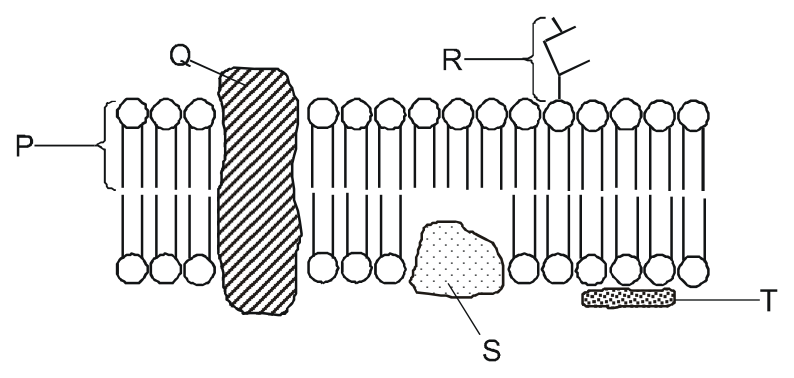
hydrophilic + hydrophobic နှစ်ခုလုံး ရှိတဲ့ molecule ရှာ။ပုံကို ပြန်ဆွဲထားတယ်။ hydrophilic အပိုင်း (ရေဘက်) ရော hydrophobic အပိုင်း (အမြီး ကြား) ရော ရှိတဲ့ molecule နှစ်ခုကို ရှာရမယ်။
P — phospholipid ✔P က phospholipid — ရေချစ် ခေါင်း နဲ့ ရေကြောက် အမြီး နှစ်ခုလုံး ပါတယ် ✔။
Q — membrane ဖြတ် protein ✔Q က membrane တစ်ခုလုံး ဖြတ်နေတဲ့ protein — အလယ် အပိုင်းက အမြီးတွေကြား (hydrophobic)၊ အစွန်း နှစ်ဖက်က ရေထဲ (hydrophilic) ✔။
R, T: water only — ပယ်။R က အပြင်ဘက် sugar ကြိုး၊ T က မျက်နှာပြင်ပေါ် ကပ်နေတဲ့ protein — R, T: water only (ရေနဲ့ပဲ ထိ)။ R ဒါမှမဟုတ် T ပါတဲ့ option တွေ ပယ်ရမယ်။
“P and Q” ✔ကျန်တာ P and Q ပဲ ဖြစ်လို့ အဖြေ “P and Q” ✔ — S ကို မသိလည်း ဖြေလို့ ရတယ် (သင်ခန်းစာ 31)။
sugar နာမည်ကတ် — glycoprotein နဲ့ glycolipid
protein ပေါ် sugar = glycoprotein (sugar ကပ် protein)ခုနက ပုံထဲက R လို sugar ကြိုးတွေ membrane ရဲ့ အပြင်ဘက်မှာ ကပ်နေတယ်။ protein ပေါ်မှာ ကပ်ရင် glycoprotein (glyco = sugar) လို့ ခေါ်တယ်။
lipid ပေါ် sugar = glycolipid (sugar ကပ် lipid)lipid ပေါ်မှာ ကပ်ရင် glycolipid လို့ ခေါ်တယ်။ sugar ကြိုးတွေကို Golgi က တပ်ပေးတာပါ (PART 1)။
sugar ကြိုး အပြင်ဘက် — cell recognition။sugar ကြိုးတွေက အပြင်ဘက်ကိုပဲ လှည့်တယ်။ cell ချင်း မှတ်မိဖို့ နာမည်ကတ် (cell recognition) လို အလုပ်လုပ်တယ်။
သွေးအုပ်စု A, B — sugar ကြိုး အဆုံး မတူ။သွေးအုပ်စု A နဲ့ B က သွေးနီဥ ပေါ်က sugar ကြိုး အဆုံး မတူတာပါ — A မှာ A sugar အဆုံး၊ B မှာ B sugar အဆုံး ပါတယ်။ O မှာလည်း sugar ကြိုး ရှိတယ် (H လို့ ခေါ်တဲ့ အခြေခံ ကြိုး) — A, B အဆုံး နှစ်မျိုးလုံး မပါတာပဲ (သင်ခန်းစာ 31)။
🤔 A person of blood group O is given group A red cells, and their antibodies attack the cells. What do the antibodies recognise?
🔍 မေးခွန်း ဖြည်မယ်
is given group A red cells = group A သွေးနီဥ ထည့်ပေးခံရတယ်။ their antibodies attack the cells = သူ့ antibody တွေက အဲဒီ cell တွေကို တိုက်ခိုက်တယ်။
recognise = မှတ်မိတယ် / ခွဲသိတယ်။ မေးနေတာ — antibody က သွေးနီဥ ပေါ်က ဘယ် အပိုင်းကို မှတ်မိပြီး တိုက်တာလဲ။
သွေးအုပ်စုကို သွေးနီဥ အပြင် ဘက်က sugar ကြိုး အဆုံး (glycoprotein, glycolipid) က ဆုံးဖြတ်တယ်။
group O မှာ A sugar မရှိလို့ စိမ်းတဲ့ နာမည်ကတ်လို မှတ်ပြီး တိုက်တယ်။
👉 phospholipid ခွဲရင် ရေ ထွက်လား — IMAT ရဲ့ ထောင်ချောက် မေးခွန်း။
IMAT 2013 Q33 — ခွဲရင် ရေ ထွက်လား
📝 IMAT 2013 · Question 33
The diagram below shows a phospholipid.
When this molecule is broken into a phosphate, glycerol and two fatty acids, the number of water molecules released is:
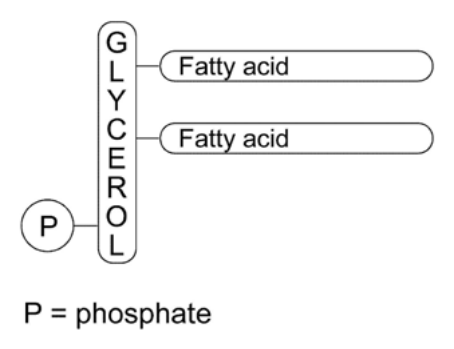
phospholipid — 3 bonds။ပုံထဲက phospholipid မှာ glycerol နဲ့ fatty acid 2 ခု၊ phosphate 1 ခု ကြား ချိတ် 3 ခု (3 bonds) ရှိတယ်။
ဆောက်တုန်း — 3 H₂O out (condensation)။ဆောက်တုန်းက ချိတ် တစ်ခုစီ ရေ တစ်ခု ထွက်ခဲ့တယ် — 3 H₂O out (condensation)။
အခု ခွဲတာ (break) ဆိုတော့ hydrolysis — ရေ 3 ခု ဝင်ရတယ် (3 H₂O in)။
released ရေ — 0 ✔မေးခွန်းက ထွက်တဲ့ (released) ရေ ဘယ်နှခုလဲ မေးတာ — ခွဲရင် ရေ ဘယ်တော့မှ မထွက်လို့ 0 ✔။
3 က used ✗ — “released” နဲ့ “used” သေချာ ဖတ်။3 က ခွဲဖို့ သုံးတဲ့ ရေ — released မဟုတ်ဘူး ✗။ “released” နဲ့ “used” စကားလုံးကို သေချာ ဖတ်ပါ။
🔎 membrane ဆိုတာ ဘယ်အပိုင်းလဲ
တိရစ္ဆာန် cell — အရည် ပြည့် အိတ်လေး။နောက် scene မှာ cholesterol က membrane ထဲ ဘယ်မှာ ထိုင်လဲ ကြည့်မှာ ဖြစ်လို့ membrane ကို အရင် ရှာကြည့်မယ်။ ဒါက တိရစ္ဆာန် cell တစ်လုံး — အရည် ပြည့်နေတဲ့ အိတ်လေးလိုပဲ။
အနီ မျဉ်း = membrane (cell ရဲ့ အရေပြား)အိတ်ရဲ့ အရေပြား — cell တစ်လုံးလုံးကို ပတ်ထားတဲ့ အနီရောင် မျဉ်းပါးလေးက membrane (cell ရဲ့ အရေပြား)။ အထဲက အရာတွေ မယိုအောင် ထိန်းပြီး ဘာ ဝင်ဘာ ထွက် ကို စစ်တယ်။
အဲဒီ အရေပြားရဲ့ အကွက်ငယ်လေး တစ်ကွက်ကို ချဲ့ကြည့်မယ်။
ချဲ့ရင် phospholipid နှစ်တန်း။ချဲ့လိုက်တော့ မျဉ်း တစ်ကြောင်း မဟုတ်ဘူး — phospholipid (ခေါင်း တစ်လုံး၊ အမြီး နှစ်ချောင်း ပါတဲ့ lipid — အရင် scene) တွေ နှစ်တန်း စီထားတာ။
ခေါင်း အပေါ်/အောက်၊ အမြီး အလယ်။အပေါ်တန်းက ခေါင်း အပေါ်၊ အောက်တန်းက ခေါင်း အောက်၊ အမြီးတွေက အလယ်မှာ မျက်နှာချင်းဆိုင်။
အပြင်ရော အတွင်းရော ရေ — ခေါင်း ရေဘက်။ဘာလို့ ဒီလို စီလဲ — အပေါ်ဘက်က cell အပြင် (ရေ)၊ အောက်ဘက်က cell အတွင်း (inside — ရေ)။ ခေါင်းက ရေ ကြိုက်လို့ ရေဘက် လှည့်တယ်၊ အမြီးက ရေ ကြောက်လို့ အလယ်မှာ ပုန်းတယ်။
membrane = နှစ်တန်းလုံး ပေါင်း။ဒါကြောင့် membrane ဆိုတာ အပေါ်တန်း တစ်ခုတည်း မဟုတ်၊ အောက်တန်း တစ်ခုတည်း မဟုတ် — အဝါ ကွင်းစ ပြထားသလို နှစ်တန်းလုံး ပေါင်း အလွှာ တစ်ခုလုံးပါ။
နှစ်လွှာ ဖြစ်လို့ bilayer (နှစ်လွှာ ထပ်) လို့ ခေါ်တယ်။
🤔 A drug molecule is inside the cell and must get out. What does it have to cross?
🔍 မေးခွန်း ဖြည်မယ်
must get out = အပြင် ထွက်ရမယ်။ have to cross = ဖြတ်ကျော်ရမယ်။
မေးနေတာ — cell အထဲကနေ အပြင် ရောက်ဖို့ ဘာကို ဖြတ်ရမလဲ။
membrane က နှစ်တန်းလုံး ပေါင်း — အထဲကနေ ထွက်ရင် အတွင်း ခေါင်း → အမြီး → အမြီး → အပြင် ခေါင်း အစဉ်အတိုင်း ဖြတ်ရတယ်။
membrane ကို ထိန်းတဲ့ cholesterol
cholesterol (ကိုလက်စထရော) — 4 rings + OH ပါ lipid။cholesterol (ကိုလက်စထရော) က steroid lipid ပါ — carbon ကွင်း 4 ခု (4 rings) ကပ်ထားပြီး အစွန်းမှာ OH တစ်ခု ပါတယ်။
phospholipid အမြီးကြား ဝင်ထိုင်။တိရစ္ဆာန် cell ရဲ့ membrane မှာ cholesterol က phospholipid အမြီးတွေကြားမှာ ဝင်ထိုင်တယ်။ OH က ခေါင်းတွေနားမှာ နေတယ်။
hot — အမြီး ချုပ်ထား။အပူ (hot) မှာ membrane က အရမ်း ပျော့ပြီး ယိုမယ့်အခါ cholesterol က အမြီးတွေကို ချုပ်ထားတယ်။
cold — ကြားကနေ ခံ၊ မမာ။အအေး (cold) မှာ အမြီးတွေ ကျစ်ကျစ် စီပြီး မာမယ့်အခါ cholesterol က ကြားကနေ ခံထားလို့ မမာဘူး။
fluidity (အရည်ဆန်မှု) — steady fluidity။ဒီ ပျော့ပြောင်းမှုကို fluidity (အရည်ဆန်မှု) လို့ ခေါ်တယ်။ cholesterol က fluidity ကို တည်ငြိမ်အောင် ထိန်းတယ် (steady fluidity)။
🔎 ကြိုကြည့်မယ် — cholesterol ကနေ: steroid hormone (oestrogen), vitamin D, bile salt
cholesterol ဆိုရင် “ဆိုးတယ်” လို့ပဲ ကြားဖူးမယ်။ တကယ်တော့ မရှိမဖြစ်ပါ။
ခန္ဓာကိုယ်က cholesterol ကနေ steroid hormones တွေ လုပ်တယ်။
testosterone, oestrogen — steroid hormone။ဥပမာ testosterone (အမျိုးသားမှာ ဝှေးစေ့က အဓိက ထုတ်) နဲ့ oestrogen (အမျိုးသမီးမှာ သားဥအိမ်က အဓိက ထုတ်)။ hormone နှစ်မျိုးလုံး ကျား မ နှစ်မျိုးလုံးရဲ့ ခန္ဓာကိုယ်မှာ ရှိတယ် — ပမာဏ မတူရုံပဲ။ hormone ဆိုတာ သွေးထဲ လွှတ်တဲ့ ဓာတု အမိန့်စာပါ။
အရေပြားမှာ နေရောင် ထိရင် cholesterol မိသားစု molecule ကနေ vitamin D လုပ်တယ်။အရေပြားထဲက cholesterol နဲ့ အရမ်း ဆင်တဲ့ molecule (cholesterol မိသားစု) ကို နေရောင်ထဲက UV ထိရင် vitamin D ဖြစ်လာတယ် — ဒါကြောင့် vitamin D ကို cholesterol ကနေ လုပ်တယ်လို့ ပြောကြတယ်။
cholesterol → bile salt — fat ချေတာ ကူ။အသည်းက cholesterol ကနေ bile salt (သည်းခြေ ဆား — bile ရဲ့ အဓိက အစိတ်အပိုင်း) လုပ်တယ်။ bile salt က fat ကို အစက်ငယ် ခွဲပေးလို့ lipase ဖြတ်တာကို ကူတယ် — သူကိုယ်တိုင် မဖြတ်ဘူး။
cholesterol သွေးထဲ များလွန်းရင် သွေးကြော နံရံမှာ စု။cholesterol သွေးထဲ များလွန်းရင်တော့ သွေးကြော နံရံမှာ စုပြီး သွေးကြောကို ကျဉ်းစေတတ်တယ် (နောက် scene)။
insulin — protein hormone၊ steroid မဟုတ်။insulin (သွေး glucose လျှော့တဲ့ hormone) ကတော့ protein hormone ပါ — cholesterol ကနေ မလုပ်ဘူး။ hormone အားလုံး steroid မဟုတ်ဘူး။
📝 IMAT 2021 Q26 (လူ့ခန္ဓာထဲက cholesterol အကြောင်း မှန်တာ) → သင်ခန်းစာ 31 မှာ အပြည့် ဖြေထားတယ်။ ဒီမှာ cholesterol ရဲ့ ပုံနဲ့ မေးမယ်။
🤔 Which statement about cholesterol is correct?
🔍 မေးခွန်း ဖြည်မယ်
Which statement about … is correct? = … အကြောင်း ဘယ် ဖော်ပြချက် မှန်လဲ။ option တစ်ခုချင်းကို cholesterol ရဲ့ ပုံ (ring, OH) နဲ့ တိုက်စစ်ပါ။
မေးနေတာ — cholesterol ရဲ့ ဖွဲ့စည်းပုံ ဒါမှမဟုတ် သဘော အကြောင်း မှန်တဲ့ တစ်ခုကို ရွေးပါ။
cholesterol က carbon ring 4 ခုနဲ့ OH သေးသေး တစ်ခု ပါတဲ့ steroid lipid ✔။
glycerol + fatty acid 3 က triglyceride ✗၊ glucose polymer က starch/glycogen ✗၊ peptide bond က protein ✗။
ရေမှာ မပျော်လို့ သွေးထဲမှာ LDL, HDL ဆိုတဲ့ သယ်ဆောင်သူနဲ့ သွားရတယ် ✗။
သွေးထဲက fat သယ်ယာဉ် — LDL နဲ့ HDL
lipid သွေးထဲ မပျော် — ဘယ်လို ပို့လဲ?cholesterol နဲ့ triglyceride က lipid မို့ သွေး (ရေ ပျော်ရည်) ထဲမှာ လွယ်လွယ် (easily) မပျော်ဘူး။ ဒါဆို ကိုယ်တစ်ခုလုံး ဘယ်လို ပို့လဲ?
ဘောလုံး ထုပ် = lipoprotein (lipid သယ် ဘောလုံး)ဘောလုံးလေး ထုပ်ပြီး ပို့တယ် — အပြင် အရေပြားက phospholipid အလွှာ တစ်ထပ် (ခေါင်းတွေ ရေဘက်)၊ ကြားမှာ protein တွေ၊ အထဲမှာ cholesterol နဲ့ fat။ ဒါကို lipoprotein လို့ ခေါ်တယ်။
lipoprotein = lipid ကို သယ်တဲ့ carrier (သယ်ဆောင်သူ) particle (အမှုန်လေး)။
LDL (cholesterol သယ် particle၊ “ဆိုး” လို့ ခေါ်) — တစ်ရှူးဆီ ပို့LDL (Low-Density Lipoprotein) — cholesterol ကို သယ်တဲ့ particle ပါ၊ cholesterol ကိုယ်တိုင် မဟုတ်ဘူး။ ကြီးပြီး lipid များ၊ protein နည်း။ အသည်းကနေ cholesterol ကို တစ်ရှူးတွေဆီ ပို့တယ်။
LDL များလွန်း — သွေးကြော နံရံမှာ cholesterol စု — “bad cholesterol”။LDL များလွန်းရင် သွေးကြော နံရံမှာ cholesterol စုပုံပြီး ပိတ်စေနိုင်လို့ “ဆိုး” cholesterol (bad cholesterol) လို့ အလွယ် ခေါ်ကြတယ်။
HDL (protein များ particle၊ “ကောင်း”) — အသည်းဆီ ပြန်သယ်HDL (High-Density Lipoprotein) — သူလည်း cholesterol သယ်တဲ့ particle ပါ၊ သေးပြီး protein များ။ ပိုနေတဲ့ cholesterol ကို အသည်းဆီ ပြန်သယ်လို့ “ကောင်း” cholesterol လို့ အလွယ် ခေါ်ကြတယ်။
protein များလေ density မြင့်လေ — HDL။ဘာလို့ density ကွာလဲ? protein က lipid ထက် သိပ်သည်းတယ် (ပိုလေး)။ protein များလေ density မြင့်လေ — HDL။
HDL မှာ protein ရဲ့ proportion (အချိုး) highest (အမြင့်ဆုံး)။ centrifuge မှာ သိပ်သည်းတဲ့ particle က အောက်ဆုံး settle (အနည် ကျ) တယ်။
🤔 Blood is spun in a centrifuge, so denser particles move further down the tube. Which lipoprotein ends up lowest?
🔍 မေးခွန်း ဖြည်မယ်
is spun in a centrifuge = အမြန် လှည့်တဲ့ စက် (centrifuge) ထဲမှာ လှည့်ပတ်ခဲ့တယ်။ so = ဒါကြောင့်။ denser particles move further down = ပိုသိပ်သည်းတဲ့ အမှုန်တွေ ပြွန်ရဲ့ အောက်ကို ပိုရောက်တယ်။
ends up lowest = နောက်ဆုံး အောက်ဆုံးမှာ ရောက်တယ်။ မေးနေတာ — lipoprotein တွေထဲက ဘယ်ဟာ အသိပ်သည်းဆုံး ဖြစ်လို့ အောက်ဆုံး ရောက်မလဲ။
protein က lipid ထက် သိပ်သည်းတယ်။
protein အများဆုံး HDL က density အမြင့်ဆုံး — အောက်ဆုံး ရောက်တယ်။
lipid များတဲ့ LDL က ပေါ့လို့ အပေါ်ပိုင်းမှာ ကျန်တယ်။
👉 ဆောင်းတွင်း အပင် membrane — IMAT 2014။👉 ဆောင်းတွင်း အပင်တွေက membrane ကို ဘယ်လို ပျော့ပြောင်း ထိန်းလဲ — IMAT 2014 ကို ကြည့်မယ်။
IMAT 2014 Q31 — အေးရင် ဘယ် bond များလဲ
📝 IMAT 2014 · Question 31
In cells of winter wheat (Triticum aestivum), the fluidity of the cell membrane can be varied by the plant, depending upon the environmental temperature. As the weather becomes colder, the cell membrane changes to maintain its fluidity. Which type of bond would be more common in cell membranes of winter wheat plant cells as their growing conditions become colder?
အေး — saturated အမြီး ကျစ် — stiff။အေးလာရင် saturated အမြီး ဖြောင့်ဖြောင့်တွေက ထောပတ်လို ကျစ်ကျစ် စီပြီး membrane မာသွားမယ် (stiff)။
unsaturated (C=C) ပိုထည့် — fluid။ဒါကြောင့် ဆောင်းတွင်း ဂျုံပင်က cis C=C ပါတဲ့ unsaturated အမြီး ပိုများတဲ့ phospholipid တွေ ပိုလုပ်တယ်။ cis C=C က အမြီးကို ကွေးစေလို့ ကျစ်ကျစ် မစီနိုင်ဘဲ ကြားမှာ ကွက်လပ် ကျန်ပြီး membrane က မာမသွားဘဲ ပျော့ပြောင်း (fluid) နေတယ်။
more unsaturated in the coldအအေးမှာ unsaturated ပိုများ (more unsaturated in the cold) — နှမ်းဆီ အရည် ဖြစ်သလိုပဲ။
C=C ✔၊ C–C, C–H ✗။ဒါကြောင့် အဖြေ C=C ✔။ C–C နဲ့ C–H က ဖြောင့်တဲ့ saturated ကြိုးမှာ များတာ ✗။
C–N နဲ့ C–O က fatty acid အမြီးထဲမှာ မရှိဘူး ✗။
ဘယ် မိသားစုလဲ — အုတ်ခဲ၊ bond၊ element
carbohydrate — monosaccharide၊ glycosidic၊ C H O။IMAT က “ဒီ molecule ဘယ် မိသားစုလဲ” ကို အမြဲ မေးတယ်။ carbohydrate — အုတ်ခဲ monosaccharide၊ glycosidic bond၊ element C H O (chitin လို တချို့မှာ N ပါ)။
lipid — glycerol + fatty acid၊ ester၊ C H O (P, N)။lipid — triglyceride နဲ့ phospholipid က glycerol နဲ့ fatty acid ကို ester bond နဲ့ ဆက်ထားတယ်။ element က C H O — phospholipid မှာ P ပါပြီး lecithin လို choline ပါတဲ့ phospholipid မှာ N လည်း ပါတယ်။
steroid — glycerol, fatty acid မပါ၊ ring 4 ခု။cholesterol လို steroid ကတော့ glycerol နဲ့ fatty acid မပါဘူး — carbon ring 4 ခု၊ ester bond မလိုဘူး။
protein — amino acid၊ peptide bond၊ C H O N (S)။protein — amino acid ကို peptide bond နဲ့ ဆက်ထားတယ် (သင်ခန်းစာ 25)။ element က C H O N — amino acid တချို့ (cysteine လို) မှာ S လည်း ပါတယ်။
amino acid တိုင်းမှာ အလယ် C တစ်လုံး၊ N ပါတဲ့ amino အုပ်စု (NH₂)၊ acid အုပ်စု (COOH) နဲ့ R group ပါတယ်။
R က amino acid တစ်ခုချင်း မတူတဲ့ အုပ်စု — glycine မှာ H သက်သက်၊ cysteine မှာ CH₂–SH (S ပါ)။ ဒါကြောင့် element 5 မျိုးအထိ ပါနိုင်တယ်။
nucleic acid — nucleotide၊ phosphodiester၊ CHONP။nucleic acid (DNA, RNA) — nucleotide ကို phosphodiester bond နဲ့ ဆက်ထားတယ်၊ C H O N P (သင်ခန်းစာ 27)။
📝 IMAT 2012 Q46 (element အမျိုး အများဆုံး ပါတဲ့ molecule) → သင်ခန်းစာ 25 မှာ အပြည့် ဖြေထားတယ်။ ဒီမှာ phosphorus နဲ့ ပုံစံတူ မေးမယ်။
🤔 Which one of the following contains the element phosphorus?
🔍 မေးခွန်း ဖြည်မယ်
Which one of the following = အောက်ပါတို့ထဲက ဘယ် တစ်ခုလဲ။ contains the element phosphorus = phosphorus (P) ဒြပ်စင် ပါတဲ့။
မေးနေတာ — molecule ငါးခုထဲက P ပါတဲ့ တစ်ခုကို ရွေးပါ။
nucleotide မှာ phosphate အုပ်စု ပါလို့ P ပါတယ် (C H O N P)။
glycogen, triglyceride, cholesterol က C H O ပဲ။
cysteine မှာ N နဲ့ S ပါပေမဲ့ P မပါဘူး။
🔎 ကြိုကြည့်မယ် — protein ပါလား: polypeptide, antibody, cilia, collagen, glucagon
peptide bond = protein — enzyme အများစု ✔peptide bond = protein — amino acid ပါတယ်။ ဘယ်ဟာတွေမှာ protein ပါလဲ တစ်ခုချင်း ကြည့်မယ်။ enzyme (ကိုယ်ထဲက ဓာတ်ပြုမှု အမြန် လုပ်ပေးတဲ့ ကတ်ကြေး) အများစုက protein ပါ။
ribozyme (RNA နဲ့ လုပ်ထားတဲ့ enzyme) — peptide bond မရှိ။RNA နဲ့ လုပ်ထားတဲ့ enzyme တချို့လည်း ရှိတယ် — ribozyme (RNA enzyme) လို့ ခေါ်တယ်။ သူ့မှာ peptide bond မရှိဘူး။ ဒါကြောင့် “enzyme အားလုံး protein” လို့ မပြောရဘူး။
amino acid ကြိုးရှည် = polypeptide — protein ရဲ့ ကြိုး။amino acid တွေကို peptide bond နဲ့ ရှည်ရှည် ဆက်ထားတဲ့ ကြိုးကို polypeptide (poly = များ) လို့ ခေါ်တယ်။ protein တစ်ခုမှာ polypeptide တစ်ချောင်း ဒါမှမဟုတ် တစ်ချောင်းထက် ပို ပါပြီး သတ်မှတ်ထားတဲ့ ပုံအတိုင်း ခေါက်ထားတယ် (သင်ခန်းစာ 25)။
antibody — Y ပုံ protein ✔antibody (ပဋိပစ္စည်း) — Y ပုံ protein၊ ပိုးမွှားကို ဖမ်းကိုင်ပြီး မှတ်သားပေးတဲ့ ကာကွယ်ရေး protein ပါ (သင်ခန်းစာ 53)။
ribosome — RNA + protein ✔ribosome — protein ကို ဆောက်တဲ့ စက်ရုံလေး၊ RNA နဲ့ protein နှစ်မျိုးလုံးနဲ့ လုပ်ထားတယ် (သင်ခန်းစာ 29)။
cilia, virus အခွံ, membrane protein ✔cilia (ဆံချည်မျှင်) — cell မျက်နှာပြင်က လှုပ်ခတ်တဲ့ အမွေးလေးတွေ၊ အထဲမှာ protein ပြွန်လေးတွေ ပါတယ်။ virus အခွံ၊ cell membrane ထဲက protein တွေလည်း ပါတယ်။
protein မပါ — amylose, cholesterol။protein မပါတာ — amylose (glucose ကြိုး) နဲ့ cholesterol (carbon ring 4 ခု lipid)။
ထောင်ချောက် — glucagon = protein hormone။ထောင်ချောက် — glucagon က glucose နဲ့ နာမည် ဆင်ပေမဲ့ pancreas က ထုတ်တဲ့ protein hormone ပါ (glycogen ကို ဖြိုခိုင်းတယ်)။ carbohydrate မဟုတ်ဘူး။
နာမည် မကျက်နဲ့ — ဆုံးဖြတ်နည်း မှတ် —IMAT က မသိသေးတဲ့ နာမည်တွေနဲ့လည်း မေးတတ်လို့ နာမည် တစ်ခုချင်း မကျက်ဘဲ ဆုံးဖြတ်နည်းကို မှတ်ပါ။ မေးခွန်း တစ်ခု —
အလုပ်လုပ်တဲ့ စက်လား? — protein ဖြစ်ဖို့ များ။အဲဒီ အရာက အလုပ် တစ်ခုခု လုပ်တဲ့ စက်လား (သယ်တာ၊ ဖြတ်တာ၊ သတင်းပို့တာ၊ ဖမ်းတာ၊ ဆွဲတာ)? အလုပ်လုပ်တဲ့ စက် ဆိုရင် protein ဖြစ်ဖို့ များတယ်။
ဒါ အမြန် ခန့်မှန်းနည်းပဲ — အမြဲမှန် စည်းမျဉ်း မဟုတ်။ဒါ အမြန် ခန့်မှန်းနည်းပဲ၊ အမြဲမှန်တဲ့ စည်းမျဉ်း မဟုတ်ဘူး — ribozyme လို RNA အလုပ်သမားလည်း ရှိတယ်။ သေချာချင်ရင် အုတ်ခဲ (amino acid လား) နဲ့ bond (peptide bond လား) ကို စစ်ပါ။
ဥပမာ —
haemoglobin (O₂ သယ်)၊ insulin (သတင်းပို့) — protein။haemoglobin (သွေးနီဥထဲမှာ oxygen ကို သယ်တဲ့ protein)၊ insulin (သွေးထဲ sugar များရင် cell တွေကို "glucose ယူပါ" လို့ သတင်းပို့တဲ့ pancreas ရဲ့ protein hormone)။
collagen — ခိုင်အောင် ချည်တဲ့ ကြိုး protein။collagen (အရေပြား၊ အရိုး၊ အရွတ်ကို ခိုင်အောင် ချည်ထားတဲ့ ကြိုး protein)။
သုံးခုလုံး အလုပ်လုပ်တဲ့ protein။
သိုလှောင်၊ နံရံ — carbohydrate ဖြစ်ဖို့ များ။ဆန့်ကျင်ဘက် — သိုလှောင်ထားတာ ဒါမှမဟုတ် အပင်ရဲ့ နံရံ ဆိုရင် carbohydrate ဖြစ်ဖို့ များတယ် (starch, glycogen, cellulose)။
-ose = sugar များ၊ -ine = amino acid များ၊ -ol = OH (alcohol)။နာမည် အဆုံး -ose (glucose, cellulose) က များသောအားဖြင့် sugar၊ -ine က glycine လို amino acid ဖြစ်တတ်ပေမဲ့ choline လို ခြွင်းချက် ရှိတယ်။ -ol က OH ပါတဲ့ alcohol — ethanol လို lipid မဟုတ်တာလည်း ရှိတယ်။
🎮 Sort them fast: protein, carbohydrate or lipid? Build a streak 🔥
📝 IMAT 2013 Q32 (amino acid မပါတာ) နဲ့ IMAT 2018 Q28 (peptide bond ပါတာ) → သင်ခန်းစာ 25 မှာ အပြည့် ဖြေထားတယ်။
📝 IMAT 2015 Q40 (carbohydrate မဟုတ်တာ — glucagon) → သင်ခန်းစာ 52 မှာ အပြည့် ဖြေထားတယ်။ ဒီမှာ ပုံစံတူ မေးခွန်း အသစ် သုံးပုဒ်နဲ့ လေ့ကျင့်မယ်။
🤔 Which one of the following does NOT contain protein?
🔍 မေးခွန်း ဖြည်မယ်
does NOT contain protein = protein မပါတဲ့ (NOT ကို သတိထား)။
မေးနေတာ — ငါးခုထဲက protein လုံးဝ မပါတဲ့ တစ်ခုကို ရွေးပါ။
cellulose က β-glucose ကြိုး — carbohydrate သက်သက်။
haemoglobin (သွေးနီဥထဲက oxygen သယ်တဲ့ protein)၊ insulin (protein hormone)၊ collagen (အရေပြား၊ အရွတ်ထဲက ကြိုး protein) နဲ့ ribosome (RNA + protein) မှာ protein ပါတယ်။
🤔 Which one of the following IS a carbohydrate?
🔍 မေးခွန်း ဖြည်မယ်
IS a carbohydrate = carbohydrate ဖြစ်တဲ့ (IS ကို စာလုံးကြီးနဲ့ ရေးထားတာ — gly- နဲ့ စတဲ့ နာမည် ဆင်တွေကို ခွဲခိုင်းနေတာ)။
မေးနေတာ — နာမည် ဆင်တဲ့ ငါးခုထဲက တကယ် carbohydrate ဖြစ်တဲ့ တစ်ခု ဘယ်ဟာလဲ။
glycogen က glucose polymer (တိရစ္ဆာန် သိုလှောင် carbohydrate)။
glucagon က protein hormone၊ glycerol က fat ရဲ့ အစိတ်အပိုင်း (sugar မဟုတ်)၊ glycine က amino acid၊ cholesterol က lipid။
‘gly-’ နဲ့ စတိုင်း sugar မဟုတ်ဘူး။
🤔 Which of the following contain peptide bonds?
1. haemoglobin
2. glycogen
3. an antibody
4. a phospholipid
🔍 မေးခွန်း ဖြည်မယ်
Which of the following contain peptide bonds? = အောက်ပါတို့ထဲက ဘယ်ဟာတွေမှာ peptide bond ပါလဲ (တစ်ခုထက် ပိုနိုင်တယ်)။
မေးနေတာ — 1 ကနေ 4 တစ်ခုချင်း peptide bond ပါ၊ မပါ စစ်ပြီး ပါတဲ့ ဟာတွေ စုထားတဲ့ option ကို ရွေးပါ။
peptide bond = protein။
haemoglobin နဲ့ antibody က protein ✔။
glycogen က glycosidic bond ✗၊ phospholipid က ester bond ✗။
ဒါကြောင့် 1 and 3 only။
🔎 ကြိုကြည့်မယ် — virus: envelope, capsid, nucleic acid (phosphodiester bond)
📝 IMAT 2019 Q27 (virus ရဲ့ အစိတ်အပိုင်း သုံးခုစီမှာ ပါတဲ့ molecule — row ဇယား) → သင်ခန်းစာ 30 မှာ အပြည့် ဖြေထားတယ်။ ဒီမှာ bond တွေနဲ့ ပုံစံ အသစ် မေးမယ်။
virus — အပြင် အလွှာ၊ အခွံ၊ ဗီဇ ကြိုး။virus တစ်ခုရဲ့ ပုံပါ — အပြင် အလွှာ၊ အခွံ၊ အထဲက ဗီဇ ကြိုး။ အပိုင်း တစ်ခုစီက molecule မိသားစု တစ်ခုစီနဲ့ လုပ်ထားတယ်။
envelope — phospholipid၊ fatty acids ပါ။virus တချို့ရဲ့ အပြင်ဘက် envelope က host cell ရဲ့ membrane အပိုင်း — phospholipid ပါလို့ fatty acids ပါတယ် (သင်ခန်းစာ 30)။
capsid (ကပ်ဆစ် — virus အခွံ) က protein — amino acids နဲ့ ဆောက်ထားတယ်။
genetic material — phosphodiester bond။genetic material (DNA သို့ RNA) ထဲမှာ nucleotide တွေကို phosphodiester bond နဲ့ ဆက်ထားတယ်။
🤔 Which row correctly matches each part of an enveloped virus with a bond found in it?
🔍 မေးခွန်း ဖြည်မယ်
Which row correctly matches = ဘယ် အတန်းက မှန်မှန် တွဲပေးထားလဲ။ each part of an enveloped virus = envelope ပါတဲ့ virus ရဲ့ အပိုင်း တစ်ခုစီ။
with a bond found in it = အဲဒီ အပိုင်းထဲမှာ တွေ့ရတဲ့ bond နဲ့ (တွဲပေးထားလဲ)။
မေးနေတာ — envelope, capsid, RNA သုံးခုလုံး bond မှန်တဲ့ row တစ်ခုကို ရွေးပါ။
envelope ထဲက phospholipid မှာ glycerol နဲ့ fatty acid ကြား ester bond၊ capsid protein မှာ peptide bond၊ RNA မှာ phosphodiester bond။
glycosidic bond က sugar ချင်း ဆက်တာ — envelope ရဲ့ အဓိက bond မဟုတ်ဘူး။
envelope = lipid၊
capsid = protein၊
genetic = nucleic acid။ဒါကြောင့် envelope = lipid (fatty acid, glycerol ကို ester bond နဲ့ ဆက်)၊
capsid = protein (amino acid ကို peptide bond နဲ့ ဆက်)၊
genetic material = nucleic acid (phosphodiester bond)။
virus မှာ glycogen လို သိုလှောင် sugar မရှိဘူး။
IMAT 2019 Q23 — COOH နဲ့ OH ရေတွက်
📝 IMAT 2019 · Question 23
Which of the following rows are correct about these naturally occurring biological molecules?
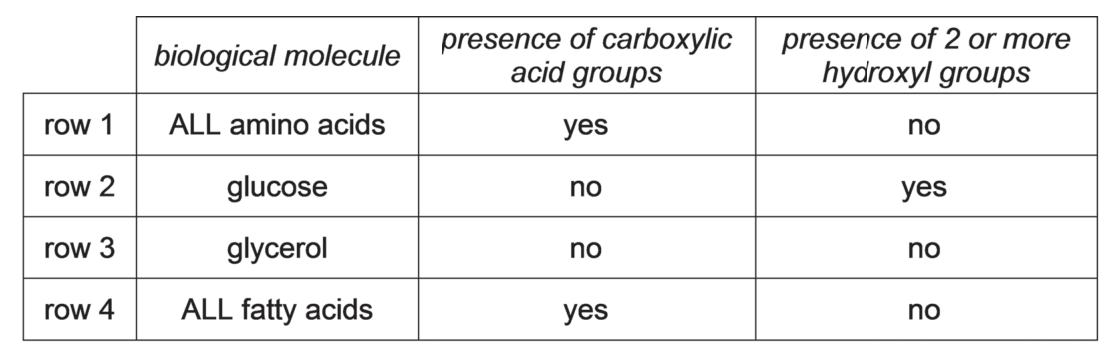
COOH ထဲက OH ကို hydroxyl အဖြစ် မရေတွက်။စည်းမျဉ်း အရင် — COOH ဆိုတာ C တစ်လုံးမှာ =O နဲ့ OH တွဲထားတဲ့ acid အုပ်စု တစ်ခုပါ။ သူ့ထဲက OH ကို hydroxyl (OH အုပ်စု) အဖြစ် သီးခြား မရေတွက်ရဘူး။
row 1 — amino acid ✔row 1 — amino acid (glycine H₂N–CH₂–COOH) မှာ COOH တစ်ခု ပါ ✔။ COOH ထဲက OH ကို မရေရလို့ OH 2 ခု မရှိ ✔ (serine လို အများဆုံး တစ်ခုပဲ)။ row မှန်တယ်။
row 2 — glucose မှာ COOH မပါ၊ ring ပေါ်မှာ OH 5 ခု ပါ ✔။ row မှန်တယ်။
row 3 — glycerol OH 3 ခု — “no” ✗row 3 — glycerol (CH₂OH–CHOH–CH₂OH) မှာ OH 3 ခု ပါတယ်။ row က “no” ဆိုလို့ မှားတယ် ✗။
row 4 — fatty acid ✔row 4 — fatty acid မှာ COOH ပါ၊ ကြိုးပေါ်မှာ OH မရှိဘူး ✔။ row မှန်တယ်။
ဒါကြောင့် အဖြေ “1, 2 and 4 only”။
🔁 နောက်ဆုံး ပြန်စစ်မယ် — အဖြေ မကြည့်ခင် စဉ်းစားပါ
🤔 Which part of a phospholipid is hydrophilic?
🔍 မေးခွန်း ဖြည်မယ်
Which part of = … ရဲ့ ဘယ် အပိုင်းလဲ။ hydrophilic = ရေချစ် (ရေနဲ့ ကြိုက်တဲ့)။
မေးနေတာ — phospholipid molecule ရဲ့ ရေဘက် လှည့်တဲ့ အပိုင်း ဘယ်ဟာလဲ။
charge ပါတဲ့ phosphate head က ရေချစ်။
အမြီးက ရေကြောက်။
🤔 In a phospholipid bilayer, the tails point…
🔍 မေးခွန်း ဖြည်မယ်
the tails point… = အမြီးတွေက … ကို ညွှန် / စိုက်နေတယ်။ စာကြောင်း မပြီးသေး — option နဲ့ ဆက်ဖတ်ပါ။
မေးနေတာ — အလွှာ နှစ်ထပ်ထဲမှာ fatty-acid အမြီးတွေ ဘယ်ဘက်ကို လှည့်နေလဲ။
အမြီးတွေ (hydrophobic) အလယ်မှာ ဆုံပြီး ရေနဲ့ ဝေးတယ်၊ ခေါင်းတွေ (hydrophilic) ကတော့ ရေ နှစ်ဖက်ကို လှည့်တယ်။
ပြောင်းပြန် ဒါမှမဟုတ် ကျပန်း စီရင် အမြီးက ရေကို ထိလို့ မတည်ငြိမ်ဘူး။
🤔 Which is made from cholesterol?
🔍 မေးခွန်း ဖြည်မယ်
is made from = … ကနေ လုပ်ထားတယ် (… ကို ကုန်ကြမ်းအဖြစ် သုံးပြီး ခန္ဓာကိုယ်က လုပ်တယ်)။
မေးနေတာ — လေးခုထဲက ခန္ဓာကိုယ်က cholesterol ကို သုံးပြီး လုပ်တဲ့ တစ်ခု ဘယ်ဟာလဲ။
vitamin D, steroid hormone, bile salt။
insulin က protein။
🤔 An animal cell membrane is warmed. Which molecule in it stops it from becoming too fluid?
🔍 မေးခွန်း ဖြည်မယ်
is warmed = အပူ ပေးခံရတယ်။ Which molecule in it = သူ့ထဲက ဘယ် molecule။ stops it from becoming too fluid = အရမ်း ပျော့ပြီး အရည်ဆန် မဖြစ်အောင် တားတယ်။
မေးနေတာ — membrane ပူလာရင် အရမ်း မပျော့အောင် ထိန်းပေးတဲ့ molecule ဘယ်ဟာလဲ။
phospholipid အမြီးတွေကြားမှာ ဝင်ထိုင်တဲ့ cholesterol က အပူမှာ အမြီးတွေကို ချုပ်ထားလို့ membrane အရမ်း မပျော့ဘူး။
glycogen, glucose က membrane ထဲမှာ မရှိဘူး၊ cellulose က အပင် cell wall ပါ။
🤔 Lipase completely hydrolyses two triglyceride molecules. How many water molecules are used?
🔍 မေးခွန်း ဖြည်မယ်
completely hydrolyses = ရေနဲ့ အပြည့် ဖြတ်တယ် (ချိတ် အားလုံး)။ two triglyceride molecules = triglyceride နှစ်ခု။ are used = သုံးလိုက်ရတယ် (released မဟုတ်)။
မေးနေတာ — triglyceride နှစ်ခုလုံး အပြည့် ဖြတ်ဖို့ ရေ ဘယ်နှခု သုံးရလဲ။
triglyceride တစ်ခုမှာ ester bond 3 ခု — ဖြတ်ဖို့ ရေ 3 လုံး သုံးတယ်။
နှစ်ခုဆို 2 × 3 = 6 လုံး သုံးတယ်။
0 က “released” ကို ဖြေမိတာ — ဒီမှာ “used” လို့ မေးတယ်။
🤔 Which bond joins the units of a protein?
🔍 မေးခွန်း ဖြည်မယ်
Which bond = ဘယ် ချိတ်လဲ။ joins the units of = … ရဲ့ အုတ်ခဲ (unit) တွေကို ဆက်ပေးတယ်။
မေးနေတာ — protein ရဲ့ အုတ်ခဲ (amino acid) တွေကြားက ချိတ်ရဲ့ နာမည် ဘာလဲ။
protein = amino acid + peptide bond။
🎉 glycogen၊ ချည်၊ ထောပတ်၊ membrane — ရပြီ။ quiz စမ်းပါ။🎉 အသည်းက glycogen သိမ်းတာ၊ ချည်ကို မစားနိုင်တာ၊ ထောပတ် အခဲ ဆီ အရည်၊ fat ဘဏ်၊ ရေထဲက lipid အရေပြား — အကုန် ရှင်းပြနိုင်ပြီ။ အောက်က စာမေးပွဲငယ် (quiz) နဲ့ စမ်းကြည့်ပါ။