Immunity
ဆူးစူးတဲ့ ဒဏ်ရာ ဘာလို့ အလိုလို ပျောက်လဲ၊ ဝက်သက် ဘာလို့ တစ်ခါပဲ ဖြစ်လဲ — နံရံ၊ ဝါးစားဆဲလ်၊ antibody နဲ့ နှစ်ချီ မှတ်ထားတဲ့ ဆဲလ်တွေ ပါတဲ့ ခန္ဓာရဲ့ စစ်တပ်။
Walls and eaters
နံရံ နဲ့ ဝါးစားဆဲလ် — အမျိုးမရွေး ကာကွယ်ရေး
ဆူးစူးတဲ့ ဒဏ်ရာ — bacteria ဘယ်လောက် မြန်မြန် ပွားလဲ
ဆူးစူးလို့ လက်ချောင်းမှာ ဒဏ်ရာ သေးသေးလေး ဖြစ်တယ်။ဥယျာဉ်ထဲမှာ ဆူး (thorn) စူးလို့ လက်ချောင်းမှာ ဒဏ်ရာ သေးသေးလေး ဖြစ်သွားတယ် ဆိုပါစို့။
မြေကြီးထဲက bacteria တွေ အရေပြားအောက် ရောက်သွားတယ်။ဆူးနဲ့အတူ မြေကြီးထဲက bacteria (ဘက်တီးရီးယား) တွေ အရေပြား အောက်ကို ရောက်သွားတယ်။
မိနစ် 20 မှာ နှစ်ကောင် ကွဲ — 10 နာရီမှာ ဘယ်နှစ်ကောင်လဲ?bacteria တစ်ကောင်က မိနစ် 20 မှာ တစ်ခါ နှစ်ကောင် ကွဲနိုင်တယ်။ ဘာမှ မတားရင် 10 နာရီမှာ ဘယ်နှစ်ကောင် ဖြစ်မလဲ? တွက်ကြည့်မယ်။
✍️ bacteria 1 ကောင်၊ မိနစ် 20 တိုင်း ×2၊ 10 နာရီ ကြာရင်?
အချိန်ကို မိနစ် ပြောင်းမယ် — 10 နာရီ × 60 = 600 မိနစ်
ကွဲတဲ့ အကြိမ် — 60020 = 30 ကြိမ်
တစ်ကြိမ် ကွဲတိုင်း ×2 ဆိုတော့ 2 ကို 30 ခါ မြှောက်ရမယ် — 2 × 2 × … × 2 = 2³⁰
2¹⁰ = 1024 ≈ 1000 မို့ 2³⁰ = 2¹⁰ × 2¹⁰ × 2¹⁰ ≈ 1000 × 1000 × 1000။
တိတိ တွက်ရင် 1.07 × 10⁹ — သန်း ၁၀၀၀ ကျော် (1 billion)။ ၁၀ နာရီမှာ တစ်ကောင်က သန်း ၁၀၀၀ ကျော် ဖြစ်နိုင်တယ်!
👉 ဒီလောက် မြန်တဲ့ ရန်သူကို ခန္ဓာက ဘယ်လို နိုင်လဲ?👉 ဒီလောက် မြန်မြန် ပွားတဲ့ ရန်သူကို ခန္ဓာက ဘယ်လို နိုင်လဲ? ဒဏ်ရာကို ရက်အလိုက် ကြည့်ရအောင်။
ဒဏ်ရာ ပျောက်သွားတယ် — ဘယ်သူ နိုင်လိုက်တာလဲ
နောက်တစ်နေ့ (day 1) ဒဏ်ရာ နီလာတယ်၊ ကိုင်ရင် ပူတယ်၊ ရောင်လာတယ်။
day 3 ဆို ပျောက်တယ် — bacteria ကို ဘယ်သူ နိုင်လဲ?သုံးရက် (day 3) လောက်ဆို ပျောက်သွားတယ်။ ဆေးလည်း မသောက်ရဘူး။ bacteria သန်းချီကို ဘယ်သူ နိုင်လိုက်တာလဲ?
immune system (ကိုယ်ခံအား စနစ်) — ပထမ အလွှာ walls။အဖြေက ခန္ဓာရဲ့ ကိုယ်ပိုင် စစ်တပ် immune system (ကိုယ်ခံအား စနစ်) ပါ။ ပထမ အလွှာက ပိုးကို အဝင်ဝမှာ တားတဲ့ နံရံ (walls)။
ဒုတိယ အလွှာက ဝင်လာပြီးသား ပိုးကို ဝါးစားတဲ့ ဆဲလ် (phagocytes) တွေ။
တတိယ — lymphocytes နဲ့ antibodies၊ နှစ်ချီ မှတ်ထား။တတိယ အလွှာက ပိုး တစ်မျိုးချင်းကို မှတ်မိတဲ့ lymphocytes နဲ့ သူတို့ ထုတ်တဲ့ antibodies။ ဒီ အလွှာက နှစ်ပေါင်းများစွာ မှတ်ထားနိုင်တယ်။
👉 ပထမ အလွှာ — ပိုးကို အဝင်ဝမှာတင် ဘယ်လို တားလဲ ကြည့်ရအောင်။
ပထမ အလွှာ — နံရံတွေ
skin ရဲ့ keratin အလွှာကို bacteria မဖောက်နိုင်ဘူး။ပထမ နံရံက skin (အရေပြား)။ အပေါ်ဆုံးမှာ keratin ဆိုတဲ့ မာတဲ့ protein ပြည့်နေတဲ့ သေဆဲလ် အလွှာ ထူထူ ရှိလို့ bacteria က ဖောက်မဝင်နိုင်ဘဲ ခုန်ထွက်သွားတယ်။
နှာခေါင်းထဲ mucus က ဖုန်နဲ့ ပိုးကို ကော်လို ကပ်ဖမ်း။နှာခေါင်းနဲ့ လေပြွန် အတွင်းမှာ skin မရှိဘူး။ အဲဒီမှာ စေးကပ်တဲ့ mucus (နှပ်) က ဝင်လာတဲ့ ဖုန်နဲ့ ပိုးကို ကော်လို ကပ်ဖမ်းတယ်။
cilia က mucus ကို လည်ချောင်းဘက် လှည်းတင်တယ်။mucus အောက်က cilia (ဆံချည်မျှင် သေးသေးလေးတွေ) က တစ်ပြိုင်နက် ယမ်းပြီး mucus ကို လည်ချောင်းဘက် လှည်းတင်တယ် (သင်ခန်းစာ 49)။ အဲဒီကနေ မျိုချ ဒါမှမဟုတ် ချောင်းဆိုး ထုတ်တယ်။
stomach ရဲ့ HCl (pH 2) က ပိုးကို သတ်တယ်။အစာ၊ ရေနဲ့ ပါလာတဲ့ ပိုးကို stomach (အစာအိမ်) ထဲက HCl အက်ဆစ်က သတ်တယ်။ pH 2 လောက် ချဉ်လို့ bacteria အများစု မခံနိုင်ဘူး။
🤔 Tears and saliva contain lysozyme, an enzyme that kills bacteria but does not harm our own cells. Which part of a bacterium does it most likely attack?
သင်ခန်းစာ 30 မှာ တွေ့ခဲ့သလို bacteria မှာ nucleus နဲ့ mitochondria မရှိဘူး။
cytoplasm က ကိုယ့် ဆဲလ်မှာလည်း ရှိတယ်။
ကိုယ့် ဆဲလ်မှာ မရှိဘဲ bacteria မှာပဲ ရှိတာက cell wall — ဒါကြောင့် lysozyme က cell wall ကို ဖြတ်ဖျက်တယ်။
နံရံ ပျက်တော့ ရေ ဝင်ပြီး bacteria ပေါက်ကွဲတယ်။
tears, saliva ထဲ lysozyme က cell wall ကို ဖျက်တယ်။မျက်ရည် (tears) နဲ့ တံတွေး (saliva) ထဲမှာ lysozyme ဆိုတဲ့ enzyme ပါတယ်။ သူက bacteria ရဲ့ cell wall (ဆဲလ်နံရံ) ကို ဖြတ်ဖျက်လို့ bacteria ပေါက်ကွဲ သေတယ်။
platelets က blood clot ဖြစ်စေပြီး အပေါက် ပိတ်တယ်။skin ပေါက်သွားရင်တော့ platelets (သွေးဥမွှား) တွေက blood clot (သွေးခဲ) ဖြစ်စေပြီး အပေါက်ကို အမြန် ပိတ်တယ် (သင်ခန်းစာ 48)။
ပိုး မရွေး တစ်ပုံစံတည်း တား — non-specific defence။ဒီ နံရံတွေက ပိုး ဘယ်အမျိုးပဲ လာလာ တစ်ပုံစံတည်း တားတယ်။ ဒါကြောင့် non-specific (အမျိုးမရွေး) defence လို့ ခေါ်တယ်။
👉 ဆူးက skin ဖောက်ပြီ — ဒုတိယ အလွှာက ဘယ်လို ကြိုလဲ?👉 ဒါပေမဲ့ ဆူးက skin နံရံကို ဖောက်သွားပြီ။ အထဲ ရောက်နေတဲ့ ပိုးကို ဒုတိယ အလွှာက ဘယ်လို ကြိုဆိုလဲ?
ဒဏ်ရာ ဘာလို့ နီ၊ ပူ၊ ရောင်လဲ — inflammation
ဆူးဝင်ရာ — skin, blood vessel, bacteria။ဆူး ဝင်တဲ့ နေရာကို ချဲ့ကြည့်မယ်။ အပေါ်မှာ skin၊ အောက်မှာ blood vessel (သွေးကြော)၊ ကြားထဲမှာ ဝင်လာတဲ့ bacteria တွေ။
mast cell က histamine ထုတ် — ခေါင်းလောင်း တီးသလို။ဒဏ်ရာ နားက mast cell (မတ်စ်ဆဲလ်) က ပိုး ရောက်ပြီဆိုတာ သိတာနဲ့ histamine ဆိုတဲ့ ဓာတုပစ္စည်းကို ထုတ်တယ်။ မီးလောင်ရင် ခေါင်းလောင်း တီးသလိုပဲ။
histamine → vessel ကျယ် → နီ ပူ။histamine ကြောင့် blood vessel တွေ ကျယ် (wider) လာတယ်။ သွေး ပိုစီးလာလို့ ဒဏ်ရာ နီပြီး ပူလာတယ် (red, hot)။
vessel ယို — အရည် စိမ့်ထွက်လို့ ရောင်တယ်။vessel နံရံကလည်း ယိုလာ (leaky) ပြီး သွေးထဲက အရည်တွေ တစ်ရှူးထဲ စိမ့်ထွက်လို့ ရောင်လာ (swollen) တယ်။
နီ ပူ ရောင် နာ = inflammation (ရောင်ရမ်းခြင်း)နီ၊ ပူ၊ ရောင်၊ နာ — ဒီ တုံ့ပြန်မှု တစ်ခုလုံးကို inflammation (ရောင်ရမ်းခြင်း) လို့ ခေါ်တယ်။ ဆိုးတာ မဟုတ်ဘူး၊ စစ်တပ် ရောက်လာဖို့ လမ်းဖွင့်တာ။
ပထမ ရောက်လာတာ neutrophil။ပထမဆုံး ရောက်လာတာက neutrophil တွေ။ ယိုနေတဲ့ vessel နံရံကြားကနေ ညှစ်ထွက်ပြီး ပိုးဆီ လိုက်လာကြတယ်။
neutrophil, macrophage = phagocyte (ဝါးစားဆဲလ်)နောက်ကနေ ပိုကြီးတဲ့ macrophage လိုက်လာတယ်။ neutrophil ရော macrophage ရော ပိုးကို ဝါးစားလို့ phagocyte (ဝါးစားဆဲလ်) လို့ ခေါ်တယ်။
🤔 A bee sting makes the skin red and swollen within minutes, before any bacteria could multiply. Which chemical mainly causes this?
နီပြီး ရောင်တာက blood vessel ကျယ်ပြီး ယိုလို့ပါ။
ဒီလို လုပ်စေတာ mast cell ထုတ်တဲ့ histamine။
ပျားအဆိပ်က mast cell ကို histamine ထုတ်ခိုင်းတယ် (ပျားအဆိပ်ထဲမှာလည်း histamine ပါတယ်)။
lysozyme က cell wall ဖြတ်တယ်၊ keratin က skin ရဲ့ protein၊ interferon က virus ဝင်ဆဲလ် ထုတ်တဲ့ သတိပေး protein။
👉 phagocyte က ပိုးဆီ ရောက်ပြီ။ ဘယ်လို ‘စား’ လဲ — ချဲ့ကြည့်ရအောင်။
phagocyte က ပိုးကို ဘယ်လို စားလဲ
macrophage က bacterium တွေ့ပြီ — ပါးစပ်မဲ့ ဘယ်လို စားလဲ?macrophage တစ်ကောင် bacterium တစ်ကောင်ကို တွေ့ပြီ။ ပါးစပ် မရှိဘဲ ဘယ်လို စားမလဲ?
pseudopod လက်တွေ ဆန့်ပြီး ဝိုင်းဖက်တယ်။cell membrane ကို လက်လို ဆန့်ထုတ်ပြီး bacterium ကို ဝိုင်းဖက်တယ်။ ဒီ လက်တွေကို pseudopod (အတု ခြေထောက်) လို့ ခေါ်တယ်။
vesicle ထဲ ပိတ်မိ = phagocytosis (ဝါးမျိုခြင်း)လက်နှစ်ဖက် ဆုံသွားတော့ bacterium က ဆဲလ်ထဲက membrane အိတ် (vesicle) ထဲ ပိတ်မိသွားတယ်။ ဒီလို ဝါးမျိုတာကို phagocytosis လို့ ခေါ်တယ် (endocytosis တစ်မျိုး၊ သင်ခန်းစာ 31)။
🤔 The bacterium is now shut inside a vesicle. Which organelle will bring digestive enzymes to it?
သင်ခန်းစာ 29 က organelle တွေကို သတိရပါ — ချေဖျက်တဲ့ (hydrolytic) enzyme တွေ ထည့်ထားတဲ့ အိတ်က lysosome။
ribosome က protein ဆောက်တယ်၊ nucleus က DNA သိမ်းတယ်၊ mitochondrion က ATP ထုတ်တယ်။
lysosome ပေါင်းပြီး enzyme လောင်းထည့်တယ်။lysosome (enzyme အိတ်ငယ်၊ သင်ခန်းစာ 29) တွေက vesicle ဆီ ရွေ့လာပြီး ပေါင်းသွားတယ်။ အထဲက ချေဖျက်တဲ့ enzyme တွေ လောင်းထည့်တယ်။
enzyme က protein, lipid, DNA ချေ — bacterium သေ။enzyme တွေက bacterium ရဲ့ protein, lipid, DNA တွေကို အပိုင်းအစ ဖြစ်အောင် ချေဖျက်လိုက်လို့ bacterium သေသွားတယ်။
အသုံးမဝင်တဲ့ အကြွင်းအကျန်ကို exocytosis နဲ့ ဆဲလ် အပြင် ပစ်ထုတ်တယ်။
အပိုင်းအစကို မျက်နှာပြင်မှာ အလံလို ပြထားတယ်။အပိုင်းအစ တချို့ကိုတော့ macrophage က သူ့ မျက်နှာပြင်မှာ အလံလို ချိတ်ပြထားတယ် (pieces shown)။ ဘာကြောင့်လဲ — PART 3 မှာ အရေးကြီးလာမယ်။
🔬 တကယ့် သွေးကို microscope နဲ့ ကြည့်ထားတာပါ။ ဘယ်ဘက် အပေါ်က ခရမ်းရောင် nucleus အလုံးလိုက် (lobes) ပါတဲ့ ဆဲလ်ကြီးက neutrophil။
ညာဘက် အောက်က အနီ အစက်လေးတွေ (granules) ပြည့်နေတဲ့ ဆဲလ်က eosinophil — ကပ်ပါး တီကောင်တွေကို တိုက်တဲ့ white blood cell နောက်တစ်မျိုး။ nucleus မပါတဲ့ အနီညို ဝိုင်းဝိုင်းလေးတွေက red blood cell (သွေးနီဥ)။
OpenStax Biology 2e, Figure 42.1 (CC BY 4.0)
👉 အကူ သုံးမျိုး — ဖျား၊ interferon, NK cell။👉 phagocyte အပြင် ပထမ ရက်တွေမှာ ကူတဲ့ အကူ သုံးမျိုး ရှိသေးတယ် — ဖျားခြင်း၊ interferon နဲ့ NK cell။
ဖျားခြင်း — ကိုယ်ပူတာက လက်နက်
37 → 39 °C = fever (ဖျားခြင်း)ပိုး ဝင်လာရင် ကိုယ်အပူချိန် 37 °C ကနေ 39 °C လောက်ထိ တက်လာတတ်တယ်။ ဒါကို fever (ဖျားခြင်း) လို့ ခေါ်တယ်။
phagocyte ဓာတုက hypothalamus ကို အပူ မြှင့်ခိုင်း။phagocyte တွေ ထုတ်တဲ့ ဓာတု သတင်းစကားက ဦးနှောက်ထဲက hypothalamus (ကိုယ်အပူချိန် ထိန်းတဲ့ နေရာ၊ သင်ခန်းစာ 46) ကို ‘အပူချိန် မြှင့်ပါ’ လို့ ပြောလို့ပါ။
🤔 Fever raises the body to about 39 °C. Most bacteria that infect us grow best at 37 °C. What will the fever most likely do to them?
ကိုယ့်ခန္ဓာ ထဲက bacteria တွေက 37 °C မှာ အကောင်းဆုံး ပွားတယ်။
အပူ ပိုတက်ရင် သူတို့ enzyme တွေ အလုပ် နှေးလို့ ပွားနှုန်း နှေးသွားတယ်။
bacteria က virus မဖြစ်ဘူး၊ cell wall က ရှိပြီးသား။
bacteria နှေး၊ phagocyte မြန် — ဖျားတာ လက်နက်။အပူ တက်လာတော့ bacteria အများစု ပွားနှုန်း နှေးသွားတယ် (grow slower)။ phagocyte တွေကတော့ ပိုမြန်မြန် အလုပ်လုပ်တယ်။ ဖျားတာက ခန္ဓာရဲ့ လက်နက် တစ်ခုပါ။
41 °C ကျော် enzyme denature — ဆေးနဲ့ ချရ။ဒါပေမဲ့ 41 °C ကျော်ရင် ကိုယ့် enzyme (protein) တွေ ပုံပျက် (denature၊ သင်ခန်းစာ 26) နိုင်လို့ အန္တရာယ် ရှိတယ်။ ဒါကြောင့် အဖျား အရမ်း တက်ရင် ဆေးနဲ့ ချရတယ်။
👉 ဆဲလ်ထဲ ပုန်းတဲ့ virus ကို ဘယ်လို တားလဲ?👉 ဖျားတာက ပိုး အားလုံးကို တစ်ပြိုင်နက် နှေးစေတယ်။ ဆဲလ်ထဲ ဝင်ပုန်းနေတဲ့ virus ကိုကော ဘယ်လို တားလဲ?
interferon နဲ့ NK cell — virus ဝင်ဆဲလ်ကို တားခြင်း
virus ဝင်တဲ့ ဆဲလ်က ဘေးဆဲလ်တွေကို သတိပေးတယ်။virus ဝင်ထားတဲ့ ဆဲလ် (infected) တစ်လုံးကို ကြည့်ပါ။ အထဲမှာ virus တွေ ပွားနေတယ်။ ဒီဆဲလ် မသေခင် ဘေးက ဆဲလ်တွေကို သတိပေးတယ်။
interferon (သတိပေး protein) ရရင် ဘေးဆဲလ် on guard။သတိပေးတဲ့ protein က interferon ပါ။ ဘေးက ဆဲလ်တွေက interferon ကို ရရင် virus ပွားလို့ မရအောင် ကြိုပြင်ဆင် (on guard) ထားတယ်။ virus ပျံ့တာ နှေးသွားတယ်။
natural killer cell (သဘာဝ လူသတ်ဆဲလ်) က ID အလံ စစ်တယ်။natural killer cell (NK cell — သဘာဝ လူသတ်ဆဲလ်) က lymphocyte (white blood cell တစ်မျိုး) ပါ။ ဆဲလ်တွေကို လှည့်စစ်ပြီး ‘ကိုယ့်လူ’ ID အလံ ရှိမရှိ ကြည့်တယ်။
ကျန်းမာ ဆဲလ် ID အလံ ပြ — NK ကျော်သွား။ကျန်းမာတဲ့ ဆဲလ်တိုင်းက မျက်နှာပြင်မှာ ID အလံ (MHC — PART 3 မှာ အသေးစိတ် တွေ့မယ်) ပြထားလို့ NK cell က ကျော်သွားတယ် (ID shown ✓)။
ID ဖျောက်ထားရင် NK cell က ချက်ချင်း သတ်။virus တချို့နဲ့ cancer ဆဲလ် တချို့က killer T cell (PART 3) မမြင်အောင် ID အလံကို ဖျောက်ထားတယ်။ NK cell က ‘ID မရှိရင် သတ်’ စည်းနဲ့ အဲဒီ ဆဲလ်ကို ချက်ချင်း သတ်တယ်။
🤔 Interferon is given as a medicine to some people with hepatitis B, a virus infection of the liver. How can it help?
interferon က virus ကို တိုက်ရိုက် မသတ်ဘူး။
ဘေးက ဆဲလ်တွေကို ‘on guard’ ဖြစ်စေလို့ virus ပွားလို့ မရဘဲ ပျံ့တာ နှေးတယ်။
hepatitis B က virus ရောဂါ — bacteria မဟုတ်ဘူး၊ animal cell မှာ cell wall မရှိဘူး။
👉 ဒါတွေ နာမည် တစ်ခုတည်း — B, T cell နဲ့ ဘာကွာလဲ?👉 ဒီအထိ တွေ့ခဲ့တဲ့ ကာကွယ်ရေး အားလုံးကို နာမည် တစ်ခုတည်းနဲ့ ခေါ်တယ်။ နောက်က လာမယ့် B cell, T cell တွေနဲ့ ဘာကွာလဲ?
innate နဲ့ adaptive — ကိုယ်ခံအား နှစ်ပိုင်း
မွေးကတည်းက အသင့် = innate immunity (မွေးရာပါ ကိုယ်ခံအား)နံရံ၊ phagocyte၊ NK cell၊ ဖျားခြင်း — ဒါတွေ အားလုံးကို innate immunity (မွေးကတည်းက ပါလာတဲ့ ကိုယ်ခံအား) လို့ ခေါ်တယ်။ ပိုး မတွေ့ခင်ကတည်းက အသင့် ရှိနေတယ်။
B, T, antibody = adaptive immunity (သင်ယူ ကိုယ်ခံအား)PART 2–4 မှာ တွေ့မယ့် B cell, T cell နဲ့ antibody တွေကိုတော့ adaptive immunity (ပိုး တွေ့ပြီးမှ သင်ယူတဲ့ ကိုယ်ခံအား) လို့ ခေါ်တယ်။ specific immunity လို့လည်း ခေါ်တယ် — နာမည် နှစ်ခု၊ အရာ တစ်ခု။
speed — innate မိနစ်ပိုင်း၊ adaptive ~1 week။မြန်နှုန်း (speed) — innate က မိနစ်ပိုင်း၊ နာရီပိုင်းနဲ့ စအလုပ်လုပ်တယ်။ adaptive က ပိုး ပထမ အကြိမ် ဝင်ရင် တစ်ပတ်လောက် (~1 week) ကြာမှ အပြည့် အလုပ်လုပ်တယ်။
innate — non-specific၊ adaptive — specific။ဘယ်ပိုးကို တိုက်လဲ (which germ) — innate က ဘယ်ပိုးမဆို တစ်ပုံစံတည်း တိုက်တယ် (non-specific)။ adaptive က antigen တစ်မျိုးတည်းကိုပဲ ချိန်တိုက်တယ် (specific)။
memory — adaptive ဒုတိယ အကြိမ် ပိုမြန် ပိုအား။မှတ်ဉာဏ် (memory) — innate က ဒုတိယ အကြိမ်မှာလည်း အရင်အတိုင်းပဲ။ adaptive က ပိုးကို မှတ်ထားလို့ ဒုတိယ အကြိမ် ပိုမြန်ပြီး ပိုအားကောင်းတယ် (PART 4)။
work together — macrophage က adaptive ကို သတင်းပို့။နှစ်ပိုင်း သီးခြား မဟုတ်ဘူး (work together)။ innate က adaptive အသင့် ဖြစ်တဲ့အထိ အချိန် ဆွဲထားပေးတယ်။ macrophage ကလည်း adaptive ကို ပိုး ရောက်ပြီ သတင်း ပို့တယ် (PART 3)။
🤔 A girl had chickenpox at age 5. At age 30 the same virus enters her body again, and she does not fall ill. Which part of her immunity made the difference?
ဒုတိယ အကြိမ် ပိုမြန်တာက ပိုးကို မှတ်ထားလို့ပါ — memory ရှိတာ adaptive immunity တစ်ခုတည်း။
innate က မိနစ်ပိုင်းနဲ့ အလုပ်လုပ်ပေမဲ့ ဘယ်အကြိမ်မှာမဆို တစ်ပုံစံတည်းပဲ၊ မမှတ်ထားဘူး။
skin က virus အားလုံး မတားနိုင်ဘူး၊ ဖျားတာက virus အားလုံးကို မသတ်ဘူး။
👉 ပိုးကို မျက်နှာနဲ့ မှတ်တဲ့ adaptive — PART 2။👉 innate က ဘယ်ပိုးမဆို တိုက်တယ်။ ပိုး တစ်မျိုးချင်းကို ‘မျက်နှာ’ နဲ့ မှတ်မိတဲ့ adaptive လက်နက်ကို PART 2 မှာ စကြည့်မယ်။
Antigens and antibodies
ရန်သူ မျက်နှာ (antigen) နဲ့ Y ပုံ သော့ (antibody)
ကိုယ့်ဆဲလ်လား ရန်သူလား — antigen
🤔 Quick recall: which cells engulf and digest bacteria?
neutrophil နဲ့ macrophage လို phagocyte တွေက ပိုးကို pseudopod နဲ့ ဖက်ပြီး ဝါးမျိုကာ lysosome enzyme နဲ့ ချေဖျက်တယ်။
mast cell က histamine ထုတ်တယ်၊ platelets က သွေးခဲစေတယ်။
ဆဲလ် မျက်နှာပြင်က protein တွေ = ဆဲလ်ရဲ့ ‘မျက်နှာ’။ခန္ဓာက ကိုယ့် ဆဲလ်နဲ့ ပိုးကို ဘယ်လို ခွဲသိလဲ? ဆဲလ်တိုင်းရဲ့ မျက်နှာပြင်မှာ protein မော်လီကျူး လေးတွေ ထိုးထွက်နေတယ်။ ဒါ ဆဲလ်ရဲ့ ‘မျက်နှာ’ ပဲ။
ကိုယ့်ဆဲလ် မျက်နှာ (self) — no attack။ကိုယ့် ဆဲလ်တွေရဲ့ မျက်နှာ (self) ကို immune system က ငယ်ငယ်ကတည်းက သိပြီးသား ဖြစ်လို့ မတိုက်ဘူး (no attack)။
bacterium ရဲ့ ▲ မော်လီကျူး — non-self။bacterium ရဲ့ မျက်နှာပြင်မှာတော့ ပုံစံ မတူတဲ့ မော်လီကျူး (▲) တွေ ရှိတယ်။ ကိုယ့်ဟာ မဟုတ်လို့ non-self လို့ ခေါ်တယ်။
ရန်သူလို့ နှိုးတဲ့ non-self = antigen (ရန်သူ အမှတ်အသား)immune system ကို ‘ရန်သူ’ လို့ နှိုးတဲ့ ဒီ non-self မော်လီကျူးကို antigen လို့ ခေါ်တယ်။ များသောအားဖြင့် protein ဒါမှမဟုတ် glycoprotein ပါ။ virus ပေါ်မှာလည်း ရှိတယ်။
another person ရဲ့ protein လည်း antigen ပဲ။တခြားလူ (another person) ရဲ့ ဆဲလ်ပေါ်က protein တွေကလည်း ကိုယ့်အတွက် antigen ပဲ။ အင်္ဂါ အစားထိုးရင် ဒါ ပြဿနာ ဖြစ်တယ် (PART 4)။
👉 antigen ကို တိတိကျကျ ဖမ်းတဲ့ လက်နက် ဘာလဲ?👉 antigen ကို တွေ့ပြီ။ ပိုး တစ်မျိုးချင်းရဲ့ antigen ကို တိတိကျကျ ဖမ်းတဲ့ လက်နက်က ဘာလဲ?
antibody — Y ပုံ သော့
Y ပုံ antibody (ပဋိပစ္စည်း) = immunoglobulin (Ig)။antigen ကို ဖမ်းဖို့ ခန္ဓာက ထုတ်တဲ့ protein က antibody ပါ။ immunoglobulin (Ig) လို့လည်း ခေါ်တယ် — နာမည် နှစ်ခု၊ အရာ တစ်ခုတည်း။ ပုံက Y စာလုံးလိုပဲ။
polypeptide ၄ ချောင်း — ရှည်တဲ့ နှစ်ချောင်း heavy chain။Y ကို polypeptide (amino acid ကြိုး) လေးချောင်းနဲ့ ဆောက်ထားတယ်။ ရှည်တဲ့ နှစ်ချောင်းက heavy chain — ပင်စည်နဲ့ လက်ရဲ့ အတွင်းဘက်ကို ဖွဲ့တယ်။
တိုတဲ့ နှစ်ချောင်း light chain။တိုတဲ့ နှစ်ချောင်းက light chain — လက် တစ်ဖက်စီရဲ့ အပြင်ဘက်မှာ ကပ်နေတယ်။
S–S နဲ့ ချုပ် — quaternary structure။ကြိုးတွေကို disulfide bond (S–S) တွေက ချုပ်ထားတယ်။ polypeptide လေးချောင်း ပေါင်းထားလို့ quaternary structure ရှိတယ် (သင်ခန်းစာ 25)။
လက်ဖျား = variable region — ပုံ မတူ။လက်ဖျား နှစ်ဖက်က variable region။ antibody တစ်မျိုးနဲ့ တစ်မျိုး ဒီနေရာရဲ့ amino acid အစီအစဉ် မတူလို့ ပုံသဏ္ဌာန်လည်း မတူဘူး။
antigen တစ်မျိုးနဲ့ သော့လို ကိုက် (complementary)။အဲဒီ ပုံက antigen တစ်မျိုးတည်းနဲ့ သော့နဲ့ သော့ခလောက်လို ကိုက် (fits) တယ် (complementary)။ လက် နှစ်ဖက် ရှိလို့ antigen နှစ်ခုကို တစ်ပြိုင်နက် ဖမ်းနိုင်တယ်။
ပင်စည် = constant region — phagocyte ဆွဲကိုင်။ပင်စည်ပိုင်းက constant region — class တူတဲ့ antibody တိုင်းမှာ တူတူပဲ။ phagocyte က ဒီ ပင်စည်ကို လက်ကိုင်လို ဆွဲကိုင်တယ်။
👆 Tap each part of the antibody. 04
တစ်ခု တို့ကြည့်ပါ။
🤔 Antibodies made against the measles virus give no protection against the mumps virus. Why?
antibody ရဲ့ လက်ဖျား variable region ပုံက measles antigen နဲ့ပဲ သော့လို ကိုက်တယ်။
mumps antigen ပုံ မတူလို့ မဖမ်းနိုင်ဘူး။
constant region က antigen ကို မဖမ်းဘူး (phagocyte ကိုင်တဲ့ ပင်စည်)။
virus တိုင်းမှာ antigen ရှိတယ်။
👉 ဖမ်းပြီးရင် ဘာလုပ်လဲ? ဘယ်လို နိုင်လဲ?👉 antibody က ပိုးကို ဖမ်းမိပြီ။ ဖမ်းပြီးရင် ဘာလုပ်လဲ? ဓား မပါဘဲ ဘယ်လို နိုင်လဲ?
antibody က ပိုးကို ဘယ်လို နိုင်လဲ
antibody kills ✗ — ကူ (helps) တာ၊ အလုပ် ၄ မျိုး။ထောင်ချောက် တစ်ခု — antibody က ပိုးကို ကိုယ်တိုင် မသတ်ဘူး (antibody kills ✗)။ ပိုးကို ဖမ်းထားပြီး တခြားသူ သတ်လွယ်အောင် ကူ (helps) ပေးတာ။ အလုပ် လေးမျိုး ရှိတယ်။
ပထမ — neutralisation: virus ကို ဖုံးပိတ်။ပထမ — neutralisation။ virus ကို ဝိုင်းကပ်ထားလိုက်တော့ virus က ဆဲလ်ရဲ့ receptor ကို မကပ်နိုင်တော့ဘူး။ bacteria အဆိပ် (toxin) ကိုလည်း ဒီလို ဖုံးပိတ်တယ်။
ဒုတိယ — agglutination: bacteria အစုလိုက်။ဒုတိယ — agglutination။ လက် နှစ်ဖက်နဲ့ bacteria တွေကို ဆက်ချိတ်လို့ အစုလိုက် ဖြစ်သွားတယ်။ အစုကြီးက ပြန့်မသွားနိုင်ဘဲ ဝါးရ လွယ်တယ်။
တတိယ — opsonisation: macrophage မြန်မြန် ဝါး။တတိယ — opsonisation။ antibody ကပ်ထားတဲ့ bacterium ကို macrophage က ပင်စည် (constant region) ကနေ ဆွဲကိုင်ပြီး မြန်မြန် ဝါးတယ်။
စတုတ္ထ — complement: membrane ဖောက်၊ bursts။စတုတ္ထ — complement။ သွေးထဲက complement protein တွေက antibody ကပ်နေတဲ့ bacterium ရဲ့ membrane ကို အပေါက်ဖောက်လို့ bacterium ပေါက်ကွဲ (bursts) သွားတယ်။
🤔 Antibodies against the rabies virus coat it before it can attach to nerve cells. Which antibody action is this?
virus ကို ဝိုင်းကပ်ပြီး ဆဲလ်ရဲ့ receptor ကို မကပ်နိုင်အောင် ပိတ်တာ neutralisation ပါ။
agglutination က အစုလိုက် ချိတ်တာ၊ opsonisation က phagocyte ဝါးဖို့ တံဆိပ်ကပ်တာ၊ complement က membrane ကို အပေါက်ဖောက်တာ။
👉 ပင်စည်ပုံ ကွာတဲ့ class ငါးမျိုး ရှိတယ်။👉 antibody တိုင်း Y ပုံ တစ်ခုတည်း မဟုတ်ဘူး။ ပင်စည် ပုံ ကွာတဲ့ class ငါးမျိုး ရှိတယ်။
antibody class ငါးမျိုး
class ၅ မျိုး — ပင်စည်ပုံ ကွာတယ်။antibody မှာ class ငါးမျိုး ရှိတယ်။ ပင်စည် (constant region) ပုံ ကွာတာက class ကို ခွဲတာပါ။ IMAT က ပထမ နှစ်မျိုးကို အများဆုံး မေးတယ်။
IgG — သွေးထဲ အများဆုံး၊ placenta ဖြတ်နိုင်။IgG — Y တစ်ခုတည်း။ သွေးထဲမှာ အများဆုံး (most in blood) ဖြစ်ပြီး placenta (အချင်း) ကို ဖြတ်ပြီး ဗိုက်ထဲက ကလေးဆီ ရောက်နိုင်တဲ့ တစ်မျိုးတည်းပါ။
IgM — Y ငါးခု ကြယ်ပုံ၊ first ထွက်။IgM — Y ငါးခု ကြယ်ပုံ တွဲထားတယ်။ ပိုး ဝင်လာရင် အရင်ဆုံး (first) ထွက်တဲ့ class ပါ။ လက် ဆယ်ဖက်နဲ့ agglutination ကောင်းတယ်။
IgA — Y နှစ်ခု၊ milk, tears, mucus ထဲ။IgA — Y နှစ်ခု တွဲထားတယ်။ မိခင်နို့ (milk)၊ မျက်ရည် (tears)၊ တံတွေးနဲ့ mucus ထဲမှာ ရှိပြီး ပိုး ဝင်ပေါက်တွေကို စောင့်တယ်။
IgE — mast cell ပေါ်၊ worms နဲ့ allergy။IgE — mast cell ပေါ်မှာ ကပ်နေတယ်။ ကပ်ပါး တီကောင် (worms) တွေကို တိုက်ပေမဲ့ ဓာတ်မတည့်ခြင်း (allergy) ကိုလည်း ဖြစ်စေတယ်။
IgD — B cell မျက်နှာပြင် receptor။IgD — B cell မျက်နှာပြင်မှာ ကပ်ပြီး antigen ကို စမ်းတဲ့ receptor အဖြစ် အလုပ်လုပ်တယ်။ B cell ဆိုတာ ဘာလဲ — PART 3 မှာ တွေ့မယ်။
🤔 A newborn baby is protected from measles for its first months, although it has never had measles. Which antibody class reached it across the placenta?
placenta ကို ဖြတ်နိုင်တာ IgG တစ်မျိုးတည်းပါ။
အမေ့ measles IgG က ကလေးဆီ ရောက်ပြီး လ အနည်းငယ် ကာကွယ်ပေးတယ်။
placenta ဆဲလ်ပေါ်က receptor (FcRn) က IgG ကို ဖမ်းပြီး vesicle နဲ့ ကလေးဘက် သယ်ပေးလို့ပါ။
IgM ကို ဒီ receptor က မဖမ်းလို့ မဖြတ်ဘူး။
IgA က နို့ထဲကနေ ကလေးဆီ ရောက်တာ၊ placenta ကနေ မဟုတ်ဘူး။
👉 antibody သန်းချီကို ဘယ်သူ ထုတ်လဲ?👉 antibody တွေကို ဘယ်သူ ထုတ်လဲ? ပိုး သန်းချီ အတွက် Y ပုံ သန်းချီ ဘယ်က ရလဲ?
B cells and T cells
ပိုး တစ်မျိုးချင်းကို မှတ်မိတဲ့ lymphocyte များ
lymphocyte ဘယ်က လာလဲ — B နဲ့ T
📝 IMAT 2019 · Question 36
Which row is correct for the three given features of typical human B lymphocytes?
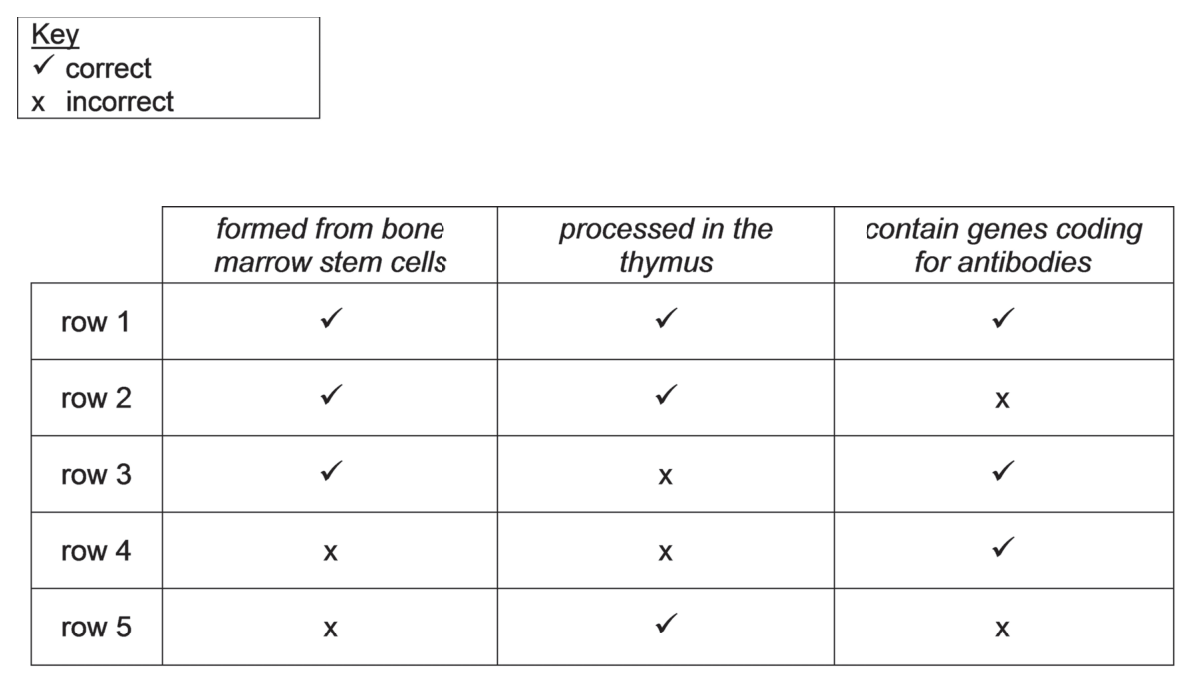
lymphocyte က antibody ထုတ် — bone marrow မှာ မွေး။antibody တွေကို lymphocyte (လင်ဖိုဆိုက်) ဆိုတဲ့ white blood cell (သွေးဖြူဥ) တွေက ထုတ်တယ်။ lymphocyte အားလုံး bone marrow (အရိုးတွင်းခြင်ဆီ) ထဲက stem cell ကနေ မွေးတယ်။
B cell — bone marrow ထဲ ရင့်၊ B = Bone marrow။B cell (B lymphocyte — နာမည် နှစ်ခု၊ ဆဲလ် တစ်မျိုးတည်း) က bone marrow ထဲမှာပဲ ဆက်နေပြီး ရင့်ကျက်တယ်။ B = Bone marrow လို့ မှတ်ပါ။
T cell — thymus မှာ ရင့်၊ T = Thymus။T cell ကတော့ သွေးနဲ့အတူ ရင်ဘတ်ထဲ heart (နှလုံး) အပေါ်နားက thymus (သိုင်းမပ်စ် ဂလင်း) ဆီ ခရီးသွားပြီး အဲဒီမှာ ရင့်ကျက်တယ်။ T = Thymus။
B cell က receptor gene ကျပန်း စီ — ပုံ သန်းချီ။ရင့်ကျက်နေစဉ် B cell တစ်လုံးစီက receptor gene အပိုင်းတွေကို ကျပန်း ပြန်စီတယ်။ ဒါကြောင့် receptor ပုံ သန်းချီ (millions of shapes) ကွဲပြားလာတယ်။
မတွေ့ဖူးတဲ့ ပိုးအတွက်တောင် ကြိုရှိ — ဖိနပ်ဆိုဒ်လို။ဒါကြောင့် မတွေ့ဖူးသေးတဲ့ ပိုးအတွက်တောင် ကိုက်မယ့် ဆဲလ် ကြိုရှိပြီးသား (ready)။ ဖိနပ်ဆိုင်က ဆိုဒ် အကုန် ကြိုထုတ်ထားသလိုပဲ။
ကိုယ့်ဆဲလ်နဲ့ ကိုက်တာ ဖယ် — self-tolerance။ကိုယ့်ဆဲလ် မျက်နှာ (●) နဲ့ ကိုက်နေတဲ့ ဆဲလ်တွေကိုတော့ ရင့်ချိန်မှာပဲ ဖယ်ရှားလိုက်တယ်။ ဒါကြောင့် ကိုယ့်ကိုယ်ကို မတိုက်ဘူး — self-tolerance။
ပထမ — bone marrow stem cell မှ ✓။ပထမ ကော်လံ — B cell က bone marrow stem cell ကနေ ဖြစ်တာ မှန်တယ် ✓။ lymphocyte အားလုံး ဒီကနေ မွေးတယ်။
ဒုတိယ — thymus ✗၊ အဲဒါ T cell။ဒုတိယ — thymus မှာ processed (ရင့်ကျက်) တယ် ဆိုတာ မှားတယ် ✗။ thymus မှာ ရင့်တာ T cell ပါ။ B cell က bone marrow ထဲမှာ ရင့်တယ်။
တတိယ — antibody gene ✓ — option B။တတိယ — antibody gene တွေ ပါတာ မှန်တယ် ✓။ B cell က ဒီ gene ကနေ receptor နဲ့ antibody ထုတ်တယ်။ ✓ ✗ ✓ ဆိုတော့ အဖြေ row 3 — option B။
👉 B, T cell ဘယ်မှာ စောင့်လဲ? အကျိတ်ရောင်တာ ဘာလဲ?👉 ရင့်ပြီးသား B နဲ့ T cell တွေက ပိုးကို ဘယ်မှာ စောင့်နေလဲ? လည်ပင်းက ‘အကျိတ်’ ရောင်တာ ဘာလဲ?
lymph — သွေးကြောက ယိုထွက်တဲ့ အရည်
သွေးက capillary ထဲ စီးတယ်။B နဲ့ T cell တွေ ပိုးကို ဘယ်မှာ တွေ့လဲ သိဖို့ ခန္ဓာထဲက ပြွန် ကွန်ရက် တစ်ခုကို အရင် သိရမယ်။ သွေးက capillary (အသေးဆုံး သွေးကြော) ထဲ စီးတယ်။
အရည် စိမ့်ထွက် = tissue fluid။capillary နံရံက ပါးလို့ သွေးထဲက အရည် တချို့ ဆဲလ်တွေ ကြားထဲ စိမ့်ထွက်တယ်။ ဒါကို tissue fluid (တစ်ရှူး အရည်) လို့ ခေါ်တယ်။
🤔 Fluid leaks out of the capillaries all day long. What stops our tissues from swelling up with it?
ယိုထွက်တဲ့ tissue fluid ကို ပြွန်ငယ်လေးတွေ (lymph vessel) က စုပြီး vein ထဲ ပြန်ပို့တယ် — နောက် အဆင့်မှာ ကြည့်ပါ။
ချွေးက skin ဂလင်းကနေ ထွက်တာ၊ ဆဲလ်တွေ အရည် အကုန် မသိမ်းဘူး၊ ဆီးကို kidney က လုပ်တယ်။
ပြွန်ထဲ ရောက်တဲ့ အရည် = lymph (လင့်ဖ် အရည်)အဲဒီ အရည်ကို ပြွန်ငယ်လေးတွေက ပြန်စုတယ်။ ပြွန်ထဲ ရောက်တဲ့ အရည်ကို lymph လို့ ခေါ်ပြီး ပြွန်ကို lymph vessel (လင့်ဖ် ပြွန်) လို့ ခေါ်တယ်။
lymph vessel ပေါင်းပြီး vein ထဲ ပြန်ဝင်။lymph vessel တွေ ပေါင်းပြီး နောက်ဆုံး ရင်ဘတ်နားက vein (ပြန်ကြော) ထဲ ပြန်ဝင်တယ်။ ဒါကြောင့် ယိုထွက်တဲ့ အရည် ပြန်မပျောက်ဘူး။
ပြွန် စနစ် တစ်ခုလုံး = lymphatic system (လင့်ဖ် စနစ်)capillary ကနေ ယိုထွက်တဲ့ အရည်ကို စုပြီး သွေးထဲ ပြန်ပို့တဲ့ ပြွန် စနစ် တစ်ခုလုံးကို lymphatic system (လင့်ဖ် စနစ်) လို့ ခေါ်တယ်။
👉 lymph vessel လမ်းပေါ်မှာ ဘာ ရှိလဲ?👉 lymph vessel တွေ ကိုယ်တစ်ခုလုံးမှာ ဘယ်လို ပျံ့နေလဲ? သူတို့ လမ်းပေါ်မှာ ဘာ ရှိလဲ?
lymph node နဲ့ spleen — B နဲ့ T ပိုးနဲ့ တွေ့တဲ့ နေရာ
lymph vessels က လက်ခြေကနေ ရင်ဘတ်ဆီ စီးတက်။ကိုယ်တစ်ခုလုံးကို ကြည့်ရင် lymph vessels (အစိမ်းရောင်) တွေက လက်၊ ခြေထောက်ကနေ ရင်ဘတ်ဆီ စီးတက်တယ်။
ပဲစေ့ပုံ အကျိတ် = lymph node (လင့်ဖ် အကျိတ်)ပြွန်တွေ လမ်းကြောင်းပေါ်မှာ ပဲစေ့ပုံ အကျိတ်လေးတွေ ရှိတယ် — lymph node (လင့်ဖ် အကျိတ်)။ လည်ပင်း၊ ချိုင်း နဲ့ ပေါင်ခြံမှာ အများဆုံး ရှိတယ်။
node ထဲ B, T cell ပြည့် — antigen နဲ့ တွေ့ရာ။node တစ်ခုကို ချဲ့ကြည့်ရင် B cell တွေနဲ့ T cell တွေ ပြည့်နေတယ်။ တစ်ရှူးထဲ ရောက်တဲ့ ပိုးကို lymph က node ဆီ သယ်လာတော့ ကိုက်တဲ့ lymphocyte က ဒီမှာ antigen နဲ့ တွေ့တယ်။
node = B နဲ့ T ရဲ့ ‘အစည်းအဝေး ခန်းမ’။macrophage တွေကလည်း ပိုး အပိုင်းအစ ကိုင်ပြီး node ဆီ လာပြတယ်။ ဒါကြောင့် node က B နဲ့ T ရဲ့ ‘အစည်းအဝေး ခန်းမ’ ပါ။
🤔 A cut on the hand becomes infected, and a painful lump appears in the armpit of the same arm. What is the lump?
လက်က ပိုးကို lymph က ချိုင်းထဲက lymph node ဆီ သယ်လာတယ်။
ကိုက်တဲ့ B နဲ့ T cell တွေ node ထဲမှာ ပွားလာလို့ node ကြီးပြီး နာတယ် — လည်ချောင်း နာရင် လည်ပင်း node ရောင်သလိုပဲ။
သွေးခဲ၊ mucus၊ bone marrow မဟုတ်ဘူး။
ဆဲလ် ပွားလို့ node ကြီး၊ နာ — swollen gland။ကိုက်တဲ့ ဆဲလ်တွေ node ထဲမှာ အများကြီး ပွားလာတော့ node ကြီးလာပြီး ကိုင်ရင် နာတယ်။ လည်ချောင်း နာရင် လည်ပင်းက ‘အကျိတ် ရောင်တာ’ (swollen gland) ဒါပါ။ စစ်တပ် အလုပ်လုပ်နေတဲ့ လက္ခဏာ။
spleen (သရက်ရွက်) က သွေးကို စစ်တယ်။ဗိုက်ရဲ့ ဘယ်ဘက် အပေါ်မှာ spleen (သရက်ရွက်) ရှိတယ်။ lymph မဟုတ်ဘဲ သွေးကို စစ် (filters blood) တဲ့ အကြီးဆုံး lymph organ ပါ။ သွေးထဲက ပိုးကို ဒီမှာ ဖမ်းတယ်။
မွေး bone marrow၊ ရင့် thymus၊ တွေ့ node, spleen။spleen က အိုနေတဲ့ red blood cell တွေကိုလည်း ဖယ်ရှားတယ်။ ဒါကြောင့် lymphocyte တွေ မွေးတဲ့ နေရာ (bone marrow)၊ ရင့်တဲ့ နေရာ (thymus) နဲ့ ပိုးနဲ့ တွေ့တဲ့ နေရာ (node, spleen) သုံးမျိုး ရှိတယ်။
👉 B cell သန်းချီထဲ ဘယ်ဆဲလ် စလုပ်လဲ?👉 node ထဲမှာ ပိုး ရောက်လာပြီ။ B cell သန်းချီထဲက ဘယ်ဆဲလ်က အလုပ် စလုပ်လဲ?
ကိုက်တဲ့ B cell ကို ရွေးတယ် — clonal selection
🤔 Quick recall: which part of an antibody fits one antigen like a key?
PART 2 က Y ပုံ antibody ကို သတိရပါ — လက်ဖျား နှစ်ဖက် variable region ပုံက antigen တစ်မျိုးတည်းနဲ့ ကိုက်တယ်။
ပင်စည် (constant region) က class တူရင် တူတူပဲ။
B cell မျက်နှာပြင်က receptor ကလည်း ဒီ antibody ပုံပဲ။
B cell တစ်လုံးစီ receptor ပုံ မတူ။B cell သန်းချီ သွေးထဲ လှည့်ပတ်နေတယ်။ တစ်လုံးစီရဲ့ receptor ပုံ (■ ▲ ● ◆) မတူကြဘူး။
▲ antigen က ▲ B cell ကိုပဲ ချိတ် (selected)။▲ antigen ပါတဲ့ bacteria ဝင်လာပြီ ဆိုပါစို့။ antigen က ▲ receptor ရှိတဲ့ B cell ကိုပဲ ချိတ်မိတယ် (selected)။ ကျန်တဲ့ ဆဲလ်တွေ ဘာမှ မဖြစ်ဘူး။
ကိုက်တာ ရွေး = clonal selection (ကိုက်တဲ့ ဆဲလ် ရွေးခြင်း)antigen က ကိုက်တဲ့ ဆဲလ်ကို ရွေးလိုက်သလို ဖြစ်လို့ ဒါကို clonal selection (ကိုက်တဲ့ ဆဲလ်ကို ရွေးခြင်း) လို့ ခေါ်တယ်။
B cell က helper T cell ရဲ့ OK ကို စောင့်ရတယ်။ဒါပေမဲ့ ချိတ်မိရုံနဲ့ B cell မနိုးသေးဘူး။ မှားတိုက်မိမှာ စိုးလို့ စစ်ဦးစီး helper T cell ရဲ့ ခွင့်ပြုချက် (OK) ကို စောင့်ရတယ်။
👉 helper T cell က ပိုး ရောက်တာ ဘယ်လို သိလဲ?👉 helper T cell က ပိုး ရောက်နေပြီ ဆိုတာ ဘယ်လို သိလဲ? PART 1 က macrophage ရဲ့ ‘အလံ’ ကို သတိရပါ။
helper T — စစ်ဦးစီး
macrophage က ▲ အပိုင်းကို အလံလို ပြထား — ရန်သူ ရောက်ပြီ။PART 1 မှာ macrophage က ဝါးပြီးသား ပိုးရဲ့ အပိုင်းအစ (▲) ကို မျက်နှာပြင်မှာ အလံလို ချိတ်ပြထားတာ မှတ်မိလား? ဒါ ‘ရန်သူ ရောက်ပြီ’ သတင်းပို့တာပါ။
အလံ protein = MHC — Major Histocompatibility Complex။အဲဒီ အလံ protein ကို MHC လို့ ခေါ်တယ် — Major Histocompatibility Complex။
‘tissue ကိုက်မကိုက် ဆုံးဖြတ် protein အစု’။histo = tissue (ဆဲလ်အစု)၊
compatibility = ကိုက်ညီခြင်း၊
complex = protein အစု။
‘tissue ကိုက်မကိုက် ဆုံးဖြတ်တဲ့ protein အစု’ လို့ အဓိပ္ပါယ် ရတယ်။
လူတိုင်း MHC မတူ — tissue type စစ်ရ။လူတစ်ယောက်နဲ့ တစ်ယောက် MHC ပုံ မတူဘူး။ ဒါကြောင့် အင်္ဂါ အစားထိုးရင် ဒီ protein ကို ‘tissue type’ အဖြစ် စစ်ပြီး ကိုက်တဲ့ လှူသူကို ရှာရတယ် (PART 4)။
ဝါးပြီး ပြတဲ့ ဆဲလ် = APC၊ အလံ class II MHC။macrophage လို ပိုးကို ဝါးပြီး အပိုင်းအစ ပြတဲ့ ဆဲလ်ကို Antigen-Presenting Cell (APC) လို့ ခေါ်တယ်။ သူတို့ရဲ့ အလံက class II MHC ပါ။
helper T receptor ကိုက်ရင် နိုးလာတယ်။helper T cell က class II ပေါ်က ▲ အပိုင်းအစကို သူ့ receptor နဲ့ စမ်းတယ်။ ကိုက်တယ်ဆိုရင် helper T နိုးလာတယ်။
နိုးလာတဲ့ helper T က cytokines (ဓာတု သတင်းစကား) တွေ ထုတ်တယ်။
▲ B cell တစ်လုံးတည်းကို ဘယ်လို ရွေးနှိုးလဲ?ဒါပေမဲ့ cytokines က B cell တိုင်းကို မနှိုးဘူး။ ▲ ကို ကိုက်တဲ့ B cell တစ်လုံးတည်းကို ဘယ်လို ရွေးနှိုးလဲ? B cell ကိုယ်တိုင်လည်း APC တစ်မျိုး ဖြစ်လို့ပါ — ပုံ နောက်တစ်ခုမှာ ကြည့်ပါ။
① B cell ရဲ့ receptor (Y ပုံ) က ▲ antigen ကို ဖမ်းတယ်။ ▲ နဲ့ ကိုက်တဲ့ B cell ပဲ ဖမ်းနိုင်တယ်။
② ဖမ်းထားတဲ့ antigen ကို ဆဲလ်ထဲ ဆွဲသွင်း (taken in) ပြီး အပိုင်းအစ ဖြစ်အောင် ဖြတ်တယ်။
③ ▲ အပိုင်းအစကို သူ့ မျက်နှာပြင်က class II MHC ပေါ် တင်ပြတယ် — macrophage လုပ်သလိုပဲ။
④ macrophage ဆီမှာ နိုးလာပြီးသား ▲ ကိုက်တဲ့ helper T (matching helper T) က ဒီ B cell ရဲ့ အလံကို ကပ်တယ်။
⑤ helper T က cytokines ကို ဒီ B cell ဆီ တိုက်ရိုက် ပို့လို့ ဒီ B cell တစ်လုံးတည်း GO ရတယ်။ ▲ မဖမ်းတဲ့ B cell မှာ ▲ အလံ မရှိလို့ helper T က မကပ်ဘူး။
▲ ချိတ်ထားတဲ့ B cell က GO ခွင့်ပြုချက် ရတယ်။ဒီလိုနဲ့ ▲ ကို ချိတ်ထားပြီးသား B cell က ‘စတိုက်ပါ’ (GO) ခွင့်ပြုချက် ရသွားတယ်။
helper T က killer T ကိုလည်း နှိုး — စစ်ဦးစီး။helper T က killer T cell ကိုလည်း နှိုးတယ် (ခဏနေ တွေ့မယ်)။ helper T မပါရင် ဘယ်သူမှ မနိုးဘူး — ဒါကြောင့် သူ့ကို စစ်ဦးစီးလို့ ခေါ်တာ။
👉 စစ်ဦးစီးကို ရန်သူက တိုက်ရိုက် တိုက်ရင် ဘာဖြစ်မလဲ?
HIV က စစ်ဦးစီးကို တိုက်ရင်
helper T က အလယ်က စစ်ဦးစီး — B cell နဲ့ killer T ကို အမိန့်ပေးတယ်။
HIV က helper T cell ကို ဖျက်ဆီးတယ်။HIV (Human Immunodeficiency Virus) က အဓိက helper T cell ထဲ ဝင်ပြီး ဖျက်ဆီးတယ် (macrophage တချို့ထဲလည်း ဝင်တယ်)။ နှစ်တွေ ကြာလာတော့ helper T တွေ တဖြည်းဖြည်း ကုန်သွားတယ်။
စစ်ဦးစီး မရှိ — B, killer T no orders။စစ်ဦးစီး မရှိတော့ B cell ရော killer T ရော အမိန့် မရ (no orders) တော့ဘူး။
ကိုယ်ခံအား ပြို = AIDS၊ သာမန်ပိုးနဲ့ ပြင်းပြင်း ဖျား။ဒီလို ကိုယ်ခံအား ပြိုသွားတဲ့ အခြေအနေကို AIDS (Acquired Immuno-Deficiency Syndrome) လို့ ခေါ်တယ်။ သာမန် ပိုးလေးတွေနဲ့တောင် ပြင်းပြင်း ဖျားနိုင်တယ်။
HIV ရဲ့ gene တွေက DNA မဟုတ်ဘဲ RNA (RNA genes) ပါ။ helper T cell ပေါ်က CD4 (Cluster of Differentiation 4) ဆိုတဲ့ protein ကို ကပ်ပြီး ဆဲလ်ထဲ ဝင်တယ်။
ဆဲလ်ထဲ ရောက်တော့ သူ ယူလာတဲ့ reverse transcriptase enzyme နဲ့ RNA ကို DNA အဖြစ် ကူးတယ် (RNA → DNA)။
ပုံမှန် DNA → RNA ရဲ့ ပြောင်းပြန်မို့ HIV ကို retrovirus (retro = ပြောင်းပြန်) လို့ ခေါ်တယ် (သင်ခန်းစာ 30)။
အဲဒီ DNA ကို ဆဲလ်ရဲ့ ကိုယ်ပိုင် DNA ထဲ ထည့်ထားလို့ (into our DNA) နှစ်ချီ ပုန်းနေနိုင်တယ်။ နောက်မှ HIV အသစ်တွေ ထုတ်ပြီး (new HIV) helper T ကို ဖျက်တယ်။
HIV က ခန္ဓာ အရည်ကနေပဲ ကူးတယ် — သွေး (ဆေးထိုးအပ် မျှသုံးခြင်း)၊ လိင်ဆက်ဆံခြင်း၊ ကိုယ်ဝန်၊ မွေးဖွားချိန် နဲ့ နို့ကနေ အမေ့ဆီက ကလေး။ လက်ဆွဲ၊ အတူစား၊ ခြင်ကိုက်တာနဲ့ မကူးဘူး။
HIV ကို အပြီး ပျောက်စေတဲ့ ဆေး မရှိသေးပေမဲ့ reverse transcriptase ကို ပိတ်တဲ့ ဆေးတွေက HIV ပွားတာကို ထိန်းထားနိုင်လို့ AIDS မဖြစ်ဘဲ နေနိုင်တယ်။
🤔 Zidovudine is a drug that blocks HIV's reverse transcriptase. Which step of HIV's life cycle does it stop?
reverse transcriptase က HIV ရဲ့ RNA ကို DNA အဖြစ် ကူးတဲ့ enzyme (RNA → DNA)။
ဒါကို ပိတ်ရင် HIV DNA မဖြစ်လို့ ဆဲလ်ရဲ့ DNA ထဲ မဝင်နိုင်ဘူး။
DNA → RNA (transcription) က ကိုယ့်ဆဲလ်ရဲ့ ပုံမှန် အလုပ်၊ CD4 ကပ်တာနဲ့ HIV အသစ် ထွက်တာက တခြား အဆင့်တွေ။
👉 ကျန်းမာတဲ့ လူမှာတော့ GO ခွင့်ပြုချက် ရတဲ့ B cell က ဘာဆက် လုပ်လဲ?
ပွား၊ ထုတ်၊ မှတ် — plasma cell နဲ့ memory cell
GO ရတဲ့ B cell mitosis နဲ့ ကွဲ — 1 → 2 → 4 → 8။GO ခွင့်ပြုချက် ရတဲ့ B cell က mitosis (သင်ခန်းစာ 32) နဲ့ ထပ်ခါ ထပ်ခါ ကွဲတယ်။ 1 → 2 → 4 → 8 … ရက် အနည်းငယ်အတွင်း ထောင်ချီ ဖြစ်လာတယ်။
ထပ်တူ ဆဲလ်အုပ်စု = clone (ထပ်တူ အုပ်စု)အကုန် မူရင်း ဆဲလ်နဲ့ ထပ်တူ — receptor ▲ အတူတူပဲ။ ဒီ ထပ်တူ ဆဲလ်အုပ်စုကို clone လို့ ခေါ်တယ်။
plasma cell (antibody စက်ရုံ ဆဲလ်) — စက္ကန့် ~2000။clone ရဲ့ အများစုက plasma cell ဖြစ်လာတယ်။ protein စက်ရုံ rough ER အပြည့် ပါပြီး antibody ကို တစ်စက္ကန့် ~2000 နှုန်းနဲ့ ထုတ်တယ်။
gene → mRNA → protein — antibody ဆောက်။antibody ဆောက်ဖို့ antibody gene ကို transcription လုပ်ပြီး mRNA အများကြီး ထုတ်ရတယ် (gene → mRNA → protein, သင်ခန်းစာ 39)။
memory cell (မှတ်ဉာဏ် ဆဲလ်) — years ရှင်၊ အသင့်။ကျန်တဲ့ ဆဲလ် တချို့က memory cell ဖြစ်ပြီး နှစ်ပေါင်းများစွာ (years) အသက်ရှင်တယ်။ ဒီ ▲ ပိုး နောက်တစ်ခါ လာရင် အသင့်ပဲ။
👉 IMAT — ‘B cell က ဘာ မလုပ်ဘူးလဲ’။👉 B cell က ဒီ အလုပ်တွေ လုပ်တယ်။ IMAT က ‘B cell က ဘာ မလုပ်ဘူးလဲ’ ဆိုတာနဲ့ စစ်တယ်။
IMAT ထောင်ချောက် — B cell က ပိုးကို ဝါးလား
📝 IMAT 2018 · Question 40
B lymphocytes are involved in the human immune response to a bacterial infection. Which of the following processes would TYPICALLY be carried out by these lymphocytes in response to the infection?
1. cell division by mitosis
2. transcription producing mRNA
3. engulfing and digesting bacteria
B cell engulf ✗ — ဝါးတာ phagocyte။ထောင်ချောက် — B cell က bacteria ကို ဝါးမျို (engulf) တာ မဟုတ်ဘူး ✗။ ဝါးတာ phagocyte ရဲ့ အလုပ်။ B cell က antibody ထုတ်ပေးရုံပဲ။
① mitosis — clone ဖြစ်ဖို့ B cell က ကွဲရတယ် ✓။
② transcription producing mRNA — antibody gene ကနေ mRNA ထုတ်ရတယ် ✓။
③ engulfing — B cell မဟုတ် ✗ — option D။③ engulfing and digesting bacteria — phagocyte အလုပ်၊ B cell မဟုတ်ဘူး ✗။ ဒါကြောင့် အဖြေ “1 and 2 only” — option D။
👉 ဆဲလ်ထဲ ပုန်းတဲ့ virus ကို ဘယ်သူ ရှာလဲ?👉 antibody က သွေးထဲက ပိုးကိုပဲ မီတယ်။ ဆဲလ်ထဲ ဝင်ပုန်းနေတဲ့ virus ကိုကော ဘယ်သူ ရှာလဲ?
ဆဲလ်ထဲ ပုန်းနေတဲ့ virus — killer T
virus ဆဲလ်ထဲ ပုန်းပွား — antibody မရောက်နိုင်။virus က ဆဲလ်ထဲ ဝင်ပုန်းပြီး ဆဲလ်ရဲ့ စက်တွေနဲ့ သူ့ကိုယ်သူ ပွားတယ် (သင်ခန်းစာ 30)။ ဆဲလ်ထဲကို antibody မရောက်နိုင်ဘူး။
ဆဲလ်တိုင်း protein အပိုင်း (●) ကို class I MHC ပေါ် ပြ။nucleus ရှိတဲ့ ဆဲလ်တိုင်းက ကိုယ့်ထဲမှာ ဆောက်နေတဲ့ protein အပိုင်းအစ (●) ကို မျက်နှာပြင်က အလံ class I MHC ပေါ်မှာ အမြဲ ပြထားတယ်။
virus ဝင်ရင် ▲ class I ပေါ် ရောက် — ‘ကယ်ပါ’ အလံ။virus ဝင်ထားရင်တော့ virus protein အပိုင်းအစ (▲) ပါ class I ပေါ် ရောက်လာတယ် — ‘ကယ်ပါ’ အလံ ထောင်သလိုပဲ။
killer T cell က ▲ အလံ မှတ်မိပြီး ဆဲလ်ကို ကပ်တယ်။killer T cell (cytotoxic T cell — နာမည် နှစ်ခု၊ ဆဲလ် တစ်မျိုး) က ဒီ ▲ အလံကို receptor နဲ့ မှတ်မိပြီး ဆဲလ်ကို ကပ်တယ်။
perforin နဲ့ ဖောက်၊ granzyme သွင် — ဆဲလ် သေ။perforin ဆိုတဲ့ protein နဲ့ membrane ကို အပေါက်ဖောက်ပြီး granzyme enzyme တွေ သွင်းလိုက်လို့ ဆဲလ် သေသွားတယ်။
ဆဲလ်တစ်လုံး ဆုံး၊ virus စက်ရုံ ပိတ် — အမြတ်။ဆဲလ် တစ်လုံး ဆုံးရှုံးပေမဲ့ virus ထောင်ချီ ထုတ်မယ့် စက်ရုံကို ပိတ်လိုက်တာ (factory closed)။ ဒါက အမြတ်ပါ။
👉 B cell — antibody၊ killer T — ဆဲလ် တိုက်ရိုက်။👉 B cell က antibody နဲ့ တိုက်တယ်၊ killer T က ဆဲလ်ကို ကိုယ်တိုင် တိုက်တယ်။ ဒီ နှစ်မျိုးကို နာမည် ခွဲခေါ်တယ်။
humoral နဲ့ cell-mediated — MHC နှစ်မျိုး
B cell, antibody = humoral immunity (ခန္ဓာအရည် ကိုယ်ခံအား)humor ဆိုတာ ရှေးခေတ် ဆေးပညာမှာ ‘ခန္ဓာ အရည်’ (body fluids) ပါ။ antibody တွေက သွေး plasma နဲ့ lymph အရည်ထဲမှာ မျောနေလို့ B cell နဲ့ antibody က တိုက်တာကို humoral immunity လို့ ခေါ်တယ်။
T cell တိုက်ရိုက် = cell-mediated immunity (ဆဲလ် တိုက်ခြင်း)T cell က ဆဲလ်ကို ကိုယ်တိုင် ကပ်ပြီး သတ်တာကိုတော့ cell-mediated immunity (ဆဲလ်က တိုက်ရိုက် တိုက်တဲ့ ကိုယ်ခံအား) လို့ ခေါ်တယ်။
class I — all cells, killer T၊ class II — APCs, helper T။MHC နှစ်မျိုး မရောပါနဲ့ — class I က nucleus ရှိတဲ့ ဆဲလ်တိုင်း (all cells) မှာ ရှိပြီး killer T ကို ပြတယ်။ class II က APCs မှာပဲ ရှိပြီး helper T ကို ပြတယ်။
🤔 Mature red blood cells have no nucleus. Malaria parasites hide inside them. Why can killer T cells not find these parasites?
killer T က class I MHC ပေါ်က အပိုင်းအစကို ဖတ်ပြီး ပိုးဝင်ဆဲလ်ကို ရှာတယ်။
nucleus မရှိတဲ့ red blood cell က class I MHC မပြလို့ ဆဲလ်ထဲက malaria ပိုး အပိုင်းအစကို killer T မမြင်ရဘူး။
malaria မှာ antigen ရှိတယ်၊ killer T က သွေးထဲ လှည့်တယ်၊ class II က APC မှာပဲ ရှိတယ်။
👉 IMAT ရဲ့ နာမည်ဆင် ထောင်ချောက်။👉 စစ်တပ် အကုန် တွေ့ပြီ။ IMAT က နာမည်ချင်း ဆင်တဲ့ ထောင်ချောက် တစ်ခုနဲ့ စစ်တယ်။
IMAT ထောင်ချောက် — B cell လား beta cell လား
📝 IMAT 2013 · Question 44
Which one of the following is not involved in defending the body against infection?
B cell — antibody ထုတ်တဲ့ lymphocyte၊ ကာကွယ်ရေး (defence) ထဲ ပါတယ် ✓။
antibody — ပိုးကို ဖမ်းပြီး phagocyte နဲ့ complement ကို ကူတယ် ✓။
T cell — helper T က အမိန့်ပေး၊ killer T က ပိုးဝင်ဆဲလ်ကို သတ်တယ် ✓။
phagocyte — ပိုးကို ဝါးစားတယ် ✓။
beta cell — pancreas၊ insulin — ကာကွယ်ရေး ✗ — အဖြေ B။beta cell (β cell) က pancreas (ပန်ကရိယ) ထဲက islet မှာ ရှိပြီး insulin ထုတ်လို့ blood sugar ကို ချတယ် (သင်ခန်းစာ 52)။ ကာကွယ်ရေးနဲ့ မဆိုင်ဘူး ✗ — အဖြေ B။
B cell = Bone marrow၊ β cell = pancreas — မတူ။ထောင်ချောက်က နာမည်ပဲ — “B cell” နဲ့ “beta cell” အသံ ဆင်ပေမဲ့ ဆဲလ် လုံးဝ မတူဘူး။ B က Bone marrow၊ β က pancreas။
👉 memory cell က ဒုတိယ အကြိမ် ဘာကွာစေလဲ?👉 ဝက်သက် ပဟေဠိကို ပြန်သွားမယ်။ memory cell က ဒုတိယ အကြိမ်မှာ ဘာ ကွာစေလဲ?
Memory, vaccines and transplants
မှတ်ဉာဏ်၊ ကာကွယ်ဆေး နဲ့ အင်္ဂါ အစားထိုး
ဝက်သက် တစ်ခါ၊ တုပ်ကွေး နှစ်တိုင်း
ဝက်သက် တစ်ခါ ဖြစ်ဖူးရင် တစ်သက်လုံး ထပ်မဖြစ်။ဝက်သက် (measles) ကလေးဘဝမှာ တစ်ခါ (once) ဖြစ်ဖူးရင် တစ်သက်လုံး ထပ်မဖြစ်တော့ဘူး။
20 years later ပြန်ဝင်လည်း ဘာမှ မဖြစ် — မှတ်မိလို့။နှစ် 20 ကြာပြီး (20 years later) ဝက်သက် ပိုး ပြန်ဝင်လာလည်း ဘာမှ မဖြစ်ဘူး။ ခန္ဓာက ပိုးကို ‘မှတ်မိ’ နေလို့ပါ။
flu က နှစ်တိုင်း ပြန်ဖြစ် — ဘာကွာလဲ?တုပ်ကွေး (flu) ကတော့ နှစ်တိုင်းလိုလို ပြန်ဖြစ်တယ်။ ဘာ ကွာလဲ? ဒီ PART မှာ ပဟေဠိ နှစ်ခုလုံး ဖြေမယ်။
ပထမ အကြိမ် နဲ့ ဒုတိယ အကြိမ် — memory
ဂရပ် — ဘေးတိုင် days၊ ဒေါင်လိုက် antibody level။ဂရပ် တစ်ခု ဆွဲကြည့်မယ်။ ဘေးတိုင်က ရက် (days)၊ ဒေါင်လိုက်က သွေးထဲက antibody ပမာဏ (antibody level)။
ပထမ — တစ်ပတ်မှ ပေါ် = primary response (ပထမ တုံ့ပြန်မှု)ရက် 0 မှာ ပိုး ပထမဆုံး (first) ဝင်တယ်။ ကိုက်တဲ့ B cell နည်းနည်းလေးကို ရွေး၊ နှိုး၊ ပွားရလို့ antibody က တစ်ပတ်လောက်မှ စပေါ်တယ်။ ဒါ primary response။
ရက် 14 မှ အမြင့်ဆုံး — 10 ယူနစ်ပဲ၊ ဖျားနေ။ရက် 14 လောက်မှ အမြင့်ဆုံး ရောက်ပေမဲ့ 10 ယူနစ် လောက်ပဲ ရှိတယ်။ ဒီ ရက်တွေအတွင်း ပိုး ပွားနေလို့ ကျွန်တော်တို့ ဖျားနေတာ။
ပိုးပျောက် — antibody ကျ၊ memory cell ကျန်။ပိုး ပျောက်သွားရင် antibody တွေ ကျသွားတယ်။ ဒါပေမဲ့ memory cell တွေ ကျန်နေခဲ့တယ်။
ဒုတိယ — ချက်ချင်း = secondary response (ဒုတိယ တုံ့ပြန်မှု)ရက် 35 မှာ ပိုး ဒုတိယ အကြိမ် (second) ဝင်တယ်။ memory cell အများကြီး အသင့် ရှိလို့ antibody ချက်ချင်း တက်လာတယ်။ ဒါ secondary response။
day 40 — 100 ယူနစ်၊ high affinity။ရက် 40 (day 40) လောက်မှာ 100 ယူနစ် ရောက်ပြီး ကြာကြာ ရှိနေတယ်။ antibody တွေကလည်း antigen ကို ပိုတင်းတင်း ကပ်တယ် (high affinity)။
✍️ primary နဲ့ secondary ကို ဂရပ်ကနေ နှိုင်းယှဉ်မယ်
ပမာဏ: 10010 = ×10 များတယ်။
အမြင့်ဆုံး ရောက်ဖို့ ကြာချိန် — ဂရပ်ပေါ်က မြှား နှစ်ခုကို ကြည့်ပါ။ primary: ရက် 0 → 14 = 14 ရက်။ secondary: ရက် 35 → 40 = 5 ရက်။
145 = 2.8 ≈ ~3× faster။
no illness — memory cell ကြောင့် = immunity။ပိုး မပွားခင် ဖျက်လိုက်နိုင်လို့ ရောဂါ မဖြစ် (no illness) တော့ဘူး — ဝက်သက် ထပ်မဖြစ်တာ memory cell ကြောင့်ပါ! ဒါကို immunity (ကိုယ်ခံအား ရှိခြင်း) လို့ ခေါ်တယ်။
🤔 A woman had hepatitis A as a child. Twenty years later the same virus enters her body, and she stays well. What happens?
ငယ်ငယ်က ဖြစ်တုန်းက memory cell တွေ ကျန်ခဲ့တယ်။
ဒုတိယ အကြိမ်မှာ သူတို့ ချက်ချင်း နိုးပြီး antibody များများ မြန်မြန် ထုတ်လို့ ပိုး မပွားခင် နိုင်တယ် — secondary response။
ပထမ antibody တွေက ကျသွားပြီ (ဂရပ်မှာ ရက် 35 မှာ နည်းနည်းပဲ)၊ virus က အားမနည်းဘူး၊ phagocyte က memory မရှိဘူး။
👉 flu memory cell ရှိပေမဲ့ ဘာလို့ မကာကွယ်လဲ?👉 ဒါဆို flu ကကော? သူ့ memory cell လည်း ရှိမှာပဲ — ဘာလို့ မကာကွယ်နိုင်တာလဲ?
flu ဘာလို့ ပြန်ဖြစ်လဲ — antigenic variation
memory cell က ▲ ကို မှတ် — flu 2025 ✓။memory cell က ပိုးရဲ့ antigen ပုံ (▲) ကို မှတ်ထားတယ်။ မနှစ်က flu (flu 2025) ▲ နဲ့ ကိုက်တယ် ✓။
flu mutation — antigen ပုံ ▲ → ■။flu virus မှာ mutation (သင်ခန်းစာ 41) ခဏခဏ ဖြစ်လို့ မျက်နှာပြင် antigen ပုံ ပြောင်းသွားတယ် (▲ → ■)။
ပုံသစ် မမှတ်မိ — ပြန်ဖျား = antigenic variation။memory cell က ပုံသစ်ကို မမှတ်မိလို့ primary response က ပြန်စရပြီး ဖျားပြန်တယ်။ ဒါကို antigenic variation လို့ ခေါ်တယ်။
measles antigen same — flu ဆေး နှစ်တိုင်း အသစ်။ဝက်သက် (measles) ပိုးကတော့ antigen ပုံ သိပ်မပြောင်း (same) လို့ memory က တစ်သက်လုံး မှတ်မိတယ်။ flu ကာကွယ်ဆေးကို နှစ်တိုင်း အသစ် ထိုးရတာ ဒါကြောင့်။
🤔 Colds are caused by more than 100 types of virus, each with different antigens. Why can a child catch a cold several times a year?
memory cell က သူ တွေ့ဖူးတဲ့ antigen ပုံ တစ်မျိုးကိုပဲ မှတ်တယ်။
virus အမျိုးအစား အသစ်က antigen ပုံ မတူလို့ primary response ပြန်စရပြီး နောက်တစ်ခါ ဖျားတယ် — flu ရဲ့ antigenic variation လိုပဲ။
virus တိုင်းမှာ antigen ရှိတယ်၊ memory cell တွေ နှစ်ချီ နေတယ်။
👉 မဖျားဘဲ memory cell ကြိုရရင်? — ကာကွယ်ဆေး။👉 ဝက်သက် မဖြစ်ဘဲနဲ့ memory cell ကြိုရနိုင်ရင် ကောင်းမလား? ဒါ ကာကွယ်ဆေးရဲ့ အကြံပါ။
vaccine — ရန်သူ ဓာတ်ပုံ ကြိုပြခြင်း
vaccine (ကာကွယ်ဆေး) = Wanted poster ကြိုပြတာ။ရဲတွေကို ရာဇဝတ်ကောင် ဓာတ်ပုံ (Wanted poster) ကြိုပြထားရင် တကယ် တွေ့တဲ့ နေ့ ချက်ချင်း ဖမ်းနိုင်တယ်။ vaccine (ကာကွယ်ဆေး) က immune system ကို ဓာတ်ပုံ ကြိုပြတာပါ။
vaccine ထဲ dead / weak germ — antigen ပုံ အတူတူ။vaccine ထဲမှာ သေနေတဲ့ ဒါမှမဟုတ် အားနည်းအောင် လုပ်ထားတဲ့ ပိုး (dead / weak germ) ပါတယ်။ ရောဂါ မဖြစ်စေနိုင်ပေမဲ့ antigen ပုံ အတူတူပဲ။
တချို့ antigen protein တစ်ခု ဒါမှမဟုတ် toxoid ပဲ။တချို့ vaccine မှာ ပိုး တစ်ကောင်လုံး မပါဘဲ antigen protein တစ်ခုတည်း၊ ဒါမှမဟုတ် အဆိပ်ဖျက်ထားတဲ့ toxin (toxoid) ပဲ ပါတယ်။
mRNA vaccine — ကိုယ့်ဆဲလ်ကို antigen ဆောက်ခိုင်း။mRNA vaccine ကတော့ antigen protein ဆောက်နည်း ညွှန်ကြားချက်ကို ပို့ပြီး ကိုယ့် ဆဲလ်ကို ဆောက်ခိုင်းတယ်။
no illness — primary ကြို၊ memory cells ကျန်။ဘယ်အမျိုးပဲ ဖြစ်ဖြစ် ရောဂါ မဖြစ်ဘဲ (no illness) primary response ကို ကြိုဖြစ်စေပြီး memory cells ကျန်ခဲ့တယ်။ တကယ့် ပိုး လာရင် secondary response နဲ့ ချက်ချင်း နိုင်တယ်။
baby ပါ လွတ်တယ် = herd immunity (အုပ်စု ကိုယ်ခံအား)လူအများစု vaccine ထိုးထားရင် ပိုးက လူတစ်ယောက်ကနေ တစ်ယောက် မကူးနိုင်တော့လို့ မထိုးရသေးတဲ့ ကလေးငယ် (baby) တွေပါ လွတ်တယ် — herd immunity။
👉 ဘာလို့ နှစ်ခါ သုံးခါ ထိုးရလဲ?👉 vaccine တစ်ချို့ကို ဘာလို့ နှစ်ခါ သုံးခါ ထိုးရလဲ? ထိုးတိုင်း ဘယ် antibody ထွက်လဲ?
IgM အရင်၊ IgG နောက် — booster ဆေး
dose 1 ရက် 0 — antibody ကို class အလိုက် ဆွဲမယ်။vaccine ပထမ အကြိမ် (dose 1) ထိုးတဲ့ ရက်ကို ရက် 0 ထားပြီး antibody ကို class အလိုက် ခွဲဆွဲကြည့်မယ်။ class ငါးမျိုးကို PART 2 မှာ တွေ့ခဲ့ပြီ။
ပထမ ထွက် — IgM (first)၊ မြန်မြန် ကျ။ပထမဆုံး ထွက်တာက Y ငါးခု ကြယ်ပုံ IgM (first)။ B cell က ပထမ antibody ကို IgM ပုံစံနဲ့ ထုတ်လို့ပါ။ တစ်ပတ်လောက်မှာ အမြင့်ဆုံး ရောက်ပြီး မြန်မြန် ကျသွားတယ်။
နောက်ပိုင်း IgG ပြောင်းထုတ်လာ။နောက်ပိုင်းမှာ B cell တွေက IgG ကို ပြောင်းထုတ်လာတယ် (ဂရပ်က IgG မျဉ်း)။ ဘယ်လို ပြောင်းလဲ — ပုံ နောက်တစ်ခုမှာ ကြည့်ပါ။
B cell က IgG ပြောင်းထုတ်တာ helper T ရဲ့ cytokines အမိန့်ကြောင့်ပါ။ ပင်စည် (constant region) ကို ဆောက်တဲ့ gene ကို ပြောင်းသုံးလိုက်လို့ Y ပင်စည် ပုံ ပြောင်းသွားတယ် — IgM ကနေ IgG။
လက်ဖျား (variable region) gene ကို မပြောင်းလို့ antigen အတူတူကိုပဲ ဖမ်းတယ်။ ဒီလို class ပြောင်းတာကို class switching လို့ ခေါ်တယ်။
ပင်စည် ပြောင်း = class switching (class ပြောင်းခြင်း)ဒီလို ပင်စည် ပြောင်းတာကို class switching လို့ ခေါ်တယ်။ ပထမ အကြိမ် (primary response) မှာတော့ IgG နည်းနည်းပဲ ရသေးတယ်။
ရက် 35 ထပ်ထိုး = booster (အားဖြည့် ဆေး)ရက် 35 မှာ နောက်တစ်ကြိမ် ထိုးတာကို booster (အားဖြည့် ဆေး) လို့ ခေါ်တယ်။ memory cell တွေ နိုးလာပြီး secondary response ဖြစ်တယ်။
secondary — IgG အမြင့်ကြီး၊ IgM နည်း။secondary response မှာ အများစုက IgG ပါ (IgG အမြင့်ကြီး)၊ IgM နည်းနည်းပဲ။ memory cell တွေက class switch လုပ်ပြီးသား ဆဲလ်တွေ မို့ပါ။
primary = IgM၊ secondary = IgG (IgM → IgG)။ဒါကြောင့် စာမေးပွဲ အတွက် မှတ်ရမှာ —
primary = အများစု IgM၊
secondary = အများစု IgG (IgM → IgG)။
booster — memory cell, IgG များ၊ ကာကွယ်မှု ခိုင်။booster ထိုးရတဲ့ အကြောင်း — တစ်ခါ ထိုးရုံနဲ့ memory cell နဲ့ IgG နည်းနိုင်တယ်။ ထပ်ထိုးတော့ memory cell ပိုများပြီး IgG များများ ကြာကြာ ရှိနေလို့ ကာကွယ်မှု ပိုခိုင်တယ်။
🤔 A blood test shows a high level of IgM against hepatitis A, with little IgG. What does this suggest?
hepatitis A က liver (အသည်း) ကို ရောင်စေတဲ့ virus။
IgM က ပထမ အကြိမ်မှာ အရင် ထွက်လို့ IgM များပြီး IgG နည်းရင် ပိုး အခုမှ ပထမ အကြိမ် ဝင်ထားတာပါ။
အရင်နှစ်တွေ ဒါမှမဟုတ် booster ဆိုရင် IgG များမယ်။
အမေ့ဆီက ရတာလည်း IgG။
👉 antibody အဆင်သင့် ရနိုင်တဲ့ နည်းလည်း ရှိ။👉 ကာကွယ်ဆေးက ကိုယ့်ခန္ဓာကို ဆောက်ခိုင်းတာ။ antibody ကို အဆင်သင့် ရနိုင်တဲ့ နည်းလည်း ရှိသေးတယ်။
active နဲ့ passive — natural နဲ့ artificial
ကိုယ်တိုင် ဆောက် = active (ကိုယ်တိုင် ဆောက်) immunity။ခန္ဓာက ကိုယ်တိုင် antibody နဲ့ memory cell ဆောက်ရင် active immunity (own body makes)။
အဆင်သင့် ရ = passive (အဆင်သင့် ရ) immunity။အဆင်သင့် antibody ကို အပြင်က ရလာရင် passive immunity (gets ready-made)။
had measles — natural active။ရောဂါ တကယ် ဖြစ်ပြီး ရတာ (had measles) — ဘဝမှာ သဘာဝ အတိုင်း ဖြစ်တာမို့ natural active။
vaccine ကနေ ရတာ — ဆရာဝန်က လုပ်ပေးတာမို့ artificial active။
အမေ့ IgG, milk IgA — natural passive။ဗိုက်ထဲမှာ အမေ (mother) ရဲ့ IgG က placenta ဖြတ်လာတာ၊ မိခင်နို့ (milk) ထဲက IgA ကို ရတာ — natural passive။
antivenom ထိုး — artificial passive။မြွေကိုက်ရင် antibody အဆင်သင့် ပါတဲ့ antivenom ထိုးတာ — artificial passive။
active — ရက်အနည်းငယ် စောင့်၊ years ခံ။active က စ အလုပ်လုပ်ဖို့ ရက်အနည်းငယ် လိုပေမဲ့ memory ကြောင့် နှစ်ချီ (years) ခံတယ်။
passive — at once၊ weeks ပဲ ခံ။passive က ချက်ချင်း (at once) အလုပ်လုပ်ပေမဲ့ memory cell မရှိလို့ antibody တွေ ပြိုကွဲသွားတာနဲ့ ပတ် အနည်းငယ် (weeks) ပဲ ခံတယ်။
✍️ ကလေးက မိခင်နို့ထဲက IgA antibody ကို ရတယ်။ immunity ဘယ်အမျိုးလဲ?
အဆင့် ① — antibody ကို ကလေး ကိုယ်တိုင် ဆောက်လား? မဟုတ်ဘူး၊ ရလာတာ → passive။
အဆင့် ② — ဆရာဝန်က ထိုးပေးတာလား? မဟုတ်ဘူး၊ နို့တိုက်တာ သဘာဝ → natural။ အဖြေ: natural passive။
🎯 Match each example to its type of immunity
👉 antibody တစ်မျိုးတည်း သန်းချီ ဘယ်လို ထုတ်လဲ?👉 antivenom လို အဆင်သင့် antibody ကို ဓာတ်ခွဲခန်းမှာ antigen တစ်မျိုးတည်း အတွက် သန်းချီ ဘယ်လို ထုတ်လဲ?
monoclonal antibody — Y တစ်မျိုးတည်း သန်းချီ
▲ ကို mouse ထဲ ထိုး — clonal selection။ဓာတ်ခွဲခန်းမှာ antigen (▲) တစ်မျိုးကို mouse (ကြွက်) ထဲ ထိုးတယ်။ ကြွက်ရဲ့ immune system က ▲ ကိုက်တဲ့ B cell တွေကို ရွေးပြီး ပွားစေတယ် (clonal selection)။
spleen B cell ယူ — culture မှာ ရက် အနည်းငယ်နဲ့ သေ။ကြွက်ရဲ့ spleen ကနေ B cell တွေ ထုတ်ယူတယ်။ ပြဿနာက B cell က ▲ antibody ကို ထုတ်နိုင်ပေမဲ့ ပုလင်းထဲ (culture) မှာ ရက် အနည်းငယ်နဲ့ သေသွားတယ်။
🤔 The mouse B cells make the right antibody but die within days in a dish. Which property would we like to give them?
antibody ထုတ်တာ B cell မှာ ရှိပြီးသား — လိုတာက မသေဘဲ အဆုံးမရှိ ကွဲနိုင်ဖို့ပါ။
ဒါကို cancer ဆဲလ် (myeloma) ဆီက ယူမယ်။
ပိုး ဝါးတာက phagocyte၊ histamine က mast cell၊ placenta ဖြတ်တာက IgG ရဲ့ အလုပ်။
myeloma — antibody မထုတ်၊ divides ∞။myeloma (B cell ကနေ ဖြစ်တဲ့ cancer ဆဲလ်) ကတော့ antibody မထုတ်ဘဲ အဆုံးမရှိ ကွဲနိုင်တယ် (divides ∞)။
နှစ်လုံး ပေါင်း = hybridoma (ပေါင်းဆဲလ်)ဆဲလ် နှစ်လုံးကို ပေါင်း (fuse) ပြီး ဆဲလ် တစ်လုံး လုပ်လိုက်တယ်။ ဒီ ပေါင်းဆဲလ်ကို hybridoma လို့ ခေါ်တယ်။ antibody ထုတ်တာ B cell ဆီက၊ မသေဘဲ ကွဲတာ myeloma ဆီက ရတယ်။
one clone, one Y = monoclonal antibody (clone တစ်ခု ထုတ်)hybridoma တစ်လုံးကနေ ကွဲလာတဲ့ ထပ်တူ ဆဲလ် clone အားလုံးက Y တစ်မျိုးတည်း (one clone, one Y) ထုတ်တယ်။ ဒါကို monoclonal antibody (mono = တစ်ခု၊ clone တစ်ခုကနေ ရတဲ့ antibody) လို့ ခေါ်တယ်။
① pregnancy test — hCG ဖမ်း။အသုံး ① — ကိုယ်ဝန် စစ်တံ (pregnancy test) ထဲမှာ hCG hormone ကိုပဲ ဖမ်းတဲ့ monoclonal antibody ပါတယ် (သင်ခန်းစာ 54)။
② cancer drug — cancer ဆဲလ်ကို တံဆိပ်ကပ်။အသုံး ② — cancer ဆဲလ်ပေါ်က antigen ကို ဖမ်းတဲ့ monoclonal antibody (cancer drug) က ဆဲလ်ကို တံဆိပ်ကပ်ပေးလို့ immune ဆဲလ်တွေ သတ်လွယ်တယ်။
ဆေး ဒါမှမဟုတ် အဆိပ် ချိတ်ပြီး တိုက်ရိုက် ပို့။antibody ပေါ်မှာ ဆေး ဒါမှမဟုတ် အဆိပ် ချိတ်ပြီး cancer ဆဲလ်ဆီ တိုက်ရိုက်လည်း ပို့နိုင်တယ်။
👉 အင်္ဂါ အစားထိုးရင် ဘာဖြစ်မလဲ?👉 immune system က တခြားလူရဲ့ ဆဲလ်ကိုလည်း ရန်သူလို့ မြင်တယ်။ အင်္ဂါ အစားထိုးရင် ဘာဖြစ်မလဲ?
အင်္ဂါ အစားထိုး — rejection နဲ့ cornea
📝 IMAT 2021 · Question 39
Organ or tissue transplants normally require that the donor’s antigens must be closely matched to those of the recipient.
Which one of the following types of transplant can typically be carried out WITHOUT the need for a match between donor and recipient?
kidney transplant လုပ်ရင် ဘာဖြစ်မလဲ?ကျောက်ကပ် ပျက်တဲ့ လူနာကို တခြားလူရဲ့ kidney (ကျောက်ကပ်) အစားထိုး (transplant) ရင် ဘာဖြစ်မလဲ?
donor MHC (■) ≠ patient MHC (●) — MHC = tissue type။donor (လှူသူ) ဆဲလ်တွေရဲ့ MHC အလံ (■) က patient (လူနာ) ရဲ့ MHC (●) နဲ့ မတူဘူး။ MHC ကို tissue type လို့လည်း ခေါ်တယ် — နာမည် နှစ်ခု၊ အရာ တစ်ခု။
T cell က donor ဆဲလ်ကို တိုက် — rejection။လူနာ့ T cell တွေက donor ဆဲလ်ကို non-self လို့ မြင်ပြီး တိုက်တယ်။ ဒါ rejection (ငြင်းပယ်ခြင်း)။
matched donor ရှာ၊ immunosuppressant တစ်သက်လုံး။ဒါကြောင့် tissue type အနီးစပ်ဆုံး donor (matched donor) ကို ရှာပြီး T cell ကို ငြိမ်စေတဲ့ immunosuppressant (ကိုယ်ခံအား နှိမ်ဆေး) ကို တစ်သက်လုံး ပေးရတယ်။
ဆေးကြောင့် infections လွယ်၊ cancer ခြေ များ။ဒီဆေးက ကိုယ်ခံအား တစ်ခုလုံးကို နှိမ်လို့ လူနာက ပိုးဝင် (infections) လွယ်တယ်၊ cancer တချို့ ဖြစ်နိုင်ခြေ ပိုများတယ်။ အင်္ဂါ မငြင်းပယ်ဖို့ ပေးရတဲ့ အဖိုးပါ။
သွေးသွင်းရင် ABO antigen ကိုက်ရမယ်။သွေးသွင်းရင်လည်း red blood cell ပေါ်က ABO antigen ကိုက်ရမယ် (blood: ABO) — နောက် ပုံ နှစ်ခုမှာ အပြည့် ကြည့်မယ်။
cornea — no blood vessels၊ T cell မရောက်။cornea (မျက်ကြည်လွှာ) မှာ blood vessel မရှိဘူး (no blood vessels)။ T cell နဲ့ antibody တွေက သွေးနဲ့ ရောက်လာရတာမို့ cornea ဆီ မရောက်နိုင်ဘူး။
cornea — no match needed — အဖြေ E။ဒါကြောင့် cornea ကို tissue type မကိုက်ဘဲ အစားထိုးနိုင်တယ် (no match needed) — အဖြေ E။
liver, heart, kidney — vessels ရှိ၊ ကိုက်ဖို့ လို ✗။liver, lung, heart, kidney တွေမှာ blood vessels အပြည့် ရှိလို့ immune ဆဲလ် ရောက်ပြီး ငြင်းပယ်နိုင်တယ်။ tissue type ကိုက်ဖို့ လိုတယ် ✗။
👉 သွေး မကိုက်ရင် ဘာဖြစ်လဲ?👉 အင်္ဂါ အစားထိုးတာထက် အများဆုံး လုပ်ရတာ သွေးသွင်းခြင်း (blood transfusion) ပါ။ သွေး မကိုက်ရင် ဘာဖြစ်လဲ?
သွေးသွင်းခြင်း — ABO blood group
antigen A (▲) ရှိ — group A၊ plasma ထဲ anti-B။red blood cell (သွေးနီဥ) ပေါ်မှာလည်း antigen တွေ ရှိတယ်။ antigen A (▲) ရှိရင် group A။ သူ့ plasma (သွေးရည်) ထဲမှာ antigen B ကို ဖမ်းတဲ့ antibody anti-B ကြိုရှိနေတယ်။
အူ bacteria ကြောင့် ငယ်ကတည်းက antibody ဖြစ်လာ။ဘာလို့ ကြိုရှိလဲ — အူထဲက bacteria တွေမှာ A, B နဲ့ ပုံတူ antigen တွေ ပါလို့ ငယ်ငယ်ကတည်းက ကိုယ်မှာ မရှိတဲ့ antigen ကို ဖမ်းတဲ့ antibody ဖြစ်လာတယ်။ ကိုယ့် antigen ကိုတော့ မဖမ်းဘူး (self-tolerance)။
antigen B (■) ရှိရင် group B၊ plasma ထဲမှာ anti-A ရှိတယ်။
group AB — anti-A, anti-B none။A ရော B ရော ရှိရင် group AB။ ကိုယ့်ဆီမှာ နှစ်မျိုးလုံး ရှိလို့ plasma ထဲမှာ anti-A ရော anti-B ရော မရှိဘူး (none)။
group O — anti-A ရော anti-B ရော ရှိ။ဘာ antigen မှ မရှိရင် group O။ plasma ထဲမှာ anti-A ရော anti-B ရော ရှိတယ်။ ဒီ antigen တွေကို ABO gene က ဆုံးဖြတ်တယ် (သင်ခန်းစာ 36)။
🤔 A patient with blood group A needs red cells. Which donor groups are safe?
group A လူနာ့ plasma ထဲမှာ anti-B ရှိတယ်။
antigen B ပါတဲ့ red cell (group B, AB) ကို ဖမ်းပြီး ခဲစေမယ်။
antigen B မပါတဲ့ A နဲ့ O ပဲ ဘေးကင်းတယ်။
B လူနာကို A သွေး — anti-A ဖမ်း၊ clumps။group B လူနာကို group A သွေး သွင်းမိရင် — လူနာ့ plasma ထဲက anti-A က သွင်းလိုက်တဲ့ red cell တွေရဲ့ ▲ ကို ဖမ်းတယ်။ antibody လက် နှစ်ဖက်က ဆဲလ်တွေကို ဆက်ချိတ်လို့ အစုလိုက် ခဲ (clumps) သွားတယ်။
ခဲတာ = agglutination (အစုလိုက် ခဲခြင်း) — သေနိုင်တယ်။ဒီလို ခဲတာကို agglutination လို့ ခေါ်တယ် (PART 2)။ အခဲတွေက capillary ကို ပိတ်ပြီး red cell တွေ ပေါက်ကွဲလို့ ကျောက်ကပ် ပျက်တာ၊ သေတာအထိ ဖြစ်နိုင်တယ်။
O မှာ antigen မရှိ = universal donor (လူတိုင်းကို လှူသူ)စည်းမျဉ်း — လှူတဲ့ red cell ပေါ်က antigen ကို လူနာ့ plasma ထဲက antibody က မဖမ်းရဘူး။ group O red cell မှာ antigen မရှိလို့ ဘယ်သူ့ကို သွင်းသွင်း မခဲဘူး — universal donor (လူတိုင်းကို လှူနိုင်သူ)။
AB — antibody မရှိ = universal recipient (လူတိုင်းဆီက ယူသူ)group AB လူနာ့ plasma ထဲမှာ anti-A, anti-B မရှိလို့ ဘယ် group red cell ကိုမဆို လက်ခံနိုင်တယ် — universal recipient (လူတိုင်းဆီက လက်ခံနိုင်သူ)။
👉 D antigen — ကိုယ်ဝန်မှာ အရေးကြီး။👉 red cell ပေါ်မှာ ABO အပြင် D ဆိုတဲ့ antigen တစ်ခု ရှိသေးတယ်။ ကိုယ်ဝန် ဆောင်ရင် ဒါက အရေးကြီးတယ်။
Rhesus — ပထမ ကလေး မွေးတဲ့အခါ
D ရှိ Rh+၊ မရှိ Rh−၊ anti-D ကြိုမရှိ။red cell ပေါ်မှာ D antigen ရှိတဲ့ လူကို Rh+ (Rhesus positive)၊ မရှိတဲ့ လူကို Rh− လို့ ခေါ်တယ်။ ABO နဲ့ မတူတာက Rh− လူမှာ anti-D ကြိုမရှိဘူး — D antigen တွေ့ဖူးမှ ထုတ်တယ်။
Rh− mother က baby 1 Rh+ ကိုယ်ဝန် — ပြဿနာ မရှိ။Rh− အမေ (Rh− mother) က အဖေဆီက D gene ရလို့ Rh+ ကလေး (baby 1 Rh+) ကို ကိုယ်ဝန် ဆောင်ထားတယ် ဆိုပါစို့။ placenta က သွေး နှစ်ခုကို ခွဲထားလို့ ကိုယ်ဝန် အတွင်း ပြဿနာ မရှိဘူး။
မွေးချိန် Rh+ cell အမေ့ထဲ ရောက် — anti-D, memory။မွေးတဲ့အချိန် placenta ကွာတော့ ကလေးရဲ့ Rh+ red cell တချို့ အမေ့ သွေးထဲ ရောက်သွားတယ်။ အမေ့ immune system က D ကို antigen လို့ မြင်ပြီး anti-D နဲ့ memory cell ထုတ်တယ် — primary response။
ပထမ ကလေးက မွေးပြီးသွားပြီ ဖြစ်လို့ ဘာမှ မဖြစ်ဘူး။
🤔 This mother now has anti-D memory cells. In which later pregnancy will her baby be at risk?
anti-D က D antigen ကိုပဲ ဖမ်းတယ်။
D antigen ရှိတာ Rh+ ကလေးရဲ့ red cell ပဲ — Rh− ကလေးမှာ ဖမ်းစရာ မရှိဘူး။
memory cell ရှိနေလို့ နောက် Rh+ ကလေးမှာ အန္တရာယ် ရှိတယ် — နောက် ပုံမှာ ကြည့်ပါ။
👉 အမေ့မှာ anti-D memory cell ရှိနေပြီ။ ဒုတိယ Rh+ ကလေး လာရင် ဘာဖြစ်မလဲ?
Rhesus — ဒုတိယ ကလေးကို အမေ့ antibody က တိုက်တဲ့အခါ
baby 2 Rh+ — anti-D (IgG) မြန်များ၊ placenta ဖြတ်။နောက်ထပ် Rh+ ကလေး (baby 2 Rh+) ကို ကိုယ်ဝန် ဆောင်တော့ memory cell တွေက anti-D ကို မြန်မြန် များများ ထုတ်တယ် — secondary response။ ဒီ anti-D က IgG ဖြစ်လို့ placenta ကို ဖြတ်တယ်။
anti-D က ကလေး red cell ဖျက် — သွေးအားနည်း။anti-D က ကလေးရဲ့ red cell တွေကို ဖမ်းပြီး ဖျက်ဆီးလို့ ကလေးမှာ သွေးအားနည်း၊ အသားဝါ ဖြစ်တယ်။
haemolytic disease of the newborn (မွေးကင်းစ သွေးပြို ရောဂါ)ဒါကို haemolytic disease of the newborn (မွေးကင်းစ သွေးနီဥ ပြိုကွဲ ရောဂါ) လို့ ခေါ်တယ်။
haemo = သွေး၊
lysis = ပြိုကွဲ။
🤔 To protect her next baby, what should an Rh− mother be given soon after the birth of an Rh+ baby?
ပြဿနာက အမေ့ immune system က ကလေးရဲ့ D antigen ကို မြင်ပြီး memory cell လုပ်တာ။
anti-D antibody အဆင်သင့် ထိုးလိုက်ရင် ကလေး red cell တွေကို အမေ မမြင်ခင် ဖယ်ရှားပေးလို့ memory မဖြစ်ဘူး။
D antigen vaccine နဲ့ Rh+ သွေးက memory ကို ပိုဖြစ်စေမယ်၊ antibiotic က bacteria အတွက်။
ကာကွယ် — anti-D shot (72 နာရီ အတွင်း)။ကာကွယ်နည်း — Rh− အမေကို ကိုယ်ဝန် အတွင်းနဲ့ မွေးပြီး 72 နာရီ အတွင်း anti-D antibody ထိုးပေး (anti-D shot) တယ်။ ဒီ antibody က အမေ့ သွေးထဲ ရောက်တဲ့ ကလေး red cell တွေကို ချက်ချင်း ဖယ်ရှားတယ်။
memory cell မဖြစ်၊ passive anti-D ပျောက်သွား။အမေ့ immune system က D antigen ကို မမြင်လိုက်ရလို့ memory cell မဖြစ်ဘူး။ ထိုးတဲ့ anti-D က passive (အဆင်သင့်) ဖြစ်လို့ ပတ် အနည်းငယ်နဲ့ ပျောက်သွားတယ်။
👉 immune system မှားရင် ဘာဖြစ်လဲ?👉 ဒီအထိ immune system က မှန်မှန် တိုက်တာ တွေ့ခဲ့ပြီ။ သူ မှားတဲ့အခါ ဘာဖြစ်လဲ?
allergy — အန္တရာယ် မရှိတာကို ရန်သူ ထင်တဲ့အခါ
pollen ကို ရန်သူ ထင် = allergy (ဓာတ်မတည့်ခြင်း)ပန်းဝတ်မှုန် (pollen) လို အန္တရာယ် မရှိတဲ့ ပစ္စည်းကို လူတချို့ရဲ့ immune system က ရန်သူလို့ ထင်တယ်။ ဒါကို allergy (ဓာတ်မတည့်ခြင်း) လို့ ခေါ်တယ်။ ဒီ ပစ္စည်းကို allergen လို့ ခေါ်တယ်။
ပထမ အကြိမ် IgE ထုတ် — လက္ခဏာ မပေါ်။ပထမ အကြိမ် တွေ့တော့ B cell က IgE antibody ကို ထုတ်တယ် (PART 2 က class ငါးမျိုးထဲက တစ်မျိုး)။ ဒီ အကြိမ်မှာ ရောဂါ လက္ခဏာ မပေါ်သေးဘူး။
IgE က mast cell ပေါ် ကပ်စောင့်။IgE တွေက ပင်စည် (constant region) နဲ့ mast cell ပေါ်မှာ ကပ်ပြီး စောင့်နေတယ်။ mast cell ထဲမှာ histamine အိတ်လေးတွေ (granules) ပြည့်နေတယ် (PART 1)။
ဒုတိယ — pollen IgE ချိတ် — histamine ထွက်။ဒုတိယ အကြိမ် pollen ပြန်လာတော့ mast cell ပေါ်က IgE နှစ်ခုကို pollen က တစ်ပြိုင်နက် ချိတ်လိုက်တယ်။ ဒါက mast cell ကို အိတ်တွေ ဖောက်ထုတ်ခိုင်းတဲ့ အချက်ပြပါ — histamine ထွက်လာတယ်။
sneeze, itch, swelling — hay fever, asthma။histamine က vessel ကို ကျယ်ပြီး ယိုစေတယ်၊ နှာခေါင်းထဲ mucus ထွက်စေတယ် — နှာချေ၊ ယား၊ ရောင် (sneeze, itch, swelling)။ hay fever နဲ့ ပန်းနာရင်ကျပ် (asthma) တချို့ ဒီလို ဖြစ်တယ်။
antihistamine က receptor ပိတ် — သက်သာ။antihistamine ဆေးက histamine ကို receptor မှာ ပိတ်ပေးလို့ လက္ခဏာ သက်သာတယ်။
mast cell အကုန် ပေါက် = anaphylaxis (ပြင်းထန် ဓာတ်မတည့်)mast cell တွေ ကိုယ်တစ်ခုလုံးမှာ တစ်ပြိုင်နက် ပေါက်ရင် vessel အကုန် ကျယ်လို့ blood pressure အမြန် ကျ၊ လေပြွန် ကျဉ်းပြီး အသက်ရှူ ကျပ်တယ်။ ဒါ anaphylaxis — မိနစ်ပိုင်းနဲ့ သေနိုင်တယ်။
ကု — adrenaline ချက်ချင်း ထိုး။ကုသနည်းက adrenaline (သင်ခန်းစာ 52) ကို ချက်ချင်း ထိုးတာပါ။ vessel ကို ကျဉ်းစေလို့ blood pressure ပြန်တက်ပြီး လေပြွန် ပြန်ကျယ်တယ်။
🤔 A child is stung by a bee for the first time and feels only mild pain. A year later a second sting causes severe swelling. Why?
pollen လိုပဲ — ပထမ အကြိမ်မှာ B cell က venom ကို ဖမ်းမယ့် IgE ထုတ်ပြီး mast cell ပေါ် ကပ်ထားရုံပဲ (ဘာ လက္ခဏာမှ မပေါ်သေးဘူး)။
ဒုတိယ အကြိမ်မှာ venom က IgE နှစ်ခုကို ချိတ်လို့ mast cell က histamine အများကြီး ထုတ်ပြီး ပြင်းပြင်း ရောင်တယ်။
phagocyte မှာ memory မရှိဘူး၊ venom က တူတူပဲ။
👉 ကိုယ့်ဆဲလ်ကိုယ် တိုက်ရင်ကော?👉 allergy က အပြင်က ပစ္စည်းကို လွန်တိုက်တာ။ immune system က ကိုယ့် ဆဲလ်ကိုယ် တိုက်ရင်ကော?
autoimmune — ကိုယ့် ဆဲလ်ကိုယ် တိုက်တဲ့အခါ
β cell — insulin ထုတ်၊ B cell နဲ့ မရော။pancreas (ပန်ကရိယ) ထဲက islet မှာ β cell (beta cell) တွေ insulin ထုတ်ပြီး blood glucose ကို ချတယ် (သင်ခန်းစာ 52)။ B cell နဲ့ မရောပါနဲ့ — PART 3 က ထောင်ချောက်ပါ။
လွတ်သွားတဲ့ killer T က β cell ကို တိုက်။PART 3 မှာ ကိုယ့်ဆဲလ်ကို ကိုက်တဲ့ lymphocyte တွေကို ရင့်ချိန်မှာ ဖယ်ရှားတယ် (self-tolerance) လို့ တွေ့ခဲ့တယ်။ တစ်ခါတစ်ရံ တချို့ လွတ်သွားပြီး β cell ပေါ်က protein ကို ရန်သူ ထင်ကာ killer T က တိုက်တယ်။
ကိုယ့်ဆဲလ် တိုက် = autoimmune disease (ကိုယ့်ကိုယ် တိုက်)ဒီလို ကိုယ့် ဆဲလ်ကိုယ် တိုက်တဲ့ ရောဂါကို autoimmune disease (auto = ကိုယ်တိုင်) လို့ ခေါ်တယ်။
β cell ပျက် — no insulin။β cell တွေ တစ်လုံးပြီး တစ်လုံး ပျက်စီးသွားတော့ insulin မထွက်တော့ဘူး (no insulin)။
blood glucose high — ဆီးထဲ glucose။insulin မရှိလို့ ဆဲလ်တွေက glucose ကို မယူနိုင်ဘဲ blood glucose မြင့် (high) နေတယ်။ ဆီးထဲမှာတောင် glucose ပါလာတယ်။
type 1 diabetes (ဆီးချို အမျိုးအစား 1) — insulin တစ်သက်လုံး။ဒါ type 1 diabetes (ဆီးချို အမျိုးအစား 1) ပါ။ ငယ်ငယ်မှာ စဖြစ်တတ်ပြီး insulin ကို တစ်သက်လုံး ထိုးရတယ်။ type 2 ကတော့ insulin ရှိပေမဲ့ ဆဲလ်တွေ မတုံ့ပြန်တာ — autoimmune မဟုတ်ဘူး။
rheumatoid arthritis, multiple sclerosis။နောက်ထပ် ဥပမာ — rheumatoid arthritis (အဆစ်တွေကို တိုက်တယ်)၊ multiple sclerosis (အာရုံကြောရဲ့ myelin အဖုံးကို တိုက်တယ်၊ သင်ခန်းစာ 51)။
🤔 In Hashimoto's disease, a person's own lymphocytes destroy the thyroid cells that make thyroxine. What kind of disease is this?
ကိုယ့် lymphocyte က ကိုယ့် thyroid ဆဲလ်ကို ရန်သူ ထင်ပြီး တိုက်တာ — type 1 diabetes မှာ β cell ကို တိုက်သလိုပဲ autoimmune disease ပါ။
allergy က အပြင်က ပစ္စည်းကို လွန်တိုက်တာ၊ ပိုးမရှိဘူး၊ immunodeficiency (AIDS လို) က ကိုယ်ခံအား အားနည်းတာ။
👉 antibiotic က virus ကို ဘာလို့ မထိလဲ?👉 ကိုယ်ခံအား တစ်ခုတည်းနဲ့ မနိုင်တဲ့ bacteria ကို ဆေးနဲ့ ကူတိုက်တယ်။ ဒီဆေး virus ကို ဘာလို့ မထိလဲ?
antibiotic — bacteria ကို ဘယ်လို သတ်လဲ
antibiotic (ပဋိဇီဝဆေး) — bacteria သတ်၊ cell wall ပစ်မှတ်။antibiotic (ပဋိဇီဝဆေး) ဆိုတာ bacteria ကို သတ်တဲ့ ဒါမှမဟုတ် ပွားတာ ရပ်စေတဲ့ ဆေးပါ။ bacteria မှာ ကိုယ့် ဆဲလ်မှာ မရှိတဲ့ အစိတ်အပိုင်းတွေ ရှိတယ် — ဥပမာ cell wall (ဆဲလ်နံရံ၊ သင်ခန်းစာ 30)။
penicillin — cell wall ပျက်၊ bacteria bursts။penicillin က bacteria ရဲ့ cell wall ဆောက်တဲ့ enzyme ကို ပိတ်တယ်။ ကွဲနေတဲ့ bacteria ရဲ့ နံရံ အားနည်းလာပြီး ရေ ဝင်လို့ ပေါက်ကွဲ (bursts) တယ်။ ကိုယ့် ဆဲလ်မှာ cell wall မရှိလို့ မထိခိုက်ဘူး။
🤔 Some antibiotics block the ribosomes of bacteria. Our own cells also use ribosomes. How can such a drug spare our cells?
bacteria ရဲ့ ribosome က သေးတဲ့ 70S၊ ကိုယ့် ဆဲလ် cytoplasm ထဲက ribosome က ကြီးတဲ့ 80S — ပုံ မတူလို့ 70S ကို ပိတ်တဲ့ ဆေး (ဥပမာ chloramphenicol) က 80S ကို မထိဘူး။
ကိုယ့် ဆဲလ်မှာ ribosome ရှိပြီး protein ဆောက်တယ်၊ cell wall မရှိဘူး။
70S ribosome ပိတ် — ကိုယ့်ဆဲလ် 80S မထိ။တခြား antibiotic တွေက bacteria ရဲ့ ribosome (70S — ကိုယ့်ဆဲလ်က 80S နဲ့ မတူ) ကို ပိတ်ပြီး protein ဆောက်တာ ရပ်စေတယ်။ S က ribosome အရွယ်အစားကို ပြတဲ့ ယူနစ်ပါ၊ 70S က 80S ထက် သေးတယ်။
👉 bacteria ဆေးထိ — virus မှာကော?👉 bacteria မှာ cell wall နဲ့ 70S ribosome ရှိလို့ ဆေး ထိတယ်။ virus မှာကော?
antibiotic က virus ကို ဘာလို့ မထိလဲ
virus ဆဲလ် မဟုတ် — virus in cell။virus ကတော့ ဆဲလ် မဟုတ်ဘူး — ကိုယ့် ဆဲလ်ထဲ ဝင်ပုန်းပြီး ကိုယ့် ဆဲလ်ရဲ့ စက်တွေကို သုံးတယ် (virus in cell)။
🤔 Flu is caused by a virus hiding inside our cells. Will penicillin cure it?
penicillin က bacteria ရဲ့ cell wall ဆောက်တာကို ပိတ်တယ်။
virus မှာ cell wall မရှိ၊ ribosome လည်း မရှိဘူး — ကိုယ့် ဆဲလ်ရဲ့ စက်ကို ငှားသုံးတာ။
ဒါကြောင့် ဆေးအတွက် ပစ်မှတ် မရှိဘူး။
virus က bacteria ထက် အများကြီး သေးတယ်။
cell wall, ribosome မရှိ — no target။virus မှာ cell wall မရှိ၊ ribosome မရှိဘူး။ ဒါကြောင့် antibiotic အတွက် ပစ်မှတ် မရှိဘူး (no target)။
virus ရောဂါ — vaccine နဲ့ antiviral။ဒါကြောင့် flu၊ အအေးမိ၊ COVID-19 လို virus ရောဂါကို antibiotic က မကုဘူး။ virus အတွက် vaccine နဲ့ antiviral ဆေး (HIV ဆေးလို) သုံးရတယ်။
👉 bacteria ဆေးကို ဘယ်လို ခံနိုင်လာလဲ?👉 antibiotic က bacteria ကို သတ်တယ်။ ဒါပေမဲ့ တချို့ bacteria က ဆေးကို ခံနိုင်လာတယ် — ဘယ်လိုလဲ?
antibiotic resistance — ဆေး မတိုးတော့တဲ့ bacteria
mutation ကြောင့် 1 resistant ရှိနိုင်။bacteria အုပ်စုထဲမှာ mutation (သင်ခန်းစာ 41) ကြောင့် antibiotic ကို ခံနိုင်တဲ့ တစ်ကောင် (1 resistant) ရှိနေနိုင်တယ်။ ဥပမာ penicillin ကို ဖြတ်တောက်တဲ့ enzyme ထုတ်တဲ့ gene ရထားတာ။
ကျန်တာ သေ၊ resistant ပဲ ပွား။antibiotic သောက်တော့ ကျန်တဲ့ bacteria တွေ သေသွားပြီး resistant တစ်ကောင်ပဲ ကျန်တယ်။ ပြိုင်ဘက် မရှိတော့ အလွယ်တကူ ပွားတယ်။
🤔 The same antibiotic keeps being used. What will most likely happen to this population of bacteria?
ဆေးက resistant မဟုတ်တဲ့ bacteria တွေကိုပဲ သတ်တယ်။
resistant တစ်ကောင်က ပြိုင်ဘက် မရှိဘဲ ပွားလို့ မကြာခင် အားလုံး resistant ဖြစ်လာတယ် — natural selection။
bacteria က virus မဖြစ်ဘူး၊ ဆေးက အလိုလို မအားကောင်းလာဘူး။
all resistant = antibiotic resistance (ဆေး ခံနိုင်မှု)မကြာခင် bacteria အားလုံး resistant (all resistant) ဖြစ်သွားပြီး ဒီဆေး မတိုးတော့ဘူး။ ဒါ antibiotic resistance — natural selection (သင်ခန်းစာ 42) ကို မျက်မြင် တွေ့ရတာပါ။
ဆေးရုံမှာ Staphylococcus aureus ပြဿနာ။ဥပမာ — ဆေးရုံတွေမှာ penicillin မျိုး ဆေး မတိုးတော့တဲ့ Staphylococcus aureus bacteria က ပြဿနာ ကြီးနေတယ်။
virus မှာ မသောက်၊ ရက်ပြည့် သောက်၊ တိရစ္ဆာန် အစာ မထည့်။ဒါကြောင့် ① virus ရောဂါမှာ antibiotic မသောက်ရ၊
② ဆရာဝန် ပေးတဲ့ ရက် ပြည့်အောင် သောက်ရ (အားနည်းတဲ့ bacteria ချန်မထားဖို့)၊
③ တိရစ္ဆာန် အစာထဲ မထည့်ရ။
👉 သင်ခန်းစာ တစ်ခုလုံးကို မေးခွန်း ကိုးခုနဲ့ ပြန်စစ်ကြည့်မယ်။
🔁 ပြန်စစ်မယ် — အဖြေ မကြည့်ခင် စဉ်းစားပါ
🤔 What do the cilia lining the trachea do in defence?
cilia က တစ်ပြိုင်နက် ယမ်းပြီး ပိုး ကပ်ထားတဲ့ mucus ကို လည်ချောင်းဘက် လှည်းတင်တယ်။
enzyme နဲ့ ချေတာ lysozyme နဲ့ phagocyte၊ antibody က plasma cell၊ histamine က mast cell ရဲ့ အလုပ်။
🤔 How many polypeptide chains make one antibody molecule?
heavy chain ၂ ချောင်း + light chain ၂ ချောင်း = 4 ချောင်း၊ S–S နဲ့ ချုပ်ထားတယ်။
Y ရဲ့ လက်တစ်ဖက်စီမှာ heavy တစ်ချောင်းနဲ့ light တစ်ချောင်း ပါလို့ light လည်း နှစ်ချောင်း။
🤔 Which antibody class guards tears, saliva and breast milk?
Y နှစ်ခု တွဲထားတဲ့ IgA က မျက်ရည်၊ တံတွေး၊ mucus နဲ့ နို့ထဲမှာ ပိုး ဝင်ပေါက်တွေကို စောင့်တယ်။
IgE က mast cell ပေါ်၊ IgD က B cell မျက်နှာပြင်၊ IgM က ပထမ ထွက်တဲ့ class။
🤔 Which of these is an antigen-presenting cell?
ပိုးကို ဝါးပြီး အပိုင်းအစကို class II MHC ပေါ် တင်ပြတဲ့ macrophage (နဲ့ B cell) က APC ပါ။
red cell မှာ nucleus မရှိလို့ MHC မပြဘူး၊ platelet က သွေးခဲစေတယ်၊ killer T က ပြတာကို မြင်တဲ့ ဘက်။
🤔 Which cells secrete antibodies?
clone ထဲက plasma cell က rough ER အပြည့်နဲ့ antibody ထုတ်တယ်။
memory cell က စောင့်နေရုံ၊ phagocyte က ဝါးတယ်၊ helper T က cytokines ထုတ်တယ်။
🤔 Which cells does HIV destroy?
HIV က CD4 ပါတဲ့ စစ်ဦးစီး helper T ကို ဖျက်လို့ B cell ရော killer T ရော မနိုးတော့ဘဲ AIDS ဖြစ်တယ်။
🤔 How does a killer T cell kill an infected body cell?
killer T က perforin နဲ့ membrane ကို အပေါက်ဖောက်ပြီး granzyme enzyme တွေ သွင်းလို့ ဆဲလ် သေတယ်။
ဝါးတာ phagocyte၊ antibody ထုတ်တာ plasma cell၊ histamine က mast cell။
🤔 Why does passive immunity last only a few weeks?
passive မှာ antibody ကို အဆင်သင့် ရလို့ ကိုယ့် B cell မနိုးဘူး၊ memory cell မဖြစ်ဘူး။
ရလာတဲ့ antibody တွေ ပြိုကွဲသွားတာနဲ့ ကာကွယ်မှု ကုန်တယ်။
🤔 Why does herd immunity protect babies too young to be vaccinated?
လူအများစု ကိုယ်ခံအား ရှိရင် ပိုးက လူတစ်ယောက်ကနေ တစ်ယောက် မကူးနိုင်လို့ ကလေးဆီ မရောက်ဘူး။
memory cell နဲ့ vaccine က တခြားလူဆီ မကူးဘူး၊ ကလေးလည်း ပိုး ဝင်နိုင်တယ်။
🎉 ပဟေဠိ အကုန် ဖြေပြီ — မေးခွန်းနဲ့ စမ်းပါ။🎉 ဆူးဒဏ်ရာ ပျောက်တာ၊ ဝက်သက် ထပ်မဖြစ်တာ၊ တုပ်ကွေး ပြန်ဖြစ်တာ၊ သွေး မကိုက်တာ နဲ့ ကိုယ်ခံအား မှားတာ — အကုန် ဖြေပြီးပြီ။ အောက်က မေးခွန်းတွေနဲ့ စမ်းကြည့်ပါ။