Digestion (2)
ကတ်ကြေး တစ်လက်ချင်း — ဘယ်နေရာ၊ ဘယ် bond
Enzymes along the route
ကတ်ကြေး တစ်လက်ချင်း — ဘယ်နေရာ၊ ဘယ် bond
ကတ်ကြေး ① — starch ကို glucose အထိ
starch = glucose ကို α-1,4 bond နဲ့ ဆက်တဲ့ ကြိုး။starch (ကစီဓာတ်) က glucose ring ရာနဲ့ချီကို α-1,4 glycosidic bond (သင်ခန်းစာ 24A) နဲ့ ဆက်ထားတဲ့ ကြိုးရှည်ပါ (ကိုင်းခွဲတဲ့ နေရာမှာ α-1,6)။ ထမင်း၊ ပေါင်မုန့်၊ အာလူး ထဲမှာ အများကြီး ပါတယ်။
ပထမ ကတ်ကြေး amylase — mouth နဲ့ duodenum။ပထမ ကတ်ကြေးက amylase — mouth မှာ saliva ထဲ ပါပြီး duodenum ထဲကိုလည်း pancreas က ထပ်ထုတ်ပေးတယ်။ ချိတ် တစ်ခုကျော်စီ H₂O နဲ့ ဖြတ်တယ်။
maltose (glucose နှစ်လုံးတွဲ သကြား) ရ။ဒါကြောင့် glucose နှစ်လုံးတွဲ maltose (glucose နှစ်လုံးတွဲ သကြား) တွေ ရတယ်။
⚠ amylase → maltose မှာ ရပ်၊ glucose မဟုတ်။ထောင်ချောက် — amylase က glucose အထိ မဖြတ်ဘူး၊ အများစု maltose (နဲ့ ကြိုးတိုလေးတွေ) မှာ ရပ်တယ်။ “amylase → glucose” လို့ ရေးရင် မှားတယ်။
maltase (maltose ဖြတ် ကတ်ကြေး) — ileum wall ပေါ်။maltose ကို ဖြတ်တာက maltase (maltose ဖြတ် ကတ်ကြေး)။ သူက အစာနဲ့ အတူ မစီးဘဲ ileum wall (အူသိမ် နံရံ) ဆဲလ်တွေရဲ့ အပေါ်မျက်နှာမှာ ကပ်နေတယ်။
microvilli = brush border (ဘီးသုတ်တံလို မျက်နှာ)ဒီ မျက်နှာမှာ microvilli (အမျှင်ကလေး) တွေ ဘီးသုတ်တံလို ထောင်နေလို့ brush border (ဘီးသုတ်တံလို ဆဲလ် မျက်နှာ) လို့ ခေါ်တယ်။ maltose တစ်ခုက glucose နှစ်လုံး ဖြစ်သွားတယ်။
glucose တစ်လုံးချင်း ဖြစ်မှ နံရံကို ဖြတ်ပြီး blood ထဲ ဝင်တယ်။
🤔 Amylase cuts a starch chain of 12 glucose units into maltose only. How many maltose molecules form?
🔍 မေးခွန်း ဖြည်မယ်
cuts … into = … အဖြစ် ဖြတ်တယ်။ a starch chain of 12 glucose units = glucose 12 လုံး ပါတဲ့ starch ကြိုး။ maltose only = maltose ချည်းပဲ ရတယ်။
How many … form? = ဘယ်နှစ်ခု ဖြစ်လာလဲ။
မေးနေတာ — ကြိုး တစ်ချောင်းကနေ maltose မော်လီကျူး ဘယ်နှစ်ခု ရလဲ။
maltose တစ်ခု = glucose 2 လုံး။
glucose 122 = 6 maltose။
ချိတ် 11 ခုထဲက တစ်ခုကျော်စီ (6 ခုမဟုတ် 5 ခု) ဖြတ်ရုံပဲ — 11 က ချိတ် အရေအတွက်ပါ။
👉 သကြား နှစ်လုံးတွဲ တခြား နှစ်မျိုးလည်း ရှိသေးတယ် — ဘယ်သူ ဖြတ်လဲ?
သကြား နှစ်လုံးတွဲ သုံးမျိုး — -ose ကို -ase
ပထမ — maltase: maltose → glucose 2။ileum wall ရဲ့ brush border ပေါ်မှာ enzymes (ကတ်ကြေး) သုံးမျိုး ကပ်နေတယ်။ ပထမ — maltase က maltose ကို H₂O နဲ့ ဖြတ်ပြီး glucose နှစ်လုံး ဖြစ်စေတယ်။
sucrose (စားသောက်တဲ့ သကြား) — sucrase ဖြတ်။သကြားလုံး (table sugar) က sucrose (စားသောက်တဲ့ သကြား) ပါ — glucose နဲ့ ငါးထောင့်ပုံ fructose (သစ်သီး သကြား) တွဲထားတာ။ sucrase က glucose နဲ့ fructose ဖြစ်အောင် ဖြတ်တယ်။
milk ထဲ lactose (နို့ သကြား) — lactase ဖြတ်။milk (နို့) ထဲက သကြားက lactose (နို့ သကြား)။ lactase က galactose နဲ့ glucose ဖြစ်အောင် ဖြတ်တယ်။
-ose → -ase — maltase, sucrase, lactase။မှတ်နည်း — သကြား နာမည်ရဲ့ အဆုံး -ose ကို -ase ပြောင်းရင် သူ့ကို ဖြတ်တဲ့ enzyme နာမည် ရတယ် —
maltose → maltase၊
sucrose → sucrase၊
lactose → lactase။
🤔 Mushrooms contain a double sugar called trehalose. How does the name of the brush-border enzyme that digests it end?
🔍 မေးခွန်း ဖြည်မယ်
Mushrooms = မှို။ contain = ပါဝင်တယ်။ a double sugar called trehalose = trehalose လို့ ခေါ်တဲ့ သကြား နှစ်လုံးတွဲ။
brush-border enzyme = ileum နံရံ မျက်နှာက enzyme။ that digests it = သူ့ကို ချေတဲ့။ How does the name … end? = နာမည်က ဘယ်လို ဆုံးလဲ။
မေးနေတာ — trehalose ကို ဖြတ်တဲ့ enzyme နာမည်ရဲ့ အဆုံး စာလုံး။
-ose ကို -ase ပြောင်း — trehalose → trehalase။
-ose က သကြား ကိုယ်တိုင်ရဲ့ အဆုံး၊ -ogen က pepsinogen လို မပွင့်သေးတဲ့ ကတ်ကြေး၊ -in က pepsin လို နာမည်ဟောင်း တချို့ပဲ။
👉 protein ကြိုးမှာ ဘယ် bond ဖြတ်လဲ?👉 သကြား ကြိုးတွေ ပြီးပြီ။ protein ကြိုးမှာ ဘယ် bond ကို ဖြတ်ရလဲ — atom အလိုက် ကြည့်မယ်။
protein ချိတ်ကို ဖြတ်ရင် — peptide bond နဲ့ water
amino acid ကို peptide bond (C–N) နဲ့ ဆက်။protein ကြိုးမှာ amino acid တွေကို peptide bond (C–N ချိတ် — သင်ခန်းစာ 25) နဲ့ ဆက်ထားတယ်။ amino acid တစ်လုံးရဲ့ C နဲ့ နောက်တစ်လုံးရဲ့ N ကြား ချိတ်ပါ။
အစွန် H₂N– နဲ့ –COOH၊ R က မတူတဲ့ အပိုင်း။ဘယ်ဘက် အစွန်မှာ amino group (H₂N– , N တစ်လုံးမှာ H နှစ်လုံး)၊ ညာဘက် အစွန်မှာ acid group (–COOH) ကျန်တယ်။ R က amino acid တစ်မျိုးချင်း မတူတဲ့ အပိုင်း။
H₂O (water) တစ်လုံး peptide bond နား ရောက်လာတယ်။
C–N ဖြတ် — OH က C ဆီ၊ H က N ဆီ။enzyme က C–N bond ကို ဖြတ်တယ်။ water ကွဲပြီး OH က C ဆီ၊ H က N ဆီ မြှားအတိုင်း ကပ်တယ်။ ကျန်တဲ့ atom တွေ နေရာ မရွှေ့ဘူး။
acid group back၊ NH₂ back — hydrolysis။C ဘက်မှာ COOH acid group ပြန်ဖြစ် (acid group back)၊ N ဘက်မှာ NH₂ ပြန်ဖြစ် (NH₂ back) — amino acid နှစ်လုံး ပြန်ကွဲတယ်။ starch လိုပဲ hydrolysis ပါ။
protease (protein ဖြတ် ကတ်ကြေး)protein ရဲ့ peptide bond ကို ဖြတ်တဲ့ enzyme အားလုံးကို protease (protein ဖြတ် ကတ်ကြေး) လို့ ခေါ်တယ်။
🤔 A chain of 10 amino acids is digested completely. How many water molecules are used?
🔍 မေးခွန်း ဖြည်မယ်
A chain of 10 amino acids = amino acid 10 လုံး ကြိုး။ is digested completely = အကုန် ချေခံရတယ် (amino acid တစ်လုံးချင်း ဖြစ်တဲ့အထိ)။
How many water molecules are used? = water မော်လီကျူး ဘယ်နှစ်လုံး သုံးလဲ။
မေးနေတာ — ကြိုး တစ်ချောင်းလုံး ကွဲဖို့ လိုတဲ့ H₂O အရေအတွက်။
amino acid 10 လုံး ကြိုးမှာ peptide bond 9 ခု (ကြားနေရာ 9 ခု) ရှိတယ်။
bond တစ်ခု ဖြတ်တိုင်း H₂O တစ်လုံး — 9 လုံး။
👉 protease ကတ်ကြေးတွေက လမ်းကြောင်း တစ်လျှောက် ဘယ်နေရာတွေမှာ ရှိလဲ?
ကတ်ကြေး ② — protein ကို amino acid အထိ
amino acid 20 kinds — ကတ်ကြေး သုံးလက်။protein က amino acid 20 မျိုး (20 kinds of amino acid) ကို ကြိုးရှည်လို ဆက်ထားတာပါ။ ငါး၊ အသား၊ ပဲ ထဲမှာ ပါတယ်။ ဒီ ကြိုးကို ကတ်ကြေး သုံးလက်က အဆင့်ဆင့် ဖြတ်တယ်။
ပထမ pepsin — stomach pH 2။ပထမ ကတ်ကြေး pepsin — stomach ထဲမှာ pH 2 acid နဲ့ အလုပ်လုပ်တယ်။ ကြိုးရှည်ကို peptides (amino acid အနည်းငယ်ပဲ ပါတဲ့ ကြိုးတို) ဖြစ်အောင် ဖြတ်တယ်။
🤔 Predict: the chyme moves on into the duodenum, where the pH is about 8. Will pepsin keep cutting there?
🔍 မေးခွန်း ဖြည်မယ်
Predict = ကြိုတွေးပြီး ခန့်မှန်းပါ။ the chyme moves on into = ချေနေတဲ့ အစာရည်က … ထဲ ဆက်ရွေ့တယ်။ where the pH is about 8 = pH 8 လောက် ရှိတဲ့ နေရာ။
Will pepsin keep cutting there? = pepsin က အဲဒီမှာ ဆက် ဖြတ်နေဦးမလား။ works best at = … မှာ အကောင်းဆုံး အလုပ်လုပ်တယ်။
မေးနေတာ — pH 8 ရောက်ရင် pepsin ဆက် အလုပ်လုပ်မလား၊ ဘာကြောင့်လဲ။
enzyme တိုင်းမှာ optimum pH ရှိတယ် (သင်ခန်းစာ 26B)။
pepsin ရဲ့ optimum က pH 2။
pH 8 မှာ ပုံ ပြောင်းပြီး ရပ်သွားလို့ duodenum မှာ တခြား ကတ်ကြေး လိုတယ်။
ဒုတိယ trypsin (pancreas က protein ကတ်ကြေး) — pH 8။ဒုတိယ ကတ်ကြေး trypsin (pancreas က protein ဖြတ် ကတ်ကြေး) — pancreas က ထုတ်ပြီး duodenum ထဲမှာ pH 8 လောက်မှာ အလုပ်လုပ်တယ်။ peptide တွေကို ပိုတိုအောင် ဖြတ်တယ်။
တတိယ peptidase (peptide ဖြတ် ကတ်ကြေး) — amino acid ချင်း။တတိယ အဆင့် — ileum wall ရဲ့ brush border ပေါ်က peptidase (peptide ဖြတ် ကတ်ကြေး) တွေက ကြိုးတိုလေးတွေကို amino acid တစ်လုံးချင်း ဖြစ်အောင် ဖြတ်ပြီး blood ထဲ ဝင်တယ်။
protease = peptidase — နာမည် နှစ်ခု။protein ကို ဖြတ်တဲ့ ကတ်ကြေး အားလုံးကို protease လို့ ခေါ်တယ်။ peptide bond ကို ဖြတ်လို့ peptidase လို့လည်း ခေါ်တယ် — အုပ်စု တစ်ခုတည်းရဲ့ နာမည် နှစ်ခုပါ။
⚠ isomerase, transaminase — protein မဖြတ်။ထောင်ချောက် — isomerase က မော်လီကျူး ပုံစံကို ပြောင်းတာ၊ transaminase က amino acid ရဲ့ NH₂ ကို တခြား မော်လီကျူးဆီ လွှဲတာ။ နှစ်ခုလုံး protein ကို မဖြတ်ဘူး။
💡 “အိတ်၊ ဒူ၊ နံရံ — pepsin၊ trypsin၊ peptidase” — ကတ်ကြေး သုံးလက်၊ ကြိုး တိုလာ တိုလာ။
👉 ဒီ ကတ်ကြေးတွေက ကြိုးရဲ့ ဘယ်နေရာကို ဖြတ်လဲ — အလယ်လား၊ အစွန်လား?
အလယ်က ဖြတ်သူ နဲ့ အစွန်က ဖြုတ်သူ
အစွန် နှစ်ဖက် — NH₂ end နဲ့ COOH end။protein ကြိုး တစ်ချောင်းမှာ အစွန် နှစ်ဖက် ကွဲတယ် — amino group လွတ်နေတဲ့ NH₂ end (NH₂ အစွန်)၊ acid group လွတ်နေတဲ့ COOH end (COOH အစွန်)။
endopeptidase (ကြိုး အလယ်က ဖြတ်သူ) — pepsin, trypsin။endopeptidase (ကြိုး အလယ်က ဖြတ်သူ) (endo = အထဲ) က ကြိုးရဲ့ အလယ် (inside) က peptide bond တွေကို ဖြတ်ပြီး ကြိုးတို အများကြီး လုပ်တယ်။ pepsin နဲ့ trypsin က endopeptidase တွေပါ။
exopeptidase (အစွန်ကနေ ဖြုတ်သူ)exopeptidase (အစွန်ကနေ ဖြုတ်သူ) (exo = အပြင်) က အစွန်ကနေ amino acid တစ်လုံးချင်း ဖြုတ်တယ်။ NH₂ end ကနေ ဖြုတ်တာ aminopeptidase၊ COOH end ကနေ ဖြုတ်တာ carboxypeptidase။
endo က အစွန် အသစ် လုပ်ပေးလို့ exo မြန်။endopeptidase က အစွန် အသစ်တွေ များများ လုပ်ပေးလို့ exopeptidase တွေ အလုပ် မြန်လာတယ် — တွဲလုပ်တဲ့ အဖွဲ့ပါ။
dipeptidase — amino acid ပဲ blood ထဲ။နောက်ဆုံး amino acid နှစ်လုံးတွဲ dipeptide ကို ileum wall က dipeptidase က တစ်လုံးချင်း ဖြတ်တယ်။ amino acid တွေပဲ blood ထဲ စုပ်ယူခံရတယ်။
🤔 An endopeptidase cuts 3 bonds in the middle of one long chain. How many chain ends are there now?
🔍 မေးခွန်း ဖြည်မယ်
cuts 3 bonds = bond 3 ခု ဖြတ်တယ်။ in the middle of one long chain = ကြိုးရှည် တစ်ချောင်းရဲ့ အလယ်ပိုင်းမှာ။
How many chain ends are there now? = အခု ကြိုး အစွန် (အဆုံး) ဘယ်နှစ်ခု ရှိလဲ။
မေးနေတာ — ဖြတ်ပြီးနောက် ကြိုးတိုအားလုံးရဲ့ အစွန် စုစုပေါင်း။
bond 3 ခု ဖြတ်ရင် ကြိုး 4 ချောင်း ဖြစ်တယ်။
ကြိုး တစ်ချောင်းမှာ အစွန် 2 ဖက် — 4 × 2 = 8။
exopeptidase တွေ ဝင်ကိုင်စရာ အစွန် များလာတယ်။
💡 “endo = အိမ်ထဲ၊ exo = အိမ်ပြင်” — endo က အလယ် ဖြတ်၊ exo က အစွန် ဖြုတ်။
👉 fat ကို ဖြတ်ဖို့ ကတ်ကြေး မစခင် bile ဆိုတဲ့ အကူ တစ်ယောက် လိုသေးတယ်။
bile — ကိုယ့်ထဲက ဆပ်ပြာ
ဆီ ပေတဲ့ ပန်းကန် — water နဲ့ မကျွတ်။ဆီ (oil) ပေနေတဲ့ ပန်းကန်ကို water သက်သက်နဲ့ ဆေးရင် ဆီက အလုံးလိုက် ပေါ်နေတယ်။ မကျွတ်ဘူး။
soap ထည့်ရင် ဆီ အစက်သေး ကွဲ။soap (ဆပ်ပြာ) ထည့်လိုက်ရင် ဆီ အလုံးကြီးက အစက်သေးလေး အများကြီး ကွဲသွားပြီး water နဲ့ အတူ ပါသွားတယ်။
ကိုယ့်ဆပ်ပြာ = bile (သည်းခြေရည်) — liver makes။ကိုယ့်ထဲက ဆပ်ပြာက bile (သည်းခြေရည်)။ bile ကို liver က makes — ထုတ်လုပ်တယ်။
gall bladder stores — make liver၊ store gall bladder။ထုတ်ပြီးသား bile ကို gall bladder က stores — သိုထားပြီး water ကို ပြန်စုပ်လို့ ပြင်းလာတယ်။ make က liver၊ store က gall bladder — စာမေးပွဲက ဒီ နှစ်လုံး ခွဲမေးတယ်။
fat ရောက်ရင် gall bladder squeeze။fat ပါတဲ့ အစာ duodenum ထဲ ရောက်လာရင် gall bladder က ညှစ် (squeeze) ပြီး bile ကို ပြွန်ကနေ duodenum ထဲ ထည့်တယ်။
bile salt (ဆပ်ပြာလို မော်လီကျူး) — head, tail။bile ထဲမှာ bile salt (ဆပ်ပြာလို မော်လီကျူး) ပါတယ်။ ခေါင်း (head) က water ကို ကြိုက်ပြီး အမြီး (tail) က fat ကို ကြိုက်တယ်။
emulsification (ဆီကို အစက်ငယ် ခွဲခြင်း)အမြီးတွေက fat ထဲ စိုက်ဝင်ပြီး ခေါင်းတွေက water ဘက် လှည့်လို့ fat အစက်ကြီးက အစက်သေးလေး အများကြီး ကွဲတယ်။ ဒါကို emulsification (ဆီကို အစက်ငယ် ခွဲခြင်း) လို့ ခေါ်တယ်။
⚠ bile — not an enzyme၊ no bond cut။ထောင်ချောက် — bile က enzyme မဟုတ်ဘူး (not an enzyme)။ bond တစ်ခုမှ မဖြတ်ဘူး (no bond cut)၊ အစက်ငယ်ထဲမှာ fat မော်လီကျူး မပြောင်းဘဲ ရှိနေတယ်။ “bile digests fat” ဆိုရင် မှားတယ်။
🤔 A gallstone blocks the bile duct. Which meal will be digested poorly?
🔍 မေးခွန်း ဖြည်မယ်
gallstone = သည်းခြေ ကျောက်။ blocks the bile duct = bile ပြွန်ကို ပိတ်ထားတယ်။
Which meal = ဘယ် အစာ တစ်နပ်။ will be digested poorly = ကောင်းကောင်း မချေနိုင် ဖြစ်မလဲ။ fried … in oil = ဆီနဲ့ ကြော်ထားတဲ့။
မေးနေတာ — bile မရောက်ရင် ဘယ် အစာ အချေ အခက်ဆုံးလဲ။
bile မရောက်ရင် fat ကို emulsify မလုပ်နိုင်လို့ lipase ဖြတ်တာ နှေးတယ် — ဆီများတဲ့ အစာ မချေနိုင်ဘဲ ဝမ်း ဆီပြန် ထွက်တယ်။
ထမင်း၊ သကြား၊ ဟင်းသီးဟင်းရွက်မှာ fat နည်းတယ်။
👉 lipase ထိနိုင်တဲ့ area ဘယ်လောက် ကျယ်လဲ?👉 အစက် ခွဲလိုက်ရင် lipase ထိနိုင်တဲ့ area ဘယ်လောက် ကျယ်လာလဲ — တွက်ကြည့်မယ်။
အစက် ခွဲရင် area ဘယ်နှဆ ကျယ်လဲ
✍️ radius r ရှိတဲ့ fat အစက် တစ်စက်ကို bile က radius r10 ရှိတဲ့ droplets (အစက်ငယ်) တွေ ဖြစ်အောင် ခွဲရင် lipase ထိနိုင်တဲ့ area (မျက်နှာပြင်) ဘယ်နှဆ ကျယ်မလဲ?
radius ဆိုတာ အစက်ရဲ့ အလယ်ကနေ အစွန်အထိ အကွာအဝေး။ drop ကြီးကို ခွဲလိုက်တော့ ပိုသေးတဲ့ droplets တွေ ရတယ်၊ fat ပမာဏ (volume — ထုထည်) ကတော့ မပြောင်းဘူး။
စက်လုံး (sphere) ရဲ့ volume V = 4πr³ ကို 3 နဲ့ စား။ volume က r³ နဲ့ လိုက်ပြောင်းတယ်။
droplet မှာ r အစား r10 ထည့်ရင် (r10)³ = r³ ကို 1000 နဲ့ စား — droplet တစ်စက်ရဲ့ V က drop ကြီးရဲ့ 1000 ပုံ တစ်ပုံ။
fat ပမာဏ မပြောင်းလို့ drop ကြီး တစ်စက်က droplet 1000 စက် ဖြစ်တယ်။
စက်လုံးရဲ့ area A = 4πr²။ droplet တစ်စက်ရဲ့ A = 4π(r10)² — r² ကို 100 နဲ့ စား — drop ကြီးရဲ့ 100 ပုံ တစ်ပုံ။
total area = 1000 × (100 ပုံ တစ်ပုံ) = 10 ဆ — drop ကြီးရဲ့ area ရဲ့ 10 ဆ။
area 10 ဆ — fat ပိုမြန်မြန် ဖြတ်။ဆိုတော့ area 10 ဆ ကျယ်လာတယ်။ lipase ကတ်ကြေးတွေ တစ်ပြိုင်နက် ဖြတ်နိုင်တဲ့ နေရာ 10 ဆ များလာလို့ fat ကို အများကြီး ပိုမြန်မြန် ဖြတ်နိုင်တယ်။
🤔 A fat drop is split into droplets whose radius is 15 of the original radius. How many droplets form, and by what factor does the total area grow?
🔍 မေးခွန်း ဖြည်မယ်
is split into droplets = အစက်ငယ်တွေ အဖြစ် ခွဲခံရတယ်။ whose radius is 15 of the original radius = သူတို့ radius က မူလ radius ရဲ့ 5 ပုံ 1 ပုံ။
How many droplets form = အစက်ငယ် ဘယ်နှစ်စက် ဖြစ်လဲ။ by what factor does the total area grow = area စုစုပေါင်း ဘယ်နှဆ ကြီးလာလဲ။
မေးနေတာ — အဖြေ နှစ်ခု — droplet အရေအတွက် နဲ့ area ဆ။
radius 5 ဆ ငယ်ရင် volume 5³ = 125 ပုံ တစ်ပုံ — droplet 125 စက်။
တစ်စက်ရဲ့ area 5² = 25 ပုံ တစ်ပုံ — 125 စက် × (25 ပုံ တစ်ပုံ) = 5 ဆ။
👉 area ကျယ်လာပြီ — lipase ကတ်ကြေးက fat ရဲ့ ဘယ် bond ကို ဖြတ်လဲ?
ကတ်ကြေး ③ — lipase နဲ့ ester bond
fat = glycerol ကျောရိုး + fatty acid 3 (ester bond)။fat (အဆီ) မော်လီကျူး တစ်ခုကို ချဲ့ကြည့်ရင် glycerol ဆိုတဲ့ ကျောရိုးမှာ fatty acid အမြီး သုံးချောင်း ester bond (O–C=O ချိတ် — သင်ခန်းစာ 24B) နဲ့ တွဲထားတယ်။
triglyceride (ကျောရိုး တစ်ခု၊ အမြီး သုံးချောင်း fat)ဒါကို triglyceride (ကျောရိုး တစ်ခု၊ အမြီး သုံးချောင်း fat) လို့ ခေါ်တယ်။ အစာထဲက fat အများစုက triglycerides ပါ။
lipase (fat ဖြတ် ကတ်ကြေး) — pancreas က၊ droplets ပေါ်။fat ရဲ့ ကတ်ကြေးက lipase (fat ဖြတ် ကတ်ကြေး)။ pancreas က ထုတ်ပြီး duodenum ထဲက droplets ငယ်လေးတွေရဲ့ မျက်နှာပြင်ကနေ ဝင်ဖြတ်တယ်။
ester bond 3 ခုအတွက် 3 H₂O — hydrolysis။lipase က ester bond တစ်ခုကို water တစ်လုံးနဲ့ ဖြတ်တယ် — bond သုံးခုအတွက် 3 H₂O လိုတယ်။ hydrolysis ပါပဲ။
glycerol က OH 3၊ fatty acid က COOH ပြန်ရ။water ရဲ့ H က O ဆီ ကပ်လို့ glycerol က OH သုံးခု ပြန်ရတယ်။ OH က C ဆီ ကပ်လို့ fatty acid တစ်ချောင်းစီ COOH ပြန်ရတယ်။ 3 fatty acids နဲ့ glycerol တစ်ခု ရတယ်။
⚠ စာမေးပွဲမှာ “fatty acids and glycerol” လို့ ဖြေ။(တကယ့် အူထဲမှာတော့ အမြီး နှစ်ချောင်းကိုပဲ အများဆုံး ဖြတ်လို့ fatty acid 2 နဲ့ monoglyceride ရတာ များတယ်။ စာမေးပွဲမှာ products ကို “fatty acids and glycerol” လို့ ဖြေပါ။)
🤔 How many water molecules are needed to digest 2 triglyceride molecules completely into fatty acids and glycerol?
🔍 မေးခွန်း ဖြည်မယ်
are needed = လိုတယ်။ to digest 2 triglyceride molecules completely = triglyceride 2 ခုကို အကုန် ချေဖို့။
into fatty acids and glycerol = fatty acid တွေ နဲ့ glycerol အဖြစ်။
မေးနေတာ — မော်လီကျူး 2 ခုလုံး ကွဲဖို့ လိုတဲ့ H₂O အရေအတွက်။
triglyceride တစ်ခုမှာ ester bond 3 ခု — water 3 လုံး။
မော်လီကျူး 2 ခုဆိုတော့ 3 × 2 = 6။
👉 အစာထဲမှာ ကြိုးရှည် နောက်တစ်မျိုး ရှိသေးတယ် — DNA။
DNA ကိုလည်း ချေတယ် — nuclease
DNA, RNA လည်း ကြိုးရှည် — ဖြတ်မှ စုပ်ရ။ငါး၊ အသား၊ ဟင်းသီးဟင်းရွက် (vegetables) cell တိုင်းမှာ DNA နဲ့ RNA (nucleic acid — သင်ခန်းစာ 27A) ပါတယ်။ သူတို့လည်း nucleotides (အုတ်ချပ်လေးတွေ) ကို ဆက်ထားတဲ့ ကြိုးရှည်တွေမို့ ဖြတ်မှ စုပ်ယူလို့ ရတယ်။
nuclease (nucleic acid ဖြတ် ကတ်ကြေး) — nucleotide ချင်း။pancreas က ထုတ်တဲ့ nuclease (nucleic acid ဖြတ် ကတ်ကြေး) က nucleotide ကြားက phosphodiester bond ကို water နဲ့ ဖြတ်ပြီး nucleotide တစ်လုံးချင်း ဖြစ်စေတယ်။
nucleotide → sugar, phosphate, base။အူ နံရံက enzyme တွေက nucleotide ကို sugar (ribose သို့မဟုတ် deoxyribose)၊ phosphate နဲ့ base အဖြစ် ထပ်ခွဲပြီး blood ထဲ စုပ်ယူတယ်။
enzyme အုပ်စု ၆ ခု (သင်ခန်းစာ 26A)။သင်ခန်းစာ 26A က enzyme အုပ်စု ၆ ခု — oxidoreductases (electron လွှဲ)၊ transferases (အုပ်စု ရွှေ့)၊ hydrolases (water နဲ့ ဖြတ်)၊ lyases (water မသုံးဘဲ ခွဲ)၊ isomerases (ပုံ ပြောင်း)၊ ligases (ATP နဲ့ ဆက်)။
🤔 Nuclease cuts its bonds by adding water. To which enzyme group does it belong?
🔍 မေးခွန်း ဖြည်မယ်
cuts its bonds = သူ့ bond တွေကို ဖြတ်တယ်။ by adding water = water ထည့်ပြီး (water သုံးပြီး)။
To which enzyme group does it belong? = enzyme အုပ်စု ဘယ်ထဲ ပါလဲ။
မေးနေတာ — water နဲ့ ဖြတ်တဲ့ enzyme တွေရဲ့ အုပ်စု နာမည်။
water နဲ့ ဖြတ်တဲ့ enzyme အားလုံးက hydrolase (သင်ခန်းစာ 26A)။
ligase က ဆက်တာ၊ isomerase က ပုံ ပြောင်းတာ၊ oxidoreductase က electron လွှဲတာ။
👉 enzyme မရှိရင် ဘာဖြစ်မလဲ? နို့ ဗိုက်နာ။👉 enzyme တစ်ခု မရှိရင် ဘာဖြစ်မလဲ? နို့ သောက်ရင် ဗိုက်နာတဲ့ လူတွေကို ကြည့်ရအောင်။
နို့ သောက်ရင် ဗိုက်နာတာ — lactose intolerance
lactose intolerance (နို့ သကြား မချေနိုင်ခြင်း)ကမ္ဘာ့ လူကြီး အများစုမှာ ကလေးဘဝ ပြီးရင် lactase ထုတ်တာ လျော့သွားတယ်။ lactase မလောက်ရင် milk ထဲက lactose ကို မဖြတ်နိုင်ဘူး — lactose intolerance (နို့ သကြား မချေနိုင်ခြင်း) ပါ။
large intestine bacteria fermentation — gas ထွက်။မဖြတ်ရတဲ့ lactose က large intestine ထဲ ရောက်တယ်။ bacteria က သူ့ကို fermentation (O₂ မလိုဘဲ ခွဲစားခြင်း) လုပ်လို့ gas (ဓာတ်ငွေ့) ထွက်ပြီး ဗိုက်ပူတယ်။
water ဆွဲထားလို့ pain၊ diarrhoea။lactose က water ကိုလည်း အူထဲ ဆွဲထားလို့ ဗိုက်နာ (pain)၊ ဝမ်းလျှော (diarrhoea) ဖြစ်တယ်။
🤔 Which drink is safe for a person with lactose intolerance?
🔍 မေးခွန်း ဖြည်မယ်
Which drink = ဘယ် သောက်စရာ။ is safe for = … အတွက် ဘေးကင်း (ဗိုက် မနာစေ) လဲ။ a person with lactose intolerance = lactose မချေနိုင်တဲ့ လူ။
lactose-free = lactose မပါတဲ့။ fresh cow milk = နွားနို့ အစစ်။
မေးနေတာ — lactose မပါတဲ့ သောက်စရာ ဘယ်ဟာလဲ။
lactase က လုပ်ရမယ့် အလုပ်ကို စက်ရုံမှာ ကြိုလုပ်ထားတဲ့ lactose-free milk မှာ lactose မရှိတော့ဘူး။
နွားနို့၊ လက်ဖက်ရည်၊ သကြားထည့် နို့ မှာ lactose ပါတယ်။
👉 လမ်းတစ်လျှောက် pH ဘယ်လို ပြောင်းလဲ?👉 ကတ်ကြေး တစ်လက်ချင်းမှာ အကြိုက် pH ရှိတယ်။ လမ်းတစ်လျှောက် pH ဘယ်လို ပြောင်းလဲ?
pH 7 → 2 → 8 — acid ကို ဘယ်သူ ချေလဲ
mouth pH 7 — amylase အလုပ်လုပ်။pH (ချဉ်လား ဖန်လား ပြတဲ့ ကိန်း) က လမ်းကြောင်း တစ်လျှောက် ပြောင်းနေတယ်။ mouth ထဲမှာ pH 7 လောက် — တံတွေးထဲက amylase က ဒီမှာ အလုပ်လုပ်တယ်။
stomach pH 2 — pepsin ကြိုက်၊ amylase stops။stomach ထဲမှာ HCl ကြောင့် pH 2 — pepsin အကြိုက်ပါ။ amylase ကတော့ ဒီ acid ထဲ ရောက်ရင် ပုံပျက်ပြီး အလုပ် ရပ်သွား (stops) တယ်။
duodenum enzymes pH 8 လို — acid ဘယ်သူ ချေမလဲ?acid chyme က duodenum ထဲ ဝင်လာတယ်။ ဒါပေမဲ့ pancreas ရဲ့ trypsin, lipase တို့က pH 8 လောက်မှာမှ အလုပ်လုပ်တယ်။ acid ကို ဘယ်သူ ချေမလဲ?
🤔 Predict: which ion could the pancreas send into the duodenum to raise the pH?
🔍 မေးခွန်း ဖြည်မယ်
which ion could … send = ဘယ် ion ကို ပို့နိုင်မလဲ။ into the duodenum = duodenum ထဲကို။ to raise the pH = pH ကို မြှင့်ဖို့ (acid နည်းအောင်)။
မေးနေတာ — acid ရဲ့ H⁺ ကို ဖမ်းနိုင်တဲ့ ion ဘယ်ဟာလဲ။
acid ရဲ့ H⁺ ကို ဖမ်းယူနိုင်တဲ့ base လိုတယ် — HCO₃⁻။
H⁺ ထပ်ထည့်ရင် ပိုချဉ်တယ်၊ Cl⁻ နဲ့ Na⁺ က H⁺ ကို မဖမ်းဘူး။
pancreas က hydrogencarbonate (HCO₃⁻ အိုင်းယွန်း) လွှတ်။pancreas က alkali ဖြစ်တဲ့ hydrogencarbonate (HCO₃⁻ ion) ပါတဲ့ အရည်ကို duodenum ထဲ လွှတ်တယ်။ မုန့်ဖုတ်ဆိုဒါ (baking soda — NaHCO₃) ထဲက ion နဲ့ အတူတူပဲ။
HCO₃⁻ + H⁺ → H₂CO₃ → H₂O + CO₂HCO₃⁻ က acid ထဲက H⁺ ကို ဖမ်းပြီး carbonic acid (H₂CO₃) ဖြစ်တယ်။ H₂CO₃ က မတည်ငြိမ်လို့ ချက်ချင်း H₂O နဲ့ CO₂ ကွဲတယ်။
duodenum pH 8 — acid ကို neutralise။H⁺ တွေ water ဖြစ်သွားလို့ acid နည်းပြီး duodenum က pH 8 လောက် ဖြစ်လာတယ် — acid ကို neutralise (ချေဖျက်) တာပါ။
bile ကလည်း alkaline — ကူတယ်။liver က ထုတ်တဲ့ bile ကလည်း alkaline (alkali ဆန်) ဖြစ်လို့ acid ချေတာကို ကူတယ်။
👉 trypsin က pancreas ထဲမှာ ကိုယ့် ဆဲလ်ကို ဘာလို့ မဖြတ်တာလဲ?
ပိတ်ထားတဲ့ trypsin နဲ့ make vs store
pancreas က trypsinogen (မပွင့်သေးတဲ့ trypsin) အဖြစ် ထုတ်။pepsin လိုပဲ trypsin ကိုလည်း pancreas က ပိတ်ထားတဲ့ ကတ်ကြေး trypsinogen (မပွင့်သေးတဲ့ trypsin) အဖြစ် ထုတ်တယ်။ ဒါကြောင့် pancreas ကိုယ်တိုင်ကို မဖြတ်မိဘူး။
enterokinase (trypsinogen ဖွင့် ခလုတ်) က opens။duodenum နံရံက enterokinase (trypsinogen ကို ဖွင့်ပေးတဲ့ ခလုတ်) က ကတ်ကြေးကို ဖွင့်ပေး (opens) မှ trypsin ဖြစ်လာတယ်။
⚠ pH မြှင့်ရည် makes — pancreas နဲ့ liver။စာမေးပွဲ ထောင်ချောက် — pH မြှင့်တဲ့ အရည်ကို ထုတ်လုပ် (makes) တာ pancreas (HCO₃⁻) နဲ့ liver (bile)။
gall bladder stores only၊ stomach က pH ချ။gall bladder က bile ကို သိုရုံ (stores only) ပဲ — မထုတ်လုပ်ဘူး။ stomach ကတော့ HCl ထုတ်လို့ pH ကို ချတယ်။
🤔 A drug blocks enterokinase. Which enzyme stays switched off?
🔍 မေးခွန်း ဖြည်မယ်
A drug = ဆေး တစ်မျိုး။ blocks = ပိတ်ပင် (အလုပ် မလုပ်အောင်) တယ်။
Which enzyme stays switched off? = ဘယ် enzyme က ပိတ်ထားတဲ့ အတိုင်း ကျန်နေမလဲ။
မေးနေတာ — enterokinase က ဖွင့်ပေးရတဲ့ enzyme ဘယ်ဟာလဲ။
enterokinase က trypsinogen → trypsin ကို ဖွင့်ပေးတဲ့ ခလုတ်။
pepsin ကို HCl က ဖွင့်တယ်၊ amylase နဲ့ maltase က ပွင့်ပြီးသား ထုတ်တာ။
👉 ဘယ်အချိန် ရည် ထုတ်ရမလဲ ဘယ်သူ ပြောလဲ?👉 pancreas, gall bladder, stomach — ဘယ်အချိန် ရည် ထုတ်ရမလဲ ဘယ်သူ ပြောလဲ?
hormone စာပို့သမား သုံးယောက်
hormone (blood ထဲ စာပို့သလို အမိန့်ပေး ဓာတု) = letterဒီ အရည်တွေကို ဘယ်အချိန် ထုတ်ရမလဲ ဘယ်သူ ပြောလဲ? hormone (blood ထဲကနေ စာပို့သလို သွားပြီး အမိန့်ပေးတဲ့ ဓာတုပစ္စည်း) တွေပါ (hormone = letter)။
gastrin (acid ပိုထုတ်ခိုင်း hormone) — more HCl။အစာက stomach ထဲ ရောက်ရင် stomach နံရံက gastrin (acid ပိုထုတ်ခိုင်းတဲ့ hormone) ထုတ်တယ်။ gastrin က stomach ကို more HCl — acid ပိုထုတ်ခိုင်းတယ်။
🤔 Predict: acid chyme arrives in the duodenum. What should the duodenum ask the pancreas to send?
🔍 မေးခွန်း ဖြည်မယ်
acid chyme = acid ပါတဲ့ အစာရည်။ arrives in = … ထဲ ရောက်လာတယ်။
What should the duodenum ask the pancreas to send? = duodenum က pancreas ကို ဘာ ပို့ခိုင်းသင့်လဲ။
မေးနေတာ — acid ကို ချေဖို့ pancreas ဆီက လိုတဲ့ ပစ္စည်း။
acid ကို ချေဖို့ HCO₃⁻ လိုတယ်။
HCl က ပိုချဉ်စေမယ်၊ pepsinogen က stomach ရဲ့ ကတ်ကြေး၊ bile ကို pancreas က မထုတ်ဘူး။
secretin (HCO₃⁻ ထုတ်ခိုင်း hormone) — pancreas ကို။acid chyme က duodenum ရောက်ရင် duodenum နံရံက secretin (HCO₃⁻ ထုတ်ခိုင်းတဲ့ hormone) ထုတ်တယ်။ secretin က pancreas ကို HCO₃⁻ ထုတ်ခိုင်းတယ်။
cholecystokinin (CCK — bile ညှစ်ခိုင်း hormone)fat နဲ့ protein ရောက်လာရင် duodenum က cholecystokinin (CCK — bile ညှစ်ခိုင်းတဲ့ hormone) (CCK) ထုတ်တယ်။ CCK က gall bladder ကို ညှစ် (squeeze) ခိုင်းပြီး pancreas ကို enzymes ထုတ်ခိုင်းတယ်။
💡 “အိတ်က gastrin၊ ချဉ်ရင် secretin၊ ဆီရင် CCK”။
👉 အစာ မရောက်ခင်ကတည်းက အရည်တွေ စထွက်တတ်တယ် — ဘယ်သူ ခိုင်းလဲ?
အစာ မရောက်ခင် အရည် စထွက်တယ် — nerve
sight, smell နဲ့ သွားရည် ယို — အစာ မရောက်ခင်။မုန့်ဟင်းခါး (mohinga) အနံ့ ရရုံ၊ မြင်ရုံနဲ့ (sight, smell) ပါးစပ်ထဲ သွားရည် ယိုလာတာ သတိထားမိလား? အစာ မရောက်ခင်ကတည်းက အရည်တွေ စထွက်တယ်။
signal ကို brain ဆီ — တွေးရုံနဲ့တောင်။မျက်စိ နဲ့ နှာခေါင်းက signal ကို brain (ဦးနှောက်) ဆီ ပို့တယ်။ brain က အစာ လာတော့မယ်လို့ သိတယ် — စားဖို့ တွေးရုံနဲ့တောင် ဖြစ်တယ်။
nerve နဲ့ salivary gland — စက္ကန့်ပိုင်း။brain က nerves (အာရုံကြောများ) နဲ့ salivary gland ကို signal ပို့လို့ တံတွေး ချက်ချင်း ထွက်တယ်။ nerve လမ်းမို့ စက္ကန့် အနည်းငယ်အတွင်း ဖြစ်တယ်။
vagus nerve (brain က ဝမ်းထဲ ဆင်းတဲ့ အာရုံကြော)brain က vagus nerve (brain ကနေ ဝမ်းထဲ ဆင်းတဲ့ အာရုံကြော) နဲ့ stomach ကိုလည်း နှိုးလို့ acid, pepsinogen ကြိုထုတ်ပြီး gastrin လည်း ထွက်တယ်။
cephalic phase (ခေါင်း အဆင့်)အစာ မရောက်ခင် ခေါင်းက စတဲ့ ဒီ အဆင့်ကို cephalic phase (ခေါင်း အဆင့်) လို့ ခေါ်တယ်။
nerve fast စ၊ hormone lasts ဆက်။အစာ ရောက်လာရင် stomach ဆန့် (stretched) တာ နဲ့ gastrin က ဆက်ထိန်းတယ်။ nerve က မြန်မြန် စ (fast)၊ hormone က ကြာကြာ ဆက် (lasts) — သင်ခန်းစာ 46B က လမ်း နှစ်လမ်းပါ။
🤔 A dog always hears a bell just before it is fed. Later the bell alone makes it drool. Which pathway causes the drooling?
🔍 မေးခွန်း ဖြည်မယ်
hears a bell = ခေါင်းလောင်းသံ ကြားတယ်။ just before it is fed = အစာ မကျွေးခင် ချက်ချင်း။ Later = နောက်ပိုင်း။
the bell alone = ခေါင်းလောင်းသံ တစ်ခုတည်း။ makes it drool = သွားရည် ယိုစေတယ်။ pathway = လမ်းကြောင်း။
မေးနေတာ — အစာ မရောက်ခင် သွားရည် ယိုစေတဲ့ လမ်းက ဘာလဲ။
အစာ မရောက်ခင် ဖြစ်တာမို့ brain → nerve → salivary gland လမ်းပါ (cephalic phase)။
gastrin, secretin နဲ့ stomach ဆန့်တာက အစာ ရောက်မှ ဖြစ်တယ်။
👉 ခရီး တစ်ခုလုံး တစ်ပုံတည်း ပြန်ကြည့်မယ်။👉 ကတ်ကြေး၊ အရည်၊ ခလုတ် အားလုံး သိပြီ။ အစာ တစ်လုတ်ရဲ့ ခရီး တစ်ခုလုံးကို တစ်ပုံတည်း ပြန်ကြည့်ရအောင်။
အစာ တစ်လုတ်၊ ကတ်ကြေး အားလုံး
mouth — amylase: starch → maltose။အစာ တစ်လုတ် ခရီး တစ်ခုလုံး — mouth မှာ amylase က starch ကို maltose အထိ ဖြတ်ပြီး အစာက oesophagus (အစာပြွန်) ကနေ stomach ဆင်းတယ်။
stomach (pH 2) မှာ pepsin က protein ကို peptide အထိ ဖြတ်တယ်။
duodenum pH 8 — trypsin, lipase, amylase, bile။duodenum (pH 8) မှာ pancreas ရဲ့ trypsin, lipase, amylase ဝင်လာပြီး bile က fat ကို emulsify လုပ်ပေးတယ်။
brush border — maltase, peptidase နောက်ဆုံး ဖြတ်။ileum wall ရဲ့ brush border မှာ maltase နဲ့ peptidase တွေက နောက်ဆုံး အစေ့ တစ်လုံးချင်း ဖြစ်အောင် ဖြတ်တယ်။
glucose နဲ့ amino acid က blood ထဲ၊ fat ကတော့ တခြား လမ်း သွားတယ် (PART 2)။
🤔 Which enzyme acts in two different places along the route?
🔍 မေးခွန်း ဖြည်မယ်
acts = အလုပ်လုပ်တယ်။ in two different places = မတူတဲ့ နေရာ နှစ်ခုမှာ။ along the route = အစာ လမ်းကြောင်း တစ်လျှောက်။
မေးနေတာ — လမ်းပေါ်က နေရာ နှစ်ခုမှာ တွေ့ရတဲ့ enzyme။
amylase က mouth (saliva) မှာရော duodenum (pancreas) မှာရော ရှိတယ်။
pepsin က stomach မှာပဲ၊ maltase က ileum wall မှာပဲ၊ lipase က duodenum မှာပဲ။
🎮 Where does it work? Sort fast 🔥
👉 IMAT မေးခွန်း နှစ်ပုဒ် — အရင် ရွေးပါ။👉 ဒီ အချက်တွေနဲ့ IMAT မေးခွန်း နှစ်ပုဒ်ကို ဖြေကြည့်ရအောင်။ ကတ်ပေါ်က အဖြေကို အရင် ရွေးပါ။
IMAT 2020 Q28 — bile အကြောင်း statement လေးခု
📝 IMAT 2020 · Question 28
Which of the following statements about bile in the digestive system are correct?
1 It emulsifies fat globules.
2 It dilutes the contents of the small intestine.
3 It lowers the activation energy of lipase.
4 It helps to reduce the acidity of the contents leaving the stomach.
(1) bile salt emulsifies — ✓။ပထမ အချက် (1) — bile salt က fat globules (အဆီ အလုံးကြီး) ကို ခွဲတယ် (emulsifies)။ မှန်တယ် ✓။
(2) dilutes the contents — ✓။ဒုတိယ အချက် (2) — bile က အရည် ဖြစ်လို့ small intestine ထဲက အစာကို ကျဲစေ (dilutes the contents) တယ်။ မှန်တယ် ✓။
(3) activation energy ချတာ enzyme — ✗။တတိယ အချက် (3) — activation energy (ဓာတ်ပြုဖို့ လိုတဲ့ စွမ်းအင်) ကို ချပေးတာ enzyme ရဲ့ အလုပ်။ bile က enzyme မဟုတ်လို့ မှားတယ် ✗။
(4) reduces the acidity — ✓။စတုတ္ထ အချက် (4) — bile က alkaline ဖြစ်လို့ stomach က ထွက်လာတဲ့ acid ကို reduces the acidity — လျှော့ပေးတယ်။ မှန်တယ် ✓။
ဒါကြောင့် ကတ်ပေါ်က အဖြေက B — 1, 2 and 4 only ပါ။
IMAT 2021 Q40 — bile နဲ့ amylase Venn
📝 IMAT 2021 · Question 40
The diagram shows the relationship between the features of two substances involved in digestion: bile and amylase.
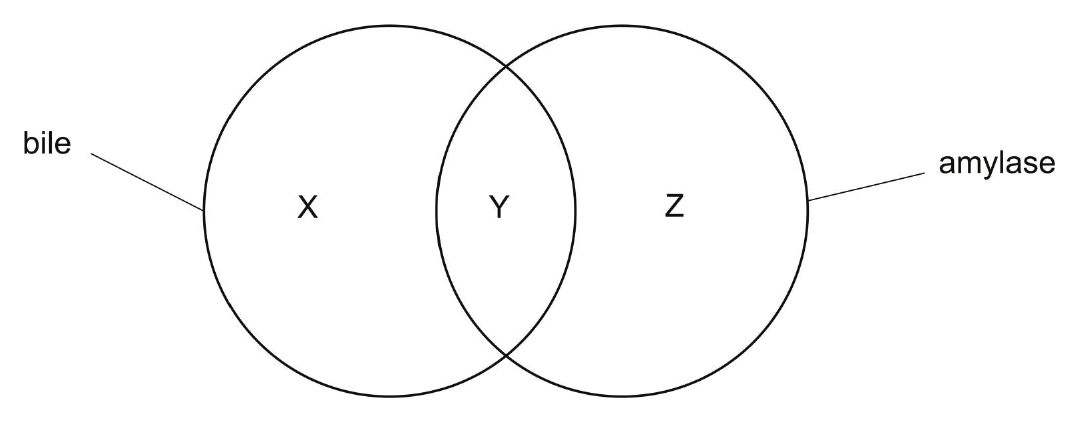
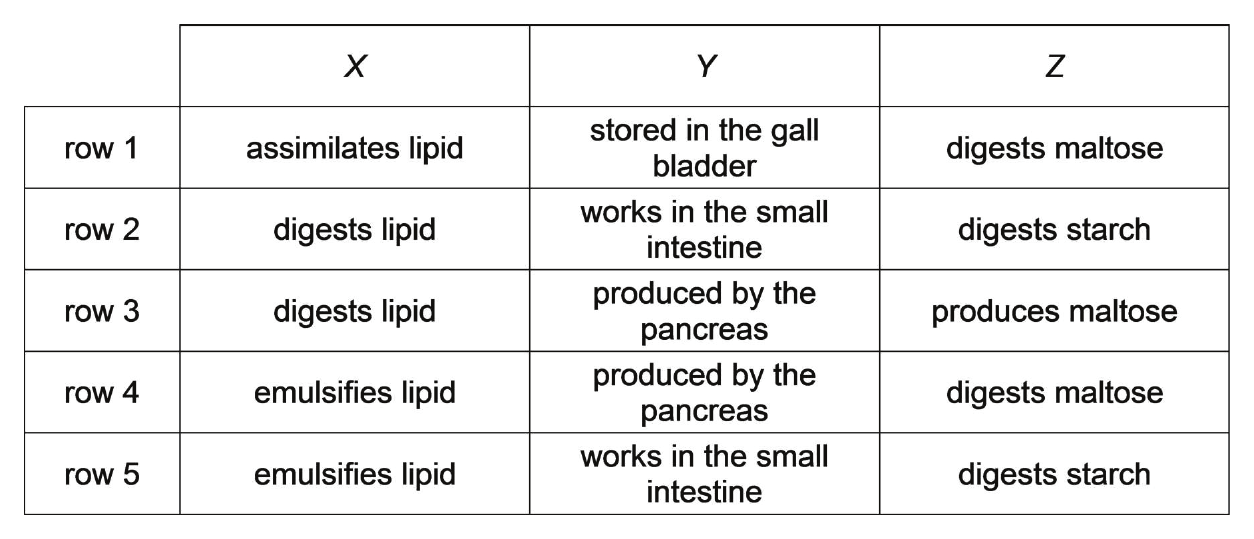
Which of the following rows is correct for X, Y and Z?
Venn — X bile ပဲ၊ Z amylase ပဲ၊ Y နှစ်ခုလုံး။ပုံက Venn ပုံ (စက်ဝိုင်း ထပ်ပုံ) ပါ။ X က bile မှာပဲ ရှိတဲ့ အချက်၊ Z က amylase မှာပဲ ရှိတဲ့ အချက်၊ Y က နှစ်ခုလုံးမှာ ရှိတဲ့ အချက်။
X — emulsifies ✓၊ digests, assimilates ✗။X — bile က emulsifies lipid ✓။ ဘာမှ မဖြတ်လို့ digests lipid ✗၊ assimilates lipid (ခန္ဓာထဲ ပေါင်းထည့်) လည်း ✗။ row 1, 2, 3 ကျသွားပြီ။
Y — small intestine ✓၊ pancreas က bile ✗။Y — နှစ်ခုလုံး works in the small intestine ✓ (duodenum)။ produced by the pancreas က bile အတွက် မှားတယ် — bile ကို liver က ထုတ်တယ်။ row 4 ကျပြီ။
Z — digests starch ✓၊ maltose ✗။Z — amylase က digests starch ✓။ maltose ကို ဖြတ်တာ maltase ပါ — amylase digests maltose ✗။
row 5 ပဲ ကျန် — အဖြေ B။ကျန်တာ row 5 ပဲ — ကတ်ပေါ်က အဖြေ B။ row 3 ရဲ့ amylase “produces maltose” က မှန်ပေမဲ့ သူ့ X နဲ့ Y က မှားနေလို့ မရဘူး။
🔁 ပြန်စစ်မယ် — အဖြေ မကြည့်ခင် စဉ်းစားပါ
🤔 Which of the following classes of digestive enzymes is involved in the digestion of proteins? (IMAT 2025 Q21)
🔍 မေးခွန်း ဖြည်မယ်
classes of digestive enzymes = အစာချေ enzyme အုပ်စုတွေ။ is involved in = … မှာ ပါဝင် လုပ်ဆောင်တယ်။ the digestion of proteins = protein ကို ချေခြင်း။
မေးနေတာ — protein ကို ချေတဲ့ enzyme အုပ်စု ဘယ်ဟာလဲ။
protein ရဲ့ peptide bond ကို ဖြတ်တာ peptidase (protease)။
amylase က starch၊ lipase က fat။
isomerase က ပုံ ပြောင်းရုံ၊ transaminase က NH₂ လွှဲရုံ။
🤔 Which option shows the structure that produces bile and then the structure that stores it? (IMAT 2016 Q33)
🔍 မေးခွန်း ဖြည်မယ်
the structure that produces bile = bile ကို ထုတ်လုပ်တဲ့ အင်္ဂါ။ and then = ပြီးတော့ (ဒုတိယ)။ the structure that stores it = သူ့ကို သိုထားတဲ့ အင်္ဂါ။
မေးနေတာ — အစဉ်လိုက် နှစ်ခု — ထုတ်တဲ့သူ → သိုတဲ့သူ။
bile ကို liver က ထုတ်ပြီး gall bladder က သိုတယ်။
gall bladder က ဘာမှ မထုတ်ဘူး၊ duodenum က bile ကို သုံးတဲ့ နေရာ။
🤔 Which structures make a solution that can raise the pH in the digestive system?
1. gall bladder
2. pancreas
3. stomach (IMAT 2018 Q39)
🔍 မေးခွန်း ဖြည်မယ်
make a solution = အရည်ကို ကိုယ်တိုင် ထုတ်လုပ်တယ်။ that can raise the pH = pH ကို မြှင့်နိုင်တဲ့။ in the digestive system = အစာချေ လမ်းကြောင်းထဲမှာ။
သတိ — make က “ထုတ်လုပ်” ပါ၊ “သိုထား” (store) မဟုတ်ဘူး။
မေးနေတာ — 1, 2, 3 ထဲက pH မြှင့်ရည်ကို ကိုယ်တိုင် လုပ်တဲ့ အင်္ဂါ ဘယ်ဟာတွေလဲ။
pancreas က HCO₃⁻ ထုတ်လို့ ✓။
gall bladder က bile ကို သိုရုံ — make မလုပ်ဘူး ✗။
stomach က HCl နဲ့ pH ကို ချတယ် ✗။
🤔 What are the products when lipase digests a triglyceride?
🔍 မေးခွန်း ဖြည်မယ်
the products = ထွက်လာတဲ့ ပစ္စည်းတွေ။ when lipase digests a triglyceride = lipase က triglyceride ကို ချေတဲ့အခါ။
မေးနေတာ — triglyceride ကွဲရင် ရတဲ့ အပိုင်း နှစ်မျိုး။
lipase က ester bond သုံးခု ဖြတ်လို့ fatty acids နဲ့ glycerol။
amino acid က protein ကနေ၊ glucose နဲ့ fructose က sucrose ကနေ။
🤔 Fatty food enters the duodenum. Which hormone makes the gall bladder squeeze out bile?
🔍 မေးခွန်း ဖြည်မယ်
Fatty food = အဆီ များတဲ့ အစာ။ enters = ထဲ ဝင်လာတယ်။
Which hormone makes the gall bladder squeeze out bile? = gall bladder ကို bile ညှစ်ထုတ်ခိုင်းတဲ့ hormone ဘယ်ဟာလဲ။
မေးနေတာ — fat ရောက်ရင် bile ညှစ်ခိုင်းတဲ့ hormone နာမည်။
fat နဲ့ protein ရောက်ရင် duodenum က CCK ထုတ်တယ်။
secretin က HCO₃⁻ ခိုင်း၊ gastrin က stomach acid၊ insulin က blood sugar။
🤔 Why can trypsin not digest the pancreas that makes it?
🔍 မေးခွန်း ဖြည်မယ်
Why can … not digest = ဘာလို့ မချေနိုင်တာလဲ။ the pancreas that makes it = သူ့ကို ထုတ်လုပ်တဲ့ pancreas။
is made as = … အဖြစ် ထုတ်လုပ်ခံရတယ်။ coats = အပေါ်က ဖုံးအုပ်တယ်။
မေးနေတာ — trypsin က ကိုယ့်ကို ထုတ်တဲ့ cell တွေကို မဖြတ်မိတဲ့ အကြောင်းရင်း။
pancreas က ပိတ်ထားတဲ့ trypsinogen အဖြစ် ထုတ်ပြီး duodenum ရဲ့ enterokinase ဖွင့်မှ trypsin ဖြစ်တယ်။
trypsin ရဲ့ optimum က pH 8။
maltose — amylase ရပ်တဲ့ glucose နှစ်လုံးတွဲ။
protease — peptide bond ကို water နဲ့ ဖြတ်တဲ့ enzyme။
emulsification — bile salt က fat ကို အစက်ငယ် ခွဲခြင်း၊ bond မဖြတ်။
hydrogencarbonate — pancreas ရဲ့ HCO₃⁻၊ pH ကို 8 ထိ မြှင့်တယ်။
secretin — acid ရောက်ရင် pancreas ကို HCO₃⁻ ခိုင်းတယ်။
🎉 PART 1 ပြီး — 👉 blood ထဲ ဘယ်လို ဝင်လဲ ကြည့်မယ်။🎉 PART 1 ပြီးပြီ — ကတ်ကြေး တစ်လက်ချင်း ဘယ်မှာ ဘယ် bond ကို ဖြတ်လဲ သိပြီ။ 👉 PART 2 မှာ အစေ့လေးတွေ blood ထဲ ဘယ်လို ဝင်လဲ ကြည့်မယ်။
Absorption and the liver
စုပ်ယူခြင်း၊ အူမ နဲ့ liver
တဘက်လို နံရံ — villi နဲ့ microvilli
towel က more surface — ရေ ပိုစုပ်။cloth (အထည်ပြား) နဲ့ towel (တဘက်) ကို ယှဉ်ကြည့်ပါ။ တဘက်မှာ ချည်ကွင်းလေး အများကြီး ထွက်နေလို့ water ထိတဲ့ မျက်နှာပြင် (more surface) ကျယ်ပြီး ရေ အများကြီး စုပ်တယ်။
🤔 Quick recall: which part of the gut takes back most of the remaining water before the faeces leave?
🔍 မေးခွန်း ဖြည်မယ်
Quick recall = မြန်မြန် ပြန်သတိရ။ takes back = ပြန်စုပ်ယူတယ်။ most of the remaining water = ကျန်နေတဲ့ water ရဲ့ အများစု။
before the faeces leave = ဝမ်း (faeces) မထွက်ခင်။
မေးနေတာ — ကျန်တဲ့ water ကို နောက်ဆုံး ပြန်စုပ်တဲ့ အူ အပိုင်း။
small intestine က ရေ အများစု စုပ်ပြီးနောက် ကျန်တဲ့ ရေကို large intestine က ပြန်စုပ်တယ်။
stomach က မွှေ ဖြတ်၊ oesophagus က တွန်းချ၊ duodenum က အရည် ရောတဲ့ နေရာ။
ileum wall မှာ folds ခေါက်ထား။small intestine က duodenum → jejunum → ileum သုံးပိုင်း (သင်ခန်းစာ 47A)။ ileum wall (နံရံ) ကလည်း ပြားပြား မဟုတ်ဘူး။ folds (အခေါက်ကြီးတွေ) ခေါက်ထားတယ်။
လက်ချောင်းလေး = villi (အူ နံရံက လက်ချောင်းလေးများ)အခေါက်တွေပေါ်မှာ ~1 mm ရှည်တဲ့ လက်ချောင်းလေး သန်းချီ ထွက်နေတယ်။ သူတို့ကို villi (အူ နံရံက လက်ချောင်းလေးများ) လို့ ခေါ်တယ် (တစ်ခုတည်းဆိုရင် villus)။
cell ပေါ်က microvilli (cell ပေါ်က အမျှင်ကလေးများ)villus ပေါ်က cell တစ်လုံးကို ချဲ့ကြည့်ရင် အပေါ်မျက်နှာမှာ ဆံပင်လို အမျှင်ကလေးတွေ ထပ်ရှိတယ်။ သူတို့က microvilli (cell ပေါ်က အမျှင်ကလေးများ) ပါ — PART 1 က brush border ပါပဲ။
သုံးဆင့်ကြောင့် area ~250 m² (စာအုပ်အရ)။folds၊ villi၊ microvilli သုံးဆင့်ကြောင့် စုပ်ယူတဲ့ area အရမ်း ကျယ်တယ်။ ဖတ်စာအုပ်တွေက ~250 m² (တင်းနစ်ကွင်း တစ်ကွင်းလောက်) လို့ ပြောတယ်။
newer — ~30 m²၊ ဒါတောင် အဆများစွာ ကျယ်။နောက်ပိုင်း တိုင်းတာမှု အသစ်တွေ (newer) အရတော့ ~30 m² လောက်ပဲ ရှိတယ်။ ဘယ်ကိန်းပဲ ဖြစ်ဖြစ် ပြားပြား ပြွန်ထက် အဆများစွာ ကျယ်တယ်။
epithelium one cell thick — မြန်မြန် စုပ်။villus ရဲ့ အပြင်လွှာ (epithelium) က one cell thick — cell တစ်လွှာတည်း ပါးတယ်။ ဒါကြောင့် အစာ ဖြတ်ရတဲ့ လမ်း တိုပြီး မြန်မြန် စုပ်ယူနိုင်တယ်။
🤔 Predict: an illness makes the villi flat. What is the main effect?
🔍 မေးခွန်း ဖြည်မယ်
an illness = ရောဂါ တစ်ခု။ makes the villi flat = villi တွေကို ပြားသွားစေတယ်။
What is the main effect? = အဓိက အကျိုးဆက် ဘာလဲ။ is absorbed = စုပ်ယူခံရတယ်။
မေးနေတာ — villi ပြားရင် အူမှာ ဘာ အပြောင်းအလဲ အကြီးဆုံး ဖြစ်မလဲ။
villi နဲ့ microvilli က area ကို အဆ ရာချီ ကျယ်စေတာ။
ပြားသွားရင် area နည်းလို့ အစာဓာတ် မစုပ်နိုင်ဘဲ ပိန်လာတယ်။
coeliac disease — gluten ကြောင့် villi flat။coeliac disease (ကိုလီယက် ရောဂါ) မှာ ဂျုံထဲက gluten protein ကို immune system (ကိုယ်ခံအား စနစ်) က ရန်သူလို တုံ့ပြန်လို့ villi တွေ ယောင်ပြီး ပြား (flat) သွားတယ်။
👉 villus တစ်ခုထဲကို ဝင်သွားတဲ့ glucose နဲ့ fat က ဘယ်လမ်းတွေ သွားလဲ?
🔎 ကြိုကြည့် — vein, lymph, red blood cells, alveoli
🔎 artery — heart က ထွက်၊ vein — heart ဆီ ပြန်။🔎 ကြိုကြည့်မယ် — ဒီ စကားလုံးတွေကို ဒီ သင်ခန်းစာမှာ ခဏ သုံးမယ်၊ အပြည့် နောက်မှ သင်မယ်။ heart (နှလုံး) က သွေးကို ညှစ်ထုတ်တယ်။ heart ကနေ ထွက်သွားတဲ့ သွေးကြောက artery (သွေးလွှတ်ကြော)၊ heart ဆီ ပြန်လာတဲ့ သွေးကြောက vein (သွေးပြန်ကြော) — သင်ခန်းစာ 48B။
🔎 red blood cells (သွေးနီဥ) — O₂ သယ်။သွေးကြောထဲကို ချဲ့ကြည့်ရင် အနီရောင် ဝိုင်းပြား cell လေးတွေ အပြည့်ပါ — red blood cells (သွေးနီဥ)။ O₂ ကို ကိုယ် တစ်ခုလုံး သယ်ပို့တယ် — သင်ခန်းစာ 48A။
🔎 alveoli (လေအိတ်ကလေးများ) — lungs ထဲ၊ diaphragm အပေါ်။heart က pulmonary artery (lungs ဆီ သွားတဲ့ artery) နဲ့ သွေးကို lungs ဆီ ပို့တယ်။ lungs ထဲက စပျစ်ခိုင်လို လေအိတ်ကလေးတွေက alveoli (လေအိတ်ကလေးများ) — သွေးက O₂ ယူပြီး pulmonary vein နဲ့ heart ဆီ ပြန်တယ် — သင်ခန်းစာ 49။
diaphragm အပေါ် ရင်ခေါင်း၊ အောက် ဝမ်း။heart နဲ့ lungs က diaphragm (ရင်ခေါင်းနဲ့ ဝမ်းကြားက ကြွက်သား အမြှေး) ရဲ့ အပေါ် ရင်ခေါင်းထဲမှာ ရှိတယ်။ liver, stomach, အူ က diaphragm အောက် ဝမ်းထဲမှာ ရှိတယ်။
🔎 lymph (ပြန်ရည်) — ပြွန်သေးတွေက vein ထဲ ပြန်ထည့်။cell တွေကြားက အရည် အပိုကို ပြွန်သေးလေးတွေက စုယူတယ်။ ဒီ အရည်က lymph (ပြန်ရည်)။ ပြွန်တွေက အပေါ် တက်ပြီး လည်ပင်းနားက vein ကြီးထဲ ပြန်စီးဝင်တယ် — သင်ခန်းစာ 53။ fat က ဒီလမ်း သွားတာ ခဏနေ တွေ့မယ်။
villus ထဲက လမ်း နှစ်လမ်း
villus ထဲမှာ သယ်ယူရေး လမ်း နှစ်မျိုး။villus တစ်ခုကို ထောင်လိုက် ခွဲကြည့်မယ်။ အပြင်ဘက်ကို epithelium cell တစ်လွှာ အုပ်ထားတယ်။ အထဲမှာ သယ်ယူရေး လမ်း နှစ်မျိုး ရှိတယ်။
ပထမ လမ်းက capillary (သွေးကြော မျှင်) ကွန်ယက်ပါ။
glucose, amino acid — water-soluble၊ အဆီလွှာ မဖြတ်။glucose နဲ့ amino acid က water မှာ ပျော်တဲ့ (water-soluble) မော်လီကျူးတွေမို့ cell membrane ရဲ့ အဆီလွှာကို ကိုယ်တိုင် မဖြတ်နိုင်ဘူး (သင်ခန်းစာ 31A)။
carrier protein ကနေ capillary ထဲ။carrier protein (သယ်ပေးတဲ့ protein တံခါး) ကနေ cell ထဲ ဝင်ပြီး နောက်ဘက်ကနေ capillary ထဲ ထွက်တယ်။
hepatic portal vein (အူကနေ liver ဆီ သွေးကြော)capillary တွေ ပေါင်းပြီး hepatic portal vein (အူကနေ liver ဆီ သွားတဲ့ သွေးကြော) ဖြစ်လာတယ်။ hepatic ဆိုတာ liver နဲ့ ဆိုင်တာ — အူကနေ liver ဆီ တိုက်ရိုက် ပို့တယ်။
ဒုတိယ lacteal (villus ထဲက lymph ပြွန်)ဒုတိယ လမ်းက villus အလယ်က lacteal (villus ထဲက lymph ပြွန်)။ lymph (တစ်ရှူးကြားက အရည်ကို သွေးဆီ ပြန်ပို့တဲ့ ပြွန် ကွန်ယက်) ရဲ့ အစပါ။
fatty acid, glycerol — diffusion နဲ့ ဝင်။fatty acid နဲ့ glycerol ကတော့ အဆီမှာ ပျော်လို့ membrane ရဲ့ အဆီလွှာကို တိုက်ရိုက် ပျံ့ဝင် (diffusion) တယ်။
fat ပြန်ပေါင်း၊ protein coat နဲ့ lacteal ထဲ။cell ထဲမှာ triglyceride (fat) အဖြစ် ပြန်ပေါင်းပြီး protein coat (protein အိတ်) နဲ့ ထုပ်ကာ lacteal ထဲ ဝင်တယ်။
lymph → blood — liver ကို အရင် မဖြတ်။lymph က ရင်ဘတ်နားက သွေးကြောကြီးထဲ စီးဝင်မှ fat က blood ထဲ ရောက်တယ် — lymph → blood။ liver ကို အရင် မဖြတ်ဘူး။
🤔 A disease blocks the lacteals. Which nutrient is absorbed poorly?
🔍 မေးခွန်း ဖြည်မယ်
A disease = ရောဂါ တစ်ခု။ blocks the lacteals = lacteal ပြွန်တွေကို ပိတ်တယ်။
Which nutrient is absorbed poorly? = ဘယ် အစာဓာတ်ကို ကောင်းကောင်း မစုပ်နိုင်မလဲ။
မေးနေတာ — lacteal လမ်းကို သုံးတဲ့ အစာဓာတ် ဘယ်ဟာလဲ။
lacteal က fat (triglyceride) ရဲ့ လမ်း။
glucose နဲ့ amino acid က capillary ကို သုံးတယ်၊ water က osmosis နဲ့ ဝင်တယ်။
👉 glucose ကို cell ထဲ ဆွဲသွင်းတဲ့ carrier က energy ဘယ်က ရလဲ?
Na⁺ နဲ့ တွဲပြီး ဝင် — cotransport နဲ့ pump
အပေါ် lumen၊ အောက် blood side။ileum ရဲ့ epithelium cell တစ်လုံးကို ကြည့်ပါ — အပေါ်က lumen (microvilli ဘက်)၊ အောက်က blood side (သွေးဘက်)။
glucose + Na⁺ cotransport — carrier no ATP။glucose ကို cell ထဲ ဆွဲသွင်းတဲ့အခါ (sodium ion) နဲ့ တွဲပြီး carrier protein တစ်ခုတည်းကနေ ဝင်တယ် — cotransport (တွဲသယ်ခြင်း — သင်ခန်းစာ 31B)။ ဒီ carrier ကိုယ်တိုင်က ATP မသုံးဘူး (no ATP)။
Na⁺/K⁺ pump — ATP 1 နဲ့ Na⁺ 3 ထုတ်၊ K⁺ 2 သွင်း။ATP ကို blood side က Na⁺/K⁺ pump က သုံးတယ်။ ATP တစ်ခုနဲ့ Na⁺ 3 လုံးကို blood ဘက် ထုတ်ပြီး (potassium ion) 2 လုံးကို cell ထဲ သွင်းတယ်။
Na⁺ low inside — Na⁺ စီးဝင်ရင်း glucose ဆွဲ။ဒါကြောင့် cell ထဲ Na⁺ နည်း (Na⁺ low inside) နေပြီး lumen က Na⁺ က အထဲ စီးဝင်ရင်း glucose ကို ဆွဲခေါ်လာတယ် — တောင်ဆင်းလာတဲ့ Na⁺ က glucose ကို တောင်တက် ဆွဲတင်တာပါ။
secondary active transport (သွယ်ဝိုက် active transport)ATP ကို carrier က တိုက်ရိုက် မသုံးဘဲ pump ကနေ သွယ်ဝိုက် သုံးလို့ secondary active transport (သွယ်ဝိုက် active transport) လို့ ခေါ်တယ်။
ATP လိုလို့ mitochondria အများကြီး။ATP အများကြီး လိုလို့ ဒီ cell တွေထဲမှာ ATP ထုတ်တဲ့ mitochondria အများကြီး ရှိတယ်။
🤔 A poison stops the gut cells from making ATP. What happens to glucose absorption?
🔍 မေးခွန်း ဖြည်မယ်
A poison = အဆိပ်။ stops … from making ATP = ATP မထုတ်နိုင်အောင် ရပ်စေတယ်။ the gut cells = အူ နံရံ cell တွေ။
What happens to glucose absorption? = glucose စုပ်ယူမှု ဘာ ဖြစ်မလဲ။
မေးနေတာ — ATP မရှိရင် glucose ဝင်တာ မြန်လာမလား၊ နှေးမလား၊ မပြောင်းဘူးလား။
ATP မရှိရင် Na⁺/K⁺ pump ရပ်၊ cell ထဲ Na⁺ များလာလို့ Na⁺ က glucose ကို မဆွဲတော့ဘူး — glucose စုပ်ယူမှု နှေးသွားတယ်။
carrier က ATP တိုက်ရိုက် မသုံးပေမဲ့ pump ကို မှီခိုတယ်။
👉 ကျန်တဲ့ ရေနဲ့ အစာ ဘယ်ရောက်လဲ?👉 small intestine ပြီးရင် ကျန်တဲ့ ရေနဲ့ အစာ ဘယ်ရောက်လဲ — large intestine ကို ပြန်ကြည့်မယ်။
large intestine — water ပြန်စုပ်တဲ့ အူမ
ileum → caecum (အူမ အစ အိတ်) → colon → rectum။small intestine ရဲ့ နောက်ဆုံး ileum က large intestine ရဲ့ အစ caecum (အူမ အစ အိတ်) ထဲ ဝင်တယ်။ large intestine က ဗိုက်ကို ပတ်ပြီး colon အဖြစ် တက်၊ ဖြတ်၊ ဆင်းပြီး rectum ဆီ ရောက်တယ်။
appendix (အူအတက်) — ယောင်ရင် appendicitis။caecum အောက်မှာ appendix (အူအတက်) ဆိုတဲ့ လက်ချောင်းလို အပိတ်ပြွန်လေး ချိတ်နေတယ်။ lymph tissue ပါလို့ immune system ကို ကူတယ်လို့ ယူဆတယ်၊ ပိတ်ပြီး ယောင်ရင် appendicitis (အူအတက် ရောင်) ဖြစ်တယ်။
water ~9 L — drink ~2 L + juices ~7 L။အူထဲကို တစ်နေ့ water ~9 L ဝင်တယ် — သောက်တာ (drink) ~2 L နဲ့ အစာချေ အရည်တွေ (juices) ~7 L။
small intestine ~8 L၊ colon ကျန်တာ — 0.1 L ပဲ ဆုံး။small intestine က ~8 L လောက် ပြန်စုပ်ပြီး colon က ကျန်တာ အများစုကို Na⁺ နဲ့ အတူ ပြန်စုပ်တယ်။ faeces နဲ့ ~0.1 L ပဲ ဆုံးတယ်။
🤔 About 9 L of water enters the gut each day and the small intestine takes back about 8 L. About how much water reaches the colon?
🔍 မေးခွန်း ဖြည်မယ်
About 9 L = 9 L လောက်။ enters the gut each day = တစ်နေ့ အူထဲ ဝင်တယ်။ takes back about 8 L = 8 L လောက် ပြန်စုပ်တယ်။
About how much water reaches the colon? = colon ကို water ဘယ်လောက် ရောက်လဲ (ခန့်မှန်း)။
မေးနေတာ — small intestine ပြီးနောက် ကျန်တဲ့ water ပမာဏ။
9 − 8 = ~1 L colon ထဲ ရောက်တယ်။
colon က အများစု ပြန်စုပ်လို့ faeces နဲ့ ~0.1 L ပဲ ထွက်တယ်။
👉 water တင် မဟုတ်ဘူး — ion တွေ၊ vitamin တွေ နဲ့ fibre ဘာဖြစ်လဲ?
🔎 ကြိုကြည့် — vitamin D နဲ့ vitamin K
🔎 vitamins — နည်းနည်းပဲ လိုတဲ့ အစာဓာတ်။🔎 ကြိုကြည့်မယ် — vitamins (ဗီတာမင်များ) က ခန္ဓာကိုယ် နည်းနည်းပဲ လိုပေမဲ့ အများစု ကိုယ်တိုင် မလုပ်နိုင် (ဒါမှမဟုတ် မလောက်) လို့ အစာကနေ ရရမယ့် ဓာတုပစ္စည်းတွေပါ။ ဒီမှာ နှစ်မျိုး ခဏ သုံးမယ်။
🔎 vitamin D — နေရောင်နဲ့ skin က လုပ်၊ Ca²⁺ စုပ်ကူ။နေရောင် ထိရင် skin (အရေပြား) က vitamin D လုပ်တယ်။ vitamin D က အူ နံရံကို Ca²⁺ (calcium ion) စုပ်ယူအောင် ကူပြီး Ca²⁺ က အရိုး ဆောက်တယ် — သင်ခန်းစာ 55။
🔎 vitamin K — colon bacteria လုပ်၊ သွေးခဲဖို့ လို။colon ထဲ နေတဲ့ bacteria တွေက vitamin K တချို့ လုပ်ပေးတယ် (ဟင်းရွက် စိမ်းကလည်း ရတယ်)။ ဒဏ်ရာ ရရင် သွေးခဲ (blood clot) ဖြစ်ဖို့ vitamin K လိုတယ် — သင်ခန်းစာ 48A။
ion, vitamin နဲ့ fibre
Ca²⁺ ကို vitamin D ကူမှ စုပ်။ion တွေကိုလည်း စုပ်ယူတယ်။ (calcium ion) ကို vitamin D က ကူမှ စုပ်ယူနိုင်တယ်။
iron (သံ) ကိုတော့ Fe²⁺ ion အဖြစ် duodenum မှာ အများဆုံး စုပ်ယူတယ်။
Fe (iron — သံ, Z 26) က period 4 ရဲ့ အလယ်က d-block transition metal ပါ။ Fe atom က electron 2 လုံး ပေးရင် Fe²⁺ ion ဖြစ်ပြီး haemoglobin ထဲမှာ သုံးတယ် (သင်ခန်းစာ 48A)။
🤔 Predict: most of a patient’s stomach is removed. Which vitamin can no longer be absorbed well, so it must be injected?
🔍 မေးခွန်း ဖြည်မယ်
most of a patient’s stomach is removed = လူနာရဲ့ stomach အများစုကို ခွဲထုတ်လိုက်တယ်။
can no longer be absorbed well = ကောင်းကောင်း မစုပ်နိုင်တော့ဘူး။ so it must be injected = ဒါကြောင့် ထိုးဆေး ပေးရမယ်။
မေးနေတာ — stomach ရဲ့ အကူ လိုတဲ့ vitamin ဘယ်ဟာလဲ။
B12 ကို ileum မှာ စုပ်ဖို့ stomach ရဲ့ parietal cell ထုတ်တဲ့ intrinsic factor လိုတယ် (သင်ခန်းစာ 47A)။
stomach မရှိရင် B12 မစုပ်နိုင်လို့ ထိုးဆေး ပေးရတယ်။
B12 + intrinsic factor — end of ileum။vitamin B12 ကတော့ stomach ရဲ့ parietal cell ထုတ်တဲ့ intrinsic factor နဲ့ တွဲမှ ileum ရဲ့ အဆုံး (end of ileum) မှာ စုပ်ယူလို့ ရတယ်။
colon bacteria — vitamin K လုပ်။colon ထဲမှာ bacteria ထရီလီယံချီ နေတယ်။ ကျန်တဲ့ အစာကို ခွဲစားပြီး vitamin K (သွေးခဲဖို့ လို — သင်ခန်းစာ 48A) ကို လုပ်ပေးတယ်။
fibre (အမျှင်ဓာတ်) — cellulose၊ not digested။fibre (အမျှင်ဓာတ်) က ဟင်းသီးဟင်းရွက်ထဲက အဓိက cellulose ပါ။ လူမှာ cellulose ဖြတ်တဲ့ enzyme မရှိလို့ မချေဘဲ (not digested) ဖြတ်သွားတယ် (သင်ခန်းစာ 24B)။
bulk ကြီး — constipation ကာကွယ်။ဒါပေမဲ့ faeces ကို ထုထည် (bulk) ကြီးစေပြီး peristalsis ကို ကူလို့ ဝမ်းချုပ်တာ (constipation) ကာကွယ်တယ်။
👉 liver ကို အရင် ရောက် — liver က ဘာလုပ်လဲ?👉 အူကနေ စုပ်လိုက်တဲ့ glucose နဲ့ amino acid က liver ကို အရင် ရောက်တယ်။ liver က ဘာလုပ်လဲ?
liver ① — glucose ကို သိုတာ
hepatic portal vein ကနေ liver — ဓာတု စက်ရုံ။အူကနေ စုပ်ယူထားတဲ့ glucose နဲ့ amino acid အားလုံး hepatic portal vein ကနေ liver ကို အရင် ရောက်တယ်။ liver က ခန္ဓာကိုယ်ရဲ့ ဓာတုဗေဒ စက်ရုံပါ။
🤔 Quick recall: in which part of the gut is most iron (Fe²⁺) absorbed?
🔍 မေးခွန်း ဖြည်မယ်
in which part of the gut = အူရဲ့ ဘယ် အပိုင်းမှာ။ is most iron (Fe²⁺) absorbed = သံ (Fe²⁺) အများဆုံး စုပ်ယူခံရလဲ။
မေးနေတာ — iron ကို အများဆုံး စုပ်တဲ့ နေရာ။
iron ကို Fe²⁺ အဖြစ် duodenum မှာ အများဆုံး စုပ်ယူတယ်။
stomach နဲ့ oesophagus က အစာ မစုပ်ဘူး၊ large intestine က ရေ နဲ့ Na⁺ ကို ပြန်စုပ်တယ်။
after a meal glucose များ — insulin က ပြော။ထမင်းစားပြီး (after a meal) သွေးထဲ glucose များလာရင် insulin (ဟော်မုန်း) က liver ကို ပြောတယ်။
glycogen (glucose ကြိုး ကိုင်းခွ သိုလှောင်မှု) အဖြစ် သို။liver က glucose ပိုတာတွေကို glycogen (glucose ကြိုး ကိုင်းခွ သိုလှောင်မှု) ကြိုးကိုင်းကြီး အဖြစ် ဆက်ပြီး သိုထားတယ်။
hungry — glucagon၊ glycogen → glucose။ဗိုက်ဆာလို့ (hungry) သွေးထဲ glucose နည်းလာရင် glucagon က ပြောပြီး glycogen ကို glucose ပြန်ဖြတ်ကာ blood ထဲ ထုတ်ပေးတယ် (သင်ခန်းစာ 52)။
💡 “insulin = သိမ်း (in)၊
glucagon = glucose ပြန် (gone)”
👉 glucose ကို သိုထားလို့ ရတယ်။ amino acid ပိုလာရင်ကော?
liver ② — amino acid ပိုရင် urea
amino acid ပို — cannot be stored။amino acid ပိုလာရင်တော့ glucose လို သိုမထားနိုင်ဘူး (cannot be stored)။
NH₂ ဖြုတ် = deamination (amino group ဖြုတ်ခြင်း)ဒါကြောင့် liver က သူ့ရဲ့ amino group (NH₂) ကို ဖြတ်ထုတ်တယ်။ ဒါကို deamination (amino group ဖြုတ်ခြင်း) လို့ ခေါ်တယ်။
NH₂ → ammonia (NH₃) — toxic။ဖြတ်ထုတ်လိုက်တဲ့ NH₂ က H တစ်လုံး ထပ်ရပြီး ammonia (NH₃) ဖြစ်သွားတယ်။ ammonia က toxic — အဆိပ် အရမ်း ပြင်းပြီး ဦးနှောက်ကို ထိခိုက်တယ်။
ammonia + CO₂ + ATP → urea။ဒါကြောင့် liver က ammonia ကို CO₂ နဲ့ ပေါင်းပြီး ATP သုံးကာ အဆိပ် နည်းတဲ့ urea ဖြစ်အောင် ပြောင်းတယ်။
urea cycle (urea လုပ်တဲ့ စက်ဝိုင်း) — only in liver။ဒီ စက်ဝိုင်းလို ဓာတ်ပြုမှု တွဲကို urea cycle (urea လုပ်တဲ့ စက်ဝိုင်း) လို့ ခေါ်တယ် — liver မှာပဲ (only in liver) ဖြစ်တယ်။
urea → kidney → urine။urea က blood ထဲကနေ kidney (ကျောက်ကပ်) ကို ရောက်ပြီး urine (ဆီး) နဲ့ ထွက်တယ် (သင်ခန်းစာ 50A)။
ကျန်တဲ့ rest — energy ဒါမှမဟုတ် glucose။NH₂ ဖြုတ်ပြီး ကျန်တဲ့ အပိုင်း (rest) ကိုတော့ energy (စွမ်းအင်) အတွက် သုံးတယ်၊ ဒါမှမဟုတ် glucose အဖြစ် ပြောင်းတယ်။
⚠ glycolysis, Krebs, β-oxidation — most cells။သတိ — glycolysis, Krebs cycle, β-oxidation (fat ကို energy အတွက် ဖြိုခြင်း) တွေကတော့ cell အများစု (most cells) မှာ ဖြစ်တယ်၊ liver မှာ သီးသန့် မဟုတ်ဘူး။
🤔 A patient’s liver stops working. Which toxic substance builds up in the blood?
🔍 မေးခွန်း ဖြည်မယ်
stops working = အလုပ် မလုပ်တော့ဘူး။ toxic substance = အဆိပ် ပစ္စည်း။ builds up in the blood = သွေးထဲ စုလာတယ်။
မေးနေတာ — liver က ပုံမှန် ပြောင်းပေးနေတဲ့ အဆိပ် ဘယ်ဟာလဲ။
liver မရှိရင် urea cycle ရပ်လို့ ammonia (NH₃) က urea မဖြစ်တော့ဘဲ သွေးထဲ စုလာပြီး ဦးနှောက်ကို ထိခိုက်တယ်။
urea ကတော့ နည်းသွားတယ်။
👉 liver မှာ နောက်ထပ် အလုပ်တွေ ရှိသေးတယ်။
liver ③ — အဆိပ် ဖြေ၊ bile ထုတ်၊ သို
🤔 Quick recall: after a meal, insulin makes the liver turn extra glucose into…
🔍 မေးခွန်း ဖြည်မယ်
after a meal = ထမင်းစားပြီးနောက်။ makes the liver turn extra glucose into = liver ကို glucose အပိုကို … အဖြစ် ပြောင်းခိုင်းတယ်။
မေးနေတာ — glucose အပိုကို liver က ဘာ အဖြစ် သိုလဲ။
insulin က liver ကို glucose ပိုတာတွေကို glycogen အဖြစ် ဆက်ပြီး သိုခိုင်းတယ်။
urea က amino group ကနေ၊ bile က bile salt နဲ့ bilirubin၊ albumin က amino acid ကနေ။
ပထမ — alcohol, drugs ကို detox။liver ရဲ့ နောက်ထပ် အလုပ်တွေ။ ပထမ — alcohol (အရက်) နဲ့ drugs (ဆေးဝါး) ကို အဆိပ် နည်းအောင် ပြောင်းတယ်။ ဒါကို detox (အဆိပ်ဖြေ) လုပ်တယ်လို့ ခေါ်တယ်။
ဒုတိယ — bile၊ bilirubin (သည်းခြေထဲက အဝါရောင် ပစ္စည်း)ဒုတိယ — bile ကို ထုတ်တယ်။ သက်တမ်းကုန်တဲ့ red blood cell (သွေးနီဥ) ရဲ့ haemoglobin ကို ဖျက်ရာက bilirubin (သည်းခြေထဲက အဝါရောင် ပစ္စည်း) ထွက်ပြီး bile ထဲ ပါသွားတယ်။
တတိယ — albumin နဲ့ fibrinogen ဆောက်။တတိယ — သွေးထဲက protein တွေ albumin နဲ့ သွေးခဲစေတဲ့ fibrinogen ကို ဆောက်တယ်။
စတုတ္ထ — iron (သံ) နဲ့ vitamin A, D, B12 ကို သိုထားတယ်။
ပဉ္စမ — transamination (NH₂ လွှဲ amino acid အသစ်)ပဉ္စမ — transamination (NH₂ လွှဲပြီး amino acid အသစ် လုပ်ခြင်း): amino acid တစ်ခုရဲ့ NH₂ ကို တခြား မော်လီကျူးဆီ လွှဲပြီး amino acid အသစ် လုပ်တယ်။ liver မှာ များပေမဲ့ muscle (ကြွက်သား) မှာလည်း ဖြစ်တယ်။
🤔 Bilirubin is made from the breakdown of haemoglobin. If bilirubin cannot leave in the bile, the skin turns…
🔍 မေးခွန်း ဖြည်မယ်
is made from the breakdown of = … ကို ဖျက်ရာက ထွက်လာတယ်။ If … cannot leave in the bile = bile နဲ့ အပြင် မထွက်နိုင်ရင်။
the skin turns… = အရေပြားက … အရောင် ပြောင်းသွားတယ်။
မေးနေတာ — bilirubin သွေးထဲ စုရင် အရေပြား အရောင်။
bilirubin က အဝါရောင်။
bile နဲ့ မထွက်နိုင်ရင် သွေးထဲ စုပြီး အရေပြားနဲ့ မျက်ဖြူ ဝါလာတယ် — အသားဝါ ရောဂါ (နာမည်ကို သင်ခန်းစာ 50A မှာ သင်မယ်)။
👉 အစာထဲ တစ်ခုခု မလောက်ရင် ဘာဖြစ်လဲ?👉 အစာ ကောင်းကောင်း ချေတတ်ပြီ — ဒါပေမဲ့ အစာထဲမှာ တစ်ခုခု မလောက်ရင် ဘာဖြစ်လဲ?
balanced diet — တစ်ခု မလောက်ရင်
balanced diet — vitamin, mineral နည်းနည်း လို။balanced diet (မျှတတဲ့ အစား) မှာ carbohydrate, protein, fat, vitamin, mineral, fibre နဲ့ water ပါရမယ်။ vitamins နဲ့ minerals က နည်းနည်းပဲ လိုပေမဲ့ မရရင် ရောဂါ ဖြစ်တယ်။
vitamin C မရ — scurvy၊ gums bleed။vitamin C က collagen (အရေပြား၊ သွားဖုံးကို ခိုင်စေတဲ့ protein) လုပ်ဖို့ လိုလို့ မရရင် scurvy — သွားဖုံးက သွေးယို (gums bleed)၊ ဒဏ်ရာ နှေးနှေး ကျက်တယ်။
vitamin D, calcium မလောက် — rickets၊ soft bent legs။vitamin D နဲ့ calcium မလောက်ရင် ကလေးတွေမှာ rickets (အရိုး ပျော့ ရောဂါ) — အရိုး ပျော့ပြီး ခြေထောက် ကွေး (soft bent legs) တယ်။ နေရောင် (sun) က skin မှာ vitamin D လုပ်ပေးတယ်။
iron မလောက် — anaemia၊ ဖြူဖျော့ မော။iron မလောက်ရင် anaemia (သွေးအားနည်း)။ haemoglobin လုပ်ဖို့ Fe²⁺ လိုလို့ O₂ သယ်တာ နည်းပြီး ဖြူဖျော့၊ မောပန်းတယ် (သင်ခန်းစာ 48A)။
vitamin A မလောက် — night blindness။vitamin A မလောက်ရင် night blindness (ညကန်း) — မျက်လုံးထဲက အလင်း ခံ ဓာတုပစ္စည်း လုပ်ဖို့ vitamin A လိုတယ်။ မှောင်ရီရီ (dim light) မှာ မမြင်ရဘူး။
protein မလောက် — kwashiorkor၊ swollen belly။protein မလောက်ရင် kwashiorkor (protein ချို့တဲ့ ရောဂါ) — blood ထဲ protein နည်းလို့ tissue ထဲ water စုပြီး ဗိုက် ဖောင်း (swollen belly) တယ် (သင်ခန်းစာ 48B)၊ ခြေလက် ပိန်တယ်။
| nutrient | food test | positive result |
|---|---|---|
| starch | iodine solution | orange-brown → blue-black |
| reducing sugar (glucose) | Benedict’s solution, heat | blue → brick-red |
| protein | biuret solution | blue → purple |
| fat | ethanol, then water (emulsion test) | cloudy white layer |
အစာထဲမှာ ဘာ ပါလဲ စမ်းတဲ့ food test လေးမျိုး (သင်ခန်းစာ 24A, 24B နဲ့ 25) — nutrient တစ်မျိုးချင်းစီရဲ့ စမ်းပစ္စည်း နဲ့ အရောင် ပြောင်းပုံ။
🤔 A sailor eats no fruit or vegetables for many months. His gums start to bleed. Which disease is it?
🔍 မေးခွန်း ဖြည်မယ်
A sailor = သင်္ဘောသား။ eats no fruit or vegetables = သစ်သီးနဲ့ ဟင်းသီးဟင်းရွက် မစားဘူး။ for many months = လ အများကြီး။
His gums start to bleed = သူ့ သွားဖုံးက သွေး စယိုတယ်။ Which disease is it? = ဘယ် ရောဂါလဲ။
မေးနေတာ — သစ်သီး မစားလို့ ဖြစ်တဲ့ ချို့တဲ့ရောဂါ နာမည်။
သစ်သီး ဟင်းသီးဟင်းရွက် မစားရင် vitamin C မရလို့ collagen အားနည်းပြီး သွားဖုံး သွေးယို — scurvy။
rickets က vitamin D, anaemia က iron, kwashiorkor က protein။
👉 သင်ခန်းစာ တစ်ခုလုံးကို ပြန်စစ်ကြည့်ရအောင်။
🔁 ပြန်စစ်မယ် — အဖြေ မကြည့်ခင် စဉ်းစားပါ
🤔 Which of the following metabolic processes occurs mainly in the liver? (IMAT 2025 Q25)
🔍 မေးခွန်း ဖြည်မယ်
metabolic processes = ကိုယ်တွင်း ဓာတုဖြစ်စဉ်တွေ။ occurs mainly in the liver = liver မှာ အဓိက ဖြစ်တယ်။
မေးနေတာ — cell အများစုမှာ မဟုတ်ဘဲ liver မှာ အဓိက ဖြစ်တဲ့ ဖြစ်စဉ်။
ammonia ကို urea ပြောင်းတဲ့ urea cycle က liver မှာပဲ ဖြစ်တယ်။
glycolysis, Krebs, β-oxidation က cell အများစုမှာ၊ transamination က muscle မှာလည်း ဖြစ်တယ်။
🤔 Which one of the following is found below the diaphragm in a human? (IMAT 2013 Q43)
🔍 မေးခွန်း ဖြည်မယ်
is found = တွေ့ရတယ် (ရှိတယ်)။ below the diaphragm = diaphragm ရဲ့ အောက်ဘက် (ဝမ်းထဲ)။ in a human = လူမှာ။
မေးနေတာ — ရင်ခေါင်းထဲ မဟုတ်ဘဲ ဝမ်းထဲမှာ ရှိတဲ့ အရာ။
liver က diaphragm အောက် ဝမ်းထဲ၊ ညာဘက် နံရိုးအောက်။
pulmonary artery, vein, alveoli, heart အားလုံး ရင်ခေါင်းထဲ — အပေါ်မှာ။
🤔 Glucose absorbed in the small intestine goes first to the…
🔍 မေးခွန်း ဖြည်မယ်
Glucose absorbed in the small intestine = small intestine မှာ စုပ်ယူထားတဲ့ glucose။ goes first to the… = ပထမဆုံး … ဆီ သွားတယ်။
မေးနေတာ — glucose ရောက်တဲ့ ပထမ အင်္ဂါ။
capillary → hepatic portal vein → liver။
lymph ထဲ ဝင်တာ fat ပါ။
🤔 Inside a villus, fatty acids and glycerol are rebuilt into…
🔍 မေးခွန်း ဖြည်မယ်
Inside a villus = villus တစ်ခုရဲ့ cell ထဲမှာ။ are rebuilt into… = … အဖြစ် ပြန်ဆောက် (ပြန်ပေါင်း) ခံရတယ်။
မေးနေတာ — fatty acid နဲ့ glycerol ပြန်ပေါင်းရင် ဘာ ဖြစ်လဲ။
cell ထဲမှာ triglyceride ပြန်ပေါင်းပြီး protein အိတ်နဲ့ ထုပ်ကာ lacteal ထဲ ထုတ်တယ်။
🤔 Splitting fat into droplets makes digestion faster mainly because…
🔍 မေးခွန်း ဖြည်မယ်
Splitting fat into droplets = fat ကို အစက်ငယ်တွေ ခွဲတာ။ makes digestion faster = ချေတာ ပိုမြန်စေတယ်။ mainly because… = အဓိက အကြောင်းရင်းက …။
မေးနေတာ — အစက် ခွဲရင် lipase ပိုမြန်တဲ့ အဓိက အကြောင်း။
volume မပြောင်းဘဲ area ကျယ်လာလို့ lipase တစ်ပြိုင်နက် ပိုဖြတ်နိုင်တယ်။
bile က bond မဖြတ်ဘူး။
🤔 In the liver, ammonia from deamination is turned into…
🔍 မေးခွန်း ဖြည်မယ်
ammonia from deamination = deamination (NH₂ ဖြုတ်ခြင်း) ကနေ ထွက်လာတဲ့ ammonia။ is turned into… = … အဖြစ် ပြောင်းခံရတယ်။
မေးနေတာ — liver က ammonia ကို ဘာ ပြောင်းလဲ။
NH₃ ကို liver က urea cycle နဲ့ urea ပြောင်းပြီး kidney က ထုတ်တယ်။
uric acid က nucleic acid ကနေ၊ bile pigment က haemoglobin ကနေ။
🎯 Match each enzyme or juice to where it is made
villi — area ကို ကျယ်စေတဲ့ လက်ချောင်းလေးများ။
lacteal — fat ရဲ့ လမ်း (lymph)။
secondary active transport — Na⁺ နဲ့ တွဲပြီး glucose ဝင်တယ်။
deamination — NH₂ ဖြုတ် → ammonia → urea။
🎉 ဖြတ်၊ ခွဲ၊ စုပ်၊ စီမံ — mohinga ခရီး ပြီးပြီ။🎉 မုန့်ဟင်းခါး တစ်ပွဲ ခရီး ပြီးပြီ — ကတ်ကြေးတွေက water နဲ့ ဖြတ်၊ bile က ခွဲ၊ villi က စုပ်၊ liver က စီမံတယ်။ အောက်က quiz နဲ့ စမ်းကြည့်ပါ။