The cell cycle and mitosis
ဒဏ်ရာ ကျက်တာ၊ ကလေး ကြီးလာတာ အားလုံး cell တစ်လုံးက gene တူ cell နှစ်လုံး ခွဲပေးလို့ ဖြစ်တာ။ DNA 2 မီတာကို တစ်ဝက်စီ ဘယ်လို ခွဲလဲ၊ ဘယ်အချိန် ခွဲလဲ၊ ဘရိတ် ပျက်ရင် ဘာဖြစ်လဲ ကြည့်မယ်။
What gets divided: chromosomes
ဘာကို ခွဲတာလဲ — chromosome
ဒဏ်ရာ ဘယ်လို ကျက်လဲ — cell တစ်လုံးက နှစ်လုံး
စက္ကူစွန်းနဲ့ လက်ချောင်း ရှမိ — အရေပြားမှာ cut။စက္ကူစွန်းနဲ့ လက်ချောင်းကို ရှမိတယ် ဆိုပါစို့။ အရေပြားမှာ အပေါက် (cut) လေး ဖြစ်သွားတယ်။
ရက်အနည်းငယ်မှ တစ်ပတ်လောက် — skin cell တွေ ခွဲပြီး new cells နဲ့ ဖာတယ်။ဒဏ်ရာ အရွယ်ပေါ် မူတည်ပြီး ရက်အနည်းငယ်ကနေ တစ်ပတ်လောက်အတွင်း အပေါက် တဖြည်းဖြည်း ပိတ်သွားတယ်။ ဘေးက skin cell (အရေပြား cell) တွေ တစ်လုံးက နှစ်လုံး ခွဲပြီး new cells နဲ့ ဖာလိုက်လို့ပါ။
ကိုယ်လည်း cell တစ်လုံးက စ — 1 → 2 → 4 → 8။ခင်ဗျားကိုယ်တိုင်လည်း cell တစ်လုံးတည်းကနေ စခဲ့တာ။ 1 က 2၊ 2 က 4၊ 4 က 8 … ဆက်ခွဲလာတယ်။
ခုဆို ခန္ဓာကိုယ်မှာ cells 37 trillion (သိန်းသန်း 370) လောက် ရှိနေပြီ။
DNA 2 m ရှည်ပေမဲ့ nucleus က 6 µm ပဲ။ခွဲတိုင်း DNA ကို ကူးပြီး တစ်ဝက်စီ ခွဲပေးရတယ်။ DNA ကို ဆွဲဆန့်ရင် 2 m ရှည်တယ်၊ ဒါပေမဲ့ nucleus က 6 µm ပဲ ရှိတယ်။
တူညီ cell ၂ လုံး ထုတ်တာ = mitosis (မိုက်တိုးဆစ်၊ cell ပွား)ဒီ DNA ကို တစ်လုံးမှ မလွဲဘဲ ခွဲပေးပြီး တူညီတဲ့ cell နှစ်လုံး ထုတ်တာကို mitosis (မိုက်တိုးဆစ်၊ cell ပွား ခွဲခြင်း) လို့ ခေါ်တယ်။
ခွဲတဲ့ မူလ cell = parent cell (မိဘ cell)၊
ထွက်လာတဲ့ ၂ လုံး = daughter cell (သမီး cell)။ခွဲခဲ့တဲ့ မူလ cell ကို parent cell (မိဘ cell) လို့ ခေါ်တယ်။
ထွက်လာတဲ့ cell အသစ် နှစ်လုံးကို daughter cell (သမီး cell) လို့ ခေါ်တယ် — cell မှာ ယောက်ျား မိန်းမ မရှိပေမဲ့ ဒီလို ခေါ်တာပါ။
chromosome ရေတွက်၊ အဆင့် ခွဲခြား၊ ကင်ဆာ ရှင်းမယ်။ဒီသင်ခန်းစာ ဆုံးရင် chromosome ကို ရေတွက်တတ်မယ်၊ mitosis အဆင့်တွေကို ပုံကြည့်ပြီး ခွဲခြားတတ်မယ်၊ ကင်ဆာ ဘာလို့ ဖြစ်လဲ ရှင်းတတ်မယ်။
👉 2 m ကြိုးကို nucleus ထဲ ဘယ်လို ထည့်လဲ?👉 ပထမ ပြဿနာ — 2 m ရှည်တဲ့ ကြိုးကို ဒီလောက် သေးတဲ့ nucleus ထဲ ဘယ်လို ထည့်ထားလဲ?
2 m ကြိုးကို ထုပ်ပိုးနည်း — chromatin ကနေ chromosome
DNA ကြိုး အထူ 2 nm — histone ပေါ် ချည်ခင်လို ရစ်ထား။DNA ကြိုးရဲ့ အထူ (diameter) က 2 nm ပဲ ရှိတဲ့ အရမ်း ပါးတဲ့ ကြိုး — 2 nm က အထူပါ၊ အရှည် မဟုတ်ဘူး။ ရှည်ပြီး ပါးတဲ့ ချည်ကြိုးကို ချည်ခင်မှာ ရစ်ထားသလို DNA ကိုလည်း histone ပေါ် ရစ်ထားတယ်။
ချည်ခင် = histone (ဟစ်စတုန်း) protein အလုံး။ချည်ခင်လေးတွေက histone (ဟစ်စတုန်း) လို့ ခေါ်တဲ့ protein အလုံးလေးတွေ ဖြစ်တယ်။
ပုတီးစေ့ တစ်လုံး = nucleosome (နျူကလီယိုဆုမ်း)DNA က histone အလုံး တစ်လုံးကို နှစ်ပတ်လောက် ပတ်တယ်။ ပတ်ထားတဲ့ ပုတီးစေ့ တစ်လုံးစီကို nucleosome (နျူကလီယိုဆုမ်း) လို့ ခေါ်တယ်။
histone 8 ခု + DNA base pairs ~147 စုံ။nucleosome တစ်လုံးမှာ histone protein 8 ခု ပေါင်းထားတဲ့ အလုံးနဲ့ DNA base pairs (လှေကား တစ်ထစ်စီမှာ ချိတ်ထားတဲ့ စာလုံး တစ်စုံ — A–T သို့ G–C၊ သင်ခန်းစာ 27) 147 စုံလောက် ပါတယ်။
DNA + protein ကြိုး = chromatin (ခရိုမာတင်)ပုတီးကုံးလို ဆက်နေတဲ့ DNA + protein ကြိုး တစ်ခုလုံးကို chromatin (ခရိုမာတင်) လို့ ခေါ်တယ်။
interphase မှာ chromatin loose — gene ဖတ်လို့ ရ။မခွဲတဲ့ ပုံမှန် အချိန် (interphase) မှာ chromatin က nucleus ထဲ ပြန့်ပြန့်လေး (loose) ရှိနေတယ်။ ပြန့်နေလို့ gene တွေကို ဖတ်ပြီး protein ဆောက်လို့ ရတယ်။
လိမ်ပြီး ချောင်း ဖြစ် = chromosome (ခရိုမိုဆုမ်း)ခွဲခါနီးမှာတော့ chromatin က ထပ်ခါထပ်ခါ လိမ်ပြီး တုတ်တုတ် တိုတို ချောင်း ဖြစ်လာတယ်။ အဲဒါကို chromosome (ခရိုမိုဆုမ်း) လို့ ခေါ်တယ်။
ချောင်း ဖြစ်မှ ဆွဲရ လွယ်၊ microscope နဲ့ visible (မြင်ရ)။ဘာလို့ လိမ်ရလဲ? ပြန့်နေတဲ့ ကြိုးကို နှစ်ဖက် ဆွဲခွဲရင် ရှုပ်ပြီး ပြတ်နိုင်လို့ပါ။ ချောင်းလေး ဖြစ်မှ ဆွဲရ လွယ်ပြီး light microscope နဲ့လည်း မြင်ရ (visible) တယ်။
DNA မကူးခင် chromosome ၁ ခု = DNA molecule ၁ ခု။DNA မကူးရသေးတဲ့ chromosome တစ်ခုထဲမှာ အရှည်ကြီး DNA molecule တစ်ခုတည်း ပါတယ်။ ဒါ ရေတွက်နည်းရဲ့ အခြေခံပဲ။
👉 DNA ကူးပြီး chromosome ဘယ်လို ပုံလဲ?👉 ဒါပေမဲ့ ခွဲမယ်ဆိုရင် DNA က နှစ်စုံ ရှိရမယ်လေ။ DNA ကူးပြီးတဲ့ chromosome က ဘယ်လို ပုံလဲ?
X ပုံ — ကူးပြီးသား chromosome ကို ရေတွက်နည်း
chromosome = ချောင်း ၁ ချောင်း — DNA ၁ ခု။chromosome တစ်ခုကို ချောင်း (rod) တစ်ချောင်းလို ဆွဲထားမယ်။ အထဲမှာ DNA molecule တစ်ခု ရှိတယ်။
DNA copy — တူတဲ့ ချောင်း ထပ်ရ။ခွဲခါနီးမှာ DNA ကို အရင် ကူး (copy) တယ်။ မူရင်းနဲ့ တစ်ထပ်တည်း တူတဲ့ ချောင်း တစ်ချောင်း ထပ်ရလာတယ်။
ခါးမှာ ချုပ် X ပုံ — centromere (ဆင်ထရိုမီယာ)ချောင်း နှစ်ချောင်းကို ခါးနေရာမှာ ချုပ်ကိုင်ထားလို့ X ပုံ ဖြစ်သွားတယ်။ ဒီ ခါးနေရာကို centromere (ဆင်ထရိုမီယာ) လို့ ခေါ်တယ်။
X ရဲ့ တစ်ခြမ်း = sister chromatid (ညီအစ်မ ခရိုမာတစ်)X ရဲ့ တစ်ခြမ်းစီကို sister chromatid (ညီအစ်မ ခရိုမာတစ်) လို့ ခေါ်တယ်။ အမွှာ ညီအစ်မလို တစ်ပုံစံတည်း တူလို့ပါ။
centromere ၁ ခု = chromosome ၁ ခု။ရေတွက်နည်း ပထမ — centromere ကို ရေပါ။ centromere 1 ခု ဆိုရင် chromosome 1 ခု။ X ပုံကြီး ဖြစ်နေလည်း chromosome 1 ခုပဲ။ နောက်ပိုင်း anaphase မှာ chromatid နှစ်ချောင်း ခွဲထွက်ပြီး centromere ကိုယ်စီ ရရင်တော့ chromosome 2 ခု ဖြစ်သွားမယ် (PART 3)။
chromatid ၁ ချောင်း = DNA ၁ ခု — X မှာ DNA ၂ ခု။ရေတွက်နည်း ဒုတိယ — chromatid ကို ရေပါ။ chromatid 1 ချောင်း = DNA molecule 1 ခု။ ဒါကြောင့် ဒီ X မှာ DNA 2 ခု ရှိတယ်။
ထောင်ချောက် — X ကို chromosome ၂ ခု ရေရင် မှား။ထောင်ချောက် — X ပုံကို “chromosome 2 ခု” လို့ ရေရင် မှားပြီ။ IMAT က ဒါကို မကြာခဏ စမ်းတယ်။
centromere ပေါ်က ချိတ် = kinetochore (ကိုင်နီတိုခိုး)centromere ပေါ်မှာ kinetochore (ကိုင်နီတိုခိုး) လို့ ခေါ်တဲ့ ချိတ်လေး နှစ်ဖက် ရှိတယ် — protein အများအပြား စုဖွဲ့ထားတဲ့ ချိတ် (protein complex)။ နောက်ပိုင်း ဆွဲကြိုး (fibres) တွေက ဒီ ချိတ်ကို လာကိုင်မှာ။
centriole က pole မှာ — ကြိုး ကိုင်တာ centromere မှာ။နာမည် ဆင်တူ သတိ — centriole (ဆင်ထရီယို) က chromosome ပေါ်မှာ မရှိဘူး။ အစွန်း (pole) မှာ ရှိပြီး ဆွဲကြိုး စထွက်ရာ နေရာ။ ကြိုးက ကိုင်တာ centromere မှာ။
👉 လူ့ cell မှာ chromosome ဘယ်နှခု? ဘာလို့ အတွဲ?👉 လူ့ cell တစ်လုံးမှာ chromosome ဘယ်နှခု ရှိလဲ? ဘာလို့ အတွဲလိုက် ရှိတာလဲ?
46 = 23 စုံ — homologous pair
🤔 Quick recall: an X-shaped chromosome contains how many DNA molecules?
🔍 မေးခွန်း ဖြည်မယ်
Quick recall = မြန်မြန် ပြန်သတိရ။ X-shaped = X ပုံ ဖြစ်နေတဲ့ (DNA ကူးပြီးသား)။ contains = ထဲမှာ ပါတယ်။ DNA molecules = DNA ကြိုး တစ်ခုချင်း။
မေးနေတာ — X ပုံ chromosome တစ်ခုထဲမှာ DNA molecule ဘယ်နှခု ပါလဲ။
chromatid 2 ချောင်း ပါလို့ DNA molecule 2 ခု — ဒါပေမဲ့ chromosome တော့ 1 ခုပဲ (centromere 1 ခု)။
body cell မှာ 46 — egg က 23၊ sperm က 23။လူ့ body cell (ခန္ဓာ cell) အများစု တစ်လုံးမှာ chromosome 46 ခု ရှိတယ်။ အမေ့ egg (မျိုးဥ) ကနေ 23 ခု၊ အဖေ့ sperm (သုတ်ပိုး) ကနေ 23 ခု ရထားတာ။
ပထမ cell = zygote (ဇိုင်ဂုတ်၊ သန္ဓေ cell) — 23 + 23 = 46။egg နဲ့ sperm ပေါင်းပြီး ဖြစ်လာတဲ့ ပထမဆုံး cell ကို zygote (ဇိုင်ဂုတ်၊ သန္ဓေ cell) လို့ ခေါ်တယ်။ 23 + 23 = 46။
23 စုံ — homologous pair (တူညီ အတွဲ)ဒါကြောင့် chromosome တွေ 23 စုံ အတွဲလိုက် ရှိတယ်။ အမေ့ဆီက တစ်ခု၊ အဖေ့ဆီက တစ်ခု — အရွယ် တူ၊ gene တစ်ခုချင်းရဲ့ နေရာ တူ။ ဒီ အတွဲကို homologous pair (တူညီ အတွဲ) လို့ ခေါ်တယ်။ ခြွင်းချက် — ယောက်ျားရဲ့ X နဲ့ Y chromosome က အရွယ် မတူဘူး။
gene ပုံစံ တစ်မျိုးစီ = allele (အယ်လီးလ်) — E နဲ့ e။gene တစ်ခုကို နေရာ တူမှာ နှစ်ခုလုံး သယ်ထားတယ်။ ဒါပေမဲ့ ပုံစံ ကွဲနိုင်တယ် — E နဲ့ e လို။ gene ရဲ့ ပုံစံ တစ်မျိုးစီကို allele (အယ်လီးလ်) လို့ ခေါ်တယ်။
sister chromatids — မိတ္တူ၊ allele အမြဲ တူ (E, E)။မရောပါနဲ့ — sister chromatids နှစ်ချောင်းက ကူးထားတဲ့ မိတ္တူ မို့ allele အမြဲ တူတယ် (E နဲ့ E)။
homologous pair — two different chromosomes (E, e)။homologous pair ကတော့ chromosome မတူ နှစ်ခု (two different chromosomes) — အမေ့ဆီက တစ်ခု အဖေ့ဆီက တစ်ခု၊ allele ကွဲနိုင်တယ် (E နဲ့ e)။
အတွဲ အပြည့် = diploid (ဒစ်ပလွိုက်) — 2n = 46။အတွဲ အပြည့် ပါရင် diploid (ဒစ်ပလွိုက်) လို့ ခေါ်ပြီး 2n = 46 လို့ ရေးတယ်။ n ဆိုတာ အစုံ တစ်စုံရဲ့ အရေအတွက် 23။
egg, sperm = haploid (ဟက်ပလွိုက်) —
n = 23။egg နဲ့ sperm မှာ အတွဲ တစ်ခြမ်းပဲ ပါလို့ haploid (ဟက်ပလွိုက်)၊
n = 23။
သူတို့ထဲမှာ chromosome တွေ အတွဲလိုက် မရှိဘူး။
🎮 Full set of pairs, or half a set? Sort fast 🔥
👉 IMAT မေးခွန်း တစ်ခုနဲ့ စမ်းကြည့်မယ်။
IMAT 2012 Q47 — chromosome အကြောင်း ဘာမှားလဲ
📝 IMAT 2012 · Question 47
Which one of the following is NOT correct about human chromosomes?
✍️ NOT correct ကို ရှာမယ်။ B — spindle (ဆွဲကြိုး) က centriole မှာ ချိတ်တယ်? မှားတယ်။ ကြိုးက centromere ပေါ်က kinetochore (protein ချိတ်) မှာ ချိတ်တယ်။
C — DNA နဲ့ protein နဲ့ ဖွဲ့ထားတယ်? မှန်တယ်၊ chromatin = DNA + histone protein။
D — တခါတလေ အတွဲလိုက် ရှိတယ်? မှန်တယ်၊ body cell မှာ homologous pair 23 စုံ။
E — gene ဆိုတဲ့ အပိုင်းတွေ ပါတယ်? မှန်တယ်၊ gene ဆိုတာ chromosome ပေါ်က DNA အပိုင်း။
A — တခါတလေ အတွဲ မရှိဘူး? မှန်တယ်၊ egg နဲ့ sperm (haploid) မှာ အတွဲ မရှိဘူး။ ဒါကြောင့် အဖြေ B။
👉 DNA ဘယ်အချိန် ကူးလဲ? ဘယ်လောက် ကြာလဲ?👉 chromosome ကို သိပြီ။ cell က DNA ကို ဘယ်အချိန် ကူးလဲ? ခွဲဖို့ ဘယ်လောက် ကြာလဲ? နောက် အပိုင်းမှာ ကြည့်မယ်။
The cell cycle clock
cell ဘဝ စက်ဝိုင်း — 24 နာရီ
Cell cycle — cell ရဲ့ 24 နာရီ နာရီ
cell cycle (cell ဘဝ စက်ဝိုင်း) — ~24 နာရီ။cell တစ်လုံး မွေးလာပြီး နှစ်လုံး ပြန်ခွဲတဲ့ အထိ ဘဝ တစ်ပတ်ကို cell cycle (cell ဘဝ စက်ဝိုင်း) လို့ ခေါ်တယ်။ ခွဲနေတဲ့ ပုံမှန် လူ့ cell မှာ 24 နာရီ လောက် ကြာတယ် (cell အမျိုးအစား အလိုက် ကွာတယ်)။
G1 (~11 နာရီ) — ကြီးထွား၊ protein ဆောက်။ပထမ G1 (Gap 1 — ကြား 1) — 11 နာရီ လောက်။ cell က ကြီးထွားတယ်၊ protein တွေ ဆောက်တယ်၊ organelle တွေ ပွားတယ်။
S (8 နာရီ) — DNA copied။ပြီးရင် S (Synthesis — ဆောက်ခြင်း) — 8 နာရီ။ ဒီ အဆင့်မှာ DNA အားလုံးကို ကူး (DNA copied) တယ်။ ကူးပုံ အသေးစိတ်ကို သင်ခန်းစာ 38 မှာ သင်မယ်။
G2 (4 နာရီ) — နောက်ဆုံး ပြင်၊ DNA စစ်။နောက် G2 (Gap 2) — 4 နာရီ။ cell က ခွဲဖို့ နောက်ဆုံး ပြင်တယ်၊ ကူးထားတဲ့ DNA မှားမမှား စစ်တယ်။
G1 + S + G2 = interphase (ကြားကာလ) — ~23 နာရီ။G1၊ S၊ G2 သုံးခု ပေါင်းကို interphase (ကြားကာလ) လို့ ခေါ်တယ်။ 24 နာရီထဲ 23 နာရီ လောက်က ပြင်ဆင်ချိန်ပဲ။
M phase (nucleus ခွဲ + cytoplasm ခွဲ) — 1 နာရီပဲ။နောက်ဆုံး M phase — nucleus ခွဲတဲ့ mitosis နဲ့ cytoplasm ခွဲတာ နှစ်ခုလုံး ပါတယ် — 1 နာရီ လောက်ပဲ ကြာတယ်။ cell တကယ် ခွဲတာ ဒီ 1 နာရီပဲ။
nerve, muscle cell — မခွဲတော့ = G0 (နားနေ အခြေအနေ)nerve cell (အာရုံကြော cell)၊ muscle cell (ကြွက်သား cell) လို ရင့်ပြီးသား cell တွေက G1 ကနေ စက်ဝိုင်း အပြင် ထွက်ပြီး မခွဲတော့ဘူး။ ဒီ နားနေ အခြေအနေကို G0 လို့ ခေါ်တယ်။
liver cell — ဒဏ်ရာ ရရင် ပြန်ခွဲနိုင်။liver cell (အသည်း cell) လို တချို့ကတော့ G0 မှာ နားနေပေမဲ့ ဒဏ်ရာ ရရင် စက်ဝိုင်းထဲ ပြန်ဝင်ပြီး ခွဲနိုင်တယ်။
🤔 A plant cell spends 6 h in G1, 5 h in S, 3 h in G2 and 2 h in M. How long is its interphase?
🔍 မေးခွန်း ဖြည်မယ်
spends 6 h in G1 = G1 မှာ 6 နာရီ ကုန်တယ်။ h = hour (နာရီ)။ How long = ဘယ်လောက် ကြာလဲ။ its interphase = သူ့ရဲ့ interphase (ကြားကာလ)။
မေးနေတာ — ဒီ cell ရဲ့ interphase စုစုပေါင်း နာရီ။ interphase ထဲ ဘယ် အဆင့်တွေ ပါလဲ အရင် စဉ်းစားပါ။
interphase = G1 + S + G2 = 6 + 5 + 3 = 14 h။
16 h က M ကိုပါ ပေါင်းမိတာ (cell cycle တစ်ပတ်လုံး)၊ 11 h က G1 + S ပဲ၊ 2 h က M — cell တကယ် ခွဲတဲ့ အချိန်။
👉 အဆင့်တိုင်း chromosome နဲ့ DNA ရေတွက်မယ်။👉 ဒါဆို အဆင့်တိုင်းမှာ chromosome နဲ့ DNA ဘယ်နှခုစီ ရှိလဲ? ရေတွက်ကြည့်မယ်။
အဆင့်တိုင်း ရေတွက်ကြည့် — chromosome vs DNA
✍️ လူ့ cell မှာ chromosome နဲ့ DNA ကို အဆင့်တိုင်း ရေမယ်။ ကြည့်ရ လွယ်အောင် အတွဲ တစ်စုံပဲ ဆွဲထားတယ်။
G1: ချောင်း တစ်ချောင်းစီ — centromere 46 → chromosome 46၊ chromatid 46 → DNA 46
G2 (S ပြီး): centromere 46 → chromosome 46၊ sister chromatid 92 → DNA molecule 92 — DNA နှစ်ဆ ဖြစ်ပေမဲ့ centromere 46 ပဲ ရှိလို့ chromosome 46 ပဲ။
mitosis ပြီး cell တစ်လုံးစီ: chromosome 46၊ DNA 46 — မိဘ cell ရဲ့ G1 နဲ့ အတူတူ ပြန်ဖြစ်တယ်။
🤔 Predict before the next step: a skin cell has the alleles B and b for one gene. Which alleles does the cell hold at metaphase of mitosis, and which does each daughter cell hold?
🔍 မေးခွန်း ဖြည်မယ်
Predict = ကြိုမှန်းပါ။ has the alleles B and b for one gene = gene တစ်ခုအတွက် allele B နဲ့ b ရှိတယ်။ hold = သယ်ထားတယ်။ each daughter cell = သမီး cell တစ်လုံးစီ။
မေးနေတာ — metaphase မှာ cell ထဲ allele ဘယ်နှခု ဘာတွေ ရှိလဲ၊ ခွဲပြီး သမီး cell တစ်လုံးစီ ဘာ ရလဲ — နှစ်ခုလုံး။
S ပြီးသား မို့ metaphase မှာ BBbb။
anaphase မှာ sister chromatid ခွဲလို့ cell တစ်လုံးစီ Bb ပြန်ရတယ် — allele တစ်ခုမှ မပျောက်ဘူး။
B သို့ b တစ်ခုတည်း ရတာ egg နဲ့ sperm ထုတ်တဲ့ meiosis (သင်ခန်းစာ 33) မှာ။
gene တစ်ခုရဲ့ allele (PART 1 မှာ တွေ့ခဲ့တဲ့ E, e လို ပုံစံ) နဲ့ ရေလည်း အတူတူ — Aa cell က S ပြီးရင် A A a a (AAaa) ဖြစ်ပြီး mitosis ပြီး cell တစ်လုံးစီ Aa ပြန်ရတယ်။
👉 S phase တစ်လျှောက် DNA ပမာဏ ဘယ်လို တက်လဲ — ဂရပ်နဲ့ ကြည့်မယ်။
DNA ပမာဏ ဂရပ် — 2C ကနေ 4C ကနေ 2C
y = DNA ပမာဏ (C)၊ x = G1, S, G2, M။ဂရပ်ရဲ့ ဒေါင်လိုက် (y-axis) က cell တစ်လုံးထဲက DNA ပမာဏ (C နဲ့)၊ အလျားလိုက် (x-axis) က cell cycle အချိန် — G1၊ S၊ G2၊ M။
1C = chromosome အစုံ ၁ စုံ (23) ရဲ့ DNA — sperm မှာ 1C၊ G1 body cell = 2C။DNA ပမာဏကို C နဲ့ ရေတယ်။ 1C ဆိုတာ chromosome အစုံ တစ်စုံ (လူမှာ 23 ခု) ထဲက DNA ပမာဏ — sperm တစ်ကောင်ထဲက DNA ပမာဏပါ။ G1 cell မှာ အစုံ နှစ်စုံ ပါလို့ 2C။
🤔 Predict first: a cell from the same tissue has twice as much DNA as a cell in G1. Which of these phases could it be in?
🔍 မေးခွန်း ဖြည်မယ်
from the same tissue = တစ်ရှူး တစ်ခုတည်းက။ twice as much DNA as = … ထက် DNA နှစ်ဆ။ a cell in G1 = G1 ထဲက cell။ Which of these phases could it be in = ဒီ အဆင့်တွေထဲ ဘယ်ထဲမှာ ဖြစ်နိုင်လဲ။
မေးနေတာ — G1 cell ထက် DNA နှစ်ဆ ရှိနေရင် ဒီ cell က cycle ရဲ့ ဘယ် အဆင့်မှာ ဖြစ်နိုင်လဲ။ ဂရပ်ကို စဉ်းစားပါ။
2 ဆ = 4C။
S မှာ DNA အကုန် ကူးပြီးမှ 4C ရောက်ပြီး cytokinesis အထိ ရှိတယ် (ဂရပ် ဆက်ကြည့်ပါ) — G2 (ဒါမှမဟုတ် mitosis၊ ဒါပေမဲ့ mitosis က option ထဲ မပါဘူး)။
G1 နဲ့ cytokinesis ပြီးခါစ က 2C၊ S အစ က 2C နားမှာပဲ ရှိသေးတယ်။
G1 မှာ cell ကြီးထွားနေပေမဲ့ DNA မကူးသေးလို့ 2C မှာ ပြားပြား ရှိနေတယ်။
S မှာ 2C → 4C တဖြည်းဖြည်း တက်။S မှာ DNA ကို တစ်နေရာချင်း ကူးနေလို့ 2C ကနေ 4C ဆီ တဖြည်းဖြည်း တက်တယ် — ချက်ချင်း ခုန်တက်တာ မဟုတ်ဘူး။
G2 နဲ့ mitosis တစ်လျှောက် 4C။G2 နဲ့ mitosis တစ်လျှောက် 4C မှာ ရှိနေတယ်။ prophase၊ metaphase၊ anaphase ရောက်နေလည်း cell တစ်လုံးတည်း ဖြစ်နေသေးလို့ပါ။
cytokinesis မှ တစ်လုံးစီ 2C — ဒေါင်လိုက် ကျ။cytokinesis မှာ cell နှစ်လုံး ကွဲလိုက်မှ cell တစ်လုံးစီ 2C ပြန်ဖြစ်တယ် — ဂရပ် ဒေါင်လိုက် ပြုတ်ကျတယ်။
chromosome — 46၊ anaphase ခဏ 92၊ ပြီးရင် 46။chromosome အရေအတွက်ကတော့ G1 ကနေ metaphase အထိ 46 ပဲ (centromere မတိုး)။ anaphase မှာ ခဏ 92 ဖြစ်ပြီး cell ကွဲတော့ တစ်လုံးစီ 46 ပြန်ဖြစ်တယ်။
🎮 Which part of the cell cycle? Sort fast 🔥
👉 cell က ရှေ့ဆက် သွားရမလား ရပ်ရမလား ဘယ်သူ ဆုံးဖြတ်လဲ?
Checkpoint — စက်ဝိုင်းပေါ်က မီးပွိုင့်
🤔 Quick recall: in the 24-hour human cell cycle you just saw, which phase is the longest?
🔍 မေးခွန်း ဖြည်မယ်
in the 24-hour human cell cycle you just saw = ခုနက ကြည့်ခဲ့တဲ့ 24 နာရီ လူ့ cell cycle မှာ။ the longest = အရှည်ဆုံး (အကြာဆုံး)။
မေးနေတာ — G1၊ S၊ G2၊ M ထဲက ဘယ်ဟာ အကြာဆုံးလဲ။
ဒီ 24 နာရီ cell မှာ G1 က 11 နာရီ လောက် — အရှည်ဆုံး။
S 8 နာရီ၊ G2 4 နာရီ၊ M 1 နာရီ ပဲ။
မီးပွိုင့်လို checkpoint (စစ်ဆေး ဂိတ်) တွေ ရှိတယ်။cell က ရှေ့ဆက် သွားရမလား ရပ်ရမလား ဘယ်လို သိလဲ? ကားလမ်းက မီးပွိုင့်လို စက်ဝိုင်း (cycle) ပေါ်မှာ checkpoint (စစ်ဆေး ဂိတ်) တွေ ရှိတယ်။
G1 checkpoint — big enough, food, growth signal, DNA OK။G1 checkpoint မှာ cell ကြီးပြီလား (big enough)၊ အစာ (food) လုံလောက်လား၊ growth signal (ကြီးထွားဖို့ အချက်ပြ protein) ရောက်ပြီလား၊ DNA ကောင်းလား (DNA OK) စစ်တယ်။
မီးနီ — ရပ်စောင့်၊ DNA ပြင်၊ ဒါမှမဟုတ် G0၊ မီးစိမ်း — S ဆက်။ဒီ ဂိတ်မှာ မီးနီ ပြရင် cell က ရှေ့ မဆက်ဘဲ ရပ်တယ် — ခဏ စောင့်တာ၊ DNA ပျက်နေရင် ပြင်တာ၊ ခွဲဖို့ အချက်ပြ မရှိရင် G0 ထဲ ဝင်နားတာ ဖြစ်နိုင်တယ်။ မီးစိမ်း ရရင်တော့ S၊ G2၊ M ကို ဆက်သွားပြီး ခွဲတော့မယ်။
G2 checkpoint — DNA copied correctly?G2 checkpoint မှာ DNA ကူးတာ အကုန် ပြီးပြီလား၊ မှန်မှန် ကူးပြီလား (DNA copied correctly) စစ်တယ်။ မှားနေရင် ပြင်ပြီးမှ mitosis ထဲ ဝင်ခွင့် ပေးတယ်။
🤔 The cell is about to pull its sister chromatids apart. What must the last checkpoint make sure of first?
🔍 မေးခွန်း ဖြည်မယ်
is about to = … တော့မယ်။ pull … apart = ဆွဲခွဲတယ်။ the last checkpoint = နောက်ဆုံး စစ်ဆေး ဂိတ်။ make sure of = သေချာအောင် စစ်တယ်။ first = အရင်။
မေးနေတာ — chromatid မဆွဲခွဲခင် နောက်ဆုံး ဂိတ်က ဘာကို စစ်ရမလဲ။
မဆွဲခင် chromosome တိုင်းရဲ့ kinetochore နှစ်ဖက်ကို pole နှစ်ဖက်က spindle ကြိုး ချိတ်ပြီးမှ ဆွဲရမယ် — တစ်ခု ကျန်ခဲ့ရင် cell သစ် တစ်လုံးမှာ chromosome လိုသွားမယ်။
ဒါကို M checkpoint က စစ်တယ်။
DNA ကူးပြီးလား က G2၊ အရွယ်နဲ့ growth signal က G1 မှာ စစ်ပြီးသား။
M checkpoint — chromosome တိုင်း pole နှစ်ဖက်က ကြိုးနဲ့ ချိတ်ပြီးမှ။M checkpoint က mitosis အလယ်မှာ။ chromosome တိုင်းရဲ့ kinetochore နှစ်ဖက်ကို ဆန့်ကျင်ဘက် pole နှစ်ဖက်က spindle (ဆွဲကြိုး) တွေ မှန်မှန် ချိတ်ပြီး ဆွဲထားမှ ဆွဲခွဲခွင့် ပေးတယ်။ ဒါကြောင့် cell သစ်တွေမှာ chromosome မပို မလို ဖြစ်တယ်။
👉 ဂိတ် ဖွင့်တဲ့ သော့ ဘာလဲ?👉 ဂိတ် ဖွင့်ခွင့် ပေးတဲ့ သော့က ဘာလဲ? protein နှစ်ခု တွဲထားတဲ့ သော့ကို ကြည့်မယ်။
Cyclin + Cdk — ဂိတ် ဖွင့်တဲ့ သော့
Cdk — alone = off။ဂိတ် ဖွင့်တဲ့ သော့က protein နှစ်ခု တွဲထားတာ။ ပထမ Cdk (Cyclin-dependent kinase) — အမြဲ ရှိနေပေမဲ့ တစ်ယောက်တည်းဆိုရင် အလုပ် မလုပ်ဘူး (alone = off)။
kinase = phosphate တပ်ပြီး protein ဖွင့်/ပိတ် enzyme။kinase ဆိုတာ တခြား protein ပေါ်ကို phosphate အုပ်စု တပ်ပေးပြီး အဲဒီ protein ကို ဖွင့်ပေး ပိတ်ပေး လုပ်တဲ့ enzyme ပါ။
cyclin (ဆိုက်ကလင်) — ↑ ↓၊ Cdk နဲ့ တွဲမှ ဂိတ် ပွင့်။Cdk ရဲ့ အဖော်က cyclin (ဆိုက်ကလင်) — စက်ဝိုင်း တစ်ပတ်မှာ တက်လိုက် ကျလိုက် (↑ ↓) ဖြစ်လို့ ဒီ နာမည် ရတာ။ cyclin စုမိပြီး Cdk နဲ့ တွဲမှ Cdk အလုပ်လုပ်လာပြီး တခြား protein တွေပေါ် phosphate တပ်တယ်။ phosphate ရတဲ့ protein တွေက cell ကို နောက်အဆင့် ဆက်သွားစေတယ် — ဒါ ‘ဂိတ် ပွင့်တာ’ပဲ။
cyclin + Cdk = MPF — mitosis စခိုင်း။G2 မှာ cyclin + Cdk တွဲထားတာကို MPF (Maturation-Promoting Factor) လို့ ခေါ်တယ်။ MPF က mitosis ကို စခိုင်းတယ်။
🤔 Halfway through mitosis, the cell destroys its cyclin. What happens to MPF?
🔍 မေးခွန်း ဖြည်မယ်
Halfway through mitosis = mitosis တစ်ဝက်လောက် ရောက်တဲ့အချိန်။ destroys its cyclin = သူ့ cyclin ကို ဖျက်ပစ်တယ်။ What happens to MPF? = MPF (cyclin + Cdk) ဘာဖြစ်သွားလဲ။
မေးနေတာ — cyclin ပျောက်သွားရင် MPF ရဲ့ အလုပ် ဘယ်လို ပြောင်းလဲ။
MPF = cyclin + Cdk။
cyclin ပျက်သွားရင် Cdk တစ်ယောက်တည်း ကျန်တယ် — alone = OFF။
ဒါကြောင့် MPF ပိတ်သွားပြီး cell က mitosis ကို အဆုံးသတ်ကာ G1 ကို ပြန်စနိုင်တယ်။
cyclin ဖျက်ရင် MPF ပိတ် (switches off) — ကား ရပ်။mitosis အလယ်မှာ cyclin ကို ဖျက်ပစ်လိုက်တော့ MPF ပြန် ပိတ်သွား (switches off) တယ် — သော့ ဖြုတ်ရင် ကား ရပ်သလိုပဲ။
💡 Cdk = သော့ပေါက်၊ cyclin = သော့။💡 မှတ်နည်း — Cdk က ကားသော့ပေါက်၊ cyclin က သော့။ သော့ ထိုးမှ (cyclin + Cdk = MPF) ကား စက်နိုး (mitosis)၊ သော့ ဖြုတ်ရင် (cyclin ပျက်) ကား ရပ်။
👉 cell ခွဲတဲ့ 1 နာရီကို slow motion ကြည့်မယ်။👉 ဂိတ်တွေ ဖွင့်ပြီးပြီ။ အခု cell တကယ် ခွဲတဲ့ 1 နာရီကို ဖြည်းဖြည်း (slow motion) ကြည့်မယ်။
Mitosis step by step
mitosis အဆင့်လိုက် — PMAT
Prophase — chromosome လိမ်၊ အမြှေး ကွဲ၊ ကြိုး ထွက်
🤔 Quick recall: what holds two sister chromatids together?
🔍 မေးခွန်း ဖြည်မယ်
holds … together = တွဲချုပ်ထားတယ်။ two sister chromatids = ညီအစ်မ chromatid နှစ်ချောင်း။
မေးနေတာ — X ပုံရဲ့ ချောင်း နှစ်ချောင်းကို ဘယ်နေရာ (ဘယ်အရာ) က ချုပ်ထားလဲ။
sister chromatid နှစ်ချောင်းကို ခါးနေရာ centromere က ချုပ်ထားတယ်။
centriole က pole မှာ ရှိတဲ့ ဆွဲကြိုး စထွက်ရာ။
4 chromosomes cell — အနီ အမေ၊ အပြာ အဖေ။cell တကယ် ခွဲတဲ့ 1 နာရီကို ဖြည်းဖြည်း (slow motion) ကြည့်မယ်။ ကြည့်ရ လွယ်အောင် chromosome 4 ခု (4 chromosomes) ပဲ ပါတဲ့ cell — အနီ အမေ့ဆီက၊ အပြာ အဖေ့ဆီက။
DNA ကူးပြီးသား G2 cell ပါ။ nucleus ထဲမှာ chromatin တွေ ပြန့်နေတုန်း။
prophase (ပရိုဖေ့စ်) — chromosomes condense၊ X ပုံ။ပထမ အဆင့် prophase (ပရိုဖေ့စ်)။ ပြန့်နေတဲ့ chromatin တွေ စ လိမ် (starts to condense) ပြီး X ပုံ chromosome 4 ခု မြင်ရလာတယ် (chromosomes condense)။
nucleus ထဲက အစက် nucleolus (နျူကလီယိုလပ်စ်) ပျောက်သွားတယ်။
prophase အဆုံးမှာ nuclear envelope ကွဲ (envelope breaks)။prophase အဆုံးပိုင်းမှာ nucleus ကို ဝိုင်းထားတဲ့ nuclear envelope (nucleus အမြှေး) အပိုင်းပိုင်း ကွဲသွားတယ် (envelope breaks)။ ဆွဲကြိုးတွေ chromosome ဆီ ရောက်နိုင်အောင်ပါ။ စာအုပ်တချို့က ဒီ အဆုံးပိုင်းကို prometaphase (metaphase ရှေ့ အဆင့်) လို့ သီးသန့် ခေါ်တယ် — root tip ဓာတ်ပုံမှာ ပြန်တွေ့မယ်။
centriole အတွဲ နှစ်ဖက် ရွေ့ — pole (ဝင်ရိုးစွန်း)centriole အတွဲ နှစ်စုံက cell ရဲ့ ဆန့်ကျင်ဘက် အစွန်း နှစ်ဖက်ဆီ ရွေ့သွားတယ်။ ဒီ အစွန်းတွေကို pole (ဝင်ရိုးစွန်း) လို့ ခေါ်တယ်။
microtubule ကြိုးအစု = spindle (စပင်ဒယ်)pole တွေကနေ microtubule (protein ပြွန်လေး) ဆွဲကြိုးတွေ ဖြာထွက်လာတယ်။ ဒီ ကြိုးအစုကို spindle (စပင်ဒယ်) လို့ ခေါ်တယ်။
centriole + protein = centrosome (ဆင်ထရိုဆုမ်း)pole တစ်ဖက်စီမှာ centriole (ပြွန်တို) နှစ်ချောင်း ထောင့်မှန် ကပ်နေတယ်။ centriole တစ်စုံနဲ့ ဘေးက protein ကို ပေါင်းပြီး centrosome (ဆင်ထရိုဆုမ်း) လို့ ခေါ်တယ်။
centrosome = ကြိုး စက်ရုံ — S မှာ ၂ ခု ကူးထား။spindle microtubule တွေ centrosome ကနေ ကြီးထွက်လာတာ — centrosome က cell ရဲ့ ‘ကြိုး စက်ရုံ’။ S phase မှာ centrosome လည်း တစ်ခုကနေ နှစ်ခု ကူးထားတယ်။
👉 chromosome ကို ဘယ်လို ဖမ်းကိုင် တန်းစီလဲ?👉 ဆွဲကြိုးတွေ ရောက်လာပြီ။ chromosome တွေကို ဘယ်လို ဖမ်းကိုင်ပြီး တန်းစီလဲ?
Metaphase — အလယ်မျဉ်းမှာ တန်းစီ
spindle ready — chromosome ဟိုဟို ဒီဒီ။prophase အဆုံးမှာ spindle အဆင်သင့် (spindle ready) ဖြစ်ပြီ၊ chromosome တွေ ဟိုဟို ဒီဒီ ရှိနေတုန်း။
metaphase (မက်တာဖေ့စ်) — kinetochore ကို ကြိုး ဖမ်း။ဒုတိယ အဆင့် metaphase (မက်တာဖေ့စ်)။ metaphase ရောက်တဲ့အချိန် chromosome တစ်ခုစီရဲ့ kinetochore နှစ်ဖက်ကို pole နှစ်ဖက်က ကြိုးတွေ ဖမ်း (caught) ပြီးပြီ။
chromatid တစ်ချောင်းစီ pole တစ်ဖက်စီ ကိုင်။sister chromatid တစ်ချောင်းကို ဘယ် pole ကြိုးက၊ နောက်တစ်ချောင်းကို ညာ pole ကြိုးက ကိုင်ထားတယ်။
equator (metaphase plate — အလယ် မျဉ်း) ပေါ် တန်းစီ။chromosome တွေက အလယ်မျဉ်း equator (metaphase plate — အလယ် မျဉ်း) ပေါ်မှာ တစ်တန်းတည်း တန်းစီသွားတယ်။
အထင်ရှားဆုံး — ရေတွက်ဖို့ metaphase သုံး။chromosome တွေ အထင်ရှားဆုံး မြင်ရတာ ဒီအချိန်မို့ chromosome ရေတွက်ဖို့ ဓာတ်ပုံ ရိုက်ရင် metaphase ကို သုံးတယ်။
tug of war လို — နှစ်ဖက် ဆွဲအား ညီလို့ အလယ်မှာ ရပ်။ဘာလို့ အလယ်မှာ ရပ်နေလဲ? sister chromatid တစ်ချောင်းစီကို ဆန့်ကျင်ဘက် pole က ကြိုးတွေ ဆွဲထားတယ်။ နှစ်ဖက် ဆွဲအား ညီလို့ chromosome အလယ်မှာ ရပ်နေတာ — ကြိုးဆွဲပွဲ (tug of war) နဲ့ နှိုင်းတာပါ။ တကယ်က ကြိုးတွေ တိုလိုက် ရှည်လိုက် ဖြစ်ရင်း အမြဲ ချိန်ညှိနေတယ်။
M checkpoint — နှစ်ဖက် ချိတ်မှ မီးစိမ်း။ဒီမှာ M checkpoint က စစ်တယ်။ chromosome တိုင်း နှစ်ဖက်လုံး ချိတ်ပြီးမှ မီးစိမ်း ပြတယ်။
mitosis = တစ်ခုချင်း တန်းစီ၊ pairs line up = meiosis I။ထောင်ချောက် — mitosis metaphase မှာ chromosome တစ်ခုချင်း တန်းစီတာ။ homologous pair အတွဲလိုက် တန်းစီ (pairs line up) တာက meiosis I (သင်ခန်းစာ 33) မှာ။
metaphase မှာ ဘာ မြင်ရ — prophase မှာ ဘာ ပျောက်လဲ?IMAT က metaphase မှာ ဘာ မြင်ရလဲ ဆိုတာ မကြာခဏ မေးတယ် — prophase မှာ ဘာ ပျောက်သွားလဲ ပြန်စဉ်းစားပါ။
🤔 A human liver cell is in metaphase of mitosis. Which of these can be seen in it with a light microscope?
1. chromosomes
2. the nuclear envelope
3. the nucleolus
🔍 မေးခွန်း ဖြည်မယ်
is in metaphase = metaphase အဆင့်မှာ ရောက်နေတယ်။ Which of these can be seen = ဒါတွေထဲက ဘယ်ဟာတွေ မြင်ရလဲ။ with a light microscope = ရိုးရိုး (အလင်း) microscope နဲ့။
1 only = 1 တစ်ခုတည်း။ 1 and 2 only = 1 နဲ့ 2 သာ။
မေးနေတာ — metaphase မှာ ဒီ သုံးခုထဲ ဘယ်ဟာတွေ ရှိနေသေးလဲ။
metaphase မှာ chromosome တွေ အထင်ရှားဆုံး (1 ✓)။
nuclear envelope (2) နဲ့ nucleolus (3) က prophase (အဆုံးပိုင်း) မှာ ပျောက်သွားပြီး telophase မှ ပြန်ပေါ်တယ်။
ဒါကြောင့် 1 only။
👉 အားလုံး ချိတ်ပြီး မီးစိမ်း ရပြီ။ ဆွဲလိုက်ရင် ဘာဖြစ်မလဲ?
Anaphase — chromatid တွေ ဆွဲခွဲ
4 ခု တန်းစီ — M checkpoint မီးစိမ်း။metaphase မှာ chromosome 4 ခု အလယ်မှာ တန်းစီပြီး M checkpoint မီးစိမ်း ရထားပြီ။
anaphase (အနာဖေ့စ်) — centromeres split။တတိယ အဆင့် anaphase (အနာဖေ့စ်)။ ပထမဆုံး centromere မှာ sister chromatid နှစ်ချောင်းကို ကော်လို ချုပ်ထားတဲ့ protein (cohesin) ကို enzyme တစ်ခုက ဖြတ်လိုက်လို့ centromere တွေ ကွဲသွား (centromeres split) တယ်။
🤔 Predict: the centromeres have just split. Which one of the following occurs during anaphase of mitosis in a healthy human liver cell? (adapted from IMAT 2019 Q26)
🔍 မေးခွန်း ဖြည်မယ်
have just split = ခုလေးတင် ကွဲသွားပြီ။ occurs during anaphase = anaphase အတွင်း ဖြစ်တယ်။ healthy = ကျန်းမာတဲ့။ adapted from = … ကနေ ပြင်ယူထားတာ။
မေးနေတာ — anaphase အတွင်း ဖြစ်တဲ့ ဖြစ်ရပ် တစ်ခုကို ရွေးပါ။ တခြား option တွေ ဘယ်အဆင့်မှာ ဖြစ်လဲ စစ်ပါ။
anaphase မှာ ကြိုးတိုလာပြီး sister chromatid တွေကို ဆန့်ကျင်ဘက် pole ဆီ ဆွဲတယ်။
chromatin လိမ်တာနဲ့ centriole ရွေ့တာ prophase၊ equator မှာ ချိတ်တာ metaphase၊ DNA ကူးတာ S phase မှာ။
ကြိုး တို — chromatid တွေ pulled to poles။kinetochore ကြိုးတွေ တိုလာ (spindle fibre shortens) ပြီး chromatid တွေကို ဆန့်ကျင်ဘက် pole ဆီ ဆွဲသွား (pulled to poles) တယ်။
V ပုံ ပြေး — anaphase ကို V နဲ့ မှတ်။centromere က ရှေ့က ဦးဆောင်ပြီး လက်တံတွေက နောက်က တွဲလိုက်လို့ V ပုံ နဲ့ ပြေးတာ မြင်ရတယ်။ ဓာတ်ပုံ (microscope photo) မှာ anaphase ကို ဒီ V တွေနဲ့ မှတ်ပါ။
chromatid တစ်ချောင်းစီ chromosome — ခဏ 8 ခု။ခွဲထွက်တာနဲ့ chromatid တစ်ချောင်းစီမှာ centromere ကိုယ်ပိုင် ရှိသွားလို့ chromosome တစ်ခုလို့ ရေတယ်။ ဒါကြောင့် ဒီအချိန်မှာ ခဏ chromosome 8 ခု ဖြစ်နေတယ်။
pole တစ်ဖက်စီ same set ×2။pole တစ်ဖက်စီကို chromosome တိုင်းရဲ့ မိတ္တူ တစ်ခုစီ ရောက်တယ် — အနီ အပြာ အရှည် အတို အစုံ တူတူ (same set ×2)။
pairs ကွဲတာ anaphase I — mitosis က sister chromatid။ထောင်ချောက် — chromosome “အတွဲ” (pairs) တွေ pole ဆီ ကွဲသွားတာ mitosis မဟုတ်ဘူး၊ meiosis I ရဲ့ anaphase (anaphase I)။ mitosis မှာ ကွဲတာ sister chromatid။
👉 chromosome အစု နှစ်စု pole ရောက်ပြီ။ နောက်ဆုံး ဘာဖြစ်မလဲ?
Telophase နဲ့ cytokinesis — cell 2 လုံး
groups at poles။anaphase အဆုံးမှာ chromosome အစု နှစ်စု pole နှစ်ဖက် ရောက်နေပြီ (groups at poles)။
🤔 Predict: which of the following comes immediately after anaphase in mitosis? (IMAT 2013 Q37)
🔍 မေးခွန်း ဖြည်မယ်
comes immediately after anaphase = anaphase ပြီးတာနဲ့ ချက်ချင်း နောက်က လာတယ်။ immediately = ချက်ချင်း (ကြားမှာ ဘာမှ မရှိ)။
မေးနေတာ — anaphase ရဲ့ နောက် တန်း ကပ်လာတဲ့ အဆင့်။
PMAT အစဉ်မှာ anaphase နောက် telophase။
cytokinesis က anaphase နောက်ပိုင်းကနေ စပြီး telophase နဲ့ အတူ ဒါမှမဟုတ် နောက်မှ ပြီးတယ် — သီးသန့် အဆင့် မဟုတ်လို့ immediately after မဖြစ်ဘူး။
interphase က cell သစ် ဘဝ စတဲ့ အချိန်၊ metaphase နဲ့ prophase က anaphase ရှေ့မှာ။
telophase (တီလိုဖေ့စ်) — new envelope ပြန်ဝိုင်း။စတုတ္ထ အဆင့် telophase (တီလိုဖေ့စ်)။ အစု တစ်ခုစီကို nuclear envelope အသစ် (new envelope) ပြန်ဝိုင်းတယ်။
uncoil၊ nucleolus ပြန်ပေါ်၊ spindle gone။chromosome တွေ ပြန်ပြေ (uncoil) ပြီး chromatin ဖြစ်သွားတယ်။ nucleolus ပြန်ပေါ်ပြီး spindle ပျောက် (spindle gone) သွားတယ်။
2 nuclei · 1 cell — mitosis = nucleus ခွဲ။nucleus နှစ်လုံး ရပြီ — ဒါပေမဲ့ cell က တစ်လုံးတည်း ရှိသေးတယ် (2 nuclei · 1 cell)။ mitosis ဆိုတာ nucleus ကို ခွဲတာပဲ။
cytokinesis (cytoplasm ခွဲခြင်း) — actin ကွင်း ကျုံ့။ဒါကြောင့် နောက်ဆုံး cytokinesis (ဆိုက်တိုကိုင်နီးဆစ် — cytoplasm ခွဲခြင်း) လိုတယ်။ တိရစ္ဆာန် cell မှာ ခါးပတ်လည်က actin ကွင်း (contractile ring) ကျုံ့တယ်။
actin ဆိုတာ ကြွက်သား ကျုံ့ရာမှာ သုံးတဲ့ protein ကြိုးလေး။
ခါး မြောင်း = cleavage furrow (ခါး ကျဉ်း မြောင်း)ကွင်း ကျုံ့လေ ခါး ကျဉ်းလေ — လုံချည် ခါးကြိုး ဆွဲချည်သလိုပဲ။ ခါးမှာ ပေါ်လာတဲ့ မြောင်းကို cleavage furrow (ခါး ကျဉ်း မြောင်း) လို့ ခေါ်တယ်။
2 identical daughter cells — chromosome 4 ခုစီ။နောက်ဆုံး daughter cell (သမီး cell) 2 လုံး ပြတ်ထွက်သွားတယ်။ တစ်လုံးစီမှာ chromosome 4 ခု — parent cell (မိဘ cell) နဲ့ gene အတိအကျ တူ (2 identical cells) တယ် — DNA ကူးရာမှာ အမှား (mutation) မဖြစ်ခဲ့ရင်ပေါ့။
လက်ချောင်း ဒဏ်ရာကို ဒီလို ဖာတာ။အစက လက်ချောင်း ဒဏ်ရာ ဘေးက skin cell တွေလည်း ဒီ အဆင့်တွေ အတိုင်း ခွဲပြီး အပေါက်ကို ဖာပေးတာပဲ။
💡 ပြင် → တန်းစီ → ပြေး → တဲ ပြန်ဆောက်။💡 အစဉ်ကို ကျောင်း အားကစားပွဲ ပြေးပွဲလို မှတ်ပါ — ပြင် (ဖိနပ်ကြိုး ချည် = prophase) → မျဉ်းပေါ် တန်းစီ (metaphase) → အဝေး ပြေး (anaphase) → တဲ နှစ်လုံး ပြန်ဆောက် (telophase)။
ပ-မ-အ-တ = Pro → Meta → Ana → Telo — cytokinesis က anaphase နောက်ပိုင်း စပြီး telophase နဲ့ အတူ ပြီး။ပ-မ-အ-တ = Pro → Meta → Ana → Telo — အသံ အစ တူတယ်။ ဒါ nucleus ခွဲတဲ့ အဆင့် အစဉ်ပါ။ cytokinesis က အဲဒီ နောက်မှ သီးသန့် စတာ မဟုတ်ဘူး — တိရစ္ဆာန် cell မှာ anaphase နောက်ပိုင်းမှာ ခါး စကျဉ်းပြီး telophase နဲ့ အတူ (ဒါမှမဟုတ် ခဏ နောက်မှ) ပြီးတယ်။
👉 IMAT က အဆင့် အစဉ်ကို ဖြစ်ရပ်တွေနဲ့ စီခိုင်းတတ်တယ်။ စီနည်း ကြည့်မယ်။
IMAT — ဖြစ်ရပ်တွေကို အစဉ်လိုက် စီနည်း
📝 IMAT 2015 · Question 26
The table shows some events of the normal eukaryotic cell cycle. Which row shows the correct sequence of events (left to right) as they occur during part of this cell cycle?
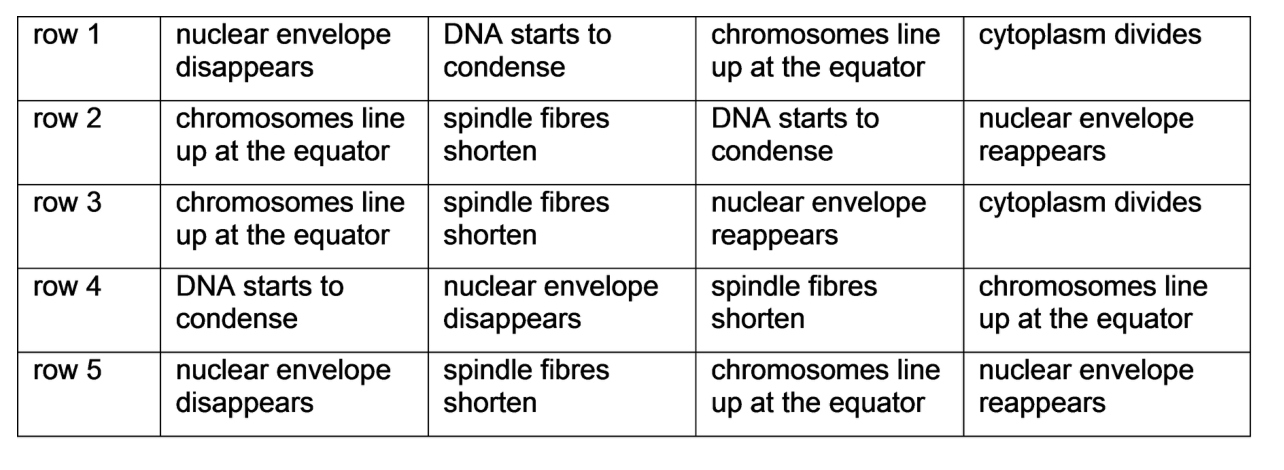
✍️ နည်းလမ်း — ဖြစ်ရပ် တစ်ခုချင်းကို သူ့ အဆင့် နာမည် ကပ်ပါ၊ ပြီးရင် P M A T အစဉ်နဲ့ စီပါ (event → phase → order)။
cytokinesis က anaphase နောက်ပိုင်း စပြီး အဆုံးမှာ ပြီးလို့ “cytoplasm divides” ကို နောက်ဆုံး ထားပါ။
🤔 Prophase → Phase two → Anaphase → Phase four. What happens in Phase two and Phase four? (adapted from IMAT 2016 Q26)
🔍 မေးခွန်း ဖြည်မယ်
Phase two = ဒုတိယ အဆင့်၊ Phase four = စတုတ္ထ အဆင့် — နာမည် ဖုံးထားတယ်။ What happens in = … မှာ ဘာဖြစ်လဲ။
option တွေထဲ line up = တန်းစီ၊
re-forms = ပြန်ဖွဲ့၊
shortens = တိုလာ၊
reach the poles = pole ရောက်။
မေးနေတာ — ဖုံးထားတဲ့ အဆင့် နှစ်ခုမှာ ဖြစ်တာ နှစ်ခုလုံး မှန်တဲ့ row။
Phase two က metaphase (တန်းစီ)၊ Phase four က telophase (envelope ပြန်ဖွဲ့)။
spindle တိုတာ anaphase၊ DNA ကူးတာ S phase၊ condense က prophase၊ homologous pair တန်းစီတာ meiosis I။
chromosomes line up at the equator — အလယ် တန်းစီတာ metaphase။
spindle fibres shorten — ကြိုး တိုပြီး ဆွဲတာ anaphase။
nuclear envelope reappears — envelope ပြန်ဖွဲ့တာ telophase။
cytoplasm divides — နောက်ဆုံး ပြီးတဲ့ cytokinesis။
M → A → T → C အစဉ် မှန်တဲ့ row က row 3 — card ပေါ်မှာ အဖြေ C။
ထောင်ချောက် — DNA condense က prophase မို့ အစဆုံး (condense = first) ဖြစ်ရမယ်။ row 1 က envelope ပျောက်ပြီးမှ ထားတယ်၊ row 2 က spindle တိုပြီးမှ ထားတယ် ✗
rows 4–5 ကတော့ spindle တိုတာ (anaphase) ကို အလယ် တန်းစီတာ (metaphase) ရှေ့မှာ ထားလို့ မှားတယ် ✗
🎯 Match each stage to what happens
👉 နံရံ မာတဲ့ အပင် cell ကို ဘယ်လို ခွဲလဲ?👉 အပင် cell မှာရော ဒီ အဆင့်တွေ တူလား? နံရံ မာနေတဲ့ cell ကို ဘယ်လို ညှစ်မလဲ?
အပင် cell — နံရံ ဆောက်ပြီး ခွဲ
🤔 Quick recall: in an animal cell, what divides the cytoplasm?
🔍 မေးခွန်း ဖြည်မယ်
in an animal cell = တိရစ္ဆာန် cell မှာ။ divides the cytoplasm = cytoplasm ကို နှစ်ခြမ်း ခွဲတယ်။
မေးနေတာ — တိရစ္ဆာန် cell မှာ cytokinesis ကို ဘာက လုပ်လဲ။
တိရစ္ဆာန် cell မှာ actin ကွင်း ကျုံ့ပြီး cleavage furrow နဲ့ ညှစ်တယ်။
cell plate က အပင်ရဲ့ နည်းလမ်း — အခု ကြည့်မယ်။
PMAT တူ — cell wall မာလို့ ညှစ်မရ။အပင် cell မှာလည်း PMAT အတူတူပဲ။ ဒါပေမဲ့ အပြင်က cellulose နံရံ (cell wall) မာနေလို့ ခါးကို ညှစ်လို့ မရဘူး။
Golgi vesicles ကို အလယ် တန်းစီ။ဒါကြောင့် Golgi (သင်ခန်းစာ 29) က membrane အိတ်လေးတွေ — Golgi vesicles — ကို cell အလယ် ပို့ပြီး တန်းစီတယ်။
vesicles ပေါင်း = cell plate (cell ပြား)ဒီ vesicles တွေ ပေါင်းစည်းစပြီး အလယ်မှာ အပြား တစ်ချပ် စဖြစ်လာတယ်။ အဲဒါကို cell plate (cell ပြား) လို့ ခေါ်တယ်။
inside → out ကြီး — နံရံ အသစ်၊ cell 2 လုံး။cell plate က အလယ်ကနေ အပြင်ဘက်ဆီ (inside → out) တဖြည်းဖြည်း ကြီးထွားပြီး အပြင်က နံရံနဲ့ ဆက်သွားတော့ cell 2 လုံးကြားက cell wall (နံရံ) အသစ် ဖြစ်ပြီး cell 2 လုံး ရတယ်။
တိရစ္ဆာန် outside → in၊ အပင် inside → out။မှတ်ရန် — တိရစ္ဆာန် cell က အပြင်ကနေ အထဲ (outside → in) ညှစ်တယ်၊ အပင် cell က အထဲကနေ အပြင် ဆောက်တယ်။
ပန်းပွင့်ပင်မှာ no centriole — spindle ဆောက်နိုင်တယ်။နောက် ကွာချက် — ပန်းပွင့်ပင် အပါအဝင် အပင် အများစုရဲ့ cell မှာ centriole မရှိ (no centriole) ဘူး။ ဒါပေမဲ့ spindle ကို ဆောက်နိုင်တယ်။ ဒါကြောင့် centriole က spindle အတွက် မရှိမဖြစ် မဟုတ်ဘူး။
👉 root tip ဓာတ်ပုံ ဖတ်နည်း ကြည့်မယ်။👉 IMAT က အပင် root tip (အမြစ်ဖျား) ဓာတ်ပုံကို ပြပြီး cell တစ်လုံးချင်း ဘယ်အဆင့်လဲ မေးတယ်။ ဖတ်နည်း ကြည့်မယ်။
Root tip ဓာတ်ပုံ — ဘယ် cell က ဘယ်အဆင့်လဲ
📝 IMAT 2022 · Question 28
The photomicrograph shows a section of a plant root tip with cells showing different stages of the cell cycle. Five of the cells have been labelled.
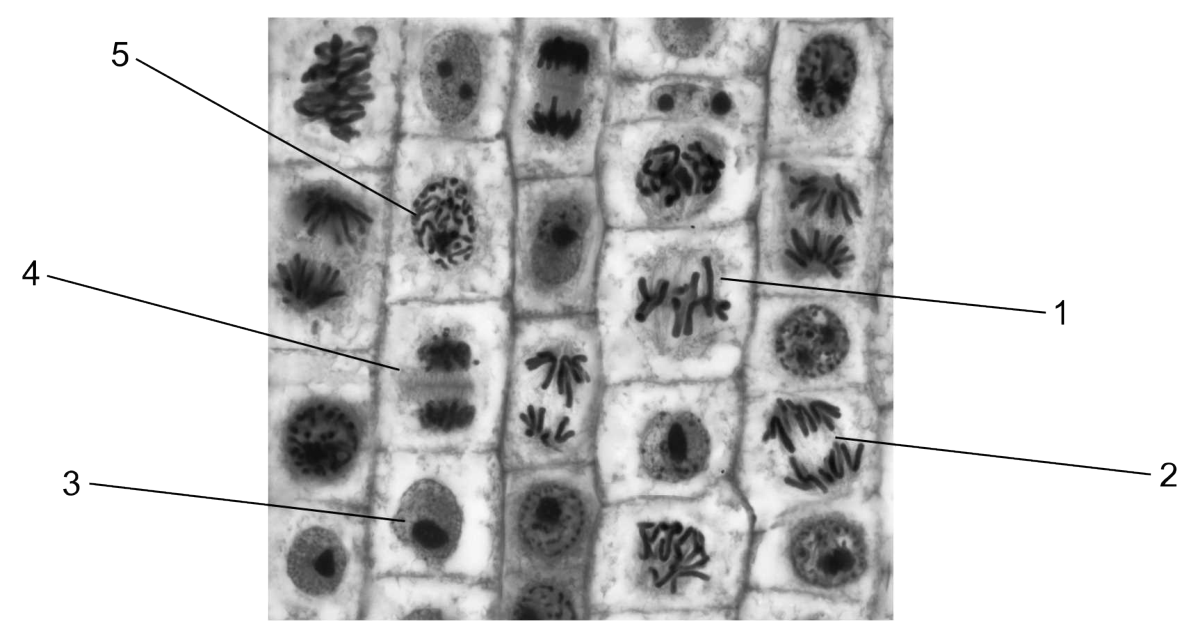
Which cell (1-5) shows anaphase?
✍️ ဓာတ်ပုံကို ပုံဆွဲပြီး ပြထားတယ်။ cell တစ်လုံးချင်း မေးခွန်း လေးခုနဲ့ စစ်မယ်။ chromosome တွေက ဆေးဆိုး ထားလို့ အရောင် ရင့်တယ်။
မေးခွန်း ၁ — nucleus အဝိုင်း နဲ့ အစက် (nucleolus) မြင်ရပြီး ကြိုး ထူထူ မမြင်ရသေးဘူးလား? ဒါဆို မခွဲသေးတဲ့ interphase — cell 3။
မေးခွန်း ၂ — nucleus ထဲ ကြိုး ထူထူ ရှုပ်ရှုပ် ဖြစ်နေလား? chromosome လိမ်စ prophase — cell 5။
မေးခွန်း ၃ — chromosome အုပ် နှစ်အုပ် အစွန်း နှစ်ဖက် ရောက်ပြီး ကြားမှာ နံရံအသစ် (cell plate) ပေါ်နေလား? telophase — cell 4။ anaphase ပြီးသွားပြီ။
cell 1 မှာ nucleus အမြှေး ပျောက်ပြီး chromosome တွေ အလယ်ဆီ သွားနေတုန်း၊ တန်းမစီရသေး။ prophase နဲ့ metaphase ကြားက ဒီ အချိန်ကို prometaphase (metaphase ရှေ့ အဆင့်) လို့ ခေါ်တယ်။
မေးခွန်း ၄ — V ပုံ အစု နှစ်စု ဆန့်ကျင်ဘက် ပြေးနေလား? anaphase — cell 2။ ဒါကြောင့် cell 2 — card ပေါ်မှာ အဖြေ D။
👉 ခွဲနေတဲ့ cell ရေပြီး mitosis ကြာချိန် တွက်လို့ ရ။👉 ဓာတ်ပုံထဲ ခွဲနေတဲ့ cell တွေကို ရေတွက်ပြီး mitosis ဘယ်လောက် ကြာလဲ တွက်လို့ ရတယ်။
ဓာတ်ပုံကနေ အချိန် တွက်နည်း — mitotic index
onion root tip field — cell 25 လုံး။onion (ကြက်သွန်နီ) အမြစ်ဖျား cell တွေကို microscope နဲ့ ကြည့်ထားတဲ့ ကွက် (field) တစ်ကွက်။ ဒီမှာ cell 25 လုံး ရေလို့ ရတယ်။
ခွဲနေ 2 (metaphase, anaphase)၊ interphase 23။ခွဲနေတဲ့ cell 2 လုံး တွေ့တယ် — တစ်လုံးက metaphase (အလယ်မှာ တန်းစီ)၊ တစ်လုံးက anaphase (နှစ်စု ကွဲ)။ ကျန် 23 လုံးက interphase။
mitotic index (ခွဲနေတဲ့ cell ရာခိုင်နှုန်း) — ခွဲနေတဲ့ cell အရေအတွက်ကို cell စုစုပေါင်းနဲ့ စားပြီး 100 နဲ့ မြှောက်တယ်။
225 × 100 = 8 %။ တကယ့် စမ်းသပ်ချက်မှာ field အများကြီး ရေပြီး ပေါင်းတယ် — ပိုမှန်အောင်ပါ။
mitotic index မြင့်လေ ခွဲနေတဲ့ cell အချိုး များလေ။mitotic index မြင့်လေ အဲဒီ tissue ထဲ ခွဲနေတဲ့ cell အချိုး များလေ — cell ခွဲတာ အားကောင်းနေလေ။ tissue တကယ် ကြီးမကြီးကတော့ cell သေတာနဲ့ပါ ချိန်ရလို့ အမြဲ အတူတူ မဟုတ်ဘူး။ ဆရာဝန်တွေ ကင်ဆာ အကျိတ် အဆင့် သတ်မှတ်ရာမှာ ခွဲနေတဲ့ cell အရေအတွက်ကိုလည်း ကြည့်တယ်။
phase တစ်ခု ကြာချိန် — အဲဒီ phase ထဲက cell အရေအတွက်ကို cell စုစုပေါင်းနဲ့ စား၊ ပြီးရင် cell cycle ကြာချိန်နဲ့ မြှောက်။ phase ထဲမှာ ကြာလေ ဓာတ်ပုံမှာ တွေ့ရ များလေ ဆိုတဲ့ စည်းမျဉ်း။
cell cycle 25 နာရီ ဆိုရင် mitosis = 0.08 × 25 h = 2 h။ metaphase ထဲ 1 လုံးပဲ ဆိုတော့ metaphase = 125 × 25 h = 1 h။
🤔 In a root-tip squash, 300 cells are counted and 24 of them are in mitosis. The cell cycle lasts 20 hours. How long does mitosis last?
🔍 မေးခွန်း ဖြည်မယ်
root-tip squash = အမြစ်ဖျားကို ဖိချေပြီး microscope နဲ့ ကြည့်တဲ့ နမူနာ။ are counted = ရေတွက်ခံရတယ်။ are in mitosis = mitosis လုပ်နေတယ်။ lasts = ကြာတယ်။
မေးနေတာ — mitosis တစ်ခုတည်း ဘယ်နှနာရီ ကြာလဲ။
mitotic index = 24300 = 0.08 (8 %)။
mitosis = 0.08 × 20 h = 1.6 h။
8 က % ဂဏန်းကို နာရီလို့ ယူမိတာ၊ 0.08 က cycle အချိန်နဲ့ မမြှောက်ရသေးတာ။
👉 gene တူ cell ဘာ သုံးလဲ? မရပ်ရင် ဘာဖြစ်မလဲ?👉 mitosis ဘယ်လို ဖြစ်လဲ သိပြီ။ ခန္ဓာကိုယ်က ဒီ gene တူ cell တွေကို ဘာအတွက် သုံးလဲ? ခွဲတာ မရပ်တော့ရင် ဘာဖြစ်မလဲ?
Why mitosis, and when it goes wrong
mitosis ဘာအတွက်လဲ၊ ပျက်ရင် ကင်ဆာ
🔎 preview — bone marrow, red blood cells, lymph, lymph vessel
ရိုးအတွင်းက ပျော့ပျော့ အသား = bone marrow (ရိုးတွင်းခြင်ဆီ)။ဒီ အပိုင်းမှာ နောက်မှ သင်မယ့် စကားလုံး သုံးလုံး လိုလို့ အရင် ကြည့်ထားမယ်။ ပေါင်ရိုး၊ တင်ပဆုံရိုး လို ရိုးတွေရဲ့ အတွင်းက ပျော့ပျော့ အသားကို bone marrow (ရိုးတွင်းခြင်ဆီ) လို့ ခေါ်တယ်။
အထဲက ပင်မ cell တွေ ခွဲ၊ အဆင့်ဆင့် ပြောင်းပြီး red blood cells (သွေးနီ cell) နဲ့ white blood cell ဖြစ်လာ။bone marrow ထဲက ပင်မ cell (stem cell — နောက် card) တွေ ခွဲတယ်။ ထွက်လာတဲ့ cell တွေက အဆင့်ဆင့် ပြောင်းလဲ (အလုပ် သတ်မှတ်) ပြီးမှ oxygen သယ်တဲ့ red blood cells (သွေးနီ cell) နဲ့ ပိုး တိုက်တဲ့ white blood cell (သွေးဖြူ cell) တွေ ဖြစ်လာတယ် — နေ့တိုင်း။
သွေးကြော ဘေးက ပြွန်ငယ်ထဲက အရည်ကြည် = lymph (လင့်ဖ်)။တစ်ရှူးတွေကြားမှာ သွေးထဲက အရည် အနည်းငယ် ယိုထွက်တယ်။ အဲဒီ အရည်ကို ပြွန်ငယ်လေးတွေ (lymph vessel) က စုပြီး သွေးထဲ ပြန်ပို့တယ်။ ဒီ ပြွန်ထဲက အရည်ကြည်ကို lymph (လင့်ဖ်) လို့ ခေါ်တယ်။
ပြည့်စုံတဲ့ သင်ခန်းစာ — bone marrow နဲ့ သွေး 46–48၊ lymph 53။ဒါ preview ပဲ — bone marrow နဲ့ red blood cells ကို သင်ခန်းစာ 46–48 မှာ၊ lymph ကို သင်ခန်းစာ 53 မှာ အပြည့် သင်မယ်။ ဒီမှာ cell အသစ် ထုတ်ပုံ နဲ့ ကင်ဆာ ပြန့်ပုံ နားလည်ဖို့ပဲ လိုတယ်။
mitosis ဘာအတွက်လဲ — ကြီး၊ ပြင်၊ အစားထိုး၊ clone
ပထမ — growth: zygote → embryo → ကလေး။mitosis က chromosome အရေအတွက် တူ၊ gene တူ cell 2 လုံး ပေးတယ်။ ဘာအတွက် သုံးလဲ? ပထမ — ကြီးထွားခြင်း (growth)။ zygote တစ်လုံးကနေ embryo (သန္ဓေသား)၊ ကလေး ဖြစ်လာတယ်။
ဒုတိယ — repair: ဒဏ်ရာ ဖာ။ဒုတိယ — ပြုပြင်ခြင်း (repair)။ အစက လက်ချောင်း ဒဏ်ရာကို ဘေးက skin cell တွေ mitosis နဲ့ ဖာပေးတာ ဒါပဲ။
တတိယ — stem cell (ပင်မ cell) က blood cells အသစ် ထုတ်။တတိယ — အစားထိုးခြင်း။ ရိုးတွင်းခြင်ဆီ (bone marrow — 🔎 အပေါ်က preview) ထဲက stem cell (ပင်မ cell) တွေက mitosis နဲ့ ခွဲတယ်။ ထွက်လာတဲ့ cell တွေ အဆင့်ဆင့် ပြောင်းလဲပြီး သေသွားတဲ့ blood cells (သွေး cell) အစား အသစ်တွေ အမြဲ ဖြစ်လာတယ်။
stem cell = cell အမျိုးမျိုး ဖြစ်နိုင်တဲ့ cell။stem cell ဆိုတာ အလုပ် မသတ်မှတ်ရသေးဘဲ cell အမျိုးမျိုး ဖြစ်လာနိုင်တဲ့ cell (သင်ခန်းစာ 40)။
asexual reproduction (လိင် မပါ မျိုးပွား) — strawberry။စတုတ္ထ — asexual reproduction (လိင် မပါ မျိုးပွား)။ strawberry (စတော်ဘယ်ရီ) ပင်က မြေပေါ် တွားသွားတဲ့ ပင်စည် ကြိုးတန်းတွေ ထုတ်ပြီး ကလေး အပင် ပေါက်တယ် (သင်ခန်းစာ 34)။
gene တူ မိတ္တူ = clone (ကလုန်း)ကလေး အပင်က မိဘနဲ့ gene အတိအကျ တူတယ် (mutation မဖြစ်ရင်)။ ဒီလို gene တူ မိတ္တူကို clone (ကလုန်း) လို့ ခေါ်တယ်။
bacteria, mitochondrion, chloroplast — binary fission။သတိ — mitosis ဆိုတာ nucleus ရှိတဲ့ eukaryote cell ရဲ့ ခွဲနည်း။ bacteria၊ mitochondrion၊ chloroplast တို့က binary fission (နှစ်ခြမ်း ကွဲ) နဲ့ ပွားတယ် — mitosis မဟုတ်ဘူး။
bacteria ရဲ့ binary fission ကို ချဲ့ကြည့်ရအောင်။ ① nucleus မရှိဘူး — membrane မှာ ကပ်နေတဲ့ ကွင်းပုံ DNA (circular DNA) တစ်ခုတည်းကို ကူးတယ်။
② cell ရှည်လာတာနဲ့ membrane မှာ ကပ်နေတဲ့ DNA ကွင်း နှစ်ခု ဝေးဝေး ကွာသွားတယ် — spindle မလိုဘူး။
③ အလယ်မှာ wall (နံရံ) အသစ် အတွင်းကို ကြီးဝင်ပြီး ④ gene တူ bacteria 2 ကောင် ရတယ်။ E. coli က အခြေအနေ ကောင်းရင် မိနစ် 20 မှာ တစ်ခါ ခွဲတယ် (သင်ခန်းစာ 30)။
virus — host cell ထဲ အပိုင်း ဆောက် တပ်ဆင်ပြီး ပွား။virus က cell တောင် မဟုတ်ဘူး — host cell (အိမ်ရှင် cell) ထဲမှာ အပိုင်းတွေ ဆောက်ပြီး တပ်ဆင်လို့ ပွားတယ်။
🤔 Which one is formed by mitosis? (IMAT 2021 Q24, the options were drawings)
🔍 မေးခွန်း ဖြည်မယ်
is formed by mitosis = mitosis နဲ့ ဖြစ်လာတယ် (passive)။ the options were drawings = မူရင်း IMAT မှာ option တွေက ပုံတွေ။
မေးနေတာ — ဒီ ငါးခုထဲ ဘယ်ဟာက mitosis ကနေ ဖြစ်လာလဲ။ တခြားတွေ ဘယ်လို ပွားလဲ စဉ်းစားပါ။
white blood cell က bone marrow stem cell တွေ mitosis နဲ့ ခွဲလို့ ဖြစ်လာတာ။
bacterium၊ mitochondrion၊ chloroplast က binary fission နဲ့ ပွားတယ်၊ virus က host cell ထဲ တပ်ဆင်တယ်။
👉 IMAT က mitosis ကို ဂဏန်းနဲ့လည်း မေးတယ်။ ကြည့်မယ်။
IMAT ဂဏန်း — mitosis 10 ကြိမ် ဆို cell ဘယ်နှလုံး
📝 IMAT 2019 · Question 29
If a cell divides by mitosis ten times, what is the number of cells at the end of the process? [Assume that all cells remain alive.]
✍️ ခွဲတိုင်း နှစ်ဆ — တစ်ကြိမ် ခွဲရင် 2၊ နှစ်ကြိမ် ခွဲရင် 4၊ သုံးကြိမ် ခွဲရင် 8။
ဒါကြောင့် n ကြိမ် ခွဲရင် cell 2ⁿ လုံး (n divisions → 2ⁿ)။
10 ကြိမ် — 2¹⁰ = 2⁵ × 2⁵ = 32 × 32 = 1024 — card ပေါ်မှာ အဖြေ C။
10၊ 11 က တစ်ကြိမ်ကို တစ်လုံးစီ ပေါင်းတာ၊ 100 က 10²၊ 64 က 2⁶ (ခြောက်ကြိမ်) — အကုန် မှားတယ်။
🤔 A cell with 2n = 24 divides by mitosis three times, and all the cells survive. How many cells are there, and how many chromosomes does each cell have?
🔍 မေးခွန်း ဖြည်မယ်
2n = 24 = diploid — chromosome 24။ divides … three times = သုံးကြိမ် ခွဲတယ်။ all the cells survive = cell အားလုံး အသက်ရှင်တယ်။ each cell = cell တစ်လုံးစီ။
မေးနေတာ — နောက်ဆုံး cell ဘယ်နှလုံး၊ တစ်လုံးစီမှာ chromosome ဘယ်နှခု — နှစ်ခုလုံး။
သုံးကြိမ် ခွဲ → 2³ = 8 cells။
mitosis က chromosome အရေအတွက် မပြောင်းလို့ တစ်လုံးစီ 24။
6 က 2 × 3 မြှောက်မိတာ၊ 12 က meiosis လို တစ်ဝက် ချမိတာ၊ 3 က 24 ကို 8 နဲ့ ဝေမိတာ — cell တိုင်း အစုံ အပြည့် ရတယ်။
👉 ခွဲတာ မရပ်တော့ရင် ဘာဖြစ်မလဲ?👉 mitosis က ကောင်းတဲ့ အလုပ် လုပ်ပေးတယ်။ ဒါပေမဲ့ ခွဲတာ မရပ်တော့ရင် ဘာဖြစ်မလဲ?
ပုံမှန် cell ရဲ့ စည်းကမ်း — ဓာတ်ခွက် စမ်းသပ်ချက်
🤔 Quick recall: the two cells made by mitosis are…
🔍 မေးခွန်း ဖြည်မယ်
made by mitosis = mitosis က ထုတ်ပေးတဲ့။ genetically identical = gene အတိအကျ တူ။ the parent = parent cell (မိဘ cell)။ not = မဟုတ်။
မေးနေတာ — သမီး cell နှစ်လုံးရဲ့ gene က ဘယ်သူနဲ့ တူလဲ / ကွဲလဲ။
mitosis က chromosome အတိအကျ ကူးပြီး တစ်ဝက်စီ ခွဲလို့ cell 2 လုံးက အချင်းချင်းရော မိဘနဲ့ပါ gene တူတယ်။
haploid (တစ်စုံ) ဖြစ်တာ၊ gene ကွဲတာက meiosis ရဲ့ ရလဒ်။
ပုံမှန် cell ကို dish ထဲ မွေး — ကြမ်းပြင် ဖုံးလာ။ပုံမှန် cell တွေကို ဓာတ်ခွက် (dish) ထဲ မွေးကြည့်မယ်။ cell တွေ ခွဲပြီး ကြမ်းပြင်ကို ဖုံးလာတယ်။
ထိရင် STOP = density-dependent inhibition (ကျပ်ရင် ရပ်)ကြမ်းပြင်မှာ အလွှာ တစ်ထပ် ပြည့်ပြီး ဘေးချင်း ထိသွားတာနဲ့ ခွဲတာ ရပ် (STOP) တယ်။ ဒါကို density-dependent inhibition (ကျပ်ရင် ရပ်ခြင်း) လို့ ခေါ်တယ်။
ကွက်လပ် ဖြစ်ရင် ပြန်ခွဲ၊ ပြည့်မှ ရပ်။cell တချို့ ခြစ်ထုတ်ကြည့်ရင် ကွက်လပ် ဘေးက cell တွေ ပြန်ခွဲပြီး ပြည့် (gap refilled) မှ ပြန်ရပ်တယ်။ ဘေးချင်း ထိတာက “နေရာ ပြည့်ပြီ” အချက်ပြလို့ပါ။
anchorage dependence (ကပ်စရာ လိုခြင်း)နောက် စည်းကမ်း — anchorage dependence (ကပ်စရာ လိုခြင်း)။ cell က ကြမ်းပြင် တစ်ခုခုမှာ ကပ်နေမှ ခွဲတယ်၊ လွင့်နေရင် မခွဲဘူး။
apoptosis (စီစဉ်ထားတဲ့ cell သေခြင်း)DNA ပျက်ပြီး ပြင်မရရင် cell က ကိုယ့်ဘာသာ အပိုင်းပိုင်း စနစ်တကျ သေတယ်။ ဒါကို apoptosis (စီစဉ်ထားတဲ့ cell သေခြင်း) လို့ ခေါ်တယ်။
cancer cell — ကျပ်လည်း ဆက်ခွဲ၊ piles up။ကင်ဆာ (cancer) cell တွေကတော့ ဒီ စည်းကမ်းတွေ မလိုက်ဘူး — ကျပ်နေလည်း ဆက်ခွဲပြီး အထပ်ထပ် ပုံလာ (piles up) တယ်။
ပုံမှန် 20–50 ကြိမ်၊ ကင်ဆာ no limit။ပုံမှန် cell က dish ထဲ 20–50 ကြိမ်လောက် ခွဲပြီး ရပ်တယ်။ ကင်ဆာ cell က အစာ ရှိသရွေ့ အဆုံးမရှိ (no limit) ခွဲတယ်။
👉 ပုံမှန် cell က 50 ကြိမ်လောက်မှာ ဘာလို့ ရပ်လဲ?
chromosome ထိပ်ဖုံး — telomere နဲ့ 50 ကြိမ် ကန့်သတ်ချက်
chromosome အစွန်း ထိပ်ဖုံး = telomere (တီလိုမီယာ)ဖိနပ်ကြိုး အစွန်းမှာ မပြဲအောင် ပလတ်စတစ် ထိပ်ဖုံး ရှိသလို chromosome အစွန်းနှစ်ဖက်မှာလည်း telomere (တီလိုမီယာ) ဆိုတဲ့ ထိပ်ဖုံး ရှိတယ်။
telomere = TTAGGG ထောင်ချီ — gene မပါ ကာကွယ် အပိုင်း။telomere ဆိုတာ gene မပါတဲ့ DNA စာလုံး TTAGGG ကို ထောင်ချီ ထပ်ခါထပ်ခါ ရေးထားတာ — gene တွေကို ကာကွယ်ပေးတဲ့ အပို အပိုင်း။
ခွဲတိုင်း telomere နည်းနည်း တိုသွား။DNA ကူးတဲ့ enzyme က ကြိုး အစွန်းဆုံးထိ မကူးနိုင်ဘူး (သင်ခန်းစာ 38)။ ဒါကြောင့် ခွဲတိုင်း telomere နည်းနည်းစီ တိုသွားတယ်။
🤔 Predict: why do most normal human body cells stop dividing after about 50 divisions?
🔍 မေးခွန်း ဖြည်မယ်
most normal human body cells = ပုံမှန် လူ့ body cell အများစု။ stop dividing = ခွဲတာ ရပ်တယ်။ after about 50 divisions = 50 ကြိမ်လောက် ခွဲပြီးနောက်။
မေးနေတာ — 50 ကြိမ်လောက်မှာ ဘာကြောင့် ရပ်လဲ — အကြောင်းရင်း။
ခွဲတိုင်း telomere တိုလာပြီး တိုလွန်းရင် cell က ရပ်တယ် — Hayflick limit။
histone နဲ့ centriole ကုန်တာ မဟုတ်ဘူး၊ DNA ကူးတာ ဆက်လုပ်နိုင်ပေမဲ့ ထိပ်ဖုံး မကျန်တော့လို့ ရပ်တာ။
တိုလွန်းရင် ခွဲတာ ရပ် — ~50 ကြိမ်။telomere တိုလွန်းလာ (become too short) ရင် cell က ‘DNA ပျက်ပြီ’ လို့ ယူဆပြီး ခွဲတာ ရပ်လိုက်တယ်။ လူ့ ပုံမှန် cell တွေ 50 ကြိမ်လောက် ခွဲပြီး ရပ်တာ ဒါကြောင့်။
Leonard Hayflick — 1961 — Hayflick limit။Leonard Hayflick (1928–2024) — အမေရိကန် ဇီဝ ပညာရှင်။ 1961 မှာ ဒီ အချက်ကို တွေ့ခဲ့လို့ Hayflick limit (ဟေးဖလစ် ကန့်သတ်ချက်) လို့ ခေါ်တယ်။
telomerase (တီလိုမရေ့စ်) — telomere ပြန်ရှည်အောင် ဖြည့်။telomerase (တီလိုမရေ့စ်) ဆိုတဲ့ enzyme က telomere ကို ပြန်ရှည်အောင် ဖြည့်ပေးတယ်။ stem cell နဲ့ sperm ထုတ်တဲ့ cell တွေမှာ ဖွင့်ထားတယ်။
ကင်ဆာ cell က telomerase ဖွင့် — limit မရှိ။ကင်ဆာ cell အများစုကလည်း telomerase ကို ပြန်ဖွင့်ထားလို့ Hayflick limit မရှိဘဲ အဆုံးမရှိ ခွဲနိုင်တယ်။
👉 ဘာလို့ စည်းကမ်း ပျက်သလဲ? cell ထဲက gene နှစ်မျိုးကို ကားနဲ့ ကြည့်မယ်။
လီဗာ gene နဲ့ ဘရိတ် gene
ကားလို — လီဗာ (go) နဲ့ ဘရိတ် (stop) gene ၂ မျိုး။cell ခွဲတာကို ကား မောင်းတာနဲ့ နှိုင်းကြည့်ပါ။ ကားမှာ လီဗာ (go) နဲ့ ဘရိတ် (stop) ရှိသလို cell မှာလည်း gene နှစ်မျိုး ရှိတယ်။
လီဗာ = proto-oncogene (ပရိုတို-အွန်ကိုဂျင်း)လီဗာ gene ကို proto-oncogene (ပရိုတို-အွန်ကိုဂျင်း) လို့ ခေါ်တယ်။ growth factor နဲ့ သူ့ receptor လို ခွဲဖို့ အချက်ပြ (growth signal) protein တွေကို ထုတ်တယ်။
mutation ပြီး အမြဲ ဖွင့် = oncogene (ကင်ဆာ gene)proto-oncogene မှာ mutation (DNA ပြောင်းလဲမှု) ဖြစ်ပြီး အမြဲ ဖွင့်နေရင် oncogene (ကင်ဆာ gene) ဖြစ်ပြီ — လီဗာ ညပ်ပြီး အောက်ဖိထား (stuck) သလိုပဲ။ cell cycle ကို အမြဲ မြန်စေ (speeds up) တယ်။
ဘရိတ် = tumour-suppressor gene (အကျိတ် တားဆီး gene)ဘရိတ် gene ကို tumour-suppressor gene (အကျိတ် တားဆီး gene) လို့ ခေါ်တယ်။ အထင်ရှားဆုံးက p53။
ဘရိတ် gene mutation = brake broken။ဘရိတ် gene မှာ mutation ဖြစ်ရင် ဘရိတ် ပြတ် (brake broken) သလိုပဲ — ပျက်နေတဲ့ cell ကို ဘယ်သူမှ မရပ်တော့ဘူး။
mutation များ years စုမှ ကင်ဆာ — အသက်ကြီးလေ ပိုဖြစ်။ကင်ဆာ ဖြစ်ဖို့ mutation တစ်ခု မလုံဘူး။ လီဗာ ညပ်တာရော ဘရိတ် ပြတ်တာရော cell တစ်လုံးထဲ နှစ်ပေါင်းများစွာ (years) စုမိမှ ဖြစ်တာ။ ဒါကြောင့် အသက်ကြီးလေ ကင်ဆာ ပိုဖြစ်လေ။
broken p53 ≠ oncogene — ဘရိတ် ပြတ်တာ။ထောင်ချောက် — p53 ပျက်တာ oncogene ဖြစ်တာ မဟုတ်ဘူး (broken p53 ≠ oncogene)၊ ဘရိတ် ပြတ်တာ။ oncogene ဖြစ်လာနိုင်တာ proto-oncogene ကပဲ။
👉 DNA ကို ဘာတွေက ပြောင်းစေလဲ?
DNA ကို ပြောင်းစေတဲ့ အရာများ — mutagen နဲ့ carcinogen
mutagen (မျူတာဂျင်)၊ carcinogen (ကာဆီနိုဂျင်)DNA ကို ပြောင်းစေ (mutation ဖြစ်စေ) တဲ့ အရာကို mutagen (မျူတာဂျင်) လို့ ခေါ်တယ်။ ကင်ဆာ ဖြစ်စေတဲ့ အရာကို carcinogen (ကာဆီနိုဂျင်) လို့ ခေါ်တယ် — အများစုက mutagen တွေပဲ။
ပထမ — UV — အရေပြား ကင်ဆာ။ပထမ — နေရောင်ထဲက UV (UltraViolet — ခရမ်းလွန် ရောင်ခြည်)။ အရေပြား (skin) ရဲ့ DNA ကို ပျက်စေပြီး အရေပြား ကင်ဆာ ဖြစ်စေတယ်။
ဒုတိယ — X-ray, ionising radiation — DNA ပြတ်။ဒုတိယ — X-ray နဲ့ radioactive ဓာတ်ရောင်ခြည် (ionising radiation)။ DNA ကြိုးကို ပြတ်စေနိုင်လို့ ဆေးရုံမှာ X-ray ရိုက်ရင် လိုသလောက်ပဲ ရိုက်တယ်။
တတိယ — tar, asbestos — ဓာတု carcinogen။တတိယ — ဓာတုပစ္စည်း။ ဆေးလိပ် (tobacco) ငွေ့ထဲက tar (ကတ္တရာ) မှာ carcinogen ဓာတု ဆယ်ချီ ပါလို့ အဆုတ် ကင်ဆာ ဖြစ်စေတယ်။ asbestos (မီးခံ အမျှင်) လည်း carcinogen။
စတုတ္ထ — HPV — cervical cancer၊ p53 ကို ပိတ်။စတုတ္ထ — virus တချို့ ကူးစက်ခြင်း (infection)။ HPV (Human Papillomavirus) က သားအိမ်ခေါင်း ကင်ဆာ (cervical cancer) ရဲ့ အဓိက အကြောင်း။ သူ့ protein တွေက p53 လို ဘရိတ် protein ကို ပိတ်တယ်။
hepatitis B virus ကလည်း အသည်း ကင်ဆာ ဖြစ်နိုင်ခြေ တိုးစေတယ်။
HPV vaccine ကို 9–14 နှစ်မှာ ထိုးရင် ကာကွယ်နိုင်။HPV vaccine (ကာကွယ်ဆေး) ကို အသက် 9–14 နှစ်မှာ ထိုးရင် ဒီ ကင်ဆာ အများစုကို ကြိုတင် ကာကွယ်နိုင်တယ်။
🤔 Which of the following is NOT a carcinogen?
🔍 မေးခွန်း ဖြည်မယ်
NOT = မဟုတ်တဲ့ — စာလုံးကြီး သတိ။ carcinogen = ကင်ဆာ ဖြစ်စေတဲ့ အရာ။
option မှာ tobacco smoke = ဆေးလိပ်ငွေ့၊
infection with = … ကူးစက်ခြင်း။
မေးနေတာ — ငါးခုထဲ ကင်ဆာ မဖြစ်စေတဲ့ တစ်ခု။
UV၊ tar၊ HPV၊ X-rays — လေးခုလုံး DNA ကို ပျက်စေ ဒါမှမဟုတ် ဘရိတ်ကို ပိတ်ပြီး ကင်ဆာ ဖြစ်စေတယ်။
အသီးထဲက sugar (သကြား) ကတော့ အစာ — DNA ကို မပျက်စေလို့ carcinogen မဟုတ်ဘူး။
👉 ဘရိတ် ကောင်းတဲ့ p53 က တကယ် ဘာလုပ်လဲ? ပျက်ရင် ဘာကွာလဲ?
p53 — ဘရိတ် ကောင်းရင် နဲ့ ပျက်ရင်
UV ကြောင့် DNA damage — p53 ↑။နေရောင်ထဲက UV ကြောင့် DNA ပျက်စီး (DNA damage) တယ် ဆိုပါစို့။ cell က p53 protein ကို များများ ထုတ်တယ် (p53 ↑)။
p53 works — G1 checkpoint မှာ stop။p53 ကောင်းရင် (p53 works) cell cycle ကို G1 checkpoint မှာ ရပ် (stop) ခိုင်းတယ်။
ရပ်ထားတုန်း repair — ပြီးမှ ဆက်ခွဲ။ရပ်ထားတုန်း DNA ပြင်တဲ့ enzyme တွေက ပျက်တာကို ပြင် (repair) တယ်။ ပြင်ပြီးမှ ကျန်းမာတဲ့ DNA နဲ့ ဆက်ခွဲတယ်။
🤔 Predict: a cell has badly damaged DNA that cannot be repaired. What does a working p53 do?
🔍 မေးခွန်း ဖြည်မယ်
badly damaged = အကြီးအကျယ် ပျက်စီးနေ။ that cannot be repaired = ပြင်လို့ မရတဲ့။ a working p53 = ကောင်းကောင်း အလုပ်လုပ်တဲ့ p53။
မေးနေတာ — ပြင်မရတဲ့ DNA တွေ့ရင် ကောင်းတဲ့ p53 က ဘာ လုပ်ခိုင်းလဲ။
p53 ကောင်းရင် G1 မှာ ရပ်ခိုင်းပြီး ပြင်တယ်။
ပြင်မရရင် apoptosis (ကိုယ်တိုင် သေ) ကို စခိုင်းလို့ ပျက်တဲ့ DNA သမီး cell ဆီ မရောက်ဘူး။
ပြင်မရရင် apoptosis — ခန္ဓာကိုယ် ဘေးကင်း။ပြင်မရလောက်အောင် ပျက်ရင် p53 က apoptosis ကို စခိုင်း (triggers) တယ်။ cell တစ်လုံး သေတာ ခန္ဓာကိုယ်အတွက် ဘေးကင်းတယ် — ပျက်တဲ့ DNA သမီး cell ဆီ မရောက်တော့လို့။
p53 broken — DNA ပျက်လျက် keeps going။p53 ပျက်နေရင် (p53 broken) ပြဿနာ တွေ့ပေမဲ့ မရပ်နိုင်ဘူး။ DNA ပျက်လျက်နဲ့ ဆက်ခွဲ (keeps going) တယ်။
mutation စု — cancer cell၊ ကင်ဆာ တစ်ဝက်မှာ p53 ပျက်။ခွဲတိုင်း mutation ထပ်စုလာပြီး နောက်ဆုံး ကင်ဆာ cell (cancer cell) ဖြစ်နိုင်တယ်။ လူ့ ကင်ဆာ တစ်ဝက်လောက်မှာ p53 mutation တွေ့ရတယ်။
👉 ထိန်းမရ ခွဲလာတဲ့ cell တွေ ဘာဖြစ်လာမလဲ?
Tumour — benign, malignant, metastasis
ထိန်းမရ ခွဲလာတဲ့ cell အစုကို tumour (အကျိတ်) လို့ ခေါ်တယ်။
နေရာမှာပဲ = benign tumour — ခွဲထုတ်ရင် ပျောက်။cell တွေ မူလ နေရာမှာပဲ စုနေပြီး မပြန့်ရင် benign tumour (မဆိုးဝါးတဲ့ အကျိတ်)။ ခွဲစိတ် ထုတ်ရင် များသောအားဖြင့် ပျောက်တယ်။
tissue ထိုးဖောက် = malignant tumour — cancer။cell တွေ အောက်က တစ်ရှူး (tissue) ကို ထိုးဖောက် ဝင်ရင်တော့ malignant tumour (ဆိုးဝါးတဲ့ အကျိတ်) — ဒါ cancer (ကင်ဆာ)။
new vessels ခေါ်ပြီး အစာ၊ oxygen ယူ။malignant အကျိတ်က သွေးကြော အသစ် (new vessels) တွေကို သူ့ဆီ ကြီးလာအောင် ခေါ်ပြီး အစာ နဲ့ oxygen ယူတယ်။
cell တချို့ blood, lymph ထဲ မျောသွား။cell တချို့ ကွာထွက်ပြီး သွေးကြော (blood) ဒါမှမဟုတ် lymph (အရည်ကြည်) ကြောထဲ ဝင်ကာ မျောသွားတယ်။
ဝေးရာ အကျိတ်သစ် = metastasis (ကင်ဆာ ပြန့်ပွားခြင်း)ဝေးတဲ့ နေရာ — ဥပမာ အဆုတ် — မှာ ထပ်ခွဲပြီး အကျိတ် အသစ် ဖွဲ့တယ်။ ဒါကို metastasis (ကင်ဆာ ပြန့်ပွားခြင်း) လို့ ခေါ်တယ်။
🎮 Normal cell or cancer cell? Sort fast 🔥
chemo — fast-dividing cells ကို ပစ်၊ spindle တား။chemotherapy (chemo — ဓာတုဆေး ကုထုံး) က အမြန် ခွဲနေတဲ့ cell (fast-dividing cells) တွေကို ပစ်မှတ်ထားတယ် — ဥပမာ spindle ဆောက်တာကို တားတယ်။
hair roots လည်း ထိလို့ ဆံပင် ကျွတ်တတ်။ဆံပင် အမြစ် (hair roots) cell လို မြန်မြန် ခွဲတဲ့ ကျန်းမာ cell လည်း ထိလို့ ဆေးကုသူတွေ ဆံပင် ကျွတ်တတ်တယ်။
🎉 ရေတွက်၊ PMAT ခွဲခြား၊ ကင်ဆာ ရှင်း — ရပြီ။🎉 အစက ကတိ ပြည့်ပြီ — chromosome နဲ့ DNA ကို ရေတွက်တတ်ပြီ၊ PMAT ကို ပုံကြည့် ခွဲခြားတတ်ပြီ၊ ဘရိတ် ပျက်ရင် ကင်ဆာ ဖြစ်ပုံ ရှင်းတတ်ပြီ။
👤 လူပုဂ္ဂိုလ်များ
1961 Hayflick — လူ့ ပုံမှန် cell က 50 ကြိမ်လောက်ပဲ ခွဲပြီး ရပ်တယ်။
🔁 ပြန်စစ်မယ် — အဖြေ မကြည့်ခင် စဉ်းစားပါ
🤔 How many centromeres are there in a human cell at metaphase of mitosis?
🔍 မေးခွန်း ဖြည်မယ်
How many centromeres = centromere ဘယ်နှခု။ at metaphase of mitosis = mitosis ရဲ့ metaphase မှာ။
မေးနေတာ — metaphase လူ့ cell မှာ centromere အရေအတွက်။ centromere ၁ ခု ဘာနဲ့ ညီလဲ သတိရပါ။
metaphase မှာ chromosome 46 ခု (X ပုံ)။
တစ်ခုစီရဲ့ sister chromatid 2 ချောင်းကို centromere 1 ခုက ချုပ်ထားလို့ centromere 46 ခု။
92 က chromatid အရေအတွက် — chromatid တစ်ချောင်း = DNA molecule တစ်ခု မို့ DNA molecule လည်း 92။
🤔 Which cells rest in G0 but can return to the cell cycle and divide after an injury?
🔍 မေးခွန်း ဖြည်မယ်
rest in G0 = G0 မှာ နားနေတယ်။ but can return to the cell cycle = ဒါပေမဲ့ cycle ထဲ ပြန်ဝင်နိုင်တယ်။ after an injury = ဒဏ်ရာ ရပြီးနောက်။
မေးနေတာ — ပုံမှန် နားနေပေမဲ့ ဒဏ်ရာ ရရင် ပြန်ခွဲနိုင်တဲ့ cell အမျိုးအစား။
G0 = cycle အပြင်ဘက်မှာ ခွဲတာ ရပ်ပြီး နားနေတဲ့ အခြေအနေ။
liver cell (အသည်း cell) က G0 မှာ နားနေပေမဲ့ ဒဏ်ရာ ရရင် ပြန်ခွဲတယ်။
nerve cell အများစုက G0 မှာ အမြဲ နေတယ်၊ muscle cell အများစုလည်း G0 မှာ အမြဲ နေတယ်၊ sperm က haploid — မခွဲတော့ဘူး။
🤔 What is the protein hook on the centromere that the spindle fibres hold?
🔍 မေးခွန်း ဖြည်မယ်
protein hook = protein ချိတ်။ on the centromere = centromere ပေါ်မှာ။ that the spindle fibres hold = spindle ကြိုးတွေ ကိုင်တဲ့ (relative clause)။
မေးနေတာ — ကြိုး လာကိုင်တဲ့ centromere ပေါ်က ချိတ်ရဲ့ နာမည်။
kinetochore = centromere နေရာမှာ protein အများအပြား စုဖွဲ့ထားတဲ့ ချိတ် — spindle ကြိုးက ဒါကို ကိုင်ပြီး ဆွဲတယ်။
centriole နဲ့ centrosome က pole မှာ၊ nucleosome က DNA ပတ်ထားတဲ့ histone အလုံး။
🤔 To count the chromosomes of a cell in a photograph, which stage is best?
🔍 မေးခွန်း ဖြည်မယ်
To count = ရေတွက်ဖို့။ in a photograph = ဓာတ်ပုံထဲမှာ။ which stage is best = ဘယ် အဆင့်က အကောင်းဆုံးလဲ။
မေးနေတာ — chromosome ရေဖို့ ဘယ်အဆင့်ကို ရိုက်ရင် အလွယ်ဆုံးလဲ။
chromosome တွေ အတိုဆုံး အထူဆုံး လိမ်ထားပြီး အလယ်မျဉ်းမှာ တစ်တန်းတည်း တန်းစီနေလို့ ရေရ အလွယ်ဆုံး — metaphase။
interphase နဲ့ telophase မှာ chromatin ပြန့်နေတယ်၊ prophase မှာ လိမ်စ ပဲ ရှိသေးတယ်။
🤔 In which stage do the nuclear envelope and the nucleolus form again?
🔍 မေးခွန်း ဖြည်မယ်
In which stage = ဘယ် အဆင့်မှာ။ nuclear envelope = nucleus အမြှေး။ form again = ပြန်ဖွဲ့တယ်။
မေးနေတာ — ပျောက်သွားခဲ့တဲ့ nucleus အမြှေးနဲ့ nucleolus ဘယ်အဆင့်မှာ ပြန်ပေါ်လဲ။
pole ရောက်တဲ့ အစု တစ်ခုစီကို envelope အသစ် ပြန်ဝိုင်းပြီး nucleolus ပြန်ပေါ်တာ telophase။
prophase မှာ ပျောက်သွားခဲ့တာ။
🤔 In a dividing plant cell, the cell plate is built from…
🔍 မေးခွန်း ဖြည်မယ်
dividing plant cell = ခွဲနေတဲ့ အပင် cell။ is built from = … နဲ့ ဆောက်တယ် (passive)။ … = ဝါကျ ဆက်ဖြည့်ရမယ်။
မေးနေတာ — cell plate ကို ဘာ အစိတ်အပိုင်းတွေ ပေါင်းပြီး ဆောက်လဲ။
နံရံ မာလို့ ညှစ်မရ — Golgi vesicle တွေ အလယ်မှာ တန်းစီ ပေါင်းပြီး cell plate ဆောက်တယ်၊ cell plate ကြီးလာပြီး cell wall အသစ် ဖြစ်တယ်။
actin ကွင်းက တိရစ္ဆာန် cell ရဲ့ cleavage furrow၊ ပန်းပွင့်ပင် cell မှာ centriole မရှိ၊ nuclear envelope က nucleus ကိုပဲ ဖုံးတယ်။
🤔 One cell divides by mitosis 5 times. How many cells?
🔍 မေးခွန်း ဖြည်မယ်
divides … 5 times = 5 ကြိမ် ခွဲတယ်။ How many cells? = နောက်ဆုံး cell ဘယ်နှလုံးလဲ။
မေးနေတာ — 5 ကြိမ် ခွဲပြီးရင် cell စုစုပေါင်း။
ခွဲတိုင်း နှစ်ဆ — 2 × 2 × 2 × 2 × 2 = 2⁵ = 32။
🤔 p53 is a…
p53 က ဘရိတ် — tumour-suppressor gene။
🤔 The spread of cancer cells to distant organs is called…
🔍 မေးခွန်း ဖြည်မယ်
The spread of = … ပြန့်ပွားခြင်း။ to distant organs = ဝေးတဲ့ ကိုယ်တွင်း အင်္ဂါတွေဆီ။ is called… = … လို့ ခေါ်တယ်။
မေးနေတာ — ကင်ဆာ cell တွေ ဝေးရာ ပြန့်သွားတာရဲ့ နာမည်။
သွေး ဒါမှမဟုတ် lymph နဲ့ မျောပြီး ဝေးတဲ့ နေရာ ပြန့်တာ metastasis။
🎉 အောက်က quiz နဲ့ IMAT ပုံစံ စမ်းကြည့်ပါ။🎉 အားလုံး ဖြေနိုင်ရင် ဒီ သင်ခန်းစာ ရပြီ။ အောက်က စမ်းပွဲ (quiz) နဲ့ IMAT ပုံစံ စမ်းကြည့်ပါ။