Meiosis, karyotypes and chromosome maps (2)
sperm 4 ကောင် နဲ့ egg 1 လုံး
Sperm and egg
sperm 4 ကောင် နဲ့ egg 1 လုံး
Testis — cell တစ်လုံးကနေ sperm 4 ကောင်
sperm millions / day၊ egg 1month — ဘာလို့ ကွာလဲ?ယောက်ျား တစ်ယောက်က တစ်နေ့ကို sperm သန်းပေါင်း များစွာ (millions / day) ထုတ်တယ်။ မိန်းမ တစ်ယောက်က အများအားဖြင့် တစ်လကို egg တစ်လုံး (1month) ပဲ လွှတ်တယ်။ နှစ်ခုလုံး meiosis သုံးတာပဲ — ဘာလို့ ကွာလဲ?
spermatogonium (sperm မိခင် cell၊ 2n) — mitosis နဲ့ ပွား။testis ထဲမှာ spermatogonium (sperm မိခင် cell၊ 2n) က mitosis နဲ့ ခွဲတယ်။ spermatogonium တွေထဲက stem cell (မူလ cell) တွေက ကိုယ့်ကိုယ်ကို ပြန်ပွားပြီး သူတို့ အရေအတွက်ကို ထိန်းထားတယ် — တချို့ ခွဲခြင်းက stem cell နှစ်လုံး ပေးတယ်၊ တချို့က stem cell တစ်လုံးနဲ့ sperm ဘက် ဆက်သွားမယ့် cell တစ်လုံး ပေးတယ်။ ဒါကြောင့် အပျိုဖော် ဝင်ပြီးကတည်းက sperm ကို တစ်သက်လုံး ထုတ်နိုင်တယ်။
primary spermatocyte (meiosis စမယ့် cell၊ 2n) — sperm မဟုတ်သေး။sperm ဘက် ဆက်သွားတဲ့ cell က ကြီးလာပြီး primary spermatocyte (meiosis စမယ့် cell၊ 2n) ဖြစ်တယ် — နာမည်မှာ sperm ပါပေမဲ့ sperm မဖြစ်သေးဘူး၊ meiosis ကို စမယ့် cell ပါ။
meiosis I ပြီးရင် secondary spermatocyte (meiosis II လုပ်မယ့် cell၊ n) 2 လုံး ရတယ်။
meiosis II ပြီးရင် 4 spermatids (n) ရတယ်။
4 sperm — အရွယ် တူ၊ သေး၊ ကူးနိုင်။spermatids တွေ အမြီး ပေါက်ပြီး sperm 4 ကောင် (4 sperm) ဖြစ်တယ် — အရွယ် တူတူ၊ သေးသေး၊ ကူးနိုင်တယ်။ cell တစ်လုံးကနေ sperm 4 ကောင်။ testis ထဲမှာ sperm လုပ်တဲ့ ဒီ ဖြစ်စဉ် တစ်ခုလုံးကို spermatogenesis (sperm ဖြစ်စဉ်) လို့ ခေါ်တယ်။
💡 မှတ်နည်း — stem cell တွေက သစ်ပင် အမြစ်လိုပဲ — အမြစ်က မကုန်ဘဲ ကျန်နေပြီး အကိုင်း အသစ်တွေ အမြဲ ထွက်သလို sperm ဘက် သွားမယ့် cell အသစ်တွေ အမြဲ ထွက်တယ်။ အဲဒီ cell တစ်လုံးကနေ sperm 4 ကောင်။
Ovary — cell တစ်လုံးကနေ egg 1 လုံး
မမွေးခင် — mitosis → oogonium (2n)။ovary ထဲမှာ egg လုပ်တဲ့ ဖြစ်စဉ်ကို oogenesis (egg ဖြစ်စဉ်) လို့ ခေါ်တယ်။ သူက မိန်းကလေး မမွေးခင် သန္ဓေသား ဘဝမှာ စတယ် — ovary ထဲက oogonium (egg မိခင် cell၊ 2n) တွေ mitosis နဲ့ အများကြီး ပွားတယ်။ မွေးပြီးနောက် oogonium အသစ် ထပ်မပွားတော့ဘူး။
primary oocyte (meiosis I စမယ့် cell) — prophase I မှာ pause။oogonium က ကြီးလာပြီး primary oocyte (meiosis I စမယ့် cell၊ 2n — egg မဖြစ်သေး) ဖြစ်တယ်။ မမွေးခင် ကတည်းက meiosis I ကို စပြီး prophase I မှာ ရပ်ထားတယ် (pause) — အပျိုဖော် ဝင်ပြီးမှ လတိုင်း များသောအားဖြင့် တစ်လုံးက ပြန်ဆက်တယ်။
မညီ ခွဲ — secondary oocyte + polar body (ဘေး ထွက်ကိုယ်)meiosis I မှာ cytoplasm (cell ရည်) ကို မညီမျှ ခွဲတယ်။ cytoplasm အများစု ယူတဲ့ secondary oocyte (meiosis II မဆုံးသေးတဲ့ cell၊ n) ကြီး တစ်လုံးနဲ့ သေးသေးလေး polar body (ဘေး ထွက်ကိုယ်) တစ်လုံး ရတယ်။
ovulation (ဥ ကြွေခြင်း) — metaphase II မှာ ရပ်စောင့်။secondary oocyte ကို ovary က လွှတ်လိုက်တာကို ovulation (ဥ ကြွေခြင်း) လို့ ခေါ်တယ်။ လွှတ်ပြီး သူက metaphase II မှာ ထပ် ရပ်စောင့်နေတယ်။
sperm ဝင်မှ meiosis II ဆုံး — egg + polar body။sperm ဝင်လာမှသာ (fertilisation — မျိုးအောင်ခြင်း စချိန်) meiosis II ဆုံးအောင် လုပ်ပြီး egg တစ်လုံးနဲ့ polar body နောက် တစ်လုံး (second polar body) ရတယ်။ ပြီးမှ sperm ရဲ့ nucleus နဲ့ egg ရဲ့ nucleus ပေါင်းပြီး zygote ဖြစ်တယ်။ sperm မဝင်ရင် secondary oocyte က meiosis II မဆုံးဘဲ ပျက်သွားတယ်။
egg 1 လုံး — cytoplasm အများစု၊ အစာ စုပေးဖို့။ဒါကြောင့် cell တစ်လုံးကနေ egg 1 လုံးနဲ့ polar bodies (ဘေး ထွက်ကိုယ် များ) ပဲ ရတယ်။ ဘာလို့လဲ — ပိုနေတဲ့ chromosome အစုံတွေကို polar bodies က ယူသွားပြီး cytoplasm အများစု၊ organelles နဲ့ အစာကို egg တစ်လုံးဆီ စုပေးဖို့ပါ — embryo အစောပိုင်း ကြီးထွားဖို့။ polar bodies မှာ cytoplasm အနည်းငယ်ပဲ ပါပြီး နောက်မှ ပျက်သွားတယ်။
💡 မှတ်နည်း — ထမင်းဘူး လေးဘူး ညီညီ ပြင်မယ့် အစား ဟင်း အများစုကို ဘူး တစ်ဘူးထဲ ထည့်သလိုပဲ — egg မှာ cytoplasm အများစု၊ polar body တွေက နည်းနည်းပဲ ပါတဲ့ ဘူးသေးလေးတွေ၊ နောက်မှ ပျက်တယ်။
IMAT 2017 Q31 (oogenesis မှာ ဘယ် cell တွေ diploid လဲ) ကို သင်ခန်းစာ 54 မှာ ဖြေမယ်။ ဒီမှာ chromatid နဲ့ ရေတွက်ကြည့်မယ် —
🤔 In oogenesis, which cell is haploid but still has two chromatids in each chromosome?
🔍 မေးခွန်း ဖြည်မယ်
haploid = chromosome အစုံ တစ်စုံ (n)။ but still has = ဒါပေမဲ့ ရှိနေသေးတယ်။ two chromatids in each chromosome = chromosome တိုင်းမှာ chromatid နှစ်ချောင်း (X ပုံ)။
မေးနေတာ — egg ဖြစ်စဉ်ထဲက ဘယ် cell က n ဖြစ်ပြီးသား၊ ဒါပေမဲ့ X ပုံ chromosome တွေ ကိုင်ထားသေးလဲ။
meiosis I ပြီးမှ haploid ဖြစ်တယ် — secondary oocyte (n)၊ meiosis II မပြီးသေးလို့ X ပုံ (chromatid 2 ချောင်း) ကျန်သေးတယ်။
oogonium နဲ့ primary oocyte က 2n၊ second polar body က meiosis II ပြီးမှ ထွက်လို့ chromatid တစ်ချောင်းစီပဲ။
👉 sperm နဲ့ egg လုပ်ပုံ ကွာချက်တွေကို ဘေးချင်း ယှဉ်ကြည့်မယ်။
sperm လုပ်ပုံ နဲ့ egg လုပ်ပုံ — ဘေးချင်း ယှဉ်
spermatogenesis နဲ့ oogenesis — ကွာချက် ၄ ချက်။နှစ်ခုလုံး meiosis ပဲ — ကွာချက် လေးချက်ကို ဇယား တစ်တန်းချင်း ဆောက်ကြည့်မယ်။ ♂ က sperm လုပ်ခြင်း (spermatogenesis)၊ ♀ က egg လုပ်ခြင်း (oogenesis)။
ပထမ — sperm 4၊ egg 1။ပထမ — primary cell တစ်လုံးကနေ sperm 4 ကောင် ရတယ်၊ egg ကတော့ 1 လုံးပဲ ရတယ်။
ဒုတိယ — sperm ညီ ခွဲ၊ egg မညီ — polar body ပျက်။ဒုတိယ — sperm မှာ cytoplasm ကို ညီညီ ခွဲတယ်။ egg မှာ မညီ ခွဲလို့ တစ်ဖက်က ကြီး (egg)၊ တစ်ဖက်က cytoplasm အနည်းငယ်ပဲ ပါတဲ့ polar body (ဘေး ထွက်ကိုယ်) သေးသေး ဖြစ်ပြီး နောက်မှ ပျက်သွားတယ်။
တတိယ — sperm puberty (အပျိုဖော်/လူပျိုဖော် ဝင်ချိန်) က၊ egg မမွေးခင်က စ။တတိယ — sperm meiosis က puberty (အပျိုဖော်/လူပျိုဖော် ဝင်ချိန်) ကစပြီး တစ်သက်လုံး ဆက်လုပ်တယ်။ egg meiosis ကတော့ မမွေးခင် သန္ဓေသား ဘဝကတည်းက စတယ်။
စတုတ္ထ — sperm ကြာကြာ မရပ်၊ egg prophase I, metaphase II မှာ ရပ်။စတုတ္ထ — sperm လုပ်တာမှာ egg လို နှစ်ပေါင်း များစွာ ရပ်စောင့်တာ (long pause) မရှိဘူး — အဆင့်တွေ အချိန်ယူပေမဲ့ ဆက်တိုက် သွားတယ်။ egg က prophase I မှာ နှစ်ပေါင်း များစွာ ရပ်၊ ovulation ပြီး metaphase II မှာ ထပ်ရပ်ပြီး sperm ဝင်မှ ဆုံးတယ်။
💡 မှတ်နည်း — sperm လုပ်တာ ကိတ်မုန့်ကို ညီညီ လေးပိုင်း ခွဲတာ၊ egg လုပ်တာ အပိုင်း ကြီး တစ်ပိုင်းနဲ့ အစအန (polar body) လေးတွေ ကျန်တာ။
🤔 One primary spermatocyte and one primary oocyte both finish meiosis normally. How many functional gametes are made in total?
🔍 မေးခွန်း ဖြည်မယ်
both finish meiosis normally = နှစ်လုံးလုံး meiosis ကို ပုံမှန် ဆုံးအောင် လုပ်တယ်။ functional gametes = အလုပ်လုပ်နိုင်တဲ့ (သုံးလို့ရတဲ့) gamete တွေ။ in total = စုစုပေါင်း။
မေးနေတာ — sperm ဘက် cell တစ်လုံးနဲ့ egg ဘက် cell တစ်လုံးကနေ သုံးလို့ရတဲ့ gamete စုစုပေါင်း ဘယ်နှစ်ခု ရလဲ။
primary spermatocyte တစ်လုံး → sperm 4 ကောင် (cytoplasm ညီညီ)။
primary oocyte တစ်လုံး → egg 1 လုံး (ကျန်တာ polar body)။
4 + 1 = 5။
8 က egg ဘက်ကိုလည်း 4 လို့ ယူမိတာ။
🎮 Sperm-making or egg-making? — sort fast 🔥
👉 chromosome ရေတွက်စစ်ဆေးပုံ၊ မှားရင် ဘာဖြစ်လဲ?👉 meiosis က အမြဲ မှန်မှန် ခွဲတာ မဟုတ်ဘူး။ PART 2 မှာ chromosome ကို ဘယ်လို ရေတွက်စစ်ဆေးလဲ၊ မှားရင် ဘာဖြစ်လဲ ကြည့်မယ်။
Karyotypes and errors
chromosome ဓာတ်ပုံ နဲ့ ခွဲတာ မှားရင်
Karyotype — အတွဲလိုက် စီထားတဲ့ chromosome ပုံ
metaphase မှာ chromosome အထင်ရှားဆုံး — photo ရိုက်။ဆရာဝန်တွေက ကလေး မမွေးခင် chromosome ကို ဘယ်လို ရေတွက်လဲ? cell အများစုက interphase (မခွဲသေးတဲ့ အချိန်) မှာ ရှိပြီး chromosome တွေ ချည်မျှင်လို ပြန့်နေလို့ မမြင်ရဘူး။ metaphase မှာတော့ အတိုဆုံး၊ အထူဆုံး ဖြစ်လို့ ဒီအချိန်မှာ ဆိုးဆေး ဆိုးပြီး (stained) ဓာတ်ပုံ (metaphase photo) ရိုက်တယ်။
အရှည်ကနေ အတို စီ = karyotype (ကာရီယိုတိုက်)ဓာတ်ပုံထဲက chromosome တွေကို အတွဲလိုက် ရှာပြီး အကြမ်းအားဖြင့် အရှည်ဆုံးကနေ အတိုဆုံးထိ (centromere နေရာ နဲ့ အစင်းပုံပါ ကြည့်ပြီး) စီထားတာကို karyotype (ကာရီယိုတိုက်) လို့ ခေါ်တယ်။ ဓာတ်ပုံ ရိုက်တာ သက်သက် မဟုတ်ဘဲ chromosome အရေအတွက်၊ အရွယ်အစား၊ ပုံသဏ္ဌာန်ကို အတွဲလိုက် စစ်လို့ရအောင် စီထားတဲ့ ပုံပါ။
1–22 = autosomes (ခန္ဓာ chromosome) — ကျား မ တူ။အတွဲ 1 ကနေ 22 ထိကို autosomes (ခန္ဓာ chromosome) လို့ ခေါ်တယ်။ ယောက်ျား မိန်းမ နှစ်မျိုးလုံးမှာ ပုံမှန် အတွဲ တူတူပါပဲ။
23 = sex chromosomes (လိင် chromosome) — X, Y = ယောက်ျား။အတွဲ 23 က sex chromosomes (လိင် chromosome)။ ဒီ ပုံမှာ X နဲ့ Y ပါလို့ ယောက်ျား ဖြစ်တယ်။ Y က X ထက် အများကြီး သေးတယ်။
မိန်းမမှာတော့ X နှစ်ချောင်း (female: XX) ပါတယ်။
karyotype ကို စာနဲ့ ရေးတဲ့ နည်း — အစ ဂဏန်းက chromosome စုစုပေါင်း၊ ကော်မာ နောက်က sex chromosome တွေ၊ ပို/လို ရှိရင် နောက်ဆုံးမှာ + ဒါမှမဟုတ် − နဲ့ chromosome နံပါတ်။
47,XX,+21 = chromosome 47၊ မိန်းကလေး (XX)၊ chromosome 21 တစ်ချောင်း ပို (Down syndrome — ဒီ PART မှာ ကြည့်မယ်)။
ပုံမှန် ယောက်ျား 46,XY၊ ပုံမှန် မိန်းမ 46,XX။ 45,X ဆိုတာ X တစ်ချောင်းပဲ ပါ (Turner syndrome — ဒီ PART မှာ ကြည့်မယ်)။
ကလေး ကျား/မ ဘယ်လို ဆုံးဖြတ်လဲ ဆိုတာ သင်ခန်းစာ 37 မှာ သင်မယ်။
🤔 Which shows three structures found in a healthy human male liver cell, in order of size from largest to smallest? (adapted from IMAT 2020 Q30 — predict first)
🔍 မေးခွန်း ဖြည်မယ်
structures found in = ထဲမှာ တွေ့ရတဲ့ အစိတ်အပိုင်းတွေ။ healthy human male liver cell = ကျန်းမာတဲ့ ယောက်ျား အသည်း cell။ in order of size from largest to smallest = အကြီးဆုံးကနေ အသေးဆုံး အစဉ်။
မေးနေတာ — ဘယ် အတန်းက အစိတ်အပိုင်း သုံးခုကို အကြီးကနေ အသေး မှန်မှန် စီထားလဲ။
chromosome တစ်ချောင်းမှာ nucleosome အများကြီး ပါပြီး nucleosome တစ်ခုမှာ histone 8 ခု ပါလို့ Y → nucleosome → histone။
“Y → X” က မှား — X က Y ထက် ကြီးတယ်။
histone ထက် nucleosome ကြီးတယ်။
Y > nucleosome > histone။Y သေးပေမဲ့ chromosome တစ်ချောင်းလုံးပါ — nucleosome အများကြီး ပါတယ်။ nucleosome တစ်ခုက histone proteins 8 ခုကို DNA ပတ်ထားတာ (သင်ခန်းစာ 32)။ ဒါကြောင့် Y > nucleosome > histone။
💡 မှတ်နည်း — ကြမ်းပြင်မှာ ပြန့်ကျနေတဲ့ ခြေအိတ်တွေကို အတွဲလိုက် ရှာ၊ အကြီးဆုံး အတွဲကနေ စီသလိုပဲ — နောက်ဆုံး မတူတဲ့ အတွဲ (X, Y) က ယောက်ျား။
👉 ဒီ cell တွေကို ကလေး မမွေးခင် ဘယ်လို ယူလဲ?
ကလေး မမွေးခင် cell ဘယ်လို ယူလဲ
fetus ရဲ့ cells amniotic fluid (ရေမွှာရည်) ထဲ ကျွတ်ကျနေ။karyotype လုပ်ဖို့ ကလေးရဲ့ cells လိုတယ်။ သားအိမ်ထဲမှာ သန္ဓေသား (fetus) က amniotic fluid (ရေမွှာရည်) ထဲမှာ မျောနေပြီး သူ့ အရေပြား cells တွေ အဲဒီ အရည်ထဲ ကျွတ်ကျနေတယ် (shed fetal cells)။
amniocentesis (ရေမွှာရည် ထုတ်စစ်) — 15–20 ပတ်။amniocentesis (ရေမွှာရည် ထုတ်စစ်ခြင်း) — ကိုယ်ဝန် 15–20 ပတ်မှာ ဗိုက်ကနေ အပ် သေးသေးနဲ့ ရေမွှာရည် နည်းနည်း စုပ်ယူပြီး ထဲက cells တွေကို စစ်တယ်။
CVS (Chorionic Villus Sampling — အချင်း စစ်) — 10–13 ပတ်။CVS (Chorionic Villus Sampling) — အချင်း (placenta) ရဲ့ အစ သေးသေး တစ်စကို ယူတယ်။ 10–13 ပတ်မှာ လုပ်နိုင်လို့ အဖြေ စောစော ရတယ်။ နှစ်မျိုးလုံး ကိုယ်ဝန်ပျက်နိုင်ခြေ အနည်းငယ် ရှိတယ်။
cells မွေး၊ colchicine — spindle တား။ရလာတဲ့ cells တွေကို ဓာတ်ခွက်ထဲ မွေးပြီး ခွဲစေတယ်။ ပြီးရင် colchicine (ကော်လ်ချီစင်) ဆေး ထည့်တယ် — spindle ဆောက်တာကို တားတယ်။
metaphase မှာ ရပ် — ဓာတ်ပုံက karyotype။spindle မရှိရင် anaphase ကို မသွားနိုင်လို့ ခွဲနေတဲ့ cells တွေ metaphase မှာ ရပ်နေကြတယ် (stopped at metaphase) — chromosomes အထင်ရှားဆုံး အချိန်။ အဲဒီ chromosome တွေကို ဆိုးဆေး ဆိုးမှ ဓာတ်ပုံမှာ မြင်ရ (visible) ပြီး karyotype ဆောက်တယ်။
💡 မှတ်နည်း — colchicine က spindle အတွက် မီးနီ — anaphase ကို မဖြတ်ရလို့ X တွေ metaphase မှာ ရပ်စောင့်ပြီး ဓာတ်ပုံ ရိုက်ဖို့ အသင့် ဖြစ်တယ်။
🤔 A lab forgets to add colchicine to the growing fetal cells. What will the photo most likely show?
🔍 မေးခွန်း ဖြည်မယ်
forgets to add = ထည့်ဖို့ မေ့သွားတယ်။ growing fetal cells = မွေးထားတဲ့ ကလေး cells။ most likely show = အဖြစ်နိုင်ဆုံး ပြမယ့် ပုံ။
မေးနေတာ — colchicine မပါရင် ဓာတ်ပုံမှာ chromosome မြင်ရတဲ့ cell တွေ ဘယ်လို ပြောင်းမလဲ။
colchicine က spindle ကို တားလို့ cell တွေ metaphase မှာ စုရပ်တယ်။
မထည့်ရင် cell အများစု interphase (chromosome မမြင်ရ) မှာပဲ ရှိပြီး metaphase cell နည်းနည်းပဲ တွေ့ရမယ်။
chromosome နှစ်ဆ ဖြစ်တာ၊ အနီ ဆိုးတာ colchicine ရဲ့ အလုပ် မဟုတ်ဘူး။
👉 karyotype မှာ chromosome တစ်ချောင်း ပိုနေတာ တွေ့ရင် — အဲဒါ ဘယ်ကလာလဲ?
Non-disjunction — မခွဲဘဲ ကပ်ပါသွား
ပုံမှန် anaphase — splits evenly။ပုံမှန်ဆိုရင် anaphase မှာ spindle က အတွဲ (သို့) chromatids တွေကို ညီညီ ခွဲပေးတယ် (splits evenly)။
chromosome 21 — ဘယ် meiosis I မှား၊ ညာ II မှား။ဒီ ပုံမှာ chromosome 21 အတွဲ တစ်တွဲကိုပဲ ဆွဲထားတယ် — ဘယ်ဘက်က meiosis I မှာ မှား၊ ညာဘက်က meiosis II မှာ မှား။
အတွဲ မခွဲ = non-disjunction (မခွဲထွက်ခြင်း)ဘယ်ဘက် — anaphase I မှာ အတွဲ မခွဲဘဲ နှစ်ချောင်းလုံး cell တစ်ဖက်တည်း ပါသွားတယ်။ ဒီလို မခွဲထွက်တာကို non-disjunction (မခွဲထွက်ခြင်း) လို့ ခေါ်တယ်။
I မှာ — n + 1 ၂ လုံး၊ n − 1 ၂ လုံး။meiosis II ပြီးတော့ gametes နှစ်လုံးမှာ 21 နှစ်ချောင်း ပါလို့ n + 1၊ ကျန် နှစ်လုံးမှာ 21 မပါလို့ n − 1။ လေးလုံးလုံး မှားကုန်တယ်။
ညာဘက် — meiosis I က ပုံမှန်ပါ။ အနီ တစ်ဖက်၊ အပြာ တစ်ဖက် ခွဲသွားတယ်။
II မှာ — n + 1 ၁၊ n − 1 ၁၊ n ၂ လုံး။meiosis II မှာ ဘယ် cell ရဲ့ sister chromatids တွေ မခွဲလို့ n + 1 တစ်လုံး၊ n − 1 တစ်လုံး ရတယ်။ ညာ cell က ပုံမှန် n နှစ်လုံး ပေးတယ်။
I မှား 4 of 4၊ II (cell တစ်လုံး) မှား 2 of 4။မှတ်ရန် — meiosis I မှာ မှားရင် 4 လုံးလုံး မှား (4 of 4 abnormal)၊ meiosis II မှာ cell တစ်လုံးပဲ မှားရင် 2 လုံးပဲ မှား (2 of 4 abnormal)။ cell နှစ်လုံးလုံး မှားရင်တော့ — အောက်က မေးခွန်းမှာ တွက်ကြည့်ပါ။
💡 မှတ်နည်း — ချိုချဉ် နှစ်လုံးကို ကလေး နှစ်ယောက် ခွဲပေးရမှာ တစ်ယောက်တည်းကို နှစ်လုံးလုံး ပေးမိသလိုပဲ — တစ်ယောက်က n + 1၊ တစ်ယောက်က n − 1။
🤔 In meiosis II, BOTH cells have non-disjunction of their chromosome 21 sister chromatids. How many of the four gametes are abnormal?
🔍 မေးခွန်း ဖြည်မယ်
BOTH cells = cell နှစ်လုံးစလုံး (တစ်လုံးတည်း မဟုတ်)။ sister chromatids = ကူးထားတဲ့ chromatid အမွှာ။ abnormal = ပုံမှန် မဟုတ်တဲ့။
မေးနေတာ — meiosis II မှာ cell နှစ်လုံးလုံး မခွဲမိရင် gamete လေးလုံးထဲက ဘယ်နှလုံး မှားလဲ။
cell တစ်လုံးစီက n + 1 တစ်လုံး၊ n − 1 တစ်လုံး ပေးတယ် — cell နှစ်လုံးဆိုတော့ abnormal 4 လုံး (n+1 နှစ်လုံး၊ n−1 နှစ်လုံး)။
ပုံမှာ cell တစ်လုံးပဲ မှားလို့ 2 လုံး ဖြစ်တာ။
အနှစ်ချုပ် — meiosis I မှား: 4 of 4၊ meiosis II cell တစ်လုံး မှား: 2 of 4၊ meiosis II cell နှစ်လုံး မှား: 4 of 4။
Down syndrome — 21 သုံးချောင်း
24 + 23 = 47 — three 21s။n + 1 egg (24) က ပုံမှန် sperm (23) နဲ့ ပေါင်းရင် zygote မှာ 24 + 23 = 47 ချောင်း — chromosome 21 သုံးချောင်း (three 21s) ပါတယ်။
trisomy (သုံးချောင်း ဖြစ်ခြင်း) — 21 = Down syndrome။chromosome တစ်ချောင်း ပိုနေတာ (သုံးချောင်း) ကို trisomy (သုံးချောင်း ဖြစ်ခြင်း) လို့ ခေါ်တယ်။ trisomy 21 က Down syndrome ကို ဖြစ်စေတယ်။
genes ပို — မျက်နှာ၊ နှလုံး၊ ဖွံ့ဖြိုး နှေး။cell တိုင်းမှာ 21 ပေါ်က genes ပမာဏ ပိုနေလို့ မျက်နှာ ပုံစံ ထူးခြားတာ၊ နှလုံး ချို့ယွင်းတာ၊ ဖွံ့ဖြိုးမှု နှေးတာ ဖြစ်တတ်တယ်။ ကုသမှု ကောင်းရင် အသက် ရှည်ရှည် နေနိုင်တယ်။
45 = monosomy (တစ်ချောင်း လိုခြင်း) — embryo lost။n − 1 gamete (22) နဲ့ ပေါင်းရင် 22 + 23 = 45 — တစ်ချောင်း လိုတာကို monosomy (တစ်ချောင်း လိုခြင်း) လို့ ခေါ်တယ်။ autosome မှာ ဖြစ်ရင် embryo က ကိုယ်ဝန်မှာတင် ပျက်တယ် (embryo lost)။
mother's age — 30 မှာ 900 ၁၊ 40 မှာ 100 ၁။အမေ အသက် (mother's age) ကြီးလေ Down syndrome ဖြစ်နိုင်ခြေ များလေ — အသက် 30 မှာ မွေးတဲ့ ကလေး 900 မှာ 1 ယောက်လောက်၊ အသက် 40 မှာ 100 မှာ 1 ယောက်လောက်။ ဒါတွေက ခန့်မှန်း ဂဏန်းတွေပါ — ကိုယ်ဝန် အစောပိုင်းမှာ စစ်ရင် ပိုများတတ်တယ် (တချို့ ကိုယ်ဝန်မှာတင် ပျက်လို့)။
အများစု egg meiosis I — egg waits နဲ့ ဆက်စပ်။ဖြစ်ရပ် အများစုက egg ရဲ့ meiosis I မှာ မခွဲတာကနေ လာတယ်။ egg က prophase I မှာ နှစ်ပေါင်း များစွာ ရပ်စောင့်နေရတာ (egg waits) နဲ့ ဆက်စပ်တယ်လို့ ယူဆကြတယ်။
💡 မှတ်နည်း — Down syndrome ကို 21 ရဲ့ ဂဏန်း နှစ်လုံး ‘2’ နဲ့ ‘1’ ပေါင်းရင် 3 — chromosome 21 သုံးချောင်းလို့ မှတ်ပါ။
🤔 A dog has 2n = 78. A dog gamete with one extra chromosome fertilises a normal gamete. How many chromosomes does the zygote have?
🔍 မေးခွန်း ဖြည်မယ်
one extra chromosome = chromosome တစ်ချောင်း ပိုနေတဲ့။ fertilises a normal gamete = ပုံမှန် gamete နဲ့ ပေါင်းတယ်။ zygote = ပေါင်းပြီး ရတဲ့ ပထမ cell။
မေးနေတာ — ခွေး gamete ပုံမှန် ဘယ်လောက်လဲ ရှာပြီး ပိုနေတဲ့ gamete နဲ့ ပေါင်းရင် zygote မှာ chromosome ဘယ်နှချောင်းလဲ။
dog ရဲ့ ပုံမှန် gamete က n = 39။
ပို တစ်ချောင်း ပါတဲ့ gamete က 40။
40 + 39 = 79 — trisomy။
77 က n − 1 gamete (38) နဲ့ ပေါင်းမှ — monosomy။
117 က အစုံ တစ်စုံလုံး ပိုမှ (3n)။
Turner နဲ့ Klinefelter — X, Y အမှား
sex chromosome မှာလည်း — X မပါ egg + X sperm။sex chromosome တွေမှာလည်း non-disjunction ဖြစ်နိုင်တယ်။ X မပါတဲ့ egg (n − 1) က X ပါတဲ့ sperm နဲ့ ပေါင်းရင် —
45,X = Turner syndrome (X တစ်ချောင်းတည်း ရောဂါစု)45,X ရတယ် — X တစ်ချောင်းပဲ ပါပြီး ခန္ဓာ ပုံစံက မိန်းမ (female)။ ဒါကို Turner syndrome (X တစ်ချောင်းတည်း ရောဂါစု) လို့ ခေါ်တယ်။ ovaries မရင့်လို့ များသောအားဖြင့် ကလေး မယူနိုင်ပေမဲ့ ဉာဏ်ရည်က အများစု ပုံမှန်ပါ။
X နှစ်ချောင်း ပါတဲ့ egg (n + 1) က Y ပါတဲ့ sperm နဲ့ ပေါင်းရင် —
47,XXY = Klinefelter syndrome (XXY ယောက်ျား ရောဂါစု)47,XXY ရတယ် — X တစ်ချောင်း ပိုပါပြီး ခန္ဓာ ပုံစံက ယောက်ျား (male)။ Klinefelter syndrome (XXY ယောက်ျား ရောဂါစု) လို့ ခေါ်တယ်။ testes သေးပြီး sperm နည်း (သို့) မထုတ်နိုင်၊ အရပ် ရှည်တတ်တယ်။
sperm ဘက် မှားလည်း — 45,X, 47,XXY ဖြစ်။sperm ဘက်က မှားလည်း ဒီလိုပဲ ဖြစ်တယ်။
sex chromosome မပါတဲ့ sperm + X egg → 45,X (Turner အများစု ဒီလမ်း)၊
XY sperm + X egg → 47,XXY။
usually milder — Turner = only viable monosomy။sex chromosome အမှား အများစုက autosomes အမှား အများစုထက် ပျော့တတ်တယ် (usually milder) — X ပိုရင် cell က ပိုတဲ့ X ကို အများအားဖြင့် ပိတ်ထား (အလုပ် မလုပ်) ပြီး Y မှာ genes နည်းလို့ပါ။ စည်းမျဉ်း မဟုတ်ဘူး — X တွေ ပိုလေ ပြင်းလေ (ဥပမာ 49,XXXXY)၊ 45,X သန္ဓေ အများစုလည်း ကိုယ်ဝန်မှာတင် ပျက်တယ်။ Turner က လူမှာ chromosome တစ်ချောင်း လိုပြီး အသက်ရှင်နိုင်တဲ့ တစ်ခုတည်းသော monosomy (only viable monosomy) ပါ။
💡 မှတ်နည်း — T စာလုံးမှာ အပေါ် တန်း တစ်ခုပဲ — Turner မှာ X တစ်ချောင်းပဲ (45,X)။ Klinefelter က ယောက်ျားလေးမှာ X တစ်ချောင်း ပို (47,XXY)။
🤔 A karyotype reads 47,XXX. Using the notation you learned, this person is…
🔍 မေးခွန်း ဖြည်မယ်
reads = ဒီလို ရေးထားတယ်။ Using the notation you learned = သင်ခဲ့တဲ့ ရေးနည်း (ဂဏန်း၊ sex chromosome) ကို သုံးပြီး။ this person is… = ဒီလူက …။
မေးနေတာ — 47 နဲ့ XXX ကို ဖတ်ပြီး ယောက်ျားလား မိန်းမလား၊ ဘာ ပိုနေလဲ ပြောပါ။
47 = chromosome တစ်ချောင်း ပို၊ XXX မှာ Y မပါလို့ female။
X တစ်ချောင်း ပိုနေတဲ့ မိန်းမ (triple X)၊ များသောအားဖြင့် ပျော့ပျော့ပဲ ဖြစ်တယ်။
Y ပါမှ male — 47,XXY က Klinefelter။
👉 chromosome ပုံ ပြောင်းတာလည်း ရှိတယ်။👉 chromosome အရေအတွက် မှားတာ မဟုတ်ဘဲ တစ်ချောင်းရဲ့ ပုံ ပြောင်းတာလည်း ရှိတယ်။
chromosome တစ်ချောင်းအတွင်း ပြောင်းလဲမှု — structural mutations
ပုံမှန် chromosome = A–G အပိုင်းလေးတွေ။non-disjunction က chromosome အရေအတွက် မှားတာ။ chromosome အရေအတွက် မှန်ပေမဲ့ တစ်ချောင်းရဲ့ ‘ပုံ’ ပြောင်းတာလည်း ရှိတယ်။ ပုံမှန် chromosome ကို A ကနေ G အပိုင်းလေးတွေ ဆက်ထားတာလို့ မြင်ကြည့်ပါ။
ပြတ်ပြီး မှားဆက် — radiation သို့ crossing over မှား။chromosome ပြတ်ပြီး မှားပြန်ဆက်ရင် ဒီ အမှားတွေ ဖြစ်တယ် — radiation (ဓာတ်ရောင်ခြည်) သို့ crossing over မှားတာက အကြောင်း။
structural mutation (ပုံသဏ္ဌာန် ပြောင်းလဲမှု)ဒီလို ပုံ ပြောင်းတာကို structural mutation (ပုံသဏ္ဌာန် ပြောင်းလဲမှု) လို့ ခေါ်တယ်။
deletion (ပျောက်ခြင်း) — C ပျောက်၊ cri-du-chat။deletion (ပျောက်ခြင်း) — အပိုင်း C ပြုတ်ပျောက်သွားတယ်။ အဲဒီ genes တွေ ဆုံးလို့ အန္တရာယ် များတယ် — ဥပမာ chromosome 5 ရဲ့ short arm အစွန်း ပျောက်ရင် cri-du-chat syndrome။
duplication (နှစ်ထပ် ဖြစ်ခြင်း) — C နှစ်ခါ။duplication (နှစ်ထပ် ဖြစ်ခြင်း) — အပိုင်း C က နှစ်ခါ ပါလာတယ်။ genes ပမာဏ ပိုသွားတယ်။
inversion (ပြောင်းပြန် လှည့်ခြင်း) — B C D → D C B။inversion (ပြောင်းပြန် လှည့်ခြင်း) — B C D အပိုင်း ပြတ်ပြီး ပြောင်းပြန် လှည့်ပြန်ဆက်လို့ D C B ဖြစ်တယ်။ genes မပျောက်ပေမဲ့ အစဉ် ပြောင်းတယ်။
translocation (နေရာ ရွှေ့ခြင်း) — F G ဟိုဘက် ရွှေ့။translocation (နေရာ ရွှေ့ခြင်း) — အပိုင်း တစ်ခု (F G) က homologous မဟုတ်တဲ့ chromosome တစ်ချောင်းဆီ ရွှေ့သွားပြီး ဟိုဘက်က x y ရောက်လာတယ်။ ဒီ ပုံလို နှစ်ဖက် အပြန်အလှန် လဲတာကို reciprocal translocation (အပြန်အလှန် လဲခြင်း) လို့ ခေါ်တယ်။
💡 မှတ်နည်း — စာကြောင်း တစ်ကြောင်းလို မှတ်ပါ — စကားလုံး ပျောက် (deletion)၊ ထပ် (duplication)၊ ပြောင်းပြန် (inversion)၊ တခြား စာကြောင်းနဲ့ လဲ (translocation)။
🤔 A chromosome segment breaks off and reattaches to the same chromosome the other way round, so the gene order A B C D E F G becomes A E D C B F G. This is…
🔍 မေးခွန်း ဖြည်မယ်
segment = အပိုင်း။ breaks off = ပြတ်ထွက်တယ်။ reattaches = ပြန်ဆက်တယ်။ the other way round = ပြောင်းပြန် လှည့်ပြီး။ gene order = gene အစဉ်။
မေးနေတာ — A B C D E F G က A E D C B F G ဖြစ်သွားတာ structural mutation အမျိုးအစား ဘယ်ဟာလဲ။
gene အကုန် ရှိနေပြီး B C D E အပိုင်း ပြောင်းပြန် လှည့်သွားတာ — inversion။
deletion က ပျောက်၊ duplication က ထပ်၊ translocation က တခြား chromosome ဆီ ရွှေ့တာ။
trisomy သုံးမျိုး — 13၊ 18၊ 21
13 သုံးချောင်း = Patau — ပထမ နှစ်ထဲ ဆုံး။trisomy 21 မှာ မဟုတ်ဘဲ chromosome 13 မှာ ဖြစ်ရင် Patau syndrome (47,XX,+13 သို့ 47,XY,+13)။ နှလုံး၊ ဦးနှောက် ချို့ယွင်းမှု ပြင်းထန်ပြီး ကလေး အများစု ပထမ နှစ်ထဲ ဆုံးတယ်။
18 သုံးချောင်း = Edwards — ပြင်းထန်။chromosome 18 သုံးချောင်း ဆိုရင် Edwards syndrome (47,XX,+18)။ သူလည်း ပြင်းထန်တယ်။
trisomy 21 (Down) က အဖြစ်အများဆုံး၊ အသက် အရှည်ဆုံး နေနိုင်တဲ့ trisomy။
full trisomy born alive — 13, 18, 21 ပဲ — genes နည်းလို့။autosomes ထဲမှာ cell တိုင်း trisomy ဖြစ်နေတာနဲ့ အသက်ရှင် မွေးနိုင်တာ (born alive) အဓိက ဒီ 13၊ 18၊ 21 သုံးမျိုးပဲ — ဒီ chromosome တွေမှာ genes အတော် နည်းလို့လို့ ယူဆကြတယ်။ ဒါတောင် 13 နဲ့ 18 က ပြင်းထန်ပြီး အသက် တိုတယ်။ cell တချို့မှာပဲ trisomy ဖြစ်ရင်တော့ (နောက် ကတ်) တခြား chromosome တွေနဲ့လည်း မွေးနိုင်တယ်။
💡 မှတ်နည်း — 13၊ 18၊ 21 ကို အစဉ်လိုက် P–E–D (Patau၊ Edwards၊ Down) လို့ မှတ်ပါ — ဂဏန်း ငယ်ရာကနေ ကြီးရာ။
translocation Down — 46 ရေပေမဲ့ 21 သုံးစုံ
Down 3–4% — chromosome 14 နဲ့ 21။Down syndrome ဖြစ်ရပ် 100 မှာ 3–4 လောက်က တခြား လမ်းကြောင်းကနေ လာတယ်။ chromosome 14 (ရှည်) နဲ့ chromosome 21 (တို) ကို ကြည့်ပါ။
21 က 14 ပေါ် ကပ် = translocation (နေရာ ရွှေ့ခြင်း)chromosome 21 ရဲ့ ရှည်တဲ့ အပိုင်း (long arm) က chromosome 14 ရဲ့ long arm နဲ့ centromere နားမှာ ပေါင်းကပ်သွားတယ် — နှစ်ချောင်း တစ်ချောင်းတည်း (14+21) ဖြစ်သွားတယ်။ ပျောက်သွားတဲ့ short arm အစလေးတွေမှာ ribosome ဆောက်တဲ့ RNA (rRNA) genes ပါတယ်။ ဒါပေမဲ့ အဲဒီ genes က chromosome 13, 15, 22 နဲ့ ကျန်နေတဲ့ 14, 21 ရဲ့ short arm တွေမှာလည်း ထပ်ပါနေလို့ ဆုံးသွားလည်း များသောအားဖြင့် ပြဿနာ မရှိဘူး။ ဒါ translocation (နေရာ ရွှေ့ခြင်း) တစ်မျိုးပါ။
🤔 Predict before the next step: a healthy carrier has one joined 14+21 chromosome, one free 14 and one free 21. How many separate chromosomes are in her body cells?
🔍 မေးခွန်း ဖြည်မယ်
healthy carrier = ကျန်းမာတဲ့ သယ်ဆောင်သူ။ one joined 14+21 chromosome = 14 နဲ့ 21 ပေါင်းကပ်ထားတဲ့ chromosome တစ်ချောင်း။ free = သီးသန့် (မကပ်တဲ့)။ separate = သီးခြား ရေတွက်လို့ရတဲ့။
မေးနေတာ — ကပ်နေတဲ့ နှစ်ချောင်းကို တစ်ချောင်းလို့ ရေရင် သူ့ body cell မှာ chromosome ဘယ်နှချောင်း ရေရလဲ။
14 နဲ့ 21 နှစ်ချောင်းက တစ်ချောင်းတည်း ဖြစ်သွားလို့ 46 − 1 = 45။
long arm genes ပမာဏကတော့ မှန်တယ် (14 နှစ်စုံ၊ 21 နှစ်စုံ) — ဒါကြောင့် များသောအားဖြင့် ကျန်းမာတယ်။
carrier (သယ်ဆောင်သူ) — 45 ပေမဲ့ ကျန်းမာ။ဒီ ကပ်နေတဲ့ chromosome ပါတဲ့ မိဘကို carrier (သယ်ဆောင်သူ) လို့ ခေါ်တယ် — 45 chromosomes ပဲ ရေရပေမဲ့ 14 နဲ့ 21 ရဲ့ long arm genes ပမာဏ မလျော့လို့ (balanced — ညီမျှ) များသောအားဖြင့် ကျန်းမာတယ်။
46 ရေရပေမဲ့ 21 genes ၃ စုံ — Down syndrome။carrier ဆီက 14+21 နဲ့ 21 တစ်ချောင်း နှစ်ခုလုံး ကလေးဆီ ရောက်ပြီး တခြား မိဘဆီက 21 တစ်ချောင်း ထပ်ရရင် ကလေးမှာ 46 chromosomes ရေရပေမဲ့ 21 ရဲ့ genes သုံးစုံ — Down syndrome။
အမေ့ အသက်နဲ့ မဆိုင် — carrier မိဘ ရှိရင် ထပ်ဖြစ်နိုင်။ဒီ အမျိုးက အမေ့ အသက်နဲ့ မဆိုင်ဘူး။ တချို့ ဖြစ်ရပ်မှာ carrier မိဘဆီက ရတာမို့ မောင်နှမ ထပ်ဖြစ်နိုင်ခြေ ပိုများတယ်။
💡 မှတ်နည်း — ရထား တွဲ နှစ်တွဲကို ချိတ်လိုက်ရင် ရေတဲ့ အရေအတွက် တစ်တွဲ လျော့ပေမဲ့ ကုန်က အတူတူပဲ — carrier မှာ chromosome 45 ပေမဲ့ အရေးကြီး genes မလျော့ဘူး။
mosaicism — cell နှစ်မျိုး ရောနေတဲ့ ခန္ဓာ
zygote (46) က mitosis နဲ့ ခွဲပြီး ကြီးလာတယ်။
mitosis non-disjunction — 47 နဲ့ 45၊ 45 သေ။တစ်ကြိမ်မှာ mitosis ထဲက non-disjunction ကြောင့် cell တစ်လုံးက 47၊ ကျန် တစ်လုံးက 45 ရတယ်။ 45 cell က များသောအားဖြင့် သေတယ်။
cell နှစ်မျိုး ရော (ဒီမှာ 4647) = mosaicism (ရောနှော ခန္ဓာ)47 cell ကနေ ပွားလာတဲ့ cells နဲ့ 46 cells ရောနေတဲ့ ခန္ဓာကိုယ်ကို mosaicism (ရောနှော ခန္ဓာ) လို့ ခေါ်တယ်။ ယေဘုယျ — လူ တစ်ယောက်ထဲမှာ chromosome မတူတဲ့ cell အုပ်စု နှစ်မျိုး (သို့) ပိုများ ရှိရင် mosaicism ပဲ၊ ဒီ ဥပမာက 4647။
🤔 Predict: the same mitosis error happens much LATER in the embryo, when it already has thousands of cells. Compared with an early error, the mosaic body has…
🔍 မေးခွန်း ဖြည်မယ်
much LATER = အများကြီး နောက်ကျပြီးမှ။ Compared with an early error = စောစော မှားတာနဲ့ ယှဉ်ရင်။ mosaic body = cell နှစ်မျိုး ရောတဲ့ ခန္ဓာ။
မေးနေတာ — အမှား နောက်ကျရင် 47 cells အရေအတွက် ဘယ်လို ပြောင်းမလဲ။
အမှား နောက်ကျလေ 47 cell တစ်လုံးကနေ ပွားတဲ့ cells နည်းလေ — ခန္ဓာကိုယ်မှာ 47 cells နည်းပြီး လက္ခဏာ ပိုပျော့တတ်တယ်။
45 cells က များသောအားဖြင့် သေတယ်။
cell တချို့ပဲ 47 ဖြစ်လို့ လက္ခဏာ ပျော့တတ်တယ် (milder signs)။
💡 မှတ်နည်း — ကြမ်းခင်း အုတ်ကြွပ်မှာ အစိမ်း အနီ ရောခင်းသလို — ခန္ဓာကိုယ်မှာ 46 cells နဲ့ 47 cells ရောနေတယ်။
အစုံ တစ်စုံလုံး ပိုရင် — polyploidy
အစုံလုံး ပို = polyploidy (အစုံ များခြင်း)trisomy က chromosome တစ်ချောင်း ပိုတာ။ chromosome အစုံ တစ်စုံလုံး ပိုရင်တော့ polyploidy (အစုံ များခြင်း) လို့ ခေါ်တယ်။ ပုံမှန် diploid မှာ chromosome တစ်မျိုးစီ နှစ်ချောင်း။
triploid 3n — sperm ၂ ကောင် ဝင် သို့ diploid gamete။triploid (3n) မှာ တစ်မျိုးစီ သုံးချောင်း — ဒီ အခြေအနေကို triploidy လို့ ခေါ်တယ်။ egg တစ်လုံးထဲ sperm နှစ်ကောင် ဝင်တာ၊ ဒါမှမဟုတ် meiosis မဖြစ်တဲ့ diploid gamete ကြောင့် ဖြစ်တယ်။
tetraploid (4n) မှာ လေးချောင်း။ အပင်တွေမှာ အဖြစ်များတယ်။
banana 3n = 33၊
bread wheat 6n = 42။အပင်တွေက polyploid ကို ခံနိုင်တယ်။
စားတဲ့ ငှက်ပျော (banana) က 3n = 33၊ ပေါင်မုန့် ဂျုံ (bread wheat) က 6n = 42 — အစုံ ခြောက်စုံ၊ ဒါကြောင့် အစုံ တစ်စုံ n = 426 = 7 ချောင်း။
လူ 69 — miscarriage အကြောင်း တစ်ခု။လူ့ triploid zygote (3 × 23 = 69) ကတော့ ကိုယ်ဝန်မှာတင် အများစု ပျက်တယ် — သန္ဓေသား ကျမှု (miscarriage) ရဲ့ အကြောင်း တစ်ခု။
3 copies — meiosis I မှာ ညီညီ မခွဲနိုင် — ငှက်ပျော အစေ့ မရှိ။triploid မှာ chromosome တစ်မျိုးစီ 3 copies ရှိတယ်။ meiosis I မှာ သုံးချောင်း အတူ တွဲတာ၊ ဒါမှမဟုတ် နှစ်ချောင်း တွဲပြီး တစ်ချောင်း တစ်ယောက်တည်း ကျန်တာ ဖြစ်တတ်တယ် — ဘယ်လိုပဲ တွဲတွဲ cell နှစ်ဖက်ကို ညီညီ ခွဲမပေးနိုင်ဘူး။ gametes အများစုမှာ chromosome အရေအတွက် မညီ (unbalanced) ဖြစ်ကုန်လို့ မျိုးမဆက်နိုင် — ငှက်ပျောမှာ အစေ့ မရှိတာ ဒါကြောင့်။
💡 မှတ်နည်း — ဖိနပ် သုံးဖက်ကို လူ နှစ်ယောက် ညီညီ ခွဲမပေးနိုင်သလိုပဲ — triploid မှာ meiosis I က chromosome သုံးချောင်းကို ညီညီ မခွဲနိုင်လို့ ငှက်ပျောမှာ အစေ့ မရှိဘူး။
🤔 A seedless banana plant is triploid with 33 chromosomes in each body cell. How many chromosomes are in one set (n)?
🔍 မေးခွန်း ဖြည်မယ်
seedless = အစေ့ မပါတဲ့။ triploid = chromosome အစုံ သုံးစုံ (3n)။ in each body cell = body cell တစ်လုံးစီမှာ။ one set (n) = အစုံ တစ်စုံ။
မေးနေတာ — 33 ချောင်းက အစုံ သုံးစုံ ဆိုရင် တစ်စုံမှာ ဘယ်နှချောင်းလဲ။
triploid = အစုံ သုံးစုံ။
333 = 11။
16.5 က 2 နဲ့ စားမိတာ (diploid လို့ ယူ)၊ chromosome တစ်ဝက် ဂဏန်း မဖြစ်နိုင်ဘူး။
🎮 What went wrong? — sort fast 🔥
👉 gene အစဉ် — crossing over က အဖြေ ပေး။👉 chromosome အရေအတွက် စစ်တတ်ပြီ။ chromosome တစ်ချောင်းပေါ်မှာ gene တွေ ဘယ်အစဉ်နဲ့ ရှိလဲ — crossing over ကပဲ အဖြေ ပေးတယ်။
🔁 ပြန်စစ်မယ် — PART 1–2 အဖြေ မကြည့်ခင် စဉ်းစားပါ
🤔 A 30-year-old woman ovulates. The cell released started meiosis I before she was born. About how long did it wait at prophase I?
🔍 မေးခွန်း ဖြည်မယ်
30-year-old woman = အသက် 30 အမျိုးသမီး။ ovulates = ovary က cell လွှတ်တယ်။ before she was born = သူ မမွေးခင်ကတည်းက။ About how long did it wait = အကြမ်းအားဖြင့် ဘယ်လောက် ကြာကြာ စောင့်ခဲ့လဲ။
မေးနေတာ — prophase I မှာ ရပ်စောင့်ခဲ့တဲ့ အချိန်ကို သူ့ အသက်နဲ့ တွက်ပါ။
primary oocyte က မမွေးခင် meiosis I စပြီး prophase I မှာ ရပ်တယ် — ovulation မတိုင်ခင်မှ ပြန်ဆက်တယ်။
ဒါကြောင့် သူ့ အသက်လောက် — about 30 years။
puberty က ပြန်ဆက်လို့ရတဲ့ အချိန် စတာပဲ၊ စောင့်တာ စတာ မဟုတ်ဘူး။
one month / hours က sperm လုပ်ပုံလို ထင်မိတာ။
🤔 Why does oogenesis make polar bodies?
🔍 မေးခွန်း ဖြည်မယ်
Why does … make = ဘာလို့ … ကို လုပ်လဲ။ polar bodies = ဘေး ထွက်ကိုယ် သေးသေးလေးတွေ။
မေးနေတာ — egg ဖြစ်စဉ်မှာ polar bodies ထွက်ရတဲ့ ရည်ရွယ်ချက် ဘာလဲ။
ပိုနေတဲ့ chromosome အစုံကို polar body က ယူသွားပြီး cytoplasm ကို မညီ ခွဲလို့ egg တစ်လုံးက cytoplasm အများစု ရတယ် — embryo အစောပိုင်း ကြီးထွားဖို့ပါ။
polar body မှာ cytoplasm အနည်းငယ်ပဲ ပါပြီး ပျက်သွားတယ်။
diploid ပြန်ဖြစ်တာ fertilisation မှာ။
🤔 A human cell has 47 chromosomes: three copies of chromosome 21 and two X chromosomes. Which karyotype is written for it?
🔍 မေးခွန်း ဖြည်မယ်
three copies of chromosome 21 = chromosome 21 သုံးချောင်း။ two X chromosomes = X နှစ်ချောင်း (Y မပါ)။ Which karyotype is written for it? = ဒီ cell အတွက် karyotype ကို ဘယ်လို ရေးလဲ။
မေးနေတာ — စုစုပေါင်း ဂဏန်း၊ sex chromosome၊ ပိုနေတဲ့ chromosome ကို ရေးနည်း အစဉ်အတိုင်း ချပါ။
စုစုပေါင်း 47၊ X နှစ်ချောင်း (Y မပါ — မိန်းကလေး)၊ 21 တစ်ချောင်း ပို — 47,XX,+21 (Down syndrome)။
47,XY,+21 က Y ပါတဲ့ ယောက်ျားလေး၊ 46,XX,+21 က အရေအတွက် မှား (ပိုရင် 47)၊ 47,XXX က X ပိုတာ — 21 ပိုတာ မဟုတ်ဘူး။
🤔 The karyotype 47,XY,+18 belongs to a boy with…
🔍 မေးခွန်း ဖြည်မယ်
belongs to = … ရဲ့ ဟာ ဖြစ်တယ်။ a boy with… = … ရှိတဲ့ ယောက်ျားလေး။ +18 = chromosome 18 တစ်ချောင်း ပို။
မေးနေတာ — chromosome 18 သုံးချောင်း ဖြစ်တဲ့ အခြေအနေရဲ့ နာမည် ဘာလဲ။
+18 = trisomy 18 = Edwards syndrome။
+13 Patau၊ +21 Down၊ XXY Klinefelter (P–E–D: 13, 18, 21)။
🤔 A chromosome with the segments ABCDE becomes ABDE. This change is a…
🔍 မေးခွန်း ဖြည်မယ်
segments = အပိုင်းလေးတွေ။ becomes = ဖြစ်သွားတယ်။ This change is a… = ဒီ ပြောင်းလဲမှုက …။
မေးနေတာ — ABCDE ကနေ ABDE ဖြစ်တာ (ဘာ ပြောင်းသွားလဲ ကြည့်ပြီး) ဘယ် အမျိုးအစားလဲ။
C ပျောက်သွားလို့ deletion။
inversion က အစဉ် ပြောင်းပြန်၊ duplication က နှစ်ခါ ပါ၊ translocation က တခြား chromosome ဆီ ရွှေ့။
🤔 Non-disjunction in mitosis of an early embryo gives a body with some 46 and some 47 cells. This is…
🔍 မေးခွန်း ဖြည်မယ်
in mitosis of an early embryo = သန္ဓေသား အစောပိုင်းရဲ့ mitosis မှာ။ gives a body with some 46 and some 47 cells = 46 cells တချို့၊ 47 cells တချို့ ပါတဲ့ ခန္ဓာ ရတယ်။
မေးနေတာ — cell နှစ်မျိုး ရောနေတဲ့ ခန္ဓာကို ဘာလို့ ခေါ်လဲ။
zygote ဖြစ်ပြီးမှ mitosis မှာ မှားလို့ cell နှစ်မျိုး ရောနေတာ mosaicism။
triploidy က အစုံ တစ်စုံလုံး ပို။
Chromosome maps
gene တွေ chromosome ပေါ် ဘယ်အစဉ်နဲ့ ရှိလဲ
Linked genes — ဝေးလေ ခွဲလွယ်လေ
chromosome တူ genes = linked genes (ချိတ်ဆက် genes)chromosome တစ်ချောင်းပေါ်မှာ genes ရာချီ ထောင်ချီ ကြိုး တစ်ချောင်းတည်းပေါ်မှာ စီထားတယ်။ chromosome တူတူပေါ်က genes တွေကို linked genes (ချိတ်ဆက်နေတဲ့ genes) လို့ ခေါ်တယ်။
usually together — AB က AB၊ ab က ab။linked genes က chromosome နဲ့အတူ gametes ထဲ များသောအားဖြင့် တွဲပါသွား (together) တတ်တယ် — AB က AB အတိုင်း၊ ab က ab အတိုင်း။ အမြဲ မဟုတ်ဘူး — သူတို့ကြား crossing over ဖြစ်ရင် ခွဲသွားတယ်။
close: rare၊ far: often — recombinant ပိုများ။crossing over က chromosome ပေါ် ဘယ်နေရာမှာမဆို (anywhere) အကြမ်းအားဖြင့် ကျပန်း (random) ဖြစ်တယ်။ A နဲ့ B လို နီးရင် ကြားမှာ ဖြတ်ဖို့ ခဲ (close: rare)၊ A နဲ့ C လို ဝေးရင် မကြာခဏ ဖြတ်မိ (far: often) — recombinant ပိုများတယ်။
Alfred Sturtevant (1891–1970) — အမေရိကန် မျိုးရိုးဗီဇ ပညာရှင်။
1913 — fruit fly နဲ့ ပထမဆုံး chromosome map။Columbia တက္ကသိုလ်က သစ်သီးယင် (fruit fly) ဓာတ်ခွဲခန်းမှာ ကျောင်းသား ဘဝ 1913 မှာ ပထမဆုံး chromosome map (မျိုးရိုးဗီဇ မြေပုံ) ကို ဆွဲခဲ့တယ်။
recombinant များလေ genes ဝေးလေ (genes farther) ဆိုတဲ့ စည်းမျဉ်းပါ။
💡 မှတ်နည်း — ဘတ်စ်ကား ပေါ်က သူငယ်ချင်း နှစ်ယောက် — ဘေးချင်း ထိုင်ရင် တစ်မှတ်တည်း ဆင်းတတ်တယ်၊ အဝေးကြီး ထိုင်ရင် ခွဲဆင်းဖို့ ပိုများတယ်။ genes နီးရင် တွဲပါ၊ ဝေးရင် ခွဲ။
🔎 ကြိုကြည့် — dominant နဲ့ recessive (သင်ခန်းစာ 35 မှာ အပြည့်)
gene တစ်ခု — allele နှစ်ခု (အမေ တစ်ခု၊ အဖေ တစ်ခု)။ပဲပင် (pea) ရဲ့ ပန်းအရောင် gene ကို ကြည့်ပါ။ body cell တိုင်းမှာ ဒီ gene ရဲ့ allele (ပုံစံကွဲ) နှစ်ခု ပါတယ် — အမေဆီက တစ်ခု၊ အဖေဆီက တစ်ခု။ allele P က ခရမ်းရောင်၊ allele p က အဖြူ ဖြစ်စေတယ်။
PP → ခရမ်း၊
pp → အဖြူ။allele နှစ်ခုလုံး P (PP) ဆိုရင် ပန်း ခရမ်းရောင်။
နှစ်ခုလုံး p (pp) ဆိုရင် ပန်း အဖြူ။
Pp → ခရမ်း — dominant (လွှမ်းမိုး allele) က recessive (ပုန်းနေ allele) ကို ဖုံး။P တစ်ခု၊ p တစ်ခု (Pp) ဆိုရင် ပန်းက ခရမ်းရောင်ပဲ — P က p ကို ဖုံးထားတယ်။ ဖုံးနိုင်တဲ့ allele ကို dominant (လွှမ်းမိုး allele)၊ ဖုံးခံရတဲ့ allele ကို recessive (ပုန်းနေ allele) လို့ ခေါ်တယ်။ dominant ဆိုတာ allele က ပိုအားကောင်းတယ်၊ ပိုများတယ်လို့ မဆိုလိုဘူး — Pp မှာ ဘယ် လက္ခဏာ ပေါ်လဲ ဆိုတာကိုပဲ ပြောတာ။
စာလုံးကြီး = dominant၊ စာလုံးသေး = recessive။dominant allele ကို စာလုံးကြီး (P)၊ recessive allele ကို စာလုံးသေး (p) နဲ့ ရေးတယ်။ recessive လက္ခဏာ (အဖြူ) ပေါ်ဖို့ allele နှစ်ခုလုံး recessive (pp) ဖြစ်ရမယ်။ ဒီ အကြောင်းကို သင်ခန်းစာ 35 မှာ အပြည့် သင်မယ်။
Linked genes in mitosis — IMAT 2016 Q29
📝 IMAT 2016 · Question 29
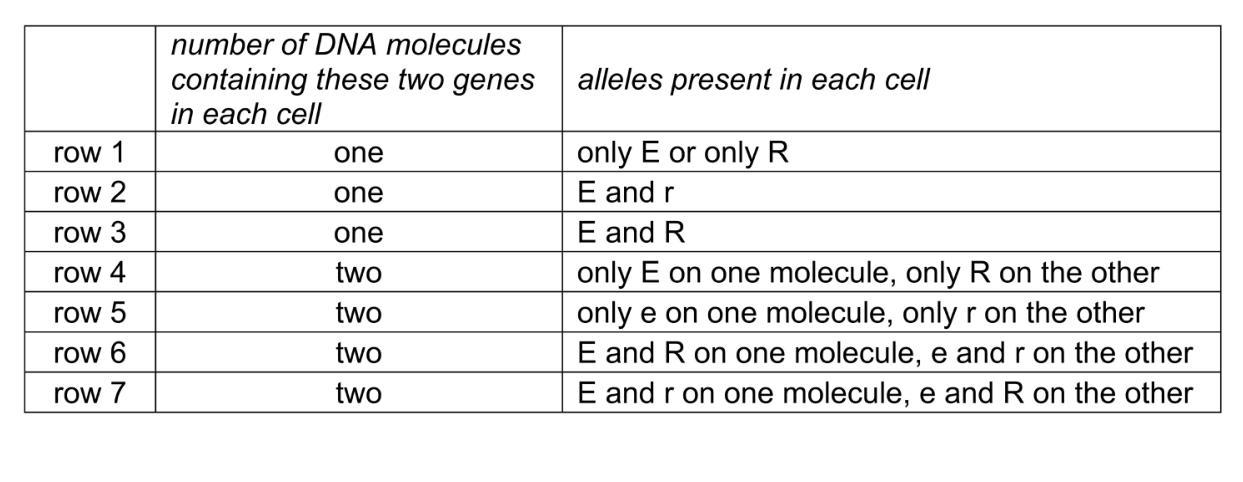
An organism is heterozygous for two genes. These two genes make up part of the same DNA molecule.
For one gene, E represents the dominant allele, e represents the recessive allele. For the other gene, R represents the dominant allele, r represents the recessive allele. Assuming there is no mutation, at the end of a mitotic division producing two cells which row(s) is/are possible?
heterozygous (allele မတူ)၊ homozygous (allele တူ)စကားလုံး နှစ်ခု အရင် — heterozygous (ဟက်တရိုဇိုင်းဂပ်စ်) ဆိုတာ gene တစ်ခုအတွက် allele နှစ်ခု မတူ (E နဲ့ e)။ နှစ်ခု တူရင် (EE သို့ ee) homozygous (allele တူ နှစ်ခု) လို့ ခေါ်တယ်။
E, R = dominant၊ e, r = recessive။E (စာလုံးကြီး) က dominant allele၊ e (စာလုံးသေး) က recessive allele (အပေါ်က 🔎 ကတ်)။ R နဲ့ r လည်း ဒီလိုပဲ။ ဒီ မေးခွန်းမှာ dominant ဘယ်ဟာလဲ ဆိုတာ အဖြေကို မပြောင်းဘူး — gene ဘယ် molecule ပေါ် ရှိလဲ ဆိုတာပဲ အရေးကြီးတယ်။
E R က DNA molecule တစ်ခုတည်းပေါ် (linked)၊ e r က သူ့ homologous အဖော်ပေါ်မှာ ရှိတယ်။ mitosis က chromosome တိုင်းကို ကူးပေးတယ်။
✍️ gene နှစ်ခုက chromosome တစ်ချောင်းရဲ့ DNA molecule တစ်ခုတည်းပေါ်မှာ — linked။ heterozygous ဆိုတော့ homologous နှစ်ချောင်း၊ ဥပမာ E R တစ်ချောင်း၊ e r တစ်ချောင်း (parent)
mitosis က chromosome တိုင်းကို ကူးပြီး cell တိုင်းကို တစ်စုံစီ ပေးတယ် — cell တစ်လုံးစီမှာ ဒီ gene နှစ်ခု ပါတဲ့ DNA molecule 2 ခု (2 DNA molecules each — homologous တစ်ချောင်းစီ)
allele တွေ E R / e r စီထားရင် → row 6 ✓
မေးခွန်းက ဘယ်လို စီထားလဲ မပြောလို့ E r / e R ဖြစ်နိုင်တယ် → row 7 ✓ ဒါကြောင့် rows 6 and 7 only — အဖြေ E
rows 1–3 one molecule ✗ — gamete လို copy တစ်ခုပဲ။rows 1–3 က ဒီ gene နှစ်ခု ပါတဲ့ molecule တစ်ခု (one molecule) ပဲ ပြတယ် ✗။ rows 2–3 က gamete မှာပဲ ဖြစ်နိုင်တယ် — gamete က homologous အတွဲ တစ်တွဲစီကနေ chromosome တစ်ချောင်းပဲ ရလို့ ဒီ chromosome အတွက် DNA molecule တစ်ခုပဲ ပါတယ်။ gamete တစ်ခုလုံးမှာတော့ လူ့ဆိုရင် chromosome 23 ချောင်း — DNA molecule 23 ခု ရှိတယ်။
row 1 — ဘယ်တော့မှ မဖြစ်။row 1 (only E or only R) ကတော့ ဘယ်တော့မှ မဖြစ်ဘူး — E နဲ့ R က molecule တစ်ခုတည်းပေါ်မှာ။
rows 4–5 — 2 alleles missing။rows 4–5 က molecule တစ်ခုစီမှာ allele တစ်ခုပဲ ထားတယ် (E | R ဒါမှမဟုတ် e | r)။ ကျန် allele နှစ်ခု ပျောက်နေတယ် (2 alleles missing)။
molecule တိုင်း gene ၂ ခုလုံး ပါရ — rows 4–5 ✗။gene နှစ်ခုလုံးက molecule တစ်ခုတည်းပေါ်မှာ ရှိလို့ molecule တိုင်းမှာ gene နှစ်ခုလုံး ပါရမယ် — rows 4–5 မဖြစ်နိုင်ဘူး ✗
Map units — recombinant % နဲ့ တိုင်း
test cross (aabb နဲ့ စမ်း မိတ်လိုက်ခြင်း) — AaBb × aabb။genes A and B ကြား ဘယ်လောက် ဝေးလဲ တိုင်းဖို့ test cross (aabb နဲ့ စမ်း မိတ်လိုက်ခြင်း) လုပ်တယ် — AaBb ကို aabb နဲ့ မိတ်လိုက်တာ။
aabb က a b ပဲ — ကလေးက gametes ကို တိုက်ရိုက် ပြ။aabb က a b ပဲ ပေးလို့ ကလေး တစ်ကောင်ချင်းက AaBb မိဘ ပေးတဲ့ gametes ကို တိုက်ရိုက် ပြတယ် (သင်ခန်းစာ 35)။
test cross ဘာလို့ သုံးလဲ — AaBb မိဘက gamete လေးမျိုး (AB, Ab, aB, ab) ထုတ်နိုင်တယ်။ aabb မိဘကတော့ ab gamete တစ်မျိုးတည်းပဲ ထုတ်တယ်။
ကလေး တစ်ကောင်ချင်း gamete တစ်ခုစီ ရလို့ aabb ဘက်က အမြဲ ab၊ recessive allele တွေ ချည်းပဲ — ဘာ လက္ခဏာမှ မဖုံးဘူး။ ဒါကြောင့် ကလေးရဲ့ ပုံက AaBb ဆီက ရတဲ့ gamete ကို တိုက်ရိုက် ပြတယ်။
500 offspring — AB 225, ab 225, Ab 25, aB 25။ကလေး 500 (500 offspring) မှာ AB 225၊ ab 225 က မိဘ ပုံစံ၊ Ab 25 နဲ့ aB 25 က crossing over ကြောင့် ပေါ်လာတဲ့ ပုံစံ။
Ab နဲ့ aB ပေါင်း recombinant 50 ကောင်။
🎮 Parental or recombinant gamete? — sort fast 🔥
recombinant % = 50500 × 100 = 10 % = recombination frequency (ပြန်ပေါင်း နှုန်း)recombinant % = 50500 × 100 = 10 %။ ဒီ % ကို recombination frequency (ပြန်ပေါင်း နှုန်း) လို့ ခေါ်တယ်။
1 % = 1 map unit (မြေပုံ အကွာ ယူနစ်) — A–B 10။recombinant 1 % ကို 1 map unit (gene မြေပုံ အကွာ ယူနစ်၊ centimorgan cM) လို့ သတ်မှတ်တယ်။ ဒါကြောင့် A နဲ့ B က 10 map units ဝေးတယ်။ IMAT က ဒီ % ကို crossover value (COV) လို့လည်း ခေါ်တယ်။ ဒီ ပေတံက နီးတဲ့ gene တွေမှာ အမှန်ဆုံး — ဝေးရင် crossover နှစ်ခါ ဖြစ်တာ မမြင်ရလို့ % က နည်းပြတယ် (ဒီ PART ရဲ့ နောက်ဆုံး ကတ်)။
never above 50 % — ဘာလို့လဲ?test cross တစ်ခုမှာ တိုင်းတဲ့ recombinant % က 50 ထက် ဘယ်တော့မှ မကျော်ဘူး (never above 50 %)။ ဘာလို့လဲ — gene နှစ်ခု chromosome မတူရင် ဘာဖြစ်မလဲ ကြည့်ပါ။
chromosome မတူတဲ့ gene နှစ်ခုဆိုရင် independent assortment ကြောင့် gamete လေးမျိုး တူညီ ထွက်တယ် — 1 : 1 : 1 : 1၊ တစ်မျိုး 25 % စီ။
recombinant Ab + aB = 25 + 25 = 50 %။ ချိတ်ထားတဲ့ gene တွေက တွဲပါ (together) တတ်လို့ ဒီထက် အမြဲ နည်းတယ် — ဒါကြောင့် 50 % က အများဆုံး။
အရမ်း ဝေးရင် independent assortment လို — 50 %။အရမ်း ဝေးရင် chromosome မတူတဲ့ gene လို independent assortment ဖြစ်သလိုပဲ — 50 % မှာ ရပ်တယ်။ ဒါကြောင့် recombinant 50 % တွေ့ရင် chromosome မတူတာ ဒါမှမဟုတ် chromosome တူပေမဲ့ အရမ်း ဝေးတာ — နှစ်မျိုးလုံး ဖြစ်နိုင်တယ်။ map ကတော့ 50 မှာ မရပ်ဘူး — A–B 40၊ B–C 40 ဆို A–C map က 80 units၊ A–C တိုက်ရိုက် တိုင်းရင်တော့ 50 % ထက် မကျော်ဘူး။
💡 မှတ်နည်း — ပေတံလိုပဲ — နီးတဲ့ gene တွေမှာ recombinant 1 % က map unit 1 ခု။ 10 % ဆိုရင် 10 units ဝေးတယ်။ တစ်ခါ တိုင်းတဲ့ % က 50 မကျော်ပေမဲ့ map က တိုတဲ့ အကွာတွေ ပေါင်းလို့ 50 ထက် ရှည်နိုင်တယ်။
🤔 In a new test cross, 30 of 200 offspring are recombinant. The distance between the two genes is:
🔍 မေးခွန်း ဖြည်မယ်
30 of 200 offspring = ကလေး 200 ထဲက 30။ are recombinant = recombinant ဖြစ်တယ်။ the distance between the two genes = gene နှစ်ခုကြား အကွာအဝေး။
မေးနေတာ — recombinant ကို % ပြောင်းပြီး map units နဲ့ အကွာအဝေး ဘယ်လောက်လဲ။
recombinant % = 30200 × 100 = 15 % = 15 map units (cM)။
30 က အကောင် အရေအတွက်၊ 85 က parental %။
Gene အစဉ် ရှာနည်း — အဆင့် သုံးဆင့်
📝 IMAT 2018 · Question 32
The genes P, Q, R and S occur on the same chromosome. The COV (crossover values) for the pairs of genes are:
P and Q 35%
P and R 5%
R and Q 40%
Q and S 10%
R and S 30%
Which one of the following sequences of letters represents a correct order of genes on the chromosome?
A–C 14 အကြီးဆုံး — A, C ကို ends မှာ ထား။gene သုံးခု ဥပမာ — A–B 10, B–C 4, A–C 14 map units။ အဆင့် 1: အကြီးဆုံး တန်ဖိုး (A–C 14) ရဲ့ gene နှစ်ခုကို မျဉ်းရဲ့ အစွန်း နှစ်ဖက် (ends) မှာ ထားတယ်။
အဆင့် 2: B ကို A ကနေ 10 မှာ ထားတယ်။
အဆင့် 3: ကျန်တာ စစ်ကြည့် — B–C = 14 − 10 = 4 ✓။ B က အလယ် (middle) မှာ — အစဉ်က A — B — C။
💡 မှတ်နည်း — မြို့ သုံးမြို့ လမ်းတစ်လျှောက် — အဝေးဆုံး နှစ်မြို့က လမ်းရဲ့ အစနဲ့ အဆုံး၊ ကျန် မြို့က ကြားမှာ။ gene map လည်း ဒီလိုပဲ။
✍️ အကြီးဆုံး COV က R–Q 40 → R နဲ့ Q က အစွန်း နှစ်ဖက်။ R = 0၊ Q = 40
P–R 5 → P = 5
R–S 30 → S = 30
စစ်: P–Q = 40 − 5 = 35 ✓၊ Q–S = 40 − 30 = 10 ✓ → RPSQ (အဖြေ C)
🤔 Four genes P, Q, R and S are on the same chromosome. P to Q = 33, Q to R = 8, R to S = 15, P to S = 10, P to R = 25. The sequence of the genes is: (IMAT 2011 Q51)
🔍 မေးခွန်း ဖြည်မယ်
P to Q = 33 = P နဲ့ Q ကြား 33 (crossover value)။ on the same chromosome = chromosome တစ်ချောင်းတည်းပေါ်မှာ။ The sequence of the genes = gene တွေရဲ့ အစဉ်။
မေးနေတာ — ဂဏန်း ငါးခုကို သုံးပြီး gene လေးခုကို မျဉ်းပေါ် ဘယ်အစဉ်နဲ့ ချရမလဲ။
အကြီးဆုံး P–Q 33 → P = 0၊
Q = 33။
P–S 10 → S = 10။
P–R 25 → R = 25။
စစ်: R–S = 15 ✓၊
Q–R = 8 ✓။
အစဉ် P S R Q။
crossover နှစ်ခါ — double crossover
A B C ဝေးဝေး — အမေ A B C၊ အဖေ a b c။gene သုံးခု A B C က chromosome တစ်ချောင်းပေါ် ဝေးဝေး ရှိတယ် ဆိုပါစို့။ အမေ့ဘက်မှာ A B C၊ အဖေ့ဘက်မှာ a b c။
double crossover (နှစ်ခါ ဖြတ်ကူးခြင်း)A နဲ့ C ကြား ဝေးလို့ crossover တစ်ခါမက ဖြစ်နိုင်တယ် — A–B ကြား တစ်ခါ၊ B–C ကြား တစ်ခါ။ ဒါကို double crossover (နှစ်ခါ ဖြတ်ကူးခြင်း) လို့ ခေါ်တယ်။
လဲ ပြီး ပြန် လဲ — A b C နဲ့ a B c။ပထမ ဖြတ်ကူးမှာ အပိုင်း လဲ၊ ဒုတိယ ဖြတ်ကူးမှာ ပြန် လဲလို့ ရလဒ်က A b C နဲ့ a B c။ အစဉ်လိုက် — before: A B C / a b c → after: A b C / a B c။ အစွန်း A နဲ့ C က မိဘ အတိုင်း၊ အလယ်က B ပဲ လဲသွားတယ်။
🤔 Genes P and R are far apart on one chromosome. In some meioses two crossovers happen between them. Predict: the measured P–R recombination frequency will be…
🔍 မေးခွန်း ဖြည်မယ်
far apart = ဝေးဝေး။ In some meioses = meiosis တချို့မှာ။ two crossovers happen between them = သူတို့ကြား crossover နှစ်ခါ ဖြစ်တယ်။ measured = တိုင်းလို့ ရတဲ့။ true distance = တကယ့် အကွာအဝေး။
မေးနေတာ — crossover နှစ်ခါ ရှိရင် တိုင်းတဲ့ % က တကယ့် အကွာအဝေးနဲ့ ယှဉ်ရင် ဘယ်လို ဖြစ်မလဲ။
crossover နှစ်ခါ ဖြစ်ရင် P နဲ့ R မိဘ ပုံစံ (parental) အတိုင်း ပြန် တွဲသွားလို့ recombinant အဖြစ် မရေမိဘူး — တိုင်းတဲ့ % က တကယ့် အကွာအဝေးထက် နည်းတယ်။
ဒါကြောင့် နီးတဲ့ gene တွေ ပေါင်းပြီး map ဆွဲတယ်။
A, C ပဲ ကြည့်ရင် parental — % နည်းပြ။A နဲ့ C ကိုပဲ ကြည့်ရင် A က C နဲ့ တွဲလျက် — မိဘ ပုံစံ (parental)။ crossover နှစ်ခါ ဖြစ်ခဲ့တာ မမြင်ရဘူး။ ဒါကြောင့် ဝေးတဲ့ gene နှစ်ခုရဲ့ recombinant % က တကယ့် အကွာအဝေးနဲ့ အတိအကျ (exactly) မတူဘဲ နည်းပြတယ်။
three-point cross — A–B + B–C ပိုမှန်။အလယ်က gene B ကိုပါ စစ်မှ (three-point cross) double crossover ကို တွေ့တယ်။ ဒါကြောင့် map ကို နီးတဲ့ gene တွေ ပေါင်းပြီး ဆွဲတယ် — A–B + B–C က A–C တိုက်ရိုက် တိုင်းတာထက် ပိုမှန်တယ်။
💡 မှတ်နည်း — လမ်းမှာ နှစ်ခါ ကွေ့ပြန် လှည့်ရင် မူလ ဦးတည်ရာ ပြန်ရောက်တယ် — crossover နှစ်ခါ ဖြစ်ရင် A နဲ့ C ပြန် တွဲနေလို့ မမြင်ရဘူး။
👤 လူပုဂ္ဂိုလ်များ
1913 Sturtevant — recombinant % နဲ့ ပထမဆုံး chromosome map ဆွဲခဲ့တယ်။
🔁 ပြန်စစ်မယ် — အဖြေ မကြည့်ခင် စဉ်းစားပါ
🤔 Two genes are 8 map units apart. In a test cross with 400 offspring, about how many offspring are recombinant?
🔍 မေးခွန်း ဖြည်မယ်
8 map units apart = 8 map units ဝေးတယ်။ a test cross with 400 offspring = ကလေး 400 ရတဲ့ test cross။ about how many = အကြမ်းအားဖြင့် ဘယ်နှကောင်။
မေးနေတာ — 8 map units ကို % ပြန်ပြောင်းပြီး ကလေး 400 ထဲက recombinant ဘယ်နှကောင်လဲ။
8 map units = recombinant 8 %။
400 ရဲ့ 8 % = 400 × 8100 = 32။
8 က % ကို အကောင် အရေအတွက်လို့ ယူမိတာ၊ 368 က parental အကောင်တွေ။
🤔 After ovulation, at which stage does the secondary oocyte wait for a sperm?
🔍 မေးခွန်း ဖြည်မယ်
After ovulation = ovary က လွှတ်ပြီးနောက်။ at which stage = ဘယ် အဆင့်မှာ။ wait for a sperm = sperm ကို စောင့်နေတယ်။
မေးနေတာ — လွှတ်ပြီးတဲ့ secondary oocyte က meiosis ရဲ့ ဘယ် အဆင့်မှာ ရပ်စောင့်လဲ။
prophase I မှာ ရပ်တာက primary oocyte (မမွေးခင်ကနေ ovulation မတိုင်ခင်ထိ)။
ovulation ပြီး secondary oocyte က metaphase II မှာ ရပ်စောင့်ပြီး sperm ဝင်မှ meiosis II ဆုံးတယ် (PART 1)။
🤔 In amniocentesis, which cells are used to make the karyotype?
🔍 မေးခွန်း ဖြည်မယ်
which cells are used = ဘယ် cells ကို သုံးလဲ။ to make the karyotype = karyotype ဆောက်ဖို့။
မေးနေတာ — ရေမွှာရည် ထုတ်စစ်ခြင်းမှာ chromosome ဓာတ်ပုံ ရိုက်ဖို့ ဘယ်သူ့ cells ကို ယူလဲ။
amniocentesis က ရေမွှာရည် (amniotic fluid) ကို ယူတာ — ထဲမှာ ကလေးဆီက ကျွတ်ကျတဲ့ fetal cells ပါတယ်။
placenta အစ ယူတာက CVS။
polar bodies က ovulation ဝန်းကျင်မှာပဲ ရှိပြီး ပျက်သွားတယ်။
🤔 Non-disjunction happens in meiosis I of a primary oocyte. The egg is fertilised by a normal sperm. How many chromosomes can the zygote have?
🔍 မေးခွန်း ဖြည်မယ်
happens in meiosis I = meiosis I မှာ ဖြစ်တယ်။ is fertilised by a normal sperm = ပုံမှန် sperm နဲ့ ပေါင်းတယ်။ can … have = ရှိနိုင်တယ်။
မေးနေတာ — မှားတဲ့ egg နဲ့ ပုံမှန် sperm ပေါင်းရင် zygote မှာ chromosome ဘယ်နှချောင်း ဖြစ်နိုင်လဲ။
meiosis I မှာ မခွဲရင် egg က n + 1 (24) ဒါမှမဟုတ် n − 1 (22)။
sperm 23 နဲ့ ပေါင်းရင် 47 (trisomy) ဒါမှမဟုတ် 45 (monosomy)။
69 က အစုံ တစ်စုံလုံး ပိုမှ (triploidy)။
🤔 A human egg did not halve its chromosomes in meiosis, so it carries two complete sets. A normal sperm fertilises it. The zygote has…
🔍 မေးခွန်း ဖြည်မယ်
did not halve its chromosomes = chromosome ကို တစ်ဝက် မလျှော့ခဲ့ဘူး။ two complete sets = အစုံ နှစ်စုံ အပြည့် (2 × 23)။ a normal sperm = ပုံမှန် sperm (23)။ The zygote has… = zygote မှာ … ရှိတယ်။
မေးနေတာ — egg ရဲ့ chromosome နဲ့ sperm ရဲ့ chromosome ပေါင်းပြီး ဂဏန်း နဲ့ အခြေအနေ နာမည် ရှာပါ။
egg 46 (2 × 23) + sperm 23 = 69 = 3 × 23 — chromosome အစုံ သုံးစုံ၊ triploidy (polyploidy တစ်မျိုး)။
trisomy က chromosome တစ်ချောင်းပဲ ပို (47)၊ 46 က egg ပုံမှန် ဆိုမှ၊ 92 က အစုံ လေးစုံ (4n) ဆိုမှ။
🤔 In spermatogenesis, which cell is the first haploid cell?
🔍 မေးခွန်း ဖြည်မယ်
In spermatogenesis = sperm ဖြစ်စဉ်ထဲမှာ။ the first haploid cell = n ဖြစ်တဲ့ ပထမဆုံး cell။
မေးနေတာ — sperm ဖြစ်စဉ်မှာ chromosome အစုံ တစ်စုံ (n) ပဲ ကျန်တဲ့ ပထမ cell က ဘယ်ဟာလဲ။
meiosis I ပြီးတာနဲ့ haploid — secondary spermatocyte (n)။
spermatogonium နဲ့ primary spermatocyte က 2n၊ zygote က fertilisation ပြီးလို့ 2n။
🤔 A zygote has 45 chromosomes because one autosome is missing. This is called…
🔍 မေးခွန်း ဖြည်မယ်
because = … ကြောင့်။ one autosome is missing = ခန္ဓာ chromosome တစ်ချောင်း မပါဘူး။ This is called… = ဒါကို … လို့ ခေါ်တယ်။
မေးနေတာ — chromosome တစ်ချောင်း လိုနေတဲ့ အခြေအနေရဲ့ နာမည် ဘာလဲ။
chromosome တစ်ချောင်း လိုတာ monosomy (n − 1 gamete + n gamete)။
trisomy က တစ်ချောင်း ပို၊ triploidy က အစုံ တစ်စုံလုံး ပို၊ mosaicism က cell နှစ်မျိုး ရော။
🤔 The karyotype 47,XXY belongs to a person with…
🔍 မေးခွန်း ဖြည်မယ်
belongs to a person with… = … ရှိတဲ့ လူရဲ့ ဟာ။ XXY = X နှစ်ချောင်းနဲ့ Y တစ်ချောင်း။
မေးနေတာ — Y ပါပြီး X တစ်ချောင်း ပိုနေတဲ့ အခြေအနေရဲ့ နာမည် ဘာလဲ။
X တစ်ချောင်း ပိုပါတဲ့ ယောက်ျား — Klinefelter။
Turner က 45,X၊ Down က +21၊ Patau က +13။
🤔 When ordering genes from crossover values, the two genes with the largest value go…
🔍 မေးခွန်း ဖြည်မယ်
When ordering genes = gene တွေကို အစဉ်လိုက် စီတဲ့အခါ။ from crossover values = crossover value (COV) ဂဏန်းတွေကနေ။ the largest value = အကြီးဆုံး ဂဏန်း။ go… = … မှာ ထားရတယ်။
မေးနေတာ — COV အကြီးဆုံး gene နှစ်ခုကို မျဉ်းပေါ် ဘယ်နေရာမှာ ထားရမလဲ။
အကြီးဆုံး တန်ဖိုး = အဝေးဆုံး — အစွန်း နှစ်ဖက်။
ကျန်တာကို ကြားထဲ ဖြည့်ပြီး စစ်တယ်။