From gene to protein (1)
DNA ဆိုတဲ့ ဟင်းချက်နည်း စာအုပ်က nucleus ထဲက ဘယ်တော့မှ မထွက်ဘူး။ ဒါပေမဲ့ cell က insulin လို protein တွေကို အပြင်မှာ ချက်တယ်။ မိတ္တူ (mRNA)၊ စကားပြန် (tRNA) နဲ့ မီးဖိုချောင် (ribosome) ဘယ်လို ပူးပေါင်းလဲ ကြည့်မယ်။
From DNA to protein: the map
DNA ကနေ protein အထိ — လမ်းကြောင်း မြေပုံ
သော့ခတ်ထားတဲ့ ဟင်းချက်နည်း စာအုပ်
library ထဲ ဟင်းချက်နည်း စာအုပ်ကြီး သော့ခတ်ထား — မထုတ်ရ။ဆိုပါစို့ — စာကြည့်တိုက် (library) ထဲမှာ အဖိုးတန် ဟင်းချက်နည်း စာအုပ်ကြီး တစ်အုပ် သော့ခတ် ထားတယ်။ အပြင် ထုတ်ခွင့် မရှိဘူး။
cell ထဲမှာ စာအုပ် = DNA၊
library = nucleus။cell (ဆဲလ်) ထဲမှာ ဒီ စာအုပ်က DNA ပါ။
စာကြည့်တိုက်ကတော့ nucleus (cell ရဲ့ ဗဟို အခန်း) ပါ။
လိုတဲ့ စာမျက်နှာကိုပဲ copy ကူးယူ — ဒီ မိတ္တူ = mRNA။ဟင်းချက်ချင်ရင် ဘာလုပ်မလဲ? လိုတဲ့ စာမျက်နှာ တစ်ရွက်ကိုပဲ မိတ္တူ (copy) ကူးပြီး ယူထွက်မယ်။ cell ရဲ့ ဒီ မိတ္တူကို mRNA လို့ ခေါ်တယ်။
kitchen = ribosome — amino acid ဆက်ပြီး protein ကြိုး လုပ်။မီးဖိုချောင် (kitchen) က ribosome ပါ။ အဲဒီမှာ မိတ္တူကို ဖတ်ပြီး amino acid ပုတီးစေ့တွေကို တစ်လုံးချင်း ဆက်ကာ ကြိုး (chain) တစ်ချောင်း လုပ်တယ်။ အဲဒီ ကြိုးက protein ပါ။
4 letters နဲ့ amino acid 20 မျိုး ဘယ်လို ရေးလဲ? 39B မှာ။ဒါပေမဲ့ ပဟေဠိ တစ်ခု ရှိတယ်။ DNA စာမှာ စာလုံး 4 လုံး (4 letters) ပဲ ရှိပြီး amino acid က 20 မျိုး ရှိတယ်။ စာလုံး 4 လုံးနဲ့ 20 မျိုးကို ဘယ်လို ရေးလဲ? နောက် သင်ခန်းစာ 39B မှာ ဖြေမယ်။
💡 မူရင်း DNA က library မှာ၊ မိတ္တူ mRNA ပဲ kitchen သွား။💡 မှတ်နည်း — မူရင်း စာအုပ် (DNA) က library ထဲမှာပဲ နေတယ်၊ မိတ္တူ (mRNA) ပဲ kitchen ကို သွားတယ်။ ဆရာဝန် ဆေးစာ မူရင်း မပေးဘဲ မိတ္တူ ပေးသလိုပဲ။
DNA → RNA → protein — ခရီး နှစ်ဆင့်
protein ချက်နည်း ပါတဲ့ DNA အပိုင်း = gene (ဗီဇ)cell ထဲကို ဝင်ကြည့်မယ်။ DNA က nucleus ထဲမှာ နေတယ်။ protein တစ်ခုရဲ့ ချက်နည်း ပါတဲ့ DNA အပိုင်း တစ်ပိုင်းကို gene (ဗီဇ) လို့ ခေါ်တယ်။ DNA ကြိုးရှည် တစ်ချောင်းကို chromosome (ခရိုမိုဆုမ်း) လို့ ခေါ်ပြီး gene က အဲဒီ chromosome ပေါ်က အပိုင်းလေး တစ်ပိုင်းပါ။
RNA အဖြစ် ကူးရေး = transcription (ကူးရေးခြင်း) → mRNAပထမ အဆင့် — gene ရဲ့ စာကို RNA စာအဖြစ် ကူးရေးတယ်။ ဒါကို transcription (ကူးရေးခြင်း) လို့ ခေါ်ပြီး ထွက်လာတာက mRNA ပါ။ စာမေးပွဲက “DNA is read and the corresponding (ကိုက်ညီတဲ့) mRNA is produced (ထုတ်လုပ်)” လို့ ရေးတယ်။
mRNA က nuclear pore ကနေ cytoplasm ထဲ ထွက်လာတယ်။mRNA က nucleus နံရံက အပေါက်လေး (nuclear pore) ကနေ cytoplasm (cell ရည်) ထဲ ထွက်လာတယ်။ DNA စာအုပ်ကတော့ nucleus ထဲမှာပဲ ကျန်ခဲ့တယ်။
ribosome ဖတ် ဆက် = translation (ဘာသာပြန်ခြင်း) → proteinဒုတိယ အဆင့် — ribosome က mRNA ကို ဖတ်ပြီး amino acid တွေကို ကြိုး ဆက်တယ်။ ဒါကို translation (ဘာသာပြန်ခြင်း) လို့ ခေါ်ပြီး ထွက်လာတာ protein ပါ။
📖 mRNA is read and converted into a specific sequence of amino acids။စာမေးပွဲက translation ကို “mRNA is read and converted (ပြောင်းလဲ) into a specific (သတ်မှတ်ထားတဲ့) sequence (အစီအစဉ်) of amino acids” လို့ ရေးတယ်။ ဒီ ခရီး တစ်ခုလုံးကို protein synthesis (protein ဆောက်ခြင်း) လို့ ခေါ်တယ်။
💡 မှတ်စု ကူး (transcription) ပြီးမှ ဘာသာ ပြန် (translation)။💡 မှတ်နည်း — ကျောင်းမှာ ဆရာ့ မှတ်စုကို ကူး (transcription) ပြီးမှ အိမ်မှာ ကိုယ့် ဘာသာစကားနဲ့ ပြန် (translation) သလိုပဲ — ကူး အရင်၊ ပြန် နောက်။
Crick ရဲ့ central dogma — ဘာသာ တူ၊ ဘာသာ သစ်
DNA → RNA → protein = central dogma (ဗဟို စည်းမျဉ်း)DNA → RNA → protein ဆိုတဲ့ ဒီ လမ်းကြောင်းကို Francis Crick (ဖရန်စစ် ခရစ်၊ 1916–2004) က 1958 မှာ central dogma (ဗဟို စည်းမျဉ်း) လို့ နာမည်ပေးခဲ့တယ်။
Crick က Watson နဲ့ double helix ရှာတွေ့ခဲ့တဲ့ ပညာရှင်။Crick က DNA double helix (နှစ်ချောင်းကျစ် ကြိုး) ကို Watson နဲ့ အတူ ရှာတွေ့ခဲ့တဲ့ ဗြိတိန် ပညာရှင်ပါ (သင်ခန်းစာ 38A)။
transcription — ATG → AUG၊ same language။နာမည် နှစ်ခု မရောအောင် — transcription မှာ nucleotide စာလုံး (ATG) ကနေ nucleotide စာလုံး (AUG) ပဲ ကူးလို့ ဘာသာ တူတယ် (same language)။
translation — AUG → Met၊ new language။translation မှာတော့ nucleotide စာလုံး (AUG) ကနေ amino acid (Met) ဘာသာကို ပြောင်းလို့ ဘာသာ သစ် (new language) — ဘာသာပြန်တာနဲ့ တူတယ်။ ဒါကြောင့် translation က transcription နဲ့ similar (ဆင်တူ) မဟုတ်ဘူး — လုပ်တဲ့ စက်ရော ထွက်ကုန်ရော မတူဘူး။
central dogma မှာ ခြွင်းချက် တစ်ခု ရှိတယ်။ HIV လို retrovirus (သင်ခန်းစာ 30A) တွေက သူတို့ RNA ကို DNA အဖြစ် ပြန်ကူးတယ်။
ဒီ ပြောင်းပြန် ကူးတာကို reverse transcription လို့ ခေါ်ပြီး လုပ်တဲ့ enzyme က reverse transcriptase ဖြစ်တယ်။ protein ကနေ RNA ဒါမှမဟုတ် DNA ကို ပြန်ကူးတာကတော့ ဘယ်တော့မှ မဖြစ်ဘူး။
ဘယ်မှာ ဖြစ်လဲ — eukaryote နဲ့ prokaryote
🤔 In protein synthesis, what is translation? (IMAT 2024 Q24)
🔍 မေးခွန်း ဖြည်မယ်
protein synthesis = protein ဆောက်ခြင်း။ what is translation = translation ဆိုတာ ဘာလဲ။
option တွေမှာ converted into = အဖြစ် ပြောင်း၊
corresponding = ကိုက်ညီတဲ့၊
produced = ထုတ်လုပ်။
မေးနေတာ — translation မှာ ဘာကို ဖတ်ပြီး ဘာ ထွက်လာလဲ ဖော်ပြတဲ့ စာကြောင်း မှန်ကို ရွေးပါ။
translation က mRNA ကို ဖတ်ပြီး amino acid အစဉ် အဖြစ် ပြောင်းတာ ဖြစ်တယ်။
DNA ကို ဖတ်ပြီး mRNA ထုတ်တာက transcription ပါ။
mRNA ကနေ DNA ပြန်ကူးတာ translation မဟုတ်ဘူး။
anticodon က mRNA codon နဲ့ တွဲတာပါ၊ DNA နဲ့ မဟုတ်ဘူး။
eukaryote (nucleus ရှိ cell) — ကူး nucleus၊ ပြန် cytoplasm။nucleus ရှိတဲ့ cell (လူ၊ အပင်၊ မှို) ကို eukaryote (nucleus ရှိ cell) လို့ ခေါ်တယ်။ eukaryote မှာ transcription က nucleus ထဲ၊ translation က cytoplasm ထဲက ribosome ပေါ်မှာ ဖြစ်တယ်။ mitochondria၊ Golgi apparatus (protein ထုပ်ပိုး ပို့တဲ့ အခန်း) လို တခြား အခန်းတွေ ရှိပေမဲ့ gene အများစုရဲ့ transcription occurs (ဖြစ်) in the nucleus။ mitochondria ကတော့ သူ့ ကိုယ်ပိုင် DNA အနည်းငယ်ကို သူ့ထဲမှာ ကူးတယ်။
prokaryote (nucleus မရှိ cell) — no nucleus၊ DNA လွတ်လွတ်။bacteria လို prokaryote (nucleus မရှိ cell) မှာတော့ nucleus မရှိဘူး (no nucleus)။ DNA ကွင်းက cytoplasm ထဲမှာ လွတ်လွတ် နေတယ်။ အပြင်က plasma membrane (cell အမြှေး) နဲ့ cell wall (cell နံရံ) ဝန်းထားပြီး တချို့မှာ ကူးခတ်တဲ့ အမြီး flagellum (ကြိမ်မြီး) ရှိတယ်။ ribosome တွေကတော့ cytoplasm ထဲမှာ။
🤔 In a prokaryote, transcription can occur in which of the following?
1. cytoplasm
2. mitochondria
3. ribosomes
(IMAT 2015 Q24)
🔍 မေးခွန်း ဖြည်မယ်
prokaryote = nucleus မရှိ cell (bacteria)။ can occur in = ဘယ်နေရာမှာ ဖြစ်နိုင်လဲ။ which of the following = အောက်က 1, 2, 3 ထဲက ဘယ်ဟာလဲ။
မေးနေတာ — bacteria မှာ DNA ကို RNA ကူးတာ ဘယ်နေရာ(တွေ)မှာ ဖြစ်လဲ — ဖြစ်တဲ့ နံပါတ်တွေကိုပဲ ရွေးပါ။
prokaryote မှာ nucleus မရှိလို့ DNA ရှိတဲ့ cytoplasm ထဲမှာ ကူးရေးတယ်။
mitochondria က prokaryote မှာ လုံးဝ မရှိဘူး။
ribosome က translation လုပ်တဲ့ နေရာပါ၊ transcription မဟုတ်ဘူး။
prokaryote ရဲ့ transcription က cytoplasm ထဲမှာပဲ။ဒါကြောင့် prokaryote ရဲ့ transcription က cytoplasm ထဲမှာပဲ ဖြစ်တယ်။ ကန့်ထားတဲ့ နံရံ မရှိဘူး။
🤔 What is the primary site of protein translation in prokaryotic cells? (IMAT 2026 Q14)
🔍 မေးခွန်း ဖြည်မယ်
primary site = အဓိက နေရာ။ prokaryotic cells = nucleus မရှိ cell တွေ။
option မှာ plasma membrane = cell အမြှေး၊
flagellum = ကူးခတ်တဲ့ အမြီး၊
between … and = ကြားမှာ။
မေးနေတာ — bacteria မှာ mRNA ကို protein အဖြစ် ဘာသာပြန်တာ ဘယ်မှာ အဓိက ဖြစ်လဲ။
translation ကို ribosome က လုပ်ပြီး prokaryote ရဲ့ ribosome တွေက cytoplasm ထဲမှာ ရှိတယ်။
prokaryote မှာ nucleus မရှိဘူး။
flagellum က ကူးခတ်တဲ့ အမြီး၊ membrane နဲ့ cell wall ကြားမှာ ribosome မရှိဘူး။
ကူးမပြီးခင် ribosome ကပ် — at once ဖြစ်တယ်။mRNA ကူးလို့ မပြီးသေးခင်ကတည်းက ribosome တွေ လာကပ်ပြီး translation စတယ်။ ကူးရေးတာနဲ့ ဘာသာပြန်တာ တစ်ပြိုင်နက် (at once) ဖြစ်တယ်။ translation က prokaryote မှာရော eukaryote မှာရော ဖြစ်လို့ exclusively (သီးသန့်) eukaryotic မဟုတ်ဘူး။
ထောင်ချောက် — prokaryote မှာ mitochondria မရှိ။ထောင်ချောက် — prokaryote မှာ mitochondria မရှိဘူး။ ribosome ကလည်း translation ပဲ လုပ်တယ်၊ transcription မလုပ်ဘူး။
🎮 Transcription or translation? — sort fast 🔥
👉 gene တစ်ခုက protein ဘယ်နှခု ထုတ်လဲ? မှိုလေးက ဖြေ။👉 gene တစ်ခုက protein ဘယ်နှစ်ခု ထုတ်လဲ? ဒါကို မှိုလေး တစ်မျိုးက ဖြေပေးခဲ့တယ်။
Beadle နဲ့ Tatum — မှိုလေးနဲ့ စမ်းသပ်ချက်
gene တစ်ခု ဘာ ထုတ်လဲ — 1941 မှာ မှိုလေးနဲ့ ဖြေခဲ့။gene တစ်ခုက တကယ် ဘာ ထုတ်ပေးလဲ? 1941 မှာ ပညာရှင် နှစ်ယောက်က မှိုလေး တစ်မျိုးနဲ့ ဖြေခဲ့တယ်။
George Beadle (မျိုးရိုးဗီဇ) နဲ့ Edward Tatum (ဇီဝဓာတု)။George Beadle (ဂျော့ ဘီဒယ်၊ 1903–1989) က မျိုးရိုးဗီဇ ပညာရှင်၊ Edward Tatum (အက်ဒ်ဝပ် တေတမ်၊ 1909–1975) က ဇီဝဓာတုဗေဒ ပညာရှင်ပါ။
နှစ်ယောက်လုံး USA က Stanford မှာ အလုပ်လုပ်ခဲ့ကြတယ်။နှစ်ယောက်လုံး USA (အမေရိကန်) က Stanford တက္ကသိုလ်မှာ အလုပ်လုပ်ခဲ့ကြတယ်။
Neurospora မှို — minimal medium ပေါ်မှာ grows။သူတို့က ပေါင်မုန့်ပေါ်က မှို Neurospora (နျူရိုစပိုရာ) ကို သုံးတယ်။ ပုံမှန် မှိုက minimal medium (အနည်းဆုံး အစာ) ပေါ်မှာ ကြီး (grows) တယ်။
sugar, salts, vitamin တစ်မျိုးပဲ — ကျန်တာ enzymes နဲ့ ချက်။minimal medium ထဲမှာ သကြား (sugar)၊ ဆား (salts) နဲ့ vitamin တစ်မျိုးပဲ ပါတယ်။ ကျန်တဲ့ amino acid အားလုံးကို မှိုက ကိုယ်ပိုင် enzymes တွေနဲ့ ချက်ယူတယ်။
X-rays နဲ့ base အစဉ် ပြောင်း = mutation (ဗီဇ ပြောင်းလဲခြင်း)X-rays ထိုးတော့ DNA base အစဉ် အမြဲတမ်း ပြောင်းသွားတယ် — ဒါကို mutation (ဗီဇ ပြောင်းလဲခြင်း) လို့ ခေါ်တယ်။
mutant တချို့ min ✗ — arginine ထည့်မှ ကြီး။mutant (mutation ရှိတဲ့ မှို) တချို့က minimal medium မှာ မကြီးတော့ဘူး (min ✗)။ arginine (Arg) ထည့်ပေးမှ ကြီးတယ်။
arginine ချက်တဲ့ enzyme ပျက် — ဘယ်ဟာလဲ?ဆိုလိုတာ — arginine ချက်တဲ့ enzyme တစ်ခုခု ပျက်သွားပြီ။ ဘယ်ဟာလဲ ရှာဖို့ နောက်ထပ် စမ်းသပ်ချက် လိုတယ်။
Srb နဲ့ Horowitz — ဘာ ထည့်ရင် ကြီးလဲ
1944 — Adrian Srb နဲ့ Norman Horowitz ဆက်လုပ်တယ်။Beadle ရဲ့ တပည့် Adrian Srb (အေဒရီယန် ဆာ့ဘ်) နဲ့ Norman Horowitz (နော်မန် ဟိုရိုဝစ်ဇ်) က 1944 မှာ စမ်းသပ်ချက်ကို ဆက်လုပ်တယ်။
Orn အရင်၊ Cit နောက်၊ ပြီးမှ Arg လို့ ထင်ရတယ်။မှိုက arginine ကို တစ်ခါတည်း မချက်ဘူး။ ornithine (Orn) ကို အရင်ချက်၊ ပြီးမှ citrulline (Cit) ချက်တယ်လို့ ထင်ရတယ်။
dish တစ်ခုစီ — min၊ +Orn၊ +Cit၊ +Arg။ဒါကြောင့် ပန်းကန်ပြား (dish) တစ်ခုစီမှာ min (ဘာမှ မထည့်)၊ +Orn၊ +Cit၊ +Arg ထည့်ကြည့်တယ်။
class 1 — Orn, Cit, Arg ဘာထည့်ထည့် ကြီး၊ min မှာပဲ မကြီး။class 1 mutant က Orn, Cit, Arg ဘယ်ဟာ ထည့်ထည့် ကြီးတယ်။ min မှာပဲ မကြီးဘူး။
class 2 က Cit ဒါမှမဟုတ် Arg ထည့်မှ ကြီးတယ်၊ Orn ထည့်လို့ မရဘူး။
class 3 — Arg ထည့်မှပဲ ကြီး။ အစဉ် ဘယ်လို ဖော်မလဲ?class 3 က Arg ထည့်မှပဲ ကြီးတယ်။ ဒီ ရလဒ် သုံးမျိုးကနေ အစဉ်ကို ဘယ်လို ဖော်မလဲ? အောက်က မေးခွန်းနဲ့ အရင် ကြိုတွေးကြည့်ပါ။
🤔 A Neurospora mutant grows on minimal medium only if citrulline or arginine is added. Which step is blocked?
🔍 မေးခွန်း ဖြည်မယ်
mutant = gene ပြောင်းသွားတဲ့ မှို။ grows … only if … is added = ထည့်ပေးမှပဲ ကြီးတယ်။ citrulline or arginine = နှစ်ခုထဲက တစ်ခုခု။
Which step is blocked? = ဘယ် အဆင့် ပိတ်နေ (ပျက်နေ) လဲ။
မေးနေတာ — start → Orn → Cit → Arg လမ်းကြောင်းမှာ ဒီ မှိုရဲ့ ပျက်နေတဲ့ အဆင့်ကို ရှာပါ။
Cit ပေးရင် ကြီးလို့ Cit → Arg အဆင့် ကောင်းတယ်။
Orn ပေးလို့ မကြီးတာက Orn → Cit (အဆင့် ②) ပျက်လို့ — class 2 ပါ။
ပျက်တဲ့ အဆင့် ရှာမယ် — one gene → one enzyme
start → Orn → Cit → Arg — အဆင့် သုံးဆင့်။ရလဒ်ကနေ အစဉ်ကို ဖော်မယ်။ Arg ကို စက်ရုံ လိုင်းလို အဆင့် သုံးဆင့်နဲ့ ချက်တယ် — start → Orn → Cit → Arg။
အဆင့်တိုင်း enzyme တစ်ခု၊ gene တစ်ခု (gene 1, 2, 3)။အဆင့်တိုင်း (①②③) ကို enzyme တစ်ခုစီ လုပ်ပြီး enzyme တစ်ခုစီရဲ့ ချက်နည်းက gene တစ်ခုစီ (gene 1, 2, 3) ထဲမှာ ရှိတယ်။
class 3 —
③ (Cit → Arg) ပျက်၊
Cit စုပုံ။class 3 က Cit ရလည်း Arg မချက်နိုင်ဘူး → နောက်ဆုံး အဆင့် ③ (Cit → Arg) ပျက်နေတယ်။
Arg ပေးမှ ကြီးပြီး Cit တွေ စုပုံကျန်တယ်။
class 2 — ② ပျက်၊ class 1 — ① ပျက်။class 2 က Orn ကို Cit မပြောင်းနိုင် → အဆင့် ② ပျက်။ class 1 → အဆင့် ① ပျက်လို့ Orn၊ Cit၊ Arg ဘာပေးပေး ကြီးတယ်။
one gene → one enzyme (gene တစ်ခု enzyme တစ်ခု)mutant တစ်ခုစီမှာ gene တစ်ခုပဲ ပျက်ပြီး enzyme တစ်ခုပဲ ပျောက်လို့ one gene → one enzyme (gene တစ်ခု enzyme တစ်ခု) လို့ ကောက်ချက် ချခဲ့တယ်။
haemoglobin မှာ ကြိုး 2 မျိုး၊ gene 2 မျိုး။နောက်မှ protein တချို့မှာ polypeptide chains (amino acid ကြိုးတွေ) အများ ပါမှန်း သိလာတယ်။ အရွယ်ရောက်သူရဲ့ haemoglobin (သွေးနီ protein) မှာ ကြိုး 2 မျိုး ပါပြီး gene 2 မျိုးက ထုတ်တယ်။
ယနေ့ one gene → one polypeptide (gene တစ်ခု ကြိုးတစ်ချောင်း)ဒါကြောင့် ယနေ့ one gene → one polypeptide (gene တစ်ခု ကြိုး တစ်ချောင်း) လို့ ပြောတယ်။ ဒါက protein ကုဒ် ပါတဲ့ gene တွေအတွက်ပါ — tRNA နဲ့ rRNA gene တွေက RNA ပဲ ထုတ်ပြီး protein မထုတ်ဘူး။
💡 ဥ → ကြက်ပေါက်စ → ကြက်မ — ပျက်ရင် ရှေ့က စုပုံ။💡 မှတ်နည်း — Orn → Cit → Arg ကို ဥ → ကြက်ပေါက်စ → ကြက်မ လို မြင်ပါ။ ③ ပျက်ရင် ကြက်ပေါက်စ (Cit) တွေ စုပုံပြီး ကြက်မ (Arg) မရဘူး — ပျက်တဲ့ အဆင့်ရဲ့ ရှေ့က ပစ္စည်း စုပုံတယ်။
👉 RNA သုံးမျိုး ကူညီတယ် — တွေ့ကြမယ်။👉 gene စာကို ribosome ဆီ ရောက်အောင် RNA သုံးမျိုး ကူညီတယ်။ သူတို့ကို တွေ့ကြမယ်။
RNA သုံးမျိုး — mRNA, tRNA, rRNA
mRNA (messenger RNA — သတင်းပို့ RNA) = gene မိတ္တူ။gene စာကို protein အဖြစ် ပြောင်းဖို့ RNA သုံးမျိုး အလုပ် လုပ်တယ်။ ပထမ mRNA (messenger RNA — သတင်းပို့ RNA) က gene ရဲ့ မိတ္တူ ဖြစ်တယ်။
tRNA (transfer RNA — သယ်ပို့ RNA) က amino acid သယ်လာ။ဒုတိယ tRNA (transfer RNA — သယ်ပို့ RNA) က amino acid တစ်လုံးကို ribosome ဆီ သယ်လာတယ်။ ကြက်ခြေ ရွက်လို ခေါက်ထားတဲ့ ပုံ ရှိတယ်။ သူ့ အောက်ခြေက base သုံးလုံးကို anticodon လို့ ခေါ်ပြီး tRNA anticodons က mRNA ရဲ့ codon တွေနဲ့ base pairing (base တွဲခြင်း) လုပ်တယ် — DNA နဲ့ မဟုတ်ဘူး (39B မှာ အပြည့်)။
rRNA (ribosomal RNA — ribosome ဆောက် RNA) = ကိုယ်ထည်။တတိယ rRNA (ribosomal RNA — ribosome ဆောက်တဲ့ RNA) က protein နဲ့ ပေါင်းပြီး ribosome ကိုယ်ထည်ကို ဆောက်ထားတယ်။ ribosome မှာ small subunit နဲ့ large subunit (အပိုင်း အသေး၊ အကြီး) နှစ်ခု ပါတယ်။
RNA = 1 strand၊ ribose၊ T အစား U။သုံးမျိုးလုံး RNA မို့ ကြိုး တစ်ချောင်းတည်း (1 strand)၊ ribose သကြား ပါပြီး thymine (T) အစား uracil (U) ပါတယ် (သင်ခန်းစာ 27A)။
🤔 Which of the following statements about the structure of messenger RNA is true? (IMAT 2026 Q32)
🔍 မေးခွန်း ဖြည်မယ်
statements = ပြောချက်တွေ။ structure = ဖွဲ့စည်းပုံ။ messenger RNA = mRNA။ is true = မှန်တာ။
option မှာ consists of = ဖွဲ့ထားတယ်၊
polynucleotide strand = nucleotide ဆက်ထားတဲ့ ကြိုး၊
contains = ပါဝင်။
မေးနေတာ — mRNA ရဲ့ ဖွဲ့စည်းပုံ အကြောင်း မှန်တဲ့ ပြောချက် တစ်ခုကို ရွေးပါ။
mRNA က nucleotide ကြိုး တစ်ချောင်းတည်း ဖြစ်တယ်။
RNA မို့ thymine မပါဘဲ uracil ပါတယ်။
gene တစ်ခုစာပဲ ကူးထားလို့ DNA ထက် အများကြီး တိုတယ်။
protein ဆောက်ဖို့ ချက်နည်း သယ်လာတာ သူပဲ။
📖 mRNA consists of a single polynucleotide strand။IMAT ရေးပုံ — mRNA molecule (မော်လီကျူး) တစ်ခု consists of (ဖွဲ့ထားတယ်) a single (တစ်ချောင်းတည်း) polynucleotide (nucleotide အများကြီး ဆက်ထားတဲ့) strand။ DNA ကတော့ strands နှစ်ချောင်း၊ double-stranded ဖြစ်ပြီး mRNA က single-stranded။
📖 mRNA contains the nitrogenous bases A, U, G, C။mRNA contains (ပါဝင်တယ်) the nitrogenous bases (nitrogen ပါတဲ့ base) A, U, G, C — thymine မပါဘူး။ protein synthesis အတွက် information (ချက်နည်း သတင်း) ကို သယ်လာတာ mRNA ပါ။
tRNA က ခေါက်ပြီး base တွဲလို့ hydrogen bonds ရှိ။tRNA က ကြိုး တစ်ချောင်းတည်း ဖြစ်ပေမဲ့ ကိုယ့်ကိုယ် ခေါက်ပြီး base အချင်းချင်း တွဲလို့ hydrogen bonds တွေ ရှိတယ်။
💡 m = စာပို့သမား၊ t = ကုန်တင်ကား၊ r = ribosome ကိုယ်ထည်။💡 မှတ်နည်း —
m = messenger (စာပို့သမား)၊
t = transfer (ကုန်တင်ကား)၊
r = ribosome ကိုယ်ထည်။
စာပို့သမားက ချက်နည်း ယူလာ၊ ကုန်တင်ကားက amino acid ယူလာ၊ ribosome မှာ ချက်တယ်။
IMAT 2016 — ဘယ် nucleic acid မပါလဲ
📝 IMAT 2016 · Question 36
Which row correctly identifies a nucleic acid NOT directly involved in transcription, and a nucleic acid which is NOT directly involved in translation?
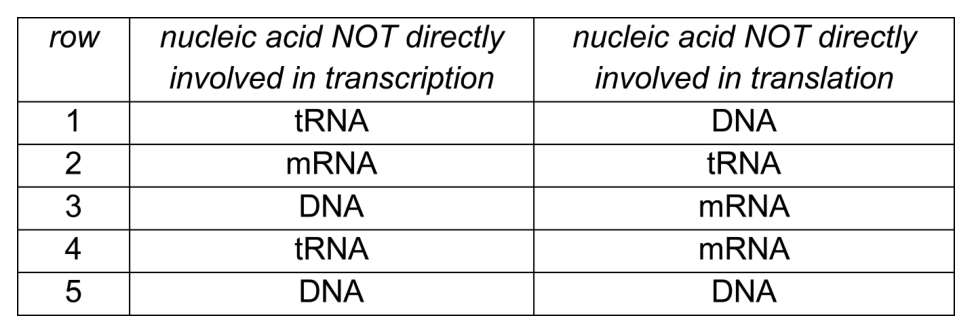
transcription — DNA template ✓၊ mRNA ✓။transcription ကို အရင် ကြည့်မယ်။ DNA က ပုံစံ (template) အဖြစ် ပါတယ် ✓။ ထွက်လာတာက mRNA ပါ ✓။
tRNA က transcription မှာ မပါ — tRNA ✗။tRNA က DNA ကို ကူးရာမှာ မပါဘူး — transcription မှာ အလုပ် မရှိလို့ tRNA ✗။ သူ့ အလုပ်က translation မှာ (သင်ခန်းစာ 39B)။
translation — mRNA, tRNA, rRNA သုံးမျိုးလုံး ✓။translation မှာတော့ mRNA (ချက်နည်း)၊ tRNA (သယ်သူ)၊ rRNA (ကိုယ်ထည်) သုံးမျိုးလုံး ပါတယ် ✓။
DNA က nucleus မှာ ကျန် — translation မှာ DNA ✗။DNA ကတော့ nucleus ထဲမှာ ကျန်ခဲ့လို့ translation မှာ တိုက်ရိုက် မပါဘူး — DNA ✗။
transcription မှာ tRNA မပါ၊ translation မှာ DNA မပါ — row 1။ဒါကြောင့် transcription မှာ မပါတာ tRNA၊ translation မှာ မပါတာ DNA — row 1 ဖြစ်တယ်။
🔁 ပြန်စစ်မယ် — အဖြေ မကြည့်ခင် စဉ်းစားပါ
🤔 In a eukaryotic cell, where does transcription take place?
🔍 မေးခွန်း ဖြည်မယ်
eukaryotic cell = nucleus ရှိ cell (လူ၊ အပင်)။ take place = ဖြစ်တယ်။ where = ဘယ်မှာ။
မေးနေတာ — nucleus ရှိ cell မှာ DNA ကို RNA ကူးတာ ဘယ်နေရာမှာ ဖြစ်လဲ။
DNA က nucleus ထဲမှာ ရှိလို့ ကူးရေးတာ (transcription) nucleus ထဲမှာ ဖြစ်တယ်။
ribosome နဲ့ cytoplasm က translation ရဲ့ နေရာပါ။
🤔 What is the name of the process in which mRNA is read to build a chain of amino acids?
🔍 မေးခွန်း ဖြည်မယ်
the name of the process = ဖြစ်စဉ်ရဲ့ နာမည်။ in which mRNA is read = mRNA ကို ဖတ်တဲ့။ to build a chain of amino acids = amino acid ကြိုး ဆောက်ဖို့။
မေးနေတာ — mRNA ဖတ်ပြီး amino acid ကြိုး ဆောက်တဲ့ ဖြစ်စဉ်ကို ဘာခေါ်လဲ။
nucleotide ဘာသာကနေ amino acid ဘာသာ ပြောင်းလို့ translation။
transcription က DNA ကနေ RNA ကူးတာ၊ replication က DNA ပွားတာ ဖြစ်တယ်။
🤔 What does a tRNA molecule carry to the ribosome?
🔍 မေးခွန်း ဖြည်မယ်
tRNA molecule = tRNA တစ်ခု။ carry … to = … ဆီ သယ်ယူလာ။ option မှာ subunit = ribosome ရဲ့ အပိုင်း။
မေးနေတာ — tRNA က ribosome ဆီ ဘာကို သယ်လာလဲ။
tRNA (transfer RNA) က amino acid တစ်လုံးကို သယ်လာတယ်။
gene ရဲ့ မိတ္တူကို သယ်တာက mRNA ပါ။
🤔 According to the modern form of Beadle and Tatum's idea, one gene codes for one:
🔍 မေးခွန်း ဖြည်မယ်
according to = … အရ။ modern form = ယနေ့ ပြင်ထားတဲ့ ပုံစံ။ codes for = ချက်နည်း ပေးတယ်။
မေးနေတာ — Beadle–Tatum အယူအဆ ယနေ့ ပုံစံမှာ gene တစ်ခုက ဘာ တစ်ခုကို ထုတ်လဲ။
protein တချို့မှာ ကြိုး အများ ပါလို့ ယနေ့ gene တစ်ခု = polypeptide တစ်ချောင်း လို့ ပြောတယ်။
amino acid တစ်လုံးကိုတော့ codon တစ်ခုက ကုဒ်လုပ်တယ်။
🤔 Why can ribosomes in a bacterium start translating an mRNA before its transcription is finished?
🔍 မေးခွန်း ဖြည်မယ်
Why can … start = ဘာလို့ စနိုင်တာလဲ။ before … is finished = မပြီးခင်။ its transcription = အဲဒီ mRNA ကို ကူးတာ။
option မှာ directly = တိုက်ရိုက်၊
separates = ခွဲထား၊
nuclear envelope = nucleus ကို ဝန်းထားတဲ့ အမြှေး။
မေးနေတာ — bacteria မှာ ကူးနေတုန်း ribosome ဖတ်နိုင်တဲ့ အကြောင်းရင်း။
bacteria မှာ nucleus မရှိလို့ DNA နဲ့ ribosome က cytoplasm တစ်ခုတည်းထဲမှာ ရှိတယ်။
ဒါကြောင့် mRNA ရဲ့ 5′ ထိပ် ထွက်လာတာနဲ့ ribosome က ချက်ချင်း ကပ်ဖတ်တယ်။
ribosome က mRNA ကိုပဲ ဖတ်တယ်၊ DNA ကို မဖတ်ဘူး။
bacteria mRNA မှာလည်း stop codon ရှိတယ်။
🤔 Translation is a process which: (IMAT 2024 Q29)
🔍 မေးခွန်း ဖြည်မယ်
a process which: = … ဖြစ်တဲ့ ဖြစ်စဉ် — နောက်က option နဲ့ စာကြောင်း ဆက်ဖတ်ပါ။
option မှာ leads to the synthesis of = … ကို ဆောက်ပေးတယ်၊
similar to = ဆင်တူ၊
exclusively = သီးသန့်။
မေးနေတာ — translation အကြောင်း မှန်တဲ့ အဆုံးသတ်ကို ရွေးပါ။
translation က mRNA ကနေ polypeptide (amino acid ကြိုး) ဆောက်တာ ဖြစ်တယ်။
eukaryote မှာ nucleus ထဲ မဟုတ်ဘဲ cytoplasm ထဲမှာ ဖြစ်တယ်။
prokaryote မှာလည်း ဖြစ်လို့ eukaryote သီးသန့် မဟုတ်ဘူး။
DNA ကနေ RNA လုပ်တာက transcription ဖြစ်ပြီး နှစ်ခုက လုပ်ပုံ လုံးဝ မတူဘူး။
👉 ကြိုး နှစ်ချောင်းထဲက ဘယ်ကြိုးကို ဖတ်လဲ? PART 2။👉 ကူးရေးတဲ့ စက်က ကြိုး နှစ်ချောင်းထဲက ဘယ်ကြိုးကို ဖတ်လဲ? PART 2 မှာ စက်ထဲ ဝင်ကြည့်မယ်။
Transcription: copying a gene
gene ကို mRNA အဖြစ် ကူးရေးခြင်း
ကူးရေးစက် RNA polymerase — promoter မှာ စ
“ဒီကနေ စကူး” = promoter (ကူးရေးမှု စတင်ရာ အမှတ်အသား)DNA ထဲက gene တစ်ခုကို ကြည့်မယ်။ gene ရဲ့ ရှေ့မှာ “ဒီကနေ စကူး” လို့ ပြတဲ့ DNA အပိုင်း ရှိတယ်။ သူ့ကို promoter (ကူးရေးမှု စတင်ရာ အမှတ်အသား) လို့ ခေါ်တယ်။
RNA polymerase (RNA ကူးရေး enzyme) က promoter မှာ ကပ်။RNA polymerase (RNA ကူးရေးတဲ့ enzyme) က promoter ကို ရှာပြီး လာကပ်တယ်။ သူက ကူးရေးတဲ့ စက် (enzyme) ပါ။ promoter ကို မှတ်မိတာ (recognition) က ပထမ အဆင့်၊ ပြီးမှ gene ကို ကူးရေးနေ (transcribing) တာပါ။
H bonds ဖြတ်ပြီး DNA ကို ဇစ်ဖွင့်သလို ဖွင့်တယ် ✂။သူက ကြိုး နှစ်ချောင်းကြားက hydrogen bonds (H bonds) တွေကို ဖြတ်ပြီး ဇစ်ဖွင့်သလို DNA ကို ဖွင့်တယ် ✂။ DNA ပွားတုန်းက helicase (DNA ဇစ်ဖွင့် enzyme) က ဖွင့်ပေးခဲ့တယ် (သင်ခန်းစာ 38B)။ transcription မှာတော့ RNA polymerase (နဲ့ သူ့ အကူ protein တွေ) က ဖွင့်တယ်။
ဖတ်တဲ့ ကြိုး = template strand (ပုံစံ ကြိုး)ကြိုး နှစ်ချောင်းထဲက တစ်ချောင်းကိုပဲ ဖတ်တယ်။ ဖတ်တဲ့ ကြိုးကို template strand (ပုံစံ ကြိုး — polymerase ဖတ်တဲ့ ကြိုး) လို့ ခေါ်တယ်။
RNA polymerase က no primer — ကိုယ်တိုင် စနိုင်။DNA ပွားတုန်းက DNA polymerase မှာ primer (အစ ကြိုးတို) လိုခဲ့တယ် (သင်ခန်းစာ 38B)။ RNA polymerase ကတော့ primer မလိုဘဲ ကိုယ်တိုင် စနိုင်တယ် (no primer)။
💡 promoter = ကား မှတ်တိုင်၊ RNA polymerase = ဘတ်စ်ကား။💡 မှတ်နည်း — promoter က ဘတ်စ်ကား မှတ်တိုင်၊ RNA polymerase က ဘတ်စ်ကား။ မှတ်တိုင်ကနေ ထွက်ပြီး template strand လမ်းအတိုင်း မောင်းတယ်။
👉 template ကို ဖတ်ပြီး ဘယ်လို စာလုံးတွေ ရေးလဲ? စက်ကို မောင်းကြည့်မယ်။
စက် မောင်းကြည့်မယ် — base တစ်လုံးချင်း တွဲရေး
template T ဆို A ထည့် (T → A)။polymerase က template strand ကို တစ်လုံးချင်း ဖတ်ပြီး RNA nucleotide အသစ်ကို တွဲ ထည့်တယ်။ template မှာ T ဆိုရင် A ထည့်တယ် (T → A)။
A ဆို U ထည့် (A → U) — RNA မှာ T မရှိ။template မှာ A ဆိုရင် T မထည့်ဘဲ U ထည့်တယ် (A → U)။ RNA မှာ T မရှိလို့ပါ။ DNA ရဲ့ A က RNA ရဲ့ uracil နဲ့ hydrogen bonds နှစ်ခု ဖွဲ့တယ်။
C → G, G → C — polymerase ရှေ့ ရွေ့တယ်။C (cytosine) ဆိုရင် G (guanine)၊ G ဆိုရင် C — DNA ပွားတုန်းကလိုပဲ (C → G, G → C)။ ဒီလို တွဲဖက် base ကို complementary (ဖြည့်ဖက်) base လို့ ခေါ်တယ်။ polymerase က ရှေ့ကို ဆက် ရွေ့တယ်။
mRNA AUG GCA UUC UGA — mRNA grows 5′ → 3′။ဆက်သွားရင် mRNA AUG GCA UUC UGA ရတယ်။ အသစ်ကို 3′ အစွန်းမှာပဲ ဆက်လို့ mRNA က 5′ → 3′ ဘက် ရှည်လာတယ် (mRNA grows 5′ → 3′)။ template ကိုတော့ 3′ → 5′ ဘက် ဖတ်သွားတယ် — ကြိုး နှစ်ချောင်းက ဦးတည်ရာ ပြောင်းပြန်ပါ။
terminator (ရပ်ရာ အမှတ်အသား) — polymerase off၊ mRNA free။gene ရဲ့ အဆုံးမှာ terminator (ကူးရေးမှု ရပ်ရာ အမှတ်အသား) ဆိုတဲ့ DNA အပိုင်း ရှိတယ်။ အဲဒီ ရောက်ရင် polymerase ကွာထွက် (off)၊ mRNA လွတ် (free) ပြီး DNA ပြန်ပိတ်တယ်။
💡 ‘A ရှေ့မှာ U ထိုင်’ — DNA A–T၊ RNA A–U။💡 မှတ်နည်း — RNA မှာ T မရှိ၊ U (U = uracil) ပဲ။ ‘A ရှေ့မှာ U ထိုင်’ — DNA မှာ A–T၊ RNA မှာ A–U။
🤔 A template DNA strand reads 3′-AGT-5′. Which mRNA is made from it?
🔍 မေးခွန်း ဖြည်မယ်
template DNA strand = polymerase ဖတ်တဲ့ ကြိုး။ reads = စာ ဒီလို ရေးထားတယ်။ made from it = သူ့ကနေ ကူးရတဲ့။
မေးနေတာ — ဒီ template ကနေ ကူးရမယ့် mRNA စာကို ရေးပါ။
template ပေးထားလို့ base တိုင်းရဲ့ partner ရေး: A → U, G → C, T → A = UCA။
TCA မှာ T ပါလို့ RNA မဟုတ်ဘူး။
AGU က T ကို U ပြောင်းရုံ လုပ်ထားတာ၊ ACU က partner ကို ပြောင်းပြန် ဖတ်ထားတာ။
template strand နဲ့ coding strand — ဘယ်ကြိုးက mRNA နဲ့ တူလဲ
ကျန်ကြိုး = coding strand (mRNA နဲ့ စာတူ ကြိုး) — ATG GCA…ဖတ်မခံရတဲ့ ကျန်တဲ့ ကြိုးကို coding strand (ဖတ်မခံရတဲ့ ကြိုး၊ mRNA နဲ့ စာ တူ) လို့ ခေါ်တယ်။ ဒီ ကြိုးမှာ ATG GCA TTC TGA ပါ။ ဘာလို့ ဒီ နာမည်လဲ? ယှဉ်ကြည့်မယ်။
template strand TAC CGT AAG ACT — partner တွဲနေ။template strand ကတော့ TAC CGT AAG ACT ပါ။ polymerase ဖတ်တဲ့ ကြိုးပါ။ coding strand နဲ့ စာလုံး တိုင်း partner တွဲနေတယ်။
template ကို partner တွဲရေးလို့ ရတဲ့ mRNA က AUG GCA UUC UGA ပါ။
coding strand = mRNA စာ၊ T နေရာ U ပဲ ကွာ — code ကို ပြလို့။coding strand နဲ့ mRNA ကို ယှဉ်ကြည့်ပါ — စာ အတူတူပဲ၊ T နေရာမှာ U ဖြစ်တာ တစ်ခုပဲ ကွာတယ်။ protein ချက်နည်း (code) ကို တိုက်ရိုက် ပြနေလို့ coding လို့ ခေါ်တာ။
အဆင့် ၁ — template ပေးရင် partner ရေး၊ A အောက်မှာ U။ဒါကြောင့် မေးခွန်း ဖြေနည်း အဆင့် ၁ — ဘယ်ကြိုး ပေးလဲ အရင် ဖတ်ပါ။ template ပေးရင် စာလုံး တိုင်းရဲ့ partner ကို ရေးပါ၊ A အောက်မှာ U။
အဆင့် ၂ — coding strand ပေးရင် copy ပြီး T → U ပဲ။အဆင့် ၂ — coding strand ပေးရင် partner မရေးနဲ့။ ကူးချ (copy) ပြီး T ကို U ပြောင်းရုံပဲ။
💡 coding strand နဲ့ mRNA = အမွှာ၊ template = partner။💡 မှတ်နည်း — coding strand နဲ့ mRNA က အမွှာ — မျက်နှာ တူ၊ T နဲ့ U ပဲ ကွာ။ template ကတော့ ပြောင်းပြန် partner။
🤔 The coding strand of a gene reads 5′ ATG CCA 3′. What is the mRNA?
🔍 မေးခွန်း ဖြည်မယ်
coding strand = ဖတ်မခံရတဲ့ ကြိုး၊ mRNA နဲ့ စာ တူ။ reads = စာ ဒီလို ရေးထားတယ်။
မေးနေတာ — ဒီ gene ကနေ ရမယ့် mRNA စာ ဘာလဲ။
coding strand ပေးထားလို့ partner မရေးဘဲ ကူးချပြီး T → U: AUG CCA။
UAC GGU က partner ရေးလိုက်လို့ မှားတယ် (template ပေးမှ အဲဒီလို ရေးရတယ်)။
ATG CCA မှာ T ကျန်နေလို့ RNA မဟုတ်ဘူး။
🎯 Match each DNA triplet with the mRNA codon made from it
IMAT 2014 — template ကနေ mRNA
📝 IMAT 2014 · Question 41
The diagram shows a sequence of bases on a DNA template: CAC GTT CGC ATA GAC
Which one of the following shows the sequence of bases on the complementary mRNA strand with one substitution mutation?
အဆင့် ၁ — template given — partner ရေးရမယ်။အဆင့် ၁ — ဘယ်ကြိုး ပေးလဲ? DNA template ပေးထားတယ် (template given)။ ဒါကြောင့် partner ရေးရမယ်။
C→G, G→C, T→A, A→U — mRNA GUG CAA GCG UAU CUG။partner တွေ ရေးမယ် —
C→G,
G→C,
T→A,
A→U။
ပုံမှန် mRNA က GUG CAA GCG UAU CUG ရတယ်။
option B — GCG → CCG၊ base တစ်လုံး (1 change) ✓။option B က GUG CAA CCG UAU CUG — တတိယ codon GCG ကနေ CCG ဖြစ်သွားတယ်။ base တစ်လုံးတည်း အစားထိုးတာ (1 change) ✓။
A နဲ့ E မှာ T ပါ ✗၊ C မှာ UTT ✗။option A နဲ့ E မှာ T ပါတယ် — mRNA မှာ T မရှိလို့ ချက်ချင်း ဖြုတ်ပါ ✗။ C မှာလည်း UTT လို အရောအနှော ပါလို့ ✗။
option D — GUC နဲ့ CUG 2 changes ✗။option D ရဲ့ နောက်ဆုံး codon GUC က CUG နဲ့ ယှဉ်ရင် base နှစ်လုံး ကွာတယ် (2 changes) — mutation တစ်ခု မဟုတ်ဘူး ✗။
ဒါကြောင့် answer B ပါ — GUG CAA CCG UAU CUG။
IMAT 2021 — mRNA ရဲ့ base အချိုး
📝 IMAT 2021 · Question 32
The sequence of bases in part of a DNA strand is:
TATGATCTTAGGCAACAT
A strand of mRNA is transcribed using this sequence of bases. Which one of the following charts shows the correct proportions of the bases in the mRNA?
bases 18 လုံး — mRNA ကို ဒီကနေ ကူးလို့ template။DNA စာကြောင်းမှာ စာလုံး (bases) 18 လုံး ပါတယ်။ mRNA ကို ဒီ ကြိုးကနေ ကူးတယ်လို့ ပြောလို့ template ပါ။
စာလုံး အမျိုးလိုက် ရေကြည့်တော့ T 6 လုံး၊ A 6 လုံး၊ G 3 လုံး၊ C 3 လုံး။
partner ပြောင်း — mRNA မှာ A 6၊ U 6၊ C 3၊ G 3။partner ပြောင်းပါ: T နေရာ A၊ A နေရာ U၊ G နေရာ C၊ C နေရာ G။ mRNA မှာ A 6၊ U 6၊ C 3၊ G 3 ရတယ်။
အချိုး တွက်တော့ A နဲ့ U က 618 = 13 စီ၊
C နဲ့ G က 318 = 16 စီ။
စက်ဝိုင်း ပုံ — 13 = 120°၊ 16 = 60°၊ A, U ကြီး၊ C, G သေး။option တွေက စက်ဝိုင်းကို အကွက်လိုက် ခွဲထားတဲ့ ပုံ (chart) တွေ။
စက်ဝိုင်း တစ်ပတ် 360° ဆိုတော့ 13 = 120°၊
16 = 60°။
A နဲ့ U အကွက်ကြီး၊ C နဲ့ G အကွက်သေး ဖြစ်ရမယ်။
chart A ✓၊ B ✗၊ C, D, E မှာ T ပါ ✗ — အဖြေ A။chart A က ဒီအတိုင်း ✓။ chart B မှာ C နဲ့ U ကြီးနေလို့ ✗။ chart C, D, E မှာ T ပါလို့ RNA မဟုတ်ဘူး ✗။ အဖြေ A။
ကူးပြီး ထွက်လာတာ — mRNA ထဲ ဘာပါလဲ
RNA strand ထဲ ဘာပါလဲ — nucleotide တွေ ကြည့်မယ်။transcription ပြီးရင် ထွက်လာတာ RNA ကြိုး (RNA strand) ပါ။ သူ့ထဲမှာ ဘာတွေ ပါလဲ? nucleotide တွေကို ကြည့်မယ်။ အောက်က IMAT မေးခွန်းကို အရင် ကြိုတွေးပါ။
🤔 Which of the following could be found within a molecule that has just been made by transcription in a healthy human pancreatic cell?
1 adenine
2 peptide bonds
3 phosphodiester bonds
4 ribose
(IMAT 2022 Q23)
🔍 မေးခွန်း ဖြည်မယ်
could be found within = ထဲမှာ တွေ့နိုင်တယ်။ a molecule that has just been made by transcription = ကူးရေးလို့ ခုနကပဲ ထွက်လာတဲ့ မော်လီကျူး။
healthy human pancreatic cell = ကျန်းမာတဲ့ လူ့ ပန်ကရိယ cell။
မေးနေတာ — အဲဒီ မော်လီကျူးထဲ ပါတဲ့ နံပါတ်တွေကို ရွေးပါ။
transcription ရဲ့ ထွက်ကုန်က RNA ဖြစ်လို့ adenine (1)၊ phosphodiester bond (3)၊ ribose (4) ပါတယ်။
peptide bond (2) က amino acid တွေကြားမှာပဲ ရှိလို့ protein မှာပဲ တွေ့ရတယ်။
base တွေ ပါတယ် — adenine (A) လည်း ပါတယ် ✓။
သကြားက ribose ပါ ✓ (DNA ရဲ့ deoxyribose မဟုတ်ဘူး)။
nucleotide ကြား phosphodiester bond ✓ — DNA လိုပဲ။nucleotide တွေကြား ချိတ်တာက phosphodiester bond ✓ — DNA မှာလိုပဲ (သင်ခန်းစာ 27A)။
peptide bond က protein မှာပဲ — RNA မှာ ✗။peptide bond ကတော့ amino acid တွေကြားက bond — protein မှာပဲ ရှိတယ်။ RNA မှာ မရှိဘူး ✗။
💡 nucleotide ပုတီး vs amino acid ပုတီး — peptide က protein။💡 မှတ်နည်း — nucleotide ကြိုးမှာ ‘P–သကြား–base’ ပုတီး၊ protein ကြိုးမှာ ‘amino acid’ ပုတီး။ peptide bond က protein ပုတီးမှာပဲ။
👉 ဗီဇ ပြုပြင်ထားတဲ့ DNA နဲ့ စမ်းကြည့်မယ်။👉 ဒီ RNA က ဘယ် DNA ကနေ ကူးကူး အတူတူလား? ဗီဇ ပြုပြင်ထားတဲ့ DNA နဲ့ စမ်းကြည့်မယ်။
ဗီဇ ပြုပြင်ထားတဲ့ DNA ကို ကူးရင်
recombinant DNA (DNA နှစ်မျိုး ဖြတ်ဆက်) — လူ့ insulin gene။recombinant DNA (သက်ရှိ နှစ်မျိုးရဲ့ DNA ကို ဖြတ်ဆက်ထားတာ) ဆိုတာ ဥပမာ လူ့ insulin gene ကို bacteria DNA ကွင်းထဲ ထည့်ထားတာပါ (သင်ခန်းစာ 43)။
ဘယ်က DNA ဖြစ်ဖြစ် transcription ရဲ့ တိုက်ရိုက် (directly made) ထွက်ကုန်က mRNA ပဲ ✓။
insulin protein က translation ပြီးမှ ရတာ (later)။insulin protein ကတော့ အဲဒီ mRNA ကို translation လုပ်ပြီးမှ ရတာ (later)။ IMAT 2013 Q40 ကို သင်ခန်းစာ 43 မှာ ဖြေမယ်။
🤔 A bacterium carries the human insulin gene. Which molecule is made directly when the ribosomes translate the insulin mRNA?
🔍 မေးခွန်း ဖြည်မယ်
carries = ထဲမှာ ပါတယ်။ made directly = တိုက်ရိုက် ထွက်လာတဲ့။ when the ribosomes translate = ribosome တွေ ဘာသာပြန်တဲ့ အခါ။
မေးနေတာ — insulin mRNA ကို ribosome ဖတ်လိုက်ရင် ချက်ချင်း ရတဲ့ မော်လီကျူး ဘာလဲ။
translation ရဲ့ တိုက်ရိုက် ထွက်ကုန်က amino acid ကြိုး — polypeptide။
ခေါက်ပြီး ပြင်ဆင်မှ insulin ဖြစ်တယ် (သင်ခန်းစာ 39B)။
DNA, RNA အမျိုးမျိုးကို translation က မလုပ်ဘူး။
IMAT 2020 Q35 — DNA ပွားတာ နဲ့ ကူးရေးတာ
📝 IMAT 2020 · Question 35
The occurrence of which of the following could allow you to distinguish between the processes of DNA replication and transcription?
1 The breaking of hydrogen bonds.
2 The formation of hydrogen bonds.
3 The formation of phosphodiester bonds.
replication နဲ့ transcription — နှစ်ခုလုံး H bonds ဖြတ် ✓ ✓။DNA ပွားတာ (replication, သင်ခန်းစာ 38B) နဲ့ ကူးရေးတာ (transcription) ကို ယှဉ်ကြည့်မယ်။ နှစ်ခုလုံး H bonds တွေ ဖြတ်ပြီး DNA ကို ဖွင့်တယ် ✓ ✓။
နှစ်ခုလုံး H bonds အသစ် ဖွဲ့ ✓ ✓။နှစ်ခုလုံး nucleotide အသစ်က template နဲ့ တွဲတဲ့အခါ H bonds အသစ် ဖွဲ့တယ် ✓ ✓။
နှစ်ခုလုံး phosphodiester bond နဲ့ ဆက် ✓ ✓။နှစ်ခုလုံး nucleotide အသစ်တွေကို phosphodiester bond နဲ့ ဆက်ပြီး ကြိုး ရှည်စေတယ် ✓ ✓။
bond နဲ့ ခွဲမရ — none of them။ တကယ် ဘာကွာလဲ?ဒါကြောင့် ဒီ bond သုံးမျိုးနဲ့ နှစ်ခုကို ခွဲလို့ မရဘူး — အဖြေ none of them။ ဒါဆို တကယ် ဘာကွာလဲ? အောက်က မေးခွန်းနဲ့ ကြိုတွေးပါ။
🤔 Which of these happens in DNA replication but NOT in transcription?
🔍 မေးခွန်း ဖြည်မယ်
happens in A but NOT in B = A မှာ ဖြစ်ပြီး B မှာ မဖြစ်တာ။ DNA replication = DNA ပွားခြင်း။
option မှာ templates = ပုံစံ ကြိုးတွေ၊
complementary bases pair = ဖြည့်ဖက် base တွဲ။
မေးနေတာ — DNA ပွားတာမှာပဲ ရှိပြီး ကူးရေးတာမှာ မရှိတဲ့ အချက်။
replication က ကြိုး နှစ်ချောင်းလုံးကို template လုပ်တယ်၊ transcription က gene တစ်ခုရဲ့ ကြိုး တစ်ချောင်းပဲ။
ကျန်တာတွေက နှစ်ခုလုံးမှာ ဖြစ်တယ်။
replication က both ကြိုး၊ transcription က one ကြိုးပဲ။တကယ် ကွာတာက — replication က ကြိုး နှစ်ချောင်းလုံး (both) ကို ကူးတယ်၊ transcription က gene တစ်ခုရဲ့ ကြိုး တစ်ချောင်း (one) ကိုပဲ ကူးတယ်။ IMAT ရေးပုံ — in replication both strands are templates (ပုံစံ ကြိုး)။
A ရှေ့မှာ replication က T၊ transcription က U။template ရဲ့ A ရှေ့မှာ replication က T ထည့်ပြီး transcription က U ထည့်တယ်။
splicing — intron ဖြတ်၊ exon ဆက်
exon (ကုဒ် ပါ အပိုင်း) ကြားမှာ intron (ကုဒ် မပါ ကြားအပိုင်း)eukaryote gene ထဲမှာ protein ကုဒ် ပါတဲ့ အပိုင်း exon (protein ကုဒ် ပါတဲ့ အပိုင်း) တွေကြား ကုဒ် မပါတဲ့ အပိုင်း intron (ကုဒ် မပါတဲ့ ကြား အပိုင်း) တွေ ညှပ်နေတယ်။
exon + intron ပါတဲ့ မိတ္တူ = pre-mRNA။ပထမ ကူးလိုက်တဲ့ မိတ္တူမှာ exon ရော intron ရော ပါလို့ pre-mRNA (မပြင်ရသေးတဲ့ mRNA) လို့ ခေါ်တယ်။
spliceosome က intron ကို ကွင်းခေါက်ပြီး ဖြတ်ထုတ် ✂။spliceosome ဆိုတဲ့ RNA နဲ့ protein ပေါင်းထားတဲ့ စက်က intron တစ်ခုစီကို ကွင်းလို ခေါက်ပြီး ဖြတ်ထုတ်တယ် ✂။ ဒါကို intron removal (ဖယ်ရှားခြင်း) လို့ ပြောတယ်။
splicing (intron ဖြတ် exon ဆက်ခြင်း) → mature mRNA။ကျန်တဲ့ exon တွေကို ပြန်ဆက်တယ်။ ဖြတ်ပြီး ဆက်တာကို splicing (intron ဖြတ်ပြီး exon ဆက်ခြင်း) လို့ ခေါ်ပြီး ပိုတိုတဲ့ mature mRNA (ရင့်ပြီး mRNA) ရတယ်။
💡 exon က exit (အပြင်ထွက်)၊ intron က in (အထဲကျန်)။💡 မှတ်နည်း — exon က nucleus အပြင် ထွက် (exit) သွားတယ်၊ intron က အထဲ (in) မှာ ကျန်ခဲ့တယ်။
E1 + E3 လို ဆက်ရင် new protein — 40B မှာ အပြည့်။exon တွေကို ပုံစံ ကွဲကွဲ ဆက်ရင် (E1 + E3 လို) gene တစ်ခုက protein အမျိုးမျိုး ရနိုင်တယ် (new protein)။ ဒီ နည်းကို နာမည်နဲ့ သင်ခန်းစာ 40B မှာ အပြည့် သင်မယ်။
cap နဲ့ tail တပ်ပြီး nucleus က ထွက်
5′ မှာ 5′ cap (mRNA ရဲ့ ဦးထုပ်)mature mRNA ကို ထွက်ခွင့် မပေးခင် အဆင် နှစ်ခု တပ်ပေးတယ်။ 5′ အစွန်းမှာ ဦးထုပ်လို အုပ်ထားတဲ့ 5′ cap (mRNA ရဲ့ ဦးထုပ်) ပါ။
3′ မှာ poly-A tail (A တွေ ဆက်ထားတဲ့ အမြီး)3′ အစွန်းမှာတော့ A ရာချီ ဆက်ထားတဲ့ အမြီး — poly-A tail (A တွေ ဆက်ထားတဲ့ အမြီး) ပါ။
protect ပေးပြီး ribosome က cap ကြည့် finds။ဒီ နှစ်ခုက enzyme တွေ မဖျက်အောင် ကာကွယ် (protect) ပေးတယ်။ ribosome ကလည်း cap ကို ကြည့်ပြီး mRNA ကို ရှာတွေ့ (finds) တယ်။
mature mRNA က nuclear pore ကနေ ထွက်လာပြီ!ပြီးရင် mature mRNA က nuclear pore ကနေ cytoplasm ထဲ ထွက်လာတယ်။ စာကြည့်တိုက် (nucleus) က မိတ္တူ ထွက်လာပြီ!
💡 ပါဆယ် — ရှေ့ လိပ်စာကတ် (cap)၊ နောက် တိပ် (tail)။💡 မှတ်နည်း — ပါဆယ်ထုပ်လိုပဲ — ရှေ့မှာ လိပ်စာ ကတ် (cap)၊ နောက်မှာ ကာကွယ်တဲ့ တိပ် (tail)။ ပြီးမှ တံခါးပေါက် (nuclear pore) က ပို့တယ်။
bacteria နဲ့ လူ — gene ဖတ်ပုံ နှိုင်းယှဉ်
အခြေခံ — prokaryote ရော eukaryote ရော same။transcription ရဲ့ အခြေခံ (RNA polymerase က template ကို ဖတ်ပြီး mRNA ကို 5′ → 3′ ဆောက်တာ) က bacteria (prokaryote) ရော လူ (eukaryote) ရော တူတယ် (same)။ ကွာတာကို ဇယားနဲ့ စုကြည့်မယ်။
bacteria မှာ nucleus မရှိဘူး၊ လူမှာ ရှိတယ်။bacteria မှာ nucleus မရှိဘူး၊ လူမှာ ရှိတယ်။ လူ့ cell မှာ nuclear envelope (nucleus ကို ဝန်းထားတဲ့ အမြှေး နှစ်ထပ်) က DNA ကို ribosome နဲ့ ခွဲထား (separates) တယ်။
bacteria — together၊ လူ — apart။ဒါကြောင့် bacteria မှာ ကူးနေရင်း ribosome က ဖတ်တယ် (together)၊ လူမှာ nucleus ထဲ ကူးပြီး cytoplasm မှာ ဖတ်တယ် (apart)။
bacteria gene မှာ intron မရှိသလောက်ပဲ — splicing မလို။bacteria gene တွေမှာ intron မရှိသလောက်ပဲ (အလွန် ရှားတယ်)။ ဒါကြောင့် သူတို့ mRNA ကို splicing လုပ်စရာ မလိုဘူး။
5′ cap နဲ့ poly-A tail လည်း eukaryote mRNA မှာပဲ ရှိတယ်။
bacteria mRNA မှာ gene အများ = polycistronic။bacteria ရဲ့ mRNA တစ်ချောင်းမှာ gene အများ ပါလေ့ ရှိတယ် — ဥပမာ lactose ချေတဲ့ enzyme သုံးမျိုးရဲ့ gene။ ဒါကို polycistronic လို့ ခေါ်တယ်။
လူ့ mRNA မှာ gene တစ်ခု = monocistronic။လူ့ mRNA တစ်ချောင်းက gene တစ်ခုပဲ (monocistronic)။ gene အဖွင့်အပိတ်ကို သင်ခန်းစာ 40A မှာ သင်မယ်။
🎮 Bacteria, human cell, or both? — sort fast 🔥
👉 PART 2 ကို ပြန် စစ်ကြည့်ရအောင်။
👤 လူပုဂ္ဂိုလ်များ
1958 Crick — ဗြိတိန် ပညာရှင်။ DNA → RNA → protein လမ်းကြောင်းကို central dogma လို့ နာမည်ပေးခဲ့တယ်။
1941 Beadle နဲ့ Tatum — အမေရိကန် ပညာရှင်။ Neurospora မှို mutant တွေနဲ့ one gene → one enzyme ကို ပြခဲ့တယ်။
1944 Srb နဲ့ Horowitz — Orn, Cit, Arg ကို တစ်ခုစီ ထည့်ပြီး arginine ချက်တဲ့ အဆင့် အစဉ်ကို ဖော်ခဲ့တယ်။
🔁 ပြန်စစ်မယ် — အဖြေ မကြည့်ခင် စဉ်းစားပါ
🤔 A template strand reads 3′ CGA 5′. Which mRNA codon is made?
🔍 မေးခွန်း ဖြည်မယ်
template strand = polymerase ဖတ်တဲ့ ကြိုး။ mRNA codon = mRNA ပေါ်က base သုံးလုံး အုပ်စု။ is made = ထွက်လာတယ်။
မေးနေတာ — ဒီ template ကနေ ရမယ့် codon ကို ရွေးပါ။
template ပေးထားလို့ partner ရေး: C→G, G→C, A→U = GCU။
GCT မှာ T ပါလို့ RNA မဟုတ်ဘူး။
CGA က template အတိုင်း ကူးချထားတာ။
🤔 The coding strand reads 5′ TTC 3′. Which mRNA codon is made?
🔍 မေးခွန်း ဖြည်မယ်
coding strand = mRNA နဲ့ စာ တူတဲ့ ကြိုး။ mRNA codon = mRNA ပေါ်က base သုံးလုံး။
မေးနေတာ — ဒီ coding strand နဲ့ ကိုက်တဲ့ mRNA codon ဘာလဲ။
coding strand ပေးထားလို့ ကူးချပြီး T → U ပြောင်းရုံ: UUC။
AAG က partner ရေးလိုက်လို့ မှားတယ် (template ပေးမှ အဲဒီလို ရေးရတယ်)။
TTC မှာ T ကျန်နေလို့ RNA မဟုတ်ဘူး။
🤔 What does splicing remove from pre-mRNA?
🔍 မေးခွန်း ဖြည်မယ်
splicing = ဖြတ်ပြီး ပြန်ဆက်ခြင်း။ remove from = … ထဲက ဖယ်ထုတ်။ pre-mRNA = မပြင်ရသေးတဲ့ mRNA။
မေးနေတာ — splicing က pre-mRNA ထဲက ဘာကို ဖယ်ထုတ်လဲ။
splicing က intron တွေကို ဖြတ်ထုတ်ပြီး exon တွေကို ဆက်တယ်။
cap နဲ့ tail ကတော့ တပ်ပေးတာ ဖြစ်တယ်။
🤔 Which enzyme makes mRNA from a gene?
🔍 မေးခွန်း ဖြည်မယ်
Which enzyme = ဘယ် enzyme လဲ။ makes mRNA from a gene = gene ကနေ mRNA ဆောက်တဲ့။
မေးနေတာ — gene ကို mRNA အဖြစ် ကူးရေးတဲ့ enzyme ရဲ့ နာမည်။
RNA polymerase က promoter မှာ ကပ်၊ DNA ဖွင့်ပြီး template ကို ဖတ်ကာ mRNA ဆောက်တယ်။
DNA polymerase က DNA ပွားတဲ့ enzyme ပါ။
🤔 During transcription, which base is placed opposite adenine of the template?
🔍 မေးခွန်း ဖြည်မယ်
during = … အတွင်း။ is placed opposite = မျက်နှာချင်းဆိုင် ထည့်တယ်။ adenine of the template = template ပေါ်က A။
မေးနေတာ — ကူးရေးတုန်း template ရဲ့ A ရှေ့မှာ RNA က ဘယ် base ထည့်လဲ။
RNA မှာ thymine မရှိလို့ A ရှေ့မှာ uracil ထည့်တယ်။
DNA ပွားရင်တော့ T ထည့်တယ်။
🤔 Which feature is found in the gene expression of a human cell but NOT of a bacterium?
🔍 မေးခွန်း ဖြည်မယ်
feature = ထူးခြားချက်။ gene expression = gene ကနေ RNA, protein ထုတ်တဲ့ ဖြစ်စဉ်။ found in A but NOT B = A မှာ ရှိ B မှာ မရှိ။
option မှာ removal = ဖယ်ရှားခြင်း။
မေးနေတာ — လူ့ cell မှာပဲ ရှိပြီး bacteria မှာ မရှိတဲ့ အချက်။
splicing က eukaryote မှာပဲ — bacteria gene မှာ intron မရှိဘူး။
ကျန်တာတွေက နှစ်မျိုးလုံးမှာ တူတယ်။
🤔 Which statement about RNA made by transcription is correct?
🔍 မေးခွန်း ဖြည်မယ်
statement = ပြောချက်။ RNA made by transcription = ကူးရေးလို့ ရတဲ့ RNA။
option မှာ double-stranded = ကြိုး နှစ်ချောင်း၊
single nucleotide = nucleotide တစ်လုံးတည်း။
မေးနေတာ — ဒီ RNA အကြောင်း မှန်တဲ့ ပြောချက်ကို ရွေးပါ။
RNA မှာ ribose သကြား နဲ့ T အစား uracil ပါတယ်။
ကြိုး တစ်ချောင်းတည်း၊ nucleotide အများကြီး ဆက်ထားတယ်။
ဆောက်တာ RNA polymerase။
👉 စာလုံး 4 နဲ့ amino acid 20 — 39B မှာ ကုဒ် ဖြေမယ်။👉 mRNA ထွက်လာပြီ။ စာလုံး 4 လုံးနဲ့ amino acid 20 ကို ဘယ်လို ရေးထားလဲ? နောက် သင်ခန်းစာ 39B မှာ ကုဒ်ကို ဖြေမယ်။