Electric circuits
မီးခလုတ် နှိပ်လိုက်တာနဲ့ မီး ချက်ချင်း လင်းတယ်။ ဒါပေမဲ့ ဝါယာထဲက electron တွေက ခရုထက် နှေးတယ်။ ဘယ်လိုလဲ?
current, voltage, resistance၊ series နဲ့ parallel ပတ်လမ်း၊ Kirchhoff's laws၊ power၊ kWh၊ AC နဲ့ DC ကို အစကနေ ကြည့်မယ်။
Current and voltage
လျှပ်စီး (current) နဲ့ ဗို့အား (voltage)
ခလုတ် နှိပ်တာနဲ့ မီး ချက်ချင်း လင်းတယ် — ဘယ်လိုလဲ?
ခလုတ်ကနေ မီးသီးအထိ ဝါယာ 10 m ရှည်တယ်။ညနေ အိမ်ပြန်ရောက်ရင် မီးခလုတ် နှိပ်တယ်။ ခလုတ်ကနေ မျက်နှာကျက် မီးသီးအထိ ဝါယာက 10 m လောက် ရှည်တယ်။
ခလုတ် နှိပ်တာနဲ့ မီး ချက်ချင်း လင်းတယ်။နှိပ်လိုက်တာနဲ့ မီး ချက်ချင်း လင်းတယ်။ တစ်စက္ကန့်တောင် စောင့်စရာ မလိုဘူး။
electron က တစ်စက္ကန့် 0.1 mm ပဲ — ခရုထက် နှေးတယ်!ဒါပေမဲ့ ဝါယာထဲက electron တွေက တစ်စက္ကန့်ကို 0.1 mm လောက်ပဲ ရွေ့တယ်။ ခရုထက်တောင် နှေးတယ်!
10 m ရောက်ဖို့ နာရီ 28 — မီး ဘာလို့ ချက်ချင်း လင်းလဲ?ဒီနှုန်းနဲ့ 10 m ရောက်ဖို့ နာရီ 28 လောက် ကြာမယ်။ ဒါဆို မီး ဘာလို့ ချက်ချင်း လင်းတာလဲ?
V = IR၊ ပတ်လမ်း ချုံ့နည်း၊ kWh bill တွက်တတ်မယ်။ဒီ သင်ခန်းစာ ဆုံးရင် အဲဒီ အဖြေ သိမယ်။ V = IR နဲ့ တွက်တတ်မယ်၊ ရှုပ်တဲ့ ပတ်လမ်းကို ချုံ့တတ်မယ်၊ kWh bill (မီတာခ) တွက်တတ်မယ်။
👉 အရင်ဆုံး ဝါယာ အထဲမှာ တကယ် ဘာ ရွေ့နေလဲ ချဲ့ကြည့်မယ်။
ဝါယာထဲမှာ ဘာ ရွေ့လဲ — free electron
📝 IMAT 2025 · Question 57
Which of these particles move in a straight horizontal metal wire carrying a current from left to right?
ဝါယာထဲမှာ + ion တွေ နေရာမှာပဲ တုန်နေတယ်။သတ္တု ဝါယာ အထဲကို ချဲ့ကြည့်မယ်။ အနီရောင် + ion တွေက ကွက်တိ စီထားပြီး နေရာမှာပဲ တုန်နေတယ်။ နေရာ မရွေ့ဘူး။
လွတ်လွတ် လှုပ်တာ = free electron (လွတ်နေတဲ့ electron)သူတို့ကြားမှာ atom နဲ့ မချိတ်ထားတဲ့ electron တွေ လွတ်လွတ်လပ်လပ် လှုပ်နေတယ်။ ဒါတွေကို free electron (လွတ်နေတဲ့ electron) လို့ ခေါ်တယ်။
battery ဆက်ရင် electron တွေ ညာကနေ ဘယ် ဖြည်းဖြည်း စီးတယ်။ဘက်ထရီ ဆက်လိုက်ရင် − ဘက်က electron တွေကို တွန်းပြီး + ဘက်က ဆွဲတယ်။ electron တွေ ညာကနေ ဘယ်ကို ဖြည်းဖြည်း စီးသွားတယ်။
+ → − ဦးတည်ရာ = conventional current (သတ်မှတ် ဦးတည်ရာ)electron ကို မတွေ့ခင်ကတည်းက လူတွေက current ဟာ + ကနေ − ကို စီးတယ်လို့ သတ်မှတ်ခဲ့တယ်။ ဒါကို conventional current (သတ်မှတ်ထားတဲ့ current ဦးတည်ရာ) လို့ ခေါ်တယ်။
current မြှား ဘယ်→ညာ ဆို electron က ညာ→ဘယ်။ဒါကြောင့် ပတ်လမ်း ပုံထဲက current မြှား ဘယ်ကနေ ညာ ဆိုရင် electron တွေက ညာကနေ ဘယ် ပြောင်းပြန် ရွေ့တယ်။
ထောင်ချောက်: proton မရွေ့ဘူး၊ free electron ပဲ ရွေ့တယ်။ထောင်ချောက်: proton တွေက atom ရဲ့ nucleus ထဲမှာ ချုပ်ထားလို့ သတ္တုထဲမှာ လုံးဝ မရွေ့ဘူး။ ရွေ့တာ free electron ပဲ။
electron ပဲ ညာ→ဘယ် ရွေ့တယ် — အဖြေ E။current က ဘယ်ကနေ ညာ စီးတော့ electron ပဲ ညာကနေ ဘယ် ရွေ့တယ် — အဖြေ E။ proton ရွေ့တယ် ဆိုတဲ့ A၊ C၊ D နဲ့ electron ဘယ်ကနေ ညာ ဆိုတဲ့ B မှားတယ်။
👉 electron နှေးရင် မီး ဘာလို့ ချက်ချင်း လင်းလဲ?👉 electron တွေ ဒီလောက် နှေးရင် မီး ဘာလို့ ချက်ချင်း လင်းတာလဲ? အခု ဖြေလို့ ရပြီ။
ပဟေဠိ ဖြေပြီ — ဂေါ်လီ အပြည့် ပိုက်
ဝါယာ တစ်လျှောက်လုံး free electron အပြည့် ရှိပြီးသား။ဝါယာက ဗလာ မဟုတ်ဘူး။ ခလုတ်ကနေ မီးသီးအထိ ဝါယာ တစ်လျှောက်လုံးမှာ free electron တွေ အပြည့် ရှိပြီးသား။
🤔 Predict: why does a lamp light almost immediately when the switch is closed?
ဝါယာ တစ်လျှောက်လုံး free electron အပြည့် ရှိပြီးသားမို့ ခလုတ် ပိတ်တာနဲ့ အကုန် တပြိုင်နက် ရွေ့တယ်။
electron တစ်လုံးချင်းက တစ်စက္ကန့်ကို mm အပိုင်းအစပဲ သွားလို့ ‘အလင်းနှုန်းနဲ့ ပြေး’ ဆိုတာ မှားတယ်။
ဂေါ်လီ ပြည့်ပိုက် — တစ်လုံး တွန်းရင် ဟိုဘက် ချက်ချင်း ထွက်။ပိုက်ထဲ ဂေါ်လီ အပြည့် ထည့်ထားပြီး တစ်ဖက်ကနေ တစ်လုံး တွန်းထည့်ရင် အကုန် တပြိုင်နက် ရွေ့ပြီး ဟိုဘက် အစွန်က တစ်လုံး ချက်ချင်း ထွက်လာတယ်။
ခလုတ် ပိတ်တာနဲ့ electron အကုန် တပြိုင်နက် ရွေ့ — မီး လင်း။ခလုတ် ပိတ်တာနဲ့ ဝါယာ တစ်လျှောက်လုံးက electron တွေ တပြိုင်နက် စရွေ့တယ်။ မီးသီးထဲက electron တွေလည်း ချက်ချင်း ရွေ့လို့ မီး ချက်ချင်း လင်းတယ်။
electron နှေးတယ်၊ တွန်းအား (the push) ကပဲ မြန်တယ်။electron တစ်လုံးချင်းကတော့ ခရုလို နှေးနေဆဲ။ မြန်တာက တွန်းအား (the push) — ဝါယာ တစ်လျှောက် အလင်းနီးပါး မြန်မြန် ပျံ့သွားတယ်။
👉 ဝါယာထဲ စီးတဲ့ electron ဘယ်လောက် များလဲ ဘယ်လို တိုင်းမလဲ?
Current — တစ်စက္ကန့်မှာ ဖြတ်တဲ့ charge
ဂိတ်ကို ဖြတ်တဲ့ ပမာဏ = charge (Q၊ လျှပ်ပမာဏ)၊ coulomb (C)။ဝါယာ ဖြတ်ပိုင်း တစ်နေရာမှာ ဂိတ် ထားပြီး ဖြတ်သွားတဲ့ လျှပ်စစ် ပမာဏကို ရေတွက်မယ်။ ဒီ ပမာဏကို charge (Q) လို့ ခေါ်ပြီး coulomb (C) နဲ့ တိုင်းတယ် (သင်ခန်းစာ 73)။
2 စက္ကန့် (t = 2 s) အတွင်း charge 6 C ဖြတ်သွားတယ် ဆိုပါစို့။
တစ်စက္ကန့် ဖြတ်တဲ့ charge = current (လျှပ်စီး)၊
I = Qt။တစ်စက္ကန့်မှာ ဖြတ်တဲ့ charge ကို current (လျှပ်စီး၊ I) လို့ ခေါ်တယ်။
ပုံသေနည်းက I = Qt။
current ရဲ့ ယူနစ်က ampere (A)။ 1 A ဆိုတာ တစ်စက္ကန့်ကို 1 C ဖြတ်တာ။
✍️ I = Qt = 6 C2 s = 3 A
electron တစ်လုံးရဲ့ charge က 1.6 × 10⁻¹⁹ C။ ဒါကြောင့် 6 C ထဲမှာ 61.6 × 10⁻¹⁹ = 3.75 × 10¹⁹ လုံး ပါတယ်။
🤔 A current of 3.0 A flows through a lamp for 4.0 s. How much charge passes through it?
I = Qt ကို ပြောင်းရင် Q = I × t = 3.0 × 4.0 = 12 C။
0.75 C က I ကို t နဲ့ စားမိတာ၊ 7.0 C က ပေါင်းမိတာ။
👉 electron တွေကို ဘာက တွန်းပေးနေတာလဲ? ဘက်ထရီပေါ်က “12 V” ဆိုတာ ဘာလဲ?
Voltage — charge 1 C စီကို ပေးတဲ့ energy
pump က ရေကို အပေါ်ကန် တင်ပေးလို့ ရေ energy ရတယ်။ရေ စုပ်စက် (pump) တစ်လုံးက ရေကို အောက်ကန်ကနေ အပေါ်ကန်ကို တင်ပေးတယ်။ အမြင့်ကို ရောက်တော့ ရေက energy ရသွားတယ်။
ပြန်စီးရင်း ရေက wheel ကို energy ပေးတယ်။အပေါ်ကနေ ပိုက်ထဲ ပြန်စီးဆင်းရင်း ရေဘီး (wheel) ကို လှည့်ပေးတယ်။ ရထားတဲ့ energy ကို ဘီးကို ပေးလိုက်တာ။
battery = pump၊ bulb = wheel — energy ယူပြီး အလင်း ထုတ်တယ်။လျှပ်စစ် ပတ်လမ်းမှာ battery က pump လို charge ကို energy ပေးတယ်။ bulb (မီးသီး) က wheel လို အဲဒီ energy ကို ယူပြီး အလင်းနဲ့ အပူ ထုတ်တယ်။
👉 ရေလိုပဲ charge တွေ ဝါယာထဲ ပတ်စီးတယ်။👉 ရေက ပိုက်ထဲ ပတ်စီးသလို charge တွေလည်း ဝါယာထဲ ပတ်စီးတယ်။ လျှပ်စစ် ပတ်လမ်းမှာ ကြည့်မယ်။
Voltage — charge 1 C စီ သယ်လာတဲ့ energy
battery = pump၊ bulb = wheel၊ charge တွေ ပတ်စီးတယ်။ဝါယာ ပတ်လမ်းထဲမှာ charge တွေ ရေလို ပတ်စီးနေတယ်။ battery က pump နေရာ၊ bulb က wheel နေရာမှာ ရှိတယ်။
1 C စီကို 12 J ပေးတာ = emf (ဘက်ထရီ ပေးတဲ့ ဗို့)battery က ဖြတ်သွားတဲ့ charge 1 C စီကို energy 12 J ပေးတယ် (အဝါ)။ ဒီ energy per C ကို emf (ဘက်ထရီက ပေးတဲ့ ဗို့) လို့ ခေါ်တယ် — PART 3 မှာ ပြန်တွေ့မယ်။
bulb ကို ဖြတ်တော့ 1 C စီက 12 J ပေးလိုက်တယ်။bulb ကို ဖြတ်တော့ charge 1 C စီက သယ်လာတဲ့ 12 J ကို bulb ကို ပေးလိုက်ပြီး မီးခိုးရောင် ဖြစ်သွားတယ်။ bulb လို ပတ်လမ်းထဲက အစိတ်အပိုင်းကို component လို့ ခေါ်တယ်။
1 C စီ ပေးတာ = potential difference (ဗို့ ကွာခြားချက်)component ရဲ့ ဖျား နှစ်ဖက်ကြား charge 1 C စီ ပေးလိုက်တဲ့ energy ကို potential difference (p.d.၊ ဗို့အား ကွာခြားချက်) လို့ ခေါ်တယ်။ ခရမ်းရောင် voltmeter က တိုင်းတယ်။
V = W/Q — p.d. ကို voltage (ဗို့အား) လို့လည်း ခေါ်တယ်။ပုံသေနည်းက V = W/Q။ W က energy (J)၊ Q က charge (C)။ p.d. ကို voltage (ဗို့အား) လို့လည်း ခေါ်တယ်။
volt = J/C — 12 V ဆို 1 C စီ 12 J။ယူနစ်က volt (V) = J/C။ bulb ပေါ်မှာ 12 V ဆိုတာ 1 C ဖြတ်တိုင်း bulb က 12 J ရတာ။
⚠ V = ပမာဏ (voltage)၊ ဂဏန်းနောက် V = ယူနစ် (volt)။⚠ စာလုံး V နှစ်မျိုး — ပုံသေနည်းထဲက V က ပမာဏ (voltage)၊ ဂဏန်းနောက်က V က ယူနစ် (volt)။ “V = 12 V” ကို “voltage က volt 12” လို့ ဖတ်ပါ။
👉 ဒါဆို emf 12 V ဘက်ထရီက charge 5 C ကို energy ဘယ်လောက် ပေးမလဲ?
✍️ W = VQ
✍️ emf 12 V ဘက်ထရီက charge 5 C ကို တွန်းပို့တယ်။ ပေးတဲ့ energy W ဘယ်လောက်လဲ?
12 V ဆိုတော့ 1 C စီက 12 J စီ ရတယ်။
V = W/Q ကို ပြောင်းရေးရင် W = V × Q
W = 12 V × 5 C
= 60 J
🤔 A 9.0 V battery drives 2.0 C of charge round a circuit. How much energy does it give to the charge?
W = V × Q = 9.0 × 2.0 = 18 J။
4.5 J က V ကို Q နဲ့ စားမိတာ၊ 0.22 J က ပြောင်းပြန် စားမိတာ။
👉 PART 2 — ခုခံတာ ဘယ်လောက်လဲ ဘယ်လို တိုင်းမလဲ?👉 PART 2 — ဘက်ထရီက တွန်းတယ်၊ ဝါယာနဲ့ မီးသီးက ပြန်ခုခံတယ်။ ဘယ်လောက် ခုခံလဲ ဘယ်လို တိုင်းမလဲ?
🔁 ပြန်ကြည့်မယ် — PART 1
🤔 A current of 1.6 A flows in a wire. How many electrons pass a point each second? (e = 1.6 × 10⁻¹⁹ C)
1 s မှာ Q = It = 1.6 C။
electron အရေအတွက် = 1.61.6 × 10⁻¹⁹ = 1.0 × 10¹⁹။
2.6 × 10⁻¹⁹ က စားရမှာကို မြှောက်မိတာ။
🤔 Conventional current flows from A to B in a metal wire. Which way do the electrons move?
electron က − charge ဖြစ်လို့ conventional current နဲ့ ပြောင်းပြန် — B ကနေ A။
သတ္တုထဲမှာ proton မရွေ့ဘူး။
🤔 A lamp transfers 24 J of energy when 4.0 C of charge pass through it. What is the p.d. across the lamp?
V = W/Q = 244.0 = 6.0 V။
96 က မြှောက်မိတာ၊ 0.17 က ပြောင်းပြန် စားမိတာ၊ 28 က ပေါင်းမိတာ။
🤔 Which statement describes the emf of a battery?
emf = ဘက်ထရီက 1 C စီကို ပေးတဲ့ energy။
p.d. က component တစ်ခုမှာ 1 C စီ ပေးလိုက်တဲ့ energy။
နာမည်မှာ force ပါပေမဲ့ force မဟုတ်ဘူး (ယူနစ် J/C = V)။
Resistance
ခုခံမှု (resistance)၊ Ohm's law၊ မီတာ၊ resistivity
Resistance — coil ဘာလို့ ပူလဲ
cord နဲ့ coil ကို current တစ်ခုတည်း ဖြတ်တယ်။ရေနွေးအိုးကို ကြည့်ပါ။ ပလပ်ကြိုး (cord) နဲ့ အထဲက coil (ကွိုင်) ကို current တစ်ခုတည်း ဖြတ်စီးတယ်။
coil ပူ၊ cord အေး — current တူရက် ဘာလို့လဲ?ဒါပေမဲ့ coil က နီရဲအောင် ပူပြီး cord က အေးနေတယ်။ current တူရက်နဲ့ ဘာလို့လဲ?
electron တွေ ion ကို တိုက်မိပြီး energy က အပူ ဖြစ်တယ်။coil ထဲမှာ electron တွေ ion တွေကို ခဏခဏ တိုက်မိ (collisions) ပြီး energy ဆုံးတယ်။ အဲဒီ energy က အပူ ဖြစ်သွားတယ်။
current ကို တားတာ = resistance (ခုခံမှု)၊
R = V/I။current စီးတာကို ပစ္စည်းက ဘယ်လောက် တားလဲကို resistance (ခုခံမှု၊ R) လို့ ခေါ်တယ်။
R = V/I — 1 A စီးဖို့ voltage ဘယ်လောက် လိုလဲ ဆိုတာပဲ။
ယူနစ်က ohm (Ω) = V/A။ coil ရဲ့ R က ကြီးပြီး cord ရဲ့ R က အရမ်း သေးတယ်။
✍️ မီးပူ (iron) တစ်လုံးကို 230 V ပေးတော့ 2.3 A စီးတယ်။ R ဘယ်လောက်လဲ?
R = V/I = 2302.3 = 100 Ω
🤔 A lamp takes 0.50 A from a 12 V supply. What is its resistance?
R = V/I = 120.50 = 24 Ω။
6.0 Ω က V × I၊ 0.042 Ω က I/V — ပြောင်းပြန် စားမိတာ။
👉 voltage တိုးရင် current ဘယ်လို ပြောင်းမလဲ?👉 voltage ကို တိုးရင် current ဘယ်လို ပြောင်းမလဲ? slider နဲ့ စမ်းကြည့်မယ်။
Ohm's law — V = IR
ဘက်ထရီ 12 V နဲ့ resistor 6 Ω ကို ဆက်ထားတယ်။ ပတ်လမ်းမှာ ဒီ resistor တစ်ခုပဲ ရှိတယ်။ ammeter က current 2 A ပြတယ်။
voltage ကို နှစ်ဆ 24 V တင်ရင် current လည်း နှစ်ဆ 4 A ဖြစ်တယ်။ ဂရပ်ပေါ်က အမှတ်လည်း နှစ်ဆ မြင့်သွားတယ်။
အမှတ်တွေ အားလုံး မူလမှတ်ကို ဖြတ်တဲ့ မျဉ်းဖြောင့် (straight line) ပေါ် ကျတယ်။ ဒါကို Ohm's law လို့ ခေါ်ပြီး V = IR လို့ ရေးတယ်။ temperature မပြောင်းမှ မှန်တယ်။
နာမည်က Georg Simon Ohm (ဂေအော့ဂ် ဆိုင်မွန် အုမ်း၊ 1789–1854 — ဂျာမန် ကျောင်းဆရာ နဲ့ ရူပဗေဒ ပညာရှင်) ဆီက လာတယ်။ 1827 မှာ V နဲ့ I အချိုးကျတာကို တိုင်းပြီး ထုတ်ပြန်ခဲ့တယ်။
R ကို နှစ်ဆ 12 Ω လုပ်ရင် 24 V မှာတောင် current 2 A ပဲ ကျန်တယ်။ R ကြီးလေ မျဉ်း မတ်တာ နည်း (less steep) လေ — စောင်းက 1R။
👆 Increase V: how does I change? Then double R: what happens to I?
🤔 The voltage across a resistor is halved, and the resistor is replaced by one with double the resistance. What happens to the current?
I = V/R ဆိုတော့ V တစ်ဝက်က I ကို တစ်ဝက် လုပ်၊ R နှစ်ဆက ထပ် တစ်ဝက် လုပ်တယ်။
12 × 12 = 14။
‘stays the same’ က V နဲ့ R နှစ်ခုလုံး နှစ်ဆ ဖြစ်မှ မှန်တာ။
👉 မီးသီးကော? ပူလာရင် R ပြောင်းသွားမလား?
I–V ဂရပ် — ohmic နဲ့ မီးသီး
Ohm's law နာခံရင် ohmic (မျဉ်းဖြောင့် I–V) လို့ ခေါ်တယ်။Ohm's law ကို နာခံတဲ့ resistor ကို ohmic လို့ ခေါ်တယ်။ သူ့ I–V ဂရပ်က မူလမှတ်ကို ဖြတ်တဲ့ မျဉ်းဖြောင့်ပဲ။
filament ဂရပ်က ကွေးတယ် — current ဗို့လောက် မတက်ဘူး။မီးသီးရဲ့ filament (ဝါယာမျှင်) ကတော့ မတူဘူး။ voltage တိုးလေ ဂရပ် ကွေးပြီး ညီလာလေ — current က voltage လောက် မတက်တော့ဘူး။
ပူလေ R တက်လေ — ဂရပ် မဖြောင့်တာ non-ohmic။filament ပူလာလေ ion တွေ ပိုတုန်ပြီး electron တွေ ပိုတိုက်မိလေ — R တက်လာလို့ပါ။ ဒီလို ဂရပ် မဖြောင့်တာကို non-ohmic လို့ ခေါ်တယ်။
I–V ဂရပ် မတ်လေ R နည်းလေ၊ R = V/I။ဂရပ် ဖတ်နည်း: I–V ဂရပ်မှာ မတ်လေ (steeper) R နည်းလေ။ ဘယ်အမှတ်မှာမဆို R = V/I နဲ့ တွက်တယ်။
🤔 On a filament lamp’s I–V graph, I = 0.20 A at 2.0 V and I = 0.40 A at 6.0 V. What happens to its resistance?
R = V/I: 2.00.20 = 10 Ω၊
6.00.40 = 15 Ω — 10 Ω ကနေ 15 Ω တက်တယ်။
ပူလာလေ R တက်လေ (non-ohmic)။
ဂရပ်ရဲ့ စောင်း (0.05) ကို ယူရင် မှားတယ်။
👉 V နဲ့ I ကို တကယ် ဘယ်လို တိုင်းလဲ? မီတာ နှစ်မျိုး ကြည့်မယ်။
Ammeter နဲ့ voltmeter — ဘယ်လို ချိတ်ရလဲ
12 V၊ 6 Ω — current နဲ့ voltage တိုင်းမယ်။12 V ဘက်ထရီနဲ့ resistor 6 Ω ပတ်လမ်းမှာ resistor ထဲ စီးတဲ့ current နဲ့ သူ့ ဖျား နှစ်ဖက်ကြား voltage ကို တိုင်းချင်တယ်။
ammeter (current တိုင်း မီတာ) ကို series ထည့် — 2.0 A။current တိုင်းတဲ့ ammeter (A) ကို ပတ်လမ်း ထဲမှာ တန်းဆက် (in series) ထည့်ရတယ်။ ဒါမှ resistor ကို ဖြတ်တဲ့ current အားလုံး မီတာကိုလည်း ဖြတ်တယ်။ 2.0 A ပြတယ်။
voltmeter (ဗို့ တိုင်း မီတာ) ကို across ချိတ် — 12 V။voltage တိုင်းတဲ့ voltmeter (V) ကိုတော့ resistor ရဲ့ ဖျား နှစ်ဖက်မှာ ဘေးချင်းယှဉ် ချိတ်ရတယ် (in parallel, across)။ 12 V ပြတယ်။
ammeter R ≈ 0၊ voltmeter R အရမ်း ကြီး ရမယ်။ammeter ရဲ့ R က သုည နီးပါး (≈ 0) ဖြစ်ရမယ်၊ voltmeter ရဲ့ R က အရမ်း ကြီး (very big) ရမယ်။ ဒါမှ မီတာတွေက ပတ်လမ်းရဲ့ current ကို မပြောင်းစေဘူး။
🤔 A student connects an ammeter in parallel across a lamp by mistake. What happens?
ammeter ရဲ့ R ≈ 0 ဆိုတော့ current က R နည်းတဲ့ လမ်းကို ရွေးပြီး အကုန်နီးပါး ammeter ကို ဖြတ်တယ်။
မီးသီး ငြိမ်းပြီး ammeter ပျက်နိုင်တယ် — ဒါကြောင့် series ပဲ ဆက်ရတယ်။
👉 R က ဘာတွေ ပေါ်မှာ မူတည်လဲ? ဝါယာ ရှည်ရင်၊ တုတ်ရင် ဘာဖြစ်မလဲ?
Resistivity — ဝါယာ ရှည်ရင်၊ တုတ်ရင်
ဝါယာ R က L၊ A နဲ့ ပစ္စည်း ပေါ် မူတည်တယ်။ဝါယာ တစ်ချောင်းမှာ အရှည် L နဲ့ ဖြတ်ပိုင်း ဧရိယာ (area) A ရှိတယ်။ သူ့ R က L၊ A နဲ့ ဝါယာ လုပ်တဲ့ ပစ္စည်း ပေါ် မူတည်တယ်။
L × 2 ဆို R × 2 — R က L နဲ့ အချိုးကျ။ဝါယာကို နှစ်ဆ ရှည်လိုက်ရင် (L × 2) electron တွေ ဖြတ်ရတဲ့ လမ်း နှစ်ဆ ရှည်ပြီး တိုက်မိမှု နှစ်ဆ — R × 2။ R က L နဲ့ အချိုးကျတယ်။
A × 2 ဆို R တစ်ဝက် — R က A နဲ့ ပြောင်းပြန်။ဝါယာ နှစ်ချောင်း ယှဉ်ထားသလို တုတ်လာရင် (A × 2) electron သွားလမ်း နှစ်ဆ ကျယ်လို့ R တစ်ဝက် ကျတယ်။ R က A နဲ့ ပြောင်းပြန် အချိုးကျတယ်။
R = ρLA၊
ρ = resistivity (ခုခံကိန်း)၊
ယူနစ် Ω m။ပေါင်းရေးရင် R = ρLA။
ρ (ရို) ကို resistivity (ခုခံကိန်း) လို့ ခေါ်တယ်။ ပစ္စည်း တစ်မျိုးချင်းရဲ့ ကိုယ်ပိုင် တန်ဖိုး၊ ယူနစ် Ω m။
Cu (copper၊ Z 29) က period 4၊ group 11 (d block)။ nichrome က Ni (nickel၊ Z 28) နဲ့ Cr (chromium၊ Z 24) ရောထားတဲ့ alloy (သတ္တု ရောစပ်)။
copper ρ နည်း — ဝါယာကောင်း၊ nichrome ρ ကြီး — coil။copper (ကြေးနီ) က ρ ≈ 1.7 × 10⁻⁸ Ω m — ဝါယာကောင်း။ nichrome က အဆ 60 လောက် ကြီးလို့ coil အဖြစ် သုံးတယ်။ ဒါကြောင့် coil ပူပြီး cord မပူတာ။
A = πd²4 — d နှစ်ဆ ဆို R လေးပုံ တစ်ပုံ။ဝါယာ အလုံးရဲ့ A = πr² = πd²4။ အချင်း (diameter) d နှစ်ဆ ဆိုရင် A လေးဆ (A × 4) ဖြစ်လို့ R လေးပုံ တစ်ပုံ ကျတယ်။
🤔 A wire of the same material has double the length and double the diameter. What happens to its resistance?
L × 2 → R × 2။
d × 2 → A × 4 → R × 14။
နှစ်ခု ပေါင်းရင် 2 × 14 = 12 — တစ်ဝက်။
‘stays the same’ က d နှစ်ဆကို A နှစ်ဆ ထင်မိတာ။
👉 IMAT 2018 က ဒီ ပုံသေနည်းကို ဂဏန်းနဲ့ မေးခဲ့တယ်။
✍️ R = ρLA — IMAT 2018
📝 IMAT 2018 · Question 60
A wire made of a metal of uniform resistivity 1.0 × 10⁻⁶ Ω m is 2.0 m long and has a diameter of 2.0 × 10⁻³ m.
What is the electrical resistance of this length of the wire?
✍️ ρ = 1.0 × 10⁻⁶ Ω m၊ L = 2.0 m၊ အချင်း d = 2.0 × 10⁻³ m။ R ဘယ်လောက်လဲ?
① အချင်းကို radius (အချင်းဝက်) ပြောင်း: r = d2 = 1.0 × 10⁻³ m
② A = πr² = π × (1.0 × 10⁻³)² = π × 10⁻⁶ m²
③ R = ρLA = 1.0 × 10⁻⁶ × 2.0π × 10⁻⁶
10⁻⁶ တွေ ချေသွားလို့ R = 2.0π Ω (≈ 0.64 Ω) → အဖြေ D
ထောင်ချောက်: d ကို r ထင်ရင် E၊ r² မတင်ရင် A။ထောင်ချောက်: d ကို r အဖြစ် သုံးမိရင် A လေးဆ ကြီးပြီး 1.02π (E) ရတယ်။ r² မတင်ရင် (A)၊ ρAL ပြောင်းပြန် ရေးရင် (B) ရတယ်။
👉 current နဲ့ electron အရှိန် ဘယ်လို ဆိုင်လဲ?👉 current ကို electron တွေရဲ့ အရှိန်နဲ့ ဘယ်လို ဆက်စပ်လဲ? ခေါင်းစဉ်က ခရု အရှိန်ကို တွက်ကြည့်မယ်။
✍️ drift velocity — I = nAvq
1 m³ ထဲ free electron အရေအတွက် = n။copper ဝါယာ တစ်ချောင်းထဲမှာ free electron တွေ အများကြီး ရှိတယ်။ 1 m³ ထဲက free electron အရေအတွက်ကို n (number density) လို့ ခေါ်တယ် — copper မှာ n ≈ 8.5 × 10²⁸ m⁻³။
ပျမ်းမျှ အရှိန် v = drift velocity (ပျမ်းမျှ ရွေ့ အရှိန်)current စီးရင် electron တွေ ပျမ်းမျှ အရှိန် v နဲ့ ဖြည်းဖြည်း ရွေ့တယ်။ ဒီ အရှိန်ကို drift velocity (ပျမ်းမျှ ရွေ့လျား အရှိန်) လို့ ခေါ်တယ်။
t အတွင်း vt အကွာထဲက electron အကုန် ဖြတ်သွားတယ်။အချိန် t အတွင်း electron တစ်လုံးက vt အကွာ ရွေ့တယ်။ ဒါကြောင့် ဝါယာ အဆုံးကနေ vt အကွာ အတွင်းက electron အကုန် t အတွင်း အဆုံးကို ဖြတ်သွားတယ်။
✍️ အဲဒီ အပိုင်းရဲ့ volume = A × vt။ electron အရေအတွက် = n × A × vt။ charge Q = nAvt × q (q = electron တစ်လုံးရဲ့ charge e)။
I = Qt ဆိုတော့ t ချေပြီး I = nAvq။
👉 ဒီ ပုံသေနည်းနဲ့ ခေါင်းစဉ်က ခရု အရှိန်ကို ဂဏန်းနဲ့ တွက်ကြည့်မယ်။
✍️ ခရု အရှိန် — drift velocity ကို ဂဏန်းနဲ့
✍️ 1 mm² (= 10⁻⁶ m²) copper ဝါယာမှာ current 1.4 A စီးတယ်။ copper ရဲ့ n = 8.5 × 10²⁸၊ q = 1.6 × 10⁻¹⁹ C။ drift velocity v ဘယ်လောက်လဲ?
I = nAvq ကို ပြောင်းရင် v = InAq။ အောက်ခြေကို အရင် တွက်: nAq = 8.5 × 10²⁸ × 10⁻⁶ × 1.6 × 10⁻¹⁹ = 13 600။
v = 1.413 600 ≈ 1.0 × 10⁻⁴ m/s = 0.1 mm/s — ခေါင်းစဉ်က ခရု အရှိန်ပဲ!
⚠ ဝါယာ ပါးလေ electron ပိုမြန်ရ — v က A နဲ့ ပြောင်းပြန်။⚠ ဝါယာ ပါးရင် (A ငယ်) current တူအောင် electron တွေ ပိုမြန်မြန် ရွေ့ရတယ် — v က A နဲ့ ပြောင်းပြန်။
🤔 Two copper wires carry the same current. Wire Y has half the diameter of wire X. How does the drift velocity in Y compare with that in X?
d တစ်ဝက် → A = πd²4 က 4 ပုံ 1 ပုံ။
I, n, q တူလို့ v = InAq က 4 ဆ။
2 ဆ က A ကို d နဲ့ အချိုးကျ ထင်တာ။
👉 အားလုံး resistor လို မဟုတ် — diode ကြည့်မယ်။👉 ပစ္စည်း အားလုံး resistor လို V နဲ့ I အချိုးကျ မဟုတ်ဘူး — diode ကို ကြည့်မယ်။
diode — current ကို တစ်ဘက်တည်း ဖြတ်ခွင့်ပေး
diode (တစ်ဘက်သွား လျှပ်တံခါး) — မြှားဘက်ကိုပဲ စီးတယ်။diode (တစ်ဘက်သွား လျှပ်တံခါး) ရဲ့ symbol က မြှား (တြိဂံ) နဲ့ ဘား။ မြှား ညွှန်တဲ့ဘက် (forward) ကိုပဲ current စီးခွင့်ပေးတယ်။
I–V ဂရပ်မှာ V ကို အပေါင်း (forward) ရော အနုတ် (reverse) ရော ဆွဲမယ်။
reverse မှာ R အရမ်း ကြီး၊ I ≈ 0။reverse ဘက် (V အနုတ်) မှာ R အရမ်း ကြီးလို့ I ≈ 0 — ဂရပ်က အလျားလိုက် မျဉ်း ပြားပြား။
forward 0.6 V ကျော်မှ current ရုတ်တရက် တက်တယ်။forward ဘက်မှာ silicon diode က 0.6 V လောက် မရောက်ခင် current မစီးသေးဘူး။ 0.6 V ကျော်ရင် current ရုတ်တရက် တက်လာတယ် — R အရမ်း ငယ်သွားတယ်။
ဂရပ် ကွေးလို့ diode က non-ohmic။ဂရပ် ကွေးနေလို့ diode က non-ohmic — R = V/I က V ပေါ် မူတည်ပြီး ပြောင်းတယ်။
diode က AC → DC ပြောင်းတယ်၊ LED က forward ဆက်မှ လင်း။ဒါကြောင့် diode ကို AC ကို တစ်ဘက်တည်း ဖြတ်ပြီး DC ပြောင်းရာမှာ သုံးတယ်။ LED (Light Emitting Diode) က current စီးရင် အလင်း ထွက်တဲ့ diode — forward ဆက်မှ လင်းတယ်။
🤔 A diode is connected the wrong way round (reverse) in series with a lamp and a 6 V battery. What happens?
reverse ဆက်ရင် diode ရဲ့ R အရမ်း ကြီးလို့ I ≈ 0 — မီး မလင်းဘူး။
0.6 V က forward ဘက်မှာပဲ ဆိုင်တယ်။
👉 temperature နဲ့ အလင်း ပြောင်းရင် R ဘယ်လို ပြောင်းလဲ?
temperature နဲ့ အလင်း — metal၊ thermistor၊ LDR
R ကို temperature (T) နဲ့ ဆွဲတဲ့ ဂရပ် ကြည့်မယ်။
metal: T တက်ရင် ion ပိုတုန်လို့ R တက်တယ်။metal (သတ္တု၊ မီးသီး filament လို) မှာ T တက်ရင် ion တွေ ပိုတုန်ပြီး electron တွေ ပိုတိုက်မိလို့ R ဖြည်းဖြည်း တက်တယ်။ resistivity ρ တက်တယ်။
semiconductor: T တက်ရင် n များလို့ R ကျတယ်။semiconductor (silicon လို) မှာတော့ ပြောင်းပြန် — T တက်ရင် atom ကနေ free electron အသစ်တွေ လွတ်လာလို့ n များ၊ R ကျတယ်။ ion တုန်တာထက် n တိုးတာက ပိုအရေးကြီးတယ်။
thermistor (အပူနဲ့ R ပြောင်း resistor) — ပူလေ R ကျလေ။ဒီ သဘောနဲ့ လုပ်ထားတဲ့ ပစ္စည်းကို thermistor (temperature နဲ့ R ပြောင်းတဲ့ resistor) လို့ ခေါ်တယ် — ပူလေ R ကျလေ။
🤔 A thermistor is connected to a fixed 6 V supply and is then cooled. What happens to the current through it?
အေးရင် free electron နည်းလို့ thermistor R တက်တယ်။
V = 6 V မပြောင်းရင် I = V/R ကျတယ်။
‘rises’ က metal လို ထင်မိတာ — metal မှာတောင် အေးရင် R ကျတာ။
👉 temperature အစား အလင်းနဲ့ R ပြောင်းတဲ့ resistor လည်း ရှိတယ်။
LDR — အလင်းနဲ့ R ပြောင်းတဲ့ resistor
LDR (အလင်းနဲ့ R ပြောင်း resistor) — လမ်းမီး၊ ကင်မရာ။LDR (Light Dependent Resistor) ဆိုတာ ကျရောက်တဲ့ အလင်း ပေါ် မူတည်ပြီး R ပြောင်းတဲ့ resistor။ လမ်းမီး၊ ကင်မရာ ထဲမှာ ပါတယ်။
မှောင်ရင် free electron နည်းလို့ R ကြီးတယ် — ဥပမာ 10 kΩ။
အလင်း ကျလေ free electron လွတ်လာလေ — အလင်း များလေ R ကျလေ၊ ဥပမာ 100 Ω။
👉 PART 3 — resistor များရင် ဘယ်လို ဆက်မလဲ?👉 PART 3 — resistor တစ်ခုထက် များရင် ဘယ်လို ဆက်မလဲ? ပွဲတော် မီးကြိုး နဲ့ အိမ်ဝါယာ ကြည့်မယ်။
🔁 ပြန်ကြည့်မယ် — PART 2
🤔 The I–V graph of a resistor is a straight line through the origin. When V = 8.0 V, I = 2.0 A. What is its resistance?
R = V/I = 8.02.0 = 4.0 Ω။
0.25 က I/V (I–V ဂရပ်ရဲ့ စောင်း) ကို R ထင်တာ — I–V ဂရပ်မှာ စောင်း = 1R။
🤔 How is a voltmeter connected to measure the voltage across a resistor?
voltmeter က ဖျား နှစ်ဖက်ကြား ကွာခြားမှုကို တိုင်းလို့ parallel (across)။
သူ့ R အရမ်း ကြီးလို့ current မခိုးဘူး။
🤔 A second wire of the same material and the same cross-sectional area is three times as long. Its resistance is:
R = ρLA မှာ L × 3 → R × 3 (A မပြောင်းရင်)။
🤔 A metal wire is heated. What happens to its resistance, and why?
သတ္တုမှာ ion တွေ ပိုတုန်လို့ electron ပိုတိုက်မိ — R တက်တယ်။
free electron များလာလို့ R ကျတာက semiconductor (thermistor)။
Series, parallel and Kirchhoff
တန်းဆက်၊ ယှဉ်ဆက် နဲ့ Kirchhoff's laws
မီးကြိုး ဘာလို့ အကုန် ငြိမ်းလဲ
မီးကြိုး အဟောင်း — မီးသီးတွေ လမ်း တစ်ကြောင်းတည်း ပေါ်မှာ။ပွဲတော် မီးကြိုး အဟောင်းမှာ မီးသီးတွေကို လမ်း တစ်ကြောင်းတည်း (one path) ပေါ်မှာ တန်းစီ ဆက်ထားတယ်။ အကုန် လင်းနေတယ်။
တစ်လုံး ပျက်လိုက်တာနဲ့ လမ်း ပြတ်သွားလို့ အကုန် ငြိမ်းသွားတယ်။
အိမ်မီးတွေက တစ်လုံးချင်း ကိုယ်ပိုင် branch နဲ့။အိမ်ထဲက မီးတွေကတော့ တစ်လုံးချင်း ကိုယ်ပိုင် လမ်းခွဲ (own branch) နဲ့ ဘက်ထရီကို ဆက်ထားတယ်။
တစ်လုံး ပျက်လည်း ကျန်တာ လင်းနေ — series နဲ့ parallel။တစ်လုံး ပျက်လည်း ကျန်တဲ့ branch တွေ ဆက်လင်းနေတယ်။ ဆက်ပုံ နှစ်မျိုး — series နဲ့ parallel — ကို တစ်ခုချင်း ကြည့်မယ်။
Series — current တူ၊ voltage ခွဲ၊ R ပေါင်း
လမ်း တစ်ကြောင်းတည်း ဆက်တာ = series (တန်းဆက်)၊ 2 Ω နဲ့ 4 Ω။resistor တွေကို လမ်း တစ်ကြောင်းတည်း ပေါ်မှာ တန်းစီ ဆက်တာကို series (တန်းဆက်) လို့ ခေါ်တယ်။ 12 V ဘက်ထရီ၊ 2 Ω နဲ့ 4 Ω။
series မှာ current နေရာတိုင်း တူတယ် — 2 A။လမ်း ခွဲစရာ မရှိလို့ charge တိုင်း resistor နှစ်ခုလုံးကို ဖြတ်ရတယ်။ ဒါကြောင့် series မှာ current နေရာတိုင်း တူတယ် (same current) — ammeter နှစ်ခုလုံး 2 A ပြတယ်။
12 V ကို ခွဲယူ — 2 Ω က 4 V၊ 4 Ω က 8 V။ဘက်ထရီရဲ့ 12 V ကိုတော့ ခွဲယူကြတယ်။ V = IR အရ 2 Ω က 4 V၊ 4 Ω က 8 V — R ကြီးတဲ့ resistor က ဗို့ ပိုယူတယ်။ 4 + 8 = 12 V။
စုစုပေါင်း R က ပေါင်းလဒ်ပဲ: R = R₁ + R₂ = 2 + 4 = 6 Ω။ resistor ထပ်ထည့်တိုင်း R ကြီးလာတယ်။
ဒါကြောင့် I = V/R = 126 = 2 A — ammeter ပြတာနဲ့ ကိုက်တယ်။
🤔 Resistors of 3 Ω and 5 Ω are connected in series to a 16 V battery. What is the current?
series ဆိုတော့ R = 3 + 5 = 8 Ω၊
I = 168 = 2.0 A။
5.3 A နဲ့ 3.2 A က resistor တစ်ခုတည်းနဲ့ပဲ စားမိတာ၊ 0.50 A က ပြောင်းပြန်။
👉 အိမ်လို branch ခွဲထားရင်ကော?
Parallel — voltage တူ၊ current ခွဲ
ကိုယ်ပိုင် branch နဲ့ ဆက်တာ = parallel (ယှဉ်ဆက်)resistor တစ်ခုချင်းကို ကိုယ်ပိုင် branch နဲ့ ဘက်ထရီ ဖျား နှစ်ဖက်ကို တိုက်ရိုက် ဆက်တာကို parallel (ယှဉ်ဆက်) လို့ ခေါ်တယ်။ 6 V ဘက်ထရီ၊ 2 Ω နဲ့ 3 Ω။
parallel မှာ branch တိုင်း 6 V အပြည့် — voltage တူတယ်။branch တိုင်းက ဘက်ထရီ ဖျား နှစ်ဖက်ကို တိုက်ရိုက် ချိတ်ထားလို့ 6 V အပြည့်စီ ရတယ်။ parallel မှာ voltage တူတယ် (same voltage)။
2 Ω ထဲ 3 A၊ 3 Ω ထဲ 2 A — R နည်းရင် current များ။branch တစ်ခုချင်း I = V/R နဲ့ သီးသန့် တွက်တယ်:
2 Ω ထဲ 62 = 3 A၊
3 Ω ထဲ 63 = 2 A။
R နည်းတဲ့ branch က current ပိုရတယ်။
junction မှာ ပေါင်းတော့ 3 + 2 = 5 A။ဆုံမှတ် (junction) မှာ ပြန်ပေါင်းတော့ ဘက်ထရီက ထွက်တဲ့ current = 3 + 2 = 5 A။
total R = 65 = 1.2 Ω — လမ်း များလေ R နည်းလေ။စုစုပေါင်း R = 6 V5 A = 1.2 Ω — 2 Ω ထက်တောင် ငယ်တယ်! ငွေကောက်ဂိတ်မှာ ပေါက် ပိုဖွင့်ရင် ကား ပိုဖြတ်နိုင်သလို လမ်း ပိုများလေ R နည်းလေ။
🤔 Two lamps are connected in parallel to a 9.0 V battery. What is the voltage across each lamp?
branch တိုင်း ဘက်ထရီ ဖျား နှစ်ဖက်ကို တိုက်ရိုက် ချိတ်ထားလို့ 9.0 V စီ။
4.5 V က series လို ခွဲမိတာ။
👉 branch တစ်ခု ထပ်ထည့်ရင် ဘက်ထရီ current ဘာဖြစ်မလဲ?
branch ထပ်ထည့်ရင် current ပိုစီးတယ်
6 V၊ 6 Ω မီးသီး တစ်လုံး — 1 A။6 V ဘက်ထရီမှာ 6 Ω မီးသီး တစ်လုံးပဲ ဆက်ထားရင် current = 66 = 1 A။ ammeter က 1 A ပြတယ်။
ဒုတိယ branch — 2 A၊ total R = 3 Ω။ဒုတိယ မီးသီးကို branch အသစ်နဲ့ ယှဉ်ဆက်လိုက်ရင် သူလည်း 6 V အပြည့် ရလို့ 1 A ထပ်ဆွဲတယ်။ ဘက်ထရီ current 2 A၊ total R = 3 Ω ဖြစ်သွားတယ်။
တတိယ branch — 3 A၊ 2 Ω၊ မီးသီး အလင်း မပြောင်း။တတိယ branch ထပ်ထည့်ရင် 3 A၊ total R = 2 Ω။ မီးသီး တစ်လုံးချင်း အလင်း မပြောင်းဘူး — 6 V စီ ရနေလို့။ main wire ထဲက charge တွေပဲ ပိုမြန်လာတယ်။
branch များလေ total R နည်းလေ၊ current များလေ။branch ထပ်ထည့်လေ လမ်း ပိုများလေ — total R နည်းလေ၊ ဘက်ထရီက current ပိုထုတ်ရလေ။ အိမ်မှာ ပစ္စည်း ပိုဖွင့်လေ မီတာ ပိုလည်လေ။
🤔 Five identical 10 Ω lamps are connected in parallel across a 20 V supply. What current does the supply give?
branch တိုင်း 20 V အပြည့် ရလို့ တစ်လုံးစီ 2010 = 2 A။
ငါးလုံး ပေါင်း 10 A (total R = 105 = 2 Ω၊
202 = 10 A)။
2 A က branch တစ်ခုပဲ၊ 0.4 A က series လို R ပေါင်းမိတာ။
👉 ဒီ total R ကို ပုံသေနည်း တစ်ကြောင်းနဲ့ ဘယ်လို တွက်မလဲ?
✍️ Parallel ပုံသေနည်း — 1R ပေါင်း
✍️ parallel ရဲ့ ပုံသေနည်း: 1R = 1R₁ + 1R₂ + … — R တွေ မဟုတ်ဘဲ သူတို့ရဲ့ ပြောင်းပြန် (1R) တွေကို ပေါင်းတယ်။
2 Ω နဲ့ 3 Ω: 1R = 12 + 13 = 36 + 26 = 56
နောက်ဆုံး ပြန်လှန်ရမယ်: R = 65 = 1.2 Ω — အရင် တွက်တာနဲ့ ကိုက်တယ်။ 56 ≈ 0.83 Ω ကို အဖြေ ယူရင် မှားတယ် (forgot to flip)။
resistor နှစ်ခုတည်း (two only) ဆိုရင် အတိုကောက်: R = R₁ × R₂R₁ + R₂ — မြှောက်လဒ်ကို ပေါင်းလဒ်နဲ့ စားတယ်။
3 Ω နဲ့ 6 Ω: parallel = 189 = 2 Ω။ series ဆိုရင်တော့ 3 + 6 = 9 Ω။
R တူ n ခု (n equal) ယှဉ်ရင် Rn — 4 Ω နှစ်ခု ဆို 42 = 2 Ω။
⚠ capacitor က ပြောင်းပြန် — parallel မှာ C ရိုးရိုး ပေါင်း။⚠ capacitor (သင်ခန်းစာ 73) မှာ ပြောင်းပြန် — capacitor parallel မှာ C ရိုးရိုး ပေါင်းပြီး series မှာ 1C ပေါင်းတယ်။ resistor မှာ series ရိုးရိုး ပေါင်း၊ parallel 1R ပေါင်း။
🤔 A 6.0 Ω and a 12 Ω resistor are connected in parallel. What is the combined resistance?
6 × 126 + 12 = 7218 = 4.0 Ω — 6 Ω ထက် ငယ်ရမယ်။
18 Ω က series၊ 0.25 က 1R ကို မလှန်တာ။
👉 IMAT က ဒီ စည်းမျဉ်းကို ဘယ်လို မေးလဲ ကြည့်မယ်။
✍️ max နဲ့ min — IMAT 2016
📝 IMAT 2016 · Question 58
A student has three 6.0 Ω resistors that can be connected together in any configuration. What are the maximum and minimum resistances that can be obtained by using one or more of these three resistors?
[Assume the connections between the resistors have negligible resistance, the temperature of the resistors is constant, the resistors are used in a d.c. circuit and none of the resistors is short-circuited.]
✍️ အများဆုံး (max) R ရဖို့ resistor သုံးခုလုံး series: 6 + 6 + 6 = 18 Ω။
အနည်းဆုံး (min) R ရဖို့ သုံးခုလုံး parallel: R တူ n ခု → 63 = 2 Ω → အဖြေ C
ထောင်ချောက်: 0.5 ကို မလှန်ရင် D နဲ့ E ရွေးမိမယ်။ထောင်ချောက်: 1R = 36 = 0.5 ကို မလှန်ဘဲ 0.5 Ω လို့ ယူရင် D နဲ့ E ကို ရွေးမိမယ်။
👉 resistor အများကြီး ဆက်ထားရင်ကော — IMAT 2025။
✍️ branch 100 ခု — IMAT 2025
📝 IMAT 2025 · Question 56
An electric circuit consists of 100 branches connected in parallel. Each branch has 10 resistors in series, each with a value of R. What is the equivalent resistance?
✍️ branch တစ်ခုမှာ R ဆယ်ခု တန်းဆက် — series ပေါင်းတော့ branch တစ်ခု = 10R။
တူညီတဲ့ branch 100 ခု ယှဉ်တော့ 10R100 = R10 → အဖြေ C။ 10R က parallel မေ့တာ၊ R100 က series ဆယ်ခု မေ့တာ။
👉 series နဲ့ parallel ရောထားရင်ကော? ဘယ်ကနေ စ ချုံ့မလဲ?
✍️ ရောထားတဲ့ ပတ်လမ်း — IMAT 2022
📝 IMAT 2022 · Question 56
An 18 V battery and a 3.0 Ω resistor are connected in series with each other, and in series with a parallel arrangement of a 3.0 Ω resistor and a 6.0 Ω resistor. What is the current in the battery?
[Assume that the battery has no internal resistance.]
✍️ 18 V ဘက်ထရီ၊ 3 Ω တစ်ခု series၊ ပြီးတော့ 3 Ω နဲ့ 6 Ω parallel အတွဲ။ ဘက်ထရီ current?
① အတွင်းဆုံး အုပ်စု (parallel အတွဲ) ကို အရင် ချုံ့: 3 × 63 + 6 = 189 = 2 Ω
② အခု လမ်း တစ်ကြောင်းတည်း ဖြစ်သွားပြီ — series ပေါင်း: 3 + 2 = 5 Ω
③ I = V/R = 185 = 3.6 A → အဖြေ E
စစ်ကြည့်: 10.8 + 7.2 = 18 V ✓၊ 2.4 + 1.2 = 3.6 A ✓။စစ်ကြည့်: 3 Ω ပေါ် 3.6 × 3 = 10.8 V၊ အတွဲ ပေါ် 3.6 × 2 = 7.2 V — ပေါင်း 18 V ✓။ branch တွေ 7.23 = 2.4 A နဲ့ 7.26 = 1.2 A — ပေါင်း 3.6 A ✓။
ထောင်ချောက်: အကုန် series ထင်ရင် B၊ 3 Ω မေ့ရင် D။ထောင်ချောက်: အကုန် series (3 + 3 + 6 = 12 Ω) ထင်ရင် 1.5 A (B)။ 3 Ω ကို မေ့ရင် 9.0 A (D)၊ အတွဲကို 3 Ω ထင်ရင် 3.0 A (A)။
🤔 A 3 Ω resistor is in series with a parallel pair of two 6 Ω resistors. What is the total resistance?
အတွင်းဆုံးက စ: 6 ∥ 6 = 3 Ω (Rn)၊
ပြီးမှ series 3 + 3 = 6 Ω။
15 Ω က အကုန် series ပေါင်းမိတာ။
👉 မီတာတွေ ပါလာရင်လည်း နည်း အတူတူပဲ — IMAT 2014။
✍️ မီတာ ဖတ်ခြင်း — IMAT 2014
📝 IMAT 2014 · Question 58
The circuit shown contains three identical resistors, two ammeters X and Y, and a voltmeter Z. The internal resistance of the battery is negligible.
Which option shows the readings on the three meters?
[Assume the ammeters have negligible resistance, and negligible current flows through the voltmeter.]
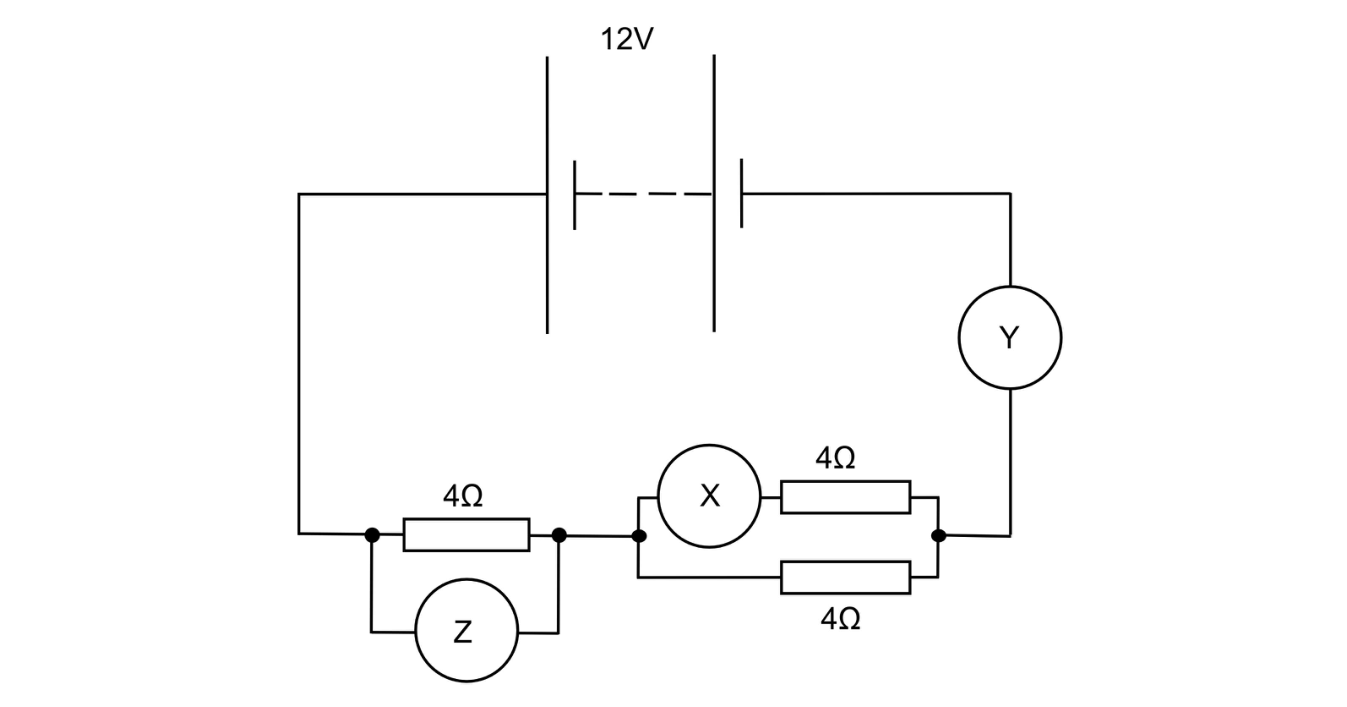
✍️ 12 V ဘက်ထရီ၊ 4 Ω သုံးခု: ဘယ်ဘက်က တစ်ခု series၊ ညာဘက် နှစ်ခု parallel။ Y က လမ်းမကြီးပေါ်၊ X က branch တစ်ခုထဲ၊ Z က ဘယ်ဘက် 4 Ω ကို across။
① parallel အတွဲ: 4 Ω တူ နှစ်ခု → 42 = 2 Ω။ စုစုပေါင်း 4 + 2 = 6 Ω
② Y က ဘက်ထရီနဲ့ series ဖြစ်လို့ I = 126 = 2.0 A
③ branch နှစ်ခု တူလို့ current ကို တစ်ဝက်စီ ခွဲတယ် — X = 1.0 A
④ Z = IR = 2.0 × 4 = 8.0 V။ အတွဲ ပေါ်မှာ 2.0 × 2 = 4 V၊ 8 + 4 = 12 ✓ → အဖြေ A
| meter | where | reading |
|---|---|---|
| Y (ammeter) | main line, in series with the battery | current 2.0 A |
| X (ammeter) | one branch of the parallel pair | current 1.0 A |
| Z (voltmeter) | across the left 4 Ω resistor: Z = IR | 8.0 V |
meter သုံးခုရဲ့ နေရာ နဲ့ ဖတ်ရတဲ့ တန်ဖိုး — ဒီ ဇယားကို ပုံနဲ့ တိုက်ကြည့်ပါ။
ထောင်ချောက်: R မတူလို့ ဗို့ တန်းတူ မခွဲဘူး — C မှား။ထောင်ချောက်: 12 V ကို resistor နှစ်နေရာ တန်းတူ ခွဲပြီး Z = 6 V (C) ထင်တာ။ R က 4 Ω နဲ့ 2 Ω မတူလို့ ဗို့လည်း မတူဘူး။ Y = 0 ဆိုတဲ့ B, E လည်း မှားတယ်။
👉 ဆုံမှတ်မှာ ပေါင်း၊ loop မှာ ဗို့ ကျ — law နှစ်ခု။👉 ဆုံမှတ်မှာ ပေါင်းတာ၊ လမ်း တစ်ပတ်မှာ ဗို့ ပြန်ကျတာ — ဒီ စည်းမျဉ်း နှစ်ခုကို နာမည် ပေးထားတယ်။
Kirchhoff's laws — ဆုံမှတ် နဲ့ loop
junction ကို 5 A ဝင် — 3 A နဲ့ 2 A ထွက်။ဝါယာ ဆုံမှတ် (junction) တစ်ခုကို 5 A ဝင်လာရင် 3 A နဲ့ 2 A ခွဲထွက်တယ်။ charge တွေ ဆုံမှတ်မှာ စုမနေ၊ ပျောက်လည်း မသွားဘူး။
Kirchhoff's first law (ဆုံမှတ် စည်းမျဉ်း): in = out။ဒါကို Kirchhoff's first law (junction rule) လို့ ခေါ်တယ်: ဝင်တဲ့ current ပေါင်း = ထွက်တဲ့ current ပေါင်း (in = out)။ charge ထိန်းသိမ်းခြင်းပါ။
Kirchhoff (ဂျာမန်၊ 1824–1887) က 1845 မှာ ရေးတယ်။ဒီ law နှစ်ခုကို Gustav Kirchhoff (ဂူစတပ် ကာ့ချ်ဟော့ဖ်၊ 1824–1887 — ဂျာမန် ရူပဗေဒ ပညာရှင်) က 1845 မှာ တက္ကသိုလ် ကျောင်းသား ဘဝတုန်းက ရေးသားခဲ့တယ်။
🤔 Currents of 4.0 A and 1.5 A flow into a junction, and 3.0 A flows out along one wire. What current flows out along the other wire?
ဝင် = 4.0 + 1.5 = 5.5 A = ထွက်။
5.5 − 3.0 = 2.5 A။
5.5 A က ဝင်တာ အကုန်လို့ ထင်မိတာ။
👉 junction မှာ charge၊ loop မှာ energy — second law။👉 junction မှာ charge ထိန်းသိမ်းတယ်။ loop တစ်ပတ်မှာတော့ energy ကို ကြည့်မယ် — second law။
Kirchhoff’s second law — loop တစ်ပတ်မှာ ဗို့ ပြန်ကျ
battery ဖြတ်တော့ 0 ကနေ 12 V တက်တယ်။series ပတ်လမ်း (12 V၊ 2 Ω၊ 4 Ω) ကို တောင်တက်သလို လျှောက်ကြည့်မယ်။ ဘက်ထရီကို ဖြတ်တော့ 0 ကနေ 12 V အထိ တက်တယ်။
2 Ω မှာ 4 V ကျ၊ 4 Ω မှာ 8 V ကျ — 0 V ပြန်ရောက်။2 Ω ဖြတ်တော့ 4 V ကျ၊ 4 Ω ဖြတ်တော့ 8 V ကျ — အစ နေရာ 0 V ကို ပြန်ရောက်တယ်။
Kirchhoff's second law (loop စည်းမျဉ်း): Σε = IR ပေါင်းဒါကို Kirchhoff's second law (loop rule) လို့ ခေါ်တယ်: loop တစ်ပတ်မှာ ဘက်ထရီ ပေးတဲ့ voltage ပေါင်း = resistor တွေမှာ ကျတဲ့ IR ပေါင်း။ energy ထိန်းသိမ်းခြင်းပါ။
🤔 A 9.0 V battery is in series with a 1.0 Ω and a 2.0 Ω resistor. What is the p.d. across the 2.0 Ω resistor?
current = 9.01.0 + 2.0 = 3.0 A။
2.0 Ω ပေါ် IR = 3.0 × 2.0 = 6.0 V၊
1.0 Ω ပေါ် 3.0 V — 6 + 3 = 9 ✓ (loop rule)။
4.5 V က တစ်ဝက်စီ ခွဲမိတာ။
👉 battery နှစ်လုံး ပတ်လမ်း — Kirchhoff နဲ့ ဖြေမယ်။👉 ဘက်ထရီ နှစ်လုံး ပါတဲ့ ပတ်လမ်းကို series/parallel နည်းနဲ့ မချုံ့နိုင်တော့ဘူး။ Kirchhoff နဲ့ ဖြေမယ်။
✍️ ဘက်ထရီ နှစ်လုံး — loop နှစ်ခုနဲ့ Kirchhoff
✍️ ဘယ် branch မှာ 12 V ဘက်ထရီ နဲ့ 1 Ω၊ ညာ branch မှာ 9 V ဘက်ထရီ နဲ့ 1 Ω၊ အလယ် branch မှာ 1 Ω တစ်ခု။ branch တစ်ခုစီက current ဘယ်လောက်လဲ?
| branch | battery | resistor | current |
|---|---|---|---|
| left | 12 V | 1 Ω | I₁ (up) |
| middle | — | 1 Ω | I₃ (down) |
| right | 9 V | 1 Ω | I₂ (up) |
branch သုံးခုမှာ ဘာတွေ ရှိလဲ — current သုံးခုကို နာမည် ပေးထားတယ်။
battery နှစ်လုံး — series/parallel မရ၊ Kirchhoff နဲ့ ဖြေ။ဘက်ထရီ နှစ်လုံးက တစ်ပြိုင်နက် တွန်းနေလို့ series လည်း မဟုတ်၊ parallel ပုံသေနည်းနဲ့လည်း မရဘူး။ Kirchhoff's laws နှစ်ခုနဲ့ ဖြေမယ်။
① current တွေကို နာမည် ပေး: ဘယ် branch I₁ (အပေါ် စီး)၊ ညာ branch I₂ (အပေါ် စီး)၊ အလယ် I₃ (အောက် စီး)။ အပေါ် junction မှာ first law: I₃ = I₁ + I₂။
② ဘယ်ဘက် loop (12 V ဘက်ထရီ၊ ဘယ် 1 Ω၊ အလယ် 1 Ω) တစ်ပတ်: second law — ဘက်ထရီ ဗို့ = IR ပေါင်း: 12 = 1 × I₁ + 1 × I₃။
③ ညာဘက် loop (9 V ဘက်ထရီ၊ ညာ 1 Ω၊ အလယ် 1 Ω): 9 = 1 × I₂ + 1 × I₃။
④ ② ကနေ I₁ = 12 − I₃၊ ③ ကနေ I₂ = 9 − I₃။ ① ထဲ ထည့်: I₃ = (12 − I₃) + (9 − I₃)။
3I₃ = 21 → I₃ = 7 A။ ဒါကြောင့် I₁ = 12 − 7 = 5 A၊ I₂ = 9 − 7 = 2 A။
စစ်: junction 5 + 2 = 7 ✓။ ဘယ် loop 5 + 7 = 12 ✓၊ ညာ loop 2 + 7 = 9 ✓။
current အနုတ် ထွက်ရင် ပြောင်းပြန် စီးတာ၊ မမှားဘူး။ပုံမှာ အဖြေအတိုင်း charge တွေ စီးနေတယ် — အလယ် branch (7 A) မှာ အမြန်ဆုံး။ current တစ်ခုခု အနုတ် ထွက်ရင် ကိုယ်ယူထားတဲ့ ဦးတည်ရာနဲ့ ပြောင်းပြန် စီးတယ်လို့ ဆိုလိုတယ် — အဖြေ မှားတာ မဟုတ်ဘူး။
🤔 In a single loop, a 12 V battery and a 4 V battery push current in opposite directions. The total resistance in the loop is 4 Ω. What current flows?
loop rule မှာ ဘက်ထရီ ဗို့ကို ဦးတည်ရာနဲ့ လက္ခဏာ ထည့်ပေါင်း — 12 − 4 = 8 V = I × 4 → I = 2 A။
4 A က ပေါင်းမိတာ (12 + 4 = 16)၊ 3 A က 12 V ကိုပဲ ယူတာ။
👉 branch R ပြောင်းရင် battery current ဘယ်လို ပြောင်းလဲ?👉 parallel branch ထဲက R တစ်ခု ပြောင်းရင် ဘက်ထရီ current ဘယ်လို ပြောင်းမလဲ? IMAT 2011။
✍️ Parallel branch တစ်ခု ပြောင်းရင် — IMAT 2011
📝 IMAT 2011 · Question 73
Three resistors are connected to a 20 V battery with a constant supply. One of the resistors is a variable resistor.
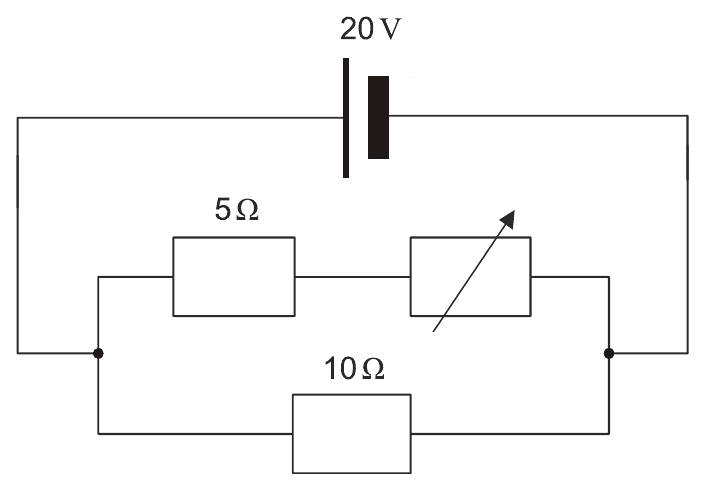
The resistance of the variable resistor is gradually increased from zero to 5 Ω.
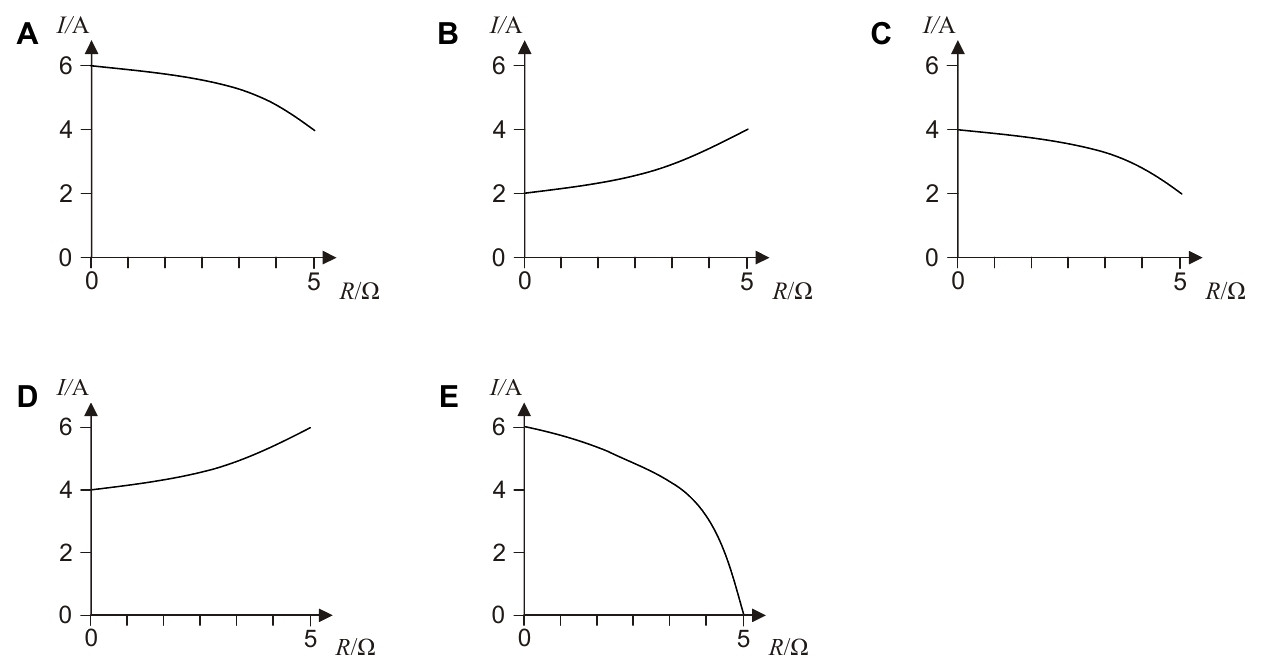
Which graph shows how the current from the battery varies with the resistance (R) of the variable resistor?
✍️ 20 V ဘက်ထရီ၊ branch နှစ်ခု parallel: အပေါ်က 5 Ω နဲ့ variable resistor R (တန်ဖိုး ပြောင်းလို့ရတဲ့ resistor)၊ အောက်က 10 Ω။
① parallel ဆိုတော့ branch တိုင်း 20 V အပြည့် ရတယ် — တစ်ခုချင်း သီးသန့် တွက်လို့ ရတယ်။
② 10 Ω branch: 2010 = 2 A — R ဘယ်လို ပြောင်းပြောင်း ဒီ current မပြောင်းဘူး။
③ R = 0 မှာ အပေါ် branch: 205 = 4 A → ဘက်ထရီ current = 4 + 2 = 6 A
④ R = 5 Ω မှာ အပေါ် branch: 205 + 5 = 2 A → 2 + 2 = 4 A
R တိုးလေ current ကျလေ — 6 A ကနေ 4 A ကို ကျတဲ့ ဂရပ် → အဖြေ A။
10 Ω branch က 2 A အမြဲ — current 4 A အောက် မကျဘူး။C (4 → 2 A) က 10 Ω branch ကို မေ့တာ၊ E က 0 A အထိ ကျတယ် — 10 Ω branch က 2 A အမြဲ စီးနေလို့ ဘက်ထရီ current က 4 A အောက် ဘယ်တော့မှ မကျဘူး။ B နဲ့ D က R တိုးရင် current တက်တဲ့ ပြောင်းပြန် ဂရပ်။
👉 ဘက်ထရီ ကိုယ်တိုင်ကကော — ‘12 V’ ဆိုတာ အမြဲ 12 V ပဲလား?
emf နဲ့ p.d. — ပေးတာ နဲ့ ယူတာ
ဘက်ထရီက 1 C ကို ပေးတဲ့ energy = emf (ε၊ ဘက်ထရီ ဗို့)ဘက်ထရီ တစ်လုံးက charge 1 C ကို ပေးတဲ့ energy အပြည့်ကို emf (ε) လို့ ခေါ်တယ် — electromotive force။ force လို့ ခေါ်ပေမဲ့ volt နဲ့ တိုင်းတယ်။
p.d. = component မှာ ပေးလိုက်တာ၊ emf = ဘက်ထရီက ပေးတာ။PART 1 က p.d. နဲ့ မတူဘူး — p.d. က component တစ်ခုကို charge 1 C က ပေးလိုက်တဲ့ energy၊ emf က ဘက်ထရီက charge 1 C ကို ပေးတဲ့ energy။
👉 ဘက်ထရီ ကိုယ်တိုင်ကကော charge ရဲ့ energy နည်းနည်း ယူသလား?
emf နဲ့ internal resistance
ဘက်ထရီ အထဲ R = internal resistance (အတွင်း ခုခံမှု၊ r)ဘက်ထရီ အထဲမှာလည်း R နည်းနည်း ရှိတယ်။ ဒါကို internal resistance (အတွင်း ခုခံမှု၊ r) လို့ ခေါ်တယ်။ current စီးရင် ဘက်ထရီ ကိုယ်တိုင် နည်းနည်း ပူတယ်။
✍️ ε = 9 V၊ r = 1 Ω ဘက်ထရီကို အပြင် R = 8 Ω နဲ့ ဆက်တယ်။ r နဲ့ R က လမ်း တစ်ကြောင်းတည်း — series ပါ။
I = εR + r = 98 + 1 = 1 A
ဘက်ထရီ ဖျား နှစ်ဖက်ကြား (terminal voltage) V = ε − Ir = 9 − 1 = 8 V။ 1 V က ဘက်ထရီ အထဲမှာ ဆုံးသွားတာ။
current များလေ ဆုံးတာ များလေ — ကား ရှေ့မီး မှိန်တယ်။current များလေ ဆုံးတာ များလေ — ကား စက်နှိုးချိန် current အများကြီး ဆွဲတော့ ရှေ့မီး မှိန်သွားတာ ဒါကြောင့်ပဲ။
🤔 A battery of emf 12 V and internal resistance 0.50 Ω delivers a current of 2.0 A. What is its terminal voltage?
V = ε − Ir = 12 − 2.0 × 0.50 = 11 V။
13 V က ပေါင်းမိတာ၊ 1.0 V က ဆုံးတဲ့ ဗို့ပဲ။
👉 V–I ဂရပ်ကနေ ε နဲ့ r ကို ဖတ်လို့ ရတယ်။👉 terminal voltage ကို current နဲ့ ဂရပ် ဆွဲရင် ε နဲ့ r ကို တိုက်ရိုက် ဖတ်လို့ ရတယ်။
terminal voltage ဂရပ် — intercept = ε၊ gradient = −r
ε = 9 V၊ r = 1 Ω — R အမျိုးမျိုးနဲ့ I နဲ့ V တိုင်းမယ်။emf ε = 9 V နဲ့ internal resistance r = 1 Ω ရှိတဲ့ ဘက်ထရီကို အပြင် R အမျိုးမျိုးနဲ့ ဆက်ပြီး current I နဲ့ terminal voltage V ကို တိုင်းမယ်။
V = ε − Ir — current များလေ V နိမ့်လေ။V = ε − Ir ဖြစ်လို့ V–I ဂရပ်က အောက်ကို စောင်းဆင်းတဲ့ မျဉ်းဖြောင့်။ current များလေ ဘက်ထရီ အထဲမှာ ဆုံးတဲ့ Ir များလေ V နိမ့်လေ။
I = 0 မှာ V = ε — intercept = 9 V။I = 0 (ဘာမှ မဆက်) မှာ V = ε — ဒါကြောင့် V ဝင်ရိုးကို ဖြတ်တဲ့ နေရာ (intercept) = ε = 9 V။
✍️ gradient (စောင်း) = ΔVΔI = 3 − 76 − 2 = −1 Ω။ gradient = −r ဆိုတော့ r = 1 Ω။
V = 0 မှာ I = εr = 9 A — short circuit current။V = 0 ရောက်တဲ့ နေရာက I = εr = 9 A — ဘက်ထရီ ဖျား နှစ်ဖက်ကို ဝါယာနဲ့ တိုက်ရိုက် ဆက်တဲ့ (short circuit) current၊ အများဆုံး ဖြစ်နိုင်တဲ့ current။
🤔 The V–I graph of a cell is a straight line. It meets the V axis at 6.0 V, and V = 4.5 V when I = 3.0 A. What is the internal resistance?
ε = 6.0 V (intercept)၊
Ir = 6.0 − 4.5 = 1.5 V → r = 1.53.0 = 0.5 Ω။
1.5 Ω က V/I (အပြင် R) ကို ယူမိတာ၊ 2.0 က εI။
👉 ဘက်ထရီ နှစ်လုံး သုံးလုံး တွဲသုံးရင် emf ဘယ်လို ပေါင်းလဲ?
cells — series ဆို emf ပေါင်း၊ parallel ဆို emf မပြောင်း
1.5 V cell သုံးလုံး + ကို − နဲ့ ထိ series ဆက်မယ်။1.5 V cell (ဓာတ်ခဲ တစ်လုံး) သုံးလုံးကို တစ်လုံးရဲ့ + ကို နောက်တစ်လုံးရဲ့ − နဲ့ ထိအောင် တန်းဆက် (series) မယ်။ ရီမုတ်၊ ဓာတ်မီး ထဲမှာ ဒီလို ထည့်ထားတယ်။
emf ပေါင်း — 1.5 × 3 = 4.5 V၊ r တွေလည်း ပေါင်း။charge က cell တစ်လုံး ဖြတ်တိုင်း 1.5 J/C ရလို့ emf တွေ ပေါင်း — 1.5 + 1.5 + 1.5 = 4.5 V။ internal resistance r တွေလည်း ပေါင်းတယ်။
တစ်လုံး ပြောင်းပြန် ဆို နုတ် — 1.5 V၊ ဓာတ်မီး မှိန်တယ်။တစ်လုံးကို ပြောင်းပြန် ထည့်မိရင် အဲဒီ cell က ဆန့်ကျင်ဘက် တွန်းလို့ နုတ်ရတယ် — 1.5 + 1.5 − 1.5 = 1.5 V။ ဓာတ်မီး မှိန်သွားတာ ဒါကြောင့်။
တူညီတဲ့ cell နှစ်လုံးကို parallel (+ ချင်း၊ − ချင်း) ဆက်ရင်ကော?
parallel ဆို emf 1.5 V ပဲ၊ r တစ်ဝက်၊ ပိုကြာ ခံတယ်။charge တစ်ခုက cell တစ်လုံးကိုပဲ ဖြတ်လို့ emf မပြောင်း — 1.5 V။ ဒါပေမဲ့ current ကို နှစ်လုံး ခွဲထုတ်လို့ r တစ်ဝက် ဖြစ်ပြီး ပိုကြာကြာ ခံတယ်။
🤔 Four identical cells, each of emf 1.5 V, are connected in series, but one of them is put in the wrong way round. What is the total emf?
1.5 × 3 = 4.5 V က တွန်း၊ ပြောင်းပြန် တစ်လုံးက 1.5 V နုတ် → 3.0 V။
4.5 V က ပြောင်းပြန် cell ကို 0 လို့ ယူမိတာ၊ 6.0 V က ပြောင်းပြန် ဖြစ်တာ မမြင်တာ။
👉 ဘက်ထရီ ဖျား နှစ်ဖက်ကို ဝါယာ တိုက်ရိုက် ဆက်မိရင် ဘာဖြစ်မလဲ?
open circuit နဲ့ short circuit
ခလုတ် ဖွင့် လမ်း ပြတ် = open circuit (ပြတ်နေတဲ့ ပတ်လမ်း)ဘယ်ဘက် ပတ်လမ်းမှာ ခလုတ် ဖွင့်ထားတယ် — လမ်း ပြတ်နေတယ်။ ဒါကို open circuit (ပြတ်နေတဲ့ ပတ်လမ်း) လို့ ခေါ်တယ်။
I = 0၊ မီး မလင်း၊ ဖျား နှစ်ဖက် V = ε။လမ်း ပြတ်လို့ I = 0၊ မီး မလင်းဘူး။ r မှာ ဆုံးတာ မရှိလို့ ဘက်ထရီ ဖျား နှစ်ဖက် V = ε။ ပြတ်နေတဲ့ ခလုတ် နှစ်ဖက်မှာ voltmeter ထိရင် ε အပြည့် ပြတယ်။
ညာဘက် ပတ်လမ်းမှာ ခလုတ် ပိတ်ထားလို့ မီး လင်းနေတယ်။
R သုည ဝါယာ ဆက်မိ = short circuit (တိုလမ်း)၊ မီး ငြိမ်း။မီးသီး ဖျား နှစ်ဖက်ကို R မရှိသလောက် ဝါယာ တစ်ချောင်း ဆက်မိရင် current အကုန် R သုည လမ်း (ဝါယာ) ဘက် သွားလို့ မီး ငြိမ်းတယ်။ ဒါကို short circuit (တိုလမ်း) လို့ ခေါ်တယ်။
✍️ အပြင် R ≈ 0 ဆိုတော့ I = εr ပဲ ကျန်တယ် — ε = 9 V၊ r = 0.5 Ω ဆို I = 18 A။
ဘက်ထရီ ပျက်၊ မီး လောင်နိုင် — fuse က ကာကွယ်တယ်။ဘက်ထရီ ပူပြီး ပျက်နိုင်၊ ဝါယာ ပူပြီး မီး လောင်နိုင်တယ်။ fuse က ဒါကို ကာကွယ်တယ် (PART 4)။
🤔 Two lamps are in series with a battery. A thick wire is then connected across one of the lamps. What happens?
ဝါယာ ကပ်ထားတဲ့ မီးသီး short ဖြစ်လို့ current မရ — ငြိမ်းတယ်။
စုစုပေါင်း R ကျလို့ current တက်ပြီး ကျန်တဲ့ မီးသီး ပိုလင်းတယ် (ဘက်ထရီ ဗို့ အကုန် သူ့ဆီ ရောက်)။
👉 ဗို့ နည်းနည်း လိုရင် resistor နှစ်ခုနဲ့ ခွဲယူ။👉 ဘက်ထရီ ဗို့ထက် နည်းတဲ့ ဗို့ တစ်ခု လိုရင် resistor နှစ်ခုနဲ့ ခွဲယူလို့ ရတယ်။
potential divider — resistor နှစ်ခုနဲ့ ဗို့ ခွဲယူ
12 V ကို 4 kΩ နဲ့ 2 kΩ series — R₂ ကနေ Vout ယူမယ်။12 V ဘက်ထရီကို R₁ = 4 kΩ နဲ့ R₂ = 2 kΩ series ဆက်ထားတယ် (1 kΩ = 1000 Ω)။ R₂ ဖျား နှစ်ဖက်ကနေ ထွက်ပေါက် (output) ယူမယ် — ဒီ ဗို့ကို Vout လို့ ခေါ်တယ်။
✍️ series မို့ current တစ်ခုတည်း: I = 126000 = 2 mA (0.002 A)။
R₁ ပေါ် V = IR = 0.002 × 4000 = 8 V၊ R₂ ပေါ် 0.002 × 2000 = 4 V။ 8 + 4 = 12 ✓ — R ကြီးတဲ့ resistor က ဗို့ ပိုယူတယ် (R အချိုး 2 : 1 အတိုင်း)။
ပုံသေနည်း တစ်ကြောင်းတည်း: Vout = V × R₂R₁ + R₂ = 12 × 24 + 2 = 4 V။
R₂ ကြီးရင် Vout တက် — variable resistor နဲ့ ချိန်ယူ။R₂ ကို ကြီးရင် (ဒါမှမဟုတ် R₁ ကို ငယ်ရင်) Vout တက်တယ်။ R₂ နေရာမှာ variable resistor ထားရင် 0 ကနေ 12 V အထိ ဗို့ ချိန်ယူလို့ ရတယ်။
🤔 A 9.0 V supply is connected across a 1.0 kΩ resistor in series with a 2.0 kΩ resistor. What is the p.d. across the 2.0 kΩ resistor?
Vout = 9.0 × 2.01.0 + 2.0 = 6.0 V။
3.0 V က 1 kΩ ဘက်ရဲ့ ဗို့၊ 4.5 V က တစ်ဝက် ခွဲမိတာ။
👉 R₂ နေရာ အပူ/အလင်း resistor ထည့်ရင် sensor။👉 R₂ နေရာမှာ temperature နဲ့ အလင်း ပေါ် ပြောင်းတဲ့ resistor ထည့်ရင် sensor ဖြစ်သွားတယ်။
sensor circuit — thermistor နဲ့ LDR ပါတဲ့ potential divider
အောက်မှာ thermistor၊ အပေါ် 10 kΩ၊ 12 V။potential divider ရဲ့ အောက်ဘက်မှာ thermistor (PART 2) ထည့်မယ်။ အပေါ်က fixed resistor 10 kΩ၊ supply 12 V။ Vout ကို thermistor ဖျား နှစ်ဖက်ကနေ ယူတယ်။
✍️ အေးတဲ့ အခါ thermistor 10 kΩ: Vout = 12 × 1010 + 10 = 6 V။
ပူလာရင် thermistor R ကျတယ် — 2 kΩ ဆို Vout = 12 × 210 + 2 = 2 V။
ပူရင် Vout ကျ — အေးရင် heater ဖွင့်တဲ့ sensor။ဒါကြောင့် ဒီ ပတ်လမ်းမှာ temperature တက်ရင် Vout ကျတယ်။ Vout ကို ခလုတ် ပတ်လမ်း (switch) နဲ့ ဆက်ရင် အေးလာရင် heater ဖွင့်ပေးတဲ့ sensor ဖြစ်တယ်။
နေရာ လဲရင် ပူတော့ Vout တက် — fire alarm။နေရာ လဲထားရင် (thermistor အပေါ်၊ fixed R အောက်) ပူလာရင် Vout တက်တယ် — fire alarm (မီး သတိပေး ခေါင်းလောင်း) လုပ်လို့ ရတယ်။
LDR အောက်မှာ — မှောင်ရင် Vout တက်၊ လမ်းမီး လင်း။LDR ကို အောက်မှာ ထားရင် မှောင်လာလေ R တက်၊ Vout တက်လေ — ည ရောက်ရင် အလိုလို လင်းတဲ့ လမ်းမီး။
🤔 An LDR is the lower resistor of a potential divider, with a 10 kΩ resistor above it and a 5.0 V supply. In darkness the LDR's resistance is 40 kΩ. What is the output voltage across the LDR?
Vout = 5.0 × 4010 + 40 = 4.0 V။
1.0 V က 10 kΩ ပေါ်က ဗို့၊ 2.5 V က တစ်ဝက် ခွဲမိတာ။
👉 PART 3 ပြီးပြီ — ပြန်စစ်ကြည့်မယ်။
🔁 ပြန်ကြည့်မယ် — PART 3
🤔 Resistors of 2 Ω, 3 Ω and 5 Ω are in series with a 20 V battery. What is the voltage across the 5 Ω resistor?
R = 10 Ω၊
I = 2010 = 2 A၊
5 Ω ပေါ် V = 2 × 5 = 10 V။
20 V က parallel လို ထင်မိတာ။
🤔 Two identical cells, each of emf 1.5 V, are connected in parallel. What is the emf of the combination?
parallel မှာ charge က cell တစ်လုံးကိုပဲ ဖြတ်လို့ emf 1.5 V မပြောင်းဘူး။
r တစ်ဝက် ဖြစ်တာပဲ ပြောင်းတယ်။
3.0 V က series။
🤔 A 4 Ω resistor is in series with a parallel pair of 4 Ω and 12 Ω, across 14 V. What is the battery current?
4 ∥ 12 = 4816 = 3 Ω၊
+ 4 = 7 Ω၊
I = 147 = 2 A။
0.7 A က အကုန် series (20 Ω)။
🤔 A high-resistance voltmeter is connected across a battery of emf 9.0 V and internal resistance 0.5 Ω, with nothing else connected. What does it read?
open circuit — current မစီးလို့ (I ≈ 0) Ir ≈ 0၊ V = ε − Ir ≈ 9.0 V။
18 V က short circuit current (εr = 18 A) နဲ့ ရောမိတာ။
Power, heating, kWh, AC and DC
ပါဝါ၊ အပူ၊ မီတာခ၊ AC နဲ့ DC
Power — တစ်စက္ကန့်မှာ energy ဘယ်လောက်
“2000 W”၊ “60 W” — ဘာကို ပြောတာလဲ?ရေနွေးအိုးပေါ်မှာ “2000 W”၊ မီးသီးပေါ်မှာ “60 W” လို့ ရေးထားတယ်။ ဒီ ဂဏန်းတွေက ဘာကို ပြောတာလဲ? မီတာခ နဲ့ ဘယ်လို ဆိုင်လဲ?
ရေနွေးအိုးက တစ်စက္ကန့် 2000 J ကို အပူ ပြောင်းတယ်။ရေနွေးအိုးက တစ်စက္ကန့် (every second) ကို လျှပ်စစ် energy 2000 J ကို အပူ အဖြစ် ပြောင်းပေးတယ်။
power (ပါဝါ) = Et၊ ယူနစ် watt (ဝပ်) = J/s။တစ်စက္ကန့်မှာ ပြောင်းတဲ့ energy ကို power (ပါဝါ၊ P) လို့ ခေါ်တယ်: P = Et။ ယူနစ်က watt (W) = J/s။
60 W မီးသီး — တစ်စက္ကန့် 60 J ပဲ သုံးတယ်။60 W မီးသီးကတော့ တစ်စက္ကန့်ကို 60 J ပဲ သုံးတယ်။ ရေနွေးအိုးက မီးသီး 30 လုံးကျော်စာ energy စားတယ်။
🤔 A motor transfers 1200 J of energy in 4.0 s. What is its power?
P = Et = 12004.0 = 300 W။
4800 က မြှောက်မိတာ၊ 0.0033 က ပြောင်းပြန် စားမိတာ။
👉 လျှပ်စစ်မှာ power ကို V နဲ့ I ကနေ ဘယ်လို တွက်မလဲ?
P = VI = I²R = V²R
✍️ V က J/C (charge 1 C ကို energy)၊ I က C/s (တစ်စက္ကန့်မှာ charge)။
နှစ်ခု မြှောက်ရင် V × I = J/C × C/s
C ချင်း ချေသွားပြီး J/s ကျန်တယ် — ဒါ power ပဲ: P = VI
V = IR ကို အစားထိုးရင် P = I × R × I = I²R
I = V/R ကို အစားထိုးရင် P = V × VR = V²R။ ပုံသေနည်း သုံးခု — ပေးထားတဲ့ ဂဏန်း နှစ်ခုနဲ့ ကိုက်တာ ရွေးသုံးပါ။
🤔 A 12 V supply drives 3.0 A through a lamp. What is the power?
P = VI = 12 × 3.0 = 36 W။
4.0 W က V/I (= R)၊ 108 W က I²V လို ရောမိတာ။
👉 IMAT က ‘ဘယ် ဖော်ပြချက်တွေက power ယူနစ်လဲ’ လို့လည်း မေးတယ်။
✍️ power ယူနစ် စစ်နည်း
📝 IMAT 2013 Q53 → သင်ခန်းစာ 65၊ အသစ်: F × v၊ I²R၊ Q × V။📝 IMAT 2013 Q53 (12mv²t၊ V²R၊ mght ထဲက power ယူနစ်) → သင်ခန်းစာ 65 မှာ အပြည့် ဖြေထားတယ်။ ဒီမှာ ပုံစံတူ အသစ် စစ်မယ်: F × v၊ I²R၊ Q × V။
✍️ စစ်နည်း: power = energy ÷ time — ယူနစ် J/s (= W) ထွက်ရင် power။
① F × v: N × m/s = (N m)/s။ N m = J (force × အကွာ = work) ဆိုတော့ J/s ✓ — power။
② I²R = I × (IR) = I × V — ခုနက P = VI ပဲ ✓။
③ Q × V: C × J/C = J — energy ပဲ၊ time နဲ့ မစားထားလို့ power မဟုတ်ဘူး ✗။
F × v နဲ့ I²R ပဲ power — “1 and 2 only”။ဒါကြောင့် power ယူနစ် ရှိတာ F × v နဲ့ I²R ပဲ — “1 and 2 only”။ Q × V ကို t နဲ့ စားမှ (QVt = VI) power ဖြစ်မယ်။
🤔 Which of these is NOT a unit of power?
J s⁻¹ = W၊
V × A = W (P = VI)၊
A² × Ω = W (P = I²R)။
kg m² s⁻² က N m = J — energy ယူနစ်။
👉 resistor ထဲမှာ power က ဘာ ဖြစ်သွားလဲ? အပူ!
Joule heating — current နှစ်ဆ၊ အပူ လေးဆ
📝 IMAT 2017 · Question 60
A resistor has a resistance of 5.0 Ω. There is a direct current of 10 A in the resistor. What is the power dissipated by the resistor?
current စီးလို့ ပူလာတာ = Joule heating (Joule အပူ)resistor ထဲ current စီးရင် electron တွေ ion တွေကို တိုက်ပြီး energy ပေးလို့ ပူလာတယ်။ ဒါကို Joule heating (Joule effect) လို့ ခေါ်တယ်။
James Joule (အင်္ဂလိပ်၊ 1818–1889) ဆီက နာမည်။နာမည်က James Prescott Joule (ဂျိမ်းစ် ပရက်စကော့ ဂျူးလ်၊ 1818–1889 — အင်္ဂလိပ် ဘီယာချက် လုပ်ငန်းရှင် နဲ့ ရူပဗေဒ ပညာရှင်) ဆီက လာတယ်။
ဝါယာ အပူ တိုင်းခဲ့လို့ joule (J) က သူ့ နာမည်။1840 လောက်က ဝါယာထဲ ထွက်တဲ့ အပူကို တိုင်းခဲ့တယ်။ energy ယူနစ် joule (J) က သူ့ နာမည်ပဲ။
အပူ ထွက်နှုန်းက P = I²R၊ t စက္ကန့်မှာ ထွက်တဲ့ အပူက I²Rt။
I² ကြောင့် current နှစ်ဆ ဆို အပူ လေးဆ။I က နှစ်ထပ် (²) ဖြစ်လို့ current နှစ်ဆ ဆို အပူ လေးဆ (heat × 4)။ 3 ဆ ဆို 9 ဆ။
✍️ I = 10 A၊ R = 5.0 Ω → P = I²R = 10² × 5.0 = 100 × 5.0 = 500 W → အဖြေ C
ထောင်ချောက်: 50 W (D) က I × R ကို power ထင်တာ။ထောင်ချောက်: 50 W (D) က I × R = V ကို power ထင်တာ၊ 250 W က I × R²၊ 20 W က I²R။
🤔 A 2 Ω resistor and an 8 Ω resistor are in series. How many times more heating power does the 8 Ω resistor produce than the 2 Ω resistor?
series မို့ I တူ — P = I²R က R နဲ့ အချိုးကျ: 82 = 4 ဆ။
16 က R ကို နှစ်ထပ် တင်မိတာ၊ 14 က ပြောင်းပြန်။
👉 ပြောင်းပြန် — power နဲ့ current ပေးပြီး R ကို မေးရင်ကော?
✍️ R = PI² — IMAT 2024
📝 IMAT 2024 · Question 57
In a conductor, when a current of 10A flows, 2922W are dissipated. What is the resistance value of the conductor?
✍️ P = I²R ကို R ဘက် ပြောင်း: R = PI² = 292210² = 2922100 = 29.22 Ω → အဖြေ D
ထောင်ချောက်: I နဲ့ပဲ စားရင် B၊ မစားရင် E။ထောင်ချောက်: I² အစား I နဲ့ပဲ စားရင် 292.2 Ω (B)။ ဘာနဲ့မှ မစားရင် 2922 Ω (E)။
✍️ 230 V မှာ 2000 W ရေနွေးအိုး — current: I = P/V = 2000230 ≈ 8.7 A
coil ရဲ့ R = V²P = 230²2000 = 529002000 ≈ 26 Ω
🤔 A 60 W lamp works on 230 V. What is its resistance?
R = V²P = 230²60 = 5290060 ≈ 880 Ω။
3.8 က V/P ကို R ထင်တာ၊ 13 800 က V × P။
👉 series နဲ့ parallel မှာ မီး အလင်း ဘယ်လို ကွာလဲ?👉 power များလေ မီးသီး ပိုလင်းလေ — series နဲ့ parallel မှာ ဘယ်လို ကွာလဲ?
မီးသီး အလင်း = power
12 Ω မီးသီး၊ 12 V —
P = 12 W၊
လင်းလင်း။12 Ω မီးသီး တစ်လုံးကို 12 V ဘက်ထရီနဲ့ ဆက်ရင် P = V²R = 14412 = 12 W။
လင်းလင်း လင်းတယ်။
series နှစ်လုံး — 6 V စီ၊ 3 W၊ မှိန်မှိန်။မီးသီး နှစ်လုံး series ဆက်ရင် 12 V ကို ခွဲယူလို့ တစ်လုံး 6 V စီပဲ ရတယ်။ P = 3612 = 3 W — လေးပုံ တစ်ပုံ၊ မှိန်မှိန်ပဲ လင်းတယ်။
parallel — 12 V စီ၊ 12 W စီ၊ အရင်လို လင်း။parallel ဆက်ရင် branch တိုင်း 12 V အပြည့် ရလို့ တစ်လုံး 12 W စီ — တစ်လုံးတည်း ဆက်တုန်းကလို လင်းတယ်။
အလင်း = power၊ ဗို့ တစ်ဝက် ဆို power လေးပုံ တစ်ပုံ။မီးသီး ဘယ်လောက် လင်းလဲ ဆိုတာ သူ ရတဲ့ power ပဲ။ ဗို့ တစ်ဝက် ရရင် power လေးပုံ တစ်ပုံ (V² ကြောင့်)။
🤔 Three identical 6.0 Ω lamps are connected in series to a 12 V battery. What is the power of each lamp?
series မှာ 12 V ကို သုံးလုံး ခွဲလို့ တစ်လုံး 4 V။
P = V²R = 166 ≈ 2.7 W။
8.0 W က သုံးလုံး ပေါင်း power၊ 24 W က တစ်လုံးတည်း 12 V ရရင်။
👉 R = 0 ဆို အပူ ထွက်ဦးမလား? အကျိုး သုံးမျိုး။👉 R = 0 ဖြစ်သွားရင် အပူ ထွက်ပါဦးမလား? current ရဲ့ အကျိုး သုံးမျိုး ကြည့်မယ်။
Current ရဲ့ အကျိုး သုံးမျိုး — IMAT 2012
📝 IMAT 2012 · Question 79
When cooled below 4.2 K, mercury becomes a superconductor, which means it has no electrical resistance. When a current is passed through mercury under these conditions, which of the following effects will be present?
1. thermal
2. chemical
3. magnetic
ပထမ — heating၊ P = I²R ဖြစ်လို့ R ရှိမှ ပူတယ်။current စီးရင် အကျိုး သုံးမျိုး ဖြစ်နိုင်တယ်။ ပထမ — heating (အပူ)။ P = I²R ဖြစ်လို့ R ရှိမှ (needs R) အပူ ထွက်တယ်။
ဒုတိယ — chemical၊ electrolyte ထဲ ion ရွေ့ပြီး ဓာတ်ပြု။ဒုတိယ — chemical (ဓာတု) အကျိုး။ ion ပါတဲ့ အရည် (electrolyte) ထဲမှာ ion တွေ ကိုယ်တိုင် ရွေ့ပြီး electrode မှာ ဓာတ်ပြုတယ် — electrolysis (သင်ခန်းစာ 16)။
တတိယ — magnetic၊ current ရှိရင် အမြဲ ဖြစ်တယ်။တတိယ — magnetic (သံလိုက်) အကျိုး။ ရွေ့နေတဲ့ charge တိုင်း သံလိုက်စက်ကွင်း ဖြစ်စေလို့ current ရှိရင် အမြဲ (always) ဖြစ်တယ် — compass ညွှန်တံ လှည့်သွားတယ် (သင်ခန်းစာ 75)။
Hg (mercury၊ Z 80) က period 6၊ group 12 (d block)။ အခန်း အပူချိန်မှာ အရည် ဖြစ်တဲ့ တစ်ခုတည်းသော သတ္တု။
R = 0 ပစ္စည်း = superconductor (R သုည ပစ္စည်း)၊
Hg 4.2 K။mercury (Hg) ကို 4.2 K အောက် အေးရင် R = 0 ဖြစ်သွားတယ်။
R လုံးဝ မရှိတဲ့ ပစ္စည်းကို superconductor (R သုည ပစ္စည်း) လို့ ခေါ်တယ်။
R = 0 — အပူ ✗၊ ဓာတု ✗၊ သံလိုက် ✓ → “3 only”။R = 0 ဆိုတော့ I²R = 0 — အပူ မထွက် ✗။ mercury က သတ္တု၊ electron ပဲ စီးလို့ ဓာတု မဖြစ် ✗။ သံလိုက်ကတော့ ဖြစ် ✓ → “3 only” (A)။
fuse — current များရင် ပူပြီး အရည်ပျော်၊ လမ်း ဖြတ်တယ်။အပူ အကျိုးကို အသုံးချတာ fuse — ဝါယာ ပါးလေးက current များလွန်းရင် ပူပြီး အရည်ပျော် (melts)၊ ပတ်လမ်းကို ဖြတ်ပေးလို့ မီးလောင်တာ ကာကွယ်တယ်။
👉 မီတာခ ဘယ်လို တွက်လဲ?
kWh — မီတာခ တွက်နည်း
မီတာ ယူနစ် = kilowatt-hour (kWh၊ “ယူနစ်”) = 1 kW × 1 h။မီတာက energy ကို joule နဲ့ မဟုတ်ဘဲ kilowatt-hour (kWh၊ “ယူနစ်”) နဲ့ ရေတွက်တယ်။ 1 kW ပစ္စည်းကို 1 နာရီ (1 kW for 1 h) သုံးရင် 1 kWh။
joule နဲ့ ပြောင်းရင် 1 kWh = 1000 W × 3600 s = 3.6 × 10⁶ J။
✍️ 2 kW ရေနွေးအိုးကို နာရီဝက် ဖွင့်ရင် E = P × t = 2 kW × 0.5 h = 1 kWh — ယူနစ် တစ်ခု။
1 kWh ကို €0.15 ဆိုရင် ကုန်ကျ = 1 × 0.15 = €0.15။ kWh × ဈေး = မီတာခ။
🤔 A 100 W lamp is left on for 10 hours. How much energy does it use?
100 W = 0.1 kW၊
0.1 kW × 10 h = 1.0 kWh။
1000 က W ကို kW မပြောင်းတာ။
👉 IMAT 2012 က မီးသီး နှစ်မျိုး ဈေး နှိုင်းပြီး မေးခဲ့တယ်။
✍️ kWh နဲ့ ငွေ — မီးသီး လဲရင် ဘယ်တော့ ကာမိလဲ
📝 IMAT 2012 Q15 → သင်ခန်းစာ 69၊
ဒီမှာ ဂဏန်း အသစ်။📝 IMAT 2012 Q15 (100 W မီးသီးကို 20 W နဲ့ လဲတဲ့ ပုစ္ဆာ) → သင်ခန်းစာ 69 မှာ အပြည့် ဖြေထားတယ် (key ဘာလို့ 160 h ဖြစ်လဲ ရှင်းထားတယ်)။
ဒီမှာ ဂဏန်း အသစ်နဲ့ နည်း မှန်မှန် လုပ်မယ်။
✍️ 60 W မီးသီး (€1) ကို 10 W LED (€4) နဲ့ လဲမယ်။ လျှပ်စစ် 1 kWh = €0.20။ LED ကို ဘယ်နှ နာရီ သုံးပြီးမှ ဈေး ပိုပေးခဲ့တာ ပြန်ကာမိမလဲ?
① ဈေး ပိုပေးရတာ: €4 − €1 = €3။
② LED လည်း လျှပ်စစ် သုံးလို့ သက်သာတာ ကွာခြားချက်ပဲ: 60 − 10 = 50 W = 0.05 kW။
③ 1 နာရီမှာ သက်သာ energy 0.05 kW × 1 h = 0.05 kWh → 0.05 × €0.20 = €0.01။
④ ကာမိ နာရီ = €3 ÷ €0.01 = 300 h။
⚠ LED 10 W ကို မနုတ်ရင် 250 h ဆိုတဲ့ အမှား ရမယ်။⚠ LED သုံးတဲ့ 10 W ကို မနုတ်ဘဲ 60 W အကုန် သက်သာတယ် ထင်ရင် 0.06 × 0.20 = €0.012 → 250 h ဆိုတဲ့ အမှား ရမယ်။
🤔 A 40 W bulb costing €0.50 is replaced by an 8 W LED costing €2.10. Electricity costs €0.25 per kWh. After how many hours of use does the LED pay back its extra cost?
ပိုပေး €1.60။
သက်သာ 40 − 8 = 32 W = 0.032 kW → 1 h မှာ 0.032 × 0.25 = €0.008။
1.600.008 = 200 h။
160 h က LED ရဲ့ 8 W ကို မနုတ်ဘဲ 40 W အကုန် ယူမိတာ။
👉 ဘက်ထရီ လျှပ်စစ် နဲ့ နံရံ ပလပ်ပေါက် လျှပ်စစ် တူသလား?
DC နဲ့ AC — ဘက်ထရီ နဲ့ ပလပ်ပေါက်
တစ်ဖက်တည်း စီးတာ = direct current (DC၊ တိုက်ရိုက် လျှပ်စီး)ဘက်ထရီမှာ + နဲ့ − မပြောင်းလို့ current က တစ်ဖက်တည်း တသမတ်တည်း စီးတယ်။ ဒါကို direct current (DC၊ Direct Current၊ တိုက်ရိုက် လျှပ်စီး) လို့ ခေါ်တယ်။
ဘက်ပြောင်းတာ = alternating current (AC၊ ဘက်ပြောင်း လျှပ်စီး)နံရံ ပလပ်ပေါက်ကတော့ ဘက် အမြဲ ပြောင်းနေတယ် — electron တွေ ရှေ့တိုး နောက်ဆုတ် လှုပ်နေတယ်။ ဒါကို alternating current (AC၊ Alternating Current၊ ဘက်ပြောင်း လျှပ်စီး) လို့ ခေါ်တယ်။
period (T၊ တစ်ပတ် ကာလ)၊ frequency (f၊ ကြိမ်နှုန်း) = 1Tလှိုင်း တစ်ပတ် ပြည့်ဖို့ ကြာချိန်က period (T)၊ တစ်စက္ကန့်မှာ ပတ်ရေက frequency (f၊ hertz Hz): f = 1T။
✍️ မြန်မာ ဓာတ်အား 50 Hz: T = 150 = 0.02 s။ တစ်ပတ်မှာ ဘက် 2 ခါ ပြောင်းလို့ တစ်စက္ကန့်ကို 100 ခါ ပြောင်းတယ်။
“230 V” = rms တန်ဖိုး၊ peak ≈ 325 V။“230 V” က DC 230 V နဲ့ အပူ တူတူ ထုတ်ပေးတဲ့ တန်ဖိုး — rms (root mean square)။ အမြင့်ဆုံး peak က 230 × √2 ≈ 325 V။
📈 rms — AC ရဲ့ အပူကို DC နဲ့ နှိုင်းတဲ့ နည်း
AC current ပျမ်းမျှ 0 ဆိုပေမဲ့ resistor ပူတယ်။အပေါ် ဂရပ်က AC current — အပေါင်း အနုတ် အလှည့်ကျ။ ပျမ်းမျှ current က 0 ဆိုပေမဲ့ resistor က ပူတယ်။
I² ကြောင့် P က အမြဲ အပေါင်း — 0 နဲ့ P₀ ကြား။အပူ ထွက်နှုန်း P = I²R မှာ I ကို နှစ်ထပ် တင်လို့ current အနုတ် ဖြစ်ချိန်မှာလည်း P အပေါင်းပဲ — အောက် ဂရပ်မှာ P က 0 နဲ့ peak P₀ ကြား လှုပ်တယ်။
P ပျမ်းမျှ = P₀2။P ရဲ့ ပျမ်းမျှက P₀ ရဲ့ တစ်ဝက် — ကုန်းတွေကို ဖြတ်ချပြီး ချိုင့်တွေ ဖြည့်ရင် P₀2 မှာ ပြားပြား မျဉ်း ရတယ်။
Irms = I₀√2၊ peak = 230 × √2 ≈ 325 V။ဒီ ပျမ်းမျှ အပူ ထုတ်တဲ့ DC current က Irms: Irms² = I₀²2 → Irms = I₀√2။ ဗို့လည်း ဒီလိုပဲ — peak = rms × √2 = 230 × 1.41 ≈ 325 V။
AC ဘာလို့ သုံးလဲ? transformer နဲ့ ဗို့ တင်/ချ လွယ်လို့။AC ကို ဘာလို့ သုံးလဲ? transformer နဲ့ ဗို့ကို အလွယ်တကူ တင်လို့ ချလို့ ရလို့ (သင်ခန်းစာ 75)။ ဖုန်း adapter က AC ကို ဗို့နိမ့် DC ပြောင်းပေးတယ်။
🤔 An AC supply has a frequency of 60 Hz. What is its period?
T = 1f = 160 ≈ 0.017 s (17 ms)။
60 s က f ကို T ထင်တာ။
👉 230 V အန္တရာယ် — ဓာတ် မလိုက်အောင် ဘယ်လို ကာကွယ်လဲ?👉 ပလပ်ပေါက် လျှပ်စစ်က 230 V — အန္တရာယ် ရှိတယ်။ ဓာတ် မလိုက်အောင် ဘယ်လို ကာကွယ်လဲ?
earth wire နဲ့ fuse — ဓာတ် မလိုက်၊ မီး မလောင်
live (အညို)၊ neutral (အပြာ)၊ earth (အစိမ်း-အဝါ)။ပလပ်ကြိုး ထဲမှာ ဝါယာ သုံးချောင်း: live (အညို၊ 230 V ရှိတဲ့ ဝါယာ)၊ neutral (အပြာ၊ 0 V နီးပါး)၊ earth (အစိမ်း-အဝါ၊ မြေကြီးနဲ့ ဆက်)။
earth က metal case နဲ့ ဆက်၊ fuse က live ပေါ်မှာ။earth ဝါယာကို ရေနွေးအိုးရဲ့ သတ္တု ကိုယ်ထည် (metal case) နဲ့ ဆက်ထားတယ်။ fuse က live ဝါယာ ပေါ်မှာ ရှိတယ် — ဝါယာ ပါးလေး၊ current များလွန်းရင် ပူပြီး အရည်ပျော်တယ်။
fault: live က case ကို ထိ — earth မရှိရင် ဓာတ်လိုက်မယ်။အမှား တစ်ခု (fault) — live ဝါယာ ပြုတ်ပြီး သတ္တု ကိုယ်ထည်ကို ထိသွားတယ်။ earth ဝါယာ မရှိရင် ကိုယ်ထည် 230 V ဖြစ်ပြီး ကိုင်မိတဲ့ လူ ဖြတ်ပြီး မြေကြီးဆီ current စီး — ဓာတ်လိုက်မယ်။
earth ရှိရင် R နည်းလမ်းနဲ့ current ကြီး ချက်ချင်း စီး။earth ဝါယာ ရှိတော့ live → case → earth လမ်းက R အရမ်း နည်းလို့ current အကြီးကြီး ချက်ချင်း စီးတယ်။
current ကြီးက fuse ကို ဖြတ် — ကိုင်လည်း ဘေးကင်း။ဒီ current ကြီးက fuse ကို အရည်ပျော်စေပြီး live ကို ဖြတ်လိုက်တယ်။ ကိုယ်ထည်မှာ ဗို့ မကျန်တော့လို့ ကိုင်လည်း ဘေးကင်းတယ်။
✍️ fuse ရွေးနည်း: ပုံမှန် current ထက် နည်းနည်းပဲ ကြီးတဲ့ fuse။ 2300 W ရေနွေးအိုး 230 V: I = P/V = 2300230 = 10 A။
3 A နဲ့ 5 A က ပုံမှန် သုံးရင်တောင် ပြတ်မယ်။ 13 A က 10 A ထက် နည်းနည်း ကြီးလို့ 13 A ရွေး။ 30 A လို အရမ်း ကြီးရင် fault မှာ မပြတ်ဘဲ ဝါယာ ပူ၊ မီး လောင်နိုင်တယ်။
🤔 A hair dryer is rated 920 W, 230 V. Fuses of 3 A, 5 A and 13 A are available. Which fuse should be fitted?
I = 920230 = 4 A။
3 A က ပုံမှန်မှာ ပြတ်မယ်၊ 13 A က ကြီးလွန်းလို့ fault မှာ နောက်ကျမယ်။
4 A ထက် နည်းနည်းပဲ ကြီးတဲ့ 5 A။
👉 ခေါင်းစဉ်က ပဟေဠိကို ပြန်ဖြေပြီး သင်ခန်းစာကို ချုပ်မယ်။
🎉 ပဟေဠိ ဖြေပြီးပြီ — သင်ခန်းစာ အနှစ်ချုပ်
🎉 electron နှေးပေမဲ့ ဝါယာ အပြည့် ရှိလို့ မီး ချက်ချင်း လင်း။🎉 ပဟေဠိ ဖြေပြီးပြီ — electron တွေ ခရုလို နှေးပေမဲ့ ဝါယာ တစ်လျှောက်လုံး အပြည့် ရှိလို့ မီး ချက်ချင်း လင်းတယ်။
V = IR နဲ့ တွက်တတ်ပြီ၊ ရှုပ်တဲ့ ပတ်လမ်းကို တစ်ဆင့်ချင်း ချုံ့တတ်ပြီ။
2 kW ရေနွေးအိုး နာရီဝက် = ယူနစ် 1 ခု လို့ မီတာခ တွက်တတ်ပြီ!
🔁 ပြန်ကြည့်မယ် — PART 4
🤔 A 4.0 Ω resistor has 12 V across it. What power does it dissipate?
P = V²R = 1444.0 = 36 W။
48 W က V × R၊ 3.0 က V/R (= I)။
🤔 The current in a heater is tripled (same R). The heating power becomes:
P = I²R — 3² = 9 ဆ။
🤔 How many joules are there in 2 kWh?
1 kWh = 3.6 × 10⁶ J → 2 kWh = 7.2 × 10⁶ J။
7200 က 2 × 3600 (kW ကို W မပြောင်း)။
🤔 A mains supply has an rms voltage of 120 V. What is its peak voltage?
peak = rms × √2 = 120 × 1.41 ≈ 170 V။
85 V က √2 နဲ့ စားမိတာ၊ 240 V က 2 နဲ့ မြှောက်မိတာ။
👤 လူပုဂ္ဂိုလ်များ
1827 Ohm — resistor ရဲ့ V နဲ့ I အချိုးကျတာ (V = IR) ကို တိုင်းပြခဲ့တယ်၊ ohm (Ω) က သူ့ နာမည်။
1840 Joule — current ကြောင့် ထွက်တဲ့ အပူ (I²Rt) ကို တိုင်းခဲ့တယ်၊ joule (J) က သူ့ နာမည်။
1845 Kirchhoff — ဆုံမှတ် (junction) နဲ့ loop စည်းမျဉ်း နှစ်ခုကို ရေးခဲ့တယ်။