Kidneys and excretion (1)
ကြက်ဥ စားရင် ဆီးထဲ urea ဘာလို့ များလာလဲ? kidney က တစ်ရက် 180 L စစ်ပြီး 1.5 L ပဲ ဘာလို့ ထုတ်လဲ? ဒီ 50A မှာ urea ဘယ်က လာလဲ၊ kidney ဘယ်လို စစ်လဲ ကြည့်မယ်။ ပြန်ယူပုံ (ချွေးထွက်ရင် ဆီး ဘာလို့ ရင့်လဲ) ကို သင်ခန်းစာ 50B မှာ ဆက်သင်မယ်။
Excretion and the urinary system
cell ရဲ့ အမှိုက် urea နဲ့ urine လမ်းကြောင်း
ကြက်ဥ စားရင် ဆီးထဲ urea ဘာလို့ များလာလဲ
ကြက်ဥ နှစ်လုံး စားတယ် — protein အများကြီး။မနက်စာ ကြက်ဥ နှစ်လုံး စားတယ် ဆိုပါစို့။ ကြက်ဥထဲမှာ protein (အသားဓာတ်) များတယ်။
အူက protein ကို amino acid အဖြစ် ဖြတ်ပြီး သွေးထဲ ယူတယ်။အူထဲမှာ protein ကို amino acid (protein ကို ဆောက်ထားတဲ့ အုတ်ခဲလေးတွေ, သင်ခန်းစာ 25 နဲ့ သင်ခန်းစာ 47B) အဖြစ် ဖြတ်ပြီး သွေးထဲ စုပ်ယူတယ်။
နာရီ အနည်းငယ် ကြာတော့ urine ထဲ urea ပိုများလာတယ်။နာရီ အနည်းငယ် ကြာတော့ urine (ဆီး) ထဲမှာ urea ဆိုတဲ့ ပစ္စည်း ပိုများလာတယ်။
urea မစားခဲ့ဘူး — ဘယ် organ က လုပ်၊ ဘယ် organ က ထုတ်လဲ?ဒါပေမဲ့ urea ကို တစ်ခါမှ မစားခဲ့ဘူး။ ဘယ် organ က urea ကို လုပ်ပြီး ဘယ် organ က ထုတ်ပစ်လဲ? ဒီ PART မှာ ခြေရာ ခံမယ်။
excretion နဲ့ egestion — cell ထဲက အမှိုက်လား
cell ထဲက ဓာတုဖြစ်စဉ် အားလုံး = metabolism (ဇီဝဖြစ်စဉ်)cell (ဆဲလ်) တစ်လုံးစီက အစာကို ခွဲပြီး စွမ်းအင် ထုတ်တယ်။ cell ထဲက ဓာတုဖြစ်စဉ် အားလုံးကို metabolism (ဇီဝဖြစ်စဉ်) လို့ ခေါ်တယ်။
cell အမှိုက်ကို အပြင်ထုတ်တာ = excretion (စွန့်ထုတ်ခြင်း)metabolism က အမှိုက်လည်း ထုတ်တယ်။ cell ထဲမှာ ဖြစ်လာတဲ့ အမှိုက်ကို ခန္ဓာကိုယ် အပြင် ဖယ်ထုတ်တာကို excretion (စွန့်ထုတ်ခြင်း) လို့ ခေါ်တယ်။
CO₂ အမှိုက်ကို lungs က ထွက်သက်နဲ့ ထုတ်တယ်။အမှိုက် တစ်ခုက CO₂ (carbon dioxide)။ cell အသက်ရှူရာက ထွက်ပြီး lungs (အဆုတ်) က ထွက်သက်နဲ့ ထုတ်ပစ်တယ်။
ပိုနေတဲ့ amino acid → urea၊ kidney က urine နဲ့ ထုတ်တယ်။နောက် အမှိုက် တစ်ခုက urea။ ပိုနေတဲ့ amino acid ကနေ ဖြစ်လာပြီး kidney (ကျောက်ကပ်) က urine နဲ့ ထုတ်ပစ်တယ်။
faeces ရဲ့ အများစုက cell ထဲ မဝင်ဖူးတဲ့ အစာ အကြွင်းပါ။faeces (ဝမ်း) ရဲ့ အများစုက undigested (မချေနိုင်ခဲ့တဲ့) အစာ အကြွင်းနဲ့ အူထဲက bacteria (ဘက်တီးရီးယား) ပါ။ အစာ အကြွင်းက gut (အူ) ပြွန်ထဲ passing (ဖြတ်သွား) ရုံပဲ၊ cell ထဲ တစ်ခါမှ မဝင်ဖူးဘူး။
ဝမ်းစွန့်တာ = egestion (ဝမ်းစွန့်ခြင်း)၊ excretion မဟုတ်ဘူး။ဒါကြောင့် ဝမ်းစွန့်တာက excretion မဟုတ်ဘဲ egestion (ဝမ်းစွန့်ခြင်း) ပါ။ ခွဲနည်း — cell ထဲမှာ ဖြစ်လာတဲ့ အမှိုက်လား? ဟုတ်ရင် excretion။
💡 မီးခိုး ထုတ်တာ excretion၊ ကျောက်စရစ် ပစ်တာ egestion။💡 မှတ်နည်း — မီးဖိုချောင်လို တွေးပါ။ ထမင်းချက်ရင် ထွက်တဲ့ မီးခိုး (ချက်ရာက ဖြစ်လာတဲ့ အမှိုက်) ကို ခေါင်းတိုင်က ထုတ်တာ excretion။ ဆန်ထဲက ကျောက်စရစ် (မချက်ဘဲ ဖြတ်သွားတာ) ကို ပစ်တာ egestion။
🤔 Which of the following is an example of excretion?
🔍 မေးခွန်း ဖြည်မယ်
Which of the following = အောက်က ရွေးစရာတွေထဲက ဘယ်ဟာလဲ။ an example of = ...ရဲ့ ဥပမာ။ excretion = cell ထဲမှာ ဖြစ်လာတဲ့ အမှိုက်ကို ထုတ်ခြင်း။
giving out = ထုတ်ပေးတယ်။ passing = ဖြတ်ထုတ်တယ်။ undigested = မချေနိုင်ခဲ့တဲ့။ releasing = ထုတ်လွှတ်တယ်။ laying an egg = ဥ ဥတယ်။
မေးနေတာ — ဘယ် ထုတ်တာက cell ထဲမှာ ဖြစ်လာတဲ့ အမှိုက်ကို ထုတ်တာလဲ။
အရွက် cell ထဲမှာ photosynthesis (သင်ခန်းစာ 44A) လုပ်ရာက ဖြစ်လာတဲ့ အပို O₂ ကို ထုတ်ပစ်တာမို့ excretion။
မြက် အမျှင်က cell ထဲ မဝင်ဖူးလို့ egestion၊ saliva (တံတွေး) က အသုံးဝင်တဲ့ ရည်လို့ အမှိုက် မဟုတ်ဘူး၊ ဥ ဥတာက မျိုးပွားခြင်း။
အမှိုက် ထွက်တဲ့ လမ်း လေးခု — lungs, kidney, liver, skin
excretion အမှိုက်တွေ ထွက်တဲ့ လမ်း လေးခု ရှိတယ်။excretion ရဲ့ အမှိုက်တွေ ခန္ဓာကိုယ်ကနေ ဘယ်လမ်းတွေနဲ့ ထွက်လဲ လိုက်ကြည့်မယ်။ လမ်း လေးခု ရှိတယ်။
lungs က CO₂ နဲ့ water vapour (ရေငွေ့) ကို ထွက်သက်နဲ့ ထုတ်တယ်။lungs (အဆုတ်) က ဝင်သက်နဲ့ oxygen (O₂, အောက်ဆီဂျင်) ကို ယူပြီး ထွက်သက်နဲ့ CO₂ နဲ့ water vapour (ရေငွေ့) ကို ထုတ်တယ်။
kidney က urine နဲ့ urea၊ creatinine ကို ထုတ်တယ်။kidney က urine နဲ့ urea ကို အဓိက ထုတ်တယ်။ creatinine (muscle ထဲက creatine ပျက်ရာက ထွက်တဲ့ အမှိုက်) လည်း ပါတယ်။
uric acid (DNA နဲ့ RNA ထဲက base A, G တွေ ပျက်ရာက ထွက်တဲ့ အမှိုက်) လည်း urine ထဲ ပါတယ်။ သွေးထဲ များလွန်းရင် အဆစ်ထဲ ခဲပြီး gout (ဂေါက်) ရောဂါ ဖြစ်တယ်။
ပုံ — DNA, RNA ထဲက base A နဲ့ G ပျက်ရင် uric acid ဖြစ်တယ်။ များလွန်းရင် ခြေမ အဆစ်ထဲ crystal ခဲပြီး gout ဖြစ်တယ်။
သွေးနီဥ (red blood cell) ဟောင်း ဖြိုရာက bilirubin (အဝါရောင် ဓာတု) ထွက်တယ်။ဗိုက်ရဲ့ ဘယ်ဘက် အပေါ်က သရက်ရွက် (သွေးကို စစ်တဲ့ organ, သင်ခန်းစာ 53 မှာ သင်မယ်) နဲ့ liver က သက်တမ်း (~120 ရက်) ကုန်တဲ့ red blood cell တွေကို အဓိက ဖြိုတယ်။ haemoglobin ရဲ့ haem ကနေ bilirubin (အဝါရောင် ဓာတု) ထွက်တယ်။
liver က bilirubin ကို bile (သည်းခြေရည်) ထဲ ထည့်ပြီး gut ထဲ ပို့လို့ faeces နဲ့ ထွက်တယ်။ gut ထဲမှာ bacteria က bilirubin ကို အညိုရောင် ဓာတု ပြောင်းလို့ faeces အညိုရောင် ဖြစ်တာပါ။ cell ထဲမှာ ဖြစ်လာတဲ့ အမှိုက်မို့ ဒါ excretion ပါ။
ပုံ — သွေးနီဥ (red blood cell) အဟောင်း → သရက်ရွက် နဲ့ liver က ဖြို → haemoglobin → haem → bilirubin (အဝါ) → bile နဲ့ faeces။
skin က sweat နဲ့ water, salt, urea နည်းနည်း ထုတ်တယ်။skin (အရေပြား) က sweat (ချွေး) နဲ့ water, salt နဲ့ urea နည်းနည်း ထုတ်တယ်။ ချွေးရဲ့ အဓိက အလုပ်က အပူချိန် ချဖို့ (သင်ခန်းစာ 46B) ဖြစ်ပေမဲ့ excretion လည်း ဖြစ်တယ်။
bilirubin စုလို့ skin ဝါတာ = jaundice (အသားဝါ)liver ပျက်ရင်၊ bile ပြွန် ပိတ်ရင် ဒါမှမဟုတ် red blood cell အများကြီး တစ်ပြိုင်နက် ပျက်ရင် bilirubin သွေးထဲ စုပြီး skin နဲ့ မျက်လုံး အဖြူ ဝါသွားတယ် — jaundice (အသားဝါ) ပါ။
🤔 In malaria, many red blood cells are broken down at once. Which substance rises in the blood?
🔍 မေးခွန်း ဖြည်မယ်
malaria = ငှက်ဖျား။ are broken down = ဖြိုခံရတယ် (passive)။ at once = တစ်ပြိုင်နက်။
Which substance = ဘယ် ပစ္စည်းလဲ။ rises in the blood = သွေးထဲမှာ များလာတယ်။
မေးနေတာ — red blood cell အများကြီး ပျက်ရင် သွေးထဲ ဘာ ပိုများလာမလဲ။
red blood cell များများ ပျက်ရင် haemoglobin → haem → bilirubin များများ ဖြစ်တယ်။
liver က မနိုင်ရင် သွေးထဲ စုပြီး jaundice (အသားဝါ) ဖြစ်နိုင်တယ်။
urea က amino acid ကနေ၊ creatinine က muscle ကနေ လာတယ်။
🎮 Excretion, egestion or not waste at all? — sort fast 🔥
urea စက်ရုံ — liver
ပိုနေတဲ့ amino acid ကို liver က ခွဲပစ်တယ်။ခန္ဓာကိုယ်က amino acid ကို သိုထား မထားနိုင်ဘူး။ လိုတာထက် ပိုလာရင် liver (အသည်း) ထဲမှာ ခွဲပစ်တယ်။
amino group ဖြုတ်တာ = deamination (amino group ဖြုတ်ခြင်း)liver က amino acid ထဲက nitrogen ပါတဲ့ အပိုင်း (amino group) ကို ဖြုတ်တယ်။ ဒါကို deamination (amino group ဖြုတ်ခြင်း) လို့ ခေါ်တယ်။
ဖြုတ်တဲ့ အပိုင်း = ammonia (NH₃)၊ brain ကို အဆိပ်သင့်စေတယ်။ဖြုတ်လိုက်တဲ့ အပိုင်းက ammonia (NH₃) ဖြစ်သွားတယ်။ ammonia က brain (ဦးနှောက်) ကို အဆိပ် သင့်စေလို့ သွေးထဲ ထား မထားရဲဘူး။
ammonia + CO₂ → urea = urea cycle (urea ပြောင်း စက်ဝိုင်း)liver က ammonia ကို CO₂ နဲ့ ပေါင်းပြီး အဆိပ် နည်းတဲ့ urea အဖြစ် ချက်ချင်း ပြောင်းတယ်။ ဒီ ဓာတုစက်ဝိုင်းကို urea cycle (ammonia ကို urea ပြောင်းတဲ့ စက်ဝိုင်း) လို့ ခေါ်တယ်။
liver က urea လုပ်၊ kidney က ထုတ် — ပဟေဠိ အဖြေ။urea က hepatic vein (အသည်းက ထွက်တဲ့ သွေးပြန်ကြော) နဲ့ သွေးထဲ ဝင်ပြီး kidney ဆီ ရောက်တယ်။ ကြက်ဥ ပဟေဠိ အဖြေ — liver က လုပ်၊ kidney က ထုတ်။
💡 liver = ammonia ကို urea ထုပ်ပိုးတဲ့ စက်ရုံ။💡 မှတ်နည်း — liver က အမှိုက် ပြန်လည်ပြုပြင်ရေး စက်ရုံ။ အန္တရာယ်များတဲ့ ammonia ကို ဘေးကင်းတဲ့ urea ထုပ်ပိုးပြီး kidney ဆီ ကားနဲ့ ပို့သလိုပါ။
ammonia, urea, uric acid — ငါး, လူ, ငှက်
nitrogen ကို ပုံစံ သုံးမျိုးနဲ့ ထုတ် — water ပေါ် မူတည်တယ်။amino acid ကနေ ဖြုတ်တဲ့ nitrogen ကို သတ္တဝါတွေက ပုံစံ သုံးမျိုးနဲ့ ထုတ်တယ်။ ဘယ်ပုံစံ သုံးလဲ ဆိုတာ water ဘယ်လောက် ရလဲ နဲ့ ဆိုင်တယ်။
ငါး — ammonia ကို ရေ အများကြီးနဲ့ တိုက်ရိုက် ထုတ်တယ်။ငါး အများစု — ammonia (NH₃) ကို gills (ပါးဟက်) ကနေ တိုက်ရိုက် ထုတ်တယ်။ အရမ်း အဆိပ်ပြင်းပြီး ရေမှာ အရမ်း ပျော်တယ်။ ရေ အများကြီးနဲ့ ကျဲအောင် လုပ်ရလို့ ရေထဲ နေတဲ့ ငါးမှပဲ ဖြစ်နိုင်တယ်။
mammal — urea ပြောင်းပြီး water အသင့်အတင့်နဲ့ ထုတ်တယ်။mammal (နို့တိုက်သတ္တဝါ, လူ အပါအဝင်) — ammonia ကို urea ပြောင်းတယ်။ အဆိပ် နည်းလို့ သွေးထဲ ခဏ ထားနိုင်ပြီး water အသင့်အတင့်နဲ့ ထုတ်တယ်။
bird, reptile, insect — uric acid ကို water နည်းနည်းနဲ့။bird (ငှက်), ကုန်းနေ reptile (တွားသွားသတ္တဝါ) အများစု နဲ့ insect — uric acid လုပ်တယ်။ ရေမှာ မပျော်လို့ ဖြူဖြူ ပျစ်ပျစ် အနှစ်အဖြစ် water နည်းနည်းနဲ့ ထုတ်တယ်။ ငှက်ချေး ဖြူတာ ဒါကြောင့်ပါ။
ဥ (egg) ထဲက ငှက်ပေါက်လေးက အမှိုက်ကို ဥခွံထဲမှာပဲ သိုထားရတယ်။ uric acid က မပျော်လို့ အဆိပ် မဖြစ်ဘဲ ထောင့်တစ်နေရာမှာ စုထားလို့ ရတယ်။
နေရာ ပြောင်းရင် အမှိုက် ပုံစံလည်း change (ပြောင်း) နိုင်တယ်။ ဥပမာ ဖားလောင်း (tadpole) ဘဝမှာ ammonia ထုတ်ပြီး ကုန်းပေါ် တက်တဲ့ ဖားကြီး ဖြစ်တော့ ရေ ချွေတာဖို့ urea ကို ပြောင်းထုတ်တယ်။
water လို, အဆိပ် — ammonia > urea > uric acid။water လိုအပ်ချက် — ammonia > urea > uric acid။ အဆိပ်ပြင်းတာလည်း ဒီ အစီအစဉ်ပဲ။
ATP လိုတာ ပြောင်းပြန် — uric acid > urea > ammonia။လုပ်ဖို့ ATP စွမ်းအင် ကတော့ ပြောင်းပြန် — uric acid > urea > ammonia (ammonia က ဘာမှ မပြောင်းရလို့ 0)။ water ချွေတာရင် စွမ်းအင် ပိုပေးရတယ်။
🤔 A tadpole lives in water; the adult frog lives partly on land. Which change in its nitrogen waste fits this?
🔍 မေးခွန်း ဖြည်မယ်
tadpole = ဖားလောင်း။ adult frog = အရွယ်ရောက် ဖား။ partly on land = တစ်ချို့ အချိန် ကုန်းပေါ်မှာ။
Which change = ဘယ် ပြောင်းလဲမှုလဲ။ nitrogen waste = nitrogen ပါတဲ့ အမှိုက်။ fits this = ဒီ ဘဝ ပြောင်းတာနဲ့ ကိုက်တယ်။
မေးနေတာ — ရေထဲကနေ ကုန်းပေါ် ပြောင်းနေတဲ့အခါ nitrogen အမှိုက် ပုံစံ ဘယ်လို ပြောင်းသင့်လဲ။
ရေထဲမှာ ammonia ကို ရေ အများကြီးနဲ့ ကျဲပြီး ထုတ်လို့ ရတယ်။
ကုန်းပေါ် တက်ရင် ရေ ချွေတာရလို့ အဆိပ် နည်းတဲ့ urea ကို ပြောင်းသုံးတယ်။
ဖားကြီးတွေ တကယ်လည်း ဒီလို ပြောင်းတယ်။
urea cycle က liver မှာပဲ (IMAT 2025)
📝 IMAT 2025 · Question 25
Which of the following metabolic processes occurs mainly in the liver?
✍️ “mainly in the liver” ဆိုတာ တခြား cell တွေမှာ သိပ် မဖြစ်ဘဲ liver မှာ အဓိက ဖြစ်တဲ့ ဖြစ်စဉ်ကို ရှာခိုင်းတာ။
glycolysis (glucose ခွဲခြင်း) က cell တိုင်းရဲ့ cytoplasm ထဲမှာ ဖြစ်တယ်။ liver မှာသာ ဖြစ်တာ မဟုတ်ဘူး ✗
Krebs cycle က mitochondria ရှိတဲ့ cell တိုင်းမှာ ဖြစ်တယ် ✗
β-oxidation (အဆီ ခွဲခြင်း) က muscle (ကြွက်သား)၊ heart (နှလုံး) စတဲ့ tissue အများကြီးမှာ ဖြစ်တယ် ✗
transamination (amino group ကို တခြား molecule ဆီ လွှဲပေးခြင်း) က liver မှာ များပေမဲ့ muscle မှာလည်း ဖြစ်တယ် ✗
urea cycle ကတော့ ammonia ကို urea ပြောင်းတဲ့ liver ရဲ့ အလုပ်ပါ → အဖြေ A။
🤔 A patient's liver stops working. Which substance builds up in the blood?
🔍 မေးခွန်း ဖြည်မယ်
patient = လူနာ။ stops working = အလုပ် မလုပ်တော့ဘူး။
Which substance = ဘယ် ပစ္စည်းလဲ။ builds up = တဖြည်းဖြည်း စုလာတယ်။
မေးနေတာ — liver မရှိရင် ဘယ် ပစ္စည်းကို ပြောင်းမယ့်သူ မရှိလို့ သွေးထဲ စုလာမလဲ။
liver မရှိရင် urea cycle မလည်တော့လို့ ammonia ကို urea ပြောင်းမယ့်သူ မရှိဘူး။
ဒါကြောင့် အဆိပ်ပြင်းတဲ့ ammonia စုလာပြီး urea ကတော့ နည်းသွားတယ်။
plasma proteins (သွေးရည်ထဲက protein) ကိုလည်း liver က လုပ်လို့ စုမလာဘဲ နည်းသွားတယ်။
urine လမ်းကြောင်း — kidney ကနေ အပြင်ထိ
kidney နှစ်လုံး ခါးနောက်ဘက်မှာ၊ ပဲစေ့ပုံ လက်သီးအရွယ်။kidney နှစ်လုံးက ခါးရဲ့ နောက်ဘက်၊ ကျောရိုး တစ်ဖက်တစ်ချက်မှာ ရှိတယ်။ ပဲစေ့ ပုံ၊ လက်သီးဆုပ် အရွယ်ပါ။
renal artery က urea ပါတဲ့ သွေးကို kidney ထဲ ယူလာတယ်။aorta (နှလုံးက ထွက်တဲ့ အကြီးဆုံး သွေးလွှတ်ကြော) ကနေ renal artery ခွဲထွက်ပြီး urea ပါတဲ့ သွေးကို kidney ထဲ ယူလာတယ်။
heart ညှစ်တဲ့ သွေးရဲ့ ငါးပုံ တစ်ပုံ kidney ထဲ ဝင်တယ်။heart (နှလုံး) ညှစ်ထုတ်တဲ့ သွေးရဲ့ ငါးပုံ တစ်ပုံလောက် kidney ထဲ ဝင်တယ်။ ဒါကြောင့် kidney က သွေး အများကြီးကို အမြဲ စစ်နိုင်တယ်။
စစ်ပြီး သွေးကို renal vein က vena cava ဆီ ပို့တယ်။kidney က စစ်ပြီးတဲ့ သွေးကို renal vein က vena cava (နှလုံးဆီ ပြန်သွားတဲ့ အကြီးဆုံး သွေးပြန်ကြော) ဆီ ပို့တယ်။
urine က ureter (kidney → bladder ဆီးပြွန်) နဲ့ ဆင်းတယ်။စစ်ထုတ်ထားတဲ့ urine က kidney တစ်လုံးစီက ureter (kidney ကနေ bladder ဆီ ဆီးပို့ ပြွန်) တစ်ချောင်းစီနဲ့ အောက်ကို စီးဆင်းတယ်။
bladder (ဆီးအိမ်) က urine ကို အိတ်လို သိုထားတယ်။
sphincter (ကြွက်သားကွင်း) ပွင့်မှ urethra (ဆီးလမ်း) က ထွက်။sphincter (ပိတ်ထားတဲ့ ကြွက်သား ကွင်း) ပွင့်မှ urine က urethra (ဆီးလမ်းကြောင်း) ကနေ အပြင် ထွက်တယ်။
ureter နှစ်ချောင်း kidney→bladder၊ urethra တစ်ချောင်း အပြင်။ထောင်ချောက် — ureter နဲ့ urethra နာမည် ဆင်တယ်။ ureter က kidney နဲ့ bladder ကြား နှစ်ချောင်း၊ urethra က bladder ကနေ အပြင် တစ်ချောင်းပဲ။
💡 ureter = ရေပိုက် ၂ ချောင်း၊ bladder = ရေစည်။💡 မှတ်နည်း — ureter နှစ်ချောင်းက ခေါင်မိုးကနေ ရေစည်ထဲ ဆင်းတဲ့ ရေပိုက် နှစ်ချောင်း၊ bladder က ရေစည်၊ urethra က ရေစည်အောက်က ဘုံဘိုင်ခေါင်း တစ်ခုပဲ။
🤔 A kidney stone blocks the left ureter. What happens to the urine made by the left kidney?
🔍 မေးခွန်း ဖြည်မယ်
kidney stone = ကျောက်ကပ်ထဲက ကျောက်ခဲ။ blocks = ပိတ်ဆို့တယ်။ the left ureter = ဘယ်ဘက် ureter။
made by = ...က လုပ်တဲ့။ cannot reach = မရောက်နိုင်ဘူး။ cannot leave = ထွက်လို့ မရဘူး။ flows to = ...ဆီ စီးတယ်။
မေးနေတာ — ပြွန် ပိတ်သွားရင် ဘယ်ဘက် kidney က urine ဘာဖြစ်မလဲ — ပြွန် ဘယ်ကနေ ဘယ်ကို သွားလဲ စဉ်းစားပါ။
ureter က kidney နဲ့ bladder ကြားက ပြွန်ပါ။
ပိတ်ရင် ဘယ်ဘက် kidney ရဲ့ urine က bladder ကို မရောက်ဘဲ kidney ထဲ ပြန်စုလို့ နာတယ်။
bladder ကနေ အပြင်ထွက်တာက urethra၊ renal vein က သွေးကြောပါ။
ဘယ် သွေးကြောမှာ urea အနည်းဆုံးလဲ (IMAT 2012)
📝 IMAT 2012 · Question 53
Which row of the table correctly identifies a blood vessel that has a low concentration of carbon dioxide and a vessel that has a low concentration of urea?
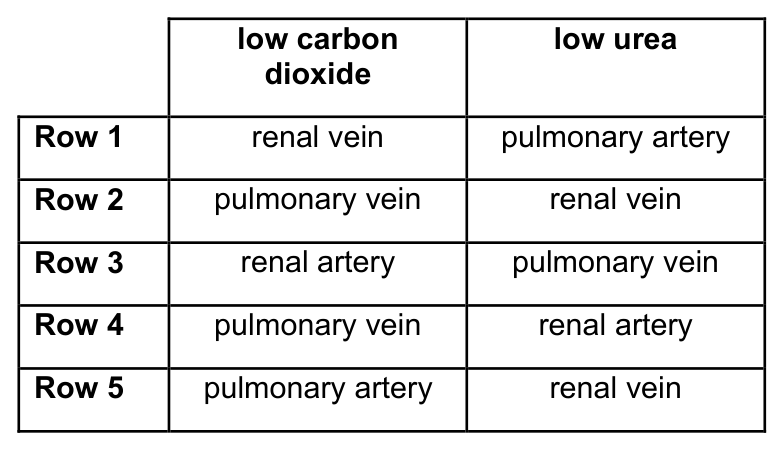
✍️ ကော်လံ နှစ်ခုကို တစ်ခုချင်း ဖြေမယ်။ ပထမ — low CO₂ (CO₂ နည်းတဲ့ သွေးကြော)။
CO₂ ကို lungs က ထုတ်ပစ်တယ်။ ဒါကြောင့် lungs ကနေ heart ကို ပြန်လာတဲ့ pulmonary vein မှာ CO₂ အနည်းဆုံး ✔
pulmonary artery က CO₂ ပြည့်တဲ့ သွေးကို lungs ဆီ ယူသွားတာ ✗။ renal vein မှာ kidney cell တွေ အသက်ရှူလို့ ထွက်တဲ့ CO₂ ပါတယ် ✗
ဒုတိယ — low urea (urea နည်းတဲ့ သွေးကြော)။
kidney က urea ကို စစ်ထုတ်ပြီးမှ သွေးက renal vein ကနေ ထွက်လို့ renal vein မှာ urea အနည်းဆုံး ✔။ renal artery မှာ မစစ်ရသေးတဲ့ urea အပြည့် ✗
pulmonary vein နဲ့ renal vein ကို တွဲထားတာ Row 2 → အဖြေ D။
🤔 Which blood vessel normally carries blood with the highest concentration of urea?
🔍 မေးခွန်း ဖြည်မယ်
blood vessel = သွေးကြော။ normally = ပုံမှန်အားဖြင့်။ carries = သယ်တယ်။
the highest concentration of urea = urea အပြည့်ဆုံး (အများဆုံး ရောနေတဲ့)။ highest က -est ပုံစံ — အားလုံးထဲမှာ အများဆုံး။
မေးနေတာ — urea ကို ဘယ်မှာ လုပ်ပြီး ဘယ်မှာ ထုတ်လဲ — အဲဒါကနေ urea အများဆုံး သွေးကြော ရှာပါ။
urea ကို liver က လုပ်ပြီး hepatic vein နဲ့ အရင်ဆုံး ထုတ်လွှတ်လို့ hepatic vein မှာ အများဆုံး။
renal artery ရောက်တဲ့ အချိန်မှာ ခန္ဓာကိုယ် သွေး အားလုံးနဲ့ ရောပြီး ကျဲသွားပြီ။
renal vein က kidney စစ်ပြီးလို့ အနည်းဆုံး။
Filtration in the glomerulus
pressure နဲ့ သွေးကို စစ်ခြင်း
180 L စစ်ပြီး 1.5 L ပဲ ထုတ်တဲ့ ပဟေဠိ
kidney က တစ်ရက် plasma 180 L စစ်တယ်။kidney နှစ်လုံးက တစ်ရက်ကို plasma (သွေးရည် — သွေးထဲက အရည်ပိုင်း) 180 L ကို စစ်တယ်။ ရေစည် ကြီး တစ်လုံးစာလောက်ပါ။
ဒါပေမဲ့ urine အဖြစ် ထွက်တာ 1.5 L ပဲ — ရေဘူး တစ်ဘူးစာလောက်ပဲ။
178.5 L ပြန်ယူတယ် — အလဟဿ မဟုတ်ဘူးလား?ကျန်တဲ့ 178.5 L ကို သွေးထဲ ပြန်ယူ (back) တယ်။ အကုန် စစ်ထုတ်ပြီးမှ ပြန်ယူတာ အလဟဿ မဟုတ်ဘူးလား?
ဒီ PART အဆုံးမှာ ဖြေမယ်။ အရင် kidney ထဲကို ဝင်ကြည့်မယ်။
kidney အတွင်း — cortex၊ medulla၊ nephron
kidney ရဲ့ အပြင်ဘက် အလွှာ = cortex (အပြင်ပိုင်း)kidney ကို အလျားလိုက် ခွဲကြည့်မယ်။ အပြင်ဘက် အလွှာကို cortex (အပြင်ပိုင်း) လို့ ခေါ်တယ်။
အတွင်းက တြိဂံပုံ အစုတွေကို medulla (အတွင်းပိုင်း) လို့ ခေါ်တယ်။
သတိ — ဒီ renal medulla (ကျောက်ကပ် အတွင်းပိုင်း) က သင်ခန်းစာ 49 နဲ့ သင်ခန်းစာ 51B က brain ရဲ့ medulla oblongata (ဦးနှောက်ပင်စည် အောက်ပိုင်း) နဲ့ မဆိုင်ဘူး။ Latin မှာ medulla = ‘အတွင်းအူတိုင်’ မို့ နာမည် တူတာပါ။
ပုံ — နာမည် တူတဲ့ အပိုင်း နှစ်ခု — kidney ရဲ့ renal medulla နဲ့ brain ရဲ့ medulla oblongata။
urine က အလယ်က pelvis (ဆီး စုတဲ့ ကန်) ထဲ စုပြီး ureter ထဲ ဆင်းတယ်။
nephron (kidney စစ်ပြွန်) — kidney တစ်လုံးမှာ 1 million။cortex ကို ချဲ့ကြည့်ရင် အလွန် သေးတဲ့ ပြွန်လေးတွေ တွေ့မယ်။ တစ်ချောင်းကို nephron (kidney ရဲ့ သေးငယ်တဲ့ စစ်ပြွန်) လို့ ခေါ်တယ်။ kidney တစ်လုံးမှာ nephron တစ်သန်း (1 million) လောက် ရှိတယ်။
nephron ခေါင်း cortex ထဲ၊ ဆံညှပ် အကွေး medulla ထဲ။nephron ရဲ့ ခေါင်းနဲ့ ကွေးကောက်တဲ့ အပိုင်းတွေက cortex ထဲမှာ ရှိပြီး ဆံညှပ်ပုံ အကွေးက medulla ထဲ ဆင်းတယ်။
glomerulus — pressure နဲ့ ညှစ်တဲ့ စစ်ကွက်
ရေပိုက်ခေါင်း ဖိရင် pressure တက်ပြီး ရေ ပြင်းပြင်း ပန်းတယ်။ရေပိုက်ခေါင်းကို thumb (လက်မ) နဲ့ ဖိကြည့်ပါ။ အထွက်ပေါက် ကျဉ်းသွားလို့ pressure (ဖိအား) တက်ပြီး ရေ ပြင်းပြင်း ပန်းထွက်တယ်။
capillary (သွေးကြောမျှင်) အထုံး = glomerulus (ကြောမျှင်ထုံး)nephron ရဲ့ အစမှာ capillary (သွေးကြောမျှင်) လေးတွေ ချည်ထုံးလို ခွေနေတယ်။ ဒါကို glomerulus (သွေးကြောမျှင် အထုံး) လို့ ခေါ်တယ်။
glomerulus ကို Bowman's capsule (အုပ်တဲ့ ခွက်) က အုပ်ထားတယ်။glomerulus ကို ခွက်ပုံ Bowman's capsule (glomerulus ကို အုပ်တဲ့ ခွက်) က အုပ်ထားတယ်။ capsule က nephron ပြွန်ရဲ့ အစပါ။
glomerulus ထဲ သွေး ဝင်တဲ့ ကြော afferent arteriole (ဝင်ကြော) က ကျယ်တယ်။
efferent arteriole (ထွက်ကြော) ကျဉ်းလို့ pressure မြင့်တယ်။ထွက်တဲ့ ကြော efferent arteriole (ထွက်ကြော) က ကျဉ်းတယ် — လက်မနဲ့ ဖိထားသလိုပဲ။ ဒါကြောင့် glomerulus ထဲ pressure မြင့်တယ်။
pressure က သွေးထဲက အရည်ကို capsule ထဲ ညှစ်ထုတ်တယ်။ဒီ pressure က သွေးထဲက အရည်ကို capsule ထဲ ညှစ်ထုတ်တယ်။ ဘာတွေ ဖြတ်နိုင်လဲ ဆက်ကြည့်မယ်။
ဆန်ခါ — ဘာ ဖြတ်ပြီး ဘာ ကျန်လဲ
blood နဲ့ capsule ကြားမှာ အလွှာ သုံးထပ် filter ရှိတယ်။blood နဲ့ capsule ကြားမှာ filter (ဆန်ခါ) တစ်ခု ရှိတယ်။ filter မှာ အလွှာ သုံးထပ် ပါတယ် — ချဲ့ကြည့်မယ်။
ပထမ အလွှာ — capillary နံရံ (endothelium) မှာ pores (အပေါက်) လေးတွေ ရှိတယ်။ red blood cell ဒီမှာ မဖြတ်နိုင်ဘူး။
ဒုတိယ — basement membrane (protein အမျှင် ကွန်ယက် အလွှာ ပါးပါး)။ plasma protein လို ကြီးတဲ့ molecule ကို အဓိက တားတာ ဒီ အလွှာပါ။
တတိယ — capsule ဘက်မှာ ခြေထောက်ပုံ cell podocyte တွေ ကပ်ထားတယ်။ ခြေထောက်လေးတွေ ကြားမှာ ကျဉ်းကျဉ်း ကြားပေါက် (filtration slits) တွေ ကျန်တယ်။
သုံးထပ်လုံး ဖြတ်နိုင်တဲ့ သေးတဲ့ molecule တွေပဲ capsule ထဲ ကျတယ်။ ဘာတွေလဲ တစ်ခုချင်း ကြည့်မယ်။
အပေါက်ထက် သေးတဲ့ molecule မှန်သမျှ ဖြတ်သွားတယ်။ water (ရေ) ဖြတ်တယ်။
glucose, amino acid သေးလို့ ဖြတ်တယ် — filter မခွဲခြားဘူး။glucose နဲ့ amino acid လည်း သေးလို့ ဖြတ်တယ် — filtered (စစ်ပြီး capsule ထဲ ကျ) ဖြစ်တယ်။ ခန္ဓာကိုယ်က needed (လိုအပ်) လား မလိုလား filter က မကြည့်ဘူး။
urea နဲ့ salt (Na⁺၊ Cl⁻ လို ဆား ion) လည်း ဖြတ်တယ်။
red blood cell ကြီးလို့ မဖြတ်ဘဲ သွေးထဲ ကျန်တယ်။red blood cell (သွေးနီဥ) ကတော့ အရမ်း ကြီးလို့ မဖြတ်နိုင်ဘဲ သွေးထဲ ကျန်ခဲ့တယ်။
plasma protein (သွေးရည်ထဲက protein) အများစုလည်း ကြီးလို့ သွေးထဲ ကျန်တယ်။plasma proteins (သွေးရည်ထဲက protein တွေ) အများစုလည်း ကြီးလို့ သွေးထဲ ကျန်တယ်။ ဒီ protein တွေကို liver က လုပ်တယ်။
ultrafiltration (ဖိညှစ်စစ်ခြင်း) → filtrate (စစ်ရည်)ATP သုံးပြီး pump နဲ့ pumped (တွန်းပို့) လုပ်တာ မဟုတ်ဘဲ pressure နဲ့ ညှစ်ပြီး အရွယ်အစား တစ်ခုတည်းနဲ့ စစ်တဲ့ ဒီနည်းကို ultrafiltration (ဖိညှစ်ပြီး အရွယ်အစားအလိုက် စစ်ခြင်း) လို့ ခေါ်တယ်။ capsule ထဲ ရောက်တဲ့ အရည်ကို filtrate (စစ်ရည်) လို့ ခေါ်တယ်။
💡 ဆန်ခါလို — အပေါက်ထက် သေးရင် ကျ၊ ကြီးရင် ကျန်။💡 မှတ်နည်း — ဆန်ခါ ခါသလိုပဲ။ ဆန်ခါက ဆန်ကွဲ ကောင်းလား မကောင်းလား မကြည့်ဘူး၊ အပေါက်ထက် သေးရင် ကျ၊ ကြီးရင် ကျန်။
urine ထဲ protein အများကြီး တွေ့ရင် kidney ပျက်စီးနေတတ်တယ်။urine ထဲမှာ protein အများကြီး ခဏခဏ တွေ့ရင် filter ပေါက်ပြဲနေတဲ့ လက္ခဏာ — အများအားဖြင့် kidney ပျက်စီး (damaged) နေတယ်။
🤔 A small drug molecule, smaller than glucose, is dissolved in the plasma. What happens to it at the glomerulus?
🔍 မေးခွန်း ဖြည်မယ်
drug molecule = ဆေး molecule။ smaller than glucose = glucose ထက် သေးတယ်။ is dissolved in the plasma = သွေးရည်ထဲ ပျော်နေတယ်။
What happens to it = သူ့ကို ဘာဖြစ်မလဲ။ at the glomerulus = glomerulus ရောက်တဲ့အခါ။ only if needed = လိုမှသာ။ using ATP = ATP သုံးပြီး။
မေးနေတာ — filter က ဘာကို ကြည့်ပြီး ဖြတ်ခွင့်ပေးလဲ — အဲဒါနဲ့ ဒီ molecule ဘာဖြစ်မလဲ။
filter က အရွယ်ပဲ ကြည့်တယ် (ultrafiltration)။
glucose ထက် သေးရင် capsule ထဲ ကျတယ် — ခန္ဓာကိုယ် လိုလား မလိုလား မခွဲဘူး။
pressure နဲ့ ညှစ်တာမို့ ATP pump မလိုဘူး။
🎮 Small enough to pass the filter? — sort fast 🔥
တွန်းအား သုံးခု — 55 − 30 − 15
တွန်းအား = သွေး pressure ~55 mmHg၊ heart ကလာတယ်။ရေကို capsule ထဲ တွန်းတဲ့ အားက သွေး pressure ~55 mmHg ပါ။ heart ရဲ့ left ventricle (ဘယ်ဘက် အောက်ခန်း) ညှစ်တာကနေ လာတယ်။
mmHg (mm Hg) က pressure unit — သင်ခန်းစာ 49 ရဲ့ mercury ပြွန်ထဲ mercury တက်တဲ့ အမြင့် (mm) နဲ့ တိုင်းတာပါ။
ပုံ — mercury (Hg) ပြွန်ထဲ 55 mm တက်တဲ့ ဖိအား = 55 mmHg။
plasma protein က water ကို ပြန်ဆွဲတယ် — ~30 mmHg။ပြန်ဆွဲတဲ့ အားလည်း ရှိတယ်။ သွေးထဲ ကျန်ခဲ့တဲ့ plasma protein တွေကြောင့် blood ရဲ့ water potential နိမ့်ပြီး water ကို osmosis နဲ့ သွေးထဲ ပြန်ဆွဲတယ် — ~30 mmHg။
protein တွေရဲ့ ဒီ ဆွဲအားကို oncotic pressure (protein ရဲ့ osmotic ဆွဲအား) လို့ ခေါ်တယ်။ ပုံထဲက အပြာ မြှားက water ပြန်ဆွဲခံရတဲ့ လမ်းပါ။
ပုံ — plasma protein တွေ သွေးထဲ ကျန်လို့ blood ရဲ့ water potential နိမ့်တယ်။ ဒါကြောင့် water က capsule ကနေ blood ထဲ osmosis နဲ့ ပြန်ဝင်တယ် (osmosis နဲ့ water potential — သင်ခန်းစာ 31B)။
capsule ထဲ ရောက်နေပြီးသား filtrate ကလည်း ပြန်တွန်းတယ် — ~15။
✍️ တကယ် တွန်းတဲ့ အားကို net filtration pressure လို့ ခေါ်တယ်။ တွန်းတာထဲက ဆန့်ကျင်တာ နှုတ်မယ်။
55 − 30 − 15 = 10 mmHg — capsule ဘက် တွန်းအား ကျန်လို့ filtrate ဝင်တယ်။
glomerulus ထဲ pressure 45 ဆို 45 − 30 − 15 = 0၊
စစ်တာ ရပ်တယ်။သွေးအများကြီး ထွက်လို့ glomerulus ထဲက blood pressure 45 mmHg အထိ ကျရင် 45 − 30 − 15 = 0 ဖြစ်ပြီး စစ်တာ ရပ်သွားတယ်။
ခန္ဓာကိုယ် pressure နည်းနည်း ပြောင်းရုံနဲ့တော့ kidney က arteriole တွေကို ချိန်ပြီး စစ်နှုန်း သိပ် မပြောင်းအောင် ထိန်းတယ်။
ရေကို ဘာက တွန်းလဲ (IMAT 2022)
📝 IMAT 2022 · Question 33
The diagram shows a glomerulus and part of a nephron in the kidney of a healthy human.
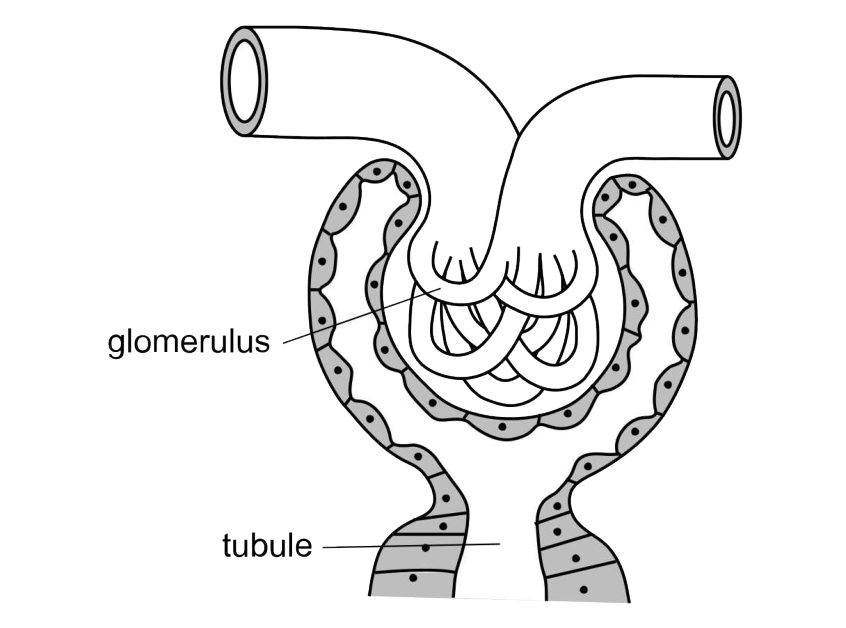
Which of the following cause(s) water to move from the glomerulus into the tubule?
1 An increase in pressure caused by the left ventricle of the heart.
2 The effect of blood proteins on the direction of osmosis.
3 An increase in pressure of the liquid in the tubule.
✍️ စစ်နည်း — statement တစ်ခုစီက ရေကို blood ကနေ tubule ထဲ တွန်းလား၊ blood ထဲ ပြန်ဆွဲလား ကြည့်မယ်။
① left ventricle ညှစ်လို့ တက်တဲ့ pressure က ရေကို tubule ထဲ တွန်းတယ် ✔
② blood protein တွေက osmosis နဲ့ ရေကို blood ထဲ ပြန်ဆွဲတယ် — ဆန့်ကျင်ဘက် ✗
③ tubule ထဲက liquid pressure တက်ရင် ရေကို blood ဘက် ပြန်တွန်းတယ် ✗
① တစ်ခုတည်း → အဖြေ D (1 only)။ ② ကို ရွေးမိရင် osmosis က ဘယ်ဘက် ဆွဲလဲ ပြောင်းပြန် ထင်လို့ပါ။
🤔 The afferent arteriole of a glomerulus becomes narrower. What happens to the filtration?
🔍 မေးခွန်း ဖြည်မယ်
afferent arteriole = glomerulus ထဲ သွေး ဝင်တဲ့ ကြော။ becomes narrower = ပိုကျဉ်းလာတယ် (-er = ပို)။
What happens to the filtration? = စစ်ထုတ်တာ ဘာဖြစ်မလဲ။ decreases = ကျတယ်။ increases = တက်တယ်။ at once = ချက်ချင်း။
မေးနေတာ — ဝင်ပေါက် ကျဉ်းရင် glomerulus ထဲ pressure ဘယ်လို ပြောင်းပြီး စစ်တာ ဘယ်လို ဖြစ်မလဲ။
ဝင်ပေါက် (afferent) ကျဉ်းရင် glomerulus ထဲ သွေး နည်းနည်းပဲ ဝင်လို့ pressure ကျတယ်။
တွန်းအား နည်းလို့ filtration ကျတယ်။
ထွက်ပေါက် (efferent) ကျဉ်းတာနဲ့ ပြောင်းပြန်ပါ။
180 L ဘယ်က ရလဲ၊ ဘာလို့ အကုန် စစ်လဲ
✍️ kidney နှစ်လုံးက filtrate ကို တစ်မိနစ် 125 mL လောက် ထုတ်တယ်။ ဒီ နှုန်းကို GFR — Glomerular Filtration Rate (glomerulus ရဲ့ စစ်နှုန်း) လို့ ခေါ်တယ်။ တစ်ရက်မှာ ဘယ်လောက်လဲ?
တစ်နာရီမှာ 60 မိနစ် — 125 × 60 = 7 500 mL / h
တစ်ရက်မှာ 24 နာရီ — 7 500 × 24 = 180 000 mL = 180 L
သွေးထဲမှာ plasma ~3 L ပဲ ရှိတယ်။ 1803 = 60 — plasma တစ်စုတည်းကို တစ်ရက် 60 ကြိမ်လောက် ပတ်ပြီး စစ်တာပါ။
urine 1.5 L ပဲ ထွက်လို့ 178.5 L ကို ပြန်ယူတယ်။ 178.5 ကို 180 နဲ့ စားရင် ≈ 99 % — blood ထဲ ပြန်ရောက်တယ်။
filter က drug, poison ကိုပါ ထုတ်ပစ်နိုင်တယ်။ပဟေဠိ အဖြေ — filter က အရွယ်ပဲ ကြည့်လို့ ခန္ဓာကိုယ် မသိဖူးတဲ့ drug (ဆေး) နဲ့ poison (အဆိပ်) ကိုလည်း အကုန် urine ထဲ ပို့ပစ်နိုင်တယ်။
ပြီးမှ glucose, water, salt ကို ရွေးပြီး ပြန်ယူတယ်။ပြီးမှ ခန္ဓာကိုယ် လိုတဲ့ glucose၊ water နဲ့ salt ကိုပဲ ရွေးပြီး take back (ပြန်ယူ) တယ်။ အမှိုက် တစ်ခုချင်း လိုက်ရှာတာထက် ပိုလုံခြုံတယ်။ ဘယ်နေရာမှာ ဘယ်လို ပြန်ယူလဲ ဆိုတာ သင်ခန်းစာ 50B မှာ ဆက်သင်မယ်။
🤔 The two kidneys filter 120 mL of plasma per minute. About how much do they filter in one day?
🔍 မေးခွန်း ဖြည်မယ်
filter = စစ်တယ်။ per minute = တစ်မိနစ်ကို။ About how much = ခန့်မှန်း ဘယ်လောက်လဲ။ in one day = တစ်ရက်မှာ။
မေးနေတာ — တစ်မိနစ်စာကနေ တစ်ရက်စာ ပြောင်းတွက်ပါ — mL ကို L ပြောင်းဖို့လည်း မမေ့နဲ့။
120 × 60 = 7 200 mL တစ်နာရီ။
7 200 × 24 = 172 800 mL ≈ 173 L တစ်ရက်။
7.2 L က 24 နဲ့ မမြှောက်ရသေးတဲ့ တစ်နာရီစာပဲ။