Motion
odometer က 14 km ပြပေမယ့် အိမ်ကနေ မျဉ်းဖြောင့် 10 km ပဲ ဝေးတယ် — ဘယ်ဂဏန်းက ‘အမြန်’ လဲ? ရွေ့လျားမှုကို ဂရပ်၊ equation နဲ့ ဖော်ပြပြီး ပစ်တာ၊ ကျတာ၊ စက်ဝိုင်း ပတ်တာ၊ လှုပ်ခါတာကို တွက်တတ်အောင် လေ့လာမယ်။
Describing motion
ရွေ့လျားမှုကို ဖော်ပြပုံ — distance, displacement, velocity
14 km လား၊ 10 km လား — ဘယ်ဟာက ‘အမြန်’ လဲ?
ကား east (အရှေ့) ကို 6 km အရင် မောင်းတယ်။အိမ်ကနေ ကားတစ်စီး ထွက်တယ်။ အရင်ဆုံး east (အရှေ့ဘက်) ကို 6 km မောင်းတယ်။
ပြီးတော့ south (တောင်) 8 km၊ odometer က 14 km ပြတယ်။ပြီးတော့ south (တောင်ဘက်) ကို 8 km ဆက်မောင်းတယ်။ odometer (ဘီး လည်သလောက် km မှတ်တဲ့ မီတာ) က 14 km ပြတယ်။
အိမ်ကနေ မျဉ်းဖြောင့် 10 km ပဲ ဝေးတယ်၊ 15 min ကြာတယ်။စထွက်တဲ့ အိမ်ကနေ မျဉ်းဖြောင့် တိုင်းကြည့်ရင်တော့ 10 km ပဲ ဝေးတယ်။ ခရီး တစ်ခုလုံး 15 min ကြာတယ်။
အမြန်ကို 14 km နဲ့ တွက်မလား၊ 10 km နဲ့လား?ဒါဆို ကားရဲ့ ‘အမြန်’ ကို 14 km နဲ့ တွက်ရမလား၊ 10 km နဲ့ တွက်ရမလား? IMAT က နှစ်မျိုးလုံး ထည့်မေးတယ်။ ဒီ PART ထဲမှာ ဖြေမယ်။
Distance နဲ့ displacement
လမ်းတစ်လျှောက် 6 + 8 = 14 km = distance (ခရီး အကွာ)ဘီးတွေ လည်ခဲ့တဲ့ လမ်း တစ်လျှောက်လုံးကို ပေါင်းရင် 6 + 8 = 14 km။ ဒါကို distance (ခရီး အကွာအဝေး) လို့ ခေါ်တယ်။
ပမာဏ တစ်ခုတည်း၊ ဦးတည်ရာ မပါ = scalar (ပမာဏ သက်သက်)distance မှာ ဘယ်ဘက်ကို သွားလဲ မပါဘူး၊ ပမာဏ (size) တစ်ခုတည်း ရှိတယ်။ ဒီလို ပမာဏကို scalar လို့ ခေါ်တယ်။
အစကနေ အဆုံး မြှား = displacement (နေရာ ရွှေ့မှု)အခု အစ နေရာကနေ အဆုံး နေရာကို မျဉ်းဖြောင့် မြှား တစ်ချောင်း ဆွဲပါ။ ဒီ မြှားကို displacement (နေရာ ရွှေ့မှု) လို့ ခေါ်တယ်။
ပမာဏ + direction ပါရင် vector (ဦးတည်ရာ ပါ) ပါ။displacement မှာ ပမာဏ ရော direction (ဦးတည်ရာ) ပါ ပါတယ်။ ဒီလို ပမာဏကို vector လို့ ခေါ်တယ် (သင်ခန်းစာ 65)။
east 6 km နဲ့ south 8 km က 90° ကျတယ်။မြှားရဲ့ အရှည်ကို တွက်မယ်။ east 6 km နဲ့ south 8 km က ထောင့်မှန် (90°) ကျတယ်။
Pythagoras: √(6² + 8²) = √100 = 10 km။ထောင့်မှန် တြိဂံ ဖြစ်လို့ Pythagoras သုံးတယ်: √(6² + 8²) = √100 = 10 km။ ဒါက အစက မေးခွန်းထဲက 10 km ပါ။
ပြေးလမ်း 400 m တစ်ပတ် ပြန်ရောက် — distance 400 m။နောက် ဥပမာ: ပြေးလမ်း တစ်ပတ် (lap) 400 m ကို ပြေးပြီး စတဲ့ နေရာကို ပြန်ရောက်တယ်။ distance က 400 m။
🤔 A runner completes exactly one lap of a 400 m track. What is the runner's displacement?
စထွက်တဲ့ နေရာကို ပြန်ရောက်လို့ အစ နဲ့ အဆုံး ကြား မြှား မရှိဘူး — displacement 0 m။
400 m က distance ပါ။
127 m က ပြေးလမ်းရဲ့ အချင်း (diameter) လောက်ပဲ။
displacement = 0 m၊
distance က ဘယ်တော့မှ မတိုဘူး။အစ နဲ့ အဆုံး တစ်နေရာတည်း ဖြစ်လို့ displacement = 0 m။
distance က displacement ထက် ဘယ်တော့မှ မတိုဘူး၊ လမ်းဖြောင့် တစ်ဘက်တည်း သွားမှ တူတယ်။
👉 အမြန် တွက်တဲ့အခါ ဒီ နှစ်မျိုး ကွာတာက ဘာဖြစ်စေလဲ?
✍️ Speed နဲ့ velocity — IMAT 2023
📝 IMAT 2023 · Question 59
A vehicle travels east for 6 km, then south for 8 km without stopping. If the trip takes 15 minutes, what is the magnitude of the average velocity in km/h?
average speed = distancetime၊
scalar ပါ။average speed (ပျမ်းမျှ အမြန်) = distance ကို time နဲ့ စားတာ။
ဘယ်ဘက် သွားလဲ မပါလို့ scalar ပါ။
average velocity = displacementtime၊
vector ပါ။average velocity (ပျမ်းမျှ velocity) = displacement ကို time နဲ့ စားတာ။
displacement ပါလို့ velocity မှာ direction ပါတယ်၊ vector ပါ။
✍️ ခရီး 15 min ကြာတယ်။ hour (နာရီ) ပြောင်းမယ်: 1560 = 14 h။
speed = 14 km ကို 14 h နဲ့ စား။ 14 နဲ့ စားတာ 4 နဲ့ မြှောက်တာနဲ့ တူလို့ 14 × 4 = 56 km/h။
velocity = 10 km ကို 14 h နဲ့ စား = 10 × 4 = 40 km/h → အဖြေ 40။ အစက မေးခွန်း ဖြေပြီ — ‘velocity’ မေးရင် 10 km ကို သုံးတယ်။
56 က speed — velocity မေးရင် ထောင်ချောက်ပါ။56 က distance နဲ့ တွက်တဲ့ speed — velocity မေးတဲ့ မေးခွန်းမှာ ထောင်ချောက်ပါ။ 14 နဲ့ 8 က km သက်သက် (အချိန်နဲ့ မစားရသေး)၊ 20 က 12 h နဲ့ မှားစားတာ။
🤔 A cyclist rides 3 km north, then 4 km east, in 30 minutes. What is the magnitude of the average velocity?
displacement = √(3² + 4²) = 5 km၊
time = 12 h → 5 × 2 = 10 km/h။
14 km/h က distance 7 km နဲ့ တွက်တဲ့ speed၊ 5 က 12 h နဲ့ မစားရသေးတဲ့ km။
👉 ‘ပြောင်းနှုန်း’ ဆိုတာ ဘာလဲ?👉 velocity ကို ‘နေရာ ပြောင်းနှုန်း’ လို့ ပြောတယ်။ ‘ပြောင်းနှုန်း’ ဆိုတာ ဘာလဲ?
Velocity — နေရာ ပြောင်းနှုန်း
တစ်စက္ကန့်ကို 20 m စီ ကား ရှေ့ရောက်တယ်။ကား ဓာတ်ပုံကို တစ်စက္ကန့် တစ်ပုံ ရိုက်ထားတယ်။ 0 s၊ 1 s၊ 2 s — တစ်စက္ကန့်ကို 20 m စီ ရှေ့ရောက်တယ်။
🤔 Which physical quantity measures how quickly a point particle changes its position over time? (IMAT 2026 Q48)
နေရာ ပြောင်းနှုန်းက velocity။
acceleration က velocity ပြောင်းနှုန်း (နောက်တစ်ကြောင်း)၊ centripetal acceleration က စက်ဝိုင်း ဗဟိုဘက် acceleration (PART 6)၊ frequency နှစ်ခုက တစ်စက္ကန့် အကြိမ်ရေ။
velocity (နေရာ ပြောင်းနှုန်း) = ΔsΔt = 20 m/sနေရာ (position) ဘယ်လောက် မြန်မြန် ပြောင်းလဲ ဆိုတာကို velocity (နေရာ ပြောင်းနှုန်း၊ ဦးတည်ရာ ပါ) လို့ ခေါ်တယ်: Δs ကို Δt နဲ့ စား။ Δ (delta) က ‘ပြောင်းလဲမှု’ ပါ။ ဒီကား 20 m/s။
အစက်ကြား အကွာ တူ = constant velocity။တစ်စက္ကန့် တစ်ခါ ကား ရောက်တဲ့ နေရာကို အစက် ချမှတ်ကြည့်ပါ။ အစက်ကြား အကွာ အားလုံး တူတယ် (equal gaps) — velocity မပြောင်းလို့ပါ။ ဒါကို constant velocity လို့ ခေါ်တယ်။
👉 ကား ပိုမြန်လာရင် အစက်တွေ ဘယ်လို ဖြစ်မလဲ?
Acceleration — အစက်တွေ ကျဲလာ
ကား ရပ်ရာက စထွက်၊ တစ်စက္ကန့် တစ်ခါ အစက် ချမယ်။အခု ကား တစ်စီး ရပ်ရာက (from rest) စထွက်တယ်။ တစ်စက္ကန့် တစ်ခါ ကား ရောက်တဲ့ နေရာကို အစက် ချမှတ်တယ်။
အကွာ 2, 6, 10, 14 m — ကျဲလာတယ်။အစက်ကြား အကွာ 2 m၊ 6 m၊ 10 m၊ 14 m — တစ်စက္ကန့်ထက် တစ်စက္ကန့် ကျဲလာတယ်။
🤔 The gaps between the one-second dots grow: 2 m, 6 m, 10 m, 14 m. What is the car doing?
တစ်စက္ကန့်ထဲမှာ ပိုဝေးဝေး ရောက်လာတယ် ဆိုတာ ပိုမြန်လာတာ — speeding up။
constant velocity ဆိုရင် အကွာ တူမယ်၊ slowing down ဆိုရင် အကွာ ကျဉ်းလာမယ်။
speed 0, 4, 8, 12, 16 m/s — 4 m/s စီ တိုးတယ်။speedometer ကို တစ်စက္ကန့် တစ်ခါ ဖတ်ရင် 0, 4, 8, 12, 16 m/s — တစ်စက္ကန့်ကို 4 m/s စီ တိုးတယ်။ ဒါကြောင့် အစက်တွေ ကျဲလာတာ။
acceleration (အရှိန် တိုးနှုန်း) = ΔvΔt = 4 m/s²velocity ပြောင်းနှုန်းကို acceleration (အရှိန် တိုးနှုန်း) လို့ ခေါ်တယ်: a = Δv ကို Δt နဲ့ စား = (16 − 0) ကို 4 နဲ့ စား = 4 m/s²။
m/s² = တစ်စက္ကန့်ကို m/s ဘယ်လောက် တိုးလဲ။ယူနစ် m/s² ကို ‘တစ်စက္ကန့်ကို 4 m/s စီ ပိုမြန်လာ’ လို့ ဖတ်ပါ။ m/s ကို s နဲ့ ထပ်စားလို့ s² ဖြစ်တာ။
👉 speed မပြောင်းဘဲ ဦးတည်ရာပဲ ပြောင်းရင်ကော? acceleration ရှိသလား?
ဦးတည်ရာ ပြောင်းတာလည်း acceleration
speed 20 m/s မပြောင်းဘဲ လမ်းကွေ့ ကွေ့ရင်ကော?speed မပြောင်းဘဲ လမ်းကွေ့ ကွေ့ရင်ကော? speedometer နှစ်ခုလုံး 20 m/s — speed တူနေတယ်။
velocity မြှား ညာကနေ အပေါ် ပြောင်းသွားတယ်။ဒါပေမဲ့ velocity မြှား (အပြာ) က အရင် ညာဘက် ညွှန်ပြီး ကွေ့ပြီးတော့ အပေါ် ညွှန်တယ် — direction ပြောင်းသွားတယ်။
direction ပြောင်းတာလည်း acceleration ပါ။velocity ပြောင်းရင် acceleration ရှိတယ် — direction ပြောင်းတာလည်း ပါတယ်။ PART 6 မှာ စက်ဝိုင်း ပတ်တဲ့အခါ ပြန်တွေ့မယ်။
👉 IMAT မှာ km/h နဲ့ m/s ရောပြီး ပေးလေ့ ရှိတယ်။ ဘယ်လို ပြောင်းမလဲ?
✍️ km/h ↔ m/s
1 km ထဲမှာ 1000 m ရှိတယ်။
1 h (နာရီ) ထဲမှာ 60 × 60 = 3600 s (စက္ကန့်) ရှိတယ်။
ဒါကြောင့် 1 km/h = 1000 m ကို 3600 s မှာ သွားတာ = 13.6 m/s။ 1000/3600 ကို ချုံ့ရင် 13.6 ရတယ်။
ဥပမာ 72 km/h = 723.6 = 20 m/s။ km/h ကနေ m/s ကို 3.6 နဲ့ စားတယ်။
m/s → km/h: × 3.6 (20 m/s = 72 km/h)ပြောင်းပြန် m/s ကနေ km/h ကိုတော့ 3.6 နဲ့ မြှောက်တယ်: 20 m/s × 3.6 = 72 km/h။ m/s က ဂဏန်း ပိုသေးတယ်လို့ မှတ်ပါ။
🤔 Convert 36 km/h to m/s.
363.6 = 10 m/s။
129.6 က 3.6 နဲ့ မှားမြှောက်တာ (m/s → km/h ဘက်)။
👉 PART 1 ပြီးပြီ။ ပြန်စစ်ကြည့်မယ်။
🔁 ပြန်စစ်မယ် — PART 1
🤔 A runner runs exactly half a lap of a circular 400 m track (diameter about 127 m). What are the distance and the displacement?
distance = လမ်း တစ်ဝက် 200 m။
displacement = အစ နဲ့ အဆုံး ကြား မျဉ်းဖြောင့် — စက်ဝိုင်းရဲ့ တစ်ဖက်ကမ်း ဆိုတော့ diameter ≈ 127 m။
🤔 A walker goes 5 km north and then 12 km east. What is the magnitude of the displacement?
ထောင့်မှန် — √(5² + 12²) = √169 = 13 km။
17 km က distance (ရိုးရိုး ပေါင်း)။
🤔 Acceleration is the rate of change of:
a = ΔvΔt — velocity ပြောင်းနှုန်း။
position ပြောင်းနှုန်းက velocity။
🤔 54 km/h is how many m/s?
543.6 = 15 m/s။
Motion graphs
ရွေ့လျားမှု ဂရပ် — s–t နဲ့ v–t
Leroy ရဲ့ စက်ဘီး ခရီး — ဘယ် ဂရပ် လဲ?
Leroy ပထမ တစ်ဝက် uphill (အတက်) 5 km/h ပဲ နင်းတယ်။Leroy က အိမ်ကနေ အလုပ်ကို စက်ဘီး စီးတယ်။ ခရီးရဲ့ ပထမ တစ်ဝက်က uphill (အတက်) — 5 km/h ပဲ နင်းနိုင်တယ်။
ဒုတိယ တစ်ဝက်က downhill (အဆင်း) — 15 km/h နဲ့ ဆင်းတယ်။
ဂရပ် ငါးခုထဲက ရွေးရမယ် — ဖတ်တတ်ရင် 30 s နဲ့ ပြီး။IMAT 2015 က ဒီ ခရီးကို distance–time graph ငါးခုထဲက ရွေးခိုင်းတယ်။ ဂရပ် ဖတ်တတ်ရင် စက္ကန့် 30 နဲ့ ဖြေနိုင်တယ်။
Distance–time graph — gradient = velocity
distance–time graph (အကွာ–အချိန် ဂရပ်): 40 s မှာ 200 mdistance–time graph (s–t graph): ညာဘက်ကို time (t)၊ အပေါ်ကို စမှတ်ကနေ အကွာ (distance from start, s)။ လမ်းလျှောက်သူ 40 s မှာ 200 m ရောက်တယ်။ မျဉ်းဖြောင့် တက်တယ်။
gradient (စောင်းမှု) = ΔsΔt = 5 m/s = velocityမျဉ်းရဲ့ gradient (စောင်းမှု) = အပေါ် တက်တာ (Δs) ကို ညာ ရွှေ့တာ (Δt) နဲ့ စား = 200 m40 s = 5 m/s။ ဒါ velocity ပါ (ဦးတည်ရာ ပါတဲ့ အမြန်)။
ပိုမတ်တဲ့ မျဉ်း = ပိုမြန်တယ်။ဒါကြောင့် ပိုမတ်တဲ့ မျဉ်း (အနီ) က ပိုမြန်တယ် (faster)။ time တူတူမှာ distance ပိုတိုးလို့ပါ။ အဝါ စက်မျဉ်းက ခုနက 5 m/s ပါ။
flat မျဉ်း = ရပ်နေတာ၊ velocity 0။flat (အလျားလိုက်) မျဉ်း ဆိုတာ time ကုန်နေပေမယ့် distance မတိုးဘူး — ရပ်နေတာ (stopped)၊ velocity 0။
မျဉ်း ဆင်း = အိမ်ပြန်လာတာ၊ v < 0။မျဉ်း ပြန်ဆင်းရင် စတဲ့ နေရာ (အိမ်) ကနေ အကွာ ကျလာတာ — ပြန်လာနေတာ (coming back)။ gradient အနုတ် ဖြစ်လို့ velocity အနုတ် (v < 0)။
⚠ total path ဂရပ်က ဘယ်တော့မှ မဆင်းဘူး (speed)။⚠ သွားခဲ့တဲ့ လမ်း စုစုပေါင်း (total path) ကို အပေါ်မှာ ထားတဲ့ graph ဆိုရင်တော့ ဘယ်တော့မှ မဆင်းဘူး။ သူ့ gradient က speed (အနုတ် မရှိ)။
🤔 On a distance–time graph, a horizontal line means the object is:
time တိုးပေမယ့် distance မပြောင်းလို့ ရပ်နေ (at rest)။
constant speed ဆိုရင် မျဉ်းဖြောင့် စောင်းတက် ဖြစ်ရမယ်။
👉 ဒါဆို Leroy ရဲ့ ဂရပ်ကို ဆွဲကြည့်မယ်။
✍️ Leroy ရဲ့ ဂရပ် — IMAT 2015
📝 IMAT 2015 · Question 19
Leroy cycles to work each morning. The first half of his journey is uphill and he can manage only a steady 5 kilometres per hour. The second half, however, is downhill and he covers this at 15 kilometres per hour.
Which one of these graphs could show Leroy's journey?
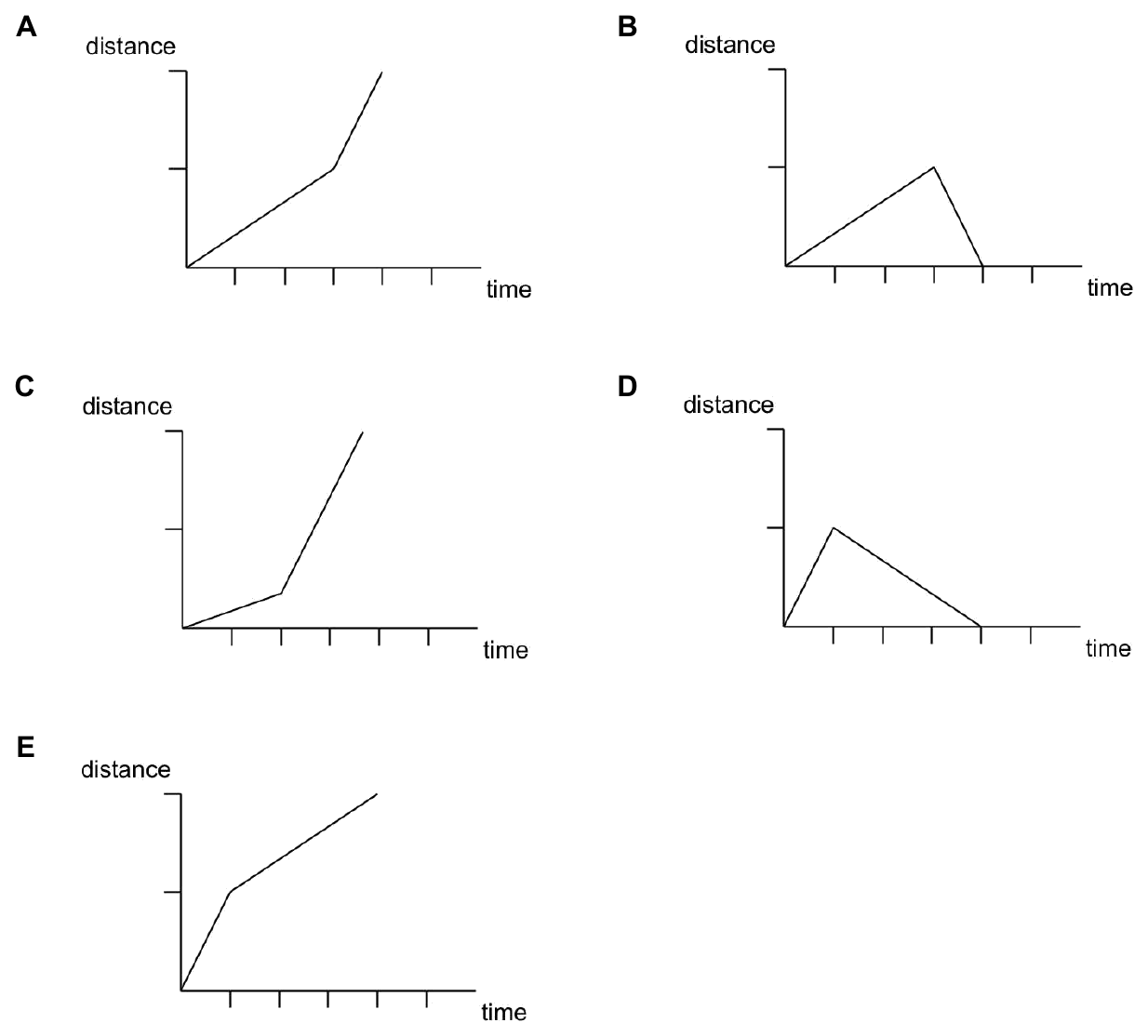
✍️ ခရီး တစ်ဝက်ကို d km လို့ ထားမယ်။ အတက် (uphill) တစ်ဝက်ကို 5 km/h နဲ့ သွားလို့ time = d5။
အဆင်း တစ်ဝက်ကို 15 km/h နဲ့ သွားလို့ time = d15။
d5 က d15 ရဲ့ 3 ဆ — အတက်က time 3 ယူနစ်၊ အဆင်းက 1 ယူနစ်ပဲ ကြာတယ် (3 : 1)။
12 ထိ ဖြည်းဖြည်း 3 ယူနစ်၊ ပြီးမှ မြန်မြန် 1 — အဖြေ A။ဂရပ်: distance တစ်ဝက် (12) ထိ time 3 ယူနစ် ဖြည်းဖြည်း (slow) တက်၊ ပြီးမှ 1 ယူနစ်အတွင်း မတ်မတ် (fast) တက်ပြီး အပြည့် (1) ရောက်တယ် — graph A၊ အဖြေ A။
B, D က ပြန်ဆင်းလို့ ✗ — အိမ်ပြန်တာ မဟုတ်။graph B နဲ့ D က ပြန်ဆင်းတယ် (back to home ✗)။ အလုပ်ကို သွားတာ၊ အိမ် ပြန်လာတာ မဟုတ်လို့ distance မကျရဘူး။
E က ပြောင်းပြန်၊ C က ကွေးတဲ့ နေရာ မှား။graph E က အရင် မြန်ပြီး နောက်မှ နှေးလို့ ပြောင်းပြန်။ graph C က ကွေးတဲ့ နေရာ ခရီး တစ်ဝက်မှာ မဟုတ်ဘဲ လေးပုံ တစ်ပုံလောက်မှာ — 3 : 1 အချိုးလည်း မဟုတ်ဘူး။
👉 ရပ်လိုက်၊ သွားလိုက်၊ ပြန်လာလိုက် လုပ်တဲ့ ခရီးရှည် ဂရပ်ကော?
✍️ David ရဲ့ ခရီး — IMAT 2017
📝 IMAT 2017 · Question 19
The distance from Ardale to Banby is 16 km and from Banby to Carston is a further 8 km in the same direction.
David leaves Ardale at 11.00 and runs for an hour at 6 km / h. He rests for 20 minutes and then completes the rest of the distance to Banby at an average speed of 10 km / h. He chats with some friends in Banby for 20 minutes and then borrows a bicycle from one of them and cycles to Carston at an average speed of 16 km / h. David leaves Carston at 15.00 and cycles back over his route, arriving home at 15.50.
Which one of the following correctly shows David’s distance from Ardale as a function of time?
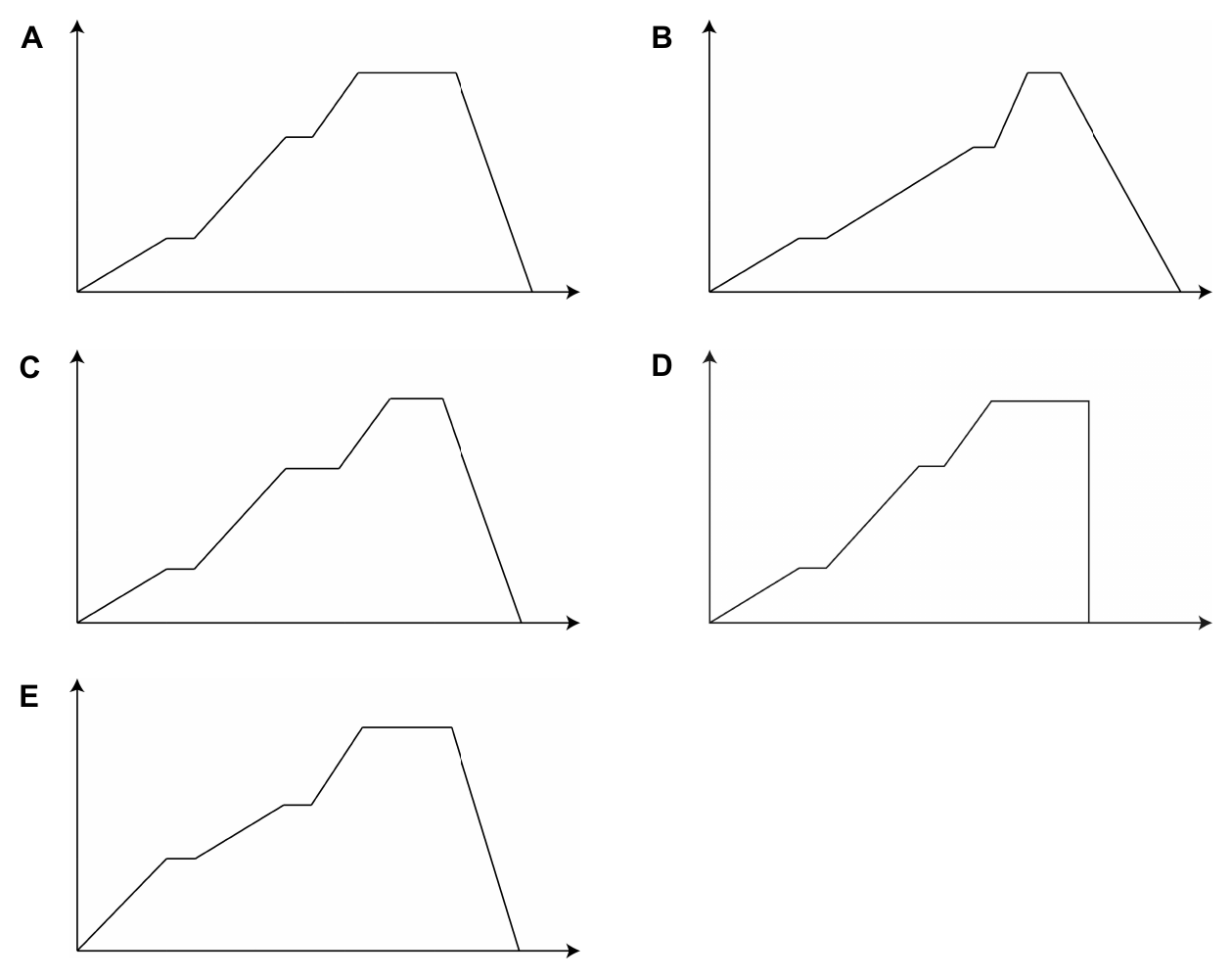
✍️ 11:00 ကနေ တစ်နာရီ 6 km/h နဲ့ ပြေးတယ် → 12:00 မှာ 6 km။
20 min နားတယ် (rest) — distance မတိုးလို့ flat မျဉ်း တိုတို။
ကျန်တဲ့ 16 − 6 = 10 km ကို 10 km/h နဲ့ 1 h — 13:20 မှာ Banby (16 km)။ ပထမ ထက် နည်းနည်း ပိုမတ်တယ်။
သူငယ်ချင်းတွေနဲ့ 20 min စကားပြော (chat) — နောက်ထပ် flat တိုတို။
8 km ကို 16 km/h နဲ့ စက်ဘီး — 30 min — 14:10 မှာ Carston (24 km)။ အမတ်ဆုံး မျဉ်း။
15:00 ထိ Carston မှာ နေ (stay) — flat အရှည်ဆုံး (50 min)။
15:00 ကနေ 15:50 ထိ အိမ် (home) ပြန် — 24 km ကနေ 0 ကို ဆင်းတဲ့ မျဉ်း။
flat တို ၂ ခု၊ မတ်လာတဲ့ မျဉ်း ၃ ခု၊ flat ရှည် — A ပါ။ဒီ ပုံသဏ္ဌာန် — flat တိုတို နှစ်ခု၊ တဖြည်းဖြည်း ပိုမတ်လာတဲ့ မျဉ်း သုံးခု၊ ထိပ်မှာ flat အရှည်၊ ပြီးမှ ဆင်း — နဲ့ ကိုက်တဲ့ ဂရပ်က A ပါ။
C မှာ Banby flat ရှည်လွန်းတယ် (20 min ဖြစ်ရမယ်)။graph C နဲ့ E က A နဲ့ ဆင်တယ်၊ ဒါပေမဲ့ — C မှာ Banby flat က ပထမ အနား (20 min) ထက် နှစ်ဆလောက် ရှည်ပြီး Carston flat နဲ့ တူတူ ဖြစ်နေတယ်။ Banby 20 min၊ Carston 50 min ဖြစ်ရမယ်။
E က မျဉ်း မတ်တာ ပြောင်းပြန်၊ B က flat တိုလွန်း။E မှာ ပထမ မျဉ်း (6 km/h) က ဒုတိယ မျဉ်း (10 km/h) ထက် မတ်နေတယ် — ပြောင်းပြန်။ B မှာ ဒုတိယ မျဉ်း မမတ်ဘဲ Carston flat တိုလွန်းတယ်။
D မှာ အိမ်ပြန် မျဉ်း ဒေါင်လိုက် — မဖြစ်နိုင်။D မှာ အိမ်ပြန် မျဉ်း ဒေါင်လိုက် — 50 min ကြာရမှာကို ချက်ချင်း ပြန်ရောက်နေတယ်။
👉 v–t graph မှာ gradient နဲ့ area က ဘာလဲ?👉 distance–time graph ပြီးပြီ။ velocity–time graph ကျတော့ gradient နဲ့ area က ဘာကို ပြလဲ?
Velocity–time graph — gradient = a, area = displacement
velocity–time graph (velocity–အချိန် ဂရပ်): 5 s မှာ 20 m/svelocity–time graph (v–t graph): ညာဘက်ကို time၊ အပေါ်ကို velocity။ ကား 0 s မှာ ရပ်ရာက 5 s မှာ 20 m/s ရောက်အောင် မြန်လာပြီး 25 s ထိ 20 m/s နဲ့ ဆက်မောင်းတယ်။
👆 Move the time slider. What does the growing blue shaded area show?
v–t graph ရဲ့ gradient = velocity တိုးတာ (20) ကို time (5 s) နဲ့ စား = 4 m/s² — ဒါ acceleration ပါ (PART 1 က အစက် ကျဲလာတဲ့ ကား)။
5 s နောက်ပိုင်း မျဉ်း flat ဖြစ်လို့ gradient 0၊ a = 0 — velocity မပြောင်းဘဲ 20 m/s နဲ့ ဆက်သွားတယ်။
မျဉ်း အောက်က area (အပြာ) က displacement ပါ။ velocity × time = အမြင့် × အနံ ဖြစ်လို့ပါ။ အောက်က t ဘားကို ရွှေ့ရင် area ကြီးလာတယ်။
👉 IMAT 2019 က ဒီ ကားကိုပဲ မေးခဲ့တယ်။ ဂဏန်းနဲ့ တွက်ကြည့်မယ်။
✍️ v–t graph ပုစ္ဆာ — IMAT 2019
📝 IMAT 2019 · Question 57
A car, which is initially stationary, accelerates for 5.0 seconds at 4.0 ms2 along a straight road. It then continues in the same direction for 20 seconds at a constant speed. What is the maximum speed of the car, and what is the distance travelled by the car in the final 20 seconds of its motion?
✍️ အမြင့်ဆုံး velocity: တစ်စက္ကန့်ကို 4 m/s စီ တိုးတာ 5 s ဆိုတော့ 4 × 5 = 20 m/s (ရပ်ရာက စလို့ 0 + 20)။
နောက်ဆုံး 20 s ခရီး = စတုဂံ (rectangle) area = 20 m/s × 20 s = 400 m → အဖြေ D (20 m/s; 400 m)။
80 m, 24 m/s, 9.0 m/s — area မဟုတ်လို့ မှားတယ်။80 m က 4 × 20 (acceleration ကို time နဲ့ မြှောက်) — area မဟုတ်လို့ မှားတယ်။ 24 m/s က 4 + 20၊ 9.0 m/s က 4 + 5 ပေါင်းမိတာ။
ပထမ 5 s: 12 × 5 × 20 = 50 m၊ စုစုပေါင်း 450 m။ပထမ 5 s ခရီးက triangle (တြိဂံ) area = 12 × 5 × 20 = 50 m — စုစုပေါင်း 450 m။
🤔 A v–t graph is a horizontal line at 8 m/s from t = 0 to t = 5 s. What is the displacement?
မျဉ်းအောက် area = 8 × 5 = 40 m (စတုဂံ)။
0 m က gradient (acceleration = 0) ကို ဖတ်မိတာ၊ 1.6 က 8 ကို 5 နဲ့ စားမိတာ၊ 8 m က velocity ကိုပဲ ဖတ်မိတာ။
👉 s–t နဲ့ v–t ဘေးချင်း ယှဉ်မယ်။👉 s–t graph နဲ့ v–t graph ကို ဘေးချင်း ယှဉ်ကြည့်မယ် — ဘယ် gradient က ဘာလဲ?
s–t နဲ့ v–t — axis အရင် ကြည့်
s–t မျဉ်း ကွေး မတ်လာ = velocity တိုးနေတာ။s–t graph မျဉ်း ကွေးနေရင် gradient တဖြည်းဖြည်း မတ်လာတယ် — velocity တိုးနေတာ (accelerating)။
တစ်ချက် velocity = tangent (ထိရုံ ထိ မျဉ်း) ရဲ့ gradientအချိန် တစ်ချက်မှာ velocity (instantaneous velocity) လိုချင်ရင် အဲဒီ အမှတ်ကို ထိရုံ ထိတဲ့ မျဉ်း — tangent — ဆွဲပြီး သူ့ gradient ကို ယူတယ်။
ဒါကြောင့် s–t graph (s = စမှတ်ကနေ အကွာ): gradient = v (velocity)။
v–t graph မှာတော့ အပေါ်ကို velocity ဖြစ်လို့ ဖတ်နည်း ပြောင်းတယ်။
v–t:
gradient = a၊
area = s။
axis အရင် ကြည့်!v–t graph:
gradient = a (acceleration)၊
area = s (displacement)။
ဂရပ် မဖတ်ခင် axis ကို အရင် ကြည့်ပါ!
🤔 On a velocity–time graph, the gradient gives the:
v–t graph ရဲ့ gradient = ΔvΔt = acceleration။
displacement က area၊ velocity က s–t graph ရဲ့ gradient။
👉 v–t မျဉ်း ကွေးနေရင်ကော? acceleration ကိုယ်တိုင်ကို ဂရပ် ဆွဲရင်ကော?
ကွေးတဲ့ v–t graph နဲ့ acceleration–time graph
v–t မျဉ်း ကွေး = acceleration ပြောင်းနေတယ်။v–t graph မျဉ်း ကွေးနေတယ် — ကား အစမှာ မြန်မြန် အရှိန်တက်ပြီး နောက်မှ ဖြည်းဖြည်း တက်တယ်။ gradient ပြောင်းနေလို့ acceleration လည်း အချိန်နဲ့ ပြောင်းနေတယ်။
t = 5 s ရဲ့ a = အဲဒီက tangent ရဲ့ gradient။t = 5 s တစ်ချက်ရဲ့ acceleration (instantaneous acceleration) လိုချင်ရင် အဲဒီ အမှတ်မှာ ထိရုံ ထိတဲ့ မျဉ်း — tangent — ဆွဲပြီး သူ့ gradient ကို ယူတယ် (s–t မှာ velocity ယူခဲ့သလိုပဲ)။
tangent ပေါ်က အမှတ် နှစ်ခုကြား: Δv = 19 − 7 = 12 m/s၊ Δt = 7 − 1 = 6 s → a = 126 = 2 m/s²။
acceleration–time graph (a–အချိန် ဂရပ်): 5 s ထိ a = 4acceleration–time graph (a–t graph) မှာ အပေါ်ကို acceleration ထားတယ်။
ခုနက v–t graph ရဲ့ ကား —
0 ကနေ 5 s ထိ a = 4 m/s² (အလျားလိုက် မျဉ်း)၊
5 s နောက်ပိုင်း a = 0။
a–t area = Δv: 4 × 5 = 20 m/s။a–t graph အောက်က area = acceleration × time = velocity ပြောင်းလဲမှု Δv: 4 × 5 = 20 m/s။ v–t graph မှာ ရောက်တဲ့ 20 m/s နဲ့ ကိုက်တယ်။
🤔 An acceleration–time graph shows a constant 3 m/s² from t = 0 to t = 4 s. The object's velocity at t = 0 is 2 m/s. What is its velocity at t = 4 s?
area = 3 × 4 = 12 m/s က velocity ပြောင်းလဲမှု။
စ velocity 2 m/s ကို ပေါင်း: 2 + 12 = 14 m/s။
12 m/s က စ velocity မေ့တာ။
👉 PART 2 ပြန်စစ်မယ်။
🔁 ပြန်စစ်မယ် — PART 2
🤔 On a displacement–time graph the line slopes downwards. The object is:
s (စမှတ်ကနေ အကွာ) လျော့နေလို့ ပြန်လာနေတာ — gradient အနုတ်၊ velocity အနုတ်။
🤔 Lines P and Q are drawn on the same distance–time graph. P is steeper than Q. Which is true?
gradient = speed — မတ်လေ မြန်လေ → P ပိုမြန်တယ်။
🤔 A velocity–time graph is a straight line from 0 to 12 m/s in 4 s. What is the acceleration?
gradient = 124 = 3 m/s²။
48 က 12 × 4 (area လို မြှောက်မိတာ)။
🤔 A velocity–time graph is a straight line from 0 to 10 m/s in 4 s. How far does the object travel?
တြိဂံ area = 12 × 4 × 10 = 20 m။
40 m က 12 မေ့တာ၊ 2.5 က gradient (acceleration)။
Relative velocity and speed puzzles
နှိုင်းယှဉ် velocity နဲ့ အမြန် ပဟေဠိများ
ကား A က ကား B ကို ဘယ်တော့ ကျော်မလဲ?
ကား A က B ရဲ့ နောက် 500 m၊ တစ်ဘက်တည်း မောင်းတယ်။အမြန်လမ်းပေါ်မှာ ကား A က ကား B ရဲ့ နောက် 500 m မှာ ရှိတယ်။ နှစ်စီးလုံး တူတဲ့ ဘက်ကို မောင်းတယ်။
A က 120 km/h၊ B က 80 km/h နဲ့ မောင်းတယ်။
1 min ကြာရင် A က B ကို ကျော်ပြီလား?1 min (မိနစ်) ကြာရင် A က B ကို ကျော်ပြီးပြီလား? IMAT 2025 မေးခွန်း ပါ။ ကား နှစ်စီးလုံး ရွေ့နေလို့ ခက်သလို ထင်ရတယ်။
✍️ တူတဲ့ ဘက် — နုတ် (IMAT 2025)
📝 IMAT 2025 · Question 55
Two cars, A and B, are moving in uniform rectilinear motion with speeds of 120 km/h and 80 km/h, respectively. If at the initial moment A is 500 meters behind B, after one minute:
B ထဲက လူ ကြည့်ရင် A က 120 − 80 = 40 km/h နဲ့ နီးလာ။B ထဲမှာ ထိုင်နေတဲ့ လူကို စဉ်းစားပါ။ သူ့ကိုယ်သူ ရပ်နေသလို ခံစားရတယ် (“I stand still”)။ သူ့ဘက်က ကြည့်ရင် A က 120 − 80 = 40 km/h နဲ့ပဲ နီးလာတယ်။
relative velocity (နှိုင်းယှဉ် velocity): တူဘက်ဆို နုတ်။တစ်စီးကနေ ကြည့်တဲ့ နောက်တစ်စီးရဲ့ velocity ကို relative velocity (နှိုင်းယှဉ် velocity) လို့ ခေါ်တယ်။ တူတဲ့ ဘက် သွားရင် နုတ်တယ်။
✍️ relative velocity = 120 − 80 = 40 km/h။
40 km/h ဆိုတာ 60 min မှာ 40 000 m နီးလာတာ။ 1 min မှာ 40 000 m ကို 60 နဲ့ စား ≈ 667 m နီးလာတယ်။
667 m က ကြား အကွာ 500 m ထက် ရှည်တယ် — 1 min မှာ A က B ကို ကျော်ပြီးပြီ (overtaken) → အဖြေ A။
500 m ကို 45 s မှာ တိတိ ရောက်တယ်။တိတိ မီတာ နေရာ ရောက်ချိန်က 500667 min ≈ 0.75 min = 45 s။ ‘exactly reached’ က 45 s မှာပဲ မှန်တယ်။
🤔 Two cyclists ride the same way at 25 km/h and 15 km/h. The faster one is 2 km behind. How long until it catches up?
relative = 25 − 15 = 10 km/h → 210 h = 0.2 h = 12 min။
3 min က 25 + 15 = 40 (ပေါင်း) နဲ့ မှားတွက်တာ။
👉 မျက်နှာချင်းဆိုင် လာရင်ကော?
မျက်နှာချင်းဆိုင် — ပေါင်း
ကား ၂ စီး 2 km ကွာ၊ မျက်နှာချင်းဆိုင် 60, 40 km/h။ကား နှစ်စီး 2 km ကွာပြီး မျက်နှာချင်းဆိုင် မောင်းလာတယ် — 60 km/h နဲ့ 40 km/h။
ဆန့်ကျင်ဘက် = ပေါင်း: gap 100 km/h နဲ့ ကျုံ့တယ်။နှစ်စီးလုံး ကြား လမ်းကို တစ်ပြိုင်တည်း ဖြတ်နေလို့ gap (ကြား အကွာ) က 60 + 40 = 100 km/h နဲ့ ကျုံ့တယ်။ ဆန့်ကျင်ဘက် သွားရင် ပေါင်းတယ်။
✍️ ဆုံချိန် = gap ကို relative velocity နဲ့ စား = 2100 = 0.02 h။
0.02 h × 60 = 1.2 min (72 s)။
🤔 Two cars drive towards each other at 50 km/h and 70 km/h. How fast does the gap between them shrink?
မျက်နှာချင်းဆိုင် ဆို ပေါင်း — 50 + 70 = 120 km/h။
20 က တူတဲ့ ဘက်လို နုတ်မိတာ။
👉 IMAT က ဒီ စည်းကို ဆိပ်ကမ်းမှာ နားတဲ့ အချိန်ပါ ထည့်ပြီး မေးတယ်။
✍️ ဆိပ်ကမ်းမှာ နားတဲ့ လှေ — IMAT 2015
📝 IMAT 2015 · Question 17
There are two services between Sandpoint and Genville: a fast hovercraft service which takes 50 minutes and a slow ferry which takes 1 hour 40 minutes. They both stop in port for 20 minutes at each end before starting the return journey. They start out from Sandpoint together at the same time each morning.
For how long has the slow ferry been sailing before it meets the hovercraft coming back? (Answer to the nearest minute if necessary.)
✍️ ခရီး အကွာကို D လို့ ထားမယ်။ hovercraft (အမြန် လှေ) က 50 min နဲ့ Genville ရောက်တယ်။
ဆိပ်ကမ်းမှာ 20 min နားပြီး 70 min မှာ ပြန်ထွက်တယ်။
ferry (နှေးတဲ့ သင်္ဘော) က D ကို 100 min ကြာလို့ တစ်မိနစ်ကို D100 သွားတယ်။ 70 min မှာ 0.7D ရောက်နေပြီ — ကျန် 0.3D။
အဲဒီကစပြီး မျက်နှာချင်းဆိုင် — ပေါင်း: D100 + D50 = 3D100 per min။
ဆုံချိန် = 0.3D ကို 3D100 (= 0.03D) နဲ့ စား = 10 min။ D တွေ ချေသွားလို့ D မသိလည်း ရတယ်။
ferry ထွက်ပြီး 70 + 10 = 80 min = 1 h 20 min → အဖြေ E။
👉 ဘေးတိုက် ထောင့်မှန် ရွေ့နေရင်တော့ ရိုးရိုး ပေါင်း နုတ် မရတော့ဘူး။
✍️ မြစ် ဖြတ်တဲ့ လှေ — ထောင့်မှန်၊ ဖြတ်ချိန်၊ မျောတဲ့ အကွာ
📝 IMAT 2020 Q60 → သင်ခန်းစာ 65။ ဒီမှာ ဂဏန်း အသစ်။📝 IMAT 2020 Q60 (4 m/s လှေ၊ 3 m/s မြစ်) → သင်ခန်းစာ 65 မှာ ဖြေထားတယ်။ ဒီမှာ ဂဏန်း အသစ်နဲ့ မေးခွန်း နှစ်ခု ထပ်ပါတယ်။
မြစ် 60 m ကျယ်၊ လှေ ဟိုဘက်ကမ်း တည့်တည့် 3 m/s။အပေါ်စီးကနေ ကြည့်တဲ့ 60 m ကျယ်တဲ့ မြစ်။ လှေကို ဟိုဘက်ကမ်း တည့်တည့်ကို ရေငြိမ်မှာ 3 m/s နဲ့ ဦးတည် မောင်းတယ်။
ရေ ညာဘက် 4 m/s — tip to tail ဆက်တယ်။မြစ်ရေက ညာဘက်ကို 4 m/s နဲ့ စီးလို့ လှေက ရေနဲ့အတူ ညာဘက်ကိုပါ မျောတယ် — လှေမြှားရဲ့ ထိပ်မှာ ရေမြှား ဆက် (tip to tail)။
ကမ်းက မြင်တဲ့ speed = √(3² + 4²) = 5 m/s။velocity နှစ်ခု ထောင့်မှန် ကျလို့ ကမ်းပေါ်က လူ မြင်တဲ့ speed = √(3² + 4²) = √25 = 5 m/s။
ဖြတ်ချိန်: ကမ်းကို ချဉ်းကပ်တာ ဖြတ်တဲ့ component 3 m/s တစ်ခုတည်း — t = 603 = 20 s။ မြစ် စီးတာက ဖြတ်ချိန်ကို မပြောင်းဘူး။
မျောတဲ့ အကွာ: အဲဒီ 20 s အတွင်း ရေက 4 m/s နဲ့ သယ် — 4 × 20 = 80 m အောက်ဘက်မှာ ကမ်းကပ်တယ်။
ထောင့် θ (ဖြတ်တဲ့ မျဉ်းကနေ): tan θ = မျက်နှာချင်းဆိုင်/ကပ်လျက် = 43 → θ ≈ 53°။ cos θ = 35 နဲ့ ရှာလည်း ရတယ်။
🤔 A swimmer swims at 1.5 m/s, aimed straight across a river 30 m wide that flows at 2.0 m/s. How far downstream does she reach the other bank?
ဖြတ်ချိန် = 301.5 = 20 s (ဖြတ်တဲ့ component ပဲ)။
မျောအကွာ = 2.0 × 20 = 40 m။
22.5 m က 30 ကို 2.0 နဲ့ စားပြီး 1.5 နဲ့ မြှောက်မိတာ — speed နှစ်ခု နေရာ လဲမိတာ။
👉 ကားပေါ်က ကြည့်ရင် မိုးရေ ဘာလို့ စောင်းကျလဲ?
ကားထဲက မိုး — 2D relative velocity (vector နုတ်)
မိုး တည့်တည့် 6 m/s ကျ၊ ကား ညာ 8 m/s မောင်း။လေ မတိုက်ရင် မိုးရေစက်တွေ မြေပေါ်က ကြည့်ရင် တည့်တည့် 6 m/s နဲ့ ကျတယ်။ ကားက ညာဘက်ကို 8 m/s နဲ့ မောင်းနေတယ်။
ကားထဲက မိုး စောင်းကျသလို မြင်ရတယ် — ဘာလို့လဲ?ကားထဲက ကြည့်ရင်တော့ မိုးက ရှေ့ဘက်ကနေ စောင်းပြီး ကျလာသလို မြင်ရတယ် — ကားရှေ့ မှန် (windscreen) ပေါ် ရိုက်တယ်။ ဘာလို့လဲ?
v(rain rel car) = v_rain − v_carB ကို A ကနေ ကြည့်တဲ့ relative velocity က v(B rel A) = v_B − v_A။ တစ်ဘက်တည်းမှာ ဂဏန်း နုတ်ခဲ့တာ (အရင်က ကား A, B) ကို vector နဲ့ ရေးတာပဲ။ ဒီမှာ v(rain rel car) = v_rain − v_car။
v_rain + (−v_car)၊ −v_car က ဘယ် 8 m/s။vector နုတ်တာ = ပြောင်းပြန် vector ကို ပေါင်းတာ (သင်ခန်းစာ 65): v_rain + (−v_car)။ −v_car က ဘယ်ဘက် 8 m/s။ မိုးမြှားရဲ့ ထိပ်မှာ ဆက်ဆွဲ (tip to tail)။
မြှား နှစ်ခု ထောင့်မှန် — √(6² + 8²) = √100 = 10 m/s။ ဒေါင်လိုက်ကနေ tan θ = 86 → θ ≈ 53°၊ ကားရှေ့ဘက်က လာတယ်။
🤔 A car drives east at 30 m/s and a truck drives south at 40 m/s. What is the speed of the truck relative to the car?
v(truck rel car) = v_truck − v_car = 40 S + 30 W (−v_car က အနောက်)။
ထောင့်မှန် — √(30² + 40²) = √2500 = 50 m/s။
70 နဲ့ 10 က ရိုးရိုး ပေါင်း နုတ်မိတာ။
👉 ဘယ်လို ကြည့်သူတွေကြားမှာ ဒီ ပေါင်း နုတ် စည်း မှန်လဲ?
ကြည့်သူ ဘယ်လို ဖြစ်ရမလဲ — inertial frame
ဘတ်စ်ကား constant velocity နဲ့ ဖြောင့်ဖြောင့် မောင်းတယ်။ဘတ်စ်ကားက constant velocity (velocity မပြောင်း) နဲ့ လမ်းဖြောင့် မောင်းနေတယ်။
ဘောလုံး လွှတ်ချရင် တည့်တည့် ကျတယ်။ခရီးသည် တစ်ယောက်က ဘောလုံး လွှတ်ချရင် ကား ရပ်နေသလိုပဲ တည့်တည့် ကျတယ် (falls straight)။ ကားထဲမှာ ရွေ့နေမှန်း မသိနိုင်ဘူး။
inertial frame ကြား ပေါင်း နုတ် = Galilean transformationဒီလို constant velocity နဲ့ ဖြောင့်ဖြောင့် ရွေ့တဲ့ ကြည့်သူကို inertial frame လို့ ခေါ်တယ်။ inertial frame ချင်းကြားမှာ velocity ကို ရိုးရိုး ပေါင်း နုတ်ရတယ် — Galilean transformation။
ဘရိတ် အုပ်ရင် ဘောလုံး ရှေ့ ကွေးကျ — force ထင်ရ။ကား brakes (ဘရိတ်) အုပ်ရင်တော့ ခရီးသည် ရှေ့ကို ယိမ်းပြီး ဘောလုံးက ရှေ့ဘက် ကွေးကျတယ် — ဘယ်သူမှ မတွန်းဘဲ force ရှိသလို ထင်ရတယ်။
accelerating, rotating ကြည့်သူ — ပေါင်း နုတ် မမှန်။acceleration ရှိတဲ့ (accelerating) ကြည့်သူ၊ လည်နေတဲ့ (rotating) ကြည့်သူ — inertial မဟုတ်လို့ ရိုးရိုး ပေါင်း နုတ် မမှန်တော့ဘူး။
📝 IMAT 2026 Q49 → သင်ခန်းစာ 67။ ဒီမှာ ဂဏန်းနဲ့ စမ်း။📝 IMAT 2026 Q49 (Galilean transformation ဘယ်အခါ မှန်လဲ) → သင်ခန်းစာ 67 မှာ ဖြေထားတယ်။ ဒီမှာ ဂဏန်းနဲ့ စမ်းမယ်။
🤔 A train moves along a straight track at a constant 20 m/s. A passenger walks towards the front at 1.5 m/s relative to the train. What is the passenger's velocity relative to the ground?
ရထားက constant velocity နဲ့ လမ်းဖြောင့် — inertial frame ဖြစ်လို့ Galilean အတိုင်း ရိုးရိုး ပေါင်း: 20 + 1.5 = 21.5 m/s။
18.5 က နုတ်မိတာ — လူက ရထား သွားတဲ့ ဘက်ကိုပဲ လျှောက်တယ်။
👉 relative speed ကို သုံးပြီး IMAT ရဲ့ ‘ပဟေဠိ’ ပုစ္ဆာတွေ ဖြေမယ်။
✍️ အမြန် နှစ်မျိုး — ‘1 km ကို ဘယ်နှ မိနစ်’ (IMAT 2012)
📝 IMAT 2012 · Question 10
A regular train service operates between Jayford and Kayton, a 16 km journey which takes 19 minutes. The trains travel at a constant speed of 60 km per hour in both directions except through a tunnel, where they are limited to 20 km per hour. Trains travelling towards Kayton enter the tunnel 4 km after setting off from Jayford.
How long is the tunnel?
✍️ အမြန် နှစ်မျိုး ပါရင် ‘1 km ကို ဘယ်နှ မိနစ်’ လို့ ပြောင်းပါ။ 60 km/h = 1 min per km။
ဥမင် (tunnel) ထဲမှာ 20 km/h = 3 min per km။
ဥမင် အရှည် L km လို့ ထားရင် အပြင်လမ်း (16 − L) km × 1 min နဲ့ ဥမင် L × 3 min ပေါင်း = 19 min။
16 − L + 3L = 16 + 2L = 19 → 2L = 3 → L = 1.5 km → အဖြေ C။
4 km က ဥမင် စတဲ့ နေရာပဲ — မလိုတဲ့ ဂဏန်း။Jayford ကနေ 4 km ဆိုတာ ဥမင် ဘယ်နေရာ စလဲ ပြောတာပဲ — အရှည် တွက်ဖို့ မလိုဘူး။ IMAT က မလိုတဲ့ ဂဏန်း ထည့်လေ့ ရှိတယ်။
👉 ခေါက်ခေါက် ပြန်ပြန် ပျံတဲ့ ခိုငှက် ပုစ္ဆာ ကော?
✍️ ခိုငှက် ပုစ္ဆာ — total time × speed (IMAT 2018)
📝 IMAT 2018 · Question 11
A train is travelling at 30 mph towards a terminus which is 120 miles away. At the same time, a pigeon starts flying from the terminus towards the train. When it meets the train, it turns and flies back towards the terminus and, when it arrives there, it turns and flies back towards the train again. The pigeon flies at an average speed of 40 mph. The pigeon continues to do this until the train reaches the terminus. Assuming that no time was lost in each turnaround, how far (to the nearest 10 miles) does the pigeon fly altogether?
ရထားက ဂိတ် (terminus) ကနေ 120 miles ဝေးပြီး 30 mph နဲ့ လာနေတယ်။
ခိုငှက်က 40 mph နဲ့ ရထားဆီ ပျံ၊ ဂိတ် ပြန်ပျံ — ရထား ရောက်တဲ့အထိ ခေါက်ခေါက် ပြန်ပြန် ပျံတယ်။
အခေါက်တိုင်း ပေါင်းဖို့ (adding zig-zags) မကြိုးစားပါနဲ့ — အဆုံးမဲ့ အခေါက်တွေ ဖြစ်နေတယ်။
ခိုငှက် ပျံတဲ့ စုစုပေါင်း time = ရထား ရောက်ဖို့ time = 12030 = 4 h။
distance = speed × total time = 40 × 4 = 160 miles → အဖြေ A။ ‘total time ကို အရင် ရှာ’ က သော့ချက်ပါ။
👉 time တူရင် speed တွေကို distance နဲ့ နှိုင်းယှဉ်လို့ ရတယ်။
✍️ ခွေးလေး ပုစ္ဆာ — time တူ၊ speed အချိုး (IMAT 2017)
📝 IMAT 2017 · Question 12
Luke walks his puppy to a nearby park and lets the puppy off the lead. As Luke starts walking along the path, the puppy runs on ahead, until it has gone 100 metres. The puppy then turns and runs back to Luke, who in that time has walked 50 metres. The puppy then goes on ahead again, turns after running 100 metres and runs back to Luke who has now walked another 50 metres.
This routine continues until Luke has walked 1 km.
If it takes 12 minutes for Luke to walk 1 km in the park, what is the puppy’s average running speed during the same time?
✍️ ခွေးလေး (puppy) က Luke ရှေ့ကို 100 m ပြေးတယ်။
ပြီးတော့ Luke ဆီ ပြန်ပြေးတယ်။ အဲဒီ time အတွင်း Luke က 50 m လျှောက်ပြီးလို့ ခွေး ပြန်ပြေးတာ 100 − 50 = 50 m ပဲ။
တစ်ပတ်မှာ ခွေး 150 m၊ Luke 50 m — time တူလို့ speed အချိုး = distance အချိုး = 3 : 1။
Luke: 1 km ကို 12 min = 0.2 h → 10.2 = 5 km/h။
ခွေး = 3 × 5 = 15 km/h → အဖြေ B။
👉 ကျော်တက်တာကို distance–time graph နဲ့ ကြည့်မယ်။👉 လေယာဉ် ဘယ်နှစင်းကို ကျော်တက်မလဲ ဆိုတာကို distance–time graph နဲ့ မြင်အောင် လုပ်မယ်။
✍️ လေယာဉ် ကျော်တက်မှု — ဂရပ်မှာ မျဉ်း ဖြတ်ချက် (IMAT 2013)
📝 IMAT 2013 · Question 24
Two companies have just started a round-the-clock air taxi service between Rome and Milan. They use the same flight path and fly at constant speeds at different altitudes. Planes owned by the company Alpha-Air take off from Rome every 10 minutes and take 90 minutes to reach Milan. Planes owned by the company Beta-Air take off every 5 minutes and take 60 minutes to reach Milan. Captain Johnston, who flies for Beta-Air, takes off from Rome 5 minutes after the previous Alpha-Air flight has departed.
How many Alpha-Air planes (flying from Rome to Milan) will Captain Johnston have passed as he lands in Milan?
Alpha-Air: 10 min ခြား၊ 90 min — မျဉ်း ပြိုင်။distance–time graph မှာ Alpha-Air လေယာဉ် တစ်စင်းကို မျဉ်း တစ်ကြောင်းနဲ့ ဆွဲမယ်။ 10 min ခြား ထွက်ပြီး 90 min ကြာတယ် — မျဉ်းတွေ ပြိုင်နေတယ်။
Johnston 60 min ပဲ ပျံ — ပိုမတ်တဲ့ မျဉ်း။Johnston က 5 min မှာ ထွက်ပြီး 60 min ပျံ၊ 65 min မှာ Milan ရောက်တယ် — ပိုမတ်တဲ့ မျဉ်း (ပိုမြန်)။
မျဉ်း ဖြတ်တာ 3 ခါ = ကျော်တာ → အဖြေ 3။မျဉ်း ဖြတ်တဲ့ နေရာတိုင်း နေရာ တူ၊ time တူ — ကျော်တက်တဲ့ အချက်ပါ။ −20၊ −10၊ 0 မှာ ထွက်တဲ့ လေယာဉ် 3 စင်းနဲ့ ဖြတ်တယ် (3 crossings) → အဖြေ 3။
−30 က ဆင်းပြီးသား၊ 10 က နောက်မှာ ကျန်။−30 မှာ ထွက်တဲ့ လေယာဉ်က 60 min မှာ ရောက်ပြီးသား (landed) — Johnston မရောက်ခင် ဆင်းပြီလို့ မကျော်ရဘူး။ 10 မှာ ထွက်တာတွေက နောက်မှာပဲ ကျန်တယ်။
👉 PART 3 ပြန်စစ်မယ်။
🔁 ပြန်စစ်မယ် — PART 3
🤔 Same direction at 90 km/h and 60 km/h. Relative speed?
တူတဲ့ ဘက် — နုတ်: 30 km/h။
🤔 Towards each other at 90 km/h and 60 km/h. Relative speed?
ဆန့်ကျင်ဘက် — ပေါင်း: 150 km/h။
🤔 A plane flies due north at 120 m/s through the air while the wind blows due east at 50 m/s. What is its speed over the ground?
velocity နှစ်ခု ထောင့်မှန် — √(120² + 50²) = √16 900 = 130 m/s။
170 နဲ့ 70 က ရိုးရိုး ပေါင်း နုတ်။
🤔 A passenger drops a ball inside a bus moving at constant velocity on a straight road. As seen by the passenger, the ball:
constant velocity ကား = inertial frame — ကား ရပ်နေသလိုပဲ တည့်တည့် ကျတယ်။
ဘရိတ် အုပ်မှ ရှေ့ ကွေးကျမယ်။
Equations of motion and free fall
ရွေ့လျား equation နဲ့ ပြုတ်ကျခြင်း
အပေါ် ပစ်တဲ့ ဘောလုံး — ဘယ်လောက် မြင့်မလဲ?
ကောင်လေး တစ်ယောက်က ဘောလုံးကို အပေါ် တည့်တည့် 20 m/s နဲ့ ပစ်တယ်။
ဘောလုံး တက်လေ နှေးလေ — အကွာ တိုလာတယ်။ဓာတ်ပုံ တစ်စက္ကန့် တစ်ဝက်ခြား ရိုက်ကြည့်ရင် ဘောလုံး တက်လေ နှေးလေ (slower and slower) — ဘောလုံး ကြား အကွာ တိုတိုလာတယ်။
ဘယ်လောက် မြင့်မလဲ? equation ၄ ကြောင်းနဲ့ တွက်မယ်။ဘယ်လောက် မြင့်မလဲ (how high)? လက်ထဲ ဘယ်တော့ ပြန်ရောက်မလဲ (back when)? acceleration မပြောင်းရင် equation လေးကြောင်းနဲ့ ကြိုတင် တွက်လို့ ရတယ်။
Equations of motion — v–t graph ကနေ
a constant = v–t မျဉ်းဖြောင့်။ စ u၊ နောက် v။acceleration constant ဆိုရင် v–t graph က မျဉ်းဖြောင့်။ စ velocity ကို u၊ t စက္ကန့် အကြာ velocity ကို v လို့ ခေါ်တယ် (m/s)။
gradient = a၊
ဒါကြောင့် v = u + at။gradient က a (acceleration)။
t စက္ကန့်မှာ velocity a × t တိုးလို့ v = u + at။
area က s (displacement)။ အောက်ပိုင်း စတုဂံ area = u × t။
အပေါ်က triangle area = 12 × t × at = 12at²။ ပေါင်းရင် s = ut + 12at²။
s = 12(u + v)t — a မပါ ပုစ္ဆာ အတွက်။area ကို ပျမ်းမျှ velocity u + v2 × t လို့လည်း တွက်လို့ ရတယ်: s = 12(u + v)t — a မပါတဲ့ ပုစ္ဆာ အတွက်။
👉 t မပေးရင်ကော?👉 time t မပေးတဲ့ ပုစ္ဆာ ဆိုရင်ကော? t မပါတဲ့ equation တစ်ကြောင်း ထုတ်ယူမယ်။
✍️ v² = u² + 2as — t ကို ဖယ်ထုတ်
① ကနေ t = v − ua ထုတ်မယ်။time မပေး၊ မမေးတဲ့ ပုစ္ဆာ အတွက် t မပါတဲ့ equation လိုတယ်။ ① v = u + at ကို t ဘက် ပြောင်း: t = (v − u) ကို a နဲ့ စား။
② အဲဒီ t ကို s = ut + 12at² ထဲ ထည့်: s = u × (v − u)a + 12a × (v − u)²a²။
12a × (v − u)²a² မှာ အပေါ်က a နဲ့ အောက်က a² ထဲက a တစ်ခု ချေလို့ (v − u)² ကို 2a နဲ့ စားတာ ကျန်တယ်။
③ နှစ်ဘက်လုံး 2a နဲ့ မြှောက်: 2as = 2u(v − u) + (v − u)²။
ကွင်း ဖြေ: 2uv − 2u² + v² − 2uv + u²။ uv နှစ်ခု ချေ၊ −2u² + u² = −u² ဆိုတော့ v² − u² ကျန်တယ်။
④ ဒါကြောင့် v² = u² + 2as — time t မပါတဲ့ equation ပါ။
သိတဲ့ ၃ လုံး ချရေး၊ ရှာမဲ့ ၁ လုံး ပါ equation ရွေး။ပုစ္ဆာ ဖြေနည်း: u, v, a, t, s ငါးလုံးထဲက သိတဲ့ သုံးလုံး ချရေး၊ ရှာချင်တဲ့ တစ်လုံးပါ ပါတဲ့ equation ကို ရွေး။ အမှတ်တရ: ဒါတွေ acceleration constant မှပဲ မှန်တယ်။
🤔 A car starts from rest and accelerates at 2 m/s² for 3 s. What is its final velocity?
u = 0, a = 2, t = 3, v = ? → v = u + at = 0 + 2 × 3 = 6 m/s။
9 က s = 12at² (ခရီး 9 m) နဲ့ ရောမိတာ၊ 5 က 2 + 3။
👉 ပြုတ်ကျတဲ့ အရာ အားလုံးရဲ့ a ကို သိရင် ဘောလုံး ပုစ္ဆာ ဖြေနိုင်ပြီ။
Free fall — g က အမြဲ အောက်ဘက်
ဘောလုံး 20 m/s နဲ့ အပေါ် ပစ် (အပေါ် = +)။ဘောလုံးကို 20 m/s နဲ့ အပေါ် ပစ်တာကို အောက်က t ဘားနဲ့ ကြည့်မယ်။ h က အမြင့်၊ v က velocity (အပေါ် = +)။
👆 Move to t = 2 s (the highest point). What are v and a there?
လေ မရှိရင် ပြုတ်ကျတဲ့ အရာ အားလုံးရဲ့ acceleration = g ≈ 10 m/s² (တကယ် 9.81) အောက်ဘက်။ တစ်စက္ကန့်ကို velocity 10 m/s စီ လျော့တယ် — t ဘားကို ရွှေ့ပြီး v ကြည့်ပါ။
vacuum ထဲ ကျောက်ခဲ နဲ့ ငှက်မွေး တူတူ ကျ — g တူ။လေ မရှိတဲ့ vacuum ပြွန်ထဲမှာ ကျောက်ခဲ လေးလေး နဲ့ ငှက်မွေး ပေါ့ပေါ့ အမြင့် တူတူ ကျတယ် — g က mass ပေါ် မမူတည်ဘူး။
t = 2 s မှာ အပေါ်ဆုံး (top) — v = 0။ ဒါပေမဲ့ a ကတော့ g အောက်ဘက် ဆက်ရှိတယ်။ ဒါကြောင့်ပဲ ခဏ ရပ်ပြီး ချက်ချင်း ပြန်ကျတာ။
“top မှာ a = 0” က ထောင်ချောက်။ a = 0 ဆိုရင် ဘောလုံး လေထဲမှာ ရပ်နေရမှာ။
👉 IMAT 2016 က ဒီ ဘောလုံးကို statement သုံးခုနဲ့ မေးခဲ့တယ်။
✍️ IMAT 2016 — ပစ်တင်တဲ့ ဘောလုံး statement သုံးခု
📝 IMAT 2016 · Question 60
A ball is projected vertically upwards and then falls back to its original position. Once projected, the ball experiences only a single force, downwards, due to a constant gravitational field strength of 10 N/kg.
Here are three statements about the ball:
1 When the ball is moving upwards it loses kinetic energy and gains potential energy.
2 The magnitude of the ball’s acceleration increases as it falls.
3 No vertical forces act on the ball when it is at its maximum height.
Which of the statement(s) is/are correct?
① တက်ရင် နှေး၊ kinetic energy (ရွေ့ energy) လျော့။statement 1 — တက်နေတဲ့ ဘောလုံး နှေးလာတယ်။ ရွေ့နေလို့ ရှိတဲ့ energy kinetic energy (KE = 12mv²) က speed နဲ့အတူ လျော့တယ်။
မြင့်လာ၊ potential energy (အမြင့် energy) တိုး → 1 ✓မြင့်လာတယ်။ အမြင့်ကြောင့် ရှိတဲ့ energy potential energy (PE = mgh) တိုးတယ် (နှစ်ခုလုံး သင်ခန်းစာ 69) → 1 ✓
② ကျရင် speed တိုး၊ a = g အမြဲ တူ → 2 ✗statement 2 — ကျလာရင် speed တိုးတယ်၊ ဒါပေမဲ့ acceleration က g = 10 m/s² အမြဲ တူတူ (မြှား အရှည် မပြောင်း) → 2 ✗
③ top မှာ weight (mg) ဆွဲနေဆဲ → 3 ✗statement 3 — top မှာ v = 0 က ခဏပဲ၊ weight (mg) က အောက်ဘက် ဆွဲနေဆဲ — vertical force ရှိတယ် → 3 ✗
ဒါကြောင့် “1 only” → အဖြေ B။
👉 ဒီ ဘောလုံးရဲ့ ဂဏန်းတွေကို equation နဲ့ တွက်မယ်။
✍️ 20 m/s နဲ့ ပစ်တင် — 20 m, 4 s
✍️ ဘက် တစ်ဘက်ကို + ထားပါ — အပေါ် = +။ g က အောက်ဘက် ဖြစ်လို့ a = −10 m/s²။ တစ်လျှောက်လုံး မပြောင်းနဲ့။
အမြင့်ဆုံး: top မှာ v = 0၊ time မမေးလို့ v² = u² + 2as: 0 = 20² + 2(−10)s။
20s = 400 → s = 40020 = 20 m။ အစက မေးခွန်း ‘ဘယ်လောက် မြင့်’ ဖြေပြီ။
တက်ချိန်: v = u + at → 0 = 20 − 10t → t = 2 s။ ဆင်းတာလည်း 2 s ကြာလို့ လက်ထဲ ပြန်ရောက်ချိန် 4 s။
t = 3 s မှာ: s = ut + 12at² = 60 − 45 = 15 m အမြင့်။
v = u + at = 20 − 30 = −10 m/s — minus (အနုတ်) ဆိုတာ အောက်ကို ကျနေပြီ။
🤔 A ball is thrown straight up at 30 m/s (g = 10 m/s²). After how long is it back in the thrower's hand?
တက်ချိန် 3010 = 3 s၊ ဆင်းချိန်လည်း 3 s → 6 s။
3 s က top ရောက်ချိန်ပဲ၊ 45 က အမြင့် (m)။
👉 ပြောင်းပြန် — ပြန်ဖမ်းမိတဲ့ time ကနေ ပစ်တဲ့ speed ကို ရှာမယ်။
✍️ 5.0 s မှာ ပြန်ဖမ်း — ဘယ်လောက် မြန်မြန် ရိုက်လဲ?
✍️ ဘောလုံးကို အပေါ် တည့်တည့် ရိုက်ပြီး 5.0 s အကြာ အမြင့် တူတူမှာ ပြန်ဖမ်းတယ် (g = 9.8 m/s²)။
အမြင့် တူလို့ တက်ချိန် = ဆင်းချိန် = 5.02 = 2.5 s။
top မှာ v = 0: v = u + at → 0 = u − 9.8 × 2.5။
u = 24.5 m/s။
👉 စတဲ့ နေရာထက် နိမ့်တဲ့ နေရာ ကျရင်ကော?👉 စတဲ့ နေရာထက် နိမ့်တဲ့ နေရာမှာ ကျရင်ကော? — ကမ်းပါး ထိပ်ကနေ ပစ်ကြည့်မယ်။
✍️ ကမ်းပါး ထိပ်ကနေ ပစ်တင် — s အနုတ်
ကမ်းပါး 20 m၊ 15 m/s နဲ့ အပေါ် ပစ် — ဘယ်နှ s ကြာလဲ?ကမ်းပါး 20 m မြင့်တယ်။ ထိပ်ကနေ ဘောလုံးကို အပေါ် တည့်တည့် 15 m/s နဲ့ ပစ်တယ်။ ဘောလုံး တက်၊ ပြန်ကျ၊ ကမ်းပါး ဘေးကနေ အောက်ခြေ မြေပြင်ထိ ကျတယ်။ ဘယ်နှ စက္ကန့် ကြာလဲ?
မြေက 20 m အောက် ဆိုတော့ s = −20 m၊ a = −10။ပစ်တဲ့ နေရာကို s = 0၊ အပေါ်ကို + ထားမယ်။ မြေပြင်က ပစ်တဲ့ နေရာရဲ့ 20 m အောက်မှာ ဆိုတော့ displacement s = −20 m။
a = −10 m/s²၊
u = +15 m/s။
① s = ut + 12at²: −20 = 15t + 12(−10)t² = 15t − 5t²
② အားလုံး တစ်ဘက်တည်း ရွှေ့ပြီး 5 နဲ့ စား: 5t² − 15t − 20 = 0 → t² − 3t − 4 = 0
③ ဆခွဲ (သင်ခန်းစာ 59): (t − 4)(t + 1) = 0 → t = 4 s ဒါမှမဟုတ် t = −1 s။ ပစ်ပြီးမှ ကျတာမို့ အနုတ် မယူ → t = 4 s။
④ ကျတဲ့ velocity: v = u + at = 15 − 10 × 4 = −25 m/s — minus က အောက်ကို။ စစ်: v² = 15² + 2(−10)(−20) = 225 + 400 = 625 = 25² ✓
⚠ s = +20 ထည့်ရင် အဖြေ မရှိ — sign အရေးကြီး။⚠ s = +20 ထည့်မိရင် t² − 3t + 4 = 0 ဖြစ်ပြီး အဖြေ မရှိဘူး (သင်ခန်းစာ 59)။ ဘက် (sign) တစ်ခု မှားရင် ပုစ္ဆာ တစ်ခုလုံး မှားတယ်။
🤔 A stone is thrown straight down at 5 m/s from a bridge 30 m above the water (g = 10 m/s²). How long does it take to reach the water?
အပေါ် = + ဆိုတော့ s = −30၊
u = −5၊
a = −10: −30 = −5t − 5t² → t² + t − 6 = 0 → (t + 3)(t − 2) = 0 → t = 2 s။
2.4 s က u = 0 လို့ ယူမိတာ (√6)။
👉 ဘရိတ် အုပ်တဲ့ ကားကလည်း acceleration constant (အနုတ်) ပါပဲ။
✍️ ကား ရပ်ဖို့ ခရီး
✍️ 20 m/s နဲ့ မောင်းတဲ့ ကား၊ ယာဉ်မောင်းက အန္တရာယ် မြင်ပြီး 0.5 s အကြာမှ ဘရိတ် နင်းတယ်။ အဲဒီ 0.5 s မှာ 20 × 0.5 = 10 m (thinking distance) ဆက်သွားတယ်။
ပြီးတော့ 5 m/s² နဲ့ နှေးပြီး ရပ်တယ်: 0 = 20² − 2 × 5 × s (braking distance)။
s = 40010 = 40 m — ရပ်ဖို့ စုစုပေါင်း 10 + 40 = 50 m။
speed ၂ ဆ = braking distance ၄ ဆ (u²)။braking distance က u² နဲ့ အချိုးကျတယ် — speed နှစ်ဆ မောင်းရင် လေးဆ ဖြစ်တယ်။ ကျောင်းနား အမြန် ကန့်သတ်တာ ဒါကြောင့်။
🤔 A car's braking distance is 20 m at 30 km/h. With the same deceleration, what is it at 60 km/h?
s ∝ u² → speed 2 ဆ ဆို 2² = 4 ဆ → 80 m။
40 m က 2 ဆပဲ လုပ်မိတာ။
👉 တကယ့် လေထဲမှာ ကျတဲ့ အရာ အမြဲ မြန်လာနေလား?
လေထဲမှာ — terminal velocity
မိုးပေါ်က ခုန်ချသူ (skydiver) ကို weight (အလေးချိန်) က အောက်ဆွဲတယ်။
မြန်လာလေ air resistance (လေ ခုခံအား) ကြီးလာလေ။
အား ညီ = resultant force 0 → a = 0၊
v မတိုး။အဲဒီ နှစ်ခု ညီသွားရင် (equal) အားတွေ ပေါင်းလဒ် (resultant force) = 0။
Newton ရဲ့ ဒုတိယ နိယာမ a = F/m (resultant force ÷ mass — သင်ခန်းစာ 67) အရ a = 0၊ velocity မတိုးတော့ဘူး။
အမြင့်ဆုံး velocity = terminal velocity (အမြင့်ဆုံး v)v–t graph က တက်ပြီး ပြားသွားတယ်။ အဲဒီ အမြင့်ဆုံး velocity ကို terminal velocity လို့ ခေါ်တယ်။
parachute ဖွင့် → terminal velocity အသစ် နိမ့်။parachute (လေထီး) ဖွင့်ရင် air resistance ရုတ်တရက် ကြီးလို့ နှေးသွားပြီး terminal velocity အသစ် နိမ့်နိမ့်နဲ့ ဘေးကင်းကင်း ဆင်းတယ်။
🤔 A skydiver is falling at terminal velocity. Which statement is correct?
terminal velocity မှာ air resistance = weight — resultant force 0၊
a = F/m = 0၊ ဒါကြောင့် velocity မပြောင်း (သုည မဟုတ်၊ အမြန်ဆုံး)။
air resistance က weight ထက် ကြီးရင် နှေးလာမယ်၊ a = g က လေ မရှိမှ။
👉 PART 4 ပြန်စစ်မယ်။
🔁 ပြန်စစ်မယ် — PART 4
🤔 Which equation has no t in it?
t မပါတာ v² = u² + 2as။
🤔 A stone is dropped from rest (g = 10 m/s²). What is its speed after 3.0 s?
v = u + at = 0 + 10 × 3 = 30 m/s။
45 က ကျတဲ့ အကွာ (m)၊ 15 က 12 မှားထည့်တာ။
🤔 Thrown up at 10 m/s (g = 10 m/s²). Maximum height?
0 = 100 − 20s → 5 m။
🤔 A car brakes uniformly from 30 m/s to rest in 6.0 s. How far does it travel while braking?
a မပေးလို့ s = 12(u + v)t = 12 × (30 + 0) × 6 = 90 m။
180 က 12 မေ့တာ၊ 5 က a (m/s²)။
Projectiles
ပစ်လိုက်တဲ့ အရာ — ဒေါင် နဲ့ အလျား သီးခြား
လွှတ်ချတဲ့ ဘောလုံး နဲ့ ဘေးပစ်တဲ့ ဘောလုံး — ဘယ်ဟာ အရင် ကျလဲ?
ဘောလုံး ၂ လုံး၊ အမြင့် တူ၊ တစ်ပြိုင်နက် လွှတ်မယ်။ကမ်းပါး ထိပ်မှာ ဘောလုံး နှစ်လုံး — အမြင့် တူ၊ တစ်ပြိုင်နက်တည်း (same height, same moment) လွှတ်မယ်။
အနီကို ရိုးရိုး လွှတ်ချ (dropped) — တည့်တည့် ကျတယ်။
အပြာကို ဘေးကို ပစ် — ကွေးပြီး ဝေးဝေး ကျ။အပြာကို ဘေးကို အပြင်းကြီး ပစ် (thrown sideways) — ကွေးပြီး အဝေးကြီး ကျတယ်။ ခရီး ပိုရှည်တယ်။
ဘယ်ဟာ မြေကို အရင် ထိမလဲ? ခန့်မှန်းထားပါ။ဘယ်ဟာ မြေကို အရင် (first) ထိမလဲ? လူ အများစုက ‘အနီ’ လို့ ဖြေတယ်။ ခန့်မှန်းထားပါ — နောက် ပုံမှာ ဖော်ပြမယ်။
ဒေါင် နဲ့ အလျား — သီးခြားစီ
ကမ်းပါး 20 m၊ အနီ လွှတ်ချ၊ အပြာ 10 m/s ဘေးပစ်။ကမ်းပါး 20 m မြင့်တယ်။ အနီကို လွှတ်ချ၊ အပြာကို အလျားလိုက် 10 m/s နဲ့ ပစ် — တစ်ပြိုင်နက်။ 12 s တစ်ခါ ဓာတ်ပုံ ရိုက်မယ်။
အနီ — တစ်ပုံပြီး တစ်ပုံ အကွာ ရှည်လာတယ်၊ g ကြောင့် မြန်လာလို့ပါ။
အမြင့် အမြဲ တူ — တစ်ပြိုင်တည်း မြေ ထိတယ်!အပြာ — ဓာတ်ပုံ တိုင်းမှာ အနီနဲ့ အမြင့် အတူတူ! နှစ်လုံးလုံး တစ်ပြိုင်တည်း မြေ ထိတယ် — အစက မေးခွန်းရဲ့ အဖြေ။
ဘာလို့လဲ? gravity က vertical velocity ကိုပဲ ပြောင်း။ဘာလို့လဲ? gravity က အောက်ကိုပဲ ဆွဲလို့ vertical (ဒေါင်လိုက်) velocity (ခရမ်း မြှား) ကိုပဲ ပြောင်းတယ်၊ နှစ်လုံးလုံးမှာ တူတူ ကြီးလာတယ် (v↓ grows)။
horizontal မှာ force မရှိ — ဒေါင် နဲ့ အလျား သီးခြား။horizontal (အလျားလိုက်) ဘက်မှာ force မရှိလို့ (လေ ခုခံအား မထည့်) အပြာရဲ့ အစိမ်း မြှား မပြောင်းဘူး — ဘေးတိုက် အကွာ တစ်ပုံ တူတူ (same →)။ ဒေါင် နဲ့ အလျား သီးခြားစီ (independent)။
✍️ ကျချိန်ကို vertical ကနေ: s = 12gt² → 20 = 5t² → t² = 4 → t = 2 s။
range (ဘေးတိုက် ရောက်တဲ့ အကွာ) = horizontal speed × time = 10 × 2 = 20 m။
🤔 A ball is thrown horizontally from a 5 m high wall (g = 10 m/s²). How long does it take to reach the ground?
5 = 12 × 10 × t² → t² = 1 → 1 s။
ပစ်တဲ့ speed က ဘယ်လောက် ဝေးဝေး ရောက်မလဲ (range) ကိုပဲ ပြောင်းတယ်၊ ကျချိန်ကို မပြောင်းဘူး။
👉 ထောင့် စောင်းပြီး ပစ်ရင်ကော?
✍️ 30° စောင်း ပစ် — 20 m/s
ဘောလုံးကို 20 m/s နဲ့ မြေပြင်ကနေ 30° စောင်းပြီး ပစ်တယ်။
20 cos 30° ≈ 17.3 m/s →၊ 20 sin 30° = 10 m/s ↑velocity ကို အပိုင်း နှစ်ခု ခွဲတယ် (သင်ခန်းစာ 65):
horizontal u cos θ = 20 cos 30° ≈ 17.3 m/s၊
vertical u sin θ = 20 sin 30° = 10 m/s။
ဘေး အကွာ တူ၊ ဒေါင် တက်ရင် နှေး — ကွေး လမ်း။ဓာတ်ပုံ တစ်ပုံ တစ်ပုံ ဘေးတိုက် အကွာ တူတူ (17.3 m/s မပြောင်း)၊ ဒေါင်လိုက်ကတော့ g ကြောင့် တက်ရင် နှေး၊ ဆင်းရင် မြန် — ကွေးတဲ့ လမ်း ဖြစ်တယ်။
top မှာ vertical 0၊ horizontal 17.3 m/s ကျန်။top မှာ vertical velocity 0 ဖြစ်ပေမယ့် horizontal 17.3 m/s ရှိနေဆဲ — ဘောလုံး မရပ်ဘူး။
✍️ vertical သီးသန့်: 0 = 10 − 10t → top ကို 1 s၊ ပြန်ကျချိန် ပေါင်း လေထဲမှာ 2 s။
အမြင့်ဆုံး: 0 = 10² − 2 × 10 × h → h = 10020 = 5 m။
range = horizontal speed × လေထဲ time = 17.3 × 2 ≈ 34.6 m။
🤔 At the highest point of a projectile's path (no air resistance), which is true?
top မှာ v↑ = 0၊ v→ မပြောင်း၊
a = g အောက်ဘက် — vertical ပဲ သုည။
horizontal velocity က လမ်းတစ်လျှောက်လုံး မပြောင်းလို့ velocity တစ်ခုလုံး သုည မဟုတ်ဘူး။
g က အမြဲ အောက်ဘက် ဆွဲနေလို့ acceleration လည်း သုည မဟုတ်ဘူး။
👉 ဘယ်ထောင့်နဲ့ ပစ်ရင် အဝေးဆုံး ရောက်မလဲ?
ဘယ်ထောင့်က အဝေးဆုံးလဲ?
speed တူရင် 45° က အဝေးဆုံး ရောက်တယ်။speed တူတူနဲ့ ထောင့် ပြောင်းပစ်ကြည့်ရင် မြေပြင် ညီညီပေါ်မှာ 45° (အစိမ်း) က အဝေးဆုံး (farthest) ရောက်တယ် — အလံ စိုက်ထားတဲ့ နေရာ။
30° နဲ့ 60° က နေရာ တူ — 60° က မြင့်ပြီး ကြာ။30° (အဝါ) နဲ့ 60° (ခရမ်း) က နေရာ တူတူ (အနီ စက်ဝိုင်း) ကျတယ် — 60° က ပိုမြင့်ပြီး ပိုကြာတယ်။
👉 ဘာလို့လဲ? range formula ကို ထုတ်ကြည့်မယ်။
✍️ Range formula — 45° ဘာလို့ အဝေးဆုံးလဲ
range R = horizontal speed × လေထဲ time = (u cos θ) × t။
vertical ကနေ: တက်ချိန် u sin θg၊ ဆင်းချိန် တူလို့ t = 2u sin θg (နောက် ပုံမှာ အသေးစိတ်)။
R = u cos θ × 2u sin θg = u²(2 sin θ cos θ)/g။ 2 sin θ cos θ = sin 2θ (သင်ခန်းစာ 61) ဆိုတော့ R = u² sin 2θg။
2θ = 90° မှာ sin = 1 → 45°၊ R = u²g = 40 m။sin ရဲ့ အကြီးဆုံး တန်ဖိုး 1 — 2θ = 90° မှာ။
ဒါကြောင့် θ = 45° က အဝေးဆုံး၊
R = u²g။
20 m/s ဆို 40010 = 40 m။
sin 60° = sin 120° ≈ 0.87 → range 34.6 m တူ။30° မှာ sin 60°၊ 60° မှာ sin 120° — နှစ်ခုလုံး ≈ 0.87 လို့ range တူတယ်: 40 × 0.87 ≈ 34.6 m (30° စောင်း ပစ် ပုစ္ဆာ နဲ့ ကိုက်)။ ပေါင်း 90° ဖြစ်တဲ့ ထောင့်တိုင်း ဒီလိုပဲ။
🤔 Two balls are launched at the same speed, one at 25° and one at 65°, on level ground. Compare their ranges.
25° + 65° = 90° — complementary ထောင့်တွေမှာ range တူတယ်။
👉 ကြာချိန်နဲ့ အမြင့်ဆုံးကော? အမြင့်က ပစ်ရင်ကော?👉 လေထဲ ကြာချိန်နဲ့ အမြင့်ဆုံးကိုလည်း formula နဲ့ — အမြင့်ကနေ ပစ်ရင်ကော?
✍️ T နဲ့ H formula — vertical ကနေ
top: 0 = u sin θ − g t → t = u sin θgvertical ကိုပဲ ကြည့်မယ်: u sin θ နဲ့ တက်၊ a = −g။ top မှာ vertical velocity 0 ဖြစ်လို့ 0 = u sin θ − g t → တက်ချိန် = u sin θg။
မြေညီပေါ်မှာ ဆင်းချိန် = တက်ချိန် — လေထဲ time (time of flight) T = 2u sin θg။
အမြင့်ဆုံး H: v² = u² + 2as မှာ top ရဲ့ vertical v = 0: 0 = (u sin θ)² − 2gH → H = u² sin²θ2g။
စစ်: u = 20 m/s၊ θ = 30° (sin = 12): T = 2 × 20 × 1210 = 2 s၊ H = 400 × 1420 = 5 m — 30° စောင်း ပစ် ပုစ္ဆာ နဲ့ ကိုက်တယ် ✓
👉 ဒါပေမဲ့ စတဲ့ နေရာနဲ့ ကျတဲ့ နေရာ အမြင့် မတူရင်ကော?
✍️ ကမ်းပါး ထိပ်ကနေ စောင်းပစ် — formula မသုံးရ
⚠ T, R formula က မြေညီမှာပဲ — ကမ်းပါးဆို s အနုတ်။⚠ ဒီ T နဲ့ R formula တွေ မြေညီ (စတဲ့ နေရာ = ကျတဲ့ နေရာ) မှာပဲ မှန်တယ်။ ကမ်းပါး 15 m ထိပ်ကနေ 20 m/s၊ အပေါ် 30° ပစ်ရင် PART 4 ကမ်းပါး နည်း (s အနုတ်) နဲ့ တွက်ရတယ်။
vertical 10 m/s၊ horizontal 17.3 m/s။component: vertical u = 20 sin 30° = 10 m/s၊ horizontal 20 cos 30° ≈ 17.3 m/s။ ဘောလုံးက တက်ပြီး ကမ်းပါး ထိပ်ကို ကျော်ကာ အောက်ခြေထိ ကျတယ်။
① vertical (အပေါ် = +): −15 = 10t − 5t² → t² − 2t − 3 = 0 → (t − 3)(t + 1) = 0 → t = 3 s
② horizontal (ဒီ 3 s လုံး 17.3 m/s မပြောင်း): x = 17.3 × 3 ≈ 52 m
🤔 A ball is launched at 20 m/s at 60° above the horizontal over level ground (g = 10 m/s²). What is its maximum height?
H = u² sin²θ2g = 400 × 3420 = 15 m (sin² 60° = 34)။
5 m က 30° (sin² = 14) ရဲ့ အဖြေ၊
20 m က sin² မမြှောက်မိတာ (u²2g)။
👉 PART 5 ပြန်စစ်မယ်။
🔁 ပြန်စစ်မယ် — PART 5
🤔 From the same height, one ball is dropped and one thrown horizontally at the same moment. Which lands first?
vertical motion တူလို့ တစ်ပြိုင်တည်း။
🤔 Without air resistance, a projectile's horizontal velocity:
horizontal force မရှိ → constant။
🤔 How long does a stone take to fall 45 m from rest? (g = 10 m/s²)
45 = 5t² → t² = 9 → 3 s။
🤔 On level ground, which launch angle gives the longest range?
45°။
90° က တည့်တည့် အပေါ် — range 0။
Circular motion and simple harmonic motion
စက်ဝိုင်း ပတ်ခြင်း နဲ့ လှုပ်ခါမှု
Hammer ပစ်သမား — သံလုံး ဘယ်လောက် မြန်လဲ?
hammer: သံလုံးကို ရေပြင်ညီ စက်ဝိုင်း ဝှေ့တယ်။hammer (သံလုံး ပစ်) ပြိုင်ပွဲ — အားကစားသမားက ကိုယ်ကို လှည့်ပြီး ကြိုးထိပ်က သံလုံးကို ရေပြင်ညီ စက်ဝိုင်း ပတ်အောင် ဝှေ့တယ်။
r = 2.0 m၊ ω = 12 rad/s —
ω ဘာလဲ ခဏနေ သိမယ်။စက်ဝိုင်းရဲ့ radius (အချင်းဝက်) r = 2.0 m၊
angular velocity ω = 12 rad/s။
ω ဆိုတာ ဘာလဲ ခဏနေ သိမယ်။
speed ဘယ်လောက်လဲ? speed မပြောင်းလည်း a ရှိသလား?မလွှတ်ခင် သံလုံးရဲ့ speed က ဘယ်လောက်လဲ? speed မပြောင်းဘဲ ပတ်နေရင်တောင် acceleration (a) ရှိသလား? IMAT 2021 Q57 က ဒီလို ပုစ္ဆာ မေးခဲ့တယ် (သင်ခန်းစာ 68)။
Period, frequency, angular velocity ω
ကလေး r = 2 m မှာ ပတ်: uniform circular motion (ညီညီ ပတ်)ချားရဟတ် (merry-go-round) ကို အပေါ်စီးက ကြည့်တယ်။ ကလေး (child) က ဗဟိုကနေ r = 2 m မှာ ထိုင်ပြီး speed မတိုး မလျော့ဘဲ ပတ်နေတယ် — uniform circular motion။
တစ်ပတ် ကြာချိန် = period T = 4 s။တစ်ပတ် ပြည့်ဖို့ ကြာတဲ့ time ကို period (T) လို့ ခေါ်တယ်။ ဒီ ချားရဟတ် T = 4 s။
frequency f = 1T = 0.25 Hz။တစ်စက္ကန့်မှာ ပတ်တဲ့ အပတ်ရေက frequency (f) — f = 1T = 14 = 0.25 Hz (hertz = တစ်စက္ကန့် အကြိမ်)။
👉 ကလေး လည်တဲ့ ထောင့်ကို တိုင်းကြည့်မယ် — angular velocity ω။
Angular velocity ω — rad per second
ဗဟိုကနေ ကလေးဆီ မျဉ်းက လည်တာနဲ့ ထောင့် θ တဖြည်းဖြည်း ကြီးလာတယ်။
တစ်ပတ် = 360° = 2π rad။တစ်ပတ် = 360° = 2π rad (radian — သင်ခန်းစာ 61)။ physics မှာ ထောင့်ကို rad နဲ့ ထည့်ရတယ်။
angular velocity (လည်နှုန်း) ω = 2πT ≈ 1.57 rad/sတစ်စက္ကန့်မှာ လည်တဲ့ ထောင့်က angular velocity ω (omega) — ω = 2πT = 2π × f ≈ 6.284 ≈ 1.57 rad/s။
ဗဟိုနား ကလေးလည်း ω တူတူ။ဗဟိုနား ထိုင်တဲ့ ကလေးလည်း တစ်ပြိုင်တည်း တစ်ပတ် ပြည့်လို့ ω တူတူ (same ω for both)။
🤔 A ceiling fan turns at 120 revolutions per minute. What is its angular velocity?
f = 12060 = 2 Hz → ω = 2πf = 4π ≈ 12.6 rad/s။
754 က rpm ကို 60 နဲ့ မစားမိတာ၊ 2 က f ကို ω လို့ ယူမှားတာ။
👉 rad နဲ့ အနားပေါ်က အကွာ ဘယ်လို ဆက်စပ်လဲ ပုံနဲ့ ကြည့်မယ်။
radian၊ arc length s = rθ၊ rpm ကနေ rad/s
radius အရှည် arc = 1 rad (≈ 57.3°)radian ကို ပုံနဲ့ ကြည့်မယ်။ စက်ဝိုင်း အနားပေါ်မှာ radius r နဲ့ အရှည် တူတဲ့ ကြိုး တစ်ချောင်း ကပ်လိုက်ရင် ဗဟိုမှာ ဖြစ်တဲ့ ထောင့်က 1 rad (≈ 57.3°)။
arc length s = rθ (θ ကို rad နဲ့ ထည့်)။ထောင့် θ rad ဆိုရင် အနားပေါ်က အကွာ (arc length) s = rθ — radius ဘယ်နှခု စာ လဲ ဆိုတာပဲ။ θ ကို rad နဲ့ ထည့်မှ မှန်တယ်၊ degree နဲ့ မရဘူး။
တစ်ပတ် = 2π rad = 360°၊
π rad = 180°။တစ်ပတ်လုံးရဲ့ အနား 2π × r ဆိုတော့ တစ်ပတ် = 2π rad = 360°၊
π rad = 180°။
👉 စက်ဘီး ဘီး ပုစ္ဆာနဲ့ စမ်းမယ်။
✍️ rpm ကနေ rad/s — စက်ဘီး ဘီး
✍️ စက်ဘီး ဘီး (r = 0.30 m) တစ်မိနစ်ကို 300 ပတ် (300 rpm — revolutions per minute) လည်တယ်။ ① တစ်စက္ကန့် အပတ်ရေ: 300 ကို 60 နဲ့ စား = တစ်စက္ကန့် 5 ပတ် (f = 5 Hz)
② တစ်ပတ် = 2π rad ဆိုတော့ ω = 5 × 2π = 10π ≈ 31.4 rad/s
③ 2 s အတွင်း θ = ωt = 20π rad (10 ပတ်)။ ဘီးအနားက အမှတ် သွားတဲ့ အကွာ s = rθ = 0.30 × 20π ≈ 18.8 m
🤔 A wheel of radius 0.40 m turns through an angle of 3.0 rad. How far does a point on its rim move?
s = rθ = 0.40 × 3.0 = 1.2 m။
7.5 က θr၊
0.13 က rθ — မြှောက်ရမှာ။
👉 ω တူပေမယ့် အစွန်က ကလေးက ပိုမြန်သလား?
v = ωr နဲ့ centripetal acceleration
ကလေး (child) တစ်ယောက် စက်ဝိုင်း ပတ်နေတာကို ကြည့်မယ်။
velocity မြှား က tangent အတိုင်း ညွှန်တယ်။velocity မြှား (အပြာ) က စက်ဝိုင်းကို ထိရုံ ထိတဲ့ မျဉ်း — tangent — အတိုင်း ညွှန်ပြီး ကလေးနဲ့အတူ လှည့်တယ်။
v = 2π × rT = ωrတစ်ပတ်မှာ စက်ဝိုင်း အနားပတ် 2π × r ကို T မှာ သွားလို့ speed v = 2π × rT။ 2πT က ω ဖြစ်လို့ v = ωr။
ω တူ၊ r ကြီးရင် ပိုမြန်။ω တူပေမယ့် r ကြီးတဲ့ အစွန်က ကလေးက ပိုမြန်တယ် (big r → faster)။ ချားရဟတ် အစွန်မှာ လေ ပိုတိုက်တာ ဒါကြောင့်။
👉 speed မပြောင်းရင် acceleration ရှိသလား?
Centripetal acceleration — ဗဟိုဘက်
direction ပြောင်း → centripetal acceleration (ဗဟိုဘက် a)speed မပြောင်းပေမယ့် velocity ရဲ့ direction အမြဲ ပြောင်းနေလို့ acceleration ရှိတယ် — ဗဟို (centre) ဘက် ညွှန်တယ်။ centripetal acceleration လို့ ခေါ်တယ်။
ဘာလို့ ဗဟိုဘက်လဲ? မဆွဲရင် tangent အတိုင်း ထွက်မယ်။ဘာလို့ ဗဟိုဘက်လဲ? ဘာမှ မဆွဲရင် tangent အတိုင်း တည့်တည့် ထွက်သွားမယ်။ စက်ဝိုင်းပေါ် ဆက်နေဖို့ အတွင်းဘက်ကို အမြဲ ကွေ့ပေးနေရလို့ပါ (force — သင်ခန်းစာ 67)။
a = v²r = ω²rသူ့ ပမာဏ: a = v²r (m/s²)။ v = ωr ကို ထည့်ရင် a = (ωr)²r = ω²r²r = ω²r — r တစ်ခု ချေသွားတယ်။
“speed constant ဆို a = 0” က ထောင်ချောက်။“speed constant ဆို a = 0” က IMAT ထောင်ချောက် — direction ပြောင်းတာလည်း acceleration ပါ။
🤔 An object moves in uniform circular motion. Which statement is correct?
direction ပြောင်းလို့ velocity ပြောင်း၊ speed မပြောင်း။
acceleration က ဗဟိုဘက် — velocity ဘက် မဟုတ်၊ သုည မဟုတ်။
👉 hammer ပုစ္ဆာ ဖြေမယ်။
✍️ Hammer — 24 m/s, 288 m/s²
📝 IMAT 2021 Q57 → သင်ခန်းစာ 68။
r = 2.0,
ω = 12 နဲ့ တွက်။📝 IMAT 2021 Q57 (hammer ပုစ္ဆာ) → သင်ခန်းစာ 68 မှာ ဖြေထားတယ်။
ဒီမှာ အစက မေးခွန်းရဲ့ ဂဏန်း (r = 2.0 m၊ ω = 12 rad/s) နဲ့ တွက်မယ်။
✍️ speed: v = ωr = 12 × 2.0 = 24 m/s။
acceleration: a = ω²r = 12² × 2.0 = 144 × 2.0 = 288 m/s²၊ ဗဟိုဘက်။
စစ်: a = 24²2.0 = 288 m/s² ✓စစ်: a = v²r = 24²2.0 = 5762.0 = 288 m/s² ✓ — formula နှစ်ခု အဖြေ တူတယ်။
a = 0 နဲ့ a = ωr က ထောင်ချောက် ၂ ခု။a = 0 (speed မပြောင်းလို့) နဲ့ a = ωr (ω ကို နှစ်ထပ် မတင်မိ) က ထောင်ချောက် နှစ်ခု။
✍️ နောက်တစ်ခု: r = 0.50 m ဘီး၊ တစ်စက္ကန့် 2 ပတ် → f = 2 Hz → ω = 2π × f = 4π rad/s။
a = ω²r = 16π² × 0.5 = 8π² ≈ 80 m/s² (π² ≈ 10)။
🤔 A point on the rim of a wheel of radius 0.50 m moves at 3.0 m/s. What is its centripetal acceleration?
a = v²r = 9.00.50 = 18 m/s²။
6.0 က vr (= ω) ပဲ၊ 4.5 က v² × r၊ 1.5 က v × r။
👉 စက်ဝိုင်းကို ဘေးက ကြည့်ရင် အပေါ်အောက် လှုပ်သလို။👉 စက်ဝိုင်း ပတ်တာကို ဘေးက ကြည့်ရင် အပေါ် အောက် လှုပ်နေသလိုပဲ — spring ထိပ်က အလေးလို။
Simple harmonic motion — spring ထိပ်က အလေး
spring မှာ အလေး၊ ငြိမ်တဲ့ နေရာ = equilibrium (0)။မျက်နှာကျက်က spring မှာ အလေး (m) ချိတ်ထားတယ်။ ငြိမ်နေတဲ့ နေရာကို equilibrium position (ဟန်ချက်ညီ နေရာ) — 0 လို့ ခေါ်တယ်။
👆 Move t from 0 to 1 s. Where does the mass stop for a moment, and where is the red pull biggest?
အောက် ဆွဲပြီး လွှတ်ရင် 0 ကို ကျော်၊ အပေါ် တက်၊ ပြန်ဆင်း — ဟိုဘက် ဒီဘက် ထပ်ခါထပ်ခါ ရွေ့တယ်။ ဒါ oscillation (လှုပ်ခါမှု)။
0 ကနေ အဝေးဆုံး အကွာက amplitude A — အလေးက +A နဲ့ −A ကြားမှာပဲ ရွေ့တယ်။ 0 ကနေ လက်ရှိ နေရာ အကွာက x (displacement)။
spring က အလေးကို 0 ဘက် အမြဲ ပြန်ဆွဲတယ် (အနီ မြှား)။ ဝေးလေ ပြင်းလေ: F = −kx။ k က spring constant — spring ကို 1 m ဆန့်ဖို့ လိုတဲ့ force (N/m)၊ မာလေ ကြီးလေ။ minus က ‘x နဲ့ ပြောင်းပြန် ဘက်’ (back to 0)။
ပြန်ဆွဲအား x နဲ့ အချိုးကျပြီး 0 ဘက် ညွှန်တဲ့ လှုပ်ခါမှုကို simple harmonic motion (Simple Harmonic Motion, SHM) လို့ ခေါ်တယ်။
အစွန် (ends, ±A) မှာ အလေး ခဏ ရပ်တယ် — v = 0။ ဒါပေမဲ့ ပြန်ဆွဲအား အကြီးဆုံးမို့ a max (အကြီးဆုံး)။
0 မှာတော့ ပြန်ဆွဲအား သုည၊ a = 0 — ဒါပေမဲ့ အမြန်ဆုံး ဖြတ်သွားတယ် (v max)။ “v max နေရာမှာ a max” က ထောင်ချောက်၊ ပြောင်းပြန်ပါ။
🤔 A body moves in simple harmonic motion. Where is the magnitude of its acceleration greatest?
F = −kx — x အကြီးဆုံး အစွန်မှာ ပြန်ဆွဲအား အကြီးဆုံး၊
ဒါကြောင့် a လည်း အကြီးဆုံး (a = F/m)။
အလယ်မှာ x = 0 မို့ a = 0၊ speed အမြန်ဆုံး။
👉 SHM ရဲ့ equation ကို စက်ဝိုင်း ပတ်တာကနေ ယူမယ်။
SHM = စက်ဝိုင်းရဲ့ အရိပ် — x, v, a
အပြာ အစက် ω နဲ့ ညီညီ ပတ်နေတယ်။စက်ဝိုင်းပေါ်က အပြာ အစက် ω နဲ့ ညီညီ ပတ်နေတယ် — uniform circular motion ပါ။
SHM = စက်ဝိုင်း ရွေ့လျားမှုရဲ့ ဘေးက အရိပ်။ဘေးမှာ အလေး တစ်လုံးက အစက်နဲ့ အမြင့် အမြဲ တူအောင် အပေါ် အောက် ရွေ့နေတယ်။ SHM ဆိုတာ စက်ဝိုင်း ရွေ့လျားမှုရဲ့ ဘေးက အရိပ် (shadow) ပဲ။
x = A cos ωt (ω = 2πT)ဒါကြောင့် နေရာ: x = A cos ωt (ω ကို angular frequency လို့လည်း ခေါ်တယ်၊ ω = 2πT)။
velocity (x ပြောင်းနှုန်း): v = −Aω sin ωt — အမြင့်ဆုံး ωA (အလယ်မှာ)။
a = −ω²x၊ အမြင့်ဆုံး ω²A (အစွန်မှာ)။acceleration: a = −ω²x — အမြင့်ဆုံး ω²A (အစွန်မှာ)။ x နဲ့ ပြောင်းပြန် ဘက်။
📝 IMAT 2024 Q59 → သင်ခန်းစာ 68။ ဂဏန်း အသစ်နဲ့ တွက်။📝 IMAT 2024 Q59 (x = 4 cos ပုံစံ SHM ပုစ္ဆာ) → သင်ခန်းစာ 68 မှာ ဖြေထားတယ်။ ဒီမှာ ပုံစံ တူ ဂဏန်း အသစ်နဲ့ တွက်မယ်။
✍️ x = 0.10 cos(4π × t) (m, s)။ A = 0.10 m၊ ω = 4π rad/s။ t = 18 s မှာ ωt = 4π × 18 = π2 (90°)။ velocity?
v = −Aω sin ωt = −0.10 × 4π × sin(π2)။ sin 90° = 1 ဆိုတော့ v = −0.4π ≈ −1.26 m/s။
x = 0 — အလယ်မှာ အမြန်ဆုံး ωA ဖြတ်နေတာ။စစ်: x = 0.10 cos(π2) = 0 — အလယ် ရောက်နေလို့ အမြန်ဆုံး (v max = ωA = 0.4π) ဖြတ်နေတာ မှန်တယ်။ minus က −x ဘက်ကို ရွေ့နေတာ။
👉 x, v, a သုံးခုကို အချိန်နဲ့ ဂရပ် ဆွဲရင် ဘယ်လို ပုံ ထွက်မလဲ?
SHM ဂရပ် — x, v, a နဲ့ 14 period ကွာခြားချက်
x–t: t = 0 မှာ +A ကနေ cos လှိုင်း စတယ်။x–t ဂရပ်: x = A cos ωt ဆိုတော့ t = 0 မှာ +A (အစွန်) ကနေ စပြီး cos ပုံ လှိုင်း ဖြစ်တယ်။ တစ်ပတ် (period T) မှာ +A ကို ပြန်ရောက်တယ်။
v = x ရဲ့ gradient — v က 14 period ရှေ့ရောက်။v–t ဂရပ်: v က x ရဲ့ gradient (PART 2)။
x အစွန်မှာ ပြား (gradient 0) → v = 0၊
x က 0 ကို ဖြတ်တဲ့ နေရာ အမတ်ဆုံး → v အကြီးဆုံး။
ဒါကြောင့် v ဂရပ်က x ဂရပ်ထက် 14 period (90°) ရှေ့ရောက်နေတယ်။
a = −ω²x — x ကို လှန်ထားတဲ့ ပုံ၊ 12 period ကွာ။a–t ဂရပ်: a = −ω²x ဆိုတော့ x ဂရပ်ကို အပေါ်အောက် လှန်ထားတဲ့ ပုံ — x နဲ့ a က 12 period (180°) ကွာတယ် (phase ကွာခြားချက် π)။
t = T4: x = 0၊ v အကြီးဆုံး၊ a = 0။t = T4 (အဝါ မျဉ်း): x = 0 (အလယ်)၊ v က အကြီးဆုံး (−x ဘက် ရွေ့လို့ အနုတ်)၊ a = 0။
t = T2: x = −A၊ v = 0၊ a = +ω²A။t = T2 (ခရမ်း မျဉ်း): x = −A (ဟိုဘက် အစွန်)၊ v = 0 (ခဏ ရပ်)၊ a က +ω²A အကြီးဆုံး — 0 ဘက် ပြန်ဆွဲတယ်။
🤔 For a body in simple harmonic motion, by how much is the velocity–time graph shifted from the displacement–time graph?
x အစွန်မှာ v = 0၊
x = 0 မှာ v အကြီးဆုံး — 14 period (90°) စီ ကွာတယ်။
half a period က x နဲ့ a ကြား ကွာခြားချက်။
👉 spring ရဲ့ T ကို ဘာက ဆုံးဖြတ်လဲ?
✍️ Spring ရဲ့ period — T = 2π√(mk)
T = 2π√(mk) — k က spring မာမှု။spring ရဲ့ period: T = 2π√(mk) — m (kg) က mass၊ k (N/m) က spring constant (spring ဘယ်လောက် မာလဲ)။
mass လေး = နှေး၊ spring မာ = မြန်၊ amplitude မဆိုင်။mass လေးလေ နှေးလေ (slower)၊ spring မာလေ မြန်လေ (faster)။ amplitude ကြီးကြီး သေးသေး T မပြောင်းဘူး။
ω = √(km)ω = 2πT ထဲ T = 2π√(mk) ထည့်ရင် အပေါ်က 2π နဲ့ အောက်က 2π ချေသွားတယ်။ ကျန်တာ 1 ကို √(mk) နဲ့ စားတာ — √ ထဲက အပိုင်း လှန်သွားလို့ ω = √(km)။
✍️ m = 0.20 kg, k = 20 N/m, A = 0.05 m: ω = √(km) = √(200.20) = √100 = 10 rad/s။
T = 2πω = 6.2810 ≈ 0.63 s (f = 1T ≈ 1.6 Hz)။
အလယ်မှာ v max = ωA = 10 × 0.05 = 0.5 m/s။
အစွန်မှာ a max = ω²A = 100 × 0.05 = 5 m/s²။ 5 ကို v max လို့ မရောပါနဲ့။
🤔 The mass on a spring is made four times larger. What happens to the period?
T ∝ √m → √4 = 2 ဆ။
4 ဆ က √ မယူမိတာ။
👉 လှုပ်ခါနေစဉ် energy က ဘယ်လို ကူးပြောင်းလဲ?
SHM ထဲက energy — v = ω√(A² − x²)
energy ၂ မျိုး အပြန်အလှန် ကူးနေတယ်။spring ထိပ်က အလေး လှုပ်ခါနေစဉ် energy နှစ်မျိုး အပြန်အလှန် ကူးနေတယ်။ ဂရပ်မှာ ညာကို displacement x (−A ကနေ +A)၊ အပေါ်ကို energy။
spring energy = 12kx² — U ပုံ။ဆန့်ထား ဖိထားတဲ့ spring မှာ သိုထားတဲ့ energy (elastic potential energy) = 12kx² (သင်ခန်းစာ 69)။ x ဝေးလေ များလေ — U ပုံ (parabola)။
KE = 12mv² — အလယ်မှာ အများဆုံး။ရွေ့နေတဲ့ အလေးရဲ့ kinetic energy = 12mv²။ အလယ်မှာ အမြန်ဆုံးမို့ အများဆုံး၊ အစွန်မှာ v = 0 မို့ သုည — U ကို လှန်ထားတဲ့ ပုံ။
total = 12mv² + 12kx² = 12kA²friction မရှိရင် နှစ်ခု ပေါင်းလဒ် (total energy) အမြဲ တူတယ်: 12mv² + 12kx² = 12kA²။
အစွန်မှာ x = A၊
v = 0 ဖြစ်လို့ PE သက်သက်ပဲ ရှိပြီး total = 12kA²။
x = 0.6A: KE 64%၊ PE 36% — ဘာလို့လဲ?x = 0.6A မှာ ဘား ကြည့်ပါ: KE 64%၊ PE 36%။ ဘာလို့ ဒီ ဂဏန်း ထွက်လဲ — နောက် ပုံမှာ v ကို တွက်ပြီး စစ်မယ်။
👉 energy ကနေ v ကို ထုတ်ယူမယ်။
✍️ v = ω√(A² − x²) — energy ကနေ
v ကို ထုတ်: 12mv² = 12k(A² − x²) → v² = (km)(A² − x²)။ km = ω² (spring ပုံ) ဆိုတော့ v = ω√(A² − x²)။
✍️ A = 0.10 m၊ ω = 10 rad/s၊ x = 0.06 m (0.6A): v = 10 × √(0.0100 − 0.0036) = 10 × √0.0064 = 10 × 0.08 = 0.8 m/s။
v = 0.8 × ωA → KE 0.8² = 64%၊ PE 36%။v max = ωA = 1.0 m/s ရဲ့ 0.8 ဆ ဆိုတော့ KE က 0.8² = 64%၊ PE က 36% — ဂရပ်ရဲ့ ဘား နဲ့ ကိုက်တယ်။
x = 0 မှာ v = ωA၊
x = ±A မှာ v = 0။
🤔 A body moves in SHM with amplitude 5.0 cm and ω = 4.0 rad/s. What is its speed when its displacement is 3.0 cm?
v = ω√(A² − x²) = 4.0 × √(25 − 9) = 4.0 × 4 = 16 cm/s။
20 cm/s က v max (ωA)၊ 12 cm/s က ωx — formula မဟုတ်ဘူး။
👉 ကြိုး တစ်ချောင်းနဲ့ လွှဲတဲ့ ချိန်သီးကော?
Pendulum — T = 2π√(Lg)
ချိန်သီး ကို နည်းနည်း ဆွဲလွှတ်ရင် SHM နဲ့ လွှဲတယ်။ကြိုးအရှည် L ချိန်သီး (pendulum) ကို နည်းနည်း ဆွဲလွှတ်ရင် SHM နဲ့ လွှဲတယ် (လွှဲတဲ့ ထောင့် သေးရင်)။
သူ့ period: T = 2π√(Lg)။
mass မပါ — ကြိုး ရှည်မှ နှေးတယ်။mass (m) မပါဘူး — ပုခက်ထဲ ကလေး လေးလေး ပေါ့ပေါ့ လွှဲချိန် မပြောင်းဘူး။ ကြိုး ရှည်ရင်တော့ နှေးတယ်။
တစ်ပတ်မှာ vertical ကို ၂ ခါ ဖြတ်တယ်။တစ်ပတ် (period တစ်ခု) မှာ ဒေါင်လိုက် (vertical) နေရာကို အသွား တစ်ခါ၊ အပြန် တစ်ခါ — နှစ်ခါ ဖြတ်တယ်။
📝 IMAT 2022 Q60 → သင်ခန်းစာ 68။ ဂဏန်း အသစ်နဲ့ တွက်။📝 IMAT 2022 Q60 (1.0 s ခြား vertical ကို ဖြတ်တဲ့ နာရီ ချိန်သီး) → သင်ခန်းစာ 68 မှာ ဖြေထားတယ်။ ဒီမှာ ဂဏန်း အသစ်နဲ့ တွက်မယ်။
✍️ ချိန်သီး တစ်ခုက 0.50 s ခြား တစ်ခါ vertical ကို ဖြတ်တယ် (g = 10 N/kg၊ π² = 10)။ period က 2 × 0.50 = 1.0 s။
T = 2π√(Lg) ကို နှစ်ဘက် နှစ်ထပ်: T² = 4π² × Lg → L = g × T²4π² = 10 × 14 × 10 = 0.25 m။ ⚠ 0.50 s ကို T လို့ ယူမိရင် 0.0625 m ထွက်မယ်။
T ∝ √L — ကြိုး 4 ဆ = period 2 ဆ။T ∝ √L — ∝ ဆိုတာ “အချိုးကျ” (proportional): ကျန်တာ မပြောင်းရင် T က √L နဲ့ အတူ ပြောင်းတယ်။ ကြိုး 4 ဆ ရှည်ရင် period √4 = 2 ဆ (4 ဆ မဟုတ်)။
🤔 A simple pendulum has a period of 2.0 s. Its string is made four times longer. What is the new period?
√4 = 2 ဆ → 4.0 s။
8.0 s က √ မယူမိတာ၊ 1.0 s က ပြောင်းပြန်၊ 2.0 s က L ပေါ် မမူတည်ဘူး ထင်တာ။
👉 တကယ့် ချိန်သီးက နောက်ဆုံး ရပ်သွားတယ် — ဘာကြောင့်လဲ?
ချိန်သီး ဘာလို့ ရပ်သွားလဲ — damping
friction မရှိရင် ချိန်သီး ဘယ်တော့မှ မရပ်ဘူး။friction (ပွတ်တိုက်အား) နဲ့ လေ ခုခံအား မရှိရင် ချိန်သီးက amplitude မပြောင်းဘဲ အမြဲတမ်း လွှဲနေမယ် — never stops။
ဘာလို့လဲ? PE နဲ့ KE အပြန်အလှန် ပြောင်းရုံပဲ။ဘာလို့လဲ? energy (စွမ်းအင်) ပျောက်စရာ မရှိဘူး — အစွန်မှာ Potential Energy (PE)၊ အလယ်မှာ Kinetic Energy (KE) — အပြန်အလှန် ပြောင်းနေရုံပဲ (သင်ခန်းစာ 69)။
friction ရှိရင် damped oscillation (လျော့ကျ လှုပ်ခါမှု)friction ရှိရင် energy တဖြည်းဖြည်း အပူ ဖြစ်သွားလို့ amplitude ကျလာတယ်: damped oscillation (လျော့ကျ လှုပ်ခါမှု)။
📝 IMAT 2024 Q60 (ချိန်သီး ပုစ္ဆာ) → သင်ခန်းစာ 68 မှာ ဖြေထားတယ်။
🤔 A pendulum swings in air, and its swings slowly get smaller. Which statement is correct?
လေ ခုခံအားက energy ကို အပူ ပြောင်းလို့ amplitude ကျလာတယ်။
T = 2π√(Lg) မှာ amplitude မပါလို့ period မပြောင်းသလောက်ပဲ။
energy လျော့နေလို့ constant မဟုတ်ဘူး၊ နောက်ဆုံး အလယ် (vertical) မှာ ရပ်တယ်။
👉 နောက်ဆုံး ပြန်စစ်မယ်။
🔁 ပြန်စစ်မယ် — PART 6
🤔 ω = 4 rad/s, r = 3 m. Speed?
v = ωr = 12 m/s။
48 က ω²r (acceleration)။
🤔 A car goes round a roundabout of radius 20 m at a steady 10 m/s. What is its centripetal acceleration?
a = v²r = 10020 = 5 m/s²၊ ဗဟိုဘက်။
speed မပြောင်းလည်း direction ပြောင်းလို့ 0 မဟုတ်ဘူး။
🤔 A body moves in simple harmonic motion. Where is its speed greatest?
အလယ်မှာ x = 0၊
v = ωA အကြီးဆုံး။
အစွန်မှာ ခဏ ရပ် (v = 0) ပြီး acceleration အကြီးဆုံး။
🤔 A pendulum has a period of 2.0 s on Earth. On the Moon, g is six times smaller. Its period there is about:
T = 2π√(Lg) — g က 6 ပုံ 1 ပုံ ဖြစ်ရင် T က √6 ≈ 2.45 ဆ: 2.0 × 2.45 ≈ 4.9 s။
12 s က √ မယူမိတာ၊ 0.82 s က ပြောင်းပြန် စားမိတာ။
👉 🎉 ရွေ့လျားမှု အားလုံး တွက်တတ်ပြီ — quiz စမ်းပါ။👉 🎉 ရွေ့လျားမှုကို distance, displacement, velocity, acceleration နဲ့ ဖော်ပြ၊ ဂရပ် ဖတ်၊ relative velocity၊ suvat၊ projectile၊ စက်ဝိုင်း နဲ့ SHM — အားလုံး တွက်တတ်ပြီ။ အောက်က quiz နဲ့ စမ်းကြည့်ပါ။