Blood and circulation (1)
blood (သွေး) က ကုန်တင်ကား၊ blood vessel (သွေးကြော) က လမ်း၊ heart (နှလုံး) က ပန့်။ lungs မှာ O₂ တင်ပြီး ခြေမမှာ ဘယ်လို ချလဲ — ဒီ သင်ခန်းစာ ဖြေမယ်။
What is in blood
သွေးထဲမှာ ဘာတွေ ပါလဲ
ခြေမ အထိ O₂ ဘယ်လို ရောက်လဲ
heart (နှလုံး) — တစ်နေ့ 100 000 ကြိမ် ညှစ်တယ်။လက်သီး အရွယ် heart (နှလုံး) က သင် မွေးကတည်းက မနားဘဲ ခုန်နေတယ်။ တစ်နေ့ကို 100 000 (တစ်သိန်း) ကြိမ်လောက် ညှစ်တယ်။
lungs မှာ O₂ ယူတဲ့ blood ကို toe အထိ ပို့။ညှစ်တိုင်း lungs (အဆုတ်) မှာ O₂ ယူထားတဲ့ blood (သွေး) ကို toe (ခြေမ) အထိ ပို့တယ်။
toe မှာ O₂ ချ CO₂ ယူ — သွေး 5 L ကို 1 min တစ်ပတ်။toe မှာ O₂ ချပြီး CO₂ ကို ယူကာ heart ဆီ ပြန်လာတယ်။ နားနေချိန်မှာ ကိုယ်ထဲက သွေး 5 L လောက် လုံး 1 min (တစ်မိနစ်) မှာ တစ်ပတ် ပတ်တယ်။
lungs မှာ grab၊ toe မှာ ဘာလို့ release တာလဲ?ပဟေဠိ — blood က lungs မှာ O₂ ကို တင်းတင်း grab (ဆွဲယူ) တယ်။ toe ရောက်တော့ ဘာလို့ release (လွှတ်ပေး) တာလဲ? PART 2 မှာ ဖြေမယ်။
blood ထဲ ဘာပါလဲ — tube ထဲ ထည့်ကြည့်မယ်။ဖြေဖို့ blood ထဲမှာ ဘာတွေ ပါလဲ အရင် သိရမယ်။ သွေး တစ်စက်ကို tube (ပြွန်) ထဲ ထည့်လိုက်မယ်။
သွေး tube ကို လှည့်ကြည့်မယ်
centrifuge (အရမ်း မြန်မြန် လှည့်တဲ့ စက်) ထဲ လှည့်မယ်။သွေး tube ကို centrifuge (အရမ်း မြန်မြန် လှည့်တဲ့ စက်) ထဲ ထည့်ပြီး လှည့်လိုက်မယ်။ အစက tube တစ်ခုလုံး အနီရင့်ရောင် တစ်ရောင်တည်းပါ။
heavy cells အောက်ကျ — red blood cells (သွေးနီဥ) 45 %။လေး (heavy) တဲ့ cells (ဆဲလ်) တွေ အောက်ကို ကျသွားတယ်။ အောက်ဆုံး အနီလွှာက red blood cells (သွေးနီဥ) — သွေးရဲ့ 45 %။
white blood cells (သွေးဖြူဥ)၊ platelets (သွေးဥမွှား) — 1 %အနီလွှာ အပေါ်မှာ အဖြူ အလွှာ ပါးပါးလေး ရှိတယ်။ white blood cells (သွေးဖြူဥ) နဲ့ platelets (သွေးဥမွှား) — 1 % အောက်ပဲ။
အပေါ်ဆုံးက အဝါရောင် အရည် — plasma (သွေးရည်)၊ 55 %။
🤔 A blood sample is spun. Its red layer is only 30 % of the tube. What does this suggest?
🔍 မေးခွန်း ဖြည်မယ်
blood sample = စစ်ဖို့ ယူထားတဲ့ သွေး နည်းနည်း။ is spun = (centrifuge ထဲမှာ) လှည့်ခံရတယ်။ red layer = အနီ အလွှာ။ only 30 % of the tube = tube ရဲ့ 30 % ပဲ။
What does this suggest? = ဒါက ဘာကို ညွှန်ပြနေလဲ။
မေးနေတာ — အနီ အလွှာ ပုံမှန်ထက် ပါးနေရင် သွေးထဲမှာ ဘာ ပြောင်းနေလဲ။
ပုံမှန် red layer က 45 % လောက်။
30 % ပဲ ဆိုရင် red blood cells နည်းနေတာ — သွေးအားနည်းရောဂါ (anaemia) ရဲ့ လက္ခဏာပါ။
platelets က အဖြူ အလွှာ ပါးပါးထဲမှာ၊ plasma က အဝါ အလွှာ။
liquid ထဲ cells မျော — blood = connective tissueဆိုတော့ blood က liquid (အရည်) ထဲမှာ cells တွေ မျောနေတာ။ cells တွေကြားက ဒီ အရည်ကို matrix လို့ ခေါ်လို့ blood ကို connective tissue တစ်မျိုးလို့ ခေါ်တယ် (သင်ခန်းစာ 46A)။
💡 မှတ်နည်း — ရွှံ့ရေ တစ်ခွက်ကို ငြိမ်ငြိမ် ထားရင် လေးတဲ့ ရွှံ့ အောက်ကျ၊ ရေကြည် အပေါ်တက်တယ်။ centrifuge က အဲဒါကို မြန်အောင် လုပ်ပေးတာ — red cells က ရွှံ့၊ plasma က ရေကြည်။
plasma — ကုန်တင် မြစ်
plasma (သွေးရည်) = မြစ် — 90 % water။plasma (သွေးရည်) က မြစ် တစ်စင်းလိုပါ။ 90 % လောက်က water (ရေ) ဖြစ်ပြီး ကုန်တွေ ရေထဲမှာ ပျော်ပြီး မျောပါတယ်။
gut က glucose, amino acid ကို cells ဆီ။gut (အူ) က စုပ်ယူတဲ့ glucose (သကြား) နဲ့ amino acid (protein ရဲ့ အုတ်ခဲ — သင်ခန်းစာ 25) တွေ မြစ်ထဲ တက်လာပြီး body cells ဆီ ရောက်တယ်။
CO₂ + water → HCO₃⁻ (hydrogencarbonate အိုင်းယွန်း)cells က အလုပ်လုပ်ရင် အမှိုက် CO₂ ထွက်တယ်။ liver (အသည်း) ကလည်း amino acid အပိုကနေ အမှိုက် urea ကို ထုတ်တယ်။ CO₂ အများစုက water (H₂O) နဲ့ ပေါင်းပြီး ion HCO₃⁻ (hydrogencarbonate) ဖြစ်ကာ plasma ထဲ ပျော်တယ်။
🤔 Which organ will take the urea out of the plasma?
🔍 မေးခွန်း ဖြည်မယ်
Which organ = ဘယ် အင်္ဂါလဲ။ take … out of = … ထဲကနေ ထုတ်ယူတယ်။ urea = အမှိုက် ပစ္စည်း urea။
မေးနေတာ — plasma ထဲက urea ကို ဘယ် organ က စစ်ထုတ်လဲ။
urea ကို kidney (ကျောက်ကပ်) က စစ်ထုတ်ပြီး ဆီး (urine) နဲ့ အပြင် ပို့တယ် (သင်ခန်းစာ 50A)။
lungs က CO₂ ကို ထုတ်တာ၊ gut က အစာ စုပ်တာ၊ heart က ပန့်ရုံပဲ။
urea က kidney မှာ ဆီးနဲ့ ထွက်။urea က kidney (ကျောက်ကပ်) မှာ မြစ်က ဆင်းပြီး ဆီးနဲ့ အပြင် ထွက်တယ် (သင်ခန်းစာ 50A)။
lungs မှာ HCO₃⁻ → CO₂ ပြန်ဖြစ်၊ ထွက်သက်နဲ့။HCO₃⁻ က lungs (အဆုတ်) ရောက်တော့ CO₂ ပြန်ဖြစ်ပြီး ထွက်သက်နဲ့ အပြင် ထွက်တယ်။ ဘယ်လို ပြန်ဖြစ်လဲ PART 2 မှာ ကြည့်မယ်။
💡 မှတ်နည်း — ရန်ကုန် မြို့ပတ် ရထားလိုပဲ — glucose ခရီးသည်က gut ဘူတာမှာ တက်ပြီး cells ဘူတာမှာ ဆင်းတယ်။ urea က kidney ဘူတာ၊ CO₂ က lungs ဘူတာမှာ ဆင်းတယ်။ ရထား (plasma) ကိုယ်တိုင်က ရေ။
plasma ထဲက protein နဲ့ hormone
plasma protein — အများဆုံး albumin၊ water ဆွဲထား။plasma ထဲမှာ plasma protein တွေလည်း ပါတယ်။ အများဆုံးက albumin — liver (အသည်း) က လုပ်ပြီး water ကို သွေးကြောထဲ ဆွဲထားတယ် (သင်ခန်းစာ 48B မှာ ပြန်တွေ့မယ်)။
antibody (Y ပုံ) က bacteria ကို ကပ်ဖမ်း။antibody (Y ပုံ protein) ကို white blood cell က ထုတ်ပြီး plasma ထဲ လွှတ်တယ်။ သူက bacteria ကို ကပ်ဖမ်းတယ် — ဒီ PART အောက်မှာ အသေးစိတ် ကြည့်မယ်။
fibrinogen — ဒဏ်ရာမှ ကြိုးရှည်ဖြစ် clot ယက်။fibrinogen က plasma ထဲမှာ ပျော်နေတဲ့ protein တိုလေးတွေ။ ဒဏ်ရာ ရတော့မှ ကြိုးရှည် ဖြစ်ပြီး clot (သွေးခဲ) ကို ယက်တယ်။
hormone (ဓာတု သတင်း) ကို plasma က target cell ဆီ ပို့။hormone (ဓာတု သတင်း) ကို gland (ဂလင်း) က plasma ထဲ ထုတ်တယ်။ plasma က တစ်ကိုယ်လုံး ပို့လို့ ဝေးတဲ့ target cell (ဖတ်မယ့် cell) ဆီ ရောက်တယ် (သင်ခန်းစာ 52)။
🤔 Insulin is made in the pancreas and acts on liver cells. How does it reach them?
🔍 မေးခွန်း ဖြည်မယ်
is made in = … မှာ လုပ်ခံရတယ်။ acts on liver cells = liver ဆဲလ်တွေကို သက်ရောက်တယ်။ How does it reach them? = သူတို့ဆီ ဘယ်လို ရောက်လဲ။
မေးနေတာ — pancreas က ထုတ်တဲ့ insulin က ဝေးတဲ့ liver ဆီ ဘာနဲ့ ပါသွားလဲ။
insulin က hormone — ဂလင်းက ထုတ်ပြီး plasma ထဲ ပျော်ကာ liver ဆီ စီးရောက်တယ်။
red blood cell ထဲမှာ အများဆုံး haemoglobin ပါပြီး hormone ကို မသယ်ဘူး၊ nerve က လျှပ်စစ် signal ပို့တာ၊ platelets က သွေးခဲဖို့။
💡 မှတ်နည်း — plasma protein သုံးမျိုးကို အလုပ်နဲ့ မှတ် — albumin က ရေ ဆွဲထားတဲ့ ရေမြှုပ်၊ antibody က ရန်သူကို ချည်တဲ့ လက်ထိပ်၊ fibrinogen က ပိုက်ကွန် ယက်ဖို့ ချည်မျှင်။
red blood cell — ပုံသဏ္ဌာန်
red blood cell (သွေးနီဥ) — top view အလယ် ချိုင့် ဝိုင်းပြား။red blood cell (သွေးနီဥ) ကို အပေါ်က ချဲ့ကြည့်ရင် top view မှာ အလယ် ချိုင့်နေတဲ့ ဝိုင်းဝိုင်း ပြားပြားလေးပါ။
side view — biconcave (နှစ်ဖက်ချိုင့်)ဘေးက ကြည့်ရင် (side view) နှစ်ဖက်လုံး ချိုင့်ဝင်နေတယ် — biconcave (နှစ်ဖက်ချိုင့်) ပုံ။
🤔 Why is a thin, biconcave disc a good shape for a red blood cell?
🔍 မေးခွန်း ဖြည်မယ်
thin = ပါးတဲ့။ biconcave disc = နှစ်ဖက် ချိုင့်တဲ့ ဝိုင်းပြား။ a good shape for = … အတွက် ကောင်းတဲ့ ပုံ။
မေးနေတာ — red cell ရဲ့ ပုံက သူ့ အလုပ် (O₂ သယ်တာ) ကို ဘယ်လို ကူလဲ။
ပြားပြီး နှစ်ဖက် ချိုင့်လို့ surface (မျက်နှာပြင်) ကျယ်တယ်၊ အလယ်က ပါးတယ်။
O₂ က နှစ်ဖက်ကနေ ဝင်ပြီး cell တစ်ခုလုံး အမြန် ရောက်တယ်။
red cell က ကိုယ်တိုင် မကူးဘူး၊ nucleus မရှိဘူး။
surface ကျယ်၊ အလယ်ပါး — O₂ fast ရောက်။ဒီပုံကြောင့် surface (မျက်နှာပြင်) ကျယ်ပြီး အလယ်က ပါးတယ်။ O₂ က နှစ်ဖက်ကနေ ဝင်ပြီး cell ရဲ့ middle (အလယ်) ကို fast (မြန်မြန်) reaches (ရောက်) တယ်။
ကွေးပြီး capillary (သွေးကြောမျှင်) ထဲ ဝင်နိုင်။ပျော့ပြောင်းလို့ သူ့ထက် ကျဉ်းတဲ့ capillary (သွေးကြောမျှင်) ထဲကို ထီးလို ကွေးပြီး ဝင်နိုင်တယ်။
💡 မှတ်နည်း — အပေါက် မဖောက်ရသေးတဲ့ donut ကို လက်မ နှစ်ချောင်းနဲ့ အပေါ်အောက် ဖိထားသလို — ဘေးက ကြည့်ရင် အလယ် ပါးတယ်။
red blood cell — အထဲမှာ ဘာ ပါလဲ
nucleus မရှိ၊ mitochondria မရှိ။လူ (mammal) ရဲ့ red cell ကို ခွဲကြည့်မယ်။ inside (အထဲ) မှာ nucleus မရှိဘူး၊ mitochondria လည်း မရှိဘူး။ အရွယ်ရောက်တဲ့ red cell မှာ ဒါတွေ ဖြုတ်ပစ်ထားတာ။
🤔 A mature red blood cell has thrown out its nucleus. What does it gain?
🔍 မေးခွန်း ဖြည်မယ်
mature = အရွယ်ရောက်ပြီးသား။ has thrown out its nucleus = သူ့ nucleus ကို ပစ်ထုတ်ပြီးပြီ။ What does it gain? = ဘာ အကျိုး ရလဲ။
မေးနေတာ — nucleus မရှိတော့တဲ့ နေရာ လွတ်ကို red cell က ဘာအတွက် သုံးလဲ။
nucleus နဲ့ mitochondria ထွက်သွားတော့ နေရာ အကုန် haemoglobin နဲ့ ဖြည့်နိုင်လို့ O₂ ပိုသယ်နိုင်တယ်။
nucleus မရှိလို့ red cell က မခွဲပွားနိုင်ဘူး၊ bacteria သတ်တာက white blood cell အလုပ်။
နေရာ အကုန် haemoglobin (O₂ သယ်တဲ့ protein) ပြည့်။ရတဲ့ နေရာ အကုန်ကို haemoglobin (O₂ သယ်တဲ့ protein) နဲ့ ပြည့်အောင် ဖြည့်ထားတယ်။
O₂ ကိုယ်တိုင် မသုံး — glycolysis နဲ့ ATP။mitochondria မရှိလို့ သယ်လာတဲ့ O₂ ကို ကိုယ်တိုင် မသုံးဘူး။ လိုတဲ့ ATP နည်းနည်းကို O₂ မလိုတဲ့ glycolysis (သင်ခန်းစာ 45A) နဲ့ပဲ လုပ်တယ်။
antigen (အမှတ်အသား molecule) A, B, Rh — blood group။cell ရဲ့ membrane (အမြှေး) ပေါ်မှာ antigen (အမှတ်အသား molecule) A, B, Rh တွေ ရှိ မရှိ ကွာလို့ blood group (သွေးအုပ်စု) တွေ ကွဲတယ် — သင်ခန်းစာ 36A။
💡 မှတ်နည်း — Grab ထမင်းချိုင့် ပို့သမားက ချိုင့်ထဲက ထမင်းကို သူကိုယ်တိုင် မစားဘူး — red cell လည်း သယ်လာတဲ့ O₂ ကို မသုံးဘူး။ မီးဖိုချောင် (nucleus, mitochondria) မပါဘူး။
red blood cell — ဘယ်လောက် သေးလဲ
1 mm1000 = 1 µm (မိုက်ခရိုမီတာ)red cell ဘယ်လောက် သေးလဲ? ပေတံပေါ်က အကွက် အသေးဆုံး 1 mm ကို 1000 ပုံ ပိုင်းရင် တစ်ပုံက 1 µm (မိုက်ခရိုမီတာ) — သင်ခန်းစာ 28။
red cell 7 µm — 1 mm ထဲ 140 လုံး။red cell တစ်လုံးက 7 µm။ 1 mm ထဲမှာ ဘေးချင်း ကပ်စီရင် 1000 ကို 7 နဲ့ စား — 140 လုံး လောက် ဝင်တယ်။ သွေး 1 mL ထဲမှာ red cell 5 billion (သန်း 5000) လောက် ရှိတယ်။
bacteria E. coli က 2 µm လောက်ပဲ — red cell ထက် သေးတယ်။
onion cell 100 µm — 10 ဆ ကျော် ကြီး။ကြက်သွန်နီ အခွံက onion cell (plant cell) က 100 µm လောက် — red cell ထက် 10 ဆ ကျော် ကြီးတယ်။
🤔 A lymphocyte is about 10 µm wide. About how many fit side by side across 1 mm?
🔍 မေးခွန်း ဖြည်မယ်
about 10 µm wide = အကျယ် 10 µm လောက်။ side by side = ဘေးချင်း ကပ်ပြီး။ across 1 mm = 1 mm အကျယ်ကို ဖြတ်ပြီး။ How many fit = ဘယ်နှလုံး ဆံ့လဲ။
မေးနေတာ — 1 mm ထဲမှာ 10 µm cell ဘယ်နှလုံး တန်းစီ ဆံ့လဲ (unit ပြောင်းပြီး စား)။
1 mm = 1000 µm။
1000 ကို 10 နဲ့ စားရင် 100။
red cell (7 µm) ဆိုရင် 140 လုံး ဝင်တာ ပုံမှာ မြင်ခဲ့ပြီ — cell ကြီးလေ ဝင်တာ နည်းလေ။
💡 မှတ်နည်း — ဆံပင် တစ်ချောင်းရဲ့ အထူက 70 µm လောက်ပဲ — အဲဒီ အထူကို red cell 10 လုံး ဘေးချင်း စီရင် ပြည့်တယ်။
phagocyte — ပိုးကို ဝါးမျိုတဲ့ white blood cell
skin မှာ cut — bacteria ဝင်လာ။ဆူး စူးပြီး skin (အရေပြား) မှာ cut (ဒဏ်ရာ) ဖြစ်တယ်။ ဒဏ်ရာကနေ bacteria (ဘက်တီးရီးယား) တွေ ဝင်လာပြီ ဆိုပါစို့။
white blood cell (သွေးဖြူဥ) phagocyte (ဝါးမျို ဆဲလ်) — lobed nucleus။white blood cell (သွေးဖြူဥ) တစ်မျိုး phagocyte (ဝါးမျို ဆဲလ်) က capillary နံရံကြားကနေ ညှစ်ထွက်လာတယ်။ အများဆုံး တွေ့ရတဲ့ phagocyte ရဲ့ nucleus က အလုံးလေးတွေ ဆက်ထားသလို lobed (အလုံးကွဲ) ပုံပါ။
‘လက်’ ဆန့် ဖက် — pseudopodia (ခြေအတု)ပိုးနား ရောက်တော့ cell ရဲ့ အစွန်းကို ‘လက်’ တွေလို ဆန့်ထုတ်ပြီး ပိုးကို ဝိုင်းဖက်တယ် — ဒီလက်တွေကို pseudopodia (ခြေအတု) လို့ ခေါ်တယ်။
vesicle ထဲ ဝါးမျို = phagocytosis (ဆဲလ် စားခြင်း)လက်တွေ ပြန်ဆုံတော့ ပိုးက cell ထဲက အိတ်လေး vesicle ထဲ ရောက်သွားတယ်။ cell က တစ်ခုလုံး ဝါးမျိုတာကို phagocytosis (ဆဲလ် စားခြင်း) လို့ ခေါ်တယ်။
🤔 The bacterium is now inside a vesicle in the phagocyte. What happens to it next?
🔍 မေးခွန်း ဖြည်မယ်
bacterium = ဘက်တီးရီးယား တစ်ကောင် (bacteria ရဲ့ အနည်းကိန်း)။ inside a vesicle = အိတ်ငယ် vesicle ထဲမှာ။ What happens to it next? = နောက်ထပ် သူ့ကို ဘာ ဖြစ်မလဲ။
မေးနေတာ — phagocyte ဝါးမျိုပြီးတဲ့ ပိုးကို ဆဲလ်ထဲမှာ ဘာ လုပ်လဲ။
cell ထဲက lysosome (enzyme အိတ် — သင်ခန်းစာ 29A) က vesicle နဲ့ ပေါင်းပြီး enzyme တွေနဲ့ ပိုးကို အပိုင်းအစ ဖြစ်အောင် ခြေတယ်။
phagocyte က ပိုးကို ပြန်မလွှတ်ဘူး။
lysosome (enzyme အိတ်) enzyme က digested။lysosome (enzyme အိတ် — သင်ခန်းစာ 29A) တွေ vesicle နဲ့ ပေါင်းပြီး enzymes (enzyme တွေ) က bacteria ကို အပိုင်းအစ ဖြစ်အောင် ခြေလိုက်တယ် — digested။
💡 မှတ်နည်း — phago ဆိုတာ “စား”၊ cyte ဆိုတာ “cell” — phagocyte က ကြောင်လိုပဲ၊ ကြွက် (bacteria) ကို ဖမ်းပြီး တစ်ကောင်လုံး မျိုချတယ်။
lymphocyte — antibody လက်ထိပ် ထုတ်တဲ့ cell
“ငါ မဟုတ်” အမှတ်အသား = antigenbacteria ရဲ့ မျက်နှာပြင်မှာ “ငါ ဒီ ခန္ဓာကိုယ်ရဲ့ cell မဟုတ်ဘူး” လို့ ပြတဲ့ အမှတ်အသား molecule — antigen — တွေ ပါတယ်။ သင်ခန်းစာ 36A က သွေးအုပ်စု antigen လိုပဲ။
big nucleus lymphocyte က antigen မှတ်မိ။white blood cell နောက်တစ်မျိုး lymphocyte — big (ကြီးမား) တဲ့ nucleus တစ်လုံးတည်း ပါတဲ့ cell — က ဒီ antigen ကို မှတ်မိတယ်။
antibody (Y ပုံ protein) — သော့နဲ့ သော့ခလောက်။lymphocyte က antibody (Y ပုံ protein) တွေ ထုတ်တယ်။ Y ရဲ့ လက်ဖျားက antigen နဲ့ သော့ နဲ့ သော့ခလောက်လို အံကိုက် ကပ်တယ်။
clump ဖြစ် = agglutinationY တစ်ခုမှာ လက် နှစ်ဖက် ရှိလို့ bacteria နှစ်ကောင်ကို တစ်ပြိုင်နက် ချိတ်တယ်။ ပိုးတွေ အစုလိုက် clump (အစု) ဖြစ်သွားတာကို agglutination လို့ ခေါ်တယ် (သင်ခန်းစာ 36A)။
phagocyte တစ်ခါ မျိုရုံနဲ့ ပိုး အများကြီး ကုန်။အစုလိုက် ဖြစ်နေတော့ phagocyte က တစ်ခါ ဝါးမျိုရုံနဲ့ ပိုး အများကြီး ကုန်တယ်။
🤔 Why is a second infection by the same germ usually much milder?
🔍 မေးခွန်း ဖြည်မယ်
second infection = ဒုတိယ အကြိမ် ပိုး ကူးတာ။ by the same germ = ပိုး အမျိုးတူတူ။ usually much milder = များသောအားဖြင့် အများကြီး ပေါ့တယ်။
မေးနေတာ — ဒုတိယ အကြိမ်မှာ ခန္ဓာကိုယ်က ဘာကြောင့် ပိုမြန်မြန် တိုက်နိုင်လဲ။
ပထမ အကြိမ်က lymphocyte တချို့ memory cell အဖြစ် ကျန်နေလို့ ဒုတိယ အကြိမ် antibody ကို ပိုမြန် ပိုများများ ထုတ်တယ်။
ပိုးက မပျော့သွားဘူး၊ red cell နဲ့ platelets က ပိုး မတိုက်ဘူး။
memory cell — second time faster, more antibody။lymphocyte တချို့က memory cell အဖြစ် ကျန်ပြီး antigen ကို remember (မှတ်မိ) တယ်။ ဒီ antigen second time (ဒုတိယ အကြိမ်) လာရင် faster (ပိုမြန်) ပြီး more antibody ထုတ်တယ် — vaccine အလုပ်လုပ်ပုံ (သင်ခန်းစာ 53)။
💡 မှတ်နည်း — Y ပုံ antibody မှာ လက် နှစ်ဖက် — ရဲက လက်ထိပ်နဲ့ သူခိုး နှစ်ယောက်ကို တွဲချည်သလို ပိုး နှစ်ကောင်ကို တွဲချည်ပြီး ပြေးမရအောင် လုပ်တယ်။
platelets — ပေါက်ပြဲကို အရင် ဆို့မယ်
blood vessel (သွေးကြော) ပြဲ — cut ကနေ blood ထွက်။ဓား ရှရင် blood vessel (သွေးကြော) နံရံ ပြဲပြီး cut (အပေါက်) ကနေ blood ထွက်တယ် — it bleeds (သွေးထွက်တယ်)။ ဒါကို bleeding (သွေးထွက်ခြင်း) လို့ ခေါ်တယ်။
platelets (သွေးဥမွှား) — cell fragments လာကပ်။platelets (သွေးဥမွှား) — nucleus မပါတဲ့ cell fragments (ဆဲလ် အပိုင်းအစ) သေးသေးလေးတွေ — က ပြဲတဲ့ နံရံ အနားမှာ လာကပ်တယ်။
platelets စုပုံ plug (အဆို့) — soft သေး။ကပ်ပြီးသား platelets က နောက် platelets တွေကို ဆွဲခေါ်လို့ အစုလိုက် ပုံပြီး plug (အဆို့) ဖြစ်တယ်။ ဒါပေမဲ့ ဒီ plug က soft (ပျော့) သေးတယ်။
ပိုက်ကွန် ယက် = clotting (သွေးခဲခြင်း)plug ကို ခိုင်အောင် ကြိုးနဲ့ ပိုက်ကွန် (net) ယက်ရမယ် — ဒါကို clotting (သွေးခဲခြင်း) လို့ ခေါ်တယ်။ နောက်တစ်ခန်းမှာ ကြည့်မယ်။
💡 မှတ်နည်း — ဘောင်းဘီ ပေါက်ရင် အရင် ပင်အပ်နဲ့ ထိုးထား (platelet plug)၊ ပြီးမှ အပ်ချည်နဲ့ ချုပ် (fibrin net) — ပိုခိုင်တယ်။
clotting — တစ်ဆင့်က နောက်တစ်ဆင့်ကို ဖွင့်တဲ့ ကွင်းဆက်
clotting factors (သွေးခဲ ဓာတ်) ထုတ်။အဆို့ ခိုင်အောင် ဓာတ်ပြုမှု ကွင်းဆက် တစ်ခု စတယ်။ ပြဲတဲ့ tissue နဲ့ platelets က clotting factors (သွေးခဲ ဓာတ်) တွေကို သွေးထဲ ထုတ်တယ်။
prothrombin + factors + Ca²⁺ → thrombinသွေးထဲမှာ အလုပ် မလုပ်သေးတဲ့ protein prothrombin ရှိတယ်။ clotting factors နဲ့ Ca²⁺ (calcium ion) ရှိမှ enzyme thrombin ဖြစ်လာတယ်။
fibrinogen → insoluble fibrin ကြိုး။thrombin က ကတ်ကြေးလို အလုပ်လုပ်တယ်။ ပျော်နေတဲ့ fibrinogen ကို ဖြတ်ပြီး မပျော်တဲ့ (insoluble) fibrin ကြိုးရှည် ဖြစ်စေတယ်။
fibrin ပိုက်ကွန် red cells ပိတ်မိ = clot (သွေးခဲ)fibrin ကြိုးတွေက plug ပေါ်မှာ ပိုက်ကွန် ယက်ပြီး red cells တွေ ပိတ်မိတယ် — clot (သွေးခဲ)။ ပေါက်ပြဲ ပိတ်သွားပြီ။
ရေတံခွန်လို ဆင့်ကဲ = cascadeတစ်ဆင့်က နောက်တစ်ဆင့်ကို ဖွင့်ပေးပြီး ရေတံခွန်လို အောက်ကို ဆင်းသွားလို့ ဒီ ကွင်းဆက်ကို cascade လို့ ခေါ်တယ်။ အဆင့် တစ်ခု ပျက်ရင် အောက်က အဆင့်တွေ အကုန် နှေး ဒါမှမဟုတ် ရပ်တယ်။
prothrombin လုပ်ဖို့ vitamin K (အရွက်စိမ်း ထဲ ပါ) လို။prothrombin ကို liver (အသည်း) က လုပ်ရာမှာ vitamin K (အရွက်စိမ်း ထဲမှာ ပါ) လိုတယ်။ vitamin K မလောက်ရင် prothrombin နည်းပြီး သွေး မခဲလွယ်ဘူး။
🤔 In haemophilia, one clotting factor is missing from birth. What happens after a small cut?
🔍 မေးခွန်း ဖြည်မယ်
haemophilia = သွေးမတိတ်ရောဂါ (မွေးရာပါ)။ is missing from birth = မွေးကတည်းက မပါဘူး။ after a small cut = ဒဏ်ရာ သေးသေးလေး ရပြီးနောက်။
မေးနေတာ — clotting factor တစ်ခု မရှိရင် ဒဏ်ရာမှာ ဘာ ကွာသွားလဲ။
clotting factor မရှိရင် cascade ရဲ့ အဆင့်တစ်ခု အားနည်းလို့ thrombin နည်းနည်းပဲ ဖြစ်ပြီး fibrin ကွန် နှေးနှေး၊ ပျော့ပျော့ပဲ ဖြစ်တယ် — သွေး ကြာကြာ ထွက်တယ်။
platelets နဲ့ red cells ကတော့ ပုံမှန်ပါ။
💡 မှတ်နည်း — ဒိုမီနို တုံးတွေ တန်းစီထားရင် ပထမ တစ်တုံး လဲတာနဲ့ နောက်က အကုန် အစဉ်လိုက် လဲတယ် — clotting factors → thrombin → fibrin → clot။
blood cell အသစ် ဘယ်က လာလဲ
red cell 120 days — bone marrow (ရိုးတွင်းခြင်ဆီ) မှာ ထုတ်။blood cell တွေ သက်တမ်း တိုတယ် — old red blood cell တစ်လုံး 120 days (ရက် 120) လောက်ပဲ နေတယ်။ အသစ်ကို bone (အရိုး) အတွင်းက bone marrow (ရိုးတွင်းခြင်ဆီ) မှာ ထုတ်တယ်။
stem cell (မူလ ဆဲလ်) ခွဲပွား — cell နှစ်လုံး။bone marrow ထဲမှာ stem cell (မူလ ဆဲလ်) တွေ ရှိတယ်။ stem cell တစ်လုံးက divides (ခွဲပွား) ပြီး cell နှစ်လုံး ဖြစ်တယ် — ဒါကို cell division (ဆဲလ် ခွဲပွားခြင်း) လို့ ခေါ်တယ်။
red, white, platelets ဖြစ် = differentiationတချို့က red blood cell၊ တချို့က white blood cell၊ တချို့က platelets ဖြစ်လာတယ်။ အလုပ် သတ်သတ် ရှိတဲ့ cell အဖြစ် ပြောင်းတာကို differentiation လို့ ခေါ်တယ် (သင်ခန်းစာ 40A)။
🤔 Radiation damages the bone marrow of a patient. Which cells will fall in number?
🔍 မေးခွန်း ဖြည်မယ်
Radiation = ရောင်ခြည်။ damages = ပျက်စီးစေတယ်။ Which cells will fall in number? = ဘယ် ဆဲလ်တွေ အရေအတွက် ကျမလဲ။
မေးနေတာ — bone marrow ပျက်ရင် ဘယ် blood cell တွေ အသစ် မရတော့လဲ။
သွေးဆဲလ် သုံးမျိုးလုံး bone marrow ထဲက stem cell ကနေ လာလို့ marrow ပျက်ရင် သုံးမျိုးလုံး လျော့တယ် — သွေးအားနည်း၊ ပိုး ကူးလွယ်၊ သွေး ထွက်လွယ် ဖြစ်တယ်။
plasma protein အများစုကို liver က လုပ်တယ်။
nucleus pushed out — red cell မခွဲပွားနိုင်။red cell က သွေးထဲ မဝင်ခင် nucleus ကို pushed out (တွန်းထုတ်) လိုက်တယ်။ ဒါကြောင့် red cell က ကိုယ်တိုင် မခွဲပွားနိုင်ဘူး — bone marrow က တစ်စက္ကန့်ကို သန်းချီ အသစ် ထုတ်ပေးနေရတယ်။
💡 မှတ်နည်း — ကျောင်းသား အသစ် တစ်ယောက်က ဆရာဝန်၊ ဆရာ၊ စစ်သား ဘာမဆို ဖြစ်နိုင်သလို stem cell က red cell, white cell, platelets ဘာမဆို ဖြစ်နိုင်တယ်။ ရွေးပြီးရင်တော့ အလုပ် တစ်ခုတည်း လုပ်တယ်။
ဘယ်သူက ‘ပိုထုတ်’ လို့ အမိန့်ပေးလဲ
high mountain — low O₂ air၊ သွေး O₂ နည်း။high mountain (တောင် မြင့်မြင့်) ပေါ်မှာ နေရင် low O₂ air (O₂ နည်းတဲ့ လေ) ကို ရှူရတယ်။ သွေးထဲ O₂ နည်းလာတယ်။
kidney က erythropoietin (EPO — သွေးနီဥ ထုတ်ခိုင်းသူ)O₂ နည်းတာကို kidney (ကျောက်ကပ်) က သိပြီး hormone erythropoietin (EPO) ကို သွေးထဲ ထုတ်တယ်။ အဓိပ္ပာယ်က “သွေးနီဥ ထုတ်ခိုင်းသူ”။
EPO → more red cells — O₂ ပိုသယ်။EPO က bone marrow ကို ရောက်ပြီး more red cells (သွေးနီဥ ပိုများများ) ထုတ်ခိုင်းတယ်။ ရက်သတ္တပတ် အနည်းငယ်မှာ red cells အရေအတွက် တက်လာပြီး O₂ ပိုသယ်နိုင်တယ်။
🤔 An athlete trains high in the mountains for four weeks, then races at sea level. What is higher in her blood?
🔍 မေးခွန်း ဖြည်မယ်
athlete = အားကစားသမား။ trains high in the mountains = တောင် မြင့်မြင့်ပေါ်မှာ လေ့ကျင့်တယ်။ then races at sea level = ပြီးမှ ပင်လယ်ပြင် အမြင့်မှာ ပြိုင်တယ်။
What is higher in her blood? = သူမ သွေးထဲမှာ ဘာ ပိုများနေလဲ။
မေးနေတာ — O₂ နည်းတဲ့ လေ ရက်သတ္တပတ်ချီ ရှူပြီးနောက် သွေးထဲ ဘာ တိုးလာလဲ။
တောင်ပေါ်မှာ O₂ နည်းလို့ kidney က EPO ထုတ်ပြီး bone marrow က red cell ပိုထုတ်တယ်။
ပင်လယ်ပြင် ပြန်ရောက်တော့ red cell များနေလို့ O₂ ပိုသယ်နိုင်တယ် — အားကစားသမားတွေ တောင်ပေါ်မှာ လေ့ကျင့်တာ ဒါကြောင့်။
infection — more white cells။infection (ပိုး ကူးစက်) ဖြစ်ရင်တော့ bone marrow က more white cells (သွေးဖြူဥ ပိုများများ) ထုတ်ပြီး ပိုး တိုက်တယ်။ white cells နည်းရင်တော့ infections (ပိုးဝင်မှု) frequent (ခဏခဏ) ဖြစ်တယ်။
🎮 Which part of blood does this? — sort fast 🔥
💡 မှတ်နည်း — ကုန် (O₂) မလောက်ရင် ကုမ္ပဏီ မန်နေဂျာ (kidney) က စက်ရုံ (bone marrow) ကို “ကုန်တင်ကား (red cell) ပိုထုတ်” လို့ စာ (EPO) ပို့တယ်။
IMAT 2021 Q37 — blood cell တိုးတဲ့ graph
📝 IMAT 2021 · Question 37
The graph below shows the change in blood cell count of a human over time.
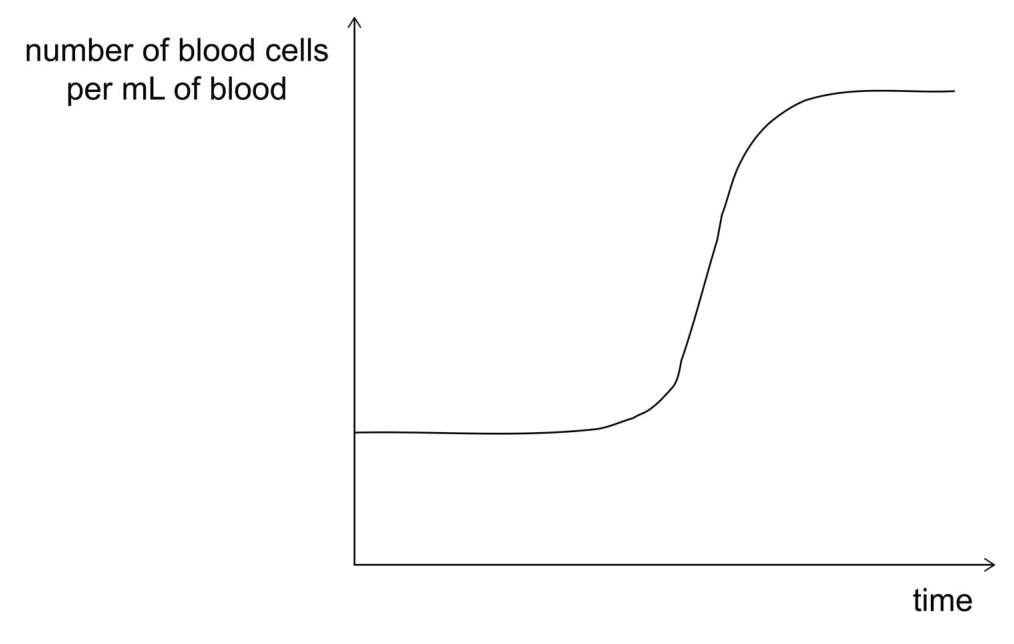
Which of the following could explain the shape of the above graph?
1 a reduction in the concentration of oxygen in the atmosphere
2 a response to a bacterial infection
3 increased differentiation of bone marrow stem cells
per mL rises ပြီး levels off — ဘာက ဖြစ်စေလဲ?ပုံထဲမှာ blood cells per mL (1 mL ထဲက အရေအတွက်) က time နဲ့ အတူ rises (တက်) ပြီး အမြင့်မှာ levels off (ငြိမ်) တယ်။ ဘာက ဖြစ်စေနိုင်လဲ — တစ်ခုချင်း စစ်မယ်။
1 — low O₂: erythropoietin၊ red cells ✓1 — low O₂ in air: kidney က erythropoietin ထုတ်ပြီး red cells တိုးတယ်။ ✓
2 — infection: more white cells ✓2 — bacterial infection: more white cells (သွေးဖြူဥ ပိုများ) ထွက်တယ်၊ white cells လည်း blood cells ပဲ။ ✓
3 — stem cells differentiate ✓3 — stem cells ပို differentiate (ခွဲပြောင်း) ရင် new blood cells (သွေးဆဲလ် အသစ်) ပိုထွက်တယ်။ ✓
သုံးခုလုံး မှန်လို့ အဖြေက A: 1, 2 and 3။
🔁 ပြန်စစ်မယ် — အဖြေ မကြည့်ခင် စဉ်းစားပါ
🤔 A blood test shows very few platelets. Which problem is most likely?
🔍 မေးခွန်း ဖြည်မယ်
blood test = သွေး စစ်ချက်။ shows very few platelets = platelets အရမ်း နည်းတာ ပြတယ်။ Which problem is most likely? = ဘယ် ပြဿနာ အဖြစ်နိုင်ဆုံးလဲ။
မေးနေတာ — platelets ရဲ့ အလုပ် မလုပ်နိုင်ရင် ဘာ ဖြစ်မလဲ။
platelets က ပေါက်ပြဲမှာ အဆို့ လုပ်ပြီး clotting factors ထုတ်တယ်။
နည်းရင် သွေး မရပ်လွယ်ဘူး။
ပိုး ကူးလွယ်တာ white cell နည်းလို့၊ O₂ နည်းတာ red cell နည်းလို့၊ tissue ထဲ ရေ ယိုတာ albumin နည်းလို့။
🤔 A blood cell has no nucleus and no mitochondria and is packed with one protein. Which cell is it?
🔍 မေးခွန်း ဖြည်မယ်
has no nucleus and no mitochondria = nucleus လည်း မရှိ၊ mitochondria လည်း မရှိ။ is packed with one protein = protein တစ်မျိုးတည်းနဲ့ ပြည့်နေတယ်။
မေးနေတာ — ဒီ ဖော်ပြချက်တွေ ကိုက်တဲ့ blood cell က ဘယ်ဟာလဲ။
nucleus, mitochondria ဖြုတ်ပြီး haemoglobin အပြည့် ထည့်ထားတာ red blood cell။
white cells နဲ့ stem cell မှာ nucleus ရှိတယ်။
🤔 The liver needs vitamin K to make one of these clotting proteins. Which one?
🔍 မေးခွန်း ဖြည်မယ်
needs vitamin K to make = … ကို လုပ်ဖို့ vitamin K လိုတယ်။ one of these clotting proteins = ဒီ သွေးခဲ protein တွေထဲက တစ်ခု။
မေးနေတာ — liver က vitamin K သုံးပြီး ဘယ် protein ကို လုပ်လဲ။
liver က prothrombin လုပ်ရာမှာ vitamin K လိုတယ်။
fibrin က fibrinogen ကနေ သွေးထဲမှာ ဖြစ်တာ၊ haemoglobin က red cell ထဲမှာ၊ albumin က ရေ ဆွဲထားတဲ့ protein။
🤔 Which white blood cell releases antibodies?
🔍 မေးခွန်း ဖြည်မယ်
Which white blood cell = ဘယ် သွေးဖြူဥ အမျိုးအစားလဲ။ releases antibodies = antibody တွေကို ထုတ်လွှတ်တယ်။
မေးနေတာ — Y ပုံ antibody ကို ထုတ်တဲ့ cell။
lymphocyte က antigen ကို မှတ်မိပြီး Y ပုံ antibody ထုတ်တယ်။
phagocyte က ဝါးမျိုတာ၊ platelet က cell အပိုင်းအစ၊ red cell က O₂ သယ်တာ။
Haemoglobin: load and unload
Hb က O₂ ကို ဘယ်မှာ တင်ပြီး ဘယ်မှာ ချလဲ
haemoglobin — O₂ ထိုင်ခုံ လေးခုံ ပါတဲ့ protein
red cell တစ်လုံး Hb 270 million။ပဟေဠိကို ဖြေဖို့ red blood cell ထဲ ဝင်ကြည့်မယ်။ cell တစ်လုံးထဲမှာ haemoglobin (Hb) molecule 270 million (သန်း 270) လောက် ရှိတယ်။
Hb = polypeptide (amino acid ကြိုး) 4 — alpha ×2, beta ×2။Hb တစ်ခုမှာ polypeptide (amino acid ကြိုး) 4 ချောင်း ပါတယ် — alpha ကြိုး ×2 နဲ့ beta ကြိုး ×2။ ကြိုးတစ်ချောင်းစီ ခေါက်ပြီး အလုံးလေး ဖြစ်နေတယ်။
ကြိုး ပေါင်းလို့ quaternary structure (စတုတ္ထ အဆင့်)ကြိုး တစ်ချောင်းထက် ပိုပြီး ပေါင်းထားလို့ quaternary structure (စတုတ္ထ အဆင့်) ရှိတယ်။ လှေကား ထိပ်ဆုံးလို — primary, secondary, tertiary အဆင့်တွေ ပါပြီးသား (သင်ခန်းစာ 25)။
🤔 Myoglobin is one polypeptide chain folded round one haem. Which levels of protein structure does it have?
🔍 မေးခွန်း ဖြည်မယ်
one polypeptide chain = amino acid ကြိုး တစ်ချောင်းတည်း။ folded round one haem = haem တစ်ခုကို ပတ်ပြီး ခေါက်ထားတယ်။ levels of protein structure = protein ပုံရဲ့ အဆင့်တွေ။
မေးနေတာ — ကြိုး တစ်ချောင်းတည်း protein မှာ ဘယ် အဆင့်တွေ ရှိလဲ။
quaternary ဖြစ်ဖို့ polypeptide ကြိုး နှစ်ချောင်း နဲ့ အထက် ပေါင်းရမယ်။
myoglobin က ကြိုး တစ်ချောင်းတည်းမို့ လှေကား သုံးထစ် — primary, secondary, tertiary ပဲ ရှိတယ်။
💡 မှတ်နည်း — Hb က ထိုင်ခုံ 4 ခုံ ပါတဲ့ တက္ကစီ — ကြိုး 4 ချောင်း၊ ကြိုးတစ်ချောင်းစီမှာ ထိုင်ခုံ (haem) တစ်ခုံ။ ခရီးသည်က O₂။
haem အလယ်က သံ — O₂ ထိုင်တဲ့ ခုံ
chain တစ်ချောင်း haem (သံ ပါ ပြားလေး) — Fe²⁺။ကြိုး (chain) တစ်ချောင်းစီမှာ haem (သံ ပါတဲ့ ပြားလေး) တစ်ခုစီ ကပ်ထားတယ်။ haem အလယ်မှာ ²⁺ (iron ion — သံ ion) ရှိတယ်။
Fe²⁺ တစ်လုံးပေါ်မှာ O₂ exactly (အတိအကျ) တစ်ခု ထိုင်တယ် — one O₂ per Fe²⁺။
O₂ 4 ခု — oxyhaemoglobin နီ တောက်။Fe²⁺ 4 လုံးလုံးမှာ O₂ ထိုင်ပြီးရင် Hb တစ်ခုက O₂ 4 ခု သယ်တယ်။ O₂ ကပ်ထားတဲ့ Hb ကို oxyhaemoglobin လို့ ခေါ်ပြီး အရောင် နီ တောက်တယ်။
🤔 One red cell holds about 270 million Hb. At most, about how many O₂ molecules can it carry?
🔍 မေးခွန်း ဖြည်မယ်
holds about 270 million Hb = Hb သန်း 270 လောက် ပါတယ်။ At most = အများဆုံး။ O₂ molecules = O₂ molecule အရေအတွက်။
မေးနေတာ — Hb တစ်ခု သယ်နိုင်တဲ့ O₂ အရေအတွက်ကို သုံးပြီး red cell တစ်လုံးစာ တွက်ပါ။
Hb တစ်ခု O₂ 4 ခု — 270 million × 4 = 1080 million ≈ 1 billion (သန်း 1000)။
4 ခု ဆိုတာ Hb တစ်ခုစာပဲ။
low iron — anaemia (သွေးအားနည်းရောဂါ)low iron (အစာထဲ သံ မလုံလောက်) ဆိုရင် Hb နည်းလို့ too little O₂ is carried (O₂ နည်းနည်းပဲ သယ်နိုင်) ပြီး မောလွယ်တယ်။ Hb ဒါမှမဟုတ် red cell နည်းတာကို anaemia (သွေးအားနည်းရောဂါ) လို့ ခေါ်ပြီး iron နည်းတာက အဖြစ်များဆုံး အကြောင်းရင်း။
💡 မှတ်နည်း — ထိုင်ခုံ (Fe²⁺) မရှိရင် ခရီးသည် (O₂) ထိုင်စရာ မရှိဘူး — သံ နည်းရင် သွေးအားနည်းတာ ဒါကြောင့်။ ဟင်းနုနွယ်၊ အသည်း၊ ပဲ တွေမှာ သံ ပါတယ်။
Hb တစ်ခုရဲ့ ခရီး — lungs မှာ တင်၊ toe မှာ ချ
lungs ရောက်တဲ့ Hb က empty — ခုံ 4 ခုံ အလွတ်။Hb တစ်ခုကို ခရီး လိုက်ကြည့်မယ်။ lungs (အဆုတ်) ရဲ့ သွေးကြောမျှင် ထဲ ရောက်လာတဲ့ Hb က empty (ဗလာ) — O₂ ထိုင်ခုံ 4 ခုံ အလွတ်။ lungs ထဲမှာ O₂ အများကြီး ရှိတယ်။
O₂ များ — 4 ခုံလုံး load (ကုန်တင်)O₂ များတဲ့ နေရာမို့ O₂ တွေ ထိုင်ခုံ 4 ခုံလုံး တက်ထိုင်တယ် — load (ကုန်တင်)။
oxyhaemoglobin artery နဲ့ toe ဘက်။O₂ အပြည့် တင်ထားတဲ့ oxyhaemoglobin က artery (သွေးလွှတ်ကြော) ထဲ စီးပြီး toe (ခြေမ) ဘက် သွားတယ်။
🤔 This Hb now reaches muscle cells that are using O₂ fast. What will it do there?
🔍 မေးခွန်း ဖြည်မယ်
reaches = ရောက်တယ်။ muscle cells that are using O₂ fast = O₂ ကို မြန်မြန် သုံးနေတဲ့ ကြွက်သား ဆဲလ်တွေ။ What will it do there? = အဲဒီမှာ ဘာ လုပ်မလဲ။
မေးနေတာ — O₂ နည်းတဲ့ နေရာ ရောက်တော့ Hb က O₂ ကို ဘာ လုပ်လဲ။
muscle cells က O₂ သုံးနေလို့ အဲဒီမှာ O₂ နည်းတယ်။
Hb က O₂ တချို့ကို unload (ချ) ပေးတယ်။
O₂ ကို CO₂ ပြောင်းတာက mitochondria၊ Hb မဟုတ်ဘူး။
toe O₂ နည်း — unload (ကုန်ချ)toe muscle ရဲ့ cells တွေ O₂ သုံးနေလို့ အဲဒီမှာ O₂ နည်းတယ်။ Hb က O₂ ကို cells ဆီ ချပေးတယ် — unload (ကုန်ချ)။
နားနေ — 1 ခုပဲ ချ၊ 3 ခု သွေးပြန်ကြော နဲ့ ပြန်။နားနေချိန်မှာ 4 ခုထဲက 1 ခုလောက်ပဲ ချတယ်။ ကျန် 3 ခုကို သွေးပြန်ကြော ကနေ lungs ဆီ အရန် အဖြစ် ပြန်ယူသွားတယ်။ ဘာလို့ ဒီလို ချလဲ — ဆက်ကြည့်မယ်။
cooperative binding — တစ်ခု တက်ရင် ကျန်တာ လွယ်
empty Hb tense — first O₂ hard။empty Hb (ဗလာ Hb) က ကြိုးတွေ တင်းတင်း ကျပ်နေ (tense) တယ်။ first O₂ (ပထမ O₂) ဝင်ထိုင်ဖို့ hard (ခက်) တယ်။
တစ်ခု ထိုင်ရင် shape changes။တစ်ခု ထိုင်မိတာနဲ့ Hb ရဲ့ shape (ပုံ) နည်းနည်း changes (ပြောင်း) သွားပြီး ကြိုးတွေ ပွင့်လာတယ်။
next three O₂ easier။ဒါကြောင့် next three O₂ (နောက် O₂ သုံးခု) ထိုင်ရ easier (ပိုလွယ်) လာတယ်။
cooperative binding (ကူညီ ချိတ်ခြင်း)တစ်ခု ထိုင်တာက နောက်တစ်ခုကို ကူတာမို့ cooperative binding (ကူညီ ချိတ်ခြင်း) လို့ ခေါ်တယ်။
one O₂ leaves — the rest leave easily။ပြောင်းပြန်လည်း မှန်တယ်။ one O₂ leaves (တစ်ခု ထွက်) ရင် the rest (ကျန်တာ) တွေ leave easily (လွယ်လွယ် ထွက်) တယ်။ ဒါက နောက်မှာ ဖတ်မယ့် မျဉ်းကွေး ပုံကို ဆုံးဖြတ်တယ်။
💡 မှတ်နည်း — ကျပ်နေတဲ့ ဘတ်စ်ကား တံခါးကို ပထမ လူက အားစိုက် ဖွင့်ရတယ်။ တံခါး ပွင့်သွားရင် နောက်လူတွေ တန်းတန်း တက်လာတယ်။
pressure နဲ့ pO₂ — O₂ ဘယ်လောက် ‘တွန်း’ လဲ
pressure (ဖိအား) — air 100 kPa လောက်။မျဉ်းကွေး မဖတ်ခင် pO₂ ကို နားလည်ရမယ်။ လေထဲက molecule တွေ နံရံကို ဝင်တိုက်တဲ့ အားကို pressure (ဖိအား) လို့ ခေါ်တယ်။ ပင်လယ်ပြင်မှာ air pressure က 100 kPa လောက်။
1 kPa = 1000 Pa၊ 1 Pa = 1 N1 m²။kPa (kilopascal) က pressure ယူနစ် — 1 kPa = 1000 Pa။ 1 Pa ဆိုတာ 1 m² (စတုရန်းမီတာ) ပေါ်ကို 1 N (newton) အားနဲ့ တွန်းတာ။
O₂ 21 %— partial pressure (အပိုင်း ဖိအား) = pO₂လေ molecule 100 ထဲက 21 က O₂၊ 78 က N₂။ ဓာတ်ငွေ့ တစ်မျိုးစီက ကိုယ့် အရေအတွက် အချိုးအတိုင်း pressure ကို ခွဲယူတယ် — partial pressure (အပိုင်း ဖိအား)။ O₂ ရဲ့ partial pressure ကို pO₂ လို့ ရေးတယ်။
pO₂ = 21100 × 100 kPa = 21 kPa။
🤔 Air at the top of a high mountain has a total pressure of 50 kPa and is still 21 % O₂. What is its pO₂?
🔍 မေးခွန်း ဖြည်မယ်
total pressure of 50 kPa = စုစုပေါင်း pressure 50 kPa။ is still 21 % O₂ = O₂ က 21 % ပဲ ဆက်ရှိတယ်။ What is its pO₂? = သူ့ O₂ partial pressure ဘယ်လောက်လဲ။
မေးနေတာ — O₂ ရဲ့ ဝေစုကို စုစုပေါင်း pressure နဲ့ မြှောက်ပြီး တွက်ပါ။
pO₂ = 21100 × 50 = 10.5 kPa။
O₂ ရာခိုင်နှုန်း မပြောင်းပေမဲ့ စုစုပေါင်း pressure ကျလို့ pO₂ တစ်ဝက် ကျတယ် — တောင်ပေါ်မှာ မောလွယ်တာ ဒါကြောင့်ပါ။
💡 မှတ်နည်း — လူ 100 က ကားကို တွန်းရင် 21 ယောက်က O₂ ဆိုရင် O₂ ရဲ့ အား ဝေစု (pO₂) က အားလုံးရဲ့ 21 %။
pO₂ လှေကား — 21 → 13 → 5 → 2
air (လေ) ရဲ့ pO₂ က 21 kPa — အပေါ်က တွက်ခဲ့တဲ့ အတိုင်း။
alveoli pO₂ 13 kPa။lungs ထဲက alveoli (လေအိတ်လေး) မှာ water vapour (ရေငွေ့) နဲ့ CO₂ ရောနေလို့ pO₂ က 13 kPa လောက် ကျတယ်။
at rest tissue — 5 kPa။at rest (နားနေ) တဲ့ tissue မှာ ဆဲလ် တွေ O₂ သုံးနေလို့ pO₂ က 5 kPa လောက်ပဲ ရှိတယ်။
working muscle — 2 kPa။working (အလုပ် ကြမ်းကြမ်း လုပ်နေ) တဲ့ muscle မှာ O₂ ကုန်မြန်လို့ 2 kPa လောက်အထိ ကျတယ်။
O₂ high → low diffuses။O₂ က pO₂ မြင့်ရာကနေ နိမ့်ရာကို အမြဲ diffuses (ပျံ့) တယ် — high → low။ ဒါကြောင့် lungs မှာ သွေးထဲ ဝင်ပြီး tissue မှာ သွေးထဲက ထွက်တယ်။
💡 မှတ်နည်း — ရေက မြင့်ရာက နိမ့်ရာ စီးသလို O₂ က pO₂ မြင့်ရာ (lungs) ကနေ နိမ့်ရာ (muscle) ကို စီးတယ် — လှေကား ဆင်းသလို။
O₂ dissociation curve — ပဟေဠိ အဖြေ
x = pO₂ (kPa)၊ y = Hb % saturation (ပြည့်နှုန်း)x ဝင်ရိုးက pO₂ (kPa)၊ y ဝင်ရိုးက Hb ရဲ့ % saturation (ပြည့်နှုန်း) — ထိုင်ခုံ 4 ခုံထဲက ဘယ်နှ % ပြည့်လဲ။ 100 % ဆိုရင် အကုန် ပြည့် — fully saturated (အပြည့် ပြည့်) ပါ။
S-shaped — flat၊ steep၊ flat (full)။cooperative binding ကြောင့် မျဉ်းက S-shaped (S ပုံ) ဖြစ်တယ်။ အစ flat (ပြား — ပထမ O₂ ခက်)၊ အလယ် steep (မတ် — ကျန်တာ လွယ်)၊ အဆုံး flat (ထိုင်ခုံ full ပြည့်)။
lungs မှာ pO₂ 13 kPa — Hb က 97 % ပြည့်တယ်။ O₂ ကို အပြည့်နီးပါး တင်တယ်။
🤔 Blood now flows to a tissue at rest, where pO₂ is 5 kPa. Predict what Hb does there.
🔍 မေးခွန်း ဖြည်မယ်
flows to = … ဆီ စီးတယ်။ a tissue at rest = နားနေတဲ့ tissue။ where pO₂ is 5 kPa = pO₂ 5 kPa ရှိတဲ့ နေရာ။ Predict = ကြိုတင် ခန့်မှန်းပါ။
မေးနေတာ — 13 kPa ကနေ 5 kPa ရောက်တော့ curve အရ Hb က O₂ ကို ဘာ လုပ်လဲ။
curve အရ 5 kPa မှာ 72 % ပဲ ပြည့်နိုင်တယ် — 97 % ကနေ 72 % ကျလို့ O₂ တချို့ (25 %) ကို ချပေးတယ်။
အကုန် မချဘူး၊ ကျန် O₂ က အရန်။
rest tissue 5 kPa — 72 % ပဲ။အနားယူနေတဲ့ tissue (ဥပမာ ခြေမ) မှာ pO₂ 5 kPa ပဲ — Hb က 72 % ပဲ ပြည့်နိုင်တယ်။
97 − 72 = 25 % released။97 − 72 = 25 % ကို tissue မှာ released (ချ) ပေးလိုက်တယ်။ curve မတ်တဲ့ နေရာမို့ pO₂ နည်းနည်း ကျရုံနဲ့ O₂ အများကြီး ကျတယ်။
ပဟေဠိ ဖြေပြီ! pO₂ high load၊ low unload။ပဟေဠိ ဖြေပြီ! pO₂ high (မြင့်) တဲ့ lungs မှာ load (တင်)၊ pO₂ low (နိမ့်) တဲ့ ခြေမမှာ unload (ချ)။ Hb က pO₂ ကို ‘ဖတ်’ ပြီး ဘယ်မှာ ချရမလဲ သိတယ်။
💡 မှတ်နည်း — ဘတ်စ်ကား (Hb) က ခရီးသည် များတဲ့ ဘူတာ (lungs) မှာ ပြည့်အောင် တင်ပြီး လူ လိုတဲ့ ဈေး (tissue) မှာ ချတယ် — pO₂ ကို ကြည့်ပြီး ဆုံးဖြတ်တယ်။
Bohr effect — ပင်ပန်းတဲ့ muscle ကို ပိုပေး
working muscle — CO₂ ↑၊ pH ↓။rest (နားနေ) curve ကို မှတ်ထားပါ။ အခု ပြေးမယ်။ working muscle (အလုပ်လုပ်နေတဲ့ ကြွက်သား) မှာ CO₂ ↑ များလာတယ်၊ CO₂ က H⁺ ထုတ်လို့ pH ↓ ကျတယ်။
muscle အလုပ်လုပ်ရင် temperature ↑ (အပူချိန်) လည်း တက်တယ်။
🤔 More CO₂, more H⁺ and a higher temperature reach the Hb. Predict the effect on its hold on O₂.
🔍 မေးခွန်း ဖြည်မယ်
a higher temperature = ပိုမြင့်တဲ့ အပူချိန်။ reach the Hb = Hb ဆီ ရောက်တယ်။ the effect on its hold on O₂ = O₂ ကို ကိုင်ထားပုံ အပေါ် သက်ရောက်မှု။
မေးနေတာ — ဒီ သုံးခုကြောင့် Hb က O₂ ကို ပိုကိုင်ထားလား၊ လျှော့လား။
ဒီ သုံးခုက Hb ရဲ့ ပုံကို နည်းနည်း ပြောင်းပြီး O₂ ကို ဆွဲထားအား (affinity) ကို လျှော့တယ် — curve ညာ ရွေ့ပြီး O₂ ပိုချတယ်။
O₂ သယ်တာ မရပ်ဘူး။
affinity ↓ — curve right shift။ဒီ သုံးခုက Hb က O₂ ကို tightly (တင်းတင်း) ဆွဲထားအား — affinity — ကို ↓ လျှော့တယ်။ curve က right shift (ညာဘက် ရွေ့) သွားတယ်။
5 kPa မှာ 60 % — 37 % released။ညာ ရွေ့တဲ့ အနီ curve ကို tissue (5 kPa) မျဉ်းနဲ့ ဆုံတဲ့ အစက်မှာ ကြည့်ပါ — 60 % ပဲ ပြည့်တော့တယ်။ lungs မှာ 97 % ဆိုတော့ 97 − 60 = 37 % released — နားနေချိန်ထက် များတယ်။
ညာ ရွေ့ O₂ ပိုချ = Bohr effect (Bohr သက်ရောက်မှု)CO₂ နဲ့ H⁺ ကြောင့် curve ညာ ရွေ့ပြီး O₂ ပိုချတာကို Bohr effect (Bohr သက်ရောက်မှု — တွေ့ခဲ့တဲ့ ဒိန်းမတ် သိပ္ပံပညာရှင် Christian Bohr ရဲ့ နာမည်) လို့ ခေါ်တယ်။ O₂ အလိုဆုံး muscle က O₂ အများဆုံး receive (ရ) တယ်။
💡 မှတ်နည်း — curve ညာ ရွေ့ရင် လက် ‘ပြေ’ တယ် (release)။ ပင်ပန်းတဲ့ အလုပ်သမား (muscle) ကို ထမင်း (O₂) ပိုကျွေးတဲ့ ဆိုင်ရှင်လို — ပိုလိုတဲ့ သူ ပိုရတယ်။
ဘယ်ဘက် curve — fetal Hb နဲ့ myoglobin
fetus က placenta မှာ O₂ ‘လု’ ရ။ဗိုက်ထဲက fetus (သန္ဓေသား) က O₂ ကို placenta (အချင်း) မှာ အမေ့ သွေးဆီက ‘လု’ ယူရတယ်။ အမေ့ adult Hb ထက် ပိုဆွဲနိုင်မှ ရမယ်။
fetal Hb curve ဘယ်ဘက် — affinity မြင့်။ဒါကြောင့် fetal Hb ရဲ့ curve က adult curve ရဲ့ ဘယ်ဘက်မှာ ရှိတယ်။ affinity ပိုမြင့်လို့ pO₂ တူတူမှာ ပိုပြည့်တယ်။
myoglobin (O₂ သိုလှောင်တဲ့ protein) — one chain။muscle ထဲက myoglobin (O₂ သိုလှောင်တဲ့ protein) မှာ one chain (ကြိုး တစ်ချောင်း)၊ haem တစ်ခုပဲ ပါလို့ O₂ တစ်ခုပဲ ယူပြီး muscle ထဲမှာ stores (သိုလှောင်) ထားတယ်။
S မဟုတ် hyperbola — pO₂ အရမ်း နိမ့်မှ ထုတ်။cooperative binding မရှိလို့ curve က S ပုံ မဟုတ်ဘဲ အစကတည်းက မတ်မတ် တက်ပြီး ကွေးသွားတဲ့ hyperbola ဖြစ်တယ်။ ဘယ်ဆုံးမှာ ရှိလို့ pO₂ အရမ်း နိမ့်မှသာ O₂ ထုတ်ပေးတဲ့ အရန်စု။
left = holds tight၊ right = lets go။မှတ်ရန် —
left (ဘယ်) = holds tight (တင်းတင်း ကိုင်)၊
right (ညာ) = lets go (လွှတ်ပေး)။
🤔 A llama lives high in the Andes, where pO₂ is low. Compared with a human curve, where would you expect its Hb curve to lie?
🔍 မေးခွန်း ဖြည်မယ်
llama = တောင်အမေရိက တောင်ပေါ်က ကုလားအုတ် မျိုးနွယ် တိရစ္ဆာန်။ the Andes = Andes တောင်တန်း။ where pO₂ is low = pO₂ နိမ့်တဲ့ နေရာ။
Compared with a human curve = လူ့ curve နဲ့ ယှဉ်ရင်။ where … lie? = ဘယ်နေရာမှာ ရှိမလဲ။
မေးနေတာ — O₂ နည်းတဲ့ နေရာမှာ နေရတဲ့ Hb ရဲ့ curve က ဘယ်ဘက် ရွေ့မလဲ။
pO₂ နိမ့်တဲ့ နေရာမှာ O₂ ကို လုယူရလို့ affinity မြင့်ဖို့ လိုတယ် — left (ဘယ်)။
fetal Hb လိုပဲ။
ညာ ဆိုရင် lungs မှာတောင် မပြည့်ဘူး။
🎮 Load or unload? — sort fast 🔥
CO — ထိုင်ခုံကို လုထိုင်တဲ့ အဆိပ်
မီးသွေးမီးဖို၊ အိတ်ဇော — carbon monoxide (CO ဓာတ်ငွေ့)charcoal stove (မီးသွေး မီးဖို) နဲ့ ကား အိတ်ဇော မီးခိုးထဲမှာ carbon monoxide (CO) ပါတယ် — အရောင် မရှိ၊ အနံ့ မရှိတဲ့ ဓာတ်ငွေ့။
CO က 200× stronger ကပ် — no seat။CO က Fe²⁺ ပေါ်မှာ O₂ ထက် 200× (၂၀၀ ဆ) stronger (ပို တင်းတင်း) ကပ်တယ်။ ထိုင်ခုံ ယူထားလို့ O₂ အတွက် no seat (ခုံ မကျန်) ဖြစ်တယ်။ ကပ်ပြီးရင် slowly (ဖြည်းဖြည်း) ပဲ ပြန်ထွက်တယ်။
O₂ မရောက် — poison။Hb တွေ CO နဲ့ ပြည့်သွားရင် tissues ဆီ O₂ မရောက်တော့ဘူး — ခေါင်းမူး၊ သတိလစ်ပြီး သေနိုင်တဲ့ poison (အဆိပ်) ပါ။
🤔 A man is pulled from a smoky room and given pure O₂ to breathe. Why does it help?
🔍 မေးခွန်း ဖြည်မယ်
is pulled from a smoky room = မီးခိုး ပြည့်တဲ့ အခန်းထဲက ဆွဲထုတ်ခံရတယ်။ given pure O₂ to breathe = O₂ သန့်သန့် ရှူဖို့ ပေးတယ်။ Why does it help? = ဘာကြောင့် ကူညီလဲ။
မေးနေတာ — O₂ များများ ရှူတာက CO နဲ့ ကပ်နေတဲ့ Hb ကို ဘယ်လို ပြန်ကောင်းစေလဲ။
O₂ အများကြီး ရှူရင် Fe²⁺ ပေါ်က CO ကို ဖြည်းဖြည်း နေရာ လုယူနိုင်တယ်။
red cell အသစ် ထုတ်တာ ရက်သတ္တပတ် ကြာတယ်။
O₂ က CO ကို CO₂ ပြောင်းတာ မဟုတ်ဘဲ Fe²⁺ ပေါ်က နေရာကို ပြန်လုတာ။
💡 မှတ်နည်း — ကော်နဲ့ ကပ်ပြီး ထိုင်ခုံ ယူထားတဲ့ ခရီးသည်လို — CO ထိုင်ထားရင် O₂ ခရီးသည် ထိုင်လို့ မရဘူး။ ပိတ်ထားတဲ့ အခန်းထဲ မီးသွေး မီးဖို မဖိုရတာ ဒါကြောင့်။
sickle-cell anaemia — amino acid တစ်လုံး ပြောင်းရုံနဲ့
sickle-cell anaemia — beta chain မှာ Glu → Val။sickle-cell anaemia မှာ gene mutation (သင်ခန်းစာ 41A) ကြောင့် beta chain ထဲက amino acid တစ်လုံး ပြောင်းတယ် — Glu (glutamic acid) နေရာမှာ Val (valine) ဝင်တယ်။
🤔 Which statement about the haemoglobin of sickle-cell patients is true? (adapted from IMAT 2026 Q31)
🔍 မေးခွန်း ဖြည်မယ်
Which statement … is true? = ဘယ် ဖော်ပြချက်က မှန်လဲ။ sickle-cell patients = sickle-cell anaemia လူနာတွေ။
မေးနေတာ — HbS က normal Hb နဲ့ ဘာ ကွာလဲ၊ ဘာ တူလဲ။
amino acid တစ်လုံး (Glu → Val) ပြောင်းလို့ protein ရဲ့ structure ပြောင်းတယ်။
O₂ ကိုတော့ သယ်နိုင်သေးတယ်။
ပမာဏ ပိုထုတ်တာ မဟုတ်ဘူး။
low O₂ — HbS ကြိုးရှည်၊ sickle cell။low O₂ (O₂ နည်း) တဲ့အခါ HbS molecule တွေ အချင်းချင်း ကပ်ပြီး ကြိုးရှည် fibres ဖြစ်တယ်။ red cell ကို လခြမ်းပုံ sickle cell ဖြစ်အောင် ကွေးလိုက်တယ်။
capillary blocks၊ anaemia။sickle cell တွေ မာပြီး မကွေးနိုင်လို့ capillary ထဲမှာ blocks (ပိတ်) ပြီး နာကျင်တယ်။ sickle cell တွေ မြန်မြန် destroyed (ဖျက်ဆီးခံရ) လို့ red cell နည်းပြီး anaemia ဖြစ်တယ်။
⚠ HbS still carries O₂ — shape differs။သတိ — HbS က O₂ ကို still carries (သယ်နိုင်သေး) တယ်။ ကွာတာက structure — shape differs (ပုံ မတူ)။ HbS ကို ပိုများတဲ့ amounts (ပမာဏ) နဲ့ ထုတ်တာ မဟုတ်ဘူး — normal (ပုံမှန်) Hb နေရာမှာ HbS ကို ထုတ်တာ။
💡 မှတ်နည်း — ပုတီး ကြိုးမှာ ပုတီးစေ့ တစ်လုံး မှားထည့်ရင် ကြိုးတစ်ခုလုံး ကွေးသွားသလို amino acid တစ်လုံး ပြောင်းတာနဲ့ Hb ပုံ ပြောင်းတယ်။
CO₂ ကို red cell ထဲမှာ ဘယ်လို ပြောင်းလဲ
ပြန်လမ်း — CO₂ က red cell ထဲ diffuses။အခု ပြန်လမ်း။ tissue က ထုတ်တဲ့ CO₂ ကို အဆုတ်ဆီ သယ်ရမယ်။ CO₂ အများစုက red blood cell ထဲ diffuses (ပျံ့ဝင်) တယ်။
carbonic anhydrase — CO₂ + H₂O → H₂CO₃red cell ထဲက enzyme carbonic anhydrase က CO₂ + H₂O ကို H₂CO₃ (carbonic acid) ဖြစ်အောင် အရမ်း မြန်မြန် ပေါင်းပေးတယ်။
H₂CO₃ → H⁺ + HCO₃⁻၊ HCO₃⁻ plasma ထဲ။H₂CO₃ က H⁺ နဲ့ HCO₃⁻ ကွဲတယ်။ HCO₃⁻ က plasma ထဲ ထွက်သွားပြီး အဆုတ်ဆီ ပါသွားတယ်။
H⁺ Hb ပေါ် ကပ် — O₂ out (Bohr effect)။ကျန်တဲ့ H⁺ က Hb ပေါ် ကပ်တယ်။ Hb ပုံ ပြောင်းပြီး O₂ out (O₂ ထွက်) — PART 2 ရဲ့ Bohr effect ဖြစ်ရတဲ့ အကြောင်းရင်း ဒါပါ။
💡 မှတ်နည်း — ရေ နဲ့ CO₂ ကို ဒီအတိုင်း ထားရင် ဖြည်းဖြည်းပဲ ပေါင်းတယ်။ carbonic anhydrase က ထမင်းဆိုင် စားဖိုမှူး မြန်မြန်လို တစ်စက္ကန့်ကို molecule သန်းချီ ပေါင်းပေးတယ်။
CO₂ ရဲ့ လမ်း သုံးလမ်း — 70 · 23 · 7
70 % က HCO₃⁻ အဖြစ် plasma ထဲ။CO₂ ရဲ့ 70 % လောက်က HCO₃⁻ ion အဖြစ် plasma ထဲမှာ ပျော်ပြီး သွားတယ် — အများဆုံး လမ်း။
23 % = carbaminohaemoglobin — not on Fe။23 % က Hb ရဲ့ ကြိုး (chains) ပေါ် (Fe ပေါ် မဟုတ်) တိုက်ရိုက် ကပ်တယ် — carbaminohaemoglobin။ not on Fe ဆိုတော့ သံ ထိုင်ခုံကို မယူဘူး။
ကျန် 7 % က plasma ထဲ dissolved (ဒီအတိုင်း ပျော်) ပြီး သွားတယ်။
🤔 Compared with the blood entering it, blood leaving a hard-working muscle has…
🔍 မေးခွန်း ဖြည်မယ်
Compared with = … နဲ့ ယှဉ်ရင်။ the blood entering it = သူ့ထဲ ဝင်လာတဲ့ သွေး။ blood leaving a hard-working muscle = အလုပ် ကြမ်းကြမ်း လုပ်နေတဲ့ muscle က ထွက်လာတဲ့ သွေး။
မေးနေတာ — muscle ကို ဖြတ်ပြီးနောက် သွေးထဲမှာ ဘာ ပိုများလာလဲ။
muscle က CO₂ အများကြီး ထုတ်လို့ red cell ထဲမှာ HCO₃⁻ ပိုဖြစ်တယ်။
acid များလို့ pH ကျ၊ CO₂ ပိုများ၊ O₂ ချခဲ့လို့ Hb မပြည့်တော့ဘူး။
💡 မှတ်နည်း — ခရီးသည် 100 မှာ 70 က ဘတ်စ်ကား (HCO₃⁻)၊ 23 က Hb ရဲ့ နောက်ထိုင်ခုံ (carbamino)၊ 7 က လမ်းလျှောက် (dissolved) — 70 + 23 + 7 = 100။
chloride shift — lungs မှာ CO₂ ပြန်ထုတ်ပုံ
HCO₃⁻ (−) က protein door ကနေ plasma ထဲ။tissue မှာ red cell ထဲ HCO₃⁻ အများကြီး ဖြစ်လာတယ်။ အနုတ် (−) ion တွေမို့ membrane ပေါ်က protein door (protein တံခါး) ကနေ plasma ထဲ ထွက်သွားတယ်။
🤔 HCO₃⁻ ions leave the red blood cell. Which ion moves in to keep the charges balanced?
🔍 မေးခွန်း ဖြည်မယ်
leave = ထွက်သွားတယ်။ moves in = ဝင်လာတယ်။ to keep the charges balanced = လျှပ်စစ် အပေါင်း အနုတ် မျှနေအောင်။
မေးနေတာ — အနုတ် ion ထွက်သွားရင် ဘယ် ion က အစား ဝင်လဲ။
အနုတ် ion တစ်ခု ထွက်ရင် အနုတ် ion တစ်ခု ဝင်ရမယ် — Cl⁻ (chloride shift)။
Na⁺, H⁺, Fe²⁺ က အပေါင်း ion တွေ။
Cl⁻ အစားဝင် = chloride shift (Cl⁻ အလဲအလှယ်)အနုတ် (−) တွေ ထွက်သွားလို့ plasma ထဲက Cl⁻ (chloride ion) က အစားဝင်လာတယ် — ဒါကို chloride shift (Cl⁻ အလဲအလှယ်) လို့ ခေါ်တယ်။
lungs — O₂ ထိုင်၊ H⁺ လွှတ်။lungs ရောက်တော့ pO₂ မြင့်လို့ O₂ က Hb ပေါ် တက်ထိုင်တယ်။ O₂ ထိုင်တဲ့ Hb က H⁺ ကို လွှတ်ပေးတယ် — Bohr effect ရဲ့ ပြောင်းပြန်ပါ။
ပြောင်းပြန် — HCO₃⁻ ဝင်၊ Cl⁻ ထွက်။အလဲအလှယ်လည်း ပြောင်းပြန် ဖြစ်တယ် — HCO₃⁻ က plasma ကနေ cell ထဲ ပြန်ဝင်ပြီး Cl⁻ က ပြန်ထွက်တယ်။
H⁺ + HCO₃⁻ → H₂CO₃ → CO₂ + H₂Ocell ထဲမှာ H⁺ + HCO₃⁻ → H₂CO₃ ဖြစ်ပြီး carbonic anhydrase က H₂CO₃ ကို CO₂ + H₂O အဖြစ် မြန်မြန် ပြန်ခွဲပေးတယ်။
CO₂ က alveoli ထဲ diffuse — ထွက်သက်နဲ့ ထွက်။ဖြစ်လာတဲ့ CO₂ က CO₂ နည်းတဲ့ alveoli (လေအိတ်) ထဲ diffuse (ပျံ့) ဖြစ်ပြီး ထွက်သက်နဲ့ အပြင် ထွက်သွားတယ် (သင်ခန်းစာ 49)။
🔁 ပြန်စစ်မယ် — အဖြေ မကြည့်ခင် စဉ်းစားပါ
🤔 At most, how many O₂ molecules can 10 haemoglobin molecules carry?
🔍 မေးခွန်း ဖြည်မယ်
At most = အများဆုံး။ 10 haemoglobin molecules = Hb molecule 10 ခု။ carry = သယ်တယ်။
မေးနေတာ — Hb တစ်ခုရဲ့ ထိုင်ခုံ အရေအတွက်ကို သုံးပြီး 10 ခုစာ တွက်ပါ။
Hb တစ်ခုမှာ Fe²⁺ 4 လုံး — O₂ 4 ခု။
10 × 4 = 40။
🤔 During exercise the O₂ dissociation curve shifts to the right. What does this mean for the muscles?
🔍 မေးခွန်း ဖြည်မယ်
During exercise = လေ့ကျင့်ခန်း လုပ်နေစဉ်။ shifts to the right = ညာဘက်ကို ရွေ့တယ်။ What does this mean for the muscles? = muscle တွေအတွက် ဘာ အဓိပ္ပာယ် ရလဲ။
မေးနေတာ — curve ညာ ရွေ့ရင် muscle ဆီ ရောက်တဲ့ O₂ ဘာ ဖြစ်လဲ။
ညာ ရွေ့ရင် affinity ကျလို့ Hb က O₂ ကို ပိုချတယ် — Bohr effect။
🤔 A charcoal fire burns in a closed room. Which gas blocks the Fe²⁺ seats of haemoglobin?
🔍 မေးခွန်း ဖြည်မယ်
charcoal fire = မီးသွေး မီး။ burns in a closed room = ပိတ်ထားတဲ့ အခန်းထဲမှာ လောင်တယ်။ blocks the Fe²⁺ seats = Fe²⁺ ထိုင်ခုံတွေကို ပိတ်ထားတယ်။
မေးနေတာ — O₂ မလုံလောက်ဘဲ လောင်တဲ့ မီးက ထုတ်တဲ့ ဘယ် ဓာတ်ငွေ့က Hb ပေါ် ကပ်လဲ။
မီးသွေး မပြည့်မစုံ လောင်ရင် CO (carbon monoxide) ထွက်ပြီး Fe²⁺ ပေါ် O₂ ထက် 200 ဆ ပိုကပ်တယ်။
🤔 Which enzyme in red blood cells speeds up CO₂ + H₂O → H₂CO₃?
🔍 မေးခွန်း ဖြည်မယ်
Which enzyme = ဘယ် enzyme လဲ။ speeds up = မြန်စေတယ်။ CO₂ + H₂O → H₂CO₃ = CO₂ နဲ့ ရေ ပေါင်းပြီး carbonic acid ဖြစ်တာ။
မေးနေတာ — red cell ထဲမှာ ဒီ ဓာတ်ပြုမှုကို အမြန်ဆုံး ဖြစ်စေတဲ့ enzyme။
carbonic anhydrase က ဒီ ဓာတ်ပြုမှုကို နှစ်ဖက်လုံး မြန်စေတယ်။
thrombin က fibrinogen ကို ဖြတ်တဲ့ clotting enzyme၊ haemoglobin က O₂ သယ်တဲ့ protein (enzyme မဟုတ်)၊ erythropoietin က kidney က ထုတ်တဲ့ hormone။