Meiosis, karyotypes and chromosome maps (1)
မိဘ တူတူ ဖြစ်ပေမဲ့ ညီအစ်ကို မောင်နှမတွေ ဘာလို့ မတူကြလဲ။ sperm နဲ့ egg ကို ထုတ်တဲ့ cell ခွဲပုံ meiosis က chromosome ကို တစ်ဝက် လျှော့ပြီး ဖဲချပ် မွှေသလို ရောမွှေပေးတယ်။
Why gametes carry half
gamete မှာ chromosome ဘာလို့ တစ်ဝက်ပဲ ပါလဲ
မိဘ တူတူ — ဘာလို့ ကလေးတွေ မတူကြတာလဲ
အဖေ အမေ နှစ်ယောက်လုံး ဆံပင် နက် — ကလေး ၃ ယောက်။အဖေ နဲ့ အမေ တစ်စုံကို ကြည့်ပါ။ နှစ်ယောက်လုံး ဆံပင် နက်တယ်။ သူတို့မှာ ကလေး သုံးယောက် ရှိတယ်။
ပထမ ကလေးက ဆံပင် ဝါတယ်။ အဖေ အမေ နှစ်ယောက်လုံး ဆံပင် နက်ပါလျက်နဲ့ပါ။
ဒုတိယ ကလေးမှာ ပါးချိုင့် ရှိတယ်။
မိဘ တူတူ — ကလေး ၃ ယောက် ဘာလို့ မတူကြလဲ?တတိယ ကလေးက အရပ် ပုတယ်။ မိဘ တူတူကနေ မွေးတာ ဖြစ်ပေမဲ့ ကလေး သုံးယောက် ဘာလို့ ဒီလောက် မတူကြတာလဲ?
အဖြေ = meiosis (မိုင်အိုးစစ်) — sperm, egg ထုတ်တဲ့ ခွဲပုံ။အဖြေက sperm (သုတ်ပိုး) နဲ့ egg (မျိုးဥ) ကို ထုတ်တဲ့ cell ခွဲပုံ တစ်မျိုး ထဲမှာ ပုန်းနေတယ်။ အဲဒီ ခွဲပုံကို meiosis (မိုင်အိုးစစ်) လို့ ခေါ်တယ်။
chromosome 46 → 23 လိုက်ရေတွက် (count) မယ်။ဒီ သင်ခန်းစာ ဆုံးရင် meiosis မှာ chromosome ကို 46 ကနေ 23 အထိ လိုက်ရေတွက်တတ် (count) မယ်။
မောင်နှမ မတူတဲ့ 3 reasons ကို ပုံနဲ့ ရှင်းမယ်။ညီအစ်ကို မောင်နှမတွေ မတူကြတဲ့ အကြောင်း သုံးခု (3 reasons) ကို ပုံနဲ့ ရှင်းပြတတ်မယ်။
ခွဲတာ မှားရင် Down syndrome လို အခြေအနေ ဘယ်လို ဖြစ်လာလဲ ဆိုတာကို နောက် သင်ခန်းစာ 33B မှာ ဆက်ကြည့်မယ်။
👉 ကဲ — chromosome ပေါ်မှာ ဘာတွေ ရေးထားလဲကနေ စမယ်။
gene နဲ့ allele — ဟင်းချက်နည်း စာအုပ်
nucleus ထဲက DNA ကြိုး (+ protein) တစ်ချောင်းစီ = chromosome။nucleus ရှိတဲ့ cell တိုင်းရဲ့ nucleus (နျူကလိယ) ထဲမှာ DNA ကြိုး ရှည်ရှည်တွေ ရှိတယ်။ ကြိုး တစ်ချောင်းစီကို chromosome (ခရိုမိုဆုမ်း) လို့ ခေါ်တယ် — သင်ခန်းစာ 32 မှာ တွေ့ခဲ့ပြီ။ chromosome တစ်ချောင်းမှာ DNA ရှည် တစ်ခုနဲ့ အဲဒီ DNA ကို ခွေထုပ်ထားတဲ့ protein တွေ ပါတယ်။ ရိုးရှင်းအောင် DNA ကြိုး တစ်ချောင်းလို့ မြင်ထားမယ်။
ချက်နည်း တစ်ခု = gene (ဗီဇ) — ကိုယ်ပိုင် နေရာ ရှိ။chromosome တစ်ချောင်းကို ဟင်းချက်နည်း စာအုပ် တစ်အုပ်လို့ မြင်ကြည့်ပါ။ စာအုပ်ထဲက ချက်နည်း တစ်ခုစီက gene (ဗီဇ) တစ်ခုပါ — လက္ခဏာ တစ်ခုကို သက်ရောက်စေတဲ့ DNA အပိုင်း တစ်ပိုင်း၊ chromosome ပေါ်က ကိုယ်ပိုင် နေရာ အတိအကျမှာ ရှိတယ်။ ဒီ သင်ခန်းစာမှာ မျက်လုံး အရောင် (eye colour) ကို gene တစ်ခုတည်းလို့ ရိုးရှင်းအောင် model (နမူနာ ပုံစံ) ယူထားမယ်။ တကယ့် လူ့ မျက်လုံး အရောင်ကိုတော့ gene အများကြီး ပေါင်းပြီး ဆုံးဖြတ်တာပါ။
စာအုပ် ၂ အုပ်စီ — mother က တစ်အုပ်၊ father က တစ်အုပ်။ကိုယ့် cell ထဲမှာ ဒီ စာအုပ်က နှစ်အုပ်စီ ရှိတယ်။ တစ်အုပ်က အမေ့ဆီက (mother)၊ တစ်အုပ်က အဖေ့ဆီက (father) ရတာပါ။
gene နေရာ တူ အတွဲ = homologous pair (ဆင်တူ chromosome အတွဲ)နှစ်ချောင်းလုံးမှာ gene တွေ အတူတူ၊ နေရာ အတူတူ ရှိတယ်။ ဒီ အတွဲကို homologous pair (ဆင်တူ chromosome အတွဲ) လို့ ခေါ်တယ်။
စာသား ကွဲနိုင် — အမေ “အညို” (B)၊ အဖေ “အပြာ” (b)။ဒါပေမဲ့ ချက်နည်း စာသားက ကွဲနိုင်တယ်။ အမေ့ စာအုပ်က “အညို” (B)၊ အဖေ့ စာအုပ်က “အပြာ” (b) လို့ ရေးထားနိုင်တယ်။
ပုံစံကွဲ တစ်ခုစီ = allele (အလီးလ်) — B နဲ့ b။gene တစ်ခုရဲ့ ပုံစံကွဲ တစ်ခုစီကို allele (အလီးလ်) လို့ ခေါ်တယ်။ B နဲ့ b က ဒီ model ထဲက မျက်လုံး အရောင် gene ရဲ့ allele နှစ်မျိုးပါ။
gene နေရာ = locus (လိုးကပ်စ်၊ gene နေရာ)gene တစ်ခု chromosome ပေါ်မှာ ရှိတဲ့ နေရာကို locus (လိုးကပ်စ်၊ gene နေရာ) လို့ ခေါ်တယ် — allele B ရော b ရော locus တူတူမှာ ရှိတယ်။
same genes (အများစု) — different alleles။ဒါကြောင့် ညီအစ်ကို မောင်နှမတွေမှာ gene အများစုက အတူတူ (same genes) ပဲ။ ကွဲတာက မိဘဆီက ဘယ် allele တွေ ဘယ်လို ပေါင်းပြီး ရလဲ ဆိုတာ (different alleles) — ဒါကြောင့် လက္ခဏာတွေ မတူကြတာ။ cell တစ်လုံးထဲက DNA အားလုံး (စာအုပ် အားလုံး) ကို genome (ဂျီနုမ်း) လို့ ခေါ်တယ် — သင်ခန်းစာ 27 မှာ တွေ့ခဲ့ပြီ၊ လူ အမျိုးမျိုးရဲ့ genomes က gene အများစု တူပြီး allele ပေါင်းစပ်ပုံ ကွဲတယ်။
💡 မှတ်နည်း — chromosome က ဟင်းချက်နည်း စာအုပ်၊ gene က ချက်နည်း တစ်ခု၊ allele က အဲဒီ ချက်နည်းရဲ့ စာသား — “အညို” လား “အပြာ” လား။ စာအုပ် ဘယ်နှစ်အုပ်လဲ — နှစ်အုပ် (အမေ တစ်အုပ်၊ အဖေ တစ်အုပ်)။
IMAT 2012 Q49 (အမွှာ နှစ်ယောက် ဘာ ကွာလဲ) ကို သင်ခန်းစာ 35 မှာ ဖြေမယ်။ ဒီမှာ ပုံထဲ မပါတဲ့ ဥပမာ အသစ် တစ်ခုနဲ့ စစ်မယ် —
🤔 In pea plants, R gives round seeds and r gives wrinkled seeds. R and r sit at the same place on the two chromosomes of a homologous pair. R and r are…
🔍 မေးခွန်း ဖြည်မယ်
pea plants = ပဲပင်။ R gives round seeds = R ပါရင် ပဲစေ့ လုံးတယ်။ wrinkled = တွန့်နေတဲ့။ sit at the same place = နေရာ တူတူမှာ ရှိတယ်။
the two chromosomes of a homologous pair = ဆင်တူ အတွဲထဲက chromosome နှစ်ချောင်း။ R and r are… = R နဲ့ r က ဘာတွေလဲ။
မေးနေတာ — နေရာ တူ chromosome နှစ်ချောင်းပေါ်က R နဲ့ r ကို ဘာလို့ ခေါ်လဲ။
ပဲစေ့ ပုံသဏ္ဌာန် gene တစ်ခုတည်းရဲ့ ပုံစံကွဲ နှစ်မျိုး — R (လုံး) နဲ့ r (တွန့်) — ဒါကြောင့် allele နှစ်ခု။
နေရာ (locus) တူလို့ gene နှစ်ခု မဟုတ်ဘူး။
sister chromatid ဆိုရင် DNA ကူးပြီးခါစမှာ မိတ္တူ မို့ allele တူတယ် (RR သို့ rr) — crossing over (PART 3) မတိုင်ခင်။
homologous pair က chromosome အတွဲ — allele မဟုတ်ဘူး။
👉 gene စာအုပ်တွေ cell တစ်လုံးမှာ ဘယ်နှစ်အုပ် ရှိလဲ — ရေကြည့်ရအောင်။
🔎 ကြိုကြည့်မယ် — dominant နဲ့ recessive (သင်ခန်းစာ 35 မှာ အပြည့်)
BB နဲ့ Bb — နှစ်ခုလုံး မျက်လုံး အညို (model)။ဒီမှာ B = အညို၊ b = အပြာ ဆိုတာ ရိုးရှင်းတဲ့ model ပါ — တကယ့် လူ့ မျက်လုံး အရောင်ကို gene အများကြီး ဆုံးဖြတ်တယ်။ ဒါပေမဲ့ dominant နဲ့ recessive ဆိုတာ ဘာလဲ ဆိုတာ ဒီ model နဲ့ မြင်ရလွယ်တယ်။ allele B ကို နှစ်ခု ရတဲ့ ကလေး (BB) မျက်လုံး အညို။ B တစ်ခု၊ b တစ်ခု ရတဲ့ ကလေး (Bb) လည်း အညိုပဲ — b ရှိနေပေမဲ့ မပေါ်ဘူး။
bb — b နှစ်ခု ရမှ မျက်လုံး အပြာ။b နှစ်ခု (bb) ရတဲ့ ကလေးမှာပဲ မျက်လုံး အပြာ ပေါ်တယ်။
B = dominant (အားကြီး)၊ b = recessive (အားနည်း)။တစ်ခု ပါရုံနဲ့ ပေါ်တဲ့ B ကို dominant (အားကြီး) allele၊ နှစ်ခု ပါမှ ပေါ်တဲ့ b ကို recessive (အားနည်း) allele လို့ ခေါ်တယ်။ ဒါ ကြိုကြည့်တာပဲ — သင်ခန်းစာ 35 မှာ အပြည့် သင်မယ်။ ဒီ သင်ခန်းစာမှာ allele က ဘယ် chromosome နဲ့ ပါသွားလဲ ဆိုတာပဲ လိုတယ်။
46 + 46 = 92? — ဘာလို့ တစ်ဝက် လျှော့ရလဲ
body cell = 46 — homologous pairs 23 တွဲ။လူ့ ခန္ဓာကိုယ် cell (body cell) အများစု တစ်လုံးမှာ 46 chromosomes ရှိတယ် (nucleus မရှိတဲ့ သွေးနီဥ လို cell မှာတော့ မရှိဘူး)။ အမေ့ဆီက 23၊ အဖေ့ဆီက 23 — homologous pairs 23 တွဲ ပါ။
အစုံ ၂ စုံ = diploid (နှစ်စုံ ပါ cell) — 2n = 46။အစုံ နှစ်စုံ ပါတဲ့ cell ကို diploid (နှစ်စုံ ပါ cell) လို့ ခေါ်ပြီး 2n လို့ ရေးတယ်။ လူမှာ 2n = 46။
sperm, egg = gamete (မျိုးပွား cell) — 23 ပဲ။sperm နဲ့ egg ကိုတော့ gamete (မျိုးပွား cell) လို့ ခေါ်တယ်။ gamete တစ်ခုမှာ 23 chromosomes ပဲ ပါတယ်။
တစ်စုံ = haploid (တစ်စုံ ပါ cell) — n = 23။အတွဲ တစ်တွဲစီကနေ တစ်ချောင်းစီပဲ ပါလို့ အစုံ တစ်စုံပဲ ရှိတယ်။ ဒီလို cell ကို haploid (တစ်စုံ ပါ cell) လို့ ခေါ်ပြီး n လို့ ရေးတယ်။ လူမှာ n = 23။
fertilisation (သန္ဓေအောင်ခြင်း) → zygote (သန္ဓေ cell) 2n။sperm က egg နဲ့ ပေါင်းတာကို fertilisation (သန္ဓေအောင်ခြင်း) လို့ ခေါ်တယ်။ 23 + 23 = 46 ပါတဲ့ cell သစ်ကို zygote (သန္ဓေ cell) လို့ ခေါ်တယ် — 2n ပြန်ဖြစ်ပြီ။
gamete 46 ဆို 92, 184 — နှစ်ဆ တက်မယ်၊ မဖြစ်ရ။gamete မှာ 46 ချောင်းလုံး ပါခဲ့ရင် ဘာဖြစ်မလဲ? ကလေးမှာ 46 + 46 = 92၊ မြေးမှာ 184 — မျိုးဆက်တိုင်း နှစ်ဆ တက်သွားမယ်။ ဒါ မဖြစ်ရဘူး။
meiosis က 2n ကို n — တစ်ဝက် လျှော့။ဒါကြောင့် gamete ထုတ်တဲ့ အခါ cell က meiosis နဲ့ ခွဲတယ်။ meiosis က 2n ကို n ဖြစ်အောင် အရေအတွက်ကို တစ်ဝက် လျှော့ပေးတယ်။
လူမှာ meiosis — testis နဲ့ ovary ထဲမှာပဲ။လူမှာ meiosis က ယောက်ျားရဲ့ testis (ဝှေး) နဲ့ မိန်းမရဲ့ ovary (သားဥအိမ်) ထဲမှာပဲ ဖြစ်တယ် (အပင်မှာတော့ ပန်းထဲမှာ)။
body cell — mitosis၊ 2n → 2n။အရေပြား၊ အသည်း လို ကျန်တဲ့ body cell တွေက mitosis နဲ့ပဲ ခွဲတယ် — 2n ကနေ 2n၊ အရေအတွက် မပြောင်းဘူး (သင်ခန်းစာ 32)။
💡 မှတ်နည်း — ပိုက်ဆံ နှစ်ယောက် ခွဲပေးသလိုပဲ — အမေ တစ်ဝက် (23)၊ အဖေ တစ်ဝက် (23) ပေါင်းမှ 46 ပြည့်တယ်။ တစ်ဝက် မလျှော့ရင် 92 ဖြစ်ပြီး မျိုးဆက်တိုင်း ပွလာမယ်။
🤔 If an animal body cell contained 36 chromosomes, which row is correct for the chromosome number in the zygote, in a daughter cell made by mitosis and in a daughter cell made by meiosis? (IMAT 2011 Q46)
🔍 မေးခွန်း ဖြည်မယ်
If … contained 36 = 36 ချောင်း ပါတယ် ဆိုပါစို့။ which row is correct = ဇယားရဲ့ ဘယ် အတန်း မှန်လဲ။
daughter cell made by mitosis = mitosis နဲ့ ခွဲလို့ ရတဲ့ cell သစ်။ made by meiosis = meiosis နဲ့ ရတဲ့ cell။
မေးနေတာ — zygote၊ mitosis cell၊ meiosis cell သုံးမျိုးမှာ chromosome ဘယ်နှစ်ချောင်းစီ ရှိလဲ။
body cell က 2n = 36 ဆိုတော့ n = 18။
zygote က 18 + 18 = 36၊ mitosis က အရေအတွက် မပြောင်းလို့ 36၊ meiosis က တစ်ဝက် လျှော့လို့ 18။
zygote 18 သို့ 72 ဆိုရင် body cell နဲ့ မတူတော့လို့ မှားတယ်။
မျိုးစိတ် တိုင်းမှာ ကိုယ်ပိုင် chromosome အရေအတွက်
မျိုးစိတ်တိုင်း ကိုယ်ပိုင် ဂဏန်း — fruit fly 2n = 8။chromosome 46 က လူ့ ဂဏန်း။ မျိုးစိတ် (species) တစ်ခုချင်းမှာ ကိုယ်ပိုင် ဂဏန်း ရှိတယ်။ ဓာတ်ခွဲခန်း ကြိုက်တဲ့ သစ်သီးယင် (fruit fly) မှာ body cell တစ်လုံး 2n = 8 ပဲ။
လူ 46၊ chimpanzee 48။လူမှာ 2n = 46 (23 တွဲ)။ ကျွန်တော်တို့ အနီးဆုံး ဆွေမျိုး chimpanzee မှာတော့ 48။
အာလူး (potato) ပင်မှာ 48 — လူထက် များတယ်။
dog 78 — more chromosomes ≠ ပိုရှုပ်ထွေး။ခွေး (dog) မှာ 78။ ဒါကြောင့် chromosome များတာ (more chromosomes) သက်ရှိ ရှုပ်ထွေးတာနဲ့ မဆိုင်ဘူး — ဂဏန်းက မျိုးစိတ်ရဲ့ လက္ခဏာ တစ်ခုပဲ။
diploid ဂဏန်း အများအားဖြင့် စုံကိန်း၊ gamete က အများအားဖြင့် တစ်ဝက်။မျိုးစိတ် တစ်ခုထဲမှာ ပုံမှန် လူတိုင်း၊ nucleus ရှိတဲ့ body cell အများစုမှာ ဂဏန်း တူတယ်။ diploid ဂဏန်းက အတွဲလိုက်မို့ အများအားဖြင့် (usually) စုံကိန်း — ကျိုင်းကောင် အထီး လို sex chromosome တစ်ချောင်းပဲ ပါတဲ့ မျိုးစိတ်မှာ မ ဖြစ်နိုင်တယ်။ gamete (n) က အများအားဖြင့် အဲဒီရဲ့ တစ်ဝက်။ X တစ်ချောင်းပဲ ပါတဲ့ ဒီ အထီးမှာတော့ X ပါတဲ့ sperm နဲ့ X မပါတဲ့ sperm နှစ်မျိုး ရလို့ chromosome အရေအတွက် တစ်ချောင်း ကွာတယ်။
💡 မှတ်နည်း — chromosome ဂဏန်းက မျိုးစိတ်ရဲ့ မှတ်ပုံတင် နံပါတ်လိုပဲ — လူ 46၊ ခွေး 78။ အရေးကြီးမှု ပြတာ မဟုတ်ဘူး၊ ဘယ်မျိုးလဲ ပြတာ။
🤔 A cat body cell contains 38 chromosomes. How many chromosomes are in a cat egg cell, and how many in a cat skin cell?
🔍 မေးခွန်း ဖြည်မယ်
cat = ကြောင်။ body cell contains 38 = body cell မှာ 38 ချောင်း ပါတယ်။ egg cell = မျိုးဥ cell။ skin cell = အရေပြား cell။
မေးနေတာ — ကြောင့် egg cell မှာ ဘယ်နှစ်ချောင်း၊ skin cell မှာ ဘယ်နှစ်ချောင်း။
egg က gamete — haploid (n) မို့ 38 ရဲ့ တစ်ဝက် = 19။
skin cell (အရေပြား cell) က body cell — diploid 38၊ mitosis နဲ့ ဖြစ်လို့ မပြောင်းဘူး။
76 ဆိုရင် နှစ်ဆ — gamete မှာ ဘယ်တော့မှ မဖြစ်ဘူး။
🎮 Two sets or one set? Sort fast 🔥
👉 chromosome တွေ ဘယ်လို ရေတွက်ရမလဲ — chromosome လား chromatid လား?
chromosome လား chromatid လား — ရေတွက်နည်း
မခွဲခင် chromosome = DNA ကြိုး ၁ ချောင်း။chromosome ရေတွက်နည်းကို သိထားဖို့ လိုတယ်။ cell မခွဲခင် chromosome တစ်ချောင်းက DNA ကြိုး တစ်ချောင်းတည်း ဖြစ်တယ် — 1 chromosome။
S မှာ copy — X ပုံ = sister chromatid (ညီအစ်မ chromatid)cell မခွဲခင် S phase မှာ DNA ကို ကူး (copy) တယ်။ မိတ္တူ နှစ်ချောင်း ကပ်လျက် ကျန်လို့ X ပုံ ဖြစ်သွားတယ်။ X ရဲ့ တစ်ခြမ်းစီကို sister chromatid (ညီအစ်မ chromatid) လို့ ခေါ်တယ်။
ခါး = centromere (ဆင်ထရိုမီယာ) — spindle ဒီမှာ ချိတ်။နှစ်ခြမ်း ချိတ်ထားတဲ့ ခါးကို centromere (ဆင်ထရိုမီယာ) လို့ ခေါ်တယ်။ spindle ကြိုးက centromere မှာ ချိတ်တယ် — အတိအကျ ပြောရင် centromere ပေါ်က kinetochore (ကိုင်နီတိုကော — ကြိုး ချိတ်ပေးတဲ့ protein အစု) မှာ ချိတ်တာ။ IMAT အဖြေမှာ centromere လို့ ရေးတယ်။ centriole မှာ မဟုတ်ဘူး — ဒါ IMAT 2012 Q47 ရဲ့ ထောင်ချောက် (သင်ခန်းစာ 32 မှာ ဖြေထားပြီ)။
centromere ၁ = chromosome ၁ — X = 2 chromatids။ရေတွက်နည်း — centromere တစ်ခု = chromosome တစ်ချောင်း။ ဒါကြောင့် X တစ်ခုက 1 chromosome ပဲ ဖြစ်ပြီး 2 chromatids ပါတယ်။
DNA ကူးပြီး — 46 chromosomes၊ 92 chromatids။ဒါဆို DNA ကူးပြီးတဲ့ လူ့ cell မှာ 46 chromosomes ပဲ ရှိနေသေးပြီး 92 chromatids ရှိတယ်။
before copying — Aa။allele နဲ့ ကြည့်မယ်။ gene တစ်ခုအတွက် အမေ့ chromosome မှာ A၊ အဖေ့ chromosome မှာ a ပါတဲ့ cell ကို ကူးမယ့် အရင် (before copying) Aa လို့ ရေးတယ်။
after copying — AAaa။DNA ကူးပြီး (after copying) chromatid တိုင်းမှာ မိတ္တူ ပါလို့ A နှစ်ခု၊ a နှစ်ခု — AAaa ဖြစ်တယ်။
💡 မှတ်နည်း — ရေတွက်ရင် ခါး (centromere) ကို ရေပါ — ခါး တစ်ခု = chromosome တစ်ချောင်း။ X မှာ ခြေထောက် နှစ်ချောင်း ရှိပေမဲ့ ဘောင်းဘီ တစ်ထည်ပဲ။
🤔 Quick check: a cell with 2n = 8 has just copied its DNA. How many chromatids does it have?
🔍 မေးခွန်း ဖြည်မယ်
Quick check = မြန်မြန် စစ်ကြည့်။ has just copied its DNA = DNA ကို ကူးပြီးခါစ။ How many chromatids = chromatid ဘယ်နှစ်ချောင်း။
မေးနေတာ — 2n = 8 cell က DNA ကူးပြီးတဲ့ အခါ chromatid (X ရဲ့ ခြေထောက်) ဘယ်နှစ်ချောင်း ရှိလဲ။
copy ပြီးလည်း centromere 8 ခုပဲ ရှိလို့ chromosome 8 ချောင်း။
တစ်ချောင်းစီမှာ chromatid 2 ချောင်း ပါလို့ 8 × 2 = 16 chromatids။
👉 ဒီ Aa နဲ့ AAaa ကို IMAT က ဇယား တစ်ခုနဲ့ မေးဖူးတယ်။ ကြည့်ရအောင်။
Aa လား AAaa လား — IMAT 2015 Q38
📝 IMAT 2015 · Question 38
In the nerve cells of a person, one gene has two alleles, ‘A’ and ‘a’, present. For this person, which row correctly shows the alleles present in all three different situations given in the table?
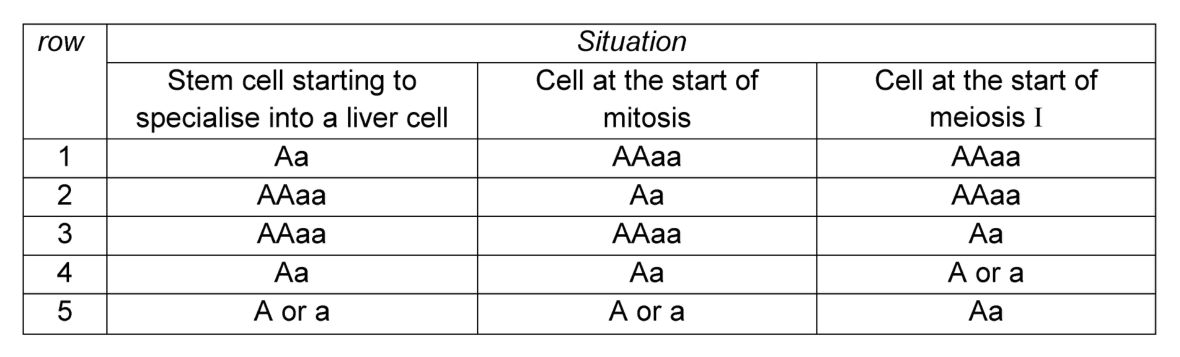
✍️ ဇယားမှာ အခြေအနေ သုံးခု ရှိတယ်။ မေးခွန်း တစ်ခုစီကို “DNA ကူးပြီးပြီလား” လို့ပဲ မေးမယ်။
stem cell က liver cell ဖြစ်ဖို့ အလုပ် ပြောင်းနေတာ (specialising) — ဇယားက ဒီ cell ကို မခွဲနေတဲ့ cell လို့ ယူထားလို့ DNA မကူးရသေး (no copying) → Aa
mitosis စချိန် (start of mitosis) — S phase ပြီးမှ စတာ၊ DNA ကူးပြီးသား → AAaa
meiosis I စချိန် (start of meiosis I) — သူလည်း S phase ပြီးမှ စတာ → AAaa
Aa၊ AAaa၊ AAaa ဆိုတော့ အဖြေက row 1 ✓ — card ပေါ်မှာ အဖြေ B။
A or a တစ်ခုတည်း = only in gametes — row 4, 5 မှား။A သို့ a တစ်ခုတည်း ရတာက meiosis ဆုံးလို့ gamete ဖြစ်မှပါ (only in gametes)။ ဒါကြောင့် “A or a” ပါတဲ့ row 4 နဲ့ 5 မှားတယ်။
👉 2n cell က n cell ၄ လုံး ဘယ်လို ဖြစ်လဲ?👉 PART 2 မှာ 2n cell က meiosis နဲ့ ဘယ်လို ခွဲပြီး n cell လေးလုံး ဖြစ်လာလဲ အဆင့်လိုက် ကြည့်မယ်။
One copy, two divisions
DNA ကူး တစ်ခါ၊ cell ခွဲ နှစ်ခါ
DNA ကူး တစ်ခါ၊ ခွဲ နှစ်ခါ
🤔 Quick recall: what is a cell with only one set of chromosomes called?
🔍 မေးခွန်း ဖြည်မယ်
Quick recall = မြန်မြန် ပြန်သတိရ။ only one set of chromosomes = chromosome အစုံ တစ်စုံပဲ။ called = လို့ ခေါ်တယ်။
မေးနေတာ — chromosome တစ်စုံပဲ ပါတဲ့ cell ရဲ့ နာမည်။
အစုံ တစ်စုံပဲ ပါတဲ့ cell က haploid (n) — sperm နဲ့ egg လိုပဲ။
diploid (2n) က နှစ်စုံ ပါတဲ့ body cell။
model cell 2n = 4 နဲ့ ကြည့်မယ်။meiosis ကို ရေတွက်ရ လွယ်အောင် 4 chromosomes ပဲ ပါတဲ့ model cell (နမူနာ cell၊ 2n = 4) နဲ့ ကြည့်မယ်။ လူ့ cell မှာလည်း အလုပ်လုပ်ပုံ အတူတူပဲ။
အနီ mother၊ အပြာ father — long pair နဲ့ short pair။အနီက အမေ့ဆီက (mother)၊ အပြာက အဖေ့ဆီက (father)။ အရှည် တူတဲ့ အနီ-အပြာ တစ်စုံစီက homologous pair — အရှည် အတွဲ (long pair) နဲ့ အတို အတွဲ (short pair)။
S မှာ copy — 4 chromosomes၊ 8 chromatids။meiosis မစခင် interphase (cell မခွဲခင် ကာလ — G1, S, G2) ရဲ့ S phase မှာ DNA ကို ကူး (copy) တယ်။ 4 chromosomes လုံး X ဖြစ်သွားပြီး 8 chromatids ဖြစ်တယ်။
meiosis I → 2 လုံး၊
II → 4 လုံး (n = 2)။ပြီးရင် cell က နှစ်ခါ ခွဲတယ်။
meiosis I မှာ cell 2 လုံး၊ meiosis II မှာ cell 4 လုံး ရပြီး တစ်လုံးစီမှာ 2 chromosomes (n = 2) ပါတယ်။
copy ×1 · divide ×2 — တစ်ဝက် ကျ။မှတ်ရမယ့် စည်းမျဉ်း — DNA ကူးတာ တစ်ခါ၊ cell ခွဲတာ နှစ်ခါ (copy ×1 · divide ×2)။ ဒါကြောင့် အရေအတွက် တစ်ဝက် ကျတယ်။ အဆင့်တစ်ခုချင်း ကြည့်မယ်။
💡 မှတ်နည်း — မိတ္တူ တစ်ခါ ကူး၊ ကတ်ကြေးနဲ့ နှစ်ခါ ဖြတ် — ဒါကြောင့် စာရွက် တစ်ရွက်ရဲ့ တစ်ဝက်စီ ကိုင်ထားတဲ့ အပိုင်း လေးပိုင်း ရတယ်။
Prophase I — အဖော်ချင်း ကပ်
🤔 Quick recall: one X-shaped chromosome contains how many chromatids?
🔍 မေးခွန်း ဖြည်မယ်
X-shaped = X ပုံ။ contains how many = ဘယ်နှစ်ခု ပါလဲ။
မေးနေတာ — X ပုံ chromosome တစ်ချောင်းထဲမှာ chromatid ဘယ်နှစ်ချောင်း။
X တစ်ခုမှာ centromere တစ်ခု — chromosome 1 ချောင်း၊ sister chromatid 2 ချောင်း။
prophase I — chromosomes ခွေပြီး X ပုံ။meiosis I ရဲ့ ပထမ အဆင့်က prophase I (ပရိုဖေ့စ် ဝမ်း)။ mitosis မှာလိုပဲ chromosomes တွေ ခွေပြီး တိုတို ထူထူ ဖြစ်လာလို့ X ပုံ မြင်ရတယ်။
အဖော် ဘေးချင်း ကပ် = synapsis (ဆင်နပ်ဆစ်)ဒါပေမဲ့ mitosis မှာ မဖြစ်တဲ့ အရာ ဖြစ်တယ် — homologous အဖော် နှစ်ချောင်း ဇစ်ဆွဲသလို ဘေးချင်း ကပ်သွားတယ်။ ဒီ ကပ်ခြင်းကို synapsis (ဆင်နပ်ဆစ်) လို့ ခေါ်တယ်။
ကပ်တဲ့ အတွဲ = bivalent (ဘိုင်ဗေလင့်) — tetrad လည်း ခေါ်။ကပ်နေတဲ့ အတွဲ တစ်တွဲကို bivalent (ဘိုင်ဗေလင့်) လို့ ခေါ်တယ်။ 4 chromatids ပါလို့ tetrad လို့လည်း ခေါ်တယ် — နာမည် နှစ်ခု၊ အရာ တစ်ခုတည်း။
envelope ပျက်၊ spindle forms။တစ်ချိန်တည်းမှာ nucleus အမြှေး (envelope) ပျက်သွားပြီး cell ရဲ့ ဝင်ရိုးစွန်း (pole) နှစ်ဖက်ကနေ spindle (ကြိုးတန်း) ဖွဲ့လာတယ် (spindle forms)။ spindle ကြိုးတွေက microtubules (protein ပြွန် သေးသေးလေးတွေ) နဲ့ ဖွဲ့ထားတာ — mitosis မှာလည်း ဒီ ကြိုးတွေပဲ သုံးတယ်။
အမေ အဖေ chromatid အပိုင်း လဲ — crossing over။အတွဲ ကပ်နေတုန်း အမေ့ chromatid နဲ့ အဖေ့ chromatid အပိုင်းချင်း လဲကြတယ် — crossing over။ PART 3 မှာ အသေးစိတ် ကြည့်မယ်။
💡 မှတ်နည်း — bicycle (စက်ဘီး) မှာ ဘီး 2 ခု —
bi = 2၊
bivalent = X 2 ခု ကပ်တာ။
tetra = 4 — tetrad = chromatid 4 ချောင်း။ နာမည် နှစ်ခု၊ အရာ တစ်ခုတည်း။
🤔 How many bivalents form in one human cell in prophase I?
🔍 မေးခွန်း ဖြည်မယ်
bivalents = ကပ်နေတဲ့ homologous အတွဲ။ form = ဖြစ်လာတယ်။ in one human cell = လူ့ cell တစ်လုံးထဲမှာ။ in prophase I = prophase I အချိန်။
မေးနေတာ — လူ့ cell တစ်လုံး prophase I မှာ အတွဲ ဘယ်နှစ်တွဲ ကပ်လဲ။
လူမှာ homologous pair 23 တွဲ ရှိလို့ bivalent 23 ခု။
chromosome 46၊ chromatid 92 ဆိုတာနဲ့ မရောပါနဲ့။
Metaphase I → anaphase I — အတွဲ ခွဲ
🤔 Quick recall: a bivalent is…
🔍 မေးခွန်း ဖြည်မယ်
a bivalent is… = bivalent ဆိုတာ …။ side by side = ဘေးချင်း ကပ်လျက်။ after they separate = ခွဲထွက်ပြီးနောက်။ two nuclei = nucleus နှစ်ခု။
မေးနေတာ — bivalent ဆိုတာ ဘာလဲ၊ အဓိပ္ပာယ် မှန်တဲ့ တစ်ခု။
prophase I မှာ homologous အဖော် နှစ်ချောင်း ကပ်ထားတာက bivalent (tetrad) — chromatid 4 ချောင်း။
metaphase I — bivalents equator ပေါ် အတွဲလိုက်။ဒုတိယ အဆင့် metaphase I မှာ bivalents က cell အလယ် equator (အလယ်မျဉ်း) ပေါ်မှာ အတွဲလိုက် တန်းစီတယ် — တစ်ချောင်းက ဘယ်ဘက်၊ အဖော်က ညာဘက်။ mitosis မှာတော့ တစ်ချောင်းချင်း တန်းစီတာပါ။
spindle က centromere မှာ ချိတ် — pole တစ်ဖက်စီ ဆွဲ။spindle ကြိုးက X တစ်ခုစီရဲ့ centromere (အတိအကျ — သူ့ပေါ်က kinetochore) မှာ ချိတ်တယ်။ ဘယ်ဘက် X ကို ဘယ် ဝင်ရိုးစွန်း (pole) က၊ ညာဘက်ကို ညာ pole က ဆွဲထားတယ်။
🤔 A eukaryotic cell undergoes division. At one point it has pairs of chromosomes being separated by spindle fibres and moving towards the poles of the cell. What stage of division is this? (IMAT 2018 Q33 — predict before the next step)
🔍 မေးခွန်း ဖြည်မယ်
eukaryotic cell = nucleus ပါတဲ့ cell။ undergoes division = ခွဲနေတယ်။ At one point = အချိန် တစ်ချိန်မှာ။
pairs of chromosomes being separated = chromosome အတွဲတွေ အခွဲခံနေရတယ် (passive)။ moving towards the poles = ဝင်ရိုးစွန်း ဘက် ရွေ့နေတယ်။
မေးနေတာ — အတွဲ ကို ခွဲနေတဲ့ အဆင့်က ဘယ် ခွဲပုံရဲ့ ဘယ် အဆင့်လဲ။
homologous အတွဲ ကို ခွဲပြီး pole ဆီ ဆွဲတာက anaphase I မှာပဲ ဖြစ်တယ်။
mitosis ရဲ့ anaphase မှာ sister chromatid ကို ခွဲတာ၊ metaphase မှာ တန်းစီရုံပဲ ရှိပြီး telophase I မှာ ခွဲပြီးသား ဖြစ်နေပြီ။
anaphase I — pairs separate။တတိယ အဆင့် anaphase I မှာ spindle က homologous အတွဲကို ခွဲပြီး တစ်ချောင်းစီကို pole တစ်ဖက်စီ ဆွဲသွားတယ် (pairs separate)။
X တစ်ခုလုံး ပါ — sisters stay together။သတိ — X တစ်ခုလုံး ပါသွားတယ်။ sister chromatids နှစ်ချောင်းက centromere မှာ ကပ်လျက် အတူ ပါသွားတယ် (sisters stay together)။ mitosis ရဲ့ anaphase နဲ့ ကွာတာ ဒီမှာပါ။
telophase I — cell 2 လုံး၊ n = 2၊ 4 chromatids။telophase I မှာ အများအားဖြင့် nucleus နှစ်ခု (two nuclei) ပြန်ဖွဲ့ပြီး cell က ခါးညှစ်ကာ နှစ်လုံး ဖြစ်တယ်။ cell တစ်လုံးစီမှာ X 2 ခု — 2 chromosomes (n = 2)၊ 4 chromatids ရှိတယ်။ homologous အတွဲ ခွဲသွားလို့ chromosome အစုံ တစ်စုံပဲ ကျန်တာ — ဒါကြောင့် haploid။ ဒါပေမဲ့ chromosome တစ်ချောင်းစီမှာ sister chromatid 2 ချောင်း ဆက်ကပ်နေသေးတယ်။
chromosome number တစ်ဝက် ကျ = meiosis I။ဒါကြောင့် chromosome အရေအတွက် (chromosome number) တစ်ဝက် ကျတာ meiosis I မှာ ဖြစ်တယ်။ meiosis I ပြီးတဲ့ cell တွေက haploid ဖြစ်နေပြီ။
💡 မှတ်နည်း — meiosis I က အတွဲ ကွဲတာ — အမေ့ဘက်နဲ့ အဖေ့ဘက် ခွဲသွားတယ်။ X တစ်ခုချင်းကတော့ မကွဲသေးဘူး၊ ကိုယ့် X ကို ကိုယ် ကိုင်ထားတယ်။
Meiosis II — sister chromatid ခွဲ
🤔 Quick check: a cell with 2n = 10 finishes meiosis I. Each of the two new cells has…
🔍 မေးခွန်း ဖြည်မယ်
a cell with 2n = 10 = body cell မှာ 10 ချောင်း ပါတဲ့ cell။ finishes meiosis I = meiosis I ပြီးသွားတယ်။ Each of the two new cells has… = cell သစ် နှစ်လုံးထဲက တစ်လုံးစီမှာ … ရှိတယ်။
မေးနေတာ — meiosis I ပြီးတဲ့ cell တစ်လုံးမှာ chromosome ဘယ်နှစ်ချောင်း၊ chromatid ဘယ်နှစ်ချောင်း။
meiosis I မှာ homologous အတွဲ ခွဲလို့ chromosome 10 → 5 (haploid, n = 5)။
X တစ်ခုစီမှာ sister chromatid 2 ချောင်း ကျန်သေးလို့ 5 × 2 = 10 chromatids။
5 chromatids က meiosis II ပြီးမှ၊ 10 chromosomes, 20 chromatids က meiosis I မစခင်။
no DNA copy — meiosis II တန်းဆက်။meiosis I ပြီးတဲ့ cell နှစ်လုံးက DNA ထပ် မကူးဘဲ (no DNA copy) meiosis II ကို တန်း ဆက်တယ်။ X တွေမှာ 2 chromatids စီ ရှိနေသေးလို့ ကူးစရာ မလိုဘူး။
metaphase II — တစ်ချောင်းချင်း တန်းစီ။metaphase II မှာ X တွေက တစ်ချောင်းချင်း equator ပေါ် တန်းစီတယ် — mitosis အတိုင်းပဲ။
anaphase II — centromere ကွဲ၊ sister chromatids ခွဲ။anaphase II မှာ centromere ကွဲပြီး sister chromatids တွေ ခွဲထွက်တယ်။ chromatid တစ်ချောင်းစီ pole တစ်ဖက်စီ သွားတယ်။
telophase II — 4 haploid cells။telophase II ပြီးရင် cell 4 လုံး ရတယ်။ cell တစ်လုံးစီမှာ 2 chromosomes ပါတဲ့ haploid cell လေးလုံး (4 haploid cells) ပါ။
meiosis II — chromosomes 2 → 2၊ chromatids 4 → 2။meiosis II မှာ chromosomes အရေအတွက် မပြောင်းဘူး — 2 ကနေ 2 ပဲ။ တစ်ဝက် ဖြစ်သွားတာက chromatids အရေအတွက်ပဲ (4 → 2)။ အခု chromosome တစ်ချောင်းစီမှာ chromatid တစ်ချောင်းစီပဲ ကျန်တော့တယ်။
crossing over ကြောင့် 4 usually differ။ဒီ ပုံမှာ cell 1 နဲ့ 2 တူနေပြီး 3 နဲ့ 4 တူနေတယ်။ တကယ်တော့ crossing over နဲ့ independent assortment ကြောင့် လေးလုံးလုံး အများအားဖြင့် မတူကြဘူး (usually all 4 differ) — PART 3 မှာ ကြည့်မယ်။
💡 မှတ်နည်း — meiosis II ကို mitosis လိုပဲ မှတ်ပါ — X တွေ တန်းစီ၊ chromatid ခွဲ။ ကွာတာက haploid cell မှာ လုပ်တာပဲ။
🤔 In the testes, a diploid cell undergoes meiosis. Which is/are correct?
1. It has doubled its DNA before meiosis I.
2. The cells at the start of meiosis II are diploid.
3. The total number of chromosomes produced by the end of meiosis II is double that of the original cell. (IMAT 2016 Q39)
🔍 မေးခွန်း ဖြည်မယ်
In the testes = ဝှေးထဲမှာ။ Which is/are correct? = ဘယ် စာကြောင်း(တွေ) မှန်လဲ — တစ်ခု သို့ အများ။
has doubled its DNA = DNA နှစ်ဆ ဖြစ်ပြီးပြီ။ at the start of meiosis II = meiosis II စချိန်။ total number … produced = ထွက်လာတဲ့ cell အားလုံးထဲက စုစုပေါင်း။ double that of = … ရဲ့ နှစ်ဆ။
မေးနေတာ — စာကြောင်း 1, 2, 3 တစ်ခုချင်း မှန်လား မှားလား စစ်ပြီး မှန်တာတွေကို ရွေး။
1 မှန် — S phase မှာ DNA ကူးပြီးမှ meiosis I စတယ်။
2 မှား — meiosis I ပြီးတာနဲ့ haploid ဖြစ်ပြီ။
3 မှန် — cell 4 လုံး × 23 = 92 ဆိုတော့ မူလ 46 ရဲ့ နှစ်ဆ။
ရေတွက်ကြည့် — IMAT 2021 Q31
📝 IMAT 2021 · Question 31
A cell containing four pairs of homologous chromosomes divides by meiosis.
Which row shows the cells produced and the number of chromosomes that they contain?
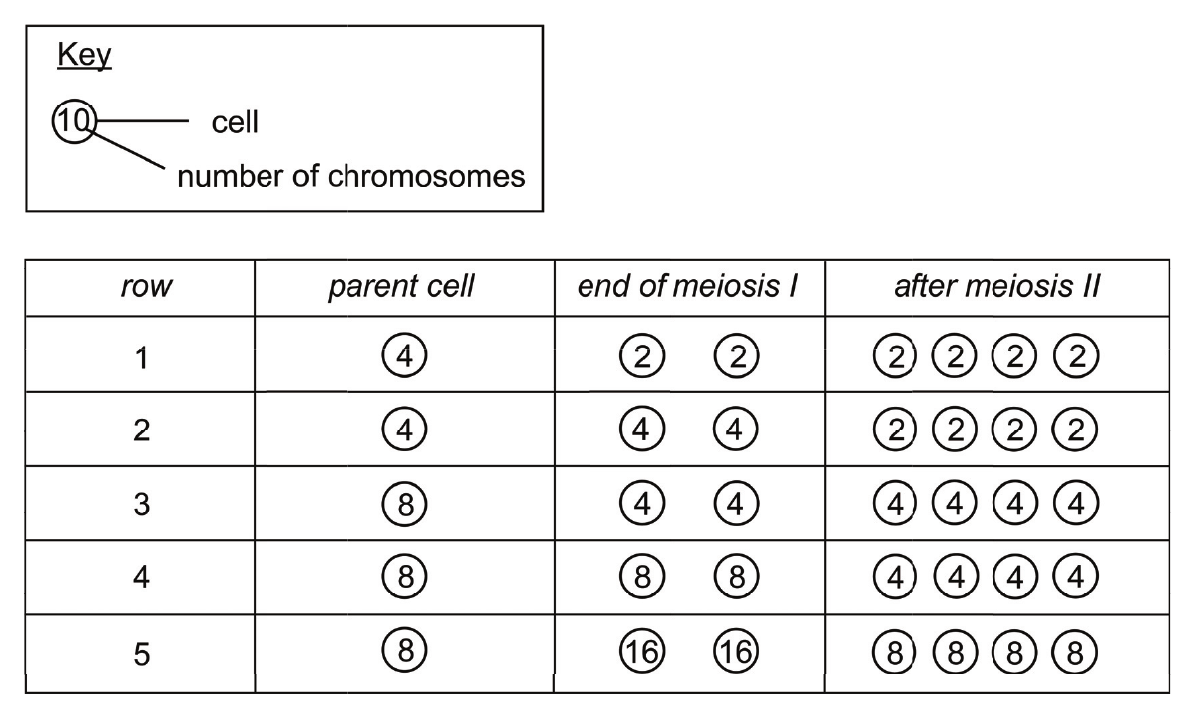
✍️ homologous pairs 4 တွဲ ဆိုတော့ မိဘ cell (parent) မှာ chromosome 4 × 2 = 8
meiosis I မှာ အတွဲ ခွဲလို့ တစ်ဝက် ကျ — cell 2 လုံး၊ တစ်လုံးစီ 4
meiosis II မှာ chromatid ပဲ ခွဲလို့ chromosome အရေအတွက် မပြောင်း — cell 4 လုံး၊ တစ်လုံးစီ 4 → row 3 ✓ (card ပေါ်မှာ အဖြေ D)
row 1, 2 — မိဘကို 4 ယူ — ✗။row 1 နဲ့ 2 က မိဘကို 4 လို့ ယူထားတယ်။ “pairs 4 တွဲ” ဆိုတာ 8 chromosomes ပါ — ✗
row 4 — halving is in meiosis I — ✗။row 4 က meiosis I ပြီးလည်း 8 ပဲ ထားတယ်။ တစ်ဝက် ကျတာ meiosis I မှာ ဖြစ်တာ (halving is in meiosis I) — ✗
row 5 — 16 — centromeres မတိုး — ✗။row 5 က 16 လို့ နှစ်ဆ တိုးထားတယ်။ DNA ကူးတာက chromatids ကို တိုးတာ၊ centromeres ကို မတိုးလို့ chromosomes မတိုးဘူး — ✗
🤔 Which of the following occurs in a healthy human testis cell before it undergoes meiosis? (IMAT 2017 Q32)
1. DNA content of the nucleus doubles
2. spindle fibres form the spindle
3. crossing over
🔍 မေးခွန်း ဖြည်မယ်
occurs = ဖြစ်တယ်။ healthy = ကျန်းမာတဲ့ (ပုံမှန်)။ before it undergoes meiosis = meiosis မစခင်။
DNA content … doubles = DNA ပမာဏ နှစ်ဆ ဖြစ်တယ်။ spindle fibres form the spindle = spindle ကြိုးတွေ spindle ဖွဲ့တယ်။
မေးနေတာ — meiosis မစခင် ဖြစ်တာ ဘယ်ဟာလဲ (meiosis အတွင်း ဖြစ်တာ မဟုတ်)။
“meiosis မစခင်” ဆိုတာ interphase ပါ။
S phase မှာ DNA နှစ်ဆ ဖြစ်တယ် (1 ✓)။
spindle ဖွဲ့တာ (2) နဲ့ crossing over (3) က meiosis အတွင်း prophase I မှာ ဖြစ်တာ။
ဒါကြောင့် 1 only။
chromosome နဲ့ chromatid — လှေကား တစ်လျှောက် ရေတွက်
n = 4၊ before S — chromosome 8၊ chromatid 8။haploid number 4 (n = 4, 2n = 8) ရှိတဲ့ သက်ရှိ cell တစ်လုံးကို meiosis တစ်လျှောက် ရေတွက်မယ်။ DNA မကူးခင် (before S) chromosome 8၊ chromatid 8။
prophase I — chromosome 8၊ chromatid 16။prophase I မှာ DNA ကူးပြီးသား — 8 centromeres ရှိနေသေးလို့ chromosome 8၊ chromatid 16။
after I — chromosome 4၊ chromatid 8။meiosis I ပြီး (after I) cell တစ်လုံးစီမှာ X 4 ခု — chromosome 4၊ chromatid 8။ meiosis I က chromosomes ကို တစ်ဝက် ချတယ်။
after II — chromosome 4၊ chromatid 4။meiosis II ပြီး (after II) — chromosome 4၊ chromatid 4။ meiosis II က chromatids ကို တစ်ဝက် ချတယ်။
💡 မှတ်နည်း — chromosome ကို ရေရင် ခါး (centromere) ကို ရေ၊ chromatid ကို ရေရင် ခြေထောက်ကို ရေ။ X တစ်ခု = ခါး 1၊ ခြေထောက် 2။
🤔 An organism has 2n = 6. How many chromatids does one cell have at the end of meiosis I?
🔍 မေးခွန်း ဖြည်မယ်
An organism = သက်ရှိ တစ်ခု။ has 2n = 6 = body cell မှာ 6 ချောင်း။ at the end of meiosis I = meiosis I ဆုံးချိန်မှာ (meiosis II မစသေး)။
မေးနေတာ — meiosis I ဆုံးတဲ့ cell တစ်လုံးထဲမှာ chromatid (chromosome မဟုတ်) ဘယ်နှစ်ချောင်း။
2n = 6 → meiosis I ပြီးရင် chromosome 3 ချောင်း (n = 3)။
meiosis II မရောက်သေးလို့ X တစ်ခုစီမှာ chromatid 2 ချောင်း ကျန်သေး — 3 × 2 = 6။
12 က prophase I မှာ၊ 3 က meiosis II ပြီးမှ။
👉 ဒီ ရေတွက်နည်းနဲ့ IMAT 2020 Q39 ရဲ့ cell ပုံ ငါးခုကို စစ်ကြည့်မယ်။
IMAT 2020 Q39 — cell ပုံ ငါးခု စစ်နည်း
📝 IMAT 2020 · Question 39
The diagrams show animal cells from organisms that sexually reproduce. Each diagram shows a single cell containing chromosomes during cell division. Which one of the following diagrams has a correct description for a cell from an organism with a haploid number of 4?
[Assume that the sex of the organism is inherited in the same way as in humans.]
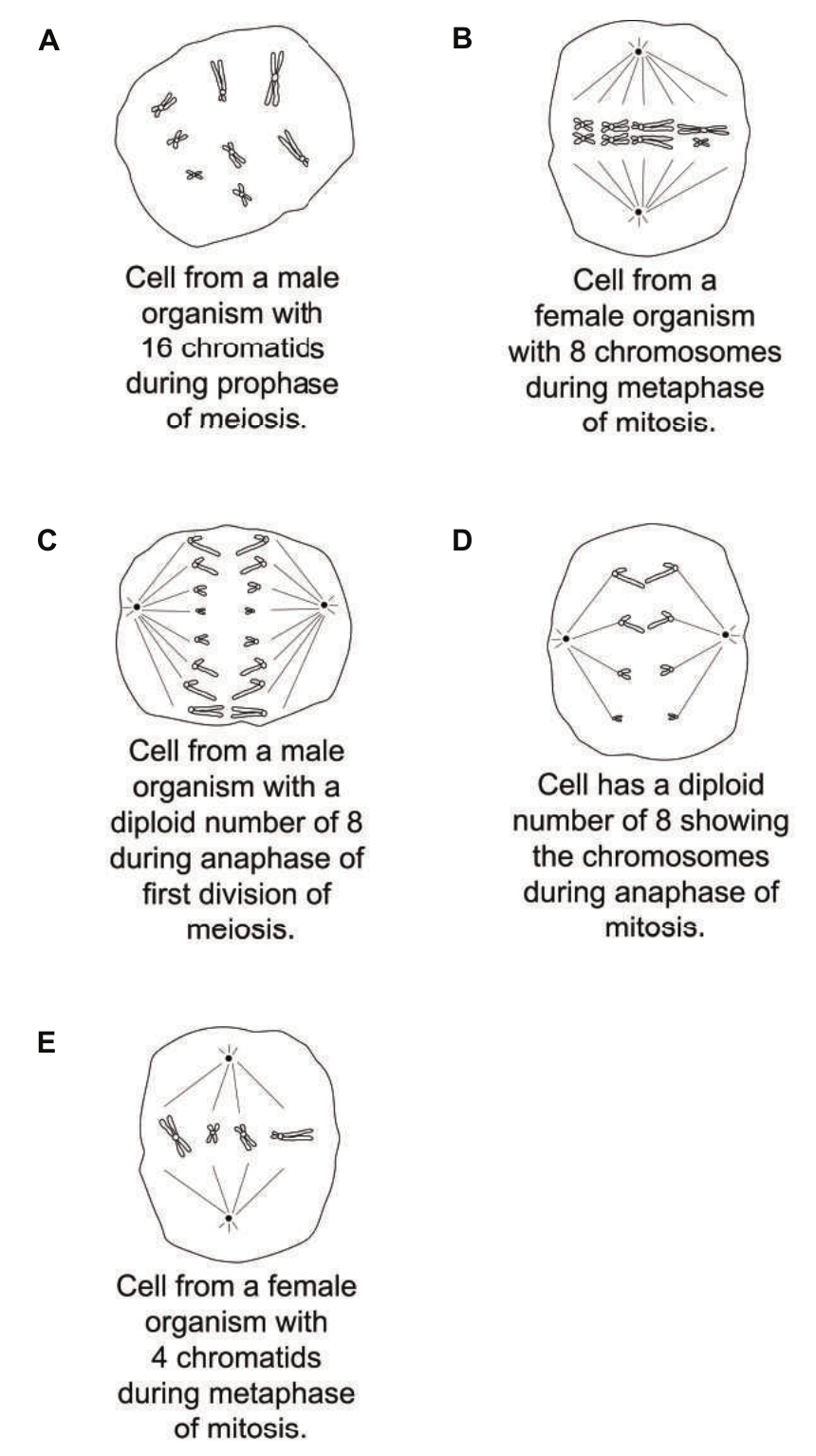
XX ♀၊ XY ♂၊ 2n = 8။ပုံတွေကို မဖတ်ခင် စည်းကမ်း နှစ်ခု — ‘sex as in humans’ ဆိုတော့ ကျား/မ ကို X နဲ့ Y က ဆုံးဖြတ်တယ် (XX ♀၊ XY ♂)။ haploid number 4 ဆိုတော့ body cell မှာ 8 chromosomes (2n = 8)။
မိန်းမ (XX) cell မှာ အတွဲ 4 တွဲလုံး အရွယ် တူတူ — sex chromosome နှစ်ချောင်းလုံး X ရှည်။
ယောက်ျား (XY) cell မှာ အတွဲ 3 တွဲ တူပြီး ကျန် တစ်တွဲက မတူဘူး — X ရှည်ရှည်နဲ့ Y တိုတို။ ပုံထဲမှာ မတူတဲ့ အတွဲ ရှိရင် ယောက်ျား cell။
Cell A — 16 chromatids ✓၊ Y ပါ male ✓ — အဖြေ A။Cell A — “male, 16 chromatids, prophase of meiosis”။ X ပုံ 8 ခု ရေ — 8 × 2 = 16 chromatids ✓။ အသေးဆုံး တစ်ခုက အဖော် မရှိ (Y) — male ✓။ ဒါ အဖြေ A (Cell A)။
Cell B — X နဲ့ Y ပါ male — ‘female’ ✗။Cell B — “female, 8 chromosomes, metaphase of mitosis”။ 8 chromosomes တန်းစီနေတာ မှန်ပေမဲ့ အတွဲ တစ်တွဲက ရှည် တစ်ချောင်း တို တစ်ချောင်း (X နဲ့ Y) — male cell မို့ ‘female’ မှား ✗။
X ၄ ခု သွား = anaphase I၊ single 8 = mitosis။anaphase ကို ခွဲခြားနည်း — pole တစ်ဖက်ကို X ပုံ 4 ခု သွားရင် anaphase I၊ single chromatids 8 ချောင်း သွားရင် mitosis ရဲ့ anaphase ပါ။
Cell C ✗ (single 8)၊ Cell D ✗ (meiosis II ပုံ)။Cell C က “anaphase I” လို့ ရေးထားပေမဲ့ pole တစ်ဖက်စီ single chromatids 8 ချောင်း ✗။ Cell D က “diploid 8, mitosis” လို့ ရေးထားပေမဲ့ pole တစ်ဖက် 4 ချောင်းပဲ ✗ (meiosis II ပုံ)။
Cell E — 8 chromatids၊ 4 မဟုတ် ✗။Cell E — “female, 4 chromatids, metaphase of mitosis”။ ပုံမှာ X 4 ခု — 8 chromatids၊ 4 မဟုတ်ဘူး ✗။
mitosis metaphase = 16 chromatids — Cell A ပဲ။mitosis ရဲ့ metaphase ဆိုရင် 8 chromosomes လုံး X ပုံ — 16 chromatids ရှိရမယ်။ ဒါကြောင့် မှန်တာ Cell A တစ်ခုတည်း။
Mitosis နဲ့ meiosis — ဘေးချင်း ယှဉ်
cell ခွဲနည်း နှစ်မျိုးကို ဘေးချင်း ယှဉ်ကြည့်မယ် — mitosis နဲ့ meiosis။
🤔 Which feature distinguishes meiosis from mitosis? (adapted from IMAT 2026 Q27 — predict before the table fills in)
🔍 မေးခွန်း ဖြည်မယ်
feature = လက္ခဏာ။ distinguishes A from B = A ကို B နဲ့ ကွဲပြားအောင် လုပ်တဲ့။ adapted from = … ကနေ ပြင်ထားတာ။
genetically different = gene မတူတဲ့။ unicellular organisms = cell တစ်လုံးတည်း သက်ရှိ။ somatic cells = body cells။
မေးနေတာ — meiosis မှာပဲ ရှိပြီး mitosis မှာ မရှိတဲ့ လက္ခဏာ။ နှစ်မျိုးလုံးမှာ ရှိတာ မဟုတ်။
meiosis က gene မတူတဲ့ haploid cell 4 လုံး ထုတ်တယ် — gamete အတွက်။
မိဘနဲ့ တူတဲ့ cell ထုတ်တာ၊ body (somatic) cell မှာ ဖြစ်တာက mitosis။
spindle microtubule ကို နှစ်မျိုးလုံး သုံးတယ်၊ meiosis က cell များ သက်ရှိ (လူ၊ အပင်) မှာလည်း ဖြစ်တယ်။
divisions — mitosis ၁ ခါ၊ meiosis ၂ ခါ။အကြိမ် (divisions) — mitosis က တစ်ခါ၊ meiosis က နှစ်ခါ ခွဲတယ်။ DNA ကူးတာကတော့ နှစ်မျိုးလုံး တစ်ခါပဲ။
ရလဒ် (cells) — mitosis က 2n cell 2 လုံး၊ meiosis က n cell 4 လုံး။
mitosis identical၊ meiosis usually different။genes — mitosis က ပုံမှန်အားဖြင့် မိဘနဲ့ တူ (identical)၊ meiosis က crossing over နဲ့ independent assortment ကြောင့် လေးလုံးလုံး အများအားဖြင့် မတူ (usually different)။
crossing over — meiosis prophase I မှာပဲ။homologous အတွဲ ကပ်ပြီး crossing over လုပ်တာ — mitosis မှာ မရှိ၊ meiosis ရဲ့ prophase I မှာပဲ ရှိတယ်။
📝 IMAT စာကြောင်း ဖတ်နည်း — “In humans, meiosis happens only in the testes and ovaries” = လူမှာ meiosis က testis နဲ့ ovary မှာပဲ ဖြစ်တယ်။ body cells ကို IMAT က somatic cells (ခန္ဓာ cell) လို့လည်း ရေးတယ် — mitosis happens in somatic cells။
မေးခွန်းမှာ unicellular organisms (cell တစ်လုံးတည်း သက်ရှိ — bacteria၊ yeast) လည်း တွေ့ရမယ်။ yeast လို cell တစ်လုံးတည်း သက်ရှိ တချို့လည်း meiosis လုပ်တယ်၊ လူ၊ အပင် လို cell များ သက်ရှိလည်း လုပ်တယ်။ bacteria ကတော့ meiosis မလုပ်ဘူး။
💡 မှတ်နည်း — mitosis က အမွှာ တူ နှစ်ယောက် (2 cells, 2n, genes တူ)။ meiosis က ညီအစ်ကို ဝမ်းကွဲ လေးယောက် (4 cells, n, genes မတူ)။
🎯 Mitosis or meiosis?
👉 cell ၄ လုံး ဘာလို့ မတူလဲ? အကြောင်း ၃ ခု။👉 meiosis ရဲ့ cell 4 လုံး ဘာလို့ မတူကြလဲ? PART 3 မှာ အကြောင်း သုံးခုကို တစ်ခုချင်း ကြည့်မယ်။
DNA ပမာဏ နဲ့ နာမည် နှစ်ခု — reduction နဲ့ equational
y = DNA ပမာဏ (C)။ဂဏန်းတွေကို ဂရပ်နဲ့ ကြည့်မယ်။ ဒေါင်လိုက်က cell တစ်လုံးထဲက DNA ပမာဏ (C — DNA ပမာဏ တိုင်းတဲ့ ယူနစ်၊ သင်ခန်းစာ 32)။ 1C ဆိုတာ haploid chromosome အစုံ တစ်စုံ (n) ထဲက DNA ပမာဏ၊ 2C က အဲဒီ နှစ်ဆ။
G1 2C၊ S မှာ 4C ထိ တက်။G1 မှာ 2C၊ S မှာ ကူးလို့ 4C အထိ တဖြည်းဖြည်း တက်တယ် — mitosis မတိုင်ခင်နဲ့ အတူတူပဲ။
meiosis I ဆုံးလို့ cell နှစ်လုံး ကွဲတော့ တစ်လုံးစီ 2C ကျတယ်။
meiosis II ပြီး 1C — sperm, egg။meiosis II မှာ DNA ထပ် မကူးဘဲ ထပ် ခွဲလို့ တစ်လုံးစီ 1C — sperm၊ egg ရဲ့ DNA ပမာဏ။
46 → 23 = reduction division (လျှော့ချ ခွဲခြင်း)chromosomes 46 ကနေ 23 ကျတာ meiosis I မှာ — ဒါကြောင့် meiosis I ကို reduction division (လျှော့ချ ခွဲခြင်း) လို့ ခေါ်တယ်။
23 → 23 = equational division (ညီညီ ခွဲခြင်း)meiosis II မှာ 23 ကနေ 23 — chromatids ပဲ ခွဲတယ်၊ mitosis လို ‘ညီညီ ခွဲ’ တာမို့ equational division (ညီညီ ခွဲခြင်း) လို့ ခေါ်တယ်။
chromosome အရေအတွက် နဲ့ DNA ပမာဏ — မရောပါနဲ့ (လူ)။IMAT က chromosome အရေအတွက် နဲ့ DNA ပမာဏ ကို ရောပြီး မေးတတ်တယ်။ ဒီ ဇယားမှာ လူ့ cell ကို ကြည့်ပါ — S မှာ DNA နှစ်ဆ ဖြစ်ပေမဲ့ chromosome 46 ပဲ ကျန်တယ်။ meiosis II မှာ DNA တစ်ဝက် ကျပေမဲ့ chromosome 23 ပဲ ကျန်တယ်။
| stage | chromosomes | DNA amount |
|---|---|---|
| G1 | 46 | 2C |
| after S | 46 | 4C |
| after meiosis I | 23 | 2C |
| after meiosis II | 23 | 1C |
ဇယား — လူ့ cell တစ်လုံးမှာ အဆင့်တိုင်း chromosome အရေအတွက် နဲ့ DNA ပမာဏ ကို ယှဉ်ထားတယ်။ S မှာ DNA နှစ်ဆ ဖြစ်ပေမဲ့ chromosome မတိုးဘူး၊ meiosis II မှာ DNA တစ်ဝက် ကျပေမဲ့ chromosome မလျော့ဘူး။
💡 မှတ်နည်း — DNA ပမာဏကို လှေကားလို မှတ်ပါ — 2C ကနေ တက် 4C၊ ပြီးတော့ နှစ်ထစ် ဆင်း 2C၊ 1C။ ပထမ ဆင်းတာ reduction (chromosome တစ်ဝက်)။
🤔 A body cell of a frog in G1 contains 12 pg of DNA. How much DNA is in one cell at the end of meiosis II?
🔍 မေးခွန်း ဖြည်မယ်
frog = ဖား။ in G1 = DNA မကူးခင် G1 အဆင့်မှာ။ 12 pg = 12 picogram (DNA အလေးချိန်)။
How much DNA = DNA ဘယ်လောက်။ at the end of meiosis II = meiosis II ဆုံးချိန် (gamete)။
မေးနေတာ — G1 မှာ 12 pg ဆိုရင် meiosis II ဆုံးတဲ့ cell တစ်လုံးမှာ DNA ဘယ်လောက်။
G1 = 2C = 12 pg ဆိုတော့ 1C = 6 pg။
S phase မှာ 4C (24 pg)၊ meiosis I ပြီး 2C (12 pg)၊ meiosis II ပြီး 1C = 6 pg။
3 pg ဆိုရင် 1C ထက် နည်းသွားပြီ — gamete ထဲမှာ အစုံ တစ်စုံ အပြည့် ရှိရမယ်။
Why brothers and sisters differ
ညီအစ်ကို မောင်နှမ ဘာလို့ မတူလဲ — အကြောင်း သုံးခု
Crossing over — အပိုင်းချင်း လဲ
🤔 Quick recall: in which stage do homologous chromosomes pair up?
🔍 မေးခွန်း ဖြည်မယ်
in which stage = ဘယ် အဆင့်မှာ။ pair up = အတွဲလိုက် ကပ်တယ်။
မေးနေတာ — homologous chromosome တွေ ဘေးချင်း ကပ်တာ ဘယ် အဆင့်မှာလဲ။
အဖော်ချင်း ကပ်တာ (synapsis) က prophase I မှာ ဖြစ်တယ်။
bivalent — mother A, B၊ father a, b။အကြောင်း နံပါတ် 1 ကို ကြည့်မယ်။ prophase I မှာ ကပ်နေတဲ့ bivalent (4 chromatids) ကို ချဲ့ကြည့်ပါ။ အမေ့ (mother) chromatids နှစ်ချောင်းမှာ A နဲ့ B၊ အဖေ့ (father) မှာ a နဲ့ b ပါတယ်။
non-sister ဖြတ်ရာ = chiasma (ကိုင်ယက်စမာ)အမေ့ chromatid တစ်ချောင်းနဲ့ အဖေ့ chromatid တစ်ချောင်း (non-sister) က A နဲ့ B ကြားမှာ ဖြတ်ကျော်သွားတယ်။ microscope အောက်မှာ မြင်ရတဲ့ X ပုံ ဖြတ်ချိတ် နေရာကို chiasma (ကိုင်ယက်စမာ) လို့ ခေါ်တယ်။
အပိုင်း လဲ = crossing over (ဖြတ်ကူး လဲလှယ်ခြင်း)အဲဒီ နေရာမှာ DNA နှစ်ချောင်းလုံးကို ညီညီ ဖြတ်ပြီး အောက်ပိုင်းချင်း လဲ ဆက်လိုက်တယ်။ non-sister chromatid နှစ်ချောင်းကြား DNA အပိုင်း လဲလှယ်တဲ့ ဒီ ဖြစ်စဉ်ကို crossing over (ဖြတ်ကူး လဲလှယ်ခြင်း) လို့ ခေါ်တယ်။ chiasma က နေရာ၊ crossing over က လဲတဲ့ လုပ်ရပ်။ gene တစ်ခုမှ မပျောက်ဘူး။
Ab, aB = recombinant (ပေါင်းစပ်သစ်) chromatid။အခု 4 chromatids က AB, Ab, aB, ab ဖြစ်သွားပြီ။ Ab နဲ့ aB က မိဘ ဘယ်သူ့ဆီမှာမှ မရှိခဲ့တဲ့ ပေါင်းစပ် အသစ် — recombinant (ပေါင်းစပ်သစ်) chromatid လို့ ခေါ်တယ်။
AB, ab = parental — recombinant 2 ချောင်း။မလဲခဲ့တဲ့ AB နဲ့ ab ကတော့ မူလ ပုံစံ (parental) ပဲ။ bivalent မှာ chromatid 4 ချောင်း ရှိပေမဲ့ crossover တစ်ကြိမ်မှာ non-sister chromatids 2 ချောင်းပဲ အပိုင်း လဲတယ်။ ဒါကြောင့် recombinant 2 ချောင်း၊ parental 2 ချောင်း ရတယ်။
gametes 4 different — အတွဲကို 1–3 ကြိမ်။4 chromatids က gametes 4 လုံးဆီ တစ်ချောင်းစီ ရောက်လို့ gametes လေးလုံးလုံး မတူ (4 different) ဖြစ်တယ်။ လူမှာ အတွဲ တစ်တွဲကို crossover 1–3 ကြိမ် ဖြစ်လေ့ရှိတယ်။
💡 မှတ်နည်း — ပုတီး ကြိုး နှစ်ချောင်း (အနီ၊ အပြာ) ကို တစ်နေရာတည်းမှာ ဖြတ်ပြီး အဆုံးချင်း လဲ ဆက်သလိုပါ — ပုတီးစေ့ (gene) တစ်လုံးမှ မပျောက်ဘဲ အရောင် ရောသွားတယ်။
IMAT 2014 Q29 — recombinant ဘယ်နှစ်ချောင်း
📝 IMAT 2014 · Question 29
The diagram below shows a pair of homologous chromosomes and the site of crossing over.
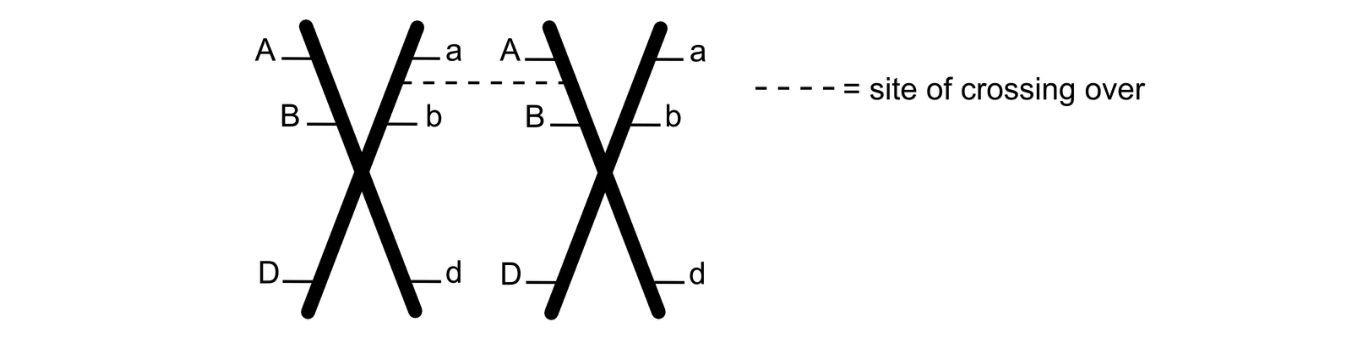
Which answer in the table is correct when meiosis is complete?
| Number of recombinant daughter chromosomes produced | Number of daughter chromosomes that are genetically distinct from each other | |
|---|---|---|
| Row 1 | 1 | 2 |
| Row 2 | 2 | 1 |
| Row 3 | 4 | 2 |
| Row 4 | 2 | 4 |
| Row 5 | 4 | 4 |
✍️ ပုံကို chromatid 4 ချောင်းအဖြစ် ဖြန့်ကြည့်မယ် — ABD, ABD, abd, abd
dashed line က A နဲ့ B ကြားမှာ — အတွင်း chromatid နှစ်ချောင်းရဲ့ A–a အပိုင်း လဲ → aBD နဲ့ Abd
ပေါင်းစပ်သစ် ဖြစ်သွားတာ ဖြတ်ကူးခဲ့တဲ့ chromatid နှစ်ချောင်းပဲ — recombinant = 2
ABD, aBD, Abd, abd — လေးချောင်းလုံး မတူ — distinct = 4 → Row 4 ✓ (card ပေါ်မှာ အဖြေ C)
Row 5 — recombinant 4 ✗ — ၂ ချောင်းပဲ ပါ။Row 5 က recombinant 4 လို့ ထားတယ်။ crossover တစ်ကြိမ်မှာ chromatids နှစ်ချောင်းပဲ ပါတယ်၊ ကျန် နှစ်ချောင်း မပြောင်းဘူး — ✗
Independent assortment — ဒင်္ဂါး လှန်သလို တန်းစီ
အကြောင်း 2 — metaphase I၊ layout 1။အကြောင်း နံပါတ် 2 က metaphase I မှာ ဖြစ်တယ်။ အတွဲ နှစ်တွဲ (A–a အရှည် အတွဲ၊ B–b အတို အတွဲ) ပါတဲ့ cell ကို ကြည့်ပါ။ layout 1 မှာ အမေ့ (အနီ) နှစ်ချောင်းလုံး ဘယ်ဘက်မှာ တန်းစီတယ်။
ဒီ layout ကနေ AB နဲ့ ab gametes ရတယ်။
ဘယ်ဘက် ဘယ်သူ — ဒင်္ဂါးလှန်သလို ကျပန်း။ဒါပေမဲ့ အတွဲ တစ်တွဲချင်း ဘယ်ဘက် ဘယ်သူ ထားမလဲ ဆိုတာ ဒင်္ဂါးပြား လှန်သလို ကျပန်းပါ။ layout 2 မှာ အတို အတွဲက ပြောင်းပြန် လှည့်သွားတယ်။
layout 2 → Ab, aB — new mix။layout 2 ကနေ Ab နဲ့ aB gametes ရတယ် — မိဘ chromosome တစ်ချောင်းမှာမှ အတူ မရှိခဲ့တဲ့ ပေါင်းစပ် အသစ် (new mix) ပါ။
independent assortment (သီးခြား ခွဲဝေခြင်း) — 2 × 2 = 4။အတွဲ တစ်တွဲ လှည့်ပုံက နောက်တစ်တွဲနဲ့ မဆိုင်လို့ independent assortment (သီးခြား ခွဲဝေခြင်း) လို့ ခေါ်တယ်။ အတွဲ 2 တွဲ (2 pairs) ဆိုရင် 2 × 2 = 4 မျိုး။
23 pairs — 2²³ ≈ 8.4 million မျိုး။လူမှာ အတွဲ 23 တွဲ (23 pairs) ဆိုတော့ 2²³ ≈ 8.4 million (သိန်း ရှစ်ဆယ့်လေး) မျိုး ရတယ် — crossing over မပါသေးဘဲနဲ့ (before crossing over)။
💡 မှတ်နည်း — အတွဲ တစ်တွဲ = ဒင်္ဂါးပြား တစ်ခါ လှန်တာ — ခေါင်း (အမေ့ဘက် ဘယ်) သို့ ပန်း (အဖေ့ဘက် ဘယ်)။ 23 ခါ လှန်ရင် 2²³ မျိုး။
🤔 A pea plant has 2n = 14. Ignoring crossing over, how many genetically different gametes can independent assortment give?
🔍 မေးခွန်း ဖြည်မယ်
Ignoring crossing over = crossing over ကို ထည့် မတွက်ဘဲ။ genetically different gametes = gene မတူတဲ့ gamete အမျိုးအစား။ can … give = ပေးနိုင်တယ်။
မေးနေတာ — 2n = 14 အပင်မှာ independent assortment တစ်ခုတည်းနဲ့ gamete ဘယ်နှစ်မျိုး ရနိုင်လဲ။
2n = 14 → အတွဲ 7 တွဲ။
အတွဲ တစ်တွဲစီ ဒင်္ဂါး တစ်ခါ — 2⁷ = 2×2×2×2×2×2×2 = 128။
14 က chromosome အရေအတွက်၊ 16384 က 2¹⁴ — အတွဲ မဟုတ်ဘဲ chromosome နဲ့ တွက်မိတာ။
🔎 ကြိုကြည့်မယ် — identical twins နဲ့ non-identical twins (သင်ခန်းစာ 37 မှာ အပြည့်)
egg 1 + sperm 1 → zygote ကွဲ → identical twins (အမွှာ တူ)။egg တစ်လုံးနဲ့ sperm တစ်ကောင် ပေါင်းလို့ ရတဲ့ zygote တစ်လုံးက မွေးကင်းစမှာ နှစ်ခြမ်း ကွဲသွားရင် ကလေး နှစ်ယောက် ဖြစ်တယ်။ zygote တစ်လုံးတည်းက လာလို့ alleles တူတူ — identical twins (အမွှာ တူ)။
egg 2 + sperm 2 → non-identical twins (အမွှာ မတူ)။egg နှစ်လုံးကို sperm နှစ်ကောင်က သီးခြားစီ fertilise လုပ် (ပေါင်း) ရင် zygote နှစ်လုံး ဖြစ်တယ်။ သာမန် ညီအစ်ကို မောင်နှမ လိုပဲ မိဘဆီက ရတဲ့ alleles ပျမ်းမျှ တစ်ဝက်လောက်ပဲ တူပြီး ကျန်တာ ကွဲတယ် — non-identical twins (အမွှာ မတူ)။ ဒါ ကြိုကြည့်တာပဲ — သင်ခန်းစာ 37 မှာ အပြည့် သင်မယ်။
Random fertilisation — အကြောင်း သုံးခု
📝 IMAT 2018 · Question 31
Which of the following could explain why the phenotype of a healthy female child may show differences from her healthy biological brother (apart from the gender)?
1. independent assortment after the formation of the female zygote
2. crossing over between a chromosome from the sperm and a chromosome from the egg
3. random alignment of homologous chromosomes at the equator of the cell during metaphase I
အကြောင်း 3 — sperm 8.4 million၊ egg 8.4 million (assortment only)။အကြောင်း နံပါတ် 3 — crossing over ကို မတွက်သေးဘဲ independent assortment တစ်ခုတည်းနဲ့ တွက်ရင် (2²³ ≈ 8.4 million) အဖေက sperm မျိုး 8.4 million၊ အမေက egg မျိုး 8.4 million ထုတ်နိုင်တယ်။
random fertilisation (ကျပန်း သန္ဓေအောင်ခြင်း) — ≈ 7 × 10¹³ မျိုး။ဘယ် sperm က ဘယ် egg နဲ့ တွေ့မလဲ ဆိုတာ ကျပန်း (random) ပါ — random fertilisation။ 8.4 million × 8.4 million ≈ 7 × 10¹³ မျိုး ဖြစ်နိုင်တယ်။ crossing over ကိုပါ ထည့်ရင် ဒီထက် အများကြီး ပိုများတယ်။
identical twins မဟုတ်ရင် လုံးဝ တူဖို့ မဖြစ်နိုင်။ဒါကြောင့် zygote တစ်လုံးတည်းက ကွဲထွက်တဲ့ identical twins (အမွှာ တူ) မဟုတ်ရင် မောင်နှမ နှစ်ယောက် alleles လုံးဝ တူဖို့ မဖြစ်နိုင်သလောက်ပဲ။
📌 အကြောင်း 1 — crossing over (prophase I)။📌 ပဟေဠိ ဖြေပြီ။ ကလေးတွေ မတူတဲ့ အကြောင်း 1 — crossing over (prophase I)။
အကြောင်း 2 — independent assortment (metaphase I)။
အကြောင်း 3 — random fertilisation။အကြောင်း 3 — random fertilisation။ ပထမ နှစ်ခုက မိဘ တစ်ယောက်ရဲ့ meiosis (prophase I၊ metaphase I) ထဲမှာ ဖြစ်တာ၊ တတိယက sperm နဲ့ egg တွေ့တဲ့ အချိန်။
💡 မှတ်နည်း — ဖဲချပ်လို မှတ်ပါ — ဖဲထုပ် နှစ်ထုပ်က အချပ်ချင်း လဲ (crossing over)၊ ထုပ်ကို မွှေ (independent assortment)၊ ကျပန်း ဆွဲ (random fertilisation)။
🎮 Which of the three reasons? Sort fast 🔥
statement 1 ✗ — zygote ဖြစ်ပြီးနောက် (after zygote) mitosis ပဲ ရှိတယ်။ independent assortment က meiosis မှာပဲ ဖြစ်တယ်။
statement 2 ✗ — crossing over က မိဘ တစ်ယောက်ရဲ့ cell ထဲက homologous နှစ်ချောင်းကြား ဖြစ်တာ၊ sperm နဲ့ egg ရဲ့ chromosome ကြား (sperm × egg) မဟုတ်ဘူး။
statement 3 ✓ — metaphase I မှာ ကျပန်း တန်းစီတာ (independent assortment) မှန်တယ် → 3 only (အဖြေ A)
👉 sperm သန်းချီ၊ egg တစ်လ ၁ လုံး — ဘာလို့လဲ? (33B)👉 sperm နဲ့ egg နှစ်ခုလုံး meiosis နဲ့ ဖြစ်တာပဲ။ ဒါပေမဲ့ sperm က တစ်နေ့ သန်းချီ၊ egg က အများအားဖြင့် တစ်လ တစ်လုံး — နောက် သင်ခန်းစာ 33B ရဲ့ PART 1 မှာ ကြည့်မယ်။
🔁 ပြန်စစ်မယ် — PART 1–3 အဖြေ မကြည့်ခင် စဉ်းစားပါ
🤔 A gene for flower colour has two forms, R and r. R and r are called…
🔍 မေးခွန်း ဖြည်မယ်
flower colour = ပန်း အရောင်။ has two forms = ပုံစံ နှစ်မျိုး ရှိတယ်။ are called… = … လို့ ခေါ်တယ်။
မေးနေတာ — gene တစ်ခုရဲ့ ပုံစံကွဲ R နဲ့ r ရဲ့ နာမည်။
gene တစ်ခုရဲ့ ပုံစံကွဲ (R, r) ကို alleles လို့ ခေါ်တယ် (PART 1)။
R နဲ့ r က gene နှစ်ခု မဟုတ်ဘူး — gene (ပန်း အရောင်) တစ်ခုတည်း။
locus က gene ရှိတဲ့ နေရာ၊ chromatid က X ရဲ့ တစ်ခြမ်း။
🤔 A plant has 2n = 20. How many chromosomes are in one of its gametes?
🔍 မေးခွန်း ဖြည်မယ်
A plant = အပင် တစ်ပင်။ in one of its gametes = သူ့ gamete တစ်လုံးထဲမှာ။
မေးနေတာ — 2n = 20 အပင်ရဲ့ gamete တစ်လုံးမှာ chromosome ဘယ်နှစ်ချောင်း။
gamete က haploid (n) — 20 ရဲ့ တစ်ဝက် = 10။
40 က S phase ပြီး chromatid အရေအတွက်။
🤔 Spindle fibres attach to a chromosome at its…
🔍 မေးခွန်း ဖြည်မယ်
Spindle fibres = spindle ကြိုး။ attach to … at its… = … ရဲ့ ဘယ် နေရာမှာ ချိတ်လဲ။
မေးနေတာ — spindle ကြိုး chromosome ပေါ်က ဘယ် အပိုင်းမှာ ချိတ်လဲ။
spindle ကြိုးက X ရဲ့ ခါး — centromere မှာ ချိတ်တယ် (အတိအကျ — centromere ပေါ်က kinetochore protein အစု)။
centriole က spindle စတဲ့ နေရာ (pole)၊ chiasma က crossing over ဖြစ်တဲ့ နေရာ၊ nucleus က chromosome တွေ နေတဲ့ အိမ် — chromosome ရဲ့ အပိုင်း မဟုတ်ဘူး။
🤔 In prophase I, homologous chromosomes zip together side by side. This pairing is called…
🔍 မေးခွန်း ဖြည်မယ်
zip together = ဇစ်ဆွဲသလို ကပ်သွားတယ်။ side by side = ဘေးချင်း။ This pairing is called… = ဒီ အတွဲလိုက် ကပ်ခြင်းကို … လို့ ခေါ်တယ်။
မေးနေတာ — prophase I မှာ အဖော်ချင်း ကပ်တဲ့ လုပ်ရပ် ရဲ့ နာမည် (နေရာ မဟုတ်)။
အဖော်ချင်း ဇစ်ဆွဲသလို ကပ်တာ synapsis — prophase I။
chiasma က အဲဒီ အတွဲထဲမှာ chromatid ဖြတ်တဲ့ နေရာ၊ independent assortment က metaphase I မှာ အတွဲတွေ ကျပန်း တန်းစီတာ။
🤔 How many chromosomes does one human cell have at the end of meiosis II?
🔍 မေးခွန်း ဖြည်မယ်
one human cell = လူ့ cell တစ်လုံး။ at the end of meiosis II = meiosis II ဆုံးချိန်။
မေးနေတာ — meiosis II ဆုံးတဲ့ လူ့ cell တစ်လုံးမှာ chromosome (chromatid မဟုတ်) ဘယ်နှစ်ချောင်း။
meiosis I မှာ 46 → 23၊ meiosis II မှာ 23 → 23 (chromatid ပဲ ခွဲ)။
ဒါကြောင့် 23။
🤔 The point where two non-sister chromatids cross over is the…
🔍 မေးခွန်း ဖြည်မယ်
The point where = … ဖြစ်တဲ့ နေရာ။ non-sister chromatids = အမေ့ဘက် တစ်ချောင်း၊ အဖေ့ဘက် တစ်ချောင်း။ cross over = ဖြတ်ကျော်တယ်။
မေးနေတာ — chromatid နှစ်ချောင်း X ပုံ ဖြတ်တဲ့ နေရာ ရဲ့ နာမည်။
non-sister chromatid နှစ်ချောင်း X ပုံ ဖြတ်တဲ့ နေရာ = chiasma။
အဲဒီမှာ crossing over ဖြစ်တယ်။