Human genetics and pedigrees (2)
X ပေါ်က gene — ဘာလို့ ယောက်ျား ပိုဖြစ်လဲ
Sex-linked inheritance
X ပေါ်က gene — ဘာလို့ ယောက်ျား ပိုဖြစ်လဲ
ဘုရင်မ Victoria ရဲ့ မိသားစု ရောဂါ
ဘုရင်မ Victoria နဲ့ Albert — နှစ်ယောက်လုံး ကျန်းမာ။၁၉ ရာစု အင်္ဂလန် ဘုရင်မ Victoria နဲ့ သူ့ ခင်ပွန်း Albert — နှစ်ယောက်လုံး ကျန်းမာတယ်။
သား Leopold မှာ haemophilia (သွေးမခဲ ရောဂါ)၊ သမီး ကျန်းမာ။ဒါပေမဲ့ သား Leopold မှာ haemophilia (သွေးမခဲ ရောဂါ) — သွေး မခဲလို့ ဒဏ်ရာ နည်းနည်းနဲ့ သွေး မရပ်တဲ့ ရောဂါ — ဖြစ်တယ်။ သမီး Alice နဲ့ Beatrice ကတော့ ကျန်းမာတယ်။
ကျန်းမာ သမီးတွေရဲ့ သား Friedrich၊ Maurice မှာ ပြန်ပေါ်။ကျန်းမာတဲ့ သမီးတွေရဲ့ သားတွေ — Alice ရဲ့ သား Friedrich၊ Beatrice ရဲ့ သား Maurice — မှာ ရောဂါ ပြန်ပေါ်တယ်။
Alexandra ရဲ့ သား Alexei မှာလည်း ပေါ်တယ်။နောက်တစ်ဆက်မှာ Alice ရဲ့ ကျန်းမာတဲ့ သမီး Alexandra ရဲ့ သား — ရုရှား အိမ်ရှေ့မင်းသား Alexei — မှာလည်း ပေါ်တယ်။
only males! ကျန်းမာ သမီးကနေ မြေးဆီ ဘယ်လို ရောက်လဲ?ရောဂါ ရတာ only males (ယောက်ျားလေးတွေ ချည်း)! ကျန်းမာတဲ့ သမီးတွေကနေ မြေး ယောက်ျားလေးဆီ ဘယ်လို ရောက်သွားတာလဲ? ဒီ PART မှာ ဖြေမယ်။
👉 အဖြေက sex chromosome မှာ — ဘယ်သူ ဘာပေးလဲ ကြည့်မယ်။👉 အဖြေက sex chromosome မှာ ရှိတယ်။ မိဘ ဘယ်သူက ကလေးကို ဘယ် chromosome ပေးလဲ အရင် ကြည့်မယ်။
ဘယ်သူက ဘယ် chromosome ပေးလဲ — X နဲ့ Y
နောက်ဆုံး အတွဲ sex chromosome — mother XX၊ father XY။သင်ခန်းစာ 33B က karyotype ကို ပြန် သတိရပါ — chromosome အတွဲ 23 ထဲက နောက်ဆုံး အတွဲက sex chromosome။ mother (မိန်းမ) မှာ XX၊ father (ယောက်ျား) မှာ XY။
X မှာ genes 800 ကျော်၊ Y မှာ few genes ပဲ။X က ကြီးပြီး genes 800 ကျော် ပါတယ်။ Y က သေးပြီး few genes (gene နည်းနည်း) ပဲ ပါတယ် — X ပေါ်က gene အများစုရဲ့ အဖော်က Y ပေါ်မှာ မရှိဘူး။
mother ရဲ့ egg (မျိုးဥ) တိုင်းမှာ X တစ်ခု ပါတယ်။
father ရဲ့ sperm (သုတ်ပိုး) တစ်ဝက်မှာ X၊ တစ်ဝက်မှာ Y ပါတယ်။
daughter က X ကို အမေရော အဖေရောဆီက — အဖေ့ X သမီးတိုင်း ရ။daughter (သမီး) က X တစ်ခုကို အမေဆီက၊ X တစ်ခုကို အဖေဆီက ရတယ် — အဖေ့ X ကို သမီး တိုင်း ရတယ်။
son က X ကို အမေဆီကပဲ၊ Y ကို အဖေဆီက — အဖေ့ X မရ။son (သား) က X ကို အမေဆီကပဲ ရပြီး Y ကို အဖေဆီက ရတယ် — သားက အဖေ့ X ကို ဘယ်တော့မှ မရဘူး။
X ပေါ်က gene လက္ခဏာ = X-linked (sex-linked လည်း ခေါ်)။X ပေါ်က gene ကြောင့် ဖြစ်ပြီး မိဘဆီက inherited (အမွေ ရလာတဲ့) လက္ခဏာကို X-linked လို့ ခေါ်တယ်၊ sex-linked လို့လည်း ခေါ်တယ်။
IMAT မှာ sex-linked = X-linked၊
Y ပေါ်က = Y-linked။IMAT မှာ sex-linked ဆိုရင် များသောအားဖြင့် X-linked ကို ဆိုလိုတယ်။
Y ပေါ်က gene ကိုတော့ Y-linked လို့ သီးခြား ခေါ်တယ်။
💡 အဖေ — X သမီးတိုင်း၊ Y သားတိုင်း၊ သားရဲ့ X က အမေ့ဆီကပဲ။💡 မှတ်နည်း — အဖေ့ အိတ်ထဲမှာ လက်ဆောင် နှစ်မျိုး — X ကို သမီးတိုင်း၊ Y ကို သားတိုင်း ပေးတယ်။ အမေ့ အိတ်ထဲမှာ X ပဲ ရှိလို့ ကလေးတိုင်း အမေ့ X တစ်ခု ရတယ်။ ဒါကြောင့် သားရဲ့ X က အမေ့ဆီကချည်းပဲ။
🤔 Which grandparent can NOT have passed an X chromosome to a boy?
🔍 မေးခွန်း ဖြည်မယ်
grandparent = အဘိုး ဒါမှမဟုတ် အဘွား။ can NOT have passed = ပေးခဲ့လို့ မဖြစ်နိုင်တဲ့။ his mother's father = သူ့ အမေရဲ့ အဖေ (အမေဘက် အဘိုး)။
မေးနေတာ — ယောက်ျားလေးရဲ့ X chromosome ဟာ ဘိုးဘွား လေးယောက်ထဲက ဘယ်သူ့ဆီက လာလို့ မရဘူးလဲ။
boy ရဲ့ X က အမေ့ဆီက လာတယ်။
အမေ့ X နှစ်ခုက သူမရဲ့ အဖေ နဲ့ အမေ (အမေဘက် ဘိုးဘွား) ဆီက လာတယ်။
အဖေဘက်ကတော့ boy က Y ပဲ ရတယ် — အဲဒီ Y က his father's father (အဖေ့ အဖေ) ဆီက လာတာ၊ X မဟုတ်ဘူး။
👉 X ပေါ်က recessive allele က ယောက်ျား မိန်းမ ဘယ်လို ကွာလဲ?👉 ဒါဆို X ပေါ်က recessive allele က ယောက်ျားနဲ့ မိန်းမမှာ ဘယ်လို ကွာမလဲ?
X-linked recessive — ဘာလို့ ယောက်ျား ပိုဖြစ်လဲ
haemophilia gene က X ပေါ် — XH normal၊ Xh recessive။haemophilia gene က X ပေါ်မှာ ရှိတယ်။ XH က normal allele (သွေးခဲပစ္စည်း လုပ်နိုင်)၊ Xh က haemophilia allele — DNA ပြောင်းသွားတဲ့ mutated allele ဖြစ်ပြီး recessive ပါ။
ဒီ alleles (allele မျိုးကွဲ) နှစ်မျိုးလုံး X ပေါ်မှာပဲ နေတယ်။
allele က X နဲ့ တွဲပါ (associated) — X ကူးတိုင်း လိုက် spread (ပျံ့)။allele က သူ နေတဲ့ X နဲ့ တွဲပါနေတယ် (associated)။ ဒါကြောင့် mutated allele တစ်ခု မျိုးဆက်တွေထဲ spread (ပျံ့နှံ့) တာဟာ အဲဒီ X ကူးသွားတဲ့ လမ်းအတိုင်းပဲ ဖြစ်တယ်။
woman XHXh — XH က သွေးခဲပစ္စည်း လုပ်လို့ ကျန်းမာ၊ carrier။woman (မိန်းမ) မှာ X နှစ်ခု ရှိတယ်။ XHXh ဆိုရင် XH က သွေးခဲပစ္စည်း လုပ်ပေးလို့ ကျန်းမာတယ် — carrier ပါ။
man XhY — ဖုံးပေးမယ့် allele မရှိ၊ Xh တစ်ခုနဲ့ affected။man (ယောက်ျား) မှာ X တစ်ခုပဲ ရှိတယ်။ XhY ဆိုရင် Y ပေါ်မှာ ဖုံးပေးမယ့် allele မရှိလို့ Xh တစ်ခုတည်းနဲ့ affected (ရောဂါ ရှိ) ဖြစ်တယ် — haemophilia ဒဏ်ကို suffer (ခံစားရ) တယ်။
woman ဖြစ်ဖို့ Xh နှစ်ခု လို — အင်မတန် ရှား။woman ရောဂါ ဖြစ်လာဖို့ (to develop the condition) Xh နှစ်ခု — အမေဆီက တစ်ခု၊ အဖေဆီက တစ်ခု — လိုတယ်။ ဒါ အင်မတန် ရှားလို့ ရောဂါရှိ မိန်းမ အလွန် နည်းတယ်။
🤔 Duchenne muscular dystrophy (DMD) is X-linked recessive. Which statement is wrong? (adapted from IMAT 2023 Q11)
🔍 မေးခွန်း ဖြည်မယ်
Which statement is wrong = ဘယ် အဆို မှားလဲ (မှန်တာ မဟုတ်)။ more likely to suffer from = ပိုပြီး ခံစားရနိုင်တဲ့။ sex-linked inherited = sex chromosome ပေါ်က အမွေ ဆင်းတဲ့။
the spread of … depends on = … ပျံ့တာက … ပေါ် မူတည်တယ်။ to develop the condition = ရောဂါ ဖြစ်လာဖို့။ must inherit = မိဘဆီက ရကို ရရမယ်။
မေးနေတာ — X-linked recessive ရောဂါ အကြောင်း ငါး ချက်ထဲက မှားနေတဲ့ တစ်ချက်ကို ရှာပါ။
ယောက်ျားမှာ X တစ်ခုပဲ ရှိလို့ recessive allele တစ်ခုနဲ့ ရောဂါ ဖြစ်တယ်။
မိန်းမမှာ နှစ်ခု လိုတယ်။
ဒါကြောင့် ယောက်ျား ပိုဖြစ်တယ်၊ “women more likely” ဆိုတာ မှားတယ်။
ကျန်တဲ့ အဆိုတွေ မှန်တယ်။
X-linked recessive (X ပေါ်က ဖုံးခံရ allele) — men မှာ များ။ဒါကြောင့် X-linked recessive (X ပေါ်က ဖုံးခံရတဲ့ allele) ရောဂါက men (ယောက်ျား) မှာ women ထက် အများကြီး ပိုဖြစ်တယ်။ ယောက်ျားမှာ carrier မရှိဘူး — ရောဂါ ရှိ ဒါမှမဟုတ် မရှိ နှစ်မျိုးပဲ။
red-green colour blindness နဲ့ DMD လည်း X-linked recessive။red-green colour blindness (အနီ အစိမ်း ခွဲမရ) နဲ့ DMD (Duchenne Muscular Dystrophy — ကြွက်သား တဖြည်းဖြည်း ပျက်) လည်း X-linked recessive ပါ။
💡 မိန်းမမှာ အပို တာယာ (X) ပါ၊ ယောက်ျားမှာ မပါ။💡 မှတ်နည်း — မိန်းမမှာ X နှစ်ခု — ကားမှာ အပို တာယာ ပါသလို X တစ်ခု ပျက်နေလည်း နောက်တစ်ခုက အလုပ်လုပ်ပေးတယ်။ ယောက်ျားမှာ X တစ်ခုပဲ — အပို မပါလို့ h တစ်ခုနဲ့တင် ရောဂါ ဖြစ်တယ်။
👉 colour blindness မှာ မျက်လုံးထဲ ဘာ ပျက်လဲ — ကြိုကြည့်မယ်။👉 colour blindness ဆိုတာ မျက်လုံးထဲမှာ ဘာ ပျက်နေတာလဲ — ပုံနဲ့ ကြိုကြည့်မယ်။
🔎 ကြိုကြည့်မယ် — colour blindness (အရောင် ခွဲမရ) ဆိုတာ
မျက်လုံး နောက်ဘက် အလွှာမှာ အရောင် ခံစားတဲ့ cone cells ရှိတယ်။ဒါက ကြိုကြည့်ခြင်း (preview) ပါ၊ မျက်လုံးကို သင်ခန်းစာ 51 မှာ အပြည့် သင်မယ်။ မျက်လုံး နောက်ဘက် အလွှာမှာ အလင်း ခံစားတဲ့ cell တွေ ရှိတယ်။ အရောင် ခွဲပေးတာက cone cells (အရောင် ခံ cell) တွေ။
cone cells — အနီ၊ အစိမ်း၊ အပြာ အလင်း ဖမ်းတဲ့ သုံးမျိုး။
အနီ နဲ့ အစိမ်း ဖမ်းတဲ့ protein ရဲ့ genes က X ပေါ်မှာ။cone တစ်မျိုးချင်းမှာ အလင်း ဖမ်းတဲ့ protein တစ်မျိုး ပါတယ်။ အနီ နဲ့ အစိမ်း protein ကို လုပ်တဲ့ genes နှစ်ခုက X chromosome ရဲ့ အဖျားနားမှာ ကပ်လျက် ရှိတယ်။ အပြာ protein gene ကတော့ X ပေါ်မှာ မဟုတ်ဘူး။
allele ပျက်ရင် အနီ နဲ့ အစိမ်း ဆင်တူ မြင် — red-green colour blindness။အဲဒီ gene ရဲ့ allele ပျက်နေရင် အနီ ဒါမှမဟုတ် အစိမ်း cone က ကောင်းကောင်း အလုပ် မလုပ်ဘူး။ ပန်းသီး အနီ နဲ့ အရွက် အစိမ်းကို ဆင်တူ မြင်ရတယ် — ဒါ red-green colour blindness (အနီ အစိမ်း ခွဲမရ)။
X-linked recessive — ယောက်ျား 12 ယောက်မှာ ~1၊ မိန်းမ 200 မှာ ~1။ပျက်တဲ့ allele က X ပေါ်က recessive allele ဖြစ်လို့ ယောက်ျား အများကြီး ပိုဖြစ်တယ် — ဥရောပ မျိုးရိုးမှာ ယောက်ျား 12 ယောက်မှာ 1 ယောက်လောက်၊ မိန်းမ 200 မှာ 1 ယောက်လောက်။
👉 Victoria လို carrier အမေရဲ့ ကလေးကို တွက်ကြည့်မယ်။👉 အခု Victoria လို carrier အမေရဲ့ ကလေးတွေကို Punnett square နဲ့ တွက်ကြည့်မယ်။
carrier အမေ × ကျန်းမာ အဖေ — Victoria ပဟေဠိ ဖြေပြီ
carrier mother XHXh × ကျန်းမာ father XHY။Victoria လို carrier mother XHXh နဲ့ ကျန်းမာတဲ့ father XHY ကို စပ်ကြည့်မယ်။
egg က XHXh၊ sperm က XHY — တစ်ဝက်စီ။mother ရဲ့ egg က XH ဒါမှမဟုတ် Xh၊ father ရဲ့ sperm က XH ဒါမှမဟုတ် Y — တစ်ခုစီ ဖြစ်ခွင့် တစ်ဝက်။
🤔 Predict before the squares fill: Haemophilia is caused by a recessive allele carried only on the X chromosome. A carrier female and a non-haemophiliac male have a child. Which statements are correct?
1 25% chance of a haemophiliac son
2 25% chance of a haemophiliac daughter
3 25% chance of a carrier son
4 25% chance of a carrier daughter
(adapted from IMAT 2011 Q50)
🔍 မေးခွန်း ဖြည်မယ်
carried only on the X = X ပေါ်မှာပဲ ပါတဲ့။ a carrier female = allele သယ်ထားပေမဲ့ ကျန်းမာတဲ့ မိန်းမ။ non-haemophiliac male = haemophilia မရှိတဲ့ ယောက်ျား။
25% chance of a haemophiliac son = ကလေး အားလုံးထဲက haemophilia ရှိတဲ့ သား ဖြစ်ခွင့် 14။ carrier son = carrier သား။
မေးနေတာ — အဆို 1–4 ထဲက ဘယ် ရာခိုင်နှုန်းတွေ မှန်လဲ (ကလေး အားလုံးကို အခြေခံ)။
ဇယားမှာ XhY (haemophilia သား) နဲ့ XHXh (carrier သမီး) က 25 % စီ — 1 နဲ့ 4 မှန်တယ်။
သမီးတွေက အဖေ့ XH ရလို့ ရောဂါ မရှိဘူး (2 မှား)။
သားမှာ X တစ်ခုပဲ ရှိလို့ carrier သား မရှိဘူး (3 မှား)။
daughters — XHXH ကျန်းမာ၊ XHXh carrier၊ ရောဂါ သမီး မရှိ။father ရဲ့ XH ရတဲ့ ကလေးတွေက daughters (သမီး) — XHXH ကျန်းမာ သမီး နဲ့ XHXh carrier သမီး။ ရောဂါ ရှိတဲ့ သမီး မရှိဘူး။
Y ရတဲ့ ကလေးတွေက sons (သား) — XHY ကျန်းမာ သား နဲ့ XhY haemophilia သား။
each 14 — haemophilia သား 14၊ carrier သမီး 14။ကလေး တစ်ယောက်ချင်းစီ ဒီ လေးမျိုးထဲက တစ်မျိုး ဖြစ်ဖို့ 14 စီ (each) — haemophilia သား 14၊ carrier သမီး 14။
Victoria က carrier — သမီးကနေ မြေး ယောက်ျားလေးဆီ ရောက်။ပဟေဠိ ဖြေပြီ — Victoria က carrier ပါ။ သူ့ သမီးတချို့ carrier ဖြစ်ပြီး Xh ကို သူတို့ သားတွေဆီ ပေးလို့ မြေး ယောက်ျားလေးတွေမှာ ပြန်ပေါ်တာ။
ကျန်းမာ မိဘရဲ့ ရောဂါ သား → mother carrier 100%။ပြောင်းပြန် တွေးနည်း — ကျန်းမာ မိဘရဲ့ သား ရောဂါ ရှိရင် သူ့ Xh က mother ဆီကပဲ လာနိုင်လို့ mother က carrier 100% သေချာတယ်။
💡 သားရဲ့ X က အမေ့ အိတ်ထဲကပဲ — h က သားမှာ ပေါ်လာတယ်။💡 မှတ်နည်း — သားက အဖေဆီက Y ပဲ ရလို့ သားရဲ့ X ဟာ အမေ့ ‘အိတ်’ ထဲကချည်းပဲ။ အမေ ဝှက်ထားတဲ့ h ဟာ သမီးမှာ ပုန်းနေပေမဲ့ သားမှာ ပေါ်လာတယ် — Victoria ရဲ့ မြေး ယောက်ျားလေးတွေလိုပဲ။
🤔 A boy is colour-blind (X-linked recessive); both parents have normal vision. What is the chance that their next child is a colour-blind daughter?
🔍 မေးခွန်း ဖြည်မယ်
both parents have normal vision = မိဘ နှစ်ယောက်လုံး မျက်စိ ပုံမှန်။ their next child = နောက် မွေးမယ့် ကလေး။ a colour-blind daughter = colour-blind ဖြစ်တဲ့ သမီး။
မေးနေတာ — သားရဲ့ allele ဘယ်ကလာလဲ စဉ်းစားပြီး နောက်ကလေးက colour-blind သမီး ဖြစ်ခွင့် ဘယ်လောက်လဲ။
သားရဲ့ Xr က အမေ့ဆီက လာလို့ အမေက carrier (XRXr)၊ အဖေက XRY။
သမီးတိုင်း အဖေ့ XR ကို ရလို့ colour-blind သမီး မဖြစ်နိုင်ဘူး — 0။
14 က colour-blind သား ဖြစ်ဖို့ပါ။
👉 အဖေ ရောဂါရှိရင် ဇယား ဘယ်လို ပြောင်းမလဲ?👉 အဖေက ရောဂါ ရှိရင် ဇယား ဘယ်လို ပြောင်းမလဲ? ပြီးရင် colour blindness မှာ IMAT က ‘ဘယ် မိသားစု colour-blind သမီး ရနိုင်လဲ’ လို့ မေးခဲ့တယ်။
ရောဂါရှိ အဖေ — သမီး carrier၊ ရောဂါရှိ သမီး ဘယ်တော့ ဖြစ်မလဲ
father XhY × mother XHXH — sperm က Xh ဒါမှမဟုတ် Y။အခု ပြောင်းပြန် — haemophilia ရှိတဲ့ father XhY က ကျန်းမာပြီး carrier မဟုတ်တဲ့ mother XHXH နဲ့ ကလေး ယူတယ်။ father ရဲ့ sperm က Xh ဒါမှမဟုတ် Y။
Xh ရ → သမီး XHXh၊ Y ရ → သား XHY။ဇယား ဖြည့်ကြည့်: father ရဲ့ Xh ရတဲ့ ကလေးတွေက သမီး XHXh၊ Y ရတဲ့ ကလေးတွေက သား XHY။
သမီးအားလုံး carrier၊ သားအားလုံး ကျန်းမာ။ဒါကြောင့် သမီး အားလုံး carrier ဖြစ်တယ် (ရောဂါ မပြ)၊ သား အားလုံး ကျန်းမာတယ် — အဖေက သားကို X မပေးလို့ပါ။ ရောဂါက သမီး ကနေ မြေး ယောက်ျားလေးဆီ ပြန်ပေါ်နိုင်တယ်။
mother က carrier XHXh ဖြစ်နေရင်ကော? egg က XH ဒါမှမဟုတ် Xh ဖြစ်တယ်။
သမီး XHXh, XhXh၊ သား XHY, XhY ထွက်တယ်။ဇယားမှာ သမီး XHXh (carrier) နဲ့ XhXh (ရောဂါရှိ)၊ သား XHY (ကျန်းမာ) နဲ့ XhY (ရောဂါရှိ) ထွက်တယ်။
သမီး 12၊ သား 12 ရောဂါ — အားလုံးထဲ 24 = 12။ဒါကြောင့် သမီးတွေထဲက 12 နဲ့ သားတွေထဲက 12 ရောဂါ ရှိတယ်။ ကလေး အားလုံးထဲကဆိုရင် ရောဂါရှိ ကလေး 24 = 12။
ရောဂါ သမီး ဖြစ်ဖို့ အဖေ ရောဂါရှိ၊ အမေလည်း Xh ပေးရမယ်။မှတ်ရန် — X-linked recessive ရောဂါရှိ သမီး မွေးဖို့ အဖေ ရောဂါ ရှိရမယ်၊ အမေကလည်း Xh ပေးနိုင်ရမယ် (carrier ဒါမှမဟုတ် ရောဂါရှိ)။
💡 ‘သမီးတိုင်း အဖေ့ X ကို ဝတ်တယ်’ — အနည်းဆုံး carrier။💡 မှတ်နည်း — အဖေမှာ X တစ်ခုပဲ ရှိပြီး သမီးတိုင်းဆီ အဲဒီ X ကို ပေးရတယ် — ‘သမီးတိုင်း အဖေ့ X ကို ဝတ်တယ်’ လို့ မှတ်ပါ။ ဒါကြောင့် ရောဂါရှိ အဖေရဲ့ သမီးတိုင်း အနည်းဆုံး carrier ဖြစ်တယ်။
🤔 A colour-blind woman (XrXr) has children with a man with normal vision (XRY). What is the chance that a daughter is colour-blind?
🔍 မေးခွန်း ဖြည်မယ်
has children with = … နဲ့ ကလေး ယူတယ်။ a man with normal vision = မျက်စိ ပုံမှန် ယောက်ျား။ a daughter is colour-blind = သမီး တစ်ယောက် colour-blind ဖြစ်တာ။
မေးနေတာ — သမီးက အဖေ့ X နဲ့ အမေ့ X ကို ရရင် colour-blind ဖြစ်ခွင့် ဘယ်လောက်လဲ။
သမီးတိုင်း အဖေ့ XR ကို ရတယ်၊ အမေဆီက Xr ရတယ် — XRXr carrier ပဲ ဖြစ်လို့ colour-blind သမီး 0။
colour-blind သမီး ဖြစ်ဖို့ အဖေ colour-blind ဖြစ်ရမယ်။
(သားတွေကတော့ အမေ့ Xr ရလို့ အားလုံး colour-blind)
👉 IMAT — ‘ဘယ် မိသားစု colour-blind သမီး ရနိုင်လဲ’?👉 colour blindness မှာ IMAT က ‘ဘယ် မိသားစု colour-blind သမီး ရနိုင်လဲ’ လို့ မေးခဲ့တယ်။
IMAT 2023 Q17 — colour-blind သမီး ဘယ်က ရမလဲ
📝 IMAT 2023 · Question 17
Listed below are three different families with genotypes related to colour blindness which is an X-linked recessive disorder.
| Family | Mother | Father |
|---|---|---|
| 1 | XRXr | XRY |
| 2 | XrXr | XRY |
| 3 | XRXr | XrY |
Among the families, which ones can have a colour-blind daughter?
✍️ colour-blind သမီး = XrXr။ daughter က father ရဲ့ X ကို အမြဲ ရလို့ father = XrY ဖြစ်ရမယ်
family 1 နဲ့ 2 မှာ father = XRY → သမီးတိုင်း XR ရ → colour-blind သမီး မရ ✗
family 3: XRXr × XrY → mother က Xr ပေးရင် XrXr သမီး (သမီးတွေရဲ့ 12) → 3 ✓
👉 pedigree ကနေ ‘ဘယ်သူ carrier လဲ’ ကို % နဲ့ မေးတယ်။👉 နောက် မေးခွန်းမှာ pedigree ကနေ ‘ဘယ်သူ carrier လဲ’ ကို ရာခိုင်နှုန်းနဲ့ မေးတယ်။
IMAT 2014 Q36 — အဘွား carrier ဖြစ်ခွင့်
📝 IMAT 2014 · Question 36
The diagram below shows the inheritance of a non-lethal recessive sex-linked condition.
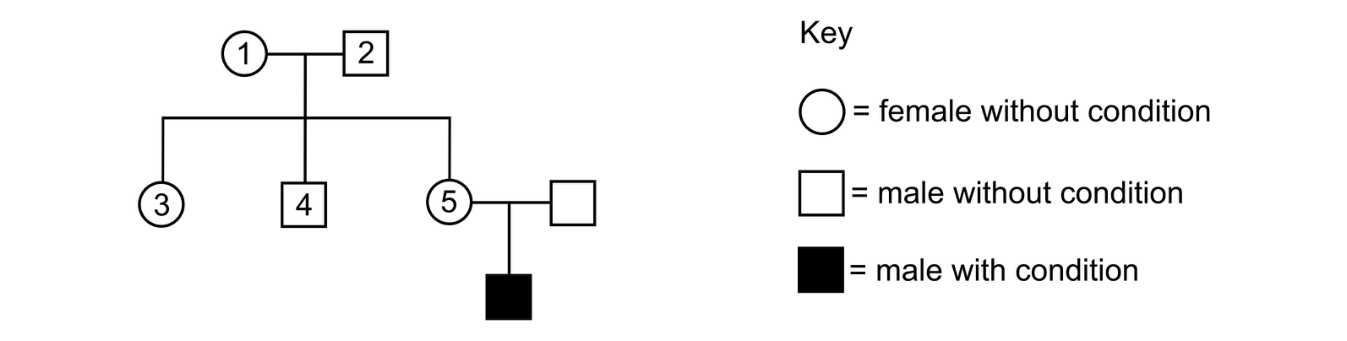
Which row in the table below does not correctly state the probability for each person possessing one copy of the allele for the condition?
| Person | Maximum probability (%) |
|---|---|
| 1 | 50 |
| 2 | 0 |
| 3 | 50 |
| 4 | 0 |
| 5 | 100 |
✍️ person 5 ရဲ့ သား affected (XhY) — သူ့ Xh က အမေ 5 ဆီက → 5 = carrier 100 % ✓
person 2 နဲ့ 4 က ကျန်းမာတဲ့ ယောက်ျား (XHY) — allele မပါ → 0 % ✓
5 ရဲ့ Xh က အဖေ 2 ဆီက မဟုတ်လို့ အမေ 1 ဆီက → person 1 = carrier 100 %။ ဇယားက 50 → မှား
person 3 = carrier အမေ × ကျန်းမာ အဖေရဲ့ သမီး → 50 % ✓ → မှားတဲ့ row = Person 1
👉 X ပေါ်က allele က dominant ဖြစ်ရင်ကော?
X-linked dominant — အဖေ → သမီး အားလုံး
X-linked dominant (X ပေါ်က ထင်ရှားတဲ့ allele) — XD တစ်ခုနဲ့။X ပေါ်က allele က dominant ဖြစ်ရင်ကော? X-linked dominant (X ပေါ်က ထင်ရှားတဲ့ allele) ဆိုရင် XD တစ်ခု ပါရုံနဲ့ လုံလောက်တယ် (one is enough) — ယောက်ျား ရော မိန်းမ ရော ရောဂါ ပေါ်တယ်။ ဒီ ပုံစံ ရှားတယ်။
🤔 A condition is caused by a dominant allele on the X chromosome. Individual Z is affected. Which must be correct (no new mutations)?
1 If Z is a boy, he inherited the allele from his father.
2 If Z is a boy, one of his mother's parents had the condition.
3 If Z is a girl, both her parents had the allele.
4 If Z is a boy and has children, all his daughters will have the condition.
(IMAT 2018 Q34)
🔍 မေးခွန်း ဖြည်မယ်
Individual Z is affected = Z လို့ ခေါ်တဲ့ လူမှာ ရောဂါ ရှိတယ်။ must be correct = သေချာပေါက် မှန်ရမယ့်။ no new mutations = mutation အသစ် မဖြစ်ဘူးလို့ ယူဆ။
If Z is a boy = Z က ယောက်ျားလေး ဆိုရင်။ inherited the allele from = allele ကို … ဆီက ရခဲ့တယ်။ one of his mother's parents = အမေ့ မိဘ နှစ်ယောက်ထဲက တစ်ယောက်။
မေးနေတာ — X ပေါ်က dominant allele ဆိုရင် 1–4 ထဲက ဘယ်ဟာတွေက အမြဲ မှန်ရမလဲ။
1 မှား — သားက X ကို အမေဆီက ရတယ်။
2 မှန် — အမေ ရောဂါ ရှိလို့ သူ့ မိဘ တစ်ယောက်လည်း ရှိရမယ်။
3 မှား — မိဘ တစ်ယောက်ဆီက ရရုံနဲ့ လုံလောက်တယ်။
4 မှန် — အဖေ့ X က သမီးတိုင်းဆီ ရောက်တယ်။
ရောဂါရှိ father XDY → all daughters ရောဂါ ရတယ်။ရောဂါ ရှိတဲ့ father XDY က သူ့ X ကို သမီး တိုင်းဆီ ပေးတယ် — all daughters (သမီး အားလုံး) ရောဂါ ရတယ်။
သားတွေကိုတော့ Y ပေးလို့ no sons — သား တစ်ယောက်မှ ရောဂါ မရဘူး။
ရောဂါရှိ son → XD က mother ဆီက၊ mother လည်း ရောဂါရှိ။ရောဂါ ရှိတဲ့ son ကို တွေ့ရင် ပြောင်းပြန် တွေးပါ — သူ့ XD က mother ဆီက လာတယ်၊ ဒါကြောင့် mother လည်း ရောဂါ ရှိရမယ်။
mother ကလည်း XD ရခဲ့ — grandparent တစ်ယောက် ရောဂါရှိ။new mutations (mutation အသစ်တွေ) မရှိရင် mother ကလည်း သူ့ မိဘ တစ်ယောက်ဆီက XD ရခဲ့ရမယ် — grandparent (အဘိုး ဒါမှမဟုတ် အဘွား) တစ်ယောက်မှာ ရောဂါ ရှိရမယ်။
💡 ‘အဖေ → သမီး အားလုံး၊ သား မရှိ’။💡 မှတ်နည်း — X-linked dominant မှာ ရောဂါရှိ အဖေက သူ့ XD ကို သမီးတိုင်းဆီ ပေးလို့ သမီးတိုင်း ရောဂါ ရ၊ သားတွေက Y ရလို့ ဘယ်သူမှ မရ — ‘အဖေ → သမီး အားလုံး၊ သား မရှိ’။
👉 ဒီ စည်းမျဉ်းနဲ့ IMAT 2013 ရဲ့ ‘boy C’ မေးခွန်းကို ဖြေကြည့်မယ်။
IMAT 2013 Q41 — boy C ကို ဘာက မရှင်းနိုင်လဲ
📝 IMAT 2013 · Question 41
The family pedigree shows that boy C has a genetic condition. No other member of the family shows the same genetic condition.
Which one of the following could NOT explain why boy C has the condition?
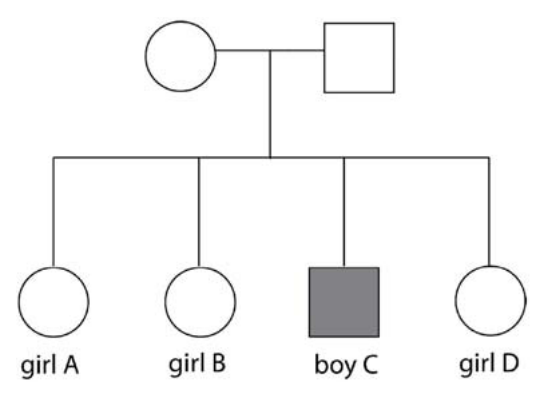
✍️ sex-linked dominant: boy C ရဲ့ X က mother ဆီက — dominant ဆို mother ရောဂါ ရှိရမယ်၊ မရှိဘူး → မဖြစ်နိုင် ✗ → အဖြေ
sex-linked recessive: mother = carrier (XHXh) ဆိုရင် ဖြစ်နိုင် ✓
autosomal recessive (both parents carriers): Aa × Aa → aa ကလေး 14 ✓
mutation: egg ဒါမှမဟုတ် sperm မှာ allele အသစ် ပေါ်လာရင် ဖြစ်နိုင် ✓
👉 ပုံစံ အားလုံး သိပြီ။ pedigree အသစ် တစ်ခု ရလာရင် ဘယ် အစဉ်နဲ့ စစ်မလဲ?
စုံထောက် အဆင့် ၅ ဆင့် — pedigree ကြည့်ပြီး ပုံစံ ဖော်
အဆင့် 1 — unaffected × unaffected → ရောဂါ ကလေး = recessive။စုံထောက် အဆင့် 1 — unaffected × unaffected (ကျန်းမာ × ကျန်းမာ) → ရောဂါ ကလေး ရှိသလား? ရှိရင် recessive။
အဆင့် 2 — affected × affected → ကျန်းမာ ကလေး = dominant။အဆင့် 2 — affected × affected (ရောဂါရှိ × ရောဂါရှိ) → ကျန်းမာ ကလေး ရှိသလား? ရှိရင် dominant။
အဆင့် 3 — mostly males၊ အဖေ → သား မကူး = X-linked။အဆင့် 3 — recessive ရောဂါက mostly males (ယောက်ျား အများစု)၊ ကျန်းမာတဲ့ အမေတွေကနေ ဆင်းလာပြီး အဖေကနေ သားဆီ မကူးရင် X-linked လို့ ယူဆ။
အဆင့် 4 — ရောဂါ daughter၊ father ကျန်းမာ = autosomal။အဆင့် 4 — recessive ရောဂါမှာ ရောဂါရှိ daughter ရဲ့ father ကျန်းမာနေရင် X-linked recessive မဖြစ်နိုင် (အဖေ့ X ကို ရလို့) → autosomal recessive။
အဆင့် 5 — father → all daughters = X-linked dominant။အဆင့် 5 — dominant ဖြစ်ပြီး ရောဂါရှိ father ရဲ့ all daughters ရောဂါရှိ၊ သား မရ ရင် X-linked dominant၊ father ကနေ son ဆီ ကူးရင် autosomal။
🎯 Match each condition to its inheritance
👉 PART 1 ကို ပြန် စစ်ကြည့်ရအောင်။
🔁 ပြန်စစ်မယ် — အဖြေ မကြည့်ခင် စဉ်းစားပါ
🤔 A man with haemophilia (X-linked recessive) and a homozygous normal woman have a daughter. The daughter is:
🔍 မေးခွန်း ဖြည်မယ်
a homozygous normal woman = ပုံမှန် allele နှစ်ခုလုံး ပါတဲ့ မိန်းမ (carrier မဟုတ်)။ The daughter is = သမီးက … ဖြစ်တယ်။
မေးနေတာ — haemophilia အဖေ နဲ့ ပုံမှန် အမေရဲ့ သမီးမှာ allele ဘယ်လို ပါမလဲ၊ ဘာ ဖြစ်မလဲ။
အဖေက သူ့ Xh ကို သမီးတိုင်းဆီ ပေးပြီး အမေက XH ပဲ ပေးနိုင်တယ်။
ဒါကြောင့် သမီးတိုင်း XHXh — carrier ဖြစ်ပြီး ရောဂါ မပြဘူး။
🤔 A carrier mother and an unaffected father (X-linked recessive). What fraction of their daughters are expected to be carriers?
🔍 မေးခွန်း ဖြည်မယ်
unaffected = ရောဂါ မရှိ။ What fraction of their daughters = သူတို့ သမီးတွေထဲက ဘယ်နှ ပုံ တစ်ပုံ။ are expected to be = ဖြစ်မယ်လို့ မျှော်လင့်ရတဲ့။
မေးနေတာ — ကလေး အားလုံးထဲက မဟုတ်ဘဲ သမီးတွေ ထဲမှာပဲ carrier ဘယ်လောက် ဖြစ်မလဲ။
သမီးတိုင်း အဖေ့ XH ကို ရတယ်။
အမေဆီက XH ဒါမှမဟုတ် Xh တစ်ဝက်စီ ရလို့ သမီးတွေထဲက 12 က XHXh (carrier)။
14 က “ကလေး အားလုံးထဲက carrier သမီး” — သမီးတွေထဲကလို့ မေးထားလို့ 12။
🤔 An X-linked dominant condition: a heterozygous affected mother and an unaffected father. What is the chance that a child is affected?
🔍 မေးခွန်း ဖြည်မယ်
a heterozygous affected mother = allele နှစ်မျိုး (XDXd) ပါပြီး ရောဂါ ရှိတဲ့ အမေ။ the chance that a child is affected = ကလေး တစ်ယောက် ရောဂါ ရှိခွင့်။
မေးနေတာ — အမေက X နှစ်ခုထဲက ဘယ်ဟာ ပေးမလဲ စဉ်းစားပြီး ကလေး (သား သမီး မရွေး) ရောဂါ ရခွင့် ဘယ်လောက်လဲ။
အမေ XDXd က XD ကို ကလေး တစ်ဝက်ဆီ ပေးတယ် — သား သမီး မရွေး 12။
“သမီး အားလုံး” ဆိုတာ ရောဂါရှိ အဖေရဲ့ ပုံစံ ဖြစ်တယ်။
👉 PART 2 — XX ယောက်ျား ဆိုတာ ဖြစ်နိုင်သလား?👉 PART 2 — Y chromosome ပေါ်က gene တစ်ခုက လူကို ယောက်ျား ဖြစ်စေတယ်။ XX ယောက်ျား ဆိုတာ ဖြစ်နိုင်သလား?
The Y switch and the silent X
SRY နဲ့ Barr body
🔎 ကြိုကြည့်မယ် — gonad (မျိုးပွား ဂလင်း) — testis လား ovary လား
သန္ဓေသား ပတ် 6 — gonad တစ်စုံ၊ ယောက်ျား မိန်းမ တူတူ။ကြိုကြည့်ခြင်း (preview) ပါ — အပြည့် သင်ခန်းစာ 54 မှာ။ ပတ် 6 embryo (သန္ဓေသား) ထဲ ကျောက်ကပ်နားမှာ အင်္ဂါ သေးသေးလေး တစ်စုံ ရှိတယ် — gonad (မျိုးပွား ဂလင်း)။ အစမှာ ယောက်ျားလေး မိန်းကလေး တူတူပဲ။
ယောက်ျားလေးမှာ gonads က testes (ဝှေးစေ့ နှစ်လုံး) ဖြစ်လာ (become)။ယောက်ျားလေးမှာ gonads (gonad နှစ်ခု) က testes (testis နှစ်လုံး၊ ဝှေးစေ့) ဖြစ်လာ (become) တယ်။ နောက်ပိုင်း အောက်ကို ဆင်းပြီး scrotum (ဝှေးစေ့အိတ်) ထဲ ရောက်တယ်၊ sperm နဲ့ testosterone ထုတ်တယ်။
မိန်းကလေးမှာ ovaries (သားဥအိမ် နှစ်လုံး) အဖြစ် develop (ကြီးထွား) တယ်။မိန်းကလေးမှာတော့ gonads က ovaries (ovary နှစ်လုံး၊ သားဥအိမ်) အဖြစ် develop (ကြီးထွား ဖြစ်လာ) တယ်။ သားအိမ်ရဲ့ ဘေး တစ်ဖက်တစ်ချက်မှာ နေပြီး egg ထုတ်တယ်။
ဘယ်လမ်း သွားမလဲ ဘာက ဆုံးဖြတ်လဲ? — Y ပေါ်က ခလုတ်။gonad က ဘယ်လမ်း သွားမလဲ ဆိုတာ ဘာက ဆုံးဖြတ်လဲ? အဖြေက Y chromosome ပေါ်က gene ခလုတ် တစ်ခု — နောက် scene မှာ ကြည့်မယ်။
SRY — ယောက်ျား ဖြစ်စေတဲ့ ခလုတ်
chromosome XX ဖြစ်ပေမဲ့ ယောက်ျား (XX male) ရှိတယ် — ဘယ်လို?ကြားဖူးလား — chromosome စစ်တော့ XX ဖြစ်နေပေမဲ့ ယောက်ျား ဖြစ်နေတဲ့ လူ (XX male) တွေ ရှိတယ်။ ဘယ်လို ဖြစ်နိုင်လဲ?
Y အဖျားမှာ SRY gene — Sex-determining Region of Y။Y chromosome ရဲ့ အဖျားနားမှာ SRY gene ရှိတယ် — Sex-determining Region of Y (Y ပေါ်က လိင် ဆုံးဖြတ်တဲ့ အပိုင်း)။
🤔 Predict: what does the SRY gene do in an embryo?
🔍 မေးခွန်း ဖြည်မယ်
Predict = ကြိုမှန်းပါ။ in an embryo = သန္ဓေသား ထဲမှာ။ makes the gonads become = gonads ကို … ဖြစ်လာအောင် လုပ်တယ်။ sits on = … ပေါ်မှာ ရှိတယ်။
မေးနေတာ — Y ပေါ်က SRY gene က သန္ဓေသားမှာ ဘာ အလုပ် လုပ်သလဲ။
SRY က ခလုတ် — ရှိရင် gonad က testis ဖြစ်တယ်။
ovary က SRY မရှိမှ ဖြစ်တာ။
ပုံမှန် မိန်းမ (XX) မှာ Y မရှိလို့ SRY မရှိဘူး။
SRY က Y ပေါ်မှာ ရှိလို့ Y sperm (sperm တစ်ဝက်) မှာပဲ ပါတယ်၊ X sperm မှာ မပါဘူး။
SRY ရှိ → testis → male၊
မရှိ → ovary → female။SRY က ခလုတ်လိုပဲ။
embryo (သန္ဓေသား) မှာ SRY ရှိရင် gonad က testis (ဝှေးစေ့) ဖြစ်ပြီး male လက္ခဏာ စတယ်။ SRY မရှိရင် ovary (သားဥအိမ်) ဖြစ်ပြီး female ဖြစ်တယ်။
SRY ရှိဖို့ပဲ အရေးကြီး — SRY on X ဖြစ်လည်း male။အရေးကြီးတာ SRY ရှိ မရှိပဲ — SRY on X (X ပေါ်မှာ) ရှိရှိ၊ Y ပေါ်မှာ ရှိရှိ male ဖြစ်တယ်။
45,X မှာ SRY မရှိ — female၊ Turner syndromeပြောင်းပြန်လည်း ရှိတယ် — X တစ်ခုတည်း ရှိပြီး Y မပါတဲ့ လူ (45,X) မှာ SRY မရှိလို့ female ဖြစ်တယ်။ ဒါကို Turner syndrome လို့ ခေါ်တယ် (သင်ခန်းစာ 33B)။ အရပ် ပုပြီး သားဥအိမ် ကောင်းကောင်း မဖွံ့ဖြိုးဘူး။
45,X ကိုယ်ဝန် အများစု ပျက်ကျ၊ မွေးလာသူတွေကတော့ survive (အသက်ရှင်) တယ်။45,X သန္ဓေသား အများစုက ကိုယ်ဝန်အတွင်းမှာ ပျက်ကျတယ်။ ဒါပေမဲ့ မွေးလာတဲ့ Turner မိန်းကလေးတွေကတော့ survive (အသက်ရှင်) ပြီး ပုံမှန် ဘဝ နေနိုင်တယ်။
Y-linked gene က father → every son ဆီ ဆင်းတယ်။Y ပေါ်က gene (Y-linked) တွေက father ကနေ every son (သားတိုင်း) ဆီ၊ မြေး ယောက်ျားတိုင်းဆီ ဆင်းတယ်။ မိန်းမမှာ ဘယ်တော့မှ မပေါ်ဘူး။
💡 SRY = မီးခလုတ် — ဖွင့် male၊ ပိတ် female၊ နံရံ အရေး မကြီး။💡 မှတ်နည်း — SRY ကို အိမ်က မီးခလုတ်လို မြင်ပါ —
ခလုတ် ဖွင့်ထားရင် (SRY ရှိ) testis → male၊
ပိတ်ထားရင် (SRY မရှိ) ovary → female။
ခလုတ်ကို ဘယ်နံရံ (X လား Y လား) မှာ တပ်ထားလဲ အရေး မကြီးဘူး။
👉 ဒီ SRY ကို IMAT 2021 မှာ meiosis နဲ့ ပေါင်းပြီး မေးခဲ့တယ်။
IMAT 2021 Q30 — SRY ဘယ်ရောက်ရင် ဘာဖြစ်လဲ
📝 IMAT 2021 · Question 30
The SRY gene is normally located on the human Y chromosome. This gene initiates the development of male characteristics.
Using this information, which of the following statements about the SRY gene is/are correct?
1 Insertion of the SRY gene into an X chromosome of a female zygote could give it male characteristics.
2 A sperm cell arising from incorrect division, which has a functional SRY gene, could give rise to a female with a sex chromosome trisomy following fertilisation with a normal ova.
3 During meiosis, crossing over could result in the formation of ‘X’ sperm with the SRY gene, which could cause male characteristics after fertilisation.
✍️ 1: female zygote (XX) ရဲ့ X ပေါ် SRY ထည့်ရင် ခလုတ် ဖွင့်သွားလို့ male လက္ခဏာ ရနိုင် ✓
2: X နဲ့ Y မခွဲဘဲ ကပ်ပါ (non-disjunction, သင်ခန်းစာ 33B) → XY sperm + X egg = XXY။ SRY ပါလို့ male (Klinefelter)၊ female မဟုတ် ✗
“47,XXY” ဖတ်နည်း — 47 က chromosome စုစုပေါင်း: autosome 44 (22 အတွဲ) + sex chromosome 3 (X, X, Y) = 47၊ ပုံမှန် 46 ထက် 1 ပို
3: X နဲ့ Y ရဲ့ အဖျားမှာ ဆင်တူ အပိုင်း ရှိလို့ meiosis မှာ crossing over ဖြစ်တယ်။ ရှားရှားပါးပါး ဖြတ်တဲ့ နေရာ လွဲပြီး SRY ပါ ပါသွားရင် SRY က X ပေါ် ရောက်နိုင် → ‘X’ sperm ကနေ male ✓
1 ✓ · 2 ✗ · 3 ✓ → 1 and 3 only
📌 XX male — crossing over ကြောင့် SRY က X ပေါ် ကူးတာ။📌 XX male ပဟေဠိရဲ့ အဖြေ — အဖေ့ meiosis မှာ crossing over ကြောင့် SRY က X ပေါ် ကူးသွားတာ။
👉 မိန်းမက X gene protein ကို နှစ်ဆ ထုတ်သလား?👉 မိန်းမမှာ X နှစ်ခု၊ ယောက်ျားမှာ တစ်ခု — X gene protein ကိုရော မိန်းမက နှစ်ဆ ထုတ်သလား?
X တစ်ခု ပိတ်ထား — Barr body
X gene အများစုရဲ့ protein ပမာဏ တူ — early embryo မှာ X နှစ်ခုလုံး အလုပ်လုပ်။မိန်းမမှာ X နှစ်ခု၊ ယောက်ျားမှာ တစ်ခု — ဒါပေမဲ့ X gene အများစုရဲ့ protein ပမာဏ တူတယ်။ early embryo (သန္ဓေသား အစောပိုင်း) မှာတော့ X နှစ်ခုလုံး အလုပ်လုပ်တယ်။
cell တိုင်း X တစ်ခုကို random ရွေး ပိတ် (X inactivation)။ပြီးတော့ cell တစ်လုံးချင်းက X တစ်ခုကို random (ကျပန်း) ရွေးပြီး တင်းတင်း ချုံ့ (condensed) ပြီး ပိတ်လိုက်တယ် (X inactivation)။ ပိတ်ခံရတဲ့ X ကို inactivated X လို့ ခေါ်တယ်။
အဲဒီ cell ကနေ ပွားလာတဲ့ cell တွေက ဒီ ရွေးချက် အတိုင်း ဆက်ထားတယ်။
ပိတ်ထားတဲ့ X = Barr body — XY ယောက်ျားမှာ မရှိ။nucleus ထဲမှာ အမှောင်ရောင် အစက်လေး အဖြစ် မြင်ရတဲ့ ပိတ်ထားတဲ့ X ကို Barr body လို့ ခေါ်တယ်။ X တစ်ခုပဲ ရှိတဲ့ ပုံမှန် ယောက်ျား (XY) မှာ Barr body မရှိဘူး။
nucleolus နဲ့ မရောပါနဲ့ — သူက chromosome မဟုတ်ဘူး။nucleus ထဲမှာ အမှောင် အစက် နောက်တစ်ခု nucleolus (ribosome အတွက် RNA လုပ်တဲ့ နေရာ) လည်း ရှိတယ်။ သူက chromosome မဟုတ်ဘူး။ Barr body ကတော့ nucleus အနားသတ်မှာ ကပ်နေတဲ့ X တစ်ချောင်းပါ။
heterozygous မိန်းမ ခန္ဓာက patches (အကွက်) လိုက်။ဒါကြောင့် heterozygous မိန်းမရဲ့ ခန္ဓာကိုယ်က patches (အကွက်) လိုက် — တချို့ အကွက်က allele တစ်ခုကို၊ တချို့ အကွက်က နောက် allele ကို သုံးတယ်။
💡 Barr body = လိပ်ပြီး ထောင့်မှာ ထောင်ထားတဲ့ ဖျာ။💡 မှတ်နည်း — Barr body ကို လိပ်ပြီး ထောင့်မှာ ထောင်ထားတဲ့ ဖျာ လို မြင်ပါ — nucleus ထဲမှာ ရှိပေမဲ့ မဖြန့်လို့ မသုံးဘူး။ X ‘အပို’ တွေ အကုန် လိပ်ထားပြီး X တစ်ခုပဲ ဖြန့်သုံးတယ်။
📷 ကြောင်မှာ အမွေး အရောင် gene က X ပေါ်မှာ ရှိတယ်။ orange patch (လိမ္မော် အကွက်) မှာ orange allele ပါတဲ့ X ပွင့်ပြီး black patch (အနက် အကွက်) မှာ နောက် X ပွင့်နေတယ်။
ဒါကြောင့် tortoiseshell (လိမ္မော် + အနက် အကွက်) ကြောင် အများစု အမ (XX) ပါ — အထီး (XY) မှာ X တစ်ခုပဲ ရှိလို့ အရောင် တစ်မျိုးပဲ ရတယ်။
ရှားရှားပါးပါး tortoiseshell အထီးက XXY ဖြစ်တယ် — X နှစ်ခု (အကွက်) + Y (SRY → အထီး)။
OpenStax Biology 2e, Figure 13.9 (CC BY 4.0)
အရေပြားမှာ sweat glands (ချွေး ထုတ်တဲ့ ဂလင်းလေးတွေ) ရှိတယ်။ သူ့ gene X ပေါ်မှာ ရှိရင် ဘာ မြင်ရမလဲ?
🤔 A gene for sweat glands is on the X chromosome. A woman is heterozygous: one normal allele, one allele that gives no sweat glands. What is her skin expected to show?
🔍 မေးခွန်း ဖြည်မယ်
heterozygous = allele နှစ်မျိုး ပါ။ one allele that gives no sweat glands = sweat gland မရှိစေတဲ့ allele တစ်ခု။ expected to show = မြင်ရမယ်လို့ မျှော်လင့်တဲ့။
မေးနေတာ — X inactivation ကို စဉ်းစားပြီး သူမရဲ့ အရေပြား တစ်ခုလုံးမှာ gland တွေ ဘယ်လို ပုံစံ ရှိမလဲ။
cell တစ်လုံးချင်းက X တစ်ခုကို ကျပန်း ပိတ်လို့ အကွက် တချို့မှာ normal allele အလုပ်လုပ် (gland ရှိ)၊ အကွက် တချို့မှာ ပျက်နေတဲ့ allele အလုပ်လုပ် (gland မရှိ) — patches ဖြစ်တယ် (ကြောင် အကွက်လိုပဲ)။
ကျပန်း ဖြစ်လို့ တစ်ခြမ်းတည်း မဟုတ်ဘူး။
👉 မိဘ တစ်ယောက်တည်းဆီက ဆင်းတဲ့ ပုံစံ ကျန်သေးတယ်။👉 X နဲ့ Y မဟုတ်ဘဲ အဖေ ဒါမှမဟုတ် အမေ တစ်ယောက်တည်းဆီက ဆင်းတဲ့ ပုံစံတွေ ကျန်သေးတယ်။
Y-linked နဲ့ mitochondria — ဘယ်သူ ပေးလဲ ကြည့်
Y-linked (Y ပေါ်မှာ ချိတ်) — father ရဲ့ သားတိုင်း ရောဂါ။Y ပေါ်က gene ကို Y-linked (Y ပေါ်မှာ ချိတ်နေတဲ့) gene လို့ ခေါ်တယ်။ သူ့ကို pedigree နဲ့ ဆွဲကြည့်ရအောင်။ ရောဂါရှိ father ရဲ့ သား နှစ်ယောက်လုံး ရောဂါ ရှိပြီး သမီးကတော့ ကျန်းမာတယ်။
အဖေ → သားတိုင်း → မြေး ယောက်ျားတိုင်း၊
ရှားတယ်။အဖေက Y ကို သားတိုင်းဆီ ပေးပြီး သမီးဆီ ဘယ်တော့မှ မပေးလို့ အဖေ → သားတိုင်း → မြေး ယောက်ျားတိုင်း တန်းတန်း ဆင်းတယ်။
Y ပေါ်မှာ gene နည်းလို့ Y-linked ရောဂါ ရှားတယ်။
mitochondria DNA — ရောဂါရှိ mother ရဲ့ ကလေး အားလုံး ရ။ဆင်တူ ထင်ရတဲ့ နောက် ပုံစံ — mitochondria ထဲက DNA ပေါ်က gene (သင်ခန်းစာ 36B)။ ရောဂါရှိ mother ရဲ့ ကလေး အားလုံး — သား ရော သမီး ရော — အဲဒီ mitochondria ကို ရတယ် (ရောဂါ ပြင်းအား ကွာနိုင်တယ်)။
Y-linked “အဖေ → သား”၊
mitochondrial “အမေ → အားလုံး”။zygote ရဲ့ mitochondria အားလုံး အမေ့ ဥဆီက လာလို့ ရောဂါရှိ အဖေက ဘယ်ကလေးဆီမှ မပေးဘူး။
Y-linked က “အဖေ → သား”၊
mitochondrial က “အမေ → အားလုံး”။
ဒီ နှစ်ခုကိုလည်း စုံထောက် အဆင့်ထဲ ထည့်ပါ။pedigree ဖတ်တဲ့အခါ ဒီ နှစ်ခုကိုလည်း စုံထောက် အဆင့်တွေထဲ ထည့်ပါ — ရောဂါ ဘယ်သူ့ဆီက ဘယ်သူ့ဆီ ရောက်လဲ ကြည့်ရုံနဲ့ ခွဲလို့ ရတယ်။
💡 Y = သားပဲ ဆက်ခံတဲ့ ဓား၊ mitochondria = ကလေးတိုင်း ရ။💡 မှတ်နည်း — Y ကို အဖေ့ဆီက သားတွေပဲ အမွေ ဆက်ခံတဲ့ ဓား လို မှတ်ပါ — သမီး မရ။ mitochondria ကိုတော့ အမေ့ ဥထဲက ထမင်းချိုင့် လို ကလေး တိုင်း ရတယ်၊ အဖေ့ဆီက ဘယ်သူမှ မရ။
🤔 A man has a Y-linked condition. His daughter has a son with an unaffected man. What is the chance that this grandson is affected?
🔍 မေးခွန်း ဖြည်မယ်
His daughter has a son with an unaffected man = သူ့ သမီးက ရောဂါ မရှိတဲ့ ယောက်ျားနဲ့ သား တစ်ယောက် ရတယ်။ grandson = မြေး ယောက်ျားလေး။
မေးနေတာ — မြေးရဲ့ Y ဘယ်သူ့ဆီက လာလဲ စဉ်းစားပြီး မြေးမှာ ရောဂါ ရှိခွင့် ဘယ်လောက်လဲ။
မြေးရဲ့ Y က သူ့ အဖေ (ကျန်းမာတဲ့ ယောက်ျား) ဆီက လာတယ်။
သမီးက Y မရှိလို့ ဘယ်တော့မှ မပေးနိုင်ဘူး — 0။
Y-linked ရောဂါ ရဖို့ အဖေ ကိုယ်တိုင် ရောဂါ ရှိရမယ်။
👉 PART 2 ကို ပြန် စစ်ကြည့်ရအောင်။
🔁 ပြန်စစ်မယ် — အဖြေ မကြည့်ခင် စဉ်းစားပါ
🤔 An XY embryo has lost the SRY gene from its Y chromosome. It develops as:
🔍 မေးခွန်း ဖြည်မယ်
has lost … from its Y = Y ပေါ်က … ပျောက်သွားတယ်။ It develops as = သူ ကြီးထွားလာရင် … အဖြစ် ဖြစ်တယ်။
မေးနေတာ — Y ရှိပေမဲ့ SRY မရှိတဲ့ သန္ဓေသား ဘယ်လိင် ဖြစ်လာမလဲ။
gonad ကို testis ဖြစ်စေတဲ့ ခလုတ် SRY မရှိလို့ ovary ဖြစ်ပြီး female ဖြစ်တယ် — Y ရှိနေပေမဲ့ ခလုတ် မရှိရင် အလုပ် မလုပ်ဘူး။
🤔 A person has the karyotype 45,X. This person is:
🔍 မေးခွန်း ဖြည်မယ်
karyotype 45,X = chromosome စုစုပေါင်း 45၊ sex chromosome က X တစ်ခုတည်း။ as one X is enough = X တစ်ခု လုံလောက်လို့။ not able to survive = အသက် မရှင်နိုင်။
မေးနေတာ — X တစ်ခုပဲ ရှိပြီး Y မရှိတဲ့ လူက ဘယ်လို လူ ဖြစ်မလဲ။
Y မရှိလို့ SRY မရှိ — female၊ Turner syndrome။
45 = autosome 44 + X တစ်ခု။
🤔 A Barr body in the nucleus of a female cell is:
🔍 မေးခွန်း ဖြည်မယ်
A Barr body … is = Barr body ဆိုတာ … ဖြစ်တယ်။ inactivated = ပိတ်ခံထားရတဲ့။ condensed = တင်းတင်း ချုံ့ထားတဲ့။ an extra autosome = ပိုလာတဲ့ autosome။
မေးနေတာ — မိန်းမ cell ရဲ့ nucleus ထဲက Barr body ဆိုတာ တကယ် ဘာလဲ။
cell တိုင်း X တစ်ခုကို ကျပန်း ချုံ့ပိတ်ထားတာ Barr body ပါ။
အမ cell မှာ Y မရှိဘူး။
nucleolus က ribosome လုပ်တဲ့ နေရာ၊ chromosome မဟုတ်ဘူး။
autosome တွေကို ဒီလို မပိတ်ဘူး — X တစ်ခုပဲ ပိတ်တယ်။
🤔 How many Barr bodies are found in a cell of a man with the karyotype 47,XXY?
🔍 မေးခွန်း ဖြည်မယ်
How many … are found = … ဘယ်နှစ်ခု တွေ့ရလဲ။ a man with the karyotype 47,XXY = chromosome 47 ခု၊ X နှစ်ခု + Y ရှိတဲ့ ယောက်ျား။
မေးနေတာ — X ဘယ်နှစ်ခု ရှိလဲ၊ တစ်ခုပဲ ဖွင့်ထားရင် ပိတ်ထားတာ ဘယ်နှစ်ခုလဲ။
cell က X တစ်ခုကိုပဲ အလုပ်လုပ်ခိုင်းပြီး ကျန်တဲ့ X တွေ အားလုံးကို ပိတ်တယ်။
Barr body = X အရေအတွက် − 1 = 2 − 1 = 1။
ပုံမှန် ယောက်ျား XY မှာ 0၊ XX မိန်းမမှာ 1။
🎮 Male or female? Look for SRY — sort fast 🔥
👉 PART 3 — အရပ်၊ အသားအရောင်၊ ဆီးချို ဘယ်လို ဆင်းလဲ?👉 PART 3 — အရပ်၊ အသားအရောင်၊ ဆီးချို လို လက္ခဏာတွေက gene တစ်ခုတည်း မဟုတ်ဘူး။ ဘယ်လို အမွေ ဆင်းလဲ?
Multifactorial traits and genetic testing
gene အများ + ပတ်ဝန်းကျင်၊ မမွေးခင် စစ်ဆေးခြင်း
အရပ် — gene အများ + ပတ်ဝန်းကျင်
gene တစ်ခုဆို ၃ အုပ်စု၊ အရပ်ကတော့ ဆက်တိုက် ကွဲ — ဘာလို့လဲ?Mendel ရဲ့ gene တစ်ခုဆိုရင် AA, Aa, aa လို အုပ်စု နည်းနည်း (ပုံမှာ ၃ အုပ်စု) ပဲ ထွက်တယ်။ ဒါပေမဲ့ လူ့ အရပ်က 150 cm, 151 cm, 152 cm … ဆက်တိုက် ကွဲတယ် — ဘာလို့လဲ?
gene ရာချီ + အစာ ပေါင်း — bell curve၊ အလယ် အများဆုံး။အရပ်ကို gene ရာချီက တစ်ခုချင်း နည်းနည်းစီ ပေါင်းထည့်တယ် (polygenic၊ သင်ခန်းစာ 36B)။ အစာ နဲ့ ကျန်းမာရေးကလည်း ထပ်ထည့်တယ်။ ရလဒ်က bell curve (ခေါင်းလောင်းပုံ ကွေး) — အလယ်အရပ် လူ အများဆုံး ဖြစ်တယ်။
gene + ပတ်ဝန်းကျင် = multifactorial (အကြောင်းရင်း အများ)gene အများကြီး နဲ့ environment (ပတ်ဝန်းကျင်) ပေါင်းပြီး ဆုံးဖြတ်တဲ့ လက္ခဏာကို multifactorial (အကြောင်းရင်း အများ) trait လို့ ခေါ်တယ်။
environment ပြောင်းရင် curve ရွှေ့ — ကိုရီးယား 10 cm ရှည်လာ။ပတ်ဝန်းကျင် ပြောင်းရင် curve တစ်ခုလုံး ရွှေ့တယ်။ ဥပမာ တောင်ကိုရီးယား လူတွေ အစာ ကောင်းလာတဲ့ နှစ် 100 အတွင်း ပျမ်းမျှ အရပ် 10 cm ကျော် ရှည်လာတယ် — gene မပြောင်းဘဲ environment ပြောင်းလို့ပါ။
အရပ်၊ အသားအရောင်၊ body weight — Mendel ratio မထွက်။အရပ်၊ အသားအရောင် (gene အများ + sunlight နေရောင်)၊ body weight (ကိုယ်အလေးချိန်: gene အများ + အစာ၊ လေ့ကျင့်ခန်း) တို့က multifactorial ဖြစ်တယ်။ 3 : 1 လို Mendel ratio မထွက်ဘူး။
💡 မုန့်ဟင်းခါးလို ပစ္စည်း အများ ပေါင်း — 3 : 1 မထွက်။💡 မှတ်နည်း — အရပ်ကို မုန့်ဟင်းခါး တစ်ပွဲ လို မြင်ပါ — ငါး၊ ပဲမှုန့်၊ ငှက်ပျောအူ စတဲ့ ပစ္စည်း အများကြီး နည်းနည်းစီ ပေါင်းသလို gene အများ + အစာ ပေါင်းလို့ အရပ် ဆက်တိုက် ကွဲတယ်၊ 3 : 1 မထွက်ဘူး။
🤔 Which of these human characteristics is multifactorial?
🔍 မေးခွန်း ဖြည်မယ်
human characteristics = လူ့ လက္ခဏာတွေ။ multifactorial = gene အများ + ပတ်ဝန်းကျင် ပေါင်းပြီး ဆုံးဖြတ်တဲ့။
မေးနေတာ — gene တစ်ခုတည်းနဲ့ မဟုတ်ဘဲ gene အများ + ပတ်ဝန်းကျင်နဲ့ ဖြစ်တဲ့ လက္ခဏာ ဘယ်ဟာလဲ။
body weight ကို gene အများကြီး နဲ့ အစာ၊ လေ့ကျင့်ခန်း လို ပတ်ဝန်းကျင်က ပေါင်း ဆုံးဖြတ်လို့ ဆက်တိုက် ကွဲတယ်။
ကျန်တာတွေက gene တစ်ခုတည်းရဲ့ allele နဲ့ ဆုံးတဲ့ လက္ခဏာ — အုပ်စု သီးသီး ခွဲလို့ ရတယ်။
👉 gene နဲ့ ပတ်ဝန်းကျင် ဘယ်လောက် အရေးပါလဲ — အမွှာက ဖြေ။👉 gene ဘယ်လောက်၊ ပတ်ဝန်းကျင် ဘယ်လောက် အရေးပါလဲ ဆိုတာ ဘယ်လို တိုင်းမလဲ? အမွှာတွေက ဖြေပေးတယ်။
အမွှာ လေ့လာမှု — gene လား ပတ်ဝန်းကျင်လား
zygote ကွဲ = identical twins (အမွှာ အစစ်)၊ gene 100 %။ဥ တစ်လုံးကို sperm တစ်ကောင် မျိုးအောင်ပြီး ရလာတဲ့ zygote က နှစ်ခြမ်း ကွဲသွားရင် identical twins (အမွှာ အစစ်) ဖြစ်တယ် — gene 100 % နီးပါး တူတယ်။
zygote တစ်ခုတည်းက လာလို့ Mono-Zygotic (MZ) twins လို့လည်း ခေါ်တယ်။
ဥ နှစ်လုံး = DZ (zygote နှစ်ခု) — gene ~50 % တူ။ဥ နှစ်လုံးကို sperm နှစ်ကောင်က သီးခြား မျိုးအောင်ရင် non-identical (DZ) twins — Di-Zygotic (DZ၊ zygote နှစ်ခု)။ သာမန် မောင်နှမလိုပဲ gene ပျမ်းမျှ ~50 % တူတယ်။
ပတ်ဝန်းကျင် တူ၊ gene တူတာပဲ ကွာ — နှိုင်းယှဉ်ဖို့ ကောင်း။အမွှာ နှစ်မျိုးလုံး အိမ်တစ်အိမ်တည်းမှာ အစာ တူတူ စားကြီးလို့ ပတ်ဝန်းကျင် တူသလောက် ရှိတယ် — shared environment (မျှဝေတဲ့ ပတ်ဝန်းကျင်)။ ကွာတာက gene တူတဲ့ ပမာဏ ပဲ — ဒါကြောင့် နှိုင်းယှဉ်လို့ ကောင်းတယ်။
concordance (ကိုက်ညီနှုန်း) — ဥပမာ MZ 60 %၊ DZ 15 %။အမွှာ တစ်ယောက်မှာ ရောဂါ (disorder) ရှိရင် နောက်တစ်ယောက်မှာပါ ရှိတဲ့ ရာခိုင်နှုန်းကို concordance (ကိုက်ညီနှုန်း) လို့ ခေါ်တယ်။ ဥပမာ ရောဂါ တစ်ခုမှာ MZ 60 %၊ DZ 15 %။
MZ မြင့်လို့ gene အရေးပါ၊ 100 % မရောက်လို့ environment လည်း။MZ က DZ ထက် အများကြီး မြင့်လို့ gene က အရေးပါတယ်။ MZ တောင် 100 % မရောက်တာက gene အကုန် တူပေမဲ့ ကွာနေလို့ — environment ကလည်း အရေးပါတယ်။
💡 MZ = ဓာတ်ပုံ မိတ္တူ (100 %)၊ DZ = မောင်နှမ (~50 %)။💡 မှတ်နည်း — အမွှာ နှစ်မျိုးကို ‘ဓာတ်ပုံ မိတ္တူ’ နဲ့ ‘ညီအစ်ကို’ လို မှတ်ပါ — MZ က ဓာတ်ပုံ တစ်ပုံကနေ မိတ္တူ နှစ်ခု (gene 100 %)၊ DZ က သာမန် မောင်နှမ (gene ~50 %)။ MZ မှာ ပိုတူနေရင် gene ကြောင့်ပါ။
🤔 For a disorder, concordance is 90% in identical (MZ) twins and 85% in non-identical (DZ) twins. What does this suggest?
🔍 မေးခွန်း ဖြည်မယ်
For a disorder = ရောဂါ တစ်ခုအတွက်။ concordance is 90% in … = … အမွှာမှာ နှစ်ယောက်လုံး ဖြစ်တာ 90 %။ What does this suggest = ဒါက ဘာကို ညွှန်ပြလဲ။
add little = နည်းနည်းပဲ ထပ်ပေး။ the main cause = အဓိက အကြောင်းရင်း။
မေးနေတာ — MZ နဲ့ DZ ရဲ့ ကိန်း နှစ်ခု နီးနီးကပ်ကပ် ဖြစ်နေရင် gene နဲ့ ပတ်ဝန်းကျင် ဘယ်ဟာ ပိုအရေးကြီးလဲ။
MZ (gene 100 %) နဲ့ DZ (gene ~50 %) က concordance နီးနီး တူနေတယ်။
gene ပိုတူတာက ကွာခြားမှု နည်းနည်းပဲ ထပ်ပေးလို့ gene ရဲ့ အပိုင်း နည်းတယ်။
နှစ်မျိုးလုံး မြင့်တာက တူတူ မျှဝေတဲ့ ပတ်ဝန်းကျင် (အိမ်၊ အစာ၊ ပိုး) ကြောင့် ဖြစ်တယ်။
👉 အဖြစ်အများဆုံး ရောဂါတွေမှာလည်း gene + ပတ်ဝန်းကျင်။👉 ဒီ “gene + ပတ်ဝန်းကျင်” ပုံစံက လူအများဆုံး ဖြစ်တဲ့ ရောဂါတွေမှာလည်း ရှိတယ်။
ဆီးချို၊ နှလုံးရောဂါ — risk ပုံး
type 2 diabetes၊ နှလုံး၊ သွေးတိုး — multifactorial။type 2 diabetes (ဆီးချို အမျိုးအစား ၂)၊ coronary heart disease (နှလုံး သွေးကြော ကျဉ်း ရောဂါ)၊ သွေးတိုး တို့က လူအများဆုံး ဖြစ်တဲ့ ရောဂါတွေ — multifactorial ပါ။
risk ကို ပုံးလို — ပြည့်ပြီး မျဉ်းနီ ကျော်ရင် ရောဂါ။risk (ဖြစ်နိုင်ခြေ) ကို ပုံး တစ်ပုံး လို စဉ်းစားကြည့်ပါ။ ပုံးထဲ ပြည့်လာပြီး မျဉ်းနီ ကျော်ရင် ရောဂါ ဖြစ်တယ်။
risk allele က တုံးလေး ထည့် — gene တူ၊ မျဉ်း မကျော်သေး။risk allele တွေ (gene အများ) က ပုံးထဲ တုံးလေးတွေ ထည့်တယ်။ ဒီ နှစ်ယောက်မှာ gene က တူတူ — မျဉ်း မကျော်သေးဘူး။
သကြား၊ ထိုင်၊ ဆေးလိပ် — environment တုံးနဲ့ မျဉ်း ကျော်။ဘယ်ဘက်လူက သကြား များများ စား၊ တစ်နေကုန် ထိုင်နေ၊ ဆေးလိပ် သောက်တယ် (smoking) — environment တုံးတွေ ထပ်ထည့်လို့ မျဉ်း ကျော်သွားတယ်။
gene က risk မြှင့်ပေမဲ့ ကံကြမ္မာ မဟုတ်ဘူး။ဘယ်ဘက်လူ ရောဂါ ဖြစ်ပြီး gene တူပေမဲ့ ကျန်းမာစွာ နေတဲ့ ညာဘက်လူ ကျန်းမာတယ်။ gene က risk ကို မြှင့်ပေမဲ့ ကံကြမ္မာ မဟုတ်ဘူး။
မိသားစုထဲ စုတွေ့ပေမဲ့ Mendel ratio မထွက်ဘူး။ဒီ ရောဂါတွေ မိသားစုထဲ စုပြီး တွေ့ရတယ် (ဆွေမျိုး ရောဂါရှိရင် ကိုယ့် risk တက်)။ ဒါပေမဲ့ 3 : 1 ဒါမှမဟုတ် 12 လို Mendel ratio မထွက်ဘူး — single-gene ရောဂါနဲ့ ဒီလို ခွဲတယ်။
💡 ရေပုံး — gene တစ်ဝက်၊ အလေ့အထ လောင်းမှ လျှံ။💡 မှတ်နည်း — risk ပုံးကို ရေပုံး လို မြင်ပါ — gene က ပုံးထဲ ရေ တစ်ဝက် ထည့်ထားတယ်၊ သကြား၊ ထိုင်နေတာ၊ ဆေးလိပ်က ရေ ထပ်လောင်းတယ်။ မျဉ်းနီ ကျော်မှ ရောဂါ — ရေ မလောင်းရင် မလျှံဘူး။
🤔 Coronary heart disease is more common in relatives of people who have it and in people who smoke, but it shows no Mendelian ratio. The best explanation is:
🔍 မေးခွန်း ဖြည်မယ်
more common in relatives of people who have it = ရောဂါ ရှိသူရဲ့ ဆွေမျိုးတွေမှာ ပိုတွေ့။ people who smoke = ဆေးလိပ် သောက်သူ။ no Mendelian ratio = 3 : 1 လို ratio မထွက်။
မေးနေတာ — သက်သေ သုံးခု (ဆွေမျိုး၊ ဆေးလိပ်၊ ratio မထွက်) အားလုံးကို အကောင်းဆုံး ရှင်းတဲ့ အကြောင်း ဘာလဲ။
ဆွေမျိုးထဲ စုတာက gene ပါတယ် ဆိုတဲ့ သက်သေ၊ ဆေးလိပ်သမားမှာ များတာက environment ပါတယ် ဆိုတဲ့ သက်သေ၊ Mendel ratio မထွက်တာက gene တစ်ခုတည်း မဟုတ်ဘူး ဆိုတဲ့ သက်သေ — gene အများ + environment (multifactorial)။
👉 မိသားစုမှာ ရောဂါ ရှိရင် ကလေး မမွေးခင် ဘယ်လို စစ်လို့ ရလဲ?
မမွေးခင် စစ်ဆေးခြင်း — carrier test, amniocentesis, CVS
carrier testing (carrier စစ်ခြင်း) — သွေးယူ DNA စစ်တယ်။carrier testing (carrier ဟုတ်မဟုတ် စစ်ခြင်း) — သွေး နည်းနည်း ယူပြီး ရောဂါ allele သယ်ထားသလား DNA စစ်တယ်။ ဥပမာ လက်ထပ်ခါနီး thalassaemia carrier စစ်တာ။
နှစ်ယောက်လုံး carrier ဆို 14 ကြိုသိ၊ ဆရာဝန်နဲ့ တိုင်ပင်။နှစ်ယောက်လုံး carrier ဆိုရင် ကလေး တစ်ယောက်စီ 14 ဆိုတာ ကြိုသိပြီး ဆရာဝန်နဲ့ တိုင်ပင် ဆုံးဖြတ်လို့ ရတယ်။
amniocentesis — ပတ် 15–20၊ amniotic fluid စုပ်ယူ။ကိုယ်ဝန် ရှိပြီးသားဆိုရင် သန္ဓေသား (fetus) ရဲ့ cell ကို ယူ စစ်ရတယ်။ amniocentesis — ကိုယ်ဝန် ပတ် 15–20 မှာ ဗိုက်ကနေ အပ် ထိုးပြီး ကလေးကို ဝိုင်းထားတဲ့ ရေ (amniotic fluid) နည်းနည်း စုပ်ယူတယ်။
အဲဒီ ရေထဲမှာ ကလေးရဲ့ အရေပြား စတာတွေကနေ ကျွတ်ထွက်လာတဲ့ cell တွေ ပါတယ်။
CVS — ပတ် 10–13၊ placenta ရဲ့ chorionic villus ကနေ cell ယူ။CVS — Chorionic Villus Sampling — ပတ် 10–13 မှာ placenta (အချင်း) ရဲ့ လက်ချောင်းလေးတွေ (တစ်ခုချင်းကို villus လို့ ခေါ်) ကနေ cell နည်းနည်း ယူတယ်။ placenta က zygote ကနေ ကြီးလာတာမို့ ကလေးနဲ့ gene တူတယ်။
CVS ကို amniocentesis ထက် စောစော လုပ်နိုင်တာ အားသာချက်ပါ။
💡 CVS ‘စော’ placenta၊ amniocentesis ‘နောက်ကျ’ ရေ။💡 မှတ်နည်း — CVS က ‘စော’ (ပတ် 10–13) ပြီး placenta (အချင်း) ကို ယူတယ်၊ amniocentesis က ‘နောက်ကျ’ (ပတ် 15–20) ပြီး ရေ (fluid) ကို ယူတယ်။ ‘C က စော၊ amniocentesis က ရေ’ လို့ မှတ်ပါ။
🤔 A pregnant woman wants a test of the baby's cells at week 11. Which test can be done?
🔍 မေးခွန်း ဖြည်မယ်
a test of the baby's cells = ကလေးရဲ့ cell ကို စစ်တာ။ at week 11 = ကိုယ်ဝန် ပတ် 11 မှာ။ Which test can be done = ဘယ် စစ်ဆေးမှု လုပ်လို့ ရလဲ။
မေးနေတာ — ပတ် 11 မှာ ကလေးရဲ့ cell ကို ယူနိုင်တဲ့ စစ်နည်း ဘယ်ဟာလဲ။
ပတ် 11 က CVS ရဲ့ ပတ် 10–13 ထဲမှာ ကျတယ် — CVS (chorionic villus sampling)။
amniocentesis က ပတ် 15–20 မှ လုပ်တယ်။
carrier testing က မိဘ သွေးကို စစ်တာ၊ heel-prick က မွေးပြီးမှ ကလေးကို စစ်တာ။
👉 ရလာတဲ့ cell တွေကို ဘာ စစ်လဲ၊ ဘာ အန္တရာယ် ရှိလဲ?
ရလာတဲ့ cell ကို ဘာ စစ်လဲ — karyotype, DNA, PKU
karyotype ဒါမှမဟုတ် DNA စစ် — trisomy 21၊ CF တွေ့နိုင်။ရလာတဲ့ cell တွေကို karyotype (chromosome ပုံ၊ သင်ခန်းစာ 33B) ဆွဲ ဒါမှမဟုတ် DNA စစ်တယ်။ trisomy 21 (Down syndrome) လို chromosome အမှား၊ CF လို gene ရောဂါ တွေ့နိုင်တယ်။
miscarriage နိုင်ခြေ နည်းနည်း (1 % အောက်) — risk မြင့်သူကိုပဲ။အပ် ထိုးတာမို့ ကိုယ်ဝန် ပျက်ကျ (miscarriage) နိုင်ခြေ နည်းနည်း (1 % အောက်) ရှိတယ်။ ဒါကြောင့် risk မြင့်တဲ့ မိသားစုကိုပဲ ပေးလေ့ ရှိတယ်။
မွေးပြီး heel-prick blood test နဲ့ PKU စစ်တယ်။မွေးပြီးရင်တော့ နိုင်ငံ အများအပြားမှာ ကလေး တိုင်းကို ဖနောင့်က သွေး တစ်စက် (heel-prick blood test) နဲ့ PKU (သင်ခန်းစာ 36B) စစ်တယ် — တွေ့ရင် Phe နည်းတဲ့ အစာနဲ့ ကျန်းမာစွာ ကြီးတယ်။
👉 PART 3 ကို ပြန် စစ်ပြီး သင်ခန်းစာ အဆုံးသတ်မယ်။
🔁 ပြန်စစ်မယ် — အဖြေ မကြည့်ခင် စဉ်းစားပါ
🤔 Human skin colour varies continuously from very light to very dark. This is best explained by:
🔍 မေးခွန်း ဖြည်မယ်
varies continuously = အဆင့် မပြတ် ဆက်တိုက် ကွဲပြား။ from very light to very dark = အရမ်း ဖြူကနေ အရမ်း မည်းအထိ။ is best explained by = … က အကောင်းဆုံး ရှင်းပြတယ်။
မေးနေတာ — အုပ်စု မခွဲနိုင်ဘဲ ဆက်တိုက် ကွဲတဲ့ လက္ခဏာကို ဘာက ဖြစ်စေလဲ။
အဆင့် မပြတ် ဆက်တိုက် ကွဲတာက gene အများ + ပတ်ဝန်းကျင် ရဲ့ လက္ခဏာ။
gene တစ်ခုဆိုရင် အုပ်စု နည်းနည်းပဲ ထွက်မယ်။
🤔 Identical (MZ) twins raised apart differ in body weight by 10 kg. This difference is caused by:
🔍 မေးခွန်း ဖြည်မယ်
raised apart = သီးခြား အိမ်တွေမှာ ကြီးပြင်း။ differ in body weight by 10 kg = ကိုယ်အလေးချိန် 10 kg ကွာတယ်။ This difference is caused by = ဒီ ကွာခြားချက်ကို … က ဖြစ်စေတယ်။
မေးနေတာ — gene တူတဲ့ အမွှာ နှစ်ယောက် ကွာနေရင် အဲဒီ ကွာခြားချက် ဘယ်က လာလဲ။
MZ အမွှာမှာ gene အကုန် တူလို့ ကွာခြားချက်က အဓိကအားဖြင့် environment (အစာ၊ လေ့ကျင့်ခန်း) ကြောင့် ဖြစ်တယ်။
🤔 Which prenatal test removes a sample of the fluid around the fetus?
🔍 မေးခွန်း ဖြည်မယ်
prenatal test = မမွေးခင် စစ်ဆေးမှု။ removes a sample of = … ကို နည်းနည်း ထုတ်ယူတယ်။ the fluid around the fetus = သန္ဓေသားကို ဝိုင်းထားတဲ့ ရေ။
မေးနေတာ — ကလေးကို ဝိုင်းထားတဲ့ ရေကို နမူနာ ယူတဲ့ စစ်နည်း ဘယ်ဟာလဲ။
အပ်နဲ့ amniotic fluid ကို ယူတာ amniocentesis။
CVS က placenta ကို ယူတယ်၊ carrier testing နဲ့ heel-prick က မိဘ/ကလေး သွေး စစ်တာ။
🎮 One gene, or many genes + environment? — sort fast 🔥
🎉 ပဟေဠိ ဖြေပြီ — X-linked၊ Y-linked၊ mitochondrial ခွဲ၊ တွက်တတ်ပြီ။🎉 Victoria ပဟေဠိ ဖြေပြီ — pedigree ထဲမှာ X-linked recessive၊ X-linked dominant၊ Y-linked နဲ့ mitochondrial ကို ခွဲတတ်ပြီ၊ ကလေး ဖြစ်နိုင်ခြေကို တွက်တတ်ပြီ။ SRY နဲ့ Barr body လည်း သိပြီ။
gene + ပတ်ဝန်းကျင် ရောဂါ၊ မမွေးခင် စစ်နည်း သိပြီ။gene အများ + ပတ်ဝန်းကျင် ရောဂါ နဲ့ မမွေးခင် စစ်နည်းကိုလည်း သိပြီ။ အောက်က quiz နဲ့ စမ်းကြည့်ပါ။