Forces and Newton's laws
မှော်ဆရာက စားပွဲခင်းကို ဝုန်းခနဲ ဆွဲထုတ်တယ် — ခွက်တွေ မကျဘူး။ ကား အင်ဂျင် တွန်းနေတာ မရပ်ပေမဲ့ speed မတိုးတော့ဘူး။
force (အား) တွေကို မြှားနဲ့ ဆွဲပြီး ပေါင်းကြည့်ရင် Newton ရဲ့ နိယာမ သုံးခုက ဒါတွေ အားလုံးကို ရှင်းပြတယ်။ friction၊ gravity နဲ့ spring ကိုပါ IMAT မေးပုံအတိုင်း တွက်မယ်။
Forces and the first law
force၊ resultant နဲ့ Newton ရဲ့ ပထမ နိယာမ
စားပွဲခင်း မှော်ပညာ — ခွက်တွေ ဘာလို့ မကျလဲ?
မှော်ဆရာက ခွက်တွေ အောက်က tablecloth ဆွဲထုတ်မယ် — ကွဲမလား?မှော်ဆရာ တစ်ယောက်က ခွက်တွေ ပန်းကန်တွေ တင်ထားတဲ့ စားပွဲခင်း (tablecloth) ကို ဆွဲထုတ်ပြမယ်တဲ့။ ခွက်တွေ ကျကွဲမလား?
ဝုန်း — tablecloth ကို ညာဘက် အမြန် ဆွဲထုတ်တယ်။ဝုန်း (whoosh!) — tablecloth (ပိတ်စ) ကို ညာဘက်ကို အမြန်ကြီး ဆွဲထုတ်လိုက်တယ်။
ခွက်တွေ နေရာမှာပဲ ငြိမ်နေတယ် — physics ပါ။glass (ခွက်) တွေက နေရာမှာပဲ ငြိမ်နေတယ် — still there! ပိတ်စ ရွေ့သွားပေမဲ့ ခွက်တွေ မလိုက်ပါဘူး။ မှော်ပညာ မဟုတ်ဘူး၊ physics ပါ။
ဘာကြောင့်လဲ? force (အား) ကနေ စမယ်။ဘာကြောင့်လဲ? ဒီ PART ဆုံးရင် အဖြေ သိမယ်။ force (အား) ဆိုတာ ဘာလဲ၊ ဘယ်လို ပေါင်းလဲ ကနေ စမယ်။
Newton နိယာမ ၃ ခု၊ friction၊ gravity၊ spring တွက်တတ်မယ်။ဒီ သင်ခန်းစာ ဆုံးရင် Newton ရဲ့ နိယာမ သုံးခု၊ friction၊ gravity နဲ့ spring ကို IMAT ပုစ္ဆာ အတိုင်း တွက်တတ်မယ်။
Isaac Newton (1643–1727) က Principia (1687) ရေးခဲ့တယ်။Isaac Newton (အိုင်းဇက် နယူတန်၊ 1643–1727) က အင်္ဂလန်က သိပ္ပံ ပညာရှင်။ 1687 မှာ ထုတ်တဲ့ သူ့ စာအုပ် Principia ထဲမှာ ဒီ နိယာမ သုံးခု နဲ့ gravity ကို ရေးခဲ့တယ်။
force — မြှား တစ်ချောင်း
တွန်းတာ ဆွဲတာ = force (အား)၊ မြှားနဲ့ ဆွဲတယ်။ပစ္စည်း တစ်ခုကို တွန်းတာ ဒါမှမဟုတ် ဆွဲတာကို force (အား) လို့ ခေါ်တယ်။ ပုံမှာ force ကို မြှား တစ်ချောင်းနဲ့ ဆွဲတယ်။
မြှား ရှည်လေ force ကြီးလေ၊ ထိပ်က direction ပြ။မြှား ရှည်လေ force ကြီးလေ — 20 N မြှားက 10 N မြှားရဲ့ နှစ်ဆ ရှည်တယ်။ မြှားထိပ် ညွှန်တဲ့ ဘက်က force ရဲ့ direction (ဦးတည်ရာ) ပါ။
newton (N၊ force ယူနစ်)၊ ပန်းသီး 100 g ≈ 1 N။force ကို newton (N) နဲ့ တိုင်းတယ်။ ပန်းသီး တစ်လုံး (100 g) လက်ပေါ် တင်ထားရင် လက်ကို ဖိတဲ့ force က 1 N လောက်ပဲ။
🤔 What does the length of a force arrow show?
မြှား အရှည် က force ဘယ်လောက် ကြီးလဲ (N) ပြတယ်။
direction ကို မြှားထိပ်က ပြတယ်။
mass နဲ့ speed က force မဟုတ်ဘူး။
👉 စားပွဲပေါ် ငြိမ်နေတဲ့ စာအုပ်ပေါ်မှာကော force ရှိလား?
weight၊ normal force နဲ့ free-body diagram
ကမ္ဘာက အောက်ဆွဲတာ = weight W (အလေးချိန်)စားပွဲပေါ်က စာအုပ်ကို ကမ္ဘာက အောက်ကို ဆွဲတယ်။ ဒီ force ကို weight W (အလေးချိန်) လို့ ခေါ်တယ်။
g ≈ 10 N/kg — kg တစ်ခုကို 10 N ဆွဲတယ်။weight ဘယ်လောက်လဲ? ကမ္ဘာက mass 1 kg တိုင်းကို 10 N လောက် ဆွဲတယ်။ ဒီ “kg တစ်ခုစီ ဆွဲအား” ကို g (gravitational field strength) လို့ ခေါ်တယ်: g ≈ 10 N/kg။
ချိန်ခွင်ပေါ်က 60 kg လူကို ကမ္ဘာက ဆွဲတဲ့ force — W = mg — ကို တွက်ကြည့်မယ်။
✍️ W = mg — m က mass (kg)၊ g က 10 N/kg
60 kg လူ: W = 60 kg × 10 N/kg = 600 N
g ကို 10 m/s² လို့လည်း ရေးတယ် — ပြုတ်ကျတဲ့ ပစ္စည်းရဲ့ acceleration (သင်ခန်းစာ 66)။ unit နှစ်ခု တူတူပဲ: 1 N = 1 kg m/s² (PART 2) ဆိုတော့ 1 N/kg ဆိုတာ 1 kg m/s² ကို 1 kg နဲ့ စားတာ — kg ချေသွားပြီး 1 m/s² ကျန်တယ်။
စားပွဲ ပြန်တွန်းတာ = normal force R (ထောက်အား)စာအုပ် ပြုတ်မကျဘူး — စားပွဲက အပေါ်ကို ပြန်တွန်းလို့ပါ။ မျက်နှာပြင်က ထောင့်မှန်ကျ ပြန်တွန်းတဲ့ force ကို normal force R (ထောက်အား) လို့ ခေါ်တယ်။
R = reaction၊ N ကို newton အတွက်ပဲ သုံးမယ်။R က reaction (ပြန်တွန်းအား) ရဲ့ အစ စာလုံး။ ဒီ သင်ခန်းစာမှာ normal force ကို N လို့ မရေးဘူး — N ဆိုတာ newton (force ရဲ့ unit) ပဲ ဖြစ်ရမယ်။
force မြှားတွေ ပုံ = free-body diagram (အား ပုံကြမ်း)စာအုပ်ကို အစက် တစ်စက်အဖြစ် ထားပြီး သူ့ပေါ် သက်ရောက်တဲ့ force တွေကိုပဲ မြှားနဲ့ ဆွဲတဲ့ ပုံကို free-body diagram (အား ပုံကြမ်း) လို့ ခေါ်တယ်။
ပထမ အဆင့်: free-body diagram ဆွဲပါ။ပုစ္ဆာ တိုင်းမှာ ပထမ အဆင့်က free-body diagram ဆွဲတာပဲ — ဘယ် force တွေ ရှိလဲ မြင်ရမှ ပေါင်းလို့ ရမယ်။
👉 force တစ်ခုထက် ပိုရင် ဘယ်လို ပေါင်းမလဲ?
resultant force — ပေါင်းမလား နုတ်မလား
resultant force (ပေါင်းလဒ် force) ΣF: 30 + 20 = 50 Nforce အားလုံးကို direction နဲ့ ပေါင်းလို့ ရတဲ့ force တစ်ခုတည်းကို resultant force (ပေါင်းလဒ် force) ΣF လို့ ခေါ်တယ်။ ဘက်တူ ဆွဲရင် ရိုးရိုး ပေါင်း: 30 + 20 = 50 N။
ဘက်ဆန့်ကျင် ဆွဲရင် ညာဘက်ကို + ထားပြီး နုတ်တယ်: 50 − 20 = 30 N၊ ညာဘက်။
40 − 40 = 0 → balanced (ညီမျှ)၊
force မရှိတာ မဟုတ်။ညီညီ ဆွဲရင် 40 − 40 = 0။
ΣF = 0 ဆိုတာ force တွေ balanced (ညီမျှ) ဖြစ်နေတာ — force မရှိတာ မဟုတ်ဘူး။
🤔 Forces of 12 N to the right and 5 N to the left act on a box. The resultant force is:
ညာဘက် + ထားရင် 12 − 5 = 7 N၊ + ဆိုတော့ ညာဘက်။
17 က ဘက်မကြည့်ဘဲ ပေါင်းတာ။
👉 force နှစ်ခုက ထောင့်မှန်ကျ ဆွဲရင်ကော?
ထောင့်မှန်ကျ force နှစ်ခု — Pythagoras
အပေါ်စီးကနေ ကြည့်မယ်။ သေတ္တာကို အရှေ့ဘက် (east) 3 N နဲ့ ဆွဲတယ်။
north 4 N ကို 3 N ထိပ်ကနေ ဆက်ဆွဲ (tip to tail)။တစ်ချိန်တည်း မြောက်ဘက် (north) 4 N နဲ့ ဆွဲတယ်။ 4 N မြှားကို 3 N မြှားရဲ့ ထိပ်ကနေ ဆက်ဆွဲမယ် (tip to tail)။
အစကနေ ထိပ်ထိ အနီ မြှား = resultant။အစကနေ နောက်ဆုံး ထိပ်ထိ ဆွဲတဲ့ အနီ မြှားက resultant ပါ။ ထောင့်မှန် တြိဂံ ဖြစ်နေတယ်။
✍️ ထောင့်မှန် တြိဂံ ဆိုတော့ Pythagoras: ΣF = √(3² + 4²)
= √(9 + 16) = √25 = 5 N
⚠ 3 + 4 = 7 N မှား — vector ကို ရိုးရိုး မပေါင်းရ။⚠ 3 + 4 = 7 N က မှားတယ်။ force က direction ပါတဲ့ vector မို့ ဘက်မတူရင် ရိုးရိုး မပေါင်းရဘူး (သင်ခန်းစာ 65)။
🤔 Forces of 6 N and 8 N act at right angles on a box. The size of the resultant force is:
√(6² + 8²) = √(36 + 64) = √100 = 10 N။
14 က ရိုးရိုး ပေါင်းတာ၊ 2 က နုတ်တာ (ဆန့်ကျင်ဘက် ဆိုမှ မှန်)။
👉 စောင်း force ကို အပိုင်း ၂ ခု ခွဲလို့ ရလား?👉 ပြောင်းပြန် — စောင်းနေတဲ့ force တစ်ခုကို အပိုင်း နှစ်ခု ခွဲလို့ ရလား?
စောင်းနေတဲ့ force ကို ခွဲခြင်း
100 N ကို 30° စောင်း ဆွဲ — အလုပ် ၂ ခု လုပ်တယ်။ကြိုးနဲ့ သေတ္တာကို 100 N၊ ကြမ်းပြင်နဲ့ 30° စောင်းပြီး ဆွဲတယ်။ ဒီ force တစ်ခုတည်းက အလုပ် နှစ်ခု လုပ်နေတယ်။
ရှေ့ဆွဲ အပိုင်း — ထောင့်နဲ့ ကပ်လို့ cos။ရှေ့ကို ဆွဲတဲ့ အပိုင်း (forward part)။ 30° ထောင့်နဲ့ ကပ်နေတဲ့ ဘက်မို့ cos သုံးတယ်။
အပေါ်မ အပိုင်း — မျက်နှာချင်းဆိုင်လို့ sin။အပေါ်ကို မတဲ့ အပိုင်း (upward part)။ ထောင့်နဲ့ မျက်နှာချင်းဆိုင် ဘက်မို့ sin သုံးတယ် (သင်ခန်းစာ 65)။
✍️ Fx = 100 N × cos 30° ≈ 100 × 0.87 = 87 N
Fy = 100 N × sin 30° = 100 × 0.5 = 50 N
ရှေ့ရွှေ့တာ 87 N ပဲ၊ အပြိုင်ဆွဲရင် 100 N လုံး။သေတ္တာကို ရှေ့ ရွှေ့တာ 87 N ပဲ။ ကြိုးကို ကြမ်းပြင်နဲ့ အပြိုင် ဆွဲရင် 100 N လုံး ရှေ့ကို ရောက်တယ်။
👉 force ၃ ခု စောင်းစောင်း ဆိုရင် ဘယ်လို ပေါင်းမလဲ?👉 ခွဲတတ်ပြီ။ ဒါဆို force သုံးခု၊ စောင်းစောင်း ဆွဲနေရင် ဘယ်လို ပေါင်းမလဲ?
force သုံးခု ညီမျှခြင်း — တြိဂံ ပိတ်တယ်
မီးအိမ် ကြိုး ၂ ချောင်းနဲ့ ငြိမ်၊ weight 40 N။မီးအိမ် (lamp) တစ်လုံး ကြိုး နှစ်ချောင်းနဲ့ ငြိမ်ငြိမ် ချိတ်ထားတယ်။ သူ့ weight 40 N က အောက်ကို ဆွဲတယ်။
ဘယ်ဘက် နံရံဆီ အလျားလိုက် (horizontal) ကြိုးက 30 N နဲ့ ဘယ်ဘက် ဆွဲတယ်။
စောင်းကြိုး T ဘယ်လောက်လဲ?မျက်နှာကျက်ဆီ စောင်းတက်တဲ့ ကြိုးက T နဲ့ ညာဘက် အပေါ် ဆွဲတယ်။ T ဘယ်လောက်လဲ? force တွေ ဘက်မတူ၊ အားလုံး ထောင့်မှန်လည်း မဟုတ်ဘူး။
T ကို Tx နဲ့ Ty ခွဲမယ်။နည်းလမ်း: စောင်းနေတဲ့ T ကို အလျားလိုက် အပိုင်း Tx နဲ့ ဒေါင်လိုက် အပိုင်း Ty ခွဲမယ် (အရင် ပုံမှာ လုပ်ခဲ့သလို)။
✍️ မီးအိမ် ငြိမ်နေလို့ ဘက်တိုင်းမှာ ΣF = 0။ အလျားလိုက်: Tx − 30 = 0 → Tx = 30 N
ဒေါင်လိုက်: Ty − 40 = 0 → Ty = 40 N
tip to tail ဆွဲ — တြိဂံ ပိတ် → ΣF = 0။force သုံးခုကို မြှားထိပ် ဆက် (tip to tail) ဆွဲကြည့်ရင် တြိဂံ ပိတ်သွားတယ် — စတဲ့ နေရာ ပြန်ရောက်လို့ ΣF = 0။
ΣF = 0 ငြိမ် = equilibrium (ဟန်ချက်ညီ အခြေအနေ)ΣF = 0 ဖြစ်ပြီး ငြိမ်နေတဲ့ ဒီ အခြေအနေကို equilibrium (ဟန်ချက်ညီ အခြေအနေ) လို့ ခေါ်တယ်။
✍️ T = √(Tx² + Ty²) = √(30² + 40²)
= √(900 + 1600) = √2500 = 50 N
① x, y ခွဲ
② ပေါင်း
③ √(ΣFx² + ΣFy²)စည်းကမ်း: ① force တစ်ခုချင်း x နဲ့ y ခွဲ
② x တွေ ပေါင်း၊ y တွေ ပေါင်း
③ resultant = √(ΣFx² + ΣFy²)။ ငြိမ်နေရင် ΣFx = 0 နဲ့ ΣFy = 0။
🤔 Forces of 10 N east and 10 N at 60° north of east act on the same point. The size of the resultant force is about:
x: 10 + 10 cos 60° = 10 + 5 = 15 N။
y: 10 sin 60° ≈ 8.7 N။
√(15² + 8.7²) = √(225 + 75) = √300 ≈ 17 N။
20 က ဘက်မကြည့်ဘဲ ပေါင်းတာ၊ 14 က ထောင့်မှန်လို့ ယူမိတာ (√200)။
👉 ΣF = 0 ဆို ပစ္စည်း ဘာဖြစ်မလဲ?👉 force ပေါင်းတတ်ပြီ။ ΣF = 0 ဖြစ်ရင် ပစ္စည်း ဘာဖြစ်မလဲ? စားပွဲခင်း ပြဿနာဆီ ပြန်သွားမယ်။
Newton's first law — inertia
air hockey: friction မရှိ — speed မပြောင်း ဆက်ပြေး။air hockey စားပွဲမှာ အပေါက်လေးတွေက လေ မှုတ်ပြီး puck (ပြားလေး) ကို ကြွထားလို့ friction မရှိသလောက်ပဲ။ တစ်ချက် တို့လိုက်ရင် အကွာ တူတူ — speed မပြောင်းဘဲ ဆက်ပြေးတယ်။
လေပိတ် → friction နဲ့ ရပ်သွား၊ force ကြောင့်။လေ ပိတ်လိုက်ရင် friction က နောက်ပြန် ဆွဲလို့ အကွာ တိုလာပြီး ရပ်သွားတယ်။ ရပ်တာ force ကြောင့်ပါ။
Newton's first law: ΣF = 0 → ငြိမ် ဒါမှမဟုတ် v မပြောင်းNewton's first law: ΣF = 0 ဆိုရင် ငြိမ်နေတာ ငြိမ်နေမယ်၊ ရွေ့နေတာ speed နဲ့ direction မပြောင်းဘဲ မျဉ်းဖြောင့် ဆက်ရွေ့မယ်။
inertia (ရှိရင်းအတိုင်း နေလိုမှု) — mass ကြီးလေ ကြီးလေ။ပစ္စည်းက လက်ရှိ အခြေအနေကို ဆက်ထိန်းချင်တဲ့ သဘောကို inertia (ရှိရင်းအတိုင်း နေလိုမှု) လို့ ခေါ်တယ်။ mass ကြီးလေ inertia ကြီးလေ — truck ကို စတွန်းရတာ ခက်တယ်။
အမြန်ဆွဲ → friction ခဏလေး၊ inertia နဲ့ ခွက် ငြိမ်။စားပွဲခင်းကို အမြန် ဆွဲတော့ ခွက်ပေါ် friction သက်ရောက်တဲ့ အချိန် အရမ်း တိုတယ်။ inertia ကြောင့် ခွက်က ငြိမ်လျက် ကျန်ခဲ့တာပါ (glass: same idea)။
🤔 A puck slides on a perfectly frictionless surface with no forces on it. What happens to it?
ΣF = 0 ဆိုတော့ first law အရ speed နဲ့ direction မပြောင်း။
နှေးသွားဖို့၊ မြန်လာဖို့ ဒါမှမဟုတ် ကွေ့ဖို့ force တစ်ခု လိုတယ်။
force မရှိလို့ ဘယ်ဟာမှ မဖြစ်ဘူး။
👉 ဒါဆို ညီညီ ပြေးနေတဲ့ ကားမှာ အင်ဂျင် ဘာလို့ လိုသေးလဲ?
ညီညီ ပြေးနေတဲ့ ကား — ΣF = 0
ကား 15 m/s ညီညီ၊ အင်ဂျင် 2000 N တွန်းနေ။ကားက 15 m/s နဲ့ ညီညီ ပြေးနေတယ် — အကွာ တူတူ။ အင်ဂျင်က ရှေ့ကို 2000 N တွန်းနေတယ်။
လမ်းနဲ့ လေရဲ့ friction (ပွတ်တိုက်အား) က နောက်ကို 2000 N ဆွဲတယ်။
✍️ ရှေ့ကို + ထား: ΣF = 2000 N − 2000 N = 0
ΣF = 0 → 15 m/s ပဲ၊ အင်ဂျင်က friction ကို ချေတာ။ΣF = 0 မို့ first law အရ speed မပြောင်းဘူး — 15 m/s ပဲ ဆက်ပြေးတယ်။ အင်ဂျင်က အမြန် တိုးဖို့ မဟုတ်၊ friction ကို ချေဖို့ပဲ။
⚠ “ညီညီ ပြေးရင် engine force = 0” မှားတယ်။⚠ “ညီညီ ပြေးနေရင် engine force = 0” ဆိုတာ မှားတယ်။ အင်ဂျင် ရပ်လိုက်ရင် friction တစ်ခုတည်း ကျန်ပြီး ကား နှေးသွားမယ်။
🤔 A lift moves upwards at a constant speed. What is the resultant force on it?
speed နဲ့ direction မပြောင်းရင် first law အရ ΣF = 0။
ကြိုးက အပေါ် ဆွဲတာနဲ့ weight ညီနေတယ်။
“Equal to its weight” က ကြိုးအား၊ resultant မဟုတ်ဘူး။
👉 ကားထဲ ထိုင်နေတဲ့ လူနဲ့ လမ်းဘေးက လူ — physics ကို အတူတူ မြင်လား?
inertial frame — ရထားထဲက ဘောလုံး
📝 IMAT 2026 · Question 49
In which case of relative motion between two observers are Galilean transformations valid?
ရထား v constant၊ ခရီးသည် ဘောလုံး လွှတ်ချတယ်။ရထားက velocity မပြောင်းဘဲ မျဉ်းဖြောင့် ပြေးနေတယ် (v constant)။ ရထားထဲက ခရီးသည်က ဘောလုံး လွှတ်ချလိုက်တယ်။
ရထားထဲက — straight down ကျတယ်။ရထားထဲက လူ မြင်တာ — ဘောလုံးက ခြေထောက်နား straight down ကျတယ်၊ ရထား ငြိမ်နေသလိုပဲ။
platform က — curve ကွေးကျ၊ law တွေ မှန်ဆဲ။ပလက်ဖောင်း (platform) ပေါ်က လူ မြင်တာ — ဘောလုံးက ရှေ့ကို curve ကွေးပြီး ကျတယ်။ မြင်ပုံ မတူပေမဲ့ နှစ်ယောက်လုံးအတွက် Newton ရဲ့ law တွေ မှန်တယ်။
velocity မပြောင်း ကြည့်သူ = inertial frameဒီလို ငြိမ်နေတဲ့ ဒါမှမဟုတ် velocity မပြောင်းဘဲ ရွေ့နေတဲ့ ကြည့်သူ (frame) ကို inertial frame လို့ ခေါ်တယ်။
ကြည့်သူ ၂ ယောက်ရဲ့ နေရာ တန်ဖိုး ဆက်စပ်ပုံ ကြည့်မယ်။inertial frame နှစ်ခုမှာ ကြည့်သူ နှစ်ယောက် တိုင်းတဲ့ နေရာ တန်ဖိုးတွေ ဘယ်လို ဆက်စပ်လဲ — ဂဏန်းနဲ့ ပုံ ဆွဲကြည့်မယ်။
ပလက်ဖောင်းပေါ်က O နဲ့ ရထားထဲက O′ က ဘောလုံး တစ်လုံးတည်းရဲ့ နေရာကို တိုင်းတယ်။
O က သူ့ နေရာကနေ တိုင်းတဲ့ အကွာကို x လို့ ခေါ်မယ်။ O′ က သူ့ နေရာကနေ တိုင်းတာကို x′ (x prime) လို့ ခေါ်မယ်။
t = 0 မှာ နှစ်ယောက် တစ်နေရာတည်း ရှိတယ်။ ရထားက v နဲ့ ပြေးလို့ t စက္ကန့် ကြာရင် O′ က O ရဲ့ ရှေ့ vt အကွာ ရောက်နေတယ်။
✍️ v = 10 m/s၊ t = 2 s: vt = 10 × 2 = 20 m
O က ဘောလုံးကို x = 25 m မှာ တိုင်းတယ်။ O′ ကနေ: x′ = x − vt = 25 − 20 = 5 m
ဒီ ပြောင်းနည်း x′ = x − vt (အချိန်ကတော့ နှစ်ယောက်လုံး တူ၊ t′ = t) ကို Galilean transformation လို့ ခေါ်တယ်။
Galileo Galilei (ဂယ်လီလီယို၊ 1564–1642) က အီတလီ သိပ္ပံ ပညာရှင်။ ညီညီ ရွေ့နေတဲ့ သင်္ဘောထဲမှာလည်း ကမ်းပေါ်လိုပဲ physics တူတယ် ဆိုတာ ပထမဆုံး ရေးခဲ့သူ — နာမည်က သူ့ဆီက လာတာ။
| frame moves with | inertial? |
|---|---|
| uniform rectilinear motion (velocity constant) | ✓ yes |
| uniformly accelerated motion | ✗ no |
| rotation | ✗ no |
| non-uniform motion | ✗ no |
ကြည့်သူ frame ဘယ်လို ရွေ့ရင် inertial ဖြစ်လဲ။
speed up ရထား — inertial မဟုတ်၊ ပြောင်းနည်း မမှန်။ရထားက speed up (အရှိန်တက်) နေရင်တော့ ဘောလုံးက နောက်ဘက်ကို ကျသလို မြင်ရတယ်။ ဒီ frame က inertial မဟုတ်လို့ ဒီ ရိုးရိုး ပြောင်းနည်း မမှန်တော့ဘူး။
✍️ velocity မပြောင်း မျဉ်းဖြောင့် = uniform rectilinear motion → အဖြေ E။ uniformly accelerated၊ rotation၊ non-uniform တွေမှာ frame က အရှိန်ရှိလို့ မမှန်ဘူး။
👉 PART 1 ပြီးပြီ။ ပြန်စစ်ကြည့်မယ်။
🔁 ပြန်ကြည့်မယ် — PART 1
🤔 A box is in equilibrium under three forces: 6 N east, 8 N north and a third force F. Which describes F?
6 N နဲ့ 8 N ရဲ့ resultant = √(36 + 64) = 10 N (အရှေ့မြောက်)။
ΣF = 0 ဖြစ်ဖို့ F က 10 N၊ ဆန့်ကျင်ဘက် (အနောက်တောင်) ဖြစ်ရမယ် — တြိဂံ ပိတ်တယ်။
🤔 A sledge is pulled with 100 N along a rope at 60° above the horizontal. The horizontal part of the pull is:
ကြမ်းပြင်နဲ့ ကပ်နေတဲ့ အပိုင်း = 100 × cos 60° = 100 × 0.5 = 50 N။
87 N က sin 60° (အပေါ်ကို မတဲ့ အပိုင်း)။
🤔 Which property of an object measures its inertia?
mass ကြီးလေ အခြေအနေ ပြောင်းရ ခက်လေ (truck)။
🤔 A train moves at a constant 15 m/s. A passenger was level with a platform observer at t = 0. At t = 4 s the observer measures a ball 70 m ahead of himself. How far ahead of the passenger is the ball?
vt = 15 × 4 = 60 m — ခရီးသည်က ရှေ့ 60 m ရောက်နေပြီ။
x′ = x − vt = 70 − 60 = 10 m။
60 m က vt ပဲ၊ 130 က ပေါင်းမိတာ။
Newton's second law
Newton ရဲ့ ဒုတိယ နိယာမ — ΣF = ma
လှည်း အလွတ် နဲ့ ကုန်အပြည့် လှည်း
လှည်း 2 kg ကို 20 N တွန် — speed မြန်မြန် တိုး။ဈေးဝယ် လှည်း အလွတ် (2 kg) ကို 20 N နဲ့ တွန်းတယ်။ ပုံက တစ်စက္ကန့်ခြား နေရာတွေပါ — အကွာ မြန်မြန် ကြီးလာတယ်၊ speed မြန်မြန် တိုးတယ်။
acceleration a (အရှိန်တိုးနှုန်း) = 10 m/s²တစ်စက္ကန့်မှာ speed ဘယ်လောက် တိုးလဲ ဆိုတာကို acceleration a (အရှိန်တိုးနှုန်း၊ m/s²) လို့ ခေါ်တယ် (သင်ခန်းစာ 66)။ ဒီမှာ a = 10 m/s²။
10 kg လှည်း 20 N — a = 2 m/s² ပဲ။ကုန်အပြည့် (10 kg) လှည်းကို အတူတူ 20 N တွန်းတော့ အကွာ ဖြည်းဖြည်းပဲ ကြီးလာတယ် — a = 2 m/s² ပဲ။
force ကြီး a ကြီး၊ mass ကြီး a ငယ်။force ကြီးလေ a ကြီးလေ၊ mass ကြီးလေ a ငယ်လေ။ ဒီ နှစ်ခုကို ပုံသေနည်း တစ်ကြောင်းတည်းနဲ့ ရေးလို့ ရတယ်။
Newton's second law — ΣF = ma
Newton's second law: ΣF = maNewton's second law: ΣF = ma။ resultant force က mass နဲ့ acceleration ရဲ့ မြှောက်လဒ် ဖြစ်တယ်။
ΣF (N), m (kg), a (m/s²) — ΣF = force အားလုံး ပေါင်း။unit တွေ: ΣF က N၊ m က kg၊ a က m/s²။ ΣF ဆိုတာ force တစ်ခုချင်း မဟုတ်ဘဲ force အားလုံး ပေါင်းထားတာ။
1 N = 1 kg m/s²ဒါကြောင့် 1 N ဆိုတာ 1 kg ကို 1 m/s² acceleration ပေးတဲ့ force — 1 N = 1 kg m/s²။
✍️ 3 kg လှည်းပေါ် ΣF = 12 N သက်ရောက်တယ်။ a ဘယ်လောက်လဲ?
ΣF = ma ကို a အတွက် ပြန်စီ: a = ΣF/m = 123
= 4 m/s²
⚠ 12 × 3 = 36 မှား — စားရမယ်။⚠ 12 × 3 = 36 က F နဲ့ m ကို မြှောက်မိတာ။ mass ကြီးရင် a ငယ်ရမယ်လေ — စားရမယ်။
🤔 A resultant force of 30 N acts on a 6 kg box. What is its acceleration?
a = ΣF/m = 306 = 5 m/s²။
180 က မြှောက်တာ၊ 0.2 က m/F ပြောင်းပြန် စားတာ၊ 24 က နုတ်တာ။
👉 force က ညီညီ ဆက်သက်ရောက်နေရင် speed ဘာဖြစ်မလဲ?
constant force → constant acceleration
📝 IMAT 2018 · Question 58
An electric train is travelling on a straight, horizontal track. A constant resultant force (greater than zero) acts on the train in the direction of the train’s motion. What happens to the magnitude of the acceleration and to the magnitude of the velocity of the train while this force is acting?
ရထားပေါ် ΣF constant ဆက်တိုက် သက်ရောက်တယ်။လျှပ်စစ် ရထားပေါ်မှာ ရှေ့ဘက် resultant force ΣF တစ်ခု — ပမာဏ မပြောင်း (constant) — ဆက်တိုက် သက်ရောက်နေတယ်။
တစ်စက္ကန့်ခြား speed က 0၊ 4၊ 8၊ 12 m/s — စက္ကန့်တိုင်း 4 m/s တိုးတယ်။
ΣF, m မပြောင်း → a constant (မျဉ်းပြား)။a = ΣF/m မှာ ΣF မပြောင်း၊ m မပြောင်း ဆိုတော့ a constant — ဂရပ်မှာ မျဉ်းပြား။
ဒါပေမဲ့ velocity ကတော့ စက္ကန့်တိုင်း တက်နေတယ် — v rises။
⚠ force constant ≠ velocity constant။⚠ “force constant ဆို velocity constant” က မှားတယ်။ velocity constant ဖြစ်ဖို့ ΣF = 0 ဖြစ်ရမယ် (first law)။
✍️ ΣF constant > 0 → a constant၊ force က ရွေ့တဲ့ဘက် ဆိုတော့ v တက် → အဖြေ E။
ဘရိတ် → a နောက်ဘက်၊ a က ΣF ဘက် လိုက်တယ်။force က ရွေ့တဲ့ ဘက်နဲ့ ဆန့်ကျင်ရင် (ဘရိတ်) a လည်း နောက်ဘက်၊ ရထား နှေးသွားမယ်။ a က အမြဲ ΣF ဘက် လိုက်တယ်။
👉 force တစ်ခုထက် ပိုရင် ΣF ကို ဘယ်လို စနစ်တကျ ရှာမလဲ?
✍️ IMAT 2025 — engine force F₁ နဲ့ F₂
📝 IMAT 2025 · Question 59
A car with a mass of 2.0 × 10³ kg travels in a straight line at a constant speed on a flat road. Its speed is 15 m/s. At a certain moment (t = 0) it accelerates with a constant acceleration of 2.0 ms2, in the same direction as the velocity. The constant friction force is 2000 N. The forces F1 e F2 exerted by the engine in the first and second segments, respectively, are:
✍️ recipe 4 ဆင့်: ① free-body diagram ဆွဲ — engine F ရှေ့၊ friction f = 2000 N နောက်။
② ရှေ့ဘက်ကို + ထား။
③ ΣF = F − f။ ④ ΣF = ma။ ပထမ အပိုင်း: speed constant ဆိုတော့ a = 0 — F₁ − 2000 = 0
F₁ = 2000 N — friction နဲ့ ညီရုံ
ဒုတိယ အပိုင်း: a = 2 m/s² — F₂ − 2000 = 2000 kg × 2 m/s²
F₂ = 2000 + 4000 = 6000 N → အဖြေ D
👉 မှားတဲ့ အဖြေ ၃ ခု ကြည့်မယ်။👉 ဒီ ပုစ္ဆာမှာ လူတွေ ဘယ်လို မှားကြလဲ — မှားတဲ့ အဖြေ သုံးခုကို ကြည့်မယ်။
⚠ IMAT 2025 — မှားတဲ့ အဖြေ သုံးခု
⚠ 4000 N က friction မေ့တာ (ma တစ်ခုတည်း)။
F₁ = 0 က constant speed မှာ force မလိုဘူး ထင်တာ။
30 × 10³ = mv (momentum) — force မဟုတ်။30 × 10³ က 2000 kg × 15 m/s = mv။ mass × velocity ကို momentum (unit kg m/s) လို့ ခေါ်တယ် — သင်ခန်းစာ 68 မှာ သင်မယ်။ force (N) မဟုတ်လို့ မှားတယ်။
👉 ဒီ recipe ကို ဒေါင်လိုက် ပြေးတဲ့ ဒုံးပျံပေါ် သုံးကြည့်မယ်။
✍️ IMAT 2020 — ဒုံးပျံ စထွက်ချိန်
📝 IMAT 2020 · Question 59
A rocket is launched vertically from the surface of the Earth. As it leaves the launch pad, the total mass of the rocket and its contents is m. The gravitational field strength at the Earth’s surface is g. The rocket motor provides an upward vertical thrust T to the rocket.
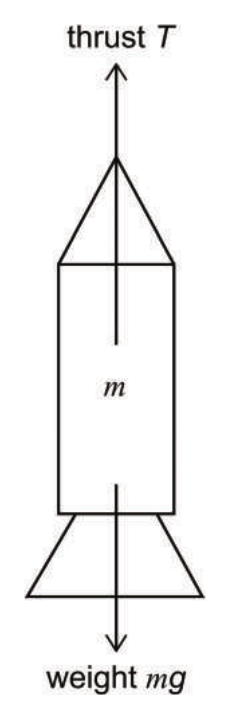
What is the initial vertical acceleration of the rocket as it leaves the launch pad?
✍️ ① free-body diagram: ဒုံးပျံ mass m က launch pad ပေါ်မှာ။
အင်ဂျင်က ဓာတ်ငွေ့ကို အောက် မှုတ်ပြီး ဒုံးပျံကို အပေါ် တွန်းတဲ့ force — thrust T (တွန်းအား)။
ကမ္ဘာက အောက်ကို ဆွဲတဲ့ weight = mg။
② အပေါ်ကို + ထား ③ ΣF = T − mg
④ ΣF = ma ဆိုတော့ a = T − mgm
ခွဲလိုက်ရင် Tm − (mg)/m = Tm − g (m ချေသွားတယ်) → အဖြေ D
⚠ T − mg က force၊ a မဟုတ်။ T > mg မှ ကြွတက်။⚠ T − mg က force (N)၊ acceleration မဟုတ်ဘူး။ Tm − mg က m/s² ထဲ N ကို နုတ်တာ — unit မကိုက်ဘူး။ T > mg မှ ဒုံးပျံ ကြွတက်မယ်။
👉 ပြုတ်ကျနေတဲ့ လူပေါ်မှာ force က ပြောင်းနေရင်ကော?
terminal velocity — force ပြောင်းလာရင်
ခုန်ချ ခဏ — W ပဲ ရှိ၊ a ကြီးကြီး။မိုးပေါ်က ခုန်ချလိုက်တဲ့ ခဏ — speed နည်းနည်းပဲ ရှိလို့ weight W ပဲ ရှိသလောက်။ ΣF ကြီးပြီး အောက်ကို မြန်မြန် acceleration တက်တယ်။
မြန်လာ → air resistance (လေ ခုခံအား) ကြီး → a ငယ်။မြန်လာလေ လေက ခုခံတဲ့ air resistance (လေ ခုခံအား) ကြီးလာလေ။ ΣF = W − air resistance ငယ်လာလို့ a ငယ်လာတယ်။
air resistance = W → ΣF = 0၊ a = 0။air resistance က W နဲ့ ညီသွားတဲ့ အခါ ΣF = 0၊ a = 0 — speed ဆက်မတိုးတော့ဘူး။
အမြင့်ဆုံး speed = terminal velocity (အဆုံးသတ် အမြန်နှုန်း)ဒီ အမြင့်ဆုံး speed ကို terminal velocity (အဆုံးသတ် အမြန်နှုန်း) လို့ ခေါ်တယ်။ ဂရပ်က တက်ပြီး ညီညာ ဖြစ်သွားတယ်။
🤔 A skydiver falls at terminal velocity. Which statement is correct?
terminal velocity မှာ speed မပြောင်း → ΣF = 0 → air resistance = weight။
a = g က ခုန်ချခါစ (air resistance ≈ 0) မှာပဲ။
👉 PART 2 ပြီးပြီ။ ပြန်စစ်ကြည့်မယ်။
🔁 ပြန်ကြည့်မယ် — PART 2
🤔 1 N is the same as:
F = ma → kg × m/s² = kg m/s²။
🤔 A 1200 kg car brakes. The resultant force on it is 3600 N backwards. Its deceleration is:
a = ΣF/m = 3600/1200 = 3 m/s² (နောက်ဘက်)။
0.33 က m/F ပြောင်းပြန် စားတာ၊ 4.3 × 10⁶ က မြှောက်မိတာ။
🤔 An 80 kg skydiver falls. At one moment the air resistance on her is 600 N (g = 10 m/s²). Her acceleration then is:
W = 80 × 10 = 800 N။
ΣF = 800 − 600 = 200 N → a = 20080 = 2.5 m/s²။
10 က air resistance မေ့တာ၊ 7.5 က 60080။
🤔 A cable pulls a 500 kg lift upwards with a force of 6000 N (g = 10 m/s²). The lift's acceleration is:
W = 5000 N။
ΣF = 6000 − 5000 = 1000 N အပေါ် → a = 1000/500 = 2 m/s² အပေါ်။
12 က weight မေ့တာ (6000/500)။
Friction
friction — မျက်နှာပြင်ရဲ့ ဘရိတ်
မရွေ့တဲ့ သေတ္တာ — ဘာက တားနေလဲ?
သေတ္တာကို 20 N တွန်း — မရွေ့၊ ဘာ တားနေလဲ?ကြမ်းပြင်ပေါ်က လေးလံတဲ့ သေတ္တာကို 20 N နဲ့ တွန်းတယ် — မရွေ့ဘူး။ သူ့ကို ဘယ်သူမှ ပြန်မတွန်းဘူးလေ၊ ဘာက တားနေတာလဲ?
မျက်နှာပြင် အဖုလေးတွေ ချိတ်မိနေတယ်။မှန်ဘီလူးနဲ့ ကြည့်ရင် ချောတယ် ထင်ရတဲ့ မျက်နှာပြင် နှစ်ခုမှာ အဖုအထစ်လေးတွေ ရှိပြီး အချင်းချင်း ချိတ်မိနေတယ် (bumps lock)။
ရွေ့တာ တားတဲ့ force = friction (ပွတ်တိုက်အား)ဒါကြောင့် ကြမ်းပြင်က သေတ္တာကို နောက်ပြန် 20 N ဆွဲတယ်။ ထိနေတဲ့ မျက်နှာပြင်ကြား ရွေ့တာကို ဆန့်ကျင်တဲ့ ဒီ force ကို friction (ပွတ်တိုက်အား) လို့ ခေါ်တယ်။
ΣF = 0။ 👉 ပြင်းပြင်း တွန်းရင် friction တိုးမလား?20 − 20 = 0 — ΣF = 0 မို့ သေတ္တာ ငြိမ်နေတယ်။ 👉 ပိုပြင်းပြင်း တွန်းရင် friction လည်း ပိုကြီးလာမလား?
static friction နဲ့ dynamic friction
60 N တွန်း — မရွေ့၊ friction 60 N ပြန်တား။သေတ္တာကို 60 N နဲ့ တွန်း — မရွေ့ဘူး၊ friction က 60 N ပြန်တားတယ်။ ဂရပ်မှာ ညာဘက်က push (တွန်းအား)၊ အပေါ်က friction။
friction = push → static friction (ငြိမ် ပွတ်တိုက်အား)push တိုးလေ friction လည်း လိုက်တိုးလေ — friction = push။ ငြိမ်နေတဲ့ ပစ္စည်းပေါ်က ဒီ friction ကို static friction (ငြိမ် ပွတ်တိုက်အား) လို့ ခေါ်တယ်။
static friction မှာ max ရှိ — ကျော်ရင် စရွေ့။ဒါပေမဲ့ static friction မှာ အများဆုံး တန်ဖိုး (max) ရှိတယ်။ push က max ကို ကျော်တဲ့ ခဏ သေတ္တာ စရွေ့တယ်။
ရွေ့ပြီ → dynamic friction (ရွေ့ ပွတ်တိုက်အား) နည်းနည်း ကျ။ရွေ့နေပြီ ဆိုရင် friction က နည်းနည်း ကျသွားပြီး ပုံသေ ဖြစ်တယ် — dynamic friction (ရွေ့ ပွတ်တိုက်အား)။ စရွေ့ဖို့ ခက်ပြီး ဆက်တွန်းရတာ ပိုလွယ်တာ ဒါကြောင့်ပါ။
🤔 Compared with the maximum static friction, the dynamic friction between the same two surfaces is usually:
ဂရပ်မှာ ရွေ့ပြီးတာနဲ့ friction ကျ သွားတယ် — dynamic က max static ထက် ငယ်တယ်။
👉 ဒီ max က ဘယ်လောက်လဲ? ဘာတွေပေါ် မူတည်လဲ?
friction = μN
flat ကြမ်းပြင်ပေါ် R = mg။ကြမ်းပြင်က သေတ္တာကို အပေါ် ပြန်တွန်းတဲ့ normal force R က ကြမ်းပြင်ပြင်ညီ (flat) ပေါ်မှာ weight နဲ့ ညီတယ် — R = mg။
သေတ္တာ ထပ်တင် → R ၂ ဆ → friction ၂ ဆ။အပေါ်မှာ သေတ္တာ တစ်လုံး ထပ်တင်ရင် ကြမ်းပြင်ကို ဖိတာ နှစ်ဆ — R နှစ်ဆ — friction လည်း နှစ်ဆ ဖြစ်တယ်။ ဖိလေ ချိတ်လေပေါ့။
μ = coefficient of friction (ပွတ်တိုက် ကိန်း)၊ rubber 0.8မျက်နှာပြင် ကြမ်းလေ friction များလေ။ ကြမ်းတမ်းမှုကို ယူနစ် မရှိတဲ့ ဂဏန်း μ (မျူး) နဲ့ ပြတယ် — coefficient of friction (ပွတ်တိုက် ကိန်း)။ rubber 0.8၊ ice 0.05။
ဒါကြောင့် friction = μR — μ နဲ့ normal force R ရဲ့ မြှောက်လဒ်။
ကြမ်းပြင်ပြင်ညီ ပေါ်မှာ R = mg ဆိုတော့ friction = μmg။
static max = μsR၊ dynamic = μdR၊ μd < μs။μ နှစ်မျိုး ရှိတယ်:
static max = μsR၊
dynamic = μdR။
μd က μs ထက် ငယ်တယ် — ဂရပ်ထဲက ကျသွားတဲ့ အဆင့်ပါ။
👉 ဂဏန်း ထည့်ပြီး တွက်ကြည့်မယ်။
✍️ ရွေ့မလား မရွေ့ဘူးလား — စစ်နည်း
✍️ 50 kg ဆန်အိတ်၊ μs = 0.40၊ μd = 0.30၊ g = 10 m/s²။ 150 N နဲ့ တွန်းရင်ရော 250 N နဲ့ တွန်းရင်ရော?
① normal force: R = mg = 50 × 10 = 500 N
② static max = μsR = 0.40 × 500 = 200 N — ဒါက စစ်ဆေးမယ့် နယ်ခြား
③ 150 N < 200 N → မရွေ့ဘူး။ friction = push = 150 N (200 N မဟုတ်)
④ 250 N > 200 N → ရွေ့တယ်။ friction = μdR = 0.30 × 500 = 150 N
ΣF = 250 − 150 = 100 N
a = ΣF/m = 10050 = 2 m/s²
⚠ မရွေ့ရင် friction = push၊ μsR က max ပဲ။⚠ မရွေ့သေးရင် friction ကို μsR လို့ မတွက်ရဘူး။ μsR က “အများဆုံး” ပဲ — မရွေ့ရင် friction = push။
🤔 A 10 kg crate rests on a horizontal floor (μs = 0.50, μd = 0.30, g = 10 m/s²). A horizontal push of 40 N is applied. What is the friction force on the crate?
max = 0.50 × 100 = 50 N။
40 N < 50 N ဆိုတော့ မရွေ့ဘဲ friction = push = 40 N။
50 က max၊ 30 က ရွေ့မှ ရတဲ့ တန်ဖိုး၊ 10 က 50 − 40။
စားပွဲပေါ်က စာအုပ် — တွန်းကြည့်မယ်
μ = 0.50 ရှိတဲ့ စားပွဲပေါ်မှာ 0.40 kg စာအုပ်။ friction အများဆုံး = μmg = 0.5 × 0.4 × 10 = 2 N။ 1 N နဲ့ တွန်းရင် မရွေ့ဘူး — friction = push = 1 N။
ဒီမှာ static နဲ့ dynamic μ ကို 0.50 တူတယ် ယူထား။ဒီမှာ စမရွေ့ခင် μ (static) နဲ့ ရွေ့နေတုန်း μ (dynamic) ကို 0.50 တူတယ်လို့ ယူထားတယ်။ တကယ့် စားပွဲမှာ static μ က နည်းနည်း ပိုကြီးတတ်တယ်။
👆 Change F and m. When does the book stay still?
10 N နဲ့ တွန်းရင် 2 N ကို ကျော်လို့ ရွေ့တယ်။ ပိုနေတဲ့ force ပဲ acceleration ပေးတယ်: a = F − μmgm။
friction = μg × m = 0.50 × 10 × m = 5m (m ကို kg နဲ့ ထည့်ရင် N)။ mass ကြီးလာရင် friction လည်း ကြီး၊ a လည်း သိသိသာသာ ငယ်တယ်။
👉 ဒီ အတွေးနဲ့ IMAT ပုစ္ဆာ တစ်ခု တွက်ကြည့်မယ်။
✍️ IMAT 2014 — စားပွဲပေါ်က စာအုပ်
📝 IMAT 2014 · Question 59
A book of mass 0.40 kg rests on a horizontal surface with which it has a coefficient of dynamic friction of 0.50.
If this book is now pushed by an external horizontal force of 10 N, what will be its acceleration immediately after it has started to move?
[Assume the gravitational field strength is 10 Nkg−1, that air resistance is negligible and that the orientation of the book does not change.]
✍️ friction = μmg = 0.50 × 0.40 kg × 10 N/kg = 2 N
ΣF = 10 N − 2 N = 8 N
a = ΣF/m = 80.40 = 20 m/s² → အဖြေ C
⚠ 25, 12.5, 15, 50 — friction ဒါမှမဟုတ် mass မေ့တာ။⚠ 25 = 100.4 က friction မေ့တာ။ 12.5 က friction 5 N (mass မေ့)၊ 15 က friction 4 N၊ 50 က အဖြေ 20 ကို 0.4 နဲ့ ထပ်စားမိတာ (200.4 = 50)။
👉 ကြမ်းပြင်က စောင်းနေရင်ကော — gravity က လျှောအတိုင်း ဆွဲချတယ်။
slope ပေါ်က force တွေ
slope (ဆင်ခြေလျှော) θ = 30° ပေါ်မှာ တုံး။စောင်းနေတဲ့ ကြမ်းပြင် — slope (ဆင်ခြေလျှော) — ထောင့် θ = 30° ပေါ်မှာ တုံး တစ်တုံး။
weight mg က အမြဲ တည့်တည့် အောက်ကို ညွှန်တယ် — slope ကို မကြည့်ဘူး။
slope အတိုင်း ဆွဲ = mg sin θ — လျှောချတယ်။mg ကို အပိုင်း နှစ်ခု ခွဲမယ်။ slope အတိုင်း အောက်ဘက်ကို ဆွဲတဲ့ အပိုင်း = mg sin θ — ဒါက တုံးကို လျှောချတယ်။
slope ထဲ ဖိ = mg cos θ။slope ထဲကို ဖိတဲ့ အပိုင်း = mg cos θ။ ပုံမှာ mg နဲ့ mg cos θ ကြားက ထောင့်ကလည်း θ ပဲ။
ဘာလို့ θ လဲ? မျဉ်း ၂ ကြောင်း 90° စီ လှည့်ထားလို့။ဘာလို့လဲ? mg က မြေပြင်နဲ့ ထောင့်မှန်၊ mg cos θ က slope နဲ့ ထောင့်မှန်။ မျဉ်း နှစ်ကြောင်းလုံးကို 90° စီ လှည့်ထားလို့ သူတို့ကြား ထောင့်က မြေပြင်နဲ့ slope ကြား ထောင့် θ နဲ့ တူတယ်။
ကပ်ဘက် = mg cos θ၊ မျက်နှာချင်းဆိုင် = mg sin θ။ဒါကြောင့် θ နဲ့ ကပ်နေတဲ့ ဘက် (adjacent) က mg cos θ၊ θ နဲ့ မျက်နှာချင်းဆိုင် ဘက်က mg sin θ ဖြစ်တယ်။
R = mg cos θ (mg မဟုတ်)။slope က ထောင့်မှန်ကျ ပြန်တွန်းတဲ့ normal force R က mg cos θ နဲ့ ညီတယ် — R = mg cos θ (mg မဟုတ်တော့ဘူး)။
friction မရှိ → a = g sin θ = 5 m/s²။friction မရှိရင် ΣF = mg sin θ ဆိုတော့ a = g sin θ — mass မလိုဘူး။ 30° မှာ 10 × 0.5 = 5 m/s²။
🤔 A 5.0 kg box slides down a frictionless slope inclined at 37° (sin 37° = 0.6, cos 37° = 0.8, g = 10 m/s²). Its acceleration is:
a = g sin 37° = 10 × 0.6 = 6.0 m/s²၊ mass မလို။
8.0 က cos ကို သုံးမိတာ၊ 10 က slope မေ့တာ၊ 30 က mass နဲ့ မြှောက်တာ။
👉 friction ရှိတဲ့ ရေလျှောစီး တစ်ခု တွက်ကြည့်မယ်။
✍️ ရေလျှောစီး — slope + friction
✍️ 40 kg ကလေး ရေလျှောစီး၊ slope ထောင့် 30°၊ friction က slope အတိုင်း အပေါ်ဘက် 120 N (g = 10)။ a?
slope အတိုင်း အောက်ဆွဲ force = mg sin 30° = 40 × 10 × 0.5 = 200 N
friction က လျှောတာကို ဆန့်ကျင်လို့ slope အတိုင်း အပေါ် 120 N
အောက်ဘက်ကို + ထား: ΣF = 200 − 120 = 80 N
a = ΣF/m = 8040 = 2 m/s² (slope အတိုင်း အောက်ဘက်)
⚠ mg cos θ က ဖိတာ၊ လျှောတာ မဟုတ် — sin, cos မရော။⚠ mg cos θ (≈ 346 N) က slope ထဲ ဖိတဲ့ အပိုင်း — လျှောတာကို မပေးဘူး။ sin နဲ့ cos ကို မရောပါနဲ့။
👉 μ ပဲ ပေးရင် slope ပေါ် friction ဘယ်လို ရှာမလဲ?👉 friction ကို 120 N လို့ ပေးထားတယ်။ μ ပဲ ပေးထားရင် slope ပေါ်က friction ကို ဘယ်လို ရှာမလဲ?
✍️ slope + μ — ငြိမ်နေမလား လျှောမလား
✍️ 10 kg တုံး 30° slope ပေါ်မှာ။ μs = 0.70၊ μd = 0.40၊ g = 10။ ငြိမ်နေမလား? လျှောရင် a ဘယ်လောက်လဲ?
① mg = 100 N ကို ခွဲ: slope အတိုင်း mg sin 30° = 100 × 0.5 = 50 N၊ slope ထဲ mg cos 30° = 100 × 0.87 = 87 N
② normal force: R = mg cos θ = 87 N (flat floor လို mg = 100 N မဟုတ်ဘူး)
③ static max = μsR = 0.70 × 87 ≈ 61 N၊ slope အတိုင်း အပေါ်ဘက်
50 N < 61 N → မလျှောဘူး။ friction = mg sin θ = 50 N ပဲ (61 N မဟုတ်)
👉 တစ်ချက် တို့လိုက်လို့ လျှောသွားရင်ကော?
✍️ လျှောသွားရင် — dynamic friction
လျှောသွားရင် μdR = 0.40 × 87 ≈ 35 N။တစ်ချက် တို့လိုက်လို့ စလျှောသွားရင်တော့ dynamic friction = μdR = 0.40 × 87 ≈ 35 N ပဲ ကျန်တယ်။
ΣF = 50 − 35 = 15 N → a = 1510 = 1.5 m/s² (slope အတိုင်း အောက်ဘက်)
⚠ friction = μ mg cos θ — μmg မဟုတ်။⚠ slope ပေါ်မှာ friction = μ mg cos θ — μmg မဟုတ်ဘူး။ မလျှောသေးရင် friction = mg sin θ (ချေရုံ)။
🤔 A 4.0 kg block stays at rest on a rough slope inclined at 30° (g = 10 m/s²). The friction force on it is:
ငြိမ်နေလို့ slope အတိုင်း ΣF = 0: friction = mg sin 30° = 40 × 0.5 = 20 N၊ လျှောချင်တဲ့ ဘက်နဲ့ ဆန့်ကျင် — အပေါ်ဘက်။
35 N က mg cos θ၊ 40 N က mg။
👉 PART 3 ပြီးပြီ။ ပြန်စစ်ကြည့်မယ်။
🔁 ပြန်ကြည့်မယ် — PART 3
🤔 A box slides across a floor. An identical box is stacked on top of it. The dynamic friction force on the bottom box from the floor:
အပေါ် တစ်လုံး ထပ်တင်တော့ ကြမ်းပြင်ကို ဖိတာ နှစ်ဆ — R နှစ်ဆ — friction = μR လည်း နှစ်ဆ။
🤔 A 2 kg block slides on a horizontal floor with μd = 0.25 (g = 10 m/s²) after the push stops. Its deceleration is:
friction = μmg = 0.25 × 2 × 10 = 5 N။
a = 52 = 2.5 m/s² (ဒါမှမဟုတ် μg = 0.25 × 10)။
5 က friction (N) ကို a လို့ ယူမိတာ။
🤔 On a flat floor, the dynamic friction on a sliding box of mass m is:
R = mg → friction = μR = μmg။
🤔 A block of mass m slides on a slope of angle θ. The dynamic friction coefficient is μ. The friction force is:
slope ပေါ်မှာ R = mg cos θ ဆိုတော့ friction = μR = μmg cos θ။
μmg က flat floor အတွက်ပဲ။
Newton's third law
Newton ရဲ့ တတိယ နိယာမ — အတွဲ force
Newton's third law — နံရံက ပြန်တွန်းတယ်
လက်က နံရံကို တွန်းတယ်။နံရံကို လက်နဲ့ တွန်းကြည့်ပါ။ လက်က နံရံကို force တစ်ခုနဲ့ တွန်းတယ် (hand on wall)။
နံရံကလည်း လက်ကို ပြန်တွန်းတယ်။လက်ဖဝါးမှာ ဖိအား ခံစားရတယ် — နံရံကလည်း လက်ကို ပြန်တွန်းနေလို့ပါ (wall on hand)။ ပိုပြင်းပြင်း တွန်းလေ ပြန်တွန်းအား ပြင်းလေ။
စကိတ်ဘုတ် လူ နံရံ တွန်း → နောက်ပြန် လိမ့်။စကိတ်ဘုတ်ပေါ်က လူက နံရံကို တွန်းရင် သူကိုယ်တိုင် နောက်ပြန် လိမ့်သွားတယ်။ နံရံရဲ့ ပြန်တွန်းအားက သူ့ကို ရွှေ့တာပါ။
Newton's third law: A က B ကို force ပေးရင် B က A ကို force ပြန်ပေးတယ်။
ပမာဏ တူ၊ ဆန့်ကျင်၊ ပစ္စည်း ၂ ခု = action–reaction pairပမာဏ တူ (equal size)၊ direction ဆန့်ကျင် (opposite)၊ ပစ္စည်း မတူ နှစ်ခုပေါ် (different objects) တစ်ခုစီ ကျတယ်။ ဒီ အတွဲကို action–reaction pair လို့ ခေါ်တယ်။
အချင်းချင်း မချေ။ 👉 W နဲ့ R က အတွဲလား?ပစ္စည်း မတူတာပေါ် ကျလို့ အတွဲ နှစ်ခုက အချင်းချင်း မချေဘူး။ 👉 ဒါဆို စားပွဲပေါ်က စာအုပ်ရဲ့ W နဲ့ R က အတွဲလား?
W နဲ့ R — အတွဲ မဟုတ်ဘူး
W = ကမ္ဘာက စာအုပ်ကို ဆွဲတာ (Earth on book)။စာအုပ်ပေါ်က weight W ဆိုတာ “ကမ္ဘာက စာအုပ်ကို ဆွဲတဲ့ force” (Earth on book) ပါ။
သူ့ အတွဲ = စာအုပ်က ကမ္ဘာကို ဆွဲတာ (book on Earth)။A နဲ့ B ကို လဲလိုက်ရင် အတွဲ ရတယ်: “စာအုပ်က ကမ္ဘာကို ဆွဲတဲ့ force” (book on Earth) — ပမာဏ တူ၊ အပေါ်ဘက်။ ကမ္ဘာ့ mass အရမ်းကြီးလို့ ကမ္ဘာ ရွေ့တာ မမြင်ရဘူး။
R = စားပွဲက စာအုပ်ကို တွန်းတာ၊
R = W။normal force R က “စားပွဲက စာအုပ်ကို တွန်းတဲ့ force” (table on book)။
စာအုပ် ငြိမ်နေလို့ first law အရ R = W။
R ရဲ့ အတွဲ = စာအုပ်က စားပွဲကို ဖိတာ (book on table)။R ရဲ့ တကယ့် အတွဲက “စာအုပ်က စားပွဲကို အောက်ဖိတဲ့ force” (book on table)။
⚠ W နဲ့ R အတွဲ မဟုတ် — နှစ်ခုလုံး စာအုပ်ပေါ် ကျ။⚠ W နဲ့ R က ညီပေမဲ့ အတွဲ မဟုတ်ဘူး — နှစ်ခုလုံး စာအုပ် တစ်ခုတည်းပေါ် ကျတယ် (both on the book)၊ အမျိုးအစားလည်း မတူ (gravity နဲ့ ထိတွေ့အား)။
စစ်နည်း: “X on Y” ကို “Y on X” လို့ လဲလိုက် — ဒါက အတွဲပဲ။
🤔 A book rests on a table. The third-law partner of the table's push on the book is:
“table on book” ကို လဲရင် “book on table”။
weight က “Earth on book” — စာအုပ်ပေါ် ကျလို့ အတွဲ မဟုတ်ဘူး။
ကား နဲ့ ယင်ကောင် — force တူ၊ ရလဒ် မတူ
ကား ယင်ကို တိုက် — ဘယ် force က ကြီးလဲ?ကား တစ်စီးက ယင်ကောင်ကို တိုက်မိတယ်။ ကားက ယင်ကို တွန်းတဲ့ force (car on fly) နဲ့ ယင်က ကားကို တွန်းတဲ့ force (fly on car) — ဘယ်ဟာ ကြီးလဲ?
third law: ပမာဏ တူတယ်။third law အရ ပမာဏ တူတယ်။ ပိုကြီးတဲ့ ပစ္စည်းက ပိုကြီးတဲ့ force ပေးတယ် ဆိုတာ မှားတယ်။
F တူ၊ mass မတူ → ယင် a ကြီး၊ ကား a သေး။ဒါပေမဲ့ ရလဒ် မတူဘူး — a = F/m။ force တူ (same F) ပေမဲ့ ယင်ရဲ့ mass သေးလို့ a ကြီးကြီး၊ ကားရဲ့ mass ကြီးလို့ a သေးသေး။
rocket က gas ကို အောက်တွန်း၊ gas က အပေါ် ပြန်တွန်း။ဒုံးပျံ (rocket) လည်း ဒီလိုပဲ — ဓာတ်ငွေ့ (gas) ကို အောက် တွန်းထုတ်တယ်၊ ဓာတ်ငွေ့က ဒုံးပျံကို အပေါ် ပြန်တွန်းတယ်။ လေ မရှိတဲ့ အာကာသထဲမှာလည်း အလုပ်လုပ်တယ်။
🤔 A car hits a fly. How does the force of the car on the fly compare with the force of the fly on the car?
third law အတွဲ force နှစ်ခု ပမာဏ တူ၊ direction ဆန့်ကျင်။
ယင်ကောင် ပိုဒုက္ခ ရောက်တာက mass သေးလို့ a = F/m ကြီးလို့ပါ။
👉 ကပ်နေတဲ့ တုံး နှစ်တုံး တွန်းရင် ကြားက force ကို ဘယ်လို ရှာမလဲ?
✍️ ကပ်နေတဲ့ တုံး နှစ်တုံး
✍️ ချောတဲ့ (smooth) ကြမ်းပြင်ပေါ် 2 kg တုံး A နဲ့ 3 kg တုံး B ကပ်ထားပြီး A ကို 20 N တွန်းတယ်။ A က B ကို ဘယ်လောက် force နဲ့ တွန်းလဲ?
① တစ်စုလုံး (whole) ကို ပစ္စည်း တစ်ခုလို တွက်: a = 202 + 3 = 4 m/s²
② B တစ်ခုတည်း: သူ့ကို ရှေ့တွန်းတဲ့ force က A ရဲ့ P ပဲ ရှိတယ်။ P = mBa = 3 × 4 = 12 N
③ third law: B က A ကို 12 N နောက်ပြန် တွန်းတယ်။ A ပေါ် ΣF = 20 − 12 = 8 N
8 N = 2 kg × 4 m/s² ✓ — အဖြေ ကိုက်တယ်။
⚠ 20 N ထဲက 8 N က A ကိုယ်တိုင်အတွက်။⚠ 20 N လုံး B ဆီ ရောက်တာ မဟုတ်ဘူး။ 20 N ထဲက 8 N က A ကိုယ်တိုင်ကို acceleration ပေးဖို့ သုံးတယ်။
👉 တုံး နှစ်တုံးကို ကြိုးနဲ့ ဆက်ပြီး ဆွဲရင်ကော — ကြိုးက ဘယ်လောက် ဆွဲလဲ?
tension — ကြိုး ဆွဲအား
tension T (ကြိုး ဆွဲအား) — ဆွဲပဲ ဆွဲနိုင်တယ်။ကြိုး တစ်ချောင်းက ပစ္စည်းကို ဆွဲတဲ့ force ကို tension T (ကြိုး ဆွဲအား) လို့ ခေါ်တယ်။ ကြိုးက ဆွဲပဲ ဆွဲနိုင်တယ်၊ တွန်းလို့ မရဘူး — force က ကြိုး အတိုင်း ညွှန်တယ်။
2 kg အိတ်: T အပေါ်၊ mg = 20 N အောက်။2 kg အိတ်ကို ကြိုးနဲ့ ချိတ်ထားတယ်။ ကြိုးက အပေါ် T နဲ့ ဆွဲ၊ weight mg = 2 × 10 = 20 N က အောက် ဆွဲတယ်။
✍️ ငြိမ်နေရင် ΣF = 0: T − mg = 0 → T = mg = 20 N
အိတ်ကို 2 m/s² နဲ့ အပေါ် ဆွဲတင်ရင်: T − mg = ma → T = 2 × (10 + 2) = 24 N
👉 ကြိုးက တုံး နှစ်တုံးကို ဆက်ထားရင်ကော?
✍️ ကြိုးနဲ့ ဆက်ထားတဲ့ တုံး နှစ်တုံး
A 2 kg၊ B 4 kg ကြိုးဆက်၊ B ကို 18 N ဆွဲ — T ဘယ်လောက်?ချောတဲ့ ကြမ်းပြင်ပေါ်မှာ 2 kg တုံး A နဲ့ 4 kg တုံး B ကို ကြိုးနဲ့ ဆက်ထားပြီး B ကို 18 N နဲ့ ဆွဲတယ်။ ကြိုးက A ကို ဘယ်လောက် ဆွဲလဲ?
✍️ ① တစ်စုလုံး (A + B) ကို ပစ္စည်း တစ်ခုလို: a = 182 + 4 = 3 m/s²။ ကြိုး tension က စုထဲမှာပဲ ရှိလို့ မပါဘူး။
② A တစ်ခုတည်း: ရှေ့ ဆွဲတာ T ပဲ ရှိတယ်။ T = mAa = 2 × 3 = 6 N
③ B စစ်: ကြိုးက B ကို နောက်ပြန် 6 N ဆွဲလို့ ΣF = 18 − 6 = 12 N = 4 × 3 ✓
⚠ T = 18 N မဟုတ် — A ကိုပဲ ဆွဲရတာ။⚠ T = 18 N မဟုတ်ဘူး။ ကြိုးက နောက်က တုံး A ကို acceleration ပေးရုံ ဆွဲဖို့ပဲ လိုတယ်။
🤔 Blocks of 3 kg and 1 kg are joined by a light string on a smooth floor. A 12 N pull acts on the 3 kg block. The tension in the string is:
a = 123 + 1 = 3 m/s²။
ကြိုးက 1 kg တုံးကိုပဲ ဆွဲလို့ T = 1 × 3 = 3 N။
9 N က 3 kg တုံးရဲ့ ΣF၊ 12 N က ဆွဲအား အပြည့်။
👉 ကြိုးက ဘီးလေး (pulley) ကို ကျော်ပြီး အလေး နှစ်ခု ချိတ်ထားရင်ကော?
✍️ pulley — Atwood machine
pulley (ကြိုးဘီး) — ကြိုး တစ်လျှောက် T တစ်ခုတည်း။pulley (ကြိုးဘီး) က ကြိုးရဲ့ ဦးတည်ရာကို ပြောင်းပေးတဲ့ လည်နိုင်တဲ့ ဘီးလေး။ ပေါ့ပြီး ချောရင် ကြိုး တစ်လျှောက်လုံး T တစ်ခုတည်း။
ဘီးပေါ် 3 kg နဲ့ 2 kg = Atwood machine (ကြိုးဘီး ကိရိယာ)ဘီးပေါ် ကြိုး ကျော်ပြီး 3 kg နဲ့ 2 kg ချိတ်ထားတဲ့ ဒီ ကိရိယာကို Atwood machine လို့ ခေါ်တယ်။
George Atwood (1745–1807) 1784 မှာ second law ပြခဲ့တယ်။George Atwood (1745–1807) က အင်္ဂလိပ် သင်္ချာ ပညာရှင်။ 1784 မှာ g ကို နှေးနှေး မြင်ရအောင် ဒီ ကိရိယာနဲ့ Newton ရဲ့ second law ကို ပြခဲ့တယ်။
weight တွေ: 3 × 10 = 30 N နဲ့ 2 × 10 = 20 N၊ အောက်ကို။
ကြိုးက အလေး နှစ်ခုလုံးကို အပေါ် T တူတူနဲ့ ဆွဲတယ်။
3 kg ဆင်း၊ 2 kg တက် — a တူတူ။3 kg ဘက်က လေးလို့ အောက်ဆင်းပြီး 2 kg က အပေါ်တက်တယ် — ကြိုး တစ်ချောင်းတည်း မို့ a တူတူ။
👉 ဂဏန်းနဲ့ တွက်ကြည့်မယ်။
✍️ Atwood machine — a နဲ့ T
✍️ ① တစ်စုလုံး: ရွေ့စေတဲ့ force = 30 − 20 = 10 N၊ mass = 3 + 2 = 5 kg → a = 105 = 2 m/s²
② 2 kg (အပေါ်ကို +): T − 20 = 2 × 2 → T = 24 N
③ 3 kg (အောက်ကို +): 30 − T = 30 − 24 = 6 N = 3 × 2 ✓
⚠ T က 20 N နဲ့ 30 N ကြားက တန်ဖိုး။⚠ T က 20 N လည်း မဟုတ်၊ 30 N လည်း မဟုတ်ဘူး — ကြားက တန်ဖိုး။
T = 20 ဆို 2 kg မတက်ဘူး၊
T = 30 ဆို 3 kg မဆင်းဘူး။
🤔 A 4 kg mass and a 1 kg mass hang on either side of a light, smooth pulley (g = 10 m/s²). The acceleration of the masses is:
ရွေ့စေတဲ့ force = 40 − 10 = 30 N၊
mass = 4 + 1 = 5 kg → a = 305 = 6 m/s²။
7.5 က 304 (1 kg မေ့)၊ 10 က free fall လို ယူမိတာ။
👉 PART 4 ပြီးပြီ။ ပြန်စစ်ကြည့်မယ်။
🔁 ပြန်ကြည့်မယ် — PART 4
🤔 An action–reaction pair of forces always:
third law အတွဲ — ပမာဏ တူ၊ ဆန့်ကျင်၊ ပစ္စည်း မတူ ပေါ်။
ဒါကြောင့် မချေဘူး။
🤔 The Earth pulls a book down. The reaction to this force is:
“Earth on book” ကို လဲ → “book on Earth”။
🤔 Why are the weight of a book and the normal force on it NOT a 3rd-law pair?
အတွဲဆိုရင် ပစ္စည်း နှစ်ခုပေါ် ကျရမယ် — ဒီ နှစ်ခုက စာအုပ်ပေါ် ကျတယ်။
🤔 A 5 kg bucket is lifted on a rope with an upward acceleration of 1 m/s² (g = 10 m/s²). The tension in the rope is:
T − mg = ma → T = 5 × (10 + 1) = 55 N။
50 N က ငြိမ်နေရင်၊ 45 N က အောက် acceleration အတွက်။
Gravity, weight and circular motion
gravity၊ weight နဲ့ စက်ဝိုင်း လှုပ်ရှားမှု
ပန်းသီး နဲ့ လ — gravity
ပန်းသီး (apple) က အပင်ပေါ်ကနေ မြေကြီးဆီ ကျတယ်။
လ ကမ္ဘာကို ပတ်တာ — gravity (ဆွဲငင်အား) ကြောင့်။လ (Moon) က ကမ္ဘာကို ပတ်နေတယ်။ Newton က ဒီ နှစ်ခုဟာ အကြောင်း တစ်ခုတည်းကြောင့် ဆိုတာ သတိထားမိတယ် — gravity (ဆွဲငင်အား)။
m₁ နဲ့ m₂ အချင်းချင်း ဆွဲ၊ r = ဗဟိုချင်း အကွာ။mass ရှိတဲ့ ပစ္စည်း နှစ်ခု m₁ နဲ့ m₂ က အချင်းချင်း ဆွဲကြတယ် — force တူ၊ ဆန့်ကျင် (third law)။ r က ဗဟို ချင်း အကွာအဝေး (centres)။
Newton's law of gravitation: F = Gm₁m₂r²Newton's law of gravitation: F = Gm₁m₂r²။ mass ကြီးလေ ဆွဲအား ကြီးလေ၊ ဝေးလေ အများကြီး လျော့လေ။
G = 6.7 × 10⁻¹¹ — အရမ်း ငယ်လို့ မခံစားရ။G = 6.7 × 10⁻¹¹ N m² kg⁻² — gravitational constant။ အရမ်း ငယ်လို့ လူ နှစ်ယောက်ကြား gravity ကို မခံစားရဘူး။ ကမ္ဘာလို mass ကြီးမှ သိသာတယ်။
👉 r² ဆိုတော့ ဝေးသွားရင် ဘယ်လောက် လျော့မလဲ?
inverse square — ဗဟိုကနေ တိုင်း
📝 IMAT 2025 · Question 58
An astronaut takes a spacewalk at a distance from the Earth's surface equal to three times the Earth's radius. What fraction of g corresponds to the acceleration experienced by the astronaut?
ကမ္ဘာ မျက်နှာပြင်ပေါ်မှာ ဗဟိုကနေ r = R (ကမ္ဘာ့ အချင်းဝက်)။ ဒီမှာ g = 10 m/s²။
👆 Set r = 4R (a height of 3R above the surface). How much of g is left there?
ဗဟိုကနေ 2R ရောက်ရင် r နှစ်ဆ — r² ကြောင့် force က 12² = 14 ပဲ ကျန်တယ်။ ဒါကို inverse square law (ပြောင်းပြန် နှစ်ထပ် နိယာမ) လို့ ခေါ်တယ်။
r = 4R ဆိုရင် 14² = 116 — g ≈ 1016 ≈ 0.63 m/s²။
✍️ မျက်နှာပြင်ကနေ 3R အမြင့် → ဗဟိုကနေ r = R + 3R = 4R
g ∝ 1r² → 14² = 116 → အဖြေ B
⚠ 19 က r ကို မျက်နှာပြင်ကနေ ယူတာ — ဗဟိုကနေ!⚠ 19 က 3R ကို ဗဟိုကနေ လို့ ယူတာ (r from surface)။ 14 က နှစ်ထပ် မေ့တာ၊ 13 က နှစ်ခုလုံး မှားတာ၊ 16 က လပေါ်က g နဲ့ ရောတာ။
🤔 An object is moved from Earth's surface (distance R from the centre) to 2R from the centre. Its weight becomes:
F ∝ 1r² — r နှစ်ဆ ဆို 12² = 14။
12 က r² ကို မေ့တာ။
👉 ဂဏန်း အစစ်တွေနဲ့ ကမ္ဘာ–လ ဆွဲအား တွက်ကြည့်မယ်။
✍️ IMAT 2011 — ကမ္ဘာ နဲ့ လ ကြား gravity
📝 IMAT 2011 · Question 75
The law of gravitation states that the gravitational force between two bodies of mass m1 and m2 is given by:
F = Gm1m2r2
G (gravitational constant) = 7 × 10⁻¹¹ N m2 kg−2
r (distance between the two bodies) in the case of the Earth and Moon = 4 × 10⁸ m
m1 (Earth) = 6 × 1024 kg
m2 (Moon) = 7 × 10²² kg
What is the gravitational force between the Earth and the Moon?
✍️ ကမ္ဘာ 6 × 10²⁴ kg၊ လ 7 × 10²² kg၊ ဗဟို ချင်း r = 4 × 10⁸ m၊ G = 7 × 10⁻¹¹။
① အပေါ်ပိုင်း: ဂဏန်းချင်း မြှောက် (7 × 6 × 7)၊ 10 ရဲ့ power တွေ ပေါင် (−11 + 24 + 22)
= 294 × 10³⁵
② အောက်ပိုင်း: r² = (4 × 10⁸)² = 16 × 10¹⁶ — 4 ကိုရော power ကိုရော နှစ်ထပ်
③ စား: 29416 = 18.375၊ 10³⁵⁻¹⁶ = 10¹⁹
standard form: 18.375 × 10¹⁹ = 1.8375 × 10²⁰ N → B
⚠ r ကို နှစ်ထပ် တင်၊ standard form ပြောင်း။⚠ r ကို နှစ်ထပ် မတင်ရင် 10²⁸ နားမှာ ထွက်တယ်။ 10¹⁹ က standard form မပြောင်းတာ — 18.375 ကို 1.8375 ပြောင်းရင် power 1 တိုးတယ်။
🎯 Standard form (× 10ⁿ) — random practice
👉 ကမ္ဘာက ကျွန်တော်တို့ကို ဆွဲတဲ့ force — weight — ကို ကြည့်မယ်။
mass နဲ့ weight
W = mg: 60 kg လူ = 600 N။PART 1 မှာ သိခဲ့တဲ့ weight W = mg ကို ပြန်ကြည့်မယ်။ 60 kg လူ ကမ္ဘာပေါ် ချိန်ခွင်မှာ 60 × 10 = 600 N ပြတယ်။
လ ပေါ် g ≈ 1.6 → 96 N (16)။လ (Moon) ပေါ်မှာ g ≈ 1.6 m/s² ပဲ — weight 60 × 1.6 = 96 N၊ ကမ္ဘာ့ 16 လောက်ပဲ။
mass 60 kg ဘယ်ရောက်ရောက် မပြောင်း၊ weight ပြောင်း။mass (ဒြပ်ထု၊ kg) ကတော့ ကိုယ်ထဲက အရာ ပမာဏမို့ ဘယ်ရောက်ရောက် 60 kg ပဲ။ mass မပြောင်း၊ weight ပြောင်းတယ်။
weight N၊ mass kg — “60 kg = 600 N” မရေးရ။weight က force မို့ unit N၊ mass က kg။ W = mg — “60 kg = 600 N” လို့ မရေးရဘူး။
g = GMr² — ဝေးလေ လျော့လေ။GMmr² = mg ကနေ g = GMr² (M = ကမ္ဘာ့ mass)။ ဒါကြောင့် g လည်း ဗဟိုကနေ ဝေးလေ 1r² နဲ့ လျော့လေ။
👉 ဓာတ်လှေကားထဲမှာ ချိန်ခွင်က ဘာကို တကယ် ပြတာလဲ?
ဓာတ်လှေကားထဲက ချိန်ခွင်
lift ငြိမ် — ချိန်ခွင် 600 N။60 kg လူ ဓာတ်လှေကား (lift) ထဲက ချိန်ခွင် (scale) ပေါ်မှာ။ lift ငြိမ်နေရင် ချိန်ခွင်က 600 N ပြတယ်။
ချိန်ခွင် = R၊ အပေါ် a ဆို R > mg။ချိန်ခွင်က တကယ်တော့ သူ့ကို အပေါ် ပြန်တွန်းတဲ့ normal force R ကို ပြတာ။ lift က အပေါ် 2 m/s² နဲ့ acceleration တက်ရင် R က mg ထက် ကြီးမှ ΣF အပေါ်ဘက် ရမယ်။
✍️ အပေါ်ကို + ထား: ΣF = R − mg = ma
R = mg + ma = m(g + a)
= 60 × (10 + 2) = 720 N — ပိုလေးသလို ခံစားရတယ်
အောက် a ဆို R = m(g − a) = 480 N။အောက်ကို 2 m/s² acceleration ဆို R = m(g − a) = 480 N — ပေါ့သလို ခံစားရတယ်။ weight mg = 600 N ကတော့ မပြောင်းဘူး။
🤔 A 50 kg person stands on scales in a lift accelerating downwards at 3 m/s² (g = 10 m/s²). The scales read:
အောက်ကို + ထား: mg − R = ma → R = m(g − a) = 50 × 7 = 350 N။
650 က အပေါ် acceleration အတွက်၊ 150 က ma တစ်ခုတည်း။
lift ရဲ့ ကြိုး ပြတ်သွားရင်ကော — a = g ဖြစ်သွားရင် ချိန်ခွင် ဘာပြမလဲ?
ကြိုး ပြတ်လို့ lift ရော လူရော ပြုတ်ကျနေတဲ့ ပုံ — ချိန်ခွင်ကို ကြည့်ပါ။
ကြိုး ပြတ်တော့ lift ရော လူရော free fall — a = g = 10 m/s² အောက်ဘက်။
✍️ R = m(g − a) = m(10 − 10) = 0 — ချိန်ခွင်က 0 N ပြတယ်
ဒီလို ချိန်ခွင်က ပြန်မတွန်းလို့ ကိုယ်အလေးချိန် မရှိသလို ခံစားရတာကို weightlessness (အလေးချိန် မဲ့သလို ခံစားရမှု) လို့ ခေါ်တယ်။
weight mg ကတော့ ပျောက်မသွားဘူး — ကမ္ဘာက ဆွဲနေတုန်းပဲ။ ဒါကြောင့်ပဲ ပြုတ်ကျနေတာလေ။
အာကာသ စခန်း (space station) ထဲက အာကာသယာဉ်မှူးတွေလည်း ကမ္ဘာကို ပတ်ရင်း အမြဲ ပြုတ်ကျနေလို့ ပေါ်လွင်နေတာ — gravity မရှိလို့ မဟုတ်ဘူး။
👉 speed မပြောင်းဘဲ စက်ဝိုင်း ပတ်နေတဲ့ ကားပေါ်မှာ ΣF = 0 လား?
✍️ စက်ဝိုင်း ပတ်တဲ့ ကား — ΣF ≠ 0
800 kg ကား r = 40 m၊ 20 m/s ပတ်နေတယ်။အပေါ်စီးက ကြည့်မယ်။ 800 kg ကား r = 40 m စက်ဝိုင်း လမ်းပေါ်မှာ speed 20 m/s မပြောင်းဘဲ ပတ်နေတယ်။ velocity မြှားက လမ်းအတိုင်း (tangent) ညွှန်တယ်။
direction ပြောင်း → acceleration ရှိ၊ ΣF ≠ 0။speed မပြောင်းပေမဲ့ velocity ရဲ့ direction က အမြဲ ပြောင်းနေတယ် (direction keeps changing)။ velocity ပြောင်းရင် acceleration ရှိတယ်၊ ΣF ≠ 0။
ဗဟိုဆီ = centripetal (ဗဟိုဆီ ဦးတည်)၊ a = v²rဒီ acceleration နဲ့ ΣF က စက်ဝိုင်း ဗဟိုဆီ ညွှန်တယ် (a → centre) — centripetal (ဗဟိုဆီ ဦးတည်) လို့ ခေါ်တယ်။ a = v²r (သင်ခန်းစာ 66)။
👉 ဒီ ကားကို ဗဟိုဆီ ဆွဲထားရတဲ့ force ဘယ်လောက်လဲ?
✍️ စက်ဝိုင်း ပတ်တဲ့ ကား — ΣF တွက်မယ်
✍️ ΣF = ma = mv²r
= 800 × 20²40 = 800 × 40040
= 8000 N = 8 kN၊ ဗဟိုဆီ
⚠ 16 kN က mv၊ ΣF = 0 က speed နဲ့ velocity ရော။⚠ 16 kN = 800 × 20 က mv (momentum — mass × velocity၊ သင်ခန်းစာ 68)၊ force မဟုတ်ဘူး။ ΣF = 0 က speed constant ကို velocity constant နဲ့ ရောတာ။
📝 IMAT 2015 Q58 → သင်ခန်းစာ 68 မှာ တွက်မယ်။📝 IMAT 2015 Q58 (1000 kg ကား၊ 30 m/s၊ r = 50 m) က ဒီ ပုစ္ဆာ အမျိုးအစားပဲ → သင်ခန်းစာ 68 မှာ အပြည့် တွက်မယ်။
👉 PART 5 ပြီးပြီ။ ပြန်စစ်ကြည့်မယ်။
🔁 ပြန်ကြည့်မယ် — PART 5
🤔 In F = Gm₁m₂r², r is the distance between:
ဗဟို ချင်း တိုင်းတယ် — မျက်နှာပြင်က အမြင့်ကို R ပေါင်းပြီးမှ သုံး။
🤔 The distance between two masses is tripled. The gravitational force becomes:
13² = 19။
🤔 An astronaut goes from the Earth to the Moon. Her mass and weight:
mass မပြောင်း၊ g ငယ်လို့ weight ငယ်။
🤔 A car goes round a circle at constant speed. Its resultant force points:
direction ပြောင်းနေလို့ ΣF ≠ 0၊ ဗဟိုဆီ (centripetal)။
Springs and Hooke's law
spring နဲ့ Hooke's law
Hooke's law — F = kx
spring ဆွဲပြီး လွှတ်ရင် မူလ အရှည် ပြန်ရောက်၊ x = 0။ရော်ဘာကြိုးကို ဆွဲဆန့်ပြီး လွှတ်ရင် မူလ အရှည် ပြန်ရောက်တယ်။ spring (စပရိန်) လည်း ဒီလိုပဲ။ ဘာမှ မချိတ်ရင် မူလ အရှည် — x = 0။
2 N ချိတ် 3 cm ဆန့် = extension x (ဆန့်ထွက်မှု)2 N အလေး ချိတ်ရင် 3 cm ဆန့်တယ်။ ဆန့်သွားတဲ့ အရှည်ကို extension x (ဆန့်ထွက်မှု) လို့ ခေါ်တယ်။
4 N ချိတ်ရင် 6 cm — force နှစ်ဆ ဆို extension လည်း နှစ်ဆ။
Hooke's law: F = kx။ k က spring constant (N/m) — spring မာလေ k ကြီးလေ။
✍️ k = Fx = 2 N0.03 m ≈ 67 N/m။ ⚠ cm ကို m ပြောင်းဖို့ မမေ့ပါနဲ့ (3 cm = 0.03 m)။
👉 ဒီ နိယာမကို ဘယ်သူ ရှာခဲ့လဲ၊ ဘယ်အထိ မှန်လဲ?
Robert Hooke နဲ့ Hooke's law ရဲ့ အကန့်အသတ်
Robert Hooke (1635–1703) 1678 မှာ ဒီ နိယာမ ရေးခဲ့။Robert Hooke (ရောဘတ် ဟုခ်၊ 1635–1703) က Newton နဲ့ ခေတ်တူ အင်္ဂလိပ် သိပ္ပံ ပညာရှင်။ 1678 မှာ ဒီ နိယာမကို ရေးခဲ့တယ်။
မူလ ပြန်ရဖို့ force = elastic force (ပြန်ကန်အား)ဆန့်ထား (ဒါမှမဟုတ် ဖိထား) တဲ့ spring က မူလ အရှည် ပြန်ရဖို့ ပေးတဲ့ ဒီ force ကို elastic force (ပြန်ကန်အား) လို့ ခေါ်တယ် — IMAT မှာ ဒီ နာမည်နဲ့ မေးတယ်။
F ∝ x က limit of proportionality (အချိုးကျ အကန့်) အထိHooke's law (F ∝ x) က limit of proportionality (အချိုးကျ ဆန့်နိုင်တဲ့ အကန့်အသတ်) အထိပဲ မှန်တယ်။
elastic limit (ပြန်ရနိုင် အကန့်) ကျော် → ဆန့်လျက် ကျန်။ဆက်ဆွဲလို့ elastic limit (မူလပုံ ပြန်ရနိုင်တဲ့ အကန့်အသတ်) ကို ကျော်သွားရင် spring က ဆန့်လျက် ကျန်ခဲ့တယ်။
🤔 A spring has k = 200 N/m and is stretched by 0.05 m. What force is needed?
F = kx = 200 × 0.05 = 10 N။
4000 က kx စားမိတာ၊
0.00025 က xk။
👉 spring ကို ဖိရင်ကော — force က ဘယ်ဘက် ညွှန်လဲ?
restoring force — F = −kx
spring ထိပ်က တုံး၊ x = 0 မှာ force မရှိ။နံရံမှာ ချိတ်ထားတဲ့ spring ထိပ်က တုံး။ မဆွဲ မဖိရင် x = 0 (အဝါ အစက်ချ မျဉ်း) မှာ ငြိမ်နေပြီး force မရှိဘူး။
ညာဆွဲ x > 0 → spring ဘယ်ဘက် ပြန်ဆွဲ။တုံးကို ညာဘက် ဆွဲရင် spring ဆန့်ပြီး x > 0။ spring က တုံးကို ဘယ်ဘက် — x = 0 ဘက် — ပြန်ဆွဲတယ် (pulls back)။
ဘယ်ဖိ x < 0 → ညာဘက် ပြန်တွန်း။ဘယ်ဘက် ဖိရင် spring ကျုံ့ပြီး x < 0။ ဒီတစ်ခါ spring က ညာဘက် ပြန်တွန်းတယ် (pushes back)။
F = −kx (− = ပြောင်းပြန်ဘက်)နှစ်မျိုးလုံး force က ရွေ့တဲ့ ဘက်နဲ့ ဆန့်ကျင်လို့ F = −kx လို့ ရေးတယ်။ − လက္ခဏာက “ပြောင်းပြန်ဘက်” ပဲ၊ ပမာဏက kx။
x = 0 ဆီ ပြန်ပို့ = restoring force (ပြန်တွန်းအား)x = 0 ဆီ အမြဲ ပြန်ပို့တဲ့ ဒီ force ကို restoring force (ပြန်တွန်းအား) လို့ ခေါ်တယ်။ လွှတ်လိုက်ရင် တုံးက ဟိုဘက် ဒီဘက် လှုပ်ခါတယ် (သင်ခန်းစာ 66)။
🤔 A spring is squashed by pushing a block into it. Which way does the spring push the block?
ကျုံ့ထားတဲ့ spring က မူလ အရှည် ပြန်ရဖို့ ဆန့်ကျင်ဘက် ပြန်တွန်းတယ် — F = −kx ထဲက − ပါ။
👉 spring နှစ်ခု ဆက်ချိတ်ရင် ပိုမာမလား ပိုပျော့မလား?
spring နှစ်ခု — series နဲ့ parallel
k = 100 N/m spring တစ်ခုကို 10 N နဲ့ ဆွဲရင် x = Fk = 10100 = 0.10 m။
series (တန်းဆက်): spring တိုင်း 10 N၊ စုစုပေါင်း 0.20 mနှစ်ခု တစ်ခုအောက် တစ်ခု — series (တန်းဆက်) — ချိတ်ရင် spring တိုင်း 10 N အပြည့် ခံရလို့ တစ်ခုစီ 0.10 m၊ စုစုပေါင်း 0.20 m ဆန့်တယ်။
parallel (ဘေးချင်းယှဉ်): 5 N စီ၊ 0.05 m ပဲ။ဘေးချင်းယှဉ် — parallel — ချိတ်ရင် 10 N ကို ခွဲခံလို့ တစ်ခုစီ 5 N၊ 0.05 m ပဲ ဆန့်တယ်။
✍️ series: k = Fx = 100.20 = 50 N/m
ပုံသေနည်းနဲ့ စစ်: 1k = 1k₁ + 1k₂ = 1100 + 1100 = 2100 = 150 → k = 50 N/m ✓
parallel: k = 100.05 = 200 N/m
ပုံသေနည်းနဲ့ စစ်: k = k₁ + k₂ = 100 + 100 = 200 N/m ✓
series ပျော့ 1k = 1k₁ + 1k₂၊
parallel မာ k = k₁ + k₂series ချိတ်ရင် ပိုပျော့ (softer)၊
1k = 1k₁ + 1k₂။
parallel ချိတ်ရင် ပိုမာ (stiffer)၊ k = k₁ + k₂။
🤔 Two springs, each 300 N/m, are connected in parallel. The combined spring constant is:
parallel → k = k₁ + k₂ = 600 N/m။
150 က series (1k = 1300 + 1300)။
👉 သင်ခန်းစာ တစ်ခုလုံး ပြန်စုကြည့်မယ်။
🎉 Forces — ခြောက်ခု တစ်ပုံတည်း
🎉 PART 6 ပြီး — စားပွဲခင်း မှော်ပညာ က inertia ပဲ!🎉 PART 6 ပြီးပြီ — force၊ Newton နိယာမ သုံးခု၊ friction၊ gravity နဲ့ spring အားလုံး ရပြီ။ စားပွဲခင်း မှော်ပညာ ကလည်း inertia ပဲ!
👤 လူပုဂ္ဂိုလ်များ
1632 Galileo — ညီညီ ရွေ့နေတဲ့ frame ထဲမှာလည်း physics တူတယ် (Galilean transformation)။
1678 Hooke — spring ရဲ့ force က ဆန့်ထွက်မှုနဲ့ အချိုးကျ: F = kx။
1687 Newton — လှုပ်ရှားမှု နိယာမ သုံးခု နဲ့ gravity (F = Gm₁m₂r²)။
1784 Atwood — pulley ပေါ်က အလေး နှစ်ခုနဲ့ ΣF = ma ကို ပြတဲ့ machine။
🔁 နောက်ဆုံး ပြန်စစ်မယ်
🤔 A 3 kg block on a smooth table is joined by a string over a pulley at the table's edge to a hanging 1 kg mass (g = 10 m/s²). The acceleration is:
ရွေ့စေတဲ့ force က ဆွဲချထားတဲ့ 1 kg ရဲ့ weight 10 N ပဲ (table ချောလို့)။
mass စုစုပေါင်း 4 kg → a = 104 = 2.5 m/s²။
3.3 က 103 (1 kg မေ့)။
🤔 A 2 kg block slides down a 30° slope with μd = 0.20 (g = 10 m/s², cos 30° ≈ 0.87). Its acceleration is about:
mg sin 30° = 10 N၊
R = 20 × 0.87 = 17.4 N၊
friction = 0.20 × 17.4 ≈ 3.5 N။
a = 10 − 3.52 ≈ 3.3 m/s²။
3.0 က μmg (cos θ မေ့)၊ 5.0 က friction မေ့၊ 6.7 က friction ပေါင်းမိတာ။
🤔 A lift's cable breaks and the lift falls freely. What do the scales under a 60 kg passenger read?
a = g ဆိုတော့ R = m(g − a) = 60 × 0 = 0 N — weightlessness။
weight 600 N ကတော့ ရှိနေတုန်းပဲ။
🤔 A 0.50 kg mass hangs at rest from a spring with k = 50 N/m (g = 10 m/s²). The extension is:
ငြိမ်နေလို့ spring force = weight = 0.50 × 10 = 5 N။
x = Fk = 550 = 0.10 m။
10 m က kF၊ 25 က F × k။