Fluids at rest
ဒေါက်ဖိနပ်က ဆင်ထက် ကြမ်းပြင်ကို ပိုဖိတယ်၊ ရေထဲ ငုပ်ရင် နားနာတယ်၊ လက်တစ်ဖက်နဲ့ ကား မ တင်လို့ ရတယ်၊ သံသင်္ဘော ပေါ်တယ် — ပဟေဠိ လေးခုကို pressure၊ Stevin၊ Pascal နဲ့ Archimedes တို့ရဲ့ နိယာမတွေနဲ့ ဖြေမယ်။
Density and pressure
density (သိပ်သည်းဆ) နဲ့ pressure (ဖိအား)
ဒေါက်ဖိနပ် နဲ့ ဆင် — ဘယ်သူ ပိုဖိလဲ?
ဒေါက်ချွန်ဖိနပ် မိန်းကလေး — weight 600 N။ဒေါက်ချွန်ဖိနပ် စီးထားတဲ့ မိန်းကလေး တစ်ယောက် — သူ့ weight (ကိုယ်အလေးချိန်) 600 N ရှိတယ်။ N က newton၊ အားရဲ့ ယူနစ်ပါ။
ဆင် တစ်ကောင် — weight 50 000 N။ မိန်းကလေးထက် 83 ဆလောက် လေးတယ်။
ဘယ်သူက ကြမ်းပြင်ကို ပိုဖိပြီး ချိုင့်စေမလဲ?နှစ်ယောက်လုံး သစ်သား ကြမ်းပြင် (floor) ပေါ် လမ်းလျှောက်တယ်။ ဘယ်သူက ကြမ်းပြင်ကို ပိုပြင်းပြင်း ဖိပြီး ချိုင့်ဝင်အောင် လုပ်မလဲ?
🤔 A 600 N woman in stiletto heels and a 50 000 N elephant walk on the same wooden floor. Which presses harder on the floor?
ဒေါက်ထိပ်က ကြမ်းပြင်ကို ထိတဲ့ နေရာ အရမ်း သေးလို့ ဒေါက်က ပိုပြင်းပြင်း ဖိတယ်။
ဘယ်နှစ်ဆ ပိုဖိလဲ ဆိုတာ ဒီ PART ထဲမှာ ဂဏန်းနဲ့ တွက်ပြမယ်။
ဒေါက်က ပိုနက်နက် ချိုင့်စေတယ် — ပြတိုက်တွေ တားတယ်။အဖြေက လူအများ ထင်တာနဲ့ ပြောင်းပြန် — ဒေါက်က ကြမ်းပြင်ကို ပိုနက်နက် ချိုင့်စေတယ် (deep dent)။ ပြတိုက်တွေမှာ ဒေါက်ဖိနပ် မစီးရဘူးလို့ တားကြတာ ဒါကြောင့်ပဲ။
density (သိပ်သည်းဆ) နဲ့ pressure (ဖိအား) လိုတယ်။ဘာလို့လဲ ရှင်းဖို့ စကားလုံး နှစ်လုံး လိုတယ် — density (သိပ်သည်းဆ) နဲ့ pressure (ဖိအား)။ ဒီ PART ဆုံးရင် ဒီ ပြိုင်ပွဲကို ဂဏန်းနဲ့ တွက်ပြနိုင်မယ်။
density — ဝါဂွမ်း 1 kg နဲ့ သံ 1 kg
ဝါဂွမ်း 1 kg နဲ့ သံ 1 kg — ညီတယ်။ပဟေဠိ တစ်ခု — ဝါဂွမ်း 1 kg နဲ့ သံ 1 kg ဘယ်ဟာ ပိုလေးလဲ? ချိန်ခွင်က ညီနေတယ်။ နှစ်ခုလုံး 1 kg ပဲ။
mass တူ၊ volume (ထုထည်) အရမ်း ကွာတယ်။ဒါပေမဲ့ ဝါဂွမ်းက အိတ်ကြီး၊ သံက တုံးလေး။ mass (ဒြပ်ထု) တူပေမဲ့ နေရာ ယူတာ — volume (ထုထည်) — အရမ်း ကွာတယ်။
1 L စီ: ရေ 1 kg၊ သံ 7.9 kg။ပြောင်းပြန် လုပ်ကြည့်မယ် — volume ကို 1 လီတာ (1 L) စီ တူအောင် ယူမယ်။ ရေ 1 L က 1 kg၊ သံ 1 L က 7.9 kg။
density (သိပ်သည်းဆ) ρ = m/Vvolume တစ်ယူနစ်မှာ mass ဘယ်လောက် ရှိလဲ — ဒါကို density (သိပ်သည်းဆ) လို့ ခေါ်တယ်။ ρ = m/V၊ ρ ကို “rho” လို့ ဖတ်တယ်။
ယူနစ် kg/m³ — water 1000၊ iron 7900။m ကို kg၊ V ကို m³ နဲ့ ထည့်ရင် ယူနစ်က kg/m³။ ရေ 1 m³ က 1000 kg — water 1000 kg/m³၊ iron 7900 kg/m³။
iron (သံ၊ သင်္ကေတ Fe၊ Z = 26) က period 4 ရဲ့ အလယ်ပိုင်း d-block metal တွေထဲမှာ နေတယ်။
iron က ၈ ဆ သိပ်သည်း — “လေး” = “သိပ်သည်း”။iron က water ထက် 8 ဆလောက် သိပ်သည်းတယ်။ “သံ လေးတယ်” လို့ ပြောတာ တကယ်က “သံ သိပ်သည်းတယ်” လို့ ပြောတာပဲ။
🤔 Equal volumes of water and iron are weighed. The iron block has about 8 times the mass. What does this tell you?
volume တူပြီး mass 8 ဆ ဆိုတော့ ρ = m/V လည်း 8 ဆ — သံရဲ့ density က ရေရဲ့ 8 ဆလောက်။
volume က တူတယ်လို့ ပေးထားတယ်။
1 kg ရဲ့ weight က ဘာပဲ ဖြစ်ဖြစ် တူတယ်။
👉 g/cm³ နဲ့ kg/m³ ပြောင်းတာ တွက်မယ်။👉 density ကို ဂဏန်းနဲ့ တွက်ကြည့်မယ် — g/cm³ နဲ့ kg/m³ ကြား ပြောင်းတာ IMAT မှာ ခဏခဏ လိုတယ်။
✍️ density တွက်နည်း နဲ့ ယူနစ် ပြောင်းနည်း
✍️ သတ္တုတုံး တစ်တုံး — mass 540 g၊ volume 200 cm³။ density ဘယ်လောက်လဲ?
ρ = m/V ထဲ ထည့်မယ် — 540 g ကို 200 cm³ နဲ့ စားမယ်။
= 2.7 g/cm³။ ဆိုလိုတာ 1 cm³ (လက်ချောင်းထိပ်လောက် အတုံး) မှာ 2.7 g ရှိတယ်။
kg/m³ ပြောင်းမယ်။ 1 g = 10⁻³ kg၊ 1 cm³ = 10⁻⁶ m³။ 10⁻³ ကို 10⁻⁶ နဲ့ စားရင် 10³ = 1000 ထွက်တယ်။
ဒါကြောင့် 2.7 g/cm³ = 2700 kg/m³ — g/cm³ ကနေ kg/m³ ကို 1000 နဲ့ မြှောက်ရုံပဲ။ ဒါ aluminium (ဖျော်ရည်ဘူး သတ္တု) ရဲ့ density ပါ။
လီတာနဲ့ ပေးရင်လည်း ပြောင်းရမယ် — 1 L = 1 dm³ = 1000 cm³ = 1000 mL = 10⁻³ m³ (ယူနစ် ကတ်၊ သင်ခန်းစာ 13)။
🤔 A bottle holds 2.0 L of cooking oil with a mass of 1.8 kg. What is the density of the oil?
2.0 L = 2.0 × 10⁻³ m³ ဆိုတော့ ρ = 1.8 kg0.002 m³ = 900 kg/m³ (0.9 g/cm³)။
0.9 က L ကို m³ မပြောင်းမိတာ (1.82.0)၊ 3600 က စားရမှာကို မြှောက်မိတာ (1.8 × 2000)၊
1.1 က V ကို m နဲ့ ပြောင်းပြန် စားမိတာ (2.01.8)။
👉 ရေ 1000 kg/m³ — ရေကို အားကုန် ဖိညှစ်ရင် ဒီ ဂဏန်း ပြောင်းမလား?
ဖိရင် ကျုံ့သလား — လေ နဲ့ ရေ
ဆေးထိုးပြွန် ပိတ်ပြီး piston push — air ဆို တစ်ဝက် ဝင်။ဆေးထိုးပြွန် ထိပ်ကို လက်မနဲ့ ပိတ်ပြီး piston (ပစ္စတင်၊ ပြွန်ထဲ ရွေ့တဲ့ အဆို့) ကို push လုပ်မယ်။ အထဲမှာ air (လေ) ရှိရင် တစ်ဝက်လောက်အထိ ဝင်သွားတယ်။
အထဲမှာ water (ရေ) ပြည့်နေရင်တော့ အားကုန် ဖိလည်း piston မလှုပ်သလောက်ပဲ။
gas မှာ space အများကြီး၊ liquid က touching။ဘာလို့လဲ — အထဲကို ချဲ့ကြည့်မယ်။ gas (ဓာတ်ငွေ့) မော်လီကျူးတွေကြားမှာ space (နေရာလွတ်) အများကြီး ရှိတယ်။ liquid (အရည်) မော်လီကျူးတွေက touching — ထိကပ်နေပြီးသား။
စီးဆင်းနိုင် = fluid (စီးဆင်းနိုင်တဲ့ ပစ္စည်း)နှစ်ခုလုံး စီးဆင်းနိုင်လို့ fluid (စီးဆင်းနိုင်တဲ့ ပစ္စည်း) လို့ ခေါ်တယ်။ ဒီသင်ခန်းစာ နာမည် “fluids at rest” က ငြိမ်နေတဲ့ fluid တွေ ဆိုတာပါ။
compressibility (ဖိသိပ်နိုင်မှု): gas high၊ liquid very lowဖိရင် volume ဘယ်လောက် ကျုံ့လဲ ဆိုတာကို compressibility (ဖိသိပ်နိုင်မှု) လို့ ခေါ်တယ်။ gas မှာ high၊ liquid မှာ very low။
ရေ density 1000 kg/m³ နီးပါး constant။ဒါကြောင့် ရေကို ဘယ်လောက် နက်နက် ဆင်းဆင်း သူ့ density က 1000 kg/m³ နီးပါး constant (မပြောင်း) လို့ ယူဆလို့ ရတယ်။ PART 2 မှာ ဒီအချက် လိုမယ်။
🤔 Which statement about liquids and gases is correct?
gas မော်လီကျူးကြား နေရာလွတ် များလို့ ဖိရင် ကျုံ့တယ်။
liquid မော်လီကျူးတွေ ထိကပ်နေလို့ မကျုံ့သလောက်ပဲ။
နှစ်ခုလုံး စီးဆင်းနိုင်လို့ fluid ဖြစ်တယ်။
👉 “ပိုဖိတယ်” ဆိုတာ ဘာကို တိုင်းလဲ?👉 အခု PART ရဲ့ ပဟေဠိဆီ ပြန်သွားမယ် — “ပိုပြင်းပြင်း ဖိတယ်” ဆိုတာ ဘာကို တိုင်းတာလဲ?
pressure — လက်ချောင်း နဲ့ အပ်
finger နဲ့ 10 N ဖိ — မပေါက်ဘူး။ပူဖောင်းကို finger (လက်ချောင်း) နဲ့ 10 N လောက် ဖိကြည့်မယ် — ချိုင့်သွားရုံပဲ၊ မပေါက်ဘူး။
pin (အပ်) နဲ့ 10 N အတူတူ ဖိရင်တော့ — ဖောက်! ပေါက်သွားတယ်။
force တူ၊ area ကွာ — finger big၊ pin tiny။force (အား) တူတယ်။ ကွာတာက ထိတဲ့ area (ဧရိယာ) — finger က big area၊ pin ထိပ်က tiny area။
pressure (ဖိအား) p = F/Aဒါကြောင့် force ကို area နဲ့ ဝေကြည့်တယ်။ area တစ်ယူနစ်ပေါ် ကျတဲ့ force ကို pressure (ဖိအား) လို့ ခေါ်တယ် — p = F/A။
1 Pa = 1 N/m²F ကို N၊ A ကို m² နဲ့ ထည့်ရင် ယူနစ်က N/m²။ ဒါကို pascal (Pa) လို့ နာမည်ပေးထားတယ် — 1 Pa = 1 N/m²။
area သေးလေ pressure ကြီးလေ — ဓား ချွန်။force တူရင် area သေးလေ pressure ကြီးလေ။ ဓား ချွန်ချွန် သွေးတာ၊ ဆေးထိုးအပ် ထိပ် ချွန်တာ ဒါကြောင့်ပဲ။
🤔 The same force is spread over a smaller area. What happens to the pressure?
p = F/A မှာ F မပြောင်းဘဲ A ငယ်သွားရင် p ကြီးလာတယ် — pin က ပူဖောင်းကို ဖောက်တာ ဒါကြောင့်ပဲ။
👉 ဒေါက်ထိပ် 1 cm² နဲ့ ပြန်တွက်မယ်။👉 ဒေါက်ဖိနပ် ပြိုင်ပွဲကို ပြန်တွက်မယ် — ဒေါက်ထိပ် area က 1 cm² ပဲ ရှိတယ်။
✍️ ဒေါက်ထိပ်ရဲ့ pressure
✍️ မိန်းကလေး 600 N က လမ်းလျှောက်ရင်း ဒေါက် တစ်ခုတည်းပေါ် ကိုယ်အလေး အကုန် ကျတဲ့ အခိုက်။ F = 600 N။
ဒေါက်ထိပ် area A = 1 cm²။
Pa လိုချင်ရင် area ကို m² ပြောင်းရမယ်။ 1 cm = 10⁻² m ဆိုတော့ 1 cm² = 10⁻² m × 10⁻² m = 10⁻⁴ m²။
p = F/A — 600 N ကို 10⁻⁴ m² နဲ့ စားမယ်။
10⁻⁴ နဲ့ စားတာ 10⁴ နဲ့ မြှောက်တာနဲ့ အတူတူပဲ → 6 × 10⁶ Pa။
⚠ cm² ကို မပြောင်းဘဲ 6001 = 600 Pa ရေးမိရင် 10 000 ဆ မှားတယ်။ area ကို m² ပြောင်းပြီးမှ စားပါ။
🤔 A force of 300 N acts on an area of 2 cm². What is the pressure?
2 cm² = 2 × 10⁻⁴ m²၊
p = 3002 × 10⁻⁴ = 1.5 × 10⁶ Pa။
150 Pa က cm² ကို မပြောင်းမိတာ၊ 1.5 × 10⁴ က 1 cm² = 10⁻² m² လို့ မှားယူတာ၊ 600 က စားရမှာကို မြှောက်မိတာ။
👉 ဆင်ဘက်ကို တွက်ကြည့်မယ်။
✍️ ဆင်ရဲ့ pressure — ဒေါက်က 48 ဆ နိုင်တယ်
✍️ ဆင် 50 000 N က ခြေထောက် 4 ချောင်းပေါ် ရပ်တယ်။ ခြေဖဝါး တစ်ခုစီ area 0.1 m² (ဒေါက်ထိပ်ထက် 1000 ဆ ကျယ်တယ်)။
စုစုပေါင်း area A = 4 × 0.1 = 0.4 m²။
p = 50 000 N ကို 0.4 m² နဲ့ စား = 1.25 × 10⁵ Pa။
heel 6 × 10⁶ Pa၊ elephant 1.25 × 10⁵ Pa။ဘား နှစ်ခု ယှဉ်ကြည့် — heel ရဲ့ 6 × 10⁶ Pa က အရှည်ကြီး၊ elephant ရဲ့ 1.25 × 10⁵ Pa က တိုတိုလေး။
ဒေါက်က ဆင်ထက် 48 ဆ ပိုဖိ — area 4000 ဆ နည်းလို့!စားကြည့်ရင် 48 — ဒေါက်က ဆင်ထက် 48 ဆ ပိုပြင်းပြင်း ဖိတယ်။ force က 83 ဆ နည်းပေမဲ့ area က 4000 ဆ နည်းလို့ပဲ။ ပဟေဠိ ဖြေပြီ!
👉 IMAT ကလည်း ဒီ area ယူနစ် ပြောင်းတာကို စမ်းတယ် — mm² နဲ့။
✍️ IMAT 2012 — သံချွန် အိပ်ရာ
📝 IMAT 2012 · Question 78
A man of mass 75 kg lies on a bed of 10 000 nails. The tip of each nail has an area of 1.0 square millimetre.
What pressure does the man experience? [g = 10 N/kg]
✍️ လူ 75 kg က သံချွန် 10 000 ချောင်း ပေါ် လှဲထားတယ်။ သူ့ weight က သံချွန် ထိပ် အားလုံးပေါ် ဝေကျတယ်။
F = mg = 75 × 10 = 750 N။
သံချွန် တစ်ချောင်းရဲ့ ထိပ် 1.0 mm²။ 1 mm = 10⁻³ m ဆိုတော့ 1 mm² = 10⁻³ m × 10⁻³ m = 10⁻⁶ m²။
သံချွန် 10 000 (10⁴) ချောင်း — A = 10⁴ × 10⁻⁶ = 10⁻² m²။
p = 750 ကို 10⁻² နဲ့ စား = 7.5 × 10⁴ Pa → အဖြေ D။
⚠ 1 mm² ကို 10⁻³ m² လို့ ယူမိရင် 1000 ဆ လွဲတယ်။ ကျန်တဲ့ ရွေးစရာ A၊ B၊ C၊ E က 10 ရဲ့ ထပ်ကိန်းပဲ ကွာတယ် — ယူနစ် ပြောင်းတာကို စမ်းတဲ့ မေးခွန်းပါ။
👉 PART 1 ပြီးပြီ — မေးခွန်း လေးခုနဲ့ ပြန်စစ်ကြည့်မယ်။
🔁 ပြန်ကြည့်မယ် — PART 1
🤔 Density is…
ρ = m/V — volume တစ်ယူနစ်မှာ ရှိတဲ့ mass။
force ÷ area က pressure။
🤔 1 g/cm³ is equal to…
1 g/cm³ = 10⁻³ kg10⁻⁶ m³ = 1000 kg/m³ — ရေရဲ့ density။
🤔 1 cm² is equal to…
1 cm² = 10⁻² m × 10⁻² m = 10⁻⁴ m²။
10⁻⁶ m² က 1 mm²။
🤔 One pascal is…
pressure = force ÷ area ဆိုတော့ 1 Pa = 1 N/m²။
N m က joule၊ kg/m³ က density ရဲ့ ယူနစ်။
Pressure in a liquid
အရည်ထဲက pressure — p = p₀ + ρgh
ရေထဲ ငုပ်ရင် နား ဘာလို့ နာလဲ?
ရေကူးကန်ထဲ 3 m လောက် ငုပ်ဆင်းကြည့်ဖူးလား?
ears hurt — နား စ နာလာတယ်။ ရေက ငြိမ်နေတာပဲ — ဘယ်သူက နားကို ဖိနေတာလဲ?
🤔 Why do your ears hurt more the deeper you dive?
နက်လေ ခေါင်းပေါ်က ရေ ပိုများလေ — အဲဒီ ရေရဲ့ weight က နားစည်ကို ပိုဖိတယ်။
ရေ အေးတာ၊ လေ နည်းတာ က နားစည်ကို ဖိတဲ့ အား မဟုတ်ဘူး။
ခေါင်းပေါ်မှာ water column — နက်လေ မြင့်လေ။အဖြေ — ခေါင်းပေါ်မှာ ရေတိုင် (water column) တစ်ခု ရပ်နေတယ်။ နက်လေ ရေတိုင် မြင့်လေ။
ရေတိုင် မြင့်လေ weight ကြီး၊ နား ပိုဖိ။ရေတိုင် မြင့်လေ သူ့ weight ကြီးလေ — ပိုလေးတဲ့ ရေက နားကို ပိုပြင်းပြင်း ဖိတယ်။ ဒီ PART မှာ အဲဒီ pressure ကို ဂဏန်းနဲ့ တွက်မယ်။
p = ρgh — ရေတိုင်ရဲ့ weight ကနေ
area A ပေါ်မှာ အမြင့် h ရေတိုင်။ရေထဲမှာ area A ရှိတဲ့ မျက်နှာပြင် တစ်ခုကို စိတ်ကူးပါ။ အဲဒီပေါ်မှာ အမြင့် h ရှိတဲ့ ရေတိုင် ရပ်နေတယ်။
ရေတိုင်ရဲ့ volume — V = A × h။
mass က density × volume — m = ρV = ρAh။
weight က mass × g — W = mg = ρAhg။ ဒီ weight W က area A ကို ဖိနေတာပဲ။
pressure = force ကို area နဲ့ စား — p = W/A။ အပေါ်ရော အောက်ရော A ပါလို့ ချေသွားတယ်။
ကျန်တာ p = ρgh။ ρ က အရည်ရဲ့ density၊ g = 10 m/s² (စာမေးပွဲမှာ 10 သုံးလေ့ရှိတယ်)၊ h က မျက်နှာပြင်ကနေ တိုင်းတဲ့ depth (အနက်)။
ρgh ထဲမှာ area မပါဘူး — မှတ်ထား။A ချေသွားတာ မှတ်ထားပါ — ρgh ထဲမှာ area မပါဘူး။ ဒီအချက်ကို နောက်ပိုင်းမှာ ပြန်သုံးမယ်။
🤔 What pressure does the water itself exert 2.0 m below the surface? (ρ = 1000 kg/m³, g = 10 m/s²)
ρgh = 1000 × 10 × 2.0 = 20 000 Pa (20 kPa)။
2000 က g ကို မေ့တာ၊ 20 က ρ ကို g/cm³ (1) နဲ့ ထည့်မိတာ၊ 2 000 000 က h ကို cm (200) နဲ့ ထည့်မိတာ။
👉 ရေမျက်နှာကို ဖိနေတာ လေလည်း ရှိသေး။👉 ρgh က ရေကြောင့် ဖြစ်တဲ့ pressure ပဲ။ ရေမျက်နှာပြင်ကို အပေါ်ကနေ ဖိနေတဲ့ နောက်ထပ် တစ်ခု ရှိသေးတယ် — လေ။
Stevin's law — p = p₀ + ρgh
atmospheric pressure (လေထု ဖိအား) p₀ ≈ 100 kPaရေမျက်နှာပြင်ပေါ်မှာ air (လေ) ကီလိုမီတာ ရာချီ ထပ်နေတယ်။ အဲဒီ လေရဲ့ weight က ရေမျက်နှာကို ဖိတယ် — atmospheric pressure (လေထု ဖိအား) p₀ ≈ 100 kPa (10⁵ Pa)။
p₀ လည်း အောက်အထိ ရောက် — ρgh နဲ့ ပေါင်း။ဒီ p₀ က ရေကနေတဆင့် အောက်က နေရာတိုင်းကို ရောက်တယ်။ ဒါကြောင့် depth h မှာ ရေ pressure ρgh နဲ့ လေ pressure p₀ နှစ်ခုလုံး ပေါင်းဖိတယ်။
p = p₀ + ρgh = Stevin's law (Stevin ရဲ့ နိယာမ)စုစုပေါင်း — p = p₀ + ρgh။ ဒါကို Stevin's law (Stevin ရဲ့ နိယာမ) လို့ ခေါ်တယ်။
Simon Stevin (1548–1620) — Flanders အင်ဂျင်နီယာ။Simon Stevin (1548–1620) က Flanders (ယနေ့ ဘယ်လ်ဂျီယံ) က အင်ဂျင်နီယာပါ။ ဆည်နံရံ နဲ့ ကန်အောက်ခြေကို ရေ ဘယ်လောက် ဖိလဲ ပထမဆုံး တွက်ပြခဲ့သူပါ။
ရေမှာ ρg = 1000 × 10 = 10 000 Pa/m — ဆိုလိုတာ ဆင်းတဲ့ မီတာ တိုင်း +10 kPa per m။ မျက်နှာပြင် (h = 0) မှာ p = 100 kPa ပဲ — လေ တစ်ခုတည်း။
👆 Move the slider. At what depth is the pressure double the pressure at the surface?
10 m မှာ ρgh = 100 kPa — p = 100 + 100 = 200 kPa။ မျက်နှာပြင်ရဲ့ နှစ်ဆ။
20 m မှာ 300 kPa — သုံးဆ။ ရေ 10 m တိုင်း လေထု တစ်ခုစာ (100 kPa) တိုးတယ်။
👉 ဒီ ပုံသေနည်းနဲ့ ရေကူးကန် အောက်ခြေကို တွက်ကြည့်မယ်။
✍️ ရေကူးကန် အောက်ခြေ — gauge နဲ့ absolute
✍️ ရေကူးကန် အနက်ဆုံးနေရာ 2.5 m — အောက်ခြေ pressure ဘယ်လောက်လဲ? ρ = 1000 kg/m³၊ g = 10 m/s²၊ p₀ = 100 kPa။
ရေကြောင့် ဖြစ်တဲ့ အပိုင်း — ρgh = 1000 × 10 × 2.5။
= 25 000 Pa = 25 kPa။
လေကို ပေါင်း — p = p₀ + ρgh = 100 + 25 = 125 kPa။
gauge က 25 kPa ပဲ ပြ = gauge pressure (ρgh အပိုင်း)ကားဘီး လေတိုင်း ကိရိယာလို gauge (တိုင်းကိရိယာ) က လေထုထက် ပိုနေတဲ့ အပိုင်း 25 kPa ကိုပဲ ပြတယ်။ ဒါကို gauge pressure လို့ ခေါ်တယ် — ρgh အပိုင်းပဲ။
p₀ ပါ 125 kPa = absolute pressure (စုစုပေါင်း ဖိအား)p₀ ပါ ပေါင်းထားတဲ့ စုစုပေါင်း 125 kPa ကိုတော့ absolute pressure (စုစုပေါင်း ဖိအား) လို့ ခေါ်တယ်။
⚠ “total” လား “gauge” လား သေချာ ဖတ်။⚠ မေးခွန်းက “total” လား “gauge” လား သေချာ ဖတ်ပါ — 20 m နက်တဲ့ ရေမှာ gauge 200 kPa၊ absolute 300 kPa။
🤔 A diver is 15 m deep in fresh water (ρ = 1000 kg/m³, g = 10 m/s², atmospheric pressure 100 kPa). What is the total pressure on the diver?
ρgh = 1000 × 10 × 15 = 150 000 Pa = 150 kPa၊
p = p₀ + ρgh = 100 + 150 = 250 kPa။
150 kPa က gauge pressure ပဲ (လေ မပေါင်းမိ)။
1500 က Pa ကို kPa ပြောင်းတာ မှားတာ။
👉 IMAT 2026 က ဒီ အချက်ကို ပြောင်းပြန် မေးခဲ့တယ်။
✍️ IMAT 2026 — pressure နှစ်ဆ ဖြစ်တဲ့ အနက်
📝 IMAT 2026 · Question 52
To what depth must one dive in the sea for the pressure to double relative to that at the surface?
✍️ ပင်လယ် မျက်နှာပြင်မှာ pressure က လေ တစ်ခုတည်း — p₀ = 10⁵ Pa။
“နှစ်ဆ” ဆိုတော့ p₀ + ρgh = 2p₀။ နှစ်ဘက်က p₀ တစ်ခုစီ နုတ်လိုက်ရင် ρgh = p₀ — ရေ အပိုင်းက လေ အပိုင်းနဲ့ ညီရမယ်။
h = p₀ρg = 10⁵ ကို 1000 × 10 နဲ့ စား = 10 m → အဖြေ A။
စစ်ကြည့် — 2 m မှာ 1.2 ဆ၊ 5 m မှာ 1.5 ဆ၊ 15 m မှာ 2.5 ဆ၊ 20 m မှာ 3 ဆ။ နှစ်ဆ မဖြစ်ဘူး။
ပင်လယ်ရေ — h ≈ 9.7 m ≈ 10 m။ပင်လယ်ရေ (1030 kg/m³) နဲ့ တွက်ရင် h = 10⁵ ကို 1030 × 10 နဲ့ စား ≈ 9.7 m — ဒါလည်း ≈ 10 m ပဲ။
👉 အနက် တူရင် ကန် နဲ့ ပြွန် pressure တူမလား?👉 ρgh ထဲမှာ area မပါဘူး မှတ်မိလား? ဒါဆို ကျယ်တဲ့ ကန် နဲ့ ကျဉ်းတဲ့ ပြွန် — အနက် တူရင် pressure တူမလား?
ခွက်ပုံ မဆိုင်ဘူး — အနက်ပဲ ဆိုင်တယ်
wide, narrow, cone ခွက် ၃ လုံး ဆက်ထား။ပုံ မတူတဲ့ ခွက် သုံးလုံး — wide (ကျယ်)၊ narrow (ကျဉ်း)၊ cone (ပုံးပုံ) — ကို အောက်ခြေမှာ ပိုက် တစ်ခုနဲ့ ဆက်ထားတယ်။ ရေ အများကြီး ဆံ့တဲ့ ခွက်ကြီးက ကျဉ်းတဲ့ ပြွန်ထဲ ရေကို တွန်းတင်မလား?
ရေမျက်နှာ ၃ ခုလုံး same level။ရေ ထည့်လိုက်ရင် ရေမျက်နှာ သုံးခုလုံး same level (အမြင့်တူ) မှာ ရပ်တယ်။ ခွက်ကြီးက ဘာမှ မတွန်းတင်နိုင်ဘူး။
area မပါ — အနက်တူ = same p။ဘာလို့လဲ — p = ρgh ထဲမှာ area မပါဘူး။ အနက် တူတဲ့ အမှတ် သုံးခုမှာ same p (pressure တူ)။ ခွက် ကျယ်တာ ကျဉ်းတာ မဆိုင်ဘူး။
တစ်ဖက် မြင့်ရင် ရေ စီးမယ်၊ ညီမှ ငြိမ်။ရေမျက်နှာ တစ်ခု ပိုမြင့်နေရင် အဲဒီဘက် အောက်ခြေ pressure ပိုကြီးပြီး ရေ ဟိုဘက် စီးမယ်။ အမြင့် တူမှ pressure ညီပြီး ငြိမ်တယ်။
Δp = ρgΔhအရည် တစ်မျိုးတည်းထဲမှာ အနက် Δh ကွာတဲ့ အမှတ် နှစ်ခုကြား pressure ကွာခြားချက် — Δp = ρgΔh။ Δh = 0 (အမြင့်တူ) ဆိုရင် Δp = 0။
🤔 Three containers of different shapes are filled with water to the same height. Where is the pressure at the bottom largest?
p = ρgh မှာ area မပါလို့ အနက် တူရင် pressure တူတယ်။
ရေ ပမာဏ ပိုများတာက အောက်ခြေ force (F = pA) ကိုပဲ ကြီးစေတယ်၊ pressure ကို မပြောင်းဘူး။
👉 နံရံကို ဖိတဲ့ force ဘယ်ဘက် ဦးတည်လဲ?👉 pressure ရှိရင် ခွက်နံရံကို force နဲ့ ဖိတယ်။ အဲဒီ force ဘယ်ဘက်ကို ဦးတည်လဲ?
ငြိမ်နေတဲ့ ရေက နံရံကို ထောင့်မတ် ဖိတယ်
📝 IMAT 2025 · Question 60
A stationary liquid exerts on the walls of the container that holds it:
dam: ဘယ် water၊ ညာ ကွန်ကရစ် နံရံ။ဆည် (dam) တစ်ခုကို ဘေးကနေ ဖြတ်ကြည့်မယ်။ ဘယ်ဘက်မှာ water (ရေ)၊ ညာဘက်မှာ ကွန်ကရစ် နံရံ။
deeper → bigger push — အောက်ခြေ ထူထူ။ရေက နံရံကို တွန်းတယ်။ deeper → bigger push — နက်လေ ρgh ကြီးလေ မြှားရှည်လေ။ ဒါကြောင့် ဆည်တွေကို အောက်ခြေမှာ ပိုထူအောင် ဆောက်တယ်။
pressure က every direction တူ — scalar။ရေထဲက အမှတ် တစ်ခုမှာ pressure က every direction (ဘက်တိုင်း) ကို တူတူ တွန်းတယ်။ pressure မှာ ဘက် မရှိဘူး — scalar (ဦးတည်ရာ မပါတဲ့ ပမာဏ) ပါ။
parallel အပိုင်း ရှိရင် ရေ slides။နံရံနဲ့ ထိတဲ့ နေရာမှာကော? force မှာ နံရံနဲ့ parallel (ပြိုင်) အပိုင်း ရှိရင် နံရံနား ရေက အဲဒီဘက် slides — လျှောစီးသွားမယ်။
ရေ ငြိမ် → ⊥ wall force ပဲ။ရေက ငြိမ်နေတယ် ဆိုတော့ ပြိုင် အပိုင်း သုည ဖြစ်ရမယ်။ ကျန်တာ နံရံနဲ့ ⊥ wall (ထောင့်မတ်) force ပဲ — နံရံ ဘယ်အမှတ်မှာမဆို။
📷 တရုတ်နိုင်ငံက Three Gorges dam — dam wall နောက်မှာ deep water ရေကန် အကြီးကြီး ရှိတယ်။ နံရံ အောက်ပိုင်းက pressure အကြီးဆုံး ခံရတယ်။
OpenStax University Physics Volume 1, Figure 14.7 (CC BY 4.0)
A ✓ — ⊥ walls (ထောင့်မတ်)။ B နဲ့ C ✗ — parallel အပိုင်း ပါရင် ရေ လျှောစီးမှာ။
D နဲ့ E ✗ — pressure ရှိရင် force F = p × A ရှိတယ်။ “no forces”၊ “zero” မှားတယ်။ အဖြေ A။
👉 လေ pressure ကို ဘယ်လို တိုင်းခဲ့လဲ?👉 ရေမျက်နှာပေါ်က p₀ = 100 kPa ကို ခဏခဏ သုံးခဲ့တယ်။ မမြင်ရတဲ့ လေရဲ့ pressure ကို ဘယ်လို တိုင်းခဲ့တာလဲ?
barometer — လေရဲ့ pressure ကို ပြဒါးနဲ့ ချိန်တယ်
Evangelista Torricelli (1608–1647) — Galileo ရဲ့ တပည့်။Evangelista Torricelli (1608–1647) က အီတလီ ရူပဗေဒ ပညာရှင်ပါ။ PART 4 မှာ တွေ့မယ့် Galileo ရဲ့ နောက်ဆုံး တပည့်ပါ။
1643: ဖန်ပြွန် mercury ပြည့် ဇောက်ထိုး ထောင်။1643 မှာ Torricelli က ဖန်ပြွန် ရှည်ကို mercury (ပြဒါး၊ Hg၊ အခန်း အပူချိန်မှာ အရည်ဖြစ်တဲ့ သတ္တု) ပြည့်အောင် ထည့်တယ်။ ပြီးတော့ ပြဒါးခွက်ထဲ ဇောက်ထိုး ထောင်လိုက်တယ်။
mercury (Hg၊ Z = 80) က period 6 ရဲ့ d-block အဆုံး group 12 မှာ နေတယ်။ ရေထက် 13.6 ဆ သိပ်သည်းတယ်။
76 cm မှာ ရပ် — ထိပ်မှာ vacuum။ပြဒါးတိုင်က နည်းနည်း ကျပြီး 76 cm မှာ ရပ်တယ်။ ထိပ်မှာ လေ မရှိတဲ့ နေရာလွတ် — vacuum (p = 0) — ကျန်ခဲ့တယ်။
ပြဒါးတိုင်ကို ဘာက ထိန်းထားလဲ? ခွက်ထဲ ပြဒါးမျက်နှာကို ဖိနေတဲ့ လေ — p₀။
ρgh = p₀ → barometer (လေဖိအားတိုင်း ကိရိယာ)ခွက်မျက်နှာ အမြင့်မှာ ပြွန်အတွင်း ပြဒါးတိုင်ရဲ့ ρgh က အပြင်က p₀ နဲ့ ညီလို့ ငြိမ်နေတယ် — ρgh = p₀။ ဒါကို barometer (လေဖိအားတိုင်း ကိရိယာ) လို့ ခေါ်တယ်။
✍️ ပြဒါး ρ = 13 600 kg/m³၊ h = 0.76 m၊ g = 10 m/s² — p₀ = 13 600 × 10 × 0.76 ≈ 1.03 × 10⁵ Pa။
g = 9.8 ဆို 1.01 × 10⁵ Pa၊ ဒီမှာ ≈ 10⁵ Pa။g ကို တိကျတဲ့ 9.8 နဲ့ တွက်ရင် 1.01 × 10⁵ Pa — ဒါ စံ လေထု ဖိအား။ ဒီ သင်ခန်းစာမှာ g = 10 ယူပြီး p₀ ≈ 10⁵ Pa လို့ ယူတယ်။
ဒါကြောင့် လေထု pressure ကို 760 mmHg (ပြဒါး မီလီမီတာ 760) လို့လည်း ရေးတယ်။ ယူနစ် နှစ်မျိုး၊ ပမာဏ တစ်ခုတည်း။
🤔 In a mercury barometer the column is 76 cm high. If the air pressure falls, the column…
ρgh = p₀ ဆိုတော့ p₀ နည်းရင် h လည်း နည်းတယ် — ပြဒါးတိုင် တိုသွားတယ်။
တောင်ပေါ်မှာ ပြဒါးတိုင် 76 cm မပြည့်တာ ဒါကြောင့်ပဲ။
👉 ပြဒါး အစား ရေ သုံးရင်ကော? ပြွန် ဘယ်လောက် ရှည်ရမလဲ?
ပြဒါး ဘာလို့ သုံးလဲ — ရေ barometer ဆို 10 m
ပြဒါး 13.6 ဆ သိပ်သည်း — 0.76 m ပဲ။ခုနက mercury တိုင်က 0.76 m ပဲ ရှိတယ်။ ပြဒါးက ရေထက် 13.6 ဆ သိပ်သည်းလို့ ပြွန် တိုတိုနဲ့ လေကို ချိန်လို့ ရတာ။
water ဆို 13.6 ဆ မြင့် — အိမ် ၃ ထပ်လောက်။ပြဒါး အစား water (ရေ) ထည့်ရင် ρ က 13.6 ဆ နည်းတယ်။ ρgh = p₀ ညီဖို့ h က 13.6 ဆ မြင့်ရမယ် — ရေတိုင် တက်လာပြီး 3-storey house (အိမ် သုံးထပ်) လောက် မြင့်တယ်။
တွက်ကြည့်မယ် — water: h = 1.0 × 10⁵ ကို 1000 × 10 နဲ့ စား ≈ 10 m (g = 9.8 နဲ့ဆို 10.3 m) — အိမ် သုံးထပ်လောက် ပြွန် လိုမယ်။ ဒါကြောင့် ပြဒါး သုံးတာ။
🤔 A barometer is filled with oil of density 800 kg/m³ instead. About how tall is the oil column? (p₀ = 1.0 × 10⁵ Pa, g = 10 m/s²)
h = p₀ ကို ρg နဲ့ စား = 10⁵ ကို 800 × 10 = 8000 နဲ့ စား = 12.5 m။
ဆီက ရေထက် ပေါ့လို့ ရေတိုင် (10 m) ထက် မြင့်ရတယ်။
10 m က ရေ၊ 0.76 m က ပြဒါး၊ 8 m က 800 ကို 100 နဲ့ စားမိတာ။
blood 120 mmHg ≈ 16 kPa — gauge pressure။ဆေးပညာမှာ blood (သွေး) pressure 120 mmHg ဆိုတာ ပြဒါးတိုင် 0.12 m စာ ≈ 16 kPa — လေထုထက် ပိုနေတဲ့ အပိုင်းမို့ gauge pressure ပါ။
👉 pressure ယူနစ် အကုန် စုကြည့်မယ်။👉 Pa၊ kPa၊ mmHg — pressure ယူနစ် အများကြီး တွေ့ခဲ့ပြီ။ တစ်ခါတည်း စုကြည့်မယ်။
pressure ယူနစ် ခြောက်မျိုး — Pa ကနေ mmHg ထိ
ပင်လယ်မျက်နှာ လေဖိအား = atmosphere (atm၊ လေထု ဖိအား)လေထု ဖိအား တစ်ခုတည်းကို ယူနစ် အမျိုးမျိုးနဲ့ ရေးကြတယ်။ ပင်လယ် မျက်နှာပြင်က လေ ဖိအားကို atmosphere (atm) လို့ ခေါ်တယ် — 1 atm။
1 atm ≈ 1.01 × 10⁵ Papascal နဲ့ဆို 1 atm = 101 325 Pa ≈ 1.01 × 10⁵ Pa။ ပုစ္ဆာ အများစုမှာ ≈ 1.0 × 10⁵ Pa လို့ ယူတယ်။
101 kPa၊ bar = 10⁵ Pa — 1 atm ≈ 1.01 bar။kPa (kilopascal) = 1000 Pa ဆိုတော့ 101 kPa။ မိုးလေဝသ မြေပုံနဲ့ ကားဘီးမှာ သုံးတဲ့ bar က 10⁵ Pa — 1 atm ≈ 1.01 bar။
760 mmHg — သွေးပေါင် ယူနစ်။barometer ရဲ့ ပြဒါးတိုင် 760 mm ကို 760 mmHg (millimetre of mercury) လို့ ရေးတယ်။ သွေးပေါင် တိုင်းရင် ဒီ ယူနစ်ကို သုံးတယ်။
1030 cmH₂O — ventilator ယူနစ်။ရေတိုင်နဲ့ဆို 10.3 m = 1030 cm — 1030 cmH₂O (centimetre of water)။ အသက်ရှူ စက် (ventilator) မှာ သုံးတယ်။ ပြဒါးက ရေထက် 13.6 ဆ သိပ်သည်းလို့ ရေတိုင်က 13.6 ဆ မြင့်တာ။
✍️ 1 mmHg = ρgh = 13 600 × 9.8 × 0.001 ≈ 133 Pa။ 1 cmH₂O = 1000 × 9.8 × 0.01 ≈ 98 Pa (g = 10 နဲ့ဆို ≈ 100 Pa)။
| unit | ဘာလဲ၊ ဘယ်မှာ သုံးလဲ | Pa နဲ့ |
|---|---|---|
| Pa | 1 N/m² — စံ ယူနစ် | 1 |
| kPa | 1000 Pa — ကားဘီး လေ၊ ရေအနက် | 10³ |
| bar | မိုးလေဝသ မြေပုံ၊ ဓာတ်ငွေ့ ဘူး | 10⁵ |
| atm | ပင်လယ် မျက်နှာပြင်က လေထု ဖိအား | 1.01 × 10⁵ |
| mmHg | ပြဒါးတိုင် 1 mm — သွေးပေါင် | ≈ 133 |
| cmH₂O | ရေတိုင် 1 cm — အသက်ရှူ စက် | ≈ 98 |
Pa ကို ပြောင်းချင်ရင် ညာဘက် ကော်လံ ဂဏန်းနဲ့ မြှောက်ရုံပဲ။ Pa ကနေ ပြန်ပြောင်းရင် စားပါ။
120 mmHg ≈ 16 kPa။ဥပမာ — သွေးပေါင် 120 mmHg = 120 × 133 ≈ 16 000 Pa = 16 kPa။ ခုနက သွေးပေါင် ကိရိယာ ဖတ်တဲ့ 16 kPa ပဲ။
🤔 A patient's blood pressure is 90 mmHg (1 mmHg ≈ 133 Pa). About how much is this in kilopascals?
90 × 133 ≈ 12 000 Pa = 12 kPa။
0.68 က 133 နဲ့ စားမိတာ၊ 90 kPa က ယူနစ် မပြောင်းမိတာ၊ 1.2 က Pa ကို kPa ပြောင်းရာမှာ 10 ဆ မှားတာ။
👉 barometer က လေကို တိုင်းတယ်။ ဓာတ်ငွေ့ပိုက် တစ်ခုထဲက pressure ကိုကော?
manometer — U ပုံ ပြွန်နဲ့ gas pressure
U ပြွန် ရေ — gas နဲ့ open air = manometerဓာတ်ငွေ့ပိုက် pressure တိုင်းဖို့ U ပုံ ပြွန်ထဲ ရေ ထည့်မယ်။ ဘယ်ဘက်ကို gas (ဓာတ်ငွေ့) ကန်နဲ့ ဆက်၊ ညာဘက်ကို open: air p₀ — လေထဲ ဖွင့်ထားတယ်။ ဒါကို manometer လို့ ခေါ်တယ်။
gas pressure များ → ဟိုဘက် ရေ rises။gas pressure က လေထုထက် များရင် သူ့ဘက်က ရေကို အောက် တွန်းချတယ်။ ဒါကြောင့် ဟိုဘက် ရေ rises — မြင့်တက်လာတယ်။
same level → same p။ဘယ်ဘက် ရေမျက်နှာနဲ့ same level (အမြင့်တူ) မှာ ညာဘက် ပြွန်ထဲ အမှတ် တစ်ခု ယူမယ်။ အမြင့် တူလို့ same p — pressure တူတယ် (Δh = 0)။
ညာ = p₀ + ρgh၊
ဘယ် = gas။ညာဘက် အမှတ်ရဲ့ pressure က p₀ အပြင် သူ့အပေါ်က ရေ h ရဲ့ ρgh ပါတယ်။
ဘယ်ဘက် အမှတ်က gas pressure ပဲ။
p(gas) = p₀ + ρghဒါကြောင့် p(gas) = p₀ + ρgh — ရေ အမြင့် ကွာခြားချက် h က gas pressure လေထုထက် ဘယ်လောက် ပိုလဲ ပြတယ်။
gas side higher → p₀ − ρgh။contrast — gas ဘက်က ရေ ပိုမြင့်နေရင် (gas side higher) gas pressure က လေထုထက် နည်းတယ်: p₀ − ρgh။
① gas ဘက် ရှာ
② နိမ့် = +
③ မြင့် = −ဆုံးဖြတ်နည်း: ① gas ဘက် ရေမျက်နှာ ရှာ။
② အဲဒီဘက် နိမ့်နေရင် + (ρgh ပေါင်း)။
③ မြင့်နေရင် − (ρgh နုတ်)။
🤔 In a water manometer, the water on the gas side stands 0.20 m higher than on the open side (p₀ = 100 kPa, g = 10 m/s²). The gas pressure is…
gas ဘက် ရေ မြင့်နေတယ် → gas pressure နည်းတယ် (−)။
ρgh = 1000 × 10 × 0.20 = 2000 Pa = 2 kPa၊
p = 100 − 2 = 98 kPa။
102 က လက္ခဏာ ပြောင်းပြန်၊ 120 က 0.20 m ကို 20 kPa လို့ ယူမိတာ။
👉 ဂဏန်းနဲ့ တစ်ပုဒ် လုပ်ကြည့်မယ်။
✍️ manometer ဖတ်နည်း
✍️ ရေ manometer — gas ဘက် ရေမျက်နှာက ဟိုဘက်ထက် 25 cm နိမ့်တယ်။ p₀ = 100 000 Pa၊ g = 10 m/s²။ gas pressure?
① gas ဘက် ရေမျက်နှာ ရှာ — ဟိုဘက်ထက် 25 cm နိမ့်နေတယ်။
② နိမ့်နေလို့ + — gas pressure က လေထုထက် များတယ်၊ ρgh ပေါင်းမယ်။
h = 25 cm = 0.25 m (m ပြောင်းဖို့ မမေ့နဲ့)။
ρgh = 1000 × 10 × 0.25 = 2500 Pa။
p = 100 000 + 2500 = 102 500 Pa။
🤔 A U-tube manometer contains water. The water on the open side stands 0.30 m higher than on the gas side. Atmospheric pressure is 100 kPa and g = 10 m/s². What is the gas pressure?
gas ဘက် နိမ့်နေတယ် → +။
ρgh = 1000 × 10 × 0.30 = 3000 Pa = 3 kPa၊
p = 100 + 3 = 103 kPa။
97 က လက္ခဏာ ပြောင်းပြန်၊ 130 က 0.30 m ကို 30 kPa လို့ ယူမိတာ။
👉 U ပြွန်ထဲမှာ မရောတဲ့ အရည် နှစ်မျိုး ထည့်ရင်ကော?
✍️ ဆီ နဲ့ ရေ — U ပြွန်နဲ့ density ရှာနည်း
ဆီ နဲ့ ရေ မရော = immiscible (မရောနိုင်တဲ့) အရည်U ပြွန်ထဲ ရေ ထည့်ထားတယ်။ ဘယ်ဘက် ပြွန်ထဲကို ဆီ (oil) လောင်းထည့်မယ်။ ဆီနဲ့ ရေ မရောဘူး — ဒါကို immiscible (မရောနိုင်တဲ့) အရည် လို့ ခေါ်တယ်။
ဆီ ဖိ → ဘယ် ရေ ဆင်း၊ ညာ ရေ တက်။ဆီ ပေါ့လို့ ရေပေါ်မှာ ပေါ်နေတယ်။ ဆီက ဖိချလို့ ဘယ်ဘက် ရေ ဆင်းပြီး ညာဘက် ရေ မြင့်တက်တယ်။ ဆီနဲ့ ရေ ထိတဲ့ မျက်နှာကို boundary (နယ်နိမိတ်) လို့ ခေါ်မယ်။
boundary အမြင့် X, Y — same liquid ဆို p(X) = p(Y)။boundary အမြင့်မှာ ဘယ်ဘက် X နဲ့ ညာဘက် Y ယူမယ်။ X ကနေ Y ထိ ရေ တစ်ဆက်တည်း ရှိလို့ (same liquid) အမြင့်တူရင် pressure တူတယ် — p(X) = p(Y)။
X ပေါ် ဆီ 10 cm၊ Y ပေါ် ရေ 8 cm။X ရဲ့ အပေါ်မှာ ဆီ 10 cm၊ Y ရဲ့ အပေါ်မှာ ရေ 8 cm။ ထိပ် နှစ်ဖက်လုံး လေထဲ ဖွင့်ထားလို့ p₀ နှစ်ဖက် တူတယ်။
✍️ p₀ + ρ(oil) × g × 0.10 = p₀ + 1000 × g × 0.08
p₀ နဲ့ g နှစ်ဖက်က ချေ → ρ(oil) = 1000 × 0.080.10 = 800 kg/m³
⚠ အရည် တစ်မျိုးတည်း တစ်ဆက်တည်းမှ ညီတယ်။⚠ ဆီထဲက အမှတ်နဲ့ ရေထဲက အမှတ်ကို အမြင့်တူလို့ ညီတယ် မယူရဘူး — အရည် တစ်မျိုးတည်း တစ်ဆက်တည်း ဖြစ်မှ ညီတယ်။ ဆီ ပေါ့လို့ ဆီတိုင်က ရေတိုင်ထက် မြင့်ရတာ။
🤔 Oil is poured into one arm of a U-tube containing water. The oil column stands 20 cm above the oil–water boundary, and the water in the other arm stands 18 cm above that boundary. What is the density of the oil?
ρ(oil) × 0.20 = 1000 × 0.18 → ρ(oil) = 900 kg/m³။
1110 က ပြောင်းပြန် စားမိတာ (1000 × 2018)။
ဆီက ရေပေါ် ပေါ်နေလို့ ရေထက် ပေါ့ရမယ် — 1110၊ 1800 မဖြစ်နိုင်ဘူး။
1000 က အမြင့် မတူတာကို မေ့ပြီး ရေနဲ့ တူတယ် ယူမိတာ။
👉 pressure ကနေ နံရံ တစ်ခုလုံး ခံရတဲ့ force ကို တွက်ကြည့်မယ်။
✍️ နံရံ တစ်ခုလုံးကို ဖိတဲ့ force — ပျမ်းမျှ pressure × area
ရေ 2 m၊ နံရံ 3 m ကျယ် — force ဘယ်လောက်?ရေ 2 m နက်တဲ့ ကန် — ညာဘက် နံရံက 3 m ကျယ်တယ်၊ အောက်ခြေက 3 m × 1.5 m။ နံရံ တစ်ခုလုံး force ဘယ်လောက် ခံရလဲ? ဆည် ဆောက်သူတွေ အရင်ဆုံး မေးတဲ့ မေးခွန်းပါ။
အပေါ် 0၊ အောက် 20 kPa — တြိဂံ ပုံ။နံရံရဲ့ အပေါ်ဆုံးမှာ ရေ pressure (gauge) 0၊ အောက်ဆုံးမှာ ρgh = 1000 × 10 × 2 = 20 kPa။ နက်လေ မြှား ရှည်လေ — မြှားထိပ်တွေ တြိဂံ ပုံ ဖြစ်တယ်။
p₀ ချေသွား — ρgh ပဲ သုံး။လေ p₀ က နံရံကို အပြင်ဘက်ကလည်း ဖိလို့ ချေသွားတယ် — gauge pressure ρgh ကိုပဲ သုံးမယ်။
ပျမ်းမျှ = 10 kPa (h2 မှာ)။pressure က အနက်နဲ့ မျဉ်းဖြောင့် တက်လို့ ပျမ်းမျှ pressure က အလယ် (h2 = 1 m) မှာ — 0 + 202 = 10 kPa။
✍️ F(နံရံ) = ပျမ်းမျှ p × A = 10 000 Pa × (3 m × 2 m) = 10 000 × 6 = 60 000 N (60 kN)
အောက်ခြေမှာတော့ နေရာတိုင်း အနက် 2 m တူလို့ p = 20 kPa တစ်ပြေးညီ — F = 20 000 × (3 × 1.5) = 90 000 N
90 kN = ရေ weight — ⚠ 20 kPa နဲ့ မြှောက်ရင် ၂ ဆ မှား။90 kN က ရေရဲ့ weight နဲ့ ညီတယ် — ရေ 9 m³ = 9000 kg → 90 000 N။ ⚠ နံရံ အတွက် အောက်ဆုံး pressure 20 kPa နဲ့ မြှောက်ရင် နှစ်ဆ မှားမယ်။
🤔 The side wall of a fish tank is 0.5 m wide and the water is 0.4 m deep (ρ = 1000 kg/m³, g = 10 m/s²). What force does the water exert on this wall?
ပျမ်းမျှ p = 1000 × 10 × 0.2 = 2000 Pa၊
A = 0.5 × 0.4 = 0.2 m² → F = 400 N။
800 N က အောက်ဆုံး pressure (4000 Pa) ကို ယူမိတာ၊ 40 က g မေ့တာ၊ 1000 က area အစား အကျယ် 0.5 m နဲ့ပဲ မြှောက်မိတာ။
👉 ကိုယ့် ခန္ဓာကိုယ်ထဲက သွေးတိုင်မှာလည်း ဒီ ρgh ရှိတယ်။
🩺 ခေါင်း နဲ့ ခြေထောက် — သွေးပေါင် ဘာလို့ ကွာလဲ
နှလုံး pressure ≈ 100 mmHg၊ ρ(blood) ≈ 1050။ရပ်နေတဲ့ လူ တစ်ယောက် — နှလုံးက သွေးကို တွန်းထုတ်တဲ့ ပျမ်းမျှ pressure ≈ 100 mmHg (gauge)။ သွေးလည်း အရည်ပဲ — ρ(blood) ≈ 1050 kg/m³။
ခြေထောက် 1.3 m အောက် — ≈ 103 mmHg ပို။ခြေထောက်က နှလုံးအောက် 1.3 m မှာ။ သွေးတိုင် 1.3 m ရဲ့ ρgh ပိုတယ် — 1050 × 10 × 1.3 ≈ 13 650 Pa။ 1 mmHg ≈ 133 Pa ဆိုတော့ ≈ 103 mmHg။
ခြေထောက် ≈ 200 mmHg — ကြာကြာ ရပ်ရင် ဖောင်း။ဒါကြောင့် ခြေထောက်မှာ ≈ 100 + 103 ≈ 200 mmHg။ ကြာကြာ ရပ်ရင် ခြေထောက် ဖောင်းလာတာ ဒီ pressure ကြောင့်ပါ။
ခေါင်း ≈ 68 mmHg — ထရပ်ရင် မူး။ခေါင်းက နှလုံးအပေါ် 0.4 m — 1050 × 10 × 0.4 = 4200 Pa ≈ 32 mmHg နည်းတယ်။ ခေါင်းမှာ ≈ 100 − 32 ≈ 68 mmHg။ ရုတ်တရက် ထရပ်ရင် မူးတာ ဒါကြောင့်ပါ။
cuff ကို နှလုံး အမြင့်မှာ — Δh = 0။ဒါကြောင့် သွေးပေါင်ကို လက်မောင်းမှာ cuff (လက်ပတ်) စည်းပြီး နှလုံး အမြင့်မှာ ထားတိုင်းတယ်။ Δh = 0 ဆိုတော့ နှလုံးရဲ့ pressure အစစ်ကို ရတယ်။
⚠ Pa ကို 133 နဲ့ စားမှ mmHg။လက်ကို နှလုံးအောက် 10 cm ချထားရင် 1050 × 10 × 0.10 = 1050 Pa ≈ 8 mmHg ပိုပြမယ်။ ⚠ ρgΔh ကို Pa နဲ့ တွက်ပြီး 133 နဲ့ စားမှ mmHg ရတယ်။
🤔 A giraffe's head is 2.0 m above its heart. Blood has a density of 1050 kg/m³ (g = 10 m/s²). By about how much is the blood pressure in its head lower than at its heart?
ρgΔh = 1050 × 10 × 2.0 = 21 000 Pa = 21 kPa (≈ 158 mmHg)။
ဒါကြောင့် သစ်ကုလားအုတ် နှလုံးက လူ့ နှလုံးထက် နှစ်ဆလောက် ပြင်းအောင် တွန်းရတယ်။
2.1 နဲ့ 210 က 10 ဆ လွဲတာ။
👉 PART 2 ပြီးပြီ — ပြန်စစ်ကြည့်မယ်။
🔁 ပြန်ကြည့်မယ် — PART 2
🤔 The total pressure at depth h in a liquid open to the air is…
Stevin: p = p₀ + ρgh — လေ အပိုင်း p₀ နဲ့ အရည် အပိုင်း ρgh ပေါင်း။
ρgh တစ်ခုတည်းက gauge pressure။
🤔 What pressure does oil (ρ = 800 kg/m³) itself exert 5 m below its surface? (g = 10 m/s²)
ρgh = 800 × 10 × 5 = 40 000 Pa = 40 kPa။
50 kPa က ရေ (1000) နဲ့ တွက်မိတာ — ဆီ ပေါ့လို့ pressure နည်းတယ်။
🤔 A wide tank and a narrow tube hold water to the same depth. The pressure at the bottom is…
p = ρgh မှာ area မပါ — အနက် တူရင် pressure တူတယ်။
🤔 A ventilator is set to a pressure of 20 cmH₂O (1 cmH₂O ≈ 98 Pa). About how many pascals is this?
20 × 98 ≈ 2000 Pa (2 kPa)။
ရေတိုင် 20 cm ရဲ့ ρgh = 1000 × 10 × 0.20 = 2000 Pa နဲ့လည်း စစ်လို့ ရတယ်။
Pascal's principle and hydraulics
Pascal ရဲ့ နိယာမ နဲ့ ဆီဖိ ဂျိုက်
100 N နဲ့ ကား တစ်စီး မ တင်တယ်
ကား 10 000 N — jack ထောက်ထား။ကားဆိုင်မှာ ကား တစ်စီး — weight 10 000 N (တစ်တန်လောက်)။ အောက်မှာ အနီရောင် ဂျိုက် (jack) တစ်လုံး ထောက်ထားတယ်။
လက်ကိုင်ကို 100 N ပဲ ဖိတယ်။ဆရာက ဂျိုက်ရဲ့ လက်ကိုင်ကို လက် တစ်ဖက်တည်းနဲ့ 100 N လောက်ပဲ ဖိတယ် — ကလေး တစ်ယောက်တောင် ဖိနိုင်တဲ့ အား။
ကား တက်လာတယ်! 100 N နဲ့ 10 000 N ကို ဘယ်လို မ နိုင်တာလဲ — မှော်လား?
🤔 A mechanic lifts a 10 000 N car by pushing a hydraulic jack with 100 N. What makes this possible?
ဆီက pressure ကို area အများကြီး ကြီးတဲ့ ပစ္စတင်ဆီ ပို့လို့ force ကြီးလာတယ် — နောက် scene တွေမှာ ကြည့်မယ်။
energy အလကား မရဘူး၊ ကားလည်း မပေါ့ဘူး၊ ဆီက လေထက် ညှစ်ရ ပိုခက်တယ်။
👉 Pascal ရဲ့ နိယာမ — ပူဖောင်းနဲ့ စမ်းမယ်။👉 မှော် မဟုတ်ဘူး — Pascal ဆိုတဲ့ ပညာရှင်ရဲ့ နိယာမ တစ်ခုပဲ။ ပထမ ရေ ဖောက်ထွင်း ပူဖောင်းနဲ့ စမ်းကြည့်မယ်။
Pascal's principle — pressure က နေရာတိုင်း ရောက်တယ်
holes ဖောက်ထားတဲ့ ဖန်လုံး — ရေ ပြည့်။ဆေးထိုးပြွန် ထိပ်မှာ holes (အပေါက်လေးတွေ) ဖောက်ထားတဲ့ ဖန်လုံး တပ်ပြီး ရေ ပြည့်အောင် ထည့်ထားတယ်။
piston ကို ဘယ်ဘက်ကိုပဲ push။piston ကို push လုပ်လိုက်မယ်။ piston က ညာဘက်ကနေ ဘယ်ဘက်ကိုပဲ တွန်းတာနော်။
အပေါက် တိုင်းက တူတူ ထွက် — same from every hole။ရေက အပေါက် တိုင်းကနေ တူတူ ထွက်တယ် — same from every hole။ အပေါ်၊ အောက်၊ နောက်ဘက် အပေါက်တွေကပါ အတူတူ ပန်းထွက်တယ်။
Pascal's principle (Pascal နိယာမ): extra p နေရာတိုင်း တူPascal's principle (Pascal ရဲ့ နိယာမ) — ပိတ်ထားတဲ့ အရည်ထဲ တစ်နေရာမှာ pressure တိုးလိုက်ရင် အဲဒီ extra p က အရည် နေရာတိုင်း (everywhere) ကို မလျော့ဘဲ equal တူတူ ရောက်တယ်။
Blaise Pascal (1623–1662) — ယူနစ် Pa။Blaise Pascal (1623–1662) က ပြင်သစ် သင်္ချာ နဲ့ ရူပဗေဒ ပညာရှင်ပါ။ pressure ယူနစ် pascal (Pa) ကို သူ့ နာမည်နဲ့ ပေးထားတာ။
liquid မကျုံ့လို့ အား ရှေ့ ဆက်ပို့တယ်။ဒါ အလုပ်ဖြစ်တာ liquid က မကျုံ့လို့ (no squash) — PART 1 က compressibility နည်းတာ။ ဖိလိုက်တာနဲ့ အားကို ချက်ချင်း ရှေ့ ဆက်ပို့တယ် (passes push on)။
ဘရိတ်ဆီထဲ လေ ဝင်ရင် ဘရိတ် မကိုင်။ကား ဘရိတ်ဆီထဲ လေပူဖောင်း ဝင်ရင် ခြေနင်းက လေကိုပဲ ညှစ်ပြီး ဘရိတ် မကိုင်တော့ဘူး — ဒါကြောင့် ဘရိတ်ဆီကို လေ ထုတ်ရတယ်။
🤔 In Pascal's syringe, the plunger is pushed. Out of which holes does the water squirt equally?
Pascal: တိုးလိုက်တဲ့ pressure က အရည် နေရာတိုင်းကို တူတူ ရောက်လို့ အပေါက် အားလုံးကနေ တူတူ ထွက်တယ်။
piston တွန်းတဲ့ ဘက်တစ်ခုတည်း မဟုတ်ဘူး။
👉 ပစ္စတင် ၂ ခု ချိတ် — ကား မ စက်။👉 ဒီ “နေရာတိုင်း တူတူ” ကို ပစ္စတင် အရွယ် မတူတဲ့ နှစ်ခုနဲ့ ချိတ်လိုက်ရင် — ကား မ တင်တဲ့ စက် ဖြစ်လာတယ်။
hydraulic jack — area 20 ဆ၊ force 20 ဆ
A₁ = 1 cm²၊
A₂ = 20 cm² = hydraulic jack (ဆီဖိ ဂျိုက်)ဆီ ပြည့်နေတဲ့ cylinder (ပြွန်လုံး) နှစ်ခုကို အောက်က ဆက်ထားတယ်။
ပစ္စတင် အသေး A₁ = 1 cm²၊
အကြီး A₂ = 20 cm²။
ဒါကို hydraulic jack (ဆီဖိ ဂျိုက်) လို့ ခေါ်တယ်။
p = F₁A₁ = 100 N/cm²ပစ္စတင် အသေးကို F₁ = 100 N နဲ့ ဖိတယ်။ ဆီထဲ တိုးလာတဲ့ pressure — p = F₁A₁ = 100 N/cm²။
pressure နေရာတိုင်း တူ — p(X) = p(Y)။Pascal အရ အဲဒီ pressure က ဆီ နေရာတိုင်း တူတူ ရောက်တယ်။ ပစ္စတင် အောက်က X နဲ့ Y က same level လည်း ဖြစ်လို့ p(X) = p(Y)။
F₂ = 100 × 20 = 2000 N — force 20 ဆ!ပစ္စတင် အကြီးကို ဆီက တွန်းတင်တဲ့ force — F₂ = p × A₂ = 100 × 20 = 2000 N။ area 20 ဆ ဆိုတော့ force 20 ဆ!
F₂F₁ = A₂A₁ဒါကြောင့် F₂F₁ = A₂A₁ — force အချိုးက area အချိုးနဲ့ ညီတယ်။ ကား 10 000 N ဆိုရင် area 100 ဆ ကြီးတဲ့ ပစ္စတင် လိုမယ်။
📷 ကားပြင်ဆိုင်က hydraulic lift — car အောက်က တောက်ပြောင်တဲ့ တိုင်ကြီးက large piston ပဲ။ ပစ္စတင် အသေးကို ဖိတဲ့ pressure က ဆီကနေတဆင့် ဒီ တိုင်ကို ရောက်ပြီး ကားကို မ တင်ထားတယ်။
OpenStax University Physics Volume 1, Figure 14.17 (CC BY 4.0)
🤔 In a hydraulic press the small piston has area 2 cm² and the large piston 40 cm². A force of 50 N pushes the small piston. What force acts on the large piston?
A₂A₁ = 402 = 20 ဆ ဆိုတော့ F₂ = 50 × 20 = 1000 N။
2.5 N က ပြောင်းပြန် စားမိတာ၊ 4000 က 50 × 40 × 2 မြှောက်မိတာ။
👉 IMAT 2021 က ဒီ ဂျိုက်ကို မေးခဲ့တယ်။
✍️ IMAT 2021 — ဂျိုက်ထဲက pressure နဲ့ force
📝 IMAT 2021 · Question 58
A hydraulic jack consists of a piston with a small cross-sectional area connected by a tube to a piston with a larger cross-sectional area. The cylinders of the pistons and the tube contain oil.
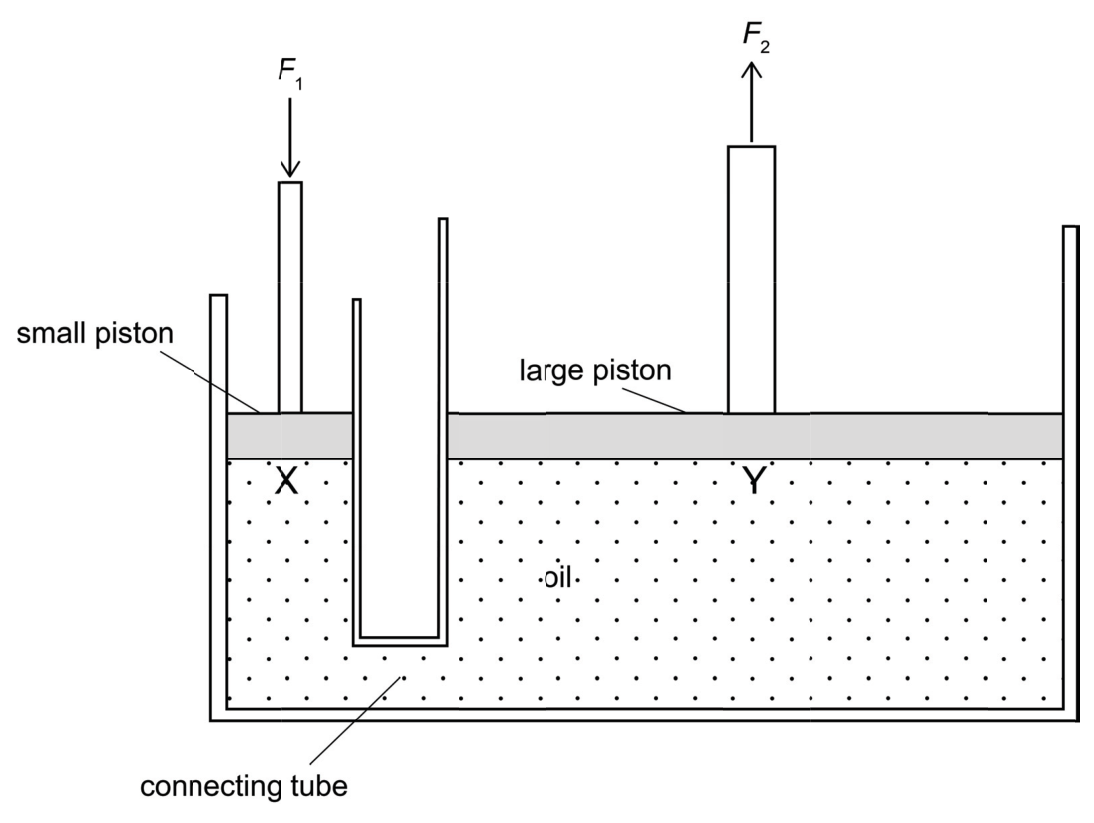
A downward force F1 is applied to the smaller piston, which results in an upwards resultant force F2 being exerted on the larger piston. Points X and Y are in the oil, immediately underneath the pistons, which are at the same height.
Which of the following statements about the pressure and forces in the hydraulic jack is/are correct?
1 The pressure at Y is less than the pressure at X.
2 The pressure at Y is equal to the pressure at X.
3 F2 is greater than F1.
4 F2 is less than F1.
✍️ ပုံကို ကြည့် — X နဲ့ Y က ပစ္စတင် နှစ်ခုရဲ့ အောက်တည့်တည့်၊ ဆီထဲ အမြင့် တူတူမှာ ရှိတယ်။
1 နဲ့ 2 — X နဲ့ Y က same level ဆိုတော့ pressure တူတယ်။ 1 ✗၊ 2 ✓။
3 နဲ့ 4 — pressure တူပြီး Y ဘက် area ကြီးလို့ F₂ = pA₂ က F₁ ထက် ကြီးတယ် (bigger area)။ 3 ✓၊ 4 ✗။
မှန်တာ 2 နဲ့ 3 ပဲ → အဖြေ C။
👉 force 20 ဆ ရတယ်ဆိုတော့ energy ပါ 20 ဆ ရနေတာလား?
energy အလကား မရဘူး — ရွေ့တာ နည်းသွားတယ်
d₁ = 20 cm — 20 cm³ of oil ညှစ်ထုတ်။ပစ္စတင် အသေးကို d₁ = 20 cm ဖိချတယ်။ ဆီ volume A₁d₁ = 1 cm² × 20 cm = 20 cm³ of oil ကို ညှစ်ထုတ်လိုက်တာ။
volume same — d₂ ဘယ်လောက် တက်မလဲ?အဲဒီ 20 cm³ က ပစ္စတင် အကြီးအောက် ရောက်သွားတယ်။ ဆီ မကျုံ့လို့ volume same — ပစ္စတင် အကြီး d₂ ဘယ်လောက် တက်မလဲ?
A₁d₁ = A₂d₂ — 20 cm³ ကို 20 cm² နဲ့ စား → d₂ = 1 cm ပဲ။ force 20 ဆ ရပေမဲ့ ရွေ့တာ 20 ဆ နည်းတယ်။
ဝင်တဲ့ work (အလုပ်၊ force × ရွေ့တဲ့ အကွာအဝေး) — in: 100 N × 0.20 m = 20 J။
ထွက်တဲ့ work — out: 2000 N × 0.01 m = 20 J။ same! energy အလကား မရဘူး၊ force ကို အကွာအဝေးနဲ့ လဲလိုက်တာပဲ — F₁d₁ = F₂d₂။
10 cm တင်ဖို့ အကြိမ်ကြိမ် ဖိရတယ်။ဒါကြောင့် ကား အမြင့် 10 cm တင်ချင်ရင် ဂျိုက် လက်ကိုင်ကို အကြိမ်ကြိမ် ဖိရတာ။
🤔 In a hydraulic press A₂ = 50 A₁. The small piston is pushed down 10 cm. How far does the large piston rise?
ဆီ volume တူ: A₁ × 10 = 50A₁ × d₂ → d₂ = 1050 = 0.2 cm။
500 cm က 50 နဲ့ မြှောက်မိတာ — force က 50 ဆ ကြီး၊ ရွေ့တာ 50 ဆ နည်း။
👉 diameter နဲ့ ပေးရင် ထောင်ချောက်။👉 ပစ္စတင် အရွယ်ကို area မပေးဘဲ diameter (အချင်း) နဲ့ ပေးရင် ထောင်ချောက် ရှိတယ်။
⚠ diameter 3 ဆ = force 9 ဆ
d နဲ့ 3d — force 3 ဆ ထင်လား?ပစ္စတင် နှစ်ခု — အသေးက diameter (အချင်း) d၊ အကြီးက 3d။ force ဘယ်နှစ်ဆ ရမလဲ? 3 ဆ လို့ ထင်လား?
3 × 3 = 9 — area 9 ×။အလျား 3 ဆ ဆိုရင် အလျားရော အနံရော 3 ဆ — လေးထောင့်လေး 3 × 3 = 9 ခု ဆံ့တယ်။ area 9 ×။
စက်ဝိုင်း area က A = π d²4 — A ∝ d² (d နှစ်ထပ်နဲ့ အချိုးကျ)။ 3² = 9။
force 9 × ⚠ diameter နှစ်ထပ် တင်ပါ။ဒါကြောင့် force 9 × force၊ 3 × force မဟုတ်ဘူး။ ⚠ diameter ပေးရင် နှစ်ထပ် တင်ပြီးမှ အချိုး ယူပါ။
diameter 5 ဆ → force 25 ဆ။ကား ဘရိတ်မှာ ခြေနင်း cylinder 0.5 cm၊ ဘီး cylinder 2.5 cm — diameter 5 ဆ ဆိုတော့ force 5² = 25 ဆ။
🤔 In a hydraulic press, the large piston has 3 times the diameter of the small piston. How many times larger is the force it gives?
area က diameter နှစ်ထပ်နဲ့ အချိုးကျ — 3² = 9။
3 ဆ က diameter ကိုပဲ ကြည့်မိတာ၊ 27 က သုံးထပ် တင်မိတာ။
👉 PART 3 ပြီးပြီ — ပြန်စစ်ကြည့်မယ်။
🔁 ပြန်ကြည့်မယ် — PART 3
🤔 Pascal's principle: a pressure increase in a closed liquid…
Pascal: တိုးလိုက်တဲ့ pressure က အရည် နေရာတိုင်း ကို မလျော့ဘဲ တူတူ ရောက်တယ်။
🤔 In a hydraulic jack, F₂F₁ equals…
pressure တူလို့ F = pA → F₂F₁ = A₂A₁။
🤔 Compared with the small piston, the large piston moves…
ဆီ volume တူ: A₁d₁ = A₂d₂ — area ကြီးတဲ့ ပစ္စတင်က နည်းနည်းပဲ ရွေ့တယ်။
work တူတယ်။
🤔 Doubling the diameter of the large piston multiplies the force by…
A ∝ d² → 2² = 4။
Floating and sinking
upthrust (ပင့်အား)၊ ပေါ်ခြင်း နဲ့ နစ်ခြင်း
သံမှို နစ်တယ်၊ သံသင်္ဘော ပေါ်တယ်
iron nail ရေထဲ ချရင် sinks။iron nail (သံမှို) တစ်ချောင်းကို ရေခွက်ထဲ ချလိုက်ရင် ချက်ချင်း sinks — အောက်ခြေထိ နစ်သွားတယ်။
iron ship ကတော့ floats။ဒါပေမဲ့ တန်ချိန် သောင်းချီ လေးတဲ့ iron ship (သံ သင်္ဘော) က ပင်လယ်ပေါ်မှာ floats — ပေါ်နေတယ်။
same iron — သံ အတူတူပဲ။ အသေးက နစ်ပြီး အကြီးက ဘာလို့ ပေါ်တာလဲ?
🤔 An iron nail sinks but an iron ship floats. What do you think decides it?
ပေါ်မလား နစ်မလား ကို ပစ္စည်းရဲ့ ပျမ်းမျှ density နဲ့ ရေရဲ့ density ယှဉ်ပြီး ဆုံးဖြတ်တယ် — ဒီ PART ထဲမှာ အဆင့်လိုက် ကြည့်မယ်။
mass ချည်း၊ အရွယ်ချည်း မဟုတ်ဘူး။
ရေ ဘယ်လောက် နက်နက် ဒီအဖြေ မပြောင်းဘူး။
upthrust နဲ့ density ပေါင်းသုံးမယ်။ဖြေဖို့ upthrust (ရေက အောက်ကနေ ပင့်တဲ့ အား) နဲ့ PART 1 က density ကို ပေါင်းသုံးမယ်။ ပထမ — upthrust ဘယ်က လာလဲ?
upthrust ဘယ်က လာလဲ — အောက်က ပိုဖိတယ်
0.1 m ကုဗ — အပေါ် 0.2 m၊ အောက် 0.3 m နက်။အနား 0.1 m ရှိတဲ့ ကုဗ (A = 0.01 m²) ကို ရေထဲ ကိုင်ထားတယ်။ အပေါ်မျက်နှာ 0.2 m နက်၊ အောက်မျက်နှာ 0.3 m နက်။
top (အပေါ်) — ρgh = 1000 × 10 × 0.2 = 2000 Pa။ force = 2000 Pa × 0.01 m² = 20 N အောက်ကို ဖိချတယ်။
bottom (အောက်) က ပိုနက်လို့ 3000 Pa — force 30 N အပေါ်ကို တွန်းတင်တယ်။
sides force equal — cancel၊ p₀ လည်း ချေ။sides (ဘေးမျက်နှာ) က အနက် တူလို့ force equal — ဘယ်ညာ cancel (ချေ) သွားတယ်။ p₀ လည်း အပေါ်အောက် နှစ်ဖက်လုံး ပါလို့ ချေတယ်။
30 − 20 = 10 N = upthrust (ပင့်အား)ကျန်တာ 30 − 20 = 10 N အပေါ်ကို — ဒါကို upthrust (ပင့်အား၊ buoyant force) လို့ ခေါ်တယ်။ အောက်မျက်နှာ ပိုနက်လို့ ဖြစ်တာ။
🤔 Why does a liquid push an immersed object upwards?
အောက်မျက်နှာက ပိုနက်လို့ ρgh ကြီး — အောက်က တွန်းအား က အပေါ်က ဖိအားထက် ကြီးတယ်။
ဘေးအားတွေ ချေတယ်၊ mass မပြောင်းဘူး၊ p₀ က နှစ်ဖက်လုံး ပါတယ်။
👉 10 N ကို volume နဲ့ ယှဉ်ကြည့်မယ်။👉 10 N ဆိုတဲ့ ဂဏန်းမှာ လျှို့ဝှက်ချက် ရှိတယ် — ကုဗရဲ့ volume နဲ့ ယှဉ်ကြည့်မယ်။
Archimedes' principle — ဖယ်ထုတ်တဲ့ ရေရဲ့ weight
ကုဗ 1 L — ရေ 1 L ကို displace လုပ်။ကုဗရဲ့ volume — 0.1 × 0.1 × 0.1 = 0.001 m³ = 1 L။ ရေထဲ ရောက်နေတော့ ရေ 1 L ရဲ့ နေရာကို ယူထားတယ် — အဲဒီ ရေကို ဖယ်ထုတ် (displace) လိုက်တာ။
1 L water = 10 N = upthrust!ဖယ်ထုတ်ခံရတဲ့ 1 L water ကို ချိန်ရင် 1 kg → 10 N။ upthrust 10 N နဲ့ = upthrust! အတိအကျ တူတယ်။
Archimedes' principle (Archimedes နိယာမ): U = ဖယ်ရေ weightArchimedes' principle (Archimedes ရဲ့ နိယာမ) — upthrust = weight of displaced fluid၊ ပစ္စည်း ဖယ်ထုတ်လိုက်တဲ့ အရည်ရဲ့ weight နဲ့ ညီတယ်။
Archimedes (ဘီစီ 287–212) — Syracuse က ဂရိ ပညာရှင်။Archimedes (ဘီစီ 287–212 လောက်) က Sicily ကျွန်း Syracuse မြို့ (ယနေ့ အီတလီ) က ဂရိ ပညာရှင်ပါ။ ရေချိုးကန်ထဲ ဆင်းရင်း ရေ မြင့်တက်တာ မြင်ပြီး စဉ်းစားမိတယ်လို့ ဆိုကြတယ်။
👉 ဒီ နိယာမကို ပုံသေနည်း တစ်ကြောင်းနဲ့ ရေးကြည့်မယ်။
U = ρ(fluid) × V(sub) × g — ပစ္စည်းရဲ့ density မပါ
ပုံသေနည်း — U = ρ(fluid) × V(sub) × g။ ρ(fluid) က အရည်ရဲ့ density၊ V(sub) က ရေအောက် ရောက်နေတဲ့ volume (m³)၊ U က N။
🤔 An iron block and a wooden block of the same volume are both held completely under water. Which one feels the larger upthrust?
U = ρ(fluid) × V(sub) × g — ပစ္စည်းရဲ့ density မပါဘူး။
volume တူ၊ အပြည့် နစ်နေရင် ဖယ်ထုတ်တဲ့ ရေ တူလို့ upthrust တူတယ်။
ကွာတာက weight ပဲ။
iron နဲ့ wood volume တူ — U 10 N တူ၊ weight ကွာ။iron (သံ) တုံးနဲ့ wood (သစ်သား) တုံး — volume တူတယ်။ နှစ်ခုလုံး held down (အပြည့် နစ်အောင် ကိုင်ထား) ရင် upthrust 10 N တူတူ ရတယ်။ ကွာတာက weight ပဲ။
⚠ ρ(object) က ဒီ ပုံသေနည်းထဲ not in it!⚠ ρ(object) — ပစ္စည်းရဲ့ ကိုယ်ပိုင် density — ဒီ ပုံသေနည်းထဲ not in it! IMAT က ထောင်ချောက် အဖြစ် ပေးလေ့ ရှိတယ်။
👉 ဖယ်ထုတ် ရေနဲ့ volume တိုင်းနိုင်တယ်။👉 ဖယ်ထုတ်ခံရတဲ့ ရေကို ဖမ်းယူနိုင်ရင် ပုံ မမှန်တဲ့ ပစ္စည်းရဲ့ volume ကိုပါ တိုင်းနိုင်တယ်။
Eureka can — ဖယ်ထုတ်တဲ့ ရေနဲ့ volume တိုင်းနည်း
ကျောက် 270 g — volume ပေတံနဲ့ မရ။ပုံ မမှန်တဲ့ ကျောက်တုံး (mass 270 g) ရဲ့ volume ကို ပေတံနဲ့ တိုင်းလို့ မရဘူး။ ဒါဆို ရေကို အကူအညီ တောင်းမယ်။
Eureka can (ဖယ်ထုတ်ရေ ဘူး) — ပြွန်ဝ အထိ ရေ ပြည့်။နှုတ်ခမ်းမှာ ပြွန်လေး ပါတဲ့ ဘူး — Eureka can (ဖယ်ထုတ်ရေ ဘူး) — ကို ပြွန်ဝ အထိ ရေ ပြည့်အောင် ထည့်ထားတယ်။
“Eureka!” (တွေ့ပြီ!) — ဘူးနာမည် ဒီကလာ။Archimedes က ရေချိုးကန်ထဲ ဆင်းရင်း ရေ လျှံတာ မြင်ပြီး “Eureka!” (တွေ့ပြီ!) လို့ အော်ခဲ့တယ်လို့ ဆိုကြတယ် — ဘူးနာမည် ဒီကလာတာ။
ကျောက် နှစ် → နေရာစာ ရေ လျှံထွက်။ကျောက်ကို ဖြည်းဖြည်း နှစ်ချလိုက်ရင် ကျောက် ယူလိုက်တဲ့ နေရာစာ ရေက ပြွန်ကနေ လျှံထွက်တယ်။
100 mL = 100 cm³ = ကျောက် volume။လျှံထွက်တဲ့ ရေကို တိုင်းခွက် (measuring cylinder) နဲ့ ခံယူတယ် — 100 mL = 100 cm³ (ယူနစ် ကတ်၊ သင်ခန်းစာ 13)။ ဒါ ကျောက်ရဲ့ volume ပဲ။
✍️ ρ = m/V — 270 g ကို 100 cm³ နဲ့ စား = 2.7 g/cm³ = 2700 kg/m³
အပြည့် နစ်မှ၊ ဘူး ပြည့်မှ မှန်။ကျောက် အပြည့် နစ်နေမှ မှန်တယ်။ ဘူးက အစမှာ ပြွန်ဝ အထိ မပြည့်ရင် ရေ မလျှံသေးလို့ volume နည်းနေမယ်။
🤔 A key of mass 54 g is lowered into a full displacement can, and 6 cm³ of water overflows. What is the density of the key?
ρ = 546 = 9 g/cm³ (9000 kg/m³)။
0.11 က ပြောင်းပြန် စားမိ၊ 324 က မြှောက်မိ၊ 60 က ပေါင်းမိတာ။
👉 ချိန်ခွင်နဲ့ စမ်းကြည့်မယ်။👉 upthrust ရှိရင် ရေထဲမှာ ပစ္စည်းတွေ ပေါ့သွားသလို ခံစားရမယ် — ချိန်ခွင်နဲ့ စမ်းကြည့်မယ်။
apparent weight — ရေထဲမှာ ပေါ့သွားသလို
ကျောက် 1 kg၊ 400 cm³ — in air 10 N။ကျောက်တုံး 1 kg (volume 400 cm³) ကို spring ချိန်ခွင် (spring balance) မှာ ချိတ်မယ်။ in air (လေထဲ) မှာ 10 N ပြတယ် — သူ့ weight W။
in water 6 N ပဲ — ပေါ့သွားလား?ရေခွက်ထဲ in water နှစ်လိုက်ရင် ချိန်ခွင်က 6 N ပဲ ပြတော့တယ်။ ကျောက်က ပေါ့သွားတာလား?
မဟုတ် — U = 4 N ပင့်ပေးလို့။မဟုတ်ဘူး — ရေက upthrust U နဲ့ အပေါ် ပင့်ပေးနေလို့ ချိန်ခွင် ကြိုးက နည်းနည်းပဲ ဆွဲရတာ။ U = ဖယ်ထုတ်တဲ့ ရေ 400 cm³ (0.4 kg) ရဲ့ weight = 4 N။
apparent weight (ထင်ရ အလေးချိန်) = W − U = 6 Nချိန်ခွင် ပြတဲ့ 6 N ကို apparent weight (ထင်ရ အလေးချိန်) လို့ ခေါ်တယ် — apparent weight = W − U = 10 − 4 = 6 N။ ရေကန်ထဲ လူကို ပွေ့ရ လွယ်တာ ဒါကြောင့်ပဲ။
🤔 An object weighs 30 N in air and 22 N when fully submerged in water. What is the upthrust on it?
U = W − apparent weight = 30 − 22 = 8 N။
22 N က ရေထဲက ထင်ရ အလေး၊ 30 N က weight၊ 52 က ပေါင်းမိတာ။
👉 IMAT 2019 က သုံးခုလုံး မေးခဲ့တယ်။👉 IMAT 2019 က upthrust၊ weight၊ apparent weight သုံးခုလုံးကို ရွေးစရာထဲ ထည့်ပြီး မေးခဲ့တယ်။
✍️ IMAT 2019 — ကျောက်တုံးရဲ့ upthrust
📝 IMAT 2019 · Question 58
A stone of density 5.20 gcm3 and volume 200 cm3 is completely submerged in a liquid of density 1.20 gcm3.
What is the magnitude of the upthrust acting on the stone? [gravitational field strength = 10.0 N / kg]
✍️ ကျောက် V = 200 cm³ က liquid 1.20 g/cm³ ထဲ အပြည့် နစ်နေတယ်။ stone ရဲ့ 5.20 g/cm³ ကို — upthrust မှာ မသုံးရဘူး။
ဖယ်ထုတ်တဲ့ liquid: 200 cm³ × 1.20 g/cm³ = 240 g = 0.240 kg။
U = 0.240 kg × 10 = 2.40 N → အဖြေ A။
ထောင်ချောက်တွေ — 10.4 N က stone's W (200 × 5.20 = 1040 g)၊ 8.00 N က W − U (apparent weight)၊ 2.00 N က ရေ (1.00) used water မှားသုံးတာ၊ 6.40 က density နှစ်ခု ပေါင်းတာ။
👉 IMAT 2017 က ဒီ အချက်ကို ဂဏန်း မပါဘဲ စာလုံးနဲ့ မေးတယ်။
✍️ IMAT 2017 — စာလုံးနဲ့ upthrust
📝 IMAT 2017 · Question 58
A solid wooden cube has sides of length a. The density of the wood is ρ. The cube is completely immersed in a beaker of oil, which has a density σ. The top surface of the cube is horizontal. The gravitational field strength is g. What is the upward force (upthrust) on the cube due to the oil? [Assume that no oil is absorbed by the wood.]
✍️ အနား a ရှိတဲ့ wood (သစ်သား) ကုဗ၊ density ρ — oil (ဆီ) density σ ထဲ အပြည့် နစ်နေတယ်။
ဖယ်ထုတ်တဲ့ oil volume = ကုဗ volume = a³။
အဲဒီ oil ရဲ့ mass σa³၊ weight σa³g → U = σa³g — အဖြေ D။ အရည်ရဲ့ σ ကိုပဲ သုံးတယ်။
ρa³g က cube's W (ကုဗရဲ့ weight)၊ σa³ နဲ့ ρa³ က g မပါလို့ mass ပဲ (force မဟုတ်)၊ (σ − ρ)a³g က upthrust − weight = net force (အသားတင် force)။
👉 သစ်သားတုံး ဘယ်အထိ နစ်မလဲ?👉 ရေထဲ လွှတ်လိုက်တဲ့ သစ်သားတုံး ဘယ်အထိ နစ်မလဲ? upthrust နဲ့ weight ပြိုင်ပွဲကို ကြည့်မယ်။
ဘယ်အထိ နစ်မလဲ — upthrust က weight နဲ့ ညီတဲ့ အထိ
wood block 1000 cm³၊ 600 g — W = 6 N။wood block (သစ်သားတုံး) — volume 1000 cm³ (အနား 10 cm ကုဗ)၊ mass 600 g ဆိုတော့ weight W = 6 N။ ကြိုးနဲ့ ရေပေါ်မှာ ချိတ်ထားတယ်။
🤔 The string is cut and the block floats. How much of the block is under water when it settles?
ပေါ်နေရင် U = W = 6 N ဖြစ်ရမယ်။
6 N က ရေ 600 g ရဲ့ weight၊ ရေ 600 g က 600 cm³ — ဒါကြောင့် 600 cm³ ရေအောက် ရောက်တယ်။
1000 cm³ က အပြည့် နစ်တာ (U = 10 N > W)၊
300 cm³ ဆို U = 3 N ပဲ ရှိသေးလို့ ဆက်နစ်မယ်၊ 400 cm³ က ရေပေါ် ကျန်တဲ့ အပိုင်း။
300 cm³ under — U = 3 N < W → sinks more။ကြိုး ဖြတ်လိုက်တယ် — တုံး နစ်ဆင်းတယ်။ 300 cm³ under (ရေအောက် 300 cm³) ရောက်ချိန် ဖယ်ထုတ်တဲ့ ရေ 300 g — U = 3 N ပဲ။ U < W ဆိုတော့ sinks more — ဆက်နစ်တယ်။
water level rises။တုံး ဝင်လာတဲ့ နေရာက ရေကို ဘေးနဲ့ အပေါ် တွန်းထုတ်လို့ water level rises — ရေမျက်နှာ မြင့်တက်လာတယ်။
600 cm³ under — U = 6 N = W → floats။600 cm³ under ရောက်တော့ ဖယ်ထုတ်တဲ့ ရေ 600 g — U = 6 N = W။ အပေါ် အား နဲ့ အောက် အား ညီသွားလို့ ဆက်မနစ်တော့ဘဲ floats — ပေါ်နေတယ်။
60 % under — U = W အထိ နစ်တယ်။ဒါကြောင့် ပေါ်တဲ့ ပစ္စည်းဟာ ဖယ်ထုတ်တဲ့ ရေရဲ့ weight က ကိုယ့် W နဲ့ ညီတဲ့ အထိ နစ်တယ်။ 1000 cm³ ထဲက 600 cm³ — 60 % under (ရေအောက်)။
💡 ငှက်ပျောပင် ဖောင် — လူ တက်လေ နစ်လေ။💡 ကန်ထဲက ငှက်ပျောပင် ဖောင် — လူ တက်လေ နစ်လေ။ လူရဲ့ weight စာ ရေကို ထပ်ဖယ်ထုတ်ပြီးမှ နစ်တာ ရပ်တယ်။
👉 60 % နဲ့ density 0.6 — slider နဲ့ စမ်းမယ်။👉 ဒီ 60 % က သစ်သားရဲ့ density 0.6 g/cm³ နဲ့ တိုက်ဆိုင်မှု မဟုတ်ဘူး — slider နဲ့ စမ်းကြည့်မယ်။
ပေါ်မလား နစ်မလား — density နှစ်ခု ယှဉ်
W အောက်၊ U အပေါ် — ρ(object) နဲ့ ρ(fluid) compare။ပစ္စည်း တစ်ခုကို အရည်ထဲ လွှတ်ရင် force နှစ်ခု ပြိုင်တယ် — W အောက်ကို၊ U အပေါ်ကို။ ① ρ(object) နဲ့ ρ(fluid) ကို compare (ယှဉ်) ရုံနဲ့ ဘယ်သူ နိုင်လဲ သိတယ်။
👆 Change the density. Above which value does the block sink?
② less → floats — ρ(object) < ρ(fluid) ဆိုရင် တစ်စိတ်တစ်ပိုင်း နစ်ရုံနဲ့ U = W ဖြစ်ပြီး ပေါ်နေတယ်။ 0.6 g/cm³ တုံးက 60 % ပဲ ရေအောက် ရောက်တယ်။
③ equal → hovers — density တူရင် ဘယ်အနက်မှာမဆို လွင့်နေတယ်။ ငါးနဲ့ ရေငုပ်သင်္ဘောတွေ ဒီလို နေကြတယ်။
④ more → sinks — အပြည့် နစ်တာတောင် U က W ထက် နည်းလို့ အောက်ခြေထိ နစ်တယ်။
ပေါ်နေရင် U = W — ρ(fluid)·V(sub)·g = ρ(object)·V·g။ g ချေရင် V(sub)/V = ρ(object)/ρ(fluid)။
ဆိုလိုတာ — ရေအောက် ရောက်တဲ့ အစိတ်အပိုင်း = density အချိုး။ 0.6 ကို 1.0 နဲ့ စား = 60 %။
🤔 A wooden block of density 600 kg/m³ floats in water. What fraction of its volume is below the surface?
ပေါ်နေရင် V(sub)/V = ρ(object)/ρ(fluid) = 6001000 = 60 %။
40 % က ရေပေါ်မှာ ကျန်တဲ့ အပိုင်း။
👉 ဒီ အချိုးနဲ့ ရေခဲတောင် ဘယ်လောက် ရေအောက် ပုန်းနေလဲ တွက်ကြည့်မယ်။
✍️ ရေခဲတောင် — 89 % ရေအောက်မှာ
✍️ ရေခဲ (ice) 920 kg/m³ က ပင်လယ်ရေ (sea) 1030 kg/m³ ပေါ် ပေါ်နေတယ်။ ရေအောက်မှာ ဘယ်နှစ် % ရှိလဲ?
V(sub)/V = ρ(object)/ρ(fluid) = 9201030။
= 0.89 → 89 % under — ရေခဲတောင်ရဲ့ 89 % က ရေအောက်မှာ ပုန်းနေတယ်။
11 % above — “the tip of the iceberg”။11 % above — 11 % ပဲ ရေပေါ်မှာ မြင်ရတယ်။ “the tip of the iceberg” (ရေခဲတောင် ထိပ်ဖျား) ဆိုတဲ့ စကား ဒီကလာတာ — Titanic ကို နစ်စေခဲ့တာ မမြင်ရတဲ့ အပိုင်းပဲ။
🤔 Ice (920 kg/m³) floats in fresh water (1000 kg/m³). What fraction of the ice is under the water?
V(sub)/V = 9201000 = 92 %။
ရေချို density နည်းလို့ ပင်လယ်ရေ (89 %) ထက် ပိုနစ်တယ်။
8 % က ရေပေါ် အပိုင်း။
👉 “ရေထက် ဘယ်နှဆ သိပ်သည်းလဲ” ကို ဂဏန်း တစ်ခုတည်းနဲ့ ပြောလို့ ရတယ်။
relative density — ရေနဲ့ ယှဉ်တဲ့ ဂဏန်း
relative density (နှိုင်းယှဉ် density) RD = ρ ÷ ρ(ရေ)density ကို ရေနဲ့ ယှဉ်ပြီး “ရေထက် ဘယ်နှဆ” လို့ ပြောတဲ့ ဂဏန်းကို relative density (နှိုင်းယှဉ် density၊ Relative Density → RD) လို့ ခေါ်တယ် — RD = ρ(ပစ္စည်း) ÷ ρ(ရေ)။ ရေ ကိုယ်တိုင် RD = 1။
ယူနစ် မရှိ — ice 0.92 g/cm³ → RD 0.92။kg/m³ ကို kg/m³ နဲ့ စားလို့ ယူနစ် မရှိဘူး။ g/cm³ နဲ့ ပြောတဲ့ density ဂဏန်းနဲ့ အတူတူပဲ — ice 920 kg/m³ = 0.92 g/cm³ → RD 0.92။
cork 0.25, ရေခဲ 0.92 — 1 ထက် နည်း ပေါ်။ဖော့ (cork) 0.25၊ ရေခဲ 0.92 — 1 ထက် နည်းလို့ ရေပေါ် ပေါ်တယ်။ ရေအောက် ရောက်တဲ့ အစိတ်အပိုင်းကလည်း RD ပဲ — ရေခဲ 92 %။
aluminium 2.7၊ iron 7.9 — 1 ထက် ကြီးလို့ နစ်တယ်။
✍️ ချိန်ခွင်နဲ့လည်း ရှာလို့ ရတယ်။ apparent weight မှာ တွေ့ခဲ့တဲ့ ကျောက်တုံး — လေထဲ 10 N၊ ရေထဲ 6 N၊ ပေါ့သွားတာ (upthrust) 4 N။
upthrust 4 N က ကျောက်နဲ့ volume တူတဲ့ ရေရဲ့ weight ဆိုတော့ RD = 104 = 2.5 — ကျောက်က ရေထက် 2.5 ဆ သိပ်သည်းတယ်။
🤔 An object weighs 12 N in air and 9 N when completely under water. What is its relative density?
upthrust = 12 − 9 = 3 N (ရေ volume တူ ရဲ့ weight)၊
RD = 123 = 4။
0.75 က 912၊
1.33 က 129၊ 3 က upthrust ပဲ။
👉 ပေါ်နေတဲ့ တုံးကို အပြည့် နစ်အောင် ဖိချင်ရင် အလေး ဘယ်လောက် တင်ရမလဲ?
✍️ ပေါ်နေတဲ့ တုံးကို အပြည့် နစ်အောင် — အလေး ဘယ်လောက်
သစ်သား 0.020 m³၊ 600 kg/m³ — 120 N၊ 60 % နစ်။သစ်သားတုံး volume 0.020 m³ (20 L)၊ density 600 kg/m³ — mass = 600 × 0.020 = 12 kg၊ weight 120 N။ ရေပေါ်မှာ 60 % နစ်ပြီး ပေါ်နေတယ်။
အပြည့် နစ်ဖို့ load ဘယ်လောက် လိုမလဲ?အပေါ်မှာ အလေး (load) တင်လေ နစ်လေ။ သစ်သားတုံး ထိပ်က ရေမျက်နှာနဲ့ အညီ — အပြည့် နစ်အောင် — အလေး ဘယ်လောက် လိုမလဲ?
✍️ ① အပြည့် နစ်ရင် upthrust = ρ(ရေ) × V × g = 1000 × 0.020 × 10 = 200 N
② ငြိမ်နေရင် အောက်ဘက် force = အပေါ်ဘက် force — 120 N + load = 200 N → load = 80 N (8 kg)
⚠ load = 200 N − 120 N — ကိုယ်ပိုင် weight နုတ်။⚠ load က upthrust တစ်ခုလုံး (200 N) မဟုတ်ဘူး — သစ်သားရဲ့ ကိုယ်ပိုင် weight ကို နုတ်ရတယ်။ အသက်ကယ် ဖောင်ပေါ် လူ ဘယ်နှယောက် တင်နိုင်လဲ တွက်တဲ့ နည်းလမ်း ဒါပဲ။
🤔 A foam block of volume 0.010 m³ and density 200 kg/m³ floats on water (g = 10 m/s²). What extra weight placed on top will just push it completely under?
အပြည့် နစ်ရင် U = 1000 × 0.010 × 10 = 100 N၊
foam ရဲ့ W = 200 × 0.010 × 10 = 20 N → load = 100 − 20 = 80 N။
100 N က W မနုတ်မိ၊ 20 N က foam ရဲ့ weight ပဲ။
👉 နစ်ပြီး အောက်ခြေ ထိုင်ရင် ဘယ်လောက် ဖိမလဲ?👉 ပစ္စည်းက နစ်ပြီး အောက်ခြေမှာ ထိုင်နေရင်ကော — အောက်ခြေကို ဘယ်လောက် ဖိမလဲ? IMAT 2011။
✍️ IMAT 2011 — အောက်ခြေကို ဖိတဲ့ force
📝 IMAT 2011 · Question 74
An object of mass 50 g just floats in a liquid of density 2.5 g/ml. When the object is placed in a liquid of density 2.0 g/ml, it sinks to the bottom of the container. What is the force that the object exerts on the bottom of the container?
[ g = 10 ms2 = 10 N/kg ]
✍️ “just floats” (အပြည့် နစ်ပြီး လွင့်နေရုံ) ဆိုတာ density တူတာ — ပစ္စည်းရဲ့ ρ = 2.5 g/mL။
V = mρ — 50 g ကို 2.5 g/mL နဲ့ စား = 20 mL။
2.0 g/mL အရည်ထဲ — U = 20 mL × 2.0 g/mL = 40 g → 0.040 kg × 10 = 0.4 N။
W = 0.050 kg × 10 = 0.5 N။ (g ကို kg ပြောင်းပြီးမှ 10 နဲ့ မြှောက်ပါ)
အောက်ခြေမှာ force သုံးခု ညီနေတယ် — W အောက်ကို၊ U နဲ့ ကြမ်းပြင်ရဲ့ floor push N အပေါ်ကို။ N = 0.5 − 0.4 = 0.1 N → အဖြေ E။
0.4 N က U ပဲ၊ 10 N က 10 g ကွာခြားချက်ကို N လို့ ယူမိတာ၊ 400 N က g ကို kg မပြောင်းမိတာ။
👉 အရည်ရဲ့ density ပြောင်းရင်ကော?👉 အရည်ရဲ့ density ကိုယ်တိုင် ပြောင်းသွားရင်ကော? ဖန်လုံးလေးတွေ ကိုယ့်ဟာကိုယ် တက်လာတဲ့ ကိရိယာ တစ်ခု ကြည့်မယ်။
Galileo thermometer — အေးရင် ဖန်လုံး တက်လာတယ်
📝 IMAT 2014 · Question 57
An ornamental thermometer, commonly known as a Galileo thermometer, contains a number of spheres of hollow coloured glass, representing different temperatures, immersed in a column of ethanol. A particular sphere (X) rises from the bottom to the top of the column of liquid when the temperature falls below the value it represents.
Which statement best explains why the sphere rises when the temperature falls?
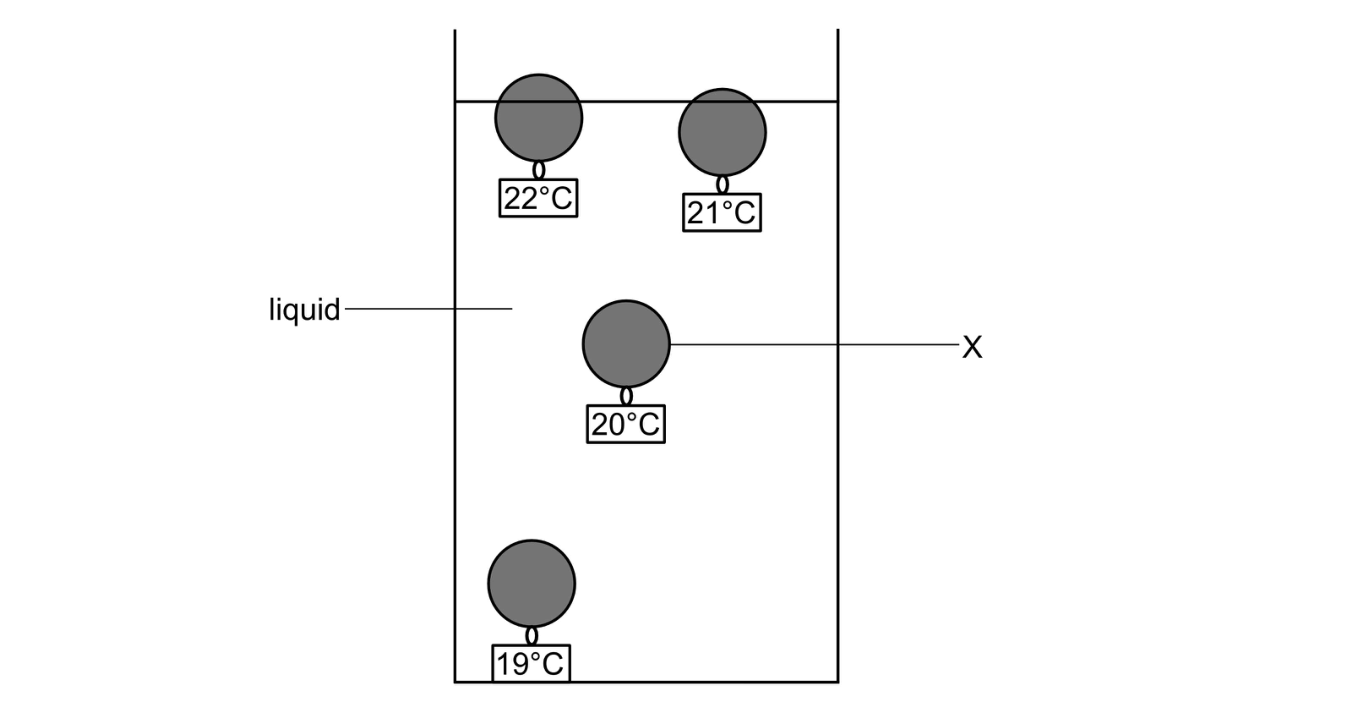
Galileo thermometer — ethanol ထဲ glass spheres။Galileo thermometer — ethanol (အရက်ပျံ) ပြည့်တဲ့ ဖန်ပြွန်ထဲမှာ density အနည်းငယ်စီ ကွာတဲ့ glass spheres (ဖန်လုံး) တွေ ရှိတယ်။ ပူနေချိန် X က အောက်ခြေမှာ။
Galileo Galilei (1564–1642) — Pisa သား။Galileo Galilei (1564–1642) က Pisa မြို့သား အီတလီ သိပ္ပံပညာရှင်ပါ။ ဒီ ကိရိယာကို သူ့ နောက်လိုက်တွေက လုပ်ပြီး သူ့ နာမည် ပေးထားတာပါ။
colder → ethanol contracts → ρ(liquid) up။အခန်း colder ဖြစ်လာရင် ethanol contracts — ကျုံ့တယ်။ mass မပြောင်း၊ volume နည်း → ρ(liquid) up၊ density တက်တယ်။
ρ(liquid) တက် → U တက် → X တက်လာ။U = ρ(fluid)·V·g ဆိုတော့ ρ(liquid) တက်ရင် X ပေါ်က U လည်း တက်တယ်။ X ရဲ့ weight မပြောင်းလို့ U > W ဖြစ်ပြီး X တက်လာတယ်။
D ✓ — ρ(liquid) ↑။ E ✗ ဖန်လုံး ပိတ်ထားလို့ mass မပြောင်း။ A ✗ pressure က ပေါ်မပေါ် ကို မဆုံးဖြတ်ဘူး။
B ✗ အချိန်ကြာရင် ဖန်လုံးနဲ့ အရည် temperature တူသွားတယ်။ C ✗ အေးရင် ဓာတ်ငွေ့ volume ကျုံ့တယ်၊ မကျယ်ဘူး။ အဖြေ D။
🤔 The room warms up again. What does sphere X do?
ပူရင် ethanol ကျယ်ပြီး density ကျတယ်။
U က W ထက် နည်းသွားလို့ X ပြန်နစ်တယ်။
ဖန်လုံး ပိတ်ထားလို့ mass မပြောင်းဘူး။
👉 ပစ္စည်း density ပြောင်းလို့ ရလား?👉 အရည်ရဲ့ density ပြောင်းတာ မြင်ပြီ။ ပစ္စည်းရဲ့ density ကိုကော ပြောင်းလို့ ရလား? အစက သံသင်္ဘော ပဟေဠိကို ဖြေမယ်။
ပဟေဠိ ဖြေမယ် — သံသင်္ဘော ဘာလို့ ပေါ်လဲ
solid iron 7900 — U < W → sinks။solid iron (သံ အတုံး) — ρ = 7900 kg/m³ က ရေထက် 8 ဆ ကြီးလို့ အပြည့် နစ်တာတောင် U < W — sinks။
hollow သင်္ဘော ပုံ ထု → floats!same iron ကို hollow (အခေါင်း) သင်္ဘောကိုယ်ထည် ပုံ ထုလိုက်ရင် — floats! သံ ပမာဏ မပြောင်းပေမဲ့ ရေကို အများကြီး ဖယ်ထုတ်နိုင်လာတယ်။
iron + air — average ρ ရေထက် နည်း။သင်္ဘောထဲမှာ air (လေ) အများကြီး ရှိတယ်။ average ρ (ပျမ်းမျှ density) = total mass ကို total volume နဲ့ စား — iron + air ပေါင်းရင် ရေထက် နည်းလို့ ပေါ်တယ်။
loaded → ပိုနစ် (lower)။ကုန် loaded (တင်) လိုက်ရင် weight တိုးလို့ U = W ဖြစ်အောင် ရေ ပိုများများ ဖယ်ထုတ်ရတယ် → lower — ပိုနစ်တယ်။
📌 သံမှို 7900၊ သံသင်္ဘော လေပါ — ပျမ်းမျှ နည်း။📌 ပဟေဠိ ဖြေပြီ — သံမှိုက ပျမ်းမျှ density 7900၊ သံသင်္ဘောက လေပါလို့ ပျမ်းမျှ density ရေထက် နည်းတယ်။
👉 သင်္ဘော တစ်စင်း ပင်လယ်ကနေ မြစ်ထဲ ဝင်လာရင်ကော?
✍️ ပင်လယ် နဲ့ မြစ် — ဘယ်မှာ ပိုနစ်လဲ
✍️ ship (သင်္ဘော) mass 2.0 × 10⁷ kg — ပင်လယ်ရေ (1030 kg/m³) နဲ့ မြစ်ရေ (1000 kg/m³) မှာ ရေအောက် volume ဘယ်လောက်လဲ?
ပေါ်နေရင် U = W — ဖယ်ထုတ်တဲ့ ရေ mass = သင်္ဘော mass = 2.0 × 10⁷ kg။
sea: V = mρ = 2.0 × 10⁷ ကို 1030 နဲ့ စား ≈ 19 400 m³။
river: 1000 နဲ့ စား = 20 000 m³ — ရေ volume ပိုလိုတယ်။
မြစ်ထဲ ဝင်ရင် ပိုနစ် — ရေချို density နည်း။ဒါကြောင့် ရန်ကုန်မြစ်ထဲ ဝင်လာရင် သင်္ဘော နည်းနည်း ပိုနစ်တယ် (river: lower)။ ရေချိုက density နည်းလို့ ပိုများများ ဖယ်ထုတ်ရတာ။
🤔 A ship sails from the sea (1030 kg/m³) into a river (1000 kg/m³) without changing its load. What happens?
ပေါ်နေသမျှ U = W မပြောင်းဘူး။
မြစ်ရေ density နည်းလို့ အဲဒီ W ကို ညီအောင် ရေ volume ပိုများများ ဖယ်ထုတ်ရတယ် — နည်းနည်း ပိုနစ်တယ်။
👉 ရေမှာ မဟုတ်ဘဲ လေထဲမှာကော — upthrust ရှိသလား?
✍️ လေထဲက upthrust — helium ပူဖောင်း
လေ ကလည်း fluid — helium 1.0 m³ ပူဖောင်း။Archimedes ရဲ့ နိယာမက ရေမှာတင် မဟုတ်ဘူး — လေ ကလည်း fluid ပဲ။ helium (ဟီလီယမ်၊ He) ဓာတ်ငွေ့ 1.0 m³ ပြည့်တဲ့ ပူဖောင်း (ရာဘာ 0.30 kg) ကို စဉ်းစားကြည့်မယ်။
✍️ ① ပူဖောင်းက လေ 1.0 m³ ကို ဖယ်ထုတ်တယ်။ လေ density ≈ 1.2 kg/m³ → U = 1.2 × 1.0 × 10 = 12 N
② အထဲက helium (0.18 kg/m³): 0.18 × 1.0 × 10 = 1.8 N။ ရာဘာ: 0.30 × 10 = 3.0 N။ W = 1.8 + 3.0 = 4.8 N
③ U − W = 12 − 4.8 = 7.2 N အပေါ်ကို — 0.72 kg အထိ ဆွဲတင်နိုင်တယ်
ပျမ်းမျှ density လေထက် နည်း → တက်။ပျမ်းမျှ density (helium + ရာဘာ) က လေထက် နည်းလို့ တက်တာ — သင်္ဘော ပေါ်တဲ့ စည်းမျဉ်းနဲ့ အတူတူပဲ။
လူ ပင့်အား ≈ 0.8 N — မေ့ထားလို့ ရ။လူ (0.07 m³) ကိုတော့ လေက 1.2 × 0.07 × 10 ≈ 0.8 N ပဲ ပင့်တယ်။ weight 700 N နဲ့ ယှဉ်ရင် သေးလွန်းလို့ မေ့ထားလို့ ရတယ်။
🤔 A hot-air balloon displaces 2000 m³ of cold air of density 1.2 kg/m³ (g = 10 m/s²). What is the upthrust on the balloon?
U = ρ(air) × V × g = 1.2 × 2000 × 10 = 24 000 N။
2400 က g မထည့်မိ (mass ပဲ)၊ 1667 က 20001.2 စားမိတာ။
👉 သတ္တု ၂ မျိုး ရော — ပျမ်းမျှ density ဘယ်လို?👉 သတ္တု နှစ်မျိုး ရောထားရင် ပျမ်းမျှ density ဘယ်လို ရှာမလဲ? Archimedes ရဲ့ သရဖူ ပုံပြင်နဲ့ အဆုံးသတ်မယ်။
✍️ သတ္တု ရောရင် — ပျမ်းမျှ density
ရွှေ 100 g ကို ငွေနဲ့ လဲရင် ဘယ်လို ဖမ်းမလဲ?Archimedes ရဲ့ ပုံပြင် — ဘုရင်က ရွှေ 400 g နဲ့ သရဖူ လုပ်ခိုင်းတယ်။ ပန်းထိမ်က ရွှေ 100 g ကို ငွေ (silver) နဲ့ လဲပြီး ရောခဲ့ရင် ဘယ်လို ဖမ်းမလဲ?
gold (ရွှေ၊ Au၊ Z = 79) နဲ့ silver (ငွေ၊ Ag၊ Z = 47) က group 11 မှာ အပေါ်အောက် — d-block metal တွေ ဖြစ်တယ်။
✍️ ① ရွှေ 300 g (19.3 g/cm³) ရဲ့ volume = 30019.3 ≈ 15.5 cm³
② ငွေ 100 g (10.5 g/cm³) ရဲ့ volume = 10010.5 ≈ 9.5 cm³
③ ပျမ်းမျှ density = mass စုစုပေါင်း ÷ volume စုစုပေါင်း = 40015.5 + 9.5 = 40025.0 = 16.0 g/cm³
ရေ 25 cm³ လျှံ (သန့်ဆို 20.7) — ရောထား!ရွှေ သန့်သန့် ဆို 19.3 ဖြစ်ရမယ်။ Eureka can ထဲ နှစ်ရင် ရေ 25 cm³ (ရွှေ သန့်ဆို 20.7 cm³) လျှံထွက်လာလို့ ရောထားမှန်း သိပြီ။
⚠ density ၂ ခု ပေါင်း ÷ 2 မလုပ်ရ။⚠ density နှစ်ခု ပေါင်းပြီး 2 နဲ့ စား (14.9) မလုပ်ရဘူး — mass မတူ၊ volume မတူလို့ပါ။ volume တူတူ ရောမှသာ ဒီလို ပျမ်းမျှ ရတယ်။
🤔 Equal volumes of water (1.0 g/cm³) and ethanol (0.8 g/cm³) are mixed. Ignoring any change in total volume, what is the density of the mixture?
volume V စီဆို mass = 1.0V + 0.8V = 1.8V၊
volume 2V → 1.8V2V = 0.90 g/cm³။
0.89 က mass တူ ရောရင် ရမယ့် အဖြေ၊ 1.8 က 2 နဲ့ မစားမိတာ။
👉 PART 4 ပြီးပြီ — နောက်ဆုံး ပြန်စစ်ကြည့်မယ်။
👤 လူပုဂ္ဂိုလ်များ
1586 Stevin — အရည်ရဲ့ pressure က အနက်နဲ့ပဲ ဆိုင်တယ် (p = p₀ + ρgh)။
1643 Torricelli — ပြဒါး barometer နဲ့ လေရဲ့ pressure ကို တိုင်းခဲ့တယ် (760 mmHg)။
1653 Pascal — ပိတ်ထားတဲ့ အရည်ထဲ pressure တိုးရင် နေရာတိုင်း တူတူ ရောက်တယ်။
ဘီစီ 250 လောက် Archimedes — upthrust = ဖယ်ထုတ်တဲ့ အရည်ရဲ့ weight။
1564–1642 Galileo — သူ့ နာမည်နဲ့ Galileo thermometer (အရည် density ပြောင်းရင် ဖန်လုံး တက်ကျ)။
🔁 ပြန်ကြည့်မယ် — PART 4
🤔 The upthrust on a fully submerged object equals…
Archimedes: U = ρ(fluid) × V(sub) × g = ဖယ်ထုတ်တဲ့ အရည်ရဲ့ weight။
နစ်နေလည်း U ရှိတယ်။
🤔 A solid object floats when…
ρ(object) < ρ(fluid) → ပေါ်၊ ညီ → လွင့်၊ များ → နစ်။
🤔 A block floats in water with 30 % of its volume above the surface. What is its density?
ရေအောက် 70 % ဆိုတော့ ρ1000 = 0.70 → 700 kg/m³။
300 က ရေပေါ် အပိုင်းကို ယူမိတာ၊ 1300 က ပေါ်နေတဲ့ ပစ္စည်း ရေထက် လေးလို့ မဖြစ်နိုင်ဘူး။
🤔 A helium balloon rises into higher air, where the air is less dense. Its volume stays the same. The upthrust on it…
U = ρ(air) × V × g — V မပြောင်းဘဲ ρ(air) နည်းလာလို့ U လျော့တယ်။
U = W ဖြစ်တဲ့ အမြင့်ရောက်ရင် ပူဖောင်း ဆက် မတက်တော့ဘူး။
🎉 ဒေါက် 48 ဆ (p = F/A)၊
နားနာ (p = p₀ + ρgh)။🎉 ဒေါက်ဖိနပ်က ဆင်ထက် 48 ဆ ပိုဖိတာ p = F/A နဲ့ တွက်ပြနိုင်ပြီ။
ရေ 10 m တိုင်း 100 kPa တိုးလို့ (p = p₀ + ρgh) နားနာတာလည်း ရှင်းပြီ။
ဂျိုက် ကား မ၊ သံသင်္ဘော ပေါ် — ပဟေဠိ ဖြေပြီ!ဂျိုက်က pressure ကို ပစ္စတင် ကြီးဆီ ပို့လို့ ကား မ နိုင်တယ်။ သံသင်္ဘောက ပျမ်းမျှ density ရေထက် နည်းလို့ ပေါ်တယ်။ ပဟေဠိ အားလုံး ဖြေပြီးပြီ!