DNA: discovery, structure, replication (2)
အတွဲ စည်းကမ်းနဲ့ IMAT မေးခွန်း ဖြေနည်း
Pairing rules at work
အတွဲ စည်းကမ်းနဲ့ IMAT မေးခွန်း ဖြေနည်း
ဖြည့်ဖက် ကြိုး ရေးနည်း
📝 IMAT 2024 · Question 30
If the sequence CCGTTATTGA is found on a strand of DNA helix, what sequence will be found on the complementary strand?
အဖော် ကြိုး = complementary strand (ဖြည့်ဖက် ကြိုး)A–T, G–C အတွဲ စည်းကမ်းကြောင့် ကြိုး တစ်ချောင်းကို သိရင် ကျန် ကြိုးကို ရေးနိုင်တယ်။ ဒီ အဖော် ကြိုးကို complementary strand (ဖြည့်ဖက် ကြိုး) လို့ ခေါ်တယ်။
စည်းကမ်း ① — A ↔ T, G ↔ C။ စာလုံး တစ်လုံးချင်း လဲရေးတယ်။
✍️ CCGTTATTGA ရဲ့ complementary strand ကို ရေးမယ်
C C G → G G C
T T A T → A A T A
T G A → A C T
အဖြေ = GGCAATAACT
ထောင်ချောက် — ပြောင်းပြန် ဖတ်ရုံ၊ bases not swapped။ထောင်ချောက် — AGTTATTGCC က မူရင်းကို ပြောင်းပြန် ဖတ်ထားရုံပဲ (read backwards — နောက်ကနေ ရှေ့ကို ဖတ်တာ)။ စာလုံး တွေ မလဲထားလို့ (bases not swapped) မှားတယ်။
စည်းကမ်း ② — DNA မှာ U မရှိ၊ U ရေးရင် RNA။စည်းကမ်း ② — DNA မှာ U (uracil) မရှိဘူး။ A ရဲ့ အဖော်ကို U လို့ ရေးရင် RNA ဖြစ်သွားပြီ၊ မှားတယ်။
စည်းကမ်း ③ — အပေါ် 5′ → 3′ ဆို အောက် 3′ → 5′။စည်းကမ်း ③ — အဖော် ကြိုးက ပြောင်းပြန် ဦးတည်တယ်။ အပေါ် ကြိုး 5′ → 3′ ဆိုရင် အောက် ကြိုးက 3′ → 5′။
✍️ ထိပ် နာမည်ပါ ရေးမယ်: 5′-ATGC-3′ ရဲ့ အဖော်
တစ်လုံးချင်း လဲ (ဦးတည်ရာ ပြောင်းပြန်): 3′-TACG-5′
5′ → 3′ အစဉ်နဲ့ ပြန်ရေးရင် (စာလုံးတန်းကို ပြောင်းပြန် ဖတ်): 5′-GCAT-3′ — ကြိုး တစ်ချောင်းတည်းကို နည်း နှစ်နည်းနဲ့ ရေးတာ
💡 သော့ နဲ့ သော့ခလောက် — ပြောင်းပြန် ကိုင်ရုံနဲ့ မဖွင့်။💡 မှတ်နည်း — သော့ နဲ့ သော့ခလောက် လို — သော့ (ကြိုး 1) ကို ကြည့်ရင် သော့ခလောက် (ကြိုး 2) ပုံ သိတယ်။ သော့ကို ပြောင်းပြန် ကိုင်ရုံ (ပြောင်းပြန် ဖတ်ရုံ) နဲ့ မဖွင့်နိုင်ဘူး။
🤔 Which DNA strand is complementary to ATGCT?
🔍 မေးခွန်း ဖြည်မယ်
Which DNA strand = DNA ကြိုး ဘယ်ဟာလဲ။ is complementary to = … နဲ့ ဖြည့်ဖက် ဖြစ်တဲ့ (A↔T, G↔C ကိုက်တဲ့)။
မေးနေတာ — ATGCT ကြိုးနဲ့ နေရာတိုင်း အတွဲ ကိုက်တဲ့ DNA ကြိုးကို ရွေးပါ။
တစ်လုံးချင်း လဲ: A→T, T→A, G→C, C→G, T→A = TACGA။
UACGA မှာ U ပါလို့ RNA ဖြစ်နေတယ်။
TCGTA က မူရင်းကို ပြောင်းပြန် ဖတ်ထားရုံ။
ATGCT က မူရင်း ကြိုး အတိုင်းပဲ။
🎮 Do the two strands pair (A–T, G–C at every place)? — sort fast 🔥
🔎 preview (သင်ခန်းစာ 43 မှာ အပြည့်): restriction enzyme · sticky end
plasmid = DNA ring in bacteria — restriction enzyme က ဖြတ်။plasmid ဆိုတာ bacteria ထဲက DNA ကွင်း သေးသေး (DNA ring in bacteria)။ restriction enzyme (DNA ကို နေရာ တစ်ခုမှာ ဖြတ်တဲ့ ကတ်ကြေး) က သူ့ကို တစ်နေရာမှာ ဖြတ်လိုက်တယ် (သင်ခန်းစာ 43)။
ပိုထွက်နေတဲ့ ကြိုး = sticky end (ကပ်တတ်တဲ့ အစွန်း)။ဖြတ်ရာ နေရာက လှေကားထစ် ပုံ ဖြစ်နေတယ် — ကြိုး တစ်ချောင်းက ပိုထွက်နေတယ်။ ဒီ အပိုကို sticky end (ကပ်တတ်တဲ့ အစွန်း) လို့ ခေါ်တယ်။
IMAT 2016 Q31 ကို သင်ခန်းစာ 43 မှာ ဖြေမယ်။IMAT 2016 Q31 (ဒီလို plasmid ရဲ့ နေရာ 1–5) ကို သင်ခန်းစာ 43 မှာ ဖြေမယ်။ ဒီမှာ စာလုံးတန်း အသစ်နဲ့ ကျင့်မယ်။
✍️ နေရာ 1–5 မှာ ဘာ base တွေ ရှိမလဲ?
ကတ်ကြေး တစ်ခုတည်းနဲ့ ဖြတ်ထားလို့ အစွန်း နှစ်ဖက်က ပြန်ကပ်နိုင်ရမယ် → complementary ဖြစ်ရမယ်
T G A C C → A C T G G
DNA မှာ U မရှိလို့ U ပါတဲ့ A C U G G လို အဖြေ မှား → အဖြေ = A C T G G
👉 ဆေးရုံ ဓာတ်ခွဲခန်းတွေမှာလည်း ဒီ အတွဲ စည်းကမ်းနဲ့ပဲ DNA ကို ရှာတယ်။
💡 sticky end = ဂျစ်ဆော — ကိုက်တာ = complementary။💡 မှတ်နည်း — sticky end က ဂျစ်ဆော ပဟေဠိ အပိုင်း လို — ထွက်နေတဲ့ ‘သွား’ နဲ့ ဝင်နေတဲ့ ‘ချိုင့်’ ကိုက်မှ ပြန်ဆက်တယ်။ ကိုက်တာ = complementary။
🔎 preview (သင်ခန်းစာ 43 မှာ အပြည့်): microarray · DNA probe
microarray အစက်တိုင်းမှာ ကြိုးတို = probemicroarray ဆိုတာ ပြား တစ်ချပ်ပေါ်က အစက် (spot) တစ်ခုစီမှာ DNA ကြိုးတို တစ်ချောင်းစီ ကပ်ထားတဲ့ စစ်ဆေးကိရိယာ။ ဒီ ကြိုးတိုကို probe လို့ ခေါ်တယ်။
sample DNA လောင်း — ကိုက်တဲ့ အစက် လင်းလာတယ်။အလင်း ထွက်အောင် အမှတ်အသား တပ်ထားတဲ့ sample DNA ကို ပြားပေါ် လောင်းတယ်။ probe နဲ့ ကိုက်တဲ့ sample ကပ်သွားတဲ့ အစက်က လင်းလာတယ်။
IMAT 2015 Q37 ကို သင်ခန်းစာ 43 မှာ ဖြေမယ်။IMAT 2015 Q37 (microarray spot လင်းတာ) ကို သင်ခန်းစာ 43 မှာ ဖြေမယ်။ ဒီမှာ sample အသစ်နဲ့ ကျင့်မယ်။
✍️ ဘယ် spot တွေ လင်းမလဲ? sample = ATCCGATGCTTAC
① sample ရဲ့ complementary ကို ရေး: TAGGCTACGAATG — probe က ဒီ အဖော်နဲ့ တူမှ ကပ်တယ်
② spot 3 = TAGGCT → complementary ရဲ့ အစ ✓
③ spot 2 = CGAATG → complementary ရဲ့ အဆုံး ✓
④ spot 1 = ATCCGA၊ spot 4 = GCTTAC → sample နဲ့ same letters (identical — စာလုံး တူတူ)။ တူတာချင်း မကပ်ဘူး ✗
အဖြေ = 2 and 3 only
💡 probe = ငါးမျှားချိတ် — ကိုက်တဲ့ ငါးကိုပဲ ချိတ်မိ။💡 မှတ်နည်း — probe က ငါးမျှားချိတ် လို — ကိုက်တဲ့ ငါး (complementary sample) ကိုပဲ ချိတ်မိပြီး မီးလင်းတယ်။ ပုံတူ ငါး (same letters) ကို မချိတ်ဘူး။
🤔 A probe has the sequence AGGT. Which sample strand will it bind to?
🔍 မေးခွန်း ဖြည်မယ်
probe = ရှာဖွေရေး ကြိုးတို။ has the sequence = စာလုံး အစဉ် … ရှိတယ်။ sample strand = စစ်မယ့် နမူနာ ကြိုး။ bind to = ကပ်သွားမယ်။
မေးနေတာ — AGGT probe က နမူနာ ကြိုး ဘယ်ဟာနဲ့ ကပ်မလဲ။
probe က complementary ကြိုးနဲ့ပဲ ကပ်တယ် — A↔T, G↔C ဆိုတော့ TCCA။
AGGT က စာလုံး တူတူ ဖြစ်လို့ မကပ်ဘူး။
UCCA မှာ U ပါလို့ DNA မဟုတ်ဘူး။
GAAC မှာ A–G, G–A အတွဲ ပါလို့ မကိုက်ဘူး။
Chargaff % — သုံးဆင့်နဲ့ တွက်
📝 IMAT 2013 · Question 31
A sample of DNA contains 32 % guanine.
Which answer shows the percentage of thymine in the same sample?
A = T၊ G = C၊ total 100%။သင်ခန်းစာ 38A က Chargaff's rule ကို % တွက်ဖို့ ပြန်သုံးမယ် — A = T၊ G = C၊ စာလုံး 4 မျိုး ပေါင်း total 100%။
✍️ DNA မှာ guanine 32% ဆိုရင် thymine ဘယ်လောက်လဲ?
G = 32% (ပေးထားတာ)
① C = G → C = 32%
② A + T = 100 − 32 − 32 = 36%
③ A = T → T = 362 = 18%
ထောင်ချောက် — T = 32 လို့ ဖြေတာ။ T က G နဲ့ မတူဘူး၊ A နဲ့သာ တူတယ်။
💡 100 ထဲက G, C နှုတ်၊ ကျန်တာ A, T ညီညီ ခွဲ။💡 မှတ်နည်း — “G ပေးရင် C လည်း အတူ၊ ကျန်တာ ခွဲဝေ” — 100 ထဲက G နဲ့ C ကို နှုတ်၊ ကျန်တာကို A နဲ့ T ညီညီ ခွဲ (share equally)။
🤔 A double-stranded DNA sample contains 15% adenine. What percentage is cytosine?
🔍 မေးခွန်း ဖြည်မယ်
double-stranded = ကြိုး နှစ်ချောင်း တွဲ။ contains 15% adenine = base တွေရဲ့ 15% က A။ What percentage is cytosine? = C က ဘယ်နှ % လဲ။
မေးနေတာ — A ရဲ့ % ကနေ C ရဲ့ % ကို တွက်ပါ။
T = A = 15 → A + T = 30 → G + C = 100 − 30 = 70 → C = 702 = 35%။
70 က G + C ပေါင်းလဒ်ကို တစ်ဝက် မခွဲမိတဲ့ အမှား၊ 15 က C = A လို့ ထင်တဲ့ အမှား။
ရေတွက်ခြင်း စည်းကမ်း သုံးခု
DNA အပိုင်းတိုထဲ ဘာ ဘယ်နှခုလဲ — စည်းကမ်း သုံးခု။IMAT က DNA အပိုင်းတို တစ်ခုထဲမှာ ဘာ ဘယ်နှခု ရှိလဲ မကြာခဏ မေးတယ်။ စာလုံး အတွဲ 4 တွဲ ပါတဲ့ ဒီ ကြိုးတိုနဲ့ စည်းကမ်း သုံးခု ကြည့်မယ်။
1 nucleotide = P + sugar + base — အရေအတွက် တူ။1 nucleotide (nucleotide တစ်လုံး) = P + sugar + base။ ဒါကြောင့် phosphate အရေအတွက် = sugar = base = nucleotide အရေအတွက်။
① H bonds — A–T 2၊ G–C 3 — 2 + 3 + 3 + 2 = 10။စည်းကမ်း ① H bonds — A–T အတွဲမှာ 2၊ G–C အတွဲမှာ 3။ ဒီ ကြိုးမှာ 2 + 3 + 3 + 2 = 10။
② phosphodiester bond — 4 − 1 = 3 per strand။စည်းကမ်း ② — phosphodiester bond က ကြိုး တစ်ချောင်းထဲက ဘေးချင်းကပ် nucleotide နှစ်လုံးကြား ချိတ်။ nucleotide 4 လုံး တန်းစီရင် ကြား 3 ခု — 4 − 1 = 3 per strand။
③ purine က base တစ်ဝက် — 8 ထဲက 4။စည်းကမ်း ③ — အတွဲ တိုင်းမှာ purine (A သို့ G) တစ်လုံး ပါလို့ purine တွေက base အားလုံးရဲ့ တစ်ဝက် — ဒီမှာ 8 ထဲက 4။ A တစ်မျိုးတည်း၊ G တစ်မျိုးတည်းရဲ့ % ကတော့ မျိုးစိတ် (species — သက်ရှိ အမျိုးအစား) အလိုက် ကွာတယ်။
💡 ပုတီး 4 လုံး၊ အချိတ် 3 ခု — n လုံးမှာ n − 1။💡 မှတ်နည်း — ပုတီး 4 လုံးကို ကြိုးနဲ့ သီရင် ပုတီးကြား အချိတ် 3 ခုပဲ — nucleotide n လုံးမှာ phosphodiester bond n − 1။
🤔 A fragment of double-stranded DNA contains 20 phosphates and 4 cytosines. How many purine bases, deoxyribose sugars and hydrogen bonds does it contain?
🔍 မေးခွန်း ဖြည်မယ်
fragment = အပိုင်းတို။ 20 phosphates = phosphate 20 လုံး။ purine bases = A နဲ့ G။ deoxyribose sugars = DNA ရဲ့ သကြား။
မေးနေတာ — purine၊ sugar၊ H bond သုံးမျိုးရဲ့ အရေအတွက်ကို အစဉ်လိုက် ပြတဲ့ အဖြေ။
phosphate 20 → nucleotide 20 → sugar 20၊ base pair 10။
purine က base ရဲ့ တစ်ဝက် → 10။
C 4 → G–C pair 4၊ ကျန် A–T pair 6။
H bonds = 4 × 3 + 6 × 2 = 12 + 12 = 24။
30 က pair အားလုံး 3 လို့ ထင်တာ၊ 40 က sugar ကို နှစ်ခါ ရေတွက်တာ။
👉 ဒီ စည်းကမ်း သုံးခုနဲ့ ပိုရှည်တဲ့ မေးခွန်း တစ်ခု တွက်ကြည့်မယ်။
bond ရေတွက်မယ် — ကြိုး နှစ်ချောင်း
IMAT 2018 Q25 — နံပါတ် အသစ်နဲ့ အဆင့်တိုင်း ကျင့်မယ်။IMAT 2018 Q25 → သင်ခန်းစာ 27B မှာ ဖြေခဲ့ပြီ။ ဒီမှာ နံပါတ် အသစ်နဲ့ အဆင့်တိုင်း ကျင့်မယ်။
✍️ double-stranded DNA မှာ nucleotide 120 ပါပြီး 20% က cytosine — H bond နဲ့ phosphodiester bond ဘယ်နှခုစီလဲ?
① ကြိုး နှစ်ချောင်းမှာ ခွဲထားလို့ တစ်ချောင်းကို 1202 = 60 → 60 base pairs
② C = 20% × 120 = 24 → G = C = 24 → G–C pairs 24
③ A + T = 120 − 48 = 72 → A = T = 36 → A–T pairs 36
④ H bonds = 36 × 2 + 24 × 3 = 72 + 72 = 144
⑤ phosphodiester = ကြိုး တစ်ချောင်းကို 60 − 1 = 59 → 2 × 59 = 118
ထောင်ချောက် — 119၊ − 1 ကို ကြိုး တစ်ချောင်းစီ လုပ်ရတယ်။ထောင်ချောက် — 119 (120 − 1)။ 120 က ကြိုး တစ်ချောင်းတည်းရဲ့ အရေအတွက် မဟုတ်လို့ − 1 ကို ကြိုး တစ်ချောင်းစီ လုပ်ရတယ်။
💡 “အတွဲ အရင်၊ ချိတ် နောက်” — ÷ 2 ပြီးမှ ×2၊ ×3။💡 မှတ်နည်း — “အတွဲ အရင်၊ ချိတ် နောက်” — စုစုပေါင်းကို 2 နဲ့ စားပြီး အတွဲ ရမှ ×2၊ ×3 မြှောက်ပါ။
🤔 A double-stranded DNA molecule has 200 nucleotides, 30% of which are adenine. How many hydrogen bonds join its strands?
🔍 မေးခွန်း ဖြည်မယ်
200 nucleotides = nucleotide 200 (ကြိုး နှစ်ချောင်း ပေါင်း)။ 30% of which are adenine = အဲဒီထဲက 30% က A။ join its strands = ကြိုး နှစ်ချောင်းကို ချိတ်ထားတဲ့။
မေးနေတာ — ကြိုး နှစ်ချောင်းကြားက H bond စုစုပေါင်း ဘယ်နှခုလဲ။
base pair 100။
A = 60 → T = 60 → A–T pair 60။
G + C = 200 − 120 = 80 → G = C = 40 → G–C pair 40။
H = 60 × 2 + 40 × 3 = 120 + 120 = 240။
480 က nucleotide တစ်လုံးချင်းကို pair လို့ ထင်တဲ့ အဖြေ၊ 300 က pair အားလုံး 3 လို့ ထင်တာ။
👉 ကြိုး တစ်ချောင်းတည်း ပေးထားရင် ရေတွက်ပုံ ပြောင်းတယ်။
ကြိုး တစ်ချောင်းတည်း ပေးရင် — ရေတွက်ပုံ ပြောင်း
IMAT 2017 Q25, 2013 Q39 ရဲ့ ရေတွက်ပုံ ကျင့်မယ်။IMAT 2017 Q25 နဲ့ IMAT 2013 Q39 ကို သင်ခန်းစာ 39B မှာ ဖြေမယ်။ ဒီမှာ သူတို့ရဲ့ ရေတွက်တဲ့ အပိုင်းကို ကျင့်မယ်။
one strand — A 3 လုံး၊ T 1 လုံး — A ≠ T။ကြိုး တစ်ချောင်းတည်း (one strand) ကို ကြည့်ပါ — 5′ G A A C C A T G C 3′။ A 3 လုံး၊ T 1 လုံးပဲ — ကြိုး တစ်ချောင်းထဲမှာ A ≠ T။
အဖော် ကြိုးကို စာလုံး တစ်လုံးချင်း လဲရေးမယ် — 3′ C T T G G T A C G 5′။
both strands T = 1 + 3 = 4 (ကြိုး 1 ရဲ့ A + T)။ကြိုး နှစ်ချောင်းလုံး (both strands) ရဲ့ T စုစုပေါင်း = ကြိုး 1 ရဲ့ T (1) + ကြိုး 2 ရဲ့ T (3) = 4။ ကြိုး 2 ရဲ့ T က ကြိုး 1 ရဲ့ A နဲ့ အရေအတွက် တူလို့ T စုစုပေါင်း = ကြိုး 1 ရဲ့ A + T ဖြစ်တယ်။
H bond — A–T 4 တွဲ၊ G–C 5 တွဲ — 8 + 15 = 23။H bond အရေအတွက်:
ကြိုး 1 ရဲ့ A နဲ့ T တစ်လုံးစီက A–T တစ်တွဲ (3 + 1 = 4 တွဲ)၊
G နဲ့ C တစ်လုံးစီက G–C တစ်တွဲ (2 + 3 = 5 တွဲ)။
4 × 2 + 5 × 3 = 8 + 15 = 23။
phosphodiester — 9 − 1 = 8၊ both ဆို 16။phosphodiester: ပေးထားတဲ့ ကြိုး တစ်ချောင်းထဲမှာ 9 − 1 = 8။ “အပိုင်း နဲ့ သူ့ အဖော်” (both) ဆိုရင် 2 × 8 = 16။ မေးခွန်းက ကြိုး ဘယ်နှချောင်းကို မေးလဲ အရင် ဖတ်ပါ။
A = T၊ G = C က ကြိုး နှစ်ချောင်း ပေါင်းမှ မှန်တယ်။မှတ်ရန် — Chargaff ရဲ့ A = T နဲ့ G = C စည်းကမ်းက ကြိုး နှစ်ချောင်း ပေါင်းမှပဲ မှန်တယ်။ ကြိုး တစ်ချောင်းတည်းကို ပေးရင် စာလုံးကို တိုက်ရိုက် ရေတွက်ရမယ်။
💡 Chargaff = ‘စုံတွဲ ပွဲ’၊ လူပျို တစ်ယောက်ဆို မညီ။💡 မှတ်နည်း — Chargaff က ‘စုံတွဲ ပွဲ’ မှာပဲ မှန်တယ် — လူပျို တစ်ယောက်တည်း (ကြိုး တစ်ချောင်း) ဆို A နဲ့ T မညီနိုင်ဘူး။
🤔 In one strand of a DNA molecule, 30% of the bases are adenine and 20% are thymine. What percentage of the bases in the whole double-stranded molecule are adenine?
🔍 မေးခွန်း ဖြည်မယ်
In one strand = ကြိုး တစ်ချောင်းတည်းထဲမှာ။ in the whole double-stranded molecule = ကြိုး နှစ်ချောင်း ပေါင်း molecule တစ်ခုလုံးမှာ။
မေးနေတာ — ကြိုး တစ်ချောင်းရဲ့ % ပေးထားပြီး ကြိုး နှစ်ချောင်းလုံးမှာ A ဘယ်နှ % လဲ။
ကြိုး 1 က A 30၊ T 20 (100 မှာ)။
ကြိုး 2 ရဲ့ A = ကြိုး 1 ရဲ့ T = 20။
ကြိုး နှစ်ချောင်း base 200 ထဲက A = 30 + 20 = 50 → 50200 = 25%။
30% က ကြိုး တစ်ချောင်းပဲ ကြည့်ထားတဲ့ အဖြေ။
👉 PART 1 ကို ပြန် စစ်ကြည့်ရအောင်။
🔁 ပြန်စစ်မယ် — အဖြေ မကြည့်ခင် စဉ်းစားပါ
🤔 The complementary DNA strand of GATC is:
🔍 မေးခွန်း ဖြည်မယ်
The complementary DNA strand of = … ရဲ့ ဖြည့်ဖက် DNA ကြိုး။
မေးနေတာ — GATC နဲ့ အတွဲ ကိုက်တဲ့ DNA ကြိုး ဘယ်ဟာလဲ။
G→C, A→T, T→A, C→G = CTAG။
U က RNA မှာပဲ။
🤔 A DNA probe lights up when the sample contains a sequence that is:
🔍 မေးခွန်း ဖြည်မယ်
lights up = မီးလင်းလာတယ်။ when the sample contains = နမူနာထဲမှာ … ပါရင်။ a sequence that is = … ဖြစ်တဲ့ စာလုံး အစဉ်။
မေးနေတာ — နမူနာ ကြိုးက probe နဲ့ ဘယ်လို ဆက်စပ်ရင် probe လင်းလာမလဲ။
probe က complementary ကြိုးနဲ့ပဲ ကပ်တယ်။
စာလုံး တူတာချင်း မကပ်ဘူး။
🤔 How many phosphodiester bonds join the 20 nucleotides of one DNA strand?
🔍 မေးခွန်း ဖြည်မယ်
phosphodiester bonds = ကြိုး တစ်ချောင်းထဲ ဘေးချင်းကပ် nucleotide ကြား ချိတ်။ of one DNA strand = DNA ကြိုး တစ်ချောင်းတည်းရဲ့။
မေးနေတာ — nucleotide 20 လုံး တန်းစီထားတဲ့ ကြိုး တစ်ချောင်းမှာ ချိတ် ဘယ်နှခုလဲ။
တန်းစီ ချိတ်ရင် ကြား = 20 − 1 = 19။
ကြိုး နှစ်ချောင်းဆိုရင်တော့ 2 × 19 = 38။
🤔 In any double-stranded DNA, purines (A + G) make up:
🔍 မေးခွန်း ဖြည်မယ်
In any = ဘယ် … မှာ မဆို။ purines (A + G) = A နဲ့ G ပေါင်း။ make up = … ရဲ့ ဘယ်လောက် ဖြစ်လဲ (အချိုး)။
မေးနေတာ — ကြိုး နှစ်ချောင်း DNA တိုင်းမှာ A + G က base အားလုံးရဲ့ ဘယ်လောက်လဲ။
အတွဲ တိုင်းမှာ purine တစ်လုံး ပါလို့ အမြဲ 50%။
A နဲ့ G တစ်မျိုးချင်းကတော့ မျိုးစိတ် အလိုက် ကွာတယ်။
DNA replication
DNA ကိုယ်တိုင် ကူးပုံ
စာလုံး ခြောက်ဘီလီယံ — ရှစ်နာရီ
genome တစ်စုံ = 3 × 10⁹ bp၊ body cell မှာ နှစ်စုံ။သင်ခန်းစာ 38A က ညွှန်ကြားချက် စာအုပ်ကို ပြန်သတိရပါ။ လူ့ genome တစ်စုံ (one set) မှာ base pair (bp) 3 × 10⁹ (သုံးဘီလီယံ) ရှိတယ်။ body cell မှာ မိဘဆီက တစ်စုံစီ၊ နှစ်စုံ (≈ 6 × 10⁹) ပါတယ်။
cell ကွဲတိုင်း စာအုပ် အပြည့် တစ်အုပ်စီ လို — copy ကူး။cell တစ်လုံး နှစ်လုံး ကွဲတိုင်း (cell division) မိခင် cell (mother cell) ကနေ သမီး cell (daughter cells) နှစ်လုံး ဖြစ်လာတယ် (are formed)။ သမီး cell နှစ်လုံးစလုံးမှာ စာအုပ် အပြည့် တစ်အုပ်စီ လိုတယ်။ ဒါကြောင့် ကွဲခင် DNA အားလုံးကို copy ကူးရတယ်။
replication (DNA ကိုယ်တိုင် ကူးခြင်း) — S phase ၈ နာရီ။DNA ကို ပုံစံခွက် (template) လုပ်ပြီး DNA အသစ် ဆောက်တာ (synthesise) — ဒီ ကူးတာကို replication (DNA ကိုယ်တိုင် ကူးခြင်း) လို့ ခေါ်တယ်။ ကွဲခင် S phase (DNA ကူးတဲ့ အဆင့်၊ သင်ခန်းစာ 32) ရှစ်နာရီ လောက်မှာ ပြီးတယ်။
1 copier ဆို set တစ်စုံ နှစ်နှစ်၊ both sets လေးနှစ်။ကူးစက် တစ်လုံးတည်း (1 copier) နဲ့ဆို set တစ်စုံကို နှစ်နှစ်လောက်၊ နှစ်စုံလုံး (both sets) ကို လေးနှစ်လောက် ကြာမယ်။
ဘယ်လို မြန်လဲ? ပထမ — ကြိုး အဟောင်း ဘယ်ရောက်လဲ?ဒါဆို ဘယ်လို ဒီလောက် မြန်မြန် ကူးလဲ? ကူးပေးတဲ့ enzyme တွေက ဘယ်သူတွေလဲ? ဒီ PART ဆုံးရင် ရှင်းနိုင်မယ်။ ပထမ မေးခွန်း — ကြိုး အဟောင်း နှစ်ချောင်း ဘယ်ရောက်သွားလဲ?
💡 ဓာတ်ပုံကူးဆိုင် ထောင်ချီ တစ်ပြိုင်နက် ကူးရင် မြန်။💡 မှတ်နည်း — စာအုပ် ထောင်ချီ ကို ဓာတ်ပုံကူးဆိုင် တစ်ဆိုင်တည်းနဲ့ မကူးဘဲ ဆိုင် ထောင်ချီ တစ်ပြိုင်နက် ကူးရင် မြန်မယ် — ဒီ လျှို့ဝှက်ချက်ကို PART ဆုံးမှာ တွေ့မယ်။
ကူးပုံ အဆို သုံးမျိုး
အဖြေ သုံးမျိုး — old ကြိုး နှစ်ချောင်း၊ new ကို အပြာ။1950 နောက်ပိုင်း နှစ်တွေတုန်းက ဒီ မေးခွန်းအတွက် အဖြေ သုံးမျိုး ရှိခဲ့တယ်။ parent (မူလ) molecule မှာ old (အဟောင်း) ကြိုး နှစ်ချောင်း။ new (အသစ်) ကြိုးကို အပြာနဲ့ ပြမယ်။
conservative — အဟောင်း နှစ်ချောင်း တွဲလျက်၊ ကျန်က အသစ်ချည်း။conservative (ထိန်းသိမ်း) — အဟောင်း နှစ်ချောင်း တွဲလျက် ကျန်တယ်။ ကျန် molecule က အသစ် နှစ်ချောင်းချည်း။
semi-conservative (တစ်ဝက် ထိန်းသိမ်း) — အဟောင်း 1၊ အသစ် 1။semi-conservative (တစ်ဝက် ထိန်းသိမ်း) — ကြိုး နှစ်ချောင်း ခွဲထွက်ပြီး တစ်ချောင်းစီက template (ပုံစံခွက်) ဖြစ်တယ်။ molecule တိုင်းမှာ အဟောင်း 1၊ အသစ် 1။
dispersive (ပြန့်ကျဲ) — ကြိုးတိုင်းမှာ အဟောင်း အသစ် ရောနေ။dispersive (ပြန့်ကျဲ) — ကြိုး တိုင်းမှာ အဟောင်း အပိုင်းနဲ့ အသစ် အပိုင်း အကွက်ကွက် ရောနေတယ်။
Watson, Crick က semi-conservative လောင်း — which is true?Watson နဲ့ Crick ကတော့ semi-conservative လို့ လောင်းခဲ့တယ် (bet)။ ဒါပေမဲ့ which is true — ဘယ်ဟာ မှန်လဲ သက်သေ လိုတယ်။
💡 semi = တစ်ဝက် — အဟောင်း တစ်ခြမ်း၊ အသစ် တစ်ခြမ်း။💡 မှတ်နည်း — semi = တစ်ဝက်။ မိဘ စာအုပ်ကို နှစ်ခြမ်း ခွဲပြီး ကလေး တစ်ယောက်စီ အဟောင်း တစ်ခြမ်း၊ ကိုယ်တိုင် ရေးတဲ့ အသစ် တစ်ခြမ်း ယူတယ် — semi-conservative။
🤔 Suppose replication were conservative. One parent molecule is copied twice. How many of the 4 molecules would contain only new strands?
🔍 မေးခွန်း ဖြည်မယ်
Suppose … were = … ဖြစ်တယ်လို့ ယူဆကြည့်ပါ (တကယ် မဟုတ်)။ is copied twice = နှစ်ကြိမ် ကူးခံရတယ်။ contain only new strands = ကြိုးအသစ်ချည်း ပါတဲ့။
မေးနေတာ — conservative ပုံနဲ့ နှစ်ကြိမ် ကူးရင် molecule 4 ခုထဲက ဘယ်နှခု အသစ်ချည်းလဲ။
conservative မှာ old ကြိုး နှစ်ချောင်း တွဲလျက် ကျန်တယ်။
ပထမ အကြိမ် — old-old 1 + new-new 1။
ဒုတိယ အကြိမ်မှာ molecule 2 ခုလုံး ကူးလို့ old-old 1 + new-new 3။
👉 ဘယ်ဟာ မှန်လဲ ဆိုတာကို DNA ကို ‘လေး’ အောင် လုပ်ပြီး ဖြေခဲ့တယ်။
Meselson–Stahl 1958 ① — လေးတဲ့ DNA
1958 — Matthew Meselson နဲ့ Franklin Stahl က ဖြေခဲ့တယ်။1958 မှာ အမေရိကန် လူငယ် ပညာရှင် နှစ်ယောက် Matthew Meselson (မက်သျူး မက်ဆယ်လ်ဆန်၊ 1930 မွေး) နဲ့ Franklin Stahl (ဖရန့်ကလင် စတားလ်၊ 1929 မွေး) က ဒီ မေးခွန်းကို ဖြေခဲ့တယ်။
E. coli ကို ¹⁵N food မှာ မွေး — ¹⁵N က heavy isotope။သူတို့က E. coli bacteria ကို ¹⁵N ပါတဲ့ အစာ (¹⁵N food) မှာ မျိုးဆက် အများကြီး မွေးတယ်။ ¹⁵N က ပုံမှန် ¹⁴N ထက် neutron 1 လုံး ပိုလို့ လေးတဲ့ (heavy) isotope ပါ။
base has N — DNA အားလုံး heavy ဖြစ်လာတယ်။base တွေမှာ N ပါလို့ (base has N) bacteria ရဲ့ DNA အားလုံး လေးလာတယ် (DNA heavy)။
¹⁴N (light) အစာ ပြောင်း — new strands all light။ပြီးတော့ ¹⁴N (light — ပေါ့တဲ့ nitrogen) အစာထဲ ပြောင်းမွေးတယ်။ ဒီကစပြီး ဆောက်တဲ့ new strands (ကြိုးအသစ်) တွေ အားလုံး ပေါ့တယ် (all light)။
မျိုးဆက်တိုင်း DNA ကို centrifuge tube ထဲ လှည့်တယ်။မျိုးဆက် တစ်ဆက်စီမှာ DNA ကို centrifuge tube (ပြွန်) ထဲ ထည့်ပြီး အမြန် လှည့်တယ်။
CsCl ဆားရည် — heavy DNA အောက်နား၊ light အပေါ်နား band။ပြွန်ထဲမှာ caesium chloride (CsCl — ဆီဆီယမ် ကလိုရိုက်) ဆားရည် ရှိတယ်။ အောက်ရောက်လေ ပိုပြစ်လေ (denser ↓) ဖြစ်လို့ heavy DNA က အောက်နား၊ light DNA က အပေါ်နားမှာ တန်း (band) ဖြစ်ပြီး ရပ်တယ်။
¹⁴N ထဲ မပြောင်းခင်မှာ heavy band တစ်ခုတည်း ပေါ်တယ်။
💡 ကျောက်ခဲ (heavy) နစ်၊ ဖော့ (light) ပေါ် — အလေးချိန် ချိန်။💡 မှတ်နည်း — ရေထဲမှာ ကျောက်ခဲ (heavy) နစ်၊ ဖော့ (light) ပေါ်သလိုပဲ — DNA ကို အလေးချိန်နဲ့ ‘ချိန်ခွင်’ တင်တာ။
👉 ¹⁴N မှာ တစ်ဆက် ပွားရင် band ဘယ်မှာ ပေါ်မလဲ?👉 ¹⁴N ထဲမှာ တစ်ဆက် ပွားပြီးရင် band ဘယ်မှာ ပေါ်မလဲ? အဆို သုံးမျိုး ခန့်မှန်းချက် မတူဘူး။
Meselson–Stahl ② — band တွေ ဘာပြောလဲ
gen 0 — heavy band တစ်ခုတည်း။gen 0 မှာ molecule တိုင်း heavy ကြိုး နှစ်ချောင်း — heavy band တစ်ခုတည်း။
gen 1 — အလယ် band တစ်ခု = hybrid (တစ်ဝက်စီ)၊ all hybrid။gen 1 မှာ band တစ်ခုတည်း — heavy နဲ့ light ရဲ့ အလယ်မှာ ပေါ်တယ်။ molecule တိုင်း heavy အဟောင်း 1 + light အသစ် 1 ဖြစ်လို့ ဒီ အလယ် band ကို hybrid (တစ်ဝက်စီ) လို့ ခေါ်တယ် — all hybrid။
conservative ဆို heavy + light band နှစ်ခု — conservative ✗။conservative မှန်ရင် heavy နှစ်ချောင်း molecule တစ်ခုနဲ့ light နှစ်ချောင်း molecule တစ်ခု — heavy band နဲ့ light band နှစ်ခု ပေါ်ရမှာ။ ဒါကြောင့် conservative ✗။
🤔 Predict: after a second generation in ¹⁴N, what will the tube show if replication is semi-conservative?
🔍 မေးခွန်း ဖြည်မယ်
Predict = ကြိုတင် ခန့်မှန်းပါ။ after a second generation in ¹⁴N = ¹⁴N ထဲမှာ ဒုတိယ မျိုးဆက် ပြီးတဲ့အခါ။ the tube show = ပြွန်ထဲ ဘာ band တွေ ပေါ်မလဲ။
မေးနေတာ — semi-conservative မှန်ရင် gen 2 မှာ band ဘယ်နှခု၊ ဘယ်နေရာ ပေါ်မလဲ။
gen 1 ရဲ့ hybrid molecule 2 ခု ကူးတော့ heavy old ကြိုး 2 ချောင်းစီက light အသစ်နဲ့ တွဲ — hybrid 2 ခု။
light old ကြိုး 2 ချောင်းကလည်း light အသစ်နဲ့ တွဲ — light 2 ခု။
ဒါကြောင့် hybrid နဲ့ light တစ်ဝက်စီ။
gen 2 — hybrid + light band ပမာဏ တူတူ။gen 2 မှာ hybrid band နဲ့ light band နှစ်ခု ပမာဏ တူတူ ပေါ်တယ် (hybrid + light)။ molecule 4 ခုထဲက 2 ခု hybrid၊ 2 ခု light။
dispersive ဆို gen 2 မှာ one band ပဲ ပေါ်ရမှာ — dispersive ✗။dispersive မှန်ရင် gen 2 မှာ ကြိုးတိုင်း ရောနေလို့ hybrid ထက် နည်းနည်း ပေါ့တဲ့ band တစ်ခုတည်း (one band) ပေါ်ရမှာ — ဒါကြောင့် dispersive ✗။
semi-conservative ✓ — old strand kept။ကျန်တာ semi-conservative တစ်ခုပဲ ✓။ molecule အသစ် တိုင်းက old ကြိုး တစ်ချောင်း သိမ်းထားတယ် (old strand kept) လို့ ဒီ စမ်းသပ်ချက်က သက်သေ ပြလိုက်တယ်။
💡 “1 က 1 မျိုး၊ 2 က 2 မျိုး” — gen 1 band 1၊ gen 2 band 2။💡 မှတ်နည်း — “1 က 1 မျိုး၊ 2 က 2 မျိုး” — gen 1 မှာ band 1 ခု (hybrid)၊ gen 2 မှာ band 2 ခု (hybrid + light)။
👆 Add generations — hybrid %, light %
hybrid % — n ဆက် တွက်နည်း
✍️ စည်းမျဉ်း — ¹⁴N ထဲမှာ n ဆက် ပွားရင် hybrid ဘယ်နှ %?
① molecule အရေအတွက် = 2ⁿ (တစ်ဆက်စီ နှစ်ဆ — 2, 4, 8)
② ¹⁵N ကြိုး အဟောင်း 2 ချောင်းက ဘယ်တော့မှ မပျောက်ဘဲ molecule 2 ခုထဲမှာပဲ ရှိ → hybrid = 2 (n ≥ 1)
③ hybrid အချိုး = 2 ကို 2ⁿ နဲ့ စား
④ n = 4: 2 ကို 16 နဲ့ စား = 12.5%၊ light = 87.5%
💡 အဟောင်း 2 ရွက်ပဲ — ‘အဟောင်း ပါတဲ့ အုပ်’ 2 အုပ်ပဲ။💡 မှတ်နည်း — မိဘ စာရွက် အဟောင်း 2 ရွက်ပဲ ရှိလို့ ဘယ်နှစ်ဆက် ကူးကူး ‘အဟောင်း ပါတဲ့ အုပ်’ က 2 အုပ်ပဲ — ကျန်တာ အသစ်ချည်း။
🤔 E. coli with only ¹⁵N DNA are grown in ¹⁴N for 5 generations. What percentage of the DNA molecules are hybrid?
🔍 မေးခွန်း ဖြည်မယ်
with only ¹⁵N DNA = ¹⁵N DNA ပဲ ရှိတဲ့။ are grown in ¹⁴N = ¹⁴N အစာထဲ မွေးတယ်။ hybrid = ¹⁵N ကြိုး 1 + ¹⁴N ကြိုး 1။
မေးနေတာ — 5 မျိုးဆက် ပြီးရင် DNA molecule တွေရဲ့ ဘယ်နှ % က hybrid လဲ။
molecule = 2⁵ = 32၊
hybrid = 2 → 2 ကို 32 နဲ့ စား = 116 = 6.25%။
12.5% က 4 ဆက်ရဲ့ အဖြေ၊ 3.125% က hybrid ကို 1 လို့ ယူထားတဲ့ အဖြေ။
ရောင်ခြည်ထုတ် ကြိုး လိုက်ရှာ — IMAT 2015
📝 IMAT 2015 · Question 27
A double stranded DNA molecule is shown below:
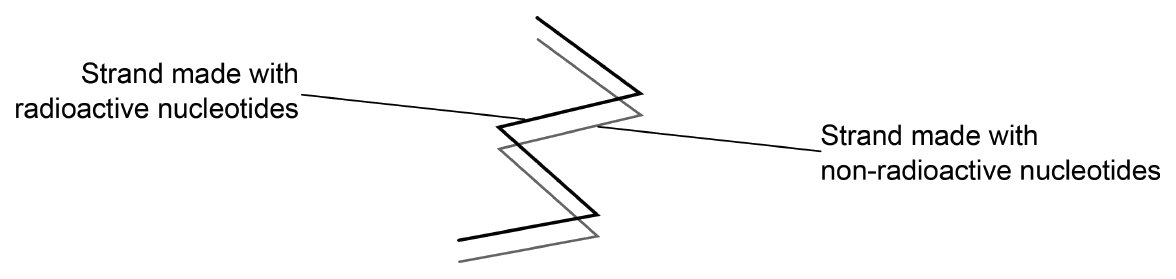
This DNA molecule is allowed to replicate three times in a medium containing non-radioactive nucleotides.
Which answer shows the correct percentages of original DNA and completely non-radioactive DNA?
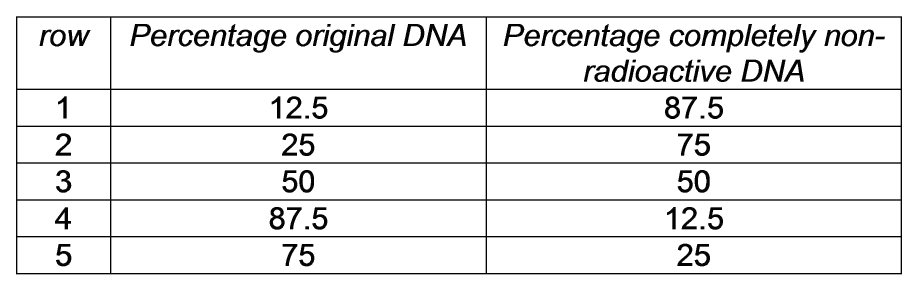
[Assume all radioactive nucleotides remain radioactive throughout, and all non-radioactive nucleotides remain non-radioactive throughout].
✍️ ကြိုး တစ်ချောင်း radioactive (အနီ)၊ ကျန် တစ်ချောင်း not radioactive (မီးခိုး) ဖြစ်တဲ့ DNA ကို radioactive မပါတဲ့ nucleotide ထဲမှာ 3 ကြိမ် ကူးမယ်
ကူး 1 ကြိမ် → molecule 2။ old ကြိုး တစ်ချောင်းစီက new (အပြာ) တစ်ချောင်းစီနဲ့ တွဲတယ်
ကူး 2 ကြိမ် → molecule 4
ကူး 3 ကြိမ် → molecule 8 (2³)
molecule 8 = ကြိုး 16 ချောင်း
① original DNA = မူလ ကြိုး (အနီ ရော မီးခိုး ရော) 2 ချောင်း၊ ကြိုး 16 ချောင်းထဲက → 216 = 12.5%
② အနီ ကြိုးက molecule 1 ခုထဲမှာပဲ — completely non-radioactive = 78 = 87.5% → အဖြေ row 1 (12.5, 87.5)
သတိ — ① strand နဲ့ ရေ (16 ထဲက 2)၊
② molecule နဲ့ (8 ထဲက 7)။သတိ — ① ကို ကြိုး (strand) နဲ့ ရေတွက်တယ် (16 ချောင်းထဲက 2)၊ ② ကို molecule နဲ့ ရေတွက်တယ် (8 ခုထဲက 7)။
no radioactive = ကြိုး နှစ်ချောင်းလုံး မပါတဲ့ molecule။“ရောင်ခြည် လုံးဝ မပါ” (no radioactive) ဆိုတာ ကြိုး နှစ်ချောင်းလုံး ရောင်ခြည် မပါတဲ့ molecule ကို ဆိုလိုလို့ ရေတွက်တဲ့ ယူနစ် ပြောင်းရတာ။
ထောင်ချောက် — 2575 က 2 ကြိမ်၊ 5050 က 1 ကြိမ် (2³ = 8)။ထောင်ချောက် — 25 နဲ့ 75 က 2 ကြိမ် ကူးတဲ့ အဖြေ၊ 50 နဲ့ 50 က 1 ကြိမ်။ ကူးတဲ့ အကြိမ်ရေကို 2 ရဲ့ ထပ်ညွှန်း (2³ = 8) လုပ်ဖို့ မမေ့ပါနဲ့။
ဇစ်ဖွင့် — helicase
Y ပုံ နေရာ = replication fork (ကူးတဲ့ ကြိုးခွ)ကဲ ကူးတဲ့ နေရာကို ချဲ့ကြည့်မယ်။ ကြိုး နှစ်ချောင်း ဇစ်ဖွင့်သလို ခွဲထွက်နေတဲ့ Y ပုံ နေရာကို replication fork (ကူးတဲ့ ကြိုးခွ) လို့ ခေါ်တယ်။
helicase က ATP energy နဲ့ breaks H bonds — ဇစ်ဆွဲ ခေါင်း။ပထမ အလုပ်သမား helicase က base အတွဲကြားက H bonds တွေကို ATP ရဲ့ energy (စွမ်းအင်) သုံးပြီး ဖြတ်တယ် (breaks H bonds — H bonds are broken)။ ဇစ်ဆွဲ ခေါင်းလိုပဲ။
SSB က ခွဲထားတဲ့ ကြိုးကို ကပ်ထား — ပြန်မတွဲ။ခွဲထွက်လာတဲ့ ကြိုးတွေကို single-strand binding protein (SSB — ကြိုးတစ်ချောင်း ကပ်တဲ့ protein) တွေက ကပ်ထားလို့ ပြန်မတွဲသွားဘူး (do not rejoin)။
topoisomerase က ဖြတ်၊ လှည့်၊ ပြန်ဆက် — ကြိုးလိမ် ချောင်။ဇစ်ဖွင့်တဲ့ ရှေ့မှာ (ahead of the fork) ကြိုးက ပိုလိမ်ပြီး (over-twisted — လိမ်လွန်) တင်းလာတယ်။ topoisomerase က ကြိုးကို ခဏ ဖြတ်ပြီး လှည့်ကာ ပြန်ဆက်လို့ ချောင်သွားတယ်။
ကြိုးအဟောင်း တစ်ချောင်းစီ = template — semi-conservative အစ။အခု ခွဲထွက်တဲ့ ကြိုး အဟောင်း တစ်ချောင်းစီက template (ပုံစံခွက်) ဖြစ်ပြီ — ‘တစ်ဝက် ထိန်း’ (semi-conservative) ရဲ့ အစ ဒီမှာပဲ။
💡 helicase = ဇစ်ခေါင်း၊ SSB = ကလစ်၊ topoisomerase = ဖြေသူ။💡 မှတ်နည်း —
helicase = ဇစ်ဆွဲ ခေါင်း၊
SSB = ဇစ် ပြန်မပိတ်အောင် ညှပ်ထားတဲ့ ကလစ်၊
topoisomerase = ရှေ့က ရှုပ်ထွေး လိမ်နေတဲ့ ကြိုးကို ဖြေပေးသူ။
🤔 A drug blocks topoisomerase. What happens as helicase keeps unzipping?
🔍 မေးခွန်း ဖြည်မယ်
A drug blocks = ဆေး တစ်မျိုးက … ကို အလုပ် မလုပ်အောင် ပိတ်တယ်။ as helicase keeps unzipping = helicase က ဇစ် ဆက်ဖွင့်နေရင်း။
မေးနေတာ — topoisomerase မရှိဘဲ helicase ဆက်ဖွင့်ရင် ဘာဖြစ်မလဲ။
topoisomerase မရှိရင် ရှေ့က ကြိုးလိမ် တင်းသထက် တင်းလာပြီး ဇစ် ဆက်မဖွင့်နိုင်တော့ဘူး — fork ရပ်တယ်။
H bond ကို helicase ဖြတ်တာ၊ ပြန်မတွဲအောင် SSB ကပ်ထားတာ၊ primer ကို primase ချတာ — ဒါတွေ topoisomerase နဲ့ မဆိုင်ဘူး။
👉 ကြိုးအသစ် ဆောက်တဲ့ enzyme က ဗလာကနေ မစနိုင်ဘူး!👉 template ရပြီ။ ဒါပေမဲ့ ကြိုးအသစ် ဆောက်တဲ့ enzyme က ဗလာကနေ စမဆောက်နိုင်ဘူး!
primer နဲ့ DNA polymerase — 3′ ထိပ်မှာပဲ ဆက်
template ကြိုး — ဘယ် 3′၊ ညာ 5′။template ကြိုး (ပုံစံခွက် ကြိုး) တစ်ချောင်းကို ကြည့်ပါ။ ဘယ်ဘက် 3′၊ ညာဘက် 5′ ဦးတည်တယ်။
primase က RNA primer (စပေးကြိုး) ချ — A ရဲ့ အဖော် U။ဒုတိယ အလုပ်သမား primase က template ပေါ်မှာ RNA primer (စပေးကြိုး) တိုတို တစ်ချောင်း ချပေးတယ်။ RNA ဖြစ်လို့ A ရဲ့ အဖော်က U (ပန်းရောင် အကွက်)။
DNA polymerase က 3′ end မှာပဲ ဆက်နိုင် — primer လို။တတိယ အလုပ်သမား DNA polymerase ရောက်လာတယ်။ သူက ရှိပြီးသား ကြိုးရဲ့ 3′ end (3′ –OH ထိပ်) မှာပဲ ဆက်နိုင်လို့ primer လိုတာ — ဗလာကနေ မစနိုင်ဘူး။
ကိုက်တဲ့ nucleotide ဆက် — အမြဲ 5′ → 3′ ရှည်တယ်။template base နဲ့ ကိုက်တဲ့ nucleotide (A–T, G–C) ကို တစ်လုံးချင်း 3′ ထိပ်မှာ ဆက်တယ်။ ဒါကြောင့် ကြိုးအသစ်က အမြဲ 5′ → 3′ ဦးတည်ရာပဲ ရှည်တယ် (အပြာ မြှား)။
2 phosphate leave — energy နဲ့ phosphodiester bond ဆောက်။nucleotide အသစ်က phosphate 3 လုံး တွဲပြီး ရောက်လာတယ် (ATP လိုပဲ)။ ဆက်တဲ့အခါ phosphate 2 လုံး ပြုတ်ထွက် (2 phosphate leave) ပြီး ထွက်လာတဲ့ energy နဲ့ phosphodiester bond ဆောက်တယ်။
ကျန် phosphate 1 လုံး — nucleotide တစ်လုံး P တစ်လုံး။ကျန် phosphate 1 လုံးကပဲ ကျောရိုးထဲ ကျန်တယ် — ဒါကြောင့် DNA ထဲမှာ nucleotide တစ်လုံးကို P တစ်လုံးပဲ ရှိတာ။
လူ့ cell မှာ 50 per s၊ bacteria မှာ 500။DNA polymerase တစ်ခုက လူ့ cell မှာ တစ်စက္ကန့် nucleotide 50 လောက် (50 per s) ဆက်တယ်။ bacteria မှာ 500 လောက်။ ဒီ နံပါတ်ကို နောက် ကတ်တွေမှာ ပြန်သုံးမယ်။
💡 ရထားလမ်း ခင်းသူ — 3′ အဆုံးမှာပဲ ဆက်ခင်း။💡 မှတ်နည်း — ရထားလမ်း ခင်းသူ လို — ခင်းပြီးသား သံလမ်း အဆုံး (3′) မှာပဲ ဆက်ခင်းနိုင်တယ်။ primer က ပထမ သံလမ်း တစ်ပိုင်း။
🤔 Replication is the process through which: (IMAT 2024 Q31)
🔍 မေးခွန်း ဖြည်မယ်
the process through which = … ဖြစ်တဲ့ လုပ်ငန်းစဉ်။ is used as a template = ပုံစံခွက် အဖြစ် သုံးတယ်။ synthesise = ဆောက်တယ်။
မေးနေတာ — replication ရဲ့ အဓိပ္ပာယ် မှန်တဲ့ စာကြောင်း ဘယ်ဟာလဲ။
replication က DNA ကို template အဖြစ် သုံးပြီး DNA အသစ် ဆောက်တာ။
DNA ကနေ RNA ဆောက်တာက transcription၊ RNA ကနေ protein ဆောက်တာက translation (သင်ခန်းစာ 39A)။
မိခင် cell က သမီး cell ဖြစ်တာက cell ကွဲခြင်း (division)။
RNA ကနေ RNA ဆောက်တာက virus တချို့မှာပဲ တွေ့ရတယ်။
👉 antiparallel ကြိုး နှစ်ချောင်းလုံး ဘယ်လို ဆောက်မလဲ?👉 ကြိုး နှစ်ချောင်းက antiparallel ဖြစ်တယ်။ ဒါဆို 5′ → 3′ တစ်ဖက်တည်း ဆောက်တတ်တဲ့ polymerase က ကြိုး နှစ်ချောင်းလုံးကို ဘယ်လို ဆောက်မလဲ?
leading, lagging နဲ့ Okazaki fragments
fork moves ညာဘက်ကို — template နှစ်ချောင်း ပြောင်းပြန်။fork က ညာဘက်ကို ဆက်ဖွင့်သွားတယ် (fork moves)။ အပေါ် template နဲ့ အောက် template က ပြောင်းပြန် ဦးတည်တယ် (antiparallel၊ သင်ခန်းစာ 27B)။
ဆက်တိုက် ဆောက် = leading strand (ရှေ့ဆောင် ကြိုး)template နှစ်ချောင်း (two templates) ရှိတယ်။ အပေါ် template ပေါ်မှာ ကြိုးအသစ်ရဲ့ 5′ → 3′ က fork ဘက်ကို ဦးတည်တယ် (runs towards the fork)။ ဒါကြောင့် fork နောက်က (behind the fork) အပိုင်း မပြတ်ဘဲ တစ်ဆက်တည်း (in one unbroken piece) လိုက်ဆောက်လို့ ရတယ် — leading strand (ရှေ့ဆောင် ကြိုး)။
အပိုင်းလိုက် နောက်ပြန် = lagging strand (နောက်ကျ ကြိုး)အောက် template ပေါ်မှာတော့ 5′ → 3′ က fork နဲ့ ပြောင်းပြန်။ fork နည်းနည်း ဖွင့်တိုင်း primer အသစ် ချပြီး နောက်ပြန် အပိုင်းတိုလေးတွေ ဆောက်ရတယ် — lagging strand (နောက်ကျ ကြိုး)။
အပိုင်းတို = Okazaki fragments (အိုကာဇာကီ အပိုင်းများ)အဲဒီ အပိုင်းတိုလေးတွေကို 1968 မှာ တွေ့ခဲ့တဲ့ ဂျပန် ပညာရှင် Reiji Okazaki (ရေဂျိ အိုကာဇာကီ၊ 1930–1975) ရဲ့ နာမည်နဲ့ Okazaki fragments (အိုကာဇာကီ အပိုင်းလေးများ) လို့ ခေါ်တယ်။
💡 leading = ရှေ့တိုး ချုပ်၊ lagging = နောက်ပြန် အပိုင်းလိုက်💡 မှတ်နည်း — ကုတင်ခင်း ပုဆိုး ချုပ်သူ လို — leading က ရှေ့တိုး ချုပ်တာ၊ lagging က နောက်ပြန် ချုပ်ရလို့ ခဏခဏ ရပ်ပြီး အပိုင်းလိုက် ချုပ်ရတယ်။
🤔 A fork opens to the LEFT instead. On which template is the new strand made in one unbroken piece?
🔍 မေးခွန်း ဖြည်မယ်
opens to the LEFT instead = ညာ အစား ဘယ်ဘက်ကို ဖွင့်တယ်။ made in one unbroken piece = အပိုင်း မပြတ်ဘဲ တစ်ဆက်တည်း ဆောက်တယ်။
မေးနေတာ — fork ဘယ်ဘက် သွားရင် ဘယ် template ပေါ်မှာ ကြိုးအသစ်က တစ်ဆက်တည်း ဖြစ်မလဲ။
ကြိုးအသစ်က 5′ → 3′ ပဲ ရှည်လို့ fork သွားတဲ့ ဘက် (ဘယ်) ကို 5′ → 3′ ဦးတည်တဲ့ ကြိုး — leading — က ဆက်တိုက် ဖြစ်တယ်။
ကျန် တစ်ချောင်းက lagging။
ကြိုး နှစ်ချောင်းလုံး ဆက်တိုက် ဘယ်တော့မှ မဖြစ်ဘူး။
👉 primer နဲ့ ကွက်လပ် ကျန်သေး — ဘယ်သူ ပြင်မလဲ?👉 Okazaki အပိုင်းလေးတွေမှာ RNA primer ပါနေသေးတယ်၊ အပိုင်းကြား ကွက်လပ် ရှိသေးတယ် — ဘယ်သူ ပြင်မလဲ?
primer ဖယ်၊ ligase ဆက်၊ proofreading
fragment တိုင်း primer ပါ — ဆောက်တာ DNA polymerase III။lagging strand ကို ချဲ့ကြည့်မယ်။ Okazaki fragment တစ်ခုစီရဲ့ အစမှာ ပန်းရောင် RNA primer ပါနေသေးတယ်။ bacteria မှာ ကြိုး အများစုကို ဆောက်တာ DNA polymerase III (builds)။
polymerase I က RNA primer → DNA nucleotide။ပြီးရင် DNA polymerase I က RNA primer ကို ဖယ်ပြီး DNA nucleotide နဲ့ အစားထိုးတယ် (replaces RNA primer → DNA nucleotide)။ polymerase အမျိုးအစား မတူဘူး။
အပိုင်းကြား ကျောရိုး မဆက်ရသေးတဲ့ gap ကျန်တယ်။ဒါပေမဲ့ အပိုင်းတွေက သီးခြား (separate pieces) ဖြစ်နေသေးတယ် — အပိုင်း တစ်ခုနဲ့ တစ်ခုကြားမှာ ကျောရိုး မဆက်ရသေးတဲ့ ကွက်လပ် (gap) တစ်ခု ကျန်တယ်။
DNA ligase (ဆက်ပေးသူ) က seals gap။နောက်ဆုံး အလုပ်သမား DNA ligase (ဆက်ပေးသူ) က အဲဒီ ကွက်လပ်ကို phosphodiester bond နဲ့ ဆက်ပိတ်တယ် (seals gap)။ ligase က nucleotide ဘာမှ မထည့်ဘူး (adds nothing) — ချိတ်ရုံပဲ။ lagging strand က ကြိုး တစ်ချောင်းတည်း ဖြစ်သွားပြီ။
proofreading (ပြန်စစ်ခြင်း) — 1 error in 10¹⁰။DNA polymerase က မှားထည့်မိရင် ချက်ချင်း ပြန်ဖြုတ်ပြီး မှန်တာ ထည့်တယ် — proofreading (ပြန်စစ်ခြင်း)။ နောက်က ပြင်တဲ့ ပစ္စည်းတွေနဲ့ပေါင်းရင် အမှား 10¹⁰ မှာ 1 ခုလောက်ပဲ ကျန်တယ် (1 error in 10¹⁰)။
💡 ligase = “လိုက်ချိတ်”၊ polymerase I = “I = ဖယ်”။💡 မှတ်နည်း — ligase = “လိုက်ချိတ်” — ကော်နဲ့ ဆက်သလို အပိုင်းတွေကို လိုက်ချိတ်တယ်။ polymerase I = “I = ဖယ်” — primer ကို ဖယ်တယ်။
🔗 Match each worker to its job.
IMAT 2020 Q35 → သင်ခန်းစာ 39A မှာ ဖြေမယ်။
🤔 A bacterium has no working DNA polymerase I. What is left in its finished lagging strand?
🔍 မေးခွန်း ဖြည်မယ်
has no working = အလုပ်လုပ်တဲ့ … မရှိဘူး။ What is left = ဘာ ကျန်နေမလဲ။ finished lagging strand = ဆောက်ပြီးသား lagging strand။
မေးနေတာ — polymerase I မရှိရင် lagging strand ထဲမှာ ဘာ ကျန်ခဲ့မလဲ။
primer ကို ဖယ်ပြီး DNA နဲ့ အစားထိုးတာ DNA polymerase I ရဲ့ အလုပ်။
သူ မရှိရင် Okazaki fragment တွေကြားမှာ RNA primer အပိုင်းလေးတွေ ကျန်တယ်။
ligase က ချိတ်ပေးရုံပဲ၊ nucleotide မထည့်ဘူး။
👉 ကူးတိုင်း chromosome တိုသွားမယ်!👉 lagging strand ရဲ့ အဆုံးဆုံးမှာ ပြဿနာ တစ်ခု ကျန်သေးတယ် — ကူးတိုင်း chromosome တိုသွားမယ်!
telomere — chromosome ရဲ့ ဖိနပ်ကြိုး အဖျား
လူ့ DNA က linear — bacteria အများစုက ring။လူ့ chromosome DNA က bacteria အများစုရဲ့ ကွင်း (ring၊ circular DNA) လို မဟုတ်ဘဲ အစွန်း နှစ်ဖက် ရှိတဲ့ ကြိုးဖြောင့် (linear) ဖြစ်တယ်။
အစွန်းဆုံး primer ဖယ်ရင် ဆက်စရာ 3′ ထိပ် မရှိ။lagging strand ရဲ့ အစွန်းဆုံး primer ကို ဖယ်လိုက်ရင် အဲဒီ ကွက်လပ် (gap) ကို DNA နဲ့ ဖြည့်ဖို့ ဆက်စရာ 3′ ထိပ် မရှိတော့ဘူး။
shorter each copy — ကွင်း DNA မှာ ပြဿနာ မရှိ။ဒါကြောင့် ကူးတိုင်း ကြိုးအသစ် နည်းနည်း တိုသွားတယ် (shorter each copy — the ends shorten)။ ကွင်း DNA မှာ အစွန်း မရှိလို့ ဒီ ပြဿနာ မရှိဘူး။
telomere (chromosome အစွန်း အုပ်) — TTAGGG ထပ်ရေး။gene တွေ မပျောက်အောင် (so genes do not disappear) chromosome အစွန်းမှာ gene မပါတဲ့ telomere (chromosome အစွန်း အုပ်) ရှိတယ်။ လူမှာ TTAGGG ကို အကြိမ် ရာနဲ့ ထောင်ချီ ထပ်ရေးထားတာ။
ကွဲတိုင်း telomere တို — အိုခြင်းနဲ့ ဆက်စပ်တယ်။telomerase မလုပ်တဲ့ body cell တွေမှာ ကွဲတိုင်း telomere အရှည် (length) တိုသွားလို့ အသက်ကြီးသူရဲ့ cell တွေမှာ telomere ပိုတိုတယ်။ ဒါက cell ကွဲနိုင်တဲ့ အကြိမ်ရေကို ကန့်သတ်ပြီး အိုခြင်းနဲ့ ဆက်စပ်တယ်။
💡 ဖိနပ်ကြိုး အဖျား အထုပ် — ပွန်းလည်း ကြိုး မပြတ်။💡 မှတ်နည်း — ဖိနပ်ကြိုး အဖျားက ပလတ်စတစ် အထုပ် (shoelace tip) လို — အထုပ် ပွန်းပေမဲ့ ကြိုး (gene) မပြတ်ဘူး။
sperm, egg ထုတ်တဲ့ cell နဲ့ stem cell မှာ telomerase က TTAGGG ပြန်ဆက်။sperm နဲ့ egg ကို ထုတ်ပေးမယ့် cell တွေ (cells that make sperm and eggs) နဲ့ stem cell တွေမှာတော့ telomerase enzyme က ကိုယ်ပိုင် RNA ပုံစံခွက်နဲ့ TTAGGG ကို ပြန်ဆက်ပေးလို့ မတိုဘူး။ ကြီးပြင်းပြီးသား (mature) body cell အများစုမှာတော့ telomerase မလုပ်ဘူး။
cancer cell အများစုမှာ telomerase အလုပ်လုပ်လို့ အကန့်အသတ်မဲ့ ကွဲ။cancer (ကင်ဆာ) cell အများစု (most) မှာ telomerase ပြန် အလုပ်လုပ်လို့ telomere မတိုဘဲ အကန့်အသတ် မရှိ ကွဲနိုင်တယ်။
🤔 A skin cell is made to switch on telomerase. What happens to its telomeres over many divisions?
🔍 မေးခွန်း ဖြည်မယ်
is made to switch on = … ကို ဖွင့်ပေးလိုက်တယ် (အလုပ်လုပ်အောင်)။ over many divisions = အကြိမ် များစွာ ကွဲတဲ့ အတောအတွင်း။
မေးနေတာ — telomerase ဖွင့်ထားတဲ့ အရေပြား cell ရဲ့ telomere အရှည် ဘာဖြစ်မလဲ။
telomerase က ကိုယ်ပိုင် RNA ပုံစံခွက်နဲ့ TTAGGG ကို ပြန်ဆက်ပေးလို့ ကူးတိုင်း တိုသွားတဲ့ အပိုင်းကို ပြန်ဖြည့်တယ် — အရှည် မပြောင်း။
telomere မှာ gene မပါဘူး။
ဒါကြောင့် ဒီ cell က cancer cell လို ကွဲမှု ကန့်သတ်ချက် ပျောက်နိုင်တယ်။
👉 စာလုံး ခြောက်ဘီလီယံ ရှစ်နာရီနဲ့ ဘယ်လို ကူးလဲ?👉 ကဲ အစက ပဟေဠိ — စာလုံး ခြောက်ဘီလီယံ (genome နှစ်စုံ) ကို ရှစ်နာရီနဲ့ ဘယ်လို ကူးလဲ?
origin ထောင်ချီ — ပဟေဠိ ဖြေပြီ
3 × 10⁹50 = 6 × 10⁷ s — 2 years။စတွက်မယ်။ genome တစ်စုံရဲ့ base pair 3 × 10⁹ ကို တစ်စက္ကန့် 50 နဲ့ စားရင် 6 × 10⁷ စက္ကန့်။ ဒါ ရက် 700 လောက် — 2 years (နှစ်နှစ်) — အရမ်း ကြာတယ်။
origin (ကူးစမှတ်) မှာ ကြိုးဖွင့် — replication bubble ဖြစ်။ဒါပေမဲ့ ကြိုးကို ထိပ်ကနေ စ မကူးဘူး။ ကူးစမှတ်ကို origin (origin of replication) လို့ ခေါ်တယ်။ origin မှာ ကြိုးဖွင့်လို့ ပူဖောင်း (replication bubble) ဖြစ်တယ်။
thousands of origins — bubble တိုင်း two directions။လူ့ chromosome တစ်ခုပေါ်မှာ thousands of origins — origin ထောင်ချီ ရှိပြီး တစ်ပြိုင်နက် စကူးတယ်။ bubble တစ်ခုစီက two directions — ဘက် နှစ်ဖက် ဖွင့်သွားတယ်။
bubble တွေ ပေါင်း — S phase ≈ 8 hours ပဲ!bubble တွေ ကြီးလာပြီး တစ်ခုနဲ့ တစ်ခု ပေါင်းသွားတယ်။ ဒါကြောင့် 2 နှစ် အစား S phase ≈ 8 hours ပဲ ကြာတယ် — ပဟေဠိ ဖြေပြီ!
bacteria မှာ origin တစ်ခု — စာအုပ်သေး၊ 500 နဲ့ မြန်။bacteria အများစုရဲ့ ကွင်းမှာတော့ origin တစ်ခုတည်း ရှိတယ်။ သူ့ စာအုပ် သေးပြီး တစ်စက္ကန့် 500 နဲ့ ဆယ်ဆ မြန်လို့ origin တစ်ခုနဲ့ လုံလောက်တယ်။
👆 Add origins (each copying in two directions) — time for one genome set ≈ days
origin 1 ခု၊ ဘက် နှစ်ဖက်ဆိုရင် 350 ရက်။ origin 8 ခုဆိုရင် 44 ရက်ပဲ — origin ထောင်ချီဆိုရင် နာရီ ပိုင်းပဲ ကျန်တယ်။
💡 လူ ထောင်ချီ ဘယ်ညာ တစ်ပြိုင်နက် ချုပ်ရင် နာရီပိုင်း။💡 မှတ်နည်း — ကွင်းဆက် ချည်ကြိုး ရှည်ကြီးကို လူ တစ်ယောက်တည်း မချုပ်ဘဲ လူ ထောင်ချီ နေရာ အသီးသီးကနေ ဘယ်ညာ နှစ်ဖက် တစ်ပြိုင်နက် ချုပ်ရင် နာရီ ပိုင်းနဲ့ ပြီးတယ်။
origin ဘယ်နှခု လိုလဲ — တွက်ကြည့်
✍️ 8 နာရီနဲ့ ပြီးဖို့ origin ဘယ်နှခု အနည်းဆုံး လိုလဲ? (genome နှစ်စုံ 6 × 10⁹ bp)
8 h = 8 × 60 = 480 minutes (မိနစ်) = 480 × 60 = 28 800 s
origin တစ်ခုက ဘက်နှစ်ဖက် × 50 = တစ်စက္ကန့် 100 bp → 8 နာရီမှာ 100 × 28 800 ≈ 2.9 × 10⁶ bp
6 × 10⁹2.9 × 10⁶ ≈ 2000 origins အနည်းဆုံး — လူ့ cell က တကယ်တော့ origin သောင်းချီ (tens of thousands) သုံးလို့ အချိန် ကျန်တယ်
💡 “8 နာရီ = 28 800 စက္ကန့်”။💡 မှတ်နည်း — “8 နာရီ = 28 800 စက္ကန့်” — ဒီ ကိန်းကို မှတ်ထားရင် origin တွက်တာ မြှောက်၊ စား နှစ်ခါပဲ။
🤔 A bacterium copies its 4.6 × 10⁶ base pairs from one origin, with two forks each adding 500 nucleotides per second. About how long does it take?
🔍 မေးခွန်း ဖြည်မယ်
from one origin = ကူးစမှတ် တစ်ခုကနေ။ two forks each adding 500 = fork နှစ်ခု၊ တစ်ခုစီက 500 စီ ထည့်တယ်။ About how long = ခန့်မှန်း ဘယ်လောက် ကြာလဲ။
မေးနေတာ — base pair 4.6 × 10⁶ ကို ကူးဖို့ အချိန် ဘယ်လောက်လဲ။
fork 2 ခု × 500 = တစ်စက္ကန့် 1000 bp။
4.6 × 10⁶ ကို 1000 နဲ့ စား = 4600 s၊ 60 နဲ့ စား ≈ 77 minutes။
2.6 hours က fork တစ်ခုတည်း (ဘက်တစ်ဖက်) လို့ ယူမိတဲ့ အဖြေ။
bacteria နဲ့ လူ — ကူးပုံ နှိုင်းယှဉ်
အဓိက စည်းကမ်း — prokaryote ရော eukaryote ရော same။ကူးတဲ့ အဓိက စည်းကမ်း (semi-conservative၊ primer၊ 5′ → 3′၊ leading နဲ့ lagging) က bacteria (prokaryote) ရော လူ (eukaryote) ရော တူတယ် (same)။ ကွာတာတွေကို ဇယားနဲ့ ကြည့်မယ်။
bacteria — ring တစ်ခု၊ လူ — linear chromosome 46။bacteria အများစုရဲ့ chromosome DNA က ကွင်း (ring) တစ်ခုတည်း၊ လူ့ DNA က ကြိုးဖြောင့် (linear) chromosome 46 ချောင်း။
bacteria မှာ origin 1 ခုတည်း၊ လူမှာ origin ထောင်ချီ (thousands)။
bacteria ~500၊ လူ ~50 — histone ဖယ်ရလို့ နှေး။bacteria ရဲ့ polymerase က တစ်စက္ကန့် ~500၊ လူ့ဟာက ~50 — နှေးရတဲ့ အကြောင်း တစ်ခုက histone တွေကို ဖယ်ပြီး ပြန်ထုပ်ရလို့ (လို့ ယူဆကြတယ်)။
လူမှာ nucleosome ပြန်ဆောက်ရ၊ bacteria မှာ histone မရှိ။လူ့ DNA ကို histone ပတ်ထားလို့ ကူးပြီးတိုင်း nucleosome အသစ် ပြန်ဆောက်ရတယ်။ bacteria မှာ histone မရှိဘူး။
လူ linear မှာ telomere, telomerase လို — ကွင်းမှာ မလို။ကွင်း DNA မှာ အစွန်း မရှိလို့ တိုသွားတဲ့ ပြဿနာ မရှိဘူး။ လူ့ ကြိုးဖြောင့် chromosome မှာ telomere နဲ့ telomerase လိုတယ်။
💡 bacteria = ရွာ ဆိုင်ကလေး၊ လူ = မြို့ကြီး ပုံနှိပ်တိုက်။💡 မှတ်နည်း — bacteria = ရွာ ဆိုင်ကလေး (ကွင်း တစ်ခု၊ ကူးစက် တစ်လုံး၊ မြန်မြန်)။ လူ = မြို့ကြီး ပုံနှိပ်တိုက် (စာအုပ် 46 အုပ်၊ စက် ထောင်ချီ၊ စာရွက် ထုပ်ပိုး ရလို့ စက်တစ်လုံးချင်း နှေး)။
🤔 Yeast is a eukaryote with linear chromosomes. Which feature of its DNA replication is shared with human cells but NOT with E. coli?
🔍 မေးခွန်း ဖြည်မယ်
Yeast = တဆေးမှို။ shared with human cells = လူ့ cell နဲ့ တူတူ ရှိတဲ့။ but NOT with E. coli = ဒါပေမဲ့ E. coli မှာ မရှိတဲ့။
မေးနေတာ — yeast နဲ့ လူမှာ ရှိပြီး E. coli မှာ မရှိတဲ့ အချက် တစ်ခု။
yeast လို eukaryote မှာ ကြိုးဖြောင့် chromosome ရှိလို့ အစွန်းမှာ telomere လိုတယ်။
E. coli ရဲ့ ကွင်း DNA မှာ အစွန်း မရှိဘူး။
primer, semi-conservative, Okazaki fragment တို့က သက်ရှိ အားလုံးမှာ ရှိတယ်။
👉 နောက်ဆုံး ပြန်စစ်ကြည့်ရအောင်။
👤 လူပုဂ္ဂိုလ်များ
1958 Meselson နဲ့ Stahl — ¹⁵N နဲ့ ¹⁴N သုံးပြီး replication က semi-conservative လို့ သက်သေ ပြခဲ့တယ်။
1968 Okazaki — lagging strand ကို အပိုင်းတိုလေးတွေ (Okazaki fragments) နဲ့ ဆောက်တာ တွေ့ခဲ့တယ်။
🔁 နောက်ဆုံး ပြန်စစ်မယ် — အဖြေ မကြည့်ခင် စဉ်းစားပါ
🤔 After one generation in ¹⁴N, Meselson and Stahl saw:
🔍 မေးခွန်း ဖြည်မယ်
After one generation in ¹⁴N = ¹⁴N ထဲမှာ တစ်ဆက် ပွားပြီးနောက်။ saw = မြင်ခဲ့တယ်။
မေးနေတာ — Meselson နဲ့ Stahl ရဲ့ ပြွန်ထဲမှာ gen 1 မှာ ဘာ band ပေါ်ခဲ့လဲ။
molecule တိုင်း old (¹⁵N) 1 + new (¹⁴N) 1 ဖြစ်လို့ hybrid band တစ်ခုတည်း။
heavy + light ဆိုရင် conservative ဖြစ်မှာ။
🤔 A cell has no working DNA ligase. What happens to the lagging strand during replication?
🔍 မေးခွန်း ဖြည်မယ်
has no working DNA ligase = အလုပ်လုပ်တဲ့ ligase မရှိဘူး။ What happens to = … ကို ဘာဖြစ်မလဲ။ during replication = ကူးနေတုန်း။
မေးနေတာ — ligase မရှိရင် lagging strand ဘယ်လို ဖြစ်နေမလဲ။
polymerase က Okazaki fragment တွေကို ဆောက်နိုင်သေးပေမဲ့ ကြားက ကွက်လပ်ကို ligase မရှိရင် မဆက်နိုင်လို့ အပိုင်းလိုက် ကျန်တယ်။
🤔 A new strand is made against the template 3′-TACG-5′. Which is the new strand, written 5′ to 3′?
🔍 မေးခွန်း ဖြည်မယ်
is made against the template = template နဲ့ ယှဉ်ပြီး ဆောက်တယ်။ written 5′ to 3′ = 5′ ကနေ 3′ အစဉ်နဲ့ ရေးထားတဲ့။
မေးနေတာ — 3′-TACG-5′ ပေါ်မှာ ဆောက်တဲ့ ကြိုးအသစ်ကို 5′ → 3′ နဲ့ ရေးရင် ဘယ်ဟာလဲ။
template ရဲ့ အဖော် ATGC ကို template နဲ့ ပြောင်းပြန် ဦးတည်ရာ — 5′-ATGC-3′။
ကြိုးအသစ်က 5′ → 3′ ပဲ ရှည်တယ်။
U ပါတာက RNA။
🤔 Telomerase normally works and keeps telomeres long in:
🔍 မေးခွန်း ဖြည်မယ်
normally works = ပုံမှန် အလုပ်လုပ်တယ်။ keeps telomeres long = telomere ကို ရှည်ရှည် ထိန်းထားတယ်။ in: = … ထဲမှာ (နေရာ/cell)။
မေးနေတာ — ပုံမှန် အခြေအနေမှာ telomerase ဘယ် cell တွေမှာ အလုပ်လုပ်လဲ။
telomerase က sperm နဲ့ egg ထုတ်တဲ့ cell နဲ့ stem cell မှာ အလုပ်လုပ်ပြီး ကိုယ်ခန္ဓာ cell အများစုမှာ မလုပ်ဘူး။
cancer cell မှာ ပြန် အလုပ်လုပ်တယ်။
bacteria ရဲ့ ကွင်း DNA မှာ အစွန်း မရှိလို့ telomere မလိုဘူး။
🎉 38A + 38B ကတိ ပြည့်ပြီ — gene = DNA၊ double helix၊ ကူးပုံ ရှင်းတတ်။🎉 သင်ခန်းစာ 38A အစက ကတိ ပြည့်ပြီ — gene = DNA ဆိုတဲ့ သက်သေ နဲ့ double helix (38A)၊ A–T, G–C နဲ့ တွက်နည်း၊ ကူးပုံ (semi-conservative) နဲ့ ဘာလို့ မြန်လဲ ကို ရှင်းတတ်ပြီ။