Membranes and transport (1)
cell တိုင်းကို 7–10 nm လောက်ပဲ ထူတဲ့ အရေပြား (membrane) က ဝိုင်းထားပြီး တံခါးစောင့် လုပ်တယ်။ ဒီ သင်ခန်းစာမှာ membrane ကို ဘာနဲ့ ဆောက်ထားလဲ သင်မယ်။ ပစ္စည်းတွေ ဘယ်လို ဖြတ်လဲ ဆိုတာ သင်ခန်းစာ 31B မှာ။
The fluid mosaic membrane
membrane ကို ဘာနဲ့ ဆောက်ထားလဲ
ဆီ နဲ့ ရေ မရောဘူး — ဒါဆို cell ရဲ့ အရေပြားက ဘယ်လိုလဲ?
oil နဲ့ water မရော — ဆီက ရေပေါ် အလွှာ ဖြစ်တယ်။ဆီကို ရေထဲ လောင်းကြည့်ပါ။ oil (ဆီ) နဲ့ water (ရေ) မရောဘူး။ ဆီက ရေပေါ်မှာ သီးသန့် အလွှာ ဖြစ်နေတယ်။
cell = ရေထဲမှာ နေတဲ့ ရေအိတ်လေး။အခု cell တစ်လုံးကို ကြည့်ပါ။ အထဲမှာလည်း water၊ အပြင်မှာလည်း water — cell က ရေထဲမှာ နေတဲ့ ရေအိတ်လေး တစ်လုံးပဲ။
အရေပြား = membrane (အမြှေး) — lipid၊ 7–10 nm လောက်ပဲ ထူ။အဲဒီ ရေအိတ်ရဲ့ အရေပြားကို cell membrane (အမြှေး) လို့ ခေါ်တယ်။ cell တစ်လုံးလုံးကို around (ပတ်ပတ်လည်) enclosing (ပတ်ပြီး ဖုံးထား) တယ်။ အဓိက phospholipid (lipid တစ်မျိုး) နဲ့ protein နဲ့ လုပ်ထားတယ်။ phospholipid ရဲ့ အမြီးပိုင်းက ဆီလို ရေ မကြိုက်တဲ့ အပိုင်း — နောက် scene မှာ ကြည့်မယ်။ အထူက cell အမျိုးအစားပေါ် မူတည်ပြီး 7 ကနေ 10 nm လောက်ပဲ — စက္ကူ တစ်ရွက်ထက် အဆ တစ်သောင်းလောက် ပါးတယ်။
ဆီ အရေပြား ရေ နှစ်ဖက်ကြား ဘယ်လို ငြိမ်လဲ?ဆီက ရေနဲ့ မရောဘူး ဆိုရင် ဆီ အရေပြားက ရေ နှစ်ဖက်ကြားမှာ ဘယ်လို ငြိမ်ငြိမ် နေနိုင်လဲ? ဒီ PART မှာ ဖြေမယ်။
membrane ကို ကိုယ်တိုင် ဆွဲ၊ နာမည် တပ်နိုင်မယ်။ဒီ PART ဆုံးရင် membrane ကို ကိုယ်တိုင် ဆွဲပြီး အပိုင်းတိုင်းကို နာမည် တပ်နိုင်မယ်။ IMAT က membrane ပုံ မေးခွန်း ငါးခါ မေးခဲ့တယ်။
👉 1 brick (အုတ်ခဲ တစ်လုံး) ကနေ စမယ်။👉 အိမ်တစ်လုံးကို အုတ်ခဲနဲ့ ဆောက်သလို membrane ကိုလည်း molecule အုတ်ခဲလေးတွေနဲ့ ဆောက်ထားတယ်။ အဲဒီ 1 brick (အုတ်ခဲ တစ်လုံး) ကနေ စမယ်။
phospholipid — ရေ ချစ်တဲ့ ခေါင်း၊ ရေ ကြောက်တဲ့ အမြီး
triglyceride = glycerol + fatty acid အမြီး ၃ ချောင်း။သင်ခန်းစာ 24B က fat ကို သတိရပါ — triglyceride ဆိုတာ glycerol တစ်ခုမှာ fatty acid အမြီး သုံးချောင်း ချိတ်ထားတာ။ အဆီတွေက triglycerides (အများကိန်း) တွေပါ။
အမြီး ၁ ချောင်း → phosphate = phospholipid (ဖော့စဖိုလစ်ပစ်)အမြီး တစ်ချောင်းနေရာမှာ phosphate ပါတဲ့ ခေါင်း တစ်ခု ချိတ်ထားရင် phospholipid (ဖော့စဖိုလစ်ပစ်) — membrane ရဲ့ အုတ်ခဲပါ။ ဆိုတော့ phospholipid = glycerol + fatty acid အမြီး ၂ ချောင်း + phosphate ပါတဲ့ ခေါင်း။ ခေါင်းမှာ phosphate ဘေးက နောက်ထပ် အုပ်စု သေးသေးလေး တစ်ခုလည်း ပါလေ့ ရှိတယ်။
ခေါင်းမှာ charge — ရေ ကပ် = hydrophilic (ရေ ချစ်)ခေါင်းထဲက phosphate မှာ charge ရှိတယ် — charged (charge ပါတဲ့) ခေါင်း။ (ခေါင်း တချို့မှာ အနှုတ်ရော အပေါင်းရော ပါလို့ စုစုပေါင်း charge သုည ဖြစ်နိုင်ပေမဲ့ charge တွေ ရှိနေတုန်းပဲ။) ရေ molecule တွေက charge ကို ကြိုက်လို့ ခေါင်းနားမှာ ဝိုင်းကပ်လာတယ်။ ဒါကို hydrophilic (ရေ ချစ်) လို့ ခေါ်တယ်။
အမြီး C–H ကြိုး — hydrophobic (ရေ ကြောက်)fatty acid အမြီးတွေကတော့ C (carbon) နဲ့ H (hydrogen) ကြိုးရှည်တွေ၊ charge မရှိဘူး။ ရေနဲ့ မကပ်လို့ ရေက ဝေးဝေး နေတယ်။ ဒါကို hydrophobic (ရေ ကြောက်) လို့ ခေါ်တယ်။
molecule တစ်ခုတည်းမှာ both ပါတယ်။molecule တစ်ခုတည်းမှာ hydrophilic ခေါင်းရော hydrophobic အမြီးရော both (နှစ်မျိုးလုံး) ပါတယ်။ ပါပေမဲ့ equally (တူတူ) မဟုတ်ဘူး — ခေါင်းက ရေဘက်၊ အမြီးက ရေနဲ့ ဝေးရာ။ ဒီ အချက်ကို IMAT က ပုံနဲ့ မေးလေ့ ရှိတယ်။
💡 ဖားလောင်း — ခေါင်း ရေ ချစ်၊ အမြီး ရေ ကြောက်။💡 မှတ်နည်း — ဖားလောင်း (tadpole) လို ပုံကို မှတ်ပါ — ခေါင်းက ရေ ချစ် (hydrophilic)၊ အမြီး နှစ်ချောင်းက ရေ ကြောက် (hydrophobic)။
🤔 A soap molecule has a charged head and one long C–H tail. When soap is put in water, which part faces the water?
🔍 မေးခွန်း ဖြည်မယ်
soap molecule = ဆပ်ပြာ molecule။ charged head = charge ပါတဲ့ ခေါင်း။ C–H tail = C နဲ့ H ကြိုး အမြီး။ faces the water = ရေဘက် မျက်နှာမူတယ်။
မေးနေတာ — ဆပ်ပြာကို ရေထဲ ထည့်ရင် ဘယ်အပိုင်းက ရေဘက် လှည့်မလဲ။ phospholipid ရဲ့ ခေါင်း၊ အမြီးနဲ့ နှိုင်းကြည့်ပါ။
charge ရှိတဲ့ ခေါင်းက ရေကို ကြိုက်တယ် (hydrophilic)။
C–H အမြီးမှာ charge မရှိလို့ ရေ ရှောင်တယ် (hydrophobic) — phospholipid နဲ့ အတူတူ။
👉 in water ပစ်ချရင် ဘာဖြစ်မလဲ?👉 ဒီ အုတ်ခဲ အများကြီးကို in water (ရေထဲ) ပစ်ချလိုက်ရင် ဘာဖြစ်မလဲ? ခေါင်းက ရေ လိုချင်တယ်၊ အမြီးက ရေ ရှောင်ချင်တယ်။
ရေထဲ ပစ်ချလိုက်ရင် — phospholipid bilayer
ရေ နှစ်ဖက် — outside နဲ့ inside cell။ရေ နှစ်ဖက် ရှိတယ် — cell အပြင်က water (outside) နဲ့ cell အတွင်းက water (inside cell)။
🤔 Predict: many phospholipids are dropped into water. Where will their tails go?
🔍 မေးခွန်း ဖြည်မယ်
Predict = ကြိုတွေးပြီး ခန့်မှန်းပါ။ are dropped into water = ရေထဲ ပစ်ချခံရတယ်။ Where will … go? = ဘယ်ကို သွားမလဲ။
မေးနေတာ — phospholipid တွေရဲ့ အမြီးတွေ ရေနဲ့ ဘယ်လို နေရာ ယူမလဲ။
အမြီးတွေက ရေ ကြောက် (hydrophobic) လို့ ရေနဲ့ ဝေးရာကို လှည့်ပုန်းတယ်။
ခေါင်းတွေကတော့ ရေဘက် လှည့်တယ်။
ခေါင်း ရေဘက်၊ အမြီး အောက်ပုန်း — ပထမ အလွှာ။phospholipid molecules တွေ ရေထဲ ရောက်တာနဲ့ ခေါင်းတွေက ရေ towards (ရေဘက် ဆီ) လှည့်ပြီး အမြီးတွေက ရေနဲ့ ဝေးရာ အောက်ကို ပုန်းတယ်။ ပုံမှာ အလွှာ တစ်လွှာချင်း ပြထားပေမဲ့ ရေထဲမှာတော့ molecule တွေ တစ်ပြိုင်နက် ကိုယ့်ဘာသာ စုစည်းတာ။ anywhere (ကြိုက်တဲ့ဘက်) လှည့်တာ မဟုတ်ဘူး — အမြဲ ဒီလိုပဲ။
ဒုတိယ အလွှာ ပြောင်းပြန် — အမြီးချင်း အလယ်မှာ ဆုံ။ဒုတိယ အလွှာက ပြောင်းပြန် စီတယ် — ခေါင်းတွေ အောက်က ရေဘက်၊ အမြီးတွေ inward (အတွင်းဘက် အလယ်ဆီ) လှည့်ပြီး ပထမ အလွှာရဲ့ အမြီးတွေနဲ့ middle (အလယ်) မှာ ဆုံတယ်။
phospholipid bilayer (နှစ်ထပ် အလွှာ) — အမြီး အလယ် ပုန်း။အလွှာ နှစ်လွှာ ရလို့ phospholipid bilayer (နှစ်ထပ် အလွှာ) လို့ ခေါ်တယ်။ ပဟေဠိ အဖြေ ဒီမှာ — ဆီ အပိုင်း (အမြီး) က ရေ မထိအောင် အလယ်မှာ ပုန်းနေတယ်။
အလယ် = hydrophobic core၊ ခေါင်းတွေ ရေကို ထိ။အလယ်က အမြီးတွေ စုနေတဲ့ နေရာကို hydrophobic core (ရေ ကြောက်တဲ့ အလယ်ပိုင်း) လို့ ခေါ်တယ်။ ခေါင်းတွေကတော့ နှစ်ဖက်လုံးမှာ ရေကို facing (မျက်နှာမူ) ပြီး ထိနေတယ်။
Na⁺ လို ions က core ကို မဖြတ်နိုင် — တံခါးစောင့်။charge ရှိတဲ့ Na⁺ လို ions တွေက ဒီ ဆီ core ကို မဖြတ်နိုင်သလောက်ပဲ — အများစု ပြန်လွင့်ထွက် သွားတယ်။ ဒါကြောင့် membrane က cell ရဲ့ တံခါးစောင့် ဖြစ်နေတယ်။
Na (sodium, Z 11) — group 1၊ electron 1 လုံး ပေးပြီး Na⁺ ion ဖြစ်တယ်။ ထမင်းစား ဆား (NaCl) ထဲက sodium ပါ။
💡 sandwich — ခေါင်း ပေါင်မုန့်၊ အမြီး အလယ် အစာ။💡 မှတ်နည်း — bilayer ကို sandwich ပေါင်မုန့်လို မှတ်ပါ — ခေါင်းတွေက ရေဘက် လှည့်နေတဲ့ ပေါင်မုန့် နှစ်ချပ်၊ အမြီးတွေက အလယ်မှာ ညှပ်ထားတဲ့ အစာ။
ကွေးတဲ့ အမြီး — membrane ကို ပျော့ပျော့ ထားတယ်
C–C single bond ချည်း — saturated၊ ဖြောင့်။အမြီး ဖြောင့်နေတာက C–C single bond တွေချည်းပဲ ပါလို့။ ဒီ အမြီးကို saturated လို့ ခေါ်တယ် (သင်ခန်းစာ 24B)။
C=C ပါရင် ကွေး (kink) — unsaturated။membrane အမြီးတွေမှာ C=C double bond တစ်ခု ပါရင် အမြီးမှာ ကွေး (kink) တစ်ခု ဖြစ်တယ် — သဘာဝ အမြီး အများစုရဲ့ C=C က cis လို့ ခေါ်တဲ့ ပုံစံ ဖြစ်လို့ပါ။ (trans ပုံစံ C=C ဆိုရင် အမြီး ဖြောင့်နေတတ်တယ်။) ဒီ အမြီးကို unsaturated လို့ ခေါ်တယ်။
ဖြောင့်တာ ကပ်ကပ် စီ — အအေးမှာ stiff။ဖြောင့်တဲ့ အမြီးတွေက ခဲတံတွေလို ကပ်ကပ် စီလို့ ရတယ် — packing tightly (ကျပ်ကျပ် စီ) လို့ ခေါ်တယ်။ အအေးမှာ ရေခဲသေတ္တာထဲက ထောပတ်လို stiff (မာ) ဖြစ်သွားတယ်။
ကွေးတာ gaps ကျန် — fluid ဆက်ဖြစ်။ကွေးတဲ့ အမြီးတွေက ကပ်ကပ် စီမရလို့ ကြားမှာ gaps (နေရာလွတ်) ကျန်တယ်။ ဆိုတော့ C=C → ကွေး → ကျပ်ကျပ် မစီနိုင် → membrane ပို fluid။ ဒါကြောင့် ဟင်းချက်ဆီလို fluid (စီးနေ) ဆက်ဖြစ်တယ်။
winter wheat က C=C အမြီး ပိုထည့်ပြီး မခဲအောင် ထိန်း။ဒါကြောင့် ဆောင်း အအေးမှာ winter wheat (ဆောင်း ဂျုံ) လို အပင်တွေက C=C ပါတဲ့ အမြီးတွေ ပိုထည့်ပြီး membrane မခဲအောင် ထိန်းတယ်။
IMAT 2014 Q31 သင်ခန်းစာ 24B မှာ — အပူကို စဉ်းစားပါ။IMAT 2014 Q31 (ဆောင်း ဂျုံ မေးခွန်း) ကို သင်ခန်းစာ 24B မှာ ဖြေထားပြီ။ ဒီမှာ ပြောင်းပြန် အခြေအနေ — အပူ — ကို စဉ်းစားကြည့်ပါ။
ရေပူစမ်း bacteria — membrane အရမ်း ပျော့လာ (hot → ?)။ပူတဲ့ ရေပူစမ်းထဲမှာ နေတဲ့ bacteria ကို စဉ်းစားပါ။ အပူမှာ အမြီးတွေ အရမ်း လှုပ်ပြီး membrane က အရည် ပျော့လွန်းလာတယ် (hot → ?)။
🤔 Bacteria are moved from 20 °C to 45 °C. Which change in their membrane lipids keeps the membrane from becoming too fluid?
🔍 မေးခွန်း ဖြည်မယ်
are moved from … to … = … ကနေ … ကို ရွှေ့ခံရတယ် (အအေးကနေ အပူ)။ keeps … from becoming too fluid = အရမ်း မပျော့အောင် ထိန်းထားတယ်။
မေးနေတာ — ပူလာတဲ့ အခါ membrane lipid ရဲ့ ဘယ် အပြောင်းအလဲက membrane ကို အရမ်း မပျော့အောင် ကူမလဲ။
ပူရင် fluid လွန်လို့ ဖြောင့်တဲ့ saturated အမြီး (C–C ပဲ) ကို ပိုထည့်ပြီး ကပ်ကပ် စီစေတယ် — membrane ပြန် မာလာတယ်။
C=C ပိုထည့်ရင် ပို ပျော့သွားမယ်။
protein နဲ့ sugar က fluidity ကို ဒီလို မထိန်းဘူး။
👉 ions, glucose ဘယ်လို ဝင်လဲ — တံခါးတွေ?👉 lipid အလွှာ ချည်းပဲ ဆိုရင် ions နဲ့ glucose ဘာမှ မဝင်နိုင်ဘူး။ cell က တံခါးတွေ ဘယ်လို တပ်ထားလဲ?
ဆီ ပင်လယ်ထဲက protein ကျွန်းများ
ဆီ ပင်လယ်ထဲမှာ protein တွေ ကျွန်းလို ရှိတယ်။bilayer ကို ပြန်ကြည့်ပါ။ ဒီ ဆီ ပင်လယ်ထဲမှာ protein တွေက ကျွန်းတွေလို ရှိနေတယ်။ အများစုက အလုံးလို ခေါက်ထားတဲ့ globular (အလုံးပုံ) proteins။
core ထဲ ဝင်နေ = integral protein (core ထဲ ဝင်နေတဲ့ protein)တချို့ protein က ဆီ core ထဲအထိ ဝင်နေတယ်။ ဒါကို integral protein လို့ ခေါ်တယ်။ အများစုက ပုံထဲကလို membrane ကို crosses (ဖြတ်ကျော်) — အပြင်ကနေ across (ဖြတ်ပြီး) အတွင်းအထိ ဖောက်ထွက်ပြီး တချို့က အလွှာ တစ်လွှာထဲပဲ ဝင်တယ်။
🤔 Predict: the middle part of an integral protein sits among the fatty acid tails. What must that part be like?
🔍 မေးခွန်း ဖြည်မယ်
middle part = အလယ်ပိုင်း။ sits among the fatty acid tails = fatty acid အမြီးတွေကြားမှာ ထိုင်နေတယ်။ What must … be like? = ဘယ်လို ဖြစ်ရမလဲ။
မေးနေတာ — ဆီ core ထဲမှာ နေရတဲ့ protein အပိုင်းက ရေနဲ့ ဘယ်လို ဆက်ဆံရမလဲ။
ဆီ core ထဲမှာ နေရမှာမို့ အမြီးတွေလိုပဲ hydrophobic ဖြစ်ရမယ်။
charge ရှိရင် ဆီ core က ပြန်ကန်ထုတ်မယ်။
အလယ် hydrophobic၊ ထိပ် နှစ်ဖက် hydrophilic။ဆီ core ထဲ နစ်နေတဲ့ အလယ်ပိုင်းက hydrophobic၊ ရေထဲ ထွက်နေတဲ့ ထိပ် နှစ်ဖက်က hydrophilic ဖြစ်တယ်။ phospholipid လိုပဲ နှစ်မျိုးလုံး ပါတယ်။
ကပ်ရုံ = peripheral protein (မျက်နှာပြင် protein)တချို့ protein က ဆီ core ထဲ လုံးဝ မဝင်ဘဲ မျက်နှာပြင်ပေါ်မှာ ကပ်နေရုံပဲ။ ဒါကို peripheral protein လို့ ခေါ်တယ်။
peripheral — core ထဲ မဝင်၊ ရေ ထိ မျက်နှာ hydrophilic။peripheral protein က ဆီ core ထဲ ဘာ အပိုင်းမှ မဝင်ဘူး။ ရေနဲ့ ထိနေတဲ့ မျက်နှာပြင်က hydrophilic ဖြစ်ပြီး ခေါင်းတွေ ဒါမှမဟုတ် integral protein နဲ့ ကပ်နေတယ်။
💡 integral = ဖောက်ဝင် သံချောင်း၊ peripheral = စတစ်ကာ။💡 မှတ်နည်း — integral protein က ပျဉ်ပြားကို ဖောက်ဝင်နေတဲ့ သံချောင်းလို၊ peripheral protein က ပျဉ်ပြား မျက်နှာပေါ် ကပ်ထားတဲ့ စတစ်ကာလိုပဲ။
👉 integral protein အလုပ် ၃ မျိုး ရှိတယ်။👉 integral protein တွေ membrane မှာ ဘာ အလုပ် လုပ်လဲ? အဓိက အလုပ် သုံးမျိုး ရှိတယ်။
protein တွေရဲ့ အလုပ် သုံးမျိုး
① channel protein (ပေါက်ပါ ပြွန် protein) — pore ပါ။အလုပ် ① — channel protein။ အလယ်မှာ ရေ ပြည့်နေတဲ့ ပေါက် (pore) ပါတဲ့ ပြွန်လိုပဲ။ channel တစ်မျိုးက specific (သတ်မှတ်ထားတဲ့) substances (ပစ္စည်း) ကိုပဲ ဖြတ်ခွင့် ပေးတယ် — ion တစ်မျိုး ဒါမှမဟုတ် ရေ လို molecule တစ်မျိုး။ channel တချို့က အမြဲ ပွင့်နေပြီး တချို့က signal ရမှ ပွင့်တယ်။
K⁺ လို ion က ဒီ ပေါက်ထဲကနေ တန်း ဖြတ်သွားတယ် — ဆီ core နဲ့ မထိတော့ဘူး။
K (potassium, Z 19) — group 1၊ Na ရဲ့ အောက်တည့်တည့်။ electron 1 လုံး ပေးပြီး K⁺ ion ဖြစ်တယ်။ ငှက်ပျောသီး နဲ့ အာလူးမှာ potassium များတယ်။
② carrier protein (ဖမ်းသယ် protein) — glucose ဖမ်းကပ်။အလုပ် ② — carrier protein။ glucose လို molecule ကို သူ့ အိတ်ပေါက်ထဲ ဖမ်းကပ်တယ်။
carrier changes shape — လှည့်တံခါးလို လွှတ်ပေး။ပြီးရင် carrier က changes shape (ပုံစံ ပြောင်း) ပြီး molecule ကို တစ်ဖက်ကို လွှတ်ပေးတယ် — လှည့်တံခါး လိုပဲ။ ဒါကြောင့် carrier က molecules တွေကို membrane ဖြတ်ပြီး transports (သယ်ပို့) တယ်။
③ receptor (သတင်း ဖမ်း protein) — hormone ဖမ်းတယ်။အလုပ် ③ — receptor။ hormones (သွေးထဲက သတင်း molecule) တချို့ — ဥပမာ protein hormone insulin — ကို အပြင်ဘက်မှာ ဖမ်းတယ်။
signal inside — hormone မဝင်ဘဲ သတင်းပဲ ဝင်။receptor က signal inside (အထဲကို သတင်း) ဆက်ပို့တယ် — insulin ကိုယ်တိုင် မဝင်ဘဲ သတင်းပဲ ဝင်တာ။ (steroid hormone တွေကတော့ lipid ဖြစ်လို့ membrane ကို ဖြတ်ဝင်ပြီး cell ထဲက receptor နဲ့ ဆုံတယ်။)
💡 channel ဥမင်၊ carrier လှည့်တံခါး၊ receptor ခေါင်းလောင်း။💡 မှတ်နည်း — channel က ပစ္စည်း တစ်မျိုးတည်း ဖြတ်ရတဲ့ ဥမင်လိုဏ် (တချို့ ဥမင်မှာ ဖွင့်ပိတ် တံခါး ပါတယ်)၊ carrier က ဘူတာရုံက တစ်ယောက်ချင်း လှည့်ဝင်ရတဲ့ လှည့်တံခါး၊ receptor က အပြင်က နှိပ်ရင် အထဲမှာ မြည်တဲ့ လူခေါ်ခေါင်းလောင်း။
👉 ကျန်တာ — cholesterol နဲ့ sugars။👉 protein ပြီးရင် membrane မှာ ကျန်တဲ့ ပါဝင်ပစ္စည်း နှစ်မျိုး — cholesterol နဲ့ sugars။
cholesterol နဲ့ sugar ကြိုးများ
cholesterol (အမြီးကြား lipid ပြား) — molecule တစ်ခုစီ အလွှာ တစ်လွှာ ထဲ။cholesterol က အမြီးတွေ ကြားမှာ ညှပ်နေတဲ့ lipid ပြားလေး ဖြစ်တယ်။ molecule တစ်ခုစီက အလွှာ တစ်လွှာ ထဲမှာပဲ ရှိတယ် — နှစ်လွှာလုံးကို ဖောက်မနေဘူး။ အပေါ် အလွှာရော အောက် အလွှာရော နှစ်လွှာလုံးမှာ cholesterol တွေ ရှိတယ်။
cholesterol molecule ကို ချဲ့ကြည့်ပါ။ fatty acid ကြိုး မဟုတ်ဘဲ carbon ring (ကွင်း) လေးခု ဘေးချင်း ကပ်ထားတယ်။ ring လေးခု ပါတဲ့ lipid ကို steroid (စတီးရွိုက်) လို့ ခေါ်တယ် (သင်ခန်းစာ 24B)။
cholesterol ကနေ steroid hormones (ဥပမာ ကျား-မ hormone တချို့) ကို လုပ်တယ် — hormones အားလုံး မဟုတ်ဘူး။
တစ်ဖက် အစွန်းမှာ OH အုပ်စု သေးသေးလေး ရှိတယ်။ OH က ရေကို ကြိုက်လို့ phospholipid ခေါင်းတွေကြား ရေဘက်မှာ နေတယ်။
ring တွေနဲ့ နောက်ဘက်က အမြီး တိုတိုကတော့ ရေ ကြောက်လို့ phospholipid အမြီးတွေကြား ဝင်ညှပ်နေတယ် — ဒါကြောင့် အလွှာ တစ်လွှာထဲမှာပဲ ရှိတာ။
hot → not too fluid။ပူတဲ့ အခါ phospholipid တွေ အရမ်း လှုပ်ပြီး အရည် ဖြစ်ချင်တယ်။ cholesterol က သူတို့ရဲ့ လှုပ်ရှားမှုကို လျှော့ပေး (ဆွဲထား) လို့ hot → not too fluid (အရမ်း မပျော့ဘူး)။
cold → not stiff — fluidity ထိန်းညှိ။အေးတဲ့ အခါ အမြီးတွေ ကပ်ကပ် စီချင်တယ်။ cholesterol က ကြားမှာ ခံထားလို့ cold → not stiff (မမာဘူး)။ ဆိုတော့ cholesterol က fluidity ကို regulate (ထိန်းညှိ) ပြီး maintains (တည်အောင် ထိန်းထား) တယ် — membrane ကို stabilises (တည်ငြိမ်စေ) တယ်။
sugar + protein = glycoprotein (sugar ကပ် protein)အပြင်ဘက် မျက်နှာပြင်မှာ sugar ကြိုးတွေ ကပ်နေတယ်။ ဒီ sugar တွေက carbohydrates (ကစီ-သကြား မျိုး)။ protein နဲ့ ကပ်နေရင် glycoprotein လို့ ခေါ်တယ် (glyco = sugar)။
lipid နဲ့ ကပ်နေရင် glycolipid လို့ ခေါ်တယ်။
sugar က outside only — identity card၊ သွေး A, B။sugar ကြိုးတွေက outside only (အပြင်ဘက်မှာပဲ)။ cell ရဲ့ identity card (မှတ်ပုံတင်) လိုပဲ — ကိုယ်ခံ cell တွေက ‘ကိုယ့် cell’ လို့ မှတ်မိတယ်၊ သွေး အုပ်စု A, B လည်း ဒီ sugar တွေပဲ။
💡 cholesterol = အပူချိန် ထိန်း ကိရိယာ။💡 မှတ်နည်း — cholesterol ကို အပူချိန် ထိန်းတဲ့ ကိရိယာလို မှတ်ပါ — ပူရင် အမြီးတွေကို ဆွဲထား၊ အေးရင် ကြားမှာ ခံထား။
👉 အပိုင်း အားလုံး ရပြီ။ အခု တစ်ပုံတည်းမှာ ပေါင်းပြီး နာမည် ပေးမယ်။
🔎 ကြိုကြည့်မယ် — red blood cells (သွေးနီဥ) နဲ့ သွေး အုပ်စု A, B
သွေး တစ်စက် ချဲ့ရင် — အနီ ပြားလေးတွေ။သွေး တစ်စက်ကို microscope နဲ့ ချဲ့ကြည့်ရင် အလယ် ချိုင့်နေတဲ့ အနီရောင် ပြားလေးတွေ အများကြီး တွေ့ရတယ်။
အဲဒါ red blood cells (သွေးနီဥ) — oxygen သယ်တယ်။အဲဒါတွေကို red blood cells (သွေးနီဥ) လို့ ခေါ်တယ်။ oxygen ကို သယ်ပေးတဲ့ cell တွေ — သင်ခန်းစာ 48 မှာ အပြည့် သင်မယ်။
သူ့ membrane အပြင်ဘက်မှာလည်း sugar ကြိုး။red blood cell တစ်လုံးမှာလည်း membrane ရှိတယ်။ အပြင်ဘက် မျက်နှာပြင်မှာ အခုလေးတင် သင်ခဲ့တဲ့ sugar ကြိုးတွေ ထွက်နေတယ်။
group A နဲ့ B — ကြိုး အဆုံးက sugar မတူ။သွေး group A လူရဲ့ sugar ကြိုး အဆုံးက sugar တစ်လုံးနဲ့ group B လူရဲ့ အဆုံးက sugar တစ်လုံး မတူဘူး။ ဒါပဲ ကွာတယ် — အမြီး၊ cholesterol၊ ခေါင်း အတူတူပဲ။
အားလုံး ပေါင်းလိုက်ရင် — fluid mosaic model
အပိုင်း အားလုံး တစ်ပုံတည်း ပေါင်းလိုက်ပြီ။အပိုင်း အားလုံးကို တစ်ပုံတည်း ပေါင်းလိုက်ပြီ — bilayer၊ proteins၊ cholesterol၊ sugar ကြိုးတွေ။
phospholipid ဘေးဘီ ရွေ့နေ — fluid။phospholipid တွေက နေရာမှာ ငြိမ်မနေဘူး၊ ဘေးဘီ အမြဲ ရွေ့နေတယ်။ protein တချို့လည်း ဘေးတိုက် ရွေ့နိုင်တယ်။ molecule တွေ membrane ထဲမှာ ဘေးတိုက် ရွေ့နိုင်လို့ fluid လို့ ခေါ်တယ်။
protein တွေ mosaic လို စိုက်နေ။protein တွေက ကြွေပြား ပန်းချီ (mosaic) လို ဟိုတစ်ကွက် ဒီတစ်ကွက် စိုက်နေတယ်။
ဒါကြောင့် ဒီ ပုံစံကို fluid mosaic model လို့ ခေါ်တယ်။
Singer နဲ့ Nicolson — 1972 မှာ model ထုတ်ခဲ့တယ်။Singer (1924–2017) နဲ့ Nicolson (1943 မွေး) — အမေရိကန် cell ဇီဝ ပညာရှင် နှစ်ယောက်။ 1972 မှာ ဒီ model ကို Science ဂျာနယ်မှာ ထုတ်ခဲ့တယ်။
အဓိက phospholipids နဲ့ proteins၊ cholesterol လည်း များ။အဓိက ပါဝင်ပစ္စည်း နှစ်မျိုးက phospholipids နဲ့ proteins။ တိရစ္ဆာန် cell မှာ cholesterol လည်း အများကြီး ပါတယ် — amount (ပမာဏ) က cell အမျိုးအစားနဲ့ membrane ပေါ် မူတည်ပြီး ကွာတယ်။ sugar ကြိုးကတော့ နည်းနည်းပဲ ပါတယ်။
အလုပ် — controls in / out — တံခါးစောင့်။အဓိက အလုပ်ကတော့ ဘာ ဝင်မလဲ၊ ဘာ ထွက်မလဲ ထိန်းချုပ်တာ (controls in / out) — regulating (ထိန်းညှိ) what enters and leaves the cell။ cell ရဲ့ တံခါးစောင့်ပါ။
membrane ပုံ မှန်မမှန် — စစ်ချက် 4 ခု
📝 IMAT 2022 · Question 31
The diagrams each show a section of the cell surface membrane to illustrate the fluid mosaic model.
Which diagram is most accurate?
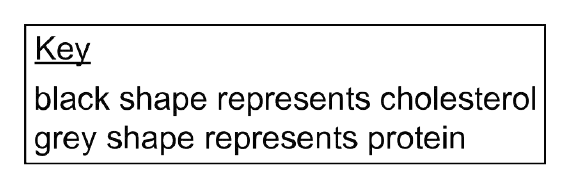
① heads out, tails in — ပြောင်းပြန်ဆို မှား။IMAT က membrane ပုံ မှန်မမှန် မေးရင် စစ်ချက် ① heads out, tails in — ခေါင်းတွေ ရေဘက် နှစ်ဖက်မှာ၊ အမြီးတွေ အလယ်မှာ။ ညာဘက်လို ပြောင်းပြန် ဆွဲထားရင် မှား။
② cholesterol 1 layer ထဲ တိုတို — ရှည်ရင် မှား။② cholesterol molecule တစ်ခုစီက 1 layer (တစ်လွှာ) ထဲမှာ တိုတိုလေး — နှစ်လွှာလုံးမှာ ရှိနိုင်တယ်။ bilayer တစ်ခုလုံးကို ဖောက်ပြီး ရှည်နေရင် မှား။
③ sugars outside only — အတွင်းဘက်ဆို မှား။③ sugars outside only — sugar ကြိုးတွေ cytoplasm ဘက် (အတွင်းဘက်) မှာ ဆွဲထားရင် မှား။
④ proteins in core or on it။④ proteins in core or on it — ဆီ core ထဲ ဝင်နေ (integral၊ အများစု ဖောက်ထွက်) ဒါမှမဟုတ် မျက်နှာပြင်ပေါ် ကပ်နေ (peripheral)။
စစ်ချက် ၄ ခုလုံး ✓ မှ မှန်တဲ့ ပုံ။စစ်ချက် လေးခုလုံး ✓ ဖြစ်မှ မှန်တဲ့ ပုံ။ ဘယ်စစ်ချက်မှာ မှားလဲ ရှာပြီး ပုံ တစ်ပုံချင်း ပယ်သွားရုံပဲ။
B ①၊ C
②၊ D
③၊ E ①
③ မှား — only A passes ✓။B က lipid ပြောင်းပြန် (①)၊ C က cholesterol ရှည် (②)၊ D က sugar အတွင်းဘက် (③)၊ E က ① ရော
③ ရော မှား — only A passes ✓။
🔎 exam English — region (အပိုင်း / နေရာ)
region = molecule တစ်ခုရဲ့ အပိုင်း တစ်ပိုင်း။နောက် IMAT မေးခွန်းမှာ region ဆိုတဲ့ စကားလုံး ပါတယ်။ region (အပိုင်း / နေရာ) ဆိုတာ molecule တစ်ခုရဲ့ အပိုင်း တစ်ပိုင်းကို ပြောတာ။
phospholipid — head region နဲ့ tail region။phospholipid မှာ region နှစ်ခု — ခေါင်း အပိုင်း (head region) က hydrophilic၊ အမြီး အပိုင်း (tail region) က hydrophobic။
integral protein — region သုံးခု။membrane ကို ဖြတ်တဲ့ integral protein မှာ region သုံးခု — ရေထဲ ထွက်နေတဲ့ ထိပ် နှစ်ဖက်က hydrophilic၊ ဆီ core ထဲက အလယ် region က hydrophobic။
"a hydrophobic region" = ရေ ကြောက်တဲ့ အပိုင်း။ဒါကြောင့် "a hydrophobic region of a molecule" ဆိုရင် molecule တစ်ခုရဲ့ ရေ ကြောက်တဲ့ အပိုင်း — ဆီ core ထဲ ပုန်းနေတဲ့ အပိုင်းကို ရှာခိုင်းတာ။
IMAT ပုံ မေးခွန်း — ဘယ် label က ရေ ကြောက်လဲ?
📝 IMAT 2020 · Question 23
The diagram represents the fluid mosaic model of a cell membrane.
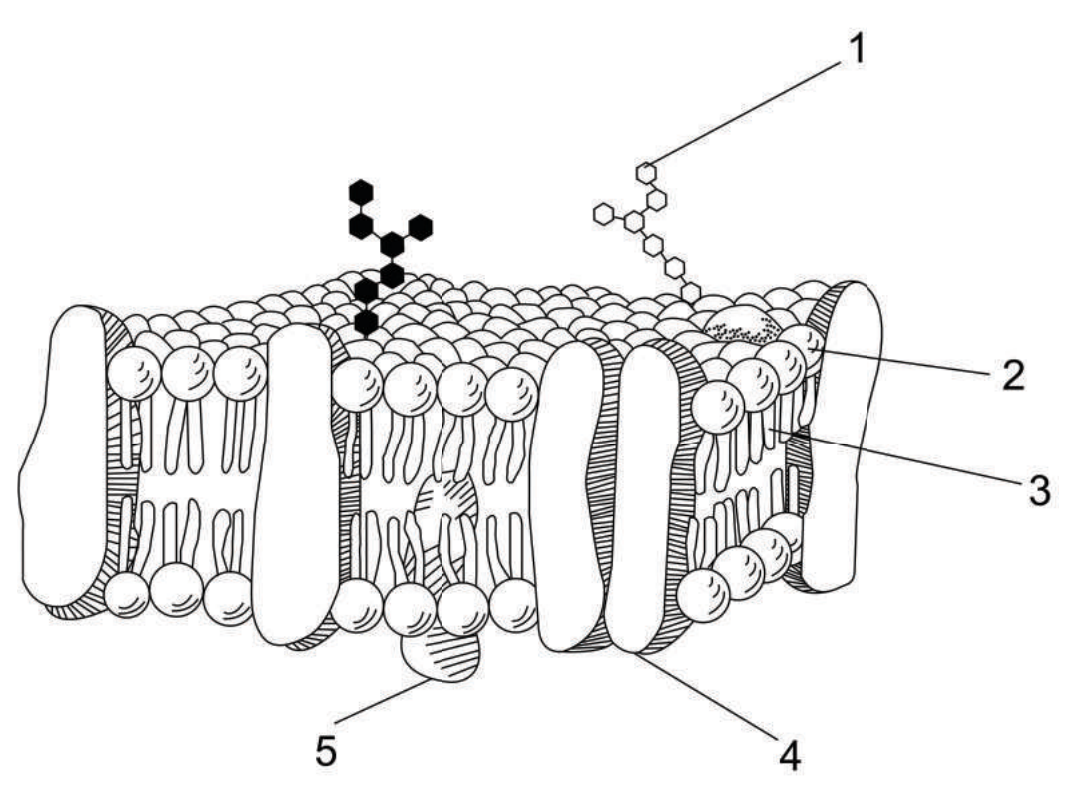
Which one of the labels 1-5 shows a hydrophobic region of a molecule?
ရေ ထိရင် hydrophilic၊ core ထဲဆို hydrophobic။ပုံကို စစ်ချက် တစ်ခုတည်းနဲ့ ဖတ်မယ် — label တစ်ခုချင်း ရေကို ထိနေလား၊ ဆီ core ထဲ ပုန်းနေလား။ ရေကို ထိနေရင် hydrophilic၊ ဆီ core ထဲမှာ ဆိုရင် hydrophobic။
1 sugar, 2 phosphate ခေါင်း — hydrophilic။1 က အပြင်ဘက် sugar ကြိုး — ရေထဲ ထွက်နေတယ်။ 2 က phosphate ခေါင်း — ရေကို ထိတယ်။ နှစ်ခုလုံး hydrophilic။
4, 5 — ရေထဲ ထွက်နေတဲ့ အပိုင်း — hydrophilic။4 က channel protein ရဲ့ အောက်ထိပ်၊ 5 က အတွင်း အလွှာထဲ ဝင်နေတဲ့ protein ရဲ့ cytoplasm ဘက် ထွက်နေတဲ့ အပိုင်း။ label က ရေထဲ ထွက်နေတဲ့ အပိုင်းကို ညွှန်လို့ hydrophilic။
3 — အလယ် fatty acid ဆီ core။3 ကတော့ အလွှာ နှစ်လွှာရဲ့ အလယ် — fatty acid အမြီးတွေ စုနေတဲ့ ဆီ core ဖြစ်တယ်။
🎮 Water side or oily core? Sort fast 🔥
ဒါကြောင့် hydrophobic region ကို ညွှန်တာ label 3 တစ်ခုတည်း ✓။
IMAT 2012 Q44 သင်ခန်းစာ 24B မှာ — အသစ် တစ်ပုဒ်။IMAT 2012 Q44 (hydrophobic ရော hydrophilic ရော ပါတဲ့ molecule နှစ်ခု) ကို သင်ခန်းစာ 24B မှာ ဖြေထားပြီ။ ဒီမှာ အသစ် တစ်ပုဒ် —
🤔 Which of these membrane molecules has NO part inside the hydrophobic core?
🔍 မေးခွန်း ဖြည်မယ်
Which of these = ဒီထဲက ဘယ်ဟာလဲ။ has NO part inside = အထဲမှာ အပိုင်း တစ်ခုမှ မရှိဘူး။ the hydrophobic core = အလယ်က ရေ ကြောက် ဆီ core။
မေးနေတာ — ဆီ core ထဲကို လုံးဝ မဝင်တဲ့ molecule တစ်ခု။ option တစ်ခုချင်း core ထဲ ဘာ ဝင်နေလဲ စစ်ပါ။
peripheral protein က မျက်နှာပြင်ပေါ် ကပ်နေရုံ — ဆီ core ထဲ ဘာ အပိုင်းမှ မဝင်ဘူး။
phospholipid နဲ့ glycolipid ရဲ့ အမြီး၊ cholesterol ရဲ့ ring၊ integral protein ရဲ့ core ထဲက အလယ်ပိုင်း — ဒါတွေက hydrophobic။
beetroot စမ်းသပ်ချက် — membrane ပျက်ရင် အနီ ယို
📝 IMAT 2019 · Question 28
Beetroot is a root vegetable with cells that contain a red pigment. Normally the pigment cannot pass out of the cells because it cannot diffuse through their cell surface membranes. An investigation was carried out into the effect of various chemicals on the permeability of the cell surface membranes of beetroot cells.
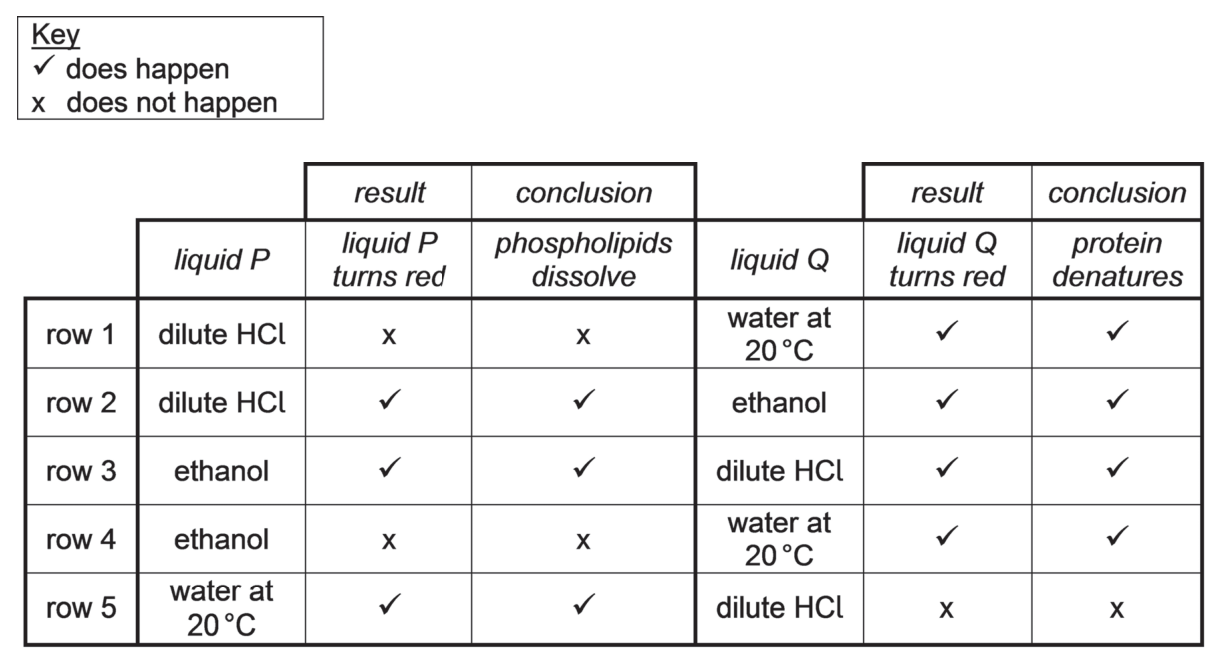
1 cm3 samples were cut from the beetroot and washed in running water for 20 minutes to remove any pigment that was released from the damaged cells. Five experiments were carried out. In each experiment, one cube of beetroot was placed in liquid P and one cube placed in liquid Q, and the results were observed. Which row shows the correct results and conclusions?
beetroot red pigment — membrane ကောင်းရင် မထွက်။beetroot (မုန်လာဥနီ) cell တွေထဲမှာ red pigment (အနီရောင် ရောင်ခြယ်) ရှိတယ်။ membrane ကောင်းနေသရွေ့ ရောင်ခြယ်က အပြင် မထွက်ဘူး။
water 20 °C — clear၊ membrane မပျက်။ကုဗတုံးကို water 20 °C ထဲ ထည့်ရင် ရေ clear (ကြည်) နေတယ် — membrane မပျက်လို့။
လှီးတုန်း ပေါက်တဲ့ cell ရောင်ခြယ်ကို အရင် ဆေးထုတ်ထား။ဓားနဲ့ လှီးတုန်း ပေါက်သွားတဲ့ cell တွေက ထွက်လာတဲ့ ရောင်ခြယ်ကိုတော့ စမ်းသပ်ချက် မစခင် ရေစီးထဲမှာ မိနစ် 20 ဆေးကြောပြီး ဖယ်ထားတယ်။
~60 °C — proteins denature၊ ရေ နီလာ။ရေကို ~60 °C ကျော်အောင် heat (အပူ) ပေးရင် ရေ နီလာတယ်။ အပူက protein ရဲ့ ခေါက်ထားတဲ့ ပုံကို ဖြည်ပစ်တယ် — proteins denature (ပုံပျက်) ဖြစ်ပြီး membrane မှာ ကြားပေါက်တွေ ဖြစ်လာတယ်။ phospholipid တွေလည်း အရမ်း လှုပ်လာတယ်။ နှစ်ခုလုံးကြောင့် membrane က ပို ယိုလာတယ် — permeability (ဖြတ်ခွင့်) တိုးလာတယ်။
ethanol — phospholipids dissolve၊ နီလာ။ethanol (အရက်) ထဲ ထည့်ရင်လည်း နီလာတယ်။ ethanol က ဆီကို ပျော်စေတဲ့ solvent ဖြစ်လို့ phospholipids ကို dissolve (ပျော်စေ) တယ်။
dilute HCl — proteins denature၊ နီလာ။dilute HCl (ပျော့တဲ့ acid) ထဲမှာလည်း နီလာတယ်။ acid က proteins ကို denature ဖြစ်စေလို့ — အပူ နဲ့ အကြောင်း တူတယ်။
P = ethanol၊ Q = dilute HCl —
row 3 ✓။liquid P က phospholipids ကို ပျော်စေရမယ် (dissolve) → ethanol၊
liquid Q က protein ကို ပုံပျက်စေရမယ် (denature) → dilute HCl။
နှစ်ခုလုံး red ✓✓ — row 3 ✓။ 20 °C ရေ ပါတဲ့ row တွေက ‘red ✓’ ဆိုလို့ မှား။
💡 မုန်လာဥနီ ပြုတ်ရင် ရေ နီ — protein ပျက်လို့။💡 မှတ်နည်း — မုန်လာဥနီ ပြုတ်ရင် ရေ နီသွားတာ မြင်ဖူးမှာပါ — အပူက membrane protein ကို ပျက်စေပြီး phospholipid တွေကိုလည်း အရမ်း လှုပ်စေလို့ membrane ယိုပြီး ရောင်ခြယ် ထွက်တာ။
👉 ဘာတွေ ဘယ်လို ဖြတ်လဲ? သင်ခန်းစာ 31B မှာ။👉 membrane ကောင်းကောင်း ရှိရင် ဘာတွေ ဘယ်လို ဖြတ်သွားလဲ? သင်ခန်းစာ 31B မှာ ဆေးရုံ ပဟေဠိ တစ်ခုနဲ့ စမယ်။
IMAT အဖြေ ထောင်ချောက် — membrane မဟုတ်တဲ့ အလုပ်တွေ
IMAT က membrane ရဲ့ အလုပ်ကို cell ရဲ့ တခြား အလုပ်တွေနဲ့ ရောပြီး မေးတယ်။IMAT က membrane ရဲ့ အလုပ်ကို မေးရင် cell ထဲက တခြား အပိုင်းတွေရဲ့ အလုပ်ကို မှားတဲ့ option အဖြစ် ထည့်လေ့ ရှိတယ်။ ဘယ်အလုပ် ဘယ်သူ့ဟာလဲ cell တစ်လုံးပေါ်မှာ ကြည့်မယ်။
membrane — regulating what enters and leaves။အပြင်ဆုံး အနားက membrane — သူ့ အလုပ်က regulating (ထိန်းညှိ) what enters and leaves — ဘာ ဝင်၊ ဘာ ထွက် ထိန်းတာ။
nucleus — containing the genetic material (DNA)။ခရမ်းရောင် nucleus က containing (ထည့်ထား) the genetic material (မျိုးရိုးဗီဇ ပစ္စည်း) — DNA ကို သိမ်းထားတယ်။ DNA နဲ့ RNA ကို nucleic acids လို့ ခေါ်တယ် — nucleus ထဲမှာ ပထမဆုံး တွေ့ခဲ့လို့ ဒီ နာမည် ရတာ။ RNA က cytoplasm ထဲမှာလည်း ရှိတယ်။
nucleolus — nucleus ထဲက အစက် နက်။nucleus ထဲက အစက် နက်နက်လေးက nucleolus — ribosome အတွက် RNA လုပ်တဲ့ နေရာ (သင်ခန်းစာ 28, 29)။
ribosomes — protein synthesis (synthesizing proteins)။အစက် အစိမ်းလေးတွေက ribosomes — protein ကို ဆောက်တယ်။ ဆောက်တာကို synthesis (ပေါင်းစပ် ဆောက်လုပ်ခြင်း) လို့ ခေါ်တယ် — synthesizing proteins။
mitochondria — providing energy (energy source)။လိမ္မော်ညို mitochondria က providing (ပေးတဲ့) energy — cell ရဲ့ energy source (ရင်းမြစ်)။
enzymes — catalyse reactions။enzymes (ဓာတ်ပြုမှု မြန်စေတဲ့ molecule — အများစု protein၊ RNA တချို့လည်း enzyme လို လုပ်နိုင်) တွေက reaction ကို catalyse (မြန်အောင် လုပ်) တယ်။ တချို့ enzyme က phosphate တစ်ခု ထပ်တပ်တယ် — phosphorylate လို့ ခေါ်တယ်။
facilitating cell movement — membrane အလုပ် မဟုတ်။cell ကိုယ်တိုင် ရွေ့လျားမှု (movement) ကို facilitating (လွယ်အောင် ကူ) တာက အမြီး၊ အမွေးလေးတွေ နဲ့ protein ကြိုးတွေ ရဲ့ အလုပ် — membrane က သူတို့နဲ့ ချိတ်ပြီး ကူနိုင်ပေမဲ့ membrane ရဲ့ အဓိက အလုပ် မဟုတ်ဘူး။
transfer DNA out — membrane အလုပ် မဟုတ်။DNA ကို cell အပြင် transfer (လွှဲပို့) တာလည်း membrane protein ရဲ့ အလုပ် မဟုတ်ဘူး။ option မှာ ဒီ အလုပ်တွေ တွေ့ရင် ပယ်ပါ။
👤 လူပုဂ္ဂိုလ်များ
1972 Singer နဲ့ Nicolson — membrane ရဲ့ fluid mosaic model။
🔁 ပြန်စစ်မယ် — အဖြေ မကြည့်ခင် စဉ်းစားပါ
🤔 Part of an integral protein is made of amino acids with charged side chains. Where in the membrane is that part?
🔍 မေးခွန်း ဖြည်မယ်
is made of = … နဲ့ လုပ်ထားတယ်။ amino acids = protein ရဲ့ အုတ်ခဲ။ charged side chains = charge ပါတဲ့ ဘေးကြိုးများ။ Where in the membrane = membrane ရဲ့ ဘယ်နေရာမှာလဲ။
မေးနေတာ — charge ပါတဲ့ protein အပိုင်းက membrane ရဲ့ ဘယ်နေရာမှာ ရှိရမလဲ။
charge ရှိတဲ့ အပိုင်းက hydrophilic — ရေကို ထိရမယ်။
ဒါကြောင့် ခေါင်းတွေဘေး ရေထဲ ထွက်နေတယ်။
ဆီ core ထဲမှာ ရှိတာက protein ရဲ့ hydrophobic အပိုင်း။
🤔 In a phospholipid bilayer, where are the phosphate heads?
🔍 မေးခွန်း ဖြည်မယ်
phospholipid bilayer = phospholipid နှစ်ထပ် အလွှာ။ phosphate heads = phosphate ခေါင်းများ။ where are …? = ဘယ်မှာ ရှိလဲ။
မေးနေတာ — bilayer ထဲမှာ ခေါင်းတွေ ဘယ်နေရာ ယူထားလဲ။
ခေါင်းက hydrophilic မို့ နှစ်ဖက်လုံးမှာ ရေကို ထိတယ် — အပြင်က ရေ နဲ့ cell ထဲက cytoplasm။
အမြီးတွေကတော့ အလယ်မှာ။
🤔 Cold weather: which change keeps a membrane fluid?
🔍 မေးခွန်း ဖြည်မယ်
Cold weather = အေးတဲ့ ရာသီ။ which change = ဘယ် အပြောင်းအလဲ။ keeps a membrane fluid = membrane ကို ပျော့ပျော့ (စီးနေ) ထားတယ်။
မေးနေတာ — အအေးမှာ membrane မမာအောင် ဘာ ပြောင်းရမလဲ။
C=C (သဘာဝ cis ပုံစံ) က အမြီးကို ကွေးစေလို့ ကပ်ကပ် မစီနိုင် — fluid ဖြစ်နေတယ်။
🤔 The temperature drops. How does cholesterol in an animal cell membrane help?
🔍 မေးခွန်း ဖြည်မယ်
The temperature drops = အပူချိန် ကျတယ်။ How does … help? = ဘယ်လို ကူလဲ။ animal cell membrane = တိရစ္ဆာန် cell ရဲ့ membrane။
မေးနေတာ — အေးလာတဲ့ အခါ cholesterol က membrane ကို ဘယ်နည်းနဲ့ ကူသလဲ။
အေးရင် အမြီးတွေ ကပ်ကပ် စီချင်တယ်။
cholesterol က ကြားမှာ ခံထားလို့ မမာဘဲ fluid ဆက်ဖြစ်တယ်။
C=C ကို cholesterol မထည့်ဘူး၊ ရေ မပန့်ဘူး။
🤔 Red blood cells of blood group A and blood group B differ in…
🔍 မေးခွန်း ဖြည်မယ်
Red blood cells = သွေးနီဥ။ blood group A / B = သွေး အုပ်စု A / B။ differ in… = … မှာ မတူဘူး။
မေးနေတာ — group A နဲ့ group B ရဲ့ သွေးနီဥ membrane မှာ ဘယ်အပိုင်း ကွာလဲ။
သွေး အုပ်စု A, B က membrane အပြင်ဘက်က glycoprotein နဲ့ glycolipid ရဲ့ sugar ကြိုး မတူတာ — cell ရဲ့ identity card။
📝 IMAT ပုံစံ မေးခွန်းတွေနဲ့ ထပ် စစ်မယ် —
🤔 What is the primary function of channel proteins in the cell membrane? (adapted from IMAT 2026 Q16)
🔍 မေးခွန်း ဖြည်မယ်
primary function = အဓိက အလုပ်။ channel proteins = ပေါက်ပါ ပြွန် protein များ။ in the cell membrane = cell membrane ထဲက။
မေးနေတာ — channel protein ရဲ့ အဓိက အလုပ်။ cell ရဲ့ တခြား အပိုင်းတွေရဲ့ အလုပ်ကို option ထဲက ပယ်ပါ။
channel က ပေါက်ပဲ — သတ်မှတ်ထားတဲ့ (specific) ion ဒါမှမဟုတ် molecule ကိုပဲ ဖြတ်ခွင့် ပေးတယ် (ဥပမာ K⁺ channel က K⁺ ကိုပဲ)။
energy ကို သိုမထားဘူး၊ protein ကို မဆောက်ဘူး။
fluidity ကို ထိန်းတာက cholesterol (cholesterol scene)။
🤔 What are carrier proteins? (adapted from IMAT 2024 Q15)
🔍 မေးခွန်း ဖြည်မယ်
What are …? = … ဆိုတာ ဘာလဲ။ carrier proteins = ဖမ်းသယ် protein များ။ option တွေက Proteins that … = … လုပ်တဲ့ protein တွေ ပုံစံ။
မေးနေတာ — carrier protein ဘာ လုပ်သလဲ ဆိုတဲ့ အဓိပ္ပာယ်။ nucleus ထဲက အလုပ်တွေ ပါတဲ့ option ကို သတိထားပါ။
carrier က ဖမ်းပြီး ပုံပြောင်းကာ membrane တစ်ဖက်ကို သယ်ပေးတယ်။
mRNA, tRNA က nucleus ထဲက အလုပ် — membrane protein နဲ့ မဆိုင်ဘူး။
🤔 Which of the following is correct for cholesterol in humans? (adapted from IMAT 2021 Q26)
🔍 မေးခွန်း ဖြည်မယ်
Which of the following is correct = အောက်က ဘယ်ဟာ မှန်လဲ။ for cholesterol in humans = လူ့ ခန္ဓာကိုယ်ထဲက cholesterol အတွက်။
မေးနေတာ — cholesterol အကြောင်း မှန်တဲ့ စာကြောင်း တစ်ကြောင်း။ "all" လို စကားလုံး ပါရင် သေချာ စစ်ပါ။
cholesterol က ပူရင် မပျော့၊ အေးရင် မမာအောင် fluidity ကို ထိန်းတယ်။
hormone အားလုံး မဟုတ် — steroid hormone ပဲ (insulin က protein)။
cholesterol ကို ခန္ဓာကိုယ်က energy အတွက် မခွဲသုံးဘူး။
OH တစ်ခုပဲ ရေနဲ့ H bond ဆောက်တယ် — membrane ကို တည်ငြိမ်စေတာ အမြီးကြား ညှပ်နေတဲ့ ring တွေ။
🤔 Which main components make up the plasma membrane? (IMAT 2026 Q15)
🔍 မေးခွန်း ဖြည်မယ်
main components = အဓိက ပါဝင်ပစ္စည်းများ။ make up = ပေါင်းဖွဲ့ထားတယ်။ plasma membrane = cell membrane (cell ရဲ့ အပြင် အမြှေး)။
မေးနေတာ — membrane ကို အဓိက ဘာ နှစ်မျိုးနဲ့ ဆောက်ထားလဲ။
bilayer = phospholipids၊
ကြွေပြား = proteins။
DNA, RNA, glycogen က membrane မှာ မပါဘူး။
🤔 What is the main function of the plasma membrane in cells? (adapted from IMAT 2025 Q29)
🔍 မေးခွန်း ဖြည်မယ်
main function = အဓိက အလုပ်။ plasma membrane = cell ရဲ့ အပြင် အမြှေး။ in cells = cell တွေမှာ။
မေးနေတာ — membrane ရဲ့ အဓိက အလုပ်။ cell ရဲ့ တခြား အပိုင်းတွေရဲ့ အလုပ်က option ထဲမှာ ရောနေတယ်။
membrane က တံခါးစောင့် — အထဲ အပြင် ဝင်ထွက်မှုကို ထိန်းတယ်။
energy က mitochondria၊ protein က ribosome၊ DNA က nucleus ရဲ့ အလုပ်။
🤔 The cell membrane consists of: (adapted from IMAT 2024 Q23)
🔍 မေးခွန်း ဖြည်မယ်
consists of = … နဲ့ ဖွဲ့စည်းထားတယ်။ စာကြောင်းက မပြီးဘူး — option တစ်ခုက ကျန်တဲ့ အပိုင်းကို ဖြည့်တယ်။
မေးနေတာ — membrane ရဲ့ ဖွဲ့စည်းပုံကို အမှန်ဆုံး ဖော်ပြတဲ့ option။ အလွှာ အရေအတွက်၊ အမြီး ဘယ်ဘက်လှည့်လဲ၊ protein ဘယ်မှာလဲ စစ်ပါ။
bilayer (အမြီး အလယ်) + integral နဲ့ peripheral proteins ✓။
protein က သီးသန့် အလွှာ မဖွဲ့ဘူး — ကြွေပြားလို စိုက်နေတာ။
triglyceride မဟုတ်ဘူး — phospholipid။