Proteins
ခန္ဓာကိုယ်ရဲ့ အလုပ်သမား အများစုက protein ပါ။ အုတ်ခဲ 20 မျိုး (amino acid) ကို ကြိုးတန်းလို ချိတ်ပြီး အဆင့် 4 ဆင့်နဲ့ ခေါက်ထားတာပါ။ ကြက်ဥ ကြော်ရင် ဘာလို့ ပြန်မကြည်တော့လဲ — ခေါက်ပုံမှာ အဖြေ ရှိတယ်။
Amino acids — the 20 bricks
အုတ်ခဲ တစ်လုံးရဲ့ ပုံ၊ နာမည်၊ R group 20 မျိုး
ခန္ဓာကိုယ်ရဲ့ အလုပ်သမားတွေ
ရေဖယ်ရင် cell ရဲ့ ထက်ဝက်လောက် = protein (ခန္ဓာရဲ့ အလုပ်သမား)ကိုယ့် cell တစ်ခုကို ရေ ခြောက်အောင် ဖယ်ပြီး ကျန်တာကို ချိန်ကြည့်ရင် ထက်ဝက်လောက် (ပစ္စည်း အားလုံးထဲ အများဆုံး) က protein (ပရိုတင်း — ခန္ဓာကိုယ်ရဲ့ အလုပ်သမား molecule) ပါ။
ကြွက်သားထဲ actin နဲ့ myosin protein ကြိုး နှစ်မျိုး။ကြွက်သား ကျုံ့တာ ဘယ်လို ဖြစ်လဲ — ကြွက်သားထဲမှာ actin နဲ့ myosin ဆိုတဲ့ protein ကြိုး နှစ်မျိုး ရှိတယ်။ ကြွက်သားကို ချဲ့ကြည့်မယ်။
ကြွက်သားကို ချဲ့ကြည့်ရင် — လက်မောင်း → ကြွက်သား → အမျှင်တွေ → အမျှင် တစ်ချောင်း → အထဲက ကြိုး နှစ်မျိုး။ အပြာ ကြိုးပါးပါးက actin (နံရံမှာ ချိတ်ထား)၊ အနီ ကြိုးထူထူက myosin (ခေါင်းလေးတွေ ပါ)။
myosin ခေါင်းက actin ကို လှေလှော်သလို ဆွဲ — အပိုင်း တို။ကြွက်သား ကျုံ့ချင်ရင် myosin ရဲ့ ခေါင်းလေးတွေက actin ကြိုးကို လှေလှော်သလို အလယ်ဘက် ဆွဲတယ်။ actin တွေ ချိတ်ထားတဲ့ နံရံ နှစ်ဖက် နီးလာလို့ အပိုင်းတိုင်း တိုသွားတယ်။
အပိုင်း ထောင်ချီ တို — လက်မောင်း ကွေး၊ နှစ်ခုလုံး protein။အဲဒီလို အပိုင်း ထောင်ချီ တစ်ပြိုင်နက် တိုလို့ ကြွက်သား တစ်ခုလုံး တိုပြီး လက်မောင်းကို ကွေးတယ်။ ဆွဲပေးတဲ့ စက်နှစ်ခု — actin နဲ့ myosin — နှစ်ခုလုံး protein ပါ (အသေးစိတ် သင်ခန်းစာ 55)။
ဆံပင်၊ လက်သည်း — keratin protein။ဆံပင် နဲ့ လက်သည်းကို keratin ဆိုတဲ့ protein ကြိုးမျှင်တွေနဲ့ ဆောက်ထားတယ်။
အရေပြား၊ အရွတ်၊ အရိုး — collagen protein။အရေပြား၊ အရွတ်၊ အရိုးကို ကြိုးလိမ်လို ခိုင်အောင် ထိန်းတာ collagen ဆိုတဲ့ protein ပါ။
enzyme တွေလည်း protein — molecule ကို ကိုက်ဖြတ်။ဓာတ်ပြုမှုကို မြန်အောင် လုပ်ပေးတဲ့ enzyme (သင်ခန်းစာ 26) တွေလည်း protein ပါ။ ပုံမှာ enzyme က molecule ကို ကိုက်ဖြတ်နေတယ်။
Y ပုံ protein = antibody (ပဋိပစ္စည်း)ရောဂါပိုးကို မှတ်မိပြီး ကပ်ဖမ်းတဲ့ Y ပုံ protein ကို antibody (ပဋိပစ္စည်း) လို့ ခေါ်တယ်။
O₂ သယ်တဲ့ haemoglobin လည်း protein။သွေးနီဥထဲမှာ O₂ (oxygen) ကို သယ်ပေးတဲ့ haemoglobin (ဟီမိုဂလိုဘင်) လည်း protein ပါ။
protein အားလုံး အုတ်ခဲ 20 မျိုး = amino acid။အလုပ်တွေ ဒီလောက် ကွဲပေမဲ့ protein အားလုံးကို အုတ်ခဲ 20 မျိုးတည်းနဲ့ ဆောက်ထားတယ်။ အုတ်ခဲ တစ်လုံးကို amino acid လို့ ခေါ်တယ်။ သူ့ပုံကို ကြည့်ရအောင်။
amino acid ရဲ့ နာမည် — amine + acid
amino acid (protein ရဲ့ အုတ်ခဲ) — အလယ်မှာ C၊ လက် 4 ဖက်။amino acid (အမိုင်နို acid — protein ရဲ့ အုတ်ခဲ) တစ်လုံးရဲ့ အလယ်မှာ carbon (C) တစ်လုံး ရှိတယ်။ carbon က bonds 4 ခု ဖွဲ့တယ် (သင်ခန်းစာ 21) — လက် 4 ဖက်လို့ မြင်ကြည့်ပါ။
ဒီ အလယ် carbon ကို α carbon (alpha carbon — ပထမ carbon) လို့ ခေါ်တယ်။
ဘယ်လက် –NH₂ = amine (ammonia မျိုး အုပ်စု) groupဘယ်လက်မှာ N တစ်လုံးက H နှစ်လုံး ကိုင်ထားတယ် (–NH₂)။ ammonia (NH₃) ထဲက H တစ်လုံး ဖြုတ်ပြီး carbon နဲ့ ချိတ်ထားတဲ့ ပုံမို့ amine group (ammonia မျိုး အုပ်စု) လို့ ခေါ်တယ်။
နာမည်ထဲက “amino” ဆိုတာ ဒီ amine ကနေ လာတာပါ။
ညာလက် –COOH = carboxyl (C=O နဲ့ O–H တွဲ) groupညာလက်မှာ C တစ်လုံး ရှိပြီး သူက O တစ်လုံးကို နှစ်ထပ်ချိတ် (=) နဲ့၊ နောက် O တစ်လုံးကို O–H အဖြစ် ကိုင်ထားတယ် (–COOH)။ ဒါကို carboxyl group (C=O နဲ့ O–H တွဲ အုပ်စု) လို့ ခေါ်တယ် (သင်ခန်းစာ 22)။
O–H ရဲ့ H⁺ ထွက်နိုင် — acid။အဲဒီ O–H ရဲ့ H က H⁺ အဖြစ် ထွက်သွားနိုင်တယ် (အနီ မြှား)။ H⁺ ပေးတတ်တာ acid ပါ (သင်ခန်းစာ 19)။ နာမည်ထဲက “acid” ဆိုတာ ဒီကလာတယ်။
α carbon ရဲ့ အောက်လက်မှာ H တစ်လုံးပဲ ကိုင်ထားတယ်။
အပေါ်လက် = R group (ဘေးကိုင်း) — ဒီမှာပဲ ကွဲ။အပေါ်လက်မှာ ပြောင်းလဲနိုင်တဲ့ အုပ်စု တစ်ခု ကိုင်ထားတယ်။ ဒါကို R group (side chain — ဘေးကိုင်း) လို့ ခေါ်တယ်။ amino acid တစ်မျိုးနဲ့ တစ်မျိုး ဒီ R မှာပဲ ကွဲတယ်။
H₂N–CH(R)–COOH — amine + acid။ဒါကြောင့် amino acid အားလုံးကို H₂N–CH(R)–COOH လို့ ရေးတယ်။ amine + acid ပါလို့ amino acid ပါ။
ပုံထဲက atom တွေကို ဇယားမှာ ကြည့်ပါ — C (carbon, Z 6)၊ N (nitrogen, Z 7)၊ O (oxygen, Z 8) နဲ့ H (hydrogen, Z 1)။ တချို့ R ထဲမှာ S (sulfur — ကန့်, Z 16) ပါ ပါတယ်။
🤔 Which one of the following molecules will contain the greatest number of different elements? (IMAT 2012 Q46)
🔍 မေးခွန်း ဖြည်မယ်
contain = အထဲမှာ ပါ။ the greatest number of = အရေအတွက် အများဆုံး။ different elements = မတူတဲ့ element (C, H, O, N …) အမျိုးအစား။
မေးနေတာ — molecule ငါးမျိုးထဲက element အမျိုးအစား အများဆုံး ပါတာ ဘယ်ဟာလဲ။ တစ်ခုစီမှာ ပါတဲ့ element တွေကို ရေတွက်ကြည့်ပါ။
amino acid မှာ C, H, O အပြင် amine ထဲက N ပါတယ် (တချို့မှာ S ပါ ထပ်ပါ)။
water မှာ H, O နှစ်မျိုး၊ sugar တွေ (သင်ခန်းစာ 24) နဲ့ fat, oil လို lipid အများစုမှာ C, H, O သုံးမျိုးပဲ ပါတယ် (phospholipid မှာ P ပါပေမဲ့ IMAT ရဲ့ အဖြေက amino acids)။
amino acid မှာ C, H, O, N (တချို့ S)။ carbohydrates (glucose လို monosaccharide၊ starch လို polysaccharide) နဲ့ fat လို lipids အများစုမှာ C, H, O ပဲ။
ဘယ်လက် ညာလက် — L-amino acid
α carbon ရဲ့ လက် 4 ဖက် 3D — alanine (R = CH₃)။α carbon ရဲ့ လက် 4 ဖက်က စာရွက်ပေါ်မှာ ပြားပြား မနေဘူး၊ 3D ပါ။ ဥပမာ R = CH₃ ဖြစ်တဲ့ alanine ကို ကြည့်မယ်။
mirror ထဲ — NH₂ နဲ့ COOH ဘယ်ညာ ပြောင်းပြန်။alanine ကို mirror (မှန်) ရှေ့ ထားကြည့်ပါ။ မှန်ထဲက ပုံမှာ NH₂ နဲ့ COOH က ဘယ်ညာ ပြောင်းပြန် ဖြစ်သွားတယ်။
ဘယ်လို လှည့်လှည့် မထပ် — ဘယ်လက် ညာလက်လို။မှန်ထဲက ပုံကို မူလပုံပေါ် ဘယ်လို လှည့်လှည့် ထပ်လို့ မရဘူး — ဘယ်လက်နဲ့ ညာလက်လိုပဲ။ α carbon က မတူတဲ့ အုပ်စု 4 ခု (NH₂, COOH, H, CH₃) ကိုင်ထားလို့ပါ။
မှန်ပုံနဲ့ မထပ် = chiral (လက်ဘက် ရှိတဲ့)ဒီလို မှန်ပုံနဲ့ မထပ်နိုင်တာကို chiral (လက်ဘက် ရှိတဲ့) လို့ ခေါ်တယ်။ သင်ခန်းစာ 21 မှာ မှန်ပုံ နှစ်မျိုး (optical isomers) အကြောင်း တွေ့ခဲ့ပြီးပါပြီ။
L-form (L ပုံ) နဲ့ D-form (D ပုံ) — protein ထဲ L ပဲ။ဒီ မှန်ပုံ နှစ်မျိုးကို L-form နဲ့ D-form လို့ ခေါ်တယ်။ ကိုယ့် cell တွေက protein ဆောက်တဲ့အခါ L-form ကိုပဲ ရွေးသုံးလို့ protein ထဲမှာ L တစ်မျိုးတည်း ရှိတယ်။
🤔 Glycine's R group is just –H. Predict: does glycine have L and D mirror forms?
🔍 မေးခွန်း ဖြည်မယ်
just = ဒါပဲ၊ ဒါတစ်ခုတည်း။ Predict = ကြိုမှန်းပါ။ mirror forms = မှန်ပုံ နှစ်မျိုး (L နဲ့ D)။
မေးနေတာ — R က H ဖြစ်တဲ့ glycine မှာ ထပ်မရတဲ့ မှန်ပုံ နှစ်မျိုး ရှိသလား။ α carbon က မတူတဲ့ အုပ်စု 4 ခု ကိုင်ထားလား စစ်ပါ။
glycine ရဲ့ α carbon က H နှစ်လုံး ကိုင်တယ် (တစ်လုံးက R)။
မတူတဲ့ အုပ်စု 4 ခု မရှိလို့ မှန်ပုံကို လှည့်လိုက်ရင် မူလပုံနဲ့ ထပ်သွားတယ် — chiral မဟုတ်ဘူး။
အောက်က ပုံမှာ ကြည့်ပါ။
glycine မှာ R က H ဖြစ်လို့ α carbon က H နှစ်လုံး ကိုင်ထားတယ်။ မှန်ပုံကို လှည့်လိုက်ရင် မူလပုံနဲ့ ထပ်တူပါ။ ဒါကြောင့် amino acid 20 မျိုးထဲ glycine တစ်ခုတည်း L, D မရှိဘူး။
IMAT ပုံထဲက R group နဲ့ acid group
📝 IMAT 2015 · Question 23
The diagram below shows an amino acid.
Which option correctly identifies both the variable group (R group) and the acidic group?
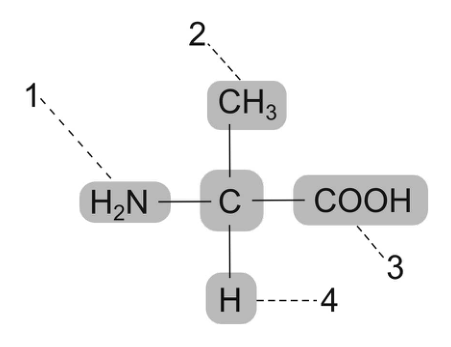
amino acid ပုံ — အုပ်စု 1–4 နံပါတ်။စာမေးပွဲမှာ amino acid ကို ဒီလို ပုံဆွဲပြီး အုပ်စုတိုင်းကို နံပါတ် 1–4 တပ်ပေးတတ်တယ်။ ပုံကို ကြည့်ပြီး မေးခွန်းကို ဖတ်ပါ။
① COOH = acidic group — 3။အဆင့် ① — acid group ကို ရှာပါ။ H⁺ ပေးနိုင်တာ COOH ပါ (အနီ ဝိုင်း)။ ဒါကြောင့် acidic group က 3 ပါ။
ထောင်ချောက် — H₂N (1) က basic။ထောင်ချောက် — H₂N (1) ကို acid လို့ မထင်ပါနဲ့။ amine က H⁺ ကို လက်ခံတတ်လို့ basic ဖြစ်တယ် (အပြာ ဝိုင်း)။
② H (4) — အမြဲပါ၊ variable မဟုတ်။အဆင့် ② — H (4) က amino acid တိုင်းမှာ ပါတဲ့ အပိုင်းပါ။ ဒါကြောင့် variable (ပြောင်းလဲနိုင်တဲ့) အုပ်စု မဟုတ်ဘူး — amino acid တစ်မျိုးနဲ့ တစ်မျိုး ကွဲတဲ့ variable group က R ပါ။
CH₃ (2) = R group — alanine။ကျန်တဲ့ CH₃ (2) က R group ပါ (အဝါ ဝိုင်း)။ R = CH₃ ဆိုတော့ ဒီ amino acid က alanine ပါ။
ဒါကြောင့် variable group = 2၊ acidic group = 3 — အဖြေ B ပါ။
C–H ဘာလို့ ရေ မကြိုက်လဲ — electronegativity
ရေက ဘာကြိုက် ဘာရှောင်လဲ? — electron ကြိုးဆွဲပွဲ။R တွေကို မခွဲခင် မေးခွန်း တစ်ခု — ရေက ဘာကို ကြိုက်ပြီး ဘာကို ရှောင်လဲ? bond တစ်ခုထဲက electron နှစ်လုံးကို atom နှစ်လုံးက ကြိုးဆွဲပွဲလို လုဆွဲနေတယ်။
electronegativity (electron ဆွဲအား) — C 2.5၊ H 2.1။atom တစ်လုံး electron ကို ဘယ်လောက် အားနဲ့ ဆွဲလဲ ဆိုတာကို electronegativity (electron ဆွဲအား) လို့ ခေါ်တယ် (သင်ခန်းစာ 10)။ C က 2.5၊ H က 2.1 — နီးနီးလေး တူတယ်။
C–H — electron အလယ်မှာ = nonpolar (ဝင်ရိုးစွန်း မရှိ)အားချင်း တူတော့ C–H ရဲ့ electron နှစ်လုံး (အဝါ အစက်) က အလယ်မှာပဲ နေတယ်။ ဘယ်ဘက်မှ δ− (နည်းနည်း အနုတ်) မဖြစ်၊ δ+ မဖြစ်ဘူး — nonpolar (ဝင်ရိုးစွန်း မရှိ) ပါ။
O–H — O 3.5 ပိုဆွဲ၊ O δ−၊ H δ+ — polar။O–H ကိုတော့ ကြည့်ပါ — O က 3.5၊ H က 2.1။ O က အများကြီး ပိုဆွဲလို့ electron တွေ O ဘက် ယိမ်းသွားတယ်။ O က δ−၊ H က δ+ ဖြစ်တယ် — polar ပါ။
ရေက O–H နဲ့ hydrogen bond — C–H နဲ့ မကပ်။ရေ (H₂O) molecule မှာလည်း δ− O နဲ့ δ+ H ရှိတယ်။ ဒါကြောင့် ရေရဲ့ δ− O က O–H ရဲ့ δ+ H ကို ဆွဲကပ်ပြီး hydrogen bond (သင်ခန်းစာ 23) ဖွဲ့တယ်။ C–H မှာ ဆွဲစရာ မရှိလို့ ရေ မကပ်ဘူး။
C–H = hydrophobic (ရေရှောင်)၊ O–H = hydrophilic (ရေကြိုက်)ဒါကြောင့် C–H ချည်း အပိုင်းက hydrophobic (ရေရှောင် — water-hating)၊ O–H လို polar အပိုင်းက hydrophilic (ရေကြိုက် — water-loving) ပါ။ ဆီ (C–H ချည်း) နဲ့ ရေ မရောတာ ဒါကြောင့်ပါ။
🤔 Which bond would water molecules attract most strongly?
🔍 မေးခွန်း ဖြည်မယ်
attract = ဆွဲကပ်။ most strongly = အားအကောင်းဆုံး။ ကွင်းထဲက ဂဏန်းတွေက atom တစ်လုံးစီရဲ့ electronegativity ပါ။
မေးနေတာ — ရေ molecule တွေ ဘယ် bond ကို အကပ်ဆုံးလဲ။ atom နှစ်လုံးရဲ့ electronegativity ကွာခြားချက်ကို နှိုင်းယှဉ်ပါ။
electronegativity ကွာလေ polar ဖြစ်လေ။
N–H က 3.0 − 2.1 = 0.9 ကွာလို့ N က δ−၊ H က δ+ — ရေက ဆွဲကပ်တယ်။
C–H က 0.4 ပဲ ကွာ၊ C–C နဲ့ H–H က 0 — nonpolar ပါ။
R group 8 ခု — နာမည် နဲ့ ဘာလို့ ဒီနာမည်
R = H — glycine (Gly — အသေးဆုံး amino acid)ကျောရိုး H₂N–CH(R)–COOH က အမြဲ တူတယ်။ R = H တစ်လုံးတည်းဆို glycine (Gly) — အသေးဆုံးပါ။ ချိုလို့ ဂရိ glykys (ချို) ကနေ နာမည် ရတယ်။
အတိုကောက် 3 လုံး — Gly, Ala, Ser …တစ်မျိုးစီကို စာလုံး 3 လုံး အတိုကောက် ပေးထားတယ် — Gly, Ala, Ser … ကြိုးရှည်တွေ ရေးတဲ့အခါ သုံးမယ်။
R = –CH₃ ဆို alanine (Ala)။ R ထဲမှာ C နဲ့ H ပဲ ပါတယ်။
R = –CH₂OH — serine (Ser)၊ O–H ပါ။R = –CH₂OH ဆို serine (Ser)။ ပိုးချည် (silk) ထဲမှာ ပထမဆုံး တွေ့လို့ လက်တင် sericum (silk) ကနေ နာမည် ရတယ်။ R ထဲမှာ O–H ပါတယ်။
R = –CH₂SH — cysteine (Cys)၊ S ပါ။R = –CH₂SH ဆို cysteine (Cys)။ R ထဲမှာ S (sulfur) ပါတယ်။ ဒီ S က PART 2 မှာ ကြိုး ခေါက်တဲ့အခါ အရေးကြီးမယ်။
R = –CH₂COOH — aspartic acid (Asp)၊ acid ပိုဆန်။R = –CH₂COOH ဆို aspartic acid (Asp)။ ကညွတ် (asparagus) အရည်ထဲက asparagine ကနေ ပထမ ရခဲ့လို့ ဒီနာမည်။ R ထဲမှာ COOH နောက်တစ်ခု ထပ်ပါလို့ acid ပိုဆန်တယ်။
R = –(CH₂)₄NH₂ — lysine (Lys)၊ base ပိုဆန်။R = –(CH₂)₄NH₂ ဆို lysine (Lys)။ R ထဲမှာ NH₂ နောက်တစ်ခု ထပ်ပါလို့ base ပိုဆန်တယ်။
R = –CH(CH₃)₂ — valine (Val)၊ C နဲ့ H ပဲ။R = –CH(CH₃)₂ ဆို valine (Val)။ alanine လိုပဲ R ထဲမှာ C နဲ့ H ပဲ ပါတယ်။
R = –CH₂CH₂COOH — glutamic acid (Glu)။R = –CH₂CH₂COOH ဆို glutamic acid (Glu)။ ဂျုံ ထဲက gluten ကနေ ပထမ ရလို့ ဒီနာမည်။ aspartic acid လို R ထဲမှာ COOH ပါတယ်။
🤔 Threonine's R group is –CH(OH)CH₃. Which other amino acid's R group also has an O–H?
🔍 မေးခွန်း ဖြည်မယ်
Threonine = amino acid တစ်မျိုး (ဒီသင်ခန်းစာမှာ မသင်ရသေး — R ပုံကို မေးခွန်းက ပေးထားတယ်)။ also has = သူ့လိုပဲ ပါတဲ့။
မေးနေတာ — ပုံထဲက R group 8 ခုထဲမှာ O–H ပါတဲ့ နောက် amino acid တစ်ခု ဘယ်ဟာလဲ။
threonine ရဲ့ R မှာ –OH ပါတယ်။
ပုံထဲက R တွေထဲမှာ –OH ပါတာ serine (–CH₂OH) ပါ။
alanine, valine မှာ C, H ပဲ၊ glycine က H၊ lysine မှာ NH₂ ပါတယ်။
R group 4 မျိုး — ရေနဲ့ ဆက်ဆံပုံ
① Ala, Val — C–H ချည်း၊ nonpolar၊ hydrophobic။R တွေကို ရေနဲ့ ဘယ်လို ဆက်ဆံလဲ ဆိုပြီး 4 မျိုး ခွဲတယ်။ ပထမ — Ala, Val လို C–H ချည်း R က nonpolar။ ရေ molecule တွေ မကပ်လို့ hydrophobic ပါ။
② Ser ရဲ့ O–H = polar (δ− δ+ ရှိတဲ့) R — hydrophilicဒုတိယ — Ser ရဲ့ O–H လို δ−, δ+ ရှိတဲ့ R က polar R ပါ။ ရေက δ+ H ကို ဆွဲကပ်လို့ (အစက်မျဉ်း) hydrophilic ပါ။
🤔 At pH 7, what charge does the R group of glutamic acid (–CH₂CH₂COOH) carry?
🔍 မေးခွန်း ဖြည်မယ်
At pH 7 = pH 7 ရှိတဲ့ အရည်ထဲမှာ (ခန္ဓာကိုယ်လို)။ carry = သယ်ထား၊ ရှိနေ။ charge = + သို့ − လျှပ်။
မေးနေတာ — pH 7 မှာ glutamic acid ရဲ့ R ထဲက COOH က H⁺ ပေးမလား၊ ပေးပြီးရင် R မှာ ဘယ် charge ကျန်မလဲ။
glutamic acid ရဲ့ R ထဲမှာ COOH ပါတယ်။
COOH က H⁺ ပေးတတ်တယ် (acid)။
pH 7 မှာ H⁺ ပေးလိုက်ပြီး –COO⁻ (−) ဖြစ်တယ် — ပုံရဲ့ နောက် အဆင့်မှာ ကြည့်ပါ။
③ Asp, Glu = acidic (acid ဆန်တဲ့) R — –COO⁻ (−)တတိယ — Asp, Glu လို R ထဲမှာ COOH ပါရင် acidic R။ ခန္ဓာကိုယ်ရဲ့ pH 7 မှာ H⁺ ကို ပေးလိုက်လို့ (မြှား) –COO⁻ (−) ဖြစ်နေတယ်။
④ Lys, Arg = basic (base ဆန်တဲ့) R — –NH₃⁺ (+)စတုတ္ထ — Lys, Arg လို R ထဲမှာ H⁺ ယူတတ်တဲ့ N အုပ်စု (Lys ရဲ့ –NH₂ လို) ပါရင် basic R။ pH 7 မှာ H⁺ ကို ယူလိုက်လို့ (မြှား) –NH₃⁺ (+) ဖြစ်တယ်။
− နဲ့ + ဆွဲ၊ ရေရှောင် စု — ခေါက်ပုံ ဆုံးဖြတ်။− R နဲ့ + R ချင်း ဆွဲတာ၊ ရေရှောင် R တွေ စုတာက ကြိုး ခေါက်ပုံကို ဆုံးဖြတ်မယ် — PART 2 မှာ ပြန်တွေ့မယ်။
essential amino acid — အစာက ရရမယ့် 9 မျိုး
ဆောက်နိုင် 11 မျိုး = non-essential (အစာက မရလည်း ရ)amino acid 11 မျိုးကို ကိုယ့် cell တွေက တခြား molecule ကနေ ကိုယ်တိုင် ဆောက်နိုင်တယ်။ ဒါတွေကို non-essential amino acid (အစာက မရလည်း ရ) လို့ ခေါ်တယ်။
အစာက ရရမယ့် 9 မျိုး = essential (မရှိမဖြစ်)ကျန် 9 မျိုးကို cell မဆောက်နိုင်လို့ ပဲ၊ ကြက်ဥ၊ ငါး၊ အသား လို အစာက ရမှ ဖြစ်မယ်။ ဒါတွေကို essential amino acid (မရှိမဖြစ်) လို့ ခေါ်တယ် — lysine, leucine, valine လို။
essential ကုန်ရင် ကြိုး ရပ် — “အစာက ရရမယ်” ပဲ။protein ဆောက်နေတုန်း essential တစ်မျိုး ကုန်သွားရင် ကြိုးက အဲဒီနေရာမှာ ရပ်သွားပြီး protein က unfinished (မပြီး) ဖြစ်တယ် (အနီ အဝိုင်း)။ တခြား amino acid ကို အစား (instead) ထည့်လို့လည်း မရဘူး။ “essential” ဆိုတာ ပိုအရေးကြီးတယ် မဟုတ်ဘူး — “အစာက ရရမယ်” ပဲ။
🤔 Rice protein contains very little lysine. A child gets protein only from rice. What is the most likely problem?
🔍 မေးခွန်း ဖြည်မယ်
very little = အရမ်း နည်းနည်း။ only from rice = ဆန်ကနေ တစ်ခုတည်း။ the most likely problem = ဖြစ်နိုင်ခြေ အများဆုံး ပြဿနာ။
မေးနေတာ — lysine က essential (ခန္ဓာကိုယ် မဆောက်နိုင်) ဆိုတာ သတိရပြီး lysine မလုံလောက်ရင် protein ဆောက်တာ ဘာဖြစ်မလဲ။
lysine က essential — ကိုယ့် cell မဆောက်နိုင်ဘူး။
ကုန်သွားရင် lysine လိုတဲ့ နေရာမှာ ကြိုး ရပ်သွားလို့ protein မပြီးဘူး။
ဒါကြောင့် ဆန်ကို ပဲ နဲ့ တွဲစားကြတယ် — ပဲမှာ lysine များတယ်။
R group ထဲမှာ NH₂ ပါနေရင်
📝 IMAT 2020 · Question 24
The structure of the amino acid asparagine is shown. In each image (V-Z) a part of the structure is enclosed by a line.
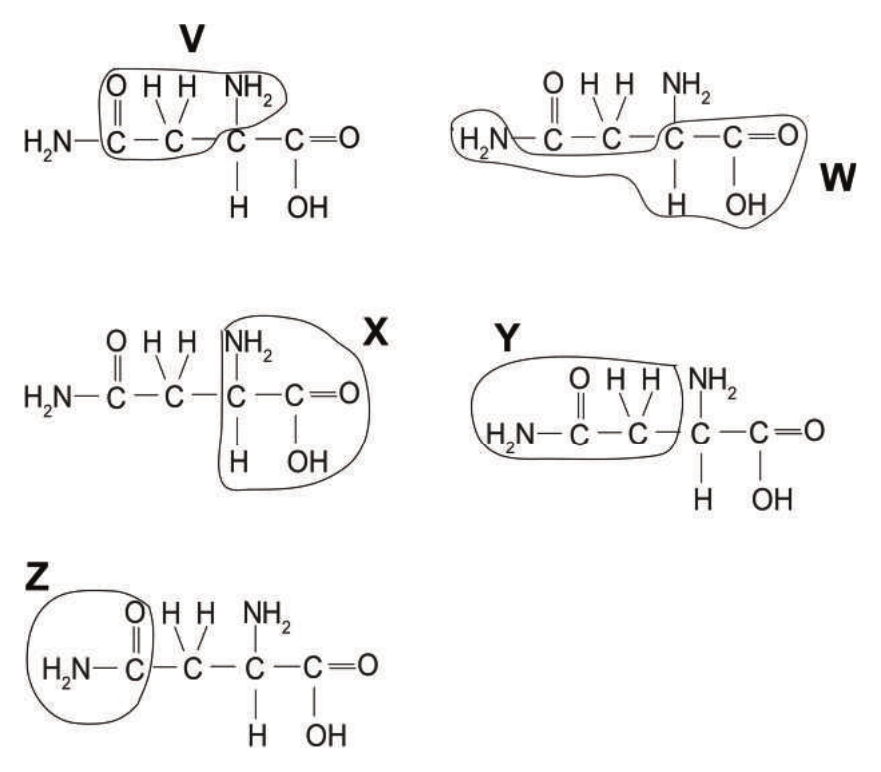
Which line completely encloses the part of the molecule that is common to all naturally-occurring amino acids and the R-group for this amino acid?
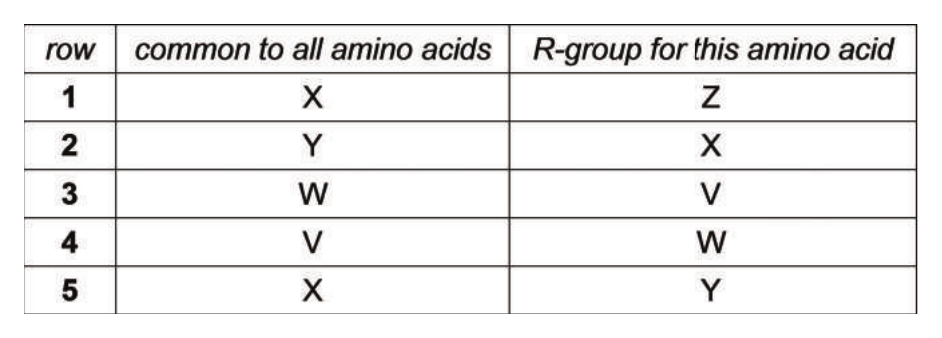
asparagine — R ထဲ NH₂ နဲ့ C=O ပါ။နောက် ပုံတစ်ပုံ — asparagine ဆိုတဲ့ amino acid ပါ။ R group ထဲမှာ ကိုယ်ပိုင် NH₂ နဲ့ C=O ပါနေလို့ ရှုပ်အောင် လုပ်ထားတာပါ။ C=O နဲ့ ကပ်နေတဲ့ ဒီ NH₂ က H⁺ မယူလို့ asparagine ရဲ့ R က basic R မဟုတ်ပါ။
ထောင်ချောက် — ဘယ်အစွန် H₂N က R ထဲက။ထောင်ချောက် — ဘယ်ဘက်အစွန်က H₂N (အနီ ဝိုင်း) ကို α carbon ရဲ့ amine လို့ မယူပါနဲ့။ α carbon နဲ့ မချိတ်ဘဲ R group ထဲမှာ ရှိနေတာပါ။
① α carbon — NH₂, H, COOH ကိုင်တဲ့ C။အဆင့် ① — α carbon ကို အရင် ရှာပါ။ NH₂, H, COOH သုံးခုလုံး ကိုင်ထားတဲ့ C ပါ — ညာဘက်က C (အဝါ ဝိုင်း)။
② common part — ပုံ X။အဆင့် ② — α carbon နဲ့ သူ့ NH₂, H, COOH ကို ဝိုင်းတဲ့ မျဉ်းက amino acid တိုင်းမှာ တူတဲ့ အပိုင်း (common part) ပါ — ပုံ X။
③ H₂N–CO–CH₂– = R group — ပုံ Y။အဆင့် ③ — ကျန်တဲ့ H₂N–CO–CH₂– တစ်ခုလုံးက R group ပါ။ အဲဒါကို အပြည့် ဝိုင်းထားတာ ပုံ Y။
ဒါကြောင့် common part = X၊ R group = Y — အဖြေ row 5 ပါ။
ရေထဲမှာ amino acid — zwitterion
📝 IMAT 2025 · Question 47
Which of the following statements about amino acids is true?
glycine ကို ရေထဲ — COOH ရဲ့ O–H ကြည့်။glycine (H₂N–CH₂–COOH) ကို ရေထဲ ထည့်ကြည့်မယ်။ atom တွေကို နေရာ မရွှေ့ဘဲ ဆွဲထားတယ် — ညာဘက်ဆုံးက COOH ရဲ့ O–H ကို ကြည့်ထားပါ။
H⁺ ပေး — COO⁻ ဖြစ်။COOH ရဲ့ O–H က H⁺ ကို ပေးလိုက်တယ် (အနီ မြှား)။ H က သူ့ အီလက်ထရွန်ကို O မှာ ထားခဲ့ပြီး ထွက်သွားလို့ O မှာ အနုတ် (−) charge ကျန်ပြီး COO⁻ ဖြစ်တယ်။
H⁺ က N ဆီ — NH₃⁺ ဖြစ်။အဲဒီ H⁺ က ဘယ်ဘက်ဆုံးက N ဆီ ရောက်သွားတယ် (အစိမ်း မြှား)။ N မှာ H သုံးလုံး ဖြစ်ပြီး အပေါင်း (+) charge ရလို့ NH₃⁺ ဖြစ်တယ်။
+ ရော − ရော = zwitterion (+ နဲ့ − တွဲ ion)molecule တစ်ခုတည်းမှာ positive (+, အပေါင်း) charge ရော negative (−, အနုတ်) charge ရော ပါတာကို zwitterion (ဇွစ်တာအိုင်ယွန် — + နဲ့ − တွဲ ion) လို့ ခေါ်တယ်။ German zwitter က “ကပြား” လို့ အဓိပ္ပာယ်ရတယ်။ charges နှစ်ခု ပေါင်းရင် + 1 − 1 = 0 — overall charge (စုစုပေါင်း charge) မရှိဘူး။
charge ရှိ — ရေထဲ ပျော်၊ hexane ထဲ မပျော်။charge ရှိတော့ ရေ molecule တွေက ဝိုင်းကပ်လို့ ရေထဲမှာ ကောင်းကောင်း ပျော်တယ်။ C–H ချည်း hexane (C₆H₁₄) ထဲမှာတော့ မပျော်ဘူး။
COO⁻ base၊ NH₃⁺ acid — နှစ်မျိုးလုံး ဖြစ်နိုင်။COO⁻ က H⁺ ကို ပြန်ယူနိုင်တယ် (base) — NH₃⁺ က H⁺ ကို ပြန်ပေးနိုင်တယ် (acid)။ ဒါကြောင့် glycine က acid ရော base ရော ဖြစ်နိုင်တယ်။
အဖြေ E — NH₂ ရော COOH ရော။ဒါကြောင့် မေးခွန်းရဲ့ အဖြေ E ပါ — NH₂ ရော COOH ရော ပါတယ်။ ရေထဲ ပျော်ပြီး hexane ထဲ မပျော်ဘူး။
🤔 Glycine is dissolved in a strongly acidic solution (pH 1). In which form is it mostly found?
🔍 မေးခွန်း ဖြည်မယ်
is dissolved in = …ထဲမှာ ပျော်အောင် ထည့်ထား။ strongly acidic = acid အရမ်း ပြင်း၊ H⁺ အရမ်း များ။ mostly found = အများဆုံး တွေ့ရ။
မေးနေတာ — H⁺ အရမ်း များတဲ့ နေရာမှာ glycine ရဲ့ COO⁻ နဲ့ NH₃⁺ က H⁺ ယူမလား ပေးမလား၊ ဘယ်ပုံ ဖြစ်မလဲ။
pH 1 မှာ H⁺ အရမ်း များတယ်။
COO⁻ က H⁺ ပြန်ယူပြီး COOH ဖြစ်တယ်၊ NH₃⁺ ကလည်း NH₃⁺ အတိုင်း ကျန်တယ်။
+ တစ်ခုပဲ ကျန်လို့ အပေါင်း ion ဖြစ်တယ်။
peptide bond — ရေ တစ်စက် ထွက်ပြီး လက်ဆွဲ
glycine ရဲ့ COOH နဲ့ alanine ရဲ့ NH₂ မျက်နှာဆိုင်။glycine နဲ့ alanine ကို ဘေးချင်း ထားမယ်။ glycine ရဲ့ COOH (ညာ) နဲ့ alanine ရဲ့ NH₂ (ဘယ်) မျက်နှာချင်း ဆိုင်နေတယ်။
🤔 When the COOH of glycine joins the NH₂ of alanine, which small molecule leaves?
🔍 မေးခွန်း ဖြည်မယ်
joins = ချိတ်ဆက်။ which small molecule = ဘယ် molecule သေးသေးလေး။ leaves = ထွက်သွား။
မေးနေတာ — amino acid နှစ်လုံး ချိတ်တဲ့အခါ COOH ကနေ ဘာ ထွက်၊ NH₂ ကနေ ဘာ ထွက်ပြီး ပေါင်းရင် ဘာ molecule ဖြစ်လဲ။
သင်ခန်းစာ 24 မှာ sugar နှစ်လုံး ချိတ်သလိုပဲ — COOH ရဲ့ OH နဲ့ NH₂ ရဲ့ H ပေါင်းပြီး H₂O ထွက်တယ်။
ပုံရဲ့ နောက် အဆင့်တွေမှာ ကြည့်ပါ။
C က OH တစ်ခုလုံး၊ N က H တစ်လုံး ထွက်။ချိတ်ဖို့ ဘာ ထွက်ရမလဲ? glycine ရဲ့ C က OH တစ်ခုလုံး (O + H)၊ alanine ရဲ့ N က H တစ်လုံးပဲ (အဝါ ဘောင်)။
H₂O ထွက် — condensation။OH နဲ့ H ပေါင်းပြီး H₂O (ရေ) တစ် molecule ဖြစ်ကာ အောက်ကို ထွက်သွားတယ် (အပြာ မြှား)။ ရေ ထုတ်ပြီး ပေါင်းတာကို condensation လို့ ခေါ်တယ် (သင်ခန်းစာ 24)။
–CO–NH– = peptide bond (amino acid ချင်း ဆက်တဲ့ C–N ချိတ်)C နဲ့ N က သူ့နေရာမှာပဲ ကျန်ပြီး တိုက်ရိုက် ချိတ်လိုက်တယ် (အဝါ မျဉ်း)။ ဒီ C–N ချိတ် (–CO–NH–) ကို peptide bond (amino acid ချင်း ဆက်တဲ့ C–N ချိတ်) လို့ ခေါ်တယ်။
နှစ်လုံး တွဲ = dipeptide (amino acid နှစ်လုံး တွဲ)amino acid နှစ်လုံး တွဲထားတာကို dipeptide (amino acid နှစ်လုံး တွဲ) လို့ ခေါ်တယ်။ “di” က နှစ်။ peptide ဆိုတာ ဂရိ peptos (အစာ ချေပြီးသား) ကနေ လာတယ်။
ကြိုးရှည် = polypeptide (amino acid အများကြီး တွဲ ကြိုး)ထပ်ထပ် ချိတ်သွားရင် ပုတီးကုံးလို ကြိုးရှည် ရတယ်။ ဒါကို polypeptide (amino acid အများကြီး တွဲ ကြိုး) လို့ ခေါ်တယ် — poly က အများ။ protein ဆိုတာ polypeptide ကြိုး တစ်ချောင်း သို့ အများပါ။
ကြိုးရဲ့ ခေါင်း နဲ့ အမြီး — N-terminus, C-terminus
H₂N– ကျန်တဲ့ အစွန်း = N-terminus (N အစွန်း)ကြိုး တစ်ချောင်းမှာ ခေါင်း နဲ့ အမြီး ရှိတယ်။ ဘယ်ဘက် အစွန်းက Gly မှာ ချိတ်ထဲ မဝင်ရသေးတဲ့ H₂N– ကျန်နေတယ်။ ဒါကို N-terminus (N အစွန်း) လို့ ခေါ်တယ်။
–COOH ကျန်တဲ့ အစွန်း = C-terminus (C အစွန်း)ညာဘက် အစွန်းက Cys မှာ –COOH ကျန်နေတယ်။ ဒါကို C-terminus (C အစွန်း) လို့ ခေါ်တယ်။ ကြားက Ala, Ser ရဲ့ NH₂ နဲ့ COOH က ချိတ်ထဲ ဝင်သွားပြီ။
amino acid အသစ်ကို C အစွန်းမှာ ဆက် — N → C။ကြိုး ဆောက်တဲ့အခါ amino acid အသစ်ကို C အစွန်းမှာ အမြဲ ထပ်ဆက်တယ် (သင်ခန်းစာ 39)။ ဒါကြောင့် ကြိုးက N ကနေ C ဘက် ရှည်လာတယ်။
Gly–Ala–Ser–Cys — Gly N အစွန်း၊ Cys C အစွန်း။ဒါကြောင့် အစဉ်ကို N အစွန်းကနေ C ဘက် ရေးတယ်: Gly–Ala–Ser–Cys ဆို Gly က N အစွန်း၊ Cys က C အစွန်း။
Cys–Ser–Ala–Gly က တခြား ကြိုး — “ကမ” ≠ “မက”။ပြောင်းပြန် Cys–Ser–Ala–Gly ကတော့ တခြား ကြိုးပါ — “ကမ” နဲ့ “မက” မတူသလိုပဲ။
🤔 A tripeptide is written Ala–Gly–Ser in the usual way. Which amino acid has the free –NH₂ group?
🔍 မေးခွန်း ဖြည်မယ်
tripeptide = amino acid 3 လုံး ကြိုး (tri = 3)။ in the usual way = ပုံမှန် ရေးနည်းနဲ့ (N အစွန်းကနေ C ဘက်)။ free –NH₂ = ချိတ်ထဲ မဝင်ဘဲ ကျန်နေတဲ့ –NH₂။
မေးနေတာ — ဒီ ကြိုးရဲ့ N-terminus မှာ ရှိတဲ့ amino acid က ဘယ်ဟာလဲ။
အစဉ်ကို N အစွန်းကနေ ရေးလို့ ပထမ Ala မှာ free –NH₂ (N-terminus) ရှိတယ်။
Ser က C-terminus — free –COOH။
Gly ရဲ့ NH₂ နဲ့ COOH က ချိတ် နှစ်ခုထဲ ဝင်သွားပြီ။
ဘယ် bond ကို ဖြတ်မလဲ — IMAT ပုံ
📝 IMAT 2016 · Question 24
The dipeptide represented below is in aqueous solution. Which numbered bond (1 to 5) needs to be broken (hydrolysed) in this dipeptide to directly form two amino acids?
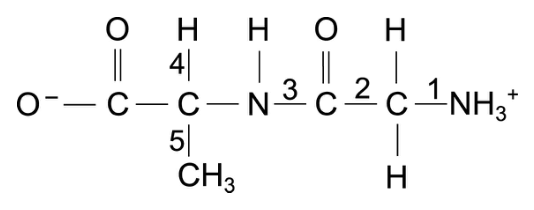
ဘယ် bond ဖြတ်ရမလဲ? — bond 1–5။ချိတ်ထားတာကို ပြန်ဖြုတ်ရင် ဘယ် bond ကို ဖြတ်ရမလဲ? ဒီ dipeptide ပုံမှာ bond 1 ကနေ 5 အထိ နံပါတ် တပ်ထားတယ်။
① အလယ်က C=O ကို ရှာ။အဆင့် ① — အလယ်က C=O (အဝါ ဝိုင်း) ကို ရှာပါ။ ဘယ်အစွန်က O⁻ ပါတဲ့ COO⁻ မဟုတ်ပါ။
အဆင့် ② — အဲဒီ C ရဲ့ ဘေးမှာ ကပ်နေတဲ့ N (အပြာ ဝိုင်း) ကို ရှာပါ။
③ C–N bond 3 = peptide bond။အဆင့် ③ — C နဲ့ N ကြားက bond 3 က peptide bond ပါ။ ကျန် 1, 2, 4, 5 က alanine သို့ glycine တစ်လုံးတည်းရဲ့ အတွင်း bond တွေပါ။
ရေ ထည့် ဖြတ် = hydrolysis (ရေနဲ့ ခွဲခြင်း)ရေ (H₂O) တစ် molecule ထည့်ပြီး bond 3 ကို ဖြတ်တာကို hydrolysis (ရေနဲ့ ခွဲခြင်း) လို့ ခေါ်တယ်။ ချိတ်တုန်းက ရေ ထွက်တာရဲ့ ပြောင်းပြန်ပါ။
alanine နဲ့ glycine — အဖြေ 3 (E)။ခွဲပြီးရင် CH₃ ပါတဲ့ alanine နဲ့ R = H ဖြစ်တဲ့ glycine ပြန်ရတယ်။ အဖြေ 3 (E) ပါ။
hydrolysis — ရေ ပြန်ဝင်ပြီး ဖြတ်
Gly–Ala ရဲ့ အလယ် peptide bond။peptide bond ဖြစ်ပုံ ပုံ (glycine + alanine) ကို ပြန်ယူမယ်။ dipeptide Gly–Ala ရဲ့ အလယ်မှာ peptide bond (အဝါ) ရှိတယ်။
အောက်ကနေ ရေ (H₂O) တစ် molecule ဝင်လာတယ်။
OH က C ဆီ၊ H က N ဆီ — C–N ပြတ် ✂ရေက နှစ်ပိုင်း ကွဲတယ် — OH က C ဆီ၊ H က N ဆီ သွားကပ်တယ်။ C–N peptide bond ပြတ်သွားတယ် (✂)။ atom တွေ နေရာ မပြောင်းပါ။
glycine + alanine — hydro (ရေ) + lysis (ခွဲ)။glycine နဲ့ alanine ပြန်ရတယ်။ ရေနဲ့ ခွဲတာမို့ hydrolysis — hydro (ရေ) + lysis (ခွဲ) လို့ မှတ်ပါ။
ဖြတ်တဲ့ enzyme = peptidase (peptide bond ဖြတ် enzyme)အစာ ချေတဲ့အခါ ဒီ ဖြတ်တဲ့ အလုပ်ကို peptidase (peptide bond ဖြတ် enzyme) တွေ လုပ်တယ် — အများကိန်း peptidases။ ဥပမာ အစာအိမ်ထဲက pepsin (ပက်ပ်ဆင် — အစာအိမ်ရဲ့ peptidase) နဲ့ ပန်ကရိယက ထုတ်ပြီး အူသိမ်ထဲမှာ အလုပ်လုပ်တဲ့ trypsin (ထရစ်ပ်ဆင် — ပန်ကရိယရဲ့ peptidase)။ ဖြတ်ခံရတဲ့ protein ကို hydrolysed (ရေနဲ့ ခွဲခံရပြီ) လို့ ပြောတယ်။
🤔 How many water molecules are needed to hydrolyse one tripeptide (three amino acids) completely?
🔍 မေးခွန်း ဖြည်မယ်
are needed = လိုအပ်တယ်။ hydrolyse = ရေနဲ့ ခွဲ။ completely = အကုန်လုံး၊ amino acid တစ်လုံးချင်း ဖြစ်တဲ့အထိ။
မေးနေတာ — amino acid 3 လုံးကြားက peptide bond အကုန် ဖြတ်ဖို့ ရေ ဘယ်နှစ် molecule လိုလဲ။ bond ဘယ်နှစ်ခု ရှိလဲ အရင် ရေတွက်ပါ။
amino acid 3 လုံးကြားမှာ peptide bond 2 ခု ရှိတယ်။
bond တစ်ခု ဖြတ်တိုင်း ရေ တစ် molecule လိုလို့ ရေ 2 ခု။
နောက် scene မှာ စည်းမျဉ်း အဖြစ် ကြည့်မယ်။
ချိတ် ဘယ်နှစ်ခု၊ ရေ ဘယ်နှစ်ခု
✍️ glycine (Mr 75) နဲ့ alanine (Mr 89) ချိတ်ရင် dipeptide ရဲ့ Mr ဘယ်လောက်လဲ? အရင် ပေါင်း — 75 + 89 = 164။
ချိတ်တဲ့အခါ H₂O တစ် molecule (Mr 18) ထွက်သွားလို့ နုတ်ရမယ်။
dipeptide Mr = 164 − 18 = 146။ 164 က ရေ နုတ်ဖို့ မေ့တဲ့ ထောင်ချောက် အဖြေပါ။
amino acid 4 လုံး — ချိတ် 3၊ H₂O 3 ထွက်။amino acid 4 လုံးကို ကြည့်ပါ။ ကြားမှာ peptide bond 3 ခု ရှိပြီး ချိတ် တစ်ခုတိုင်း H₂O တစ်ခု ထွက်လို့ H₂O 3 ခု ထွက်တယ်။
n လုံး → ချိတ် n − 1၊ ရေ n − 1။ဒါကြောင့် amino acid n လုံးဆို ချိတ် n − 1 ခု၊ ရေ n − 1 ခု — လက်ချောင်း 5 ချောင်းကြား ကြား 4 ခုလိုပါ။
👆 n amino acids: peptide bonds, water molecules released, 20ⁿ = possible sequences
dipeptide 20 × 20 = 400 မျိုး။အစဉ် ဘယ်နှစ်မျိုး ဖြစ်နိုင်လဲ? နေရာ တစ်ခုစီမှာ 20 မျိုး ရွေးလို့ရလို့ dipeptide က 20 × 20 = 400 မျိုး။ ရာချီ ရှည်တဲ့ ကြိုးဆို မရေတွက်နိုင်လောက် များလို့ အလုပ်သမား ထောင်ချီ ဆောက်နိုင်တာပါ။
🔁 ပြန်စစ်မယ် — PART 1
🤔 Aspartic acid has an R group –CH₂COOH. Which groups of aspartic acid can give H⁺?
🔍 မေးခွန်း ဖြည်မယ်
Which groups = ဘယ် အုပ်စုတွေ (အများကိန်း — တစ်ခုထက် ပိုနိုင်)။ can give H⁺ = H⁺ ကို ပေးနိုင် (acid အလုပ်)။
မေးနေတာ — aspartic acid တစ်လုံးလုံးမှာ (α carbon ပေါ်ရော R ထဲရော) H⁺ ပေးနိုင်တဲ့ အုပ်စုတွေ ဘယ်ဟာတွေလဲ။
H⁺ ပေးနိုင်တာ COOH ပါ — aspartic acid မှာ COOH နှစ်ခု (α carbon ပေါ်က တစ်ခု၊ R ထဲက တစ်ခု)။
NH₂ က H⁺ ယူတဲ့ basic အုပ်စုပါ။
🤔 How many water molecules are released when 6 amino acids join into one chain?
🔍 မေးခွန်း ဖြည်မယ်
are released = ထုတ်ပေး၊ ထွက်လာ။ join into one chain = ချိတ်ပြီး ကြိုး တစ်ချောင်း ဖြစ်။
မေးနေတာ — amino acid 6 လုံး ကြိုး တစ်ချောင်း ဖြစ်တဲ့အခါ ရေ ဘယ်နှစ် molecule ထွက်လဲ။ ကြားက bond တွေကို ရေတွက်ပါ။
ချိတ် n − 1 = 5 ခု၊ ချိတ်တိုင်း ရေ တစ် molecule ထွက်လို့ ရေ 5။
🤔 Glycine is dissolved in a strongly basic solution (pH 12). In which form is it mostly found?
🔍 မေးခွန်း ဖြည်မယ်
strongly basic = base အရမ်း ပြင်း၊ H⁺ အရမ်း နည်း။ mostly found = အများဆုံး တွေ့ရ။ overall = စုစုပေါင်း charge။
မေးနေတာ — H⁺ အရမ်း နည်းတဲ့ နေရာမှာ glycine ရဲ့ NH₃⁺ က H⁺ ပေးလိုက်မလား၊ glycine ဘယ်ပုံ ဖြစ်မလဲ။
pH 12 မှာ H⁺ အရမ်း နည်းတယ်။
NH₃⁺ က H⁺ ပေးလိုက်ပြီး NH₂ ဖြစ်တယ်၊ COO⁻ က COO⁻ အတိုင်း။
− တစ်ခုပဲ ကျန်လို့ အနုတ် ion။
🎯 Match each R group with its kind
amine (–NH₂) + carboxyl (–COOH) + H + R ကို α carbon က ကိုင်ထားတယ်။
C 2.5 နဲ့ H 2.1 နီးလို့ C–H nonpolar — ရေ မကပ်။
ရေထဲမှာ H⁺ က COOH ကနေ NH₂ ဆီ ရွှေ့ — + နဲ့ − တွဲ။
OH + H = ရေ ထွက်၊ C နဲ့ N နေရာမှာပဲ ချိတ်။
ရေ ပြန်ဝင်ရင် OH က C ဆီ၊ H က N ဆီ — ချိတ် ပြတ်။
Four levels of structure
ကြိုးကနေ 3D ပုံ ဖြစ်လာပုံ အဆင့် 4 ဆင့် — ကြက်ဥ ပဟေဠိ
ကြက်ဥ အကာ ပဟေဠိ
ကြက်ဥ egg white (အကာ) — ရေလို ကြည်။ကြက်ဥ တစ်လုံးကို ဒယ်အိုးထဲ ခွဲထည့်လိုက်ပါ။ အဝါ ပတ်လည်က egg white (အကာ) က ရေလို ကြည်ပြီး စီးနေတယ်။
heat (အပူ) ပေး — အဖြူ မာ ဖြစ်။မီး ဖွင့်ပြီး heat (အပူ) ပေးလိုက်တာနဲ့ ကြည်တဲ့ အကာက အဖြူ မာမာ ဖြစ်လာတယ်။ ဘာမှ ထပ်မထည့်ဘဲ အပူပဲ ပေးတာပါ။
ပြန်အေးလည်း အကြည် ပြန်မဖြစ်။ပြန် အေးအောင် ထားလိုက်ရင်ရော? အဖြူ အတိုင်းပဲ ကျန်ပြီး အကြည် ပြန်မဖြစ်တော့ဘူး။
အပူက ဘာ ဖျက်လဲ? — ခေါက်ပုံ 4 ဆင့် ကြည့်မယ်။အကာထဲက protein ကို အပူက ဘာ ဖျက်လိုက်တာလဲ? protein ကြိုး ဘယ်လို ခေါက်ထားလဲ သိမှ ဖြေနိုင်မယ်။ ခေါက်ပုံ အဆင့် 4 ဆင့်ကို ကြည့်ရအောင်။
Primary — amino acid အစဉ်
haemoglobin β ကြိုး အစ amino acid 8 လုံး။ဒါက haemoglobin ရဲ့ β ကြိုး အစပိုင်း amino acid 8 လုံးပါ။ ပုတီးစေ့ တစ်လုံးစီက amino acid တစ်လုံး — Val, His, Leu … လို အတိုကောက်နဲ့ ရေးထားတယ်။
🤔 Quick recall: how many peptide bonds join these 8 amino acids?
🔍 မေးခွန်း ဖြည်မယ်
Quick recall = မြန်မြန် ပြန်သတိရ။ join = ချိတ်ထား။ these 8 = ပုံထဲက ဒီ 8 လုံး။
မေးနေတာ — ပုတီး 8 လုံးကြားမှာ ချိတ် ဘယ်နှစ်ခု ရှိလဲ။
ချိတ်က amino acid နှစ်လုံးကြားမှာ ရှိလို့ n − 1 = 8 − 1 = 7 ခု။
ရေလည်း 7 molecule ထွက်ခဲ့တယ်။
amino acid အစဉ် = primary structure (ပထမ အဆင့် — အစဉ်)amino acid တွေ ဘယ် အစဉ်နဲ့ စီထားလဲ ဆိုတာကို primary structure (ပထမ အဆင့် — amino acid အစဉ်) လို့ ခေါ်တယ်။ စကားလုံး တစ်လုံးရဲ့ အက္ခရာ အစဉ်လိုပါပဲ။
အစဉ်ကို gene (protein ဆောက်နည်း DNA အပိုင်း) က ဆုံးဖြတ်။ဒီ အစဉ်ကို DNA ပေါ်က gene (protein ဆောက်နည်း ရေးထားတဲ့ DNA အပိုင်း) က ဆုံးဖြတ်တယ် (သင်ခန်းစာ 39)။
တစ်လုံး ပြောင်းရင်? — 6 နံပါတ် Glu ကြည့်။အစဉ်ထဲက ပုတီး တစ်လုံးတည်း ပြောင်းသွားရင် ဘာဖြစ်မလဲ? 6 နံပါတ် Glu (glutamic acid) ကို ကြည့်ထားပါ။
ပုတီး တစ်လုံး ပြောင်းရင် — sickle cell
ပုံမှန် Hb — 6 နေရာ Glu။ပုံမှန် Hb (haemoglobin) ရဲ့ β ကြိုးမှာ 6 နေရာက Glu (glutamic acid) ပါ။
sickle-cell (တံစဉ်ပုံ) — sickle-cell anaemia မှာ Glu အစား Val။sickle-cell anaemia (တံစဉ်ပုံ သွေးအားနည်းရောဂါ) မှာ gene ထဲက DNA အက္ခရာ တစ်လုံး ပြောင်းသွားတယ် — mutation လို့ ခေါ်တယ်။ 6 နေရာမှာ Glu အစား (instead of Glu) Val (valine) ဝင်လာတယ်။
🤔 PART 1 recall: Glu's R group is –CH₂CH₂COOH and Val's is –CH(CH₃)₂. What does this swap put on the protein's surface?
🔍 မေးခွန်း ဖြည်မယ်
swap = တစ်ခုကို တစ်ခုနဲ့ လဲလိုက်တာ (Glu အစား Val)။ put on = …ပေါ်မှာ ထားပေး။ surface = မျက်နှာပြင်၊ အပြင်ဘက်။
မေးနေတာ — Glu ရဲ့ R နဲ့ Val ရဲ့ R က ရေနဲ့ ဘယ်လို ဆက်ဆံလဲ ယှဉ်ပြီး လဲလိုက်ရင် protein အပြင်ဘက်မှာ ဘာ အသစ် ပေါ်မလဲ။
Glu ရဲ့ R က COO⁻ (−) — hydrophilic။
Val ရဲ့ R က C–H ချည်း — hydrophobic။
ဒါကြောင့် ရေကြိုက် နေရာမှာ ရေရှောင် အကွက် ပေါ်လာတယ်။
Val ရေရှောင် — ရေရှောင် အကွက် ပေါ်။Glu ရဲ့ R က ရေကို ကြိုက်တဲ့ hydrophilic၊ Val ရဲ့ R က ရေ ရှောင်တဲ့ hydrophobic ပါ။ မျက်နှာပြင်မှာ ရေရှောင် အကွက်လေး ပေါ်လာတယ်။
Val ပါတဲ့ Hb = HbS။6 နေရာမှာ Val ပါတဲ့ ဒီ Hb ကို sickle haemoglobin (HbS — တံစဉ် Hb) လို့ ခေါ်တယ်။
O₂ နည်းချိန် HbS ချင်း ကပ် — ကြိုးမျှင် ဖြစ်။oxygen (O₂) နည်းချိန်မှာ HbS molecule တွေက ဒီ ရေရှောင် အကွက်ချင်း ကပ်ပြီး ကြိုးမျှင် ရှည်ရှည် ဖြစ်သွားတယ်။ ပုံမှန် Hb မှာ ဒီ အကွက် မရှိလို့ O₂ နည်းလည်း ကြိုးမျှင် မဖြစ်ဘူး။
normal ဝိုင်း → sickle (တံစဉ်) ပုံ။ကြိုးမျှင်တွေက အထဲကနေ တွန်းလို့ ဝိုင်းဝိုင်း သွေးနီဥ (normal) က တံစဉ် (sickle) ပုံ ကွေးသွားတယ်။
သွေးကြော blocked — နာကျင်၊ တစ်လုံး ပြောင်းရုံ။တံစဉ်ပုံ cell တွေက သွေးကြော ကျဉ်းကျဉ်းထဲ ညပ်ပြီး ပိတ်ဆို့ (blocked) လို့ နာကျင်တယ်။ ပုတီး ရာချီထဲက တစ်လုံးတည်း ပြောင်းရုံပါ။
Secondary — spring နဲ့ ခေါက်စက္ကူ
O က δ−၊ H က δ+ — ဘာလို့လဲ?ကြိုးက ပြားပြား မနေဘူး။ ကျောရိုးရဲ့ ချိတ်တိုင်းမှာ C=O နဲ့ N–H ပါတယ်။ O က C ထက်၊ N က H ထက် electron ကို ပိုဆွဲတယ် (PART 1)။ ဒါကြောင့် O က နည်းနည်း အနုတ် (δ−)၊ H က နည်းနည်း အပေါင်း (δ+) ဖြစ်တယ်။
δ− O နဲ့ δ+ H ဆွဲကပ် — hydrogen bond။− နဲ့ + ဆွဲသလို ကြိုး တခြားနေရာက C=O ရဲ့ δ− O နဲ့ N–H ရဲ့ δ+ H ချင်း ဆွဲကပ်တယ်။ ဒီ ဆွဲကပ်မှုကို hydrogen bond လို့ ခေါ်တယ်။
backbone ချင်း လိမ်ခေါက် = secondary structure (ဒုတိယ အဆင့်)ကြိုးရဲ့ backbone (ကျောရိုး — –N–C–C– ထပ်ခါ ဆက်နေတဲ့ အပိုင်း၊ R မပါ) ချင်း hydrogen bond နဲ့ လိမ်ခေါက်ထားတဲ့ ပုံကို secondary structure (ဒုတိယ အဆင့်) လို့ ခေါ်တယ်။
α-helix (spring ပုံ လိမ်ကွင်း) — n နဲ့ n + 4 ချိတ်။ပုံ တစ်မျိုးက α-helix (spring ပုံ လိမ်ကွင်း) ပါ — helix (လိမ်ကွင်း) ဆိုတာ spring လို လှည့်လှည့် တက်သွားတဲ့ ပုံပါ။ amino acid n ရဲ့ C=O က 4 လုံး နောက်က amino acid n + 4 ရဲ့ N–H နဲ့ ချိတ်လို့ ကွင်းချင်း ချည်မိနေတယ်။ ဆံပင်ထဲက keratin မှာ များတယ်။
β-pleated sheet (ခေါက်စက္ကူ ပုံ) — silk။နောက်တစ်မျိုးက β-pleated sheet (ခေါက်စက္ကူ ပုံ) ပါ။ ကြိုး အပိုင်းတွေ ဘေးချင်း ယှဉ်ပြီး hydrogen bond နဲ့ တွဲထားတယ်။ ပိုးချည် (silk) မှာ များလို့ ခိုင်ပြီး မဆန့်ဘူး။
backbone ချင်းပဲ — R groups မပါသေး။သတိ — ဒီ hydrogen bond တွေက backbone ချင်းပဲ ဖွဲ့တာပါ။ R groups တွေ မပါသေးဘူး။
Tertiary — R group တွေ ချိတ်ပြီး 3D ခေါက်
ကြိုး တစ်ချောင်းလုံး 3D ခေါက် = tertiary structure (တတိယ အဆင့်)လိမ်ကွင်း နဲ့ ခေါက်ပြား ပါတဲ့ ကြိုး တစ်ချောင်းလုံးက ထပ်ခေါက်ပြီး 3D ပုံ ဖြစ်တယ်။ ဒါကို tertiary structure (တတိယ အဆင့်) လို့ ခေါ်တယ်။
3D ပုံကို အဓိက ထိန်း — R groups ချင်း ချိတ်။ဒီ 3D ပုံကို အဓိက ထိန်းထားတာ R groups တွေ အချင်းချင်း ချိတ်တာပါ။ backbone ရဲ့ C=O, N–H လည်း တချို့ နေရာမှာ ပါနိုင်တယ်။
① R ချင်း hydrogen bond။ချိတ်နည်း ① — R နှစ်ခုရဲ့ O–H မှာ δ− O နဲ့ δ+ H ဆွဲပြီး hydrogen bond ဖွဲ့တယ် (အပြာ အစက်မျဉ်း)။ δ+ နဲ့ δ− ကြား ဆွဲအား (attraction) ပါ — electron မမျှလို့ covalent မဟုတ်ပါ။
② NH₃⁺ နဲ့ COO⁻ = ionic bond (+ နဲ့ − ဆွဲ ချိတ်)ချိတ်နည်း ② — Lys ရဲ့ NH₃⁺ (+) နဲ့ Asp ရဲ့ COO⁻ (−) က သံလိုက်လို ဆွဲပြီး ionic bond (+ နဲ့ − ဆွဲ ချိတ်) ဖွဲ့တယ်။
③ Cys နှစ်လုံးရဲ့ –SH နီးလာ။ချိတ်နည်း ③ — Cys နှစ်လုံးရဲ့ R အဆုံးမှာ –SH တစ်ခုစီ ရှိတယ်။ S နှစ်လုံး ဆီ နီးလာအောင် ကြိုးက ခေါက်ထားတယ်။
🤔 Which of these bonds holding the tertiary structure of a protein is covalent?
🔍 မေးခွန်း ဖြည်မယ်
holding = ထိန်းထားတဲ့ (bonds ကို ဖော်ပြ)။ covalent = electron မျှသုံးတဲ့ အခိုင် bond။
မေးနေတာ — tertiary structure ကို ထိန်းတဲ့ bond လေးမျိုးထဲက electron မျှသုံးတဲ့ covalent bond က ဘယ်ဟာလဲ။
cysteine နှစ်လုံးရဲ့ S–S က electron မျှသုံးတဲ့ covalent bond ပါ။
hydrogen bond နဲ့ ionic bond က အားနည်း ဆွဲအား (δ+/δ− သို့ +/−) တွေပါ။
နောက် အဆင့်မှာ S–S ဖြစ်ပုံ ကြည့်ပါ။
–SH နှစ်ခုက H ဖြုတ် — S နှစ်လုံး covalent ချိတ်။Cys နှစ်လုံးရဲ့ –SH တစ်ခုစီက H တစ်လုံးစီ ဖြုတ်လိုက်တယ် (မြှား)။ ပြီးတော့ S နှစ်လုံးက covalent bond နဲ့ တိုက်ရိုက် ချိတ်တယ် (အဝါ မျဉ်း)။
H ဖယ်တာ = oxidation (ဓာတ်တိုးခြင်း)။ethanol က ethanal ဖြစ်တုန်းကလို (သင်ခန်းစာ 22) H ဖယ်ရှားတာမို့ ဒါက oxidation (ဓာတ်တိုးခြင်း) ဓာတ်ပြုမှု ပါ။
S–S = disulfide bridge (S နှစ်လုံး covalent တံတား)ဒီ S–S ကို disulfide bridge (S နှစ်လုံး covalent တံတား) လို့ ခေါ်တယ်။
S–S covalent — အခိုင်ဆုံး၊ hair perm။S–S က covalent bond (အီလက်ထရွန် မျှသုံး) မို့ ဒီ ချိတ်တွေထဲ အခိုင်ဆုံးပါ။ ဆံပင် ကောက်ဆေး (hair perm) က S–S ကို ဖြတ်ပြီး ပုံသစ်နဲ့ ပြန်ဆက်တာပါ။
ရေရှောင် အလယ်၊ ရေကြိုက် အပြင် — active site
water (ရေ) က ခေါက်တာ ဘာ ကူလဲ?cell ထဲမှာ protein ကို water (ရေ) တွေ ဝိုင်းထားတယ်။ ခေါက်တဲ့အခါ ရေက ဘာ ကူလဲ?
④ ရေရှောင် R — inside စုဝင်။ရေထဲ ပျော်တဲ့ ဘောလုံးပုံ protein အများစုမှာ ရေရှောင် (hydrophobic) R တွေက ရေနဲ့ မထိအောင် အလယ် (inside) ကို စုဝင်သွားတယ် — ရေထဲက ဆီစက်တွေ စုသလိုပါ။ ဒါက ချိတ်နည်း ④ ပါ။
ရေကြိုက် R — outside၊ ရေထဲ ပျော်။ရေကြိုက် (hydrophilic) R တွေကတော့ အပြင်ဘက် (outside) မှာ များတယ်။ ဒါကြောင့် ဘောလုံးပုံ ကြိုးက ရေထဲမှာ ပျော်တယ်။ membrane ထဲ စိုက်ထားတဲ့ protein လို တချို့မှာ ပုံ ကွာတယ်။
ချိုင့် = active site (သော့ပေါက်)ခေါက်လိုက်တော့ မျက်နှာပြင် (surface) မှာ ချိုင့် တစ်ခု ကျန်တယ်။ enzyme မှာ ဓာတ်ပြုမယ့် molecule ဝင်ထိုင်တဲ့ ဒီ ချိုင့်ကို active site (သော့ပေါက်) လို့ ခေါ်တယ် (သင်ခန်းစာ 26)။
chymotrypsin — 57 His, 102 Asp, 195 Ser 3D မှာ နီး။ဥပမာ အူထဲက chymotrypsin ရဲ့ ချိုင့်ကို နံပါတ် 57 His (histidine)၊ 102 Asp၊ 195 Ser က ဝိုင်းထားတယ်။ ကြိုးပေါ်မှာ ဝေးပေမဲ့ ခေါက်လို့ 3D မှာ နီးလာတာပါ။
ခေါက်ပုံ ပျက် — active site ပျက်။ဒါကြောင့် ခေါက်ပုံ ပျက်ရင် ဒီ သုံးလုံး ပြန်ဝေးသွားပြီး active site ပျက်တယ်။
Quaternary — ကြိုး 4 ချောင်း haemoglobin
📝 IMAT 2017 · Question 24
Which one of the following most accurately describes the structure of a human haemoglobin molecule that can bind four oxygen molecules to form oxyhaemoglobin?
myoglobin — 1 chain၊ quaternary မရှိ။ကြွက်သားထဲမှာ O₂ ကို သိုထားတဲ့ myoglobin (မိုင်အိုဂလိုဘင် — ကြွက်သားရဲ့ O₂ သိုလှောင် protein) က ကြိုး တစ်ချောင်းတည်း (a single chain) ခေါက်ထားတာ။
ကြိုး တစ်ချောင်းတည်း — tertiary အထိပဲ။ကြိုး တစ်ချောင်းတည်း ရှိလို့ tertiary အထိပဲ ရှိပြီး quaternary မရှိဘူး။
ကြိုး ၂+ ပေါင်း = quaternary structure (စတုတ္ထ အဆင့်)haemoglobin ကတော့ ခေါက်ပြီးသား ကြိုး 4 ချောင်း (α 2 ချောင်း၊ β 2 ချောင်း) ပူးထားတာပါ။ သီးခြား ကြိုး (separate chains) 2 ချောင်းနဲ့ အထက် ပေါင်းပုံကို quaternary structure (စတုတ္ထ အဆင့်) လို့ ခေါ်တယ်။
ကြိုးတိုင်း haem (O₂ ကိုင် အုပ်စု) — Fe²⁺။ကြိုး တစ်ချောင်းစီမှာ haem (ဟိမ်း — O₂ ကိုင် အုပ်စု) တစ်ခု ကိုင်ထားပြီး သူ့အလယ်မှာ Fe²⁺ (သံ ion) တစ်လုံး ရှိတယ်။
Fe (iron — သံ, Z 26) က period 4 ရဲ့ d-block transition metal ပါ။ Fe atom က electron 2 လုံး ပေးရင် Fe²⁺ ion ဖြစ်တယ်။
Fe²⁺ က O₂ ကိုင် — Fe³⁺ မကိုင်နိုင်၊ prosthetic။O₂ ကို ကိုင်နိုင်တာ Fe²⁺ ပါ။ Fe³⁺ ဖြစ်သွားရင် O₂ မကိုင်နိုင်တော့ဘူး။ haem က ကြိုးနဲ့ အမြဲ တွဲနေတဲ့ အပိုပစ္စည်း (prosthetic) ပါ — PART 3 မှာ ဆက်ကြည့်မယ်။
haem 4 ခု — 4 O₂ သယ်။haem တစ်ခုက O₂ တစ် molecule ကိုင်လို့ haemoglobin တစ်ခုက 4 O₂ သယ်နိုင်တယ်။
1 ချောင်း 3 ဆင့်၊ 2+ ချောင်း 4 ဆင့်။စည်းကမ်း — အပေါ်ဆုံး အဆင့် ရှိရင် အောက်က အဆင့် အကုန် ရှိတယ်။ ကြိုး 1 ချောင်း → primary, secondary, tertiary (3 ဆင့်)၊ 2 ချောင်းနဲ့ အထက် → quaternary ပါ (4 ဆင့်)။
haemoglobin — 4 ဆင့်လုံး — အဖြေ A။ဒါကြောင့် ကြိုး 4 ချောင်း haemoglobin မှာ primary, secondary, tertiary, quaternary 4 ဆင့်လုံး ရှိတယ် — အဖြေ A။
🤔 An enzyme in tears is a single chain of 129 amino acids. Which levels of structure does it have?
🔍 မေးခွန်း ဖြည်မယ်
tears = မျက်ရည်။ a single chain = ကြိုး တစ်ချောင်းတည်း။ levels of structure = ခေါက်ပုံ အဆင့်တွေ (primary … quaternary)။
မေးနေတာ — ကြိုး တစ်ချောင်းတည်းနဲ့ ဆောက်ထားတဲ့ protein မှာ ဘယ် အဆင့်တွေ ရှိလဲ။ amino acid အရေအတွက် 129 က အဖြေနဲ့ မဆိုင်ပါ။
ကြိုး တစ်ချောင်းတည်းမို့ quaternary မရှိဘူး။
ကြိုး တစ်ချောင်းမှာ primary, secondary, tertiary 3 ဆင့် ရှိတယ်။
🔎 ကြိုကြည့်မယ် — HIV protease (ကြိုး 2 ချောင်းကြားက active site)
📝 IMAT 2018 · Question 24
The enzyme HIV-1 protease is produced by the HIV virus. The enzyme is formed from two identical chains of 99 amino acids. In each chain, amino acids 25, 26 and 27 in the sequence form part of the active site. Which levels of structure control the shape of the active site of the HIV protease?
HIV-1 protease — chain A, B၊ 99 လုံးစီ။HIV virus ထုတ်တဲ့ HIV-1 protease enzyme ကို ကြည့်မယ်။ protease ဆိုတာ protein ကြိုးကို ဖြတ်တဲ့ enzyme ပါ (virus အကြောင်း သင်ခန်းစာ 30 မှာ အပြည့်)။ တူညီတဲ့ ကြိုး 2 ချောင်း (chain A, chain B) ပေါင်းထားပြီး တစ်ချောင်းစီမှာ amino acid 99 လုံး ပါတယ်။
25, 26, 27 — ကြိုး နှစ်ချောင်း ထိတဲ့ နေရာ။ကြိုး တစ်ချောင်းစီရဲ့ 25, 26, 27 နံပါတ် amino acid တွေ (အဝါ ဘောလုံး) က ကြိုး နှစ်ချောင်း ထိတဲ့ နေရာမှာ ရောက်နေတယ်။
active site ကြိုး နှစ်ချောင်းကြား — quaternary ထိန်း။active site က ကြိုး နှစ်ချောင်းကြားမှာ ဖြစ်တယ် — တစ်ချောင်းတည်းဆို ချိုင့် တစ်ခြမ်းပဲ။ ဒါကြောင့် ကြိုး နှစ်ချောင်း ပေါင်းတဲ့ quaternary structure မရှိရင် active site မဖြစ်ဘူး။
4 ဆင့်လုံး ပါ — အဖြေ B။25–27 မှာ ဘာ amino acid ရှိလဲ (primary)၊ ကြိုး တစ်ချောင်းစီ ဘယ်လို လိမ်ခေါက်လဲ (secondary, tertiary) ကလည်း ချိုင့်ပုံကို ဆုံးဖြတ်လို့ 4 ဆင့်လုံး ပါတယ် — အဖြေ B။
🤔 An enzyme is made of four polypeptide chains, but its active site lies inside just one chain. Which levels of structure does the enzyme have?
🔍 မေးခွန်း ဖြည်မယ်
is made of = …နဲ့ ဆောက်ထား။ but = ဒါပေမဲ့ (ထောင်ချောက် အချက်)။ lies inside just one chain = ကြိုး တစ်ချောင်းတည်းရဲ့ အထဲမှာပဲ ရှိ။
မေးနေတာ — ကြိုး 4 ချောင်း ပေါင်းထားတဲ့ enzyme မှာ ဘယ် အဆင့်တွေ ရှိလဲ။ active site နေရာက ဒီ အချက်ကို ပြောင်းသလား စဉ်းစားပါ။
ကြိုး 4 ချောင်း ပေါင်းထားလို့ quaternary ရှိတယ်။
ကြိုး တစ်ချောင်းစီမှာ primary, secondary, tertiary လည်း ရှိလို့ 4 ဆင့်လုံး။
active site ဘယ်နေရာ ရှိလဲက ဘယ် အဆင့် ရှိလဲကို မပြောင်းဘူး။
🎮 Which level of structure is it? — sort fast 🔥
Denaturation — ကြက်ဥ ပဟေဠိ အဖြေ
folded protein အလုပ်လုပ် — ချိတ်အမျိုးမျိုး ထိန်း။ခေါက်ပုံ မှန်နေတဲ့ (folded) protein က အလုပ်လုပ်တယ်။ အဆင့် 2–4 ခေါက်ပုံကို hydrogen bonds, ionic bonds, ရေရှောင် R စုတာ လို အားနည်း ချိတ် အများကြီးက ထိန်းထားတယ်။
S–S က covalent — အခိုင်။တချို့ protein မှာ covalent S–S တံတား (disulfide bridge) တွေကလည်း ခေါက်ပုံကို ပိုခိုင်စေတယ်။
heat၊ pH ပြောင်း — အားနည်း ချိတ် ပြတ် ✗အရမ်း ပူ (heat — ဥပမာ boiling ဆူပွက်အောင် ပြုတ်ခြင်း) တာ၊ acid ပြင်း ထည့်ပြီး pH ကို လျှော့ချ (lowering the pH) တာ၊ base ပြင်းနဲ့ pH အရမ်း မြင့်တာနဲ့ ဒီ အားနည်း ချိတ်တွေ ပြတ်သွားတယ် (အနီ ✗)။
ကြိုး ရှုပ်ပွ = denaturation (protein ခေါက်ပုံ ပျက်ခြင်း)ကြိုးက ဖြေလျော့ပြီး ရှုပ်ပွသွားတယ်။ ဒါကို denaturation (protein ခေါက်ပုံ ပျက်ခြင်း) လို့ ခေါ်တယ်။ active site ပုံ ပျက်လို့ enzyme အလုပ် မလုပ်တော့ဘူး။
🤔 Heat unfolds the chain. Predict: what happens to the order of the amino acids?
🔍 မေးခွန်း ဖြည်မယ်
unfolds = ခေါက်ထားတာကို ဖြေလိုက်။ Predict = ကြိုမှန်းပါ။ the order of the amino acids = amino acid တွေရဲ့ အစဉ် (primary)။
မေးနေတာ — အပူက ခေါက်ပုံ ဖျက်ပြီးနောက် amino acid အစဉ် ဘာ ဖြစ်မလဲ။ အပူ ဖြတ်တဲ့ bond နဲ့ အစဉ်ကို ဆက်ထားတဲ့ bond ကို ခွဲစဉ်းစားပါ။
အပူက ဖြတ်တာ hydrogen bond, ionic bond လို အားနည်း ချိတ်တွေပဲ။
denaturation မှာ amino acid ချင်း ဆက်ထားတဲ့ covalent peptide bond တွေ မပြတ်လို့ အစဉ် (primary) မပြောင်းဘူး။
peptide bond ဖြတ်တာက hydrolysis — တခြား ဓာတ်ပြုမှု ပါ။
peptide bonds မပြတ် — primary ကျန်။ပုတီးစေ့ချင်း ဆက်ထားတဲ့ covalent peptide bonds တွေ မပြတ်ဘူး (ပုတီးကုံး)။ အစဉ် (primary) အတိုင်း ကျန်တယ် — reversed (ပြောင်းပြန်) မဖြစ်၊ shuffled at random (ကျပန်း ရောမွှေ) မဖြစ်ဘူး။ amino acid kinds (အမျိုး) နဲ့ numbers (အရေအတွက်) လည်း မပြောင်းဘူး။
ovalbumin ပုံပျက် — ကြိုးချင်း ကပ် — အဖြူ မာ။ပဟေဠိ အဖြေ — အပူက ကြက်ဥ အကာထဲက ovalbumin ကြိုးတွေကို ဖြေလျော့ (denature) တယ်။ ဖြေလျော့တဲ့ ကြိုးတွေ အချင်းချင်း ကပ်ပြီး အစုအခဲ ဖြစ်လို့ အဖြူ မာ ဖြစ်တယ်။
အေးလည်း ပြန်မကြည်။အေးလည်း ကြိုးတွေ ရှုပ်ပွ ကပ်နေပြီး မူလ ခေါက်ပုံ ပြန်မရလို့ မကြည်တော့ဘူး။
ခေါက်ပုံ ကူညီသူ — chaperone
ribosome က new chain ထုတ် — ရေရှောင် အကွက် ပေါ်။ribosome (protein ဆောက်စက်) က new chain (ကြိုးအသစ်) ကို ထုတ်နေတုန်း ကြိုးမှာ ရေရှောင် R အကွက်တွေ (လိမ္မော်ရောင် အစက်) ပေါ်နေတယ်။ ဘေးမှာ တခြား ကြိုးတွေလည်း ကျပ်နေတယ်။
အကူ မရှိရင် clump (အစုအခဲ)။အကူ မရှိရင် ရေရှောင် အကွက်ချင်း မှားကပ်ပြီး ကြိုး နှစ်ချောင်း clump (အစုအခဲ) ဖြစ်သွားနိုင်တယ်။ အစုအခဲ protein က အလုပ် မလုပ်ဘူး။
chaperone (ခေါက်ပုံ ကူ protein) — ဗူးလို ကာ။ဒါကြောင့် chaperone (ခေါက်ပုံ ကူ protein) တွေ (အများကိန်း chaperones) ရှိတယ်။ တချို့က အဖုံးပါ ဗူးလို — ကြိုးကို အထဲ ထည့်ပြီး တခြား ကြိုးတွေနဲ့ မထိအောင် ကာပေးတယ်။
ဗူးထဲ မှန်မှန် ခေါက် (folded) — မှားမကပ်အောင် ကာရုံ။ဗူးထဲမှာ ကြိုးက ကိုယ့် amino acid အစဉ် ညွှန်တဲ့အတိုင်း မှန်မှန် ခေါက်ပြီး (folded) ပြင်ထွက်လာတယ်။ ပုံကို အစဉ်က ဆုံးဖြတ်တယ်၊ chaperone က မှားမကပ်အောင် ကာပြီး ကူရုံပါ။
🤔 During an illness the body's temperature rises to 40 °C. Predict: which proteins will the cells make more of?
🔍 မေးခွန်း ဖြည်မယ်
During an illness = ဖျားနာနေချိန်။ rises to = …အထိ တက်။ make more of = ပိုများများ ထုတ်။
မေးနေတာ — ကိုယ်ပူ 40 °C ဖြစ်လို့ protein တွေ ပုံပျက်စ ဖြစ်တဲ့အခါ cell က ဘယ် protein ကို ပိုလိုမလဲ။
အပူကြောင့် protein တွေ ပုံပျက်စ ဖြစ်တော့ ပြန်ခေါက်ကူမယ့် chaperone တွေ ပိုလိုတယ်။
ဒါကြောင့် သူတို့ကို heat-shock protein လို့လည်း ခေါ်တယ်။
heat-shock protein (အပူ ဒဏ် protein) လို့လည်း ခေါ်။အပူကြောင့် ပုံပျက်စ protein တွေကိုလည်း chaperone က ပြန်ခေါက်ကူတယ်။ အပူ ရောက်ချိန် များများ ထွက်လာလို့ heat-shock protein (အပူ ဒဏ် protein) လို့လည်း ခေါ်တယ်။
heavy metal နဲ့ alcohol ကလည်း ပုံပျက်စေ
ပုံပျက်စေတဲ့ နောက် နှစ်မျိုး — S–S တံတား ကြည့်။အပူ အပြင် ကြိုးကို ပုံပျက်စေတဲ့ နောက် နှစ်မျိုး ရှိတယ်။ ပုံထဲက ကြိုးကို cysteine နှစ်လုံးရဲ့ S–S တံတားက ခေါက်ပုံ ထိန်းထားတယ်။
ပထမ အမျိုးက ပြဒါး (Hg — mercury, Z 80) နဲ့ ခဲ (Pb — lead, Z 82) လို heavy metal (အလေး သတ္တု) ပါ။ period 6 မှာ ရှိတယ်။
Hg²⁺, Pb²⁺ — cysteine ရဲ့ –SH ကို ကပ်။Hg²⁺, Pb²⁺ ion တွေက cysteine ရဲ့ –SH ထဲက S ကို အရမ်း ကြိုက်လို့ ဝင်ကပ်တယ်။ ဒီ Cys တွေ S–S တံတား မဖွဲ့နိုင်တော့ဘူး၊ ရှိပြီးသား S–S လည်း ပြတ်နိုင်တယ်။
COO⁻ ကိုလည်း ကပ် — ionic bond ပျက်။သူတို့က + ion တွေမို့ R ထဲက COO⁻ (−) ကိုလည်း ကပ်လို့ ionic bond တွေလည်း ပျက်တယ်။
unfolded — ခဲ၊ ပြဒါး အဆိပ်။ခေါက်ပုံ ပြေ (unfolded) လို့ enzyme အလုပ် ရပ်တယ်။ ခဲ နဲ့ ပြဒါး အဆိပ်သင့်တာ ဒါကြောင့်ပါ။
ethanol — H-ချိတ် လုယူ။ဒုတိယ အမျိုးက ethanol (C₂H₅OH, သင်ခန်းစာ 22)။ ethanol ရဲ့ O–H က ကြိုးကြား ဝင်ပြီး ကြိုးရဲ့ H-ချိတ် တွေကို လုယူတယ်။
C₂H₅ အပိုင်း — ရေရှောင် အစု ပြေ။ethanol ရဲ့ ရေရှောင် C₂H₅– အပိုင်းကလည်း အလယ်မှာ စုနေတဲ့ ရေရှောင် R တွေကြား ဝင်လို့ ရေရှောင် အစု (ချိတ်နည်း ④) ပြေသွားတယ်။
70% ethanol — germ proteins ပုံပျက်၊ ပိုး သတ်။ဒါကြောင့် 70% ethanol က germ proteins (ပိုးမွှား ပရိုတင်း) ကို ပုံပျက်စေပြီး ပိုး သတ်တယ်။
peptide bonds မပြတ် — primary ကျန်။ဒီ နှစ်မျိုးမှာလည်း covalent peptide bonds တွေ မပြတ်ဘူး — အစဉ် (primary) ကျန်တယ်။
🤔 Which of the following would NOT denature a protein?
🔍 မေးခွန်း ဖြည်မယ်
NOT = မ — ဒီ စကားလုံးက မေးခွန်းကို ပြောင်းပြန် လှန်တယ်။ denature = ခေါက်ပုံ ပျက်စေ။ added = ထည့်လိုက်တဲ့။
မေးနေတာ — ငါးခုထဲက လေးခုက protein ခေါက်ပုံ ဖျက်တယ်။ ဖျက်မှာ မဟုတ်တဲ့ တစ်ခုကို ရှာပါ။
20 °C ရေက ဘာ ချိတ်ကိုမှ မဖြတ်ဘူး။
Hg²⁺ က –SH ကို ကပ်၊ ethanol က hydrogen bond နဲ့ ရေရှောင် အစုကို ဖျက်၊ ဆူပွက်တဲ့ အပူနဲ့ pH 1 က ချိတ်တွေ ဖြတ်လို့ ကျန် လေးခုလုံး denature ဖြစ်စေတယ်။
beetroot စမ်းသပ်ချက် — membrane ပေါက်ရင် နီလာ
beetroot — membrane က ရောင်ခြယ် ပိတ်ထား။beetroot (မုန်လာဥနီ) cell ထဲမှာ အနီရောင် ရောင်ခြယ် (pigment) ရှိတယ်။ lipid (phospholipid) နဲ့ protein ပါတဲ့ membrane က ပိတ်ထားလို့ အပြင် မထွက်ဘူး။
ethanol — lipid dissolves — red။ethanol က lipid ကို ပျော်စေတယ် (lipid dissolves)။ membrane ပေါက်လို့ အရည် red (နီ) လာတယ်။
dilute HCl — protein denatures — နီ။dilute HCl (ရေနဲ့ ရောထားတဲ့ hydrochloric acid) က pH ကို အရမ်း လျှော့ချလို့ membrane protein တွေ denatures (ပုံပျက်) ဖြစ်တယ်။ ဒီ အရည်လည်း နီလာတယ်။
20 °C water — clear (ကြည်)။ဆယ် minutes (မိနစ်) လောက် စိမ်ထားပြီး ကြည့်ရင် 20 °C water မှာတော့ lipid လည်း မပျော်၊ protein လည်း ပုံ မပျက်လို့ အရည် clear (ကြည်) အတိုင်းပါ။
နီ = lipid or protein damaged။ဒါကြောင့် အရည် နီလာတာ membrane ရဲ့ lipid or protein damaged ဆိုတာပါ (သင်ခန်းစာ 31 မှာ ဆက်ကြည့်မယ်)။
🤔 Beetroot cubes are placed in water at 70 °C. After 10 minutes the water is red. What is the best explanation?
🔍 မေးခွန်း ဖြည်မယ်
cubes = အတုံးလေးတွေ။ are placed in = …ထဲ ထည့်ထား။ the best explanation = အကောင်းဆုံး ရှင်းပြချက်။
မေးနေတာ — 70 °C ရေထဲမှာ ဆယ်မိနစ် အကြာ ရေ နီလာတာ ဘာကြောင့်လဲ။ pigment ကို ပိတ်ထားတဲ့ membrane မှာ ဘာ ပါလဲ သတိရပါ။
70 °C က protein တွေအတွက် အရမ်း ပူလို့ membrane protein တွေ denature ဖြစ်တယ်။
phospholipid အလွှာလည်း ပိုလှုပ်ပြီး ယိုလာတယ်။
ဒါကြောင့် ရောင်ခြယ် ထွက်တယ်။
option ထဲမှာ အကောင်းဆုံးက protein denature ပါ။
🔁 ပြန်စစ်မယ် — PART 2
🤔 Sickle-cell haemoglobin has Val instead of Glu at position 6. Which level of structure is changed first?
🔍 မေးခွန်း ဖြည်မယ်
instead of = …အစား။ at position 6 = 6 နံပါတ် နေရာမှာ။ changed first = ပထမဆုံး ပြောင်းသွားတဲ့။
မေးနေတာ — amino acid တစ်လုံး လဲလိုက်တာက အဆင့် 4 ဆင့်ထဲက ဘယ် အဆင့်ကို တိုက်ရိုက် အရင် ပြောင်းစေလဲ။
amino acid အစဉ် ပြောင်းတာမို့ primary ပါ။
အဲဒီကနေ ခေါက်ပုံ နဲ့ ကပ်ပုံပါ ပြောင်းသွားတယ်။
🤔 In an α-helix, hydrogen bonds join:
🔍 မေးခွန်း ဖြည်မယ်
join = ချိတ်ပေး၊ ဆက်ပေး (ဒီမှာ … ကို … နဲ့)။ အဆုံးက : ဆိုတာ option က စာကြောင်းကို ဆက်ဖြည့်မယ်။
မေးနေတာ — α-helix ထဲက hydrogen bond တွေ ဘယ် atom အုပ်စု နှစ်ခုကြားမှာ ဖြစ်လဲ။
secondary structure က backbone ရဲ့ C=O နဲ့ N–H ကြား hydrogen bond ပါ။
R group ချင်း ချိတ်တာက tertiary။
🤔 Collagen is three chains wound into a triple helix. Which levels of structure does it have?
🔍 မေးခွန်း ဖြည်မယ်
wound into = လိမ်ပြီး …ဖြစ်အောင် (wind ရဲ့ past — ကြိုးလိမ်)။ triple helix = သုံးချောင်းလိမ်။
မေးနေတာ — ကြိုး 3 ချောင်း ပေါင်းထားတဲ့ collagen မှာ ဘယ် အဆင့်တွေ ရှိလဲ။ ကြိုး အရေအတွက်ကို ကြည့်ပါ။
ကြိုး 3 ချောင်း ပေါင်းထားလို့ quaternary ပါပြီး အောက်က အဆင့်တွေပါ ရှိလို့ 4 ဆင့်လုံး။
🤔 An enzyme is denatured by boiling and then completely hydrolysed by a peptidase. Compared with an unboiled sample, the free amino acids are:
🔍 မေးခွန်း ဖြည်မယ်
is denatured by boiling = ပြုတ်လို့ ခေါက်ပုံ ပျက်သွား။ then = ပြီးတော့။ completely hydrolysed = amino acid တစ်လုံးချင်း ဖြစ်တဲ့အထိ ရေနဲ့ ခွဲခံရ။
Compared with an unboiled sample = မပြုတ်ထားတဲ့ နမူနာနဲ့ ယှဉ်ရင်။ မေးနေတာ — ရလာတဲ့ amino acid တွေ အမျိုးနဲ့ အရေအတွက် ကွာမလား။
ဆူပွက်တာ ခေါက်ပုံကိုပဲ ဖျက်တယ်။
peptide bond နဲ့ amino acid အစဉ် မပြောင်းလို့ hydrolysis လုပ်ရင် အတူတူ ရတယ်။
amino acid အစဉ် — gene က ဆုံးဖြတ်။
backbone ရဲ့ C=O နဲ့ N–H hydrogen bond — α-helix, β-pleated sheet။
R ချင်း hydrogen bond, ionic bond, S–S, ရေရှောင် စု။
ကြိုး 2 ချောင်းနဲ့ အထက် — haemoglobin 4 ချောင်း။
အပူ, pH — အားနည်း ချိတ် ပြတ်၊ peptide bond ကျန်။
Globular, fibrous, and what contains protein
ဘောလုံးပုံ၊ ကြိုးမျှင်ပုံ နဲ့ protein ပါလား စစ်နည်း
ဘောလုံးပုံ နဲ့ ကြိုးမျှင်ပုံ
hair မပျော်၊ haemoglobin ပျော် — ဘာလို့ ကွာလဲ?ဆံပင် (hair) တစ်ပင်ကို ရေထဲ စိမ်ထားလည်း မပျော်ဘူး (stays)။ haemoglobin ကတော့ ရေထဲမှာ ပျော်ပြီး သွေးလို နီတယ်။ protein ချင်း ဘာလို့ ကွာလဲ?
ဘောလုံးပုံ = globular protein (ဘောလုံးပုံ protein)haemoglobin လို ကြိုးကို ဘောလုံးလို ကျစ်ကျစ် ခေါက်ထားတဲ့ protein ကို globular protein (ဘောလုံးပုံ protein) လို့ ခေါ်တယ်။ ရေကြိုက် R တွေ အပြင်မှာ ရှိလို့ ရေထဲ ပျော်တယ်။
ရေထဲ ပျော်၊ ဓာတုအလုပ် — enzymes, haemoglobin။ရေထဲ (သွေး) မှာ ပျော်ပြီး ဓာတုအလုပ် လုပ်တယ် — enzymes နဲ့ haemoglobin လို။
ကြိုးမျှင်ပုံ = fibrous protein (ကြိုးမျှင်ပုံ protein)ဆံပင်လို ရှည်ရှည် ကြိုးမျှင်ပုံ protein ကို fibrous protein (ကြိုးမျှင်ပုံ protein) လို့ ခေါ်တယ်။ ရေထဲ မပျော်ဘဲ အရမ်း ခိုင်တယ်။
ကြိုးလို ထိန်း — collagen, keratin။ခန္ဓာကိုယ်ကို ကြိုးလို ထိန်းတဲ့ အလုပ် လုပ်တယ် — collagen နဲ့ keratin လို။
🤔 Silk is made of the protein fibroin, which forms long, strong, insoluble threads. What kind of protein is fibroin?
🔍 မေးခွန်း ဖြည်မယ်
fibroin = ပိုးချည်ထဲက protein နာမည်။ threads = ချည်မျှင်။ insoluble = ရေထဲ မပျော်။ What kind of = ဘယ် အမျိုးအစား။
မေးနေတာ — ရှည်၊ ခိုင်၊ မပျော် ဆိုတဲ့ ဂုဏ်သတ္တိ သုံးခုနဲ့ ကိုက်တဲ့ protein ပုံ အမျိုးအစား ဘယ်ဟာလဲ။
ရှည်၊ ခိုင်၊ ရေထဲ မပျော် — fibrous protein ပါ။
secondary မှာ တွေ့ခဲ့တဲ့ β-pleated sheet တွေ များပါတယ်။
collagen — cell အပြင်က ကြိုးလိမ်
📝 IMAT 2025 · Question 15
Collagen is a protein that is:
collagen — triple helix (သုံးချောင်းလိမ်)collagen (ကော်လာဂျင် — ကြိုးလိမ် protein) က ကိုယ့် ခန္ဓာကိုယ်မှာ အများဆုံး ပါတဲ့ protein ပါ။ ကြိုး 3 ချောင်းကို ကြိုးလိမ်လို လိမ်ထားလို့ triple helix (သုံးချောင်းလိမ်) လို့ ခေါ်တယ်။
extracellular matrix (cell အပြင် ကွက်လပ်) မှာ ကြိုးမျှင်fibroblast ဆိုတဲ့ cell က collagen ကို ထုတ်ပြီး outside the cell (cell အပြင်) ကို ပို့တယ်။ cell တွေကြားက နေရာ extracellular matrix (cell အပြင် ကွက်လပ်) မှာ ကြိုးမျှင် ဖွဲ့တယ်။
skin, tendon, bone ကို ခိုင်စေ။skin (အရေပြား)၊ tendon (အရွတ် — ကြွက်သားကို အရိုးနဲ့ ဆက်တဲ့ ကြိုး)၊ bone (အရိုး) ကို ဆွဲအား ခံနိုင်အောင် ခိုင်စေတယ်။
vitamin C — ကြိုးပေါ် –OH တပ်ဖို့ လို။collagen ဆောက်ရာမှာ ကြိုးထဲက proline နဲ့ lysine တွေပေါ် –OH တပ်ပေးတဲ့ enzyme က vitamin C လိုတယ်။ ဒီ –OH တွေက ကြိုး 3 ချောင်းကြား hydrogen bond ဖွဲ့ပြီး triple helix ကို ခိုင်စေတယ်။
vitamin C မရ — scurvy၊ အဖြေ A။vitamin C မရရင် collagen အားနည်းပြီး သွားဖုံးက သွေးထွက်တဲ့ scurvy ရောဂါ ဖြစ်တယ်။ ဒါကြောင့် collagen က extracellular — အဖြေ A။
🤔 Which of these proteins does its job inside a cell (intracellular)?
🔍 မေးခွန်း ဖြည်မယ်
does its job = သူ့ အလုပ်ကို လုပ်။ inside a cell (intracellular) = cell ရဲ့ အတွင်းမှာ (intra = အတွင်း)။
မေးနေတာ — protein လေးမျိုးထဲက cell အပြင်မှာ မဟုတ်ဘဲ cell အတွင်းမှာ အလုပ်လုပ်တာ ဘယ်ဟာလဲ။ option တိုင်းရဲ့ နေရာ စကားလုံးကို ကြည့်ပါ။
haemoglobin က သွေးနီဥ cell အတွင်းမှာ O₂ သယ်တယ်။
collagen, antibody, amylase က cell အပြင်မှာ အလုပ်လုပ်တယ်။
peptide bond ပါလား — protein ပါလား မေးပါ
📝 IMAT 2018 · Question 28
Which of the following contain peptide bonds?
1. ribosomes in human liver cells
2. antibodies in human plasma
3. cilia on human bronchial cells
4. cholesterol in the membrane of human kidney cells
peptide bond ပါ = protein ပါ — “protein ပါလား?”IMAT က “ဘယ်ဟာထဲမှာ peptide bond ပါလဲ” လို့ မေးလေ့ရှိတယ်။ peptide bond ပါတယ် ဆိုတာ protein ပါတယ် ဆိုတာပါပဲ။ တစ်ခုစီကို “protein ပါလား?” လို့ မေးပါ။
① ribosome ✓① ribosome က protein ဆောက်စက်ပါ (သင်ခန်းစာ 29)။ သူ့ထဲမှာ protein ပါလို့ ✓။
② antibody ✓ — plasma ထဲ မျော။② antibody က protein ✓။ သွေးထဲက သွေးဥ တွေ ဖယ်ရင် ကျန်တဲ့ အဝါရည် (plasma) ထဲမှာ မျောနေတယ်။
③ cilia — tubulin protein ✓③ cilia (ဆီလီယာ — cell ပေါ်က ဆံမွေးလေးတွေ၊ ဥပမာ လေပြွန် နံရံပေါ်မှာ) ထဲမှာ tubulin protein ပြွန်လေးတွေ ပါလို့ ✓။
④ cholesterol — lipid ✗④ cholesterol က lipid (သင်ခန်းစာ 24) ပါ။ protein မဟုတ်လို့ peptide bond မရှိဘူး ✗။
ဒါကြောင့် အဖြေ 1, 2 and 3 only (E) ပါ။
protein ပါလား စစ်ကြည့် — biuret test
biuret (protein ရှာ ဆေးရည်) — egg white ရည်။စားစရာ တစ်ခုမှာ protein ပါလား biuret (ဘိုင်ယူရက် — protein ရှာ ဆေးရည်) နဲ့ စစ်တယ်။ ပြွန်ထဲမှာ egg white (ကြက်ဥ အကာ) ရည် ထည့်ထားတယ်။
NaOH + CuSO₄ — Cu²⁺ ကြောင့် အပြာ။biuret ဆေးရည်က NaOH (သင်ခန်းစာ 19 က ပြင်းတဲ့ အယ်ကာလီ) နဲ့ အပြာရောင် ဆား CuSO₄ ကို ရောထားတာ။ စက်ချလိုက်တော့ Cu²⁺ ကြောင့် ပြွန် အပြာ ဖြစ်တယ်။
Cu (copper — ကြေးနီ, Z 29) က d-block metal ပါ။ electron 2 လုံး ပေးရင် Cu²⁺ ဖြစ်ပြီး ရေထဲမှာ အပြာ ပြတယ်။ Na (sodium, Z 11) က group 1 metal ပါ။
protein ပါရင် purple (ခရမ်း) ✓protein ပါရင် NaOH ကြောင့် alkaline ဖြစ်နေတဲ့ အရည်ထဲမှာ peptide bonds ရဲ့ N atom တွေက Cu²⁺ ကို ဝိုင်းကိုင်ပြီး အစုအဖွဲ့ (complex) ဖွဲ့လို့ ခရမ်း (purple) ဖြစ်တယ်။ protein ပါတယ် ✓။
glucose ရည် မှာ peptide bond မရှိ — အပြာ ✗။glucose ရည် ပြွန်မှာ peptide bond မရှိလို့ အပြာ အတိုင်း ကျန်တယ် ✗။ cooking oil (ဟင်းချက်ဆီ) က lipid မို့ သူလည်း အပြာ ကျန်တယ်။
amino acid တစ်လုံးချင်း အပြာ — peptide bonds 2+ လို။amino acid တစ်လုံးချင်း ရည်ကလည်း peptide bond မရှိလို့ အပြာ ကျန်တယ်။ ခရမ်း ပေါ်ဖို့ peptide bonds 2+ (အနည်းဆုံး 2 ခု) လိုတယ်။
🤔 Biuret reagent is added to five foods. Which one turns purple?
🔍 မေးခွန်း ဖြည်မယ်
reagent = စစ်ဆေးဖို့ သုံးတဲ့ ဆေးရည်။ is added to = …ထဲ ထည့်တယ်။ turns purple = ခရမ်းရောင် ပြောင်း။
မေးနေတာ — အစား ငါးမျိုးထဲက peptide bond (protein) ပါလို့ ခရမ်း ပြောင်းမယ့် တစ်ခု ဘယ်ဟာလဲ။
နွားနို့ထဲမှာ casein ဆိုတဲ့ protein ပါလို့ peptide bond တွေက Cu²⁺ ကို ကိုင်ပြီး ခရမ်း ဖြစ်တယ်။
ပျားရည်၊ သကြား၊ ကစီဓာတ် က carbohydrate၊ ဆီ က lipid — peptide bond မရှိဘူး။
ထပ်စစ်ကြည့် — amylose, membrane, virus
📝 IMAT 2013 · Question 32
Which one of the following does not contain amino acids?
A, D protein ✓၊ membrane ထဲ protein ✓။စစ်နည်း တူတူနဲ့ ဖြေမယ် — option တစ်ခုစီကို “protein ပါလား?” မေးမယ်။ A နဲ့ D က protein ✓။ cell membrane ထဲမှာ ပေါက်လမ်း protein၊ သယ်ပေး protein၊ သတင်း လက်ခံ protein လို protein အမျိုးမျိုး ပါလို့ ✓။
virus capsid (virus ရဲ့ protein အခွံ) ✓virus မှာ ကိုယ့်ကိုယ်ကို ဖုံးတဲ့ protein အခွံ capsid (virus ရဲ့ protein အခွံ) ရှိလို့ amino acid ပါ ✓ (သင်ခန်းစာ 30)။
glycoprotein ဆူး၊ virus enzyme ✓virus တချို့ရဲ့ အပြင်ဘက် lipid အလွှာပေါ်မှာ glycoprotein (သကြားတွဲ protein) ဆူးတွေ ရှိတယ်။ virus တချို့ထဲမှာ ပါတဲ့ enzyme တွေ (ဥပမာ HIV ရဲ့ enzyme — သင်ခန်းစာ 30) ကလည်း protein ✓။
amylose — C, H, O ပဲ ✗ကျန်တာ amylose။ amylose က starch ထဲက glucose ကွင်းတွေ ဆက်ထားတဲ့ ကြိုးပါ (သင်ခန်းစာ 24)။ C, H, O ပဲ ပါပြီး amino acid မပါဘူး ✗။
ဒါကြောင့် amino acid မပါတာ amylose တစ်ခုတည်း — အဖြေ C ပါ။
🤔 An influenza virus has a protein capsid, RNA inside it and glycoprotein spikes. Which contain peptide bonds?
1 the capsid
2 the RNA
3 the glycoprotein spikes
🔍 မေးခွန်း ဖြည်မယ်
influenza = တုပ်ကွေး။ spikes = ဆူးလေးတွေ။ Which contain = ဘယ်ဟာတွေမှာ ပါလဲ (1, 2, 3 ထဲက တစ်ခုထက် ပိုနိုင်)။
မေးနေတာ — virus အပိုင်း သုံးခုထဲက peptide bond (protein) ပါတဲ့ အပိုင်းတွေ ဘယ်ဟာတွေလဲ။ တစ်ခုစီကို “protein ပါလား?” မေးပါ။
capsid က protein ✓၊ glycoprotein ဆူးမှာ protein အပိုင်း ပါ ✓။
RNA က nucleotide တွေကို ဆက်ထားတာ (သင်ခန်းစာ 27) — amino acid မပါလို့ peptide bond မရှိဘူး ✗။
protein ရဲ့ အလုပ် 8 မျိုး
transport (သယ်ပို့) — haemoglobin O₂ သယ်။အလုပ်သမားတွေ ဘာအလုပ် လုပ်လဲ အုပ်စုခွဲမယ်။ ပထမ — transport (သယ်ပို့)။ haemoglobin က O₂ ကို သယ်တယ်။
hormone (သတင်းပို့ molecule) — insulin။hormone (သွေးထဲကနေ သတင်းပို့ molecule) — ပန်ကရိယက ထုတ်တဲ့ insulin က သွေးထဲ ပျံ့ပြီး သကြား ယူဖို့ သတင်းပို့တယ်။ hormone တိုင်း protein မဟုတ်ပါ — lipid ကနေ ဆောက်တဲ့ hormone လည်း ရှိတယ်။
receptor (သတင်း လက်ခံ) — ခေါင်းလောင်း နှိပ်သလို။receptor (သတင်း လက်ခံ) — membrane ပေါ်မှာ စိုက်ထားတယ်။ insulin က ပုံကိုက်တဲ့ insulin receptor ကို ကပ်မှ cell ထဲ သတင်း ရောက်ပြီး cell က glucose ယူတယ် — ခေါင်းလောင်း နှိပ်သလိုပဲ။
structure (ဖွဲ့စည်းပုံ ထိန်း) — collagen။structure (ဖွဲ့စည်းပုံ ထိန်း) — collagen က အရေပြား၊ အရွတ်ကို ခိုင်စေတယ်။
defence (ကာကွယ်) — antibody တွေက ရောဂါပိုးကို ကပ်ဖမ်းတယ်။defence (ကာကွယ်) — antibodies (antibody အများကိန်း) တွေက blood plasma ထဲ မျောပြီး ရောဂါပိုးကို ကပ်ဖမ်းတယ်။
enzyme (ဓာတ်ပြုမှု မြန်စေ) — pepsin လို (သင်ခန်းစာ 26)။enzyme (ဓာတ်ပြုမှု မြန်စေ) အများစုက protein ပါ — အစာအိမ်က pepsin၊ saliva (တံတွေး) ထဲမှာ ကစီဓာတ်ကို ဖြတ်တဲ့ amylase လို (သင်ခန်းစာ 26)။
storage (သိုလှောင်) — ovalbumin။storage (သိုလှောင်) — ကြက်ဥ အကာထဲက ovalbumin က ကြက်ပေါက်လေးအတွက် အစာ အုတ်ခဲတွေ သိုထားတယ်။
movement (လှုပ်ရှား) — myosin။movement (လှုပ်ရှား) — ကြွက်သားထဲက myosin က ကြိုးတွေကို ဆွဲလျှောလို့ ကြွက်သား ကျုံ့တယ်။
🤔 Ferritin is a protein in the liver that holds iron until the body needs it. What is its main job?
🔍 မေးခွန်း ဖြည်မယ်
Ferritin = protein နာမည် (ferr = သံ)။ holds iron until the body needs it = ခန္ဓာကိုယ် လိုတဲ့အချိန်ထိ သံကို ကိုင်ထား။ main job = အဓိက အလုပ်။
မေးနေတာ — protein အလုပ် 8 မျိုးထဲက ferritin လုပ်တဲ့ အလုပ်ရဲ့ နာမည် ဘယ်ဟာလဲ။
သံကို နောက်မှ သုံးဖို့ သိုထားတာ — storage ပါ (ovalbumin လို)။
သွေးထဲ ဖြတ်သယ်တာ မဟုတ်လို့ transport မဟုတ်ဘူး။
protein + အပိုပစ္စည်း — conjugated protein
amino acid ချည်း = simple protein (ရိုးရိုး protein)amino acid ချည်း နဲ့ ဆောက်ထားတဲ့ protein ကို simple protein (ရိုးရိုး protein) လို့ ခေါ်တယ်။
haem = prosthetic group (အမြဲတွဲ အုပ်စု)haemoglobin ရဲ့ ကြိုး 4 ချောင်း တစ်ချောင်းစီမှာ Fe²⁺ ပါတဲ့ haem တစ်ခုစီ ကပ်နေပြီး O₂ ကို ကိုင်တယ်။ amino acid မဟုတ်ဘဲ protein နဲ့ အမြဲ တွဲတဲ့ ဒီလို အပိုင်းကို prosthetic group (အမြဲတွဲ အုပ်စု) လို့ ခေါ်တယ်။
sugar ကြိုး ချိတ် = glycoprotein (သကြားတွဲ protein)cell ပေါ်က protein အများစုမှာ သကြား (sugar) ကြိုးတိုလေးတွေ ချိတ်ထားတယ်။ ဒါကို glycoprotein (သကြားတွဲ protein) လို့ ခေါ်တယ်။ သကြား ကြိုးတွေက cell ချင်း မှတ်မိဖို့ (နာမည်ကတ်လို) နဲ့ cell ချင်း သတင်းပို့ဖို့ အရေးကြီးတယ်။
lipid ထုပ်သယ် = lipoprotein (lipid တွဲ protein)သွေးထဲမှာ cholesterol လို lipid ကို protein အခွံနဲ့ ထုပ်ပြီး သယ်တဲ့ lipoprotein (lipid တွဲ protein) လည်း ရှိတယ်။
non-protein အပိုင်း တွဲ = conjugated protein (တွဲ protein)protein နဲ့ non-protein (protein မဟုတ်တဲ့) အပိုင်း တွဲထားတာ အားလုံးကို conjugated protein (တွဲ protein) လို့ ခေါ်တယ်။
🤔 Mucin, the slippery protein in saliva, carries many sugar chains. What kind of conjugated protein is it?
🔍 မေးခွန်း ဖြည်မယ်
Mucin = protein နာမည်။ slippery = ချော်တဲ့၊ ချွဲတဲ့။ saliva = တံတွေး။ carries many sugar chains = သကြား ကြိုး အများကြီး တွဲထား။
မေးနေတာ — သကြား ကြိုးတွေ တွဲထားတဲ့ conjugated protein ကို ဘယ် နာမည်နဲ့ ခေါ်လဲ။
သကြား ကြိုးတွေ တွဲထားရင် glycoprotein ပါ (glyco = သကြား)။
lipoprotein ဆိုရင် lipid တွဲ၊ simple protein ဆိုရင် amino acid ချည်း။
🔁 ပြန်စစ်မယ် — PART 3
🤔 An enzyme dissolves in the cytoplasm. Where are most of its hydrophobic R groups?
🔍 မေးခွန်း ဖြည်မယ်
dissolves in = …ထဲမှာ ပျော်။ cytoplasm = cell ထဲက ရေအရည်။ Where are most of = အများစု ဘယ်မှာ ရှိလဲ။
မေးနေတာ — ရေထဲ ပျော်တဲ့ ဘောလုံးပုံ enzyme မှာ ရေရှောင် R အများစုက ဘယ်နေရာ ရောက်နေလဲ။
globular protein မှာ ရေရှောင် R တွေက ရေနဲ့ မထိအောင် အလယ်ကို စုတယ်၊ ရေကြိုက် R တွေ အပြင်မှာ ကျန်လို့ ပျော်တယ်။
🤔 Biuret reagent stays blue with a solution. Which could the solution be?
🔍 မေးခွန်း ဖြည်မယ်
stays blue = အပြာ အတိုင်း ကျန် (ခရမ်း မပြောင်း)။ Which could the solution be? = အဲဒီ အရည်က ဘာ ဖြစ်နိုင်လဲ။
မေးနေတာ — biuret နဲ့ ခရမ်း မပြောင်းတဲ့ အရည် — peptide bond မပါတဲ့ အရည် — ဘယ်ဟာလဲ။
ခရမ်း ဖြစ်ဖို့ peptide bond လိုတယ်။
glucose မှာ peptide bond မရှိလို့ အပြာ ကျန်တယ်။
egg white, milk, pepsin မှာ protein ပါတယ်။
🤔 A sailor eats no fruit or vegetables for months and his gums bleed (scurvy). Which protein is made poorly?
🔍 မေးခွန်း ဖြည်မယ်
sailor = သင်္ဘောသား။ for months = လပေါင်းများစွာ။ gums bleed = သွားဖုံးက သွေးထွက်။ is made poorly = ကောင်းကောင်း မဆောက်နိုင်။
မေးနေတာ — အသီးအရွက် မစားလို့ (scurvy ဖြစ်ပြီး) ကောင်းကောင်း မဆောက်နိုင်တဲ့ protein က ဘယ်ဟာလဲ။
collagen ဆောက်ဖို့ vitamin C လိုတယ်။
မရရင် collagen အားနည်းပြီး သွားဖုံး သွေးထွက်တယ်။
🎯 Match each protein with its job
ဘောလုံးပုံ — ရေထဲ ပျော်၊ enzyme နဲ့ haemoglobin။
ကြိုးမျှင်ပုံ — မပျော်၊ ခိုင်၊ collagen နဲ့ keratin။
peptide bond ရဲ့ N က Cu²⁺ ကို ကိုင် — အပြာ → ခရမ်း။
haem လို protein နဲ့ အမြဲ တွဲတဲ့ amino acid မဟုတ်တဲ့ အပိုင်း။