Biotechnology (2)
DNA ကို ပွား၊ ခွဲ၊ ဖတ်
Copy, sort and read DNA
DNA ကို ပွား၊ ခွဲ၊ ဖတ်
ဆံပင် တစ်ချောင်း ပဟေဠိ
ရာဇဝတ်မှု နေရာ ကြမ်းပြင်မှာ ဆံပင် တစ်ချောင်း (a single hair) ကျနေတယ်။
ဆံပင် အရင်းမှာ cells နည်းနည်း — too little DNA။ဆံပင် အရင်းမှာ cells အနည်းငယ် (a few cells) ပဲ ပါတယ်။ စမ်းသပ်ဖို့ DNA နည်းလွန်း (too little DNA) တယ်။
သံသယရှိသူ (suspect) A, B, C သုံးယောက် ရှိတယ်။ ဆံပင်က ဘယ်သူ့ (who?) ဟာလဲ?
PCR နဲ့ copy၊ gel နဲ့ sort။ကိရိယာ နှစ်ခုနဲ့ ဖြေမယ် — PCR နဲ့ DNA ကို ဘီလီယံချီ ပွား (copy)၊ gel နဲ့ အရွယ်အလိုက် ခွဲ (sort)။
PCR — DNA မိတ္တူ စက်
PCR (DNA မိတ္တူ ပွားနည်း) — tube ထဲ template DNA ထည့်။PCR (Polymerase Chain Reaction — DNA ကို မိတ္တူ အများကြီး ကူးတဲ့ (copying) နည်း) ကို ပြွန်လေး (tube) တစ်ခုထဲမှာ လုပ်တယ်။ ပထမ ပွားချင်တဲ့ DNA နမူနာ (template DNA) ထည့်တယ်။
primers (base ~20 DNA အတို) နဲ့ A T G C ထည့်။primers (base ~20 လုံး ပါတဲ့ DNA အတိုလေး) နှစ်မျိုးနဲ့ nucleotides လေးမျိုး (A T G C) ထည့်တယ်။ primer နှစ်ခုက ပွားချင်တဲ့ အပိုင်းရဲ့ အစွန်း နှစ်ဖက်ကို သတ်မှတ်တယ်။
Taq polymerase (အပူခံ DNA ဆောက် enzyme) ထည့်။နောက်ဆုံး ကြိုး ဆောက်မယ့် enzyme — Taq polymerase (အပူခံ DNA ဆောက် enzyme) ကို ထည့်တယ်။ ပြီးရင် thermocycler စက်က အပူချိန် သုံးဆင့်ကို လှည့်ပေးတယ်။
95 °C — denaturation (အပူနဲ့ ကြိုး ခွဲခြင်း)ပထမ 95 °C — bases တွေကြားက H bonds တွေ ကွာပြီး ကြိုး နှစ်ချောင်း ခွဲထွက်တယ်။ ဒါကို denaturation (အပူနဲ့ ကြိုး ခွဲခြင်း) လို့ ခေါ်တယ်။ helicase (သင်ခန်းစာ 38B) မလိုဘူး။
🤔 The strands are now apart, and the tube cools to about 55 °C. The primers are in the tube. What happens next?
🔍 မေးခွန်း ဖြည်မယ်
strands are now apart = ကြိုး နှစ်ချောင်း ခွဲထွက်ပြီးပြီ။ the tube cools to about 55 °C = ပြွန်က 55 °C လောက်အထိ အေးလာတယ်။ primers are in the tube = primer တွေ ပြွန်ထဲ ရှိနေတယ်။
မေးနေတာ — 55 °C ရောက်တဲ့အခါ နောက်ထပ် ဘာ ဖြစ်မလဲ။
အေးလာတော့ ကြိုး တစ်ချောင်းတည်း template ပေါ်က ဖြည့်ဖက် နေရာကို primer တိုလေးတွေ H bond နဲ့ ကပ်တယ် — annealing။
ကြိုး ခွဲတာ 95 °C မှာ ပြီးပြီ၊ Taq က 72 °C မှာ ဆောက်တယ်။
PCR မှာ ကတ်ကြေး မပါဘူး။
~55 °C — annealing (primer ကပ်ခြင်း)ဒုတိယ ~55 °C အထိ အေးစေတယ်။ primers တွေက target (ပွားချင်တဲ့ အပိုင်း) ရဲ့ အစွန်း နှစ်ဖက်မှာ complementary နေရာကို ကပ်တယ် — annealing (primer ကပ်ခြင်း)။
72 °C — extension (ကြိုးအသစ် ဆက်ဆောက်ခြင်း)တတိယ 72 °C — Taq polymerase က primer ရဲ့ 3′ အစွန်းကနေ nucleotides တွေ ဆက်ပြီး ကြိုးအသစ်ကို ရှည်အောင် ဆောက် (extends) တယ် — extension (ကြိုးအသစ် ဆက်ဆောက်ခြင်း)။
cycle တစ်ခု ပြီးရင် DNA တစ်ခုက နှစ်ခု (1 DNA → 2) ဖြစ်သွားတယ်။
👉 cycle တစ်ခုမှာ နှစ်ဆ ဆိုရင် cycle 30 ပြီးရင် ဘယ်လောက် ရမလဲ?
cycle တိုင်း နှစ်ဆ — 2ⁿ
cycle တိုင်း နှစ်ဆ — 1, 2, 4, 8။cycle တစ်ခုစီမှာ DNA နှစ်ဆ ဖြစ်တယ် — 1, 2, 4, 8 (cycle 0 → 3)။ မိတ္တူ အသစ်တွေကလည်း နောက် cycle မှာ template ဖြစ်လို့ပါ။
ဒါကြောင့် n cycles ပြီးရင် မိတ္တူ 2ⁿ ခု (2ⁿ copies) ရတယ်။ အောက်က ဆွဲတံနဲ့ cycle တိုးကြည့်ပါ။
👆 Add cycles — copies (one cycle ~2 minutes)
✍️ cycle 30 ပြီးရင်: 2³⁰ = 2¹⁰ × 2¹⁰ × 2¹⁰
2¹⁰ = 1024 ≈ 1000 ဆိုတော့ ≈ 1000 × 1000 × 1000 = 10⁹ (တစ်ဘီလီယံ)
cycle တစ်ခု ~2 မိနစ် (min) ဆိုတော့ 30 × 2 = 60 မိနစ် — တစ်နာရီလောက်ပဲ ကြာတယ်
Taq က hot spring bacteria ဆီက — 95 °C မှာ မပျက်။Taq polymerase ကို ရေပူစမ်း (hot spring) ထဲ နေတဲ့ bacteria Thermus aquaticus ဆီက ရတယ်။ ဒါကြောင့် 95 °C မှာ မပျက်ဘဲ cycle တိုင်း ပြန်သုံးလို့ ရတယ်။
🤔 A student runs PCR with DNA polymerase taken from human cells instead of Taq. What happens?
🔍 မေးခွန်း ဖြည်မယ်
runs PCR = PCR လုပ်တယ်။ taken from human cells = လူ့ cell ကနေ ယူထားတဲ့။ instead of Taq = Taq အစား။
မေးနေတာ — အပူ မခံတဲ့ လူ့ enzyme သုံးရင် 95 °C အဆင့်တွေမှာ ဘာ ဖြစ်မလဲ။
လူ့ enzyme က 37 °C လောက်မှာ အလုပ်လုပ်တာ — 95 °C မှာ ပထမ cycle မှာတင် denature ဖြစ် (ပုံ ပျက်) ပြီး နောက် cycle တွေမှာ ကြိုး မဆောက်နိုင်တော့ဘူး။
Taq ကတော့ အပူ ခံတယ်။
👉 ဒီ မိတ္တူ စက်ကို ဘယ်နေရာတွေမှာ သုံးလဲ?
PCR ဘယ်မှာ သုံးလဲ
tiny DNA ကနေ billions ရတယ်။PCR ရဲ့ အားသာချက်က DNA နည်းနည်းလေး (tiny DNA) ကနေ မိတ္တူ ဘီလီယံချီ (billions) ရတာ။ ဒါကြောင့် နေရာ အမျိုးမျိုးမှာ သုံးတယ်။
crime scene — DNA fingerprint လုပ်တယ်။ရာဇဝတ်မှု (crime scene) — ဆံပင်၊ သွေးစက်၊ အရေပြား cell အနည်းငယ်ကနေ DNA fingerprint (လူတစ်ယောက်ချင်းရဲ့ DNA လက်ဗွေ) လုပ်တယ် — မကြာခင် ကြည့်မယ်။
virus test — COVID-19 RT-PCR။ရောဂါ စစ်ဆေးခြင်း (virus test) — နှာခေါင်းထဲက နမူနာမှာ virus ရဲ့ RNA ကို DNA ပြန်ကူးပြီး PCR နဲ့ ပွားတယ်။ COVID-19 စစ်ဆေးမှု (RT-PCR = Reverse Transcription PCR) ဒီလိုပဲ။
ancient bones — Neanderthal လေ့လာ။ရှေးဟောင်း DNA (ancient bones) — နှစ်ပေါင်း ထောင်ချီ ကြာတဲ့ အရိုးထဲက ကျန်တဲ့ DNA အနည်းငယ်ကို ပွားပြီး Neanderthal လို ပျောက်ကွယ်သွားတဲ့ လူ့ ဆွေမျိုးကို လေ့လာတယ်။
genetic test — IVF embryo cell၊ ကလေး သွေးစက်ကနေ စစ်။မျိုးရိုးဗီဇ စစ်ဆေးခြင်း — IVF (ပြွန်သန္ဓေ) embryo ရဲ့ cell တစ်လုံး၊ မွေးကင်းစ ကလေးရဲ့ သွေးစက်ကနေ ချို့ယွင်းတဲ့ allele ရှိမရှိ စစ်တယ်။
🤔 Which of these is NOT done by PCR itself?
🔍 မေးခွန်း ဖြည်မယ်
is NOT done by PCR itself = PCR ကိုယ်တိုင် မလုပ်တဲ့ အရာ။ swab = နမူနာ သုတ်တဲ့ ဂွမ်းတံ။ by size = အရွယ်အလိုက်။
မေးနေတာ — option လေးခုထဲ PCR ရဲ့ အလုပ် မဟုတ်တဲ့ တစ်ခု (NOT ကို သတိထား)။
PCR က မိတ္တူ ပွားပေးရုံပဲ — ဆံပင်၊ နမူနာ swab၊ အရိုး ဘယ်ကရ DNA ဖြစ်ဖြစ် ပွားတယ်။
အရွယ်အလိုက် ခွဲ (sort) တာကတော့ gel electrophoresis ရဲ့ အလုပ် — နောက် scene မှာ တွေ့မယ်။
👉 DNA ဘီလီယံချီ ရပြီ။ ဒါပေမဲ့ မမြင်ရဘူး။ ဘယ်လို ခွဲပြမလဲ?
gel electrophoresis — အရွယ်အလိုက် ခွဲခြင်း
agarose gel ရဲ့ well ထဲ DNA ထည့် (load DNA)။agarose gel (ဂျယ်လီ ပြားလေး) ရဲ့ တစ်ဖက်စွန်းမှာ အပေါက်လေးတွေ (well) ရှိတယ်။ pipette နဲ့ DNA ကို အဲဒီထဲ ထည့် (load DNA) တယ်။ gel ရဲ့ အလုပ်က DNA အပိုင်းတွေကို အရွယ်အလိုက် ခွဲခြင်း (sorting by size)။
DNA က (−) charge — (+) electrode ဘက် ရွေ့။gel ကို ဖြတ်ပြီး လျှပ်စစ် ပေးတယ်။ DNA ကျောရိုးရဲ့ phosphate တွေကြောင့် DNA က အနုတ် (negative, −) charge ရှိလို့ အပေါင်း (positive, +) electrode ဘက် ရွေ့တယ်။
🤔 The gel is a tight mesh, like a jungle of threads. Predict: in the same time, which DNA pieces travel furthest?
🔍 မေးခွန်း ဖြည်မယ်
a tight mesh = ကျပ်ကျပ် ယှက်ထားတဲ့ ကွန်ယက်။ a jungle of threads = ကြိုးတွေ ရှုပ်ယှက်နေတဲ့ တော။ in the same time = အချိန် တူတူအတွင်း။
မေးနေတာ — ကွန်ယက်ကို ဖြတ်ရွေ့ရင် ဘယ် အရွယ် DNA အပိုင်းက အဝေးဆုံး ရောက်မလဲ။
ကွန်ယက်ထဲမှာ အပိုင်း သေးက ကြိုးကြား လွယ်လွယ် တိုးလို့ မြန်ပြီး အဝေးဆုံး ရောက်တယ် — တောထဲမှာ ကလေးက လူကြီးထက် မြန်မြန် တိုးနိုင်သလိုပဲ။
အကြီးက ငြိလို့ နှေးတယ်။
charge ရှိလို့ အကုန် (+) ဘက် ရွေ့တယ်။
small က fast၊ အဝေးဆုံး။ large က slow။gel က ကွန်ယက်လို ယှက်နေလို့ အပိုင်း သေး (small) က လွယ်လွယ် တိုးပြီး မြန် (fast) တယ်၊ အဝေးဆုံး ခရီး ရောက် (travel furthest) တယ်။ အကြီး (large) က နှေး (slow) ပြီး well နားမှာ ကျန်တယ်။
ladder (အရွယ် သိပြီးသား DNA ပေတံ) နဲ့ တိုက်ပြီး အရွယ် သိ။အရွယ် သိပြီးသား DNA အစုံ — ladder (အရွယ် သိပြီးသား DNA ပေတံ) — ကို ဘေးလမ်းကြောင်းမှာ အတူ ပြေးစေတယ်။ band တွေကို ladder နဲ့ တိုက်ပြီး အရွယ်ကို သိတယ်။
dye + UV အောက်မှာ band (gel ပေါ်က DNA ကြောင်း) ပေါ်။DNA ကို မမြင်ရလို့ ဆေး (dye) နဲ့ ဆိုးပြီး UV (ultraviolet — ခရမ်းလွန်) အလင်းအောက်မှာ ကြည့်တော့ band (gel ပေါ်က DNA အလင်း ကြောင်း) တွေ ပေါ်လာတယ်။
👉 band တွေ မြင်ရပြီ။ ဆံပင်က ဘယ်သူ့ဟာလဲ ဒီ band တွေက ဘယ်လို ပြောလဲ?
DNA fingerprint — ဆံပင် ပိုင်ရှင်
GATA လို repeats — person 1 မှာ ၃ ခါ၊ person 2 မှာ ၆ ခါ။DNA ထဲမှာ GATA လို စာလုံး အတိုလေး ဆက်တိုက် ထပ်နေတဲ့ နေရာ (repeats) တွေ ရှိတယ်။ ထပ်တဲ့ အကြိမ်က လူတိုင်း မတူဘူး — person 1 မှာ ၃ ခါ၊ person 2 မှာ ၆ ခါ။
base 2–6 ထပ်တာ STR (ဆက်တိုက် ထပ်တဲ့ အပိုင်း)base 2–6 လုံးက ဆက်တိုက် ထပ်နေတာကို STR (Short Tandem Repeat — base အနည်းငယ် ဆက်တိုက် ထပ်တဲ့ အပိုင်း) လို့ ခေါ်တယ်။
base 10–100 အစု ထပ်တာ VNTR။base 10–100 လုံး အစုကြီး ထပ်တာကိုတော့ VNTR (Variable Number Tandem Repeat) လို့ ခေါ်တယ်။
primers ကို repeat ဘေး နှစ်ဖက်မှာ ကပ် — ထပ်များ အပိုင်းရှည်။PCR ရဲ့ primers ကို ထပ်နေတဲ့ အပိုင်းရဲ့ ဘေး နှစ်ဖက်က လူတိုင်း တူတဲ့ DNA ပေါ်မှာ ကပ်အောင် ဒီဇိုင်း လုပ်တယ်။ ဒါမှ ထပ်တဲ့ အရေအတွက် အကုန် မိတ္တူ ပါပြီး ထပ်များရင် အပိုင်း ရှည်မယ်။
PCR ပွားပြီး gel ပေါ် — hair, A, B, C တစ်လမ်းစီ။အဲဒီ နေရာတွေကို PCR နဲ့ ပွားပြီး gel ပေါ် ပြေးတယ်။ ဆံပင် (hair) တစ်လမ်း၊ သံသယရှိသူ A, B, C တစ်ယောက် တစ်လမ်းစီ။
အထပ် ကွာရင် band နေရာ ကွာ။ဆံပင် DNA ရဲ့ band တွေ ပေါ်လာတယ်။ အထပ် အရေအတွက် ကွာရင် အပိုင်း အရှည် ကွာလို့ band နေရာ ကွာတယ်။
band ပုံစံ = DNA fingerprint (တစ်ယောက်ချင်း band ပုံစံ)A, B, C ရဲ့ band တွေလည်း ပေါ်လာတယ်။ လူ တစ်ယောက်ချင်း band ပုံစံ မတူဘူး — ဒါကို DNA fingerprint (လူတစ်ယောက်ချင်းရဲ့ band ပုံစံ) လို့ ခေါ်တယ်။
🤔 Look at the hair lane and the lanes of A, B and C. Who most likely left the hair?
🔍 မေးခွန်း ဖြည်မယ်
the hair lane = ဆံပင် DNA ပြေးထားတဲ့ လမ်းကြောင်း။ most likely left the hair = ဆံပင်ကို ချန်ခဲ့ဖို့ အဖြစ်နိုင်ဆုံး။
မေးနေတာ — ဆံပင်ရဲ့ band တွေနဲ့ ဘယ်သူ့ band တွေ အကုန် တူလဲ နှိုင်းယှဉ်ပါ။
ဆံပင်ရဲ့ band သုံးခုလုံး B ရဲ့ band နေရာနဲ့ အတိအကျ တူတယ်။
A နဲ့ C မှာ band တစ်ခုစ နှစ်ခုစ ကွာတယ် — band တစ်ခု မကိုက်ရင်တောင် ပိုင်ရှင် မဟုတ်ဘူး။
ဆံပင် band = B (match: B) — ပဟေဠိ ဖြေပြီ။ဆံပင်ရဲ့ band အားလုံး B နဲ့ အတိအကျ (exactly) တူတယ် (match: B)။ ဆံပင် ပိုင်ရှင်က B ဖြစ်ဖို့ ဖြစ်နိုင်ခြေ အလွန် များတယ် — ပဟေဠိ ဖြေပြီ။
👉 ဒီ band တွေနဲ့ ကလေးရဲ့ အဖေ ဘယ်လို စစ်လဲ?👉 ဒီ band တွေနဲ့ ကလေး တစ်ယောက်ရဲ့ အဖေကိုလည်း ရှာနိုင်တယ်။ ဘယ်လို စစ်လဲ?
အဖေ ဘယ်သူလဲ — band တွေ ဖတ်နည်း
✍️ အမေ (mother)၊ ကလေး (child)၊ အဖေ ဖြစ်နိုင်သူ man 1 နဲ့ man 2 ရဲ့ band တွေ။ ကလေးက chromosome တစ်စုံစီမှာ တစ်ချောင်းကို အမေဆီက၊ တစ်ချောင်းကို အဖေဆီက ရတယ်။
အဆင့် ၁ — ကလေးရဲ့ band ထဲက အမေ့ဆီမှာ ရှိတဲ့ band တွေကို ခြစ်ပစ်တယ် (from mother)။
အဆင့် ၂ — ကျန်တဲ့ band နှစ်ခုက အဖေ့ဆီက လာရမယ် (from father?)။
man 2 မှာ အဲဒီ band နှစ်ခုလုံး ရှိတယ် ✓ — အဖေ ဖြစ်နိုင်တယ်။
man 1 မှာ မရှိဘူး ✗ — အဖေ မဖြစ်နိုင်ဘူး။ ကလေးရဲ့ band တိုင်းက အမေ ဒါမှမဟုတ် အဖေ ဆီက လာရမယ်။
👉 band အရှည်ကနေ site နေရာ ပြန်ရှာလို့ ရလား?👉 band အရှည်တွေကနေ restriction enzyme ရဲ့ site ဘယ်မှာလဲ ပြန်ရှာလို့ ရလား?
site ဘယ်မှာလဲ — double digest နဲ့ map ဆွဲခြင်း
✍️ 5 kb (5000 bp) ရှိတဲ့ ကြိုးဖြောင့် DNA ပေါ်မှာ EcoRI (E) site နဲ့ BamHI (B) site တစ်ခုစီ ဘယ်နေရာမှာလဲ ရှာမယ်။ gel မှာ band က အပိုင်း အရှည်ကို ပြတယ် (အပေါ်မှာ တွေ့ခဲ့ပြီ)။
E တစ်မျိုးတည်းနဲ့ ဖြတ်ရင် 3 kb နဲ့ 2 kb ရတယ်။ ကြိုးဖြောင့်ကို တစ်ချက် ဖြတ်လို့ ၂ ပိုင်း — E site က အစွန်း တစ်ဖက်ကနေ 2 kb မှာ (ဘယ်ဘက်လို့ ထားမယ်)။
B တစ်မျိုးတည်းနဲ့ ဆိုရင် 4 kb နဲ့ 1 kb ရတယ်။ B site က အစွန်း တစ်ဖက်ကနေ 1 kb မှာ — ဒါပေမဲ့ ဘယ်ဘက်လား ညာဘက်လား မသိသေးဘူး။
ဖြစ်နိုင်တာ နှစ်မျိုး — map 1 မှာ B က 1 kb၊ map 2 မှာ B က 4 kb (ညာစွန်းကနေ 1 kb)။
E + B နှစ်မျိုးလုံးနဲ့ တစ်ပြိုင်နက် ဖြတ်ကြည့် (double digest) တော့ 3, 1, 1 kb ရတယ်။ map 1 က 1 + 1 + 3 ✓၊ map 2 က 2 + 2 + 1 ✗။
1 kb အပိုင်း နှစ်ခုက gel ပေါ် နေရာ တစ်ခုတည်း ရောက်လို့ band တစ်ခု (ပိုတောက်) ပဲ မြင်ရတယ်။
ဒါကြောင့် B က 1 kb မှာ၊ E က 2 kb မှာ ရှိတယ်။ site တွေရဲ့ နေရာ ပြတဲ့ ပုံကို restriction map လို့ ခေါ်တယ်။
🤔 A 6 kb linear DNA is cut by EcoRI 4 kb from its left end. HindIII alone gives 5 kb + 1 kb. EcoRI + HindIII together give 4, 1 and 1 kb. Where is the HindIII site?
🔍 မေးခွန်း ဖြည်မယ်
linear = ကြိုးဖြောင့် (အဝိုင်း မဟုတ်)။ 4 kb from its left end = ဘယ်စွန်းကနေ 4 kb မှာ။ alone = တစ်မျိုးတည်း။ together = နှစ်မျိုး တစ်ပြိုင်နက်။
မေးနေတာ — HindIII site ဘယ်နေရာ ဆိုရင် အပိုင်း 4, 1, 1 kb ထွက်မလဲ — ဖြစ်နိုင်တဲ့ နေရာ နှစ်ခု စမ်းပါ။
HindIII က အစွန်း တစ်ဖက်ကနေ 1 kb — 1 ဒါမှမဟုတ် 5 kb မှာ။
1 kb မှာ ဆိုရင် E + H က 1, 3, 2 ✗။
5 kb မှာ ဆိုရင် 4, 1, 1 ✓ — E (4) ရဲ့ ညာဘက် 2 kb အပိုင်းကို 1 + 1 ခွဲတယ်။
👉 ရှာချင်တဲ့ gene ကိုပဲ ဘယ်လို မြင်မလဲ? DNA probe။👉 band အများကြီးထဲက ကိုယ်ရှာချင်တဲ့ gene ရဲ့ အပိုင်းကိုပဲ ဘယ်လို မြင်အောင် လုပ်မလဲ? DNA probe နဲ့။
DNA probe နဲ့ microarray
DNA probe (အလင်းထွက် DNA ကြိုးတို) — အစဉ်ကို ရှာပေး။DNA probe (အလင်းထွက် တံဆိပ် ပါတဲ့ ကြိုး တစ်ချောင်းတည်း DNA အတို) ဆိုတာ ကိုယ်ရှာချင်တဲ့ အစဉ်ကို ရှာပေးတဲ့ ကိရိယာ ဖြစ်တယ်။
complementary နေရာမှာ hybridise ပြီး အလင်းထွက်။နမူနာ (sample) DNA ကို အပူပေး (heated) ပြီး ကြိုး တစ်ချောင်းစီ ခွဲ၊ probe ပေါ် လောင်းတယ်။ bases တွေ complementary ဖြစ်တဲ့ နေရာမှာပဲ တွဲ (hybridise) ပြီး အလင်း ထွက်တယ်။
🤔 Predict: the probe reads ACCAGT. A sample strand also reads ACCAGT. Will it pair with the probe and glow?
🔍 မေးခွန်း ဖြည်မယ်
reads ACCAGT = အစဉ်က ACCAGT ဖြစ်တယ်။ also reads = သူလည်း အတူတူ ဖတ်ရတယ်။ pair with = တွဲမလား။ glow = အလင်း ထွက်။
မေးနေတာ — အစဉ် တူတဲ့ ကြိုးက probe နဲ့ base တွဲနိုင်လား — A က ဘာနဲ့ တွဲလဲ စဉ်းစားပါ။
base တွေက A–T၊ G–C ပဲ တွဲတယ် — A က A နဲ့ မတွဲဘူး။
ACCAGT နဲ့ ဆန့်ကျင်ဘက် တွဲမယ့် ကြိုးက TGGTCA (ဖြည့်ဖက်)။
အစဉ် တူတဲ့ ကြိုးက မတွဲလို့ မလင်းဘူး။
same အစဉ်က မတွဲ ✗ — A–T၊ G–C ပဲ။probe နဲ့ စာလုံး (letters) အစဉ် အတူတူ (same, identical) ဖြစ်တဲ့ ကြိုးကတော့ မတွဲဘူး ✗။ A က T နဲ့ပဲ၊ G က C နဲ့ပဲ တွဲလို့ပါ။
microarray (probe ထောင်ချီ ပြားလေး) — အလင်း = present။microarray (probe ထောင်ချီ ကပ်ထားတဲ့ ပြားလေး) မှာ probe တစ်ခုကို အစက် (spot) တစ်ခုစီ ကပ်ထားတယ်။ အလင်း ထွက်တဲ့ spot က နမူနာထဲ အဲဒီ အစဉ် ရှိတယ် (present) လို့ ပြတယ်။
👉 IMAT က probe ၄ ခု ပါတဲ့ microarray ကို မေးဖူးတယ်။
IMAT 2015 Q37 — ဘယ် spot အလင်း ထွက်လဲ
📝 IMAT 2015 · Question 37
The picture below shows a DNA microarray. Each spot (labelled 1–4) contains a different DNA probe. A sample of fluorescently-labelled human DNA, with the sequence TGGTCAAGATTAT, is washed over the array.
Which of the spots would show a positive signal because it fluoresces?
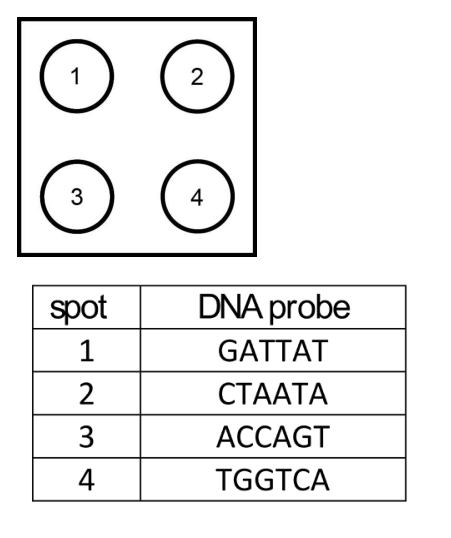
✍️ အဆင့် ၁ — နမူနာ (sample) TGGTCAAGATTAT ကို ရေးတယ်။
အဆင့် ၂ — အောက်မှာ သူ့ ဖြည့်ဖက် (complement) ကို ရေးတယ်: A→T, T→A, G→C, C→G ဆိုတော့ ACCAGTTCTAATA။
အဆင့် ၃ — probe တွေကို complement ထဲမှာ ရှာမယ်။ spot 3 ရဲ့ ACCAGT က အစမှာ ရှိတယ် ✓ — အလင်း ထွက်မယ်။
spot 2 ရဲ့ CTAATA က အဆုံးမှာ ရှိတယ် ✓။
spot 1 (GATTAT) နဲ့ spot 4 (TGGTCA) က နမူနာ ကိုယ်တိုင်ထဲက အပိုင်း (= the sample itself) — အစဉ် တူတာက မတွဲဘူး ✗။
ဒါကြောင့် အဖြေက 2 and 3 only (E)။ ထောင်ချောက်: နမူနာထဲမှာ တွေ့တာကို မရွေးနဲ့၊ complement ထဲမှာ တွေ့တာကို ရွေးပါ။
👉 probe + restriction enzyme နဲ့ sickle ရှာ — RFLP။👉 probe နဲ့ restriction enzyme ကို ပေါင်းသုံးပြီး sickle allele ကို ရှာခဲ့ကြတယ် — RFLP။
site ပျောက်ရင် band ပြောင်းတယ် — RFLP
STR မတိုင်ခင် RFLP (restriction အပိုင်း အရှည် ကွာ) နဲ့။PCR နဲ့ STR မပေါ်ခင် DNA ကို RFLP (Restriction Fragment Length Polymorphism — restriction အပိုင်း အရှည် ကွာခြင်း) နဲ့ နှိုင်းယှဉ်ခဲ့တယ်။
allele A — MstII sites 3 ခု၊ 1.15 kb + 0.2 kb။ပုံမှန် haemoglobin allele A မှာ MstII enzyme ရဲ့ sites သုံးခု ရှိလို့ 1.15 kb နဲ့ 0.2 kb အပိုင်း ရတယ်။
allele S — အလယ် site ပျက်၊ 1.35 kb တစ်ခုတည်း။sickle allele S မှာ base တစ်လုံး ပြောင်းတဲ့ mutation (သင်ခန်းစာ 41A) က အလယ် site ကို ဖျက်လိုက်တယ်။ enzyme က အဲဒီမှာ မဖြတ်တော့လို့ 1.35 kb အပိုင်း တစ်ခုတည်း ရတယ်။
🤔 Predict: a carrier has one A allele and one S allele. Which pieces will a haemoglobin probe show for a carrier (AS)?
🔍 မေးခွန်း ဖြည်မယ်
a carrier = ရောဂါ allele သယ်ထားသူ (ရောဂါ မဖြစ်)။ Which pieces will … show = ဘယ် အပိုင်းတွေ ပေါ်မလဲ။
မေးနေတာ — A allele တစ်ခု၊ S allele တစ်ခု ရှိရင် allele တစ်ခုစီက ဘယ် အရှည် ပေးလဲ။
cell မှာ allele နှစ်ခုလုံး ရှိတယ်။
A allele က 1.15 kb အပိုင်း ပေး၊ S allele က 1.35 kb အပိုင်း ပေးလို့ carrier မှာ band နှစ်ခုလုံး ပေါ်တယ်။
AA က 1.15 ပဲ၊ SS က 1.35 ပဲ။
MstII ဖြတ်၊ gel ပြေး၊ probe နဲ့ ပေါ်အောင်။DNA ကို MstII နဲ့ ဖြတ်ပြီး gel ပေါ် ပြေး၊ haemoglobin gene နဲ့ ကိုက်တဲ့ probe နဲ့ ဒီ အပိုင်းတွေကိုပဲ ပေါ်အောင် လုပ်တယ် (probe — အပေါ်မှာ တွေ့ခဲ့ပြီ)။
AA 1.15၊ SS 1.35၊ AS နှစ်ခုလုံး။AA မှာ 1.15 band၊ SS မှာ 1.35 band၊ AS (carrier) မှာ နှစ်ခုလုံး ပေါ်တယ်။ ‘restriction အပိုင်း အရှည် ကွာ’ တာကို နာမည်က ပြောတာပဲ — ကိုယ်ဝန် စစ်ဆေးရာမှာ သုံးခဲ့တယ်။
👉 DNA စာလုံးကို တစ်လုံးချင်း ဖတ်လို့ ရမလား?👉 band က DNA ရဲ့ အရှည်ကို ပြတယ်။ DNA ရဲ့ စာလုံးတွေကိုရော တစ်လုံးချင်း ဖတ်လို့ ရမလား?
DNA စာလုံး ဖတ်ခြင်း — Sanger sequencing
Sanger က 1977 DNA ဖတ်နည်း တီထွင် — Nobel နှစ်ခါ။ဗြိတိန် ဇီဝဓာတုဗေဒ ပညာရှင် Frederick Sanger (ဖရက်ဒရစ် ဆန်ဂါ၊ 1918–2013) က 1977 မှာ DNA ဖတ်နည်းကို တီထွင်ခဲ့တယ်။ Nobel ဆု နှစ်ခါ ရခဲ့တယ် — insulin ရဲ့ amino acid အစဉ် (1958) နဲ့ ဒီ နည်း (1980)။
DNA sequencing (base အစဉ် ဖတ်ခြင်း) — template ကူး။DNA ရဲ့ base အစဉ်ကို ဖတ်တာကို DNA sequencing (DNA ရဲ့ base အစဉ် ဖတ်ခြင်း) လို့ ခေါ်တယ်။ Sanger နည်းမှာ ဖတ်ချင်တဲ့ ကြိုး (template)၊ primer နဲ့ DNA polymerase နဲ့ ကြိုး ကူးတယ်။
dideoxy nucleotide (3′ OH မပါ — dd) ဝင်ရင် ကြိုး stop။nucleotide ပုံမှန်တွေထဲ dideoxy nucleotide (3′ OH မပါတဲ့ nucleotide — dd) အနည်းငယ် ရောထည့်တယ်။ ထည့်မိတာနဲ့ နောက်တစ်လုံး ဆက်မရဘဲ ကြိုး ရပ် (stop) တယ်။
သကြား (deoxyribose) ရဲ့ carbon ၅ လုံးကို 1′ ကနေ 5′ လို့ နံပါတ် တပ်တယ်။ base က 1′၊ phosphate က 5′ မှာ။ 3′ မှာ OH ရှိမှ နောက် nucleotide ချိတ်တယ် — dd မှာ H ပဲ ရှိလို့ ချိတ်မရဘူး။
🤔 On the template, the base opposite the place where a chain stopped is A. Which dideoxy nucleotide stopped that chain?
🔍 မေးခွန်း ဖြည်မယ်
the base opposite the place = အဲဒီ နေရာရဲ့ ဆန့်ကျင်ဘက်က base။ where a chain stopped = ကြိုး ရပ်သွားတဲ့ နေရာ။
မေးနေတာ — template မှာ A ရှိရင် ကြိုးအသစ်ထဲ ဘယ် base ဝင်ပြီး ရပ်သွားတာလဲ။
ကူးတဲ့ ကြိုးက template နဲ့ ဖြည့်ဖက် — A ရဲ့ ဆန့်ကျင်ဘက်မှာ T ဝင်တယ်။
ဒါကြောင့် အဲဒီမှာ ddT ဝင်ပြီး ရပ်တာ (ပုံထဲမှာ G ဆန့်ကျင်ဘက်မှာ dd C ရပ်သလိုပဲ)။
👉 အရှည် အမျိုးမျိုးကနေ အစဉ် ဘယ်လို ဖတ်လဲ?👉 ကြိုး ရပ်တာ ကျပန်း ဆိုရင် အရှည် အမျိုးမျိုး ထွက်မယ်။ အဲဒီ ကြိုးတွေကနေ အစဉ်ကို ဘယ်လို ဖတ်လဲ?
အရောင် ကြိုးတွေကို ဖတ်ခြင်း
ကျပန်း ရပ်လို့ every length ရ။ဘယ်နေရာ ရပ်မလဲ ကျပန်း ဖြစ်လို့ base တစ်လုံးစီ ကွာတဲ့ အရှည် အမျိုးမျိုး (every length) ရတယ်။
dd base တစ်မျိုး အရောင် တစ်ရောင် — last base ပြ။dd base လေးမျိုးမှာ အရောင် တစ်ရောင်စီ တပ်ထားလို့ ကြိုးတိုင်းရဲ့ အရောင်က နောက်ဆုံး base (last base) ကို ပြတယ်။
တိုရာက ရှည်ရာ စီ၊ laser က အရောင် ဖတ်။ကြိုးတွေကို electrophoresis နဲ့ အတိုဆုံးကနေ အရှည်ဆုံး စီပြီး laser က အရောင်ကို တစ်ခုချင်း ဖတ်တယ်။
🤔 Copies sorted from shortest to longest end with the colours for T, G, G and A. What does the new strand read?
🔍 မေးခွန်း ဖြည်မယ်
sorted from shortest to longest = အတိုဆုံးကနေ အရှည်ဆုံး စီထားတယ်။ end with the colours for = အဆုံး base ရဲ့ အရောင်က … ဖြစ်တယ်။
မေးနေတာ — အတိုဆုံးက ပထမ base ဆိုတော့ ကြိုးအသစ်ကို အစဉ်အတိုင်း ဘယ်လို ဖတ်မလဲ။
အတိုဆုံးက ပထမ base — ဒါကြောင့် အစဉ်အတိုင်း ဖတ်ရင် TGGA။
ACCT က template ဘက်က ဖြည့်ဖက်၊ AGGT က ပြောင်းပြန် ဖတ်ထားတာ။
ဖတ်ရတာ new strand — template ရဲ့ complementary။ဖတ်ရတဲ့ အစဉ်က ကြိုးအသစ် (new strand) ပဲ — template ရဲ့ complementary အစဉ် ဖြစ်တယ်။
genome ဖတ်တာ 13 နှစ်၊ ဒီနေ့ days ပဲ။ဒီနည်းနဲ့ လူ့ genome တစ်ခုလုံး ဖတ်ဖို့ 13 နှစ် (1990–2003) ကြာခဲ့တယ်။ ဒီနေ့ စက်တွေက အပိုင်း သန်းချီကို တစ်ပြိုင်နက် ဖတ်လို့ ရက်ပိုင်းပဲ (days) ကြာတယ်။
👉 ဒီ နည်းနဲ့ လူ့ genome တစ်ခုလုံးကို ဖတ်ခဲ့တယ်။
လူ့ genome တစ်ခုလုံး ဖတ်ခြင်း — Human Genome Project
Human Genome Project (လူ့ genome ဖတ်တဲ့ စီမံကိန်း)Human Genome Project (HGP — လူ့ genome တစ်ခုလုံး ဖတ်တဲ့ စီမံကိန်း) က 1990 မှာ စပြီး 2003 မှာ ပြီးတယ်။ နိုင်ငံ အများကြီးက Sanger နည်းနဲ့ chromosome တစ်စုံ (23 ချောင်း) ရဲ့ base အစဉ်ကို ဖတ်ခဲ့တယ်။ 2003 မှာ အများစု ပြီးပြီး ခက်တဲ့ ကျန်အပိုင်းကို 2022 မှာမှ ဖြည့်ခဲ့တယ်။
base pairs 3.2 ဘီလီယံ လောက်။chromosome တစ်စုံမှာ base pairs 3.2 ဘီလီယံ (3 200 000 000) လောက် ရှိတယ်။ body cell မှာ နှစ်စုံ ပါလို့ နှစ်ဆ။ စာအုပ် ထောင်ချီ ပြည့်မယ့် စာလုံး ရေပဲ။
🤔 Predict: about what fraction of these 3.2 billion base pairs codes for proteins?
🔍 မေးခွန်း ဖြည်မယ်
about what fraction = ခန့်မှန်းခြေ ဘယ်လောက် အစိတ်အပိုင်း (%)။ codes for proteins = protein အတွက် code ဖြစ်တယ်။
မေးနေတာ — genome တစ်ခုလုံးထဲ protein code ဖြစ်တဲ့ အပိုင်း ဘယ်လောက် ရှိလဲ။
အံ့သြစရာ — 1–2 % လောက်ပဲ protein code ဖြစ်တယ်။
ကျန်တာက intron၊ gene ဖွင့်ပိတ် control အပိုင်း၊ STR လို ထပ်နေတဲ့ အပိုင်းတွေ။
protein gene က 20 000 လောက်ပဲ ရှိတယ်။
gene ≈ 20 000 ပဲ — မျှော်တာထက် နည်း။အဲဒီထဲမှာ protein အတွက် gene က 20 000 လောက် (≈ 20 000) ပဲ ရှိတယ်လို့ သိလာတယ် — မျှော်လင့်ထားတာထက် အများကြီး နည်းတယ်။
1–2 % ပဲ protein code — ကျန်တာ intron၊ control၊ STR။DNA ရဲ့ 1–2 % လောက်ပဲ protein code ဖြစ်တယ်။ ကျန်တာ intron၊ gene ဖွင့်ပိတ် control အပိုင်း၊ STR လို ထပ်နေတဲ့ အပိုင်းတွေ။
HGP အကျိုး — ရောဂါ gene၊ probe၊ personalised medicine။HGP ရဲ့ အကျိုး — ရောဂါ gene တွေ ရှာတွေ့လာတယ်၊ genetic screening အတွက် probe လုပ်နိုင်တယ်၊ လူတစ်ယောက်ချင်းနဲ့ ကိုက်တဲ့ ဆေး (personalised medicine) လုပ်နိုင်လာတယ်။
👉 ဒီ ကိရိယာတွေနဲ့ ဆေးရုံမှာ ရောဂါ allele ကို ကြိုရှာတယ်။
ရောဂါ allele ကို ကြိုရှာခြင်း — genetic screening
genetic screening (ချို့ယွင်း allele ရှိမရှိ စစ်ခြင်း)genetic screening (လူ အများကို ချို့ယွင်းတဲ့ allele ရှိမရှိ စစ်ခြင်း) ကို ဘဝ အဆင့်တိုင်းမှာ လုပ်နိုင်တယ်။
IVF embryo cell စစ်ပြီး ရွေးတာ PGD။IVF (ပြွန်သန္ဓေ) embryo မှာ cell တစ်လုံးကို ယူစစ်ပြီး ကောင်းတဲ့ embryo ကို သားအိမ်ထဲ ရွေးထည့်တာကို PGD (သားအိမ် မထည့်ခင် gene စစ်ခြင်း) လို့ ခေါ်တယ်။
amniotic fluid ယူစစ်တာ amniocentesis။ကိုယ်ဝန် ရှိနေစဉ် သားအိမ်ထဲက ရေ (amniotic fluid) ကို အပ်နဲ့ ယူပြီး ကလေးရဲ့ cell ကို စစ်တယ် — amniocentesis။
မွေးကင်းစ ကလေးရဲ့ ဖနောင့်ကို အပ်ဖောက်ပြီး သွေးစက် (heel prick) စစ်တယ်။
PKU — phenylalanine မချေနိုင်လို့ ဦးနှောက် ထိခိုက်။PKU (phenylketonuria) ဆိုတာ amino acid phenylalanine ကို မချေ (not broken down) နိုင်လို့ ဘာမှ မလုပ်ရင် (if nothing is done) သွေးထဲ စုပြီး ဦးနှောက်ကို ထိခိုက်တဲ့ ရောဂါ။
🤔 Predict: phenylalanine comes from food protein. A newborn has PKU. What can stop the brain damage?
🔍 မေးခွန်း ဖြည်မယ်
comes from food protein = အစာထဲက protein ကနေ လာတယ်။ newborn = မွေးကင်းစ ကလေး။ stop the brain damage = ဦးနှောက် ထိခိုက်တာကို တားဆီး။
မေးနေတာ — phenylalanine က ဘယ်က လာလဲ သိရင် ဘာ ပြောင်းပေးလို့ ရလဲ။
phenylalanine က အစာထဲက လာတာ — စောစော သိရင် phenylalanine နည်းတဲ့ အစာ (diet) ပေးလို့ မစုတော့ဘူး၊ ဦးနှောက် မထိခိုက်ဘူး။
allele ကို ဖယ်လို့ မရဘူး၊ antibiotic က bacteria ကိုပဲ သတ်တယ်။
PKU တွေ့ရင် diet ပြောင်းလို့ ဦးနှောက် မထိ။ဒါကြောင့် PKU တွေ့ရင် အစာ ချက်ချင်း ပြောင်းပေး (diet) လို့ ဦးနှောက် မထိခိုက်တော့ဘူး။
carrier စစ် — နှစ်ယောက်လုံးဆို CF 14။ကလေး မယူခင် စုံတွဲကို CF allele သယ်ထားလား (carrier) စစ်တယ်။ နှစ်ယောက်လုံး carrier ဆိုရင် ကလေးမှာ CF ဖြစ်နိုင်ခြေ 14 ရှိတယ် (သင်ခန်းစာ 35)။
privacy၊ insurance၊ embryo ရွေး — counselling လို။ပြဿနာတွေလည်း ရှိတယ် — ရလဒ်ကို ဘယ်သူ သိခွင့် ရှိလဲ (privacy)၊ insurance ကုမ္ပဏီ သိရင် ခွဲခြားမလား၊ embryo ကို ရွေးတာ မှန်လား။ ဒါကြောင့် စစ်ခင်၊ စစ်ပြီး အကြံပေး (counselling) လိုတယ်။
👉 protein ရှာတဲ့ ကိရိယာ — monoclonal antibody။👉 cell တွေ အပြင် ရောဂါ ရှာဖို့ protein ကို ရှာပေးတဲ့ ကိရိယာလည်း ရှိတယ် — monoclonal antibody။
🔎 ကြိုကြည့်မယ် — antigen (ကိုယ်ခံအားက “ငါ့ဟာ မဟုတ်ဘူး” လို့ မှတ်တဲ့ ပုံသဏ္ဌာန်)
virus မျက်နှာပြင်က ပုံသဏ္ဌာန် = antigen။virus၊ bacteria လို ပိုးမွှားတွေရဲ့ မျက်နှာပြင်မှာ ပုံသဏ္ဌာန် အမျိုးမျိုး ပါတဲ့ မော်လီကျူး (protein တွေ အများဆုံး) ရှိတယ်။ ကိုယ်ခံအားက “ငါ့ ခန္ဓာ မဟုတ်ဘူး” လို့ မှတ်တဲ့ အဲဒီ ပုံသဏ္ဌာန်ကို antigen လို့ ခေါ်တယ်။
antibody လက် နှစ်ဖက်က antigen ကို fits — သော့နဲ့ သော့ခလောက်။antibody ဆိုတာ Y ပုံ protein။ Y ရဲ့ လက်ဖျား နှစ်ဖက်က antigen ပုံသဏ္ဌာန်နဲ့ သော့နဲ့ သော့ခလောက်လို ကိုက် (fits) ပြီး ဖမ်းကိုင်တယ်။
ပုံ မတူရင် မကိုက်ဘူး — antibody တစ်မျိုး antigen တစ်မျိုး။ပုံသဏ္ဌာန် မတူတဲ့ bacteria (လေးထောင့် ပုံ) ကိုတော့ ဒီ antibody မဖမ်းဘူး။ ဒါကြောင့် antibody တစ်မျိုးက antigen တစ်မျိုးကိုပဲ ချိတ်တယ်။ အသေးစိတ်ကို သွေး သင်ခန်းစာ (48) မှာ သင်မယ်။
antibody စက်ရုံ — monoclonal antibodies
antibody (ကိုယ်ခံ protein) က antigen တစ်မျိုးကိုပဲ ချိတ်။antibody (ကိုယ်ခံ protein) တစ်မျိုးက antigen (ရန်သူ မော်လီကျူး) တစ်မျိုးကိုပဲ ချိတ်တယ်။ ကြွက်ကို antigen ထိုးသွင်း (injection — antigen in) ရင် သူ့ ကိုယ်ခံအားက antibody လုပ်တယ်။
B cell က antibody ထုတ်ပေမဲ့ မကြာ သေတယ်။antibody ကို B cell (သွေးဖြူဥ တစ်မျိုး) က ထုတ်တယ်။ ဒါပေမဲ့ B cell က ပန်းကန်ထဲမှာ ကြာကြာ မကွဲပွားနိုင်ဘဲ သေတယ်။
myeloma — divides forever။myeloma ဆိုတာ B cell ကနေ ဖြစ်တဲ့ ကင်ဆာ cell — မရပ်မနား ကွဲပွား (divides forever) တယ်။
🤔 Predict: scientists want one cell line that makes this antibody and never stops dividing. What would they do?
🔍 မေးခွန်း ဖြည်မယ်
one cell line = cell တစ်လုံးကနေ ပွားလာတဲ့ cell အစု။ never stops dividing = ကွဲပွားတာ ဘယ်တော့မှ မရပ်ဘူး။
မေးနေတာ — antibody ထုတ်တတ်တာနဲ့ မရပ်မနား ကွဲတတ်တာ နှစ်ခုလုံး ရဖို့ ဘာ လုပ်မလဲ။
B cell က antibody ထုတ်တတ်တယ်၊ myeloma က မရပ်မနား ကွဲတတ်တယ် — နှစ်ခုကို ပေါင်း (fuse) ရင် နှစ်ဖက်ရဲ့ ကောင်းကွက် ပါတဲ့ cell ရတယ်။
B cell အမျိုးမျိုး ရောရင် antibody အမျိုးမျိုး ထွက်မယ်။
fuse ရင် hybridoma (B cell + myeloma ပေါင်း cell)B cell နဲ့ myeloma cell ကို ပေါင်း (fuse) လိုက်ရင် hybridoma (B cell + myeloma ပေါင်းစပ် cell) ရတယ်။ antibody ထုတ်တတ်ပြီး မရပ်မနား ကွဲတယ်။
one antibody = monoclonal antibody (clone တစ်ခုရဲ့ antibody)hybridoma တစ်လုံးက ပွားလာတဲ့ cell အားလုံး (clone) က antibody တစ်မျိုးတည်း (one antibody) ထုတ်တယ်။ ဒါကို monoclonal antibody (clone တစ်ခုက ထုတ်တဲ့ antibody တစ်မျိုးတည်း) လို့ ခေါ်တယ်။
mono = တစ်ခု၊
clonal = clone ကနေ။
pregnancy test (hCG)၊ ရောဂါ စစ်၊ ကင်ဆာ ဆေးပို့။သုံးပုံ — ကိုယ်ဝန် စစ်တံ (pregnancy test) မှာ hCG hormone ကို ချိတ်တဲ့ antibody ပါတယ်။ ရောဂါ စစ်ဆေးခြင်း၊ ကင်ဆာ cell ကို ရှာပြီး ဆေး ပို့ခြင်းမှာလည်း သုံးတယ်။
👉 PART 2 — gene ကို သက်ရှိ တစ်ကောင်လုံးထဲ ထည့်ရင်ကော?
🔁 ပြန်စစ်မယ် — အဖြေ မကြည့်ခင် စဉ်းစားပါ
🤔 What happens at 72 °C in a PCR cycle?
🔍 မေးခွန်း ဖြည်မယ်
What happens at 72 °C = 72 °C မှာ ဘာ ဖြစ်လဲ။ in a PCR cycle = PCR cycle တစ်ခုအတွင်း။
မေးနေတာ — အပူချိန် သုံးဆင့်ထဲက တတိယ အဆင့်ရဲ့ အလုပ်။
95 ခွဲ၊ 55 primer ကပ်၊ 72 Taq ဆောက်။
PCR မှာ DNA ကို ဖြတ်တဲ့ အဆင့် မရှိဘူး — ဖြတ်တာက restriction enzyme ရဲ့ အလုပ်။
🤔 How many copies of a DNA molecule are there after 10 PCR cycles?
🔍 မေးခွန်း ဖြည်မယ်
How many copies = မိတ္တူ ဘယ်နှစ်ခု။ after 10 PCR cycles = PCR cycle 10 ခု ပြီးတဲ့အခါ။
မေးနေတာ — cycle တိုင်း နှစ်ဆ ဆိုတော့ 10 ခါ နှစ်ဆ ဖြစ်ရင် ဘယ်လောက်လဲ။
2¹⁰ = 1024။
512 က 9 cycle။
🤔 In a gel, DNA fragments move towards…
🔍 မေးခွန်း ဖြည်မယ်
DNA fragments = DNA အပိုင်းအစတွေ။ move towards… = … ဘက်ကို ရွေ့တယ်။ electrode = လျှပ်စစ် ဝင်/ထွက် ဝင်ရိုး။
မေးနေတာ — DNA ရဲ့ charge ကို စဉ်းစားပြီး ဘယ် electrode ဘက် ဆွဲခံရလဲ။
phosphate ကြောင့် DNA (−) — (+) ဘက် ရွေ့တယ်။
🤔 In a paternity test, a child's band that the mother does not have must be found in…
🔍 မေးခွန်း ဖြည်မယ်
paternity test = အဖေ ဟုတ်မဟုတ် စစ်ခြင်း။ that the mother does not have = အမေ့ဆီမှာ မရှိတဲ့။ must be found in… = … မှာ မဖြစ်မနေ တွေ့ရမယ်။
မေးနေတာ — ကလေးရဲ့ band တစ်ခု အမေ့ဆီက မဟုတ်ရင် ဘယ်သူ့ဆီက လာရမလဲ။
band တိုင်း အမေ ဒါမှမဟုတ် အဖေ ဆီက လာတယ်။
🤔 In Sanger sequencing the copies are sorted from shortest to longest. The coloured base on the SHORTEST copy is:
🔍 မေးခွန်း ဖြည်မယ်
the coloured base on the SHORTEST copy = အတိုဆုံး ကြိုးရဲ့ အရောင်တပ် base။ added after the primer = primer နောက်မှာ ဆက်ထည့်တဲ့။
မေးနေတာ — အတိုဆုံး ကြိုးက primer ပြီးပြီးချင်း ဘယ်နေရာမှာ ရပ်သွားတာလဲ။
အတိုဆုံး ကြိုးက primer ပြီးတာနဲ့ ddNTP ပထမဆုံး ဝင်ပြီး ရပ်သွားတာ — ဒါကြောင့် ဖတ်တဲ့ အစဉ်ရဲ့ ပထမ base။
🤔 A probe glows with a sample strand that is…
🔍 မေးခွန်း ဖြည်မယ်
glows with = … နဲ့ တွဲရင် အလင်း ထွက်တယ်။ a sample strand that is… = … ဖြစ်တဲ့ နမူနာ ကြိုး။
မေးနေတာ — probe က ဘယ်လို အစဉ် ရှိတဲ့ ကြိုးနဲ့ base တွဲလဲ။
complementary ဖြစ်မှ တွဲတယ်။
အစဉ် တူတာ မတွဲဘူး။
Changing living things
သက်ရှိကို ပြောင်းလဲခြင်း
ပိုး မကိုက်တဲ့ ဝါပင်
ဝါပင်ကို caterpillar စား — အထွက် လျော့။ဝါပင်ရဲ့ အရွက်နဲ့ ဝါသီးကို ပိုးတုံးလုံး (caterpillar) တွေ စား (pests eat) လို့ အထွက် လျော့တယ်။
ပိုးသတ်ဆေး spray — ငွေကုန်၊ ညစ်ညမ်း။လယ်သမားက ပိုးသတ်ဆေး ခဏခဏ ဖြန်း (spray) ရတယ်။ ငွေကုန်ပြီး ပတ်ဝန်းကျင်လည်း ညစ်ညမ်းတယ်။
Bt cotton — ကိုက်တဲ့ ပိုး သေ၊ no spray။Bt cotton ကတော့ ကိုက်တဲ့ ပိုးတုံးလုံး သေသွားတယ် — ဆေး မဖြန်းဘဲ (no spray)။
ကိုယ့် အဆိပ် ဘယ်လို (how?) ထုတ်လဲ?ဝါပင်က ကိုယ့် အဆိပ်ကို ကိုယ်တိုင် ဘယ်လို (how?) ထုတ်တတ်သွားလဲ? သင်ခန်းစာ 43A ရဲ့ insulin စက်ရုံ နည်း (gene ကို plasmid vector နဲ့ သယ်) နဲ့ အပင်ကို ပြင်လို့ပါ။
Bt ဝါပင် ဘယ်လို လုပ်လဲ
Bt bacteria ရဲ့ toxin gene ကို ဖြတ်ယူ — လူ မထိခိုက်။မြေဆီလွှာထဲက bacteria Bacillus thuringiensis (Bt) က ပိုးကောင်ရဲ့ အူကို ဖျက်တဲ့ toxin protein ထုတ်တယ်။ လူကို မထိခိုက်ဘူး။ အဲဒီ toxin gene ကို ဖြတ်ယူတယ်။
antibiotic ခံ gene ကို marker အဖြစ် ထည့်။နောက်မှ ရွေးဖို့ antibiotic ခံနိုင်တဲ့ gene (marker gene) ကိုလည်း marker အဖြစ် အတူ ထည့်မယ်။
Ti plasmid (Agrobacterium ရဲ့ အကျိတ် plasmid) ထဲ ကပ်။ဒီ gene နှစ်ခုကို Agrobacterium (Agrobacterium tumefaciens) ရဲ့ plasmid — Ti plasmid (Tumour-inducing — Agrobacterium ရဲ့ အကျိတ်ဖြစ်စေ plasmid) — ထဲ ကပ်တယ်။ Agrobacterium က plasmid vector ကို ပေးတာ။
T-DNA ကို အပင် chromosome ထဲ လွှဲ — အကျိတ် ဖြစ်။Agrobacterium က ဝါပင် cell ကို ကပ်ပြီး Ti plasmid ထဲက T-DNA (gene နှစ်ခု ပါတဲ့ အပိုင်း) ကို အပင် chromosome ထဲ လွှဲထည့်တယ်။ cell တွေကို မြန်မြန် ခွဲစေလို့ အကျိတ် (tumour = cell division) ဖြစ်တယ်။
T-DNA = Transferred DNA။T-DNA ဆိုတာ Transferred DNA — Ti plasmid ကနေ အပင် chromosome ထဲ လွှဲပို့ (transfer) ခံရတဲ့ အပိုင်း ဖြစ်လို့ ဒီ နာမည် ရတယ်။
လက်တွေ့ — tumour gene ဖယ်ထားတဲ့ Ti plasmid။ဒါက IMAT ပုံအတိုင်း ပြောတာပါ။ လက်တွေ့မှာတော့ tumour gene ကို ဖယ်ထားတဲ့ Ti plasmid ကို သုံးတယ်။
antibiotic medium — gene ဝင်တဲ့ cell ပဲ ရှင်။အကျိတ် cell တွေကို antibiotic ပါတဲ့ အစာ (antibiotic medium) ပေါ်မှာ မွေးတော့ gene ဝင်ထားတဲ့ cell ပဲ ရှင်ပြီး ဝါပင် အသစ် ပေါက်လာတယ်။
toxin in every cell — ပဟေဠိ ဖြေပြီ။ဝါပင် အသစ်ရဲ့ cell တိုင်းမှာ toxin gene ပါလို့ (toxin in every cell) ကိုက်တဲ့ ပိုး သေတယ်။ gene က chromosome ထဲ ဝင်နေလို့ မျိုးစေ့နဲ့ ဆက်ပါပြီး မပျောက် (never disappears) ဘူး။
👉 IMAT 2020 — Agrobacterium ရဲ့ အလုပ် နှစ်ခု။👉 IMAT 2020 က ဒီ ပုံကို ပြပြီး Agrobacterium ရဲ့ အလုပ် နှစ်ခုကို မေးတယ်။
IMAT 2020 Q26 — Agrobacterium ရဲ့ အလုပ်
📝 IMAT 2020 · Question 26
The diagram shows how recombinant DNA can be used to make cotton plants produce an insect toxin. The insect toxin kills any insect that can damage the cotton crop.
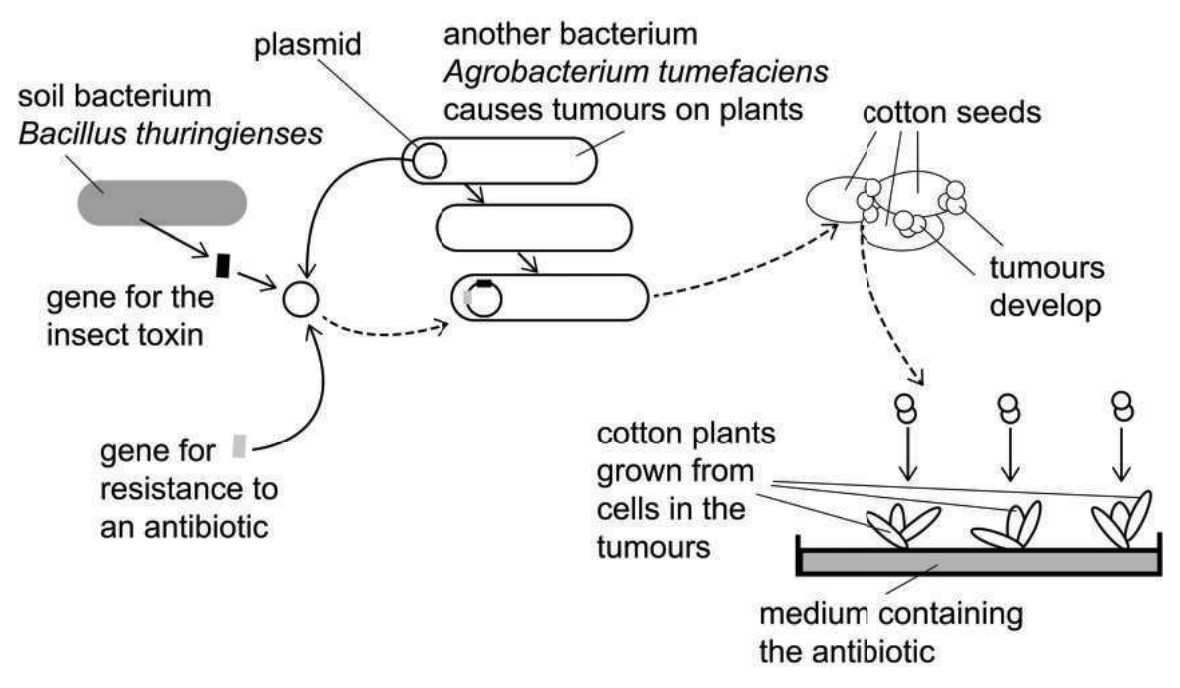
What are the TWO functions of the Agrobacterium tumefaciens bacteria in this process?
1 They stimulate cell division in cotton plant seeds.
2 They supply the plasmid vector.
3 They are the source of the gene for the production of the insect toxin.
4 They are the source of the gene for antibiotic resistance.
✍️ 1 — Agrobacterium က ဝါစေ့ cell တွေကို အကျိတ် (tumours) ဖြစ်အောင် cell division များစေတယ် ✓။
2 — သူ့ Ti plasmid က gene နှစ်ခုကို သယ်တဲ့ plasmid vector ဖြစ်တယ် ✓။
3 — toxin gene က Bacillus thuringiensis ဆီက (from Bt) လာတယ်၊ Agrobacterium ဆီက မဟုတ်ဘူး ✗။
4 — antibiotic ခံ gene ကို ပုံမှာ သီးခြား ထည့် (added) တယ်၊ Agrobacterium ဆီက မဟုတ်ဘူး ✗။
ဒါကြောင့် အဖြေက 1 and 2 only (C)။
👉 ဘယ် species ကို ဘယ် species ထဲ ထည့်လို့ ရလဲ?👉 bacteria gene ကို အပင်ထဲ ထည့်လို့ ရတယ်။ ဘယ် species ကို ဘယ် species ထဲ ထည့်လို့ ရလဲ?
ဘယ် species gene ကို မဆို — transgenic
📝 IMAT 2017 · Question 35
Which combinations of DNA could be present in a transgenic organism?
1. invertebrate animal DNA in mammal DNA
2. prokaryotic DNA in plant DNA
3. plant DNA in animal DNA
AUG = Met နေရာတိုင်း — genetic code universal။codon တစ်ခုစီရဲ့ အဓိပ္ပာယ်က သက်ရှိ အားလုံးနီးပါးမှာ တူတယ် — ဥပမာ AUG က species အားလုံးနီးပါးမှာ Met (methionine)။ genetic code က universal ဖြစ်တယ်။
jellyfish glow gene ကို ကြွက်ထဲ — UV အောက် အစိမ်း တောက်။ဒါကြောင့် ရေဘဝဲ (jellyfish — ကျောရိုးမဲ့ သတ္တဝါ) ရဲ့ အလင်းထွက် gene (glow gene) ကို ကြွက် (mammal) ထဲ ထည့်ရင် ကြွက်ကို အပြာ/UV အလင်း ထိုးရင် အစိမ်းရောင် တောက်တယ်။
Bt ဝါပင် — prokaryote gene ကို plant ထဲ။Bt ဝါပင်ကတော့ bacteria (prokaryote) ရဲ့ gene ကို အပင် (plant) ထဲ ထည့်ထားတာ။
plant → animal လည်း ရ — spinach gene ပါ pig။အပင် gene ကို တိရစ္ဆာန်ထဲ (plant → animal) လည်း ထည့်လို့ ရတယ် — ဥပမာ ဟင်းနုနွယ် (spinach) gene ပါတဲ့ ဝက် (pig)။
transgenic ⊂ GMO (gene ပြင်ထားတဲ့ သက်ရှိ)gene နည်းပညာနဲ့ gene ပြင်ထားတဲ့ သက်ရှိ အားလုံးကို GMO (Genetically Modified Organism — gene ပြင်ထားတဲ့ သက်ရှိ) လို့ ခေါ်တယ်။ အဲဒီထဲက တခြား species ရဲ့ gene ပါတာကို transgenic လို့ ခေါ်တယ်။
သင်ခန်းစာ 43A က လူ့ antithrombin gene ပါတဲ့ ဆိတ်လည်း transgenic ပဲ။
golden rice — β-carotene ထုတ်၊ မျက်စိကွယ် ကာကွယ်။golden rice မှာ ဆန်စေ့က vitamin A ရဲ့ ရှေ့ပြေး β-carotene ထုတ်အောင် gene ထည့်ထားလို့ အဝါရောင် ဖြစ်တယ်။ vitamin A မလုံလောက်လို့ မျက်စိကွယ်တာကို ကာကွယ်ဖို့ပါ။
✍️ 1 ရေဘဝဲ → ကြွက်၊ 2 bacteria → ဝါပင်၊ 3 အပင် → ဝက် — သုံးခုလုံး ဖြစ်နိုင်တယ်။ code က universal ဖြစ်လို့ — အဖြေ 1, 2 and 3 (C)။
👉 GM သီးနှံတွေ ကောင်းချည်းပဲလား? အကျိုး နဲ့ အန္တရာယ်ကို ချိန်ကြည့်မယ်။
GM သီးနှံ — အကျိုး နဲ့ အန္တရာယ်
GM သီးနှံ — benefits နဲ့ risks။GM (Genetically Modified — gene ပြင်ထားတဲ့) သီးနှံ တွေကို ချိန်ခွင်ပေါ် တင်ကြည့်မယ်။ ဘယ်ဘက်က အကျိုး (benefits)၊ ညာဘက်က အန္တရာယ် (risks)။
🤔 Predict: which of these is a real worry scientists have about GM crops?
🔍 မေးခွန်း ဖြည်မယ်
a real worry = တကယ် စိုးရိမ်ရတဲ့ အချက်။ GM crops = gene ပြင်ထားတဲ့ သီးနှံ။ spread to wild plants = တောရိုင်း အပင်တွေဆီ ပျံ့။
မေးနေတာ — option လေးခုထဲ သိပ္ပံနည်းကျ တကယ် ဖြစ်နိုင်တဲ့ အန္တရာယ်။
ဝတ်မှုန် (pollen) က gene ကို တောရိုင်း ဆွေမျိုး အပင်ဆီ သယ်သွားနိုင်တယ် — gene flow။
အစာထဲက DNA ကို အစာခြေပြီး ချေလိုက်လို့ ကိုယ့် DNA မပြောင်းဘူး။
GM အပင်တွေ မလင်းဘူး၊ မျိုးစေ့ ဖြစ်တယ်။
more food၊ less spray၊ vitamin A rice။အကျိုး — အထွက် ပိုရ (more food)၊ Bt ဝါပင်လို ပိုးသတ်ဆေး ဖြန်းတာ လျော့ (less spray)၊ golden rice လို vitamin ပိုပါ (vitamin A rice)။
risk ၁ — gene flow နဲ့ superweed။အန္တရာယ် ၁ — ဝတ်မှုန်က gene ကို တောရိုင်း ဆွေမျိုး အပင် (weeds) ဆီ သယ်သွားနိုင်တယ် (gene flow, သင်ခန်းစာ 42B)။ ပေါင်းပင်က ဆေး ခံနိုင်လာရင် ‘superweed’ ဖြစ်မယ်။
GM အစာ eating က ကိုယ့် DNA ကို no changes။GM အစာ စားခြင်း (eating) က ကိုယ့် DNA ကို မပြောင်း (no changes) ဘူး — အစာထဲက DNA ကို အစာခြေလမ်းကြောင်းက ချေဖျက်လို့ပါ။ ဒါ စိုးရိမ်စရာ မဟုတ်ဘူး။
risk ၂ — Bt-resistant pests (natural selection)။အန္တရာယ် ၂ — Bt toxin ကို အမြဲ စားရတဲ့ ပိုးတွေထဲမှာ ခံနိုင်တဲ့ mutation ရှိတဲ့ ကောင်တွေ ရွေးခံရပြီး ပွားလို့ အများ ဖြစ်လာ (become common) နိုင်တယ် (Bt-resistant pests) — natural selection ပဲ။
risk ၃ — marker gene ကူးမလား၊ fewer varieties။အန္တရာယ် ၃ — antibiotic ခံ marker gene (အပေါ်က Bt ဝါပင်မှာ တွေ့ခဲ့) က အစာနဲ့အတူ အူထဲက bacteria ဆီ ကူးနိုင်လား စိုးရိမ်ကြတယ်။ အမျိုးအစား နည်းနည်းပဲ စိုက်ရင် ရောဂါ တစ်ခုနဲ့ အကုန် ပျက်နိုင်တယ် (fewer varieties)။
marker ဖယ်၊ မဟုတ်တဲ့ marker သုံး၊ laws check။ဒါကြောင့် ဒီနေ့ GM သီးနှံမှာ marker gene ကို ဖယ်ထုတ်တာ၊ antibiotic မဟုတ်တဲ့ marker (ဥပမာ သကြား တစ်မျိုးကို သုံးနိုင်တဲ့ gene) သုံးတာ လုပ်တယ်။ ဥပဒေနဲ့ စစ်ဆေး (laws check) ပြီးမှ ခွင့်ပြုတယ်။
👉 gene အသစ် မထည့်ဘဲ သိုး တစ်ကောင်ကို DNA အတူတူ မိတ္တူ ကူးရင်ကော?
Dolly — clone သိုး
Dolly 1996 — sheep A ရဲ့ body cell nucleus ယူ။1996 မှာ Dolly သိုးကို ဒီလို လုပ်ခဲ့တယ်။ မျက်နှာဖြူ sheep A ရဲ့ နို့အိမ် cell (body cell) ထဲက nucleus ကို ယူတယ်။
sheep B ရဲ့ egg ထဲက nucleus out။မျက်နှာမည်း sheep B ရဲ့ ဥ (egg) ထဲက ကိုယ်ပိုင် nucleus ကို ဖယ်ထုတ် (nucleus out) လိုက်တယ်။
electric shock နဲ့ ပေါင်း — embryo ဖြစ်။A ရဲ့ nucleus ကို အဲဒီ ဥထဲ ထည့်ပြီး လျှပ်စစ် ခဏ ပေး (a short electric shock) ပြီး ပေါင်းလိုက်တော့ embryo (သန္ဓေသား) အဖြစ် ကွဲပွားလာတယ်။
sheep C (surrogate) သားအိမ်ထဲ ထည့်။embryo ကို တတိယ သိုး sheep C — ကိုယ်ဝန်ဆောင်ပေးမယ့် surrogate မိခင် — ရဲ့ သားအိမ်ထဲ ထည့်တယ်။
🤔 Predict before the lamb is born: whose nuclear DNA will Dolly have?
🔍 မေးခွန်း ဖြည်မယ်
lamb = သိုးကလေး။ whose nuclear DNA = ဘယ်သူ့ nucleus ထဲက DNA။ half A's, half B's = A ဆီက တစ်ဝက်၊ B ဆီက တစ်ဝက်။
မေးနေတာ — Dolly ရဲ့ nucleus ကို ဘယ် သိုးဆီက ယူခဲ့လဲ။
nucleus (DNA အများစု ရှိရာ) ကို A ဆီက ယူလို့ nuclear DNA က A နဲ့ တူတယ်။
B ရဲ့ nucleus ကို ဖယ်ထားတယ် (ဥရဲ့ mitochondria DNA ပဲ B ဆီက)။
C က ကိုယ်ဝန် ဆောင်ပေးရုံ — DNA မပေးဘူး။
Dolly = A's nuclear DNA၊ B နဲ့ C နဲ့ မတူ။မွေးလာတဲ့ Dolly က မျက်နှာဖြူ — nucleus ပေးတဲ့ A နဲ့ nucleus ထဲက DNA အတူတူ (identical, = A's nuclear DNA) ဖြစ်တယ်။ B နဲ့ C နဲ့ မတူဘူး။
clone (DNA အတူတူ မိတ္တူ) — clone ≠ transgenicDolly က clone (DNA အတူတူ မိတ္တူ) ပဲ၊ တခြား species ရဲ့ gene မပါလို့ transgenic မဟုတ်ဘူး (clone ≠ transgenic)။
👉 clone embryo ကို ကလေး မမွေးဘဲ ဆေးကုဖို့ သုံးလို့ ရလား?
cloning နှစ်မျိုး — reproductive နဲ့ therapeutic
nucleus into egg — အစ တူ၊ လမ်း နှစ်လမ်း။Dolly လို body cell ရဲ့ nucleus ကို nucleus ဖယ်ထားတဲ့ ဥထဲ ထည့် (nucleus into egg) တဲ့ နည်းကို ဆက်ကြည့်မယ်။ ဒီ အစ တူတူကနေ လမ်း နှစ်လမ်း ခွဲတယ်။
ရက်ပိုင်းအတွင်း embryo ငယ်လေး ဖြစ်။ဥ က ကွဲပွားပြီး ရက်ပိုင်း အတွင်း cell အနည်းငယ် ပါတဲ့ embryo ငယ်လေး ဖြစ်လာတယ်။
လမ်း ၁ — reproductive cloning (မျိုးပွား cloning)လမ်း ၁ — embryo ကို မိခင် သိုးရဲ့ သားအိမ်ထဲ ထည့်ပြီး သတ္တဝါ တစ်ကောင်လုံး (whole animal) မွေးစေတာ reproductive cloning (မျိုးပွား cloning) — Dolly ပဲ။ လူမှာ နိုင်ငံ အများစုက တားမြစ်ထားတယ်။
🤔 Predict: the embryo is NOT put into a mother. Its stem cells carry the patient's own nucleus. What could doctors do with them?
🔍 မေးခွန်း ဖြည်မယ်
is NOT put into a mother = မိခင် သားအိမ်ထဲ မထည့်ဘူး။ carry the patient's own nucleus = လူနာ ကိုယ်ပိုင် nucleus ပါတယ်။
မေးနေတာ — cell အမျိုးမျိုး ဖြစ်နိုင်တဲ့ stem cell ကို လူနာအတွက် ဘာ လုပ်ပေးလို့ ရလဲ။
stem cell က cell အမျိုးမျိုး ဖြစ်လာနိုင်လို့ လူနာ DNA ပါတဲ့ tissue (အာရုံကြော၊ နှလုံး cell…) မွေးလို့ ရတယ် — therapeutic cloning။
ကလေး မမွေးဘူး၊ တခြား species gene မထည့်ဘူး။
လမ်း ၂ — stem cell ကို nerve၊ heart tissue မွေး။လမ်း ၂ — embryo ငယ်ထဲက stem cell (အထူး မပြုရသေးလို့ cell အမျိုးမျိုး ဖြစ်လာနိုင်တဲ့ cell) ကို ယူပြီး အာရုံကြော (nerve)၊ နှလုံး (heart)၊ insulin cell လို တစ်ရှူး (tissue) အဖြစ် မွေးတယ်။ ဆေးကုရာမှာ အသုံးဝင် (useful) တယ်။
ဒါက therapeutic cloning (ကုသ cloning)။
own DNA ဖြစ်လို့ not attacked။nucleus က လူနာကိုယ်တိုင်ဆီက ဖြစ်လို့ တစ်ရှူးမှာ လူနာနဲ့ DNA တူ (own DNA) တယ်။ ကိုယ်ခံအားက ရန်သူ မထင်လို့ များသောအားဖြင့် မတိုက်ခိုက် (not attacked) ဘူး။
embryo ပျက်လို့ ethics ငြင်းခုံ — iPS cells လည်း သုံး။ပြဿနာ — stem cell ယူရင် embryo ပျက်သွားလို့ ကျင့်ဝတ် (ethics) ငြင်းခုံမှု ရှိတယ်။ ဒါကြောင့် အရွယ်ရောက် cell ကို stem cell ပြန်ဖြစ်အောင် လုပ်တဲ့ နည်း (iPS cells) ကိုလည်း သုံးလာတယ်။
👉 cell ထဲ gene ကောင်း ထည့်ရင် ရောဂါ ပျောက်မလား?👉 သက်ရှိ တစ်ကောင်လုံး မဟုတ်ဘဲ လူနာရဲ့ cell တွေထဲ gene ကောင်း ထည့်ပေးရင် ရောဂါ ပျောက်မလား?
gene therapy — cystic fibrosis
📝 IMAT 2018 · Question 36
Mutations in the CFTR gene cause cystic fibrosis (CF). The non-mutated allele of the gene can be obtained and then introduced into the lung cells of a person with CF using liposomes as a vector. This treatment gives only short-term relief from the symptoms of CF.
Which of the following statements would be a correct explanation of this treatment?
1. Genes are unstable and break down over time in the cell.
2. Lung cells are constantly being replaced and new cells will have the faulty allele.
3. The non-mutated allele is recessive.
CF — CFTR faulty၊ အချွဲ ပျစ် (thick, sticky) နဲ့ လေပြွန် ပိတ်။cystic fibrosis (CF) မှာ CFTR gene ရဲ့ allele ချို့ယွင်း (CFTR faulty) လို့ အဆုတ် အတွင်းရံ cell တွေက အချွဲ ပျစ်ပျစ် (thick, sticky liquid) ထုတ်ပြီး လေပြွန် ပိတ်တယ် (သင်ခန်းစာ 37A)။
gene therapy (gene ကုထုံး) — liposome နဲ့ inhaler ရှူ။gene therapy (gene ကုထုံး — cell ထဲ allele ကောင်း ထည့်ခြင်း) မှာ ပုံမှန် allele (normal allele) ကို အဆီ အိတ်လေး — liposome — ထဲ ထည့်ပြီး vector အဖြစ် သုံးတယ်။ ရှူဆေး (inhaler) လို ရှူသွင်းတယ်။
normal allele က dominant — cell works။liposome က cell membrane နဲ့ ပေါင်းပြီး allele ကို cell ထဲ ပို့တယ်။ ပုံမှန် allele က dominant ဖြစ်လို့ တစ်ခုတည်းနဲ့ cell အလုပ် လုပ်လာ (cell works) တယ်။
cells replaced — stem cell မှာ allele ကောင်း မပါ။ဒါပေမဲ့ အတွင်းရံ cell တွေက အချိန်နဲ့အမျှ သေပြီး stem cell ကနေ အသစ် အစားထိုး (cells replaced) တယ်။ stem cell မှာ allele ကောင်း မပါလို့ cell အသစ်က ချို့ယွင်း ပြန်ဖြစ်တယ်။
liposome က stem cell ဆီ မရောက်လို့ ပြဿနာ။stem cell ဆိုတာ အထူး မပြုရသေးဘဲ ကွဲပွားပြီး cell အသစ်တွေ ပေးတဲ့ cell (အပေါ်မှာ တွေ့ခဲ့ပြီ)။ liposome က stem cell တွေဆီ မရောက်လို့ ပြဿနာ ဖြစ်တာ။
somatic cell ပဲ — not inherited။ကုသတာ body cell (somatic) တွေ ဖြစ်လို့ sperm, egg ထဲ မရောက်ဘူး — ကလေးဆီ မဆက် (not inherited) ဘူး။
IMAT 2018 Q36 ရဲ့ ထုတ်ပြောချက် သုံးခု — ဘယ်ဟာ မှန်လဲ၊ ဘာလို့ မှားလဲ။
✍️ 2 — အဆုတ် cell တွေ အမြဲ အသစ် လဲနေပြီး cell အသစ်မှာ ချို့ယွင်း allele ပဲ ပါလို့ ခဏပဲ သက်သာ ✓။
1 — gene တွေက cell ထဲမှာ တည်ငြိမ်တယ်၊ ကိုယ့်ဘာသာ ပျက်မသွား ✗။ 3 — CF က recessive ရောဂါ၊ ပုံမှန် allele က dominant ✗။ အဖြေ 2 only (A)။
👉 liposome အပြင် ဘယ် vector တွေ သုံးလဲ? ဘာ ကွာလဲ?
gene ကို ဘယ်လို သယ်မလဲ — virus နဲ့ liposome
vector ပထမ — virus vector၊ ရောဂါ gene ဖယ်။gene therapy မှာ allele ကောင်းကို cell ထဲ သယ်ဖို့ vector လိုတယ်။ ပထမ အမျိုး — virus vector။ virus က cell ကို ကူးစက် (infect) တတ်တယ်။ virus ရဲ့ ရောဂါ gene တွေကို ဖယ်ပြီး ပုံမှန် allele ကို အစားထည့်တယ်။
🤔 Predict: viruses are experts at injecting their genes into cells. Compared with a fat bubble, a virus vector most likely…
🔍 မေးခွန်း ဖြည်မယ်
experts at injecting their genes = gene ထိုးထည့်တာ ကျွမ်းကျင်တယ်။ Compared with a fat bubble = အဆီ ပူဖောင်း (liposome) နဲ့ ယှဉ်ရင်။ most likely… = အဖြစ်နိုင်ဆုံး။
မေးနေတာ — virus vector ရဲ့ အားသာချက်နဲ့ အားနည်းချက် နှစ်ခုလုံး ပါတဲ့ option။
virus က gene ထိုးထည့်တာ ကျွမ်းကျင်လို့ cell ပိုများများဆီ ရောက်တယ် — ဒါပေမဲ့ ကိုယ်ခံအားက ရန်သူ ထင်ပြီး တိုက်ခိုက်နိုင်တယ်၊ တချို့က ကျပန်း နေရာ ဝင်တယ်။
cell နည်းတာက liposome ရဲ့ အားနည်းချက်။
virus က reaches many cells — adenovirus၊ AAV။virus က cell ထဲ gene ထိုးထည့်တာ ကျွမ်းကျင်လို့ cell အများကြီးဆီ ရောက် (reaches many cells) တယ်။ adenovirus၊ AAV (Adeno-Associated Virus) လို virus တွေ သုံးတယ်။
အားနည်းချက် — immune risk။အားနည်းချက် — ကိုယ်ခံအား (immune system) က virus ကို ရန်သူ ထင်ပြီး တိုက်ခိုက် (attacked) နိုင်တယ် (immune risk)။
inserts at random ကြောင့် ကင်ဆာ ဖြစ်ခဲ့။တချို့ virus က gene ကို chromosome ရဲ့ ကျပန်း နေရာ ထည့် (inserts at random) လို့ တခြား gene ပျက်ပြီး ကင်ဆာ ဖြစ်စေတာ ရှိခဲ့တယ်။
ဒုတိယ — liposome (DNA ထည့်တဲ့ အဆီ ပူဖောင်း)ဒုတိယ အမျိုး — liposome (DNA ထည့်ထားတဲ့ အဆီ ပူဖောင်းလေး — fat bubble)။ cell membrane လို phospholipid နဲ့ လုပ်ထားတဲ့ ပူဖောင်းထဲမှာ DNA ထည့်ထားတယ် (အပေါ်မှာ တွေ့ခဲ့ပြီ)။
virus မပါလို့ safer။liposome က membrane နဲ့ ပေါင်းပြီး DNA ကို ပို့တယ်။ virus မပါလို့ ကိုယ်ခံအား တုံ့ပြန်မှု နည်းပြီး ပိုလုံခြုံ (safer) တယ်။
fewer cells၊ short ပဲ ခံ — ထပ်ပေးရ။ဒါပေမဲ့ DNA ယူနိုင်တဲ့ cell နည်း (fewer cells) ပြီး chromosome ထဲ မဝင်လို့ ခဏပဲ (short) ခံတယ်။ ဒါကြောင့် ထပ်ခါ ပေးရတယ်။
👉 body cell လား၊ sperm, egg လား?👉 ကုသတာ ဘယ် cell လဲ — body cell လား၊ sperm, egg လား? အဖြေက မျိုးဆက်ကို ပြောင်းစေတယ်။
ဘယ် cell ကို ကုမလဲ — somatic နဲ့ germ-line
somatic gene therapy (body cell ကိုပဲ ကုခြင်း)CF gene therapy လို body cell (somatic cell — sperm, egg မဟုတ်တဲ့ cell) ထဲ allele ထည့်တာကို somatic gene therapy (body cell ကိုပဲ ကုခြင်း) လို့ ခေါ်တယ်။ လူနာရဲ့ အဆုတ် (lungs fixed) ပဲ ပြင်တယ်။
children: faulty allele ဆက်ရနိုင်။sperm, egg ထဲ မရောက်လို့ သူ့ ကလေးတွေကတော့ ချို့ယွင်း allele (children: faulty) ကို ဆက်ရနိုင်တယ် — သင်ခန်းစာ 42A က germ cells အချက်ပဲ။ ချို့ယွင်း allele က population (လူ အုပ်စု) ထဲက ထွက်မသွား (never leaves) ဘူး။
germ-line gene therapy (မျိုးပွား cell ကုခြင်း)egg၊ sperm ဒါမှမဟုတ် embryo ငယ်ထဲမှာ gene ကို ပြင်ရင် (embryo fixed) germ-line gene therapy (မျိုးဆက်ပွား cell ကို ကုခြင်း) လို့ ခေါ်တယ်။
all descendants ဆက်ရ။ကလေးရဲ့ cell တိုင်းမှာ ပြင်ထားတဲ့ allele ပါပြီး နောက် မျိုးဆက်တိုင်း (all descendants) ဆက်ကူး (passes on) တယ်။
အမှား မျိုးဆက်တိုင်း ကူး — banned။အမှား ပါရင် မျိုးဆက်တိုင်း ကူးမယ်၊ မမွေးသေးတဲ့ ကလေးက သဘော မတူနိုင်ဘူး — ဒါကြောင့် လူမှာ germ-line therapy ကို နိုင်ငံ အများစုက တားမြစ် (banned) ထားတယ်။
🤔 A gene therapy corrects a faulty allele in the blood stem cells of an adult. Which statement is correct?
🔍 မေးခွန်း ဖြည်မယ်
corrects a faulty allele = ချို့ယွင်း allele ကို ပြင်တယ်။ blood stem cells of an adult = အရွယ်ရောက်သူရဲ့ သွေး stem cell။ Which statement is correct? = ဘယ် ဖော်ပြချက် မှန်လဲ။
မေးနေတာ — သွေး cell က body cell လား၊ sperm/egg လား — ကလေးဆီ ရောက်မလား။
သွေး stem cell က body cell — somatic။
sperm, egg မပြောင်းလို့ ကလေးဆီ ချို့ယွင်း allele ဆက်ရောက်နိုင်တယ်၊ population ထဲက မပျောက်ဘူး။
👉 ချို့ယွင်းတဲ့ နေရာကို တိုက်ရိုက် ပြင်လို့ ရရင်ကော?👉 allele ကို ထပ်ထည့်တာ အစား ချို့ယွင်းတဲ့ နေရာ တစ်နေရာတည်းကို တိုက်ရိုက် ပြင်လို့ ရရင်ကော?
CRISPR — DNA ကို find and replace
“find and replace” လို DNA ပြင် — CRISPR–Cas9။စာ ရိုက်ရင် စာလုံး တစ်လုံးကို “find and replace” နဲ့ ရှာပြီး ပြင်တယ် မဟုတ်လား? DNA အတွက် ဒီလို ကိရိယာ ရှိတယ် — CRISPR–Cas9။
CRISPR = bacteria DNA ထဲက phage မှတ်တမ်း အပိုင်း။CRISPR = Clustered Regularly Interspaced Short Palindromic Repeats — bacteria DNA ထဲက phage DNA မှတ်တမ်း အပိုင်းတွေရဲ့ နာမည်။
Cas9 က guide RNA (နေရာ ရှာပေးတဲ့ လမ်းပြ RNA) သယ်။Cas9 (CRISPR-associated protein 9) enzyme က base ~20 လုံး ပါတဲ့ guide RNA (DNA ပေါ်က နေရာကို ရှာပေးတဲ့ လမ်းပြ RNA) ကို သယ်ထားတယ်။ bacteria ရဲ့ phage ကာကွယ်ရေး စနစ်ကနေ ယူထားတာ။
guide RNA က complementary နေရာကို match။guide RNA က DNA ပေါ်မှာ သူနဲ့ complementary ဖြစ်တဲ့ နေရာကို base တွဲပြီး ရှာတယ် (match)။ ပြင်ချင်တဲ့ gene နဲ့ ကိုက်အောင် guide RNA ရဲ့ base အစဉ် (sequence) ကို လုပ်ယူတယ်။
Cas9 — cut both strands။တွေ့ပြီဆိုတာနဲ့ Cas9 က အဲဒီနေရာမှာ DNA ကြိုး နှစ်ချောင်းလုံး ဖြတ် (cut both strands) တယ်။
🤔 A scientist now wants Cas9 to cut a different gene. What must be changed?
🔍 မေးခွန်း ဖြည်မယ်
now wants … to cut a different gene = အခု တခြား gene တစ်ခုကို ဖြတ်ချင်တယ်။ What must be changed? = ဘာကို မဖြစ်မနေ ပြောင်းရမလဲ။
မေးနေတာ — DNA ပေါ်က နေရာကို ရှာပေးတာ ဘယ် အပိုင်းလဲ။
နေရာ ရှာတာ guide RNA ရဲ့ base ~20 လုံး — ပစ်မှတ် gene နဲ့ complementary ဖြစ်အောင် guide RNA အသစ် လုပ်ရုံပဲ။
Cas9 က ကတ်ကြေး၊ ဘယ် gene ဖြစ်ဖြစ် တူတူ သုံးတယ်။
ပြန်ဆက်ရင်း errors — knockout (gene ကို ပိတ်ပစ်ခြင်း)cell က ပြတ်ရာကို ပြန်ဆက်ရင်း base အနည်းငယ် ပို/လျော့ မှား (errors) တတ်လို့ gene အလုပ် မလုပ်တော့ဘူး — knockout (gene ကို ပိတ်ပစ်ခြင်း)။
base တစ်လုံး လျော့ရင် ဘာလို့ ပျက်လဲ? codon ၃ လုံးစီ ဖတ်လို့။base တစ်လုံး လျော့တာ ဘာလို့ gene တစ်ခုလုံး ပျက်စေလဲ? ribosome က mRNA ကို ၃ လုံးစီ (codon) ဖတ်လို့ပါ (သင်ခန်းစာ 39B)။
base တစ်လုံး (C) လျော့သွားတော့ ဖတ်တဲ့ ဘောင် (reading frame) ရွေ့ (shifts — frameshift) ပြီး ဖြတ်ရာ နောက်က codon တိုင်း ပြောင်းတယ် (အနီ)။ မကြာခင် STOP codon ပေါ်လို့ protein မပြည့်စုံ — knockout။
2023 sickle cell ကုထုံး — fetal haemoglobin switch ဖြတ်။2023 က စတဲ့ sickle cell ကုထုံးက ဒီ knockout နည်း။ မမွေးခင် သန္ဓေသားဘဝ haemoglobin (fetal haemoglobin) ကို ပိတ်ထားတဲ့ gene ရဲ့ switch ကို ဖြတ်ဖျက်လို့ အဲဒီ haemoglobin ပြန်ထွက်လာတယ်။
template ထည့်ပေးရင် gene fixed။ပြတ်ရာနဲ့ ကိုက်တဲ့ DNA ပုံစံ (template) ကို အတူ ထည့်ပေးရင် cell က ကူးပြီး ဆက်လို့ gene ပြင်ပြီး (fixed) ဖြစ်တယ်။
👤 လူပုဂ္ဂိုလ်များ
1977 Sanger — ဗြိတိန် ဇီဝဓာတုဗေဒ ပညာရှင်။ dideoxy နည်းနဲ့ DNA ဖတ်နည်းကို တီထွင်ပြီး Nobel ဆု နှစ်ခါ ရခဲ့တယ်။
🔁 ပြန်စစ်မယ် — အဖြေ မကြည့်ခင် စဉ်းစားပါ
🤔 Bt cotton is grown over large areas every year. Which long-term problem is most likely?
🔍 မေးခွန်း ဖြည်မယ်
grown over large areas every year = နှစ်တိုင်း ဧရိယာ ကျယ်ကျယ် စိုက်တယ်။ long-term problem = ရေရှည် ပြဿနာ။ most likely = အဖြစ်နိုင်ဆုံး။
မေးနေတာ — toxin ကို နှစ်တိုင်း တွေ့ရတဲ့ ပိုးတွေထဲ natural selection က ဘာ ဖြစ်စေမလဲ။
toxin ကို ခံနိုင်တဲ့ ပိုးတွေ ရှင်ပြီး ပွားလို့ resistant pests များလာတယ် — natural selection။
Bt toxin က လူကို မထိခိုက်ဘူး၊ gene က cell တိုင်းမှာ ဆက်ရှိတယ်။
🤔 Which gene therapy would be passed on to the patient's children?
🔍 မေးခွန်း ဖြည်မယ်
would be passed on to … children = ကလေးတွေဆီ ဆက်ကူးမယ်။ early embryo = သန္ဓေသား အစောပိုင်း။ injection = ဆေးထိုးခြင်း။
မေးနေတာ — ဘယ် ကုထုံးက sperm, egg ဖြစ်လာမယ့် cell တွေကို ပြောင်းလဲ။
embryo ငယ်မှာ ပြင်ရင် sperm, egg ထုတ်မယ့် cell တွေပါ ပြောင်းလို့ germ-line — ကလေးဆီ ဆက်တယ်။
အဆုတ်၊ သွေး stem cell က somatic။
factor VIII က protein ဆေးပဲ။
🤔 Stem cells from a cloned embryo carrying the patient's own nucleus are grown into nerve cells for that patient. This is:
🔍 မေးခွန်း ဖြည်မယ်
a cloned embryo = clone လုပ်ထားတဲ့ သန္ဓေသား။ are grown into nerve cells = အာရုံကြော cell အဖြစ် မွေးတယ်။ for that patient = အဲဒီ လူနာအတွက်။
မေးနေတာ — သတ္တဝါ မမွေးဘဲ ကုသဖို့ cell မွေးတာကို ဘယ်လို ခေါ်လဲ။
ကလေး မမွေးဘဲ လူနာ DNA ပါတဲ့ cell မွေးဖို့ — therapeutic cloning။
ကိုယ်ခံအားက မတိုက်ခိုက်ဘူး။
🤔 A risk of using a virus as a gene-therapy vector is that it:
🔍 မေးခွန်း ဖြည်မယ်
A risk of = … ရဲ့ အန္တရာယ်။ using a virus as a gene-therapy vector = virus ကို gene ကုထုံးမှာ သယ်ဆောင်သူ (vector) အဖြစ် သုံးခြင်း။
မေးနေတာ — virus vector မှာပဲ ရှိတဲ့ အန္တရာယ် — liposome ရဲ့ အားနည်းချက်နဲ့ မရောပါနဲ့။
virus က ကိုယ်ခံအား တုံ့ပြန်မှု ဖြစ်စေနိုင်ပြီး ကျပန်း နေရာ ဝင်ရင် တခြား gene ကို ဖျက်နိုင်တယ်။
cell နည်းနည်းဆီ ရောက်တာနဲ့ အဆီ ပူဖောင်းက liposome။
🤔 Cas9 cuts inside a gene and the repair deletes 2 bases. The protein made from this gene will most likely be:
🔍 မေးခွန်း ဖြည်မယ်
the repair deletes 2 bases = ပြန်ဆက်ရင်း base ၂ လုံး ပျောက်သွားတယ်။ The protein made from this gene = ဒီ gene ကနေ လုပ်တဲ့ protein။
မေးနေတာ — ၃ ရဲ့ ဆတိုး မဟုတ်တဲ့ base လျော့ရင် codon ဖတ်တဲ့ ဘောင် ဘာ ဖြစ်မလဲ။
2 လုံး လျော့ရင် ၃ ရဲ့ ဆတိုး မဟုတ်လို့ frameshift — ဖြတ်ရာ နောက်က codon အားလုံး ပြောင်းပြီး မကြာခင် STOP ပေါ်တတ်တယ်။
🤔 Which of these is a transgenic organism?
🔍 မေးခွန်း ဖြည်မယ်
transgenic organism = တခြား species ရဲ့ gene ပါတဲ့ သက်ရှိ။ a mule = လား (မြင်းမနဲ့ မြည်းထီး မျိုးစပ်)။ given a vaccine = ကာကွယ်ဆေး ထိုးထားတယ်။
မေးနေတာ — option လေးခုထဲ တခြား species ရဲ့ gene ကိုယ်တိုင် ပါတဲ့ တစ်ခု။
တခြား species (လူ) ရဲ့ gene ပါလို့ ဆိတ်က transgenic။
Dolly က clone (gene အသစ် မပါ)၊ mule က hybrid၊ vaccine က gene မပြောင်းဘူး။
🎯 Match each tool to its job
🎉 PCR၊ fingerprint၊ Bt ဝါပင်၊ clone၊ gene therapy၊ CRISPR — သိပြီ။🎉 ဆံပင် တစ်ချောင်းကနေ တရားခံ၊ DNA စာလုံး ဖတ်ခြင်း၊ ပိုး မကိုက်တဲ့ ဝါပင်၊ Dolly နဲ့ gene ကုထုံးအထိ — ကိရိယာ အားလုံးကို သိပြီ (DNA ဖြတ်၊ ဆက်၊ insulin စက်ရုံကို သင်ခန်းစာ 43A မှာ)။ အောက်က စမ်းမေးခွန်းတွေနဲ့ စမ်းကြည့်ပါ။