Viruses and bacteria (1)
အအေးမိတာ virus ကြောင့်၊ အနာ ပြည်တည်တာ များသောအားဖြင့် bacteria ကြောင့်။ တစ်ခုက cell တောင် မဟုတ်ဘူး။ ဆေးက bacteria ကို သတ်ပြီး virus ကို ဘာလို့ မသတ်လဲ — ဒီသင်ခန်းစာ ပြီးရင် သိလာမယ်။
Viruses
cell မဟုတ်တဲ့ ပိုး
ဆရာဝန်က ဘာလို့ ဆေး မပေးတာလဲ
အအေးမိရင် ဆရာဝန်က “ဆေး မလို၊ အနားယူ” တဲ့။အအေးမိ (cold) လို့ ဆေးခန်း သွားတယ် ဆိုပါစို့။ ဆရာဝန်က “ဆေး မလိုဘူး၊ အနားယူပါ” တဲ့။
အနာ ပြည်တည်တဲ့ ကလေးကိုတော့ ဆေး ပေးတယ် — ဘာလို့လဲ?ခြေထောက်က အနာ ပြည်တည် (wound) တဲ့ ကလေးကိုတော့ ဆရာဝန်က ဆေး ပေးတယ်။ ဘာလို့ ကွာတာလဲ?
အအေးမိ = virus၊
ပြည်တည် = အများစု bacteria။ရောဂါ နှစ်ခုလုံး မျက်စိနဲ့ မမြင်ရတဲ့ ပိုးကြောင့်။
အအေးမိတာက virus ကြောင့်။ အနာ ပြည်တည်တာက များသောအားဖြင့် bacteria ကြောင့် — ဒီကလေးရဲ့ အနာလည်း bacteria ပါ။
bacteria သတ်ဆေး = antibiotic (ပဋိဇီဝဆေး)bacteria ကို သတ်တဲ့ ဆေးကို antibiotic (ပဋိဇီဝဆေး) လို့ ခေါ်တယ်။ ဆေး တစ်လုံးတည်းကို ပိုး နှစ်မျိုးလုံးဆီ ပို့ကြည့်မယ်။
bacteria တွေ ပေါက်ကွဲ သေကုန်တယ် (killed)။
virus ကတော့ ဘာမှ မဖြစ်ဘူး (no effect)!
ဆေး တစ်လုံးတည်း ဘာလို့ တစ်ခုကိုပဲ သတ်လဲ?ဆေး တစ်လုံးတည်း ဘာလို့ တစ်ခုကို သတ်ပြီး တစ်ခုကို မထိတာလဲ (why)? ဒီ PART အဆုံးမှာ အဖြေ ရမယ်။ virus ဆိုတာ ဘာလဲ — အရင် ကြည့်မယ်။
virus ဘယ်လောက် သေးလဲ
ကိုယ့် cell က ~10 µm။ကိုယ့် cell (your cell) တစ်လုံးက ~10 µm (micrometre) ရှိတယ်။ µm ဆိုတာ mm ရဲ့ 1000 ပုံ 1 ပုံ (သင်ခန်းစာ 28)။
bacterium တစ်ကောင်က ~1 µm — ကိုယ့် cell ထက် 10 ဆ လောက် သေးတယ်။
virus အများစုက 20–300 nm ပဲ — အစက်လေး တစ်စက်။virus အများစုက 20–300 nm (nanometre) ပဲ ရှိတယ်။ nm က µm ရဲ့ 1000 ပုံ 1 ပုံ — ပုံမှာ အစက်လေး တစ်စက်ပဲ မြင်ရတယ်။
virus က bacterium ထက် 3–50× သေးတယ်။ဒါကြောင့် virus က bacterium ထက် 3 ဆ ကနေ 50 ဆ လောက် သေးတယ် (3–50× smaller)။ များသောအားဖြင့် 10 ဆ လောက် သေးတယ်။
virus အများစုကို electron microscope နဲ့မှ မြင်ရတယ်။ဒါကြောင့် virus အများစုကို light microscope နဲ့ မမြင်ရဘူး။ electron microscope နဲ့မှ မြင်ရတယ်။ giant virus လို့ ခေါ်တဲ့ အရွယ်ကြီး virus တချို့ကိုတော့ light microscope နဲ့ မြင်ရတယ်။
💡 cell 10 µm၊ bacterium 1 µm၊ virus 0.1 µm။💡 မှတ်နည်း — လှေကား သုံးထစ်လို မှတ်ပါ — cell 10 µm၊ bacterium 1 µm၊ virus 0.1 µm (100 nm)။ တစ်ထစ် ဆင်းတိုင်း 10 ဆ သေးတယ်။
virus က cell မဟုတ်ဘူး
virus အလယ်မှာ gene ကြိုး — DNA သို့ RNA။virus တစ်ကောင်ကို ချဲ့ကြည့်ရင် အလယ်မှာ gene (မျိုးရိုးဗီဇ) ကြိုး ပဲ ရှိတယ်။ ဒီ gene က DNA ဒါမှမဟုတ် RNA ဖြစ်တယ်။
protein အုတ်ခဲ (capsomeres) က gene ကို ကာထားတယ်။gene ကို protein အုတ်ခဲလေးတွေ (capsomeres) လာစီပြီး ဘူး လုပ်ကာ ကာထားတယ်။
protein ဘူး = capsid (protein အခွံ)အဲဒီ protein ဘူးကို capsid (protein အခွံ) လို့ ခေါ်တယ်။ virus တိုင်းမှာ capsid ထဲက gene ပါတယ်။
virus မှာ cytoplasm, ribosomes မရှိဘူး။cell တစ်လုံးမှာ ရှိတဲ့ cytoplasm (cell အရည်) virus မှာ မရှိဘူး။ protein ဆောက်စက် ribosomes လည်း မရှိဘူး။
ATP မလုပ်နိုင် — virus က not a cell။စွမ်းအင် ATP ကိုလည်း ကိုယ်တိုင် မလုပ်နိုင်ဘူး (ATP-making ✘)။ ဒါကြောင့် virus ကို cell လို့ မခေါ်ဘူး (not a cell)။
obligate parasite (မဖြစ်မနေ ကပ်ပါး) — cell ထဲမှ ပွားတယ်။သက်ရှိ cell ထဲ ဝင်ပြီး အဲဒီ cell ရဲ့ စက်တွေကို ငှားသုံးမှ ပွားနိုင်တယ်။ ဒါကြောင့် obligate parasite (မဖြစ်မနေ ကပ်ပါး) လို့ ခေါ်တယ်။
cell အပြင်မှာ ဘာမှ မလုပ် — ဖုန်မှုန့်လို။cell အပြင်မှာ (outside) virus က ဘာမှ မလုပ်ဘူး — အစာ မစား၊ မကြီး၊ မပွားဘူး။ ဖုန်မှုန့် တစ်မှုန့်လိုပဲ။
💡 virus = USB — ဖိုင်ကို computer (cell) က run ပေးမှ အလုပ်ဖြစ်။💡 မှတ်နည်း — virus က USB လိုပဲ။ ထဲမှာ ဖိုင် (gene) ရှိပေမဲ့ USB ကိုယ်တိုင် run လို့ မရဘူး။ cell ထဲ ရောက်မှ cell ရဲ့ ribosomes နဲ့ တခြား စက်တွေက ဖိုင်ကို ဖတ်ပြီး virus အသစ် ဆောက်ပေးတယ်။
gene က ဘယ်လို ကြိုးလဲ
double-stranded DNA — herpes virus။virus အများအပြားမှာ DNA ကြိုး နှစ်ချောင်း ကပ်ထားတယ် — double-stranded DNA။ ဥပမာ နှုတ်ခမ်း အနာ ပေါက်စေတဲ့ herpes virus။
single-stranded DNA — parvovirus B19။တချို့မှာ DNA ကြိုး တစ်ချောင်းတည်း — single-stranded DNA။ ဥပမာ parvovirus B19 — ကလေးတွေ ပါး နီရဲပြီး အဖု ထွက်တဲ့ ရောဂါ (fifth disease) ကို ဖြစ်စေတယ်။
RNA ပဲ — flu, HIV, COVID-19။တချို့မှာ DNA လုံးဝ မပါဘဲ RNA ပဲ ပါတယ်။ flu (တုပ်ကွေး)၊ HIV၊ COVID-19 virus တို့ပါ။
virus gene: DNA or RNA, never both — cell အများစုမှာ နှစ်မျိုး။ဒါပေမဲ့ virus တစ်ကောင်ရဲ့ gene က DNA ရော RNA ရော နှစ်မျိုးလုံး မဖြစ်ဘူး (never both)။ သက်ရှိ cell အများစု (most cells) မှာတော့ နှစ်မျိုးလုံး ပါတယ် — gene က DNA၊ အလုပ်လုပ်တဲ့ မိတ္တူက RNA။
💡 virus တစ်ကောင် = gene ကြိုး အမျိုးအစား တစ်မျိုး။💡 မှတ်နည်း — virus တစ်ကောင် = gene ကြိုး အမျိုးအစား (nucleic acid) တစ်မျိုး။ DNA ဒါမှမဟုတ် RNA — နှစ်မျိုး ဘယ်တော့မှ မရောဘူး။ cell အများစုကတော့ နှစ်မျိုးလုံး ပိုင်တယ်။
🤔 A newly found virus has thymine (T) in its genes but no uracil (U). What are its genes made of?
🔍 မေးခွန်း ဖြည်မယ်
newly found = အခုမှ ရှာတွေ့တဲ့။ has thymine (T) in its genes = သူ့ gene ထဲမှာ base T ပါတယ်။ but no uracil (U) = ဒါပေမဲ့ base U မပါဘူး။
What are its genes made of? = သူ့ gene ကို ဘာနဲ့ ဖွဲ့ထားလဲ။ မေးနေတာ — T ပါပြီး U မပါတဲ့ gene က nucleic acid ဘယ်အမျိုးလဲ။
သင်ခန်းစာ 27 — base T က DNA မှာပဲ ပါပြီး U က RNA မှာပဲ ပါတယ်။
T ပါပြီး U မပါလို့ gene က DNA။
virus တစ်ကောင်မှာ DNA နဲ့ RNA နှစ်မျိုး မရောဘူး၊ protein က gene မဟုတ်ဘူး။
envelope နဲ့ ဆူး — ဘယ် cell ကို ဝင်မလဲ
flu, HIV မှာ capsid အပြင် အင်္ကျီ ထပ်ရှိတယ်။အခု ကြည့်ခဲ့တဲ့ virus မှာ capsid ပဲ ရှိတယ် (capsid only)။ flu၊ HIV လို virus တချို့မှာတော့ capsid အပြင်က နောက်ထပ် အင်္ကျီ တစ်ထပ် ရှိတယ်။
cell membrane ခြုံလာတာ = envelope (ခိုးဝတ် အမြှေး)envelope ပါတဲ့ virus တွေက cell ထဲက ထွက်လာချိန်မှာ အများအားဖြင့် cell membrane ကို ခြုံပြီး ထွက်လာတယ် (တချို့က cell အတွင်းက အမြှေးကို ခြုံတယ်)။ virus အားလုံးမှာ envelope မပါဘူး။ အဲဒီ ခိုးဝတ်လာတဲ့ အမြှေးကို envelope လို့ ခေါ်တယ်။
envelope = phospholipid bilayer။cell membrane ကနေ ရလာလို့ envelope က phospholipid နှစ်လွှာ (phospholipid bilayer — သင်ခန်းစာ 24) ဖြစ်တယ်။
ဆူး = glycoprotein (သကြား တွဲထားတဲ့ protein)envelope ပေါ်မှာ virus ကိုယ်ပိုင် ဆူး (spikes) တွေ စိုက်ထားတယ်။ သကြား တွဲထားတဲ့ protein — glycoprotein ပါ။
receptor (လက်ခံ protein) နဲ့ ဆူး ကိုက်မှ ဝင်တယ်။cell မျက်နှာပြင်မှာ receptor (လက်ခံ protein) တွေ ရှိတယ်။ ဆူးက receptor နဲ့ သော့ နဲ့ သော့ခလောက်လို ကိုက်မှ virus ကပ်ပြီး ဝင်နိုင်တယ်။
receptor မကိုက်ရင် no entry။receptor ပုံ မကိုက်တဲ့ cell ကိုတော့ မဝင်နိုင်ဘူး (no entry)။ ဒါကြောင့် virus တစ်မျိုးက သူနဲ့ ကိုက်တဲ့ cell အမျိုးအစားကိုပဲ တိုက်တယ်။ virus တချို့က receptor အပြင် cell ပေါ်က နောက်ထပ် protein တစ်ခုပါ လိုသေးတယ်။
💡 ဆူး = သော့၊ receptor = သော့ခလောက်။💡 မှတ်နည်း — ဆူးက သော့၊ receptor က သော့ခလောက်။ သော့ မကိုက်ရင် တံခါး မပွင့်သလို virus မဝင်နိုင်ဘူး။
virus ကို ဘာနဲ့ ဆောက်ထားလဲ
အပြင်ဆုံး envelope — phospholipid (phosphate ပါ)။envelope ပါတဲ့ virus ရဲ့ components (အစိတ်အပိုင်းများ) ကို အလွှာ သုံးလွှာ ခွာကြည့်မယ် (envelope မပါတဲ့ virus မှာ အလွှာ နှစ်လွှာပဲ)။ အပြင်ဆုံး envelope က phospholipid နဲ့ ဆောက်ထားတယ် — ခေါင်းမှာ phosphate ပါတယ် (သင်ခန်းစာ 24)။
tails = fatty acids — envelope မှာ ပါတယ်။phospholipid ရဲ့ အမြီး နှစ်ချောင်းက fatty acids ဖြစ်တယ် (tails = fatty acids)။ ဒါကြောင့် envelope မှာ fatty acids ပါတယ်။
capsid = protein — amino acids ကြိုး။capsid က protein — amino acids (အမိုင်နို အက်ဆစ်) လုံးလေးတွေ ကြိုးတန်း ဆက်ထားတာ။
amino acids ကြား = peptide bonds။amino acids နှစ်လုံးကြား ချိတ်ဆက်မှုကို peptide bonds လို့ ခေါ်တယ် (သင်ခန်းစာ 25)။
gene = nucleotides ကြိုး။gene (DNA ဒါမှမဟုတ် RNA) က nucleotides (နျူကလီယိုတိုက်) တွေ ဆက်ထားတဲ့ ကြိုး။
nucleotides တွေကို phosphodiester bonds နဲ့ ဆက်ထားတယ် (သင်ခန်းစာ 27)။
spike လည်း protein — peptide bonds ပါ။envelope ပေါ်က ဆူး (spike) ကလည်း protein ပဲ — ဒါကြောင့် ဆူးမှာလည်း peptide bonds ပါတယ်။
💡 အပြင်ကနေ အထဲ — lipid၊ protein၊ nucleic acid။💡 မှတ်နည်း — ကြက်ဥ ခွံ၊ အကာ၊ အနှစ် လို အပြင်ကနေ အထဲ — lipid (အဆီ)၊ protein၊ nucleic acid (DNA ဒါမှမဟုတ် RNA)။
✍️ အလွှာ သုံးလွှာ — IMAT 2019 Q27
📝 IMAT 2019 · Question 27
Which row shows a correct component of each of the three structures listed?
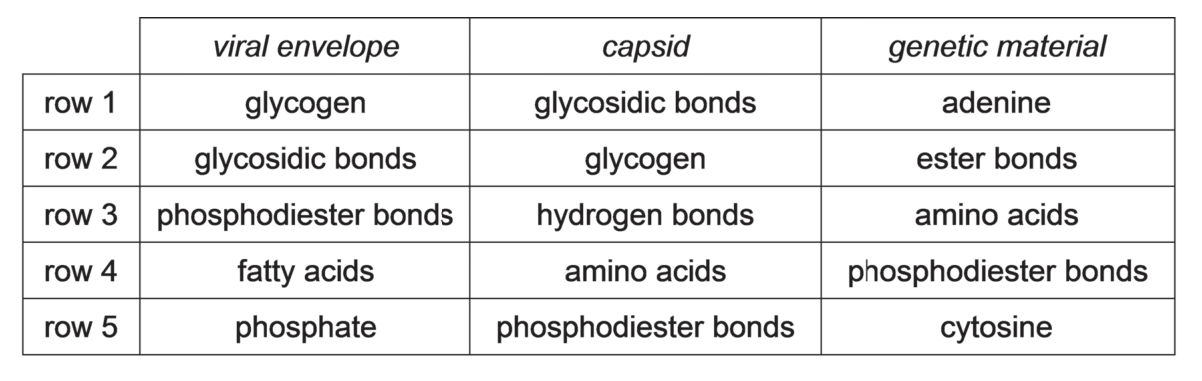
✍️ row 1: envelope က glycogen (တိရစ္ဆာန် သိုလှောင်တဲ့ သကြား) လား? မဟုတ်ဘူး၊ phospholipid ✘
row 2: capsid က glycogen လား? protein ပါ ✘
row 3: gene က amino acids နဲ့ ဖွဲ့ထားလား? မဟုတ်ဘူး၊ nucleotide တွေ ✘ — ဒီ တစ်ကွက်ကြောင့် row 3 မှားတယ်။ ကျန် နှစ်ကွက် (envelope ရဲ့ phosphodiester၊ capsid ရဲ့ hydrogen bonds) ကတော့ မှန်တယ်။
row 5: envelope ရဲ့ phosphate က မှန်တယ်။ ဒါပေမဲ့ capsid မှာ phosphodiester bonds မရှိဘူး ✘ — capsid မှာ peptide bonds။
row 4: envelope — fatty acids ✔၊ capsid — amino acids ✔၊ gene — phosphodiester bonds ✔။ အဖြေ row 4။
bacteria ကို တိုက်တဲ့ virus — bacteriophage
bacteriophage (bacteria ကို တိုက်တဲ့ virus) — phage။virus တွေက လူ၊ တိရစ္ဆာန်၊ အပင်ကိုသာ မဟုတ်ဘဲ bacteria ကိုလည်း တိုက်တယ်။ bacteria ကို တိုက်တဲ့ virus ကို bacteriophage (bacteria ကို တိုက်တဲ့ virus) — အတိုခေါ် phage (ဖေ့ချ်) လို့ ခေါ်တယ်။
ခေါင်းက capsid (head = capsid) — ဒီ phage မှာ အထဲမှာ DNA ထည့်ထားတယ် (phage အများစု DNA၊ တချို့ RNA)။
tail — ဆေးထိုးအပ်လို DNA ထိုးထည့်ဖို့။ခေါင်းအောက်မှာ ပြွန် အမြီး (tail) — ဆေးထိုးအပ်လို DNA ကို bacterium ထဲ ထိုးထည့်ဖို့။
tail fibres — bacterium ကို ဖမ်းကပ်ဖို့။အောက်ဆုံးက ခြေထောက်တွေ (tail fibres) — bacterium မျက်နှာပြင်ကို ဖမ်းကပ်ဖို့။ လပေါ် ဆင်းတဲ့ ယာဉ်လို ပုံ ပေါက်တယ်။
💡 phage = moon lander + syringe။💡 မှတ်နည်း — phage က လပေါ် ဆင်းတဲ့ ယာဉ် (moon lander) လို ခြေထောက်နဲ့ ဆင်းကပ်ပြီး ဆေးထိုးအပ် (syringe) လို DNA ကို ထိုးထည့်တယ်။
antibiotic က virus ကို ဘာလို့ မထိလဲ
antibiotic အများစုက bacteria ရဲ့ cell wall နဲ့ ribosomes ကို ပစ်တယ်။အဖြေ ရပြီ။ antibiotics (antibiotic အမျိုးမျိုး) အများစုက bacteria ရဲ့ cell wall ဆောက်တာကို ဒါမှမဟုတ် bacteria ရဲ့ ribosomes ကို ပစ်မှတ်ထားတယ်။ တချို့က bacteria ရဲ့ DNA ကူးတဲ့ enzyme လို တခြား bacteria ကိုယ်ပိုင် အစိတ်အပိုင်းကို ပစ်တယ်။
cell wall က ကိုယ့် cell မှာ မရှိ၊ bacteria ribosome က ကိုယ့် ribosome နဲ့ မတူ။ကိုယ့် cell မှာ cell wall မရှိဘူး။ ribosome တော့ ကိုယ့် cell မှာလည်း ရှိတယ် — ဒါပေမဲ့ bacteria ရဲ့ ribosome က ပိုသေးပြီး ပုံ မတူလို့ ဆေးက bacteria ရဲ့ ဟာကိုပဲ ထိတယ် (သင်ခန်းစာ 30B မှာ အသေးစိတ်)။
bacteria အများစုမှာ နှစ်ခုလုံး ရှိ — နံရံ ပေါက် သေတယ်။bacteria အများစုမှာ ဒီ နှစ်ခုလုံး ရှိလို့ cell wall ကို ပစ်တဲ့ antibiotic ထိတော့ နံရံ ပေါက်ကွဲပြီး bacteria သေတယ်။ တချို့ antibiotic ကတော့ မသတ်ဘဲ ပွားတာကိုပဲ ရပ်စေတယ်။ Mycoplasma လို bacteria တချို့မှာ cell wall မရှိလို့ wall ပစ်တဲ့ ဆေး မတိုးဘူး။
virus မှာ wall, ribosomes မရှိဘူး။virus မှာ cell wall မရှိ (no wall)၊ ribosomes လည်း မရှိဘူး — capsid ထဲက gene ပဲ။
nothing to hit — အအေးမိရင် antibiotic မပေးတာ ဒါကြောင့်။virus က ကိုယ်ပိုင် ribosome မရှိဘဲ host cell ရဲ့ ribosome ကို ငှားသုံးတယ်။ ပစ်စရာ မရှိလို့ (nothing to hit) ဆေးက ကျော်သွားတယ်။ အအေးမိရင် antibiotic မပေးဘဲ အနားယူခိုင်းတာ ဒါကြောင့်ပါ။ virus ကို ကိုယ်ခံအားက ဖယ်ရှားတယ်။
💡 မြှားမှာ ပစ်မှတ် လိုသလို ဆေးလည်း ပစ်မှတ် လိုတယ်။💡 မှတ်နည်း — မြှား ပစ်ရင် ပစ်မှတ် လိုသလို ဆေးလည်း ပစ်မှတ် လိုတယ်။ virus မှာ wall လည်း မရှိ၊ ribosomes လည်း မရှိလို့ ဆေး လွတ်သွားတယ်။
🎮 Virus, bacterium or both? Sort fast 🔥
virus ကို ဘာနဲ့ တိုက်လဲ — vaccine နဲ့ antiviral
virus မှာ no target — ဘာနဲ့ တိုက်မလဲ?antibiotic က virus ကို မထိဘူး ဆိုတာ သိပြီ — virus မှာ cell wall လည်း မရှိ၊ ribosome လည်း မရှိလို့ ပစ်မှတ် မရှိဘူး (no target)။ ဒါဆို virus ကို ဘာနဲ့ တိုက်မလဲ?
ပထမ vaccine (ကာကွယ်ဆေး) — virus ကို အန္တရာယ်မဲ့ ကြိုပြ။ပထမ လက်နက်က vaccine (ကာကွယ်ဆေး)။ vaccine အမျိုးအစား ပေါ်မူတည်ပြီး virus အသေ၊ အားပျော့ virus (dead or weak)၊ virus ရဲ့ protein အပိုင်း ဒါမှမဟုတ် အဲဒီ protein ဆောက်နည်း gene အပိုင်း ကို ခန္ဓာကိုယ်ကို အရင် ပြထားတယ်။
antibody (Y ပုံ protein) နဲ့ memory cell (မှတ်မိတဲ့ cell)ကိုယ်ခံအား စနစ်က antibody (ပိုးကို ဖမ်းကပ်တဲ့ Y ပုံ protein) နဲ့ memory cell (ပိုးကို မှတ်မိတဲ့ cell) တွေ ကြိုဆောက်ထားတယ် — antibody အများကြီး (antibodies)။ အပြည့်အစုံ သင်ခန်းစာ 53 မှာ သင်မယ်။
virus အစစ် လာရင် ချက်ချင်း ဖယ် — ကြိုကာကွယ်တာ။virus အစစ် ဝင်လာရင် ချက်ချင်း ဖယ်ရှားလို့ ရောဂါ မဖြစ်တော့ဘူး၊ ဖြစ်ရင်လည်း ပေါ့ပေါ့ပဲ ဖြစ်တယ် — ဖြစ်ပြီးမှ ကုတာ မဟုတ်ဘဲ ကြိုကာကွယ်တာ။
ဒုတိယ antiviral (virus ဆန့်ကျင် ဆေး) — RT ကို ပိတ်။ဒုတိယ လက်နက်က antiviral (virus ဆန့်ကျင် ဆေး)။ virus ကိုယ်ပိုင် enzyme ကို ပိတ်တယ် — ဥပမာ HIV ရဲ့ reverse transcriptase (RT) ကို ပိတ်တဲ့ ဆေး (PART 2 မှာ အသေးစိတ်)။
virus ကိုယ်ပိုင် enzyme ကို ပစ်တယ်။ကိုယ့် cell မှာ HIV ရဲ့ RT လို enzyme မရှိလို့ ဆေးက virus ကိုပဲ ထိတယ် — antibiotic လိုပဲ ‘ပိုးမှာ ရှိပြီး ကိုယ့်မှာ မရှိတာ’ ကို ပစ်တာ။
vaccine ကြိုကာ၊ antiviral ပွားတာ ပိတ်၊ antibiotic မရ။ဒါကြောင့် virus ကို vaccine နဲ့ ကြိုကာကွယ်တယ်၊ antiviral နဲ့ ပွားတာကို ပိတ်တယ်၊ antibiotic နဲ့တော့ မရဘူး။
💡 vaccine = wanted poster။💡 မှတ်နည်း — vaccine က ‘လူဆိုး ဓာတ်ပုံ’ (wanted poster) လိုပဲ — သူခိုး မလာခင် ရဲတွေကို မျက်နှာ ကြိုပြထားတာ။ ဒါကြောင့် ရောက်လာတာနဲ့ ဖမ်းနိုင်တယ်။
🤔 Flu vaccine is given each year a few weeks before the flu season starts. Why so early?
🔍 မေးခွန်း ဖြည်မယ်
is given each year = နှစ်တိုင်း ထိုးပေးတယ်။ a few weeks before = ရက်သတ္တပတ် အနည်းငယ် အလိုမှာ။ the flu season starts = တုပ်ကွေး ဖြစ်တတ်တဲ့ ကာလ စတာ။
Why so early? = ဘာလို့ ဒီလောက် စောစော ထိုးတာလဲ။ မေးနေတာ — vaccine ထိုးပြီးနောက် ခန္ဓာကိုယ်ထဲ ဘာ ဖြစ်ဖို့ အချိန် လိုလဲ။
vaccine ထိုးပြီးမှ ခန္ဓာကိုယ်က antibody နဲ့ memory cell တွေကို ဆောက်တယ် — ရက်သတ္တပတ် အနည်းငယ် ကြာတယ်။
virus ရောက်မှ ထိုးရင် နောက်ကျတယ်။
antibody ကို ကိုယ့် ကိုယ်ခံအားက လုပ်တာ။
👉 virus ဆိုတာ ဘာလဲ၊ ဘယ်လို တိုက်ရလဲ သိပြီ။ မှတ်မိလား ပြန်စစ်ကြည့်မယ်။
🔁 ပြန်စစ်မယ် — အဖြေ မကြည့်ခင် စဉ်းစားပါ
🤔 (IMAT 2021 Q23) Which of the following types of nucleic acid is/are found in viruses?
1. single-stranded DNA
2. double-stranded DNA
3. RNA
🔍 မေးခွန်း ဖြည်မယ်
types of nucleic acid = nucleic acid အမျိုးအစားများ (DNA, RNA)။ is/are found in viruses = virus တွေထဲမှာ တွေ့ရတယ် — virus တစ်ကောင်တည်း မဟုတ်ဘဲ virus အားလုံးကို ကြည့်။
single-stranded = ကြိုး တစ်ချောင်းတည်း။ double-stranded = ကြိုး နှစ်ချောင်း ကပ်။ မေးနေတာ — 1၊ 2၊ 3 ထဲက ဘယ်ဟာတွေကို virus တစ်မျိုးမျိုးမှာ တွေ့ရလဲ။
virus အမျိုးအစား အလိုက် gene ကွဲတယ် — ssDNA (parvovirus B19)၊ dsDNA (herpes)၊ RNA (flu, HIV)။
သုံးမျိုးလုံး virus မှာ တွေ့ရလို့ 1, 2 and 3။
virus တစ်ကောင် မှာတော့ တစ်မျိုးတည်း။
🤔 Part of an enveloped virus was made from the membrane of the last cell it left. Which part?
🔍 မေးခွန်း ဖြည်မယ်
enveloped virus = envelope ပါတဲ့ virus။ was made from = …ကနေ ဖြစ်လာခဲ့တယ်။ the membrane of the last cell it left = နောက်ဆုံး ထွက်ခဲ့တဲ့ cell ရဲ့ အမြှေး။
မေးနေတာ — virus ရဲ့ ဘယ် အစိတ်အပိုင်းက host cell ရဲ့ အမြှေးကနေ လာတာလဲ။
virus ထွက်လာချိန် host cell membrane ကို ခြုံလာတာ — envelope (phospholipid နှစ်လွှာ)။
capsid နဲ့ ဆူးက virus ကိုယ်ပိုင် protein၊ gene က virus ကိုယ်ပိုင် DNA ဒါမှမဟုတ် RNA။
🤔 Hepatitis B virus infects liver cells but not skin cells. What is the best explanation?
🔍 မေးခွန်း ဖြည်မယ်
Hepatitis B virus = အသည်းရောင် B virus။ infects liver cells but not skin cells = အသည်း cell ကို ဝင်တိုက်တယ်၊ အရေပြား cell ကိုတော့ မတိုက်ဘူး။
the best explanation = အကောင်းဆုံး အကြောင်းပြချက်။ မေးနေတာ — virus က cell တစ်မျိုးကိုပဲ ဘာကြောင့် ဝင်နိုင်လဲ။
virus ဆူးနဲ့ ကိုက်တဲ့ receptor (သော့ခလောက်) ရှိတဲ့ cell ကိုပဲ ဝင်နိုင်တယ်။
လူ့ cell တွေမှာ cell wall မရှိဘူး၊ virus က အစာ မစားဘူး။
🤔 A bacteriophage lands on a bacterium. Which part goes inside the cell?
🔍 မေးခွန်း ဖြည်မယ်
lands on = ပေါ်ကို ဆင်းကပ်တယ်။ Which part goes inside the cell? = ဘယ် အစိတ်အပိုင်းက cell ထဲ ဝင်သွားလဲ။
မေးနေတာ — phage ရဲ့ ခေါင်း၊ အမြီး၊ ခြေထောက်၊ DNA ထဲက ဘာက bacterium အထဲ ရောက်ပြီး ဘာက အပြင်မှာ ကျန်လဲ။
phage က အမြီးကို ဆေးထိုးအပ်လို သုံးပြီး DNA ကိုပဲ ထိုးထည့်တယ်။
ခေါင်း (capsid)၊ အမြီး၊ ခြေထောက်တွေ အပြင်မှာ ကျန်ခဲ့တယ် (PART 2 မှာ ပြန်တွေ့မယ်)။
🤔 A child with a cold (a virus) asks for an antibiotic. Why will it not help?
🔍 မေးခွန်း ဖြည်မယ်
a cold (a virus) = virus ကြောင့် အအေးမိတာ။ asks for an antibiotic = antibiotic ကို တောင်းတယ်။ Why will it not help? = ဘာလို့ အကျိုး မရှိမလဲ။
မေးနေတာ — antibiotic ပစ်တဲ့ အစိတ်အပိုင်းတွေ virus မှာ ရှိလား၊ မရှိလား။
antibiotic အများစုက bacteria ရဲ့ cell wall နဲ့ ribosome ကို ပစ်တယ်။
virus မှာ နှစ်ခုလုံး မရှိလို့ ပစ်မှတ် မရှိဘူး။
virus က bacteria ထက် သေးတယ်။
👉 PART 2 မှာ virus ဘယ်လို ပွားလဲ ကြည့်မယ်။
How viruses multiply
virus ပွားပုံ — phage၊ HIV၊ prion
phage 1 ကောင် ဝင်၊ 100 ကောင် ထွက်
phage 1 ကောင် bacterium ပေါ် ဆင်းကပ်တယ်။PART 2 — virus ဘယ်လို ပွားလဲ။ phage 1 ကောင်က bacterium တစ်ကောင်ပေါ် ဆင်းကပ်တယ်။
မိနစ် 30 လောက် (~30 min) စောင့်ကြည့်မယ်။
ပေါက်ကွဲပြီး ~100 new phages ထွက်လာတယ်!bacterium ပေါက်ကွဲပြီး phage အသစ် 100 လောက် (~100 new phages) ထွက်လာတယ်!
ribosome, ATP မရှိဘဲ ဘယ်လို ဆောက်လဲ?virus မှာ ribosome မရှိ၊ ATP မလုပ်နိုင်ဘဲ ဘယ်လို (how?) ဆောက်လိုက်တာလဲ? အဆင့်လိုက် ကြည့်မယ်။
lytic cycle — cell ကို စက်ရုံ လုပ်ပြီး ဖောက်ထွက်
① attach — tail fibres က receptor ကို ကပ်။① attach (ကပ် — attachment) — phage ရဲ့ tail fibres တွေက bacterium နံရံပေါ်က receptor ကို ဖမ်းကပ်တယ်။
② inject — DNA ထိုးထည့်၊ empty capsid အပြင်မှာ။② inject (ထိုးထည့် — injection) — အမြီးက ဆေးထိုးအပ်လို DNA ကို cell ထဲ ထိုးထည့်တယ်။ အခွံ အလွတ် (empty capsid) က အပြင်မှာ ကျန်ခဲ့တယ်။
③ replicate — cell ရဲ့ စက်နဲ့ DNA, protein ဆောက်။③ replicate (ကူး — DNA copying) — cell ရဲ့ စက်၊ ATP နဲ့ phage ကိုယ်ပိုင် enzyme တချို့ကို သုံးပြီး phage DNA မိတ္တူ အများကြီး ကူးတယ်။ ခေါင်း၊ အမြီး protein တွေကို cell ရဲ့ ribosome က ဆောက်ပေးတယ်။
④ assemble — ခေါင်းထဲ DNA ထည့်၊ အမြီး တပ်။④ assemble (တပ်ဆင် — assembly) — ခေါင်းထဲ DNA ထည့်ပြီး အမြီး တပ်တယ်။ phage အသစ်တွေ ဖြစ်လာတယ်။
⑤ lysis — နံရံ ဖောက်၊ ~100 ကောင် ထွက်။⑤ lysis (ဖောက်ထွက်) — phage ရဲ့ enzyme က cell နံရံကို ဖောက်တယ်။ cell ပေါက်ကွဲပြီး phage အသစ် ~100 ကောင် ထွက်လာတယ်။
lytic cycle (ဖောက်ခွဲ စက်ဝိုင်း) — cell dies။ဒီ အဆင့် ငါးဆင့်ကို lytic cycle (ဖောက်ခွဲ စက်ဝိုင်း) လို့ ခေါ်တယ်။ အဆုံးမှာ cell သေတယ် (cell dies)။
💡 ကပ်၊ ထိုး၊ ကူး၊ တပ်၊ ဖောက်။💡 မှတ်နည်း — attach၊ inject၊ replicate၊ assemble၊ lysis — ‘ကပ်၊ ထိုး၊ ကူး၊ တပ်၊ ဖောက်’ ငါးလုံးကို သီချင်းလို ရွတ်ပါ။ သူခိုး ဝင်ပုံ — တံခါး ကပ်၊ သော့ ထိုး၊ ပစ္စည်း ကူး၊ ထုပ်၊ ဖောက်ထွက်။
🤔 A mutant phage cannot make the enzyme that breaks the cell wall. Which step of its lytic cycle fails?
🔍 မေးခွန်း ဖြည်မယ်
mutant phage = gene ပြောင်းသွားတဲ့ phage။ cannot make the enzyme that breaks the cell wall = cell နံရံ ဖောက်တဲ့ enzyme ကို မလုပ်နိုင်ဘူး။
Which step … fails? = ဘယ် အဆင့် မအောင်မြင်လဲ။ မေးနေတာ — lytic cycle အဆင့် ငါးဆင့်ထဲ ဘယ်အဆင့်က ဒီ enzyme ကို လိုလဲ။
cell နံရံကို ဖောက်တဲ့ enzyme မရှိရင် phage အသစ်တွေ cell ထဲမှာ ပိတ်မိနေမယ် — lysis မဖြစ်ဘူး။
ကပ်တာ၊ ထိုးထည့်တာ၊ ကူးတာက အဲဒီ enzyme မလိုဘူး။
✍️ 3 ပတ် ပြီးရင် ဘယ်နှကောင်?
✍️ cell တစ်လုံးက phage 100 ထုတ်တယ်။ phage 1 ကောင်ကနေ စရင် အပတ် 3 ပတ် ပြီးရင် ဘယ်နှကောင်? (1 phage → 100 per cell)
round 1: 1 × 100 = 100
round 2: phage 100 ကောင် တစ်ကောင်စီက bacterium အသစ် တစ်ကောင်စီ ဝင်တယ်လို့ ယူဆ — 100 × 100 = 10 000
round 3: 10 000 × 100 = 1 000 000
100³ = 10⁶ — တစ်သန်း။100³ = 10⁶ — တစ်သန်း။ ဒါကြောင့် ပိုး တစ်ကောင်ကနေ ရက်ပိုင်းအတွင်း အကြီးအကျယ် ဖြစ်လာနိုင်တယ်။
ပုန်းနေတဲ့ လမ်း — lysogenic cycle
ချက်ချင်း မဖောက်တဲ့ ဒုတိယ လမ်း ရှိတယ်။phage က DNA ထိုးထည့်ပြီးတိုင်း ချက်ချင်း မဖောက်ဘူး။ ဒုတိယ လမ်း ရှိတယ်။ ခရမ်း ကွင်းက bacterium ရဲ့ ကိုယ်ပိုင် DNA (host DNA)။
host DNA ထဲ ဆက်နေတာ = prophage (ပုန်းနေတဲ့ phage DNA)phage DNA က host DNA ကွင်းထဲ ဝင်ဆက်သွားတယ်။ ဒီလို ဝင်ဆက်နေတဲ့ phage DNA ကို prophage လို့ ခေါ်တယ်။
prophage — phage မဆောက်၊ cell lives။prophage က phage အသစ် မဆောက်ဘူး။ cell က မသေဘဲ ပုံမှန် အသက်ရှင်နေတယ် (cell lives)။
every division မှာ prophage လိုက်ကူးခံရတယ်။prophage က host DNA ထဲ ဆက်နေသရွေ့ cell တစ်ခါ ခွဲတိုင်း (the cell divides — every division) host DNA ကို ကူးရင် prophage လည်း လိုက်ကူးခံရတယ် (copied)။ သမီး cell တိုင်းမှာ ပါသွားတယ်။
UV ရောင်ခြည် လို ဒဏ် (stress) ရလာရင် prophage က ပြန်ဖြတ်ထွက်လာတယ်။
နောက်မှ lytic ပြောင်း — lysogenic cycle (ပုန်းနေတဲ့ လမ်း)ပြီးရင် lytic cycle စတယ် (the lytic cycle starts) — phage အသစ် ဆောက်ပြီး cell ကို ဖောက်တယ်။ ဒီ ပုန်းနေတဲ့ လမ်းကို lysogenic cycle လို့ ခေါ်တယ်။
💡 prophage = sleeping spy — UV ရမှ နိုးလာတယ်။💡 မှတ်နည်း — prophage က အိပ်နေတဲ့ သူလျှို (sleeping spy) လိုပဲ — တိတ်တိတ်လေး လိုက်ကူးခံရပြီး UV လို ဒဏ် ရမှ နိုးလာတယ်။
🤔 A bacterium carrying a prophage divides three times, giving 8 cells. How many of the 8 cells carry the prophage?
🔍 မေးခွန်း ဖြည်မယ်
carrying a prophage = prophage ကို သယ်ထားတဲ့ (host DNA ထဲ ဆက်ထားတဲ့)။ divides three times, giving 8 cells = သုံးခါ ခွဲပြီး cell 8 လုံး ရတယ်။
မေးနေတာ — cell 8 လုံးထဲက ဘယ်နှလုံးမှာ prophage ပါလဲ။ cell ခွဲတိုင်း host DNA နဲ့အတူ ဘာ ဖြစ်လဲ စဉ်းစားပါ။
prophage က host DNA ထဲ ဆက်နေလို့ cell ခွဲတိုင်း host DNA နဲ့အတူ ကူးခံရတယ်။
1 → 2 → 4 → 8 — 8 လုံးလုံး မှာ ပါတယ်။
HIV ကို ခွဲကြည့်မယ်
HIV က ကိုယ်ခံအား ဖျက် — ကုမထားရင် AIDS။HIV (Human Immunodeficiency Virus — ကိုယ်ခံအား ချို့ယွင်းစေတဲ့ virus) က ကိုယ်ခံအား စနစ်ကို ဖျက်တယ်။ ကုမထားရင် AIDS (Acquired Immune Deficiency Syndrome — ကိုယ်ခံအား ကျဆင်းမှု ရောဂါစု) ဖြစ်တယ်။
envelope (host membrane) ပေါ်မှာ gp120 ဆူး။အပြင်ဆုံးမှာ envelope — အရင် ဝင်ခဲ့တဲ့ အိမ်ရှင်ရဲ့ အမြှေး (host cell membrane) ကနေ ရလာတဲ့ အဆီ အလွှာ။ ပေါ်မှာ gp120 ဆိုတဲ့ ဆူး (glycoprotein spikes) တွေ ရှိတယ်။
အထဲမှာ protein နဲ့ ဆောက်ထားတဲ့ ကတော့ပုံ capsid ရှိတယ်။
capsid ထဲမှာ RNA ကြိုး 2 ချောင်း (RNA × 2) ပါတယ် — DNA မဟုတ်ဘူး။
reverse transcriptase (RNA → DNA ပြောင်းပြန် ကူး enzyme)RNA နဲ့အတူ အင်ဇိုင်း (enzyme) တစ်မျိုး ယူလာတယ် — reverse transcriptase — RNA ကနေ DNA ကို ပြောင်းပြန် ကူးပေးတယ်။ ဘာလုပ်လဲ ခဏနေ ကြည့်မယ်။
HIV particle ထဲ no DNA၊ ribosomes မပါ။အပြင်မှာ ရှိတဲ့ HIV အမှုန် (virus particle) ထဲမှာ DNA မပါ (no DNA)၊ ribosomes လည်း မပါဘူး။ ဝင်ပြီးမှ DNA ကို လုပ်တယ် — ခဏနေ ကြည့်မယ်။
💡 အင်္ကျီ၊ ဘူး၊ RNA ကြိုး ၂ ချောင်း၊ ကူးစက်။💡 မှတ်နည်း — HIV ကို ‘အဆီ အင်္ကျီ (envelope) ဝတ်ထားတဲ့ ဘူး (capsid) ထဲမှာ RNA ကြိုး 2 ချောင်းနဲ့ reverse transcriptase’ လို့ မှတ်ပါ — အင်္ကျီ၊ ဘူး၊ ကြိုး၊ ကူးစက်။
🤔 Soap dissolves fats and phospholipids. When HIV particles are washed with soap, which part is destroyed first?
🔍 မေးခွန်း ဖြည်မယ်
Soap dissolves fats and phospholipids = ဆပ်ပြာက အဆီနဲ့ phospholipid ကို ပျော်စေတယ်။ washed with soap = ဆပ်ပြာနဲ့ ဆေးလိုက်ရင်။
destroyed first = အရင်ဆုံး ပျက်တာ။ မေးနေတာ — HIV ရဲ့ ဘယ် အလွှာက phospholipid နဲ့ ဆောက်ထားလဲ။
envelope က phospholipid (အဆီ) အလွှာ — ဆပ်ပြာက အဆီကို ပျော်စေလို့ envelope အရင် ပျက်တယ်။
ဆူးပါ ပြုတ်လို့ T cell ကို မကပ်နိုင်တော့ဘူး။
capsid နဲ့ RT က protein၊ RNA က nucleic acid။
မြှားကို ပြောင်းပြန် — retrovirus
every cell — DNA → RNA → protein။cell တိုင်း (every cell) မှာ မျိုးရိုးဗီဇ လမ်းကြောင်းက DNA → RNA → protein (အပြည့်အစုံ သင်ခန်းစာ 39 မှာ သင်မယ်)။ DNA ကနေ RNA မိတ္တူ ကူးပြီး RNA ကနေ protein ဆောက်တယ်။
HIV မှာ RNA ပဲ — RNA → DNA ပြောင်းပြန်။HIV အမှုန်ထဲမှာ DNA မပါဘူး၊ gene က RNA ပဲ။ ဒါကြောင့် ပထမ မြှားကို ပြောင်းပြန် သွားတယ် — RNA → DNA။
ဒါကို reverse transcriptase လုပ်တယ်။ဒီ ပြောင်းပြန် ကူးတဲ့ အလုပ်ကို reverse transcriptase (ပြောင်းပြန် ကူး enzyme) က လုပ်တယ်။ ဒါကြောင့် HIV က ဒီ enzyme ကို ယူလာရတာ။
retro = backwards — retrovirus (ပြောင်းပြန် ကူး virus)retro = နောက်ပြန် (retro = backwards)။ RNA ကနေ DNA ပြောင်းပြန် ကူးတဲ့ ပိုးကို retrovirus လို့ ခေါ်တယ်။ HIV က retrovirus ပါ။
💡 retro = reverse gear — RNA → DNA။💡 မှတ်နည်း — retro ကို ကား နောက်ဆုတ် ဂီယာ (reverse gear) လို မှတ်ပါ — ပုံမှန် လမ်းကို ပြောင်းပြန် မောင်းတာ၊ RNA → DNA။
animal virus ဘယ်လို ဝင်လဲ — လမ်း နှစ်လမ်း
envelope ပါ animal virus — ဆူး receptor ကိုက်ပြီး ကပ်တယ်။တိရစ္ဆာန် cell ကို တိုက်တဲ့ virus (animal virus) တွေ ဝင်ပုံ အမျိုးမျိုး ရှိတယ်။ ဒီမှာ envelope ပါတဲ့ ဟာတွေရဲ့ လမ်း နှစ်လမ်းကို ကြည့်မယ်။ အရင်ဆုံး ဆူးနဲ့ receptor ကိုက်ပြီး cell membrane ပေါ် ကပ်တယ်။
လမ်း 1 membrane fusion (အမြှေး ပေါင်းခြင်း)လမ်း 1 — membrane fusion (အမြှေး ပေါင်းခြင်း)။ envelope ရော cell membrane ရော အဆီ နှစ်လွှာ (phospholipid bilayer) ဖြစ်လို့ ဆီစက် နှစ်စက် ပေါင်းသလို ပေါင်းသွားတယ်။
capsid cytoplasm ထဲ ကျ — HIV ဒီလမ်း။ပေါင်းပြီးတာနဲ့ capsid က cytoplasm ထဲ ကျသွားတယ်။ HIV က ဒီလမ်းနဲ့ ဝင်တယ်။
လမ်း 2 endocytosis (vesicle နဲ့ ခြုံယူ) — flu။လမ်း 2 — endocytosis (သင်ခန်းစာ 29)။ cell membrane က virus ကို ခွက်ဝင်ပြီး အိတ်လေး (vesicle) အဖြစ် ခြုံယူတယ်။ flu virus က ဒီလမ်းနဲ့ ဝင်တယ်။
flu: vesicle acid ဖြစ်ရင် envelope ပေါင်း၊ capsid လွှတ်။flu လို virus မှာ vesicle ထဲ acid ဖြစ်လာတော့ envelope က vesicle အမြှေးနဲ့ ပေါင်းပြီး capsid ကို cytoplasm ထဲ လွှတ်တယ်။ envelope မပါတဲ့ ပိုးတွေကတော့ များသောအားဖြင့် vesicle ကို ဖောက်ထွက်တယ်။
capsid ပွင့် gene ထွက် = uncoating (အခွံချွတ်ခြင်း)ဘယ်လမ်းနဲ့ ဝင်ဝင် နောက်ဆုံး capsid ပွင့်ပြီး gene ထွက်လာတယ် — uncoating (အခွံချွတ်ခြင်း)။ ပြီးမှ ဝင်ခံရတဲ့ cell ရဲ့ စက်တွေနဲ့ ပွားတယ်။
💡 fusion = ဆီစက် ပေါင်း၊ endocytosis = အိတ်နဲ့ မျို။💡 မှတ်နည်း — fusion က ဆီစက် နှစ်စက် ပေါင်းသွားသလို၊ endocytosis က cell က အိတ်ထဲ ထည့် မျိုချသလို။
🤔 Poliovirus has a capsid but no envelope. Which way into a cell is NOT open to it?
🔍 မေးခွန်း ဖြည်မယ်
has a capsid but no envelope = capsid ရှိပေမဲ့ envelope မရှိဘူး။ Which way into a cell is NOT open to it? = cell ထဲ ဝင်တဲ့ လမ်းတွေထဲ ဘယ်လမ်းက သူ့အတွက် မပွင့်လဲ။
NOT စာလုံးကြီးကို သတိထားပါ။ မေးနေတာ — envelope ရှိမှ ဖြစ်နိုင်တဲ့ ဝင်ပေါက်က ဘယ်ဟာလဲ။
fusion က envelope (အဆီ အမြှေး) နဲ့ cell membrane ပေါင်းတာ — envelope မရှိရင် ပေါင်းစရာ မရှိဘူး။
သူက receptor နဲ့ ကပ်ပြီး endocytosis နဲ့ ဝင်ကာ vesicle ကို ဖောက်ထွက်တယ်။
👉 HIV ရဲ့ ခရီး တစ်ခုလုံး — fusion လမ်းနဲ့ ဝင်ပြီးနောက် ဘာဆက်ဖြစ်လဲ။
HIV ရဲ့ ခရီး — T cell ထဲမှာ
① gp120 က helper T cell (စစ်သား ညွှန်ကြားတဲ့ cell) ဆီ။① HIV ရဲ့ gp120 ဆူး (gp120 spike) က helper T cell (ကိုယ်ခံအား စစ်သားတွေကို ညွှန်ကြားတဲ့ cell) ဆီ ရောက်လာတယ်။
gp120 က CD4 receptor နဲ့ အရင် ကိုက်တယ်။ဆူးက T cell ပေါ်က CD4 receptor (CD4 ဆိုတာ ဒီ receptor protein ရဲ့ နာမည်) နဲ့ သော့ နဲ့ သော့ခလောက်လို အရင် ကိုက်တယ်။
ပြီးမှ co-receptor (ဒုတိယ လက်ခံ protein) နဲ့ပါ ကိုက်ရတယ်။ပြီးမှ co-receptor (ဒုတိယ လက်ခံ protein) နဲ့ပါ ကိုက်မှ ဝင်နိုင်တယ်။ CD4 အများဆုံး ရှိတာ helper T cell မို့ HIV က သူ့ကို အဓိက တိုက်တယ် (CD4 ရှိတဲ့ တခြား ကိုယ်ခံအား cell တချို့ကိုလည်း တိုက်တယ်)။
② envelope fuse — capsid in။② အပြင် အင်္ကျီ (envelope) က cell အမြှေးနဲ့ ပေါင်းသွား (fuse) ပြီး capsid က cell ထဲ ဝင်သွားတယ် (capsid in)။
③ reverse transcriptase — RNA → DNA။③ reverse transcriptase က HIV ရဲ့ RNA ကို ကြည့်ပြီး DNA ကို ပြောင်းပြန် ကူးတယ် (RNA → DNA)။
④ integrase (ဖြတ်ပြီး ဆက်ထည့် enzyme) — host DNA ထဲ။④ HIV ရဲ့ DNA က nucleus ထဲ ဝင်တယ်။ integrase (ဖြတ်ပြီး ဆက်ထည့်တဲ့ enzyme) က host DNA ကို ဖြတ်ပြီး HIV DNA ကို ကြားထဲ ဆက်ထည့်တယ်။ cell သေတဲ့အထိ ပါနေတော့တယ်။
⑤ cell က HIV DNA ကနေ new RNA + protein ဆောက်တယ်။⑤ cell က ကိုယ့် မျိုးရိုးဗီဇ ထင်ပြီး HIV DNA ကနေ RNA အသစ်တွေ ကူးပေးတယ်။ ပြီးမှ cell ရဲ့ ribosome က အဲဒီ RNA ကို ဖတ်ပြီး protein အသစ်တွေ ဆောက်တယ် (new RNA + protein)။
⑥ budding (အဖုလို ထွက်ခြင်း) — host membrane ကို အင်္ကျီ ဝတ်ထွက်။⑥ RNA နဲ့ protein တွေ cell အမြှေးဆီ ရွေ့ပြီး အမြှေးကို ခြုံကာ အဖုလို ထွက်တယ် (budding)။ HIV ရဲ့ အင်္ကျီက host membrane ဖြစ်ရတာ ဒါကြောင့်။
⑦ protease (protein ဖြတ်တဲ့ enzyme) — ရင့်ကျက်စေ။⑦ ထွက်ပြီးမှ protease (protein ကို ဖြတ်တဲ့ enzyme) က protein ကြိုးရှည်ကို အပိုင်းပိုင်း ဖြတ်ပြီး HIV ကို ရင့်ကျက်စေတယ်။
ဆေးတွေက RT, integrase, protease ကို ပိတ်တယ်။HIV ဆေး အများစုက ဒီ enzyme သုံးမျိုး — RT (reverse transcriptase)၊ integrase၊ protease — ကို ပိတ်တဲ့ ဆေးတွေပါ (drugs block)။
🤔 A new drug blocks HIV integrase. Inside an infected T cell, which step can the virus still carry out?
🔍 မေးခွန်း ဖြည်မယ်
blocks HIV integrase = HIV ရဲ့ integrase ကို ပိတ်တယ်။ an infected T cell = HIV ဝင်ထားတဲ့ T cell။ can … still carry out = ဆက်ပြီး လုပ်နိုင်သေးတာ။
မေးနေတာ — HIV ခရီးမှာ integrase အဆင့်ရဲ့ ရှေ့က အဆင့်က ဘာလဲ (နောက်က အဆင့်တွေက ရပ်သွားမယ်)။
integrase က ④ အဆင့်။
သူ့ရှေ့က ③ RNA → DNA (reverse transcriptase) က ဖြစ်နိုင်သေးတယ်။
DNA ကို host DNA ထဲ မဆက်နိုင်ရင် ⑤ protein အသစ်နဲ့ ⑥ budding လည်း မဖြစ်တော့ဘူး။
🎯 Match each HIV part with its job
HIV ဆေး — nucleotide အတု
📝 IMAT 2018 · Question 23
Reverse transcriptase is mainly found in retroviruses such as HIV. Four nucleotides are needed for the reaction catalysed by this enzyme.
A group of molecules may inhibit this enzyme. These molecules are structurally similar to the nucleotides but slightly altered so that bonds normally formed in the reaction cannot be made.
Which of the following statements may be correct?
1. The four inhibitor molecules will resemble adenine, thymine, guanine and cytosine.
2. The inhibitor molecules can prevent the formation of phosphodiester bonds.
3. The inhibitor molecules can result in a reduction in the number of new virus particles produced.
RT က nucleotides (A, T, G, C) တစ်လုံးချင်း ဆက်တယ်။reverse transcriptase က RNA ကို ကြည့်ပြီး DNA ကြိုး ဆောက်တယ်။ DNA nucleotides (A, T, G, C) ကို တစ်လုံးချင်း ယူပြီး ဆက်တယ်။
nucleotide = P + sugar + base။nucleotides တစ်လုံးစီမှာ P (phosphate)၊ sugar (သကြား ငါးထောင့်) နဲ့ base ပါတယ် (သင်ခန်းစာ 27)။
3′-OH က နောက် P နဲ့ phosphodiester bond ချိတ်တယ်။sugar ရဲ့ carbon နံပါတ် 3′ ပေါ်မှာ OH ချိတ်ကောက် (3′-OH) ရှိတယ်။ အဲဒီ 3′-OH က နောက် nucleotides ရဲ့ P နဲ့ ချိတ်တယ် — ဒီ ချိတ်ဆက်မှုကို phosphodiester bond လို့ ခေါ်တယ်။
ဆေးက T အတု (T*) — RT က အစစ် ထင်ပြီး ထည့်။HIV ဆေး တစ်မျိုးက nucleotides နဲ့ ပုံ တူတဲ့ အတု (look-alike) — ဥပမာ T အတု (T*)။ reverse transcriptase က အစစ် ထင်ပြီး ကြိုးထဲ ထည့်မိတယ်။
3′-OH အစား N₃ — မဆက်နိုင်လို့ chain stops။အတုမှာ 3′-OH ချိတ်ကောက် နေရာမှာ N₃ ကို အစားထိုးထားတယ်။ ချိတ်ကောက် မရှိလို့ နောက် P ကို phosphodiester bond နဲ့ မဆက်နိုင်ဘဲ ကြိုး ရပ်သွားတယ် (chain stops)။
DNA မပြီး — fewer new viruses။DNA မပြီးရင် ကိုယ်ခံအား ဆဲလ်ရဲ့ DNA ထဲ မဝင်နိုင်၊ HIV အသစ် မဆောက်နိုင်ဘူး (fewer new viruses)။
✍️ 1: enzyme က DNA ဆောက်တာမို့ အတုတွေက DNA base A, T, G, C နဲ့ တူရမယ် ✔ (U က RNA မှာပဲ)
2: phosphodiester bond ဆက်တာကို တားတယ် ✔
3: virus particle အသစ် လျော့တယ် ✔ — အဖြေ 1, 2 and 3။
prion — ပုံ ကွေးမှား protein
gene မပါ protein ကူးစက်နိုင်လား? normal protein — α-helix။gene လုံးဝ မပါတဲ့ protein သက်သက်က ရောဂါ ကူးစက်နိုင်မလား? ဦးနှောက် အာရုံကြော ဆဲလ်တွေ (nerve cells) ပေါ်က ပုံမှန် protein (normal protein) နဲ့ စမယ် — ဝက်အူလိမ် α-helix တွေနဲ့ ကွေးထားတယ်။
ပုံမှား ကွေး — β-sheet၊ amino acids မပြောင်း။တစ်ခါတလေ အဲဒီ protein တစ်လုံးက ပုံ မှား ကွေးသွားတယ် (misfold) — helix အစား ခေါက်ပြား β-sheet တွေ ဖြစ်သွားတယ်။ အုတ်ခဲ အစဉ် (amino acids) တော့ များသောအားဖြင့် မပြောင်းဘူး၊ ပုံပဲ ပြောင်းတာ (မျိုးရိုးလိုက် prion ရောဂါ တချို့မှာတော့ gene ပြောင်းလို့ amino acid တစ်လုံး ကွာတယ်)။
prion (ပုံမှား ကူးစက် protein) — no DNA, no RNA။ဒီ ပုံမှား protein ကို prion လို့ ခေါ်တယ်။ DNA လည်း မပါ၊ RNA လည်း မပါဘူး (no DNA, no RNA)။
prion က ပုံမှန် protein ကို refolds စေတယ်။အံ့သြစရာက — prion က ပုံမှန် protein ကို ထိလိုက်ရင် အဲဒီ protein ကိုပါ သူ့လို ပုံမှား ပြန်ကွေး (refolds) စေတယ်။
ဒိုမီနိုလို chain reaction — gene မကူးဘဲ များလာ။အသစ်ဖြစ်လာတဲ့ prion တွေက နောက် protein တွေကို ဆက်ပြောင်းတယ် — ဒိုမီနို လဲသလို (chain reaction)။ gene မကူးဘဲ ရှိပြီးသား protein ကို ပုံပြောင်းလို့ များလာတာ။
clumps ဖြစ် nerve cells သေ — ဦးနှောက်မှာ holes။prion တွေ စုပြီး အခဲ (clumps) ဖြစ်ကာ nerve cells တွေ သေတယ်။ ဦးနှောက်မှာ ရေမြှုပ်လို အပေါက်တွေ (holes) ပေါက်လာတယ်။
mad cow disease, CJD, kuru ရောဂါ။နွားမှာ နွားရူး ရောဂါ (mad cow disease)၊ လူမှာ CJD (Creutzfeldt Jakob Disease — ဒီရောဂါကို ဖော်ပြခဲ့တဲ့ ဆရာဝန် နှစ်ယောက်ရဲ့ နာမည်)၊ ပါပူအာ နယူးဂီနီ က kuru ရောဂါ တို့ ဖြစ်တယ်။
cooking အပူနဲ့ မပျက်၊ antibiotic လည်း မတိုးဘူး။prion ကို ပုံမှန် ချက်ပြုတ်တဲ့ အပူ (cooking) နဲ့ မပျက်ဘူး။ ဆေးရုံက ပုံမှန် ပိုးသတ်နည်း တချို့ကိုလည်း ခံနိုင်လို့ အထူး နည်းနဲ့မှ ဖျက်ရတယ်။ cells မဟုတ်လို့ antibiotic လည်း မတိုးဘူး။
💡 ငါးပုပ် တစ်ကောင်ကြောင့် တစ်လှေလုံး ပုပ်။💡 မှတ်နည်း — ‘ငါးပုပ် တစ်ကောင်ကြောင့် တစ်လှေလုံး ပုပ်’ ဆိုတဲ့ စကားလိုပဲ — prion တစ်လုံးက ဘေးက protein တွေကို ပုံမှား ကွေးစေတယ်။
🤔 Brain tissue from a sick cow still causes disease after it is treated with an enzyme that destroys all nucleic acids. The agent is most likely:
🔍 မေးခွန်း ဖြည်မယ်
Brain tissue from a sick cow = ဖျားနေတဲ့ နွားရဲ့ ဦးနှောက် တစ်ရှူး။ still causes disease after = …ပြီးတာတောင် ရောဂါ ဖြစ်စေတုန်း။
an enzyme that destroys all nucleic acids = DNA၊ RNA အကုန် ဖျက်တဲ့ enzyme။ most likely = ဖြစ်နိုင်ခြေ အများဆုံး။ မေးနေတာ — gene မရှိဘဲ ကူးစက်နိုင်တဲ့ ပိုးက ဘာလဲ။
DNA၊ RNA အကုန် ဖျက်ပြီးတောင် ကူးစက်နေရင် gene မလိုတဲ့ ပိုး — protein သက်သက် prion။
virus၊ viroid၊ bacterium တို့က gene မရှိရင် မပွားနိုင်ဘူး။
prion ရဲ့ ပြောင်းပြန်က viroid — protein အခွံ မပါဘဲ RNA ကွင်း အသေးလေး (base 250–400 လောက်) သက်သက်။ အာလူး ဥ ပုံပျက် ရောဂါ လို အပင် ရောဂါ ဖြစ်စေတယ်။
virus = gene + capsid၊
viroid = RNA ပဲ၊
prion = protein ပဲ။
သုံးမျိုးလုံး cell မဟုတ်လို့ antibiotic မတိုးဘူး။
🤔 A plant disease agent is destroyed by an enzyme that digests RNA, but NOT by an enzyme that digests protein. It is most likely:
🔍 မေးခွန်း ဖြည်မယ်
plant disease agent = အပင် ရောဂါ ဖြစ်စေတဲ့ ပိုး။ destroyed by an enzyme that digests RNA = RNA ကို ချေဖျက်တဲ့ enzyme နဲ့ ပျက်တယ်။
but NOT by … protein = protein ချေဖျက်တဲ့ enzyme နဲ့တော့ မပျက်ဘူး။ မေးနေတာ — RNA ပါပြီး protein လုံးဝ မပါတဲ့ ပိုးက ဘာလဲ။
protein ဖြတ် enzyme နဲ့ မပျက်ဘဲ RNA ဖြတ် enzyme နဲ့ ပျက်တာ — protein အခွံ မပါတဲ့ RNA ကွင်း သက်သက် viroid။
virus နဲ့ bacterium မှာ protein ပါလို့ protein ဖြတ် enzyme နဲ့ ထိခိုက်မယ်။
prion မှာ RNA မပါလို့ RNA ဖြတ် enzyme နဲ့ မပျက်ဘူး။
🔁 ပြန်စစ်မယ် — အဖြေ မကြည့်ခင် စဉ်းစားပါ
🤔 A virus is about how big compared with a bacterium?
🔍 မေးခွန်း ဖြည်မယ်
about how big = ခန့်မှန်းခြေ ဘယ်လောက် ကြီးလဲ။ compared with a bacterium = bacterium တစ်ကောင်နဲ့ နှိုင်းယှဉ်ရင်။
မေးနေတာ — virus (nm) နဲ့ bacterium (µm) အရွယ် ဘယ်နှဆ ကွာလဲ။
bacterium ~1 µm၊ virus 20–300 nm — 3–50 ဆ (များသောအားဖြင့် 10 ဆ လောက်) သေးတယ်။
အများစုကို electron microscope နဲ့မှ မြင်ရတယ်။
🤔 Which step of the lytic cycle comes directly after injection of the viral DNA?
🔍 မေးခွန်း ဖြည်မယ်
comes directly after = …ရဲ့ နောက်မှာ ချက်ချင်း လာတယ်။ injection of the viral DNA = virus DNA ကို ထိုးထည့်ခြင်း။
မေးနေတာ — lytic cycle အစဉ်မှာ ‘ထိုး’ ပြီးရင် နောက် အဆင့်က ဘာလဲ။
attach → inject → replicate → assemble → lysis။
🤔 A bacterium carrying a prophage is hit by UV light. What is likely to happen next?
🔍 မေးခွန်း ဖြည်မယ်
is hit by UV light = UV ရောင်ခြည် ထိတယ်။ What is likely to happen next? = နောက်မှာ ဘာ ဖြစ်ဖို့ များလဲ။
မေးနေတာ — ဒဏ် ရလာတဲ့ အခါ အိပ်နေတဲ့ prophage ဘာလုပ်လဲ။
UV လို ဒဏ် ရရင် prophage က host DNA ကနေ ပြန်ဖြတ်ထွက်ပြီး lytic cycle စတယ် — phage အသစ် ဆောက်ပြီး cell ကို ဖောက်တယ်။
🤔 Which enzyme makes DNA from the RNA of HIV?
🔍 မေးခွန်း ဖြည်မယ်
makes DNA from the RNA of HIV = HIV ရဲ့ RNA ကို ကြည့်ပြီး DNA ကို လုပ်တယ် (RNA → DNA)။
မေးနေတာ — HIV enzyme တွေထဲ ပြောင်းပြန် ကူးတဲ့ enzyme ရဲ့ နာမည်။
RNA → DNA ပြောင်းပြန် ကူးတာ reverse transcriptase။
integrase က DNA ကို host DNA ထဲ ဆက်ထည့်၊ protease က protein ကြိုး ဖြတ်၊ ribosome က protein ဆောက်တဲ့ စက် — DNA မဆောက်ဘူး။
🤔 How does the number of prions increase in an infected brain?
🔍 မေးခွန်း ဖြည်မယ်
the number of prions increase = prion အရေအတွက် များလာတယ်။ an infected brain = ရောဂါ ကူးထားတဲ့ ဦးနှောက်။
မေးနေတာ — gene မရှိတဲ့ prion က ဘယ်လို နည်းနဲ့ များလာလဲ။
prion မှာ gene (DNA၊ RNA) မပါဘူး၊ cell လည်း မဟုတ်လို့ bacteria လို နှစ်ခြမ်း မကွဲဘူး။
ထိတဲ့ ပုံမှန် protein ကို ပုံမှား ပြန်ကွေးစေလို့ များလာတာ။
🤔 (IMAT 2014 Q37) Which of the following molecules are associated with HIV?
1. DNA
2. RNA
3. phospholipids
4. reverse transcriptase
🔍 မေးခွန်း ဖြည်မယ်
molecules = မော်လီကျူးများ။ are associated with HIV = HIV နဲ့ ဆက်စပ်တယ် — ဒီမေးခွန်းမှာ HIV အမှုန် ကိုယ်တိုင်ထဲ ပါတာကို ဆိုလိုတယ်။
မေးနေတာ — DNA၊ RNA၊ phospholipid၊ reverse transcriptase ထဲက ဘယ်ဟာတွေ HIV အမှုန်ထဲ ပါလဲ။
HIV ရဲ့ gene က RNA၊ envelope က phospholipid၊ ယူလာတဲ့ enzyme က reverse transcriptase။
virus particle ထဲမှာ DNA မပါလို့ 2, 3 and 4 only။
🤔 (IMAT 2020 Q32) Which of the following is/are features of HIV?
1. It has a capsid.
2. It contains DNA.
3. It has ribosomes.
🔍 မေးခွန်း ဖြည်မယ်
features of HIV = HIV ရဲ့ လက္ခဏာများ။ It has a capsid = capsid ရှိတယ်။ It contains DNA = DNA ပါတယ်။ It has ribosomes = ribosome ရှိတယ်။
မေးနေတာ — HIV အမှုန်အတွက် ဒီ သုံးကြောင်းထဲ ဘယ်ဟာတွေ မှန်လဲ။
virus တိုင်းမှာ capsid ရှိတယ် ✔။
HIV ရဲ့ gene က RNA ✘။
cell မဟုတ်လို့ ribosome မရှိ ✘။
ဒါကြောင့် 1 only။
🤔 (IMAT 2017 Q23) Which of the following components of HIV contain peptide bonds?
1. capsid
2. envelope
3. reverse transcriptase
🔍 မေးခွန်း ဖြည်မယ်
components = အစိတ်အပိုင်းများ။ contain peptide bonds = peptide bond ပါတယ် — amino acid ချင်း ချိတ်တဲ့ bond၊ ဆိုလိုတာ protein ပါတယ်။
မေးနေတာ — capsid၊ envelope၊ reverse transcriptase ထဲက ဘယ်ဟာတွေမှာ protein ပါလဲ။
peptide bond က protein ထဲမှာ ရှိတယ်။
capsid က protein ✔။
envelope ကိုယ်တိုင်က phospholipid ပေမဲ့ ပေါ်မှာ gp120 glycoprotein ဆူး ပါလို့ ✔။
reverse transcriptase က protein enzyme ✔ — 1, 2 and 3။