Enzymes (2)
enzyme ကို မြန်စေ နှေးစေတဲ့ အချက်တွေ
Temperature, pH and substrate
enzyme ကို မြန်စေ နှေးစေတဲ့ အချက်တွေ
42 °C အဖျား နဲ့ ကြက်ဥ ကြော်
42 °C fever (အဖျား) ဘာလို့ ကြောက်စရာလဲ?ကိုယ်အပူချိန် ပုံမှန် 37 °C ထက် တက်လာတာကို fever (အဖျား) လို့ ခေါ်တယ်။ အဖျား 42 °C ကျော်ရင် အသက် အန္တရာယ် ရှိတယ်လို့ ဆရာဝန်တွေ ပြောတယ်။ ပုံမှန် 37 °C ထက် ငါးဒီဂရီလောက်ပဲ ပိုတာ ဘာလို့ ဒီလောက် ကြောက်စရာလဲ?
ကြက်ဥ အကာ အစိမ်း — ကြည်နေတဲ့ protein အရည်။ကြက်ဥ အစိမ်းရဲ့ အကာ (egg white) ကို ကြည့်ပါ။ ကြည်နေတယ် — ရေထဲမှာ protein ပျော်နေတဲ့ အရည်ပါ။
ပူတဲ့ ဒယ်အိုးထဲ ထည့်ရင် ဖြူပြီး မာသွားတယ်။ပူနေတဲ့ ဒယ်အိုးထဲ ထည့်လိုက်ရင် အကာက အဖြူရောင် ဖြစ်ပြီး မာသွားတယ် (cooked)။
ပြန်အေးလည်း မကြည်တော့ — enzyme အများစုလည်း protein ပါ။ပြန်အေး (cool) အောင် ထားလည်း ဘယ်တော့မှ ပြန်မကြည်တော့ဘူး (never clear again)။ enzyme အများစုလည်း protein (proteins — ပရိုတင်းတွေ) ပါ — အပူ လွန်ရင် ဘာဖြစ်မလဲ? ဖြေဖို့ enzyme ဘယ်လောက် မြန်လဲ အရင် တိုင်းတတ်ရမယ်။
💡 မှတ်နည်း — ‘ကြက်ဥ ကြော်ပြီးရင် ပြန်မစိမ်း’ — အပူနဲ့ ပုံပျက်တဲ့ ကြက်ဥ protein ပြန်မပြင်နိုင်ဘူး (protein တိုင်း ဒီလို မဟုတ်ဘူး)။
rate ကို ဘယ်လို တိုင်းလဲ — initial rate
yeast + H₂O₂ က O₂ ကို gas syringe ထဲ စုတိုင်းတယ်။ဓာတ်ကူ ဘယ်လောက် မြန်လဲ သိဖို့ ထွက်လာတဲ့ ပစ္စည်းကို အချိန်နဲ့ တိုင်းတယ်။ ဥပမာ catalase ပါတဲ့ yeast (တဆေး) ကို H₂O₂ ထဲ ထည့်ပြီး ထွက်လာတဲ့ O₂ gas ကို gas syringe (gas ပမာဏ တိုင်းပြွန်) ထဲ စုတယ်။
10 စက္ကန့် တိုင်း O₂ cm³ ကို ဂရပ်ပေါ် ချတယ်။10 စက္ကန့် တိုင်း syringe ထဲက O₂ ပမာဏကို cm³ နဲ့ ဖတ်ပြီး ဂရပ်ပေါ် အမှတ် ချတယ်။ ဘေးတိုင်က အချိန် (s)၊ ဒေါင်တိုင်က ထွက်ကုန် (products) ဖြစ်တဲ့ O₂ ရဲ့ ထုထည် (volume, cm³)။
အစ မတ်မတ် တက်၊ H₂O₂ ကုန်လာရင် ပြားသွားတယ်။အစမှာ H₂O₂ အများကြီး ရှိလို့ မျဉ်းကွေး မတ်မတ် တက်တယ်။ H₂O₂ ကုန်လာလေ နှေးလာပြီး နောက်ဆုံး ပြား (levels off) သွားတယ်။ ကြာကြာ စောင့် (waiting longer) လေ substrate နည်းလေ — အဆုံးက ထုထည် စုစုပေါင်းက rate မဟုတ်ဘူး။
t = 0 မှာ tangent ရဲ့ မတ်ပုံ = initial rate (အစ နှုန်း)ဒါကြောင့် H₂O₂ မလျော့ခင် အစ (t = 0) မှာ တိုင်းတယ်။ t = 0 မှာ မျဉ်းကွေးကို ထိရုံ ထိတဲ့ မျဉ်းဖြောင့် (tangent) ဆွဲပြီး သူ့ မတ်ပုံကို initial rate (အစ နှုန်း) လို့ ခေါ်တယ်။
✍️ tangent ပေါ်မှာ 10 s အတွင်း O₂ 20 cm³ တက်တယ် (အနီ တြိဂံ)။ gradient (မတ်ပုံ) = အပေါ်တက် (up) ကို ဘေးသွား (across) နဲ့ စား။
initial rate = 20 cm³ ကို 10 s နဲ့ စား = 2 cm³ s⁻¹ — တစ်စက္ကန့်ကို 2 cm³။ s⁻¹ ကို “per second” လို့ ဖတ်တယ် (သင်ခန်းစာ 17B)။
အပူချိန်၊ pH, substrate ပမာဏ ပြောင်းပြီး initial rate ကို ထပ်ခါ တိုင်းရင် နောက်က ဂရပ်တွေ ရတယ်။ အဲဒီ ဂရပ်တွေရဲ့ အမှတ် တစ်ခုစီက ဒီလို initial rate တစ်ခုစီပါ။
🤔 Along the tangent at t = 0, 15 cm³ of oxygen would be collected in 5 s. What is the initial rate?
🔍 မေးခွန်း ဖြည်မယ်
along the tangent = t = 0 မှာ ဆွဲတဲ့ မျဉ်းဖြောင့် အတိုင်း။ would be collected = စုမိမယ် (ဆိုပါစို့)။ in 5 s = ၅ စက္ကန့် အတွင်း။
မေးနေတာ — tangent ရဲ့ gradient (အပေါ်တက်ဘေးသွား) ကို cm³ s⁻¹ နဲ့ ဘယ်လောက်လဲ။
75 က မြှောက်လိုက်တာ၊ 0.33 က ပြောင်းပြန် စားတာ — ထောင်ချောက်တွေပါ။
💡 မှတ်နည်း — initial rate = ‘ပြေးပွဲ စစချင်း အရှိန်’ — မောလာပြီး (H₂O₂ ကုန်ပြီး) မှ မတိုင်ဘူး။
ပူလေ မြန်လေ — optimum အထိ
ညာ = temperature မြင့်၊ အပေါ် = rate မြန်။ဒီ ဂရပ်မှာ ညာဘက် သွားလေ temperature (°C) မြင့်လေ၊ အပေါ် ရောက်လေ enzyme ရဲ့ rate (ဓာတ်ပြု နှုန်း) မြန်လေ။
ပူလာရင် molecule တွေ ပိုမြန် ရွေ့တယ်။အေး (cold) ရာကနေ ပူ (warm) လာရင် molecule တွေ ပိုမြန်မြန် (faster) ရွေ့လျားတယ်။
တိုက်မိတာ များလို့ rate တက် — 10 °C ကို ~×2။substrate နဲ့ enzyme တိုက်မိတာ များလာလို့ (more collisions) rate တက်တယ်။ optimum မရောက်ခင် 10 °C တက်တိုင်း enzyme ဓာတ်ပြုမှု အများစုရဲ့ rate က ~2 ဆလောက် (about ×2 per 10 °C) ဖြစ်တယ် — အတိအကျ 2 မဟုတ်၊ reaction အလိုက် 2 နဲ့ 3 ကြား ကွာတယ် (သင်ခန်းစာ 17B) — ဓာတ်ပြုမှုကို မြန်စေ (heat speeds up the reaction) တယ်။
rate အမြင့်ဆုံး optimum temperature (အကောင်းဆုံး အပူ) ~37 °Crate အမြင့်ဆုံး (highest — maximum) ဖြစ်တဲ့ temperature ကို optimum temperature (အကောင်းဆုံး အပူချိန်) လို့ ခေါ်တယ်။ လူ့ enzyme အများစုမှာ ~37 °C ပါ။
🤔 An enzyme is kept at 5 °C and then warmed to 37 °C. Predict what happens to its activity.
🔍 မေးခွန်း ဖြည်မယ်
is kept at = … မှာ ထားတယ်။ then warmed to = ပြီးမှ … အထိ နွေးအောင် လုပ်တယ်။ predict = ကြိုတွက်ပါ။ activity = အလုပ်လုပ်နှုန်း။
မေးနေတာ — အအေးကနေ 37 °C ပြန်ရောက်ရင် enzyme ရဲ့ activity ဘာဖြစ်မလဲ။
အအေးက molecule တွေကို နှေးစေရုံပဲ — enzyme ပုံ မပျက်ဘူး။
ဒါကြောင့် 37 °C ရောက်ရင် rate ပြန်တက်တယ်။
(နောက် အဆင့်မှာ ပုံနဲ့ ကြည့်မယ်။)
အေးရင် နှေးပေမဲ့ ပုံ မပျက် — fridge က ဒါကြောင့်။အေးတဲ့ဘက်မှာ rate နိမ့်ပေမဲ့ enzyme ပုံ မပျက်ဘူး (shape OK)။ ပြန်ပူရင် ပြန်မြန်တယ် — ပုံ မပျက်တော့ ဘာမှ ဆုံးရှုံး (nothing is lost) မသွားဘူး။ ရေခဲသေတ္တာ (fridge) ထဲ အစာ ထားတာ ပုပ်စေတဲ့ bacteria ရဲ့ enzyme တွေ နှေးအောင်ပါ။
💡 မှတ်နည်း — ဆောင်းတွင်း မနက် လူတွေ နှေးသလို enzyme လည်း အေးရင် နှေး — ဒါပေမဲ့ မသေဘူး။
👉 10 °C တက်ရင် ဘယ်နှစ်ဆ ဆိုတာကို ဂဏန်းနဲ့ တွက်မယ်။
10 °C တက်ရင် ဘယ်နှစ်ဆ — Q₁₀
10 °C မှာ initial rate = 2 units/min။ဓာတ်ပြုမှု တစ်ခုရဲ့ initial rate ကို 10 °C မှာ တိုင်းတော့ တစ်မိနစ်ကို 2 units (ယူနစ်) ရတယ်။
20 °C မှာ 4 units ဖြစ်လာတယ်။ 10 °C တက်တာနဲ့ rate နှစ်ဆ (×2 — the rate doubles) ဖြစ်တယ်။
30 °C မှာ 8 — ထပ်ပြီး နှစ်ဆ (doubled again)။
Q₁₀ = temperature coefficient (အပူ ဆကိန်း)10 °C တက်ရင် rate ဘယ်နှစ်ဆ ဖြစ်လဲ ဆိုတဲ့ ဂဏန်းကို Q₁₀ — temperature coefficient (အပူ ဆကိန်း) လို့ ခေါ်တယ်။ Q₁₀ = (rate at T+10) ကို (rate at T) နဲ့ စားတာ။
✍️ 25 °C မှာ rate 6၊ 35 °C မှာ rate 13.2 ဆိုရင် Q₁₀ ဘယ်လောက်လဲ?
Q₁₀ = 13.2 ကို 6 နဲ့ စား = 2.2။ rate ကို rate နဲ့ စားလို့ unit ချေသွားပြီး unit မရှိဘူး။ enzyme ဓာတ်ပြုမှု အများစုမှာ Q₁₀ က 2 နဲ့ 3 ကြား — အမြဲ 2 အတိအကျ (exactly 2) မဟုတ်ဘူး။
optimum ကျော်ရင် Q₁₀ စည်းကမ်း မမှန်တော့ဘူး။သတိ — optimum ကျော်ရင် enzyme ပုံပျက် (denature) စလို့ ဒီ စည်းကမ်း မမှန်တော့ဘူး (rule fails)။ Q₁₀ ကို optimum အောက်မှာပဲ သုံးပါ။
🤔 An enzyme has Q₁₀ = 2. Its rate is 5 units at 15 °C. What is its rate at 35 °C (still below its optimum)?
🔍 မေးခွန်း ဖြည်မယ်
Q₁₀ = 2 = 10 °C တက်တိုင်း rate ၂ ဆ။ still below its optimum = optimum အောက်မှာ ရှိနေသေးတယ် (denature မဖြစ်သေး)။
မေးနေတာ — 15 °C ကနေ 35 °C (10 °C ဘယ်နှစ်ကြိမ်) တက်ရင် rate ဘယ်လောက် ဖြစ်မလဲ။
25 → 35 °C: 10 × 2 = 20။
20 °C တက်တာ 10 °C နှစ်ကြိမ်မို့ × 2 × 2 = × 4။
10 က တစ်ကြိမ်ပဲ မြှောက်တာ၊ 40 က သုံးကြိမ် မြှောက်တာ။
💡 မှတ်နည်း — Q₁₀ = ‘ဆယ်ဒီဂရီ တက်တိုင်း ဘယ်နှဆ’ — Q ဆိုတာ quotient (စားလဒ်)။
👉 optimum ထက် ဆက်ပူရင် ဘာဖြစ်လဲ? ကြက်ဥ ပဟေဠိ ပြန်လာမယ်။
optimum ကျော်ရင် — denaturation
37 °C မှာ hydrogen bond လို ဆွဲအားတွေ ခေါက်ပုံ ထိန်းထားတယ်။optimum 37 °C မှာ enzyme protein ရဲ့ ခေါက်ပုံ အကောင်းဆုံး ဖြစ်နေတယ်။ ခေါက်ပုံကို hydrogen bond (ပါးပါး ဆွဲအား — အဝါ မျဉ်းပြတ်)၊ ionic bond နဲ့ ရေမကြိုက်တဲ့ R အုပ်စုတွေ စုနေခြင်း လို ဆွဲအား အားနည်းတွေက ထိန်းထားတယ် (သင်ခန်းစာ 25)။
ပိုပူလေ hydrogen bond, ionic bond တွေ ပိုပြတ်လေ။optimum ကျော်ပြီး ပူလာလေ protein ကြိုး တုန်ခါမှု ပြင်းလာလို့ hydrogen bond, ionic bond လို ဆွဲအား အားနည်းတွေ တစ်ခုပြီး တစ်ခု ပိုပြတ်လာလေ (H bonds break) ပါ။
active site ပုံပျက်တာ = denaturation (protein ပုံ ပျက်ခြင်း)ခေါက်ပုံ ပြေလို့ active site ပုံ ပျက်သွား (active site lost) တယ်၊ substrate မကိုက်တော့ဘူး။ ဒါကို denaturation (protein ပုံ ပျက်ခြင်း) လို့ ခေါ်တယ်။
optimum ကျော်ရင် rate ရုတ်တရက် ကျ၊ ~60 °C မှာ 0။ဒါကြောင့် optimum ကျော်ရင် rate က ရုတ်တရက် (sharply) ကျပြီး ဆက်ပူလေ ပိုကျလေ (falls further)၊ လူ့ enzyme အများစုမှာ 55–60 °C လောက်မှာ 0 ဖြစ်တယ်။ အပူ လွန်ရင် enzyme ကို ပုံပျက်စေ (heat denatures the enzyme) တာပါ။ ညာဘက် အဆင်းက ဘယ်ဘက် အတက်ထက် မတ်တယ်။
ပြန်အေးလည်း ပုံ ပြန်မဖြစ် — 42 °C မှာ တချို့ စ ပျက်နိုင်။အပူနဲ့ ပုံပျက်ရင် ပြန်အေး (cool) လည်း အများအားဖြင့် ပုံ ပြန်မဖြစ်ဘူး (activity မပြန်တက်) — ကြက်ဥ အကာ ပြန်မကြည်သလိုပဲ။
42 °C fever — enzyme အားလုံး ချက်ချင်း မပျက်ဘူး။42 °C လို အရမ်းမြင့်တဲ့ fever မှာ enzyme အားလုံး ချက်ချင်း ပုံပျက်တာ မဟုတ်ဘူး။ ဒါပေမဲ့ ကိုယ့် protein နဲ့ enzyme တချို့ ပုံပျက်စ နိုင်ပြီး ဦးနှောက်လို အရေးကြီးတဲ့ အင်္ဂါတွေ ပုံမှန် အလုပ် မလုပ်နိုင် ဖြစ်လာလို့ ကြောက်ရတာပါ။
ရေပူစမ်း bacteria enzyme ရဲ့ optimum ~72 °C။ရေပူစမ်း (hot-spring) ထဲ နေတဲ့ bacteria ရဲ့ enzyme ကတော့ ~72 °C မှာ optimum ဖြစ်တယ်။ enzyme တစ်ခုစီမှာ ကိုယ့် optimum ကိုယ် ရှိတယ်။
🤔 An enzyme from hot-spring bacteria (optimum 72 °C) is heated to 95 °C for 10 minutes and then cooled back to 72 °C. Its activity at 72 °C is now:
🔍 မေးခွန်း ဖြည်မယ်
hot-spring = ရေပူစမ်း။ is heated to 95 °C = 95 °C အထိ အပူပေးတယ်။ then cooled back to = ပြီးမှ … ကို ပြန်အေးစေတယ်။ is now = အခု ဘယ်လို ဖြစ်နေလဲ။
မေးနေတာ — optimum ထက် အများကြီး ပူပြီးမှ ပြန်အေးတဲ့ enzyme ရဲ့ activity ကို အရင်နဲ့ ယှဉ်ရင်။
95 °C က သူ့ optimum ထက် အများကြီး ပူလို့ hydrogen bond, ionic bond တွေ ပြတ်ပြီး denature ဖြစ်သွားတယ်။
ပြန်အေးလည်း ကြက်ဥ အကာလို ပုံ ပြန်မဖြစ်လို့ activity နိမ့်ကျန်တယ်။
💡 မှတ်နည်း — ဂရပ်က ‘တောင်ကုန်း ဖြည်းဖြည်း တက်၊ ချောက်ကမ်းပါး ရုတ်တရက် ကျ’ — ဘယ် တက် ဖြည်း၊ ညာ ကျ မတ်။
👉 temperature လိုပဲ enzyme တစ်ခုစီမှာ ကြိုက်တဲ့ pH လည်း ရှိတယ်။
pH — charge တွေက substrate ကို ကိုင်ထားတယ်
active site ထဲက + နဲ့ − က substrate ကို ဆွဲကိုင်တယ်။active site ထဲမှာ + နဲ့ − charge (လျှပ်စစ်ဓာတ်) ရှိတဲ့ အုပ်စုတွေ ရှိတယ်။ substrate ရဲ့ + ကို − က၊ − ကို + က တင်းတင်း ဆွဲကိုင်ထား (charges hold it tightly) တယ်။
H⁺ များရင် − charge ပျောက်၊ ကိုင်အား လျော့ — rate ကျ။acid များလာရင် H⁺ တွေ များလာတယ် (pH နိမ့်)။ H⁺ က active site ထဲက amino acid R အုပ်စု တချို့ရဲ့ − ကို ကပ်ပြီး charge ကို ချေဖျက် (charge cancelled) လိုက်တယ်။ ဆွဲအား ပျောက်လို့ substrate ကို မကိုင်နိုင်တော့ — လွတ်ကျ (falls out) ပြီး rate ကျတယ်။
ခေါက်ပုံ ထိန်းတဲ့ bond တွေလည်း ပြောင်းနိုင်တယ်။charge ပြောင်းရင် ခေါက်ပုံကို ထိန်းတဲ့ ionic bond နဲ့ hydrogen bond တချို့လည်း ပြောင်းလို့ active site ပုံ နည်းနည်း ပြောင်းနိုင်တယ်။
pH 1 လို အရမ်းဆိုရင် ပုံပါ ပျက် — denatured။pH 7 ဝန်းကျင်ကို ကြိုက်တဲ့ enzyme ကို pH 1 လို H⁺ အရမ်း များတဲ့ နေရာ ထည့်ရင် ခေါက်ပုံ ထိန်းတဲ့ ချိတ်တွေပါ ပြတ်ပြီး ကြိုး ပြေကျ — denatured ဖြစ်တယ်။ pH နည်းနည်း ပြောင်းရင် (small changes) နှေးရုံ၊ အရမ်း ပြောင်းရင် ပုံပါ ပျက်တယ်။ acid ဘက်ရော alkaline ဘက်ရော အရေးကြီး (both matter) တယ်။
🤔 At high pH (very alkaline), OH⁻ ions remove H⁺ from the + groups (–NH₃⁺ → –NH₂). Predict the effect on an enzyme whose optimum is pH 7.
🔍 မေးခွန်း ဖြည်မယ်
very alkaline = alkaline အရမ်း ပြင်း (pH မြင့်)။ remove H⁺ from = … ဆီက H⁺ ကို ဖယ်ယူတယ်။ + groups = + charge ပါတဲ့ အုပ်စုတွေ။ effect on = … အပေါ် အကျိုးသက်ရောက်မှု။
မေးနေတာ — active site ထဲက + charge ပျောက်ရင် substrate ကိုင်တာနဲ့ rate ဘာဖြစ်မလဲ။
acid ဘက်မှာ − တွေ ပျက်သလို alkaline ဘက်မှာ + တွေ ပျက်တယ်။
ဆွဲကိုင်တဲ့ charge တစ်ဘက် ပျောက်လို့ substrate မကိုင်နိုင် — rate ကျတယ်။
ဒါကြောင့် optimum ရဲ့ နှစ်ဘက်လုံးမှာ rate ကျတယ်။
💡 မှတ်နည်း — + နဲ့ − က သံလိုက် တစ်တွဲ၊ H⁺ က သံလိုက်ပေါ် ကပ်တဲ့ ကော်ပြား — ဆွဲအား ပျောက်တယ်။
👉 enzyme တစ်ခုစီမှာ အကြိုက် pH ရှိတယ်။👉 ဒါကြောင့် enzyme တစ်ခုစီမှာ သူ နေတဲ့ နေရာနဲ့ ကိုက်တဲ့ အကြိုက် pH ရှိတယ်။
နေရာနဲ့ ကိုက်တဲ့ pH — pepsin, amylase, trypsin
တစ်ခုစီမှာ optimum pH (အကောင်းဆုံး pH) ရှိတယ်။ဒါကြောင့် တစ်ခုစီမှာ rate အမြင့်ဆုံး ဖြစ်တဲ့ optimum pH (အကောင်းဆုံး pH) ရှိပြီး သူ အလုပ်လုပ်တဲ့ နေရာနဲ့ ကိုက်တယ်။ အစာလမ်းကြောင်း တစ်လျှောက် ကြည့်မယ်။
အစာအိမ် pH ~2 — pepsin က pH 2 မှာ အမြန်ဆုံး။အစာအိမ် (stomach) ထဲမှာ HCl acid ရှိလို့ pH ~2။ အသား ချေတဲ့ pepsin က acid ပြင်းတဲ့ pH 2 မှာ အမြန်ဆုံး။
တံတွေး amylase က pH 7၊ အစာအိမ် ရောက်ရင် ရပ်တယ်။ပါးစပ် (mouth) ထဲ တံတွေးက amylase က pH 7 မှာ အမြန်ဆုံး။ အစာအိမ် ရောက်ရင် acid ကြောင့် ရပ်သွားတယ်။
အူသိမ်ထဲက trypsin က pH 8 မှာ အမြန်ဆုံး။ပန်ကရိယ အရည်နဲ့ အူသိမ် (small intestine) ထဲ ရောက်လာတဲ့ trypsin က pH 8 မှာ အမြန်ဆုံး။
🤔 Trypsin is taken from the small intestine and placed in stomach juice at pH 2. What happens to its activity?
🔍 မေးခွန်း ဖြည်မယ်
is taken from = … ကနေ ယူလာတယ်။ placed in = … ထဲ ထည့်တယ်။ stomach juice = အစာအိမ် အရည်။
မေးနေတာ — pH 8 ကြိုက်တဲ့ trypsin ကို pH 2 ထဲ ထည့်ရင် activity ဘာဖြစ်လဲ။
trypsin ရဲ့ optimum က pH 8။
pH 2 က အရမ်း ဝေးလို့ active site charge ပြောင်းပြီး activity သိသိသာသာ ကျတယ်။
pH 2 က pepsin ရဲ့ optimum ပါ။
💡 မှတ်နည်း — ‘ပါး 7၊ အိမ် 2၊ အူ 8’ — ပါးစပ် 7 (ရေလို)၊ အစာအိမ် 2 (ရှာလကာရည်ထက် ချဉ်)၊ အူ 8 (ဆပ်ပြာ ဘက် နည်းနည်း)။
👉 IMAT က optimum ကို ဂရပ်နဲ့ ဘယ်လို မေးလဲ?👉 temperature နဲ့ pH optimum ကို ဂရပ်ပေါ်မှာ IMAT က ဘယ်လို မေးလဲ ကြည့်မယ်။
enzyme graph ဖတ်နည်း — peak က optimum မှာ
📝 IMAT 2022 · Question 22
The effect of temperature and pH on the activity of each of the enzymes P and Q was investigated.
When investigating the effect of temperature, the optimum pH for each enzyme was used. This was 4.5 for P and 9.5 for Q.
When investigating the effect of pH, the optimum temperature for each enzyme was used. This was 55 °C for P and 25 °C for Q.
Using this information, which graph could show the results from one of these investigations?
P = 55 °C, pH 4.5၊ Q = 25 °C, pH 9.5။မေးခွန်းက P နဲ့ Q နှစ်ခုရဲ့ optimum တွေ ပေးတယ်။ P က 55 °C နဲ့ pH 4.5၊ Q က 25 °C နဲ့ pH 9.5။
✍️ ① graph တိုင်းရဲ့ x-axis ကို အရင် ကြည့်ပါ — temperature (temp) လား၊ pH လား။ graph A က temperature graph ပါ။
② enzyme တစ်ခုစီရဲ့ peak (အမြင့်ဆုံး အမှတ်) က သူ့ optimum ပေါ် ကျရမယ်။ optimum နဲ့ ပိုနီး (closer) လေ rate မြန်လေ။ A မှာ Q peak 25 °C ✔၊ P peak 55 °C ✔ — ဒါ အဖြေ။
စစ်ကြည့်: B မှာ P က 25၊ Q က 50 — နာမည် လဲနေတယ် (swapped) ✗
C က pH graph — Q 4.7၊ P 9.2 — ဒါလည်း swapped ✗
D မှာ Q 35 °C၊ P 47 °C — optimum နဲ့ မကိုက် ✗။ E မှာ P 4.5 ✔ ဒါပေမဲ့ Q 10.5 ≠ 9.5 ✗ → အဖြေ A
🤔 Enzyme R has an optimum of 40 °C and pH 6. On a graph of activity against pH, where is R's peak?
🔍 မေးခွန်း ဖြည်မယ်
a graph of activity against pH = ဘေးတိုင် pH၊ ဒေါင်တိုင် activity ဂရပ်။ peak = အမြင့်ဆုံး အမှတ်။
မေးနေတာ — pH ဂရပ်ပေါ်မှာ R ရဲ့ peak ဘယ်နေရာ ကျမလဲ — ပေးထားတဲ့ ဂဏန်း နှစ်ခုထဲ ဘယ်ဟာ သုံးရမလဲ။
pH graph ဆိုတော့ peak က R ရဲ့ optimum pH — pH 6 — ပေါ်မှာ။
40 °C ကတော့ temperature graph မှာ ပဲ သုံးတယ်။
📝 bacteria နှစ်မျိုး V နဲ့ W ကို အပူ၊ pH နဲ့ bacteria သတ်ဆေး တို့နဲ့ ယှဉ်မေးတဲ့ IMAT 2018 Q37 ကို သင်ခန်းစာ 30 (bacteria) မှာ ဖြေမယ်။
🤔 Bacterium V has enzymes with an optimum of 30 °C; bacterium W has enzymes with an optimum of 45 °C. Their growth-rate curves have the same shape and the same maximum, each peaking at its own optimum. Both grow on the same plate at 30 °C. The plate is moved to 40 °C. Which grows faster now?
🔍 မေးခွန်း ဖြည်မယ်
plate = bacteria မွေးတဲ့ ပြားလေး။ the same shape and the same maximum = ဂရပ် ပုံတူ၊ အမြင့်ဆုံး နှုန်း တူ။ each peaking at its own optimum = တစ်ခုစီ ကိုယ့် optimum မှာ အမြင့်ဆုံး။
is moved to 40 °C = 40 °C ကို ရွှေ့တယ်။ grows faster now = အခု ပိုမြန်မြန် ကြီးထွားတယ်။
မေးနေတာ — 40 °C က ဘယ် bacterium ရဲ့ enzyme optimum နဲ့ ပိုနီးလဲ၊ ဘယ်သူ ပိုမြန်မလဲ။
40 °C က W ရဲ့ optimum 45 °C နဲ့ ပိုနီးလို့ W ရဲ့ enzyme တွေ ပိုမြန်တယ်။
V အတွက် 40 °C က optimum 30 °C ထက် ကျော်နေလို့ နှေးနိုင်တယ်။
37 °C က လူ့ enzyme ရဲ့ optimum ပဲ၊ enzyme တိုင်း မဟုတ်ဘူး။
ဂရပ် ပုံတူ၊ အမြင့်ဆုံး တူ လို့ ပေးထားလို့ပဲ ဒီလို ဆုံးဖြတ်နိုင်တာ — optimum ဂဏန်း တစ်ခုတည်းနဲ့ဆို ဂရပ် အစစ် လိုတယ်။
👉 pH range နှစ်ခု ယှဉ်ခိုင်းတဲ့ မေးခွန်းလည်း ရှိတယ်။👉 IMAT က pH range (min–max) နှစ်ခုကို ယှဉ်ခိုင်းတဲ့ မေးခွန်းလည်း မေးတယ်။
pH range ထပ်လား — gap ရှာနည်း
📝 IMAT 2023 · Question 12
In the table below, you can find the minimum, maximum and optimum pH values that are required for enzymes X, Y, Z, W, and Q to function.
| Enzyme | Minimum | Optimum | Maximum |
|---|---|---|---|
| X | 6.4 | 7.1 | 8.2 |
| Y | 3.9 | 5.3 | 7.2 |
| Z | 4.0 | 6.2 | 8.5 |
| W | 8.0 | 9.1 | 12.1 |
| Q | 1.3 | 5.4 | 9.5 |
Which of the pairs of enzymes listed below cannot function together in the same environment?
enzyme က pH range တစ်ခုလုံးမှာ လုပ်တယ် — X: 6.4–8.2။pH ဂရပ်ရဲ့ အထွတ် တစ်နေရာတည်းမှာပဲ အလုပ်လုပ်တာ မဟုတ်ဘူး — အနိမ့်ဆုံး pH ကနေ အမြင့်ဆုံး pH ကြား (range) မှာ အလုပ်လုပ်နိုင်တယ်။ ဥပမာ X ရဲ့ range က pH 6.4 ကနေ 8.2 ထိ။
ငါးခုထဲ ဘယ်အတွဲက အတူ မလုပ်နိုင်လဲ?မေးခွန်းက X, Y, Z, W, Q ငါးခုရဲ့ အနိမ့်ဆုံး–အမြင့်ဆုံး pH ကို ပေးပြီး “ဘယ်အတွဲက တစ်နေရာတည်းမှာ အတူ အလုပ် မလုပ်နိုင်လဲ” လို့ မေးတယ်။
✍️ ① range တိုင်းကို pH မျဉ်း တစ်ကြောင်းတည်းပေါ် bar အဖြစ် ဆွဲ — Y 3.9 ကနေ 7.2
Z 4.0 ကနေ 8.5
W 8.0 ကနေ 12.1
Q 1.3 ကနေ 9.5
② bar နှစ်ခုကြား ကွက်လပ် (gap) ရှိရင် အတူ အလုပ် မလုပ်နိုင်။ Y max 7.2 < W min 8.0 → gap ✗
③ ကျန်တဲ့ အတွဲ စစ်: W–Q 8.0–9.5 overlap ✔၊ X–Y, Y–Z, X–Z လည်း ထပ် ✔ → အဖြေ Y နဲ့ W
🤔 Enzyme A works between pH 2.0 and 5.0, enzyme B between pH 4.5 and 9.0, and enzyme C between pH 6.0 and 10.0. Which pair can NOT work together in the same solution?
🔍 မေးခွန်း ဖြည်မယ်
works between … and … = pH … ကနေ … ကြားမှာ အလုပ်လုပ်တယ်။ pair = အတွဲ။ can NOT work together = အတူ အလုပ် မလုပ်နိုင် (NOT ကို သတိ)။ the same solution = ပျော်ရည် တစ်ခုတည်း။
မေးနေတာ — range နှစ်ခု မထပ်ဘဲ ကြားမှာ gap ရှိတဲ့ အတွဲ ဘယ်ဟာလဲ။
A ရဲ့ max 5.0 က C ရဲ့ min 6.0 အောက်မှာ — ကြားမှာ gap ရှိလို့ A and C။
A–B က 4.5–5.0 မှာ ထပ်၊ B–C က 6.0–9.0 မှာ ထပ်တယ်။
သုံးခုလုံး ထပ်တဲ့ pH မရှိလို့ “all three” မှားတယ်။
👉 substrate များလာရင် rate ဘယ်လောက်ထိ တက်မလဲ?👉 temperature နဲ့ pH ပြီးပြီ။ substrate ပမာဏ များလာရင် rate က ဘယ်လောက်ထိ တက်မလဲ?
substrate များလာရင် — ငွေရှင်းကောင်တာ
ငွေရှင်းကောင်တာ ၄ ခု = active site ၄ ခု။enzyme ပမာဏ ပုံသေထားပြီး substrate ကို တဖြည်းဖြည်း တိုးကြည့်မယ်။ ဈေးဝယ်စင်တာက ငွေရှင်းကောင်တာ 4 ခုကို enzyme ရဲ့ active site 4 ခုလို့ မြင်ကြည့်ပါ — ကောင်တာ တစ်ခု = active site တစ်ခု။
ဝယ်သူ = substrate — တိုးလေ rate တိုးလေ။ဝယ်သူ (customers) က substrate ပါ။ ဝယ်သူ နည်းရင် ကောင်တာ တချို့ အားနေတယ်။ ဝယ်သူ တိုးလေ ငွေရှင်းနှုန်း (rate) တိုးလေ — မျဉ်း တက်တယ်။
ကောင်တာ အားလုံး ပြည့် (saturated) — rate ပြားတယ်။ဝယ်သူ အရမ်းများရင် ကောင်တာ 4 ခုလုံး မအား (all busy) ဘဲ တန်းစီ ရတယ်။ active site အားလုံး ပြည့် (saturated) လို့ rate ထပ်မတက်ဘဲ ပြားသွားတယ်။
အမြင့်ဆုံး rate = Vmax (အမြင့်ဆုံး နှုန်း)အဲဒီ အမြင့်ဆုံး rate ကို Vmax (အမြင့်ဆုံး နှုန်း) လို့ ခေါ်တယ်။ substrate ဘယ်လောက် ထပ်ထည့်ထည့် Vmax ကို မကျော်ဘူး။
🤔 At a very high substrate concentration the rate no longer rises. Predict: what would increase it?
🔍 မေးခွန်း ဖြည်မယ်
no longer rises = ဆက် မတက်တော့ဘူး (ပြားသွားပြီ)။ what would increase it? = ဘာက rate ကို တက်စေနိုင်မလဲ။
မေးနေတာ — active site အားလုံး ပြည့်နေချိန် rate ကို ဘာ ထပ်တိုးရင် တက်မလဲ။
active site အားလုံး ပြည့်နေလို့ substrate ထပ်ထည့်လည်း မထူးဘူး။
ကောင်တာ ထပ်ဖွင့်သလို enzyme ထပ်ထည့်မှ rate တက်တယ် — နောက် အဆင့်မှာ ကြည့်ပါ။
2 × enzyme ဆိုရင် 2 × Vmax။ထပ်မြန်ချင်ရင် ကောင်တာ ထပ်ဖွင့်ရမယ် — enzyme ထပ်ထည့် (adding more enzyme) ရမယ်။ ထွက်ကုန် ဖယ်ရှား (removing the products) တာက ကောင်တာ မတိုးဘူး။ enzyme ပမာဏ နှစ်ဆ (2 × enzyme) ဆိုရင် Vmax လည်း နှစ်ဆ (2 × Vmax) ဖြစ်တယ်။
💡 မှတ်နည်း — Vmax = ‘ကောင်တာ အကုန် အလုပ်ရှုပ်ချိန်’ — လူ ထပ်လာလည်း မမြန်တော့ဘူး၊ ကောင်တာ ထပ်ဖွင့်မှ မြန်မယ်။
👉 ဝယ်သူ အများကြီး ရှိနေချိန် ကောင်တာကို တဖြည်းဖြည်း တိုးရင်ကော?
enzyme ပမာဏ တိုးရင် — မျဉ်းဖြောင့်
substrate ပိုလျှံထားပြီး enzyme ကိုပဲ တိုးမယ်။ဒီတစ်ခါ ဝယ်သူ (substrate) ကို လိုတာထက် အများကြီး (in excess — ပိုလျှံ) ထားပြီး ကောင်တာ (enzyme) အရေအတွက်ကိုပဲ တိုးကြည့်မယ်။ ဘေးတိုင်က enzyme concentration၊ ဒေါင်တိုင်က initial rate။
enzyme 2× ဆို rate 2× — မျဉ်းဖြောင့်။ကောင်တာ နှစ်ဆ (2×) ဆို ငွေရှင်းနှုန်း နှစ်ဆ၊ သုံးဆ (3×) ဆို သုံးဆ။ rate က enzyme concentration နဲ့ အချိုးကျ တက်လို့ သုည အမှတ်ကနေ မျဉ်းဖြောင့် ဖြစ်တယ်။
substrate နည်းရင် ပြားတယ် — substrate = limiting factor (ကန့်သတ်တဲ့ အချက်)ဒါပေမဲ့ substrate ကန့်သတ်ထားရင် ကောင်တာ ထပ်ဖွင့်လည်း ဝယ်သူ မလုံလောက်တော့လို့ rate က တစ်နေရာမှာ ပြားသွားတယ်။ အဲဒီကျမှ substrate က rate ကို ကန့်သတ်တဲ့ အချက် — limiting factor (rate ကို ကန့်သတ်ထားတဲ့ အချက်) ဖြစ်တယ်။ အဲဒီ အချက်ကို တိုးမှ rate တက်တယ်။
🤔 With substrate in excess, 0.5 µg of enzyme gives an initial rate of 4 units. Predict the initial rate with 1.5 µg of enzyme.
🔍 မေးခွန်း ဖြည်မယ်
in excess = လိုတာထက် ပိုလျှံ။ µg = microgram (ဂရမ်ရဲ့ သန်းပုံတစ်ပုံ)။ gives an initial rate of = initial rate … ရတယ်။
မေးနေတာ — enzyme 0.5 ကနေ 1.5 µg ဖြစ်ရင် (ဘယ်နှစ်ဆလဲ) initial rate ဘယ်လောက် ဖြစ်မလဲ။
substrate ပိုလျှံလို့ rate က enzyme နဲ့ အချိုးကျ။
0.5 → 1.5 µg က 3 ဆ — 4 × 3 = 12 units။
36 က 3 ကို နှစ်ခါ မြှောက်တာ (မှား)။
👉 enzyme က substrate ကို ဘယ်လောက် ကောင်းကောင်း ကိုင်လဲ?👉 substrate–rate curve ကို ပြန်ကြည့်ပြီး enzyme တစ်ခုက substrate ကို ဘယ်လောက် ကောင်းကောင်း ကိုင်လဲ တိုင်းကြည့်မယ်။
Kₘ — substrate ကို ဘယ်လောက် ကြိုက်လဲ
မျဉ်းကွေး အပေါ်က ပြားတဲ့ အမြင့် = Vmax။substrate–rate မျဉ်းကွေးကို ပြန်ကြည့်မယ်။ အပေါ်မှာ ပြားသွားတဲ့ အမြင့်က Vmax ပါ ။
12 Vmax မှာ active site တစ်ဝက် ပြည့်နေတယ်။Vmax ရဲ့ တစ်ဝက် (12 Vmax) မှာ မျဉ်းလဲ ဆွဲမယ်။ rate က ပြည့်နေတဲ့ site အရေအတွက်နဲ့ အချိုးကျလို့ ဒီ ရိုးရှင်းတဲ့ model မှာ 12 Vmax ဆိုရင် ကောင်တာ (active site) တွေ ထက်ဝက်လောက် ပြည့်နေတယ် (half busy)။
12 Vmax ရဖို့ substrate = Kₘ (ကေ-အမ် လို့ ဖတ်)12 Vmax ရဖို့ လိုတဲ့ (needed) substrate concentration ကို Kₘ (ကေ-အမ် လို့ ဖတ်) လို့ ခေါ်တယ်။ 12 Vmax မျဉ်းက မျဉ်းကွေးနဲ့ ဆုံတဲ့ နေရာကနေ ဘေးတိုင်ပေါ် အောက်ချ ဖတ်ရတယ်။
| who | what | years |
|---|---|---|
| Leonor Michaelis | German biochemist | 1875–1949 |
| Maud Menten | Canadian doctor | 1879–1960 |
| 1913 | together they worked out this curve | Kₘ = Michaelis constant |
Michaelis နဲ့ Menten နှစ်ယောက်က 1913 မှာ ဒီ curve ကို တွက်ခဲ့လို့ Kₘ ကို Michaelis constant လို့ ခေါ်တယ်။
Leonor Michaelis (ဂျာမန် ဇီဝဓာတုဗေဒ ပညာရှင်၊ 1875–1949) နဲ့ Maud Menten (ကနေဒါ ဆေးပညာရှင်၊ 1879–1960) က 1913 မှာ ဒီ curve ကို တွက်ခဲ့လို့ Kₘ ကို Michaelis constant လို့ ခေါ်တယ်။
Kₘ သေးရင် affinity (ချိတ်ကပ်လိုမှု) မြင့်တယ်။Kₘ သေးတဲ့ အစိမ်းရောင် မျဉ်း က substrate နည်းနည်းနဲ့တင် 12 Vmax ရောက်တယ် — substrate ကို ကောင်းကောင်း ကိုင်တယ် (affinity — ချိတ်ကပ်လိုမှု မြင့်)။ Kₘ ကြီးတဲ့ အပြာရောင် မျဉ်း က affinity နိမ့်တယ်။
Kₘ က concentration — affinity ကို ခန့်မှန်းဖို့ သုံးတယ်။သတိ — Kₘ ကိုယ်တိုင်က substrate concentration တစ်ခု (mmol dm⁻³) ပါ။ affinity နဲ့ အဓိပ္ပာယ် တူတဲ့ စကားလုံး မဟုတ်ဘူး။ ဒီ ရိုးရှင်းတဲ့ model နဲ့ IMAT မှာ substrate တစ်မျိုးတည်းကို ယှဉ်ရင် Kₘ သေးလေ affinity မြင့်လေ လို့ ယူတယ်။
PART 2 မှာ inhibitor တွေက Vmax နဲ့ Kₘ ကို ဘယ်လို ပြောင်းလဲ ပြန်တွေ့မယ်။
🤔 Enzyme X has Kₘ = 0.2 mmol dm⁻³ and enzyme Y has Kₘ = 5 mmol dm⁻³ for the same substrate. Which statement is correct?
🔍 မေးခွန်း ဖြည်မယ်
for the same substrate = substrate တစ်မျိုးတည်း အတွက်။ affinity = substrate ကို ချိတ်ကပ်လိုမှု။ which statement is correct? = ဘယ် စာကြောင်း မှန်လဲ။
မေးနေတာ — Kₘ သေး/ကြီးကနေ affinity နဲ့ 12 Vmax ရောက်ပုံကို ဘာပြောနိုင်လဲ။
Kₘ သေးလေ substrate နည်းနည်းနဲ့ 12 Vmax ရောက်လေ — X က affinity မြင့်တယ်။
Kₘ က Vmax ကို မပြောဘူး။
(mmol dm⁻³ = mmol/L — သင်ခန်းစာ 13)
🎮 What happens to the rate? — sort fast 🔥
👉 ကောင်တာကို တစ်ယောက်က ဝင်ပိတ်ရင်ကော?👉 ကောင်တာ တစ်ခုကို တစ်ယောက်ယောက်က ဝင်ပိတ်ထားရင်ကော? PART 2 မှာ inhibitor တွေကို တွေ့မယ်။
👤 လူပုဂ္ဂိုလ်များ
1913 Michaelis နဲ့ Menten — 12 Vmax ရဖို့ လိုတဲ့ substrate concentration (Kₘ) နဲ့ enzyme ရဲ့ substrate–rate curve ကို တွက်ခဲ့တယ်။
🔁 ပြန်စစ်မယ် — အဖြေ မကြည့်ခင် စဉ်းစားပါ
🤔 What is the optimum temperature of most human enzymes?
🔍 မေးခွန်း ဖြည်မယ်
optimum temperature = rate အမြင့်ဆုံး ဖြစ်တဲ့ အပူချိန်။ most human enzymes = လူ့ enzyme အများစု။
မေးနေတာ — လူ့ enzyme အများစု အမြန်ဆုံး အလုပ်လုပ်တဲ့ အပူချိန်။
ကိုယ်အပူချိန် ~37 °C။
72 °C က ရေပူစမ်း bacteria ရဲ့ enzyme။
🤔 An enzyme from hot-spring bacteria has its optimum at about 72 °C. At 37 °C this enzyme:
🔍 မေးခွန်း ဖြည်မယ်
has its optimum at about 72 °C = 72 °C လောက်မှာ အမြန်ဆုံး။ at 37 °C this enzyme = 37 °C မှာ ဒီ enzyme က …။
မေးနေတာ — optimum ထက် အေးတဲ့ 37 °C မှာ ဒီ enzyme ဘယ်လို ဖြစ်နေမလဲ။
37 °C က သူ့ optimum 72 °C ထက် အေးတယ်။
အအေးဘက်မှာ ပုံ မပျက်ဘဲ နှေးရုံပဲ။
denature ဖြစ်တာက optimum ထက် ပူမှပါ။
🤔 The initial rate of an enzyme reaction is found from:
🔍 မေးခွန်း ဖြည်မယ်
is found from = … ကနေ ရှာတယ်။ product–time curve = ထွက်ကုန်–အချိန် မျဉ်းကွေး။ gradient = မတ်ပုံ။ levels off = ပြားသွားတယ်။
မေးနေတာ — အစ နှုန်း (initial rate) ကို ဂရပ်ရဲ့ ဘယ်နေရာ၊ ဘယ်နည်းနဲ့ ဖတ်လဲ။
substrate မလျော့ခင် အစ (t = 0) မှာ ဆွဲတဲ့ tangent ရဲ့ gradient ပါ။
အဆုံးမှာ substrate ကုန်လို့ curve ပြားနေတယ်။
🤔 Trypsin works in the small intestine. What is its optimum pH?
🔍 မေးခွန်း ဖြည်မယ်
works in = … ထဲမှာ အလုပ်လုပ်တယ်။ optimum pH = rate အမြင့်ဆုံး pH။
မေးနေတာ — အူသိမ်ထဲ ပတ်ဝန်းကျင်နဲ့ ကိုက်တဲ့ trypsin ရဲ့ အကြိုက် pH။
ပန်ကရိယ အရည်က acid ကို ချေပေးလို့ အူသိမ်ထဲမှာ pH နည်းနည်း alkaline — trypsin ရဲ့ optimum pH ~8။
pH ~2 က pepsin (အစာအိမ်) ပါ။
🤔 Kₘ is the substrate concentration at which the rate is:
🔍 မေးခွန်း ဖြည်မယ်
at which the rate is = rate က … ဖြစ်တဲ့ အချိန်မှာ။ half of = တစ်ဝက်။ twice = နှစ်ဆ။
မေးနေတာ — Kₘ ဆိုတဲ့ substrate concentration မှာ rate က Vmax နဲ့ ယှဉ်ရင် ဘယ်လောက်လဲ။
Kₘ = 12 Vmax ရဖို့ လိုတဲ့ substrate concentration ပါ။
Kₘ သေးလေ affinity မြင့်လေ။
🤔 What is Vmax?
🔍 မေးခွန်း ဖြည်မယ်
Vmax = V (rate — နှုန်း) + max (အမြင့်ဆုံး)။ option တွေထဲက active sites are full = active site ပြည့်နေ။
မေးနေတာ — Vmax ရဲ့ အဓိပ္ပာယ် — ဘယ်အခြေအနေမှာ ရတဲ့ rate လဲ။
active site အားလုံး ပြည့် (saturated) ချိန်ရဲ့ အမြင့်ဆုံး rate။
enzyme ထပ်ထည့်မှ တက်တယ်။
site တစ်ဝက် ပြည့်ချိန်မှာ rate က Vmax ရဲ့ တစ်ဝက်ပဲ ရှိတယ်။
rate အမြင့်ဆုံး အပူချိန်က optimum temperature၊ စတင်ဖို့ လိုတဲ့ energy က activation energy ပါ။
🎉 42 °C — protein တချို့ denature စနိုင်။ 👉 inhibitor ဆက်မယ်။🎉 PART 1 ပြီးပြီ — 42 °C အဖျား ကြောက်ရတာ protein နဲ့ enzyme တချို့ denature စ ဖြစ်နိုင်လို့ပါ။ 👉 အခု enzyme ကို ရပ်စေတဲ့ inhibitor တွေကို ကြည့်မယ်။
Inhibitors and control
enzyme ကို ရပ်စေ၊ ထိန်းချုပ်ခြင်း
အဆိပ်ကို အရက်နဲ့ ကုတယ်
အရက်အတု သောက်ပြီး မျက်စိကွယ် — methanol ကြောင့်။သတင်းထဲမှာ ‘အရက်အတု (fake liquor) သောက်ပြီး မျက်စိကွယ်’ ဆိုတာ ကြားဖူးမှာပါ။ အရက်အတုထဲမှာ methanol (CH₃OH) ပါတတ်တယ်။
methanol ကိုယ်တိုင်လည်း အဆိပ် — အရက်လို မူးစေတယ်။methanol က –OH ပါတဲ့ alcohol (သင်ခန်းစာ 22A)။ methanol ကိုယ်တိုင်လည်း အဆိပ် ရှိပြီး အရက်လို မူးစေတယ်။ ဒါပေမဲ့ အဆိုးဆုံး အပိုင်းက နောက်မှ လာတယ်။
အသည်း enzyme တွေက methanol ကို formic acid အဆိပ် ပြောင်းတယ်။အသည်း (liver) ထဲက enzyme တွေက methanol ကို formaldehyde အရင်၊ ပြီးမှ formic acid အဆိပ် ဖြစ်အောင် ပြောင်းလိုက်တယ် (နောက် scene မှာ ပုံနဲ့)။ formic acid က မျက်စိ အာရုံကြော ပျက်စေလို့ ကွယ် (blind) ပြီး သွေးကိုလည်း acid ဖြစ်စေတယ်။
ဆေးရုံက ကုနည်း — ethanol (အရက် အစစ်) ပေးတာ!အံ့သြစရာက ဆေးရုံမှာ ကုတဲ့ နည်း တစ်ခုက လူနာကို အရက် အစစ် — ethanol (C₂H₅OH) — ပေးတာပါ!
ဘယ်လို ဖြစ်နိုင်လဲ? inhibitor (တားဆီးပစ္စည်း) မှာ အဖြေ။အဆိပ်ကို အရက်နဲ့ ကုတာ ဘယ်လို ဖြစ်နိုင်လဲ? enzyme ကို နှေးစေ ရပ်စေတဲ့ inhibitor (တားဆီးပစ္စည်း) တွေထဲမှာ အဖြေ ရှိတယ်။
ထိုင်ခုံ လုပွဲ — competitive inhibitor
active site ထဲ ဝင်တဲ့ substrate ပုံကို မှတ်ထားပါ။enzyme ရဲ့ active site ထဲ ပုံမှန် ဝင်ထိုင်တဲ့ substrate ပုံကို မှတ်ထားပါ။
inhibitor က substrate နဲ့ ပုံ ဆင်လို့ ဝင်နိုင်တယ်။ဒီ inhibitor က substrate နဲ့ ပုံ ဆင် (look alike) တယ်။ ဒါကြောင့် active site ထဲ ဝင်လို့ ရတယ်။
ထိုင်ခုံ လုသူ = competitive inhibitor (active site လုသူ)သူ ဝင်ထိုင်ရင် substrate ဝင်စရာ နေရာ မရှိတော့ (blocked) ဘူး။ ထိုင်ခုံ တစ်ခုကို နှစ်ယောက် လုသလို inhibitor နဲ့ substrate က active site ကို ပြိုင်လု (compete — the inhibitor competes for the active site) လို့ competitive inhibitor (substrate နဲ့ active site ကို လုတဲ့ တားဆီးပစ္စည်း) လို့ ခေါ်တယ်။
ကပ်ပြီး ပြန်ခွာနိုင်တယ် — reversible။competitive inhibitor အများစုကို enzyme က မပြောင်းနိုင်ဘူး (no reaction)။ သူက active site ကို ခဏ ကပ်ပြီး ပြန်ခွာ (leaves) နိုင်တယ် — ဒါကို reversible (ပြန်ခွာနိုင်) လို့ ခေါ်တယ်။ ကပ်နေတဲ့ အချိန်မှာပဲ အဲဒီ enzyme အလုပ် မလုပ်နိုင်ဘူး။ enzyme ကိုယ်တိုင် မပျက်စီး (not destroyed) ဘူး။
🤔 Predict: in this tug of war for the seat, what happens if you add much more substrate?
🔍 မေးခွန်း ဖြည်မယ်
tug of war = ကြိုးဆွဲပွဲ (ဒီမှာ ထိုင်ခုံ လုပွဲ)။ add much more substrate = substrate အများကြီး ထပ်ထည့်။
မေးနေတာ — substrate အရေအတွက် များလာရင် လုပွဲမှာ ဘာဖြစ်ပြီး rate ဘယ်လို ပြောင်းမလဲ။
ထိုင်ခုံ လုပွဲမှာ substrate အရေအတွက် များလေ ဝင်ထိုင်ခွင့် ရလေ — inhibitor က ပြန်ခွာနိုင်တော့ substrate များရင် နိုင်ပြီး Vmax ကို ပြန်ရောက်တယ်။
substrate များရင် နိုင်လို့ Vmax ပြန်ရောက်တယ်။substrate ကို အများကြီး ထည့်ရင် ထိုင်ခုံ လုပွဲမှာ substrate နိုင်တဲ့ အကြိမ် များလာတယ် (more substrate wins)။ ဒါကြောင့် rate က ပုံမှန် (normal) Vmax ဆီ (towards) ပြန်တက် (climbs back) ပြီး နောက်ဆုံးမှာ Vmax ကို ပြန်ရောက်တယ်။
📝 IMAT ရဲ့ ထောင်ချောက် စကားတွေ — competitive inhibitor က substrate ကို ကပ်ပြီး reaction ကို တားတာ (preventing) မဟုတ်၊ ထွက်ကုန် (products) ထွက်ခွာ (release) တာကို တားတာ (prevents) လည်း မဟုတ်ဘူး။ enzyme–cholesterol complex (cholesterol = 24B က lipid တစ်မျိုး၊ complex = ပေါင်းတွဲထားတဲ့ အစု) ဆိုတာလည်း competitive နဲ့ မဆိုင်ဘူး။ active site ကို လုတာပဲ။
💡 မှတ်နည်း — ဘတ်စ်ကား ထိုင်ခုံ လုပွဲ 🚌 — ခုံ လုသူ (inhibitor) က ခရီးသည် (substrate) နဲ့ ပုံတူ၊ ခရီးသည် များလာရင် ခုံ ပြန်ရတယ်။
👉 အရက်နဲ့ ကုတာကို ဒီ လုပွဲနဲ့ ဖြေမယ်။👉 အရက်နဲ့ ကုတဲ့ ပဟေဠိကို ဒီ ထိုင်ခုံ လုပွဲနဲ့ ဖြေမယ် — အရင် အဆိပ် လမ်းကြောင်းကို ကြည့်မယ်။
အဆိပ် လမ်းကြောင်း — methanol → formic acid
methanol CH₃OH — –OH ပါလို့ alcohol။methanol (CH₃OH) ကို ကြည့်ပါ — C တစ်လုံး၊ H သုံးလုံး၊ အဆုံးမှာ –OH။ –OH ပါလို့ alcohol (သင်ခန်းစာ 22A)။
ADH က 2H ဖြုတ် — methanol → methanal (HCHO)။အသည်းထဲက ADH (alcohol dehydrogenase) က H နှစ်လုံး ဖြုတ် (2H leave) — O ပေါ်က H နဲ့ C ပေါ်က H။ C=O ဖြစ်လာလို့ methanal (HCHO — formaldehyde လို့လည်း ခေါ်) ရတယ်။
methanal မှာ C=O က C အဆုံးမှာ ရှိလို့ aldehyde အုပ်စု (သင်ခန်းစာ 22A)။ H ဖြုတ်တာ oxidation ပါ — dehydrogenase = H ဖြုတ်သမား (သင်ခန်းစာ 26A)။
နောက် +O ပေါင်းလို့ methanoic acid (HCOOH)။နောက် aldehyde dehydrogenase (aldehyde ကို H ဖြုတ်သမား) က O တစ်လုံး ထပ်ပေါင်း (+O) လို့ methanoic acid (HCOOH — formic acid လို့လည်း ခေါ်) ဖြစ်တယ်။ COOH ပါလို့ carboxylic acid ပါ။
formic acid က eye nerve ပျက်စေတယ်။ ethanol ဘယ်မှာ တားလဲ?ဒီ formic acid က မျက်စိ အာရုံကြော (eye nerve) ကို ပျက်စီးစေလို့ မျက်စိ ကွယ် (blind) တာပါ။ ဒါဆို အရက် အစစ်က ဘယ်နေရာမှာ ဝင်တားလဲ?
💡 မှတ်နည်း — ‘ol → al → oic acid’ — methanol (အရက်) → methanal (aldehyde) → methanoic acid (အဆိပ်)။
ပဟေဠိ အဖြေ — ethanol က ထိုင်ခုံ လုတယ်
methanol နဲ့ ethanol — နှစ်ခုလုံး –OH ပါလို့ ဆင်တယ်။methanol နဲ့ ethanol ကို ယှဉ်ကြည့်ပါ — နှစ်ခုလုံး အဆုံးမှာ –OH ပါလို့ ပုံ ဆင် (–OH alike) တယ်။
ADH က ethanol ကို ပိုကြိုက်လို့ ethanol က site ကို လုတယ်။ဒါကြောင့် alcohol dehydrogenase ရဲ့ active site ထဲ နှစ်ခုလုံး ဝင်နိုင်တယ်။ ဒီ enzyme က ethanol ကို ပိုကြိုက်တယ်။ ethanol များများ ပေးလိုက်ရင် active site တွေကို ethanol က ဝင်လုထားတယ်။
methanol စောင့်ရ — အဆိပ် acid ဖြစ်တာ နှေးသွားတယ်။methanol က ထိုင်ခုံ မရလို့ စောင့် (waits) ရတယ်၊ formic acid ဖြစ်တာ အများကြီး နှေးသွားတယ်။ မပြောင်းရသေးတဲ့ methanol က ဆီး (urine) နဲ့ ထွက်သက် (breath) ထဲကနေ ရက်အနည်းငယ် ကြာအောင် ဖြည်းဖြည်း ထွက်သွားတယ်။
ပြင်းရင် သွေးကို စက်နဲ့ သန့်စင်ပြီး ဖယ်ထုတ်တယ်။methanol ကိုယ်တိုင် ခန္ဓာကိုယ်ထဲ ရှိနေသေးလို့ အဆိပ် ပြင်းထန်ရင် ဆရာဝန်က သွေးကို စက်နဲ့ သန့်စင်ပြီး (သင်ခန်းစာ 50) methanol ကို ဖယ်ထုတ်တယ်။
ပဟေဠိ ပြေပြီ — competitive inhibition ပါ။ပဟေဠိ ပြေပြီ! ethanol က methanol နဲ့ active site ကို လုပြီး တားတာ — competitive inhibition ပါ။ ethanol က methanol နဲ့ တိုက်ရိုက် ဓာတ်မပြုဘူး (it never reacts with methanol directly)၊ enzyme ကိုလည်း ပုံ မပျက်စေဘူး။ ethanol ကိုယ်တိုင်တော့ ADH ထဲ ဝင်ပြီး ethanal ဖြစ်သွားတယ် (သင်ခန်းစာ 22) — ဒါကြောင့် ethanol ကို ဆက်တိုက် ပေးရတယ်။ ကားထဲ ရေခဲ မခဲအောင် ထည့်တဲ့ antifreeze ထဲက ethane-1,2-diol (–OH နှစ်ခု ပါတဲ့ alcohol — သင်ခန်းစာ 22B) လည်း ဒီ enzyme ထဲ ဝင်တတ်တယ်။
🤔 Antifreeze contains ethane-1,2-diol, HO–CH₂–CH₂–OH, which alcohol dehydrogenase also turns into toxic acids. Doctors may give ethanol. How does it help?
🔍 မေးခွန်း ဖြည်မယ်
antifreeze = ရေခဲ မခဲအောင် ကားထဲ ထည့်တဲ့ အရည်။ turns into toxic acids = အဆိပ် acid တွေ ဖြစ်အောင် ပြောင်းတယ်။ doctors may give = ဆရာဝန်က ပေးနိုင်တယ်။
မေးနေတာ — ethanol က enzyme ရဲ့ ဘယ်နေရာမှာ ဘယ်လို အလုပ်လုပ်လို့ အဆိပ် နည်းသွားလဲ။
ethane-1,2-diol မှာလည်း –OH ပါလို့ alcohol dehydrogenase ထဲ ဝင်တယ်။
ethanol များများ ပေးရင် active site ကို လုပြီး အဆိပ် နည်းနည်းပဲ ဖြစ်၊ ကျောက်ကပ်က ထုတ်ချိန် ရတယ် — methanol နဲ့ အတူတူ competitive inhibition ပါ။
အခု ဆေးရုံ အများစုက fomepizole ကို အဓိက သုံးတယ်။အခု ဆေးရုံ အများစုမှာ fomepizole ဆိုတဲ့ ဆေးကို အဓိက သုံးတယ် — သူလည်း ADH ကို ပိတ်တဲ့ inhibitor ပါ။ fomepizole မရရင် ethanol ကို ဆရာဝန်က ကြည့်ပြီး ပေးတယ်။
💡 မှတ်နည်း — ‘အရက်အတုကို အရက်အစစ်က ခုံ လု’။
👉 တခြား နေရာကနေ ပိတ်တဲ့ inhibitor လည်း ရှိတယ်။👉 active site ကို မလုဘဲ တခြား နေရာကနေ enzyme ကို ပိတ်တဲ့ inhibitor လည်း ရှိတယ်။
တခြား နေရာကနေ ပိတ် — non-competitive
active site မဟုတ်တဲ့ ချိုင့် = allosteric site (တခြား နေရာ)။enzyme ရဲ့ အောက်ဘက်ကို ကြည့်ပါ။ active site မဟုတ်တဲ့ တခြား ချိုင့် တစ်ခု ရှိတယ် — allosteric site (allo = other — တခြား နေရာ) လို့ ခေါ်တယ်။
non-competitive inhibitor (တခြား နေရာက ပိတ်သူ)non-competitive inhibitor (active site ကို မလုဘဲ တခြား နေရာကနေ ပိတ်တဲ့ တားဆီးပစ္စည်း) က substrate နဲ့ ပုံ မဆင် (not alike) ဘူး။ allosteric site ကို သွားကပ်တယ်။ allosteric site ကို ကပ်တဲ့ molecule တိုင်း inhibitor မဟုတ်ဘူး — enzyme ကို မြန်စေတဲ့ activator လည်း ရှိတယ် (ဒီ PART အဆုံးမှာ တွေ့မယ်)။
ကပ်ရင် enzyme ပုံ ပြောင်း၊ active site ကွေးတယ်။ကပ်လိုက်တာနဲ့ enzyme တစ်ကိုယ်လုံး ပုံ ပြောင်း (shape changed) ပြီး active site ကွေးသွားတယ်။ substrate မကိုက်တော့ဘူး။
🤔 Predict: the inhibitor sits in the allosteric site, not in the active site. Will adding much more substrate bring back the normal rate?
🔍 မေးခွန်း ဖြည်မယ်
sits in = … ထဲမှာ ကပ်နေတယ်။ not in the active site = active site ထဲ မဟုတ်။ bring back the normal rate = ပုံမှန် rate ကို ပြန်ရစေမလား။
မေးနေတာ — substrate များများ ထည့်ရင် allosteric inhibitor ရဲ့ အကျိုးကို ပြင်နိုင်မလား၊ ဘာကြောင့်လဲ။
substrate က allosteric site ကို မလုနိုင်ဘူး — inhibitor ကပ်နေသရွေ့ active site ကွေးနေလို့ substrate ဘယ်လောက် ထည့်ထည့် မကိုက်ဘူး။
substrate ထည့်လည်း မပြင်နိုင် — Vmax ကျတယ်။substrate နဲ့ နေရာ မလုလို့ substrate ဘယ်လောက် ထည့်ထည့် မပြင်နိုင်ဘူး (more substrate: no help)။ ဒါကြောင့် Vmax ကျ (Vmax falls) တယ်။
💡 မှတ်နည်း — competitive = ခုံပေါ် ဝင်ထိုင်၊ non-competitive = ခုံ ခြေထောက်ကို ကန်ချိုး — ခုံ ကွေးသွားလို့ ဘယ်သူမှ မထိုင်နိုင်။
👉 ဒီလို ပိတ်တဲ့ အဆိပ်တွေ ကြည့်မယ်။👉 non-competitive ပုံစံနဲ့ enzyme ကို ပိတ်တဲ့ အဆိပ် တချို့ကို ကြည့်မယ်။
heavy metal ion — အဆိပ် inhibitor
ပုံမှန် enzyme — substrate ကိုက်တယ်။non-competitive inhibitor ရဲ့ အန္တရာယ် ရှိတဲ့ ဥပမာကို ကြည့်မယ်။ ပုံက ပုံမှန် enzyme ပါ၊ substrate ကိုက် (substrate fits) တယ်။
enzyme ကြိုးထဲမှာ cysteine ရဲ့ –SH တွေ ရှိတယ်။enzyme ကြိုးထဲမှာ cysteine (S ပါတဲ့ အမိုင်နို အက်ဆစ် — သင်ခန်းစာ 25) ရဲ့ –SH တွေ ရှိတယ်။
Hg²⁺, Pb²⁺, Ag⁺ က –SH ရဲ့ S ကို ကပ်တယ်။heavy metal (အလေးကြီး သတ္တု) ion တွေ — ပြဒါး ၊ ခဲ ၊ ငွေ — က S ကို အရမ်း ကြိုက်လို့ –SH ကို ဝင်ကပ်တယ်။ ဒီ ဥပမာမှာ active site မဟုတ်တဲ့ နေရာက –SH ပါ — enzyme တချို့မှာ active site ထဲက –SH ကိုလည်း ကပ်နိုင်တယ်။
Ag (silver — ငွေ, Z 47) က period 5၊ Hg (mercury — ပြဒါး, Z 80) နဲ့ Pb (lead — ခဲ, Z 82) က period 6 က အလေးကြီး metal တွေပါ။
ခေါက်ပုံ ပြောင်းပြီး active site ကွေးသွားတယ်။S ကို ကပ်လိုက်တော့ ခေါက်ပုံ ပြောင်းပြီး active site ကွေး (site bent) သွားတယ်။ substrate မကိုက်တော့ဘူး။
Vmax ကျ — non-competitive ပုံစံ၊ ခဲ အဆိပ်ရဲ့ အကြောင်း တစ်ခု။substrate ဘယ်လောက် ထည့်ထည့် မပြင်နိုင်လို့ Vmax ကျ (Vmax falls) တယ် — Vmax တူ ပြန်ရောက်တာ (the same Vmax reached) မဟုတ်ဘူး — ဒီ ဥပမာကို non-competitive ပုံစံ အဖြစ် လေ့လာမယ်။ S ကို တင်းတင်း ကပ်လို့ အများအားဖြင့် ပြန်မခွာဘူး။ ခဲ အဆိပ်က ကလေး ဦးနှောက်ကို ထိခိုက်တဲ့ အကြောင်းရင်း တစ်ခုက ဒါပါ။
🤔 Silver ions (Ag⁺) are added to an enzyme solution. They bind –SH groups away from the active site. Which change in the enzyme's graph do you expect?
🔍 မေးခွန်း ဖြည်မယ်
silver ions = ငွေ ion။ bind –SH groups = –SH ကို ကပ်တယ်။ away from the active site = active site နဲ့ ဝေးတဲ့ နေရာ။ do you expect = မျှော်လင့်သလဲ။
မေးနေတာ — ဒီ inhibitor အမျိုးအစားကြောင့် substrate–rate ဂရပ်ရဲ့ Vmax ဘယ်လို ပြောင်းမလဲ။
Ag⁺ က Hg²⁺ လိုပဲ –SH ကို ကပ်ပြီး active site ကွေးစေတယ် — non-competitive ပုံစံ — substrate များလည်း မပြင်နိုင်လို့ Vmax ကျတယ်။
‘Vmax တူ၊ နှေးမှ ရောက်’ က competitive ပါ။
💡 မှတ်နည်း — Hg, Pb, Ag = ‘S ချစ်သူ သုံးယောက်’ — S ကို ဖက်ထားရင် enzyme ကြိုး ကွေးတယ်။
👉 ပြန်မခွာတဲ့ inhibitor တွေ ကြည့်မယ်။👉 ပြန်ခွာလို့ မရတဲ့ inhibitor တွေကို ဆေးနဲ့ အဆိပ်မှာ ဘယ်လို တွေ့လဲ ကြည့်မယ်။
ပြန်မခွာ — irreversible inhibitor (nerve gas)
nerve က ACh ပစ်ရင် muscle ကျုံ့တယ်။အာရုံကြော (nerve) အဆုံးက acetylcholine (ACh — သတင်း molecule) ကို ကြားလပ်ထဲ ထုတ်လွှတ် (release) လိုက်ရင် ကြွက်သား (muscle) က ကျုံ့ (contract) တယ်။
AChE က ACh ကို ဖျက်လို့ muscle ပြန်ပြေတယ်။ACh ကို ချက်ချင်း ဖြတ်ဖျက်တဲ့ enzyme က acetylcholinesterase (ACh ဖြတ်ဖျက်တဲ့ enzyme — AChE) ပါ — ACh ပျက်တော့ ကြွက်သား ပြန်ပြေ (relaxes) တယ်။
sarin = irreversible inhibitor (ပြန်မခွာတဲ့ တားဆီးပစ္စည်း)nerve gas (sarin) က AChE ကို covalent bond နဲ့ အမြဲ ချိတ်ပိတ်တယ်။ ပြန်မခွာနိုင်လို့ irreversible inhibitor (ပြန်မခွာတဲ့ တားဆီးပစ္စည်း) လို့ ခေါ်တယ်။
ACh စုလာ၊ muscle မရပ်ဘဲ ကျုံ့ — အသက်ရှူ ရပ်နိုင်တယ်။AChE အလုပ် ရပ်တော့ ACh မပျက်ဘဲ စုလာတယ်။ ကြွက်သားတွေ ဆက်တိုက် ကျုံ့ (won't stop) ပြီး အသက်ရှူ ရပ် (breathing stops) နိုင်တယ်။
competitive နဲ့ non-competitive inhibitor အများစုက ပြန်ခွာလို့ ရတယ် (reversible)။ irreversible က covalent bond နဲ့ မခွာ — ဒါ အဓိက ကွာခြားချက်။
🤔 Penicillin binds by a covalent bond to the bacterial enzyme that builds the cell wall and never comes off. What happens if much more of the enzyme's normal substrate is added?
🔍 မေးခွန်း ဖြည်မယ်
penicillin = bacteria သတ်ဆေး။ the bacterial enzyme that builds the cell wall = bacteria ရဲ့ cell wall ဆောက်တဲ့ enzyme။ never comes off = ဘယ်တော့မှ မခွာ။
မေးနေတာ — covalent နဲ့ ပိတ်ထားတဲ့ enzyme ကို substrate များများ ထည့်ရင် ဘာဖြစ်မလဲ။
covalent bond နဲ့ ပိတ်ထားတဲ့ irreversible inhibitor ကို substrate က မတွန်းထုတ်နိုင်ဘူး။
bacteria က enzyme အသစ် ဆောက်မှပဲ ပြန်ရမယ်။
ဆေးမှာလည်း ဒီလိုပဲ — penicillin (bacteria ကို သတ်တဲ့ ဆေး) က bacteria ရဲ့ cell wall ဆောက်တဲ့ enzyme ကို covalent bond နဲ့ ပိတ်တယ်။ substrate ထပ်ထည့်လည်း ဘာမှ မပြောင်း (nothing changes)၊ bacteria က enzyme အသစ်နဲ့ အစားထိုး (replace) မှ ပြန်ရတယ်။
💡 မှတ်နည်း — irreversible = ကော်ဖိနပ် 🔒 — ပြန်ခွာလို့ မရ၊ ဖိနပ် (enzyme) အသစ် လဲမှ ရ။
👉 ဆေးထဲမှာလည်း irreversible inhibitor ရှိတယ် — aspirin။
🔎 ကြိုကြည့်မယ် — platelets နဲ့ clot (သွေးခဲခြင်း — clotting)
လက်ချောင်း ရှရင် အောက်က သွေးကြော ပေါက်တယ်။နောက် scene နှစ်ခုမှာ သွေးခဲတာ ပါလာမယ်။ သင်ခန်းစာ 48 မှာ အပြည့် သင်မှာမို့ ဒီမှာ ပုံနဲ့ ကြိုကြည့်မယ်။ လက်ချောင်း ရှ (cut) ရင် အရေပြား အောက်က blood vessel (သွေးကြော — သွေး စီးတဲ့ ပြွန်) ပေါက်ပြီး သွေး ထွက်တယ်။
သွေးထဲက အပိုင်းအစ သေးသေးလေး = platelets (သွေးခဲစေတဲ့ အပိုင်းလေးတွေ)သွေးထဲမှာ အနီရောင် red blood cell တွေအပြင် သူတို့ထက် အများကြီး သေးတဲ့ အပိုင်းအစလေးတွေ ရှိတယ် — platelets (သွေးခဲစေတဲ့ cell အပိုင်းအစလေးတွေ)။ nucleus မပါ (no nucleus) ဘူး။ ပေါက်တဲ့ နေရာမှာ စုကပ်ပြီး အပေါက်ကို ပိတ်တယ်။
thrombin enzyme က အမျှင် ကွန်ယက် ဆောက် = clot (သွေးခဲ)နောက် thrombin ဆိုတဲ့ enzyme က သွေးထဲက protein တစ်မျိုးကို ဖြတ်ပြီး အမျှင် (threads) ဖြစ်စေတယ်။ အမျှင် ကွန်ယက်က သွေးဥတွေကို ဖမ်းထားတဲ့ အခဲကို clot (သွေးခဲ) လို့ ခေါ်ပြီး ဖြစ်စဉ်ကို clotting (သွေးခဲခြင်း) လို့ ခေါ်တယ်။
ကောင်းနေတဲ့ သွေးကြော အထဲ clot ဖြစ်ရင် သွေး ပိတ်ဆို့တယ်။clot က ဒဏ်ရာမှာ သွေး မထွက်အောင် ကယ်ပေမဲ့ ကောင်းနေတဲ့ (healthy) blood vessels (သွေးကြောတွေ) အထဲ (inside) မှာ ဖြစ်ရင် သွေး စီးတာကို ပိတ်ဆို့ (blocked) လို့ အန္တရာယ် ရှိတယ်။ သွေးထဲမှာ thrombin ကို prothrombin ဆိုတဲ့ ပုံနဲ့ သယ်ထားတယ် — အဲဒါ ဘာလို့လဲ ဆိုတာ ဒီ PART ထဲမှာ စဉ်းစားရမယ်။
aspirin — ဆေးထဲက irreversible inhibitor
COX enzyme က arachidonic acid ကို ယူတယ်။cyclo-oxygenase (COX) ဆိုတဲ့ enzyme က fatty acid (arachidonic acid — သင်ခန်းစာ 24B က fatty acid တစ်မျိုး) ကို ယူတယ်။
prostaglandin ပြောင်း — နာကျင်၊ ရောင်ရမ်း စေတယ်။သူ့ကို prostaglandin ဆိုတဲ့ molecule အဖြစ် ပြောင်းတယ်။ prostaglandin က နာကျင် (pain) စေပြီး ရောင်ရမ်း (swelling) စေတယ်။
aspirin က COX active site ကို covalent နဲ့ ပိတ်တယ်။aspirin က COX ရဲ့ active site ကို covalent bond နဲ့ ချိတ်ပိတ် (binds covalently) တယ် — ပြန်မခွာ။
prostaglandin နည်းလို့ မနာ — aspirin = irreversible။prostaglandin နည်းသွားလို့ အကိုက်အခဲ သက်သာ (less pain) တယ်။ aspirin က irreversible inhibitor ပါ။
🤔 Platelets have no nucleus, so they cannot make new proteins. After one aspirin, their COX stays blocked for their whole life (about 7–10 days). Why?
🔍 မေးခွန်း ဖြည်မယ်
platelets = သွေးခဲစေတဲ့ အပိုင်းလေးတွေ။ cannot make new proteins = protein အသစ် မဆောက်နိုင်။ stays blocked for their whole life = တစ်သက်လုံး ပိတ်နေတယ်။
မေးနေတာ — aspirin ရဲ့ ချိတ်ပုံနဲ့ platelet ရဲ့ အားနည်းချက် ပေါင်းရင် ဘာလို့ ဒီလောက် ကြာလဲ။
aspirin က covalent bond နဲ့ မခွာ (irreversible) — enzyme အသစ် ဆောက်မှ ပြန်ရမယ်။
nucleus မရှိတဲ့ platelet က အသစ် မဆောက်နိုင်လို့ သူ့ တစ်သက် ပိတ်ကျန်တယ်။
💡 မှတ်နည်း — aspirin က COX ရဲ့ ‘သော့ပေါက်ကို ကော်ပိတ်’ — နာကျင်မှု စက် ရပ်။
👉 inhibitor အမျိုး အားလုံးမှာ ဘာ တူလဲ? IMAT မေးခွန်းနဲ့ စစ်မယ်။
inhibitor အားလုံးမှာ မှန်တာ — IMAT 2017 Q37
📝 IMAT 2017 · Question 37
Which of the following statements is/are correct for all enzyme inhibitors?
1. They alter the shape of the active site.
2. They denature the enzyme.
3. They increase the activation energy of the reaction.
4. They reduce the rate of the enzyme catalysed reaction.
✍️ “all” ဆိုတော့ inhibitor အမျိုးတိုင်းမှာ မှန်ရမယ်။ ① active site ပုံ ပြောင်း — non-competitive ပဲ၊ competitive က ပုံ မပြောင်း ✗
② denature — inhibitor မလုပ်ဘူး၊ အပူ (သို့) pH လွန်တာက လုပ်တာ ✗
③ Ea တိုး — reaction ရဲ့ Ea မပြောင်း၊ အလုပ်လုပ်တဲ့ enzyme နည်းသွားရုံ ✗
④ rate လျော့ — inhibitor တိုင်းရဲ့ အဓိပ္ပာယ် ✔ → အဖြေ 4 only
🤔 Which statement is correct for ALL competitive inhibitors?
🔍 မေးခွန်း ဖြည်မယ်
ALL = အားလုံး — တစ်ခုမကျန် မှန်ရမယ်။ bind at = … မှာ ကပ်တယ်။ permanently = အမြဲတမ်း။ lower Vmax = Vmax ကို လျော့စေ။
မေးနေတာ — competitive inhibitor တိုင်းအတွက် မှန်တဲ့ တစ်ခုတည်းသော စာကြောင်း။
competitive inhibitor တိုင်း substrate နဲ့ ပုံ ဆင်လို့ active site မှာ ကပ်တယ်။
ပုံ မပြောင်းဘူး၊ အများစု ပြန်ခွာတယ်၊ substrate များရင် Vmax ပြန်ရလို့ Vmax မကျဘူး၊ denature မလုပ်ဘူး။
👉 competitive နဲ့ non-competitive ကို ဂရပ်ပေါ်မှာ ဘယ်လို ခွဲမလဲ?
graph ပေါ်က inhibitor — Vmax ကို ကြည့်
📝 IMAT 2014 · Question 30
Which curves show the results of calculating the initial rate of reaction of an enzyme: 1. when the substrate concentration is varied, under optimal conditions and without an inhibitor;
2. when the substrate concentration is varied, under optimal conditions and fixed, low concentration of a competitive inhibitor?
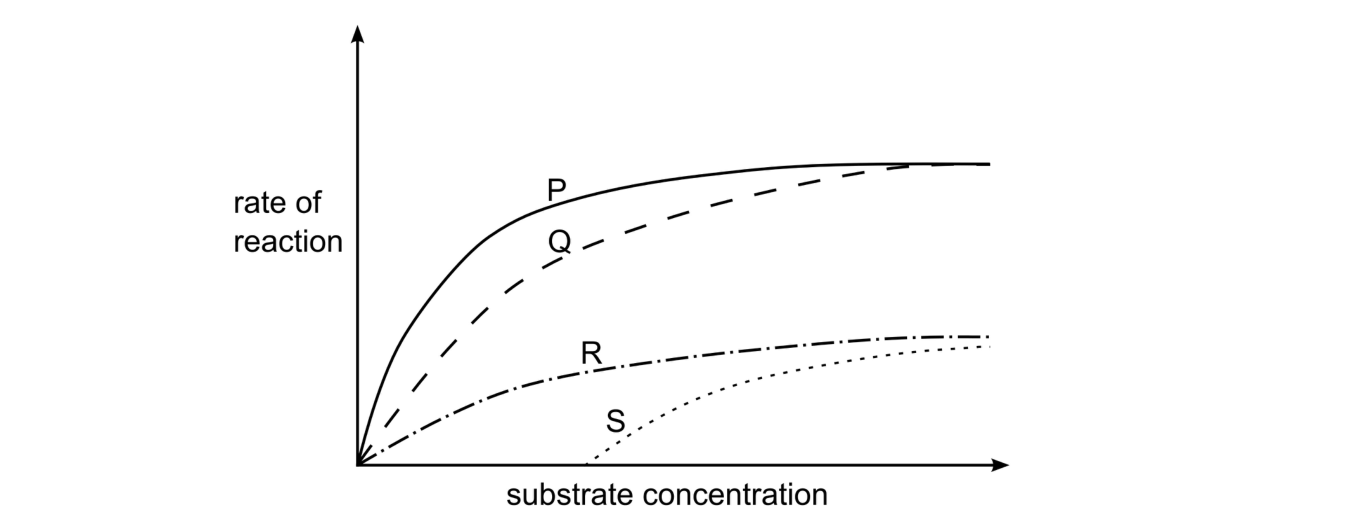
inhibitor မပါ — Vmax မှာ ပြားတဲ့ မျဉ်း P။ဂရပ်ပေါ်မှာ ခွဲကြည့်မယ်။ ဒေါင်တိုင်က initial rate (PART 1 ရဲ့ t = 0 အစ နှုန်း)။ inhibitor မပါရင် (no inhibitor) substrate တိုးလေ rate တက်လေ၊ Vmax မှာ ပြားတယ် — မျဉ်း P။
competitive — အစ နှေး၊ Vmax တူ ပြန်ရောက် — မျဉ်း Q။competitive inhibitor ပါရင် substrate နည်းချိန် ထိုင်ခုံ လုလို့ နှေးတယ်။ substrate များလာရင် နိုင်လို့ Vmax တူတူ ပြန်ရောက်တယ် — မျဉ်း Q။
non-competitive — Vmax ကိုယ်တိုင် နိမ့် — မျဉ်း R။non-competitive ဆိုရင် ဓာတ်ကူ တချို့ လုံးဝ ပိတ်ခံထားရလို့ Vmax ကိုယ်တိုင် နိမ့်တယ် — မျဉ်း R ပုံစံ။
S က ဖြည်းဖြည်း တက်ပြီး အမြင့်ဆုံးလည်း နိမ့်တယ်။S ကိုကြည့်ပါ — သုည အမှတ်ကနေ အရမ်း ဖြည်းဖြည်း တက်ပြီး အမြင့်ဆုံး rate ကလည်း R လောက်ပဲ နိမ့်တယ်။
competitive နည်းနည်းဆို P Vmax ရောက်ရမယ် — S ✗။competitive inhibitor နည်းနည်း (low concentration) ပဲ ပါရင် ဒီလောက် မနှေးဘူး။ substrate များလာရင် P ရဲ့ Vmax ကို ပြန်ရောက်ရမယ်။ S က မရောက်လို့ (2) အတွက် မှား ✗
✍️ စည်းကမ်း — Vmax တူ ပြန်ရောက်ရင် competitive၊ Vmax နိမ့်ရင် non-competitive။ ဒါကြောင့် (1) P, (2) Q။
P နဲ့ Q 12 Vmax တူ၊ Q က substrate ပိုလိုတယ်။Kₘ နဲ့ ပြန်ချိတ်ကြည့်မယ် — P နဲ့ Q ရဲ့ 12 Vmax က အတူတူ၊ ဒါပေမဲ့ Q က အဲဒီ rate ရဖို့ substrate ပိုလိုတယ်။
competitive = Kₘ up၊ Vmax မပြောင်း။competitive inhibitor က Kₘ ကို တိုး (Kₘ up) စေပြီး Vmax မပြောင်းဘူး — affinity လျော့ သလို ဖြစ်တယ်။
🤔 Predict: a drug lowers the Vmax of an enzyme but leaves its Kₘ unchanged. What kind of inhibitor is it most likely to be?
🔍 မေးခွန်း ဖြည်မယ်
a drug = ဆေး။ lowers = နိမ့်စေ။ leaves its Kₘ unchanged = Kₘ ကို မပြောင်းဘဲ ထားခဲ့တယ်။ most likely = ဖြစ်နိုင်ခြေ အများဆုံး။
မေးနေတာ — Vmax ကျ၊ Kₘ တူ ဆိုတဲ့ ပုံစံက ဘယ် inhibitor အမျိုးအစားလဲ။
Vmax ကျ၊ Kₘ မပြောင်း = non-competitive။
competitive ဆို Vmax တူပြီး Kₘ တိုးမယ်။
activator က rate ကို တိုးစေတယ်။
non-competitive (R) ကတော့ Vmax ကို လျော့စေပြီး Kₘ ကို မပြောင်းဘူး — ကပ်နိုင်တဲ့ enzyme တွေက ပုံမှန် ကိုင်တာမို့ပါ။
သတိ — coenzyme (enzyme ကို ကူတဲ့ molecule၊ ဥပမာ vitamin B3 ကနေ ဆောက်တဲ့ NAD⁺ — 26A) က inhibitor မဟုတ်ဘူး၊ rate ကို မလျော့စေဘူး။
📝 nucleotide အတု inhibitor နဲ့ HIV ကို ကုတဲ့ IMAT 2018 Q23 ကို သင်ခန်းစာ 30 (virus) မှာ ဖြေမယ် — DNA ဆောက်ပုံကို သင်ခန်းစာ 27 မှာ အရင် သင်မယ်။
🎮 Which kind of inhibitor? — sort fast 🔥
👉 ဆဲလ်ကလည်း inhibitor ကို ခလုတ်လို သုံးတယ်။👉 ဆဲလ် ကိုယ်တိုင်လည်း inhibitor ကို ခလုတ်လို သုံးတယ် — ပစ္စည်း လုံလောက်ရင် စက်ကို အလိုအလျောက် ပိတ်တဲ့ ခလုတ်ပါ။
အလိုအလျောက် ပိတ်တဲ့ ခလုတ် — feedback inhibition
pathway = A → B → C → D၊ ဆင့်တိုင်း enzyme။ဆဲလ်ထဲမှာ ဓာတ်ပြုမှုတွေက တစ်ဆင့်ပြီး တစ်ဆင့် ဖြစ်တယ် — A → B → C → D။ ဆင့်တိုင်းမှာ enzyme တစ်မျိုးစီ (E1 ပထမ၊ E2 အလယ် — middle၊ E3 နောက်ဆုံး) ရှိတယ်။ ဒီ လမ်းကြောင်းကို pathway လို့ ခေါ်တယ်။
🤔 Predict: the cell has made enough D and wants to stop the line. Blocking which enzyme wastes the least?
🔍 မေးခွန်း ဖြည်မယ်
has made enough = လုံလောက်အောင် ဆောက်ပြီးပြီ။ stop the line = ထုတ်လုပ်ရေး လိုင်းကို ရပ်။ wastes the least = အဖြုန်းတီး အနည်းဆုံး။
မေးနေတာ — pathway မှာ ဘယ်ဆင့်ကို ပိတ်ရင် ကုန်ကြမ်းနဲ့ energy အနည်းဆုံး ဆုံးရှုံးမလဲ။
ပထမ ဆင့် (E1) ကို ပိတ်ရင် B, C တွေ မဖြစ်တော့လို့ ကုန်ကြမ်းနဲ့ energy မဖြုန်းဘူး။
နောက်ဆုံး (E3) ကို ပိတ်ရင် B, C တွေ အလကား ပုံနေမယ်။
D က E1 ပိတ် = feedback inhibition (ထွက်ကုန်က ပြန်ပိတ်)နောက်ဆုံး product D များလာရင် D ကိုယ်တိုင်က ပထမ enzyme E1 ရဲ့ allosteric site ကို ကပ်ပြီး ပိတ် (E1 off) တယ်။ ဒါကို feedback inhibition (နောက်ဆုံး ထွက်ကုန်က ပထမ ဆင့်ကို ပြန်ပိတ်ခြင်း) လို့ ခေါ်တယ်။
D ကုန်ရင် E1 ပြန်ပွင့်တယ်။D သုံးကုန်သွားရင် (D used up) E1 ကနေ ပြန်ခွာလို့ စက် ပြန်ပွင့် (E1 on again) တယ်။
isoleucine များရင် ပထမ enzyme ကို ပိတ်တယ်။တကယ့် ဥပမာ — bacteria က အမိုင်နို အက်ဆစ် (သင်ခန်းစာ 25) threonine ကနေ isoleucine ကို enzyme 5 ဆင့်နဲ့ ဆောက်တယ်။ isoleucine များရင် ပထမ enzyme ကို ပိတ်တယ်။
💡 မှတ်နည်း — စက်ရုံ ဂိုဒေါင် ပြည့်ရင် ကုန်ကြမ်း ဝင်ပေါက် (ပထမ တံခါး) ကို ပိတ်တယ်၊ အလယ်က စက်ကို မပိတ်ဘူး။
👉 ဒီ ‘ပြည့်ရင် ပိတ်’ နည်းကို ခန္ဓာကိုယ် တစ်ခုလုံးမှာ သုံးတယ်။
ရေတိုင်ကီ ဖော့ခလုတ် — negative feedback
ရေတိုင်ကီ ဖော့ — ပြည့်ရင် ပိတ်၊ ကျရင် ဖွင့်။ပိုက်ထဲ ရေ စီးတာကို ဖွင့်ပိတ် လုပ်တဲ့ အဆို့ကို valve (ဖွင့်ပိတ် အဆို့) လို့ ခေါ်တယ်။
ရေတိုင်ကီ ဖော့ခလုတ် (float valve) ကို ကြည့်ပါ —
ရေ ပြည့်ရင် ဖော့ တက်ပြီး ပိုက် ပိတ် (full → shut)၊
ရေ ကျရင် ပြန်ဖွင့် (low → open)။
ဒါ negative feedback (ပြောင်းလဲမှုကို ပြန်ဆန့်ကျင်ခြင်း)တစ်ခုခု ပြောင်းလဲသွားရင် (ရေ တက်) အဲဒီ ပြောင်းလဲမှုကို ဆန့်ကျင်တဲ့ တုံ့ပြန်မှု (ပိုက် ပိတ်) ဖြစ်ပြီး မူလ အခြေအနေ ပြန်ရောက်အောင် ထိန်းတာကို negative feedback (ပြောင်းလဲမှုကို ပြန်ဆန့်ကျင်ပြီး မူလ ပြန်ရောက်စေတဲ့ ထိန်းနည်း) လို့ ခေါ်တယ်။ ခုနက feedback ပိတ်နည်းလည်း ဒီပုံစံပါ — D တက်ရင် E1 ပိတ်လို့ D ပြန်ကျတယ်။
homeostasis (အတွင်း တည်ငြိမ်အောင် ထိန်းခြင်း)ခန္ဓာကိုယ်ထဲမှာ ဓာတ်ကူခြင်း (catalysis — enzyme ရဲ့ အလုပ်) နဲ့ ရေနဲ့ ခွဲခြင်း (hydrolysis) လို ဓာတ်ပြုမှုတွေ မှန်မှန် ဖြစ်ဖို့ အတွင်း အခြေအနေ (37 °C၊ blood sugar) ကို တည်ငြိမ်အောင် ထိန်းတာကို homeostasis (ခန္ဓာကိုယ် အတွင်း တည်ငြိမ်အောင် ထိန်းခြင်း) လို့ ခေါ်တယ် (သင်ခန်းစာ 46)။ သူ့ အခြေခံက negative feedback ပါ။
💡 မှတ်နည်း — negative = ‘ပြန်ဆန့်ကျင်’ — တက်ရင် ချ၊ ကျရင် တင်။
👉 လိုတဲ့ နေရာ ရောက်မှ ဖွင့်တဲ့ နည်း ရှိလား?👉 cell က enzyme ကို ပိတ်တဲ့ နည်းတွေ မြင်ခဲ့ပြီ။ လိုတဲ့ နေရာ ရောက်မှ ဖွင့်တဲ့ နည်းရော ရှိလား?
မပွင့်သေးတဲ့ enzyme — zymogen
pepsin က ကိုယ့်ဆဲလ်ကို မချေအောင် pepsinogen နဲ့ ထုတ်တယ်။pepsin က protein ကို ချေတဲ့ enzyme ဆိုတော့ သူ့ကို ဆောက်တဲ့ အစာအိမ် ဆဲလ် (stomach cell) ရဲ့ protein တွေကိုပါ ချေပစ်နိုင်တယ်။ ဒါကြောင့် ဆဲလ်က သူ့ကို အလုပ် မလုပ်သေးတဲ့ ပုံ — pepsinogen (မပွင့်သေးတဲ့ pepsin) — နဲ့ ထုတ်တယ်။
မပွင့်သေး = zymogen (မပွင့်သေးတဲ့ enzyme)pepsinogen မှာ active site ကို ဖုံးထားတဲ့ ကြိုး အပိုင်းလေး (အနီ) ပါတယ်။ ဒီလို မပွင့်သေးတဲ့ enzyme ကို zymogen (မပွင့်သေးတဲ့ enzyme) (proenzyme လို့လည်း ခေါ်) လို့ ခေါ်တယ်။
pH 2 မှာ ပုံပြောင်းပြီး ကိုယ်တိုင် ဖြတ် — pepsin on။HCl က ကိုယ်တိုင် မဖြတ်ဘူး။ အစာအိမ်ထဲက HCl ရဲ့ H⁺ များတဲ့ pH 2 မှာ pepsinogen က ပုံ ပြောင်းပြီး ဖုံးထားတဲ့ အပိုင်းကို သူ့ဘာသာ ဖြတ်ထုတ် (cuts itself) လိုက်တယ်။ pepsin အလုပ်လုပ် (on) လာတယ်။
pepsin က pepsinogen အပိုတွေကို ဖြတ်ပေး — ပိုများလာ။ဖြစ်လာတဲ့ pepsin ကလည်း ကျန်တဲ့ pepsinogen တွေရဲ့ ဖုံးတဲ့ အပိုင်းကို ဖြတ်ပေးလို့ အလုပ်လုပ်တဲ့ pepsin ပိုမြန်မြန် များလာတယ်။
trypsinogen ကို enteropeptidase ဖြတ်လို့ trypsin။ပန်ကရိယ ကလည်း trypsinogen (မပွင့်သေးတဲ့ trypsin) ကို ထုတ်တယ်။ အူသိမ်ထဲ ရောက်မှ အူနံရံက enteropeptidase ဆိုတဲ့ enzyme က ဖြတ်ပေးလို့ trypsin ဖြစ်တယ်။
ပန်ကရိယ (pancreas) ထဲမှာပဲ trypsin စောစော ပွင့်သွားရင် ပန်ကရိယကို ကိုယ်တိုင် ချေပြီး ရောင်ရမ်းတယ် (pancreatitis)။ zymogen စနစ်က ကိုယ့် ဆဲလ်ကို ကာကွယ်တာပါ။
🤔 The blood-clotting enzyme thrombin travels in the blood as inactive prothrombin and is switched on only at a wound. Why is this useful?
🔍 မေးခွန်း ဖြည်မယ်
blood-clotting = သွေးခဲစေတဲ့။ travels in the blood as inactive prothrombin = မပွင့်သေးတဲ့ prothrombin ပုံနဲ့ သွေးထဲ လှည့်တယ်။ switched on only at a wound = ဒဏ်ရာမှာပဲ ဖွင့်တယ်။
မေးနေတာ — ဒဏ်ရာ ရောက်မှ ဖွင့်တဲ့ စနစ်က ခန္ဓာကိုယ်ကို ဘာ အကျိုး ပေးလဲ။
pepsinogen လိုပဲ လိုတဲ့ နေရာ (ဒဏ်ရာ) ရောက်မှ ဖွင့်တဲ့ zymogen စနစ်ပါ။
သွေးကြော ကောင်းကောင်းထဲမှာ ပွင့်နေရင် သွေးခဲ (clot) ပိတ်ဆို့မယ်။
💡 မှတ်နည်း — zymogen = ဓား အိမ်ထဲ ထည့်ထားတာ 🗡 — လိုတဲ့ နေရာ ရောက်မှ ဓားအိမ် ချွတ်။
👉 allosteric site က ဖွင့်ဖို့လည်း သုံးတယ်။👉 allosteric site ကို ပိတ်ဖို့ပဲ သုံးတာ မဟုတ်ဘူး — ဖွင့်ဖို့လည်း သုံးတယ်။
ဖွင့်ပေးတဲ့ ခလုတ် — allosteric activator နဲ့ cooperative binding
allosteric site မှာ ကပ်တဲ့ molecule တိုင်း ပိတ်တာ မဟုတ်ဘူး။
ဖွင့်ပေးသူ = allosteric activator (ဖွင့်ပေးသူ)တချို့က active site ကို ပိုကိုက်အောင် ဖွင့်ပေး (active site opens) လို့ enzyme ကို မြန်စေတယ် — allosteric activator (allosteric site ကနေ ဖွင့်ပေးသူ)။
effector — ပိတ်ရင် inhibitor၊ ဖွင့်ရင် activator။ဒီလို enzyme ကို ဖွင့် (on)၊ ပိတ် (off) လုပ်တဲ့ molecule တွေကို effector (ဖွင့်ပိတ် ခလုတ် molecule) (သို့) modulator လို့ ခေါ်တယ် — ပိတ်ရင် inhibitor၊ ဖွင့်ရင် activator။ သင်ခန်းစာ 26A က IMAT 2025 Q19 ရဲ့ option ထဲက စကားလုံးတွေပါ။
ပုံမှန် ဂရပ် — မတ်ပြီး ပြားတဲ့ မျဉ်းကွေး။ပုံမှန် (usual) enzyme ရဲ့ substrate–rate ဂရပ်က အစမှာ မတ်ပြီး ဖြည်းဖြည်း ပြားတဲ့ မျဉ်းကွေး (မျဉ်းပြတ်) ပါ။
🤔 Predict: in an enzyme made of four subunits, the first substrate that binds makes the other three active sites fit better. How will its rate graph start?
🔍 မေးခွန်း ဖြည်မယ်
made of four subunits = ကြိုး (subunit) လေးခုနဲ့ ဆောက်ထား။ fit better = ပိုကိုက်လာ။ how will its rate graph start? = ဂရပ်ရဲ့ အစပိုင်း ဘယ်ပုံ ဖြစ်မလဲ။
မေးနေတာ — substrate တစ်လုံး ကပ်ပြီးမှ ကျန်တာ ပိုလွယ်ရင် substrate–rate ဂရပ် ဘယ်ပုံစံလဲ။
အစမှာ ပထမ substrate ကပ်ဖို့ ခက်လို့ ဖြည်းဖြည်း၊ ကပ်ပြီးမှ ကျန် site တွေ ကိုက်လာလို့ ရုတ်တရက် မတ်တက်တယ် — S ပုံ (sigmoid)။
substrate တစ်လုံး ကပ်ရင် ကျန်တာ ကပ်ရ ပိုလွယ်တယ်။subunit (ကြိုး) အများကြီး ပါပြီး subunit တစ်ခုစီမှာ active site တစ်ခု ရှိတဲ့ enzyme တချို့မှာ substrate တစ်လုံးက subunit တစ်ခုမှာ ကပ်ရင် ကျန် subunit တွေရဲ့ active site ပုံ ပြောင်းပြီး ကပ်ရ ပိုလွယ်တယ်။ ဒါကြောင့် ဂရပ်က အစမှာ ဖြည်းဖြည်း၊ ပြီးမှ ရုတ်တရက် (suddenly) ပိုမတ် (steeper) လာတယ် — substrate တိုးလာလို့ rate ကျ (falling) တာ မဟုတ်ဘူး။
cooperative binding (ကပ်ရ ပိုလွယ်ခြင်း) — S-shape။ဒါကို cooperative binding (တစ်လုံး ကပ်ရင် ကျန်တာ ကပ်ရ ပိုလွယ်ခြင်း) လို့ ခေါ်ပြီး ဂရပ်က S ပုံ (S-shape) ဖြစ်တယ်။
activator = တခြား molecule၊ cooperative = substrate ကိုယ်တိုင်။allosteric activator နဲ့ မတူဘူး — activator က တခြား molecule တစ်ခု allosteric site ကို ကပ်တာ။ cooperative binding မှာတော့ substrate ကိုယ်တိုင်က ကျန် site တွေကို ကပ်ရ ပိုလွယ်စေတာ။
haemoglobin လည်း O₂ တစ်လုံး ကပ်ရင် ကျန်တာ ပိုလွယ်။enzyme မဟုတ်ပေမဲ့ haemoglobin ကလည်း ဒီလိုပဲ — O₂ တစ်လုံး ကပ်ရင် ကျန်တဲ့ နေရာတွေ O₂ ကို ပိုလွယ်လွယ် ကပ်တယ် (သင်ခန်းစာ 48)။
💡 မှတ်နည်း — cooperative = ‘တစ်ယောက် ကခုန်ရင် ကျန်တဲ့ သူငယ်ချင်းတွေ လိုက်ကတယ်’ — အစ ဖြည်း၊ ပြီးမှ ဝိုင်းဝင် — S ပုံ။
🔁 ပြန်စစ်မယ် — အဖြေ မကြည့်ခင် စဉ်းစားပါ
🤔 Lead(II) ions bind to –SH groups away from the active site and change its shape. This is:
🔍 မေးခွန်း ဖြည်မယ်
lead(II) ions = ခဲ ion Pb²⁺။ away from the active site = active site မဟုတ်တဲ့ နေရာ။ change its shape = active site ပုံ ပြောင်းစေ။ this is = ဒါကို … လို့ ခေါ်တယ်။
မေးနေတာ — ဒီ တားဆီးပုံရဲ့ နာမည်။
active site မဟုတ်တဲ့ နေရာမှာ ကပ်ပြီး ပုံ ပြောင်းစေလို့ non-competitive ပါ။
🤔 Aspirin blocks cyclo-oxygenase (COX) with a covalent bond. Aspirin is therefore:
🔍 မေးခွန်း ဖြည်မယ်
blocks = ပိတ်တယ်။ with a covalent bond = covalent bond နဲ့။ therefore = ဒါကြောင့်။
မေးနေတာ — covalent နဲ့ ပိတ်တဲ့ အချက်ကနေ aspirin ကို ဘယ်အမျိုးအစား inhibitor လို့ ခေါ်လဲ။
covalent bond နဲ့ အမြဲ ကပ်လို့ ပြန်မခွာ — irreversible inhibitor။
🤔 In the small intestine, trypsinogen is turned into working trypsin by:
🔍 မေးခွန်း ဖြည်မယ်
is turned into = … ဖြစ်အောင် ပြောင်းခံရတယ်။ working trypsin = အလုပ်လုပ်တဲ့ trypsin။ by = … ကြောင့် / … က လုပ်ပေးလို့။
မေးနေတာ — အူသိမ်ထဲမှာ trypsinogen ကို ဖြတ်ပေးတဲ့ ပစ္စည်းရဲ့ နာမည်။
အူနံရံက enteropeptidase က ဖြတ်ပေးလို့ trypsin ဖြစ်တယ်။
HCl ရဲ့ acid (pH 2) က အစာအိမ်မှာ pepsinogen ကို စဖွင့်တာပါ (ဖြတ်တာက pepsinogen ကိုယ်တိုင်နဲ့ pepsin)။
🤔 In competitive inhibition: (adapted from IMAT 2025 Q20)
🔍 မေးခွန်း ဖြည်မယ်
in competitive inhibition = competitive တားဆီးမှုမှာ (စာကြောင်း အဆုံးသတ်ပေးရမယ်)။
option ထဲက compete for = … ကို ပြိုင်လု၊
preventing = တားဆီးပြီး၊
release = ထွက်ခွာခြင်း။
မေးနေတာ — competitive inhibition ကို မှန်မှန် ဖော်ပြတဲ့ option။
competitive က substrate နဲ့ active site ကို လုတာ။
allosteric site ကို ကပ်တာက non-competitive — ထောင်ချောက် အဖြေ။
🤔 A molecule binds to the allosteric site and makes the enzyme work faster. It is:
🔍 မေးခွန်း ဖြည်မယ်
binds to the allosteric site = allosteric site ကို ကပ်တယ်။ makes the enzyme work faster = enzyme ကို ပိုမြန်စေတယ်။ it is = သူက …။
မေးနေတာ — allosteric site ကနေ မြန်စေတဲ့ molecule ရဲ့ နာမည်။
allosteric site ကနေ ဖွင့်ပေး (မြန်စေ) တာ allosteric activator။
🤔 Keeping the inside of the body steady, such as 37 °C and blood sugar, is called:
🔍 မေးခွန်း ဖြည်မယ်
keeping … steady = … ကို တည်ငြိမ်အောင် ထိန်းထားခြင်း။ the inside of the body = ခန္ဓာကိုယ် အတွင်း။ such as = ဥပမာ။ is called = … လို့ ခေါ်တယ်။
မေးနေတာ — ဒီ ထိန်းသိမ်းခြင်းရဲ့ နာမည်။
အတွင်း အခြေအနေ တည်ငြိမ်အောင် ထိန်းတာ homeostasis၊ အခြေခံက negative feedback။
competitive — ခုံ လု၊ substrate များရင် Vmax ပြန်ရ။
non-competitive — allosteric site ကနေ ကွေး၊ Vmax ကျ။
irreversible — covalent bond နဲ့ ပိတ် (sarin, aspirin)။
feedback — D က E1 ကို ပိတ်။
zymogen — ဓားအိမ်ထဲက enzyme။
🎉 catalase၊ denaturation၊ competitive — ပဟေဠိ ၃ ခု ပြေပြီ။🎉 ဒဏ်ရာ အမြှုပ် (catalase — 26A)၊ 42 °C အဖျား (denaturation)၊ အရက်နဲ့ ကုတာ (competitive inhibition) — ပဟေဠိ သုံးခုလုံး ဖြေပြီးပြီ။ အောက်က quiz နဲ့ စမ်းကြည့်ပါ။