Cellular respiration and fermentation (2)
O₂ မပါရင် — fermentation, ATP ရေတွက်ခြင်း, တခြား လောင်စာ
Without oxygen
O₂ မပါရင် — fermentation, ATP ရေတွက်ခြင်း, တခြား လောင်စာ
O₂ မလောက်ရင် — taxi တွေ ပိတ်မိတယ်
100 m ပြေး — muscle O₂ short။မီတာ 100 အပြင်းပြေးနေတဲ့ စက္ကန့်ပိုင်းကို ကြည့်ပါ။ နှလုံးက ခုန်နိုင်သမျှ ခုန်ပေမဲ့ muscle ဆီ O₂ မလောက် (O₂ short) ဘူး။
O₂ မရှိ — chain stops။O₂ မရှိရင် complex IV မှာ electron လက်ခံသူ မရှိလို့ chain တစ်ခုလုံး ရပ် (chain stops) သွားတယ်။
NADH can't unload။NADH (Nicotinamide Adenine Dinucleotide + Hydrogen — H သယ်တဲ့ taxi) တွေ electron ချစရာ မရှိလို့ ပြည့်လျက် တန်းစီ စောင့်နေရတယ် (can't unload)။
glycolysis needs NAD⁺ — မရှိရင် ရပ်။glycolysis က H တင်ဖို့ NAD⁺ အလွတ် လိုတယ် (needs NAD⁺)။ အလွတ် မကျန်တော့ရင် glycolysis ပါ ရပ်ပြီး ATP 2 လုံးတောင် မရတော့ဘူး။
NADH ရဲ့ H ကို pyruvate ပေါ် ချရင်?ဖြေရှင်းနည်း — NADH ရဲ့ H ကို pyruvate ပေါ် ချခိုင်းလိုက်ရင် ဘယ်လိုလဲ? တက္ကစီ တွေ အလွတ် ပြန်ဖြစ်မယ်။
pyruvate က H လက်ခံ = fermentation (အချဉ်ဖောက်ခြင်း)O₂ မပါဘဲ pyruvate ကို H လက်ခံသူ အဖြစ် သုံးတာကို fermentation (အချဉ်ဖောက်ခြင်း) လို့ ခေါ်တယ်။
IMAT — anaerobic respiration လို့လည်း ခေါ်။IMAT က fermentation ကို anaerobic respiration (O₂ မသုံးတဲ့ အသက်ရှူခြင်း) လို့လည်း ခေါ်တယ် — နာမည် နှစ်ခု၊ အလုပ် တစ်ခု။
👉 လူ့ muscle မှာ pyruvate က ဘာဖြစ်သွားလဲ ကြည့်မယ်။
Lactate fermentation — muscle ထဲမှာ
glycolysis — pyruvate 2၊ NADH 2၊ ATP 2။glucose က glycolysis ကို ဖြတ်ပြီး pyruvate နှစ်လုံး၊ NADH နှစ်လုံး၊ ATP နှစ်လုံး ရတယ် — ဒီအထိ ပုံမှန်ပဲ။
O₂ မရှိတော့ NADH က chain ဆီ မသွားဘဲ pyruvate ဆီ တန်းသွားတယ်။
pyruvate + NADH → lactate + NAD⁺pyruvate က H ကို လက်ခံပြီး lactate (lactic acid) ဖြစ်သွား (becomes) တယ်: pyruvate + NADH → lactate + NAD⁺။
NAD⁺ back to work — glycolysis ဆက်လည်။NADH က NAD⁺ အလွတ် ပြန်ဖြစ် (NAD⁺ is regenerated) ပြီး glycolysis ဆီ ပြန်သွား (back to work) လို့ glycolysis ဆက်လည်နိုင်တယ်။ ဒါ ဒီ လုပ်ငန်းရဲ့ တကယ့် အလုပ်ပါ။
pyruvate reduced၊ no CO₂။pyruvate က H (electron) ရလို့ reduced (pyruvate reduced) ဖြစ်တယ်။ carbon 3 လုံး ဒီအတိုင်း ကျန်လို့ CO₂ မထွက် (no CO₂) ဘူး။
lactate fermentation — muscle နဲ့ yoghurt၊ ATP 2။lactate fermentation က cytoplasm ထဲမှာ ဖြစ် (occurs) တယ်။ လူ့ muscle နဲ့ ဒိန်ချဉ် (yoghurt) လုပ်တဲ့ bacteria မှာ တွေ့ရတယ်။ ATP က glycolysis ရဲ့ 2 လုံးပဲ။
🤔 After a race, the liver takes lactate and passes its hydrogen back to NAD⁺, making pyruvate. Lactate is:
🔍 မေးခွန်း ဖြည်မယ်
After a race = ပြေးပွဲ ပြီးတဲ့ နောက်။ passes its hydrogen back to NAD⁺ = သူ့ H ကို NAD⁺ ဆီ ပြန်ပေးတယ်။ making pyruvate = pyruvate ဖြစ်လာစေတယ်။
မေးနေတာ — H (electron) ကို ပေးလိုက်တဲ့ lactate ကို ဘာ ဖြစ်တယ်လို့ ခေါ်လဲ (oxidised / reduced / CO₂ ဖြုတ် / P တပ်)။
ဒီမှာ ပြောင်းပြန် — lactate က H (electron) ကို NAD⁺ ဆီ ပေးလို့ oxidised ဖြစ်တယ်။
NAD⁺ က NADH (reduced) ဖြစ်တယ်။
muscle ထဲမှာ pyruvate က H ရလို့ reduced ဖြစ်ခဲ့တာ — လမ်းကြောင်း ပြောင်းပြန်ဆိုရင် အဖြေလည်း ပြောင်းပြန်။
CO₂ မထွက်၊ P မတပ်လို့ ကျန်တာ မဟုတ်ဘူး။
💡 မှတ်နည်း — ကားပါကင် (chain) ပိတ်သွားရင် တက္ကစီတွေ ပြည့်လျက် ပိတ်မိမယ်။ လမ်းဘေး (pyruvate) မှာ ခရီးသည် (H) ချလိုက်ရင် တက္ကစီ ပြန်လွတ်ပြီး glycolysis ဆက်ပြေးနိုင်တယ်။
👉 yeast (မုန့်ဖောက်ဆေး) ကတော့ pyruvate ကို တခြားနည်း ပြောင်းတယ်။
Alcohol fermentation — yeast ထဲမှာ
yeast — pyruvate က CO₂ ဖြုတ်၊ ethanal (2C)။yeast မှာ pyruvate (3C) က အရင်ဆုံး CO₂ တစ်လုံး ဖြုတ်ချ (decarboxylation) ပြီး ethanal (2C) ဖြစ်တယ်။
ပြီးမှ NADH က H ကို ethanal ပေါ် ချတယ်။
ethanal + H → ethanol = alcohol fermentationethanal က H ရပြီး ethanol (အရက်ထဲက alcohol) ဖြစ်တယ်။ NAD⁺ အလွတ် ပြန်ရ (back) လို့ glycolysis ဆက်လည်တယ်။ ဒါက alcohol fermentation ပါ။
CO₂ ကြောင့် bread rises၊ ATP 2 ပဲ။ထွက်လာတဲ့ CO₂ ကြောင့် ပေါင်မုန့် ဖောင်း (bread rises) တယ်၊ ethanol ကြောင့် အရက် ရတယ်။ ဒါလည်း cytoplasm ထဲမှာ ဖြစ်ပြီး ATP 2 လုံးပဲ ရတယ်။
muscle: lactate (CO₂ မထွက်)၊ yeast: ethanol + CO₂။ခွဲမှတ်ပါ — လူ့ muscle: pyruvate → lactate (CO₂ မထွက်)။ yeast: pyruvate → ethanol + CO₂။
👉 IMAT က ဒီ လမ်းနှစ်ခုကို ပုံနဲ့ မေးခဲ့တယ်။
IMAT 2014 Q35 — X, Y, Z
📝 IMAT 2014 · Question 35
The diagram shows the respiration process in the cytoplasm of a yeast cell or an animal cell when O2 is limiting:
Which option correctly identifies substances X, Y and Z?
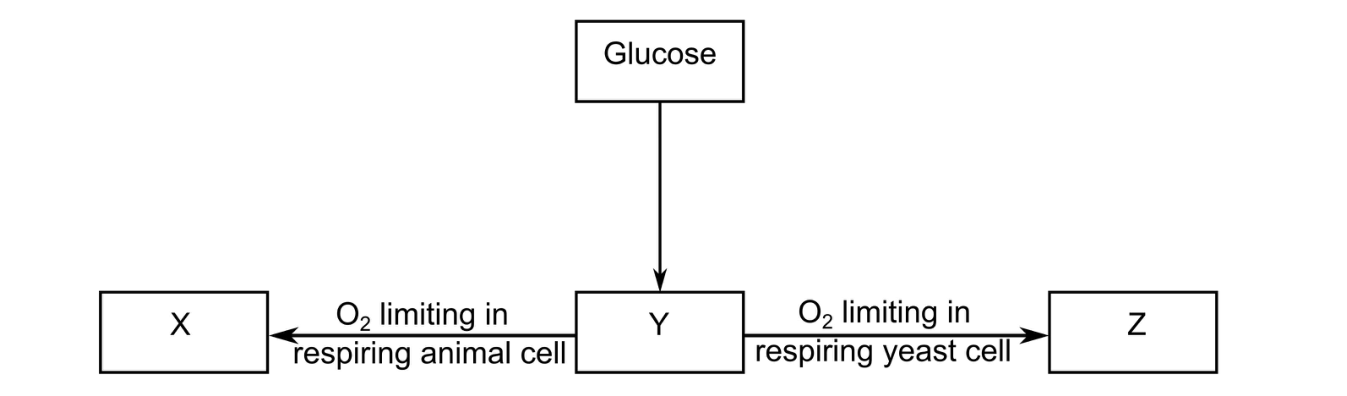
glucose ကနေ ပထမ ရတာ glycolysis ရဲ့ ထွက်ကုန် — Y = pyruvate။
animal cell (muscle) မှာ pyruvate → X = lactate။
yeast မှာ pyruvate → Z = ethanol (CO₂ လည်း ထွက်တယ်)။
X = lactate, Y = pyruvate, Z = ethanol — option E။ဒါကြောင့် X = lactate, Y = pyruvate, Z = ethanol — option E။ ထောင်ချောက် — X နဲ့ Z နေရာ လဲထားတဲ့ A, Y ကို lactate ထားတဲ့ B ပါ။
ပြေးပြီးရင် — lactate, pH, O₂ အကြွေး
lactate ↑ — ခြေထောက် ပူလောင် (45A ရဲ့ ဒုတိယ ပဟေဠိ)။အပြင်းပြေးနေတုန်း muscle ထဲမှာ lactate နဲ့ H⁺ (acid) တွေ စုလာ (lactate ↑) တယ်။ ခြေထောက် ပူလောင်ပြီး မောလာတာ ဒီ acid စုတာနဲ့ အတူ ဖြစ်တာ — သင်ခန်းစာ 45A ရဲ့ ဒုတိယ ပဟေဠိ အဖြေ။
lactic acid ကြောင့် pH ↓။lactic acid က acid ဖြစ်လို့ muscle ရဲ့ pH ကျ (pH ↓) တယ်။ CO₂ ပိုထွက်တာကလည်း pH ကို ချတယ်။
more blood — O₂ ပိုရဖို့။အလုပ်လုပ်နေတဲ့ muscle ဆီ သွေးကြော ကျယ်ပြီး သွေး ပိုစီး (more blood) တယ်၊ အသက်လည်း ပြင်းပြင်း ရှူ (breathe hard) တယ် — O₂ ပိုရဖို့ပါ။
lactate ကို သွေးက liver (အသည်း) ဆီ သယ်သွားတယ်။
liver က lactate ကို pyruvate (glucose) back။liver က O₂ သုံးပြီး lactate ကို pyruvate (နောက် glucose) အဖြစ် ပြန်ပြောင်း (back) တယ်။ lactate တချို့ကိုတော့ နှလုံးနဲ့ muscle ကိုယ်တိုင်က pyruvate ပြန်လုပ်ပြီး O₂ နဲ့ ဆက်ရှို့တယ်။
oxygen debt (O₂ အကြွေး) — ပြေးပြီး keep panting။ဒီအတွက် လိုတဲ့ O₂ ကို oxygen debt (O₂ အကြွေး) လို့ ခေါ်တယ်။ ပြေးပြီးသွားတာတောင် ဆက် မောနေ (keep panting) တာ အကြွေး ဆပ်နေလို့ပါ။
lactic acid နဲ့ CO₂ (ရေထဲမှာ carbonic acid ဖြစ်တယ်) က သွေးထဲလည်း ရောက်လို့ သွေး pH လည်း နည်းနည်း ကျတယ် — buffer တွေက အများကြီး မကျအောင် ထိန်းတယ်။
IMAT 2018 Q30 (muscle pH, blood pH, သွေးစီးမှု) ကို အသက်ရှူ သင်ခန်းစာ 49 မှာ ဖြေမယ်။ ဒီမှာ အလားတူ အသစ် —
🤔 A pearl diver swims hard underwater for one minute while holding her breath. Which changes are expected in her blood by the end of the dive?
1 more lactate
2 less CO₂
3 a lower pH
🔍 မေးခွန်း ဖြည်မယ်
pearl diver = ပုလဲ ငုပ်သမား။ swims hard underwater = ရေအောက်မှာ ပြင်းပြင်း ကူးတယ်။ while holding her breath = အသက် အောင့်ထားရင်း — လေ မရှူဘူး။
Which changes are expected = ဘယ် ပြောင်းလဲမှုတွေ ဖြစ်မယ်လို့ မျှော်လင့်ရလဲ။ by the end of the dive = ငုပ်တာ ပြီးချိန်မှာ။
မေးနေတာ — သွေးထဲမှာ lactate၊ CO₂၊ pH သုံးခုထဲက ဘယ်ဟာတွေ ဖော်ပြတဲ့ အတိုင်း မှန်လဲ။
O₂ မလုံလောက်လို့ muscle က lactate fermentation ပါ လုပ်ပြီး lactate ကို သွေးထဲ ထုတ်တယ် (1 ✓)။
အသက် မရှူလို့ CO₂ ကို အပြင် မထုတ်နိုင်ဘဲ သွေးထဲ စုတယ် — နည်းတာ မဟုတ်ဘဲ များတယ် (2 ✗)။
lactate ရော CO₂ ရော acid ဖြစ်စေလို့ pH ကျတယ် (3 ✓)။
ဒါကြောင့် 1 and 3 only။
respiration ရဲ့ energy အကုန် ATP မဖြစ်ဘဲ 60% ကျော် heat (အပူ) ဖြစ်တယ်။ ပြေးရင် ကိုယ် ပူလာတာ ဒါကြောင့် — heat ကလည်း respiration ရဲ့ ထုတ်ကုန် တစ်ခုပါ။
IMAT 2011 Q49 (ပြင်းပြင်း လေ့ကျင့်ရင် muscle cell ထုတ်ကုန်) ကို muscle သင်ခန်းစာ 55 မှာ ဖြေမယ်။ ဒီမှာ —
🤔 A muscle cell respires anaerobically only. Which list gives only products of this process?
🔍 မေးခွန်း ဖြည်မယ်
respires anaerobically only = O₂ မသုံးဘဲပဲ အသက်ရှူ (respire) တယ်။ Which list gives only products = ဘယ်စာရင်းမှာ ထုတ်ကုန် (products) တွေချည်းပဲ ပါလဲ။
မေးနေတာ — စာရင်းထဲက ပစ္စည်း သုံးခုလုံး ဒီ လုပ်ငန်းကနေ ထွက်လာတာ ဖြစ်ရမယ်၊ တစ်ခုမှ မှားလို့ မရ။
anaerobic (lactate fermentation) မှာ pyruvate → lactate၊ glycolysis က ATP 2 လုံး၊ energy အများစု အပူ ဖြစ်တယ်။
လူ့ muscle ရဲ့ lactate fermentation မှာ CO₂ နဲ့ ရေ မထွက်ဘူး (aerobic ကမှ ထုတ်တာ)။
ethanol က yeast မှာ။
glycogen နဲ့ O₂ က ထုတ်ကုန် မဟုတ်ဘူး။
🤔 In which stages of mammalian respiration is CO₂ released? (IMAT 2013 Q35)
1 glycolysis
2 anaerobic respiration
3 Krebs cycle
🔍 မေးခွန်း ဖြည်မယ်
stages = အဆင့်တွေ။ mammalian = နို့တိုက်သတ္တဝါ (လူ အပါအဝင်) ရဲ့။ is CO₂ released = CO₂ ထုတ်လွှတ်တာ။
မေးနေတာ — glycolysis၊ anaerobic respiration၊ Krebs cycle ထဲက လူ့ cell မှာ CO₂ ထွက်တဲ့ အဆင့် ဘယ်ဟာတွေလဲ။
နို့တိုက်သတ္တဝါ (လူ) ရဲ့ anaerobic respiration က lactate ထုတ်ပြီး CO₂ မထွက်ဘူး — CO₂ ထွက်တာ yeast မှာပဲ။
glycolysis မှာလည်း CO₂ မထွက်ဘူး။
Krebs cycle (နဲ့ link reaction) မှာပဲ ထွက်လို့ 3 only။
👉 liver ရောက်တဲ့ lactate ဘာဖြစ်လဲ?👉 liver ကို ရောက်သွားတဲ့ lactate ဘာဖြစ်လဲ? glucose ပြန်ဖြစ်တဲ့ လှည့်ပတ် တစ်ခု ရှိတယ်။
lactate ကနေ glucose ပြန် — glycogen, gluconeogenesis, Cori cycle
glycogen — liver ~100 g၊ muscle ~400 g။ကိုယ်ခန္ဓာက glucose ကို glycogen (glucose ကြိုး ရှည်ကြီး — သင်ခန်းစာ 24B) အဖြစ် liver မှာ ~100 g၊ muscle အားလုံးမှာ ~400 g လောက် သိုထား (stored) တယ်။
muscle glycogen ကိုယ်တိုင်သုံး၊ liver က သွေးထဲ ထုတ်။muscle ရဲ့ glycogen က muscle ကိုယ်တိုင် သုံးဖို့ပဲ။ liver ကတော့ သူ့ glycogen ကို glucose ပြန်ဖြို ပြီး သွေးထဲ ထုတ်ပေးလို့ ဦးနှောက် အပါအဝင် တစ်ကိုယ်လုံး သုံးရတယ်။
muscle —
glucose → lactate၊
+2 ATP။အပြင်းပြေးရင် O₂ မလောက်တဲ့ muscle က glucose → lactate လုပ်ပြီး glucose တစ်လုံးမှာ ATP 2 လုံး (+2 ATP) ရတယ်။
🤔 Predict: the blood carries lactate from the sprinting muscle to the liver. There, much of the lactate will…
🔍 မေးခွန်း ဖြည်မယ်
Predict = ကြိုတင် ခန့်မှန်းပါ။ carries lactate from the sprinting muscle to the liver = အပြင်းပြေးနေတဲ့ muscle ကနေ lactate ကို liver ဆီ သယ်တယ်။
There = liver မှာ။ much of the lactate will… = lactate အများကြီးက … ဖြစ်မယ်။
မေးနေတာ — liver ရောက်တဲ့ lactate ဘာ ဖြစ်သွားမလဲ။
lactate မှာ energy ကျန်သေးလို့ မပစ်ဘူး — liver က pyruvate ပြန်လုပ်ပြီး glucose ပြန်ဆောက်တယ် (step 4–5)။
ethanol က yeast မှာပဲ ဖြစ်တယ်။
liver က glucose ကို glycogen အဖြစ် သိုတာ၊ lactate အဖြစ် မသိုဘူး။
ဆီးထဲ ထွက်တာ အနည်းငယ်ပဲ။
lactate က muscle ထဲမှာ မစုနေဘဲ သွေးထဲ ထွက်ပြီး liver ဆီ သွားတယ်။
liver −6 ATP နဲ့ glucose ဆောက် = gluconeogenesisliver က O₂ နဲ့ ရတဲ့ ATP 6 လုံး (−6 ATP) သုံးပြီး lactate 2 လုံးကို glucose ပြန်ဆောက်တယ်။ glucose မဟုတ်တဲ့ ပစ္စည်းကနေ glucose အသစ် ဆောက်တာကို gluconeogenesis လို့ ခေါ်တယ်။
neo = အသစ် — glycerol၊ amino acid ကနေလည်း။gluco = glucose၊ neo = အသစ်၊ genesis = ဖန်တီးခြင်း။ lactate အပြင် glycerol နဲ့ amino acid ကနေလည်း ဆောက်နိုင်လို့ အစာ မစားဘဲ ညလုံးပေါက် နေရင်လည်း သွေးထဲ glucose ကျန်တယ်။
ATP သုံးပြီး သေးတဲ့ ပစ္စည်းကနေ ကြီးတာ ဆောက်လို့ gluconeogenesis က anabolism (တည်ဆောက်ခြင်း — 27B) ပါ။ glucose ကို ဖြိုတဲ့ respiration ကတော့ catabolism (ဖြိုခြင်း)။
muscle → liver → muscle = Cori cyclemuscle → lactate → liver → glucose → muscle လှည့်ပတ်ကို Cori cycle လို့ ခေါ်တယ်။
Carl နဲ့ Gerty Cori — 1947 Nobel။Carl Cori နဲ့ Gerty Cori က ဇနီးမောင်နှံ ဇီဝဓာတုဗေဒ ပညာရှင် တွေ ပါ။ glycogen အကြောင်း ရှာဖွေချက်နဲ့ 1947 Nobel ဆု ရခဲ့တယ်။
ATP ကုန်ပေမဲ့ muscle ဆက်လုပ်နိုင်၊ lactate ရှင်း။ATP 6 သုံးပြီး 2 ပဲ ပြန်ရလို့ ကိုယ်ခန္ဓာ တစ်ခုလုံးအတွက် ATP ကုန်တယ်။ ဒါပေမဲ့ muscle ကို O₂ မလောက်ချိန်မှာ ဆက်အလုပ်လုပ်စေပြီး lactate ကိုလည်း ရှင်းပေးတယ်။
💡 မှတ်နည်း — ကြွက်သားက ATP အကြွေး ယူ (lactate ထား)၊ အသည်းက O₂ နဲ့ ဆပ်ပေး (glucose ပြန်လုပ်) တယ်။
👉 O₂ ရှိရင် ATP 32၊ မရှိရင် 2 — ဒီ ကွာခြားချက်က ဘယ်လောက် ကြီးလဲ?
O₂ နဲ့ 32၊ O₂ မပါ 2
O₂ ရှိရင် (with O₂) glucose တစ်လုံးက ATP 32 လောက် ပေးတယ်။
without O₂ — ATP 2 ပဲ။O₂ မရှိရင် (without O₂) glycolysis ရဲ့ 2 လုံးပဲ ရတယ်။ energy အများစုက lactate ဒါမှမဟုတ် ethanol ထဲမှာ မသုံးရဘဲ ကျန်နေတယ်။
32 နဲ့ 2 — 16 ဆ၊ ဦးနှောက် ပျက်စီးလွယ်။32 နဲ့ 2 — 16 ဆ ကွာတယ်။ ဦးနှောက်လို ATP အများကြီး လိုတဲ့ အင်္ဂါက O₂ ခဏ ပြတ်တာနဲ့တင် ပျက်စီးတာ ဒါကြောင့်ပါ။
yeast က 322 = 16 glucose သုံးရ။ဒါကြောင့် O₂ မရှိတဲ့ yeast (မုန့်ဖောက်ဆေး) က ATP အတူတူ ရဖို့ glucose 322 = 16 လုံး သုံးရတယ် — အစာ မြန်မြန် ကုန်တယ်။
🤔 Without O₂, how many glucose must yeast ferment to make the ATP that 3 glucose give with O₂ (about 96 ATP)?
🔍 မေးခွန်း ဖြည်မယ်
how many glucose must yeast ferment = yeast က glucose ဘယ်နှလုံး ferment လုပ်ရမလဲ။ to make the ATP that 3 glucose give with O₂ = O₂ နဲ့ glucose 3 လုံး ပေးတဲ့ ATP ပမာဏ ရဖို့။
မေးနေတာ — ATP 96 လုံး ရဖို့ O₂ မပါဘဲ glucose အရေအတွက်။
fermentation မှာ glucose တစ်လုံး = ATP 2 လုံး။
ATP 96 ရဖို့ 962 = 48 လုံး (glucose 3 × 16 လို့လည်း တွက်နိုင်)။
16 က glucose တစ်လုံးစာ (32 ATP) ပဲ။
96 က ATP အရေအတွက်၊ glucose မဟုတ်ဘူး။
👉 အပြေးသမား တစ်ယောက်ရဲ့ ATP ကို အချိန်အလိုက် ဘယ်လမ်းက ပေးလဲ?
100 m နဲ့ marathon — ATP ဘယ်က လာလဲ
ပထမ 2 s — ATP store။အပြေး စလိုက်တဲ့ ပထမ 2 စက္ကန့်မှာ muscle ထဲ အဆင်သင့် ရှိနေတဲ့ ATP store ကို သုံးတယ်။
2–10 s — creatine phosphate (CP)။2 ကနေ 10 စက္ကန့်လောက် အထိ creatine phosphate (CP) က P ကို ADP (Adenosine Di-Phosphate) ဆီ လွှဲပြီး ATP ပြန်ဖြည့်ပေးတယ် (သင်ခန်းစာ 44A)။ O₂ မလိုဘူး။
10 s–2 min — glycolysis + lactate။10 စက္ကန့်ကနေ 2 မိနစ်လောက် အထိ glycolysis + lactate fermentation က အဓိက — မြန်ပေမဲ့ glucose တစ်လုံး ATP 2 လုံးပဲ၊ lactate စုလို့ ခြေထောက် ပူလောင်တယ်။
2 min ကျော် — aerobic respiration၊ ATP 30 ကျော်။2 မိနစ် ကျော်ရင် aerobic respiration (O₂ နဲ့) က အဓိက ဖြစ်တယ်။ နှေးပေမဲ့ glucose တစ်လုံး ATP 30 ကျော် ရပြီး fat ကိုပါ လောင်စာ သုံးနိုင်လို့ နာရီ ချီ ပြေးနိုင်တယ်။
100 m CP၊ 400 m lactate၊ marathon aerobic။ဒါကြောင့် 100 m က CP အများဆုံး၊ 400 m က glycolysis + lactate၊ marathon က aerobic။ တကယ်တော့ လမ်းတွေ အချိန်တိုင်း ထပ်ပြီး အတူ လည်နေတယ် — အဓိက ဘယ်ဟာလဲ ဆိုတာပဲ ပြောင်းတာ။
🤔 Which source supplies most of the ATP in a 1-minute swimming race?
🔍 မေးခွန်း ဖြည်မယ်
source = ရင်းမြစ်၊ လာတဲ့ နေရာ။ supplies most of the ATP = ATP အများဆုံးကို ပေးတယ်။ a 1-minute swimming race = 1 မိနစ် ကြာတဲ့ ရေကူးပြိုင်ပွဲ။
မေးနေတာ — 1 မိနစ် အပြင်း ကူးနေချိန် ATP အဓိက ဘယ်လမ်းက လာလဲ (graph ပေါ်က အချိန်ကို ရှာပါ)။
1 မိနစ် က 10 စက္ကန့် နဲ့ 2 မိနစ် ကြားမှာ ကျတယ် — အနီရောင် အပိုင်း: glycolysis + lactate fermentation (400 m လိုပဲ)။
CP နဲ့ ATP store က 10 စက္ကန့် မတိုင်ခင် ကုန်တယ်။
aerobic က 2 မိနစ် ကျော်မှ အဓိက ဖြစ်တယ်။
👉 IMAT 2023 က ATP ရေတွက်ခြင်းကို အစဉ်စီခိုင်းခဲ့တယ်။
IMAT 2023 Q10 — ATP အစဉ်စီ
📝 IMAT 2023 · Question 10
Glucose can feed into the biochemical pathways noted in the options below. Each pathway generates a net yield of ATP molecules per molecule of glucose feeding into the pathway. Rank the reactions listed below in order of the total number of net ATP molecules produced, ranked from largest to smallest?
1. Ethyl alcohol fermentation of four molecules of glucose
2. Lactic acid fermentation of six molecules of glucose
3. The electron transport chain stage of cellular respiration following the metabolism of a single molecule of glucose through the glycolytic and citric acid cycle stages.
4. Glycolysis of seven glucose molecules
1 — alcohol fermentation ဆိုတော့ glucose တစ်လုံး ATP 2 လုံး။ glucose 4 လုံး × 2 = 8။
2 — lactic fermentation လည်း တစ်လုံး 2 လုံး။ 6 × 2 = 12။
3 — electron chain (oxidative phosphorylation) တစ်ခုတည်း၊ glucose တစ်လုံး — 10 NADH × 2.5 + 2 FADH₂ × 1.5 = ≈ 28။
4 — glycolysis က တစ်လုံး 2 လုံး။ 7 × 2 = 14။
အများကနေ အနည်း — 28, 14, 12, 8 — 3 – 4 – 2 – 1 (option D)။ glucose အများကြီး fermentation လုပ်တာတောင် chain တစ်ခါကို မမီဘူး။
👉 အစာရဲ့ energy ဘယ်နှ % ATP ထဲ တကယ် ရောက်လဲ?
IMAT 2011 Q47 — ထိရောက်မှု ဘယ်လောက်လဲ
📝 IMAT 2011 · Question 47
A food item was burned in pure oxygen and released 830 kJ of energy. An identical food item of the same mass was found to produce 8 ATP’s in respiration. Assuming it takes 31_kJ to produce one ATP molecule, estimate the efficiency of respiration.
✍️ အစာကို O₂ ထဲမှာ မီးရှို့ (burned) ရင် energy 830 kJ အကုန် ထွက်တယ်။
respiration မှာတော့ ATP 8 လုံးပဲ ရပြီး တစ်လုံးမှာ 31 kJ (တကယ်က ATP 1 mol စာ — သင်ခန်းစာ 44A) — 8 × 31 = 248 kJ က ATP ထဲ ရောက်တယ်။
efficiency (ထိရောက်မှု) = ATP ထဲ ရောက်တဲ့ energy ÷ စုစုပေါင်း energy × 100 = 248830 × 100။
248830 = 0.299 → × 100 = ≈ 30 % (option A)။ ခန့်မှန်းရင် 248 က 830 ရဲ့ သုံးပုံ တစ်ပုံ (277) အောက် နည်းနည်း။
70 % heat — ကိုယ်ပူချိန် 37 °C ထိန်း။ကျန်တဲ့ 70 % က heat (အပူ) ဖြစ်သွားတယ်။ ဒီ အပူက ကိုယ်ပူချိန် 37 °C ကို ထိန်းပေးတယ် — အလဟဿ မဟုတ်ဘူး။
👉 glucose မရှိရင် cell က အဆီ၊ protein ကိုလည်း လောင်စာ သုံးနိုင်လား?
အဆီ နဲ့ protein လည်း လောင်စာ ဖြစ်တယ်
Krebs က လောင်စာ အမျိုးမျိုး လက်ခံ။ကိုယ့် မီးဖို Krebs က လောင်စာ အမျိုးမျိုး လက်ခံတယ်။ glucose ကတော့ glycolysis နဲ့ pyruvate ဖြစ်ပြီး ဝင်တယ် — မြင်ပြီးသား။
အဆီ → glycerol 1 + fatty acid 3။အဆီ (triglyceride) က glycerol 1 လုံးမှာ fatty acid (အဆီ အက်ဆစ်) 3 ချောင်း ချိတ်ထား (joined) တာ (သင်ခန်းစာ 24B)။ အရင် ပြန်ခွဲတယ်။
glycerol → G3P၊ glycolysis အလယ်က ဝင်။glycerol (3C) ကို triose phosphate (G3P) အဖြစ် ပြောင်းပြီး glycolysis အလယ်ကနေ ဝင်တယ်။ fatty acid ကတော့ carbon ကြိုး အရှည်ကြီး ပါ။
2C စီ ဖြတ် = β-oxidation (carbon ၂ လုံးစီ ဖြတ်ခြင်း)fatty acid ကို carbon နှစ်လုံးစီ (two carbons at a time) ဖြို (broken down) ပြီး acetyl CoA ဖြစ်ကာ Krebs ထဲ တိုက်ရိုက် ဝင်တယ်။ ဒါကို β-oxidation (beta oxidation) လို့ ခေါ်တယ်။
amino acid မှာ NH₂ ပါ။protein ကို amino acid တွေ ဖြိုပြီး သုံးရင် amino acid မှာ nitrogen ပါတဲ့ NH₂ (amino group) ရှိတယ်။
🤔 Predict: what must happen to an amino acid before its carbon can be respired?
🔍 မေးခွန်း ဖြည်မယ်
what must happen to = … မှာ ဘာ မဖြစ်မနေ ဖြစ်ရမလဲ။ before its carbon can be respired = သူ့ carbon ကို respiration နဲ့ မရှို့ခင်။
မေးနေတာ — amino acid ကို လောင်စာ မသုံးခင် အရင်ဆုံး လုပ်ရတဲ့ အဆင့်။
respiration က carbon နဲ့ H ကိုပဲ “ရှို့” တယ်။
nitrogen ပါတဲ့ NH₂ ကို liver က အရင် ဖယ်ပြီး urea လုပ်တယ် — deamination (step 5)။
P တပ်တာ၊ fat ပြောင်းတာ၊ glycerol နဲ့ ချိတ်တာ မလိုဘူး — ကျန်တဲ့ carbon skeleton က pyruvate ဒါမှမဟုတ် Krebs ထဲ တိုက်ရိုက် ဝင်တယ်။
NH₂ ဖယ် = deamination (NH₂ ဖယ်ခြင်း) → urea။ဖြိုခံရတဲ့ (degraded) amino acid ရဲ့ NH₂ ကို liver က အရင် ဖယ် (removed) ပြီး urea အဖြစ် ဆီးနဲ့ စွန့်ပစ် (eliminated) တယ်။ ဒါကို deamination (NH₂ ဖယ်ခြင်း) လို့ ခေါ်တယ် (သင်ခန်းစာ 47)။
carbon skeleton ကို pyruvate၊ acetyl CoA အဖြစ် ထည့်။ကျန်တဲ့ carbon skeleton (carbon အရိုးစု) ကိုမှ pyruvate၊ acetyl CoA ဒါမှမဟုတ် Krebs အလယ်က ပစ္စည်း အဖြစ် ပြောင်း (turned into) ပြီး ထည့်တယ်။
သုံးခုလုံး Krebs မှာ ဆုံ → ATP။လမ်းကြောင်း သုံးခုလုံး Krebs မှာ ဆုံပြီး မှတ်တိုင် 4 မှာ ATP ဖြစ် (→ ATP) တယ်။
🤔 Oxidative phosphorylation is a metabolic pathway: (adapted from IMAT 2025 Q13)
🔍 မေးခွန်း ဖြည်မယ်
metabolic pathway = cell ထဲက ဓာတ်ပြောင်း လမ်းကြောင်း။ through which = အဲဒီ လမ်းနဲ့။ reduced coenzymes = H သယ်ထားတဲ့ NADH, FADH₂။ synthesis = ဆောက်ခြင်း။
degraded = ဖြိုခံရတဲ့။ eliminated = ဖယ်ရှားခံရ။ anabolism = တည်ဆောက်ခြင်း။ occurs = ဖြစ်တယ်။
မေးနေတာ — oxidative phosphorylation ကို မှန်မှန် ဖော်ပြတဲ့ စာကြောင်း။
NADH နဲ့ FADH₂ (reduced coenzymes) ရဲ့ electron energy က H⁺ gradient ဖြစ်ပြီး ATP ဖြစ်လာတယ် — ဒါ oxidative phosphorylation ပါ။
amino group ဖယ်တာ deamination၊ carbon 2 လုံးစီ ဖြတ်တာ β-oxidation (အပေါ် step 3)၊ ATP လုပ်တာ ဖြိုတဲ့ ဘက်မို့ anabolism မဟုတ်ဘူး။
👉 gram တူတူ ဆိုရင် ဘယ် လောင်စာက energy အများဆုံး ပေးလဲ?
gram တူတူ — အဆီက energy နှစ်ဆ
carbohydrate 1 g ≈ 16 kJ။အစာ 1 g ကို respiration နဲ့ အကုန် ဖြိုရင် ထွက်တဲ့ energy ကို နှိုင်းကြည့်မယ်။ carbohydrates (ထမင်း၊ သကြား) 1 g က 16 kJ လောက်။
protein 1 g က 17 kJ လောက်။
fat 1 g က 39 kJ လောက် — နှစ်ဆ ကျော်။
H များလေ ATP များလေ — glucose မှာ much O already။ဘာလို့လဲ? energy ကို သယ်လာတာ H (electron) တွေ ပါ — H များလေ NADH, FADH₂ များလေ၊ ATP များလေ။ glucose (C₆H₁₂O₆) မှာ O က ပါပြီးသား (much O already) — တစ်စိတ်တစ်ပိုင်း oxidise ဖြစ်ပြီးသား။
fatty acid — H များ၊ O နည်း — energy ပို။fatty acid (palmitic acid C₁₆H₃₂O₂) မှာ H အများကြီး၊ O နည်းနည်း — အရမ်း reduced ဖြစ်နေလို့ O₂ နဲ့ oxidise လုပ်စရာ များပြီး energy ပိုထွက်တယ်။
ရေရှည် energy ကို အဆီ အဖြစ် သို။ဒါကြောင့် ကိုယ်ခန္ဓာနဲ့ အစေ့တွေက ရေရှည် energy ကို အဆီ အဖြစ် သိုတယ် — energy တူတူ အလေးချိန် တစ်ဝက်ပဲ။
🤔 Seeds store energy for the young plant. Which seed stores the most energy in the lightest seed?
🔍 မေးခွန်း ဖြည်မယ်
store energy for the young plant = အပင်ငယ်လေး အတွက် energy သိုထားတယ်။ the most energy in the lightest seed = အပေါ့ဆုံး အစေ့ထဲမှာ energy အများဆုံး။
rich in = … အများကြီး ပါတဲ့။
မေးနေတာ — gram တူတူ energy အများဆုံး ပေးတဲ့ ပစ္စည်း သိုတဲ့ အစေ့။
oil (fat) က 39 kJ/g၊ starch က 16 kJ/g — gram တူတူ နှစ်ဆ ကျော်။
ဒါကြောင့် နှမ်း လို ဆီ ပါတဲ့ အစေ့က ပေါ့ပေါ့နဲ့ energy အများဆုံး သိုတယ်။
protein က 17 kJ/g လောက်ပဲ — starch နဲ့ နီးနီးပါ။
ဆီ H များလို့ NADH, FADH₂ များတာ ကြောင့်ပါ။
👉 cell က ဘယ်လောက် respire လုပ်နေလဲ ဘယ်လို တိုင်းမလဲ?
respiration ကို တိုင်းမယ် — respirometer
respirometer — germinating seeds။respiration နှုန်းကို respirometer (အသက်ရှူ တိုင်းကိရိယာ) နဲ့ တိုင်းတယ်။ ပြွန် A ထဲမှာ အစေ့ ပေါက်နေတဲ့ ပဲ (germinating seeds) ကို ဇကာ ပေါ် တင်ထားတယ်။
KOH က CO₂ ကို စုပ်ယူ။အောက်ခြေမှာ KOH (potassium hydroxide) ပျော်ရည် ထားတယ် — အစေ့က ထုတ်တဲ့ CO₂ ကို အကုန် စုပ်ယူတယ်။
O₂ သုံးလို့ ထုထည် လျော့ — အရောင်ရည် ရွေ့။ဒါကြောင့် ပြွန် A ထဲ ဓာတ်ငွေ့ ထုထည် လျော့တာ အစေ့ သုံးလိုက်တဲ့ O₂ ကြောင့်ပဲ။ ဖိအား ကျလို့ ပြွန်ကျဉ်း (narrow tube) ထဲက အရောင်ရည် က အစေ့ဘက်ကို ရွေ့လာတယ်။
O₂ ထုထည် = πr² × ရွေ့တဲ့ အကွာ။အရောင်ရည် ရွေ့တဲ့ အကွာကို scale (mm) ပေါ်မှာ ဖတ်တယ်။ ပြွန်ကျဉ်းရဲ့ အချင်းဝက် r ကို သိရင် O₂ ထုထည် = πr² × ရွေ့တဲ့ အကွာ (ဆလင်ဒါ ထုထည်)။
glass beads control နဲ့ water bath။ဘေးမှာ အစေ့ အစား ဖန်ပုတီး (glass beads) ထည့်ထားတဲ့ ပြွန် B (control) ထားတယ် — temperature နဲ့ လေဖိအား ပြောင်းတာကို ချေဖို့ပါ။ ပြွန် နှစ်ခုလုံး ရေဇလုံ (water bath) ထဲမှာ temperature တူအောင် ထားတယ်။
KOH အစား ရေ — ရွေ့ = O₂ − CO₂။KOH ကို ရေနဲ့ အစားထိုးပြီး ထပ်တိုင်းရင် ရွေ့တာ = O₂ သုံး − CO₂ ထုတ်။ နှစ်ခါ တိုင်းချက်နဲ့ ထုတ်တဲ့ CO₂ ကို သိနိုင်တယ် — နောက်တစ်ခန်းမှာ သုံးမယ်။
🤔 The KOH is replaced with water and the coloured liquid does not move at all. What does this show?
🔍 မေးခွန်း ဖြည်မယ်
is replaced with water = ရေနဲ့ အစားထိုးလိုက်တယ်။ the coloured liquid does not move at all = အရောင်ရည် လုံးဝ မရွေ့ဘူး။
What does this show? = ဒါက ဘာကို ပြလဲ။
မေးနေတာ — KOH မရှိတော့ရင် ရွေ့တာ = O₂ သုံး − CO₂ ထုတ်။ 0 ဆိုတော့ ဘာ ကောက်ချက် ချမလဲ။
ရေ ထည့်ရင် ရွေ့တာ = O₂ သုံး − CO₂ ထုတ်။
မရွေ့ဘူး (0) ဆိုတော့ O₂ သုံးတာ နဲ့ CO₂ ထုတ်တာ ညီတယ် — glucose ရှို့နေတဲ့ လက္ခဏာ (နောက်တစ်ခန်း RQ = 1)။
KOH နဲ့ ပထမ တိုင်းတုန်းက ရွေ့ခဲ့လို့ အစေ့တွေ အသက်ရှူနေတယ်၊ O₂ သုံးနေတယ်ဆိုတာ သိပြီးသား။
✍️ respirometer — 10 မိနစ်မှာ 25 mm
✍️ 10 မိနစ်မှာ 25 mm ရွေ့တယ်၊ r = 0.5 mm
V = π × 0.5² × 25 = 3.14 × 0.25 × 25 = 19.6 mm³ O₂
နှုန်း = 19.610 = 1.96 mm³ min⁻¹ (min⁻¹ = “တစ်မိနစ်လျှင်” — သင်ခန်းစာ 13)
👉 O₂ သုံးတာ နဲ့ CO₂ ထုတ်တာ အချိုးက ဘာ လောင်စာ ရှို့နေလဲ ပြောပြတယ်။
RQ — ဘာ လောင်စာ ရှို့နေလဲ
RQ (အသက်ရှူ အချိုး) = CO₂O₂၊ ယူနစ် မရှိ။RQ (Respiratory Quotient — အသက်ရှူ အချိုး) ဆိုတာ ထုတ်တဲ့ CO₂ ပမာဏကို သုံးတဲ့ O₂ ပမာဏ နဲ့ စားထားတဲ့ အချိုး ပါ (မော်လီကျူး ဒါမှမဟုတ် ထုထည်)။ ယူနစ် မရှိဘူး။ CO₂ ထုတ်တာ O₂ ယူတာနဲ့ ညီ (equals) ရင် RQ = 1။
✍️ glucose ရဲ့ RQ — C₆H₁₂O₆ + 6O₂ → 6CO₂ + 6H₂O
RQ = 6CO₂6O₂ = 66 = 1.0
✍️ fat (stearic acid) ရဲ့ RQ — C₁₈H₃₆O₂ + 26O₂ → 18CO₂ + 18H₂O
ညီမျှ စစ်မယ် — O: ဘယ် 2 + 52 = 54၊ ညာ 36 + 18 = 54 ✓
RQ = 1826 = 0.69 ≈ 0.7 — H အများကြီးကို ရေ ဖြစ်အောင် O₂ ပိုလိုလို့ 1 အောက် ကျတယ်။
protein 0.9 — ငတ်ရင် 0.7 (အဆီ)။protein က 0.9 လောက်။ ဒါကြောင့် RQ တိုင်းပြီး ဘယ် လောင်စာ ရှို့နေလဲ ခန့်မှန်းနိုင်တယ် — အစာ ငတ်နေတဲ့ လူရဲ့ RQ က 0.7 ဆီ ကျလာတယ် (အဆီ ရှို့လို့)။
fermentation ပါရင် RQ > 1။O₂ မလုံလောက်လို့ fermentation ပါ လုပ်နေရင် O₂ မသုံးဘဲ CO₂ ထပ်ထွက်လို့ RQ က 1 ထက် ကြီးတယ် — yeast မှာ အဖြစ်များတယ်။
🤔 Germinating seeds take in 20 cm³ of O₂ and give out 14 cm³ of CO₂ in one hour. What is their RQ, and what are they mainly respiring?
🔍 မေးခွန်း ဖြည်မယ်
Germinating seeds = အညှောက် ပေါက်နေတဲ့ အစေ့။ take in = ယူသွင်း။ give out = ထုတ်ပေး။ mainly respiring = အဓိက ရှို့နေတဲ့ လောင်စာ။
မေးနေတာ — RQ တန်ဖိုး တွက်ပြီး အဲဒီ တန်ဖိုးနဲ့ ကိုက်တဲ့ လောင်စာ။
RQ = CO₂O₂ = 1420 = 0.7 — အဆီ (lipid) ရဲ့ တန်ဖိုး။
နှမ်း၊ နေကြာ လို ဆီ ပါတဲ့ အစေ့ ပေါက်ရင် ဒီလို ဖြစ်တယ်။
1.4 က ပြောင်းပြန် စားမိတာ (2014)။
carbohydrate ဆိုရင် 1.0 ဖြစ်ရမယ်။
💡 မှတ်နည်း — ထမင်း 1.0၊ ကြက်ဥ 0.9၊ ဆီ 0.7 — H များလေ RQ နည်းလေ။
👉 O₂ မရှိတဲ့ မြေထဲက အမြစ်တွေကရော?
ရေဝပ်တဲ့ မြေ — အမြစ်တွေ O₂ ငတ်တယ်
drained မြေ — aerobic၊ ATP ≈ 32။အမြစ် cell တွေလည်း respiration နဲ့ ATP လုပ်တယ်။ ရေ စီးထွက်လွယ်တဲ့ မြေ (drained) မှာ မြေ အမှုန်ကြား လေပေါက်တွေကနေ O₂ ရလို့ aerobic လုပ်ပြီး ATP ≈ 32 ရတယ်။
mineral ion စုပ်ဖို့ ATP လို။အမြစ်က mineral ion တွေကို active transport နဲ့ စုပ်ယူတယ် — ATP အများကြီး လိုတယ်။
waterlogged — no O₂။မိုး အရမ်း ရွာပြီး မြေ ရေဝပ် (waterlogged) နေရင် လေပေါက်တွေ ရေ ပြည့်သွားတယ်။ O₂ က ရေထဲမှာ အရမ်း နှေးနှေး ပျံ့လို့ အမြစ်ဆီ မရောက် (no O₂ reaches the roots) တော့ဘူး။
alcohol fermentation — ATP 2၊ ion စုပ်ရပ်။အမြစ် cell က yeast လိုပဲ alcohol fermentation လုပ်ပြီး ethanol နဲ့ CO₂ ထုတ်တယ်။ ATP 2 လုံးပဲ ရလို့ ion စုပ်ယူတာ ရပ်သွားတယ်။
ethanol စု — အမြစ် rot၊ အပင် သေ။ethanol စုလာရင် cell ကို အဆိပ် ဖြစ်စေလို့ ကြာရင် အမြစ် ပုပ် (rot) ပြီး အပင် သေတယ်။
rice — aerenchyma လေ ပြွန်လမ်း ရှိ။စပါးပင် (rice) ကတော့ လယ်ကွင်း ရေထဲမှာ ပေါက်နိုင်အောင် အရွက်ကနေ အမြစ်အထိ လေ ပြွန်လမ်း (air channels — aerenchyma) ရှိတယ်။ O₂ ကို အမြစ်ဆီ ပို့ပေးပြီး ethanol ကိုလည်း ပိုခံနိုင်တယ်။
🤔 Farmers plough and loosen heavy soil. How does this help the roots?
🔍 မေးခွန်း ဖြည်မယ်
plough = ထွန်ယက်။ loosen heavy soil = မြေစေး လေးလေးကို ပွအောင် လုပ်တယ်။ How does this help the roots? = အမြစ်တွေကို ဘယ်လို ကူညီလဲ။
မေးနေတာ — မြေ ပွလာရင် အမြစ်ဆီ ဘာ ပိုရောက်ပြီး ဘာ အတွက်လဲ။
မြေ ပွလာရင် လေပေါက် များလာပြီး O₂ အမြစ်ဆီ ရောက်တယ် — aerobic respiration နဲ့ ATP ≈ 32၊ mineral ion တွေ စုပ်နိုင်တယ်။
အမြစ် အများစုမှာ chloroplast မရှိလို့ photosynthesis မလုပ်ဘူး။
ရေ အရမ်း လျော့ရင်လည်း အပင် ညှိုးမယ် — အဓိက အကျိုးက O₂ ပါ။
👉 bacteria နဲ့ yeast က O₂ ကို ဘယ်လို တုံ့ပြန်လဲ?
O₂ လိုသူ၊ မလိုသူ၊ နှစ်မျိုးလုံး ရသူ
air in — aerobic၊ ATP ≈ 32၊ မြန်မြန် ပွား။ဝိုင်ချက်တဲ့ yeast တိုင်ကီ ကို ကြည့်ပါ။ အစမှာ လေ (air in) သွင်းထားရင် yeast က aerobic respiration လုပ်ပြီး CO₂ နဲ့ ရေ ထုတ်တယ်။ glucose တစ်လုံး ATP ≈ 32 ရလို့ yeast မြန်မြန် ကြီးထွား ပွား (fast growth) တယ်။
sealed — fermentation၊ ethanol + CO₂။ပြီးတော့ တိုင်ကီကို ပိတ် (sealed) လိုက်တယ်။ O₂ ကုန်တော့ yeast က alcohol fermentation ကို ပြောင်းပြီး ethanol (ဝိုင်ထဲက alcohol) နဲ့ CO₂ ထုတ်တယ် — ATP 2 လုံးပဲ။
နှစ်မျိုးလုံး = facultative anaerobe (O₂ မရှိလည်း ရ)O₂ ရှိရင် aerobic၊ မရှိရင် fermentation — နှစ်မျိုးလုံး ရှင်နိုင်တဲ့ သက်ရှိကို facultative anaerobe (O₂ မရှိလည်း ရ) လို့ ခေါ်တယ်။ yeast နဲ့ E. coli ပါ (ပြွန် သုံးခု ပုံ — သင်ခန်းစာ 30B)။
O₂ အဆိပ် — obligate anaerobe (Clostridium)Clostridium (မေးခိုင်ရောဂါ ဖြစ်စေတဲ့ ပိုး) လို အမျိုးကတော့ O₂ က အဆိပ် ဖြစ်လို့ O₂ မရှိမှ ရှင်နိုင်တယ် — obligate anaerobe။ သံချွန် စူးတဲ့ နက်တဲ့ ဒဏ်ရာ (O₂ မရောက်) က အန္တရာယ် များတာ ဒါကြောင့်။
လူ = obligate aerobe (O₂ မဖြစ်မနေ လိုသူ)လူ တစ်ကိုယ်လုံးကတော့ O₂ မရှိရင် မိနစ် အနည်းငယ်ပဲ ခံလို့ obligate aerobe (O₂ မဖြစ်မနေ လိုသူ) ပါ။
🤔 The tuberculosis bacterium grows only where there is plenty of O₂ and dies without it. It is:
🔍 မေးခွန်း ဖြည်မယ်
tuberculosis bacterium = တီဘီ ရောဂါ ပိုး။ grows only where there is plenty of O₂ = O₂ များတဲ့ နေရာမှာပဲ ကြီးထွားတယ်။ dies without it = O₂ မရှိရင် သေတယ်။
မေးနေတာ — O₂ နဲ့ ပတ်သက်ပြီး ဒီ bacteria ကို ဘယ် အမျိုးအစား လို့ ခေါ်လဲ။
O₂ မရှိရင် မရှင်နိုင်တာ — လူ လိုပဲ obligate aerobe။
ဒါကြောင့် tuberculosis ပိုးက O₂ အများဆုံး ရတဲ့ အဆုတ်ကို ကြိုက်တယ်။
obligate anaerobe က O₂ ရှိရင် သေတယ်၊ facultative က နှစ်မျိုးလုံး ရှင်တယ်၊ autotroph က ကိုယ့်အစာ ကိုယ်ချက်တဲ့ သက်ရှိ (အပင်)။
👉 နောက်ဆုံး မေးခွန်း — အပင်တွေရော respiration လုပ်လား?
အပင်တွေလည်း အသက်ရှူတယ်
📝 IMAT 2013 · Question 36
Which one of the following molecules is made in both photosynthesis and respiration?
day — photosynthesis၊ CO₂ ယူ O₂ ထုတ်။နေ့ (day) ဘက်မှာ အရွက်က photosynthesis (အလင်းနဲ့ အစာချက်ခြင်း — သင်ခန်းစာ 44A) လုပ်တယ် — CO₂ ယူပြီး O₂ ထုတ်တယ်။ ကိုယ့်အစာ ကိုယ်ချက်လို့ အပင်က autotroph ပါ။
respiration အမြဲ — CO₂ reused။တစ်ပြိုင်နက် အပင် cell တွေမှာ mitochondria ရှိလို့ respiration ကလည်း အမြဲ ဖြစ်နေတယ်။ ထွက်တဲ့ CO₂ ကို photosynthesis က ပြန်သုံး (CO₂ reused) နိုင်တယ်။
night — CO₂ out။ည (night) ဘက်မှာ အလင်း မရှိလို့ photosynthesis ရပ်တယ်။ respiration ပဲ ဆက်ဖြစ်လို့ CO₂ ထွက် (CO₂ out) တယ်။ ဒါကြောင့် အပင်က CO₂ ကို နေ့ရော ညရော ထုတ်လုပ်တယ် — နေ့ဘက်မှာ photosynthesis က ပြန်သုံးလို့ အပြင် ထွက်တာ နည်းတာပါ။
ATP in both processes — IMAT 2013 Q36။ATP ကို photosynthesis (အလင်း အဆင့်) မှာရော respiration မှာရော လုပ်တယ် (in both processes)။ ဒါကြောင့် IMAT 2013 Q36 ရဲ့ အဖြေ ATP။
ထောင်ချောက်တွေ — glucose, O₂ နဲ့ reduced NADP — NADPH (Nicotinamide Adenine Dinucleotide Phosphate + Hydrogen) က photosynthesis မှာပဲ ထွက်တယ်။ CO₂ က respiration မှာပဲ ထွက်ပြီး photosynthesis က CO₂ ကို သုံးတယ်။
IMAT 2019 Q25 (အပင်က နေ့ရော ညရော CO₂ ထုတ်လား) ကို သင်ခန်းစာ 44B မှာ ဖြေခဲ့ပြီ။ ဒီမှာ အသစ် —
🤔 A potted plant is sealed in a glass box and kept in the dark for 12 hours. What happens to the CO₂ and O₂ in the air of the box?
🔍 မေးခွန်း ဖြည်မယ်
potted plant = အိုးထဲက အပင်။ is sealed in a glass box = ဖန်သေတ္တာထဲ လေလုံ ပိတ်ထားတယ်။ kept in the dark for 12 hours = အမှောင်ထဲ 12 နာရီ ထားတယ်။
rises = တက်။ falls = ကျ။ stay the same = မပြောင်း။
မေးနေတာ — သေတ္တာ ထဲက လေမှာ CO₂ နဲ့ O₂ ဘယ်လို ပြောင်းမလဲ။
အမှောင်မှာ photosynthesis မရှိဘဲ respiration ပဲ ရှိလို့ O₂ ကို သုံးပြီး CO₂ ထုတ်တယ်။
CO₂ ကျပြီး O₂ တက်တာ နေရောင် ပြင်းပြင်း ရတဲ့ အချိန် (compensation point အပေါ်) မှာပဲ ဖြစ်တယ်။
👉 ကဲ — သင်ခန်းစာ တစ်ခုလုံးကို ပြန်စစ်ကြည့်ရအောင်။
👤 လူပုဂ္ဂိုလ်များ
1947 Nobel Carl နဲ့ Gerty Cori — muscle ရဲ့ lactate ကို liver က glucose ပြန်လုပ်တဲ့ Cori cycle။
🔁 ပြန်စစ်မယ် — အဖြေ မကြည့်ခင် စဉ်းစားပါ
🤔 What happens to the O₂ you breathe in?
🔍 မေးခွန်း ဖြည်မယ်
What happens to = … ကို ဘာ ဖြစ်သွားလဲ။ the O₂ you breathe in = သင် ရှူသွင်းလိုက်တဲ့ O₂။
မေးနေတာ — cell ထဲမှာ O₂ ရဲ့ နောက်ဆုံး ရောက်ရာ။
complex IV မှာ 12O₂ + 2H⁺ + 2e⁻ → H₂O။
CO₂ ကတော့ glucose ရဲ့ carbon ကနေ (link + Krebs) လာတယ်။
O₂ က chain အဆုံးမှာ electron ယူရုံပဲ — glucose ထဲ မဝင်ဘူး၊ ATP လည်း မဖြစ်ဘူး။
ATP ကို ADP နဲ့ P ကနေ ATP synthase က လုပ်တယ်။
🤔 What is the main job of fermentation?
🔍 မေးခွန်း ဖြည်မယ်
main job = အဓိက အလုပ်။ regenerate = ပြန်ဖြစ်စေ။ extra = အပို။ spare = ပိုလျှံ။
မေးနေတာ — fermentation အဆင့် လုပ်ရတဲ့ တကယ့် အကြောင်းရင်း။
pyruvate (ဒါမှမဟုတ် ethanal) ပေါ် H ချပြီး NAD⁺ အလွတ် ပြန်ရအောင် လုပ်တာ — ဒါမှ glycolysis ရဲ့ ATP 2 လုံး ဆက်ရတယ်။
fermentation အဆင့်က ATP အပို မလုပ်ဘူး — ATP 2 လုံးက glycolysis ကပဲ လာတယ်။
လူ့ muscle မှာ CO₂ မထွက်ဘူး။
lactate က glucose သိုတဲ့ ပုံစံ မဟုတ်ဘူး၊ glycogen က သိုတဲ့ ပုံစံပါ။
🤔 Which products does yeast make from pyruvate without O₂?
🔍 မေးခွန်း ဖြည်မယ်
products = ထုတ်ကုန်။ from pyruvate = pyruvate ကနေ။ without O₂ = O₂ မရှိဘဲ။
မေးနေတာ — O₂ မရှိရင် yeast ထဲမှာ pyruvate က ဘာတွေ ဖြစ်သွားလဲ။
yeast — pyruvate → CO₂ + ethanal → ethanol။
လူ့ muscle ကတော့ lactate (CO₂ မထွက်)။
🤔 About how many ATP does one glucose give with O₂, and without O₂?
🔍 မေးခွန်း ဖြည်မယ်
About how many = ခန့်မှန်း ဘယ်နှလုံး။ with O₂, and without O₂ = O₂ ရှိရင်၊ ပြီးတော့ O₂ မရှိရင် — အဖြေ နှစ်ခု အစဉ်လိုက်။
မေးနေတာ — glucose တစ်လုံးကနေ ATP အရေအတွက် နှစ်မျိုး။
O₂ နဲ့ ≈ 32 (books 30–38)၊ O₂ မပါ glycolysis ရဲ့ 2 — 16 ဆ ကွာတယ်။
🎯 Which pathway is it?
🎉 O₂ → ရေ၊ CO₂ ← ထမင်း carbon၊ ပူလောင် ← lactate။🎉 45A ရဲ့ ပဟေဠိ နှစ်ခုလုံး ဖြေပြီ — ရှူလိုက်တဲ့ O₂ က chain အဆုံးမှာ ရေ ဖြစ်တယ်၊ CO₂ က ထမင်းထဲက carbon ကနေ လာတယ်၊ ခြေထောက် ပူလောင်တာ lactate နဲ့ acid စုလို့ပါ။