Human genetics and pedigrees (1)
လူကို ပဲပင်လို မျိုးစပ် စမ်းလို့ မရဘူး။ ဒါကြောင့် ဆရာဝန်တွေက မိသားစု ပုံ (pedigree) ကို စုံထောက်လို ဖတ်ပြီး ရောဂါ allele က dominant လား recessive လား၊ X ပေါ်မှာလား ရှာတယ်။
Pedigrees and autosomal inheritance
မိသားစု ပုံ ဖတ်နည်း နဲ့ autosome ပေါ်က gene
ကျန်းမာတဲ့ မိဘ၊ ရောဂါရှိ ကလေး
ကျန်းမာတဲ့ လင်မယား — မိသားစုထဲ ဒီရောဂါ ဘယ်သူမှ မရှိ။ဆရာဝန်ဆီကို လင်မယား နှစ်ယောက် ရောက်လာတယ်။ နှစ်ယောက်လုံး healthy (ကျန်းမာ) တယ်၊ သူတို့ မိသားစုထဲမှာ ဒီရောဂါ ဘယ်သူမှ မရှိဖူးဘူး။
ကလေးမှာ cystic fibrosis (အဆုတ် ချွဲပိတ် ရောဂါ, CF) ဖြစ်နေ။ဒါပေမဲ့ သူတို့ ကလေးမှာ cystic fibrosis (အဆုတ် ချွဲပိတ် မျိုးရိုးရောဂါ, CF) ဖြစ်နေတယ်။ အဆုတ်ထဲမှာ ချွဲ ထူထူ ပိတ်ပြီး အသက်ရှူ ခက်တဲ့ မျိုးရိုးလိုက် ရောဂါပါ။
ကျန်းမာတဲ့ မိဘ နှစ်ယောက်ဆီက ရောဂါ ဘယ်က ရောက်လာတာလဲ?
မိသားစု ပုံ pedigree (မျိုးရိုးပုံ) ကို စုံထောက်လို ဖတ်မယ်။လူကို ပဲပင်လို မျိုးစပ် စမ်းလို့ မရဘူး။ ဒါကြောင့် ရှိပြီးသား မိသားစုရဲ့ ပုံ — pedigree (မျိုးရိုးပုံ) — ကို စုံထောက်လို ဖတ်ပြီး gene ရဲ့ လမ်းကြောင်းကို ပြန်ရှာတယ်။
□ အဖေ၊ ○ အမေ၊ ■ ရောဂါရှိ ကလေး — နောက်ခန်းမှာ သင်မယ်။ပုံ ဘယ်ဘက် အောက်က pedigree မှာ □ က အဖေ၊ ○ က အမေ၊ အရောင် ခြယ်ထားတဲ့ ■ က ရောဂါရှိ ကလေး — သင်္ကေတ တစ်ခုချင်းကို နောက်တစ်ခန်းမှာ သင်မယ်။
pedigree ကြည့်ပြီး recessive လား dominant လား ခွဲတတ်မယ်။ဒီသင်ခန်းစာ (37A) ဆုံးရင် pedigree တစ်ခု ကြည့်ပြီး ရောဂါ allele က recessive လား၊ dominant လား ဆုံးဖြတ်နိုင်မယ်၊ ကလေး ဖြစ်နိုင်ခြေကို တွက်နိုင်မယ်။ X chromosome ပေါ်က gene တွေကို 37B မှာ ဆက်သင်မယ်။
👉 အရင်ဆုံး pedigree ကို ဆွဲတဲ့ သင်္ကေတတွေကို တစ်ခုချင်း သင်မယ်။
Pedigree ဖတ်နည်း — သင်္ကေတ တစ်ခုချင်း
pedigree ရဲ့ symbols (သင်္ကေတ) — male (ယောက်ျား) ကို လေးထောင့် □ နဲ့ ဆွဲတယ်။
female (မိန်းမ) ကို စက်ဝိုင်း ○ နဲ့ ဆွဲတယ်။
လင်မယား နှစ်ယောက်ကို horizontal line (အလျားလိုက် မျဉ်း) နဲ့ ဆက်တယ်။
children ကို မျဉ်းအလယ်က vertical line (ဒေါင်လိုက် မျဉ်း) နဲ့ ဆင်းဆွဲ၊ အကြီး ဘယ်၊ အငယ် ညာ။သူတို့ children (ကလေးတွေ) ကို အဲဒီ မျဉ်းအလယ်ကနေ vertical line (ဒေါင်လိုက် မျဉ်း) နဲ့ ဆင်းဆွဲတယ်။ ကလေးတွေကို အကြီးကနေ အငယ်၊ ဘယ်ကနေ ညာ စီတယ်။
affected ကို အပြည့် shaded (ခြယ်ထား)၊ အဖြူ = unaffected။ရောဂါ ရှိသူ (affected) ကို အပြည့် ခြယ်တယ် — shaded (ခြယ်ထား) လို့ ခေါ်တယ်။ ခြယ်မထားတဲ့ အဖြူက ရောဂါ မရှိသူ (unaffected) ပါ။
တစ်ဝက် ခြယ် (half-shaded) = carrier (သယ်ဆောင်သူ) — IMAT မှာ ကိုယ်တိုင်ရှာ။တစ်ဝက် ခြယ်ထားရင် carrier (သယ်ဆောင်သူ) — ရောဂါ allele ကို သယ်ထားပေမဲ့ ရောဂါ မပြသူ။ IMAT ပုံ အများစုမှာ carrier ကို ခြယ်မပြဘူး၊ ကိုယ်တိုင် ရှာရတယ်။
generation ကို I, II, III နဲ့ ရေးတယ်။generation (မျိုးဆက်) တွေကို ရောမ ဂဏန်း I, II, III နဲ့ ရေးတယ်။ ဒီ ပုံမှာ generation နှစ်ဆက် ရှိတယ်။
ဘယ်ကနေ ညာ 1, 2, 3 — နာမည် = “generation-နံပါတ်”။generation တစ်ခုထဲက လူတွေကို ဘယ်ကနေ ညာ 1, 2, 3 နံပါတ် တပ်တယ်။ ဒါကြောင့် လူတစ်ယောက်ရဲ့ နာမည်က “generation-နံပါတ်” ဖြစ်တယ်။
generation II ရဲ့ တတိယ လူ = II-3 (“person II-3”)။ဥပမာ generation II ရဲ့ ဘယ်ကနေ တတိယ လူ — carrier သမီး — ကို II-3 လို့ ခေါ်တယ်။ IMAT မေးခွန်းတွေက “person II-3” လို့ ဒီလိုပဲ ညွှန်တယ်။
💡 ○ ဆံထုံး၊ □ ပုခုံး — အပြည့် ရောဂါ၊ တစ်ဝက် carrier။💡 မှတ်နည်း — ○ က မိန်းမ ဆံထုံး လို ဝိုင်းတယ်၊ □ က ယောက်ျား ပုခုံး ကျယ်ကျယ် လို လေးထောင့်။ အပြည့် ခြယ်ရင် ရောဂါ ‘ထွက်နေ’ ပြီ၊ တစ်ဝက်ဆိုရင် allele ကို ‘ဝှက်ထား’ တဲ့ carrier။
🤔 In a pedigree, what does a half-shaded square show?
🔍 မေးခွန်း ဖြည်မယ်
pedigree = မိသားစု ပုံ။ half-shaded = တစ်ဝက် ခြယ်ထားတဲ့။ square = လေးထောင့် □။ show = ပြတယ်။
မေးနေတာ — တစ်ဝက် ခြယ်ထားတဲ့ □ က ဘယ်လို လူ ဖြစ်လဲ (ကျား/မ နဲ့ ရောဂါ အခြေအနေ)။
□ က male ဖြစ်တယ်။
တစ်ဝက် ခြယ်ထားတာက allele ကို ဝှက် သယ်ထားတဲ့ carrier — ဒါကြောင့် male carrier။
ပုံထဲမှာ carrier က သမီး (○) ပဲ ဆွဲထားပေမဲ့ □ မှာလည်း စည်းမျဉ်း အတူတူပါ။
affected ဆိုရင် အပြည့် ခြယ်မယ်။
👉 CF မိသားစု — မိဘ အဖြူ၊ ကလေး အပြည့်။ ဘယ်လို ဖြစ်လဲ?👉 အစက CF မိသားစုကို ဒီ သင်္ကေတနဲ့ ဆွဲရင် မိဘ နှစ်ယောက်က အဖြူ၊ ကလေးက အပြည့်။ ဘယ်လို ဖြစ်တာလဲ ဆက်ကြည့်မယ်။
Autosomal recessive — carrier နှစ်ယောက် → 14
CF gene က chromosome 7၊ chromosome 1–22 = autosomeCF ရဲ့ gene က chromosome 7 ပေါ်မှာ ရှိတယ်။ X, Y မဟုတ်တဲ့ chromosome 1 ကနေ 22 ကို autosome လို့ ခေါ်တယ် — ယောက်ျား ရော မိန်းမ ရော နှစ်ချောင်းစီ ရှိတယ်။
A = normal၊ a = CF allele — aa ဖြစ်မှ CF ပေါ်တယ်။ဒီ gene မှာ allele နှစ်မျိုး ရှိတယ် — A က normal (ပုံမှန်)၊ a က CF allele။ a က recessive ဖြစ်လို့ aa ဖြစ်မှ CF ပေါ်တယ်။
autosomal recessive (autosome ပေါ်က ဖုံးခံရတဲ့ allele ရောဂါ)autosome ပေါ်က recessive allele ကြောင့် ဖြစ်တဲ့ ရောဂါကို autosomal recessive (autosome ပေါ်က ဖုံးခံရတဲ့ allele ရောဂါ) လို့ ခေါ်တယ်။
မိဘ Aa — ကျန်းမာပေမဲ့ a သယ်ထား၊ နှစ်ယောက်လုံး carrier။မိဘ နှစ်ယောက်လုံး Aa ဆိုပါစို့။ A က a ကို ဖုံးထားလို့ ကျန်းမာပေမဲ့ a ကို သယ်ထားတယ် — နှစ်ယောက်လုံး carrier ပါ။
father sperm မှာ A/a၊ mother egg မှာ A/a — တစ်ဝက်စီ။father ရဲ့ sperm (ဇယား အပေါ်က အမြီးပါ ပူဖောင်း) မှာ A ဒါမှမဟုတ် a တစ်ခု ပါတယ်။ mother ရဲ့ egg (ဇယား ဘယ်ဘက်က ပန်းရောင် ဘောင် ပူဖောင်း) မှာလည်း A ဒါမှမဟုတ် a တစ်ခု ပါတယ် — တစ်ခုစီ ဖြစ်ခွင့် တစ်ဝက်။
AA တစ်ကွက်၊ Aa နှစ်ကွက်၊ aa တစ်ကွက်။Punnett square (သင်ခန်းစာ 35) ကို ဖြည့်ကြည့်: AA တစ်ကွက်၊ Aa နှစ်ကွက်၊ aa တစ်ကွက်။
ကလေး တစ်ယောက်စီ aa (CF) ဖြစ်ဖို့ 14။ဒါကြောင့် carrier နှစ်ယောက်ရဲ့ ကလေး တစ်ယောက်ချင်းစီ aa (CF) ဖြစ်ဖို့ 14 ရှိတယ်။ ကျန်းမာတဲ့ မိဘဆီက ရောဂါ ကလေး ဒီလို ရောက်လာတာ!
ကလေးမှာ ပေါ်ပြီး မိဘမှာ မပေါ် — သုံးဆက် ဆွဲရင် ပိုရှင်း။ကလေးမှာ ရောဂါ ပေါ်ပေမဲ့ မိဘ generation မှာ မပေါ်ဘူး။ ဒါကို generation သုံးဆက်နဲ့ ဆွဲကြည့်ရင် ပိုရှင်းတယ်။
💡 ဒင်္ဂါး နှစ်ပြားလုံး ‘a’ ကျဖို့ — aa = 14။💡 မှတ်နည်း — carrier တစ်ယောက်စီက ဒင်္ဂါး တစ်ပြား လှန်သလို A ဒါမှမဟုတ် a ကို ချပေးတယ်။ ဒင်္ဂါး နှစ်ပြားလုံး ‘a’ ဘက် ကျဖို့ လေးခါမှာ တစ်ခါ — aa = 14။
generation I မှာ အဘိုးက ရောဂါ ရှိတယ် (aa)။ သူ့ သမီး (II) က အဖေဆီက a တစ်ခု၊ ကျန်းမာတဲ့ အမေဆီက A တစ်ခု ရလို့ Aa — ကျန်းမာပေမဲ့ carrier ဖြစ်တယ်။
သမီးရဲ့ ခင်ပွန်းကလည်း carrier (Aa) ဖြစ်နေရင် သူတို့ ကလေး (III) က aa ဖြစ်ပြီး ရောဂါ ပြန်ပေါ်နိုင်တယ်။
ရောဂါက I မှာ ပေါ်၊ II မှာ ပျောက်၊ III မှာ ပြန်ပေါ်တယ် — generation တစ်ဆက် ကျော်တယ် (skips a generation)။ ဒါ recessive ရဲ့ လက္ခဏာပါ။
🤔 A carrier (Aa) has a child with a partner who is AA. What is the chance that the child is a carrier (Aa)?
🔍 မေးခွန်း ဖြည်မယ်
has a child with = ... နဲ့ ကလေး ရတယ်။ partner = အိမ်ထောင်ဖက်။ What is the chance that = ... ဖြစ်ဖို့ ဖြစ်နိုင်ခြေ ဘယ်လောက်လဲ။
မေးနေတာ — Aa × AA ကလေး Aa (carrier) ဖြစ်ဖို့ ဖြစ်နိုင်ခြေ။
AA မိဘက A ပဲ ပေးနိုင်တယ်။
Aa မိဘက A ဒါမှမဟုတ် a တစ်ဝက်စီ ပေးတယ်။
ဇယား လေးကွက်မှာ AA 2 ကွက်၊ Aa 2 ကွက် — carrier ဖြစ်ဖို့ 24 = 12။
aa ကွက် မရှိလို့ CF ကလေး 0 ပါ။
👉 IMAT က 14 ကို အခြေအနေ နောက်တစ်ခုနဲ့ ပေါင်းမေးတယ်။👉 IMAT က ဒီ 14 ကို နောက်ထပ် အခြေအနေ တစ်ခုနဲ့ ပေါင်းပြီး မေးလေ့ ရှိတယ်။
‘or’ → ပေါင်း၊ ‘and’ → မြှောက် — carrier သမီး ဖြစ်ခွင့်
carrier နှစ်ယောက် (Aa × Aa) ဇယားနဲ့ စည်းမျဉ်း ကျင့်မယ်။IMAT 2017 Q33 (CF မရှိတဲ့ သား ဖြစ်ခွင့်) ကို သင်ခန်းစာ 35 မှာ ဖြေခဲ့ပြီ။ ဒီမှာ အဲဒီ စည်းမျဉ်း နှစ်ခုကို မေးခွန်း အသစ်နဲ့ ကျင့်မယ်။ carrier နှစ်ယောက် (Aa × Aa) ရဲ့ ဇယားကနေ စမယ်။
စည်းမျဉ်း ၁ — or ဆို ပေါင်း — unaffected = 34။စည်းမျဉ်း ၁ — “ဒါမှမဟုတ်” (or) ဆိုရင် ပေါင်းတယ်။ unaffected (ကျန်းမာ) ဆိုတာ AA or Aa or Aa ပါ။ ကွက် တစ်ကွက်စီ 14 ဖြစ်လို့ 14 + 14 + 14 = 34။
ကလေးက AA နဲ့ Aa တစ်ပြိုင်နက် မဖြစ်လို့ ပေါင်းရတယ်။ပေါင်းလို့ ရတာက ကလေး တစ်ယောက်ဟာ AA နဲ့ Aa ကို တစ်ပြိုင်နက် မဖြစ်နိုင်လို့ပါ — ကွက်တွေ တစ်ခုနဲ့ တစ်ခု မထပ်ဘူး။
စည်းမျဉ်း ၂ — and ဆို မြှောက်တယ်။စည်းမျဉ်း ၂ — “နဲ့ တစ်ပြိုင်နက်” (and) ဆိုရင် မြှောက်တယ်။ အခု မေးခွန်း အသစ်နဲ့ စမ်းမယ်။
✍️ Two carriers (Aa × Aa) have a child. What is the chance that it is a girl who is a carrier?
carrier (Aa) ကွက် = 4 ကွက်ထဲက 2 ကွက် → 24 = 12
girl (သမီး) ဖြစ်ဖို့ = 12။ CF gene က autosome ပေါ်မှာ ရှိလို့ ကလေးရဲ့ ကျား/မ နဲ့ မဆိုင်ဘူး
carrier and girl → မြှောက်: 12 × 12 = 14
8 မျိုးထဲ carrier သမီး 2 — 28 = 14။ကလေး ဖြစ်နိုင်တဲ့ 8 မျိုး (သမီး 4၊ သား 4) ကို ကြည့်ပါ။ carrier သမီးက 2 ယောက် (ဝိုင်းပြထား) — 8 ထဲက 2 = 14။ မျက်စိနဲ့ မြင်ရပြီ။
ထောင်ချောက် — “girl” မေ့ရင် 12 ရွေးမိမယ်။ထောင်ချောက် — “girl” ဆိုတဲ့ စကားလုံးကို မေ့ရင် 12 ကို ရွေးမိမယ်။ မေးခွန်းမှာ အခြေအနေ နှစ်ခု ပါရင် မြှောက်ရမယ်။
ပထမ ကလေး CF ဖြစ်လည်း မပြောင်း — new coin toss။ပထမ ကလေး CF ဖြစ်ခဲ့လို့ နောက် ကလေးရဲ့ ဖြစ်နိုင်ခြေ မပြောင်းဘူး။ ကလေး တစ်ယောက်စီက ဒင်္ဂါး အသစ် လှန်သလိုပဲ (new coin toss)။
💡 or = မုန့်ဟင်းခါး ဒါမှမဟုတ် ခေါက်ဆွဲ (+)၊ and = မြှောက်။💡 မှတ်နည်း — ‘or’ — မုန့်ဟင်းခါး ဒါမှမဟုတ် ခေါက်ဆွဲ၊ တစ်ခုခု ရရင် ရပြီ၊ လမ်း များလို့ ပေါင်း။ ‘and’ — နှစ်ခုလုံး တပြိုင်နက် ရရမယ်၊ ပိုခက်လို့ မြှောက်ပြီး အပိုင်းကိန်း သေးသွားတယ်။
🤔 A carrier (Aa) and a person with the condition (aa) have a child. What is the chance that it is a boy with the condition?
🔍 မေးခွန်း ဖြည်မယ်
a person with the condition = ရောဂါ ရှိသူ။ it is a boy with the condition = ကလေးက ယောက်ျားလေး ဖြစ်ပြီး ရောဂါလည်း ရှိတယ် — နှစ်ခုလုံး (and)။
မေးနေတာ — Aa × aa ကလေး ‘ယောက်ျားလေး ဖြစ်ပြီး aa’ ဖြစ်ဖို့ ဖြစ်နိုင်ခြေ။
Aa × aa ဇယား — Aa 2 ကွက်၊ aa 2 ကွက် — aa ဖြစ်ဖို့ 12။
boy ဖြစ်ဖို့ 12။
‘and’ ဖြစ်လို့ မြှောက်: 12 × 12 = 14။
12 က boy ဆိုတာ မေ့ထားတဲ့ အဖြေ။
👉 ကျန်းမာတဲ့ မောင်နှမ carrier ဖြစ်ခွင့် ဘာ ပြောင်းမလဲ?👉 ကျန်းမာနေတဲ့ မောင်နှမ တစ်ယောက်ကို ကြည့်ပြီး သူ carrier ဖြစ်ခွင့်ကို တွက်ရင် ဘာ ပြောင်းမလဲ?
ကျန်းမာတဲ့ မောင်နှမ — 23 စည်းမျဉ်း
CF သား၊ ကျန်းမာ သမီး Su — Su carrier ဖြစ်ခွင့် ဘယ်လောက်လဲ?ကျန်းမာတဲ့ မိဘ နှစ်ယောက်မှာ CF ရှိတဲ့ သား တစ်ယောက်နဲ့ ကျန်းမာတဲ့ သမီး Su ရှိတယ်။ Su က carrier ဖြစ်နိုင်ခြေ ဘယ်လောက်လဲ?
CF သား ရှိလို့ မိဘ နှစ်ယောက်လုံး Aa — 4 ကွက်။CF သား ရှိလို့ မိဘ နှစ်ယောက်လုံး Aa ဆိုတာ သေချာတယ်။ Aa × Aa ဇယားမှာ ကွက် 4 ကွက် ရှိတယ်။
Su ကျန်းမာတာ သိပြီ — aa ကွက်ကို ဖြုတ်တယ်။ဒါပေမဲ့ Su ကို ကြည့်ပြီး သူ ကျန်းမာနေတာ သိပြီးသား။ ဒါကြောင့် Su က aa ကွက် မဖြစ်နိုင်ဘူး — အဲဒီ ကွက်ကို ဖြုတ်လိုက်တယ်။
ကျန် 3 ကွက်မှာ Aa 2 ကွက် — carrier 23၊ AA 13။ကျန်တဲ့ ကွက် 3 ကွက်က ဖြစ်နိုင်ခြေ တူတယ်။ အဲဒီထဲက Aa က 2 ကွက်။
ဒါကြောင့် Su carrier ဖြစ်နိုင်ခြေ = 23၊
AA ဖြစ်နိုင်ခြေ = 13။
ဒါကို 23 rule (23 စည်းမျဉ်း) လို့ မှတ်ပါ။ဒါကို 23 rule (23 စည်းမျဉ်း) လို့ မှတ်ပါ — carrier မိဘ နှစ်ယောက်ရဲ့ ကျန်းမာနေတဲ့ ကလေးဟာ carrier ဖြစ်ဖို့ 23 ရှိတယ်။
ထောင်ချောက် — aa မဖြုတ်ဘဲ 12 တွက်ရင် မှားတယ်။ထောင်ချောက် — aa ကွက်ကို မဖြုတ်ဘဲ 24 = 12 လို့ တွက်မိရင် မှားတယ်။ “ကျန်းမာတယ်” ဆိုတဲ့ သတင်းက ကွက် တစ်ကွက်ကို ဖယ်ပေးတယ်။
💡 ‘ကျန်းမာ’ ကြားတာနဲ့ aa ကွက် ဖျက် — 23 carrier။💡 မှတ်နည်း — ‘ကျန်းမာတယ်’ ဆိုတာ ကြားတာနဲ့ aa ကွက်ကို ခဲဖျက်နဲ့ ဖျက်ပစ်ပါ။ ကျန်တဲ့ ကွက် ၃ ကွက်ထဲ Aa ၂ ကွက် — ကျန်းမာတဲ့ မောင်နှမ = 23 carrier။
✍️ Su marries a man who is a known carrier (Aa). What is the chance that their first child has CF?
Su carrier ဖြစ်ဖို့ = 23 (ခုနက တွက်ခဲ့တာ)
ခင်ပွန်း carrier ဖြစ်ဖို့ = 1 (စစ်ပြီးသား — 1 နဲ့ မြှောက်ရင် မပြောင်းဘူး)
နှစ်ယောက်လုံး Aa ဆိုရင် aa ကလေး = 14
အားလုံး တစ်ပြိုင်နက် ဖြစ်ရမှာမို့ မြှောက်: 23 × 14 = 212 = 16
🤔 Ko Ko and his wife are both healthy. Ko Ko's sister has cystic fibrosis, and so does his wife's brother; all four of their parents are healthy. What is the chance that their first child has cystic fibrosis?
🔍 မေးခွန်း ဖြည်မယ်
his wife's brother = ဇနီးရဲ့ မောင်/အစ်ကို။ and so does = ... လည်း အတူတူ (CF ရှိ)။ all four of their parents = Ko Ko ရဲ့ မိဘ နဲ့ ဇနီးရဲ့ မိဘ — လေးယောက်လုံး။
their first child = Ko Ko နဲ့ ဇနီးရဲ့ ပထမ ကလေး။
မေးနေတာ — Ko Ko နဲ့ ဇနီးရဲ့ ပထမ ကလေး CF (aa) ဖြစ်ဖို့ ဖြစ်နိုင်ခြေ။
Ko Ko က ကျန်းမာတဲ့ မောင်နှမ ဖြစ်လို့ carrier ဖြစ်ဖို့ 23။
ဇနီးလည်း အတူတူ 23။
နှစ်ယောက်လုံး carrier ဆိုရင် aa ကလေး 14။
ဒါကြောင့် 23 × 23 × 14 = 436 = 19။
16 က တစ်ယောက်ကို carrier သေချာလို့ ယူထားတဲ့ အဖြေ၊
14 က 23 နှစ်ခုကို မေ့ထားတဲ့ အဖြေပါ။
👉 ရောဂါ allele က dominant ဖြစ်ရင် မိသားစု ပုံ ဘယ်လို ပြောင်းမလဲ?
Autosomal dominant — Dd × dd → 12
Huntington's disease မှာ D က dominant — တစ်ခုနဲ့ ပေါ်တယ်။အခု ရောဂါ allele က dominant ဖြစ်ရင်ကော? Huntington's disease မှာ D (disease allele) က dominant — D တစ်ခု ပါရုံနဲ့ ရောဂါ ပေါ်တယ်။
Huntington's disease (ဦးနှောက် ဆဲလ် ပျက်ရောဂါ) — များသောအားဖြင့် အသက် 30–50 မှ ပေါ်။Huntington's disease (ဦးနှောက် ဆဲလ် တဖြည်းဖြည်း ပျက်တဲ့ ရောဂါ) ဆိုတာ များသောအားဖြင့် အသက် 30 ကနေ 50 ကြားမှာ ဦးနှောက် ဆဲလ်တွေ တဖြည်းဖြည်း ပျက်လာတဲ့ ရောဂါပါ။ d က normal allele။
D allele က ဘာနဲ့ ကွာလဲ? gene ထဲမှာ DNA စာလုံး (base, သင်ခန်းစာ 27A) သုံးလုံး C-A-G ကို တန်းစီ ထပ်ခါထပ်ခါ ရေးထားတဲ့ အပိုင်း ရှိတယ်။
ပုံမှန် d allele မှာ CAG ကို 10 ကနေ 35 ကြိမ် ထပ်တယ်။ D allele မှာ 36 ကြိမ် နဲ့ အထက် ထပ်တယ် — base တစ်လုံး ပြောင်းတာ မဟုတ်ဘဲ အပိုင်း ရှည်လာတာ (repeat expansion)။
ရှည်လွန်းတဲ့ အပိုင်းကြောင့် protein က စေးကပ်ပြီး ဦးနှောက် ဆဲလ်တွေ တဖြည်းဖြည်း သေတယ်။ protein ဘယ်လို လုပ်လဲ သင်ခန်းစာ 39A မှာ သင်မယ်။
autosomal dominant (autosome ပေါ်က ထင်ရှားတဲ့ allele ရောဂါ)dominant allele ကြောင့် ဖြစ်တဲ့ autosome ရောဂါကို autosomal dominant (autosome ပေါ်က ထင်ရှားတဲ့ allele ရောဂါ) လို့ ခေါ်တယ်။
father Dd၊ mother dd — dominant ရောဂါမှာ carrier မရှိ။ရောဂါ ရှိတဲ့ father က Dd၊ ကျန်းမာတဲ့ mother က dd။ ကျန်းမာသူမှာ D လုံးဝ မပါဘူး — ဒါကြောင့် dominant ရောဂါမှာ carrier ဆိုတာ မရှိဘူး။
Dd နှစ်ကွက်၊ dd နှစ်ကွက် — affected ဖြစ်ဖို့ 12။father ရဲ့ sperm က D ဒါမှမဟုတ် d၊ mother ရဲ့ egg က d ပဲ။ Punnett square ဖြည့်ကြည့်: Dd နှစ်ကွက်၊ dd နှစ်ကွက်။ ကလေး တစ်ယောက်ချင်းစီ affected (ရောဂါ ရှိ) ဖြစ်ဖို့ 12။
💡 D = ငရုတ်သီး တစ်တောင့် — ဟင်းအိုး တစ်အိုးလုံး စပ်။💡 မှတ်နည်း — dominant ရောဂါ allele က ငရုတ်သီး တစ်တောင့်လိုပဲ — ဟင်းအိုး တစ်အိုးလုံး စပ်သွားသလို D တစ်ခု ပါရုံနဲ့ ရောဂါ ပေါ်တယ်။ ဝှက်ထားလို့ မရလို့ carrier မရှိဘူး။
👉 pedigree မှာ dominant ရောဂါ ဘယ်လို ပုံစံ ပေါ်မလဲ?👉 ဒီ 12 က မျိုးဆက်တိုင်း ထပ်ဖြစ်တယ်။ မိသားစု ပုံ မှာ dominant ရောဂါ ဘယ်လို ပုံစံ ပေါ်မလဲ?
Autosomal dominant ရဲ့ လက္ခဏာ — မျိုးဆက်တိုင်း ပေါ်
ရောဂါရှိသူ တိုင်းမှာ ရောဂါရှိ မိဘ ရှိ — I → II → III ဆင်း။ရောဂါ ရှိသူ တိုင်းမှာ D ပေးခဲ့တဲ့ ရောဂါရှိ မိဘ တစ်ယောက် ရှိရမယ်။ ပုံမှာ generation I ရဲ့ ရောဂါရှိ အဘိုး (Dd) က D ကို သား (II) ဆီ ပေးတယ်၊ သားက မြေး (III) ဆီ ဆက်ပေးတယ်။
every generation မှာ ပေါ်တယ် — ‘skips’ မလုပ်ဘူး။ဒါကြောင့် ရောဂါက every generation (မျိုးဆက်တိုင်း) မှာ ပေါ်ပြီး မကျော်ဘူး — recessive ရဲ့ ‘skips a generation’ နဲ့ ပြောင်းပြန်ပါ။
🤔 Predict: a man with Huntington's disease (Dd) and an unaffected woman have an unaffected son. The son has children with an unaffected woman. What is the chance that one of these children is affected?
🔍 မေးခွန်း ဖြည်မယ်
Predict = ကြိုတွက်ပါ။ unaffected = ရောဂါ မရှိ။ The son has children with = အဲဒီ သားက ... နဲ့ ကလေး ရတယ်။ these children = သားရဲ့ ကလေးတွေ (မြေးတွေ)။
မေးနေတာ — ရောဂါ မရှိတဲ့ သားရဲ့ ကလေး တစ်ယောက် Huntington's ဖြစ်ဖို့ ဖြစ်နိုင်ခြေ။
ကျန်းမာတဲ့ သားက D မပါလို့ dd ပါ (dominant ရောဂါမှာ carrier မရှိ)။
dd × dd က d ပဲ ပေးနိုင်လို့ မြေးတွေ အားလုံး dd — ရောဂါ ဖြစ်ခွင့် 0။
နောက်အဆင့်မှာ ပုံထဲက dd သမီး ကိုင်းလည်း ဒီအတိုင်း ကျန်းမာနေတာ မြင်ရမယ်။
12 က သားကို Dd လို့ ထင်မိတဲ့ အဖြေ။
ကျန်းမာ သမီး dd ရဲ့ ကလေးတွေဆီ ရောဂါ မရောက်တော့။ကျန်းမာတဲ့ သမီး (dd) မှာ D မပါလို့ သူ့ ကလေးတွေဆီ ရောဂါ မရောက်တော့ဘူး — dd ကိုင်းက ရောဂါ ကင်းသွားတယ်။
FH — cholesterol မြင့်ပြီး ငယ်ငယ်နဲ့ နှလုံးရောဂါ။Familial Hypercholesterolaemia — FH (မျိုးရိုးလိုက် သွေးထဲ cholesterol မြင့်ခြင်း) မှာ သွေးကြော နံရံမှာ cholesterol အဆီခဲတွေ ကပ်ပြီး ငယ်ငယ်နဲ့ နှလုံးရောဂါ ဖြစ်စေတယ်။
polydactyly (လက်ချောင်း ပိုခြင်း) — 6 fingers, not 5။polydactyly (လက်ချောင်း ခြေချောင်း ပိုခြင်း) မှာ လက် တစ်ဖက်မှာ လက်ချောင်း အပို ပါလာတတ်တယ် — ပုံမှာ လက် တစ်ဖက်မှာ 6 fingers, not 5။
Huntington's၊ FH၊ polydactyly (အများစု) — autosomal dominant။Huntington's၊ FH နဲ့ polydactyly အများစုက autosomal dominant ပါ (polydactyly တချို့ မိသားစုမှာ recessive ပုံစံလည်း ရှိတယ်) — D တစ်ခုနဲ့ ပေါ်ပြီး မျိုးဆက်တိုင်း ဆင်းတယ်။
💡 dominant = မီးတိုင် လက်ဆင့်ကမ်း — မျိုးဆက်တိုင်း လင်း။💡 မှတ်နည်း — dominant ရောဂါကို မီးတိုင် လက်ဆင့်ကမ်းသလို မြင်ပါ — ရောဂါရှိသူက နောက် မျိုးဆက်ကို ကမ်းလို့ မျိုးဆက်တိုင်း လင်းတယ်။ dd က မီး မကိုင်တော့လို့ သူ့ ကိုင်း မှောင် (ကျန်းမာ) သွားတယ်။
👉 dominant လား recessive လား ဘယ်လို သေချာ ဆုံးဖြတ်မလဲ?👉 ပုံ တစ်ခု ကြည့်ပြီး dominant လား recessive လား ဘယ်လို သေချာ ဆုံးဖြတ်မလဲ?
ရွှေစည်းမျဉ်း — ရောဂါရှိ × ရောဂါရှိ → ကျန်းမာ = dominant
ရောဂါရှိ မိဘ နှစ်ယောက်က ကျန်းမာ သမီး မွေး — ဘာလဲ?ရောဂါ ရှိတဲ့ မိဘ နှစ်ယောက်က ရောဂါ မရှိတဲ့ သမီး မွေးတယ် ဆိုပါစို့။ ဒီ allele က recessive လား dominant လား?
recessive ဆို aa × aa — ကျန်းမာ သမီး impossible!recessive လို့ ယူဆကြည့်: ရောဂါ ရှိသူ နှစ်ယောက်လုံး aa — a ကိုပဲ ပေးနိုင်လို့ ကလေးတိုင်း aa ဖြစ်ပြီး ရောဂါ ရှိရမယ်။ ကျန်းမာတဲ့ သမီးက impossible!
dominant ဆို Dd × Dd → dd သမီး — possible!dominant လို့ ယူဆကြည့်: မိဘ နှစ်ယောက်လုံး Dd ဖြစ်နိုင်တယ်။ နှစ်ယောက်လုံးက d ပေးရင် dd သမီး — ကျန်းမာတယ်။ possible!
ရောဂါရှိ × ရောဂါရှိ → ကျန်းမာ ကလေး = dominant။ဒါကြောင့် ရွှေစည်းမျဉ်း — ရောဂါရှိ × ရောဂါရှိ → ကျန်းမာ ကလေး ဆိုရင် dominant သေချာတယ်။
ကျန်းမာ × ကျန်းမာ → ရောဂါ ကလေး = recessive။ပြောင်းပြန်လည်း မှတ်ပါ — ကျန်းမာ × ကျန်းမာ → ရောဂါ ကလေး ဆိုရင် recessive သေချာတယ်၊ CF မိသားစုလိုပဲ။
💡 ‘မိဘ ဘာ ဝှက်ထားလဲ’ — d ဝှက် dominant၊ a ဝှက် recessive။💡 မှတ်နည်း — ‘မိဘ ဘာ ဝှက်ထားလဲ’ မေးပါ။ ရောဂါရှိ မိဘဆီက ကျန်းမာ ကလေး ထွက်ရင် ကျန်းမာ d ကို ဝှက်ထားတာ — dominant။ ကျန်းမာ မိဘဆီက ရောဂါ ကလေး ထွက်ရင် ရောဂါ allele ကို ဝှက်ထားတာ — recessive။
🤔 Both parents have six fingers on each hand (polydactyly). Their daughter has five fingers. What does this show?
🔍 မေးခွန်း ဖြည်မယ်
on each hand = လက် တစ်ဖက်စီမှာ။ Their daughter has five fingers = သမီးမှာ ပုံမှန် ၅ ချောင်း (ရောဂါ မရှိ)။ What does this show? = ဒါက ဘာကို သက်သေပြလဲ။
မေးနေတာ — allele က dominant လား recessive လား၊ မိဘ genotype ဘာလဲ။
ရောဂါရှိ (လက်ချောင်း ၆) × ရောဂါရှိ → ကျန်းမာ (၅ ချောင်း) သမီး — ရွှေစည်းမျဉ်းအရ dominant။
သမီး dd ဖြစ်ဖို့ မိဘ နှစ်ယောက်လုံး d တစ်ခုစီ ဝှက်ထားရမယ် — နှစ်ယောက်လုံး Dd။
DD မိဘဆိုရင် dd သမီး မထွက်ဘူး။
👉 ဒီ စည်းမျဉ်းကို IMAT 2021 မှာ ပုံ ငါးပုံနဲ့ မေးခဲ့တယ်။
IMAT 2021 Q33 — ပုံ ငါးပုံထဲက dominant သက်သေ
📝 IMAT 2021 · Question 33
Polydactyly is a condition caused by a gene mutation. Animals affected by polydactyly have extra digits on one or more limbs.
Five inheritance patterns of polydactyly in a species are shown in the diagrams.
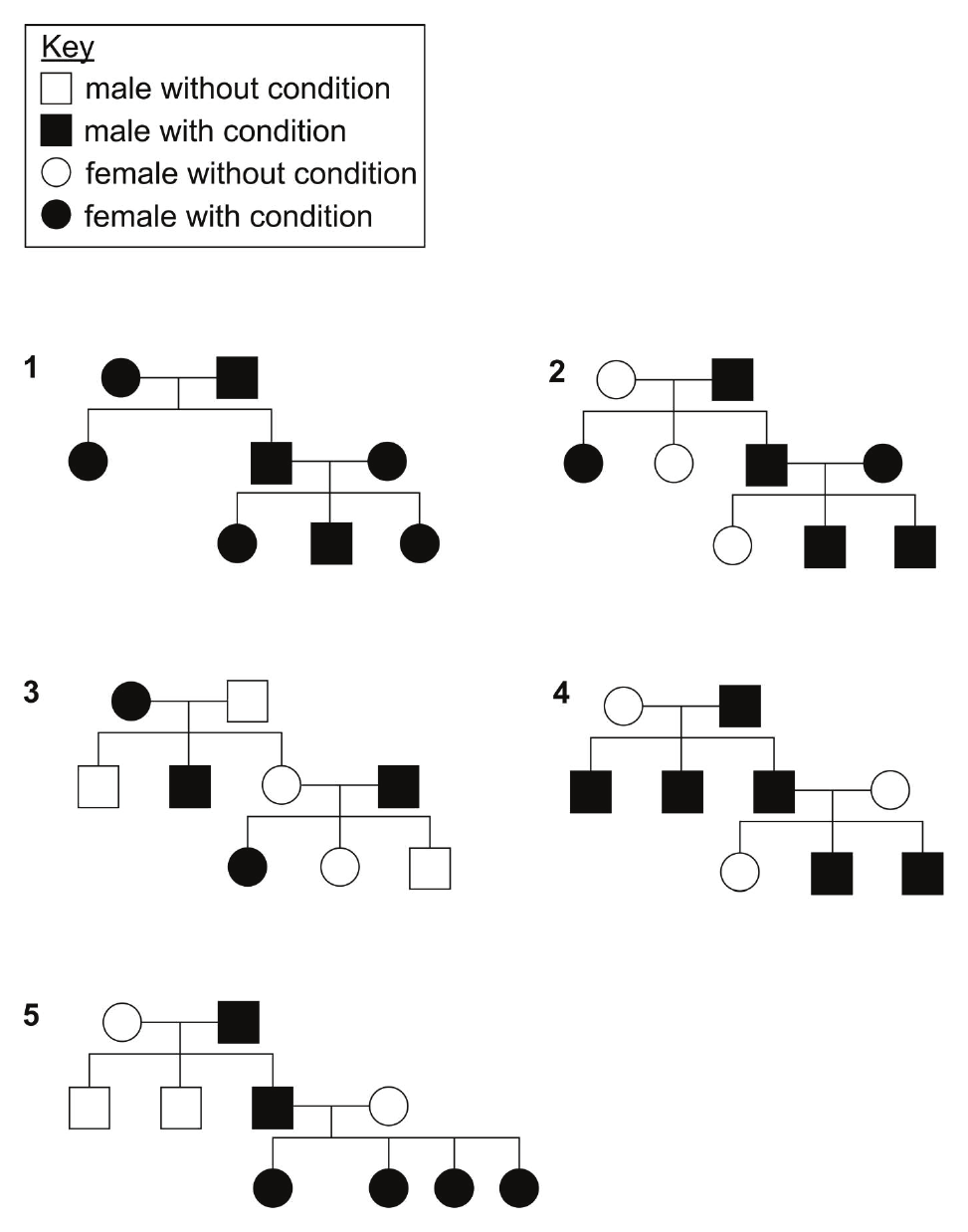
Which inheritance pattern can ONLY occur when polydactyly is caused by an autosomal dominant allele and NOT when it is caused by an autosomal recessive allele?
[Assume normal cell divisions in all individuals.]
✍️ ရွှေစည်းမျဉ်း အတိုင်း ရောဂါရှိ × ရောဂါရှိ အတွဲကို အရင် ရှာ — pattern 1 နဲ့ pattern 2 မှာ ရှိတယ်
pattern 1: ကလေး အားလုံး ရောဂါ ရှိ — recessive (aa × aa) မှာလည်း ဖြစ်နိုင်လို့ dominant ‘only’ မဟုတ် ✗
pattern 2: ရောဂါရှိ × ရောဂါရှိ → unaffected (ကျန်းမာ) သမီး — dominant မှာပဲ ဖြစ်နိုင် → 2 ✓
pattern 3, 4, 5: အတွဲတိုင်းမှာ ကျန်းမာတဲ့ မိဘ တစ်ယောက် ပါလို့ recessive (carrier) နဲ့လည်း ရှင်းလို့ ရတယ် ✗
pattern 3 ကို recessive allele (a) နဲ့ စမ်းကြည့်ရအောင်။ ရောဂါရှိ အမေက aa၊ ကျန်းမာ အဖေက Aa (carrier) ဆိုရင် သား သမီးတွေ Aa, aa, Aa ဖြစ်နိုင်တယ်။
Aa သမီးက ရောဂါရှိ ယောက်ျား (aa) နဲ့ လက်ထပ်ရင် ကလေးတွေ aa ဒါမှမဟုတ် Aa ဖြစ်တယ် — ပုံထဲက လူတိုင်း ကိုက်တယ်။
ဒါကြောင့် pattern 3 က recessive နဲ့လည်း ဖြစ်နိုင်လို့ ‘dominant only’ မဟုတ်ဘူး။ pattern 4 နဲ့ 5 ကိုလည်း ဒီနည်းနဲ့ ကိုယ်တိုင် စစ်ကြည့်ပါ။
👉 အခု ပုံထဲက လူတစ်ယောက်ချင်းရဲ့ genotype ကို ဖော်ကြည့်မယ်။
IMAT 2019 Q30 — genotype တစ်ယောက်ချင်း ဖော်
📝 IMAT 2019 · Question 30
Familial hypercholesterolaemia (FH) is an inherited disease caused by a dominant allele. People with FH have high concentrations of cholesterol in the blood, which can lead to an increased risk of coronary heart disease.
The family tree shows the inheritance of this disease in one family.
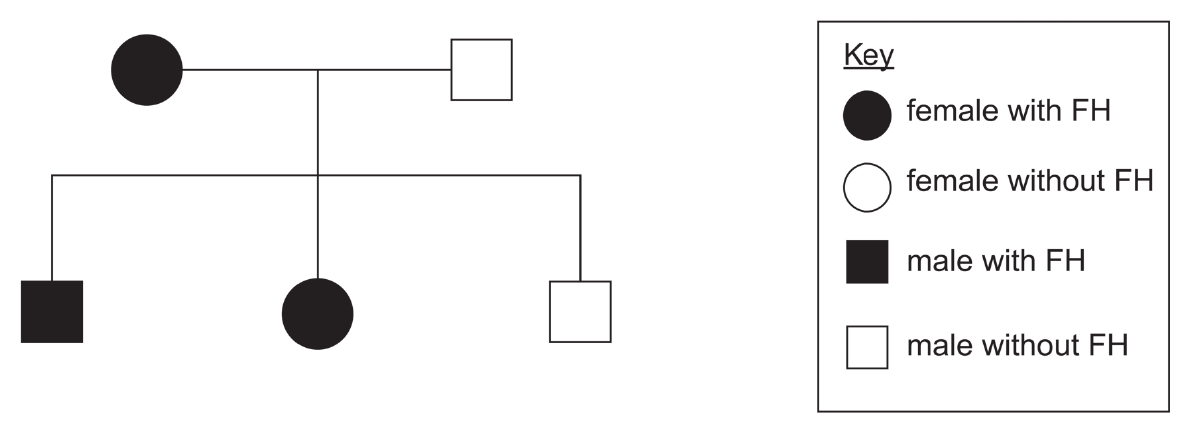
Which row shows the number of individuals in the family tree with each genotype?
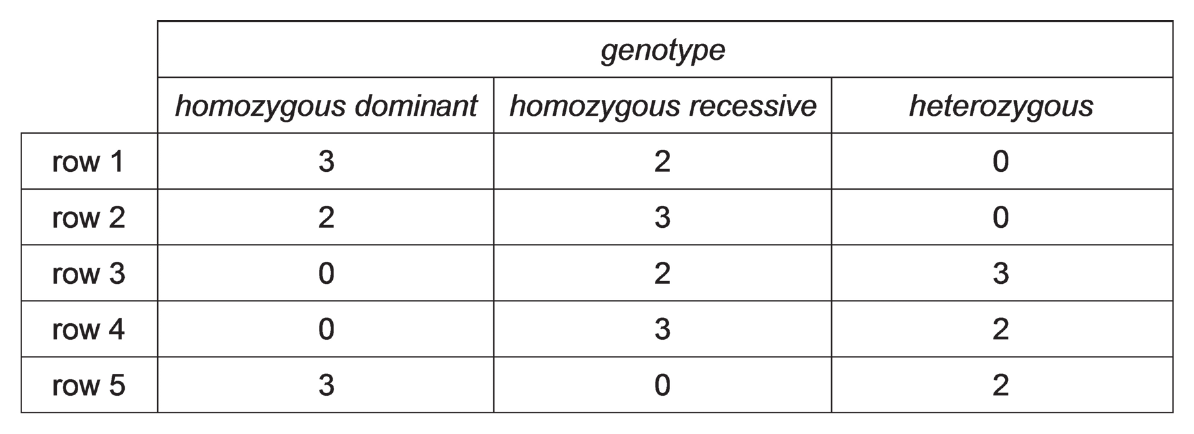
✍️ FH က dominant (D)။ ရောဂါ မရှိသူ — father နဲ့ ညာဘက် son — က dd ပဲ ဖြစ်နိုင် → dd 2 ယောက်
ကျန်းမာတဲ့ son ရဲ့ d တစ်ခုက mother ဆီက လာရမယ် → mother = Dd (DD မဟုတ်)
ရောဂါရှိ son နဲ့ daughter က father ဆီက d ကို ရထားပြီးသား → Dd
DD = 0၊ dd = 2၊ Dd = 3 → row 3
📌 dd မိဘ ရှိ ဒါမှမဟုတ် ကျန်းမာ ကလေး ရှိ ရောဂါရှိသူ = Dd။📌 dominant ရောဂါမှာ dd မိဘ တစ်ယောက် ရှိတဲ့ ရောဂါရှိ ကလေး၊ ဒါမှမဟုတ် ကျန်းမာ ကလေး ရှိတဲ့ ရောဂါရှိ မိဘဟာ Dd ဖြစ်ရမယ်။
IMAT 2022 Q30 — ခြေချောင်း ၆ ချောင်း ကြောင်
📝 IMAT 2022 · Question 30
There is an inherited condition in cats that leads to them having six toes rather than five toes on each paw.
The allele that causes six toes is dominant.
The pedigree diagram shows the inheritance of this condition in a family of cats. Three of the cats have been labelled.
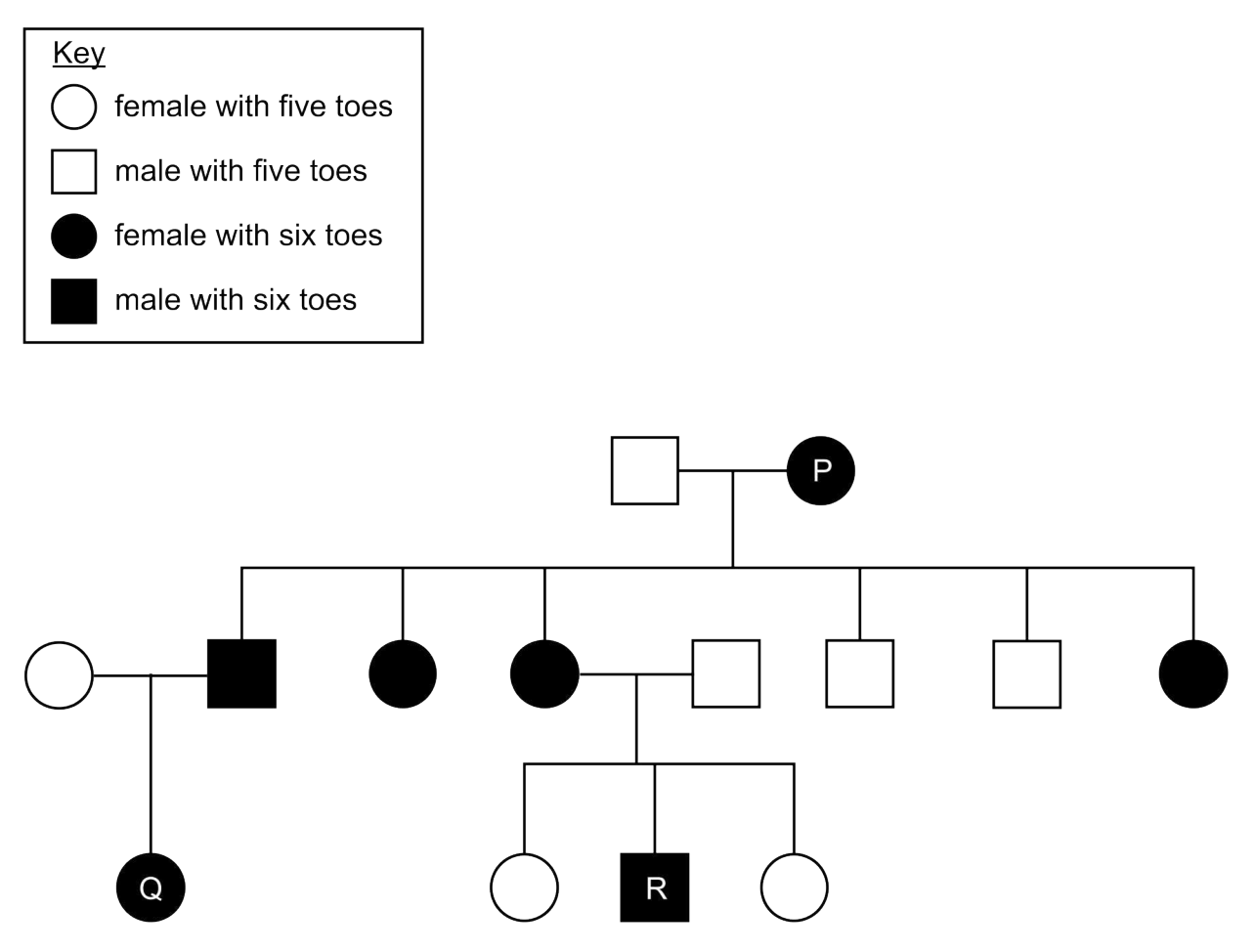
Which of the following statements about this inheritance is/are correct?
1 Cat P could be homozygous for the condition.
2 Over two generations, 12 cats were produced in the cross-breeding.
3 Breeding cat Q with cat R could produce 3 offspring, each with a different genotype.
✍️ six toes (ခြေချောင်း ၆) က dominant S၊ five toes (၅ ချောင်း) က ss ပဲ ဖြစ်နိုင်။ P ရဲ့ ကလေးထဲမှာ five toes သား နှစ်ကောင် ပါတယ်
အဲဒီ ss ကလေးတွေက s ကို P ဆီက ရရမယ် → P = Ss၊ homozygous မဖြစ်နိုင် → 1 ✗
မွေးတဲ့ ကြောင်: P ရဲ့ ကလေး 6 + မြေး 4 = 10။ အပြင်က လက်ထပ်လာတဲ့ 2 ကောင်ကို မရေတွက်ရ → 12 မဟုတ် → 2 ✗
Q ရဲ့ အမေ ss၊ R ရဲ့ အဖေ ss — ss မိဘရဲ့ six-toed ကလေးမို့ Q = Ss၊ R = Ss
Ss × Ss → SS, Ss, ss — genotype 3 မျိုး ဖြစ်နိုင်လို့ ကလေး 3 ကောင် genotype မတူနိုင် → 3 ✓ → 3 only
သွေးနီဥ ရောဂါ နှစ်မျိုး — thalassaemia နဲ့ sickle cell
သွေးနီဥ ထဲ haemoglobin (အနီရောင် protein) က O₂ သယ်တယ်။သွေးနီဥ (red blood cell) ထဲမှာ haemoglobin (သွေးနီဥရဲ့ အနီရောင် protein) ပြည့်နေတယ်။ အဆုတ်က oxygen (O₂) ကို ဖမ်းပြီး ခန္ဓာကိုယ် တစ်ခုလုံးဆီ သယ်ပေးတယ်။
ဒီ gene ချို့ယွင်းရင် အဖြစ်များ သွေးရောဂါ နှစ်မျိုး ဖြစ်တယ်။ဒီ protein ကို လုပ်တဲ့ gene တွေ ချို့ယွင်းရင် လူအများဆုံး တွေ့ရတဲ့ မျိုးရိုးလိုက် သွေးရောဂါ နှစ်မျိုး ဖြစ်တယ်။
thalassaemia (သလာဆီးမီးယား) — haemoglobin နည်း၊ anaemia။thalassaemia (သလာဆီးမီးယား) — haemoglobin ကို အလုံအလောက် မလုပ်နိုင်လို့ သွေးနီဥတွေ သေးပြီး ဖျော့တယ်။ သွေးအားနည်း (anaemia) ဖြစ်ပြီး ပြင်းရင် သွေး ပုံမှန် သွင်းရတယ်။
မြန်မာ၊ အရှေ့တောင်အာရှ၊ မြေထဲပင်လယ်မှာ carrier များ။မြန်မာ၊ အရှေ့တောင်အာရှ နဲ့ မြေထဲပင်လယ် ဒေသ (အီတလီ တောင်ပိုင်း အပါအဝင်) မှာ carrier အများကြီး ရှိတယ်။
sickle cell anaemia — base တစ်လုံး ပြောင်း၊ လခြမ်းပုံ ကွေး။sickle cell anaemia — haemoglobin gene မှာ base တစ်လုံး ပြောင်းလို့ ပုံစံ မှားတဲ့ haemoglobin S ဖြစ်တယ် (သင်ခန်းစာ 36B)။ O₂ နည်းတဲ့အခါ သွေးနီဥက လခြမ်း (sickle) ပုံ ကွေးတယ်။
ကွေးတဲ့ ဆဲလ်တွေ သွေးကြောထဲ ညပ်ပိတ်လို့ နာတယ်။ကွေးနေတဲ့ ဆဲလ်တွေက သွေးကြော သေးသေးလေးတွေထဲမှာ ညပ်ပြီး ပိတ်လို့ နာကျင်ပြီး အင်္ဂါတွေ ပျက်စီးတယ်။
💡 thalassaemia = ကား နည်း၊ sickle cell = ကား ကွေးပြီး ညပ်။💡 မှတ်နည်း — သွေးနီဥကို O₂ သယ်တဲ့ ကုန်တင်ကား လို မြင်ပါ — thalassaemia မှာ ကား နည်းပြီး ဖျော့တယ်၊ sickle cell မှာ ကား ပုံ ကွေးပြီး လမ်းကျဉ်း (သွေးကြော သေး) မှာ ညပ်တယ်။
👉 ဒီ ရောဂါ နှစ်မျိုး ဘယ်လို အမွေ ဆင်းလဲ၊ ဘာလို့ ဒီလောက် များနေလဲ?
ငှက်ဖျား နဲ့ carrier — heterozygote advantage
နှစ်မျိုးလုံး autosomal recessive — carrier နှစ်ယောက် 14။နှစ်မျိုးလုံး autosomal recessive ဖြစ်တယ် — aa ဖြစ်မှ ရောဂါ ပြင်းပြင်း ပေါ်တယ်။ carrier (Aa) တွေက များသောအားဖြင့် ကျန်းမာတယ်၊ carrier နှစ်ယောက်ရဲ့ ကလေး တစ်ယောက်စီ 14။
ဘာလို့ allele များနေလဲ? AA ငှက်ဖျား ပြင်း၊ aa သွေးအားနည်း ပြင်း။ဒီ allele တွေ ဘာလို့ မပျောက်ဘဲ များနေလဲ? ခြင်က malaria (ငှက်ဖျား) ပိုးကို ကူးစက်တယ်။ AA လူက ငှက်ဖျား ပြင်းပြင်း ဖြစ်ပြီး သေနိုင်ခြေ ပိုများတယ်၊ aa လူက သွေးအားနည်း ရောဂါ ပြင်းတယ်။
carrier (Aa) မှာ malaria ပြင်းပြင်း မဖြစ်ခဲလို့ ပို အသက်ရှင်တယ်။carrier (Aa) တွေလည်း malaria ပိုး ဝင်နိုင်ပေမဲ့ ပြင်းပြင်း ဖြစ်ပြီး သေဖို့ နည်းတယ်။ ငှက်ဖျား များတဲ့ ဒေသမှာ carrier တွေ ပို အသက်ရှင်ပြီး ကလေး ပိုမွေးလို့ allele များလာတယ်။
Aa အသာရ = heterozygote advantage (heterozygote အသာစီးမှု)Aa လူက AA ရော aa ရော ထက် အသာ ရတာကို heterozygote advantage (heterozygote အသာစီးမှု) လို့ ခေါ်တယ်။
ငှက်ဖျား များတဲ့ နေရာမှာ ဒီ allele က common (အများ တွေ့) ဖြစ်တယ်။ဒါကြောင့် ငှက်ဖျား များတဲ့ နေရာတွေမှာ ဒီ allele က common (လူအများမှာ တွေ့ရ) ဖြစ်တယ်။ allele ရဲ့ အရေအတွက် ပြောင်းတာက မျိုးဆက် များစွာ ကြာမှ slowly (တဖြည်းဖြည်း) ပြောင်းတယ်။
💡 a တစ်ခု = ငှက်ဖျား မိုးထဲ ထီး၊ aa = ရောဂါ။💡 မှတ်နည်း — a တစ်ခုက ငှက်ဖျား မိုးရွာထဲ ထီး တစ်လက်လိုပဲ — carrier ကို ကာကွယ်ပေးတယ်။ a နှစ်ခု (aa) ဆိုရင်တော့ ထီး မဟုတ်တော့ဘဲ ရောဂါ ဖြစ်သွားတယ်။
🤔 In a place where malaria has been gone for many generations, what is expected to happen to the sickle-cell allele?
🔍 မေးခွန်း ဖြည်မယ်
has been gone for many generations = မျိုးဆက် အများကြီး ကြာအောင် မရှိတော့ဘူး။ is expected to happen = ဖြစ်မယ်လို့ မျှော်လင့်ရတယ်။ sickle-cell allele = sickle cell ဖြစ်စေတဲ့ allele။
မေးနေတာ — ငှက်ဖျား မရှိတော့တဲ့ နေရာမှာ ဒီ allele ရဲ့ အရေအတွက် ဘယ်လို ပြောင်းမလဲ။
carrier တွေ အသာ ရတာ ငှက်ဖျား ရှိမှပါ။
ငှက်ဖျား မရှိတော့ရင် Aa က အသာ မရတော့ဘဲ aa ကလေးတွေ ရောဂါ ပြင်းလို့ ကလေး နည်းနည်းပဲ ကျန်တယ် — allele က မျိုးဆက်တိုင်း နည်းနည်းစီ ရှားလာတယ်။
allele က dominant ဖြစ်မလာ၊ normal allele ဖြစ်မပြောင်းဘူး။
👉 dominant ရောဂါ တစ်မျိုးမှာတော့ DD ကလေး အသက် မရှင်ဘူး။ ဘာလို့လဲ?
Achondroplasia — DD ကလေး အသက် မရှင်
achondroplasia (အရိုး ချို့ယွင်း ပုလေး) — လက်ခြေ အရိုး တို။achondroplasia (အရိုး ကြီးထွားမှု ချို့ယွင်းလို့ ပုလေး ဖြစ်ခြင်း) မှာ ခေါင်း နဲ့ ကိုယ်ထည် ပုံမှန် အရွယ်ပေမဲ့ လက်မောင်း နဲ့ ခြေထောက် အရိုးတွေ တိုတယ်။
allele D က autosomal dominant ဖြစ်လို့ Dd တစ်ခုနဲ့ ပေါ်တယ်။
~80 % က dd × dd မိဘဆီက — sperm မှာ new mutation။အံ့သြစရာ — achondroplasia ကလေး အများစု (~80 %) က ပုံမှန် အရပ်ရှိတဲ့ မိဘ (dd × dd) ဆီက မွေးလာတယ်။ များသောအားဖြင့် အဖေ့ sperm ထဲမှာ mutation အသစ် (new mutation) ဖြစ်လာလို့ပါ။
“no new mutation” ရေးမှ ကျန်းမာ × ကျန်းမာ → dominant မဖြစ်။ဒါကြောင့် IMAT က “no new mutation” လို့ ရေးထားရင်ပဲ ‘ကျန်းမာ × ကျန်းမာ → dominant ရောဂါ ကလေး မဖြစ်’ လို့ ပြောလို့ ရတယ်။
Dd × Dd — DD, Dd, Dd, dd — 3 : 1 ထင်ရတယ်။achondroplasia ရှိတဲ့ လင်မယား နှစ်ယောက် (Dd × Dd) ကို ဇယားနဲ့ ကြည့်မယ်။ DD, Dd, Dd, dd — သာမန်ဆို 3 : 1 ထင်ရတယ်။
DD ကလေးက မမွေးခင် ဒါမှမဟုတ် မွေးပြီး မကြာခင် သေတယ်။ဒါပေမဲ့ D နှစ်ခု ပါတဲ့ DD သန္ဓေသားက အရိုး အရမ်း ချို့ယွင်းလို့ မမွေးခင် (ဒါမှမဟုတ် မွေးပြီး မကြာခင်) သေတယ်။
နှစ်ခု ပါရင် သေ = lethal allele (သေစေတဲ့ allele)allele နှစ်ခု ပါရင် သေစေတာကို lethal allele (သေစေတဲ့ allele) လို့ ခေါ်တယ် (သင်ခန်းစာ 36A ရဲ့ ကြွက် ဝါ)။
အသက်ရှင်တဲ့ ကလေးထဲ achondroplasia 23၊ ပုံမှန် 13။ဒါကြောင့် အသက်ရှင်ကျန်တဲ့ ကလေး 3 မျိုး (Dd, Dd, dd) ထဲမှာ achondroplasia (Dd) = 23၊ ပုံမှန် အရပ် (dd) = 13။
💡 D တစ်ခု = ဆန်အိတ် တစ်လုံး ထမ်း၊ DD = လဲကျ (lethal)။💡 မှတ်နည်း — D တစ်ခုက ဆန်အိတ် တစ်လုံး ထမ်းသလို — လမ်း လျှောက်နိုင်သေးပေမဲ့ ပုတယ်။ D နှစ်ခု (DD) က နှစ်လုံး ထမ်းသလို လဲကျတယ် (lethal)။ ဇယားမှာ DD ကွက်ကို ဖျက်ပြီး ကျန် ၃ ကွက်ကို ရေတွက်ပါ။
🤔 A man with achondroplasia (Dd) has children with a woman of normal height (dd). What fraction of their surviving children are expected to have achondroplasia?
🔍 မေးခွန်း ဖြည်မယ်
a woman of normal height = ပုံမှန် အရပ်ရှိတဲ့ အမျိုးသမီး။ What fraction = အပိုင်းကိန်း ဘယ်လောက်။ surviving children = အသက်ရှင်တဲ့ ကလေးတွေ။
မေးနေတာ — Dd × dd ရဲ့ အသက်ရှင်တဲ့ ကလေးထဲက achondroplasia ရှိသူ အချိုး။
Dd × dd ဇယား — Dd 2 ကွက်၊ dd 2 ကွက်။
DD ကွက် မရှိလို့ ဘယ်သန္ဓေသားမှ မသေဘူး — achondroplasia 12။
23 က Dd × Dd (DD သေတဲ့) အတွဲမှာပဲ ထွက်တယ်။
👉 ဆွေမျိုးချင်း လက်ထပ်ရင် recessive ရောဂါ ဘာလို့ ပိုတွေ့ရလဲ?
ဆွေမျိုးချင်း လက်ထပ်ခြင်း — double line
ရှားပါး recessive a — generation I အဘိုး Aa။လူ ထောင်ချီထဲမှာ တစ်ယောက်လောက်ပဲ သယ်ထားတဲ့ ရှားပါး recessive allele (a) တစ်ခု ရှိတယ် ဆိုပါစို့။ generation I က အဘိုးက carrier (Aa) ဖြစ်တယ်။
သား သမီး a ရဖို့ 12 စီ၊ အိမ်ထောင်ဖက်မှာ a မပါ။သူ့ သား နဲ့ သမီး တစ်ယောက်စီ a ကို ရဖို့ 12 စီ ရှိတယ်။ သူတို့ အိမ်ထောင်ဖက်တွေက အပြင်က လူ ဖြစ်ပြီး allele ရှားလို့ a မပါဘူးလို့ ယူမယ်။
first cousins — တစ်ယောက်စီ a ရဖို့ 12 × 12 = 14။မြေး နှစ်ယောက်က ဝမ်းကွဲ မောင်နှမ (first cousins) ဖြစ်တယ်။ တစ်ယောက်စီ a ရဖို့ 12 × 12 = 14။
double line = consanguinity (သွေးသားတော်စပ် လက်ထပ်ခြင်း)ဝမ်းကွဲ နှစ်ယောက် လက်ထပ်ရင် pedigree မှာ မျဉ်း နှစ်ကြောင်း (double line) နဲ့ ဆွဲတယ်။ သွေးသားချင်း လက်ထပ်ခြင်းကို consanguinity (သွေးသားတော်စပ် လက်ထပ်ခြင်း) လို့ ခေါ်တယ်။
ပုံမှန် လင်မယားကို single line (မျဉ်း တစ်ကြောင်း)၊ ဆွေမျိုးချင်းကို double line နဲ့ ဆွဲတယ်။
✍️ သူတို့ ကလေး aa ဖြစ်ဖို့ ဖြစ်နိုင်ခြေ
ဝမ်းကွဲ နှစ်ယောက်လုံး Aa ဖြစ်ဖို့ = 14 × 14 = 116
နှစ်ယောက်လုံး Aa ဆိုရင် ကလေး aa = 14 → 116 × 14 = 164
ဆွေမျိုးက allele တူ ရထားနိုင်လို့ ရှားပါး ရောဂါ ပိုတွေ့ရ။သူစိမ်း နှစ်ယောက်မှာတော့ ဒီ ရှားပါး allele ကို နှစ်ယောက်လုံး သယ်ထားဖို့ အလွန် နည်းတယ်။ ဆွေမျိုးတွေက ဘိုးဘွား တစ်ယောက်တည်းဆီက allele တူတူ ရထားနိုင်လို့ ရှားပါး recessive ရောဂါ ပိုတွေ့ရတယ်။
unrelated (ဆွေမျိုး မတော်) လူ နှစ်ယောက် — friend (သူငယ်ချင်း) ဖြစ်ဖြစ်၊ different countries (တိုင်းပြည်) က ဖြစ်ဖြစ် — a တူ သယ်ဖို့ အလွန် နည်း။
💡 အိမ်တစ်အိမ်တည်းက a ဝမ်းကွဲချင်း ပြန်ဆုံတယ်။💡 မှတ်နည်း — ဝမ်းကွဲ နှစ်ယောက်က အဘိုးရဲ့ ‘ဝှက်ထားတဲ့ a’ ကို နှစ်ဘက်ကနေ ခွဲယူထားနိုင်တယ်။ သူစိမ်းချင်း ရှားပါး a နှစ်ခု ဆုံဖို့ ခက်ပေမဲ့ ဆွေမျိုးချင်းဆိုရင် အိမ်တစ်အိမ်တည်းက a ပြန်ဆုံတယ်။
🤔 Which two people are most likely to both carry the same rare recessive allele?
🔍 မေးခွန်း ဖြည်မယ်
most likely = ဖြစ်နိုင်ခြေ အများဆုံး။ both carry = နှစ်ယောက်လုံး သယ်ထား။ the same rare recessive allele = ရှားပါးတဲ့ recessive allele တစ်ခုတည်း။
မေးနေတာ — ဘယ် လူ နှစ်ယောက်မှာ ရှားပါး allele တူ ရှိဖို့ အလွယ်ဆုံးလဲ။
ရှားပါး allele ကို နှစ်ယောက်လုံး ရဖို့ ဘိုးဘွား တူတူ ရှိမှ ပိုလွယ်တယ်။
first cousins က ဘိုးဘွား နှစ်ယောက် မျှဝေလို့ allele တစ်ခုတည်းကို ရထားနိုင်တယ်။
ကျန်တဲ့ အတွဲတွေက ဆွေမျိုး မဟုတ်လို့ ရှားပါး allele နှစ်ခု တွေ့ဖို့ အလွန် နည်းတယ်။
👉 PART 1 ကို ပြန် စစ်ကြည့်ရအောင်။
🔁 ပြန်စစ်မယ် — အဖြေ မကြည့်ခင် စဉ်းစားပါ
🤔 A woman who is a carrier of an autosomal recessive condition has a child with a man who has the condition. What is the chance that the child has the condition?
🔍 မေးခွန်း ဖြည်မယ်
a carrier of = ... ကို သယ်ထားသူ (Aa)။ a man who has the condition = ရောဂါ ရှိတဲ့ ယောက်ျား။
မေးနေတာ — သူတို့ ကလေး ရောဂါ ရှိဖို့ ဖြစ်နိုင်ခြေ (ယောက်ျားလေး/မိန်းကလေး မမေးဘူး)။
Aa × aa မှာ အမေက A ဒါမှမဟုတ် a (တစ်ဝက်စီ)၊ အဖေက a ပဲ ပေးတယ်။
ကလေး Aa ဒါမှမဟုတ် aa — 12 (Aa × aa ဇယား — Aa 2 ကွက်၊ aa 2 ကွက်)။
🤔 A healthy man's sister has an autosomal recessive condition; both their parents are healthy. What is the chance that he is a carrier?
🔍 မေးခွန်း ဖြည်မယ်
A healthy man's sister = ကျန်းမာတဲ့ ယောက်ျားရဲ့ နှမ/အစ်မ။ both their parents are healthy = သူတို့ မိဘ နှစ်ယောက်လုံး ကျန်းမာ။
မေးနေတာ — ကျန်းမာတဲ့ ဒီ ယောက်ျား carrier ဖြစ်ဖို့ ဖြစ်နိုင်ခြေ (သူ ကျန်းမာတာ သိပြီးသား)။
မိဘ Aa × Aa။
သူ ကျန်းမာလို့ aa ကွက် ဖြုတ်ပြီး ကျန် 3 ကွက်ထဲ Aa 2 ကွက် → 23 (23 စည်းမျဉ်း)။
12 က aa ကွက်ကို မဖြုတ်ထားတဲ့ အဖြေ။
🤔 Two healthy first cousins have a child with a rare recessive condition. In their pedigree, how is their marriage drawn?
🔍 မေးခွန်း ဖြည်မယ်
first cousins = ဝမ်းကွဲ မောင်နှမ။ In their pedigree = သူတို့ မိသားစု ပုံမှာ။ how is their marriage drawn? = သူတို့ လက်ထပ်တာကို ဘယ်လို ဆွဲလဲ။
မေးနေတာ — ဆွေမျိုးချင်း လက်ထပ်တာကို pedigree မှာ ဘယ်လို မျဉ်းနဲ့ ပြလဲ။
ဆွေမျိုးချင်း (consanguineous) လက်ထပ်တာကို မျဉ်း နှစ်ကြောင်း နဲ့ ဆွဲတယ်။
single line က ပုံမှန် လင်မယား၊ half-shaded က carrier သင်္ကေတ၊ vertical line က ကလေးဆီ ဆင်းတဲ့ မျဉ်း ဖြစ်တယ်။
🎮 Dominant or recessive allele? — sort fast 🔥
👉 37B — ဘုရင့်မိသားစုရဲ့ ရောဂါ ယောက်ျားလေးတွေ ချည်း ဘာလို့ ဖြစ်လဲ?