Kidneys and excretion (2)
ပြွန်တစ်လျှောက် ပြန်စုပ်ယူခြင်း
Taking back what the body needs
ပြွန်တစ်လျှောက် ပြန်စုပ်ယူခြင်း
ဆီးချိုသူရဲ့ urine ဘာလို့ ချိုလဲ
healthy လူ urine မှာ glucose မရှိဘူး။urine ကို glucose စစ်တဲ့ strip နဲ့ စစ်ကြည့်မယ်။ healthy (ကျန်းမာတဲ့) လူရဲ့ urine မှာ glucose မရှိဘူး။
diabetes ရှိသူ urine မှာ glucose ရှိတယ်။diabetes (ဆီးချို ရောဂါ) ရှိသူရဲ့ urine မှာ glucose ရှိတယ်။ ရှေးက ဆရာဝန်တွေက ဆီးမှာ ပုရွက်ဆိတ် လာစုလို့ သိခဲ့ကြတယ်။
glucose နှစ်ယောက်လုံး ဖြတ်တယ် — ကျန်းမာသူမှာ ဘယ်ပျောက်လဲ?ဒါပေမဲ့ glucose က သေးလို့ glomerulus ရဲ့ ultrafiltration (သင်ခန်းစာ 50A) မှာ နှစ်ယောက်လုံး filter ကို ဖြတ်တယ်။ ကျန်းမာတဲ့ လူမှာ glucose ဘယ်ပျောက်သွားလဲ? ဒီ PART မှာ ဖြေမယ်။
proximal tubule — glucose ကို ပြန်ယူတဲ့ cell
proximal convoluted tubule (ရှေ့ ကွေးပြွန်) မှာ အများဆုံး ယူcapsule ပြီးရင် ပြွန်က ကွေးကောက်ပြီး ဆက်သွားတယ်။ ဒီ အပိုင်းကို proximal convoluted tubule (capsule နား ကွေးပြွန်) လို့ ခေါ်တယ်။ ပြန်ယူတာ အများဆုံး ဒီမှာ ဖြစ်တယ်။
microvilli (အခေါက်လေးတွေ) က စုပ်ယူ မျက်နှာပြင် ကျယ်စေတယ်။သူ့ cell ရဲ့ filtrate ဘက် မျက်နှာမှာ microvilli (ဆံမွှေးလို အခေါက်လေးတွေ) ပြည့်နေလို့ စုပ်ယူတဲ့ မျက်နှာပြင် ကျယ်တယ်။
pump က Na⁺ ကို blood ထဲ ထုတ် — ATP သုံး active transport။blood ဘက် မျက်နှာက pump တွေက Na⁺ ကို cell ထဲကနေ blood ထဲ အမြဲ ထုတ်နေတယ်။ ဒီ အလုပ်က ATP စွမ်းအင် သုံးတဲ့ active transport (သင်ခန်းစာ 31B) ပါ။
ATP များများ လိုလို့ mitochondria အများကြီး ပါတယ်။ATP အများကြီး လိုလို့ ဒီ cell ထဲမှာ ATP ထုတ်တဲ့ mitochondria (သင်ခန်းစာ 29B နဲ့ သင်ခန်းစာ 45A) အများကြီး ပါတယ်။
Na⁺ က glucose ကို တွဲခေါ်ဝင်တာ = co-transport (တွဲသယ်ခြင်း)cell ထဲ Na⁺ နည်းနေလို့ filtrate ထဲက Na⁺ က ပြန်ဝင်ချင်တယ်။ သူ ဝင်တဲ့ တံခါးက glucose ကို တွဲခေါ်မှ ဖွင့်တယ်။ ဒါကို co-transport (တွဲသယ်ခြင်း) လို့ ခေါ်တယ်။
amino acid လည်း Na⁺ နဲ့ ဝင်၊ glucose နဲ့ 100 % ပြန်ရတယ်။amino acid လည်း Na⁺ နဲ့ တွဲပြီး ဝင်တယ်။ ကျန်းမာရင် glucose နဲ့ amino acid 100 % blood ထဲ ပြန်ရောက်တယ်။
water က salt နောက် လိုက်တယ် — 65 % ဒီမှာ ပြန်ယူတယ်။salt တွေ ထွက်သွားလို့ water က osmosis နဲ့ နောက်က လိုက်တယ်။ water နဲ့ salt ရဲ့ 65 % လောက် ဒီမှာ ပြန်ယူတယ်။
urea ကတော့ တစ်ဝက်ပဲ blood ထဲ ပြန်ဝင်တယ်။urea ကတော့ တစ်ဝက်လောက်ပဲ blood ထဲ ပြန်ယိုဝင်တယ်။ ကျန်တဲ့ urea က ပြွန်ထဲ ဆက်စီးတယ်။
💡 Na⁺ = ဓာတ်လှေကား လက်မှတ်၊ glucose က ကိုင်မှ တံခါး ပွင့်။💡 မှတ်နည်း — Na⁺ က ဓာတ်လှေကား စီးလက်မှတ်ပါ။ glucose က Na⁺ လက်ကို ကိုင်ထားမှ တံခါးက ဖွင့်ပေးတယ် (co-transport)။ pump က လက်မှတ်တွေ ပြန်ကောက်ထားလို့ cell ထဲ Na⁺ အမြဲ နည်းနေတယ်။
carrier ပြည့်သွားရင် — diabetes
glucose သယ်တဲ့ carrier အရေအတွက် ကန့်သတ်ထားတယ်။glucose ကို သယ်တဲ့ carrier (သယ်ဆောင်တဲ့ protein တံခါး) အရေအတွက် ကန့်သတ်ထားတယ်။ healthy လူမှာ glucose နည်းလို့ carrier တွေ အကုန် သယ်နိုင်တယ်။
carrier တိုင်း အလုပ်များနေတာ = saturation (ပြည့်သွားခြင်း)diabetes မှာ insulin (blood glucose ကို ချပေးတဲ့ hormone) မလုံလောက်လို့ blood glucose အရမ်း များပြီး carrier တိုင်း အလုပ်များနေပြီ။ ဒါကို saturation (ပြည့်သွားခြင်း) လို့ ခေါ်တယ်။
ကျန်းမာသူရဲ့ blood glucose က ~5 mmol/L ပါ (mmol = mol ရဲ့ တစ်ထောင်ပုံ တစ်ပုံ၊ mol/L — သင်ခန်းစာ 13)။
blood glucose ~10 mmol/L ကျော်ရင် carrier တွေ ပြည့်ပြီး glucose appears in the urine (urine ထဲ ပေါ်လာတယ်)။ ဒီ အမှတ်ကို renal threshold (kidney ရဲ့ ကန့်သတ် အမှတ်) လို့ ခေါ်တယ်။
ပုံ — blood glucose ~5 mmol/L က ပုံမှန်၊ ~10 mmol/L ကျော်ရင် renal threshold ကျော်ပြီး glucose urine ထဲ ကျတယ်။
မသယ်နိုင်တဲ့ glucose urine ထဲ ကျတယ် — ဆီးချို။မသယ်နိုင်တဲ့ glucose တွေ urine ထဲ ကျသွားတယ်။ ဆီးချိုတာ ဒါကြောင့်ပါ — ပဟေဠိ အဖြေ။
urine ထဲ glucose က water ကို ဆွဲလို့ urine များတယ်။urine ထဲက glucose က osmosis နဲ့ water ကိုပါ ဆွဲထားလို့ urine များလာတယ်။
ဆီးများ၊ ရေငတ် — diabetes လက္ခဏာ နှစ်ခု။water အများကြီး ဆုံးလို့ ရေငတ် (thirst) တယ်။ ဆီးများတာ၊ ရေငတ်တာ — diabetes ရဲ့ လက္ခဏာ နှစ်ခု။
🤔 Which pair is NOT normally found in the urine of a healthy person?
🔍 မေးခွန်း ဖြည်မယ်
pair = နှစ်ခု တစ်တွဲ။ NOT normally found = ပုံမှန် မတွေ့ရတဲ့ (NOT ကို သတိထား)။ healthy person = ကျန်းမာတဲ့ လူ။
မေးနေတာ — ကျန်းမာသူ urine ထဲမှာ ပုံမှန် မပါတဲ့ ပစ္စည်း နှစ်ခုတွဲက ဘယ်တွဲလဲ။
protein အများစုက ကြီးလို့ filter ကို မဖြတ်ဘူး။
glucose က ဖြတ်ပေမဲ့ proximal tubule မှာ 100 % ပြန်ယူခံရတယ်။
urea၊ water နဲ့ salt ကတော့ ပုံမှန် urine ထဲ ပါတယ်။
loop of Henle — medulla ကို ငန်အောင် လုပ်ခြင်း
medulla ထဲ ဆင်းပြန်တက် ကွင်း = loop of Henle (ဆံညှပ် ကွင်း)proximal tubule ပြီးရင် ပြွန်က medulla ထဲ ဆံညှပ်ပုံ ဆင်းပြီး ပြန်တက်တယ်။ ဒါကို loop of Henle (medulla ထဲ ဆင်းပြီး ပြန်တက်တဲ့ ကွင်း) လို့ ခေါ်တယ်။
ascending limb (ပြန်တက်ဘက်) က Na⁺, Cl⁻ ကို ထုတ်တယ်။ascending limb (ပြန်တက်တဲ့ ဘက်) က Na⁺ နဲ့ Cl⁻ ကို medulla ထဲ pump နဲ့ ထုတ်တယ်။
ascending limb က water မစိမ့်ဘူး — salt ပဲ ထွက်တယ်။ဒါပေမဲ့ ascending limb ရဲ့ နံရံက water မစိမ့်နိုင်ဘူး (no water)။ salt ပဲ ထွက်ပြီး water နောက်က မလိုက်နိုင်ဘူး။
medulla ထဲ salt စုလို့ အောက်ဆင်းလေ ပိုငန်လေ။ဒါကြောင့် medulla ထဲ salt စုလာပြီး ငန်လာတယ်။ အောက်ဆင်းလေ ပိုငန် (saltier) လေပါ။
descending limb (ဆင်းဘက်) က water စိမ့်ထွက်တယ်။descending limb (ဆင်းတဲ့ ဘက်) ကတော့ water စိမ့်နိုင်တယ်။ ငန်တဲ့ medulla က osmosis နဲ့ water ကို ဆွဲထုတ် (water out) တယ်။
ပြွန် နှစ်ချောင်းက ဆန့်ကျင်ဘက် စီးတယ် — descending က အောက်ဆင်း၊ ascending က အပေါ်တက်။ ဒီလို ပြန်လှည့် စီးလို့ salt က အောက်ခြေမှာ အဆင့်ဆင့် ပိုစုလာတယ်။
ဒီ စနစ်ကို countercurrent multiplier (ဆန့်ကျင်ဘက် စီးပြီး ငန်တာကို ပွားစေတဲ့ စနစ်) လို့ ခေါ်တယ်။ သင်ခန်းစာ 49 ရဲ့ ငါး gill ကလည်း countercurrent ပါ။
ပုံ — ဆင်းတဲ့ ပြွန်နဲ့ တက်တဲ့ ပြွန် ဆန့်ကျင်ဘက် စီးလို့ salt အောက်ခြေမှာ ပိုစုတယ်။
ကန္တာရ ကြွက်မှာ loop ရှည်လို့ urine ပိုပြင်းတယ်။ဒီ ငန်တဲ့ medulla ကို နောက်ဆုံး ပြွန် collecting duct ကလည်း သုံးမယ်။ ကန္တာရ ကြွက်လို ရေရှားတဲ့ သတ္တဝါတွေမှာ loop ပိုရှည်လို့ urine ပိုပြင်းတယ်။
💡 descending = ရေစိမ့် မြေအိုး၊ ascending = ဆားထုတ်စက်။💡 မှတ်နည်း — descending limb က ရေစိမ့်တဲ့ မြေအိုး၊ ascending limb က ရေမစိမ့်တဲ့ ပလတ်စတစ် ပိုက်ပေါ်က ဆားထုတ်စက်။
🤔 A drug blocks the salt pumps of the ascending limb. What happens?
🔍 မေးခွန်း ဖြည်မယ်
drug = ဆေး။ blocks = ပိတ်ဆို့ အလုပ်မလုပ်အောင် တားတယ်။ salt pumps of the ascending limb = ပြန်တက်ဘက်က ဆား ထုတ်တဲ့ pump တွေ။
options ထဲက less salty = ငန်တာ နည်း၊
dilute = ကျဲ၊
concentrated = ပြင်း။
မေးနေတာ — pump ပိတ်ရင် medulla ရဲ့ ငန်မှု နဲ့ urine ဘာ ပြောင်းမလဲ။
pump ပိတ်ရင် Na⁺ နဲ့ Cl⁻ medulla ထဲ မရောက်လို့ medulla မငန်တော့ဘူး။
collecting duct က water ကို osmosis နဲ့ မဆွဲနိုင်လို့ urine များပြီး ကျဲတယ်။
ဒီလို ဆေးကို diuretic (ဆီးထွက်ဆေး) လို့ ခေါ်တယ်။
distal tubule၊ collecting duct နဲ့ urea ခရီး
distal convoluted tubule (နောက် ကွေးပြွန်) — Na⁺, pH ညှိ။loop of Henle ပြီးရင် ပြွန်က cortex ထဲ ပြန်တက်ပြီး ထပ် ကွေးတယ်။ ဒါကို distal convoluted tubule (အဆုံးနား ကွေးပြွန်) လို့ ခေါ်တယ်။ Na⁺ နဲ့ blood pH ကို ချိန်ညှိတယ်။
pH ကို ဘယ်လို ညှိလဲ — distal tubule ရဲ့ cell တစ်လုံးကို ချဲ့ကြည့်မယ်။
cell ထဲမှာ CO₂ နဲ့ H₂O ကနေ H⁺ နဲ့ HCO₃⁻ ဖြစ်တယ် — သင်ခန်းစာ 49 ရဲ့ သွေးနီဥထဲက ဓာတ်ပြုမှုနဲ့ အတူတူပါ။
blood မှာ acid များလာရင် cell က H⁺ ကို ပြွန်ထဲ secrete (ထုတ်ပေး) လုပ်ပြီး urine နဲ့ ပို့ပစ်တယ်။
HCO₃⁻ ကိုတော့ blood ထဲ ပြန်ယူတယ်။ ဒါကြောင့် blood pH ပြန်တက်ပြီး urine က ပိုချဉ်လာ (pH ကျ) တယ်။
nephron အဆုံးတွေ collecting duct (စုပြွန်) ထဲ ဝင်တယ်။nephron အများကြီးရဲ့ အဆုံးတွေက collecting duct (စုပြွန်) တစ်ချောင်းထဲ ဝင်တယ်။ collecting duct က medulla ကို ဖြတ်ပြီး pelvis ဆီ ဆင်းတယ်။
urea သေးလို့ filtrate နဲ့ capsule ထဲ ဝင်လာတယ်။urea ကို ခြေရာခံကြည့်မယ်။ urea က သေးလို့ capsule ထဲ filtrate နဲ့အတူ ဝင်လာတယ်။
water ပြန်ယူသွားလို့ ရှေ့ဆက်လေ urea ပြင်းလေ။ပြွန်တစ်လျှောက် water ရဲ့ 99 % လောက် ပြန်ယူသွားပေမဲ့ urea ကတော့ တစ်ဝက်လောက် ကျန်ခဲ့လို့ ရှေ့ဆက်လေ urea ပိုပြင်းလေ ဖြစ်တယ်။
capsule ကနေ collecting duct အထိ urea ရှိတယ်။ဒါကြောင့် capsule ကနေ collecting duct အထိ every part (အပိုင်း တိုင်း) မှာ urea ရှိတယ်။
urea မပါတဲ့ အပိုင်း ရှိသလား (IMAT 2019)
📝 IMAT 2019 · Question 39
The diagram shows a nephron with collecting duct from a healthy human. Which of the regions (1- 4) contain a liquid with no urea?
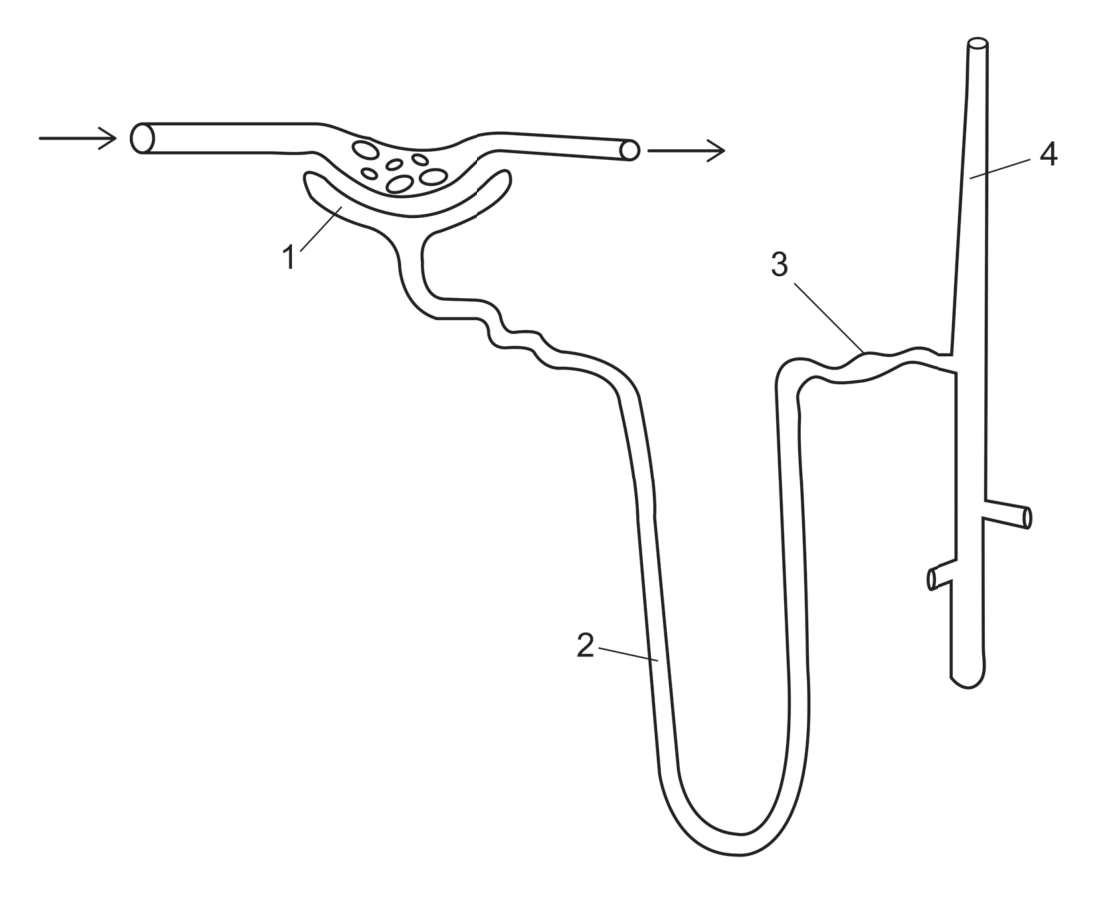
✍️ ပုံထဲက နံပါတ်တွေကို နာမည်နဲ့ အရင် ဖတ်မယ်။ 1 = Bowman's capsule၊ 2 = loop of Henle၊ 3 = distal tubule၊ 4 = collecting duct။
1 — urea က filtrate နဲ့အတူ capsule ထဲ ဝင်ပြီးပြီ → urea ရှိတယ်
2 နဲ့ 3 — urea က ပြွန်ထဲ ဆက်စီးနေတယ် → ရှိတယ်
4 — water ယူသွားလို့ urea အပြင်းဆုံး (most urea) → ရှိတယ်
urea မရှိတဲ့ နေရာ မရှိဘူး → အဖြေ C (none of them)။ urea ကို တစ်နေရာမှာ အကုန် ပြန်ယူတယ်လို့ ထင်ရင် တခြား အဖြေတွေကို ရွေးမိတတ်တယ်။
water ကို ဘယ်မှာ ပြန်ယူလဲ (IMAT 2020)
📝 IMAT 2020 · Question 27
Which one of the structures listed is NOT involved in the reabsorption of water in a healthy human?
✍️ reabsorption of water ဆိုတာ ပြွန်ထဲက water ကို blood ထဲ ပြန်ယူတာ။ water ဘယ်ဘက် ရွေ့လဲ တစ်နေရာချင်း ကြည့်မယ်။
proximal convoluted tubule — water 65 % ကို blood ထဲ ပြန်ယူတယ် ✔
loop of Henle ရဲ့ descending limb — ငန်တဲ့ medulla ဆီ water ထွက်တယ် ✔။ ascending limb မှာတော့ water မထွက်ဘူး ✗
distal convoluted tubule နဲ့ collecting duct — hormone အမိန့်နဲ့ water ပြန်ယူတယ် ✔ (PART 2)
glomerulus မှာ water က blood ထဲကနေ ပြွန်ထဲ ထွက်သွားတာ — filtration ပဲ၊ ပြန်ယူတာ မဟုတ်ဘူး ✗ → အဖြေ E။
plasma, filtrate, urine — ဘာ ပါလဲ
kidney အလုပ်ကို plasma, filtrate, urine ဂဏန်းနဲ့ ကြည့်မယ်။kidney ရဲ့ အလုပ် အကုန်ကို ဂဏန်း သုံးတန်းနဲ့ ကြည့်လို့ ရတယ်။ plasma (glomerulus ဝင်မယ့် သွေးရည်)၊ filtrate (capsule ထဲက စစ်ရည်) နဲ့ urine။
ဂဏန်းတွေက 100 mL (= 100 cm³, သင်ခန်းစာ 13) ထဲမှာ ပါတဲ့ gram ပါ။
protein — plasma 8၊ filtrate ~0၊ urine ~0။ အများစု ကြီးလို့ filter ကို မဖြတ်ဘူး။
glucose — 0.1, 0.1, urine 0၊ အကုန် ပြန်ယူလို့။glucose — plasma 0.1၊ filtrate 0.1 (ဖြတ်လို့ ညီတယ်)၊ urine 0။ proximal tubule မှာ အကုန် ပြန်ယူလို့ပါ။
urea — 0.03 → urine 2.0၊ အဆ ၆၇ ပြင်းလာတယ်။urea — plasma 0.03၊ filtrate 0.03၊ urine 2.0။ 2.00.03 ≈ 67 — water ကို ပြန်ယူသွားပြီး urea ကျန်ခဲ့လို့ အဆ ၆၇ လောက် ပြင်းလာတယ်။
Na⁺ urine မှာ မတူဘူး — aldosterone က ချိန်တယ်။Na⁺ — plasma နဲ့ filtrate မှာ 0.32 စီ။ urine မှာတော့ အမြဲ မတူဘူး — ဆား များများ စားရင် များ၊ နည်းရင် နည်း။ aldosterone (PART 2) က ချိန်တယ်။
urine ထဲ ပုံမှန် မပါရမယ့် ပစ္စည်း သုံးမျိုးကို strip (dipstick) တစ်ချောင်းနဲ့ စစ်တယ်။ pad တစ်ခုချင်း အရောင် ပြောင်းရင် အဲဒီ ပစ္စည်း ရှိတယ်။
glucose တွေ့ရင် — blood glucose က renal threshold ကျော်နေတယ်၊ diabetes ဖြစ်နိုင်တယ်။
protein တွေ့ရင် — glomerulus ရဲ့ filter ပျက်နေတယ်။ kidney ရောဂါ ဒါမှမဟုတ် blood pressure မြင့်တာကြောင့် ဖြစ်တတ်တယ်။
blood (red blood cell) တွေ့ရင် — kidney stone (ကျောက်)၊ ပိုးဝင်တာ (infection) ဒါမှမဟုတ် filter ပျက်တာ ဖြစ်နိုင်တယ်။
🤔 Creatinine is 0.001 g per 100 mL in plasma and 0.1 g per 100 mL in urine. How many times more concentrated is it in urine?
🔍 မေးခွန်း ဖြည်မယ်
creatinine = urea လို သေးတဲ့ စွန့်ပစ် ပစ္စည်း တစ်မျိုး။ 0.001 g per 100 mL = 100 mL ထဲမှာ 0.001 g ပါတယ်။
How many times more concentrated = အဆ ဘယ်လောက် ပိုပြင်းလဲ (ကြီးတဲ့ ဂဏန်းငယ်တဲ့ ဂဏန်း)။
မေးနေတာ — urine ထဲမှာ plasma ထက် အဆ ဘယ်လောက် ပြင်းလဲ။
0.1 ကို 0.001 နဲ့ စားရင် 100။
urea လိုပဲ water ကို ပြန်ယူသွားလို့ creatinine က urine ထဲမှာ ပြင်းလာတယ်။
🎮 Which part of the tube does it? Sort fast 🔥
Hormones that set the urine
ADH၊ aldosterone နဲ့ urine ပမာဏ ထိန်းခြင်း
urine အရောင် ဘာလို့ ပြောင်းလဲ
ရေ 3 L သောက်ရင် urine များပြီး ကြည်တယ်။3 L water (ရေ သုံးလီတာ) သောက်ပြီးရင် urine များပြီး ရေလို ကြည် (pale) တယ်။
ချွေး အများကြီး ထွက်ရင် urine နည်းပြီး အဝါရင့်တယ်။နေပူထဲမှာ ချွေး အများကြီး ထွက်ပြီးရင် urine နည်းပြီး အဝါရင့် (dark) တယ်။
urine ကို hormone (ဟော်မုန်း) တွေက ညှိတယ်။kidney က အတူတူပဲ။ urine ကို ကျဲအောင် ပြင်းအောင် ဘယ်သူ ညှိလဲ? hormone (ဟော်မုန်း — သွေးထဲက စာပို့ ဓာတု) တွေပါ။ အဓိက တစ်ခုက ADH။
blood ထဲက water နဲ့ salt ပမာဏကို ပုံမှန် ထိန်းထားတာကို osmoregulation (ရေနဲ့ ဆား ချိန်ညှိခြင်း) လို့ ခေါ်တယ်။ ဒီ PART က osmoregulation အကြောင်းပါ။
ADH — brain က လွှတ်တဲ့ စာ
water ဆုံးရင် blood ထဲ salt ပြင်းလာတယ်။ချွေး ထွက်လို့ water ဆုံးရင် blood ထဲ water နည်းပြီး salt တွေ ပြင်းလာတယ် (concentrated blood)။
hypothalamus (စောင့်ကြည့်သူ) ထဲ osmoreceptors (ခံစား cell)brain (ဦးနှောက်) အောက်ခြေက hypothalamus (ခန္ဓာကိုယ် အခြေအနေ စောင့်ကြည့်တဲ့ အပိုင်း) ထဲမှာ osmoreceptors (blood ပြင်းတာကို ခံစားတဲ့ cell) ရှိတယ်။
blood ရဲ့ water potential ကျရင် osmoreceptor ထဲက water ထွက်ပြီး cell ကျုံ့သွားတယ်။ ဒါနဲ့ blood ပြင်းလာတာကို သိတယ်။
ပုံ — blood ပြင်းရင် osmoreceptor ထဲက water ထွက်ပြီး ကျုံ့တယ် → signal → posterior pituitary က ADH လွှတ်တယ်။
ADH ကို hypothalamus ထဲက nerve cell တွေက လုပ် (make) တယ်။
ADH ကို posterior pituitary (နောက်ပိုင်း) မှာ သိုထားတယ်။nerve cell ရဲ့ အမြီးအတိုင်း အောက်က pituitary gland (ဂလင်း) ရဲ့ နောက်ပိုင်း — posterior pituitary (pituitary ရဲ့ နောက်ပိုင်း) — ဆီ စီးဆင်းပြီး အဲဒီမှာ သိုထားတယ်။
osmoreceptors က signal ပို့ရင် posterior pituitary က ADH ကို blood ထဲ လွှတ် (release) တယ်။ ‘hypothalamus က လုပ်၊ posterior pituitary က သိုပြီး လွှတ်’ — စာမေးပွဲက ဒီ အတွဲကို မေးတယ်။
ADH (urine နည်းစေတဲ့ hormone) = Anti-Diuretic HormoneADH (urine ကို နည်းစေတဲ့ hormone) က Anti-Diuretic Hormone ပါ။
diuresis = urine များခြင်း၊
anti = ဆန့်ကျင်။
urine ကို နည်းစေတဲ့ hormone ပေါ့။
ADH = vasopressin (ADH ရဲ့ နောက်နာမည်)၊ hormone တစ်ခုတည်း။ADH ကို vasopressin (ADH ရဲ့ နောက်နာမည်) လို့လည်း ခေါ်တယ်။ နာမည် နှစ်ခု၊ hormone တစ်ခုတည်းပါ။
ADH က blood နဲ့ kidney ဆီ ရောက်တယ်။ADH က blood နဲ့ စီးပြီး kidney ဆီ ရောက်တယ်။ kidney မှာ ဘာလုပ်လဲ ဆက်ကြည့်မယ်။
aquaporin — ADH ဖွင့်တဲ့ water တံခါး
ADH မရှိရင် collecting duct နံရံ water သိပ် မစိမ့်ဘူး။collecting duct က salty medulla (ငန်တဲ့ medulla) ကို ဖြတ်ဆင်းတယ်။ ADH မရှိရင် သူ့ နံရံက water သိပ် မစိမ့်နိုင်ဘူး (closed)။
ADH က water တံခါး aquaporin (ရေ အပေါက်) တွေ တပ်ပေးတယ်။ADH ရောက်လာရင် cell တွေက water တံခါးတွေကို နံရံပေါ် တပ်ပေးတယ်။ ဒီ တံခါးကို aquaporin (aqua = ရေ၊ pore = အပေါက်) လို့ ခေါ်တယ်။
water က aquaporin ကနေ osmosis နဲ့ blood ထဲ ပြန်ရောက်တယ်။medulla က ငန်လို့ water က osmosis နဲ့ aquaporin ကနေ ထွက်ပြီး blood ထဲ ပြန်ရောက်တယ်။
ပိုတိကျတဲ့ စကားနဲ့ ပြောရင် — collecting duct ထဲက filtrate ရဲ့ water potential က ငန်တဲ့ medulla ထက် မြင့်လို့ water က မြင့်ရာကနေ နိမ့်ရာ ရွေ့တယ် (water potential, သင်ခန်းစာ 31B)။
urine နည်း၊ ပြင်း၊ အဝါရင့် — ချွေးထွက်ပြီးရင် ဒီလို။ကျန်တဲ့ urine က နည်းပြီး ပြင်းတယ်၊ အဝါရင့် (darker) တယ်။ ချွေးထွက်ပြီးရင် urine ရင့်တာ ဒါကြောင့်ပါ။
💡 ADH = ‘ရေ ချွေတာ’ ခလုတ် — ရေရှားရင် ဖွင့်၊ ရေပိုရင် ပိတ်။💡 မှတ်နည်း — ADH က ကျောက်ကပ်ရဲ့ ‘ရေ ချွေတာ’ ခလုတ်။ ရေရှားရင် ခလုတ် ဖွင့် (aquaporin တံခါးတွေ တပ်)၊ ရေပိုရင် ခလုတ် ပိတ်။
🤔 A person eats very salty fish and drinks nothing. Which change happens?
🔍 မေးခွန်း ဖြည်မယ်
very salty fish = အရမ်း ငန်တဲ့ ငါး။ drinks nothing = ဘာမှ မသောက်ဘူး။ Which change happens = ဘယ် ပြောင်းလဲမှု ဖြစ်မလဲ။
options ထဲက darker = အရောင် ပိုရင့်၊
paler = ပိုကြည်။
မေးနေတာ — ADH ပမာဏ နဲ့ urine ပမာဏ၊ အရောင် ဘယ်လို ပြောင်းမလဲ။
ဆား များလို့ blood ပြင်းလာတယ်။
osmoreceptors သိပြီး ADH ပိုထွက်၊ aquaporin ပိုတပ်လို့ water ပြန်ယူတယ် — urine နည်း၊ ရင့်တယ်။
water များရင် — negative feedback
water များ သောက်ရင် blood ကျဲ၊ ADH လျှော့တယ်။water အများကြီး သောက်ရင် blood ကျဲ (dilute) လာတယ်။ hypothalamus က သိပြီး ADH လွှတ်တာ လျှော့တယ်။
aquaporins ပိတ်လို့ urine များပြီး ကြည်တယ်။ADH နည်းတော့ aquaporins ပိတ်သွားလို့ water က ပြွန်ထဲ ကျန်တယ်။ urine များပြီး ကြည် (pale) တယ်။
blood ပုံမှန် ပြန်ဖြစ် = negative feedback (ပြန်ပြင် ကွင်း)ပိုနေတဲ့ water ထွက်သွားလို့ blood ပုံမှန် (normal) ပြန်ဖြစ်တယ်။ ပြောင်းလဲမှုကို ပြန်ပြင်တဲ့ ဒီ ကွင်းကို negative feedback (ပြောင်းလဲမှုကို ပြန်ပြင်တဲ့ ကွင်း) လို့ ခေါ်တယ် (သင်ခန်းစာ 46B)။
alcohol က ADH ကို တားလို့ urine ခဏခဏ သွားရတယ်။alcohol (အရက်) က ADH ထွက်တာကို တားတယ်။ ဒါကြောင့် အရက် သောက်ရင် urine ခဏခဏ သွားရပြီး နောက်နေ့ ရေငတ်တယ်။
📌 water နည်း → ADH များ → urine နည်း၊ ရင့်။📌 water နည်း → ADH များ → urine နည်း၊ ရင့်။ water များ → ADH နည်း → urine များ၊ ကြည်။ urine အရောင် ပဟေဠိရဲ့ အဖြေပါ။
urine များရင် urea ကျဲ
✍️ liver က urea ကို တစ်ရက် 30 g လုပ်တယ် ဆိုပါစို့ (ပမာဏ မပြောင်းဘူး)။ urine ပမာဏ ပြောင်းရင် urea concentration (ပြင်းအား) ဘာဖြစ်မလဲ?
ADH ပုံမှန် ဆိုရင် urine 1.5 L — 30 g ကို 1.5 L နဲ့ စား = 20 g/L
ADH နည်းလို့ urine 6 L ဆိုရင် — 30 g ကို 6 L နဲ့ စား = 5 g/L
urea ပမာဏ တူပေမဲ့ water များလို့ ကျဲသွားတယ် — concentration ကျတယ်။
ADH ပိုများရင် — urine နဲ့ urea ဘာဖြစ်မလဲ
✍️ drug R က ADH လို collecting duct ကို အလုပ်လုပ်စေတယ် — ADH ↑ နဲ့ အတူတူပဲ။ liver က urea ကို တစ်ရက် 30 g လုပ်တာ မပြောင်းဘူး ဆိုပါစို့။
aquaporin ပိုတပ်လို့ water ကို blood ထဲ ပိုပြန်ယူတယ်
ဒါကြောင့် urine 1.5 L ကနေ 1.0 L ကျတယ်
urea concentration = 30 g1.0 L = 30 g/L — အရင် 30 g1.5 L = 20 g/L ထက် တက်တယ်
📌 ADH ↑ → urine နည်း၊ urea concentration ↑။ ADH ↓ → urine များ၊ urea concentration ↓ (ခုနက 5 g/L)။
IMAT 2022 Q34 (ADH ကို လျှော့တဲ့ drug Q) ကို hormone တွေ သင်တဲ့ သင်ခန်းစာ 52 မှာ အပြည့် ဖြေမယ်။
🤔 A drug blocks the ADH receptors (the proteins ADH binds to) in the collecting duct. What happens to the urine?
🔍 မေးခွန်း ဖြည်မယ်
receptors = ADH လာချိတ်တဲ့ protein လက်ခံ နေရာ။ blocks = ပိတ်ထားလို့ ADH မချိတ်နိုင်တော့ဘူး။
options ထဲက larger volume = ပမာဏ ပိုများ၊
lower urea concentration = urea ပြင်းအား ပိုနည်း။
မေးနေတာ — urine ရဲ့ ပမာဏ နဲ့ urea ပြင်းအား ဘာဖြစ်မလဲ။
receptor ပိတ်ရင် ADH ရှိနေတောင် aquaporin မတပ်ဘူး — ADH မရှိသလိုပဲ။
water မယူလို့ urine များ၊ urea ကျဲတယ်။
glucose က proximal tubule မှာ ပြန်ယူပြီးပြီ။
pituitary ရဲ့ ရှေ့ပိုင်း နဲ့ နောက်ပိုင်း
anterior pituitary (ရှေ့ပိုင်း) က FSH နဲ့ LH ထုတ်တယ်။pituitary gland မှာ အပိုင်း နှစ်ပိုင်း ရှိတယ်။ ရှေ့ပိုင်း anterior pituitary (pituitary ရဲ့ ရှေ့ပိုင်း) က hormone အများကြီး ထုတ်တယ်၊ ဒီထဲက Follicle-Stimulating Hormone (FSH) နဲ့ Luteinising Hormone (LH) ကို ထုတ်တယ်။
FSH က follicle ကြီးစေ၊ LH က ဥ ထွက်စေတယ်။female (မိန်းမ) မှာ FSH က ovary (သားဥအိမ်) ထဲက follicle (ဥကို ထုပ်ထားတဲ့ အိတ်) ကို ကြီးစေတယ်။ LH က ရင့်တဲ့ follicle ကို ပေါက်ပြီး ဥ ထွက်စေတယ် (ovulation, သင်ခန်းစာ 54)။
ယောက်ျားမှာ FSH → sperm၊
LH → testosterone။ယောက်ျားမှာ FSH က testis (ဝှေးစေ့) ကို sperm (သုက်ပိုး) ထုတ်စေပြီး LH က testosterone (ယောက်ျား hormone) ထုတ်စေတယ်။
ပုံ — FSH နဲ့ LH ရဲ့ နာမည်ကို စကားလုံး တစ်လုံးချင်း ဖော်ထားတယ်။ ovary မှာ follicle ကြီးလာပြီး ဥ ထွက် (ovulation)၊ testis မှာ sperm နဲ့ testosterone။ သင်ခန်းစာ 54 မှာ ပြန်တွေ့မယ်။
posterior pituitary က ADH လွှတ်၊ ADH နည်းရင် urine များ။နောက်ပိုင်း posterior pituitary ကတော့ ADH ကို လွှတ်တယ်။ ADH နည်းရင် kidney က water မယူဘဲ urine များ (more urine) ထွက်တယ်။
IMAT 2017 Q36 (pituitary အလုပ် ကျရင် ဘာ ဖြစ်နိုင်လဲ) ကို hormone တွေ သင်တဲ့ သင်ခန်းစာ 52 မှာ ဖြေမယ်။ ဒီမှာ အပိုင်း တစ်ပိုင်းပဲ ပျက်တဲ့ ဥပမာ စမ်းမယ်။
🤔 A tumour stops the posterior pituitary from releasing hormones, but the anterior pituitary works normally. Which change is expected?
🔍 မေးခွန်း ဖြည်မယ်
tumour = အကျိတ်။ stops … from releasing hormones = hormone မလွှတ်နိုင်အောင် တားတယ်။ but = ဒါပေမဲ့ — anterior ကတော့ ကောင်းနေတယ်။
options ထဲက infertility = ကလေး မရနိုင်ခြင်း၊
female = မိန်းမ၊
male = ယောက်ျား။
မေးနေတာ — နောက်ပိုင်း တစ်ပိုင်းတည်း ပျက်ရင် ဘာ ဖြစ်မလဲ။
posterior pituitary ပျက်ရင် ADH မထွက်လို့ urine များပြီး ကျဲတယ်။
FSH နဲ့ LH က anterior pituitary က ထွက်တာ — ကောင်းနေလို့ မျိုးမပွားနိုင်တာ မဖြစ်ဘူး။
blood pressure ကျရင် — kidney က renin လွှတ်တယ်
သွေး ဆုံးရင် blood pressure (သွေးဖိအား) ↓ ကျတယ်။သွေး အများကြီး ဆုံးရင် (ဥပမာ ဒဏ်ရာက သွေးထွက်လွန်ရင်) blood pressure (သွေးဖိအား) ↓ ကျတယ်။ ညာဘက် ဖိအားတိုင်းကိရိယာ (gauge) ရဲ့ လက်တံ ကျသွားတာ ကြည့်ပါ။
glomerulus ထဲ သွေးယူလာတဲ့ ကြော = afferent arteriole။glomerulus ထဲကို သွေး ယူလာတဲ့ ကြောက afferent arteriole ပါ (သင်ခန်းစာ 50A PART 2 မှာ တွေ့ခဲ့တဲ့ ကျယ်တဲ့ ဝင်ကြော)။
juxtaglomerular cells (ဘေးက ဆဲလ်) က pressure ကျတာ သိတယ်။afferent arteriole နံရံမှာ glomerulus ဘေးကပ်ရက် ဆဲလ်လေးတွေ ရှိတယ်။ juxtaglomerular cells (glomerulus ဘေးက ဆဲလ်) လို့ ခေါ်တယ် — juxta = beside (ဘေး)။ သူတို့က pressure ကျတာကို ခံစားသိတယ်။
သူတို့က renin (pressure ကျရင် လွှတ် enzyme) လွှတ်တယ်။သူတို့က renin (blood pressure ကျရင် kidney လွှတ်တဲ့ enzyme) ကို blood ထဲ လွှတ်တယ်။ renin က enzyme (ဓာတ်ပြုမှု မြန်စေတဲ့ protein, သင်ခန်းစာ 26A) ပါ။
blood ထဲ လွှတ်တဲ့ စာပို့လို အလုပ်လုပ်လို့ စာအုပ်တချို့က renin ကို kidney ရဲ့ hormone (ဟော်မုန်း) လို့လည်း ရေတွက်တယ်။
💡 ရေမှတ်တိုင် စောင့်သူ — ရေကျရင် renin ခေါင်းလောင်း တီး။💡 မှတ်နည်း — juxtaglomerular cells က ရေကန် ဘေးက ရေမှတ်တိုင် စောင့်သူလိုပဲ။ ရေ (pressure) ကျတာ မြင်တာနဲ့ renin ဆိုတဲ့ ခေါင်းလောင်း တီးတယ်။
🤔 A person has blood pressure that is too high. What happens to the release of renin?
🔍 မေးခွန်း ဖြည်မယ်
too high = မြင့်လွန်းတယ်။ release of renin = renin ကို blood ထဲ လွှတ်တာ။
options ထဲက falls = ကျ၊
rises = တက်၊
does not change = မပြောင်း။
မေးနေတာ — pressure မြင့်နေရင် renin လွှတ်တာ ဘယ်လို ပြောင်းမလဲ။
pressure မြင့်နေရင် juxtaglomerular cells က ‘ကျ’ တဲ့ အချက် မတွေ့လို့ renin ကို နည်းနည်းပဲ လွှတ်တယ်။
renin က pressure ကျမှ တက်တာပါ။
renin ကနေ angiotensin II — သွေးကြော ကျဉ်းစေတဲ့ ကွင်းဆက်
renin ဖြတ်: angiotensinogen (liver ပရိုတင်း) → angiotensin Iliver (အသည်း) က angiotensinogen (liver လုပ်တဲ့ blood protein) ကို blood ထဲ အမြဲ ထည့်ထားတယ်။ renin က ကတ်ကြေးလို angiotensinogen ကို ဖြတ်လို့ angiotensin I ရတယ်။
ACE က angiotensin I → angiotensin II (ကြောကျဉ်း ဓာတု)blood က lungs (အဆုတ်) ကို ဖြတ်တဲ့အခါ lungs သွေးကြောနံရံမှာ အများဆုံး ရှိတဲ့ ACE ဆိုတဲ့ enzyme က angiotensin I ကို angiotensin II (သွေးကြော ကျဉ်းစေတဲ့ ဓာတု) အဖြစ် ပြောင်းတယ်။
ACE = Angiotensin-Converting Enzyme။ACE ရဲ့ နာမည် အပြည့်က Angiotensin-Converting Enzyme (angiotensin ကို ပြောင်းပေးတဲ့ enzyme) ပါ။
angiotensin II က vessels ကျဉ်းစေလို့ blood pressure ↑။angiotensin II က vessels (သွေးကြောငယ်) တွေကို ညှစ်ပြီး narrow (ကျဉ်း) စေလို့ blood pressure ချက်ချင်း ↑ တက်တယ်။ ရေပိုက်ကို ညှစ်ရင် ရေဖိအား တက်သလိုပါ။
🤔 A drug blocks ACE. What happens to the blood pressure of a person with high blood pressure?
🔍 မေးခွန်း ဖြည်မယ်
blocks ACE = ACE enzyme ကို အလုပ်မလုပ်အောင် ပိတ်တယ်။ a person with high blood pressure = သွေးဖိအား မြင့်နေတဲ့ လူ။
မေးနေတာ — ဒီ ဆေး သောက်ရင် သူ့ blood pressure ဘာ ဖြစ်မလဲ။
ACE ပိတ်ရင် angiotensin I က angiotensin II မဖြစ်တော့ဘူး။
vessels မကျဉ်းတော့လို့ blood pressure ကျတယ်။
ဆရာဝန်တွေ သုံးတဲ့ ACE inhibitor ဆေး ဒီလို အလုပ်လုပ်တယ်။
aldosterone — Na⁺ ပြန်ယူပြီး water လိုက်လာစေတယ်
adrenal gland က aldosterone (Na⁺ ယူ hormone) ထုတ်တယ်။angiotensin II က kidney ထိပ်မှာ ဦးထုပ်လို ထိုင်နေတဲ့ adrenal gland (ကျောက်ကပ်ထိပ် ဂလင်း) ကို aldosterone (Na⁺ ပြန်ယူစေတဲ့ hormone) ထုတ်စေတယ်။
aldosterone → Na⁺ ပြန်ယူ၊ water က နောက်က လိုက်တယ်။aldosterone က blood နဲ့ စီးပြီး distal tubule နဲ့ collecting duct ကို Na⁺ ပိုပြန်ယူစေတယ်။ Na⁺ blood ထဲ ဝင်တော့ water က osmosis နဲ့ နောက်က လိုက်လာတယ်။
blood volume ↑ များလို့ pressure ↑ တက်တယ်။blood ထဲ water ပြန်ရောက်လို့ blood volume (သွေး ပမာဏ) ↑ များလာပြီး pressure ↑ တက်တယ်။ ပိုက်ထဲ ရေ ပိုထည့်ရင် ဖိအား တက်သလိုပဲ။
💡 aldosterone = ‘ဆား သိမ်းသူ’ — ဆားရှိရာ ရေလိုက်။💡 မှတ်နည်း — aldosterone ကို ‘ဆား သိမ်းသူ’ လို့ မှတ်ပါ။ ငါးပိ ဆားနယ်ရင် ရေ ထွက်လာသလိုပဲ — ဆား ရှိရာကို ရေ လိုက်တယ်။ Na⁺ ကို blood ထဲ သိမ်းရင် water လည်း blood ထဲ လိုက်လာတယ်။
pressure ပုံမှန် ပြန်ရောက်ရင် — negative feedback
pressure ↓ ကျရင် renin ↑, aldosterone ↑ တက်တယ်။ကွင်းဆက် တစ်ခုလုံး ပြန်စုမယ်။ pressure ↓ ကျရင် renin ↑ နဲ့ aldosterone ↑ တက်တယ်။
vessels ကျဉ်းတာနဲ့ blood volume တိုးတာကြောင့် pressure ↑ ပြန်တက်လာတယ်။
pressure ပုံမှန်ရရင် renin ↓ — negative feedback။pressure ပုံမှန် ပြန်ရောက်ရင် renin ↓ ပြန်လျော့တယ်။ ပြောင်းလဲမှုကို ပြန်ပြင်ပြီး ရပ်သွားတဲ့ ဒီ ကွင်းကို negative feedback (ပြောင်းပြန် တုံ့ပြန်ခြင်း, သင်ခန်းစာ 46B) လို့ ခေါ်တယ်။
🤔 A person eats a lot of salt and drinks a lot, so the blood volume and pressure rise. What happens to aldosterone?
🔍 မေးခွန်း ဖြည်မယ်
so = ဒါကြောင့်။ blood volume and pressure rise = သွေး ပမာဏ နဲ့ ဖိအား တက်လာတယ်။
options ထဲက less is released = နည်းနည်းပဲ လွှတ်တယ်၊
unchanged = မပြောင်း။
မေးနေတာ — pressure တက်နေတဲ့အခါ aldosterone လွှတ်တာ ဘယ်လို ပြောင်းမလဲ။
pressure မြင့်နေရင် negative feedback နဲ့ renin လျော့ပြီး aldosterone နည်းတယ်။
Na⁺ ကို နည်းနည်းပဲ ပြန်ယူလို့ ပိုတဲ့ salt နဲ့ water urine ထဲ ထွက်တယ်။
ADH နဲ့ aldosterone ဘာကွာလဲ
ADH က water ကိုပဲ ယူလို့ concentration ကို ပြင်တယ်။ADH နဲ့ aldosterone ကို ယှဉ်ကြည့်မယ်။ ADH က water only (water ကိုပဲ) ပြန်ယူလို့ blood ရဲ့ concentration ကို ပြင်တယ်။
aldosterone က Na⁺ + water ယူ — volume, pressure ပြင်။aldosterone က Na⁺ နဲ့ water ကို အတူ ပြန်ယူလို့ concentration သိပ် မပြောင်းဘဲ blood volume နဲ့ pressure ကို ပြင်တယ်။
atrium ဆန့်ထွက်ရင် ANP ထုတ်တယ်။ဆန့်ကျင်ဘက် hormone လည်း ရှိတယ်။ blood များလွန်းလို့ heart ရဲ့ atrium (အပေါ်ခန်း) ဆန့် (stretched) ထွက်ရင် Atrial Natriuretic Peptide (ANP) ထုတ်တယ်။
ANP က renin, aldosterone ကို တား၊ pressure ကျတယ်။ANP က renin နဲ့ aldosterone ကို တားလို့ Na⁺ နဲ့ water urine ထဲ ပိုထွက် (out) ပြီး pressure ကျတယ်။
🤔 A tumour of the adrenal gland releases far too much aldosterone. What happens?
🔍 မေးခွန်း ဖြည်မယ်
tumour of the adrenal gland = kidney ထိပ်က ဂလင်းမှာ ဖြစ်တဲ့ အကျိတ်။ far too much = အရမ်း အများကြီး။
မေးနေတာ — aldosterone အရမ်း များရင် ခန္ဓာကိုယ်မှာ ဘာ ပြောင်းမလဲ။
aldosterone များရင် Na⁺ ပိုပြန်ယူပြီး water လိုက်လာလို့ blood volume များ၊ pressure တက်တယ်။
urine ကတော့ နည်းတယ်။
🎯 Match each part to its job
🔁 ပြန်စစ်မယ် — အဖြေ မကြည့်ခင် စဉ်းစားပါ
🤔 Where in the body is urea made?
🔍 မေးခွန်း ဖြည်မယ်
Where in the body = ခန္ဓာကိုယ်ရဲ့ ဘယ်နေရာမှာလဲ။ is urea made = urea ကို လုပ်တာ (passive — လုပ်ခံရတာ)။
မေးနေတာ — urea ကို ခန္ဓာကိုယ်ရဲ့ ဘယ် organ က လုပ်လဲ။
liver က ammonia ကို CO₂ နဲ့ ပေါင်းပြီး urea cycle နဲ့ urea လုပ်တယ်။
kidney က urea ကို ထုတ်ပစ်ရုံပဲ။
🤔 Glomerular blood pressure is 60 mmHg, the oncotic pressure (the pull of the plasma proteins) is 30 mmHg and the capsule pressure is 15 mmHg. What is the net filtration pressure?
🔍 မေးခွန်း ဖြည်မယ်
glomerular blood pressure = glomerulus ထဲက သွေး တွန်းအား။ oncotic pressure = plasma protein တွေ ပြန်ဆွဲတဲ့ အား။ capsule pressure = capsule ဘက်က ပြန်တွန်းအား။
net = အားလုံး ပေါင်းနှုတ်ပြီး ကျန်တဲ့ အသားတင်။
မေးနေတာ — filter ကို တကယ် ဖြတ်တွန်းနေတဲ့ အသားတင် pressure ဘယ်လောက်လဲ။
60 − 30 − 15 = 15 mmHg။
105 က အကုန် ပေါင်းလိုက်တဲ့ အမှား၊ 45 က 15 ကို မနှုတ်ရသေးတဲ့ အဖြေ။
🤔 In a healthy kidney, where is all the glucose reabsorbed?
🔍 မေးခွန်း ဖြည်မယ်
healthy = ကျန်းမာတဲ့။ all the glucose = glucose အကုန်။ reabsorbed = ပြွန်ထဲကနေ blood ထဲ ပြန်ယူခံရတယ်။
မေးနေတာ — glucose အကုန် ပြန်ယူတာ ပြွန်ရဲ့ ဘယ်အပိုင်းမှာလဲ။
proximal convoluted tubule မှာ Na⁺ နဲ့ co-transport လုပ်ပြီး glucose 100 % ပြန်ယူတယ်။
loop of Henle၊ distal tubule နဲ့ collecting duct ကို ရောက်တဲ့အခါ glucose မကျန်တော့ဘူး — အဲဒီနေရာတွေက ဆားနဲ့ ရေကိုပဲ ချိန်ညှိတယ်။
🤔 Which hormone makes the urine smaller in volume and more concentrated?
🔍 မေးခွန်း ဖြည်မယ်
smaller in volume = ပမာဏ နည်းစေတယ်။ more concentrated = ပိုပြင်းစေတယ်။
မေးနေတာ — urine ကို နည်းပြီး ပြင်းစေတဲ့ hormone ဘယ်ဟာလဲ။
ADH က collecting duct မှာ aquaporin တပ်လို့ water ပြန်ယူပြီး urine နည်း၊ ပြင်းတယ်။
🤔 Blood pressure falls after heavy bleeding. What do the kidney cells near the glomerulus release first?
🔍 မေးခွန်း ဖြည်မယ်
falls = ကျတယ်။ heavy bleeding = သွေး အများကြီး ထွက်ခြင်း။ kidney cells near the glomerulus = glomerulus နားက kidney cell တွေ။
first = ကွင်းဆက်ရဲ့ ပထမဆုံး အဆင့်။
မေးနေတာ — ဒီ cell တွေ ပထမဆုံး လွှတ်တာ ဘာလဲ။
renin က ကွင်းဆက်ကို စတယ်: renin → angiotensin I → angiotensin II → aldosterone။
aldosterone က adrenal gland က ထွက်တာ၊ kidney cell က မဟုတ်ဘူး။
When the kidneys fail
dialysis နဲ့ kidney အစားထိုးခြင်း
dialysis — စက်နဲ့ သွေး ဆေးခြင်း
kidney failure — urea, salt, water သွေးထဲ စုလာတယ်။kidney နှစ်လုံးလုံး ပျက်ရင် (kidney failure) urea၊ ပိုနေတဲ့ salt နဲ့ water သွေးထဲ စုလာတယ်။ ကုသမှု မရှိရင် ရက်ပိုင်းအတွင်း အသက် အန္တရာယ် ရှိတယ်။
dialysis (သွေးဆေး ကုသမှု) — သွေးကို dialyser ထဲ ဖြတ်စေတယ်။dialysis (သွေးဆေး ကုသမှု) မှာ လက်က သွေးကြောကနေ သွေးကို dialyser (သွေးဆေးစက်) ထဲ ပိုက်နဲ့ ထုတ်ပြီး ပြန်သွင်းတယ်။
ကြားမှာ partially permeable membrane (သေးတာပဲ ဖြတ် အမြှေး)စက်ထဲမှာ သွေးနဲ့ dialysis fluid (ဆေးရည်) ကို partially permeable membrane (အရွယ် သေးတဲ့ molecule ပဲ ဖြတ်ခွင့်ပေးတဲ့ အမြှေး) တစ်ထပ်ပဲ ခြားထားတယ်။
fluid ထဲ urea မပါ၊ glucose, salt က သွေးနဲ့ ညီတယ်။dialysis fluid ထဲမှာ urea လုံးဝ မပါဘူး။ glucose နဲ့ salt ကတော့ ကျန်းမာတဲ့ သွေးနဲ့ ညီအောင် ထည့်ထားတယ်။
urea က diffusion နဲ့ fluid ထဲ ထွက်သွားတယ်။urea က သွေးမှာ များ၊ fluid မှာ မရှိလို့ fluid ထဲ diffuse (ပျံ့ထွက်) သွားတယ် — diffusion (များရာကနေ နည်းရာ ပျံ့ခြင်း, သင်ခန်းစာ 31B) ပါ။ ပိုနေတဲ့ salt လည်း နှစ်ဖက် ညီတဲ့အထိ ထွက်တယ်။
glucose ညီလို့ မထွက်၊ protein, blood cell ကြီးလို့ မဖြတ်။glucose က နှစ်ဖက် ညီနေလို့ မထွက်ဘူး — ဒါကြောင့် fluid ထဲ glucose ထည့်ထားတာပါ။ protein နဲ့ blood cell က ကြီးလို့ membrane ကို မဖြတ်ဘူး။
countercurrent စီးလို့ urea gradient အမြဲ ရှိတယ်။သွေးနဲ့ fluid ကို ဆန့်ကျင်ဘက် (countercurrent) စီးစေလို့ ပြွန် တစ်လျှောက်လုံး urea gradient ရှိနေတယ်။ များသောအားဖြင့် အပတ်ကို ၃ ကြိမ်၊ တစ်ကြိမ် ၄ နာရီလောက် လုပ်ရတယ်။
💡 ဆန့်ကျင်ဘက် စီး အပူလဲစက်လို — urea အမြဲ ထွက်နေတယ်။💡 မှတ်နည်း — ရေနွေးနဲ့ ရေအေး ပိုက်တွေ ဆန့်ကျင်ဘက် စီးတဲ့ အပူလဲ စက်လိုပဲ — ပြွန်တစ်လျှောက်လုံး ကွာခြားချက် ရှိနေလို့ urea အမြဲ ထွက်နေတယ်။
🤔 The dialysis fluid is made with less sodium than normal blood. What happens to the sodium ions?
🔍 မေးခွန်း ဖြည်မယ်
is made with less sodium = sodium နည်းအောင် ဖော်ထားတယ်။ than normal blood = ပုံမှန် သွေးထက်။ sodium ions = Na⁺။
options ထဲက diffuse from … into … = …ကနေ … ထဲ ပျံ့ထွက်တယ်၊
cross = ဖြတ်တယ်။
မေးနေတာ — Na⁺ က ဘယ်ဘက်ကနေ ဘယ်ဘက် ရွေ့မလဲ။
Na⁺ က သေးလို့ membrane ကို ဖြတ်နိုင်တယ်။
blood မှာ များ၊ fluid မှာ နည်းလို့ blood → fluid diffusion ဖြစ်တယ်။
ဒီလိုနည်းနဲ့ ပိုနေတဲ့ salt ကို ထုတ်တယ်။
🎮 Dialysis: through the membrane or not? Sort fast 🔥
kidney transplant — အစားထိုးခြင်း နဲ့ rejection
နောက်နည်း = transplant (ကျောက်ကပ် အစားထိုးခြင်း)နောက် ကုသနည်းက transplant (ကျောက်ကပ် အစားထိုးခြင်း)။ ပျက်နေတဲ့ kidney ဟောင်းတွေကို များသောအားဖြင့် မထုတ်ဘဲ ထားခဲ့တယ်။
donor (လှူသူ) ရဲ့ kidney တစ်လုံးကို ဗိုက်အောက်မှာ ထားတယ်။donor (လှူသူ) ရဲ့ ကျန်းမာတဲ့ kidney တစ်လုံးကို ဝမ်းဗိုက် အောက်ပိုင်းမှာ ထားပြီး artery နဲ့ vein ကို ဆက်တယ်။ kidney တစ်လုံးနဲ့ လုံလောက်လို့ အသက်ရှင်လျက် လှူလို့ ရတယ်။
ureter ဆက်ပြီးတာနဲ့ urine ထုတ်၊ dialysis မလိုတော့ဘူး။ureter ကို bladder နဲ့ ဆက်ပြီးတာနဲ့ urine ထုတ်ပြီး bladder ကနေ urethra နဲ့ အပြင် ထွက်တယ်။ dialysis မလိုတော့ဘဲ ပုံမှန် စားသောက်နိုင်တယ်။
cell မျက်နှာပြင် အမှတ်အသား = antigen (အမှတ်အသား protein)ဒါပေမဲ့ cell တိုင်းရဲ့ မျက်နှာပြင်မှာ ‘ငါ ဘယ်သူ့ cell’ ဆိုတဲ့ protein အမှတ်အသား — antigen (cell မျက်နှာပြင်က အမှတ်အသား protein) — ရှိတယ်။ တစ်ခုထက် များရင် antigens လို့ ခေါ်တယ်။
လူနာရဲ့ immune system (ကိုယ်ခံအား စနစ်) က kidney အသစ်ကို သူစိမ်းလို့ သိပြီး တိုက်ခိုက်တယ် — rejection (ကိုယ်ခံအားက kidney အသစ်ကို ငြင်းပယ်ခြင်း)။
antigen နီးစပ်တဲ့ donor ကို ရွေးတယ် (tissue matching)။rejection လျော့ဖို့ antigen အမျိုးအစား နီးစပ်တဲ့ donor ကို ရွေးတယ် (tissue matching)။ မိသားစုဝင် ဖြစ်ရင် ပိုနီးစပ်တတ်တယ်။
immunosuppressant (ကိုယ်ခံအား နှိမ်ဆေး) တစ်သက်လုံး သောက်။ပြီးတော့ immunosuppressant (ကိုယ်ခံအားကို နှိမ်တဲ့ ဆေး) ကို တစ်သက်လုံး သောက်ရတယ်။ ကိုယ်ခံအား နည်းလို့ ပိုး ဝင်လွယ်တာက ဘေးထွက် ဆိုးကျိုးပါ။
🤔 A patient receives a kidney from an identical twin. Why is rejection very unlikely?
🔍 မေးခွန်း ဖြည်မယ်
patient = လူနာ။ receives = လက်ခံရတယ်။ identical twin = ပုံစံ တစ်ထပ်တည်း အမွှာ။
Why is rejection very unlikely = ငြင်းပယ်ခြင်း ဘာကြောင့် ဖြစ်ဖို့ အရမ်း နည်းလဲ။
မေးနေတာ — immune system က kidney အသစ်ကို ဘာလို့ မတိုက်တာလဲ။
အမွှာ တစ်ပုံစံတည်းမှာ DNA တူလို့ cell မျက်နှာပြင်က antigen တူတယ်။
immune system က ‘ကိုယ့် cell’ လို့ သိလို့ မတိုက်ဘူး။
🔁 ပြန်စစ်မယ် — အဖြေ မကြည့်ခင် စဉ်းစားပါ
🤔 In the glomerulus, small molecules pass and big ones stay, mainly by size. What is this process called?
🔍 မေးခွန်း ဖြည်မယ်
pass = ဖြတ်သွားတယ်။ big ones stay = ကြီးတာတွေ ကျန်ခဲ့တယ်။ mainly by size = အဓိက အရွယ်အစားနဲ့။
What is this process called = ဒီ ဖြစ်စဉ်ကို ဘယ်လို ခေါ်လဲ။
မေးနေတာ — glomerulus မှာ ဖြစ်တဲ့ စစ်ခြင်းရဲ့ နာမည်။
pressure နဲ့ ညှစ်ပြီး အရွယ်အစားအလိုက် စစ်တာကို ultrafiltration လို့ ခေါ်တယ် (သင်ခန်းစာ 50A PART 2)။
osmosis က water ရွေ့တာ၊ active transport နဲ့ co-transport က proximal tubule မှာ ပြန်ယူတဲ့ နည်းပါ။
🤔 Which tube carries urine from the bladder to the outside?
🔍 မေးခွန်း ဖြည်မယ်
tube = ပြွန်။ carries = သယ်တယ်။ from the bladder to the outside = ဆီးအိမ်ကနေ ခန္ဓာကိုယ် အပြင်ကို။
မေးနေတာ — ဆီးအိမ်ကနေ အပြင် ထွက်တဲ့ ပြွန်ရဲ့ နာမည်။
bladder ကနေ အပြင် — urethra တစ်ချောင်း။
ureter က kidney ကနေ bladder ဆီ နှစ်ချောင်း (သင်ခန်းစာ 50A PART 1)။
🤔 Which hormone makes the distal tubule and collecting duct take back more Na⁺?
🔍 မေးခွန်း ဖြည်မယ်
makes … take back more Na⁺ = Na⁺ ကို ပိုပြန်ယူအောင် လုပ်တယ်။ distal tubule and collecting duct = ပြွန်ရဲ့ နောက်ဆုံး အပိုင်း နှစ်ခု။
မေးနေတာ — Na⁺ ပြန်ယူခြင်းကို တိုးစေတဲ့ hormone ဘယ်ဟာလဲ။
aldosterone က Na⁺ ကို သိမ်းပြီး water က နောက်က လိုက်တယ်။
ADH က water တံခါး (aquaporin) ပဲ ဖွင့်တယ်၊ renin က enzyme၊ ANP က Na⁺ ကို ပိုထုတ်တယ် (PART 2)။