Evolution (2)
သက်သေ နဲ့ သက်ရှိ မိသားစု
Evidence and the tree of life
သက်သေ နဲ့ သက်ရှိ မိသားစု
🔎 ကြိုကြည့်မယ် — appendix (အူအတက်) ဘယ်မှာလဲ
ဗိုက်ထဲမှာ အူသိမ် (small intestine) နဲ့ အူမ (large intestine) ရှိတယ်။ဒီ သင်ခန်းစာမှာ ခန္ဓာကိုယ်ထဲက အင်္ဂါ တစ်ခု ပါလာမယ် — အရင် နေရာ ကြည့်ထားမယ်။ ဗိုက်ထဲမှာ အစာ ဖြတ်သွားတဲ့ ပြွန်ရှည် ရှိတယ် — အလယ်မှာ ခွေနေတဲ့ အူသိမ် (small intestine) နဲ့ သူ့ကို ပတ်ထားတဲ့ အူမ (large intestine) (သင်ခန်းစာ B0)။
အူမ စတဲ့ နေရာမှာ ပြွန်ပိတ်လေး — appendix (အူအတက်)။ဗိုက်ရဲ့ ညာဘက် အောက်၊ အူမ စတဲ့ နေရာမှာ လက်ချောင်း တစ်ချောင်းလောက် ပြွန် သေးသေးလေး တွဲလောင်း ကျနေတယ်။ အဆုံး ပိတ်နေတယ်။ ဒါကို appendix (အူအတက်) လို့ ခေါ်တယ်။
အစာ အထဲ မဝင်၊ အစာ မချေ — အပြည့် သင်ခန်းစာ 47။အစာက အဲဒီ ပြွန်ထဲ မဝင်ဘူး (food: no entry)၊ အစာ ချေတဲ့ အလုပ်လည်း မလုပ်ဘူး။ appendix ကို သင်ခန်းစာ 47 မှာ အပြည့် သင်မယ်။
👉 အခု လက်၊ တောင်ပံ၊ ဆူးတောင်ရဲ့ အရိုးကနေ စမယ်။
လက်၊ တောင်ပံ၊ ဆူးတောင် — အရိုး တူနေတယ်
human arm၊ bat wing၊ whale flipper — အပြင်ပုံ မတူ။ကိုယ့် လက် (human arm)၊ လင်းနို့ တောင်ပံ (bat wing) နဲ့ ဝေလငါး ဆူးတောင် (whale flipper) ကို ဘေးချင်း ယှဉ်ကြည့်ပါ။ သုံးခုလုံး ရှေ့ခြေ (forelimbs — ခန္ဓာကိုယ် ရှေ့ပိုင်းက ခြေလက်) တွေပဲ။ အပြင်ပုံ လုံးဝ မတူဘူး။
အလုပ် မတူ — ကိုင်၊ ပျံ၊ ရေကူး။ အရိုး ကြည့်မယ်။အလုပ်လည်း မတူဘူး — လက်က ကိုင် (hold) တယ်၊ တောင်ပံက ပျံ (fly) တယ်၊ ဆူးတောင်က ရေကူး (swim) တယ်။ ဒါပေမဲ့ အရေပြားအောက်က အရိုးကို ကြည့်မယ်။
သုံးခုလုံးမှာ လက်မောင်းရိုး တစ်ချောင်း (humerus) ရှိတယ်။
ပြီးရင် လက်ဖျံရိုး နှစ်ချောင်း (radius + ulna) ရှိတယ်။
ပြီးရင် လက်ကောက်ဝတ် အရိုး သေးသေးလေးတွေ (wrist bones) ရှိတယ်။
အဆုံးမှာ လက်ချောင်း 5 ချောင်း ရှိတယ်။အဆုံးမှာ လက်ချောင်း ငါးချောင်း (5 digits) ရှိတယ် — လင်းနို့မှာ ရှည်ပြီး ဝေလငါးမှာ တိုတုတ်တယ်။
ဘာလို့ တူလဲ? common ancestor တစ်ခုတည်းကြောင့်။ဘာလို့ တူနေလဲ? ဒီ အရိုး ပုံစံ ရှိခဲ့တဲ့ ဘိုးဘွား တစ်ခုတည်း (common ancestor) ကနေ ဆင်းသက်လာလို့ပါ။
homologous structure (မူရင်း တူ ဖွဲ့စည်းပုံ) — အလုပ်ကွာ။ဒီလို အရိုး ပုံစံ တူပြီး အလုပ် မတူတဲ့ အင်္ဂါကို homologous structure (မူရင်း တူ ဖွဲ့စည်းပုံ) လို့ ခေါ်တယ်။
မတူအောင် ကွဲလာတာ divergent evolution (ကွဲထွက် ဆင့်ကဲမှု)။ဘိုးဘွား တစ်ခုတည်းက မတူတဲ့ နေရာတွေ ကွဲသွားပြီး မတူအောင် ပြောင်းလာတာကို divergent evolution (ကွဲထွက် ဆင့်ကဲမှု) လို့ ခေါ်တယ်။
💡 homologous = “ပုံ တူ၊ အလုပ် ကွာ”💡 မှတ်နည်း — homologous = ညီအစ်ကို မောင်နှမ ဝတ်စုံ မတူပေမဲ့ အရိုးစု တူတာ — တစ်ယောက်က ဆရာဝန်၊ တစ်ယောက်က လယ်သမား ဖြစ်ပေမဲ့ မိဘ တစ်ယောက်တည်းက ဆင်းသက်တယ်။ "ပုံ တူ၊ အလုပ် ကွာ"။
👉 အလုပ် တူပေမဲ့ ဘိုးဘွား မတူတာကော ရှိလား?
အလုပ်တူ ဆွေမျိုး မတော် — analogous နဲ့ vestigial
bird wing နဲ့ insect wing ကို ကြည့်ပါ။ငှက် တောင်ပံ (bird wing) နဲ့ ပိုးကောင် တောင်ပံ (insect wing) ကို ကြည့်ပါ။
နှစ်ခုလုံး ပျံ (both fly) ဖို့ပဲ — အလုပ် တူတယ်။
ငှက်မှာ အရိုး ပါ၊ ပိုးကောင်မှာ no bones။ဒါပေမဲ့ ငှက် တောင်ပံထဲမှာ အရိုး (bones) ပါတယ်။ ပိုးကောင် တောင်ပံမှာ အရိုး မပါ (no bones) ဘဲ အမြှေးပါး ပါးပါးနဲ့ အကြော တွေပဲ ရှိတယ်။
analogous structure (အလုပ်တူ ဖွဲ့စည်းပုံ) — ဆွေမျိုး မဟုတ်။ဆွေမျိုး မတော် (not related) ပေမဲ့ အလုပ် တူတဲ့ အင်္ဂါကို analogous structure (အလုပ်တူ ဖွဲ့စည်းပုံ) လို့ ခေါ်တယ်။ အရှေ့က လက်၊ တောင်ပံ၊ ဆူးတောင် နဲ့ ပြောင်းပြန်ပဲ။
ဆင်လာတာ convergent evolution (ပေါင်းဆုံ ဆင့်ကဲမှု)။ပျံရတဲ့ ပြဿနာ တူလို့ သီးခြားစီ ဆင်တူ ဖြစ်လာတာကို convergent evolution (ပေါင်းဆုံ ဆင့်ကဲမှု) လို့ ခေါ်တယ်။ ဆင်တူ ပုံသဏ္ဌာန်က ဆွေမျိုး တော်လို့ မဟုတ်ဘဲ convergent evolution ရဲ့ ရလဒ် (result) ပါ။
whale hip bones — ကုန်းနေ ဘိုးဘွားရဲ့ အကြွင်း။ဝေလငါးမှာ နောက်ခြေ (hind legs) မရှိပေမဲ့ ခန္ဓာကိုယ်ထဲမှာ တင်ပါးရိုး အပိုင်းအစလေး (whale hip bones) ကျန်နေတယ်။ ခြေထောက် ရှိခဲ့တဲ့ ကုန်းနေ ဘိုးဘွားရဲ့ အကြွင်းပါ။
လူ့ အူအတက် (appendix) လည်း အစာ ချေဖို့ အလုပ် သိပ် မလုပ်တော့ဘူး။
အကြွင်းပဲ ကျန်တာ vestigial structure (အကြွင်း အင်္ဂါ)။ဘိုးဘွားမှာ အလုပ် လုပ်ခဲ့ပြီး အခု အကြွင်းအဖြစ်ပဲ ကျန်တဲ့ အင်္ဂါကို vestigial structure (အကြွင်း အင်္ဂါ) လို့ ခေါ်တယ်။ ဆင်းသက်လာခြင်းရဲ့ သက်သေပါ။ vestigial ဆိုတာ အလုပ် လုံးဝ မရှိတာ မဟုတ်ဘူး — မူလ အလုပ် ပျောက်ပြီး သေးသွားတာ (လူ့ အူအတက်မှာ ကိုယ်ခံအား အလုပ် နည်းနည်း ရှိနိုင်တယ်)။
💡 analogous = ယူနီဖောင်းတူ၊ vestigial = မသုံးတော့တဲ့ မီးဖို။💡 မှတ်နည်း — analogous = ဆွေမျိုး မဟုတ်ပေမဲ့ ယူနီဖောင်း တူ ဝတ်ထားတဲ့ ကျောင်းသားတွေ — အလုပ် တူလို့ ပုံ ဆင်တာ။ vestigial = အိမ်ဟောင်းက မသုံးတော့တဲ့ မီးဖို — အကြွင်းပဲ ကျန်တယ်။
🤔 A dolphin (a mammal) and a shark (a fish) both have a smooth body and a fin on the back for fast swimming. These shapes are:
🔍 မေးခွန်း ဖြည်မယ်
dolphin = လင်းပိုင်။ a mammal = နို့တိုက်သတ္တဝါ။ shark = ငါးမန်း။ smooth body = ချောမွေ့တဲ့ ကိုယ်။ a fin on the back = ကျောပေါ်က ဆူးတောင်။
for fast swimming = မြန်မြန် ကူးဖို့။ These shapes are = ဒီ ပုံသဏ္ဌာန်တွေက ဘာ အမျိုးအစားလဲ။
မေးနေတာ — နို့တိုက်သတ္တဝါနဲ့ ငါးရဲ့ ဆင်တူ ပုံသဏ္ဌာန်က ဘယ် အမျိုးအစားလဲ — ဆွေမျိုး နီးလား၊ အလုပ်ပဲ တူလား စဉ်းစားပါ။
အလုပ် (ရေထဲ မြန်မြန် ကူး) တူလို့ သီးခြားစီ ဆင်တူ ဖြစ်လာတာ — analogous (convergent evolution)။
လင်းပိုင်က နို့တိုက်သတ္တဝါ၊ ငါးမန်းက ငါး — ဆွေမျိုး မနီးဘူး၊ ကျောပေါ်က ဆူးတောင်ထဲ အရိုးလည်း မတူဘူး။
အသုံး မလုပ်တော့တဲ့ အကြွင်း မဟုတ်လို့ vestigial ✗။
🎮 Same bones, same job, or a leftover? Sort fast 🔥
👉 အရိုးတွေ အပြင် ကျောက်ထဲမှာနဲ့ DNA ထဲမှာလည်း သက်သေ ရှိတယ်။
ကျောက်ထဲက သက်သေ — fossil
fossil (ကျောက်ဖြစ် ရုပ်ကြွင်း) — အောက်လွှာ ပိုဟောင်း။ဒုတိယ သက်သေက fossil (ကျောက်ဖြစ် ရုပ်ကြွင်း)။ ကျောက်လွှာ (rock layers) တွေက အောက်ကနေ အပေါ်ကို ထပ်လာလို့ အောက်လွှာက ပိုဟောင်း (older) တယ်။
အဟောင်းဆုံး လွှာတွေမှာ ရိုးရှင်းတဲ့ (simple) သက်ရှိတွေပဲ တွေ့တယ်။
အပေါ်တက်လေ ပိုရှုပ်ထွေးတဲ့ သက်ရှိ တွေ့လေ။အပေါ်ကို တက်လာလေ ငါး (fish) နောက်ပိုင်း ငှက်နဲ့ နို့တိုက်သတ္တဝါ လို ပိုရှုပ်ထွေးတဲ့ (complex) သက်ရှိတွေ တွေ့လေပဲ။
transitional fossil (ကြားခံ ကျောက်ရုပ်ကြွင်း) လည်း တွေ့တယ်။အုပ်စု နှစ်ခုကြားက ပုံစံ — transitional fossil (ကြားခံ ကျောက်ရုပ်ကြွင်း) — လည်း တွေ့တယ်။
Archaeopteryx — feathers ရော teeth ရော bony tail ရော။Archaeopteryx (လွန်ခဲ့တဲ့ နှစ်ပေါင်း သန်း 150) မှာ ငှက်လို အမွေး (feathers) ပါပြီး တွားသွားလို သွား (teeth) နဲ့ အရိုး အမြီးရှည် (bony tail) ပါတယ်။
💡 ထမင်းချိုင့် အဆင့်လို အောက်ဆုံး အဟောင်းဆုံး။💡 မှတ်နည်း — ကျောက်လွှာက ထမင်းချိုင့် အဆင့်ဆင့်လိုပဲ — အောက်ဆုံး အဆင့်ကို အရင်ဆုံး ထည့်ခဲ့လို့ အဟောင်းဆုံး။ fossil ကို အောက်ကနေ အပေါ် ဖတ်ရင် သမိုင်းကို အစဉ်လိုက် ဖတ်ရတယ်။
🤔 In undisturbed rock, layer X lies above layer Y. A bird fossil is found in X and a fish fossil in Y. Which is true?
🔍 မေးခွန်း ဖြည်မယ်
undisturbed rock = မနှောင့်ယှက်ရသေးတဲ့ (မလှန်မမွှေရသေးတဲ့) ကျောက်။ layer X lies above layer Y = X လွှာက Y လွှာရဲ့ အပေါ်မှာ ရှိတယ်။
is found in = ထဲမှာ တွေ့တယ်။ Which is true? = ဘယ်ဟာ မှန်လဲ။ older = ပိုဟောင်း။ the same age = အသက် တူ။
မေးနေတာ — ကျောက်လွှာ အပေါ်အောက် အစဉ်ကနေ fossil နှစ်ခုထဲ ဘယ်ဟာ အရင် ရှိခဲ့လဲ။
ကျောက်လွှာက အောက်ကနေ အပေါ် ထပ်လာလို့ အောက်က Y က အရင် ဖြစ်တယ် — Y ထဲက ငါး fossil က ပိုဟောင်းတယ်။
ငါး အရင်၊ ငှက် နောက်မှ ပေါ်တာ ကမ္ဘာ့ သမိုင်းနဲ့လည်း ကိုက်တယ်။
👉 ကျောက်ထဲ အပြင် ကိုယ့် DNA ထဲမှာလည်း သက်သေ ရှိတယ်။
DNA ထဲက သက်သေ — molecular evidence
molecular သက်သေ — လူနဲ့ chimpanzee DNA 98.8 % တူ။တတိယ သက်သေက molecular (မော်လီကျူး) သက်သေ — DNA နဲ့ protein ထဲက သက်သေ။ လူနဲ့ chimpanzee (ချင်ပန်ဇီ) ရဲ့ DNA အစဉ် (DNA sequences) ကို ယှဉ်ရင် 98.8 % လောက် တူတယ် (chimpanzee: 98.8 % same)။
genetic code (DNA ဖတ်တဲ့ စည်းမျဉ်း) အားလုံး တစ်ခုတည်း။bacteria ကနေ လူအထိ သက်ရှိ အားလုံး genetic code (DNA စာလုံးကို amino acid အဖြစ် ဖတ်တဲ့ စည်းမျဉ်း) တစ်ခုတည်း (same genetic code) ကို သုံးတယ် — ဘိုးဘွား တစ်ခုတည်းက လာလို့ပါ။
နီးပါးပဲ — mitochondria မှာ ခြွင်းချက် ရှိ။တိတိကျကျ ဆိုရင် နီးပါးပဲ — mitochondria နဲ့ protist အနည်းငယ်မှာ codon တချို့ ခြွင်းချက် ရှိတယ် (သင်ခန်းစာ 39B)။
cytochrome c — ဆွေမျိုး နီးလေ ပိုတူလေ။cytochrome c ဆိုတဲ့ protein မှာ လူနဲ့ ကွာတဲ့ amino acid ရေ — chimp 0၊ monkey 1၊ yeast (တဆေးမှို) မှာတော့ အများကြီး (many)။ ဆွေမျိုး နီးလေ ပိုတူလေ ပဲ။
💡 မိသားစု စာအုပ် — နီးတဲ့ ဆွေမျိုး စာလုံး နည်းနည်းပဲ ကွာ။💡 မှတ်နည်း — DNA ကို မိသားစု စာအုပ်လို မှတ်ပါ — ညီအစ်ကို နှစ်ယောက်ရဲ့ စာအုပ်က စာလုံး တစ်လုံး နှစ်လုံးပဲ ကွာတယ်၊ ဝေးတဲ့ ဆွေမျိုးရဲ့ စာအုပ်က စာလုံး အများကြီး ကွာတယ်။
🤔 Which observation is NOT evidence that two species share a recent common ancestor?
🔍 မေးခွန်း ဖြည်မယ်
observation = မြင်တွေ့ချက်။ is NOT evidence = သက်သေ မဟုတ်ဘူး။ share a recent common ancestor = မကြာသေးခင်က ဘိုးဘွား တစ်ခုတည်းကို မျှဝေတယ်။
forelimbs = ရှေ့ခြေ။ differs by one amino acid = amino acid တစ်လုံးပဲ ကွာတယ်။
မေးနေတာ — option လေးခုထဲ ဆွေမျိုး နီးကြောင်း မပြတဲ့ တစ်ခု (NOT ကို သတိထား)။
အရိုး ပါတဲ့ တောင်ပံနဲ့ အရိုး မပါတဲ့ တောင်ပံက analogous — အလုပ်တူပေမဲ့ ဆွေမျိုး မတော်ဘူး။
အရိုး တူတာ (homologous)၊ DNA တူတာ၊ cytochrome c တူတာက ဆွေမျိုး နီးတဲ့ သက်သေ။
👉 amino acid ကွာတာ ဘာလို့ ဆွေမျိုး နီးမနီး ပြလဲ?👉 amino acid ကွာတဲ့ အရေအတွက်က ဘာလို့ ဆွေမျိုး နီးမနီး ပြတာလဲ? ဒါက နာရီ တစ်လုံးလို အလုပ်လုပ်တယ်။
ကွာခြားချက် ရေရင် အချိန် သိတယ် — molecular clock
ဘိုးဘွား protein ကို amino acid ပုတီးကြိုးလို မြင်ပါ။cytochrome c ကွာခြားချက် (chimp 0၊ monkey 1၊ yeast အများကြီး) က ဘာလို့ ဆွေမျိုး နီးမနီး ပြလဲ? ဘိုးဘွား တစ်ကောင်ရဲ့ protein ကို amino acid ပုတီးကြိုး (ancestor protein) လို မြင်ကြည့်ပါ။
species နှစ်ခု split — ကြိုး နှစ်ချောင်း သီးခြား ပြောင်း။ဘိုးဘွားက species နှစ်ခု ကွဲ (split) သွားတယ်။ အခုကစပြီး ကြိုး နှစ်ချောင်းက သီးခြားစီ ပြောင်းမယ်။
mutation ဖြည်းဖြည်း ဝင် — မကြာသေး 2 differences။မျိုးဆက်တွေ ကြာလာတာနဲ့ DNA မှာ mutation ဖြည်းဖြည်း ဝင်ပြီး amino acid တချို့ ပြောင်း (အနီ) တယ်။ ခွဲပြီး မကြာသေးရင် ကွာခြားချက် နည်း (2 differences) တယ်။
ကြာလေ စုလေ — ကြာပြီ 6 differences။ကြာလေ ပြောင်းလဲမှု စုလေ ပဲ။ ခွဲထွက်တာ ကြာပြီ ဆိုရင် ကွာခြားချက် များ (6 differences) တယ်။
steady rate ဆိုရင် ကွာခြားချက်က နာရီလို ပြတယ်။mutation က နှစ်တိုင်း နှုန်း တစ်ခုလောက် (steady rate) နဲ့ ဝင်တယ်လို့ ယူဆရင် ကွာခြားချက် ရေက ‘ခွဲထွက်တာ ဘယ်လောက် ကြာပြီလဲ’ ကို နာရီလို ပြတယ်။ protein တစ်မျိုးက တခြား protein ထက် ပိုမြန်မြန် ပြောင်း (mutates faster) တတ်လို့ protein တစ်မျိုးတည်းကိုပဲ species ချင်း ယှဉ်ရတယ်။
ဒါကို molecular clock (မော်လီကျူး နာရီ) လို့ ခေါ်တယ်။
💡 molecular clock = ဖယောင်းတိုင် နာရီ။💡 မှတ်နည်း — molecular clock ကို ဖယောင်းတိုင် နာရီလို မှတ်ပါ — နှုန်းတူ လောင်လို့ လောင်ပြီးသား အရှည်ကြည့်ပြီး အချိန် သိတယ်။ mutation လည်း နှုန်းတူ စုလို့ ကွာခြားချက် ရေရင် အချိန် သိတယ်။
လူ့ cytochrome c (amino acid 104 လုံး) နဲ့ ကွာတဲ့ အရေအတွက် — chimp 0၊ rhesus monkey 1၊ horse 12၊ chicken 13၊ tuna 21၊ yeast 44။ ကွာလေ ဘိုးဘွား ခွဲတာ ကြာလေ။
လူ-chimp ခွဲတာ နှစ်သန်း 6–7၊ လူ-yeast ဘီလီယံကျော်။ဒါကြောင့် လူနဲ့ chimp ခွဲတာ နှစ်ပေါင်း သန်း 6–7 လောက်ပဲ ရှိသေးတယ်။ လူနဲ့ yeast ခွဲတာကတော့ နှစ်ပေါင်း ဘီလီယံ တစ်ခုကျော် ကြာပြီ။ DNA base ကွာခြားချက်ကိုလည်း ဒီလိုပဲ ရေတယ်။
🤔 A protein differs by 3 amino acids between humans and species X, and by 18 between humans and species Y. Assuming a molecular clock, which conclusion is best?
🔍 မေးခွန်း ဖြည်မယ်
differs by 3 amino acids between humans and species X = လူနဲ့ X ကြား amino acid 3 လုံး ကွာ။ by 18 between humans and species Y = လူနဲ့ Y ကြား 18 လုံး ကွာ။
Assuming a molecular clock = ကွာခြားချက်က နှုန်းတူ စုတယ်လို့ ယူဆရင်။ conclusion = ကောက်ချက်။ evolved from = ကနေ ဆင်းသက်လာ။
မေးနေတာ — ကွာခြားချက် ရေကနေ လူက X နဲ့ Y ဘယ်သူနဲ့ ပိုနီးလဲ။
ကွာခြားချက် နည်းလေ ခွဲထွက်တာ မကြာသေးလေ — လူနဲ့ X က ဘိုးဘွား ပိုနီးတယ်။
ဒီနေ့ species တစ်ခုက တခြား ဒီနေ့ species ကနေ ဆင်းသက်တာ မဟုတ်ဘူး (X from Y ✗)။
clock က နှုန်း တူတယ်လို့ ယူဆတာ — Y ပိုမြန်တယ် ✗။
👉 ကွာခြားချက်နဲ့ tree ဆွဲလို့ ရတယ်။ ဖတ်နည်း ကြည့်မယ်။👉 ကွာခြားချက်တွေ သိရင် ဘယ်သူ ဘယ်သူနဲ့ နီးလဲ အကိုင်းအခက် ပုံ (tree) နဲ့ ဆွဲလို့ ရတယ်။ ဖတ်နည်းကို လေ့လာမယ်။
အကိုင်းအခက် ပုံ ဖတ်နည်း — phylogenetic tree
phylogenetic tree (ဆွေမျိုး အကိုင်းအခက် ပုံ)ကြွက် (mouse)၊ ပုတ်သင်ညို (lizard)၊ မိကျောင်း (crocodile)၊ ငှက် (bird) ကို phylogenetic tree (ဆွေမျိုး အကိုင်းအခက် ပုံ) နဲ့ ဆွဲထားတယ်။ အဖျား (tip) တစ်ခုစီက ဒီနေ့ species ပါ။
အမြစ် (old) ကနေ အဖျား (now) ကို အချိန် စီး။အောက်ခြေ အမြစ်ကနေ အပေါ် အဖျားဘက်ကို အချိန် စီးတယ်။ အောက်ကျလေ ရှေးကျ (old) လေ၊ အဖျားက ဒီနေ့ (now)။
node = အကိုင်းတွေရဲ့ common ancestor။အကိုင်း နှစ်ခု ခွဲတဲ့ အမှတ်ကို node လို့ ခေါ်တယ်။ node တစ်ခုစီက အဲဒီ အကိုင်းတွေ အားလုံးရဲ့ common ancestor (ဘိုးဘွား တစ်ခုတည်း) ပဲ။
node အသစ်ဆုံး မျှဝေသူ အနီးဆုံး — မိကျောင်းနဲ့ ငှက်။ဆွေမျိုး နီးမနီး ဖတ်နည်း — အနောက်ဆုံး (အပေါ်အကျဆုံး) node ကို မျှဝေတဲ့ နှစ်ခုက အနီးဆုံး။ မိကျောင်းနဲ့ ငှက်က node အသစ်ဆုံးကို မျှဝေလို့ အနီးဆုံး ဆွေမျိုး (closest)။ ဒါကြောင့် ဆွေမျိုး အားလုံး ညီတူ (equally) မနီးဘူး — node အလိုက် နီးမှု ကွာတယ်။
⚠ ပုံတူတာ မကြည့်နဲ့၊ node ကို လိုက်ဖတ်။ထောင်ချောက် — မိကျောင်းက ပုတ်သင်ညိုနဲ့ ပုံတူ (look alike) ပေမဲ့ ငှက်နဲ့ ပိုနီးတယ်။ အပြင်ပုံ ကြည့်ပြီး မဖတ်နဲ့ — node ကို လိုက်ဖတ်ပါ။
node မှာ အကိုင်း swap လည်း same tree။node တစ်ခုမှာ အကိုင်း နှစ်ခုကို လှည့် (swap) လိုက်ရင်လည်း ဆွေမျိုး ပုံစံ မပြောင်းဘူး — tree တူတူပဲ (same tree)။ အဖျားတွေရဲ့ ဘယ်ညာ အစဉ်က ဘာမှ မပြောဘူး။
🤔 In a phylogenetic tree, whales and hippos join at one node; that pair joins cows at an older node, and fish join at the oldest node. Which is the whale's closest living relative?
🔍 မေးခွန်း ဖြည်မယ်
join at one node = node တစ်ခုမှာ ဆုံ (ဘိုးဘွား တစ်ခု မျှဝေ)။ that pair = အဲဒီ အတွဲ။ at an older node = ပိုဟောင်းတဲ့ node မှာ။ the oldest node = အဟောင်းဆုံး node။
closest living relative = ဒီနေ့ ရှင်နေတဲ့ ဆွေမျိုးထဲ အနီးဆုံး။
မေးနေတာ — tree ကို node အလိုက် ဖတ်ပြီး whale နဲ့ အနီးဆုံး ဘယ်သူလဲ။
whale နဲ့ hippo (ရေမြင်း) က node အသစ်ဆုံးကို မျှဝေလို့ အနီးဆုံး။
fish က ရေထဲနေ ပုံတူ ပေမဲ့ node အဟောင်းဆုံးမှာ ဆက်လို့ အဝေးဆုံး။
node အလိုက် နီးမှု မတူလို့ ‘equally’ ✗။
💡 မိသားစု ဆွဲကြိုးလို — မျက်နှာတူတာ မကြည့်နဲ့။💡 မှတ်နည်း — tree ကို မိသားစု ဓာတ်ပုံ ဆွဲကြိုးလို ဖတ်ပါ — ဘိုးဘွား (node) တူတူ အနီးဆုံး မျှဝေတဲ့ သူတွေက ညီအစ်ကို ဝမ်းကွဲ။ မျက်နှာ တူတာ ကြည့်ပြီး ဆွေမျိုး မခန့်မှန်းနဲ့။
👉 သက်ရှိ အားလုံးရဲ့ tree — domain သုံးခု။👉 ဒီ ဖတ်နည်းနဲ့ သက်ရှိ အားလုံးရဲ့ အပင်ကြီးကို ကြည့်ရအောင် — domain သုံးခု။
သက်ရှိ အပင်ကြီး — domain သုံးခု
ဆွေမျိုးအလိုက် ခွဲတာ classification (အမျိုးအစား ခွဲခြင်း)။သက်ရှိတွေကို ဆွေမျိုး တော်စပ်မှု အလိုက် အုပ်စု ခွဲတာကို classification (အမျိုးအစား ခွဲခြားခြင်း) လို့ ခေါ်တယ်။
domain (အကြီးဆုံး အုပ်စု) သုံးခု၊ common ancestor တစ်ခုတည်း။အကြီးဆုံး အုပ်စု domain (အကြီးဆုံး အုပ်စု) သုံးခု (domain × 3) ရှိပြီး common ancestor တစ်ခုတည်းက ကွဲလာတယ်။
ပထမ — Bacteria၊ prokaryote (nucleus မရှိ cell)။ပထမ — Bacteria။ nucleus မရှိ (no nucleus) တဲ့ prokaryote (nucleus မရှိတဲ့ cell) ဖြစ်ပြီး cell wall မှာ peptidoglycan (ပက်တိုက်ဂလိုင်ကန်) ပါတယ်။ E. coli လို။
ဒုတိယ — Archaea၊ nucleus မရှိ၊ peptidoglycan မပါ။ဒုတိယ — Archaea။ သူတို့လည်း prokaryote ဖြစ်လို့ nucleus မရှိပေမဲ့ wall မှာ peptidoglycan မပါဘူး။ ရေပူစမ်း (hot springs)၊ ဆားငန်ကန် လို ကြမ်းတဲ့ နေရာတွေမှာ နေနိုင်ပြီး ပင်လယ်၊ မြေဆီလွှာ လို ပုံမှန် နေရာတွေမှာလည်း အများကြီး ရှိတယ်။
တတိယ — Eukarya၊ eukaryote (nucleus ရှိတဲ့ cell) အားလုံး။တတိယ — Eukarya။ nucleus ရှိတဲ့ eukaryote (nucleus ရှိတဲ့ cell) cell တွေနဲ့ ဖွဲ့ထားတဲ့ သက်ရှိ အားလုံး၊ ကျွန်တော်တို့ ပါတယ်။
Archaea က Eukarya နဲ့ ပိုနီး (ribosome RNA)။Archaea က bacteria နဲ့ ပုံ တူပေမဲ့ DNA → RNA → protein လုပ်တဲ့ စနစ်မှာ Eukarya နဲ့ ပိုနီး (closer) တယ်။ ribosome RNA ကို ယှဉ်ပြီး တွေ့ခဲ့တာ။
💡 Archaea = “ပုံက bacteria၊ အတွင်းက Eukarya”💡 မှတ်နည်း — Archaea ကို “ပုံက bacteria၊ အတွင်းက Eukarya” လို့ မှတ်ပါ — အပြင် အင်္ကျီက အစ်ကိုနဲ့ တူပေမဲ့ စိတ်ဓာတ်က ညီမနဲ့ တူတဲ့ မောင်နှမ လိုပဲ။ ရေပူစမ်းထဲ နေရဲတဲ့ “ရဲရဲ” အုပ်စု။
🤔 A single-celled organism from a pond has a nucleus and a cell wall without peptidoglycan. Which domain does it belong to?
🔍 မေးခွန်း ဖြည်မယ်
single-celled organism = cell တစ်လုံးတည်း သက်ရှိ။ pond = ကန်။ has a nucleus = nucleus ရှိတယ်။
a cell wall without peptidoglycan = peptidoglycan မပါတဲ့ cell wall။ belong to = ထဲမှာ ပါတယ်။
မေးနေတာ — ဒီ cell ဘယ် domain ထဲ ဝင်လဲ — ဘယ် အချက်က ဆုံးဖြတ်လဲ စဉ်းစားပါ။
nucleus ရှိရင် eukaryote — Eukarya။
cell တစ်လုံးတည်း ဖြစ်တာ၊ peptidoglycan မပါတာ ကြည့်ပြီး မမှားနဲ့ — Bacteria နဲ့ Archaea နှစ်ခုလုံးမှာ nucleus မရှိဘူး။
nucleus နဲ့ cell wall ရှိတဲ့ ကန်ထဲက ရေညှိ (alga — Protista) ဒါမှမဟုတ် yeast လို မှို ဖြစ်နိုင်တယ် (amoeba မှာ cell wall မရှိဘူး)။
👉 Eukarya အုပ်စုကြီးထဲမှာ ဘယ်လို ထပ်ခွဲလဲ? virus ကကော ဘယ်မှာလဲ?
Eukarya ထဲက kingdom လေးခု — virus က ဘယ်မှာလဲ
kingdom (domain အောက်က အုပ်စု) — Protista နဲ့ Fungi။Eukarya ထဲမှာ kingdom (domain အောက်က အုပ်စု) လေးခု ရှိတယ်။ Protista (cell တစ်လုံး အများစု၊ amoeba လို) နဲ့ Fungi (မှို — mushroom လို)။
ကျန် နှစ်ခု — Plantae နဲ့ Animalia။ကျန်တဲ့ နှစ်ခုက Plantae (အပင် — plants) နဲ့ Animalia (တိရစ္ဆာန် — animals)။
virus မှာ cell၊ ribosome၊ ကိုယ်ပိုင် စွမ်းအင် စနစ် မရှိ။virus (သင်ခန်းစာ 30A) ကကော ဘယ် domain မှာလဲ? virus မှာ cell မရှိဘူး (no cell)။ ကိုယ်ပိုင် ribosome မရှိ (no ribosome)၊ အစာကနေ စွမ်းအင် ထုတ်တဲ့ ကိုယ်ပိုင် ဓာတုစနစ်လည်း မရှိဘူး (makes no energy of its own)။
host cell ထဲ ရောက်မှ ပွားနိုင်တယ်။ဒါကြောင့် host cell ထဲ ရောက်မှပဲ ပွား (copies only in a host cell) နိုင်တယ်။
virus က domain ဘယ်ထဲမှ မပါ (outside every domain)။domain ဆိုတာ cell တွေရဲ့ အုပ်စု။ ဒါကြောင့် virus ကို domain သုံးခုထဲ ဘယ်ထဲမှ မထည့်ဘူး (outside every domain) — classification ရဲ့ အပြင်မှာ ထားတယ်။
💡 kingdom လေးခု — amoeba၊ မှို၊ အပင်၊ ငါး။ virus = ဧည့်သည်။💡 မှတ်နည်း — kingdom လေးခုကို “ကန်ထဲက amoeba၊ ထင်းရှူးအောက်က မှို၊ ဥယျာဉ်ထဲက အပင်၊ မြစ်ထဲက ငါး” လို့ မှတ်ပါ။ virus ကတော့ အိမ်ရှင် မရှိရင် ဘာမှ မလုပ်နိုင်တဲ့ ဧည့်သည် — သက်ရှိ အိမ်ထောင်စာရင်းထဲ မပါဘူး။
🤔 A newly found infectious particle has RNA inside a protein coat, no ribosomes, and multiplies only inside plant cells. Where is it classified?
🔍 မေးခွန်း ဖြည်မယ်
newly found = အသစ် တွေ့တဲ့။ infectious particle = ရောဂါ ကူးစေတဲ့ အမှုန်။ inside a protein coat = protein အခွံ အထဲမှာ။
no ribosomes = ribosome မရှိ။ multiplies only inside plant cells = အပင် cell ထဲမှာပဲ ပွားတယ်။ Where is it classified? = ဘယ် အုပ်စုမှာ ထားလဲ။
မေးနေတာ — cell မဟုတ်တဲ့ ဒီ အမှုန်ကို ခွဲခြားခြင်းမှာ ဘယ်နေရာ ထားလဲ။
ribosome မရှိ၊ cell မဟုတ်၊ host ထဲမှာပဲ ပွား — ဒါ virus ပဲ။
domain က cell တွေရဲ့ အုပ်စု ဖြစ်လို့ virus ကို ဘယ် domain ထဲမှ မထည့်ဘူး (no domain)။
အပင် cell ထဲမှာ ပွားတာက host ကို ပြတာ — Plantae ထဲ မဝင်ဘူး။
👉 domain ကနေ species — ဘယ်နှဆင့်လဲ?👉 domain ကနေ species အထိ အဆင့် ဘယ်နှဆင့် ရှိလဲ — လူကို ဥပမာ ယူပြီး ဆင်းကြည့်မယ်။
domain ကနေ species အထိ — အဆင့် ရှစ်ဆင့်
ရှစ်ဆင့် ခွဲတယ်။ လူ — domain Eukarya။domain အောက်ကို အုပ်စု ပိုသေးအောင် ရှစ်ဆင့် ခွဲတယ်။ လူကို ဥပမာ ယူမယ်။ domain — Eukarya၊ cell တွေမှာ nucleus ရှိလို့။
kingdom — Animalia၊ အစာကို စားရတဲ့ cell များစွာ သက်ရှိ ဖြစ်လို့။
phylum — Chordata (notochord ရှိလို့)။phylum — Chordata၊ သန္ဓေသား ဘဝမှာ ကျောဘက်မှာ notochord (ကျောရိုး မူလပုံ) ရှိလို့။
class — Mammalia (နို့တိုက်လို့)။class — Mammalia (နို့တိုက်သတ္တဝါ)၊ အမွေး ရှိပြီး ကလေးကို နို့တိုက်လို့။
order — Primates၊ ဆုပ်ကိုင်နိုင်တဲ့ လက်နဲ့ ရှေ့ကို မျက်လုံး ရှိလို့။
family — Hominidae (လူနဲ့ great apes)။family — Hominidae၊ လူနဲ့ မျောက်ဝံကြီးတွေ (great apes — chimpanzee, gorilla, orangutan) ပဲ ကျန်တော့တယ်။
genus — Homo၊ ကျွန်တော်တို့နဲ့ ပျောက်ကွယ်သွားတဲ့ လူ့ ဆွေမျိုးတွေ။
species — Homo sapiens၊ ဒီနေ့ လူသား အားလုံး။
domain→kingdom→phylum→class→order→family→genus→speciesအောက်ဆင်းလေ အုပ်စု သေးပြီး ဆွေမျိုး ပိုနီးလေ (smaller group, closer) ပဲ။ အစဉ်ကို domain → kingdom → phylum → class → order → family → genus → species လို့ မှတ်ပါ။
💡 စာအိတ် လိပ်စာလို — ကမ္ဘာ → … → အိမ်။💡 မှတ်နည်း — အဆင့် ရှစ်ဆင့်ကို စာအိတ် လိပ်စာလို မှတ်ပါ — ကမ္ဘာ → နိုင်ငံ → တိုင်း → မြို့ → မြို့နယ် → ရပ်ကွက် → လမ်း → အိမ်။ ဆင်းလေ ကျဉ်းလေ၊ အိမ်နီးချင်း နီးလေ။
👉 genus နဲ့ species က နာမည် ဖြစ်လာတယ်။👉 နောက်ဆုံး အဆင့် နှစ်ခု genus နဲ့ species က သက်ရှိရဲ့ နာမည် ဖြစ်လာတယ်။
နာမည် နှစ်လုံး — Homo sapiens
Carl Linnaeus က 1750 ဝန်းကျင် နာမည် ပေးခဲ့တယ်။ဆွီဒင် ရုက္ခဗေဒ ပညာရှင် Carl Linnaeus (ကားလ် လင်းနီးယပ်စ်၊ 1707–1778) က 1750 ဝန်းကျင်မှာ သက်ရှိ ထောင်ချီကို အဆင့်လိုက် စီပြီး နာမည် ပေးခဲ့တယ်။
binomial name (နာမည် နှစ်လုံး စနစ်) — genus + species။သူ့ စနစ်မှာ species တိုင်းကို နာမည် နှစ်လုံး ပေးတယ် — binomial name (နာမည် နှစ်လုံး စနစ်)။ ပထမက genus (စာလုံးကြီး H)၊ ဒုတိယက genus ထဲက ဘယ် species လဲ ခွဲပြတဲ့ စာလုံး (စာလုံးသေး s)။ species နာမည် အပြည့်က နှစ်လုံး ပေါင်း (both words together) — sapiens တစ်လုံးတည်း မဟုတ်ဘူး။
နာမည် တစ်ခုလုံးကို စောင်း (italic) နဲ့ ရေးတယ် — Homo sapiens။
ကျား (tiger) ရဲ့ နာမည်က Panthera tigris။
lion = Panthera leo၊
same genus = ဆွေမျိုး နီး။ခြင်္သေ့ (lion) က Panthera leo။
genus တူ (same genus) လို့ ဆွေမျိုး နီးတယ်ဆိုတာ နာမည် ကြည့်ရုံနဲ့ သိတယ်။
🤔 In the name Canis lupus (grey wolf), which part names the genus?
🔍 မေးခွန်း ဖြည်မယ်
In the name Canis lupus = Canis lupus ဆိုတဲ့ နာမည်ထဲမှာ။ grey wolf = ဝံပုလွေ မီးခိုး။ which part = ဘယ် အပိုင်း။
names the genus = genus ကို နာမည်ပေးတယ်။ both words together = နှစ်လုံး ပေါင်း။ neither word = ဘယ်စာလုံးမှ မဟုတ်။
မေးနေတာ — နာမည် နှစ်လုံးထဲ genus က ဘယ်စာလုံးလဲ။
နာမည် နှစ်လုံးမှာ ပထမ (စာလုံးကြီးနဲ့ စ) က genus — Canis (ခွေး အုပ်စု)။
ဒုတိယ lupus က species ကို ပြတဲ့ စာလုံး။
အိမ်ခွေးလည်း Canis genus ထဲမှာ ပါလို့ ဝံပုလွေနဲ့ ဆွေမျိုး နီးတယ်။
💡 “အိမ်နာမည် + ကိုယ်ပိုင် နာမည်” — leo နဲ့ tigris။💡 မှတ်နည်း — binomial name က မြန်မာ နာမည်မှာ “အိမ်နာမည် + ကိုယ်ပိုင် နာမည်” လိုပဲ — Panthera မိသားစုထဲက leo (ခြင်္သေ့) နဲ့ tigris (ကျား)။ ပထမ စာလုံး ကြီး၊ ဒုတိယ စာလုံး သေး။
👉 PART 2 — evolution ကို ဂဏန်းနဲ့ တိုင်းမယ်။👉 PART 2 — evolution ကို ဂဏန်းနဲ့ တိုင်းလို့ ရလား? population ထဲက allele တွေကို ရေတွက်ကြည့်မယ်။
🔁 ပြန်စစ်မယ် — အဖြေ မကြည့်ခင် စဉ်းစားပါ
🤔 The forelimbs of humans, bats and whales are:
🔍 မေးခွန်း ဖြည်မယ်
forelimbs = ရှေ့ခြေ (လက်၊ တောင်ပံ၊ ဆူးတောင်)။ of humans, bats and whales = လူ၊ လင်းနို့၊ ဝေလငါး တို့ရဲ့။ are = ဘာ အမျိုးအစားလဲ။
မေးနေတာ — ဒီ ရှေ့ခြေ သုံးခုက ဘယ် အမျိုးအစားလဲ — အရိုးနဲ့ အလုပ်ကို ယှဉ်ကြည့်ပါ။
အရိုး ပုံစံ တူ၊ အလုပ် မတူ → homologous (ဘိုးဘွား တစ်ခုတည်း)။
🤔 The wings of a bird and of an insect are:
🔍 မေးခွန်း ဖြည်မယ်
The wings of a bird and of an insect = ငှက်ရဲ့ တောင်ပံနဲ့ ပိုးကောင်ရဲ့ တောင်ပံ။ evidence of = ရဲ့ သက်သေ။
မေးနေတာ — အရိုး ပါတဲ့ တောင်ပံနဲ့ မပါတဲ့ တောင်ပံ — ဘယ် အမျိုးအစားလဲ။
အလုပ် တူ၊ ဖွဲ့စည်းပုံ ကွာ → analogous (convergent evolution)။
🤔 The human appendix is an example of:
🔍 မေးခွန်း ဖြည်မယ်
The human appendix = လူ့ အူအတက်။ is an example of = ရဲ့ ဥပမာ ဖြစ်တယ်။ with a new job = အလုပ် အသစ်နဲ့။
မေးနေတာ — appendix က ဘယ် အမျိုးအစားရဲ့ ဥပမာလဲ — ဘိုးဘွားမှာ ဘာ ဖြစ်ခဲ့လဲ စဉ်းစားပါ။
ဘိုးဘွားမှာ အလုပ်လုပ်ခဲ့ပြီး အခု အကြွင်း → vestigial။
🤔 Which list goes from the largest to the smallest group?
🔍 မေးခွန်း ဖြည်မယ်
Which list = ဘယ် စာရင်း။ goes from the largest to the smallest group = အကြီးဆုံး အုပ်စုကနေ အသေးဆုံး အုပ်စုအထိ စီထားတယ်။
မေးနေတာ — အဆင့် ရှစ်ဆင့်ကို ကြီးရာကနေ သေးရာ မှန်မှန် စီထားတဲ့ စာရင်း — ပထမဆုံးနဲ့ နောက်ဆုံး စာလုံးကို စစ်ပါ။
domain → kingdom → phylum → class → order → family → genus → species။
Counting alleles in a population
population ထဲက allele တွေကို ရေမယ်
Gene pool — allele တွေကို အိတ်ထဲ ထည့်ပြီး ရေမယ်
📝 IMAT 2023 · Question 20
Study the following table which shows the genotypes of individuals in a population for a specific genetic trait. The trait is determined by a single gene with two alleles, A and a.
| Individual | Genotype |
|---|---|
| 1 | AA |
| 2 | Aa |
| 3 | Aa |
| 4 | aa |
| 5 | AA |
Based on the given data, what is the frequency of the A allele in this population?
လူ ငါးယောက်၊ allele နှစ်လုံးစီ (AA, Aa, aa)။evolution ကို ဂဏန်းနဲ့ တိုင်းချင်ရင် population တစ်ခုလုံးကို ကြည့်ရတယ်။ လူ ငါးယောက် ရှိတယ်၊ တစ်ယောက်စီမှာ allele နှစ်လုံးစီ ပါတယ် (AA, Aa, aa)။
allele အားလုံး အိတ်ထဲ = gene pool (ဗီဇ အိတ်)လူတိုင်းရဲ့ allele အားလုံးကို အိတ် တစ်လုံးထဲ ထည့်လိုက်တယ်လို့ မြင်ကြည့်ပါ။ ဒီ အိတ်ကို gene pool (ဗီဇ အိတ်) လို့ ခေါ်တယ်။
evolution = allele frequency မျိုးဆက်ကြား ပြောင်းတာ။အိတ်ထဲမှာ allele တစ်မျိုးရဲ့ အချိုးက allele frequency ပဲ။ evolution ဆိုတာ ဒီ အချိုး မျိုးဆက် တစ်ခုနဲ့ တစ်ခုကြား ပြောင်းသွားတာ ဖြစ်တယ်။
✍️ allele စုစုပေါင်း — လူ 5 ယောက် × 2 = 10 (10 alleles)။
A ကို ရေတွက် — AA က 2၊ Aa က 1၊ Aa က 1၊ aa က 0၊ AA က 2။ ပေါင်းရင် A = 6။
A ရဲ့ allele frequency = 610 = 0.6။ ဒါကြောင့် အဖြေ D။
a ရဲ့ allele frequency = 410 = 0.4။ A ကို p၊ a ကို q လို့ ခေါ်ရင် p + q = 1 ဖြစ်ရမယ် — အိတ် တစ်လုံးလုံး ပဲ။
ထောင်ချောက် — 0.2 က aa ဖြစ်တဲ့ လူ (15)၊ 0.8 က A ပါတဲ့ လူ (45)။ လူကို မရေနဲ့ — allele ကို ရေပါ။
💡 ပုတီး အိတ် — လူကို မရေနဲ့၊ ပုတီးကို ရေ။💡 မှတ်နည်း — gene pool ကို ပုတီး အိတ်လို မှတ်ပါ — လူ တစ်ယောက်စီက ပုတီး နှစ်လုံးစီ ထည့်တယ်။ allele frequency က အိတ်ထဲက ပုတီး အရောင် တစ်မျိုးရဲ့ အချိုးပဲ — လူကို မရေနဲ့၊ ပုတီးကို ရေ။
👉 AA, Aa, aa ဘယ်လောက် ရမလဲ ကြိုတွက်လို့ ရလား?👉 allele frequency သိရင် နောက်မျိုးဆက်မှာ AA, Aa, aa ဘယ်လောက် ရမလဲ ကြိုတွက်လို့ ရလား?
Hardy–Weinberg — p² + 2pq + q² = 1
p = 0.7,
q = 0.3အိတ်ထဲမှာ A (p) က 0.7၊
a (q) က 0.3 ရှိတယ် ဆိုပါစို့ (p = 0.7, q = 0.3)။
egg က တစ်လုံး၊ sperm က တစ်လုံး — အတွဲ လေးမျိုး။ကလေး တစ်ယောက်က egg ဘက်က allele တစ်လုံး၊ sperm ဘက်က allele တစ်လုံး — အိတ်ထဲက နှစ်လုံးကို ကျပန်း နှိုက်သလိုပဲ။ ဇယား လေးကွက်က ရနိုင်တဲ့ အတွဲ လေးမျိုး။
AA ရဖို့ A ကို နှစ်ခါ နှိုက်ရတယ် — 0.7 × 0.7 = 0.49။ ဒါက p × p = p²။
aa ရဖို့ a ကို နှစ်ခါ — 0.3 × 0.3 = 0.09 = q²။
Aa လမ်း နှစ်လမ်း — 0.21 + 0.21 = 0.42 = 2pq။Aa ရဖို့ လမ်း နှစ်လမ်း ရှိတယ် — A ပြီး a၊ a ပြီး A။ ဒါကြောင့် 0.21 + 0.21 = 0.42 = 2pq။
Hardy–Weinberg equation (ညီမျှခြင်း) — p² + 2pq + q² = 1သုံးခု ပေါင်းရင် 0.49 + 0.42 + 0.09 = 1 ပြည့်တယ်။ ဒါက Hardy–Weinberg equation (ညီမျှခြင်း) ပဲ — p² + 2pq + q² = 1။
💡 ကော်ဖီ နှစ်ခွက် p²၊ နို့ နှစ်ခွက် q²၊ တစ်ခွက်စီ 2pq။💡 မှတ်နည်း — p² + 2pq + q² ကို လက်ဖက်ရည်ဆိုင်က ခွက် နှစ်ခွက် ငှဲ့တာလို မှတ်ပါ — ကော်ဖီ နှစ်ခွက် (p²)၊ နို့ နှစ်ခွက် (q²)၊ တစ်ခွက်စီ (2pq — ကော်ဖီ အရင် ဒါမှမဟုတ် နို့ အရင်)။
👉 ဒီ equation ကို ဘယ်သူတွေ ရှာခဲ့လဲ? နောက်မျိုးဆက်မှာ ဘာဖြစ်မလဲ?
Hardy နဲ့ Weinberg — မျိုးဆက် ဆက်ပေမဲ့ မပြောင်းဘူး
Hardy နဲ့ Weinberg က 1908 မှာ သီးခြားစီ ရှာတွေ့။နာမည်က 1908 မှာ ဒီ ညီမျှခြင်းကို သီးခြားစီ ရှာတွေ့ခဲ့တဲ့ ဗြိတိန် သင်္ချာပညာရှင် G. H. Hardy (ဟာဒီ၊ 1877–1947) နဲ့ ဂျာမန် ဆရာဝန် Wilhelm Weinberg (ဗိုင်းန်ဘာ့ဂ်၊ 1862–1937) ဆီက လာတယ်။
next generation လည်း 0.49၊ 0.42၊ 0.09 ပြန်ရ။နောက်မျိုးဆက် (next generation) ကိုလည်း ဒီလို တွက်ရင် 0.49၊ 0.42၊ 0.09 ပြန်ရတယ်။
မျိုးဆက်တိုင်း allele frequency: no change။မျိုးဆက် 1၊ 2၊ 3 ဘယ်မှာ ကြည့်ကြည့် အရောင် တိုင်တွေ အတူတူပဲ — allele frequency မပြောင်းဘူး (allele frequency: no change)။
Hardy–Weinberg equilibrium (မပြောင်းတဲ့ မျှခြေ)အခြေအနေ ပြည့်နေသရွေ့ allele frequency မပြောင်း (no change) ဘူး — evolution မဖြစ်ဘူး။ ဒီ အခြေအနေကို Hardy–Weinberg equilibrium (မပြောင်းတဲ့ မျှခြေ) လို့ ခေါ်တယ်။
💡 နှိုက်ပြီး ပြန်ထည့်ရင် အချိုး မပြောင်း။💡 မှတ်နည်း — equilibrium ကို ပုတီး အိတ်ထဲက နှစ်လုံးစီ နှိုက်ပြီး ပြန်ထည့်သလို မှတ်ပါ — ဘယ်လောက် ကြာကြာ အရောင် အချိုး မပြောင်းဘူး။ ပုတီး တစ်မျိုးကို ရွေးထုတ်ပစ်မှ (natural selection) ပြောင်းတယ်။
🤔 Predict: a population at equilibrium has 49 % AA, 42 % Aa and 9 % aa. If nothing disturbs it, the next generation will have:
🔍 မေးခွန်း ဖြည်မယ်
Predict = ကြိုတွက်ပါ။ at equilibrium = မျှခြေ (မပြောင်းတဲ့) အခြေအနေမှာ။ If nothing disturbs it = ဘာမှ မနှောင့်ယှက်ရင်။
the next generation will have = နောက်မျိုးဆက်မှာ ဘာ ရမလဲ။
မေးနေတာ — Hardy–Weinberg အခြေအနေ ပြည့်ရင် နောက်မျိုးဆက်ရဲ့ AA, Aa, aa အချိုး။
p = 0.7၊
q = 0.3 မပြောင်းလို့ နောက်မျိုးဆက်မှာလည်း p² = 0.49၊
2pq = 0.42၊
q² = 0.09 ပဲ ပြန်ရတယ် — ဒါ equilibrium ပဲ။
ဘယ် allele ကိုမှ ရွေးတာ မရှိလို့ AA ဒါမှမဟုတ် aa မများလာဘူး။
👉 “ဘာမှ မနှောင့်ယှက်ရင်” (if nothing disturbs it) ဆိုတာ ဘာတွေလဲ — အခြေအနေ ငါးခု ကြည့်မယ်။
ဘယ်အချိန် မပြောင်းလဲ — အခြေအနေ ငါးခု
ပထမ — mutation မရှိရဘူး (no mutation)။ allele အသစ် ပေါ်မလာရဘူး (no new alleles appear)။
ဒုတိယ — no natural selection။ဒုတိယ — natural selection မရှိရဘူး (no natural selection)။ ပတ်ဝန်းကျင် ပြောင်းနေရင် (a changing environment) natural selection ဖြစ်တတ်တယ်။ allele အားလုံး အရှင်ရ တူရမယ်။
တတိယ — no migration။တတိယ — အပြင်ကနေ ပြောင်းဝင်၊ ပြောင်းထွက်တာ (migration) မရှိရဘူး (no migration)။
စတုတ္ထ — very large population (မဟုတ်ရင် drift)။စတုတ္ထ — population အလွန် ကြီးရမယ် (very large population)။ မကြီးရင် genetic drift (ကံ ကြောင့် ပြောင်းတာ) က ပြင်းတယ် — နောက် နှစ်ခန်းမှာ ပြမယ်။
ပဉ္စမ — random mating။ပဉ္စမ — မျိုးစပ်ဖော်ကို ကျပန်း ရွေးရမယ် (random mating)။ ဘယ်သူနဲ့ မဆို ညီတူ ဖြစ်ရမယ်။
တစ်ခု ပျက်ရင် allele frequency ပြောင်းနိုင်။လက်တွေ့ population တွေမှာ ဒီ ငါးခုထဲက တစ်ခုခု အမြဲလိုလို ပျက်နေတယ်။ တစ်ခု ပျက်ရင် genotype ဒါမှမဟုတ် allele frequency ပြောင်းနိုင်တယ် (one broken → allele frequency can change)။
mutation, natural selection, migration, drift → evolution။mutation, natural selection, migration နဲ့ population သေးရင် ဖြစ်တဲ့ drift က allele frequency ကို ပြောင်းလို့ evolution ဖြစ်တယ်။
🤔 Which condition is NOT required for Hardy–Weinberg equilibrium?
🔍 မေးခွန်း ဖြည်မယ်
Which condition = ဘယ် အခြေအနေ။ is NOT required = မလိုအပ်ဘူး။ a changing environment = ပြောင်းနေတဲ့ ပတ်ဝန်းကျင်။
မေးနေတာ — Hardy–Weinberg equilibrium အတွက် လိုတဲ့ ငါးခု မဟုတ်တဲ့ option (NOT ကို သတိထား)။
ပြောင်းနေတဲ့ ပတ်ဝန်းကျင်က natural selection ကို ဖြစ်စေလို့ equilibrium ကို ဖျက်တယ်။
mutation မရှိ၊ ကျပန်း မျိုးစပ်၊ population အကြီး — ဒါတွေက လိုအပ်ချက်တွေ။
💡 ငြိမ်သက်နေတဲ့ ရွာကြီး — တစ်ခု ပျက်ရင် ပြောင်း။💡 မှတ်နည်း — အခြေအနေ ငါးခုကို “ဗီဇ မပြောင်း၊ ရွေးချယ် မရှိ၊ ဝင်ထွက် မရှိ၊ လူ အများကြီး၊ ကျပန်း လက်ထပ်” — ငြိမ်သက်နေတဲ့ ကြီးမားတဲ့ ရွာကြီး တစ်ရွာလို မှတ်ပါ။ တစ်ခုခု ပျက်တာနဲ့ ရွာ ပြောင်းစပြုတယ်။
👉 ဆွေမျိုးချင်း လက်ထပ်ရင် ဘာ ပြောင်းလဲ?👉 ဆွေမျိုးချင်း လက်ထပ်တာလို ကျပန်း မဟုတ်တဲ့ မျိုးစပ်ခြင်းက ဘာကို ပြောင်းလဲ?
ကျပန်း မဟုတ်တဲ့ မျိုးစပ်ခြင်း — genotype ပဲ ပြောင်းတယ်
non-random mating (ကျပန်း မဟုတ် မျိုးစပ်ခြင်း) — genotypeဆွေမျိုးချင်း ဒါမှမဟုတ် ကိုယ်နဲ့ တူတဲ့သူကို ရွေးမျိုးစပ်တာ — non-random mating (ကျပန်း မဟုတ်တဲ့ မျိုးစပ်ခြင်း) — ကတော့ genotype အချိုး (the genotypes) ကိုပဲ ပြောင်းတယ်၊ allele frequency မပြောင်းဘူး။
Aa ပဲပင်တွေနဲ့ စမယ် — generation 1 မှာ အားလုံး Aa (gen 1)။
self-pollination — Aa တစ်ဝက် လျော့၊ AA နဲ့ aa များ။ဥပမာ — ပဲပင်က ကိုယ့် ဝတ်မှုန်နဲ့ ကိုယ် ပွား (self-pollination) ရင် Aa × Aa ကနေ 14 AA၊ 12 Aa၊ 14 aa ရတယ်။ မျိုးဆက်တိုင်း Aa — allele နှစ်လုံး ကွာသူ (heterozygotes) — တစ်ဝက် လျော့ပြီး AA နဲ့ aa — allele နှစ်လုံး တူသူ (homozygotes) — များလာတယ်။
generation 3 — Aa ထပ် တစ်ဝက် လျော့။generation 3 မှာ Aa က ထပ်ပြီး တစ်ဝက် လျော့ (Aa halves each generation) ပြီး AA နဲ့ aa ပိုများလာတယ်။
ဒါပေမဲ့ A ရေ နဲ့ a ရေ မပြောင်းဘူး — genotype အချိုးပဲ ပြောင်းတာ။
💡 ကဒ် ပြန်စီ — ကဒ်အနီ မပြောင်း၊ အတွဲပဲ ပြောင်း။💡 မှတ်နည်း — ကဒ်ထုပ်ကို ပြန်စီတာနဲ့ တူတယ် — ကဒ် ဘယ်လို စီစီ ကဒ်အနီ အရေအတွက် (allele) မပြောင်းဘူး၊ အတွဲ (genotype) ပဲ ပြောင်းတယ်။
🤔 In a village, people mostly marry close relatives for many generations. Compared with random mating, what happens?
🔍 မေးခွန်း ဖြည်မယ်
village = ရွာ။ mostly marry close relatives = ဆွေမျိုး နီးချင်း အများဆုံး လက်ထပ်တယ်။ for many generations = မျိုးဆက် အများကြီး။
Compared with random mating = ကျပန်း မျိုးစပ်တာနဲ့ ယှဉ်ရင်။ homozygotes = allele နှစ်လုံး တူသူ။ heterozygotes = allele နှစ်လုံး ကွာသူ။
မေးနေတာ — ဆွေမျိုးချင်း လက်ထပ်ရင် genotype နဲ့ allele အချိုး ဘာ ပြောင်းလဲ။
ဆွေမျိုးချင်း လက်ထပ်တာက non-random mating — ပဲပင် self-pollination လိုပဲ AA နဲ့ aa (homozygote) များလာပြီး Aa လျော့တယ်။
allele (ပုတီး) အရေအတွက် မပြောင်းလို့ allele frequency တူတူ။
ဒါကြောင့် ဆွေမျိုးချင်း လက်ထပ်ရင် aa recessive ရောဂါ ပိုပေါ်တယ်။
👉 ဆေးရုံမှာ carrier တွေကို ရေမယ်။👉 equation ကို ဆေးရုံမှာ ဘယ်လို သုံးလဲ — မမြင်ရတဲ့ carrier တွေကို ရေမယ်။
မမြင်ရတဲ့ carrier ကို ရေမယ် — CF
✍️ cystic fibrosis (CF၊ အဆုတ်မှာ ချွဲ ပိတ်တဲ့ ရောဂါ) က recessive (aa မှပဲ ဖြစ်တဲ့) ရောဂါ။ ဥရောပ မျိုးနွယ်ထဲမှာ လူ 2500 မှာ 1 ယောက်လောက် ဖြစ်တယ်။ carrier (Aa — ရောဂါ မပြဘဲ a သယ်ထားသူ) ဘယ်လောက်လဲ?
ရောဂါသည်က aa ဖြစ်လို့ q² = 12500 (ill: 1 in 2500)။
နှစ်ဖက်လုံးကို square root ယူ (√ of both) — q = 150 = 0.02။
p + q = 1 ဖြစ်လို့ p = 1 − 0.02 = 0.98။
carrier = 2pq = 2 × 0.98 × 0.02 ≈ 0.04 — လူ 25 ယောက်မှာ 1 ယောက် (carriers: 1 in 25)။
လူ 100 မှာ carrier 4၊ ရောဂါသည် 0 — carrier ထဲ ပုန်း။လူ 100 ကို ပုံနဲ့ ကြည့်ပါ — carrier (လိမ္မော်) 4 ယောက် ရှိပြီး ရောဂါသည် (အနီ) တစ်ယောက်တောင် မပါဘူး။ recessive allele အများစုက carrier တွေထဲမှာ ပုန်းနေတယ်။
💡 carrier = ငွေ ဝှက်ထားသူ — မမြင်ရ၊ ပေးနိုင်။💡 မှတ်နည်း — carrier ကို အိတ်ထဲ ငွေ ဝှက်ထားသူလို မှတ်ပါ — အပြင်က ကြည့်ရင် မသိရဘူး (ရောဂါ မပြ)၊ ဒါပေမဲ့ သားသမီးဆီ ပေးနိုင်တယ်။ 2500 ယောက်မှာ ရောဂါသည် 1 ယောက်ပဲ ရှိပေမဲ့ carrier က 100 ကျော်။
👆 Change q — ill (aa) %, carriers (Aa) %
🤔 A recessive condition affects 1 in 10 000 people. About what fraction are carriers?
🔍 မေးခွန်း ဖြည်မယ်
A recessive condition = aa မှပဲ ပေါ်တဲ့ ရောဂါ။ affects 1 in 10 000 people = လူ 10 000 မှာ 1 ယောက် ဖြစ်တယ်။
About what fraction = ခန့်မှန်း ဘယ်လောက် အချိုးလဲ။ carriers = ရောဂါ မပြဘဲ a သယ်သူ (Aa)။
မေးနေတာ — q² ကနေ စပြီး carrier (2pq) အချိုး။
q² = 110 000 → q = 1100 = 0.01 → p ≈ 0.99 → 2pq ≈ 2 × 0.01 = 0.02 = 1 in 50။
1 in 100 က q (allele frequency) ပဲ — carrier မဟုတ်ဘူး။
👉 dominant % ပဲ ပေးရင် ဘယ်လို စမလဲ?👉 IMAT က တစ်ခါတလေ aa လူ % ကို မပေးဘဲ dominant လက္ခဏာ ပြတဲ့ % ကို ပေးတယ်။ အဲဒီကနေ ဘယ်လို စမလဲ?
dominant လက္ခဏာ % ကနေ စတွက်မယ်
✍️ ပန်းပင် 100 ပင်မှာ 84 ပင် (84 %) က ခရမ်း (purple, dominant P) ပွင့်ပြီး 16 ပင်က အဖြူ (white) ပွင့်တယ်။ p, q နဲ့ Pp ရဲ့ အချိုးကို ရှာမယ်။
ထောင်ချောက် — ခရမ်း 0.84 ကို p² လို့ မယူနဲ့။ ခရမ်းထဲမှာ PP ရော Pp ရော ပါ (purple = PP + Pp) လို့ သူ့ကနေ တိုက်ရိုက် square root မယူရဘူး။
အဖြူက pp တစ်မျိုးတည်း ဖြစ်လို့ အဲဒီကနေ စမယ် — 100 % − 84 % = 16 % ဆိုတော့ q² = 0.16။
q = √0.16 = 0.4 (0.4 × 0.4 = 0.16 ဖြစ်လို့)။
p + q = 1 ဖြစ်လို့ p = 1 − 0.4 = 0.6။
PP = p² = 0.6 × 0.6 = 0.36။ Pp = 2pq = 2 × 0.6 × 0.4 = 0.48။ စစ်ကြည့် — 0.36 + 0.48 = 0.84 ✓ ခရမ်း အားလုံးနဲ့ ကိုက်တယ်။
📌 100 ကနေ နုတ်ပြီး pp % ကို ရှာ — q² ကနေ စ။📌 dominant လက္ခဏာ % ကို ပေးရင် 100 ကနေ နုတ်ပြီး recessive (pp) % ကို အရင် ရှာပါ။ q² ကနေပဲ စလို့ ရတယ်။
💡 “အဖြူကို အရင် ရှာ” — pp = q²။💡 မှတ်နည်း — dominant % ပေးရင် “အဖြူကို အရင် ရှာ” လို့ မှတ်ပါ — ပန်းခရမ်းထဲမှာ PP နဲ့ Pp ရောနေလို့ တိုက်ရိုက် မခွဲနိုင်ဘူး။ အဖြူ (pp) ကတော့ q² တစ်မျိုးတည်း — 100 ကနေ နုတ်ပြီး အဲဒီကနေ စ။
🤔 In a population in Hardy–Weinberg equilibrium, 64 % of individuals show the dominant phenotype. What proportion of individuals are heterozygotes?
🔍 မေးခွန်း ဖြည်မယ်
In a population in Hardy–Weinberg equilibrium = မျှခြေ အခြေအနေရှိတဲ့ population ထဲမှာ။ show the dominant phenotype = dominant လက္ခဏာ ပြတယ်။
What proportion of individuals = လူ ဘယ်လောက် အချိုး။ are heterozygotes = Aa ဖြစ်တယ်။
မေးနေတာ — dominant လက္ခဏာ % ကနေ Aa (2pq) အချိုး။
recessive = 100 − 64 = 36 % → q² = 0.36 → q = 0.6 → p = 0.4 → 2pq = 2 × 0.4 × 0.6 = 0.48။
0.36 က q²၊ 0.16 က p²၊ 0.64 က dominant လူ အားလုံး၊ 0.24 က pq (2 နဲ့ မမြှောက်ရသေး)။
👉 equation က population ‘အလွန်ကြီး’ ရမယ်တဲ့။ သေးရင် ဘာဖြစ်လဲ?
ကံ ကြောင့် ပြောင်းတာ — genetic drift
ပုတီး များရင် ~ half စီ ရတယ်။အပြာ တစ်ဝက် လိမ္မော် တစ်ဝက် ပုတီး အများကြီးထဲက လက်တစ်ဆုပ် နှိုက်ကြည့်ပါ။ ပုတီး များရင် ရလာတာ တစ်ဝက်စီ နီးပါး (large: ~ half) ပဲ။
ဘူးသေး (small population) — အပြာချည်း ထွက်နိုင်။ပုတီး ဆယ်လုံးပဲ ရှိတဲ့ ဘူးထဲက လေးလုံး နှိုက်ရင်တော့ အပြာချည်း ထွက်လာနိုင်တယ် (small population)။
ကံကြောင့် ခုန်ပြောင်းတာ genetic drift (ကျပန်း ရွေ့လျားမှု)။population သေးရင် ဘယ်သူ ကလေး မွေးခွင့် ရလဲ ဆိုတာ ကံ ပေါ် မူတည်ပြီး allele frequency ခုန်ပြောင်းတယ်။ ဒါကို genetic drift (ကျပန်း ရွေ့လျားမှု) လို့ ခေါ်တယ် — ကောင်းတဲ့ allele တောင် ပျောက်နိုင်တယ်။ natural selection (directional၊ stabilising — သင်ခန်းစာ 42A) ကတော့ ပတ်ဝန်းကျင်နဲ့ ကိုက်တာကို ရွေးတာ၊ ကံ မဟုတ်ဘူး။
ရုတ်တရက် နည်းသွားတာ bottleneck (ပုလင်း လည်ပင်း) — red lost။မီး၊ ရေကြီး၊ အမဲလိုက်မှု ကြောင့် population ရုတ်တရက် နည်းသွားရင် ကျန်တဲ့ အနည်းငယ်ရဲ့ allele ပဲ ဆက်တယ် — bottleneck (ပုလင်း လည်ပင်း) ကနေ ပုတီး သုံးလုံးပဲ ထွက်လို့ အနီ ပျောက် (red lost) သွားသလိုပဲ။
prairie chicken 50 အောက် — ဥ ပေါက်နှုန်း ကျ။Illinois (အမေရိက) က prairie chicken ငှက် 1993 မှာ 50 ကောင်အောက် ကျသွားတော့ ဥ ပေါက်နှုန်း 50 % အောက် ကျတယ်။ တခြားက ငှက် ထည့်ပေးမှ 90 % ကျော် ပြန်ဖြစ်တယ်။
💡 drift = ထီ ပေါက်တာ — သေးလေ ကံ ပိုအလုပ်လုပ်လေ။💡 မှတ်နည်း — genetic drift ကို ထီ ပေါက်တာလို မှတ်ပါ — ကောင်းတဲ့လူ ဖြစ်တိုင်း ထီ မပေါက်ဘူး။ ပုတီး နည်းတဲ့ ဘူးထဲက နှိုက်ရင် ကံ ပိုအရေးကြီးတယ် — population သေးလေ ကံ ပိုအလုပ်လုပ်လေ။
🤔 Hunting reduced northern elephant seals to about 20 animals in the 1890s. Today there are over 100 000, but they have very little genetic variation. This is best explained by:
🔍 မေးခွန်း ဖြည်မယ်
Hunting reduced … to about 20 animals = အမဲလိုက်လို့ အကောင် 20 လောက် ကျန်အောင် လျော့သွား။ northern elephant seals = မြောက်ပိုင်း ဆင်ပင်လယ်ဖျံ။
very little genetic variation = ဗီဇ ကွဲပြားမှု အလွန် နည်း။ This is best explained by = ဒါကို အကောင်းဆုံး ရှင်းတာ။
မေးနေတာ — အကောင် ပြန်များလာပေမဲ့ ကွဲပြားမှု နည်းနေတာ ဘာကြောင့်လဲ။
အကောင် 20 လောက်ပဲ ကျန်ခဲ့လို့ သူတို့ သယ်ထားတဲ့ allele တွေပဲ ဆက်ပွားတယ် — ပုလင်း လည်ပင်းကနေ ပုတီး နည်းနည်းပဲ ထွက်သလို — bottleneck (genetic drift)။
နောက်မှ အကောင် ပြန်များလာပေမဲ့ ပျောက်သွားတဲ့ allele တွေ ပြန်မလာလို့ variation နည်းတယ်။
👉 population အသစ် တစ်ခုကို လူ အနည်းငယ်ကပဲ စတည်ရင်ကော?
လူ အနည်းငယ်က စတည်ရင် — founder effect
1814 Tristan da Cunha — 15 settlers။1814 မှာ Tristan da Cunha ကျွန်းကို လူ 15 ယောက် (15 settlers) အခြေချတယ်။ တစ်ယောက်က မျက်စိကွယ် ရောဂါ allele သယ်လာလို့ ဒီနေ့ အဲဒီ ရောဂါ အခြားနေရာထက် အများကြီး ပိုများတယ်။
15 ယောက်ရဲ့ allele ဆက်ပွားလို့ blindness allele များ။ကျွန်း (Tristan da Cunha) ပေါ်မှာ ဒီ လူ 15 ယောက်ရဲ့ allele တွေကပဲ ဆက်ပွားလို့ ဒီနေ့ မျက်စိကွယ် ရောဂါ allele က ကုန်းမကြီးထက် အများကြီး ပိုများ (today: blindness allele common) တယ်။
အနည်းငယ်က အသစ် စတာ founder effect (အခြေချသူ effect)။လူ ဒါမှမဟုတ် သတ္တဝါ အနည်းငယ်က ကျွန်း အသစ်မှာ သွား အခြေချရင် population အသစ်က သူတို့ သယ်လာတဲ့ allele တွေနဲ့ပဲ စတယ်။ ဒါကို founder effect (အခြေချသူ effect) လို့ ခေါ်တယ်။
💡 ဥ နှစ်သုံးလုံးနဲ့ ကြက်ခြံ အသစ် စတာ။💡 မှတ်နည်း — founder effect ကို ကြက်ဥ ထုပ်ထဲက ဥ နှစ်လုံး သုံးလုံးနဲ့ ကြက်ခြံ အသစ် စတာလို မှတ်ပါ — ခြံအသစ်ရဲ့ ကြက်တွေ အားလုံး အဲဒီ ဥ နှစ်လုံး သုံးလုံးရဲ့ အရောင်ပဲ ရမယ်။
🤔 An isolated religious community was founded by about 200 people. A rare inherited condition that makes people very short is now far more common there than in the rest of the country. The best explanation is:
🔍 မေးခွန်း ဖြည်မယ်
An isolated religious community = သီးခြား နေတဲ့ ဘာသာရေး အသိုင်းအဝိုင်း။ was founded by about 200 people = လူ 200 လောက်က စတည်ခဲ့။
A rare inherited condition = မျိုးရိုးလိုက်တဲ့ ရှားတဲ့ အခြေအနေ။ far more common there = အဲဒီမှာ အများကြီး ပိုများ။ caused by the climate = ရာသီဥတုက ဖြစ်စေတဲ့။
မေးနေတာ — ဒီ အသိုင်းအဝိုင်းမှာ ဒီ allele ပိုများနေတာ ဘာကြောင့်လဲ။
လူ အနည်းငယ် (200) က စတည်ပြီး သီးခြား နေလို့ သူတို့ထဲက တစ်ယောက်ယောက် သယ်လာတဲ့ allele က အများကြီး ဖြစ်လာတယ် — founder effect (genetic drift ရဲ့ တစ်မျိုး)။
gene flow က အပြင်က allele ဝင်တာ — ဒီမှာ သီးခြား နေလို့ မဟုတ်ဘူး။
ရာသီဥတုက mutation မဖန်တီးဘူး။
👉 drift က ကံ။ ကျန်တဲ့ အင်အားတွေကော ကျပန်းလား?
Gene flow နဲ့ — ကျပန်းလား မဟုတ်လား
📝 IMAT 2016 · Question 40
Which of the following can be random processes?
1 genetic drift
2 mutations
3 artificial selection
allele သယ်လာတာ gene flow (ဗီဇ စီးဝင်မှု)။population တစ်ခုကနေ တစ်ခုကို ပြောင်းလာတဲ့ သတ္တဝါ၊ လေနဲ့ ပါလာတဲ့ ဝတ်မှုန်က allele ကို သယ်လာတယ်။ ဒါကို gene flow (ဗီဇ စီးဝင်မှု) လို့ ခေါ်တယ်။
gene flow က pools become alike။gene flow က population နှစ်ခုရဲ့ gene pool ကို တဖြည်းဖြည်း တူလာစေ (pools become alike) တယ်။ ကျွန်း တစ်ခုနဲ့ ကုန်းမကြီးကြား မျိုးစပ်နေသရွေ့ များသောအားဖြင့် နှစ်ခု ကွဲမသွားဘူး။
ဘယ်သူ ဆုံးဖြတ်လဲ မေး — mutation က random။ဘယ် အင်အား ကျပန်း (random) လဲ ခွဲနည်း — ဘယ်သူ ဆုံးဖြတ်လဲ မေးပါ။ mutation ကို DNA ကူးရင်း မှားတာ၊ ရောင်ခြည်လို အရာတွေက ဖြစ်စေ (caused by copying errors or radiation) တယ်။ ဘယ်နေရာ မှားမလဲ ကြိုမသိနိုင်လို့ random။
genetic drift က ကံ ဆုံးဖြတ်လို့ random။
natural selection က not random။natural selection ကတော့ ပတ်ဝန်းကျင်နဲ့ ကိုက်တဲ့ ဘက်ကိုပဲ အမြဲ တွန်းလို့ ကျပန်း မဟုတ်ဘူး (not random)။
artificial selection လည်း not random။artificial selection မှာ မွေးမြူသူက လိုချင်တဲ့ လက္ခဏာကို တမင် ရွေးလို့ not random။
✍️ 1 genetic drift — random ✓။ 2 mutation — random ✓။ 3 artificial selection — လူက ရည်ရွယ်ပြီး ရွေးလို့ ✗။ ဒါကြောင့် အဖြေ B — 1 and 2 only။
🤔 A few mice from the mainland reach a small island and breed with the island mice every year. Over time, the most likely effect is that:
🔍 မေးခွန်း ဖြည်မယ်
mainland = ကုန်းမကြီး။ reach a small island = ကျွန်းသေးလေးကို ရောက်။ breed with the island mice every year = ကျွန်း ကြွက်တွေနဲ့ နှစ်တိုင်း မျိုးစပ်။
Over time = အချိန် ကြာလာရင်။ the most likely effect = ဖြစ်နိုင်ခြေ အများဆုံး ရလဒ်။ become more alike = ပိုတူလာ။
မေးနေတာ — နှစ်တိုင်း allele ဝင်လာရင် gene pool နှစ်ခု ဘာ ဖြစ်လဲ။
ပြောင်းလာတဲ့ ကြွက်တွေ allele သယ်လာလို့ (gene flow) gene pool နှစ်ခု တူလာတယ်။
gene flow က species ကွဲတာကို တားတယ် — new species ✗။
mutation က ဆက်ဖြစ်နေတယ်။
💡 ရွာ နှစ်ရွာကြား လက်ထပ်သူတွေ — ဓလေ့ တူလာ။💡 မှတ်နည်း — gene flow ကို ရွာ နှစ်ရွာကြား လက်ထပ်ပြီး ပြောင်းနေသူတွေလို မှတ်ပါ — ရွာ နှစ်ရွာ ဓလေ့ တူလာသလို gene pool နှစ်ခု တူလာတယ်။
👉 PART 3 — ဒီ အင်အားတွေ ကြာကြာ လုပ်ရင် species အသစ် ဘယ်လို ပေါ်လဲ?
🔁 ပြန်စစ်မယ် — အဖြေ မကြည့်ခင် စဉ်းစားပါ
🤔 Genotypes in a population: 30 AA, 40 Aa, 30 aa. The allele frequency of a is:
🔍 မေးခွန်း ဖြည်မယ်
Genotypes in a population = population ထဲက genotype တွေ။ 30 AA, 40 Aa, 30 aa = လူ အရေအတွက်တွေ။
The allele frequency of a = allele a ရဲ့ အချိုး (ပုတီး ရေ)။
မေးနေတာ — လူကို မဟုတ်ဘဲ allele ကို ရေပြီး a ရဲ့ အချိုး။
allele 200 ထဲမှာ a = 40 + 30 × 2 = 100 → 100200 = 0.5။
0.3 က aa လူ အချိုး — လူကို မရေနဲ့။
🤔 If 1 in 400 people show a recessive trait (aa), q is:
🔍 မေးခွန်း ဖြည်မယ်
If 1 in 400 people show a recessive trait (aa) = လူ 400 မှာ 1 ယောက် recessive လက္ခဏာ (aa) ပြရင်။ q is = q က ဘယ်လောက်လဲ။
မေးနေတာ — aa လူ အချိုး (q²) ကနေ q။
q² = 1400 → q = 120 = 0.05။
0.0025 က q² ပဲ။
🤔 In a very small population, allele frequencies change mostly because of:
🔍 မေးခွန်း ဖြည်မယ်
In a very small population = population အလွန် သေးရင်။ allele frequencies change mostly because of = allele အချိုးတွေ အဓိက ဘာကြောင့် ပြောင်းလဲ။
မေးနေတာ — သေးတဲ့ population မှာ အပြောင်းအလဲ အများဆုံး ဖြစ်စေတဲ့ အင်အား။
population သေးရင် ကံ (genetic drift) က အများဆုံး ပြောင်းစေတယ်။
🤔 Which of these is NOT a random process?
🔍 မေးခွန်း ဖြည်မယ်
Which of these = ဒါတွေထဲက ဘယ်ဟာ။ is NOT a random process = ကျပန်း ဖြစ်စဉ် မဟုတ်ဘူး။ a bottleneck after a flood = ရေကြီးပြီး နောက် population ရုတ်တရက် နည်းတာ။
မေးနေတာ — ကံ မဟုတ်ဘဲ တမင် ရွေးတဲ့ ဖြစ်စဉ် (NOT ကို သတိထား)။
artificial selection မှာ လူက ရည်ရွယ်ပြီး ရွေးတယ်။
ရေကြီးပြီး ကျန်တာ (bottleneck) က ကံ။
How new species form
species အသစ် ဘယ်လို ပေါ်လဲ
မြင်း + မြည်း = လား — ဒါပေမဲ့ လား ကလေး မရှိဘူး
မြင်း (horse) မှာ chromosome 64 ချောင်း ရှိတယ် (horse: 64)။
မြည်း (donkey) မှာ chromosome 62 ချောင်း ရှိတယ် (donkey: 62)။
မြင်း + မြည်း = mule — 32 + 31 = 63။မြင်း အမနဲ့ မြည်း အထီး မျိုးစပ်ရင် လား (mule) မွေးတယ်။ မိဘ တစ်ဖက်စီက တစ်ဝက်စီ ရလို့ 32 + 31 = 63 ချောင်း (mule: 63)။
mule မှာ chromosome အတွဲ မညီ (can't pair)။gamete လုပ်ဖို့ meiosis မှာ chromosome တွေ အတွဲလိုက် ကပ်ရတယ်။ လားမှာ မြင်း chromosome နဲ့ မြည်း chromosome ပုံ မတူလို့ အတွဲ မညီ (can't pair) ဘူး — တစ်ချောင်းက အပိုလည်း ကျန်တယ်။
mule အများစု sterile (မျိုးမပွားနိုင်)။ဒါကြောင့် လား အများစုက sperm၊ egg မထုတ်နိုင်ဘဲ sterile (မျိုးမပွားနိုင်) ဖြစ်တယ်။
species (မျိုးစိတ်) = fertile offspring ရတဲ့ အုပ်စု။ဒါကြောင့် species (မျိုးစိတ်) ဆိုတာ အချင်းချင်း မျိုးစပ်ပြီး မျိုးဆက် ဆက်ပွားနိုင်တဲ့ (fertile) ကလေး ရတဲ့ အုပ်စု လို့ သတ်မှတ်တယ် (species = fertile offspring)။ မြင်းနဲ့ မြည်း species မတူဘူး။
💡 “ကလေးကလည်း ကလေး ယူနိုင်ရမယ်”💡 မှတ်နည်း — species ကို “ကလေးကလည်း ကလေး ယူနိုင်ရမယ်” လို့ မှတ်ပါ — လားက အလုပ်ကြမ်း သမား ကောင်းပေမဲ့ မြေး မရှိဘူး။ မြေး မရလို့ မြင်းနဲ့ မြည်း species မတူဘူး။
👉 ဒါဆို species တစ်ခုက နှစ်ခု ဘယ်လို ကွဲသွားလဲ?
ပင်လယ်က ခွဲလိုက်ရင် — allopatric
ကျွန်းပေါ်မှာ one population၊ အတူ မျိုးစပ်။ကျွန်း တစ်ကျွန်းပေါ်မှာ ငှက် population တစ်ခု (one population) နေတယ်။ အားလုံး အတူ မျိုးစပ်ကြတယ်။
ပင်လယ်က အတားအဆီး ဖြစ်ပြီး နှစ်ခြမ်း ခွဲ။ပင်လယ်ရေ တက်လာပြီး ကျွန်းကို နှစ်ခြမ်း ခွဲလိုက်တယ် — ပင်လယ်က အတားအဆီး ဖြစ်ပြီး ခွဲလိုက် (the sea splits them) တယ်။ တောင်တန်း၊ မြစ် လည်း ဖြစ်နိုင်တယ်။
gene flow stops။အုပ်စု နှစ်ခု မတွေ့နိုင်တော့လို့ gene flow ရပ် (gene flow stops) သွားတယ်။ တစ်ဖက်မှာ ဖြစ်တဲ့ ပြောင်းလဲမှုက နောက်တစ်ဖက်ကို မကူးတော့ဘူး။
hard seeds နဲ့ insects — နှုတ်သီး မတူ ရွေးခံရ။ကျွန်း နှစ်ခုမှာ ရာသီဥတု (climate) နဲ့ အစာ မတူဘူး။ ဘယ်ကျွန်းမှာ အစေ့မာ (hard seeds) လို့ နှုတ်သီးထူ ရွေးခံရတယ်။ ညာကျွန်းမှာ ပိုးကောင် (insects) လို့ နှုတ်သီးချွန် ရွေးခံရတယ်။ mutation နဲ့ drift လည်း သီးခြားစီ ဖြစ်တယ်။
reproductive isolation (မျိုးပွားရေး ခွဲခြားမှု)မျိုးဆက် အများကြီး ကြာပြီး ပြန်တွေ့ရင်တောင် မျိုးမစပ်ကြတော့ (don't breed) ဘူး။ ဒါကို reproductive isolation (မျိုးပွားရေး ခွဲခြားမှု) လို့ ခေါ်တယ်။
allopatric speciation (နေရာခြား species ခွဲခြင်း)species နှစ်ခု (2 species) ဖြစ်သွားပြီ။ နေရာ ခြားပြီး (different places) ကွဲတာကို allopatric speciation (နေရာခြား species ခွဲခြင်း) လို့ ခေါ်တယ် — တိရစ္ဆာန်တွေမှာ အဖြစ်အများဆုံး နည်း။
💡 တံတား ကျိုးတဲ့ ရွာ နှစ်ရွာ။💡 မှတ်နည်း — allopatric ကို မြစ်ကူး တံတား ကျိုးသွားတဲ့ ရွာ နှစ်ရွာလို မှတ်ပါ — နှစ်ပေါင်း ရာချီ မကူးနိုင်ရင် စကားသံ၊ ဓလေ့ ကွဲသွားပြီး ပြန်တွေ့ချိန်မှာ မပေါင်းနိုင်တော့ဘူး။
👉 zygote မဖြစ်ခင် တားလား၊ ဖြစ်ပြီးမှလား?👉 မျိုးမစပ်တော့တာ ဘယ်လို အဆင့်မှာ တားလဲ — zygote မဖြစ်ခင်လား၊ ဖြစ်ပြီးမှလား?
ဘယ်အချိန် တားလဲ — prezygotic နဲ့ postzygotic
prezygotic (zygote မဖြစ်ခင်) / postzygotic (ဖြစ်ပြီးမှ)ခွဲနည်း — zygote (သန္ဓေ — sperm နဲ့ egg ပေါင်းပြီး ရတဲ့ ပထမ cell) ဖြစ်သလား (zygote made) မေးပါ။ မဖြစ်ရင် prezygotic (zygote မဖြစ်ခင် တားတာ)၊ ဖြစ်ရင် postzygotic (zygote ဖြစ်ပြီးမှ တားတာ)။
prezygotic — different songs။prezygotic ဥပမာ — ငှက် နှစ်မျိုးက သီချင်း မတူ (different songs) လို့ အဖော် မခေါ်ကြဘူး။ မျိုးမစပ်ကြလို့ zygote လုံးဝ မဖြစ်ဘူး။
different seasons — prezygotic။နောက် ဥပမာ — မျိုးစပ်ရာသီ မတူ (different seasons) ရင်လည်း မတွေ့ကြလို့ prezygotic ပဲ။
postzygotic — hybrid dies or sterile။postzygotic ဥပမာ — zygote ဖြစ်ပြီး ကလေး (hybrid) မွေးလာပေမဲ့ မရှင်တာ ဒါမှမဟုတ် လားလို sterile ဖြစ်တာ (hybrid dies or sterile)။
🎯 Match each term to its example
💡 pre = မင်္ဂလာမဆောင်ခင် ပျက်၊ post = ဆောင်ပြီးမှ။💡 မှတ်နည်း —
prezygotic = မင်္ဂလာ မဆောင်ခင် ပျက်သွားတာ၊
postzygotic = မင်္ဂလာ ဆောင်ပြီး ကလေး ရမှ ပြဿနာ တက်တာ။
zygote က မင်္ဂလာ ဆောင်ပြီးမှ ရတဲ့ ကလေးရဲ့ ပထမ cell ပဲ။
👉 population နှစ်ခုကို ပင်လယ် မခြားဘဲ တစ်နေရာတည်းမှာ ကွဲနိုင်သလား?
နေရာ မခြားဘဲ ကွဲတာ — sympatric နဲ့ polyploidy
sympatric speciation (နေရာတူ species ခွဲခြင်း)နေရာ မခြားဘဲ တစ်နေရာတည်းမှာ species ကွဲတာကိုလည်း sympatric speciation (နေရာတူ species ခွဲခြင်း) လို့ ခေါ်တယ် (sympatric: same place)။
2n → 4n — polyploidy (ပိုလီပလွိုင်ဒီ)အပင်မှာ အဖြစ်များတယ်။ cell က chromosome ကို ကူးပြီး မခွဲမိရင် 2n က 4n ဖြစ်သွားတယ်။ chromosome အစုံ ပိုလာတာကို polyploidy (ပိုလီပလွိုင်ဒီ) လို့ ခေါ်တယ်။
4n = 2n ရဲ့ နှစ်ဆ — 4 ချောင်း → 8 ချောင်း။4n ဆိုတာ 2n ရဲ့ နှစ်ဆ — ပုံမှာ chromosome 4 ချောင်းက 8 ချောင်း ဖြစ်သွားတယ်။
4n အပင် — new species in 1 generation။4n အပင်က မူလ 2n အပင်နဲ့ fertile ကလေး မရနိုင်လို့ မျိုးဆက် တစ်ဆက်တည်းမှာ species အသစ် (new species in 1 generation) ဖြစ်သွားတယ်။
wheat 6n — hybrid + doubling။ပေါင်မုန့် ဂျုံ (wheat, 6n) ကတော့ မျိုးကွဲ species တွေ ကြားစပ်ပြီး chromosome နှစ်ဆ ဖြစ်တာ (hybrid + doubling) ထပ်ခါ ဖြစ်လို့ ရလာတာ။
💡 ချုပ်ရိုး မခွဲတဲ့ စာအုပ်ထူ — အတွဲ မညီ။💡 မှတ်နည်း — polyploidy ကို စာအုပ် ကော်ပီ ကူးပြီး ချုပ်ရိုး မခွဲလိုက်တာလို မှတ်ပါ — စာမျက်နှာ နှစ်ဆ ပါတဲ့ စာအုပ်ထူကြီး ဖြစ်သွားလို့ မူလ စာအုပ်နဲ့ အတွဲ မညီတော့ဘူး။
🤔 Predict: a 4n plant forms gametes. How many chromosome sets does each gamete carry?
🔍 မေးခွန်း ဖြည်မယ်
Predict = ကြိုတွက်ပါ။ a 4n plant forms gametes = 4n အပင်က gamete လုပ်တယ်။ How many chromosome sets = chromosome အစုံ ဘယ်နှစုံ။
does each gamete carry = gamete တစ်ခုစီ သယ်လဲ။
မေးနေတာ — meiosis မှာ အစုံ တစ်ဝက် ယူရင် 4n ရဲ့ gamete မှာ ဘယ်နှစုံလဲ။
gamete က chromosome အစုံ တစ်ဝက်ပဲ ယူတယ် — 4n ရဲ့ တစ်ဝက် = 2n။
ဒါကြောင့် 4n × 2n ဆိုရင် (2n gamete + 1n gamete) 3n ကလေး ရပြီး 3n က meiosis မှာ အတွဲ မညီလို့ sterile ဖြစ်တယ် — fertile ကလေး မရဘူး။
👉 prezygotic နည်း အားလုံး ငါးမျိုး။👉 သီချင်းနဲ့ ရာသီ အပြင် zygote မဖြစ်ခင် တားတဲ့ နည်း နောက်ထပ် ရှိသေးတယ် — အားလုံး ငါးမျိုး။
zygote မဖြစ်ခင် တားတဲ့ နည်း ငါးမျိုး
ပထမ — habitat isolation (water / land)။zygote မဖြစ်ခင် တားတဲ့ နည်း ငါးမျိုးကို ကြည့်မယ်။ ပထမ — နေရာ မတူ (habitat isolation)။ မြွေ တစ်မျိုးက ရေထဲ၊ တစ်မျိုးက ကုန်းပေါ် (water / land) နေရင် ဒေသ တူပေမဲ့ မတွေ့ကြဘူး။
ဒုတိယ — temporal isolation (April / June)။ဒုတိယ — အချိန် မတူ (temporal isolation)။ ဖား တစ်မျိုးက ဧပြီ၊ တစ်မျိုးက ဇွန် (April / June) မှာ မျိုးစပ်ရင် မဆုံကြဘူး။ အရှေ့က ရာသီ ဥပမာ ဒီ အမျိုးပဲ။
တတိယ — behavioural isolation (song, dance)။တတိယ — အပြုအမူ မတူ (behavioural isolation)။ အဖော်ခေါ်တဲ့ သီချင်း၊ က ပြတာ (song, dance) မတူရင် တစ်ဖက်က မတုံ့ပြန်ဘူး — ငှက် သီချင်း ဥပမာ ဒီ အမျိုး။
စတုတ္ထ — mechanical isolation (no fit)။စတုတ္ထ — ကိုယ်အင်္ဂါ မကိုက် (mechanical isolation)။ မျိုးပွား အင်္ဂါ ပုံစံ မကိုက်ရင် သော့ မှားတဲ့ သော့ခလောက်လို (no fit) မျိုးစပ်လို့ မရဘူး။
ပဉ္စမ — gametic isolation (no fusion)။ပဉ္စမ — gamete မပေါင်း (gametic isolation)။ sea urchin (ဆူးတွေ ပါတဲ့ ပင်လယ် သတ္တဝါ) လို ရေထဲ sperm နဲ့ egg လွှတ်တဲ့ သတ္တဝါမှာ species မတူရင် sperm က egg ကို မချိတ်နိုင် (no fusion) ဘူး။
ငါးမျိုးလုံး prezygotic၊ hybrid သေ / sterile က postzygotic။ငါးမျိုးလုံး zygote မဖြစ်ခင် (before a zygote) တားလို့ prezygotic ပါ။ zygote ဖြစ်ပြီးမှ တားတာ — ကလေး သေတာ (hybrid inviability)၊ လားလို sterile ဖြစ်တာ (hybrid sterility) — က postzygotic။
🤔 Two firefly species flash different light patterns at night, and females answer only the pattern of their own species. What keeps the two species apart?
🔍 မေးခွန်း ဖြည်မယ်
firefly = ပိုးစုန်းကြူး။ flash different light patterns at night = ညမှာ မတူတဲ့ အလင်း အချက်ပြ ပုံစံ လင်းတယ်။
females answer only the pattern of their own species = အမတွေက ကိုယ့် species ပုံစံကိုပဲ ပြန်ဖြေတယ်။ keeps them apart = သူတို့ကို ခွဲထားတယ်။
မေးနေတာ — zygote မဖြစ်ခင် ဘယ် အမျိုးအစားက တားလဲ။
နေရာ တူ၊ အချိန် (ည) တူပေမဲ့ အဖော်ခေါ်တဲ့ အလင်း အချက်ပြ (signal) မတူလို့ — အပြုအမူ မတူ — behavioural isolation ✓ (ငှက် သီချင်းလိုပဲ)။
မျိုးမစပ်ကြလို့ အင်္ဂါ (mechanical) အဆင့် မရောက်ဘူး။
hybrid sterility က zygote ဖြစ်ပြီးမှ — postzygotic။
💡 ချစ်သူ မဆုံရတဲ့ အကြောင်း ငါးခု။💡 မှတ်နည်း — ငါးမျိုးကို ချစ်သူ မဆုံရတဲ့ အကြောင်း ငါးခုလို မှတ်ပါ — နေရာ မတူ (habitat)၊ အချိန် မတူ (temporal)၊ ဓလေ့ မတူ (behaviour)၊ ကိုယ်ခန္ဓာ မကိုက် (mechanical)၊ gamete မချိတ် (gametic)။
👉 Galápagos မှာ တကယ် ဖြစ်ခဲ့တဲ့ ငှက် ဖြစ်ရပ်ကို IMAT မေးခဲ့တယ်။
IMAT 2020 Q36 — Galápagos ငှက် species အသစ်
📝 IMAT 2020 · Question 36
In 1981, an immature male finch (Geospiza conirostris) arrived on an island in the Galapagos. This male finch was similar to finches of the species (G. fortis) living on the island.
However, G.conirostris was 70% larger than G. fortis and had a distinctly different song.
The diagram shows how, after observing further generations, a new species has evolved.
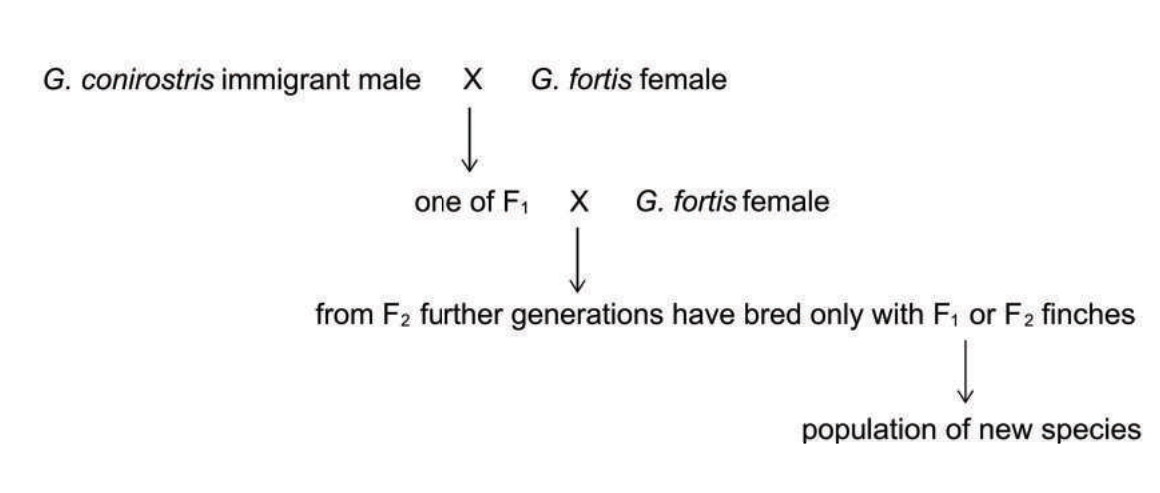
The success of the new species is due to its larger bill and body size and its unique song.
Which of the following terms is/are illustrated by this information?
1 sympatric speciation
2 reproductive isolation
3 post-zygotic isolation
✍️ 1 sympatric — ဖခင် ငှက်က တခြား ကျွန်းကနေ ရောက်လာတာ (came from another island)။ ဒီ အချက်အလက်က နေရာတူမှာ ကွဲတာကို မပြဘူး ✗။
2 reproductive isolation — F₂ ကစပြီး သူတို့ အချင်းချင်းပဲ မျိုးစပ် (breed only with each other) လို့ G. fortis နဲ့ ခွဲသွားပြီ ✓။
3 post-zygotic — ကလေးတွေ ကျန်းမာပြီး fertile ဖြစ်တယ်။ တားတာက သီချင်းနဲ့ ကိုယ်အရွယ် — zygote မဖြစ်ခင် (prezygotic) ✗။
ဒါကြောင့် အဖြေ C — 2 only။
👉 Galápagos မှာ finch တစ်မျိုးကနေ species ဆယ်ကျော် ဘယ်လို ဖြစ်လာလဲ?
ငှက် တစ်မျိုးကနေ species ဆယ်ကျော် — adaptive radiation
finch အုပ်စု သေးလေး Galápagos ရောက်လာ (1 ancestor)။ရှေးက South America ကနေ finch (စာကလေး အရွယ် ငှက်) အုပ်စု သေးသေးလေး (1 ancestor) Galápagos ကျွန်းတွေဆီ ပျံရောက်လာတယ်။
အစာ အမျိုးမျိုး ရှိ၊ ယှဉ်ပြိုင်မယ့် ငှက် မရှိ။ကျွန်းတွေမှာ အစေ့ (seeds)၊ ပိုးကောင် (insects)၊ ရှားစောင်း (cactus)၊ သစ်ထဲက ပိုးလောက် (grubs) လို အစာ အမျိုးမျိုး ရှိပြီး ယှဉ်ပြိုင်မယ့် ငှက် မရှိဘူး။
niche (နေထိုင် စားသောက်ပုံ နေရာ) အလွတ် အများကြီး။အစာ ရှာပုံ၊ နေပုံ တစ်မျိုးစီကို niche (နေထိုင် စားသောက်ပုံ နေရာ) လို့ ခေါ်တယ်။ ဒီ ကျွန်းတွေမှာ niche အလွတ် အများကြီး ရှိနေတယ်။
အစေ့စား နှုတ်သီးထူ၊ ပိုးစား နှုတ်သီးချွန်။ကျွန်း တစ်ခုချင်းမှာ allopatric speciation ဖြစ်ပြီး အစာနဲ့ ကိုက်တဲ့ နှုတ်သီး ရွေးခံရတယ်။ အစေ့ စားတဲ့ ငှက်မှာ နှုတ်သီး ထူထူ၊ ပိုး စားတဲ့ ငှက်မှာ နှုတ်သီး ပါးပါး ချွန်ချွန်။
cactus စား နှုတ်သီးရှည်၊ woodpecker finch က ဆူးသုံး။ရှားစောင်း စားတဲ့ ငှက်မှာ နှုတ်သီး ရှည်တယ်။ woodpecker finch က ဆူးချောင်း တစ်ချောင်း ကိုင်ပြီး သစ်ထဲက ပိုးလောက်ကို ထိုးထုတ်တယ်။
adaptive radiation (လိုက်လျော ကွဲပြန့်မှု) — species 15 ခု။ဘိုးဘွား တစ်ခုတည်းက niche အမျိုးမျိုးနဲ့ ကိုက်တဲ့ species အများကြီး ကွဲထွက်တာကို adaptive radiation (လိုက်လျော ကွဲပြန့်မှု) လို့ ခေါ်တယ်။ Darwin's finches မှာ species 15 ခုလောက် ရှိတယ် (စာအုပ်အလိုက် 13–18)။
divergent evolution ရဲ့ အကြီးစား ဥပမာ။ဒါက PART 1 ရဲ့ divergent evolution (ဘိုးဘွား တစ်ခုက မတူအောင် ကွဲ) ရဲ့ အကြီးစား ဥပမာပဲ။
🤔 Hawaiian honeycreepers all descend from one finch-like ancestor, but now have many beak shapes suited to nectar, seeds and insects. This is an example of:
🔍 မေးခွန်း ဖြည်မယ်
Hawaiian honeycreepers = ဟာဝိုင်ယီ ကျွန်းက ငှက် အုပ်စု။ all descend from one finch-like ancestor = finch လို ဘိုးဘွား တစ်ခုတည်းက ဆင်းသက်။
many beak shapes suited to nectar, seeds and insects = ပန်းဝတ်ရည်၊ အစေ့၊ ပိုးကောင် စားဖို့ ကိုက်တဲ့ နှုတ်သီး ပုံ အမျိုးမျိုး။
မေးနေတာ — ဘိုးဘွား တစ်ခုက niche အမျိုးမျိုးအတွက် species အများကြီး ကွဲတာ ဘာ ခေါ်လဲ။
ဘိုးဘွား တစ်ခုကနေ niche အမျိုးမျိုးအတွက် species အများကြီး — adaptive radiation။
convergent က ဆွေမျိုး မတော်တဲ့ နှစ်ခု ဆင်တူလာတာ (ပြောင်းပြန်)။
stabilising က အလယ်ကို ရွေး၊ drift က ကံ၊ artificial က လူ ရွေးတာ။
💡 အမေ တစ်ယောက်က ညီအစ်ကို ငါးယောက် — အလုပ် မတူ။💡 မှတ်နည်း — adaptive radiation ကို ညီအစ်ကို ငါးယောက်က အမေ တစ်ယောက်တည်းက မွေးပြီး ဆရာဝန်၊ လယ်သမား၊ ကုန်သည်၊ ဆရာ၊ တံငါ — အလုပ် မတူ ကွဲထွက်သွားသလို မှတ်ပါ။ ဘိုးဘွား တစ်ခု → niche အမျိုးမျိုး။
👉 evolution ရဲ့ outcome တွေ — IMAT မေးခွန်း။👉 evolution ရဲ့ ရလဒ် (outcome) တွေ ဘာတွေလဲ — IMAT မေးခွန်း တစ်ခုနဲ့ PART ကို ပိတ်မယ်။
IMAT 2015 Q30 — evolution ရဲ့ ရလဒ်
📝 IMAT 2015 · Question 30
Which of the following could be the outcome of evolution?
1. speciation
2. a change in allele frequency
3. increased biodiversity
✍️ 2 — မျိုးဆက် တစ်ခုနဲ့ တစ်ခုကြား allele frequency ပြောင်းတာ (gen 1 → 2) က evolution ရဲ့ အဓိပ္ပာယ် ကိုယ်တိုင်ပဲ ✓ (PART 2)။
1 — ဒီ ပြောင်းလဲမှုတွေ ကြာကြာ စုပြီး population နှစ်ခု မျိုးမစပ်တော့ရင် species အသစ် ပေါ်တယ် — speciation ✓ (allopatric scene)။
3 — species အသစ်တွေ ပိုများလာရင် ဇီဝ မျိုးစုံမှု (biodiversity) တိုးတယ် ✓ — finch 15 မျိုးလို။
သုံးခုလုံး ✓ ဖြစ်လို့ အဖြေ A — 1, 2 and 3။
🎉 သက်သေ၊ tree၊ carrier၊ species အသစ် — သိပြီ။🎉 natural selection ကို သင်ခန်းစာ 42A မှာ သင်ခဲ့ပြီ။ ဒီ 42B မှာ tree ဖတ်တတ်ပြီ၊ သက်သေ သိပြီ၊ carrier တွက်တတ်ပြီ၊ species အသစ် ဖြစ်ပုံ သိပြီ။
👤 လူပုဂ္ဂိုလ်များ
1750 ဝန်းကျင် Linnaeus — ဆွီဒင် ရုက္ခဗေဒ ပညာရှင်။ အဆင့်လိုက် ခွဲခြားခြင်းနဲ့ နာမည် နှစ်လုံး စနစ်ကို စခဲ့တယ်။
1908 Hardy နဲ့ Weinberg — ဗြိတိန် သင်္ချာပညာရှင်နဲ့ ဂျာမန် ဆရာဝန်။ p² + 2pq + q² = 1 ကို သီးခြားစီ တွေ့ခဲ့တယ်။
🔁 ပြန်စစ်မယ် — အဖြေ မကြည့်ခင် စဉ်းစားပါ
🤔 Horses and donkeys are considered different species because:
🔍 မေးခွန်း ဖြည်မယ်
are considered different species = species မတူဘူးလို့ သတ်မှတ်တယ်။ because = ဘာကြောင့်လဲ။ cannot mate at all = လုံးဝ မျိုးမစပ်နိုင်။
live in different places = မတူတဲ့ နေရာ နေတယ်။ mules are sterile = လားတွေ မျိုးမပွားနိုင်။
မေးနေတာ — species မတူကြောင်း သတ်မှတ်ချက် (fertile ကလေး) နဲ့ ကိုက်တဲ့ အကြောင်းပြချက်။
မျိုးစပ်လို့ ရပြီး လား မွေးပေမဲ့ လားက sterile — fertile ကလေး မရလို့ species မတူဘူး။
🤔 A horse and a donkey produce a sterile mule. This shows:
🔍 မေးခွန်း ဖြည်မယ်
A horse and a donkey produce a sterile mule = မြင်းနဲ့ မြည်းက မျိုးမပွားနိုင်တဲ့ လား မွေးတယ်။ This shows = ဒါက ဘာကို ပြလဲ။
မေးနေတာ — zygote ဖြစ်ပြီးမှ တားတာလား မဖြစ်ခင် တားတာလား။
zygote ဖြစ်ပြီးမှ (ကလေး sterile) တားတာ → postzygotic။
mule မွေးလာတာက မျိုးအောင်ပြီးသား (zygote ဖြစ်ပြီးသား) ဆိုတော့ prezygotic မဟုတ်ဘူး။
gene flow က gene တွေ ကူးနေတာ — ဒီမှာ ကူးလို့ မရတာ။
polyploidy က chromosome အစုံ ပိုလာတာ၊ ဒီမှာ မဆိုင်ဘူး။
🤔 Two populations separated by a new sea channel become two species. This is:
🔍 မေးခွန်း ဖြည်မယ်
separated by a new sea channel = ပင်လယ် ရေလက်ကြား အသစ်က ခွဲလိုက်တယ်။ become two species = species နှစ်ခု ဖြစ်လာ။
မေးနေတာ — နေရာ ခြားပြီး species ကွဲတာကို ဘာ ခေါ်လဲ။
နေရာ ခြားပြီး gene flow ရပ်လို့ → allopatric။
🤔 A plant cell doubles its chromosome sets from 2n to 4n and a new species forms in one generation. This is:
🔍 မေးခွန်း ဖြည်မယ်
doubles its chromosome sets from 2n to 4n = chromosome အစုံကို 2n ကနေ 4n နှစ်ဆ ဖြစ်စေ။ a new species forms in one generation = မျိုးဆက် တစ်ဆက်တည်းမှာ species အသစ် ဖြစ်။
မေးနေတာ — chromosome အစုံ ပိုလာတာနဲ့ species ဖြစ်တာကို ဘာ ခေါ်လဲ။
chromosome အစုံ ပိုလာတာ polyploidy — နေရာ မခြားဘဲ (sympatric) species အသစ်။
🤔 One ancestral species gives rise to many species, each suited to a different way of life. This is called:
🔍 မေးခွန်း ဖြည်မယ်
One ancestral species = ဘိုးဘွား species တစ်ခု။ gives rise to many species = species အများကြီး ဖြစ်စေ။ each suited to a different way of life = တစ်ခုစီ မတူတဲ့ နေထိုင်ပုံနဲ့ ကိုက်။
မေးနေတာ — ဒီ ဖြစ်စဉ်ရဲ့ နာမည်။
ဘိုးဘွား တစ်ခု → niche အမျိုးမျိုးအတွက် species အများကြီး — adaptive radiation (Darwin's finches)။
🤔 The sperm of one sea-urchin species cannot fuse with the eggs of another. This is an example of:
🔍 မေးခွန်း ဖြည်မယ်
The sperm of one sea-urchin species = ပင်လယ်ဆူးဖြူ species တစ်မျိုးရဲ့ sperm။ cannot fuse with the eggs of another = တခြား species ရဲ့ egg နဲ့ မပေါင်းနိုင်။
This is an example of = ဒါက ဘာရဲ့ ဥပမာလဲ။
မေးနေတာ — gamete နှစ်ခု မပေါင်းတာကြောင့် ခွဲထားတဲ့ အမျိုးအစား။
sperm နဲ့ egg မပေါင်းနိုင်တာ — gametic isolation (prezygotic)။
hybrid sterility က zygote ဖြစ်ပြီးမှ။