Nervous system and senses (2)
synapse နဲ့ ဆေး၊ brain အပိုင်းတွေ၊ မျက်လုံး၊ နား နဲ့ တခြား အာရုံ
The synapse
ကွက်လပ်ကို ဓာတုပစ္စည်းနဲ့ ကူးခြင်း၊ တစ်လမ်းသွား၊ signal ပေါင်းခြင်း၊ muscle၊ ဆေး
neurone တွေ တကယ် မထိဘူး
neurone 1 နဲ့ 2 တကယ် မထိဘူး။သင်ခန်းစာ 51A ရဲ့ reflex လမ်းကြောင်းမှာ signal က neurone တစ်လုံးကနေ နောက်တစ်လုံးဆီ ကူးရတယ်။ axon ပေါ်မှာတော့ myelin ကြား ခုန်ကူးပြီး (saltatory conduction) ပြေးတယ်။ ဒါပေမဲ့ အံ့ဩစရာ — neurone 1 နဲ့ neurone 2 က တကယ် မထိဘူး။
≈ 20 nm ကွက်လပ် = synaptic cleft (ဆုံရာ ကွက်လပ်)ကြားမှာ gap ≈ 20 nm (nanometre — mm ရဲ့ သန်းပုံ တစ်ပုံ) ကွက်လပ် ရှိတယ်။ synaptic cleft (ဆုံရာ ကွက်လပ်) လို့ ခေါ်တယ်။ ဆုံရာ တစ်ခုလုံးကို synapse လို့ ခေါ်တယ်။
လျှပ်စစ်က ကွက်လပ်ကို မီးပွားလို မခုန်နိုင်ဘူး။action potential ရဲ့ လျှပ်စစ်က ဒီ ကွက်လပ်ကို spark (မီးပွား) လို ခုန်မကူးနိုင်ဘူး။
chemical စာပို့သမားနဲ့ လှေလို ကူးတယ်။တံတား မရှိတဲ့ မြစ်ကို လှေနဲ့ ကူးသလို chemical (ဓာတုပစ္စည်း) စာပို့သမားနဲ့ ကူးတယ်။ ဘယ်လို ကူးလဲ — အဆင့်လိုက် ကြည့်မယ်။
synapse ကို ကူးပုံ (၁) — Ca²⁺ ဝင်၊ vesicle ပေါက်
① signal က presynaptic terminal (ရှေ့ဘက် အဆုံး) ရောက်တယ်။① action potential က ပထမ neurone ရဲ့ အဆုံး — presynaptic terminal (ဆုံရာ ရှေ့ဘက် အဆုံး) ကို ရောက်လာတယ်။
② voltage-gated Ca²⁺ channel ပွင့်ပြီး Ca²⁺ ဝင်။② voltage ပြောင်းလို့ voltage-gated Ca²⁺ channel တွေ ပွင့်ပြီး Ca²⁺ ( ion) in — အထဲ ဝင်တယ်။
③ Ca²⁺ က vesicle ကို ပေါင်းစေ — exocytosis နဲ့ ထုတ်။③ Ca²⁺ က ဓာတုပစ္စည်း ထည့်ထားတဲ့ vesicle (အိတ်ငယ်) တွေကို terminal ရဲ့ membrane နဲ့ ပေါင်းစေတယ်။ အထဲက ပစ္စည်းကို ကွက်လပ်ထဲ exocytosis နဲ့ ထုတ်တယ်။
④ neurotransmitter (စာပို့ ဓာတု) acetylcholine ပျံ့ဖြတ်။④ ထုတ်လိုက်တဲ့ ဓာတုပစ္စည်းကို neurotransmitter (အာရုံ စာပို့ ဓာတု) လို့ ခေါ်တယ်။ စာအုပ်တွေ ဥပမာ ပြတာ (ကြွက်သား ဆုံရာမှာ သုံးတာ) acetylcholine။ ကွက်လပ်ကို diffuse (ပျံ့) ဖြစ်ပြီး ဖြတ်တယ်။
synapse ကို ကူးပုံ (၂) — receptor ပွင့်၊ enzyme ဖြိုတယ်
⑤ postsynaptic membrane (နောက်ဘက် အမြှေး) receptor နဲ့ ချိတ်⑤ postsynaptic membrane (ဆုံရာ နောက်ဘက် အမြှေး) ပေါ်က receptor protein (လက်ခံ ပရိုတင်း) နဲ့ ချိတ်တယ်။ receptor ကိုယ်တိုင်က Na⁺ channel ပါ —
ဓာတု ချိတ်မှ ပွင့် = ligand-gated Na⁺ channel။ဓာတု (ligand) ချိတ်မှ ပွင့်လို့ ligand-gated Na⁺ channel လို့ ခေါ်တယ်။ ပွင့်တာနဲ့ Na⁺ ဝင်တယ်။
axon — voltage နဲ့ ပွင့်၊ synapse — ဓာတု သော့နဲ့ ပွင့်။သင်ခန်းစာ 51A PART 2 က axon ပေါ်က channel တွေက voltage ပြောင်းမှ ပွင့်တဲ့ voltage-gated channel တွေ။ postsynaptic membrane မှာတော့ ဓာတု သော့နဲ့ ပွင့်တာပါ — တံခါး နှစ်မျိုး မရောပါနဲ့။
⑥ depolarise → threshold ရောက်ရင် nerve impulse အသစ်။⑥ postsynaptic neurone က depolarise ဖြစ်တယ်။ threshold ရောက်ရင် nerve impulse အသစ် — action potential အသစ် စတယ်။
⑦ acetylcholinesterase (ACh ဖြို enzyme) က signal ရပ်စေ။⑦ ကွက်လပ်ထဲက enzyme acetylcholinesterase က acetylcholine ကို ချက်ချင်း ဖြိုခွဲတယ်။ ဒါကြောင့် signal ရပ်ပြီး နောက် signal အတွက် အသင့် ဖြစ်တယ်။
nerve gas က enzyme ပိတ် — signal always on။nerve gas (အာရုံကြော ဓာတ်ငွေ့) က ဒီ enzyme ကို ပိတ်တယ်။ acetylcholine မဖြိုတော့လို့ signal always on — အမြဲ ဖွင့်ထားသလို ဖြစ်ပြီး muscle တွေ မပြေတော့ဘူး။
ဘာလို့ တစ်လမ်းသွားလဲ
📝 IMAT 2014 · Question 32
The transmission of nerve impulses at a synapse is unidirectional. Which of the features of the transmission of nerve impulses given below have a role in maintaining the unidirectional transmission?
1. Exocytosis of neurotransmitter at the presynaptic membrane
2. Neurotransmitter hydrolysing enzyme found on the post-synaptic membrane
3. Neurotransmitter receptors found on the post-synaptic membrane
4. Sodium gated channels on the post-synaptic membrane
① vesicle နဲ့ exocytosis presynaptic ဘက်မှာပဲ။ကတ်က synapse မှာ signal ဘာလို့ တစ်လမ်းတည်း သွားလဲ လို့ မေးတယ်။ ① vesicle တွေနဲ့ exocytosis က presynaptic ဘက်မှာပဲ ရှိတယ် — ပို့နိုင်တာ ဒီဘက်ပဲ။
② receptor နဲ့ Na⁺ channel postsynaptic ဘက်မှာပဲ။② receptor တွေနဲ့ သူတို့ ဖွင့်ပေးတဲ့ Na⁺ channels က postsynaptic ဘက်မှာပဲ ရှိတယ် — လက်ခံနိုင်တာ ဒီဘက်ပဲ။
ဒါကြောင့် pre → post one way ပဲ။ဒါကြောင့် signal က pre → post one way ပဲ သွားတယ်၊ back (နောက်ပြန်) မသွားနိုင်ဘူး။
③ enzyme က ရပ်ပေးရုံ — ဦးတည်ချက် မဆုံးဖြတ်။③ enzyme (acetylcholinesterase) ကတော့ signal ကို ရပ်ပေးတာပဲ — stops (ရပ်) — ဦးတည်ချက် မဟုတ်ဘူး။ ဦးတည်ချက်ကို မဆုံးဖြတ်ဘူး။ စစ်နည်း: “တစ်ဘက်တည်းမှာပဲ ရှိလား?” လို့ မေးပါ။
✍️ ကတ်ရဲ့ 1 (exocytosis)၊ 3 (receptor)၊ 4 (Na⁺ channels) — တစ်ဘက်တည်းမှာပဲ ရှိလို့ ဦးတည်ချက် ဖြစ်စေတယ် ✓။ 2 (enzyme) က signal ရပ်ဖို့ပဲ ✗ → “1, 3 and 4 only” = D။
ပေါင်းမလား နုတ်မလား — temporal နဲ့ spatial summation
excitatory synapse တစ်ခုက threshold မရောက်တတ်ဘူး။synapse တိုင်းက nerve impulse အသစ် ဖြစ်စေတာ မဟုတ်ဘူး။ excitatory (လှုံ့ဆော်) synapse တစ်ခုက Na⁺ ဝင်စေလို့ voltage နည်းနည်း တက်ပေမဲ့ threshold မရောက်တတ်ဘူး။
inhibitory — Cl⁻ ဝင်၊ inside ပိုအနုတ်။inhibitory (ဟန့်တား) synapse က Cl⁻ in — Cl⁻ ဝင်စေ (သို့) K⁺ ထွက်စေလို့ inside ပိုအနုတ် ဖြစ်ပြီး threshold နဲ့ ဝေးသွားတယ်။ K⁺ ထွက်တာက axon ရဲ့ repolarisation (51A) မှာလိုပဲ။
ဘရိတ် ဓာတု GABA (ဦးနှောက် ဘရိတ် ဓာတု) — Cl⁻ channel ဖွင့်။ဦးနှောက်ထဲက inhibitory synapse အများစုမှာ သုံးတဲ့ neurotransmitter က GABA (Gamma Amino Butyric Acid — ဦးနှောက်ရဲ့ ဘရိတ် (brake) ဓာတု)။ GABA ချိတ်ရင် Cl⁻ channel ပွင့်ပြီး ပစ်ဖို့ ခက်သွားတယ်။
ထပ်လာ ပေါင်း = temporal summation (အချိန်အလိုက် ပေါင်း)synapse တစ်ခုတည်းကနေ signal တွေ မြန်မြန် ထပ်လာရင် ပေါင်းမိပြီး threshold ရောက်တယ် — temporal summation (အချိန်အလိုက် ပေါင်းခြင်း)။
🤔 Predict: three different excitatory synapses each make a small rise at the same time. What happens to the neurone?
🔍 မေးခွန်း ဖြည်မယ်
excitatory = လှုံ့ဆော်တဲ့၊
at the same time = တစ်ပြိုင်နက်၊
rise = voltage နည်းနည်း တက်တာ၊
fires = nerve impulse ပစ်တယ်။
မေးနေတာ — နေရာ မတူတဲ့ synapse သုံးခုက တစ်ပြိုင်နက် တက်စေရင် postsynaptic neurone မှာ ဘာဖြစ်မလဲ။
အချိန်အလိုက် ပေါင်းမိသလို နေရာ မတူတဲ့ synapse တွေက တစ်ပြိုင်နက် လာတဲ့ rise တွေလည်း cell body မှာ ပေါင်းမိတယ် — threshold ရောက်ရင် ပစ်တယ်။
ဒါကို နောက် beat မှာ spatial summation လို့ ခေါ်မယ်။
တစ်ပြိုင်နက် ပေါင်း = spatial summation (နေရာအလိုက် ပေါင်း)synapse အများကြီးကနေ တစ်ပြိုင်နက် လာရင်လည်း ပေါင်းမိတယ် — spatial summation (နေရာအလိုက် ပေါင်းခြင်း)။ ဒီလို ပေါင်း/နုတ် လုပ်ပြီး “ပစ်မလား” ဆုံးဖြတ်တယ်။
neurone ကနေ muscle ဆီ — neuromuscular junction
neuromuscular junction (ကြော–ကြွက်သား ဆုံရာ) မှာလည်း ACh။motor neurone နဲ့ muscle fibre (ကြွက်သား အမျှင်) ဆုံရာ — neuromuscular junction မှာလည်း acetylcholine က muscle membrane ပေါ်က receptor နဲ့ ချိတ်တယ်။
① Na⁺ ဝင် — muscle membrane depolarised (2)။① Na⁺ ဝင်လို့ muscle fibre ရဲ့ membrane depolarised ဖြစ်တယ် (ကတ်မှာ နံပါတ် 2)။
② sarcoplasmic reticulum (Ca²⁺ သိုရုံ) က Ca²⁺ လွှတ် (1)။② muscle ထဲက Ca²⁺ သိုလှောင်ရုံ sarcoplasmic reticulum (SR) က Ca²⁺ တွေကို sarcoplasm (muscle ရဲ့ cytoplasm) ထဲ လွှတ်တယ် (ကတ်မှာ 1)။
③ Ca²⁺ က binding site ဖွင့် — muscle ကျုံ့ (3)။③ Ca²⁺ က actin ပေါ်က myosin ချိတ်ရာ binding site တွေကို ဖွင့်ပေးတယ်။ myosin ဆွဲလို့ muscle contracts — ကျုံ့တယ် (ကတ်မှာ 3)။ အသေးစိတ်ကို သင်ခန်းစာ 55 မှာ။
📝 IMAT 2023 · Question 23
What is the correct order of the following events that occur immediately after acetylcholine binds to postsynaptic receptors of a muscle fibre, causing the muscle to contract?
1. Ca2+ ions diffuse into the sarcoplasm.
2. The muscle fibre membrane is depolarised.
3. The myosin binding site on the actin filament is uncovered.
✍️ ကတ်ရဲ့ နံပါတ်နဲ့ ပုံ — 2 membrane depolarised (အရင်)၊ 1 Ca²⁺ → sarcoplasm၊ 3 binding site uncovered (နောက်ဆုံး) → 2 - 1 - 3 = E။
📝 IMAT 2019 Q37 → သင်ခန်းစာ 55၊
ion အသစ်နဲ့ စမ်း။📝 IMAT 2019 Q37 (ion ပါတဲ့ ဖြစ်စဉ်တွေ) → သင်ခန်းစာ 55 မှာ အပြည့် ဖြေထားတယ်။
ဒီမှာ ion အသစ် နှစ်မျိုးနဲ့ စမ်းမယ်။
🤔 Which of the following processes involve the movement of Cl⁻ or K⁺ ions?
1. repolarisation of an axon
2. an inhibitory signal at a synapse
3. release of Ca²⁺ from the sarcoplasmic reticulum
🔍 မေးခွန်း ဖြည်မယ်
involve = ပါဝင်တယ်၊
movement of = ရွေ့တာ (ဝင်/ထွက်)၊
Cl⁻ or K⁺ = နှစ်မျိုးထဲက တစ်မျိုး ရွေ့ရင် ရတယ်၊
release = လွှတ်ထုတ်တာ။
မေးနေတာ — 1၊ 2၊ 3 ဖြစ်စဉ် တစ်ခုစီမှာ Cl⁻ ဒါမှမဟုတ် K⁺ ရွေ့သလား စစ်ပြီး မှန်တဲ့ အစုကို ရွေး။
(1) repolarisation မှာ K⁺ ထွက်တယ် ✓။
(2) inhibitory synapse မှာ Cl⁻ ဝင် (ဒါမှမဟုတ် K⁺ ထွက်) တယ် ✓။
(3) SR က လွှတ်တာ Ca²⁺ — Cl⁻ နဲ့ K⁺ မပါဘူး ✗ — 1 and 2 only။
စာပို့သမား တစ်ယောက်တည်း မဟုတ်ဘူး — neurotransmitter အမျိုးမျိုး
synapse တိုင်း ACh သုံးတာ မဟုတ်ဘူး။acetylcholine (ACh) က ကြွက်သား ဆုံရာနဲ့ parasympathetic ကြိုး အဆုံးမှာ သုံးတဲ့ neurotransmitter ပါ — PART 1 အစမှာ မြင်ခဲ့ပြီ။ ဒါပေမဲ့ synapse တိုင်း ACh သုံးတာ မဟုတ်ဘူး။
sympathetic အဆုံးက noradrenaline (နော်အဒရီနလင်း) ထုတ်။sympathetic ကြိုးတွေရဲ့ အဆုံးက heart လို organ ဆီမှာ noradrenaline (နော်အဒရီနလင်း) ကို ထုတ်တယ်။
noradrenaline = ကြိုး ဓာတု၊
adrenaline = သွေး ဟော်မုန်း။heart ကို ပိုမြန်စေတယ်။
နာမည်နဲ့ အလုပ်က adrenaline နဲ့ ဆင်တယ်၊ ဒါပေမဲ့ adrenaline က သွေးထဲက ဟော်မုန်း၊ noradrenaline က အဓိကအားဖြင့် synapse မှာ ကြိုးက ထုတ်တဲ့ ဓာတုပါ (adrenal medulla ကလည်း နည်းနည်း ထုတ်တယ်)။
dopamine (ဒိုပါမင်း) — လှုပ်ရှား ချောမွေ့၊ ဆုလာဘ် ခံစားမှု။brain ထဲမှာ dopamine (ဒိုပါမင်း) က လှုပ်ရှားမှုကို ချောမွေ့စေပြီး “ဆုလာဘ် ရတယ်” ဆိုတဲ့ ခံစားမှုကို ပေးတယ်။
serotonin (ဆီရိုတိုနင်) — mood နဲ့ အိပ်ခြင်း ထိန်း။serotonin (ဆီရိုတိုနင်) က စိတ်ခံစားမှု (mood) နဲ့ အိပ်ခြင်းကို ထိန်းတယ်။ စိတ်ကျရောဂါ ဆေး တချို့က synapse မှာ serotonin ကြာကြာ ကျန်အောင် လုပ်တယ်။
dopamine neurone သေ — Parkinson's disease။dopamine ထုတ်တဲ့ brain neurone တွေ သေသွားရင် လက် တုန်ပြီး လှုပ်ရှားမှု နှေးတဲ့ Parkinson's disease (ပါကင်ဆန် ရောဂါ) ဖြစ်တယ်။ ဒါကြောင့် neurotransmitter တစ်မျိုး ပျက်ရင် အလုပ် တစ်မျိုး ပျက်တယ်။
🤔 A drug blocks the noradrenaline receptors on the heart. What happens to the heart rate when the person runs?
🔍 မေးခွန်း ဖြည်မယ်
blocks = ပိတ်ထားတယ်၊
noradrenaline receptors = noradrenaline ချိတ်ရာ လက်ခံ protein၊
when the person runs = ပြေးနေချိန် (sympathetic အလုပ်လုပ်ချိန်)။
မေးနေတာ — ဆေးကြောင့် receptor ပိတ်ထားရင် ပြေးတဲ့အခါ heart rate ဘယ်လို ပြောင်းမလဲ။
ပြေးရင် sympathetic ကြိုးက heart ဆီ noradrenaline ထုတ်ပြီး မြန်စေတယ်။
receptor ပိတ်ထားရင် noradrenaline ချိတ်မရလို့ heart rate ပုံမှန်လောက် မတက်ဘူး။
acetylcholine (vagus) ကို ဒီဆေးက မထိဘူး။
ဆေးနဲ့ အဆိပ်က synapse မှာ ဘာလုပ်လဲ — agonist နဲ့ antagonist
receptor = သော့ခလောက်၊ acetylcholine = သော့။postsynaptic membrane ပေါ်က receptor ကို သော့ခလောက်၊ acetylcholine ကို သော့လို့ စဉ်းစားပါ။ သော့ ထည့်တော့ ligand-gated Na⁺ channel ပွင့်တယ်။
ပွင့်တာနဲ့ Na⁺ ဝင်၊ depolarise — ပုံမှန်။ပွင့်တာနဲ့ Na⁺ ဝင်ပြီး muscle (ဒါမှမဟုတ် နောက် အာရုံကြော ဆဲလ်) က depolarise ဖြစ်တယ်။ ဒါက ပုံမှန် (normal) အလုပ်ပါ။
nicotine = သော့အတု — agonist (အတူ လုပ်ပေးသူ)ဆေးလိပ်ထဲက nicotine (နီကိုတင်း) က acetylcholine နဲ့ ပုံစံ ဆင်လို့ သော့ အတု လိုပဲ receptor ကို ဖွင့်နိုင်တယ်။ acetylcholine လို အလုပ်လုပ်တဲ့ ဆေးကို agonist (အတူ လုပ်ပေးသူ) လို့ ခေါ်တယ်။
curare က receptor ထဲ ထိုင်ပြီး ပေါက်ပိတ်တယ်။တောင်အမေရိက မြှားဆိပ် curare (ကျူရာရီ) က receptor ထဲ ဝင်ထိုင်ပေမဲ့ မဖွင့်ဘူး — သော့ အမှားလို ပေါက်ကို ပိတ်ထားတယ်။
antagonist (ဆန့်ကျင် ပိတ်သူ) — muscle မကျုံ့နိုင်။ဒီလို ဆေးကို antagonist (ဆန့်ကျင်ပြီး ပိတ်သူ) လို့ ခေါ်တယ်။ ACh ရောက်လာလည်း muscle မကျုံ့နိုင်လို့ လှုပ်လို့ မရတော့ဘူး။
organophosphate, nerve gas က acetylcholinesterase ပိတ်။ပိုးသတ်ဆေး organophosphate တွေနဲ့ nerve gas ကတော့ receptor ကို မထိဘဲ ACh ဖြိုတဲ့ enzyme acetylcholinesterase ကို ပိတ်တယ် (ဆုံရာ အဆင့် ⑦ မှာ မြင်ခဲ့တဲ့ enzyme)။
ACh ကွက်လပ်ထဲ ကျန်နေလို့ muscle တွေ ဆက်တိုက် ကျုံ့ပြီး မပြေတော့ဘူး။
🤔 Atropine binds to the acetylcholine receptors on the heart without opening them. What happens to the resting heart rate?
🔍 မေးခွန်း ဖြည်မယ်
binds to = ချိတ်တယ်၊
without opening them = channel ကို မဖွင့်ဘဲ၊
resting heart rate = အနားယူနေချိန် နှလုံးခုန်နှုန်း။
မေးနေတာ — heart ပေါ်က ACh receptor ကို ပိတ်ထားရင် ငြိမ်နေချိန် heart rate ဘာဖြစ်မလဲ။
atropine က heart ပေါ်က ACh receptor ကို ပိတ်ထားတဲ့ antagonist — curare လိုပဲ။
heart ပေါ်က ACh က vagus nerve (parasympathetic ဘရိတ်) ရဲ့ ဓာတု။
ဘရိတ် ပိတ်ခံရလို့ heart rate တက်တယ်။
🎮 What does each drug do at the synapse? — sort fast 🔥
🔁 ပြန်စစ်မယ် — အဖြေ မကြည့်ခင် စဉ်းစားပါ
🤔 Which ion enters the presynaptic terminal and makes the vesicles fuse with the membrane?
🔍 မေးခွန်း ဖြည်မယ်
enters = ဝင်တယ်၊
presynaptic terminal = ဆုံရာ ရှေ့ဘက် အဆုံး၊
fuse with = ပေါင်းသွားတယ်၊
vesicles = အိတ်ငယ်တွေ။
မေးနေတာ — ဘယ် ion ဝင်လာမှ vesicle တွေ membrane နဲ့ ပေါင်းသလဲ။
voltage-gated Ca²⁺ channel ပွင့်ပြီး Ca²⁺ ဝင်မှ vesicle ပေါင်းတယ်။
🤔 Which molecule breaks down acetylcholine in the synaptic cleft, so that the signal stops?
🔍 မေးခွန်း ဖြည်မယ်
breaks down = ဖြိုခွဲတယ်၊
synaptic cleft = ဆုံရာ ကွက်လပ်၊
so that the signal stops = signal ရပ်အောင်။
မေးနေတာ — ကွက်လပ်ထဲက acetylcholine ကို ဖြိုပြီး signal ရပ်စေတဲ့ မော်လီကျူး ဘယ်ဟာလဲ။
enzyme acetylcholinesterase က cleft ထဲက acetylcholine ကို ဖြိုလို့ signal ရပ်သွားတယ်။
receptor protein က ACh နဲ့ ချိတ်ပြီး channel ဖွင့်တာပဲ၊ မဖြိုဘူး။
noradrenaline နဲ့ GABA က တခြား neurotransmitter တွေ — enzyme မဟုတ်ဘူး။
🤔 When acetylcholine binds its receptor on the postsynaptic membrane, which kind of channel opens?
🔍 မေးခွန်း ဖြည်မယ်
binds its receptor = သူ့ receptor နဲ့ ချိတ်တယ်၊
postsynaptic membrane = ဆုံရာ နောက်ဘက် အမြှေး၊
which kind of channel = ဘယ်လို တံခါး အမျိုးအစား။
မေးနေတာ — ACh ချိတ်တော့ ပွင့်တဲ့ channel က ဘာနဲ့ ပွင့်တဲ့ အမျိုးလဲ။
receptor ကိုယ်တိုင်က ဓာတု ချိတ်မှ ပွင့်တဲ့ ligand-gated Na⁺ channel။
voltage-gated Na⁺ channel က axon ပေါ်မှာ၊ voltage-gated Ca²⁺ channel က presynaptic terminal မှာ၊ K⁺ leak channel က resting potential အတွက်။
🤔 One excitatory synapse fires many times in quick succession, and the postsynaptic neurone reaches threshold. This is called…
🔍 မေးခွန်း ဖြည်မယ်
fires many times = အကြိမ်ကြိမ် ပစ်တယ်၊
in quick succession = တစ်ခုပြီး တစ်ခု မြန်မြန် ဆက်တိုက်၊
reaches threshold = threshold ရောက်တယ်၊
This is called = ဒါကို … လို့ ခေါ်တယ်။
မေးနေတာ — synapse တစ်ခုတည်းက ဆက်တိုက် ပစ်လို့ ပေါင်းမိတာရဲ့ နာမည်။
synapse တစ်ခုတည်းကနေ မြန်မြန် ထပ်လာတာ — temporal (အချိန်အလိုက်)။
synapse အများကနေ တစ်ပြိုင်နက် လာရင် spatial။
The brain and the senses
brain အပိုင်းတွေ၊ မျက်လုံး၊ rod cell၊ နား
Italy ရောက်တော့ အိပ်ငိုက်တယ် — jet lag
Yangon ကနေ Italy ကို ဆေးကျောင်း တက်ဖို့ လေယာဉ်နဲ့ သွားတယ် ဆိုပါစို့။
နွေရာသီမှာ ရောက်တော့ Italy မှာ ညနေ 6 နာရီ (Italy 6 pm) ပဲ ရှိသေးတယ်။
Italy summer time က Yangon ထက် 4 နာရီခွဲ နောက်ကျတယ်။Italy ရဲ့ နွေရာသီ အချိန် (summer time) က Yangon ထက် 4 နာရီခွဲ နောက်ကျလို့ Yangon မှာ ည 10:30 ဖြစ်နေပြီ (ဆောင်းရာသီဆို 5 နာရီခွဲ ကွာလို့ ည 11:30)။
ခန္ဓာကိုယ် Yangon အချိန် ထင်နေ — jet lag။ခန္ဓာကိုယ်က Yangon အချိန်ကို ထင်နေလို့ အရမ်း အိပ်ငိုက်တယ်။ ဒါကို jet lag (အချိန်ဇုန် ပြောင်းလို့ ပင်ပန်းခြင်း) လို့ ခေါ်တယ်။
brain ထဲ နာရီ ရှိလား? ဘယ်အပိုင်းလဲ?ဒါဆို brain ထဲမှာ နာရီ တစ်လုံး ရှိနေတာလား? ဘယ်အပိုင်းလဲ? brain မြေပုံကို ဆွဲကြည့်မယ်။
brain မြေပုံ — အကြီးဆုံး အပိုင်း သုံးခု
ခေါင်းကို ဘေးကနေ ကြည့်ထားတဲ့ ပုံပါ — ဘယ်ဘက်က front (မျက်နှာဘက်)။
အကြီးဆုံး ခေါက်ချိုး အပိုင်း = cerebrum (ဦးနှောက်ကြီး)အပေါ်က ခေါက်ချိုး အများကြီးနဲ့ အကြီးဆုံး အပိုင်းက cerebrum (ဦးနှောက်ကြီး)။
cerebrum — memory နဲ့ thinking။cerebrum က memory (မှတ်ဉာဏ်) နဲ့ thinking (စဉ်းစားခြင်း) ကို လုပ်တယ်။ မြင်တာ ကြားတာကို နားလည်တာ၊ စကားပြောတာလည်း ဒီမှာ။
voluntary movement အမိန့်ပေးတာလည်း cerebrum။ကိုယ့်ဆန္ဒနဲ့ လှုပ်ရှားတဲ့ voluntary movement ကို အမိန့်ပေးတာလည်း cerebrum ပါ။
cerebellum (ဦးနှောက်ငယ်) — balance ထိန်း၊ ချောမွေ့စေ။နောက်ဘက် အောက်က အလုံးလေးက cerebellum (ဦးနှောက်ငယ်)။ balance (ချိန်ခွင်) ထိန်းပြီး လှုပ်ရှားမှုကို ချောမွေ့အောင် ညှိတယ် — စက်ဘီး စီးသလို။
medulla (ဦးနှောက်အောက်ဆုံး) — heart rate, breathing ထိန်း။spinal cord နဲ့ ဆက်နေတဲ့ အောက်ဆုံးပိုင်းက medulla (oblongata)။ heart rate (နှလုံးခုန်နှုန်း) နဲ့ breathing (အသက်ရှူနှုန်း) ကို အလိုအလျောက် ထိန်းတယ် (သင်ခန်းစာ 48B နဲ့ သင်ခန်းစာ 49)။
📝 IMAT 2017 · Question 38
A person was admitted to hospital suffering from a loss of memory. Which part of the central nervous system is most likely to have been affected?
✍️ memory (မှတ်ဉာဏ်) က cerebrum အလုပ် → D။ cerebellum က balance၊ medulla က heart rate — မှတ်ဉာဏ် မဟုတ်ဘူး။
📝 IMAT 2016 · Question 35
Which labelled structure on the diagram of the brain plays the major role in regulating the nervous control of heart rate?
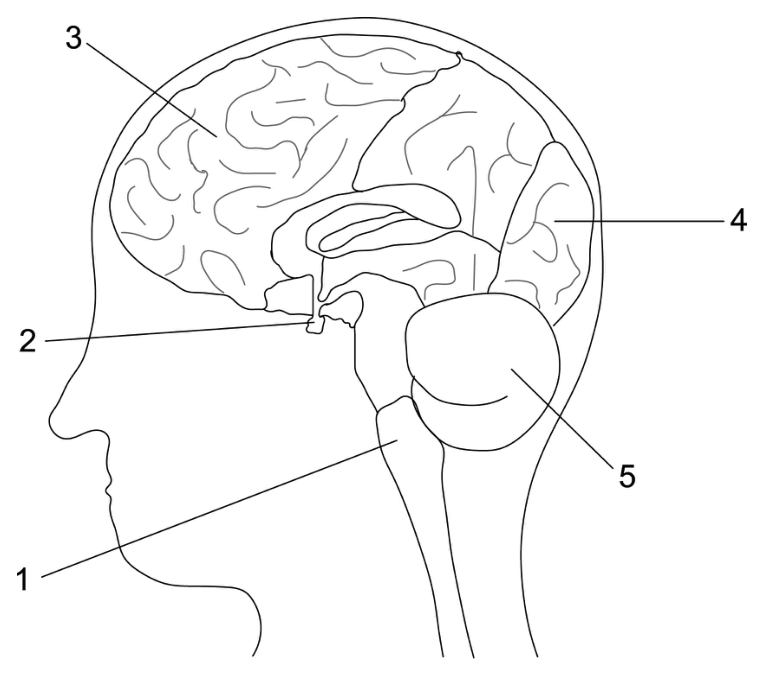
✍️ ကတ်ရဲ့ ပုံမှာ 1 က spinal cord နဲ့ ဆက်နေတဲ့ အောက်ဆုံးပိုင်း — medulla။ heart rate ကို ထိန်းတာ medulla → option “1” က B။ (3 cerebrum၊ 5 cerebellum)
🤔 After drinking too much alcohol, a man walks unsteadily and cannot touch his nose with his finger. Which part of the brain is working poorly?
🔍 မေးခွန်း ဖြည်မယ်
walks unsteadily = လမ်း မတည့်မတ် လျှောက်တယ်၊
cannot touch his nose = နှာခေါင်းကို လက်နဲ့ တိတိ မထိနိုင်၊
working poorly = ကောင်းကောင်း အလုပ် မလုပ်။
မေးနေတာ — balance နဲ့ လှုပ်ရှားမှု ချောမွေ့ဖို့ တာဝန်ယူတဲ့ brain အပိုင်း ဘယ်ဟာလဲ။
လမ်း မတည့်တာ၊ လက် လှုပ်ရှားမှု မချောမွေ့တာက cerebellum (balance နဲ့ လှုပ်ရှားမှု ညှိ) ရဲ့ အလုပ် ပျက်တာ — စက်ဘီး စီးသလို ညှိပေးတဲ့ အပိုင်း။
medulla က heart နဲ့ breathing၊ hypothalamus က temperature နဲ့ ရေ။
cerebrum ကို အခန်း လေးခန်း ခွဲကြည့်မယ် — lobe နဲ့ area
cerebrum ကို lobe (အပိုင်း) ၄ ခု ခွဲ — frontal က စဉ်းစား။cerebrum ရဲ့ ဘယ်/ညာ အခြမ်း တစ်ခုစီကို lobe (အပိုင်း) လေးခု ခွဲတယ်။ ရှေ့ဆုံးက frontal lobe — စဉ်းစား၊ စီစဉ်၊ ဆုံးဖြတ်တယ်။ သူ့ နောက်ဘက် အစွန်းက အနီ ကြိုးတန်း motor cortex က muscle တွေကို လှုပ်ခိုင်းတယ်။
ဘယ် brain က ညာ body ကို လှုပ်ခိုင်း — ကြိုး ကန့်လန့်ဖြတ်။ဘယ်ဘက် brain က ညာဘက် ခန္ဓာ (body) ကို လှုပ်ခိုင်းတယ်၊ ညာဘက် brain က ဘယ်ဘက်ကို — ကြိုးတွေ လမ်းမှာ ကန့်လန့် ဖြတ်လို့ပါ။
parietal lobe ရဲ့ sensory cortex — ထိ၊ ပူ၊ နာ ခံစား။ထိပ်ပိုင်း နောက်ဘက်က parietal lobe။ motor cortex ရဲ့ နောက်ကပ်လျက် အဝါ ကြိုးတန်း sensory cortex က အရေပြားက ထိတာ၊ ပူတာ၊ နာတာကို ခံစားတယ်။
occipital lobe visual cortex (မြင်ကွင်း cortex) က ပုံ ဖတ်။နောက်ဆုံးပိုင်းက occipital lobe။ မျက်လုံးကနေ လာတဲ့ သတင်း (signal) ကို visual cortex (မြင်ကွင်း cortex) က ပုံအဖြစ် ဖတ်တယ် — မျက်လုံး ကောင်းပေမဲ့ ဒီနေရာ ပျက်ရင် မမြင်ရဘူး။
temporal lobe — ကြား၊ အသံ နားလည်၊ မှတ်ဉာဏ်။နားရွက် နားက ဘေးပိုင်းက temporal lobe။ နားက သတင်း (signal) ကို ကြားတာ၊ အသံ နားလည်တာ၊ မှတ်ဉာဏ်ကို လုပ်တယ်။
Broca's area — စကားပြော၊ Wernicke's area — နားလည်။စကားပြောတဲ့ area နှစ်ခု (အများအားဖြင့် ဘယ်ဘက် ဦးနှောက်မှာ)။ frontal lobe ထဲက Broca's area က စကား ပြောထွက်အောင် လုပ်တယ်၊ temporal lobe ထဲက Wernicke's area က ကြားတဲ့ စကားကို နားလည်တယ်။
Broca — စကားမပြောနိုင်သူမှာ ဘယ် frontal ပျက်နေတာ တွေ့။Paul Broca (ပေါ ဘရိုကာ၊ 1824–1880) က ပြင်သစ် ဆရာဝန်။ စကား မပြောနိုင်တဲ့ လူနာ ဆုံးပြီးနောက် ဦးနှောက်ကို ကြည့်တော့ ဘယ်ဘက် frontal lobe မှာ ပျက်နေတာ တွေ့ခဲ့တယ်။
Wernicke — နားမလည်သူမှာ temporal lobe ပျက်နေတာ တွေ့။Carl Wernicke (ကားလ် ဗာနီကေး၊ 1848–1905) က ဂျာမန် ဆရာဝန်။ စကား ပြောနိုင်ပေမဲ့ အဓိပ္ပာယ် မရှိ၊ သူများ စကား နားမလည်တဲ့ လူနာတွေမှာ temporal lobe ပျက်နေတာ တွေ့ခဲ့တယ်။
| doctor | years | found |
|---|---|---|
| Paul Broca (France) | 1824–1880 | left frontal lobe → speaking |
| Carl Wernicke (Germany) | 1848–1905 | temporal lobe → understanding |
Broca နဲ့ Wernicke — ဘယ်သူ၊ ဘယ်ခေတ်၊ ဦးနှောက်ရဲ့ ဘယ်နေရာ ပျက်တာ တွေ့ခဲ့လဲ။
🤔 A stroke damages the parietal lobe on the LEFT side of the brain. Where does the patient lose the sense of touch?
🔍 မေးခွန်း ဖြည်မယ်
stroke = ဦးနှောက် သွေးကြော ပိတ်/ပေါက်လို့ ပျက်တာ၊
damages = ပျက်စီးစေ၊
on the LEFT side = ဘယ်ဘက်မှာ၊
lose the sense of touch = ထိတာ မသိတော့။
မေးနေတာ — ဘယ်ဘက် parietal lobe ပျက်ရင် ခန္ဓာရဲ့ ဘယ်ဘက်မှာ ထုံမလဲ။
parietal lobe ရဲ့ sensory cortex က ထိတာကို ခံစားတယ်။
ကြိုးတွေ လမ်းမှာ ကန့်လန့် ဖြတ်လို့ ဘယ်ဘက် ဦးနှောက်က ညာဘက် ခန္ဓာကို တာဝန်ယူတယ် — ဒါကြောင့် ညာဘက်မှာ ထုံတယ်။
brain အတွင်းထဲက သုံးခု — corpus callosum၊ hippocampus၊ amygdala
brain မှာ L နဲ့ R နှစ်ခြမ်း — ဘယ်လို ဆက်သွယ်လဲ?brain ကို အပေါ်ကနေ (from above) ကြည့်ရင် ဘယ် (L) နဲ့ ညာ (R) အခြမ်း နှစ်ခု (two halves) ကွဲနေတယ်။ ဒါဆို နှစ်ခြမ်း information (သတင်း) ကို ဘယ်လို ဖလှယ်ကြလဲ?
နှစ်ခြမ်း ဆက် corpus callosum (နှစ်ခြမ်း ဆက် တံတား)နှစ်ခြမ်းကို axon သန်းပေါင်း ရာချီ ပါတဲ့ တံတား အဖြူကြီး corpus callosum (ဦးနှောက် နှစ်ခြမ်း ဆက် တံတား) က ဆက်ထားတယ်။ အလယ်ကနေ ခွဲကြည့်ရင် အဖြူရောင် အကွေး (arch) အဖြစ် မြင်ရတယ်။
hippocampus (မှတ်ဉာဏ်အသစ် ဗဟို) မှာ မှတ်ဉာဏ်အသစ် ဖွဲ့။temporal lobe ရဲ့ အတွင်း နက်နက်ထဲမှာ ပင်လယ်မြင်း ပုံ hippocampus (မှတ်ဉာဏ် အသစ် ဗဟို) ရှိတယ်။ မှတ်ဉာဏ် အသစ်တွေကို ဒီမှာ ဖွဲ့ (new memories are formed here) ပြီး မှ cerebrum ရဲ့ အခြား နေရာတွေမှာ ကြာကြာ သိမ်းတယ်။
hippocampus က cerebrum ရဲ့ အပိုင်း — IMAT 2017 နဲ့ ညီ။hippocampus က cerebrum ရဲ့ အစိတ်အပိုင်း ဖြစ်လို့ “memory loss — cerebrum” ဆိုတဲ့ အဖြေ (IMAT 2017) နဲ့ မဆန့်ကျင်ဘူး။
amygdala (ကြောက်ရွံ့မှု ဗဟို) — မြွေမြင် ကြောက်တာ။hippocampus ရဲ့ ရှေ့ထိပ်မှာ ဗာဒံစေ့ ပုံ amygdala (ကြောက်ရွံ့မှု ဗဟို) ရှိတယ်။ မြွေ မြင်ရင် ချက်ချင်း ကြောက်တာ၊ ကြောက်စရာ အဖြစ်ကို မမေ့တာ amygdala အလုပ်ပါ။
🤔 To stop severe seizures, surgeons cut a patient's corpus callosum. What can no longer happen directly?
🔍 မေးခွန်း ဖြည်မယ်
seizures = တက်တာ (ဦးနှောက် signal ရုတ်တရက် ပြင်းထန်)၊
surgeons cut = ခွဲစိတ် ဆရာဝန်က ဖြတ်တယ်၊
no longer … directly = တိုက်ရိုက် မဖြစ်နိုင်တော့။
မေးနေတာ — corpus callosum ဖြတ်ပြီးနောက် ဘာ အလုပ် တိုက်ရိုက် မလုပ်နိုင်တော့လဲ။
corpus callosum က ဘယ်/ညာ နှစ်ခြမ်း ဆက်တဲ့ axon တံတား — ဖြတ်လိုက်ရင် နှစ်ခြမ်း တိုက်ရိုက် သတင်း မဖလှယ်နိုင်တော့ဘူး။
မှတ်ဉာဏ် အသစ် (hippocampus)၊ heart (medulla)၊ ကြောက်ရွံ့ (amygdala) က တခြား နေရာတွေ။
brain အလယ်က မြေပုံ — hypothalamus၊ pituitary၊ thalamus၊ pineal
hypothalamus (homeostasis ဗဟို) — temperature, water ထိန်း။ဦးနှောက်ရဲ့ အလယ်ကို ချဲ့ကြည့်မယ်။ cerebrum အောက်က hypothalamus က ကိုယ် temperature (အပူချိန်) နဲ့ water (ရေ ပမာဏ)၊ ဗိုက်ဆာတာကို ထိန်းတဲ့ homeostasis ဗဟိုပါ။
ADH ကို pituitary (ပီချူထရီ) gland က သွေးထဲ လွှတ်တယ်။ရေ ထိန်းတဲ့ hormone ADH (Anti-Diuretic Hormone) ကို hypothalamus က ချုပ်ပြီး အောက်က ချိတ်ထားတဲ့ pituitary gland က သွေးထဲ လွှတ်တယ် (ADH ကြောင့် ဆီး concentrated (ပျစ်) လား dilute (ကျဲ) လား ပြောင်းတယ် — သင်ခန်းစာ 50B နဲ့ သင်ခန်းစာ 52)။
thalamus — အာရုံ signal တွေ cerebrum ဆီ ဖြတ်တဲ့ လမ်းဆုံ။အလယ်က thalamus က မျက်လုံး၊ နား စတဲ့ အာရုံ သတင်း (signal) တွေ cerebrum ဆီ ဖြတ်သွားတဲ့ လမ်းဆုံ (relay) ပါ။
နောက်ဘက်က ပဲစေ့လောက် gland လေးက pineal gland (ပိုင်နီယယ် ဂလင်း)။
🤔 A tumour presses on the stalk of the pituitary gland, so ADH can no longer reach the blood. What happens to the urine?
🔍 မေးခွန်း ဖြည်မယ်
tumour = အသားပို အဖု၊
presses on the stalk = ချိတ်ထားတဲ့ ရိုးတံကို ဖိတယ်၊
can no longer reach the blood = သွေးထဲ မရောက်နိုင်တော့။
မေးနေတာ — ADH သွေးထဲ မရောက်ရင် ဆီးရဲ့ ပမာဏနဲ့ ပျစ်/ကျဲ ဘယ်လို ပြောင်းမလဲ။
ADH က kidney ကို ရေ ပြန်စုပ်ခိုင်းတဲ့ hormone (သင်ခန်းစာ 50B)။
ADH မရောက်ရင် ရေ ပြန် မစုပ်နိုင်လို့ ရေ များများ ပါတဲ့ ဆီး ကြည် အများကြီး ထွက်တယ်။
📝 IMAT 2012 Q54 (ဦးနှောက် မလိုတဲ့ homeostasis ဘယ်ဟာလဲ) → သင်ခန်းစာ 46B မှာ အပြည့် ဖြေထားတယ်။
ခန္ဓာကိုယ် နာရီ — SCN၊ melatonin နဲ့ jet lag
မှောင်ရင် pineal က melatonin ထုတ် — အိပ်ငိုက်။မှောင်လာရင် pineal က melatonin (အိပ်ချင်စေ hormone) ထုတ်လို့ အိပ်ငိုက်လာတယ်။
နာရီ = hypothalamus ထဲ SCN၊ မျက်လုံးက အလင်း သတင်းယူ။pineal ကို ခိုင်းတဲ့ နာရီက hypothalamus ထဲက ဆဲလ် အစုလေး SCN — Suprachiasmatic Nucleus (မျက်လုံး ကြိုးနှစ်ချောင်း ကန့်လန့် ဖြတ်ရာ အပေါ်က ဆဲလ် အစု) ပါ။ မျက်လုံးကနေ အလင်း သတင်း ယူတယ်။
ဒီ ၂၄ နာရီ နေ့ည စက်ဝန်းကို circadian rhythm လို့ ခေါ်တယ်။
Italy 6 pm ပေမဲ့ နာရီက Yangon 10:30 pm ထင် — jet lag။Italy မှာ ညနေ 6 pm ပဲ ရှိသေးပေမဲ့ ခန္ဓာကိုယ်ရဲ့ နာရီက Yangon အချိန် ည 10:30 pm ကို ထင်ပြီး melatonin ထုတ်နေလို့ jet lag ဖြစ်တာ — ဟိုအစက ပဟေဠိ အဖြေ။
📝 IMAT 2023 · Question 21
Which of the following anatomical structures is responsible for regulating the circadian rhythm?
✍️ melatonin ထုတ်ပြီး နေ့ည စက်ဝန်း (circadian rhythm) ကို ထိန်းတာ pineal gland → A။ နာရီ ကိုယ်တိုင် (SCN) က pineal ကို ခိုင်းတာပါ။
🤔 People who are totally blind often find that their sleep time drifts a little later every day. What is the best explanation?
🔍 မေးခွန်း ဖြည်မယ်
totally blind = လုံးဝ မမြင်ရ၊
drifts a little later = နည်းနည်းစီ နောက်ကျ ရွှေ့သွား၊
best explanation = အကောင်းဆုံး ရှင်းပြချက်။
မေးနေတာ — မမြင်ရတဲ့ လူရဲ့ အိပ်ချိန် နေ့တိုင်း နောက်ရွှေ့နေရတဲ့ အကြောင်းရင်း။
body clock (SCN) က တစ်နေ့ ၂၄ နာရီ အတိအကျ မဟုတ်ဘဲ နည်းနည်း ပိုရှည်တယ်။
မနက်တိုင်း မျက်လုံးကနေ အလင်း သတင်း ရောက်မှ ပြန်ညှိနိုင်တယ်။
မမြင်ရရင် ပြန်မညှိနိုင်လို့ အိပ်ချိန် တဖြည်းဖြည်း ရွှေ့သွားတယ်။
မျက်လုံး — အလင်း ဝင်တဲ့ လမ်း
cornea (မျက်ကြည်လွှာ) က အလင်းကို အများဆုံး (~23) ချိုး။အလင်းက ဘယ်ဘက်ကနေ ဝင်လာတယ်။ ရှေ့ဆုံးက ကြည်လင်တဲ့ အမိုး cornea (မျက်ကြည်လွှာ) က အလင်းကို အများဆုံး (~23) ချိုးပေးတယ်။
cornea မှာ သွေးကြော မရှိ — glucose ကို diffusion နဲ့ ရ။cornea ကြည်ဖို့ သူ့မှာ no blood vessels — သွေးကြော မရှိဘူး။ ဒါကြောင့် glucose ကို နောက်က aqueous humour (ရေလို အရည်) ကနေ diffusion နဲ့ ရတယ်။
iris (သူငယ်အိမ်ကွင်း) က pupil (သူငယ်အိမ်) ချဲ့/ကျဉ်း လုပ်။အရောင်ကွင်း iris (သူငယ်အိမ်ကွင်း) က muscle (ကြွက်သား) ပါ။ အလယ်က အပေါက် pupil ကို ချဲ့/ကျဉ်း လုပ်ပြီး ဝင်တဲ့ အလင်း ပမာဏကို ထိန်းတယ်။
lens (မှန်ဘီလူး) က fine focus (ပုံ ပြတ်အောင် ဆုံစေခြင်း) လုပ်တယ်။lens (မှန်ဘီလူး) က ပုံစံ ပြောင်း (changes shape) ပြီး ray တွေကို retina ပေါ် တိတိ ဆုံအောင် ချိန်ညှိတယ်။ ဒီလို ပုံ ပြတ်အောင် ဆုံစေတာကို focus (ပုံ ပြတ်အောင် ဆုံစေခြင်း) လို့ ခေါ်တယ်။ အလင်း အများဆုံး ချိုးတာ cornea၊ ချိန်ညှိတာ lens။
မျက်လုံးရဲ့ နောက်ဘက် — retina၊ fovea နဲ့ blind spot
ပုံ retina (မြင်လွှာ) ပေါ် ကျ — rods, cones ရှိတယ်။အနောက်က retina (မြင်လွှာ) ပေါ် ပုံ ကျတယ်။ အလင်းခံ ဆဲလ် rods + cones နဲ့ sensory neurone တွေ ရှိတယ် — motor neurone မဟုတ်ဘူး။
fovea မှာ cones အများဆုံး — အရောင် အကြည်ဆုံး။ပုံ ကျတဲ့ အလယ် အချက် fovea မှာ cones ပဲ အများဆုံး စုနေလို့ အရောင်နဲ့ အသေးစိတ် အကြည်ဆုံး မြင်တယ်။ rods က fovea ပြင်ပ — မှိန်တဲ့ အလင်း၊ အဖြူအမည်း။
optic nerve (မြင်အာရုံကြော) ထွက်ရာ — blind spot။optic nerve က retina ကနေ brain ဆီ nerve impulses သယ်တယ်။ ထွက်တဲ့ နေရာမှာ rods, cones မရှိလို့ မမြင်ရဘူး — blind spot (မမြင်ရ အစက်)။
pupil ကို ဘယ်သူ ချဲ့/ကျဉ်း လုပ်လဲ
bright → pupil ကျဉ်း၊ dark → pupil ကျယ်။bright (လင်း) ရင် pupil small (ကျဉ်း)၊ dark (မှောင်) ရင် wide (ကျယ်) — အလင်း များများ ဝင်အောင်။ “မှောင်ရင် ပိတ်တယ်” ဆိုတဲ့ အဖြေ မှားတယ် — pupil က ဘယ်တော့မှ အပြည့် မပိတ်ဘူး (never closes completely)။
parasympathetic → circular muscle ကျုံ့ → pupil ကျဉ်း။pupil ကို autonomic ကြိုး နှစ်စု ထိန်းတယ်။ parasympathetic က iris ရဲ့ ကွင်းပတ် ကြွက်သား (circular muscle) ကို ကျုံ့စေလို့ pupil ကျဉ်းတယ်။
sympathetic → radial muscle ကျုံ့ → pupil ကျယ်။sympathetic က လှည်းဘီးတံလို အလယ်ကနေ အပြင်ဖြာထွက်တဲ့ ကြွက်သား (radial muscle) ကို ကျုံ့စေလို့ pupil ကျယ်တယ်။
မီးထိုးရင် pupil ကျဉ်းတာလည်း reflex arc ပါ —မျက်လုံးကို မီး ရုတ်တရက် ထိုးရင် pupil ချက်ချင်း ကျဉ်းတာ (pupil reflex) ကလည်း reflex arc တစ်ခုပါ —
receptor retina၊ ဗဟို brain၊ effector iris ကြွက်သား။receptor က retina၊ ဗဟိုက brain၊ effector က iris ကြွက်သား (muscle)။ ဆရာဝန်တွေ ဓာတ်မီးထိုးပြီး brain ကို စစ်တာ ဒါကြောင့်။
🤔 Eye drops that block the parasympathetic nerves to the iris are used before an eye examination. What happens to the pupil?
🔍 မေးခွန်း ဖြည်မယ်
eye drops = မျက်စဉ်း၊
block = ပိတ်တယ်၊
parasympathetic nerves to the iris = iris ဆီ သွားတဲ့ parasympathetic ကြိုး၊
before an eye examination = မျက်စိ မစစ်ခင်။
မေးနေတာ — ဒီကြိုး ပိတ်ထားရင် pupil အရွယ် ဘယ်လို ပြောင်းမလဲ။
parasympathetic က circular muscle ကို ကျုံ့စေပြီး pupil ကို ကျဉ်းစေတာ။
ပိတ်လိုက်ရင် sympathetic ရဲ့ radial muscle ပဲ ကျန်လို့ pupil ကျယ်သွားတယ် — ဆရာဝန် မျက်လုံး အထဲ ကြည့်လို့ ရအောင်။
IMAT 2021 — မျက်လုံး ပုံပေါ်က note ငါးခု
📝 IMAT 2021 · Question 38
The diagram shows a cross section through a human eye. Some parts of the eye are labelled 1 to 5 with notes.
Which one of the following notes is correct?
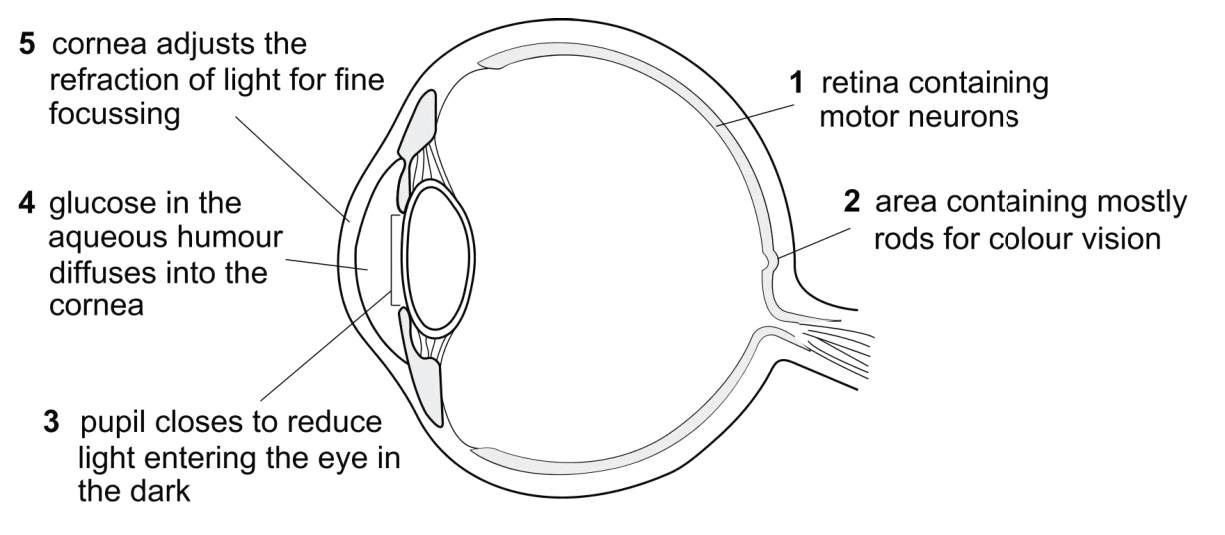
✍️ note 1 — retina မှာ ရှိတာ sensory (အာရုံခံ) ဆဲလ် တွေ၊ motor မဟုတ်ဘူး ✗။
note 2 — fovea မှာ အများဆုံး ရှိတာ cones၊ rods မဟုတ်ဘူး ✗။
note 3 — dark (မှောင်) ရင် pupil wide (ကျယ်)၊ ပိတ်တာ မဟုတ်ဘူး ✗။
note 5 — fine focus လုပ်တာ lens၊ cornea မဟုတ်ဘူး ✗။
note 4 — cornea မှာ သွေးကြော မရှိလို့ glucose က aqueous humour ကနေ cornea ထဲ diffusion နဲ့ ဝင်တယ် ✔ → option “note 4” က C။
မျက်လုံးထဲမှာ ပုံက ဇောက်ထိုး ကျတယ်
သစ်ပင်ရဲ့ အစက်တိုင်းက ray တွေ မျက်လုံးဆီ လာတယ်။သစ်ပင် တစ်ပင်ကို ကြည့်နေတယ် ဆိုပါစို့။ သစ်ပင်ရဲ့ အစက် တိုင်းကနေ အလင်း ray (အလင်း မျဉ်း) တွေ မျက်လုံးဆီ လာတယ်။
ထိပ်က ray ချိုးပြီး retina အောက်ခြေမှာ ကျတယ်။သစ်ပင် ထိပ်က ray က cornea နဲ့ lens ကို ဖြတ်ပြီး ချိုးတယ် (ကွေးတယ်)။ ဆက်သွားတော့ retina ရဲ့ အောက်ခြေမှာ ကျတယ်။
အောက်ခြေ ray က retina အပေါ်ဘက်မှာ ကျတယ်။သစ်ပင် အောက်ခြေက ray ကတော့ ကန့်လန့် ဖြတ်ပြီး retina ရဲ့ အပေါ်ဘက်မှာ ကျတယ်။
🤔 Predict: rays from the top of the tree land at the bottom of the retina, and rays from the bottom land at the top. Compared with the tree, the image is…
🔍 မေးခွန်း ဖြည်မယ်
rays = အလင်း မျဉ်းတွေ၊
land at = ကျတယ်၊
Compared with the tree = သစ်ပင် အစစ်နဲ့ ယှဉ်ရင်၊
the image is… = retina ပေါ်က ပုံက…
မေးနေတာ — retina ပေါ်က ပုံရဲ့ အနေအထား (မတ်/ဇောက်ထိုး) နဲ့ အရွယ်။
အပေါ်က ray အောက်ကို၊ အောက်က ray အပေါ်ကို ရောက်လို့ ပုံ ဇောက်ထိုး။
အဝေးက သစ်ပင်ကြီးက မျက်လုံး အရွယ်ထဲ ကျလို့ သေးတယ်။
brain က နောက်မှ ပြန်လှန်ပေးတယ်။
ပုံ ဇောက်ထိုး၊ သေး — real image (တကယ့် ပုံ)ဒါကြောင့် retina ပေါ်က ပုံက ဇောက်ထိုး (inverted — upside down) ဖြစ်ပြီး အရွယ် သေးတယ်။ retina ဆိုတဲ့ မျက်နှာပြင် ပေါ်မှာ တကယ် ကျတဲ့ ပုံမို့ real image (တကယ့် ပုံ) လို့ ခေါ်တယ်။
brain (occipital) က ပုံ ပြန်လှန်ပြီး မတ်မတ် မြင်စေ။optic nerve က ဒီ ပုံ signal ကို brain ဆီ ပို့တယ်။ brain (occipital lobe) က ပုံကို ဖတ်ရင်း ပြန်လှန်ပြီး မတ်မတ် (upright) မြင်စေတယ်။
အနီး နဲ့ အဝေး — lens ပုံစံ ပြောင်းခြင်း
lens ပုံစံ ပြောင်း ချိန်ညှိ = accommodation (ချိန်ညှိခြင်း)near (အနီး) က ဖုန်းကို ကြည့်ရင် အလင်းကို ပိုချိုးဖို့ လိုတယ်။ lens က ပုံစံ ပြောင်းပြီး ချိန်ညှိတာကို accommodation (ချိန်ညှိခြင်း) လို့ ခေါ်တယ်။
near — ciliary muscle ကျုံ့တယ်။lens ကို ဝိုင်းပတ်ထားတဲ့ ciliary muscle (ချိန်ညှိ ကြွက်သား) contracts — ကျုံ့ပြီး ကွင်း သေးလာတယ်။
ligaments လျော့ → lens ထူ လုံး။ဒါကြောင့် lens ကို ဆွဲထားတဲ့ suspensory ligaments (ဆွဲကြိုး) slack — လျော့ပြီး lens က fat — ထူ လုံး လာတယ်။
🤔 Predict: you now look up from the phone to a far-away tree. Less bending of light is needed. What does the ciliary muscle do?
🔍 မေးခွန်း ဖြည်မယ်
look up from … to = …ကနေ မော့ပြီး …ကို ကြည့်၊
far-away = အဝေးက၊
Less bending of light is needed = အလင်း ကွေးဖို့ နည်းနည်းပဲ လိုတယ်။
မေးနေတာ — အဝေး ကြည့်ချိန် ciliary muscle ဘာလုပ်ပြီး lens ပုံစံ ဘယ်လို ဖြစ်မလဲ။
အဝေးအတွက် အလင်း နည်းနည်းပဲ ချိုးဖို့ လိုလို့ lens ပါးရမယ်။
ciliary muscle ပြေတော့ suspensory ligaments တင်းပြီး lens ကို ပါးအောင် ဆွဲတယ်။
iris က အလင်း ပမာဏကိုပဲ ထိန်းတယ်။
far — muscle ပြေ၊ ligaments တင်း → lens ပါး။far (အဝေး) က သစ်ပင်ကို ကြည့်ရင် ပြောင်းပြန် — muscle relaxes (ပြေ)၊ ligaments tight (တင်း) ဆွဲလို့ thin lens (ပါး) ဖြစ်တယ်။
အဝေး မမြင် နဲ့ အနီး မမြင် — မှန်ဘီလူး ဘယ်လို ကူလဲ
convex lens ray စု၊ concave lens ray ကား။မှန်ဘီလူး (lens) နှစ်မျိုး အရင် သိထားရအောင်။ အလယ် ထူတဲ့ convex lens (ခုံး lens) က ray တွေကို စုစေတယ် — converging။ အလယ် ပါးတဲ့ concave lens (ချိုင့် lens) က ray တွေကို ကားစေတယ် — diverging။
short sight (အဝေး မမြင်) — ray retina ရှေ့မှာ ဆုံ။short sight (အဝေး မမြင်ရောဂါ၊ myopia) မှာ မျက်လုံးလုံး ရှည်လွန်း (ဒါမှမဟုတ် lens ချိုး အားကောင်းလွန်း) လို့ အဝေးက ray တွေ retina မရောက်ခင် ရှေ့မှာ ဆုံသွားတယ်။ ဒါကြောင့် အဝေးက ဝါးတယ်။
🤔 Predict: in short sight the rays meet in front of the retina. Which lens in glasses would move the meeting point back onto the retina?
🔍 မေးခွန်း ဖြည်မယ်
short sight = အဝေး မမြင်၊
meet in front of the retina = retina ရှေ့မှာ ဆုံ၊
move the meeting point back onto = ဆုံတဲ့ နေရာကို နောက်ဆုတ်ပြီး … ပေါ် ရောက်စေ။
မေးနေတာ — ဆုံရာကို retina ပေါ် ပြန်ပို့ပေးမယ့် မျက်မှန် lens အမျိုးအစား။
ray တွေ စောစော ဆုံနေလို့ နည်းနည်း ကားပေးရမယ် — ကားစေတဲ့ lens က concave (diverging)။
convex ဆိုရင် ပိုစောစော ဆုံပြီး ပိုဝါးမယ်။
ကုနည်း — concave lens မျက်မှန်။ကုနည်း — concave lens မျက်မှန်။ ray တွေကို နည်းနည်း ကားပေးလိုက်တော့ နောက်ဆုတ်ပြီး retina ပေါ် တိတိ ဆုံတယ်။
long sight (အနီး မမြင်) — ray retina နောက်မှာ ဆုံ။long sight (အနီး မမြင်ရောဂါ၊ hyperopia) မှာ မျက်လုံးလုံး တိုလွန်းလို့ အနီးက ray တွေ retina နောက်မှာမှ ဆုံမယ့် ပုံ ဖြစ်တယ်။ ဒါကြောင့် အနီးက ဝါးတယ်။
ကုနည်း — convex lens မျက်မှန်။ကုနည်း — convex lens မျက်မှန်။ ray တွေကို ကြိုစုပေးလို့ retina ပေါ် ဆုံတယ်။
45 ကျော် lens မာ — presbyopia၊ convex lens နဲ့ ကု။အသက် 45 ကျော်ရင် lens က မာလာပြီး အနီး ကြည့်ဖို့ ထူထူ မလုံးနိုင်တော့ဘူး (presbyopia)။ စာဖတ် မျက်မှန် (reading lens) ကလည်း convex lens ပါ။
rod cell — အလင်းက rhodopsin ကို ခွဲတယ်
rod ထဲ pigment rhodopsin (ခရမ်း pigment) ကို light ထိတယ်။rod cell (မှိန်တဲ့ အလင်းခံ ဆဲလ်) ထဲမှာ ပြားပြားလေး disc တွေ ထပ်နေပြီး ခရမ်းရောင် pigment rhodopsin အပြည့် ရှိတယ်။ light (အလင်း) photon က rhodopsin ကို ထိတယ်။
rhodopsin → opsin + retinal — bleaching။rhodopsin က opsin (protein) နဲ့ retinal (vitamin A ကနေ လုပ်တဲ့ အပိုင်း) ဆိုပြီး နှစ်ခု ကွဲသွားတယ် — bleaching (အရောင်ဖျော့ခြင်း)။
⚠ retinal ✓ retinol ✗၊ အလင်းက ခွဲတာ၊ ပေါင်းတာ မဟုတ်။⚠ retinal ပါ — retinol ✗ မဟုတ်ဘူး။ ပြီးတော့ အလင်းက ခွဲတာ၊ ပေါင်းတာ မဟုတ်ဘူး။ IMAT က ဒီ နှစ်ချက်ကို ထောင်ချောက် လုပ်တယ်။
Na⁺ channels ပိတ် → rod hyperpolarised၊ ဓာတု လျော့။ကွဲတာနဲ့ rod ရဲ့ Na⁺ channels close — ပိတ်သွားလို့ rod က hyperpolarised (ပိုအနုတ်) ဖြစ်တယ်။ ထူးဆန်းတာက rod က အလင်းမှာ signal ဓာတု ထုတ်တာ လျော့သွားတာပါ။
bipolar → ganglion cell → optic nerve → brain။ဓာတု လျော့တာကို bipolar neurone က “အလင်း လာပြီ” လို့ ဖတ်ပြီး ganglion cell ဆီ ဆက်ပို့တယ်။ ganglion cell တွေရဲ့ axon တွေ စုပြီး optic nerve ဖြစ်လို့ nerve impulses က brain ဆီ သွားတယ်။
⚠ retina ganglion cell နဲ့ 51A ganglion မတူဘူး။⚠ retina ထဲက ganglion cell (optic nerve ကို ဖွဲ့တဲ့ neurone) နဲ့ သင်ခန်းစာ 51A PART 1 က ganglion (CNS အပြင်က ဆဲလ်ကိုယ် အစု) က နာမည်ပဲ ဆင်တယ် — မတူတဲ့ အရာ နှစ်ခုပါ။
dark မှာ ATP နဲ့ rhodopsin ပြန်ပေါင်း — vitamin A လို။dark (မှောင်) ထဲမှာ ATP သုံးပြီး opsin နဲ့ retinal ကို rhodopsin အဖြစ် ပြန်ပေါင်းတယ်။ ဒါကြောင့် ရုပ်ရှင်ရုံ ဝင်ရင် ခဏ မမြင်ရဘူး။ vitamin A မလောက်ရင် ညကန်းတယ်။
📝 IMAT 2020 · Question 40
Which one of the following will be caused by an appropriate stimulus of a rod cell in the retina of a healthy human eye?
✍️ အလင်း (stimulus) က rhodopsin ကို ခွဲတယ် → opsin + retinal = A။ retinol (B, D) ✗၊ C က ကိုယ်ခံအား စကားလုံး ✗၊ ပြန်ပေါင်းတာ (E) က မှောင်ထဲမှာ ✗။
cone သုံးမျိုး နဲ့ အရောင်ကန်း
cone (အရောင်ခံ cell) ၃ မျိုး — blue, green, red။retina ထဲက cone (အရောင်ခံ cell) တွေမှာ သုံးမျိုး ရှိတယ် — blue (အပြာ)၊ green (အစိမ်း)၊ red (အနီ) cone။ တစ်မျိုးစီမှာ pigment (အရောင်ခံ ဓာတု) အမျိုးအစား မတူဘူး။
blue ≈ 420 nm၊ green ≈ 530 nm၊ red ≈ 560 nm။ဂရပ်က အလင်းရဲ့ wavelength (လှိုင်းအလျား — nm နဲ့ တိုင်း) နဲ့ cone တစ်မျိုးစီ အလင်း စုပ်ယူတာကို ပြတယ်။ blue cone က ≈ 420 nm၊ green က ≈ 530 nm၊ red က ≈ 560 nm မှာ အများဆုံး စုပ်တယ်။
580 nm အဝါ — red နဲ့ green cone တစ်ပြိုင်နက်။အဝါရောင် အလင်း (580 nm) ဝင်လာရင် red cone ရော green cone ရော တစ်ပြိုင်နက် လှုံ့ဆော်ခံရတယ်။
brain က ပေါင်းပြီး “yellow” ဖတ်တယ်။brain က နှစ်မျိုး ပေါင်းတဲ့ ပမာဏကို ကြည့်ပြီး “yellow” လို့ ဖတ်တယ်။ cone သုံးမျိုးရဲ့ ရောစပ်ပုံကနေ အရောင် ထောင်ချီ မြင်ရတာပါ။
red/green pigment gene မှား — colour blindness (အရောင်ကန်း)green (ဒါမှမဟုတ် red) cone ရဲ့ pigment gene တစ်ခု မှားနေရင် အနီနဲ့ အစိမ်း အလင်းက တူတဲ့ signal ပေးလို့ ခွဲမရတော့ဘူး — red–green colour blindness (အနီ–အစိမ်း အရောင်ကန်း)။
gene က X ပေါ်မှာ — အမျိုးသား allele တစ်ခုနဲ့ ကန်း။ဒီ gene က X chromosome ပေါ်မှာ ရှိတယ် (သင်ခန်းစာ 37B)။ အမျိုးသားမှာ X တစ်ခုတည်း ရှိလို့ ချွတ်ယွင်းတဲ့ allele တစ်ခုနဲ့ပဲ အရောင်ကန်းတယ်။ သားက X ကို အမေ (mother) ဆီကပဲ ရပြီး အဖေ (father) ဆီက Y ကို ရတယ်။
အမျိုးသား ≈ 8%၊ အမျိုးသမီးမှာ ရှားတယ်။အမျိုးသား 12 ယောက်မှာ 1 ယောက်လောက် (≈ 8%၊ ဥရောပ မျိုးနွယ်မှာ — လူမျိုးအလိုက် ကွာတယ်) ဖြစ်တယ်။ အမျိုးသမီးမှာ X နှစ်ခုလုံး ချွတ်ယွင်းမှ ဖြစ်လို့ ရှားတယ်။
🤔 A red–green colour-blind man and a woman with no faulty allele have a daughter. What is the daughter?
🔍 မေးခွန်း ဖြည်မယ်
colour-blind man = အရောင်ကန်း အမျိုးသား၊
no faulty allele = ချွတ်ယွင်းတဲ့ allele မပါ၊
daughter = သမီး။
မေးနေတာ — ဒီ မိဘ နှစ်ယောက်ရဲ့ သမီးက ကန်းမလား၊ carrier ဖြစ်မလား၊ ဘာမှ မဖြစ်ဘူးလား။
သမီးက အဖေဆီက X (ချွတ်ယွင်းတဲ့ allele ပါ) ကို အမြဲ ရတယ်၊ အမေဆီက ကောင်းတဲ့ X ကို ရတယ်။
ကောင်းတဲ့ allele က လုံလောက်လို့ အရောင် ကောင်းကောင်း မြင်ပေမဲ့ carrier (သယ်ဆောင်သူ) ဖြစ်တယ် (သင်ခန်းစာ 37B)။
နား — အသံ ကြားခြင်း နဲ့ ချိန်ခွင်
sound = လေ ဖိအား လှိုင်း၊ ear canal ထဲ ဝင်တယ်။နောက်ဆုံး အာရုံ — နား။ sound (အသံ) ဆိုတာ လေ ဖိအား လှိုင်းပါ။ နားပေါက် (ear canal) ထဲ ဝင်လာတယ်။
ပါးလွှာတဲ့ အမြှေး eardrum (နားစည်) ကို ရိုက်ပြီး တုန်ခါ (vibrate) စေတယ်။
ossicles (အရိုးသေး ၃ ချောင်း) က pressure ~20 ဆ ချဲ့တယ်။နားစည်နောက်က ခန္ဓာကိုယ်ရဲ့ အသေးဆုံး အရိုး သုံးချောင်း ossicles က တုန်ခါမှုကို လွှဲပေးပြီး pressure (ဖိအား) ကို ~20 ဆ ချဲ့ပေးတယ်။
oval window တွန်း → cochlea (ခရုခွံ ပြွန်) ထဲ အရည် လှိုင်း။ossicles က oval window (ဘဲဥပုံ ပြတင်း) ကို တွန်းလို့ ခရုခွံပုံ ပြွန် cochlea ထဲက အရည် လှိုင်း ဖြစ်တယ်။ အရည်ကို လှုပ်ဖို့ ဖိအား ချဲ့ဖို့ လိုတာ ဒါကြောင့်။
hair cells (ဆံချည် ဆဲလ်) ကွေး → ion ဝင် → depolarise။အရည် လှိုင်းက hair cells (ဆံချည် ဆဲလ်) ရဲ့ ဆံချည်တွေကို bend — ကွေးစေတယ်။ ကွေးတာနဲ့ ion channel ပွင့်ပြီး ion ဝင်လို့ depolarise ဖြစ်တယ်။ အသံကို သတင်း (signal) ပြောင်းတဲ့ နေရာ ဒါပါ။
auditory nerve (အကြားအာရုံကြော) က brain ဆီ သယ်။auditory nerve (အကြားအာရုံကြော) က သတင်းကို ဦးနှောက်ဆီ သယ်တယ်။ အသံ ကျယ်ရင် ပစ်တဲ့ အကြိမ်ရေ (frequency) များတယ် — သင်ခန်းစာ 51A PART 2 မှာ သင်ခဲ့သလိုပဲ။
semicircular canals (ကွင်း ၃ ခု) — ခေါင်း လှည့်တာ သိ။cochlea ဘေးက အရည်ပြည့် ကွင်း သုံးခု semicircular canals က ခေါင်း လှည့်တာ (turning) ကို သိတယ်။ ခေါင်းလှည့်ရင် အရည် နောက်ကျ ကျန်ပြီး hair cells ကွေးလို့ပါ — ချိန်ခွင်အတွက်။
🤔 Years of loud music damage many hair cells in a man's cochlea, but his eardrum and ossicles are healthy. What happens?
🔍 မေးခွန်း ဖြည်မယ်
loud music = ကျယ်လောင်တဲ့ သီချင်း၊
damage = ပျက်စီးစေ၊
but … are healthy = ဒါပေမဲ့ … ကောင်းနေတုန်း။
မေးနေတာ — hair cells ပျက်ပြီး eardrum နဲ့ ossicles ကောင်းနေရင် ဘာဖြစ်မလဲ။
eardrum နဲ့ ossicles ကောင်းလို့ တုန်ခါမှုက cochlea ထဲ ရောက်တယ်။
ဒါပေမဲ့ တုန်ခါမှုကို nerve impulses ပြောင်းပေးတာ hair cells — ပျက်နေရင် nerve impulses နည်းလို့ နား ထိုင်းတယ်။
balance က semicircular canals အလုပ်။
အသံ မြင့် နိမ့် — cochlea ရဲ့ ဘယ်နေရာ တုန်လဲ
cochlea ထဲ basilar membrane (အောက်ခံ အမြှေး) ရှိတယ်။cochlea (ခရုခွံပုံ ပြွန်) ကို လှိမ့်ထားတာ ဖြေပြီး ဖြန့်ကြည့်ရအောင်။ အထဲမှာ hair cells တွေ ထိုင်နေတဲ့ ကြိုးပြား ရှည် basilar membrane (အောက်ခံ အမြှေး) ရှိတယ်။
base — ကျဉ်း တင်း — high pitch တုန်။oval window နားက base (အစပိုင်း) မှာ ကြိုးပြားက ကျဉ်းပြီး တင်းတယ်။ အသံ မြင့် (high-pitched sounds — တစ်စက္ကန့်မှာ အကြိမ် များများ တုန်တဲ့ အသံ) ဆိုရင် ဒီနေရာ အများဆုံး တုန်တယ်။
tip — ကျယ် လျော့ — low pitch တုန်။tip (အဆုံးပိုင်း) မှာ ကြိုးပြားက ကျယ်ပြီး လျော့တယ်။ အသံ နိမ့် (low-pitched sounds) ဆိုရင် ဒီနေရာ အများဆုံး တုန်တယ်။ brain က “ဘယ်နေရာက signal ပို့လဲ” ကြည့်ပြီး pitch ကို သိတယ်။
လူ့နား 20 Hz ကနေ 20 000 Hz အထိ ကြားတယ်။Hz (hertz) ဆိုတာ တစ်စက္ကန့်မှာ တုန်တဲ့ အကြိမ်ရေ။ လူ့ နားက 20 Hz ကနေ 20 000 Hz အထိ ကြားတယ်။ 20 000 Hz ကျော်တာ (ultrasound) နဲ့ 20 Hz အောက် (infrasound) ကို မကြားဘူး။
🤔 Predict: in old age the hair cells near the base of the cochlea die first. Which sounds does an old person stop hearing first?
🔍 မေးခွန်း ဖြည်မယ်
in old age = အသက်ကြီးချိန်၊
near the base = base (oval window ဘက် အစပိုင်း) နားက၊
die first = အရင်ဆုံး သေတယ်၊
stop hearing = မကြားတော့။
မေးနေတာ — base က hair cells အရင် သေရင် ဘယ်လို အသံကို အရင် မကြားတော့မလဲ။
base က ကျဉ်းပြီး တင်းလို့ အသံ မြင့် နဲ့ တုန်တယ်။
ဒီက hair cells ပျက်ရင် ခြင် အသံလို မြင့်တဲ့ အသံ အရင် မကြားတော့ဘူး၊ ဗုံသံလို နိမ့်တဲ့ အသံ (tip) ကြားနေတုန်းပဲ။
အသက်ကြီး — base hair cells ပျက်၊ အသံမြင့် မကြား။အသက်ကြီးလာရင် base က hair cells တွေ အရင် ပျက်လို့ အသံ မြင့်တွေကို အရင် မကြားတော့ဘူး။ ကျယ်လောင်လွန်းတဲ့ အသံ ကြာကြာ နားထောင်ရင်လည်း hair cells ပျက်တယ်။
လျှာ၊ နှာခေါင်း နဲ့ အရေပြား — တခြား receptor တွေ
လျှာ ပေါ်မှာ taste buds (အရသာ ခံ အဖု) တွေ ရှိတယ်။
အရသာ ၅ မျိုး — sweet, salty, sour, bitter, umami။အစာထဲက ဓာတုပစ္စည်းတွေ တံတွေးထဲ ပျော်ပြီး ချိတ်ရင် ချို (sweet)၊ ငန် (salty)၊ ချဉ် (sour)၊ ခါး (bitter)၊ umami (အသားဟင်းချို — ဟင်းခတ်မှုန့် အရသာ) ဆိုပြီး ၅ မျိုး ခံစားတယ်။
နှာခေါင်း smell receptor — နှာပိတ်ရင် အရသာ မရှိသလို။နှာခေါင်း အမိုးမှာ smell receptor cells (အနံ့ ခံ ဆဲလ်) တွေ ရှိတယ်။ လေထဲက ဓာတု မော်လီကျူး တွေ ချိတ်ရင် အနံ့ ရတယ်။ ဖျားနာလို့ နှာခေါင်း ပိတ်ရင် အစာ အရသာ မရှိသလို ဖြစ်တာ ဒါကြောင့်။
taste နဲ့ smell = chemoreceptor (ဓာတု ခံစားကိရိယာ)taste နဲ့ smell နှစ်ခုလုံးက ဓာတုပစ္စည်းကို ခံစားလို့ chemoreceptor (ဓာတု ခံစားကိရိယာ) တွေ။
rod, cone = photoreceptor၊ hair cell = mechanoreceptor။rod နဲ့ cone က အလင်း ခံ photoreceptor၊ hair cell နဲ့ Pacinian corpuscle က လှုပ်ရှား ဖိအား ခံ mechanoreceptor ပါ။
ပူ၊ အေး၊ နာ ကို free nerve ending က ခံစားတယ်။အရေပြားမှာ အထိ ခံ receptor တွေ မျက်နှာပြင် နား၊ ဖိအား ခံ Pacinian corpuscle တွေ အောက်နက်နက်မှာ ရှိတယ်။ ပူ၊ အေး၊ နာ ကို free nerve endings (ဘာမှ မပတ်တဲ့ nerve အဆုံး) တွေက ခံစားတယ်။
🤔 Chilli feels “hot” in the mouth even when the food is cold, because a chemical in chilli opens the same channels as heat does. Which receptors does it act on?
🔍 မေးခွန်း ဖြည်မယ်
feels “hot” = ပူသလို ခံစားရ၊
even when = … ဖြစ်နေတောင်၊
opens the same channels as heat does = အပူ ဖွင့်တဲ့ channel ကိုပဲ ဖွင့်တယ်၊
act on = သက်ရောက်တယ်။
မေးနေတာ — ငရုတ်သီးဓာတုက ဘယ် receptor အမျိုးအစားကို သက်ရောက်သလဲ။
ပူတာ၊ နာတာကို ခံစားတာ free nerve endings။
ငရုတ်သီးထဲက ဓာတုက ပူတဲ့ channel ကို ဖွင့်လို့ ဦးနှောက်က “ပူတယ်” လို့ ထင်တယ်။
taste bud က ချို/ငန်/ချဉ်/ခါး/umami ပဲ၊ Pacinian က ဖိအား။
🎯 Match each receptor with what it senses
👤 လူပုဂ္ဂိုလ်များ
1861 Broca — ဘယ်ဘက် frontal lobe ထဲက စကားပြော area။
1874 Wernicke — temporal lobe ထဲက စကား နားလည်တဲ့ area။
🔁 သင်ခန်းစာ တစ်ခုလုံး ပြန်စစ်မယ်
🤔 Put the steps at a synapse in order.
🔍 မေးခွန်း ဖြည်မယ်
Put … in order = အစဉ်လိုက် စီပါ၊
steps = အဆင့်တွေ၊
release = လွှတ်ထုတ်၊
binds = ချိတ်တယ်။
မေးနေတာ — synapse မှာ signal ကူးပုံ အဆင့်လေးဆင့်ကို ရှေ့က နောက်ကို မှန်မှန် စီထားတာ ဘယ်ဟာလဲ။
presynaptic ဘက်မှာ Ca²⁺ ဝင် → vesicle က ACh ကို exocytosis နဲ့ လွှတ် → ACh က postsynaptic receptor နဲ့ ချိတ် → ligand-gated channel ပွင့်ပြီး Na⁺ ဝင်။
🤔 Which nerve carries nerve impulses from the hair cells of the cochlea to the brain?
🔍 မေးခွန်း ဖြည်မယ်
carries = သယ်တယ်၊
from the hair cells of the cochlea = cochlea ထဲက hair cells ဆီကနေ၊
to the brain = brain ဆီ။
မေးနေတာ — နားက သတင်းကို brain ဆီ ပို့တဲ့ nerve ရဲ့ နာမည်။
cochlea ရဲ့ hair cells က ပြောင်းပေးတဲ့ signal ကို auditory nerve က brain ဆီ သယ်တယ်။
optic nerve က retina ကနေ၊ vagus nerve က medulla ကနေ heart ဆီ၊ motor neurone က CNS ကနေ muscle ဆီ။
🤔 Nicotine opens acetylcholine receptors just as acetylcholine does. Nicotine is therefore…
🔍 မေးခွန်း ဖြည်မယ်
opens = ဖွင့်တယ်၊
just as … does = … လုပ်သလိုပဲ၊
therefore = ဒါကြောင့်။
မေးနေတာ — neurotransmitter လိုပဲ receptor ကို ဖွင့်ပေးတဲ့ ဆေးကို ဘယ်လို ခေါ်လဲ။
neurotransmitter လို ဖွင့်ပေးတဲ့ ဆေးက agonist။
receptor ကို ပိတ်ထားတဲ့ curare က antagonist၊ enzyme ကို ပိတ်တာက organophosphate။
🤔 Which part of the brain keeps the body in balance and makes movements smooth?
🔍 မေးခွန်း ဖြည်မယ်
keeps the body in balance = ခန္ဓာကို ချိန်ခွင် မှန်အောင် ထိန်း၊
makes movements smooth = လှုပ်ရှားမှုကို ချောမွေ့စေ။
မေးနေတာ — ဒီ အလုပ် နှစ်ခု လုပ်တဲ့ brain အပိုင်း။
cerebellum (ဦးနှောက်ငယ်) — စက်ဘီး စီးသလို ချိန်ခွင် ထိန်းတယ်။
medulla က heart နဲ့ breathing၊ cerebrum က တွေး၊ မှတ်၊ ခံစား၊ pineal က melatonin။
🤔 Which structure joins the left and right halves of the cerebrum?
🔍 မေးခွန်း ဖြည်မယ်
structure = အစိတ်အပိုင်း၊
joins = ဆက်ပေးတယ်၊
left and right halves = ဘယ်/ညာ နှစ်ခြမ်း။
မေးနေတာ — cerebrum ရဲ့ နှစ်ခြမ်းကို ဆက်ထားတဲ့ အပိုင်းရဲ့ နာမည်။
axon တံတား corpus callosum က နှစ်ခြမ်းကို ဆက်တယ်။
hippocampus က မှတ်ဉာဏ် အသစ်၊ thalamus က အာရုံ လမ်းဆုံ၊ medulla oblongata က heart နဲ့ breathing ကို ထိန်းတယ်။
🤔 Which lens corrects short sight (myopia)?
🔍 မေးခွန်း ဖြည်မယ်
corrects = ပြင်ပေးတယ်၊ short sight (myopia) = အဝေး မမြင်ရောဂါ — ray တွေ retina ရှေ့မှာ ဆုံ။
မေးနေတာ — အဝေး မမြင်ရောဂါကို ပြင်ပေးတဲ့ lens အမျိုးအစား။
short sight မှာ ray တွေ retina ရှေ့မှာ ဆုံလို့ ကားပေးတဲ့ concave lens လိုတယ်။
convex lens က long sight နဲ့ စာဖတ် မျက်မှန်အတွက်။
🎉 synapse ကို ဓာတုနဲ့ ကူးပုံ၊ ဆေးနဲ့ အဆိပ်တွေ၊ brain ရဲ့ lobe နဲ့ jet lag နာရီ၊ မျက်လုံး၊ နားနဲ့ တခြား အာရုံ — အကုန် ရပြီ။ အောက်က quiz နဲ့ စမ်းကြည့်ပါ။