Momentum and rotation
ကြက်ဥကို concrete ပေါ် ချရင် ကွဲပြီး ခေါင်းအုံးပေါ် ချရင် မကွဲဘူး။ ဘာလို့လဲ? momentum၊ တိုက်မှု၊ moment၊ စက်ဝိုင်း လည်ပတ်မှု၊ SHM ကို ပဟေဠိ ငါးခုနဲ့ လေ့လာမယ်။
Momentum and impulse
momentum နဲ့ impulse — ကြက်ဥ ပဟေဠိ
ကြက်ဥ နှစ်လုံး — ဘာလို့ တစ်လုံးပဲ ကွဲလဲ?
ကြက်ဥ ၂ လုံး အမြင့် တူ လွှတ်ချ — concrete နဲ့ pillow ပေါ်။ကြက်ဥ နှစ်လုံးကို အမြင့် တူတူ (same height) ကနေ တစ်ပြိုင်နက် လွှတ်ချမယ်။ ဘယ်ဘက်အောက်မှာ concrete (ကွန်ကရစ်)၊ ညာဘက်အောက်မှာ pillow (ခေါင်းအုံး)။
concrete ပေါ် ကျတဲ့ ဥ — ဖြောက်! ခွံကွဲ (crack) ပြီး အနှစ် ထွက်သွားတယ်။
pillow ပေါ်က ဥ မကွဲဘူး။pillow ပေါ် ကျတဲ့ ဥကတော့ ခေါင်းအုံး နစ်ဝင်သွားပြီး မကွဲ (no crack) ဘူး။
အမြန် တူ၊ ရပ်တာ တူ — ဘာ ကွာလို့ တစ်လုံးပဲ ကွဲလဲ?ဥ နှစ်လုံး အမြန် တူတူနဲ့ ကျပြီး နှစ်လုံးလုံး ရပ်သွားတာ တူတယ်။ ဒါဆို ဘာ (why?) ကွာလို့ တစ်လုံးပဲ ကွဲတာလဲ?
ဒီ PART ဆုံးရင် ဒီ မေးခွန်းကို ဂဏန်းနဲ့ ဖြေနိုင်မယ်။ ပြီးရင် တိုက်မှု၊ ဆင်းဆင့်၊ စက်ဝိုင်း လည်တာ၊ လွှဲတာကို တစ်ခုချင်း ဆက်မယ်။
Momentum — p = mv
ဘောလုံး 2 m/s — ရပ်ရ လွယ်တယ်။ဘောလုံး (ball) တစ်လုံး 2 m/s နဲ့ လိမ့်လာတယ်။ ခြေထောက်နဲ့ အလွယ်တကူ ရပ်လို့ ရတယ် (easy to stop)။
truck လည်း 2 m/s — mass များလို့ ရပ်ရ ခက်တယ်။ကုန်တင်ကား (truck) ကလည်း 2 m/s ပဲ — ဒါပေမယ့် ရပ်ဖို့ အရမ်း ခက်တယ် (hard to stop)။ mass (ဒြပ်ထု) အများကြီး ပိုလို့ပါ။
ရပ်ရ ခက်မှု = momentum (အရှိန်အဟုန်) p = m × vရွေ့နေတဲ့ အရာကို ရပ်ဖို့ ဘယ်လောက် ခက်လဲ — ဒါကို momentum (အရှိန်အဟုန်) p လို့ ခေါ်တယ်။
p = mass × velocity၊
တိုတို ရေးရင် p = m × v။
unit kg m/s — truck 8000၊ ဘောလုံး 0.8။mass ကို kg၊ velocity ကို m/s နဲ့ တိုင်းလို့ unit က kg m/s။ ဘောလုံး 0.8 kg m/s၊ truck 8000 kg m/s — truck ကို ရပ်ရ ခက်တာ ဒါကြောင့်ပါ။
momentum က vector — ဘယ်ဘက် သွားရင် p အနုတ်။velocity မှာ ဦးတည်ရာ ပါလို့ momentum မှာလည်း ပါတယ် (vector)။ ညာဘက်ကို + ယူရင် ဘယ်ဘက် သွားတဲ့ ဘောလုံးက v = −2 m/s၊ p လည်း အနုတ်။
🤔 A 2 kg ball moves at 3 m/s. What is its momentum?
p = mv = 2 × 3 = 6 kg m/s။
9 က kinetic energy 12mv² = 12 × 2 × 3² နဲ့ ရောမိတာ၊ 1.5 က 3 ကို 2 နဲ့ စားမိတာ။
👉 force ဘယ်လောက် ကြာကြာ တွန်းလဲ ဆိုတာလည်း အရေးကြီး။👉 momentum ပြောင်းဖို့ force လိုတယ်။ ဒါပေမယ့် force ဘယ်လောက် ကြာကြာ တွန်းလဲ ဆိုတာလည်း အရေးကြီးတယ်။
Newton’s law with momentum — F = ΔpΔt
လှည်းကို F နဲ့ Δt ကြာ တွန်းတယ်။ငြိမ်နေတဲ့ လှည်း (trolley) ကို force F နဲ့ တွန်းတယ်။ တွန်းနေတဲ့ ကြာချိန်ကို Δt (delta t) လို့ ခေါ်မယ်။
ပိုမြန်လာ — momentum ပြောင်း = Δp။တွန်းနေသမျှ လှည်း ပိုမြန် (faster) လာတယ် — momentum ပြောင်းတယ်။ ပြောင်းသွားတဲ့ ပမာဏကို Δp (delta p) လို့ ရေးတယ်။
second law: F = ΔpΔtIsaac Newton (သင်ခန်းစာ 67) ရဲ့ ဒုတိယ နိယာမ (second law) ကို momentum နဲ့ ရေးရင်:
force = momentum ပြောင်းနှုန်း၊
F = ΔpΔt။
mass မပြောင်း (constant mass) ရင် Δp = mΔv ဖြစ်လို့ F = mΔvΔt = ma — သင်ခန်းစာ 67 က ပုံသေနည်း အတိုင်းပဲ။
👉 ပြောင်းရေးရင် ပမာဏ အသစ် ထွက်လာမယ်။👉 ဒီ ညီမျှခြင်းကို နည်းနည်း ပြောင်းရေးရင် အရေးကြီးတဲ့ ပမာဏ အသစ် တစ်ခု ထွက်လာတယ်။
Impulse — FΔt = Δp
နှစ်ဖက်လုံး × Δt — Δt ချေသွားတယ်။F = ΔpΔt ရဲ့ နှစ်ဖက်လုံးကို Δt နဲ့ မြှောက် (× Δt both sides) မယ်။ ညာဘက်မှာ အပေါ် Δt နဲ့ အောက် Δt ချေ (cancel) သွားတယ်။
FΔt = impulse (တွန်းအား ပမာဏ) = Δpကျန်တာက FΔt = Δp။ force × ကြာချိန် (force × time) FΔt ကို impulse (တွန်းအား ပမာဏ) လို့ ခေါ်တယ်။ impulse = momentum ပြောင်းလဲမှု Δp။
impulse unit = N s။impulse ရဲ့ unit က force ရဲ့ N နဲ့ time ရဲ့ s ကို မြှောက်ထားတဲ့ N s (newton second)။
N s = kg m/s — momentum unit နဲ့ တူ။N = kg m/s² ဖြစ်လို့ N s = kg m/s² × s = kg m/s — momentum ရဲ့ unit နဲ့ အတူတူပဲ (= momentum)။
🤔 A 4 N force pushes a trolley for 3 s. What is the change in its momentum?
Δp = impulse = FΔt = 4 × 3 = 12 kg m/s။
1.3 က 4 ကို 3 နဲ့ စားမိတာ၊ 7 က ပေါင်းမိတာ၊ 0.75 က 3 ကို 4 နဲ့ စားမိတာ။
👉 force တက်ပြီး ပြန်ကျရင် impulse ဘယ်လို ရှာမလဲ?👉 တကယ့် တိုက်မှုမှာ force က ပုံသေ မဟုတ်ဘူး — တက်ပြီး ပြန်ကျတယ်။ အဲဒီအခါ impulse ကို ဘယ်လို ရှာမလဲ?
Force–time graph — area = impulse
force–time graph: ဒေါင် F၊ အလျား t။force က အချိန်နဲ့ ပြောင်းရင် force–time graph ဆွဲတယ်: ဒေါင်လိုက် ဝင်ရိုးက F (N)၊ အလျားလိုက် ဝင်ရိုးက t (s)။
စတုဂံ area = 50 × 0.2 = 10 N s = impulse။force ပုံသေ ဆိုရင် ဂရပ်က စတုဂံ: 50 N ကို 0.2 s တွန်းရင် စတုဂံရဲ့ area = FΔt = 50 × 0.2 = 10 N s။ ဒါ impulse ပဲ၊ Δp နဲ့ ညီတယ်။
ကန်ရင် 0 → 400 N → 0 (0.02 s) — တြိဂံ။ဘောလုံး ကန်တာလို force က 0 ကနေ 400 N အထိ တက်ပြီး 0.02 s အတွင်း 0 ပြန်ကျရင် ဂရပ်က တြိဂံ။
✍️ တြိဂံ area = 12 × အခြေ × အမြင့် = 12 × 0.02 × 400 = 4 N s = Δp
ငြိမ်နေတဲ့ 0.1 kg ဘောလုံးဆို Δp = m × v ဖြစ်လို့ v = Δpm = 40.1 = 40 m/s
မျဉ်းအောက် area = impulse = Δp။ဂရပ် ပုံစံ ဘယ်လိုပဲ ဖြစ်ဖြစ် မျဉ်းအောက်က area (ဧရိယာ) = impulse = Δp လို့ မှတ်ထား။
🤔 A force–time graph shows a constant 20 N force acting for 0.5 s. What impulse does it give?
ဂရပ်က စတုဂံ: area = 20 × 0.5 = 10 N s။
40 က 20 ကို 0.5 နဲ့ စားမိတာ၊ 20.5 က ပေါင်းမိတာ။
👉 ဒီ FΔt = Δp နဲ့ ကြက်ဥ ပဟေဠိကို ဖြေလို့ ရပြီ။
ကြက်ဥ ပဟေဠိ — Δt ရှည်ရင် F သေး
ဥ ၂ လုံး Δp တူတယ်။ကြက်ဥ နှစ်လုံးကို ပြန်ကြည့်မယ်။ အမြန် တူတူနဲ့ ကျပြီး နှစ်လုံးလုံး 0 ဖြစ်သွားလို့ momentum ပြောင်းတာ Δp တူတယ် (same Δp)။
concrete: Δt 0.001 s တို → F ကြီး → ကွဲ။concrete ပေါ်မှာ ဥက 0.001 s အတွင်း ရုတ်တရက် ရပ်တယ်။ Δt အရမ်း တိုလို့ F = ΔpΔt အရမ်း ကြီး (big F) — ခွံ ကွဲတယ်။
pillow: Δt 0.1 s → F 100 ဆ သေး → မကွဲ!pillow ပေါ်မှာတော့ ခေါင်းအုံး နစ်ရင်း 0.1 s ကြာမှ ရပ်တယ်။ Δt 100 ဆ ရှည်လို့ force 100 ဆ သေး (small F) — မကွဲဘူး။ ပဟေဠိ ဖြေပြီ!
airbag, ဒူးကွေး — Δt ရှည်အောင် လုပ်ပြီး F လျှော့။ကား airbag နဲ့ ခုန်ချရင် ဒူးကွေး (bent knees) တာ ဒီ အကြံပဲ — ရပ်ချိန် Δt ကို ရှည် (long Δt) စေပြီး ကိုယ်ပေါ် ကျတဲ့ force ကို လျှော့တယ်။
🤔 A person jumps down and lands with bent knees instead of straight legs. Why is the force on the legs smaller?
ရပ်သွားတာ တူလို့ Δp တူတယ်၊ impulse လည်း တူတယ်။
ဒူးကွေးရင် Δt ရှည်လို့ F = ΔpΔt သေးတယ်။
ဒူးကွေးရင် ရပ်ချိန် တိုတာ မဟုတ်ဘဲ ရှည်တာပါ။
👉 ကဲ ဂဏန်းနဲ့ တွက်ကြည့်မယ်။
✍️ ကြက်ဥ — force ဘယ်လောက်?
✍️ ကြက်ဥ mass 0.06 kg၊ 5 m/s နဲ့ ခေါင်းအုံးပေါ် ကျပြီး 0.1 s အတွင်း ရပ်တယ် (ပြီးခဲ့တဲ့ ပုံက pillow)။ ဥပေါ် ကျတဲ့ force ဘယ်လောက်လဲ?
အဆင့် 1 — Δp ရှာ: velocity 5 ကနေ 0 ဖြစ်လို့ Δp = m × Δv = 0.06 × 5 = 0.3 kg m/s။
အဆင့် 2 — F = ΔpΔt ထဲ ထည့်: 0.3 ကို 0.1 နဲ့ စား။
F = 3 N — ခွံ မကွဲလောက်ဘူး။
concrete ပေါ်မှာ Δt = 0.001 s ပဲ ကြာရင် F = 0.30.001 = 300 N — 100 ဆ ကြီးတယ်။ Δt နည်းလေ F ကြီးလေ။
👉 ဥက ရပ်သွားတာ။ ဘောလုံးက နံရံကို ထိပြီး ပြန်ကန်လာရင်ကော?
✍️ နံရံကို ထိပြီး ပြန်ကန် — Δp
✍️ 0.5 kg ဘောလုံး +4 m/s နဲ့ နံရံ (wall) ဆီ သွားတယ်။ နံရံဘက် (ညာ) ကို + ယူမယ်။
နံရံကို 0.05 s ထိပြီး 3 m/s နဲ့ ပြန်ကန်တယ်။ ဘယ်ဘက် သွားလို့ velocity = −3 m/s။
တိုက်ခင် p = 0.5 × (+4) = +2.0 kg m/s။
ပြန်ကန်ပြီး p = 0.5 × (−3) = −1.5 kg m/s။
Δp = နောက် − ရှေ့ = −1.5 − (+2.0) = −3.5 kg m/s။
F = ΔpΔt = −3.50.05 = −70 N — အနုတ် ဆိုတာ နံရံက ဘောလုံးကို ဘယ်ဘက် 70 N နဲ့ ပြန်တွန်းတာ။
⚠ ဦးတည်ရာ ပြောင်းလို့ Δv = 4 + 3 = 7၊ Δp = 3.5 ✓⚠ ထောင်ချောက်: Δv = 4 − 3 = 1 မဟုတ်ဘူး။
ဦးတည်ရာ ပြောင်းလို့ Δv = 4 + 3 = 7 m/s၊
Δp = 0.5 × 7 = 3.5 ✓
🤔 A 0.2 kg ball hits a wall at 5 m/s and bounces straight back at 5 m/s. What is the size of its change of momentum?
Δp = 0.2 × (−5) − 0.2 × (+5) = −2.0၊ ပမာဏ 2.0 kg m/s။
0 က 5 − 5 လို့ ဦးတည်ရာ မေ့ပြီး နုတ်မိတာ၊ 1.0 က တစ်ဖက်တည်း ယူမိတာ။
🔁 ပြန်ကြည့်မယ် — momentum နဲ့ impulse
🤔 Which has the larger momentum: a 0.01 kg bullet at 500 m/s or a 50 kg runner at 0.2 m/s?
ကျည်: 0.01 × 500 = 5 kg m/s။
အပြေးသမား: 50 × 0.2 = 10 kg m/s — ပိုကြီးတယ်။
မြန်တာ တစ်ခုတည်းနဲ့ momentum မဆုံးဖြတ်ဘူး၊ mass ပါ မြှောက်ရတယ်။
🤔 The force on a ball rises steadily from 0 to 600 N and falls steadily back to 0, in a total time of 0.010 s. The impulse on the ball is:
F–t graph က တြိဂံ: area = 12 × 0.010 × 600 = 3 N s။
6 N s က 12 မေ့ပြီး စတုဂံလို တွက်တာ။
🤔 A 0.05 kg tennis ball at rest is hit with an average force of 150 N for 0.010 s. Its speed afterwards is:
impulse = FΔt = 150 × 0.010 = 1.5 N s = Δp။
v = Δpm = 1.50.05 = 30 m/s။
1.5 က Δp (kg m/s) ကို speed လို့ ယူမိတာ။
🤔 The unit of impulse, N s, is the same as:
N = kg m/s² ဆိုတော့ N s = kg m/s² × s = kg m/s — momentum ရဲ့ unit။
kg m/s² က N (force)၊ J က energy။
Collisions and explosions
တိုက်မှု နဲ့ ပေါက်ကွဲမှု — billiard ပဟေဠိ
Billiard — အဖြူ ဘာလို့ ရပ်သွားလဲ?
billiard: အဖြူက ငြိမ်နေတဲ့ အနီကို တည့်တည့် တိုက်တယ်။billiard စားပွဲပေါ်မှာ အဖြူ (white) ဘောလုံး လိမ့်လာပြီး ငြိမ်နေတဲ့ အနီ (red) ဘောလုံးကို တည့်တည့် တိုက်တယ်။
အဖြူ ရပ်သွား၊ အနီက v နဲ့ ဆက်လိမ့်။တိုက်ပြီးတာနဲ့ အဖြူ ချက်ချင်း ရပ်သွား (stops) ပြီး အနီက အဖြူ ရဲ့ အမြန် v အတိုင်း ဆက်လိမ့်သွားတယ်။
အဖြူရဲ့ ရွေ့အား ဘယ်ရောက်လဲ? ဘာလို့ ရပ်လဲ?အဖြူရဲ့ ‘ရွေ့အား’ က ဘယ်ရောက်သွားလဲ? ဘာလို့ ရပ်သွားလဲ (why?) — ဒီ PART မှာ ဖြေမယ်။
Conservation of momentum — Σp မပြောင်း
A က B ကို F နဲ့ ရှေ့ တွန်းတယ်။လှည်း A က ငြိမ်နေတဲ့ လှည်း B ကို ဝင်တိုက်တယ်။ ထိနေတုန်း A က B ကို force F နဲ့ ရှေ့ တွန်းတယ် (F on B)။
B က A ကို F ညီညီ နောက်ပြန် တွန်း — third law။B ကလည်း A ကို force ညီညီ နောက်ပြန် တွန်းတယ် (F on A) — Newton ရဲ့ third law (တတိယ နိယာမ): equal and opposite။
Δt တူ → ΔpA = −ΔpBနှစ်ယောက် ထိနေတဲ့ Δt တူတူ (same Δt) — ဒါကြောင့် impulse ညီပြီး ဦးတည်ရာ ဆန့်ကျင်တယ်: ΔpA = −ΔpB။
A ဆုံးတာ B ရ — Σp before = Σp afterA ဆုံးတဲ့ momentum ကို B ရတယ်။ ဒါကြောင့် စုစုပေါင်း Σp (sigma p) မပြောင်းဘူး: Σp before = Σp after။
conservation of momentum (momentum ထိန်းသိမ်းမှု)ဒါကို conservation of momentum (momentum ထိန်းသိမ်းမှု) လို့ ခေါ်တယ်။ အပြင်က force (external force) မရှိရင် တိုက်မှု တိုင်းမှာ မှန်တယ်။
👉 ကပ်သွားတဲ့ လှည်း နှစ်စီးနဲ့ တွက်ကြည့်မယ်။
✍️ ကပ်သွားတဲ့ လှည်း — momentum မြှား အရှည် မပြောင်း
✍️ 2 kg လှည်း 3 m/s နဲ့ ငြိမ်နေ (at rest) တဲ့ 1 kg လှည်းကို တိုက်ပြီး ကပ်သွားတယ်။ ကပ်ပြီး အမြန် ဘယ်လောက်လဲ?
တိုက်ခင် Σp = 2 × 3 + 1 × 0 = 6 kg m/s။ ငြိမ်နေတဲ့ လှည်းရဲ့ p က 0။ ဝါရောင် မြှား အရှည်က p = 6 ကို ပြတယ်။
ကပ်သွား (stuck) တော့ mass 2 + 1 = 3 kg လှည်း တစ်စီးလို အမြန် v တစ်ခုတည်းနဲ့ ရွေ့တယ်။
Σp မပြောင်းလို့ 3v = 6 → v = 63 = 2 m/s။
မြှား အရှည် တူ = momentum မပြောင်း၊ mass များ → v လျော့။တိုက်ပြီး မြှားက တိုက်ခင် မြှားနဲ့ အရှည် အတူတူ — same length ဆိုတာ စုစုပေါင်း momentum မပြောင်းတာပါ။ mass များလာလို့ အမြန် လျော့ရတယ်။
🤔 A 3 kg trolley at 4 m/s hits a 1 kg trolley at rest and they stick together. What is their common speed?
Σp = 3 × 4 = 12၊
(3 + 1) v = 12 → v = 3 m/s။
12 က momentum ကို speed လို့ ယူမိတာ၊ 4 က mass ပေါင်းဖို့ မေ့တာ။
👉 momentum မပြောင်းဘူး။ ရွေ့လျား စွမ်းအင် (KE) ကော မပြောင်းဘူးလား?
KE ဆုံးသွားတယ် — ဘယ်ကို ရောက်သွားလဲ?
KE (ရွေ့လျား စွမ်းအင်) = 12mv²၊ unit J။Kinetic Energy (KE၊ ရွေ့လျား စွမ်းအင်) — ရွေ့နေတဲ့ ပစ္စည်းမှာ ပါတဲ့ စွမ်းအင်ကို KE = 12mv² နဲ့ တွက်တယ်၊ unit J (joule)။
ဒီ ပုံသေနည်း ဘယ်က လာလဲ ဆိုတာ သင်ခန်းစာ 69 မှာ ပြမယ်။ ဒီမှာ သုံးရုံပဲ။
တိုက်ခင် ရွေ့နေတာ 2 kg လှည်း တစ်စီးတည်း: KE = 12 × 2 × 3² = 9 J — အစိမ်း ဘား အရှည် 9။
တိုက်ပြီး 3 kg က 2 m/s နဲ့: KE = 12 × 3 × 2² = 6 J — ဘား တိုသွားပြီး 3 J ပျောက်နေတယ်!
3 J က heat, sound ဖြစ် — momentum ထိန်း၊ KE မထိန်း။ပျောက်သွားတဲ့ 3 J က heat (အပူ) နဲ့ sound (အသံ) ဖြစ်သွားတယ်။ momentum ထိန်း (kept) ပေမယ့် KE မထိန်း (not kept) ဘူး။
🤔 A 1 kg trolley at 4 m/s hits a 1 kg trolley at rest and they stick together. How much kinetic energy is lost?
တိုက်ခင် KE = 12 × 1 × 4² = 8 J။
Σp = 4 → (1 + 1) v = 4 → v = 2 m/s။
တိုက်ပြီး KE = 12 × 2 × 2² = 4 J။
ဆုံးတာ 8 − 4 = 4 J။
0 J က momentum လို KE လည်း ထိန်းတယ် ထင်မိတာ။
👉 KE ဆုံးတဲ့ တိုက်မှု နဲ့ မဆုံးတဲ့ တိုက်မှု — နာမည် နှစ်ခု ရှိတယ်။
Elastic နဲ့ inelastic
KE မဆုံး = elastic (ပြန်ကန်) collision — billiard။KE လုံးဝ မဆုံးတဲ့ တိုက်မှုကို elastic collision (ပြန်ကန် တိုက်မှု) လို့ ခေါ်တယ်။ billiard ဘောလုံး တိုက်တာက elastic နီးပါးပါ — KE ဘား အရှည် မပြောင်း (KE kept)။
KE ဆုံး = inelastic (KE ဆုံး) collision — ကပ်ရင် အများဆုံး။ရွှံ့လုံး နှစ်လုံး ကပ်သွားသလို KE တချို့ heat (အပူ)၊ sound (အသံ) ဖြစ်သွားရင် inelastic collision (KE ဆုံး တိုက်မှု)။ ကပ်သွားရင် အများဆုံး ဆုံးတယ်။
momentum ကတော့ နှစ်မျိုးလုံး ထိန်းတယ်။momentum ကတော့ နှစ်မျိုးလုံးမှာ ထိန်း (kept in both) တယ် — ပြင်ပ force မရှိသရွေ့။
🤔 A perfectly bouncy rubber ball is dropped and bounces back to the same height. What kind of collision does it have with the floor?
အမြင့် တူတူ ပြန်ရောက်တာက ကြမ်းပြင် ထိပြီး အမြန် မလျော့ — KE မဆုံးလို့ elastic။
inelastic ဆိုရင် KE တချို့ heat၊ sound ဖြစ်ပြီး အနိမ့်ပဲ ပြန်ခုန်မယ်။
👉 elastic မှာ mass ပြောင်းရင် ဘယ်လောက် မြန်မလဲ?👉 elastic တိုက်မှုမှာ တိုက်ပြီး ဘယ်လောက် မြန်မလဲ? mass ပြောင်းကြည့်မယ်။
Elastic တိုက်မှု — B ရဲ့ mass ပြောင်းကြည့်
A (m, v) က ငြိမ် B (k × m) ကို တိုက်တယ်။elastic တစ်ခု ကြည့်မယ်: mass m ရှိတဲ့ A က v နဲ့ ငြိမ်နေတဲ့ B ကို တိုက်တယ်။ B ရဲ့ mass = k × m (m ရဲ့ k ဆ)။
① momentum: mv = mvA + km vBတိုက်ပြီး အမြန် vA နဲ့ vB က စည်းကမ်း နှစ်ခုလုံးကို ကိုက်ရမယ်။ ① momentum: တိုက်ခင် mv = တိုက်ပြီး mvA + km vB။
② KE: 12mv² = 12mvA² + 12km vB²② KE (elastic မို့ မဆုံး): 12mv² = 12mvA² + 12km vB²။ နှစ်ခုလုံး ကိုက်တဲ့ အဖြေ တစ်စုံတည်း ရှိတယ် — ရွှေ့ခလုတ် (⚖) က အဲဒီ အဖြေကို ပြတယ်။
👆 Change B's mass. At k = 1, what happens to A? At k = 4, which way does A move?
mass တူရင် (k = 1) vA = 0 — A ရပ်ပြီး B က v နဲ့ ထွက်သွားတယ်။ billiard ပဟေဠိ ဖြေပြီ: ဘောလုံး နှစ်လုံး mass တူလို့ပါ။
B ပိုလေးရင် (k = 4) vA အနုတ် ဖြစ်တယ် — A နောက်ပြန် ကန်ထွက်တယ်။ ဘောလုံးနဲ့ နံရံ တိုက်သလိုပါ။
B ပိုပေါ့ရင် (k = 0.5) A ဆက်သွားပြီး B က v ထက် ပိုမြန်တယ်။
B = 2m ဆိုရင် vA = −0.33 v၊
vB = 0.67 v။
IMAT 2023 က ဒီ အတိုင်း မေးခဲ့တယ် — နောက် ပုံ။
| B mass k | A after: vA | B after: vB |
|---|---|---|
| 0.5 | +0.33 v (keeps going) | 1.33 v (faster than v) |
| 1 | 0 (stops, like billiard balls) | v |
| 2 | −0.33 v (bounces back) | 0.67 v |
| 4 | −0.6 v (bounces back) | 0.4 v |
B ရဲ့ mass k ပြောင်းရင် တိုက်ပြီး အမြန် vA နဲ့ vB ဘယ်လို ပြောင်းလဲ — ဆလိုက် ရွှေ့ကြည့်ပြီး ဇယားနဲ့ တိုက်စစ်။
စာမေးပွဲမှာ ပုံသေနည်း အလွတ်ကျက်စရာ မလိုဘူး: ရွေးစရာ တစ်ခုချင်းကို ① momentum
② KE နဲ့ စစ်ရင် မှန်တဲ့ တစ်ခုပဲ ကျန်တယ်။ နောက် ပုံမှာ လုပ်ပြမယ်။
✍️ IMAT 2023 — m က 2m ကို elastic တိုက်
📝 IMAT 2023 · Question 56
A point mass A with mass m moves at a constant speed v on a horizontal frictionless plane and collides with another point mass B with mass 2m that is at rest. The collision is elastic. After the collision, point mass A is moving with a speed vA and point mass B with a speed vB.
What are vA and vB, in terms of v?
✍️ A (mass m) က v နဲ့ ငြိမ်နေတဲ့ B (mass 2m) ကို elastic တိုက်တယ်။ တိုက်ခင်: momentum = mv၊ KE = 12mv²။
ရွေးစရာ A ကို စစ်မယ်: vA = v3၊ vB = 2v3။ B လေးလို့ A က နောက်ပြန် ကန်တယ် ဆိုပါစို့ (−v3)။
① momentum: m(−v3) + 2m(2v3) = −mv3 + 4mv3 = mv ✓
② KE: 12m(v3)² + 12(2m)(2v3)² = 12mv² × (19 + 89) = 12mv² ✓
👉 A က စည်းကမ်း ၂ ခုလုံး ကိုက် — ကျန်တာ ဘာလို့ မှားလဲ?👉 option A က စည်းကမ်း နှစ်ခုလုံး ကိုက်တယ်။ ကျန်တဲ့ ရွေးစရာတွေ ဘာလို့ မှားလဲ — နောက် ပုံ။
✍️ IMAT 2023 — ကျန်တဲ့ ရွေးစရာတွေ ဘာလို့ မှားလဲ
A ရှေ့ဆက်သွားတယ်လို့ ယူရင် momentum = mv3 + 4mv3 = 5mv3 ✗ — ဒါကြောင့် A နောက်ပြန် ကန်ရမယ် (ရွှေ့ခလုတ် k = 2 အတိုင်း)။
ကျန်တဲ့ ရွေးစရာ: B (2v3; v3) — momentum = ±2mv3 + 2mv3 = 4mv3 ဒါမှမဟုတ် 0 ✗
C, D, E (v2 ပါတဲ့) — ဘယ်ဘက် ယူယူ momentum mv မထွက်ဘူး ✗ (ဥပမာ E: mv2 + mv = 3mv2)
မေးတာ speed (ပမာဏ) မို့ အနုတ် ဖြုတ်:
vA = v3၊
vB = 2v3 → အဖြေ A။
👉 ငြိမ်နေရာကနေ ပေါက်ကွဲရင်ကော? Σp = 0 ကနေ စတယ်။
✍️ သေနတ် နောက်ပြန် ကန် — explosion
✍️ 4 kg သေနတ် ထဲမှာ 0.02 kg ကျည် ရှိတယ်။ မပစ်ခင် နှစ်ခုလုံး ငြိမ်နေလို့ Σp = 0။
ပစ်လိုက်တော့ ကျည် 400 m/s နဲ့ ညာကို ထွက်တယ်။ သေနတ်က နောက်ပြန် ကန်တယ် (recoil) — v ဘယ်လောက်လဲ?
ပစ်ပြီးလည်း Σp = 0 ဖြစ်ရမယ်: 0 = 0.02 × 400 + 4v။
0.02 × 400 = 8 ဖြစ်လို့ 0 = 8 + 4v။
v = −84 = −2 m/s — အနုတ်က ကျည်နဲ့ ဆန့်ကျင်ဘက်၊ နောက်ပြန်။
KE က ယမ်းရဲ့ chemical energy က လာ — momentum ထိန်း၊ KE တိုး။KE တွေ 0 ကနေ ဘယ်ကလာလဲ? ယမ်းရဲ့ chemical energy (ဓာတု စွမ်းအင်) က လာတာ။ ပေါက်ကွဲမှု (explosion) မှာ momentum ထိန်းပြီး KE တိုးတယ်။
🤔 A 60 kg skater at rest throws a 2 kg ball forwards at 6 m/s. What is the skater's speed afterwards?
0 = 2 × 6 + 60v → v = −1260 = −0.2 m/s၊ နောက်ပြန်။
0 က Σp = 0 ကို ‘မရွေ့’ လို့ ထင်မိတာ။
👉 ထောင့်မှန်ကျ လာပြီး တိုက်ရင်ကော?👉 အခုထိ မျဉ်းဖြောင့် တစ်ကြောင်းပေါ်မှာပဲ။ ထောင့်မှန်ကျ လာတဲ့ နှစ်ခု တိုက်ရင်ကော?
✍️ ထောင့်မှန်ကျ တိုက်မှု — momentum ကို 2D မှာ ပေါင်း
3 kg puck A အရှေ့ 2 m/s: p = 6 kg m/s။အပေါ်စီးက ကြည့်မယ်။ ရေခဲပြင်ပေါ်မှာ 3 kg puck (ပြားလေး) A က အရှေ့ဘက် 2 m/s နဲ့ ပြေးတယ်: p = 3 × 2 = 6 kg m/s အရှေ့။
2 kg puck B မြောက် 4 m/s: p = 8 kg m/s။2 kg puck B က မြောက်ဘက် 4 m/s နဲ့ ပြေးတယ်: p = 2 × 4 = 8 kg m/s မြောက်။
ကပ်သွား 5 kg — အရှေ့ 6 နဲ့ မြောက် 8 သီးခြား ထိန်း။နှစ်ခု တိုက်ပြီး ကပ်သွားတယ် — 5 kg တစ်ခုတည်း။ momentum က vector မို့ အရှေ့ဘက် 6 နဲ့ မြောက်ဘက် 8 က ဘက်တစ်ခုစီမှာ သီးခြား ထိန်းတယ်။
tip to tail — ထောင့်မှန် တြိဂံ။momentum နှစ်ခုကို မြှားထိပ် ဆက် (tip to tail) ဆွဲရင် ထောင့်မှန် တြိဂံ — သင်ခန်းစာ 67 က vector ပေါင်းနည်း အတိုင်းပဲ။
✍️ စုစုပေါင်း p = √(6² + 8²) = √(36 + 64) = √100 = 10 kg m/s
v = pm = 105 = 2 m/s၊ အရှေ့မြောက်ဘက် စောင်းစောင်း
⚠ 6 + 8 = 14 မှား — Pythagoras နဲ့ ပေါင်း။⚠ 6 + 8 = 14 လို့ ရိုးရိုး ပေါင်းရင် မှားတယ် — ဦးတည်ရာ မတူတဲ့ momentum တွေကို Pythagoras နဲ့ ပေါင်းရမယ်။
🤔 A 1 kg ball moving east at 6 m/s collides with a 1 kg ball moving north at 8 m/s, and they stick together. Their speed afterwards is:
px = 6၊
py = 8 → p = √(36 + 64) = 10 kg m/s။
mass 2 kg → v = 102 = 5 m/s။
10 က mass စုစုပေါင်းနဲ့ မစားမိတာ၊ 7 က 142 (ရိုးရိုး ပေါင်း)။
🔁 ပြန်ကြည့်မယ် — တိုက်မှု
🤔 In a collision with no external force, which quantity is always conserved?
external force မရှိရင် Σp အမြဲ ထိန်းတယ်။
KE က elastic မှာပဲ ထိန်းတယ်။
တစ်ခုချင်းရဲ့ p ကတော့ ပြောင်းတယ်။
🤔 Two trolleys collide and stick together. Which statement is true?
ကပ်သွားတာ inelastic — momentum ထိန်း၊ KE ဆုံး (အပူ၊ အသံ ဖြစ်)။
🤔 A ball hits an identical ball at rest head-on, elastically. What happens?
① momentum နဲ့
② KE နဲ့ စစ်: A ရပ်ပြီး B က v နဲ့ ထွက်ရင် momentum mv = mv ✓၊
KE 12mv² = 12mv² ✓ — billiard ပဟေဠိပါ။
half speed နဲ့ ကပ်သွားရင် KE ဆုံးလို့ elastic မဟုတ်ဘူး။
ပထမ ဘောလုံး speed အတူတူနဲ့ ပြန်ကန်ထွက်တာက နံရံလို အရမ်း လေးတဲ့ ပစ္စည်းကို တိုက်မှ ဖြစ်တယ် (B က A ထက် လေးရင် A နောက်ပြန် ကန်တယ်၊ mass တူရင် A ရပ်တယ်)။
ပထမ ရပ်ပြီး ဒုတိယက speed တစ်ဝက်ပဲ ယူရင် momentum တစ်ဝက် ပျောက်သွားလို့ မဖြစ်နိုင်ဘူး။
🤔 An object of mass 3 kg at rest explodes into two pieces. A 1 kg piece flies off at 12 m/s. The other piece moves:
ကျန်တဲ့ အပိုင်း mass = 3 − 1 = 2 kg။
0 = 1 × 12 + 2v → v = −6 m/s — 6 m/s၊ ဆန့်ကျင်ဘက်။
4 m/s က 123 (mass အပြည့် ယူမိတာ)။
Moments and balance
moment နဲ့ ဟန်ချက်ညီမှု — see-saw ပဟေဠိ
See-saw — ကလေးက အဖေ့ကို ဘယ်လို ညီအောင် လုပ်လဲ?
ပျဉ်ဆင်း: အဖေ 800 N၊ ကလေး 300 N — အဖေ့ဘက် ကျ။ပျဉ်ဆင်း (see-saw) ရဲ့ တစ်ဖက်မှာ 800 N အဖေ၊ တစ်ဖက်မှာ 300 N ကလေး ထိုင်တယ်။ အဖေ့ဘက် အောက်ကို ကျသွားတယ် (dad goes down)။
အဖေ pivot နား ကပ်ထိုင် — ညီသွားတယ်!အဖေက pivot (လည်ချက်) နား ကပ် (close) ထိုင်လိုက်တော့ ကလေး အဝေး (far) မှာ ရှိနေရင်း ညီ (balanced) သွားတယ်!
force မပြောင်း၊ နေရာ ပြောင်းရုံနဲ့ ဘာလို့ ညီလဲ?force က မပြောင်းဘဲ ထိုင်တဲ့ နေရာ ပြောင်းရုံနဲ့ ဘာလို့ ညီသွားလဲ (why?) — ဒီ PART မှာ ဂဏန်းနဲ့ ရှာမယ်။
Moment = F × d — တံခါး
hinge နဲ့ ဝေးတဲ့ လက်ကိုင်မှာ တွန်းရင် လွယ်လွယ် လှည့်။တံခါးကို အပေါ်စီးကနေ ကြည့်ထားတယ်။ ဘယ်ဘက် အစက်က hinge (ပတ္တာ)။ လက်ကိုင်မှာ တံခါးနဲ့ ထောင့်မှန် force F တွန်းရင် တံခါး လွယ်လွယ် လှည့် (turns) တယ်။
moment (လှည့်အား) = F × d (ထောင့်မတ် အကွာ)force ရဲ့ လှည့်ပေးနိုင်စွမ်းကို moment (torque၊ လှည့်အား) လို့ ခေါ်တယ်: moment = F × d။ d က pivot ကနေ force မျဉ်းအထိ perpendicular distance (ထောင့်မတ် အကွာ)။
d2 မှာ တွန်းရင် moment တစ်ဝက်ပဲ။force တူတူကို တစ်ဝက် အကွာ d2 မှာ တွန်းရင် moment တစ်ဝက် (half) ပဲ ရတယ် — ပတ္တာနားမှာ တွန်းရင် ဖွင့်ရ ခက်တာ ဒါကြောင့်။
hinge ပေါ် တွန်း → d = 0၊ moment = 0။hinge ပေါ် တည့်တည့် တွန်းရင် d = 0၊ moment = 0 — ဘယ်လောက် တွန်းတွန်း မလှည့်ဘူး (no turn)။
F ကို N၊ d ကို m နဲ့ တိုင်းလို့ moment ရဲ့ unit က N m (newton metre)။
👉 force ကို ထောင့်မှန် မဟုတ်ဘဲ စောင်းပြီး တွန်းရင်ကော?
✍️ စောင်းပြီး တွန်း — F d sin θ
✍️ ပတ္တာကနေ 0.8 m မှာ 10 N ကို တံခါးနဲ့ θ = 30° စောင်းပြီး တွန်းတယ်။ moment ဘယ်လောက်လဲ?
F ကို နှစ်ပိုင်း ခွဲ: တံခါးနဲ့ ထောင့်မှန် F sin θ က လှည့်ပေးတယ်။ တံခါး အတိုင်း F cos θ က ပတ္တာကို ဆွဲရုံ — မလှည့်ဘူး (no turn)။
ဒါကြောင့် moment = F d sin θ။ θ က force နဲ့ တံခါး (လက်တံ) ကြား ထောင့်။
ထည့်: = 10 × 0.8 × sin 30°။
sin 30° = 0.5 ဖြစ်လို့ = 10 × 0.8 × 0.5 = 4 N m။
90° — sin 90° = 1 → 8 N m အကြီးဆုံး၊ θ = 0 ဆို 0။ထောင့်မှန် (90°) တွန်းရင် sin 90° = 1 မို့ 8 N m — အကြီးဆုံး။ θ = 0 (ပတ္တာဆီ တည့်တည့်) ဆိုရင် 0။
👉 moment နှစ်ခု ဆန့်ကျင် လှည့်ရင် ပျဉ်ဆင်း ဘယ်တော့ ညီလဲ?
Principle of moments — left = right
ပျဉ်ဆင်းရဲ့ pivot ဘယ်ဘက် 1.5 m မှာ 400 N ကလေး ထိုင်တယ်။
400 × 1.5 = 600 N m — anticlockwise (ဘယ်)။သူ့ moment = 400 × 1.5 = 600 N m — ပျဉ်ကို နာရီ ပြောင်းပြန် (anticlockwise) လှည့်ချင်တယ် — ဘယ်ဘက် (left) moment။
600 × d — clockwise (ညာ)။ညာဘက်မှာ 600 N ကလေးကို pivot ကနေ d အကွာ ထားရင် moment = 600 × d — နာရီလက်တံ (clockwise) ဘက် — ညာဘက် (right) moment။
👆 Move the 600 N child. Where does the see-saw balance?
d = 1.5 m ဆိုရင် right 900 က left 600 ထက် ကြီးလို့ ညာဘက် ကျတယ် (right side goes down)။
d = 0.5 m ဆိုရင် right 300 ပဲ — ဘယ်ဘက် ကျတယ်။
| d (600 N child) | clockwise moment | anticlockwise moment | see-saw |
|---|---|---|---|
| 0.5 m | 600 × 0.5 = 300 N m | 600 N m | left side goes down |
| 1 m | 600 × 1 = 600 N m | 600 N m | balanced ✓ |
| 1.5 m | 600 × 1.5 = 900 N m | 600 N m | right side goes down |
ကလေး 600 N ကို နေရာ သုံးမျိုး ထားကြည့်ရင် clockwise moment နဲ့ anticlockwise moment နှိုင်းယှဉ်ချက်။
d = 1 m မှာ 600 = 600 — ညီ (balanced) သွားတယ်! clockwise moment ပေါင်း = anticlockwise moment ပေါင်း — ဒါကို principle of moments လို့ ခေါ်တယ်။
အဖေ ပိုနီးနီး ထိုင်လို့ ညီသွားတာ ဒါကြောင့်ပါ — force ကြီးပေမယ့် d သေးလို့ moment တူသွားတာ။
equilibrium (ငြိမ်) — ΣF = 0၊ pivot 1000 N ပြန်တွန်း။ငြိမ် (equilibrium) ဖို့ နောက်တစ်ချက်: force ပေါင်း ΣF = 0။ pivot က အပေါ်ကို 400 + 600 = 1000 N ပြန်တွန်းတယ်။
🤔 A child of weight 300 N sits 2 m from the pivot of a see-saw. Where must a 500 N child sit on the other side to balance it?
left = right: 300 × 2 = 500 × d → d = 600500 = 1.2 m။
လေးတဲ့ ကလေးက ပိုနီးနီး ထိုင်ရတယ်။
3.3 က 500 × 2300 လို့ ပြောင်းပြန် စားမိတာ၊ 2 m က weight မတူတာ မေ့တာ။
👉 ပျဉ်ပြားရဲ့ weight က ဘယ်မှာ သက်ရောက်လဲ?👉 ပျဉ်ပြား ကိုယ်တိုင်မှာလည်း weight ရှိတယ်။ အဲဒီ weight က ဘယ်နေရာမှာ သက်ရောက်လဲ?
centre of gravity — weight ဘယ်မှာ သက်ရောက်လဲ
ပေတံ အပိုင်းလေး တိုင်းကို ကမ္ဘာ ဆွဲတယ်။ပေတံ (ruler) တစ်ချောင်းရဲ့ အပိုင်းလေး တိုင်းကို ကမ္ဘာက အောက် ဆွဲတယ် — weight မြှား အသေးလေးတွေ အများကြီး။
W ရဲ့ နေရာ = centre of gravity (ဆွဲအား ဗဟိုချက်)ဒီ မြှားလေးတွေ အားလုံးကို အမှတ် တစ်ခုတည်းမှာ သက်ရောက်တဲ့ မြှား W တစ်ချောင်းနဲ့ အစားထိုးလို့ ရတယ်။ အဲဒီ အမှတ်ကို centre of gravity (ဆွဲအား ဗဟိုချက်၊ CG) လို့ ခေါ်တယ်။
uniform (တစ်သားတည်း) ပေတံ — CG အလယ်မှာ။uniform (တစ်သားတည်း — အထူ အလေး တစ်လျှောက်လုံး ညီ) ပေတံ ဒါမှမဟုတ် ဘားဆို CG က အလယ် တည့်တည့်မှာ ရှိတယ်။
အလယ် ထောက် → d = 0၊ ညီညီ ငြိမ်။လက်ချောင်းကို အလယ်မှာ ထောက်ရင် ညီညီ ငြိမ်နေတယ် — W က pivot ပေါ် တည့်တည့် ကျလို့ d = 0၊ moment မရှိဘူး။
ဘေးရွှေ့ ထောက် → W × d → လှည့်ကျ။ထောက်တဲ့ နေရာကို ဘေးရွှေ့ရင် W က pivot ကနေ d အကွာ ရောက်သွားလို့ moment = W × d ဖြစ်ပြီး ပေတံ လှည့်ကျတယ်။
hammer — CG က သံခေါင်းဘက် ကပ်။တူ (hammer) လို uniform မဟုတ်တဲ့ ပစ္စည်းမှာ CG က လေးတဲ့ သံခေါင်းဘက် ကပ်နေတယ်။
ဘား weight ကို CG မှာ force အဖြစ် ထည့်တွက်။moment ပုစ္ဆာမှာ ဘားကိုယ်တိုင် weight ပေးထားရင် အဲဒီ weight ကို CG (uniform ဆို အလယ်) မှာ force တစ်ခုအဖြစ် ထည့်တွက်ရမယ်။
🤔 A uniform plank 4.0 m long rests on a pivot 1.5 m from one end. How far from the pivot does the plank's weight act?
uniform မို့ weight က အလယ် — အစွန်ကနေ 2.0 m။
pivot က 1.5 m မှာ ဆိုတော့ 2.0 − 1.5 = 0.5 m။
2.0 m က အစွန်ကနေ တိုင်းတာ၊ pivot ကနေ မဟုတ်ဘူး။
👉 IMAT 2011 က ဘားရဲ့ ကိုယ်ပိုင် weight ပါတဲ့ ပုစ္ဆာ မေးခဲ့တယ်။
✍️ IMAT 2011 — ဘားရဲ့ ကိုယ်ပိုင် weight
📝 IMAT 2011 · Question 71
A uniform bar of length 2.0 m and weight 1000 N has its centre of gravity at its centre. The bar is pivoted in the position shown, and supports a weight of 200 N in the position shown in the diagram.
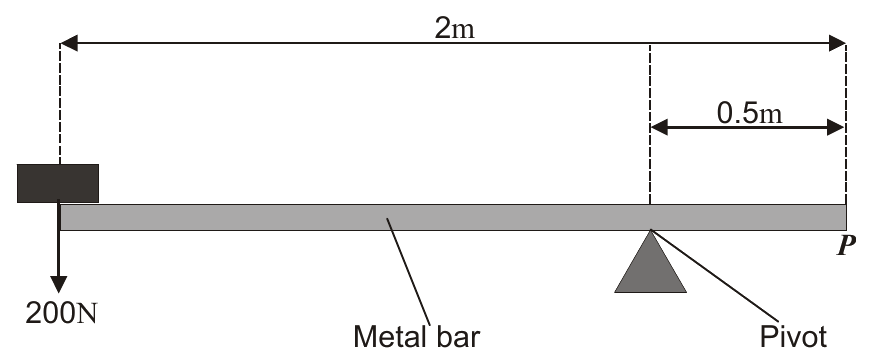
What weight is needed at position P to balance the bar?
✍️ ဘား အရှည် 2.0 m၊ pivot က ညာဘက် အစွန် P ကနေ 0.5 m — ဒါကြောင့် ဘယ် အစွန်ကနေ 1.5 m။ ဘယ်အစွန်မှာ 200 N ချိတ်ထားတယ်။
ထောင်ချောက်: ဘားကိုယ်တိုင် 1000 N လေးတယ်။ uniform ဘားရဲ့ weight က centre of gravity — အလယ် (အစွန်ကနေ 1.0 m) — မှာ သက်ရောက်တယ် (ပြီးခဲ့တဲ့ ပုံ)၊ pivot ကနေ 0.5 m။
P မှာ W ချိတ်ရမယ် — pivot ကနေ 0.5 m၊ clockwise လှည့်တယ်။
ဘယ် (left) ပေါင်း = 200 × 1.5 + 1000 × 0.5 = 300 + 500 = 800 N m။
ညာ (right) = W × 0.5။ principle of moments: W × 0.5 = 800။
W = 8000.5 = 1600 N → အဖြေ D။
600 N က ဘား weight မေ့တာ၊ 800 N က N m ကို N ယူမိ။600 N က ဘားရဲ့ weight ကို မေ့ပြီး 3000.5 တွက်မိတာ (bar forgotten)။ 800 N က 800 N m ကို N အဖြစ် ယူမိတာ (moment taken as force)။
👉 ထောက် (support) နှစ်ခုပေါ် တင်ထားတဲ့ ဘားကော?
✍️ IMAT 2016 — support နှစ်ခု
📝 IMAT 2016 · Question 57
The diagram shows a uniform horizontal beam of negligible mass, 5.0 m long, placed on two supports, one at each end. It has a 300 N weight placed 1.0 m from one end and a 500 N weight placed 1.0 m from the other end. Both weights act vertically on the beam as shown in the diagram.
What are the upward forces from the two supports acting on the beam?
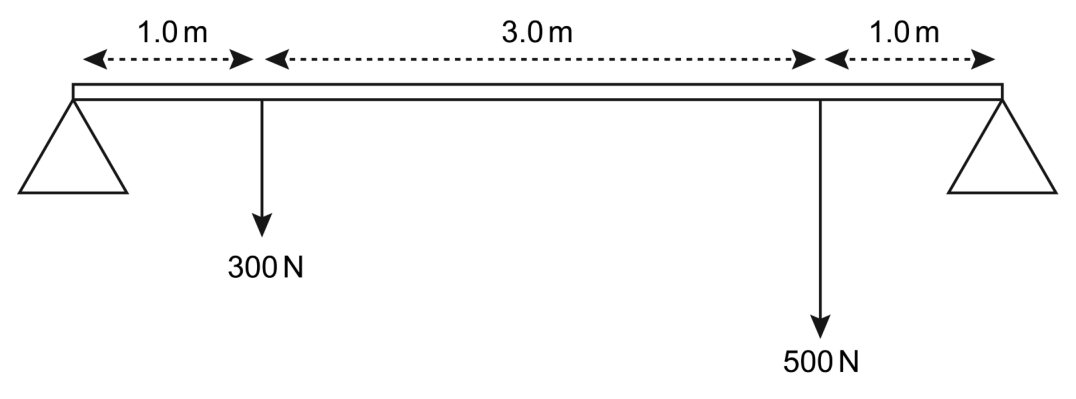
✍️ ဘား 5.0 m ကို အစွန် နှစ်ဖက်မှာ support (ထောက်) နှစ်ခုနဲ့ တင်ထားတယ်။ 300 N က ဘယ်ကနေ 1 m၊ 500 N က ညာကနေ 1 m။
အဆင့် 1 — pivot ကို ဘယ် support မှာ ယူ (pivot here)။ အဲဒီ force RL ရဲ့ d = 0 ဖြစ်လို့ moment မရှိ — မသိကိန်း တစ်ခု ပျောက်တယ်။
အဆင့် 2 — moments ညီ: RR × 5 = 300 × 1 + 500 × 4 = 300 + 2000 = 2300။
RR = 23005 = 460 N။
အဆင့် 3 — ΣF = 0: အပေါ် force ပေါင်း = 300 + 500 = 800 N။ RL = 800 − 460 = 340 N → အဖြေ A။
300, 500 မှား — 500 N နဲ့ နီးတဲ့ support က ပိုထမ်း။300 နဲ့ 500 က အလေး တစ်ခုစီကို အနီးဆုံး support တစ်ခုတည်းက ထမ်းတယ်လို့ ထင်မိတာ — မှားတယ်။ အလေး 500 N နဲ့ နီးတဲ့ ညာ support က ပိုထမ်းတယ်။
✍️ IMAT 2013 — ကြိုးနဲ့ ဆွဲထားတဲ့ ဘား
📝 IMAT 2013 · Question 54
A uniform beam, 3.0 m long, of weight 100 N has a 300 N weight placed 0.50 m from one end. The beam is suspended by a string 1.0 m from the same end.
A diagram of the weights placed on the beam is given below:
How far from the other end must a weight of 80 N be placed for the beam to be balanced?
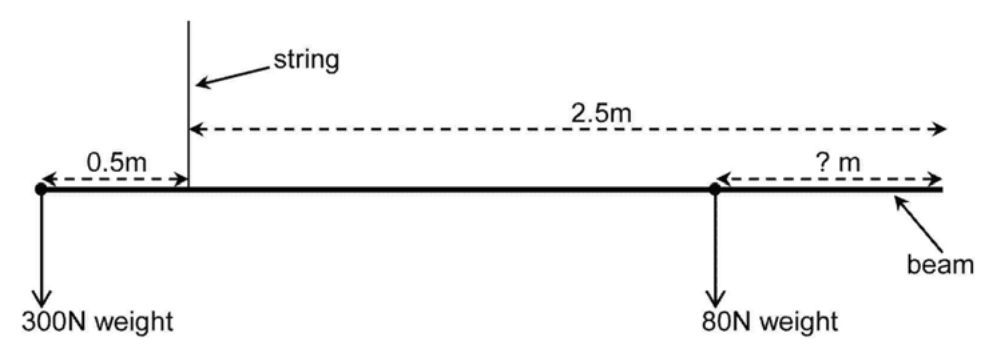
ဒီ မေးခွန်းမှာ စာသားနဲ့ ပုံ မကိုက်လို့ IMAT ကို စစ်တဲ့ အီတလီ ပညာရေး ဝန်ကြီးဌာနက အဖြေ အားလုံးကို မှန်တယ်လို့ အမှတ်ပေးခဲ့တယ်။ နည်းလမ်း လေ့ကျင့်ဖို့ စာသား အတိုင်း တွက်မယ်။
✍️ ဘား 3.0 m ကို ဘယ်အစွန်ကနေ 1.0 m မှာ string (ကြိုး) နဲ့ ဆွဲထားတယ်။ 300 N က အစွန်ကနေ 0.5 m — ကြိုးကနေ 0.5 m။
ဘား weight 100 N က အလယ် 1.5 m မှာ — ကြိုးရဲ့ ညာဘက် 0.5 m။
80 N ကို ကြိုး ညာဘက် d အကွာမှာ ထားမယ်။
moments ညီ: 300 × 0.5 = 100 × 0.5 + 80d။
150 − 50 = 80d → d = 10080 = 1.25 m (ကြိုးကနေ)။
မေးတာက ‘တစ်ခြား အစွန်ကနေ’ — ကြိုးကနေ အဲဒီ အစွန် 2.0 m ဝေးလို့ 2.0 − 1.25 = 0.75 m။ 1.25 m ကို ရွေးမိရင် ထောင်ချောက်ပါ။
Couple — steering wheel နဲ့ IMAT 2015
📝 IMAT 2015 · Question 59
Two forces F of equal magnitude act on a beam. Which diagram shows a couple acting and states the magnitude of the torque (moment) of the couple about the pivot?
[The pivot is at the centre of the beam]
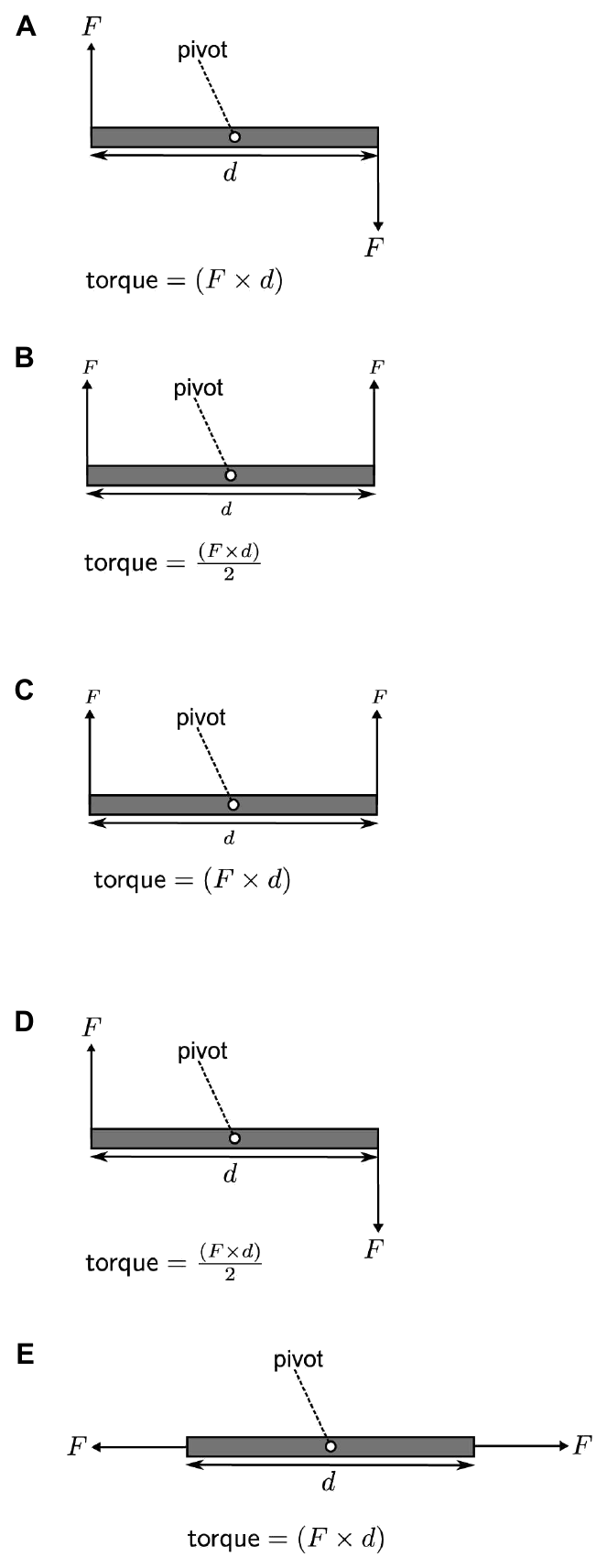
steering wheel: တစ်ဖက် အပေါ် F၊ တစ်ဖက် အောက် F။ကား steering wheel ကို လက် နှစ်ဖက်နဲ့ လှည့်တယ်: တစ်ဖက်က F နဲ့ အပေါ် တွန်း၊ တစ်ဖက်က F နဲ့ အောက် ဆွဲ။
couple (အားစုံ) — ΣF = 0၊ လှည့်ပဲ လှည့်။force ညီ၊ ဆန့်ကျင်၊ မျဉ်း တစ်ကြောင်းတည်း မဟုတ်တဲ့ force နှစ်ခုကို couple (အားစုံ) လို့ ခေါ်တယ်။ ΣF = 0 မို့ ဘီး မရွေ့ဘဲ လှည့်ပဲ လှည့် (only turns) တယ်။
✍️ ဘားရဲ့ အလယ်မှာ pivot၊ ဘယ်အစွန်မှာ F အပေါ်၊ ညာအစွန်မှာ F အောက် — couple ပါ။ force နှစ်ခုကြား d။
force တစ်ခုစီက pivot ကနေ d2၊ နှစ်ခုလုံး တူတဲ့ဘက် လှည့်လို့ ပေါင်း: torque = F × d2 + F × d2 = F × d → အဖြေ A။
နှစ်ခုလုံး အပေါ် → ΣF = 2F၊ couple မဟုတ်။force နှစ်ခုလုံး အပေါ် (both up) ဆိုရင် ΣF = 2F — couple မဟုတ်ဘူး၊ torque တွေလည်း ချေသွားတယ်။
F × d2 က တစ်ခုစာပဲ — နှစ်ခုလုံး ပေါင်း။F × d2 က force တစ်ခုစာပဲ တွက်မိတာ — နှစ်ခုလုံး ပေါင်းရမယ်။ beam တစ်လျှောက် အပြင် ဆွဲတဲ့ force တွေက pivot ကို ဖြတ်လို့ torque 0။
👉 လက်ဖျံ ထဲက moment ကြည့်မယ်။👉 moment က ကိုယ့် ခန္ဓာကိုယ်ထဲမှာလည်း အလုပ်လုပ်နေတယ် — လက်ဖျံ ကို ကြည့်မယ်။
✍️ ခန္ဓာကိုယ်ထဲက lever — လက်ဖျံ နဲ့ biceps
elbow = pivot — လှည့်တဲ့ ချောင်း = lever (လီဗာ)လက်ဖျံ (forearm) ကို ကြည့်မယ်။ တံတောင်ဆစ် (elbow) က pivot — လက်ဖျံက အဲဒီမှာ လှည့်တယ်။ pivot မှာ လှည့်တဲ့ ချောင်းကို lever (လီဗာ) လို့ ခေါ်တယ်။
ဘောလုံး 20 N၊ elbow ကနေ 0.32 m။လက်ထဲမှာ 2 kg ဘောလုံး — weight 2 × 10 = 20 N၊ တံတောင်ဆစ်ကနေ 0.32 m ဝေးတယ်။
biceps (လက်မောင်း ရှေ့ ကြွက်သား) — 0.04 m မှာ ချိတ်။ဘောလုံးကို ကိုင်ထားတဲ့ ကြွက်သားက biceps (လက်မောင်း ရှေ့ ကြွက်သား)။ တံတောင်ဆစ်ကနေ 0.04 m (4 cm) မှာပဲ ချိတ်ပြီး အပေါ် F နဲ့ ဆွဲတယ်။
✍️ တံတောင်ဆစ်ကို pivot ယူ: clockwise = anticlockwise → F × 0.04 = 20 × 0.32
F = 6.40.04 = 160 N — အလေးရဲ့ 8 ဆ!
d တို → force ကြီး လို၊ ဒါပေမဲ့ လက် မြန်မြန် ရွေ့။d တိုလို့ force အကြီးကြီး လိုတယ်။ ဒါပေမဲ့ biceps နည်းနည်း ကျုံ့ရုံနဲ့ လက်က အများကြီး မြန်မြန် ရွေ့တယ် — လှုပ်ရှားဖို့ ကောင်းတဲ့ ဒီဇိုင်း။
✍️ ΣF = 0 လည်း ဖြစ်ရမယ်: အပေါ် 160 N၊ အောက် 20 N → တံတောင်ဆစ်က လက်ဖျံကို အောက် 160 − 20 = 140 N ဖိတယ်
🤔 A forearm holds a 30 N weight in the hand, 0.30 m from the elbow. The biceps is attached 0.03 m from the elbow. Ignoring the forearm's own weight, the biceps force is:
F × 0.03 = 30 × 0.30 = 9 → F = 90.03 = 300 N — 10 ဆ။
3 N က အချိုးကို ပြောင်းပြန် ယူမိတာ။
👉 စည်းကမ်း ၂ ခုထဲက တစ်ခု လွတ်ရင် ဘာဖြစ်မလဲ?👉 force ပေါင်းရော moment ပေါင်းရော သုည ဖြစ်ရမယ် ဆိုတာ စည်းကမ်း နှစ်ခု — တစ်ခုတည်း လွတ်ရင် ဘာဖြစ်မလဲ?
equilibrium စည်းကမ်း နှစ်ခု နဲ့ မှောက်ကျခြင်း
equilibrium (ငြိမ်): ① ΣF = 0
② moment ပေါင်း = 0ပစ္စည်း တစ်ခု လုံးဝ ငြိမ် (equilibrium) ဖို့ စည်းကမ်း နှစ်ခု တစ်ပြိုင်နက် လိုတယ်: ① ΣF = 0 — မရွေ့
② moment ပေါင်း = 0 — မလှည့်။
① တစ်ခုတည်း မလုံ — couple က လှည့်တယ်။① တစ်ခုတည်း မလုံလောက်ဘူး — couple (အရင် ပုံ) မှာ ΣF = 0 ပေမဲ့ ဘီး လှည့်တယ်။
CG မျဉ်း base ထဲ ကျ = stable (တည်ငြိမ်)သေတ္တာ မတ်မတ် ရပ်နေတယ်။ CG ကနေ ဒေါင်လိုက် မျဉ်းဆွဲရင် အောက်ခြေ (base) ထဲ ကျတယ် — stable (တည်ငြိမ်)။
နည်းနည်း စောင်း — ပြန်မတ်လာတယ်။နည်းနည်း စောင်းလိုက်ရင် CG မျဉ်းက base ထဲမှာ ရှိသေးလို့ weight ရဲ့ moment က ပြန်မတ်အောင် လှည့်တယ် — ပြန်ကျ ရပ်တယ်။
base ကျော် → topple (မှောက်ကျ)အများကြီး စောင်းလို့ CG မျဉ်းက base ရဲ့ အစွန်း ကို ကျော်သွားရင် weight ရဲ့ moment က ဆက်လှည့်ပြီး topple (မှောက်ကျ) တယ်။
base ကျယ်၊ CG နိမ့်လေ stable လေ။ဒါကြောင့် base ကျယ်ပြီး CG နိမ့်လေ stable လေ — ပြိုင်ကား နိမ့်နိမ့်၊ ခြေထောက် ကား ရပ်တဲ့ လူ၊ အောက်ခံ လေးတဲ့ မီးအိမ်။
🤔 Which change makes a table lamp less likely to topple over?
base ကျယ်ပြီး လေးရင် CG နိမ့်ပြီး base အကျယ် ပိုရလို့ CG မျဉ်း base အပြင် ရောက်ဖို့ ပိုစောင်းရတယ်။
အမြင့်၊ အပေါ်က လေးတာက CG မြင့်စေတယ်။
👉 PART 3 ပြီးပြီ။ ပြန်စစ်ကြည့်မယ်။
🔁 ပြန်ကြည့်မယ် — moments
🤔 A force of 20 N acts at right angles to a spanner, 0.25 m from the bolt. What is the moment?
moment = F × d = 20 × 0.25 = 5 N m။
80 က 200.25 လို့ စားမိတာ။
🤔 A uniform 1.0 m ruler of weight 2.0 N is pivoted at its 30 cm mark. Where must a 4.0 N weight hang to balance it?
ruler weight က 50 cm (CG) မှာ — pivot ရဲ့ ညာ 0.2 m: moment 2 × 0.2 = 0.4 N m။
ဘယ်ဘက်မှာ 4 × d = 0.4 → d = 0.1 m → 20 cm mark။
🤔 A box standing on the floor is tilted more and more. It topples over when:
CG ကနေ ဒေါင်လိုက် မျဉ်း base အပြင် ရောက်တဲ့ အချိန် weight ရဲ့ moment က ဆက်လှည့်လို့ မှောက်ကျတယ်။
🤔 Two equal, opposite, parallel forces of 10 N act 0.3 m apart. What is the torque of the couple?
couple torque = F × d = 10 × 0.3 = 3 N m။
1.5 က force တစ်ခုစာ (F × d2) ပဲ ယူမိတာ။
Circular motion and spin
စက်ဝိုင်း လည်ပတ်မှု နဲ့ ကချေသည် ပဟေဠိ
ကချေသည် — ဘယ်သူမှ မတွန်းဘဲ ဘာလို့ မြန်လာလဲ?
ကချေသည် arms out — ဖြည်းဖြည်း လည်။ရေခဲပြင်ပေါ်က ကချေသည် တစ်ယောက် လက် နှစ်ဖက် ဆန့် (arms out) ထားပြီး ဖြည်းဖြည်း (slow) လည်နေတယ်။
arms in — ရုတ်တရက် မြန်မြန် လည်!လက်ကို ရင်ဘတ်ဆီ ရုတ် (arms in) လိုက်တာနဲ့ ရုတ်တရက် အရမ်း မြန်မြန် (fast) လည်သွားတယ်!
ဘယ်သူမှ မတွန်း — မြန်နှုန်း ဘယ်က လာလဲ?ဘယ်သူမှ မတွန်း (no push) ဘူး၊ ခြေနဲ့လည်း မကန်ဘူး။ မြန်နှုန်း ဘယ်က လာလဲ? စက်ဝိုင်း လည်ပတ်မှုကို နားလည်ပြီးရင် ဖြေမယ်။
စက်ဝိုင်း ပတ်ခြင်း — သင်ခန်းစာ 66 ကနေ ပြန်ကောက်
velocity v က tangent အတိုင်း ညွှန်တယ်။စက်ဝိုင်း ပတ်တာကို သင်ခန်းစာ 66 မှာ လေ့လာခဲ့ပြီ — ပုစ္ဆာ တွက်ဖို့ လိုတာတွေ ပြန်ကောက်မယ်။ ကြိုးချည် ဘောလုံးရဲ့ velocity v က tangent (ထိမျဉ်း) အတိုင်း ညွှန်တယ်။
speed မပြောင်း၊ ဦးတည်ရာ အမြဲ ပြောင်း။speed မပြောင်း (same speed) ပေမဲ့ v ရဲ့ ဦးတည်ရာ အမြဲ ပြောင်း (direction turns) နေတယ်။ ပုံထဲက မှိန်မှိန် ဘောလုံး လည်နေတာကို ကြည့်ပါ။
tension က အတွင်း ဆွဲ → a က centre ဘက်။velocity ပြောင်းရင် acceleration ရှိရမယ်။ ကြိုးရဲ့ tension (ဆွဲအား) က ဘောလုံးကို အတွင်း ဆွဲ (pulls in) လို့ acceleration a က centre (ဗဟို) ဘက် ညွှန်တယ်။
ဗဟိုဘက် = centripetal (ဗဟိုဘက် ဦးတည်)၊
r = radiusဒီ ဗဟိုဘက် ဦးတည်တာကို centripetal (ဗဟိုဘက် ဦးတည်) လို့ ခေါ်တယ်။
ကြိုး အရှည် r က စက်ဝိုင်းရဲ့ radius (အချင်းဝက်)။
🤔 A car drives round a roundabout at a steady 10 m/s. Which statement is true?
speed မပြောင်းပေမဲ့ ဦးတည်ရာ ပြောင်းနေလို့ velocity ပြောင်းတယ် — ဒါကြောင့် acceleration ရှိတယ် (centre ဘက်)။
velocity က vector မို့ ဦးတည်ရာ ပြောင်းရင် velocity ပြောင်းတာပဲ။
👉 ဒီ acceleration ဘယ်လောက် ကြီးလဲ? ပုံသေနည်း ကြည့်မယ်။
a = v²r နဲ့ F = mv²r
a = v²r — မြန်လေ၊ ကွေ့ ကျဉ်းလေ ကြီးလေ။acceleration ရဲ့ ပမာဏ: a = v²r — အမြန် v ကို နှစ်ထပ်တင် (v²) ပြီး radius r နဲ့ စား။ မြန်လေ၊ ကွေ့ ကျဉ်းလေ a ကြီးလေ။
v = ωr ဆိုတော့ a = ω²r။ω (omega — angular velocity၊ တစ်စက္ကန့်မှာ လှည့်တဲ့ ထောင့်၊ rad/s) ပေးရင် v = ωr ဆိုတော့ a = ω²r။
F = mv²r — towards centre။F = ma ထဲ ထည့်ရင် ဗဟိုဘက် ဆွဲဖို့ လိုတဲ့ force F = mv²r (N) — towards centre။
centrifugal force တကယ် မရှိဘူး။ကွေ့နေတဲ့ ကားထဲမှာ အပြင်ဘက် ပစ်ခံရသလို ခံစားရတာက ခန္ဓာကိုယ်က တည့်တည့် ဆက်သွားချင်လို့။ အပြင်ဆွဲတဲ့ centrifugal force တကယ် မရှိ (no outward force) ဘူး။
👉 IMAT က ဒီ ပုံသေနည်းတွေကို hammer ပစ်တာနဲ့ မေးခဲ့တယ်။
✍️ IMAT 2021 — hammer ပစ်
📝 IMAT 2021 · Question 57
At an athletics competition, a hammer thrower swings a hammer in a horizontal circle. Immediately before releasing the hammer, the ball at the end of the hammer is moving at a constant angular velocity of 10 rad / s in a horizontal circular path of radius 2.5 m. Which row in the table gives the speed and the magnitude of the acceleration of the ball just before release?
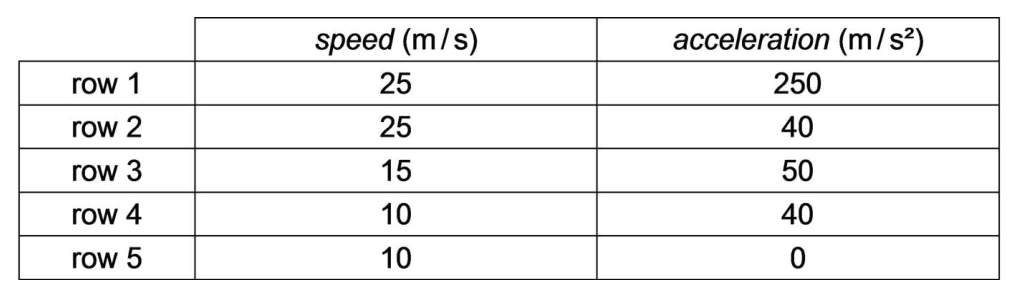
✍️ hammer ရဲ့ ဘောလုံးက radius 2.5 m စက်ဝိုင်းပေါ်မှာ ω = 10 rad/s နဲ့ လည်တယ်။ speed နဲ့ acceleration?
v = ωr = 10 × 2.5 = 25 m/s။
a = ω²r = 10² × 2.5 = 100 × 2.5 = 250 m/s²။
စစ်: v²r = 25²2.5 = 6252.5 = 250 ✓ — နည်း နှစ်မျိုး အဖြေ တူတယ်။
အဖြေ row 1 — row 5 (a = 0) က ထောင်ချောက်။အဖြေ row 1။ row 5 (a = 0) က ‘ω constant ဆို acceleration မရှိ’ လို့ ထင်မိတာ — ဦးတည်ရာ ပြောင်းနေလို့ ဗဟိုဘက် a ရှိတယ်။
✍️ IMAT 2015 — ကွေ့တဲ့ ကား
📝 IMAT 2015 · Question 58
The diagram shows a car of mass 1000 kg travelling at a constant speed of 30 m/s in the direction shown along a flat, level road which forms a circle of radius 50 m.
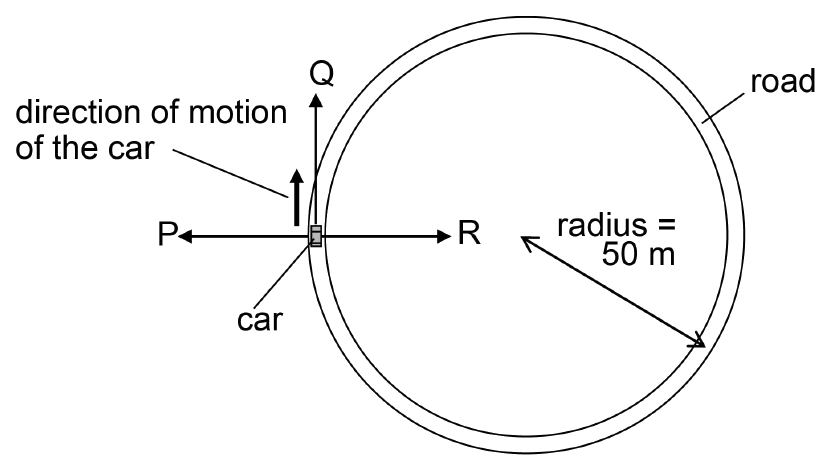
Which row in the table gives both the magnitude of the resultant force on the car and the direction of the acceleration of the car at the instant shown?
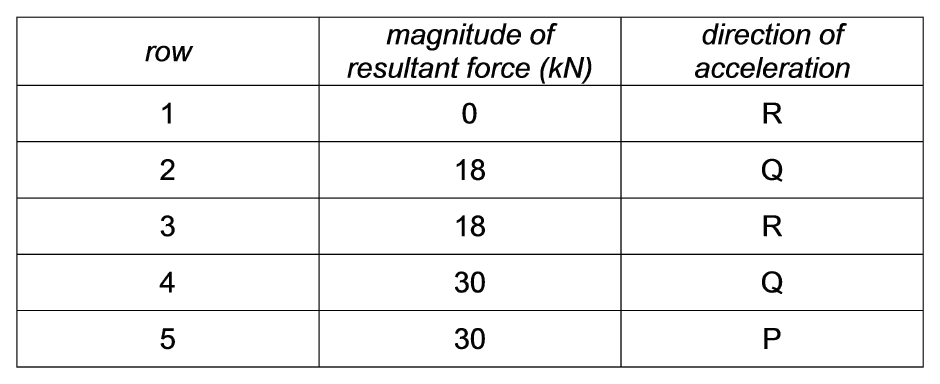
✍️ 1000 kg ကား 30 m/s (speed constant) နဲ့ radius 50 m လမ်းဝိုင်းပေါ် သွားတယ်။ အခု စက်ဝိုင်းရဲ့ ဘယ်ဘက်မှာ အပေါ်ကို သွားနေတယ်။
ဦးတည်ရာ: Q က သွားရာ (tangent)၊ P က အပြင်ဘက်၊ R က centre ဘက်။ acceleration က centripetal — R။
F = mv²r = 1000 × 30²50 = 1000 × 90050။
= 18 000 N = 18 kN၊ R ဘက် → row 3။
30 kN က mv၊ Q က velocity ဘက် — မှား။30 kN က 1000 × 30 = mv — momentum ပုံစံ၊ force မဟုတ်ဘူး။ Q က velocity ဘက်၊ acceleration ဘက် မဟုတ်ဘူး။ row 1 (0) က ဦးတည်ရာ ပြောင်းတာ မေ့တာ။
18 kN ကို friction က ပေး — ချောရင် ချော်ထွက်။ဒီ 18 kN ကို တာယာနဲ့ လမ်းကြား friction (ပွတ်တိုက်အား) က ပေးတယ်။ လမ်း ချောရင် friction မလောက်လို့ ကား tangent အတိုင်း ချော်ထွက်တယ်။
👉 ကချေသည် ပဟေဠိဆီ ပြန်သွားမယ်။
Angular momentum — ကချေသည် ပဟေဠိ ဖြေ
arms out: r ကြီး → moment of inertia I ကြီး၊ ω သေးလက် ဆန့်ထားရင် mass တွေ လည်တဲ့ ဝင်ရိုးကနေ ဝေး (r big)။ လည်ဖို့ ‘ခက်တာ’ — moment of inertia I — ကြီးပြီး ω သေးတယ်။
လက် ရုတ်ရင် r သေး (r small)၊ I သေးသွားပြီး ω ကြီးလာတယ်။
angular momentum L = Iω — torque မရှိရင် မပြောင်း။လည်နေတဲ့ ‘momentum’ — angular momentum L = Iω။ ပြင်ပ torque (no outside torque) မရှိရင် L မပြောင်း (constant)။
I = mr² — r တစ်ဝက် → I လေးပုံ တစ်ပုံ။ဝင်ရိုးကနေ r မှာ ရှိတဲ့ mass m အသေးအတွက် I = mr² (kg m²)။ r တစ်ဝက် ဖြစ်ရင် I လေးပုံ တစ်ပုံ။
✍️ ကချေသည် I = 3.0 kg m²၊ ω = 2.0 rad/s။ လက် ရုတ်ပြီး I = 1.0 ဖြစ်ရင်: 3.0 × 2.0 = 1.0 × ω။
ω = 6.01.0 = 6.0 rad/s — သုံးဆ မြန်လာတယ်။ ပဟေဠိ ဖြေပြီ: L တူအောင် I ကျသလောက် ω တက်တာ။
🤔 A skater spins at 6 rad/s with her arms in. She spreads her arms and her moment of inertia becomes 3 times bigger. What is her new angular velocity?
ပြင်ပ torque မရှိလို့ L = Iω မပြောင်း: I × 6 = 3I × ω → ω = 63 = 2 rad/s။
I သုံးဆ ကြီးရင် ω သုံးပုံ တစ်ပုံ။
18 က ပြောင်းပြန် မြှောက်မိတာ။
👉 mass အသေး တစ်ခုဆို L ဘယ်လို တွက်မလဲ?👉 ကချေသည် တစ်ကိုယ်လုံး မဟုတ်ဘဲ mass အသေး တစ်ခုတည်းဆို L ကို ဘယ်လို တွက်မလဲ? L ကို ဘာက ပြောင်းစေလဲ?
L = mvr နဲ့ torque — L ကို ဘာက ပြောင်းလဲ
L = mvrmass အသေး m က r အကွာမှာ v နဲ့ ပတ်နေရင် L = mvr — momentum mv ကို r နဲ့ မြှောက်တာ။
Iω = mr² × vr = mvr ✓စစ်: I = mr²၊ ω = vr (v = ωr ကနေ) ဆိုတော့ Iω = mr² × vr = mvr ✓ — ပုံသေနည်း နှစ်ခု တူတူပဲ။
τ = ΔLΔt — torque မရှိ → L မပြောင်း။F = ΔpΔt (force က momentum ကို ပြောင်း) လိုပဲ torque τ (moment) က L ကို ပြောင်းတယ်: τ = ΔLΔt။ torque မရှိရင် ΔL = 0 — ကချေသည်ရဲ့ L မပြောင်းတာ ဒါကြောင့်။
✍️ ငြိမ်နေတဲ့ ဘီးကို 2 N m torque နဲ့ 3 s လှည့်ရင် ΔL = τΔt = 2 × 3 = 6 kg m²/s
🤔 A 0.5 kg ball on a 2 m string goes round a circle at 3 m/s. What is its angular momentum?
L = mvr = 0.5 × 3 × 2 = 3 kg m²/s။
1.5 က r နဲ့ မြှောက်ဖို့ မေ့တာ (mv)၊ 0.75 က r နဲ့ စားမိတာ။
👉 PART 4 ပြီးပြီ။ ပြန်စစ်ကြည့်မယ်။
🔁 ပြန်ကြည့်မယ် — စက်ဝိုင်း နဲ့ လည်ပတ်
🤔 A constant torque of 4 N m acts for 2.5 s on a wheel that starts at rest. The angular momentum it gains is:
τ = ΔLΔt → ΔL = τΔt = 4 × 2.5 = 10 kg m²/s။
1.6 က 42.5 စားမိတာ၊ 6.5 က ပေါင်းမိတာ။
🤔 A car goes round a bend of radius 20 m at 10 m/s. What is its centripetal acceleration?
a = v²r = 10020 = 5 m/s²။
0.5 က vr၊ 200 က v²×2 မှားတာ။
🤔 A wheel of radius 0.3 m turns at 20 rad/s. What is the speed of a point on its rim?
v = ωr = 20 × 0.3 = 6 m/s။
66.7 က 200.3 လို့ စားမိတာ။
🤔 A 0.20 kg ball on a 0.50 m string moves in a circle at 3.0 m/s. Its angular momentum about the centre is:
L = mvr = 0.20 × 3.0 × 0.50 = 0.30 kg m²/s။
0.60 က mv (momentum)၊ 1.2 က mvr။
Simple harmonic motion
ရိုးရှင်းသော လှုပ်ခါမှု — နာရီ ချိန်သီး ပဟေဠိ
နာရီ ချိန်သီး — ဘယ်လောက် ရှည်ရမလဲ?
နာရီ ရှည်ကြီး — pendulum လွှဲနေတယ်။အိမ်ကြီးတွေမှာ တွေ့ရတဲ့ နာရီ ရှည်ကြီး — အောက်မှာ ချိန်သီး (pendulum) ဟိုဘက် ဒီဘက် လွှဲနေတယ်။
vertical ကို 1.0 s တစ်ခါ ဖြတ်တယ်။ချိန်သီးက ဒေါင်လိုက် (vertical) မျဉ်းကို 1.0 s တစ်ခါ ဖြတ်တယ် — tick … tock။
ကြိုး ဘယ်လောက် ရှည်ရမလဲ? PART အဆုံးမှာ ဖြေမယ်။ဒီ နာရီ မှန်ဖို့ ချိန်သီး ကြိုး ဘယ်လောက် ရှည် (length) ရမလဲ? IMAT 2022 က ဒီ အတိုင်း မေးခဲ့တယ်။ PART အဆုံးမှာ ဖြေမယ်။
SHM — သင်ခန်းစာ 66 ကနေ ပြန်ကောက်
spring ထိပ်က အလေး၊ equilibrium x = 0။SHM ကို သင်ခန်းစာ 66 မှာ လေ့လာခဲ့ပြီ — ပုစ္ဆာ အတွက် လိုတာ ပြန်ကောက်မယ်။ ချော ကြမ်းပြင်ပေါ် spring ထိပ်က အလေး m ငြိမ်နေတဲ့ နေရာက equilibrium (ဟန်ချက် နေရာ) x = 0။
လွှတ်ရင် အလယ်ဘက် ပြန်ဆွဲ = restoring force (ပြန်ဆွဲအား)ဆွဲပြီး လွှတ်ရင် spring က အလယ်ဘက် ပြန်ဆွဲတယ် — restoring force (ပြန်ဆွဲအား)။
F = −kx (k = မာမှု၊ − = အလယ်ဘက်)F = −kx (သင်ခန်းစာ 67)။ k က spring ရဲ့ မာမှု (N/m)၊ − က ‘x နဲ့ ဆန့်ကျင်ဘက် — အလယ်ဘက်’ လို့ ပြောတာ။
simple harmonic motion (SHM၊ ရိုးရိုး လှုပ်ခါမှု):
a = −ω²xဒီလို လှုပ်ခါမှုက simple harmonic motion (Simple Harmonic Motion, SHM)၊
ပုံစံ a = −ω²x။
ω (omega) က angular frequency (rad/s)။
👆 Move t. Where is the force biggest, and where is it zero?
| t (T = 1 s) | place x | force | speed |
|---|---|---|---|
| 0 | +A (right end) | biggest, to the left | 0 |
| 0.25 s | 0 (centre) | 0 | fastest |
| 0.5 s | −A (left end) | biggest, to the right | 0 |
| 1 s = period T | +A again | biggest, to the left | 0 |
t ဆလိုက်ကို ရွှေ့ကြည့်ပြီး ဇယားနဲ့ တိုက်စစ်ပါ — တစ်ပတ် ပြည့်ချိန်ကို period T လို့ ခေါ်တယ်။
t = 0 မှာ ညာ အစွန် +A — ဆွဲအား အကြီးဆုံး၊ ဘယ်ဘက် ညွှန်တယ်။
t = 0.25 s (T ရဲ့ လေးပုံ တစ်ပုံ) မှာ x = 0 — force 0 ပေမယ့် အမြန်ဆုံး ဖြတ်သွားတယ်။
t = 0.5 s မှာ ဘယ် အစွန် −A — ခဏ ရပ်ပြီး force က ညာဘက် အကြီးဆုံး။ t = 1 s မှာ စတဲ့ နေရာ ပြန်ရောက် — period T။
👉 ω နဲ့ T ကို k, m ကနေ ဘယ်လို ရလဲ?👉 ω နဲ့ period T ကို k နဲ့ m ကနေ ဘယ်လို ရလဲ? နောက် ပုံမှာ တစ်ဆင့်ချင်း ကြည့်မယ်။
ω = √(km) ဘယ်က လာလဲ
✍️ ω ဘယ်က လာလဲ: F = ma ထဲ F = −kx ထည့် → ma = −kx → a = −(km)x
a = −ω²x နဲ့ ယှဉ်: ω² = km → ω = √(km)
တစ်ပတ် ပြည့်ဖို့ 2π rad လှည့်ရလို့ T = 2πω = 2π√(mk)
🤔 A mass on a spring has period T. The spring is replaced by one four times stiffer (k × 4), same mass. What is the new period?
T = 2π√(mk) မှာ k က အမြစ်ထဲ အောက်ခြေမှာ — k 4 ဆ ဆိုရင် √4 = 2 နဲ့ စား၊
T အသစ် = T2။
spring မာလေ မြန်မြန် လှုပ်လေ။
T4 က အမြစ် ဖွင့်ဖို့ မေ့တာ၊ 2T က ပြောင်းပြန် ယူမိတာ။
x = A cos ωt — ဘယ်မှာ မြန်၊ ဘယ်မှာ ရပ်
x = A cos ωt — A = amplitude။သင်ခန်းစာ 66 က အတိုင်း အလေးရဲ့ နေရာ x ကို အချိန် t နဲ့ ဂရပ် ဆွဲရင် cosine လှိုင်း: x = A cos ωt။ A (amplitude) က အလယ်ကနေ အဝေးဆုံး ရောက်တဲ့ အကွာ။
centre မှာ vmax = Aω၊ KE အများဆုံး။x = 0 ဖြတ်တဲ့ နေရာ (centre) မှာ အမြန်ဆုံး — vmax = Aω၊ kinetic energy (KE) အများဆုံး။
±A မှာ v = 0၊ a အကြီးဆုံး၊ PE အများဆုံး။အစွန် (ends) ±A မှာ ခဏ ရပ် (v = 0)၊ ပြန်ဆွဲ acceleration အကြီးဆုံး (a = −ω²x)၊ Potential Energy (PE) အများဆုံး။
| place | speed | acceleration | energy |
|---|---|---|---|
| centre, x = 0 | vmax = Aω | 0 | kinetic energy (KE) max |
| ends, x = ±A | 0 | max, a = −ω²x | Potential Energy (PE) max |
centre နဲ့ အစွန် နှစ်နေရာကို ဇယားနဲ့ နှိုင်းယှဉ်ကြည့်။
KE + PE = constantfriction မရှိရင် KE နဲ့ PE အပြန်အလှန် ပြောင်းနေပြီး စုစုပေါင်း မပြောင်းဘူး (KE + PE = constant)။
👉 IMAT 2024 က x = 4 cos(2πt) ပေးပြီး velocity မေးခဲ့တယ်။
✍️ IMAT 2024 — t = 12 s မှာ velocity
📝 IMAT 2024 · Question 59
A point particle moves along a given x-axis with the law of motion x(t) = 4 cos(ωt) where x is in metres, t in seconds and ω = 2π rad/s. The velocity of the point particle at the instant t* = 12 s equals:
✍️ x = 4 cos(2πt) ကို x = A cos ωt နဲ့ ယှဉ်: A = 4 m၊ ω = 2π rad/s။
t = 12 s မှာ x = 4 cos(2π × 12) = 4 cos π = −4 m။
x = −4 = −A — အစွန် (end) ရောက်နေတယ်။ အစွန်မှာ ခဏ ရပ်လို့ v = 0။
ပုံသေနည်းနဲ့ စစ်: v = −Aω sin ωt = −4 × 2π × sin π = 0 ✓ → အဖြေ 0 m/s။
≈ −4 က x ကို velocity ယူမိ၊ ≈ 25.1 က centre အမြန်။≈ −4 က နေရာ x ကို velocity လို့ ယူမိတာ။ ≈ 25.1 က Aω = 8π — centre မှာပဲ ရတဲ့ အမြန်ဆုံး။
✍️ IMAT 2013 — ဒေါင်လိုက် spring ရဲ့ energy
📝 IMAT 2013 · Question 56
A mass is connected to a spring and it vibrates up and down, forming a simple harmonic system. Which of the following are correct?
1. The kinetic energy of the mass is at a maximum half way up.
2. The potential energy of the system is at a maximum at the top of the mass's motion.
3. The potential energy of the system is at a maximum at the bottom of the mass's motion.
✍️ ဒေါင်လိုက် spring မှာ အလေး လှုပ်တယ်။ ① halfway (တစ်ဝက်) မှာ အမြန်ဆုံး — KE max ✓။
② top (အပေါ်ဆုံး) မှာ ခဏ ရပ်တယ် — KE = 0။ အမြင့်ဆုံး ဖြစ်လို့ gravity PE လည်း max ✓။
③ bottom (အောက်ဆုံး) မှာလည်း ခဏ ရပ်တယ် — KE = 0 ✓။ spring အဆန့်ဆုံး ဖြစ်လို့ spring PE max။
KE = 0 အစွန်း ၂ ဖက်လုံး system PE max။စုစုပေါင်း energy (KE + PE) မပြောင်းဘူး။ ဒါကြောင့် KE = 0 ဖြစ်တဲ့ အစွန်း နှစ်ဖက်လုံးမှာ system PE (spring + gravity) max ဖြစ်တယ်။
1, 2 and 3 → A။ ‘only’ က တစ်ဖက်ပဲ ကြည့်မိတာ။ဒါကြောင့် 1, 2 and 3 → အဖြေ A။ ‘only’ ပါတဲ့ အဖြေတွေက အစွန်း တစ်ဖက်ပဲ စဉ်းစားမိတာ။
✍️ IMAT 2011 — ဘယ်ဟာ SHM မဟုတ်လဲ?
📝 IMAT 2011 · Question 70
Which one of the following is not an example of simple harmonic motion?
spring F = −kx — SHM ✓စစ်နည်း: ပြန်ဆွဲအားက x နဲ့ အချိုးကျပြီး အလယ်ဘက် ညွှန်ရင် SHM။ spring ထိပ်က အလေး — F = −kx နဲ့ လှုပ်တဲ့ SHM ရဲ့ ပုံမှန် ဥပမာ ✓။
တုန်နေတဲ့ violin ကြိုး — ကြိုးရဲ့ tension က အလယ်ဘက် ပြန်ဆွဲတယ် ✓။
ripples ပေါ်က ရေမှုန် အပေါ်–အောက် ✓ကျောက်ခဲ ပစ်ချလို့ ဖြစ်တဲ့ ripples (ရေလှိုင်း) ပေါ်က ရေမှုန် တွေက အပေါ်–အောက် လှုပ်တယ် ✓။
လ ကို edge-on ကြည့် — စက်ဝိုင်း အရိပ် SHM ✓လ (Moon) ရဲ့ စက်ဝိုင်း လမ်းကြောင်းကို Mars ကနေ ဘေးတိုက် (edge-on) ကြည့်ရင် ဟိုဘက် ဒီဘက် ရွေ့သလို မြင်ရတယ် — စက်ဝိုင်းရဲ့ အရိပ်က SHM ✓။
ခုန်တဲ့ ဘောလုံး a = g အမြဲ — SHM မဟုတ် → B။ကြမ်းပြင်ပေါ် ခုန်နေတဲ့ ဘောလုံး: လေထဲမှာ a = g အမြဲ တူ — x နဲ့ အချိုး မကျဘူး။ ကြမ်းပြင် ထိမှ ရုတ်တရက် ပြောင်း (sudden hit)။ SHM မဟုတ်ဘူး → အဖြေ B။
Period — spring နဲ့ pendulum
T = 2π√(mk)spring ထိပ်က အလေးရဲ့ period: T = 2π√(mk) (ω = √(km) ကနေ — ရှေ့ ပုံ)။ m (kg) လေးလေ နှေးလေ၊ k (N/m) မာလေ မြန်လေ။
pendulum: ထောင့်သေးရင် T = 2π√(Lg)သင်ခန်းစာ 66 က pendulum (ချိန်သီး) မှာ ပြန်ဆွဲအားက arc အတိုင်း mg sin θ — ထောင့်သေးရင် SHM ဖြစ်ပြီး T = 2π√(Lg)၊ L က ကြိုး အရှည် (m)။
T က mass နဲ့ amplitude မဆိုင် — L, g ပဲ။pendulum ရဲ့ T က bob ရဲ့ mass နဲ့ မဆိုင်၊ (လွှဲတာ သေးရင်) amplitude နဲ့လည်း မဆိုင် — L နဲ့ g ပဲ (no m, no amplitude)။
spring မှာ m ကို 4 ဆ လုပ်ရင် √4 = 2 — T နှစ်ဆ ဖြစ်တယ်: 2 s က 4 s။
🤔 A pendulum has a period of 2 s. Its string is made 4 times longer. What is the new period?
T = 2π√(Lg)၊
L လေးဆ → √4 = 2 ဆ → 4 s။
8 s က √ မယူဘဲ 4 နဲ့ မြှောက်မိတာ၊ 2 s က L နဲ့ မဆိုင်ဘူး ထင်မိတာ (bob mass နဲ့သာ မဆိုင်တာပါ)။
✍️ IMAT 2022 — နာရီ ချိန်သီး အရှည်
📝 IMAT 2022 · Question 60
The simple pendulum of a tall clock swings freely backwards and forwards so that it passes through the vertical position at 1.0 second intervals.
Assuming that the motion of the pendulum is simple harmonic, what is the length of the pendulum?
[Take the gravitational field strength to be 10 N kg–1, and take π2 to be 10.]
✍️ ချိန်သီး ဘယ် → ညာ → ဘယ် တစ်ပတ် လွှဲရင် vertical ကို နှစ်ခါ ဖြတ်တယ် — 1.0 s + 1.0 s။
ဒါကြောင့် period T = 2 × 1.0 = 2.0 s။ ဒါ အဓိက ထောင်ချောက်ပါ။
T = 2π√(Lg) ကို နှစ်ထပ်တင်ပြီး L ကို ထုတ်: L = gT²4π²။
g = 10၊ π² = 10 ထည့်: L = 10 × 2.0²4 × 10 = 4040 = 1.0 m → အဖြေ C။ နာရီ ပဟေဠိ ဖြေပြီ!
0.25 m က T = 1.0 s ယူမိတာ — မှား။0.25 m က T = 1.0 s လို့ ယူမိတာ (10 × 140)။ 1.7၊ 2.5၊ 3.3 m တွေ ပုံသေနည်း မှန်မှန် ထည့်ရင် မထွက်ဘူး။
✍️ IMAT 2024 — ချိန်သီး၊ ဘယ်ဖော်ပြချက် မှားလဲ (damping)
📝 IMAT 2024 · Question 60
A pendulum rod moves from the vertical position. Which of the following statements is false?
friction မရှိ → amplitude မကျ၊ အမြဲ လွှဲ။ဖော်ပြချက် တစ်ခုချင်း စစ်မယ်။ friction မရှိရင် energy မဆုံးလို့ amplitude မကျဘဲ အမြဲ ဆက်လွှဲတယ် (forever)။
friction ရှိ → damped (လျော့ကျ လှုပ်ခါမှု)friction (လေ၊ ဝင်ရိုး) ရှိရင် energy တဖြည်းဖြည်း အပူ ဖြစ်ပြီး amplitude ကျလာတယ် — damped (လျော့ကျ လှုပ်ခါမှု)။
arc ပေါ် ရွေ့၊ အမြင့်ဆုံးမှာ ခဏ ရပ် ပြန်လွှဲ။ချိန်သီးက ကြိုး အရှည် မပြောင်းလို့ circular arc (စက်ဝိုင်း အပိုင်း) ပေါ် ရွေ့တယ်။ အမြင့်ဆုံးမှာ ခဏ ရပ်ပြီး ပြန်လွှဲ (swings back) တယ်။
‘friction မရှိ ရပ်မယ်’ (E) မှား — အဖြေ E။ဒါကြောင့် ‘friction မရှိရင် ရပ်သွားမယ်’ (E) က မှားတဲ့ ဖော်ပြချက် — အဖြေ E။ ကျန်တာ (SHM — လွှဲတာ သေးရင်၊ damped၊ ရပ်ပြီး ပြန်လွှဲ၊ arc) အားလုံး မှန်တယ်။
👤 လူပုဂ္ဂိုလ်များ
1687 Newton — force = momentum ပြောင်းနှုန်း (F = ΔpΔt) ဆိုတဲ့ ဒုတိယ နိယာမ (သင်ခန်းစာ 67)။
🔁 ပြန်ကြည့်မယ် — SHM
🤔 In simple harmonic motion, the restoring force is:
F = −kx — x နဲ့ အချိုးကျပြီး အလယ်ဘက်။
constant force က ခုန်တဲ့ ဘောလုံးလို SHM မဟုတ်ဘူး။
🤔 Where is the speed of a body in SHM greatest?
centre မှာ vmax = Aω၊
အစွန်မှာ v = 0။
🤔 A 0.50 kg mass oscillates on a spring with k = 200 N/m. Its angular frequency ω is:
ω = √(km) = √(2000.50) = √400 = 20 rad/s။
400 က √ မယူတာ၊ 0.05 က mk ပြောင်းပြန်။
🤔 Which change does NOT alter the period of a simple pendulum (small swings)?
T = 2π√(Lg) မှာ mass မပါလို့ bob လေးတာ မဆိုင်ဘူး။
L ပြောင်းရင်၊ g ပြောင်းရင် (လ) T ပြောင်းတယ်။