Organic chemistry 2: functional groups, names and reactions (2)
O နောက်တစ်လုံး၊ N နဲ့ S ဦးထုပ်
More hats: acid, ester, ether, amine, amide, thiol
O နောက်တစ်လုံး၊ N နဲ့ S ဦးထုပ်
ချဉ်တဲ့ ရှာလကာ၊ မွှေးတဲ့ နာနတ်
ရှာလကာရည်က ချဉ် (sour) တယ်။ အထဲက ethanoic acid ကို ပြန်ကြည့်ပါ။
နာနတ် အနံ့ molecule လည်း ဒီ ပုံစံ။နာနတ်သီးရဲ့ မွှေး (fruity) တဲ့ အနံ့ (pineapple smell) ကို ဖြစ်စေတဲ့ molecule ကလည်း ဒီလို ပုံစံ ရှိတယ်။
နှစ်ခုလုံး same –COO–။နှစ်ခုလုံးမှာ C=O ရဲ့ carbon ပေါ်မှာ O နောက်တစ်လုံး ထပ်ကပ်နေတယ် — တူတူပဲ (same –COO–)။
O နောက်က — ရှာလကာ H၊ နာနတ် C chain။ကွာတာက အဲဒီ O ရဲ့ နောက်ကပဲ — ရှာလကာမှာ H၊ နာနတ်မှာ carbon ကြိုးတန်း (C chain)။ ဒီ နှစ်မျိုးကို တစ်ခုချင်း ကြည့်မယ်။
–COOH — carboxylic acid
C=O + –OH = –COOH = carboxylic acid (ကာဗောက်ဆီလစ် acid)C=O နဲ့ –OH က carbon တစ်လုံးတည်းပေါ်မှာ ကပ်နေရင် –COOH ဦးထုပ် ဖြစ်တယ်။ ဒါကို carboxylic acid (ကာဗောက်ဆီလစ် acid) လို့ ခေါ်တယ်။
-oic acid — ethanoic acid (ရှာလကာ)။နာမည်မှာ -e ကို -oic acid ပြောင်းတယ်။ ethane က ethanoic acid ဖြစ်တယ် — ရှာလကာရည်ပါ။
methanoic acid (HCOOH) — ant sting။carbon တစ်လုံးတည်းဆိုရင် methanoic acid (HCOOH) — ပုရွက်ဆိတ် ကိုက်ရင် (ant sting) ပူစပ်စပ် ဖြစ်စေတဲ့ acid ပါ။
H⁺ နည်းနည်း ထွက် — weak acid၊ litmus အနီ။OH ရဲ့ H က H⁺ အဖြစ် ထွက်သွားနိုင်လို့ acid ဖြစ်တာ။ နည်းနည်းပဲ ထွက်လို့ weak acid ပါ (သင်ခန်းစာ 19B)၊ litmus ကို အနီ ပြောင်းတယ်။
hydrogen bonds နှစ်ခုနဲ့ dimer — boiling point မြင့်။acid molecule နှစ်လုံးက C=O နဲ့ O–H ကို အပြန်အလှန် hydrogen bonds နှစ်ခုနဲ့ ဆွဲထားလို့ အတွဲ (dimer) ဖြစ်တယ်။ ဒါကြောင့် အလေးချိန် တူတဲ့ alcohol ထက်တောင် boiling point မြင့်တယ်။
📝 IMAT 2021 Q49 → သင်ခန်းစာ 10B (hydrogen bond အခိုင်ဆုံး ဓာတ်)။
🤔 Which of these compounds can form hydrogen bonds between its own molecules?
🔍 မေးခွန်း ဖြည်မယ်
form = ဖွဲ့နိုင်၊
between its own molecules = သူ့ molecule ချင်းချင်း ကြား (တခြား ဓာတ်နဲ့ မဟုတ်)။
မေးနေတာ — ဘယ် ဓာတ်က ကိုယ့် molecule ချင်း hydrogen bond ဖွဲ့နိုင်လဲ (O ပေါ်မှာ H ကပ်နေလား ကြည့်)။
ကိုယ့် molecule ချင်း H-bond ဖွဲ့ဖို့ O, N, F ပေါ်မှာ ကပ်တဲ့ H လိုတယ်။
propanoic acid ရဲ့ –COOH မှာ O–H ပါလို့ ဖွဲ့နိုင်တယ်။
propanone၊ methoxymethane (ether) နဲ့ methyl ethanoate (ester) မှာ O ရှိပေမဲ့ O ပေါ်မှာ H မကပ်ဘူး — H တွေ carbon ပေါ်မှာပဲ။
chloroethane မှာ Cl ပေါ်လည်း H မရှိဘူး။
OH ကို ring ပေါ် တိုက်ရိုက် — phenol
benzene (C₆H₆) ring — C ခြောက်လုံး ကွင်း။သင်ခန်းစာ 21B က benzene (C₆H₆) ring ကို မှတ်မိလား — carbon ခြောက်လုံး ကွင်း၊ C တစ်လုံးစီမှာ H တစ်လုံး။
ring ပေါ် OH = phenol (ring ပေါ် OH တိုက်ရိုက် ကပ်တဲ့ ဓာတ်)ring ပေါ်က H တစ်လုံး နေရာမှာ –OH တိုက်ရိုက် ကပ်ရင် phenol (ဖီနော — benzene ring ပေါ် OH တိုက်ရိုက် ကပ်တဲ့ ဓာတ်) ရတယ် — C₆H₅OH။
phenol က alcohol မဟုတ် — သီးခြား မိသားစု။ethanol (CH₃CH₂OH) မှာ OH က ကြိုးပေါ်က carbon မှာ — alcohol။ phenol မှာ OH က ring carbon ပေါ်မှာ — alcohol မဟုတ်ဘဲ သီးခြား မိသားစု။ ring က OH ရဲ့ အကျင့်ကို ပြောင်းစေတယ် (နောက် အခန်း)။
CH₂ ပေါ် OH က alcohol၊ ring ပေါ် OH က phenol။C₆H₅CH₂OH (phenylmethanol) မှာ OH က ring မဟုတ်တဲ့ CH₂ ပေါ်မှာ — alcohol ပဲ။ CH₃C₆H₄OH (4-methylphenol) မှာ OH က ring ပေါ် တိုက်ရိုက် — phenol ပဲ။
carbolic acid — ပထမဆုံး antiseptic။phenol ကို carbolic acid လို့လည်း ခေါ်တယ်။ ခွဲစိတ်ခန်းမှာ ပထမဆုံး သုံးခဲ့တဲ့ ပိုးသတ်ဆေး (antiseptic) ပါ။ အရေပြားကို လောင်စေလို့ အခု ပိုပျော့တဲ့ ဆင်တူ ဓာတ်တွေ သုံးတယ်။
acid ဘယ်လောက် ပြင်းလဲ — alcohol < phenol < carboxylic acid
alcohol, phenol, carboxylic acid — H⁺ ပေးအား မတူ။O–H ပါတဲ့ မိသားစု သုံးခု — alcohol၊ phenol၊ carboxylic acid — က H⁺ ကို ပေးနိုင်တဲ့ အား မတူဘူး။
ethanol — H⁺ မပေးသလောက်၊ charge O တစ်လုံးပေါ်။ethanol က H⁺ ကို မပေးသလောက်ပဲ — ရေထက်တောင် acid အားနည်းတယ်။ H⁺ ထွက်ရင် ကျန်ခဲ့တဲ့ CH₃CH₂O⁻ ရဲ့ အနုတ် charge က O တစ်လုံးပေါ်မှာ စုနေလို့ မတည်ငြိမ်ဘူး။
phenol — weak acid၊ charge ring ထဲ ပျံ့။phenol (C₆H₅OH — အရင် အခန်း) က weak acid ပါ။ H⁺ ထွက်ပြီး ကျန်တဲ့ C₆H₅O⁻ ရဲ့ charge က ring ထဲ ပျံ့သွားလို့ ပိုတည်ငြိမ်တယ်။
carboxylic acid — အပြင်းဆုံး၊ O နှစ်လုံး မျှ။carboxylic acid က သုံးခုထဲ အပြင်းဆုံး (ဒါတောင် weak acid)။ CH₃COO⁻ ရဲ့ charge ကို O နှစ်လုံးက ညီညီ မျှယူလို့ အတည်ငြိမ်ဆုံး ဖြစ်တယ်။ charge ပျံ့လေ H⁺ ထွက်ရ လွယ်လေ။
C₆H₅COOH (benzoic acid) — ring ပေါ် –COOH ပါလို့ carboxylic acid။
① Na — သုံးခုလုံး H₂ ပူဖောင်း (O–H test)။စမ်းနည်း ① sodium metal (Na): သုံးခုလုံး O–H ရဲ့ H ကို ပေးပြီး H₂ gas ပူဖောင်း ထွက်တယ် — 2CH₃CH₂OH + 2Na → 2CH₃CH₂O⁻Na⁺ (sodium ethoxide) + H₂။ ဒါက O–H ရှိကြောင်း test ပါ။
| test | what happens |
|---|---|
| Na metal | 2CH₃CH₂OH + 2Na → 2CH₃CH₂O⁻Na⁺ + H₂ (gas) |
Na နဲ့ O–H ရဲ့ H ထွက်ပြီး H₂ ပူဖောင်း — alcohol၊ phenol၊ acid သုံးခုလုံး။
② NaOH — phenol နဲ့ acid ပဲ ဓာတ်ပြု။② NaOH (base): phenol နဲ့ acid ကပဲ ဓာတ်ပြုပြီး ဆား + ရေ ဖြစ်တယ်။ phenol က ရေမှာ နည်းနည်းပဲ ပျော်ပေမဲ့ NaOH ထဲမှာ ဆား ဖြစ်ပြီး ပျော် (dissolves) သွားတယ်။ ethanol က acid အားနည်းလွန်းလို့ NaOH နဲ့ မဓာတ်ပြုဘူး။
③ Na₂CO₃ — carboxylic acid ပဲ CO₂ fizz။③ Na₂CO₃ (sodium carbonate — weak base): carboxylic acid ကပဲ CO₂ gas ပူဖောင်း (fizz) ထုတ်တယ် — 2CH₃COOH + Na₂CO₃ → 2CH₃COONa + H₂O + CO₂။
phenol carbonate မဖြို — acid / phenol ခွဲ test။phenol က carbonate ကို မဖြိုနိုင်ဘူး။ ဒါက carboxylic acid နဲ့ phenol ခွဲတဲ့ test ပါ။
| test | what happens |
|---|---|
| Na₂CO₃ (sodium carbonate, weak base) | 2CH₃COOH + Na₂CO₃ → 2CH₃COONa + H₂O + CO₂ (gas) |
| phenol + carbonate | no CO₂ |
CO₂ ပူဖောင်း ထွက်ရင် carboxylic acid — phenol ဆို မထွက်ဘူး။
alcohol < phenol < carboxylic acidအကျဉ်း: acid အား alcohol < phenol < carboxylic acid — Na တုံ့ပြန်သူ သုံးခု၊ NaOH နှစ်ခု၊ Na₂CO₃ တစ်ခု။
🤔 A new compound dissolves in NaOH solution but gives no gas with Na₂CO₃. Which compound can it be?
🔍 မေးခွန်း ဖြည်မယ်
dissolves in = ထဲမှာ ပျော်တယ်၊
but = ဒါပေမဲ့၊
gives no gas = gas ပူဖောင်း မထွက်ဘူး၊
can it be = ဖြစ်နိုင်လဲ။
မေးနေတာ — NaOH နဲ့ ဓာတ်ပြုပြီး Na₂CO₃ နဲ့ CO₂ မထွက်တဲ့ ဓာတ်က ဘယ်ဟာလဲ။
NaOH နဲ့ ဓာတ်ပြု → phenol ဒါမှမဟုတ် carboxylic acid။
CO₂ မထွက် → acid မဟုတ်။
OH က ring ပေါ် တိုက်ရိုက် ကပ်တဲ့ 4-methylphenol က phenol ပါ။
phenylmethanol ရဲ့ OH က CH₂ (ကြိုး carbon) ပေါ်မှာ — alcohol မို့ NaOH နဲ့ မဓာတ်ပြု။
methoxybenzene မှာ O–H မရှိ (ether)။
H နေရာမှာ carbon — ester
ethanoic acid ရဲ့ –COOH ထဲက နောက်ဆုံး H ကို ကြည့်ပါ။
H နေရာ CH₃ ဝင် = –COO– = ester (အက်စတာ)အဲဒီ H နေရာမှာ carbon ကြိုးတန်း (CH₃) ဝင်ကပ်ရင် –COO– ဖြစ်တယ်။ ဒါကို ester (အက်စတာ) လို့ ခေါ်တယ်။
ester အသေး — fruity smell (နာနတ်၊ ငှက်ပျော)။molecule သေးတဲ့ ester အများစုက သစ်သီးနံ့ (fruity smell) ပေးတယ် — နာနတ်၊ ငှက်ပျော၊ ပန်းသီး နံ့ရဲ့ အဓိက ဓာတ်တွေက ester ပါ။ အဆီလို ester ကြီးတွေကတော့ မမွှေးဘူး။
O နောက်က methyl (alcohol) + ethanoate (acid)။နာမည်ပေးရင် နှစ်ပိုင်း ခွဲတယ်။ O နောက်က CH₃ က alcohol ကနေ လာလို့ methyl၊ C=O ပါတဲ့ ဘက်က acid ကနေ လာလို့ ethanoate။
alcohol ဘက်ကို အရင်၊ acid ဘက်ကို နောက်က ရေးတယ် — methyl ethanoate။
acetate = ethanoate — methyl acetate။ethanoate ရဲ့ နာမည်ဟောင်းက acetate (acetate = ethanoate)။ ဒါကြောင့် methyl acetate ဆိုတာလည်း ဒီ ester ပဲ။
🤔 What is the name of the ester CH₃CH₂COOCH₃?
🔍 မေးခွန်း ဖြည်မယ်
name of the ester = ဒီ ester ရဲ့ နာမည်။ ester နာမည်မှာ O နောက်က အုပ်စု (alcohol ဘက်) အရင်၊ C=O ဘက် (acid ဘက်, -oate) နောက်။
မေးနေတာ — CH₃CH₂COOCH₃ ကို အပိုင်း နှစ်ပိုင်း ခွဲပြီး နာမည် ပေးပါ။
C=O ပါတဲ့ ဘက် CH₃CH₂CO– က carbon 3 လုံး acid ကနေ လာလို့ propanoate။
O နောက်က CH₃ က methyl။
alcohol ဘက် အရင် — methyl propanoate။
O က carbon နှစ်လုံးကြားမှာ — ether
C=O မပါ R–O–R = ether (အီသာ)O တစ်လုံးက carbon နှစ်လုံးကြား ညှပ်နေပြီး C=O မပါရင် (no C=O) R–O–R ဖြစ်တယ်။ ဒါကို ether (အီသာ) လို့ ခေါ်တယ်။
dimethyl ether နဲ့ ethanol — C₂H₆O isomers။dimethyl ether နဲ့ ethanol — နှစ်ခုလုံး C₂H₆O ပဲ။ atom တူပြီး ချိတ်ပုံ မတူလို့ isomers (သင်ခန်းစာ 21B) ပါ။
diethyl ether — ရှေးက anaesthetic (မေ့ဆေး)။diethyl ether ကို ရှေးက ခွဲစိတ်ခန်းမှာ မေ့ဆေး (anaesthetic) အဖြစ် သုံးခဲ့တယ်။
ငယ်ဘက် alkoxy — CH₃OCH₂CH₃ = methoxyethaneether နာမည်ပေးနည်း: O ရဲ့ ဘေးက အုပ်စု ငယ်တဲ့ ဘက်ကို alkoxy ရှေ့ဆက် (CH₃O– က methoxy၊ C₂H₅O– က ethoxy) လုပ်ပြီး ကြီးတဲ့ ဘက်ကို alkane နာမည် ပေးတယ်: CH₃OCH₂CH₃ = methoxyethane။
ethoxyethane (မေ့ဆေး)၊ methoxymethane။C₂H₅OC₂H₅ = ethoxyethane (diethyl ether — မေ့ဆေး)၊ CH₃OCH₃ = methoxymethane (dimethyl ether)၊ C₆H₅OCH₃ = methoxybenzene (benzene ring ပေါ် CH₃O–)။
ethanol ၂ လုံး + conc. H₂SO₄ 140 °C → ethoxyethaneethanol နှစ် molecule ကို conc. H₂SO₄ နဲ့ 140 °C မှာ ရေ ထုတ်ချိတ်ရင် ethoxyethane ရတယ် (condensation — PART 3)။
ether နာမည် = alkoxy + alkane
acet- = eth- — acetic acid = ethanoic acid။IMAT က နာမည်ဟောင်းတွေနဲ့ မေးတတ်တယ်။
acet- ဆိုတာ carbon 2 လုံး (eth-) ပါ —
acetaldehyde = ethanal၊
acetic acid = ethanoic acid။
🤔 A carbon–oxygen double bond is NOT present in which of the following molecules?
🔍 မေးခွန်း ဖြည်မယ်
carbon–oxygen double bond = C=O၊
NOT present = မပါဘူး (NOT ကို သတိ!)၊
in which = ဘယ်ထဲမှာ။
မေးနေတာ — ရွေးစရာ ငါးခုထဲက C=O မပါတဲ့ တစ်ခုတည်းက ဘယ်ဟာလဲ။
methoxyethane က ether — O က carbon နှစ်လုံးကြား single bond နှစ်ခုနဲ့ပဲ ကပ်တယ်၊ C=O မရှိ။
propanal (aldehyde)၊ butanone (ketone)၊ methyl methanoate (ester)၊ propanoic acid (–COOH) အကုန် C=O ပါတယ်။
(IMAT 2024 Q42 က ဒီ စည်းကမ်းကို dimethyl ether နဲ့ မေးတယ်။)
–NH₂ — amine၊ H⁺ ကို ဖမ်းတဲ့ base
C ပေါ် –NH₂ = amine (အမင်း) — ethylamine။ကဲ — N ဦးထုပ်တွေ။ carbon ပေါ်မှာ –NH₂ ကပ်ရင် amine (အမင်း) လို့ ခေါ်တယ်။ ဥပမာ ethylamine။
N ပေါ်မှာ lone pair (တစ်ကိုယ်တော် electron အတွဲ)N ပေါ်မှာ ဘယ်သူနဲ့မှ မချိတ်ထားတဲ့ electron အတွဲ တစ်တွဲ ရှိတယ်။ ဒါကို lone pair (တစ်ကိုယ်တော် electron အတွဲ) လို့ ခေါ်တယ်။
H⁺ ဖမ်း → –NH₃⁺ — base (like NH₃)။H⁺ ရောက်လာရင် lone pair က ဖမ်းယူပြီး –NH₃⁺ ဖြစ်သွားတယ်။ H⁺ ကို ယူတာ base ပါ — NH₃ လိုပဲ (like NH₃၊ သင်ခန်းစာ 19A)။
ငါးပုပ်နံ့ (fish smell) က ငါးထဲက amine တွေကြောင့်ပါ။
ငါးပေါ် သံပုရာ — salt ဖြစ်၊ အနံ့ ပျောက်။ငါးပေါ် သံပုရာရည် (lemon — acid) ညှစ်ရင် amine က H⁺ ယူပြီး salt (ဆား) ဖြစ်သွားတယ်။ salt က အငွေ့ မပျံလို့ အနံ့ ပျောက် (no smell) တယ်။
amine + acid (HCl, H₂SO₄, CH₃COOH) → saltamine က base ဖြစ်လို့ HCl, H₂SO₄ လို strong acid ရော ethanoic acid လို weak acid ရောနဲ့ ဓာတ်ပြုပြီး ammonium salt ဖြစ်တယ်။
HNO₂ (nitrous acid) — ခြွင်းချက်၊ salt မှာ မရပ်။ခြွင်းချက် တစ်ခု ရှိတယ်: nitrous acid (HNO₂) နဲ့ primary amine ဆိုရင် salt မှာ မရပ်ဘဲ ဆက် ဓာတ်ပြုပြီး N₂ gas ထွက်တယ် — IMAT 2012 Q67 မှာ ကြည့်မယ်။
amine သုံးမျိုး နဲ့ base အား — 1°, 2°, 3°
① CH₃NH₂ — N ပေါ် C 1 လုံး → primary (1°)။amine တွေကို N ပေါ်မှာ C ဘယ်နှလုံး ကပ်လဲ နဲ့ ခွဲတယ်။ ① CH₃NH₂ (methylamine) — N ပေါ်မှာ C 1 လုံး → primary (1°) amine။
amine မှာ N ပေါ် တိုက်ရိုက် ကပ်တဲ့ C ကို ရေ။သတိ: alcohol မှာ OH ကပ်တဲ့ C ဘေးက C ကို ရေပြီး amine မှာတော့ N ပေါ် တိုက်ရိုက် ကပ်တဲ့ C ကို ရေတယ်။
② (CH₃)₂NH (dimethylamine) — N ပေါ်မှာ C 2 လုံး → secondary (2°)။
③ (CH₃)₃N — C 3 လုံး → tertiary (3°)။③ (CH₃)₃N (trimethylamine — ငါးညှီနံ့) — N ပေါ်မှာ C 3 လုံး၊ H မကျန် → tertiary (3°)။ သုံးမျိုးလုံး N ပေါ်မှာ lone pair (အဝါ အစက် နှစ်လုံး) ရှိလို့ base ဖြစ်တယ်။
phenylamine — lone pair ring ထဲ ပျံ့၊ NH₃ ထက် အားနည်း။base အား ဆိုတာ lone pair က H⁺ ကို ဖမ်းနိုင်စွမ်း။ phenylamine (C₆H₅NH₂ — N က benzene ring ပေါ် ကပ်) မှာ lone pair က ring ထဲ ပျံ့သွားလို့ H⁺ ကို ဖမ်းအား နည်းတယ် — NH₃ ထက် base အားနည်းတယ်။
phenylamine < NH₃ < ethylamineethylamine (CH₃CH₂NH₂) မှာတော့ CH₃CH₂ (alkyl group) က electron ကို N ဘက် တွန်းပေးလို့ lone pair ပိုကြွယ်ပြီး NH₃ ထက် base အားကောင်းတယ်။ အစဉ်: phenylamine < NH₃ < ethylamine။
amide (N on C=O) — base မဟုတ်။amide (N on C=O) ကတော့ C=O က lone pair ကို ဆွဲထားလို့ base မဟုတ်ဘူး (နောက် အခန်း မှာ ကြည့်မယ်)။
🤔 Which of these is the strongest base?
🔍 မေးခွန်း ဖြည်မယ်
strongest = အားအကောင်းဆုံး၊
base = H⁺ ကို ဖမ်းယူသူ (N ပေါ်က lone pair နဲ့)။
မေးနေတာ — lone pair က H⁺ ကို အဖမ်းနိုင်ဆုံး molecule က ဘယ်ဟာလဲ။
alkyl group က N ဆီ electron တွန်းလို့ ethylamine က lone pair အကြွယ်ဆုံး။
NH₃ က အလယ်၊ phenylamine က lone pair ring ထဲ ပျံ့လို့ အားနည်း၊ amide က base မဟုတ်ဘူး။
N က C=O နဲ့ ကပ်ရင် — amide
N on C=O (–CONH₂) = amide (အမိုက်)N က C=O ရဲ့ carbon နဲ့ တိုက်ရိုက် ကပ်နေရင် (N on C=O) –CONH₂ ဖြစ်တယ်။ ဒါကို amide (အမိုက်) လို့ ခေါ်တယ်။ CH₃CONH₂ = ethanamide။
C=O က lone pair ကို ဆွဲ — not a base။C=O က N ရဲ့ lone pair ကို သူ့ဘက် ဆွဲထားလို့ H⁺ ကို မဖမ်းနိုင်တော့ဘူး — amide က base မဟုတ်ဘူး (not a base)။
ထောင်ချောက် — N ဘေး C=O ရှိလား စစ်။ထောင်ချောက် — N တွေ့တာနဲ့ amine မဖြေပါနဲ့။ N ဘေးမှာ C=O ရှိလား စစ်ပါ: amine (N on C)၊ amide (N on C=O)။
–COOH ရဲ့ OH + –NH₂ ရဲ့ H → H₂O။amino acid နှစ်လုံး ချိတ်ပုံ ကြည့်ပါ — တစ်လုံးရဲ့ –COOH က OH နဲ့ နောက်တစ်လုံးရဲ့ –NH₂ က H ပေါင်းပြီး ရေ (H₂O) ထွက်သွားတယ်။
–CO–NH– = peptide bond (amino acid ချင်း ချိတ်)ကျန်တဲ့ C နဲ့ N တိုက်ရိုက် ချိတ်သွားတာ –CO–NH– amide ချိတ်ပါ။ protein ထဲမှာ ဒါကို peptide bond (amino acid ချင်း ချိတ်တဲ့ –CO–NH– ချိတ်) လို့ ခေါ်တယ် (သင်ခန်းစာ 25)။
🤔 Which compound is an amide?
🔍 မေးခွန်း ဖြည်မယ်
compound = ဒြပ်ပေါင်း၊
amide = N က C=O ရဲ့ carbon နဲ့ တိုက်ရိုက် ကပ်တဲ့ ဦးထုပ်။
မေးနေတာ — ပုံသေနည်း လေးခုထဲ N ဘေးမှာ C=O ရှိတဲ့ တစ်ခုကို ရှာပါ။
CH₃CH₂CONH₂ (propanamide) မှာ N က C=O carbon နဲ့ တိုက်ရိုက် ကပ်နေလို့ amide။
CH₃CH₂CH₂NH₂ က N on C — amine။
CH₃CH₂COOH က carboxylic acid၊ CH₃COCH₂CH₃ က ketone။
–C≡N ဦးထုပ် — nitrile
နောက်ထပ် N ဦးထုပ် တစ်ခု — C≡N (carbon နဲ့ nitrogen ကြား triple bond)။
bromoethane + KCN — CN⁻ က Br ကို အစားထိုး။ဘယ်လို ရလဲ ကနေ စမယ်: bromoethane ကို KCN (potassium cyanide — အဆိပ်ပြင်း) နဲ့ ethanol ထဲမှာ reflux လုပ်ရင် CN⁻ က Br ကို အစားထိုး (substitution — PART 3) တယ်။
C ကြိုး C တစ်လုံး ရှည် — C 2 → C 3။ဒီ ဓာတ်ပြုမှုက carbon ကြိုးကို C တစ်လုံး ရှည်စေတဲ့ နည်းလမ်း ဖြစ်လို့ အရေးကြီးတယ်: C 2 လုံးကနေ C 3 လုံး။
–C≡N = nitrile (–C≡N ပါတဲ့ ဓာတ်) — propanenitrile–C≡N ပါတဲ့ compound ကို nitrile (နိုက်ထရိုင်း — –C≡N ပါတဲ့ ဓာတ်) လို့ ခေါ်တယ်။ နာမည်မှာ CN ရဲ့ C ကိုပါ ရေတယ် — CH₃CH₂CN မှာ C 3 လုံး → propanenitrile။ N ပေါ်မှာ lone pair ရှိတယ်။
reduce → –CH₂NH₂ (propylamine)။nitrile ကို H₂ နဲ့ Ni catalyst (ဒါမှမဟုတ် LiAlH₄ လို reducing agent) နဲ့ reduce လုပ်ရင် triple bond ပွင့်ပြီး H 4 လုံး ဝင်တယ်: C≡N ရဲ့ C က CH₂ ဖြစ်၊ N က NH₂ ဖြစ်တယ် — R–C≡N → R–CH₂NH₂၊ carbon အရေအတွက် မပြောင်းဘူး။ CH₃CH₂CN ဆို propylamine (primary amine)။ H ရတာ reduction ပါ။
hydrolysis → –COOH (propanoic acid)။acid နဲ့ ရေ (H₂O, H⁺) နဲ့ reflux လုပ်ရင် C≡N က ရေနဲ့ ဖြတ်ခံရ (hydrolysis) ပြီး –COOH ဖြစ်တယ် — propanoic acid။
nitrile = လမ်းဆုံ — amine ဒါမှမဟုတ် acid။ဒါကြောင့် nitrile က လမ်းဆုံ — reduce လုပ်ရင် amine၊ hydrolyse လုပ်ရင် carboxylic acid။
🤔 Ethanenitrile, CH₃CN, is reduced with hydrogen over a nickel catalyst. What is the product?
🔍 မေးခွန်း ဖြည်မယ်
is reduced = reduce လုပ်ခံရ (H ရ)၊
with hydrogen = H₂ နဲ့၊
over a nickel catalyst = Ni ဓာတ်ကူ ပေါ်မှာ၊
product = ထွက်ကုန်။
မေးနေတာ — C≡N မှာ H တွေ ဝင်ပြီးရင် ဘာ ဖြစ်သွားလဲ (carbon အရေအတွက် မပြောင်း)။
C≡N မှာ H 4 လုံး ဝင်ပြီး –CH₂NH₂ ဖြစ်တယ်။
CH₃–C≡N → CH₃–CH₂–NH₂ = ethylamine (C 2 လုံး တူတူ)။
ethanoic acid က hydrolysis နဲ့ ရတယ်။
amine နဲ့ amide ကို acid ထည့်ရင် — IMAT 2012 Q67
📝 IMAT 2012 · Question 67
Which rows of the table correctly describe the reactions of the aqueous acids with amines and amides?
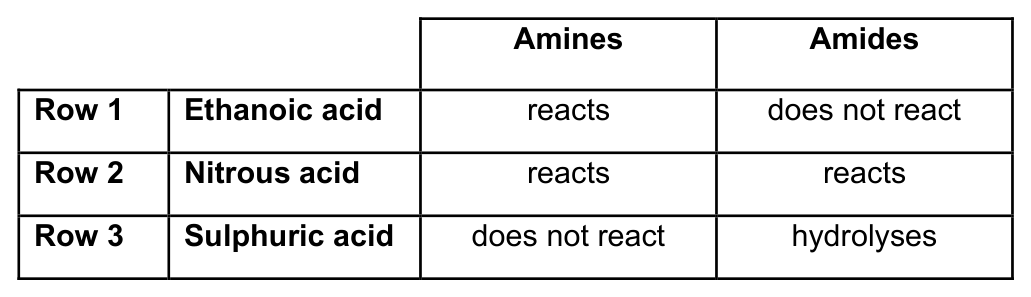
✍️ row 1 — ethanoic acid နဲ့ amine: amine က base ဖြစ်လို့ acid နဲ့ ဓာတ်ပြုပြီး salt ဖြစ်တယ် (reacts)။ amide ကတော့ base မဟုတ်လို့ မဓာတ်ပြုဘူး (no)။
row 1 ရဲ့ နှစ်ကွက်လုံး မှန်တယ် ✓။
row 3 — sulfuric acid (H₂SO₄) က ရေနဲ့ အပူပေးရင် amide ချိတ်ကို ဖြတ်တယ် (hydrolyses) ✓ — ဒီ ကွက် မှန်တယ်။
ဒါပေမဲ့ amine နဲ့ ‘does not react’ ဆိုတာ မှားတယ်။ base + acid → salt ဖြစ်ရမယ်။ row 3 ✗။
row 2 — nitrous acid (HNO₂ — HNO₃ ထက် O တစ်လုံး နည်း) က primary alkyl amine (R–NH₂) ရော primary amide (R–CONH₂) ရောနဲ့ ဓာတ်ပြုပြီး N₂ gas ထုတ်တယ် ✓
※ syllabus အပြင်က အပို အချက် (extra fact): HNO₂ က –NH₂ ရဲ့ N ကို N₂ အဖြစ် ထုတ်ပြီး OH နဲ့ အစားထိုးတယ် — R–NH₂ → R–OH + N₂၊ R–CONH₂ → R–COOH + N₂။
phenylamine လို ring ပေါ် NH₂ (aromatic amine) ကတော့ အေးအေး (5 °C အောက်) မှာ N₂ မထွက်ဘဲ diazonium salt (N₂⁺ ပါတဲ့ ဆား) ဖြစ်တယ် — ဒီ မေးခွန်းမှာ မလိုဘူး။
ဒါကြောင့် အဖြေက rows 1 and 2။ row 3 ပါတဲ့ အဖြေ အားလုံး ပယ်လို့ရလို့ row 2 ကို မသိရင်တောင် ဖြေနိုင်တယ်။
alcohol → acid → ester နဲ့ amide — IMAT 2014 Q47
📝 IMAT 2014 · Question 47
The reaction scheme below shows some reaction conversions of organic molecules. Which is the correct combination of process and compounds for this scheme?

✍️ primary alcohol ကနေ carboxylic acid ရဖို့ process T လိုတယ်။
primary alcohol → aldehyde → acid ဆိုတာ H ဆုံး O ရ — oxidation။ (reduction ဆိုရင် ပြောင်းပြန် ဖြစ်မယ်။)
acid + alcohol → W: acid ရဲ့ OH နဲ့ alcohol ရဲ့ H ရေ အဖြစ် ထွက်ပြီး ester ရတယ်။
acid + ammonia → X: acid ရဲ့ OH နေရာမှာ NH₂ ဝင်ပြီး amide ရတယ်။ nitrile (C≡N — halogenoalkane + CN⁻ ကနေ ရတာ) မဟုတ်ဘူး။
အရင် salt: CH₃COOH + NH₃ → CH₃COO⁻NH₄⁺ (ammonium ethanoate)။ အပူပေးရင် ရေ ထွက်ကာ CH₃CONH₂ (ethanamide)။ အဖြေ — oxidation, ester, amide။
S ဦးထုပ် — thiol
–SH = thiol (သိုင်ယော)O နေရာမှာ S (sulfur) ပါရင် –SH ဖြစ်တယ်။ ဒါကို thiol (သိုင်ယော) လို့ ခေါ်တယ်။
thiol အသေးတွေ — အနံ့ ပြင်းပြီး မကောင်း။molecule သေးတဲ့ thiol တွေက အနံ့ ပြင်းပြီး မကောင်းဘူး — ethanethiol ကို ချက်ပြုတ်တဲ့ gas ထဲ နည်းနည်း ထည့်ထားလို့ gas ယိုရင် နံ့ချင်း သိတယ်။ ကြက်သွန်ဖြူ (garlic) နံ့ကလည်း S ပါတဲ့ ဆင်တူ ဓာတ်တွေကြောင့်ပါ။
amino acid cysteine (HS–CH₂–CH(NH₂)–COOH) ကို ကြည့်ပါ။
🤔 Look at the drawing before the next line: which of the following functional groups is present in cysteine, HS–CH₂–CH(NH₂)–COOH? (IMAT 2020 Q48)
🔍 မေးခွန်း ဖြည်မယ်
before the next line = နောက်စာကြောင်း မဖတ်ခင်၊
functional group = ဦးထုပ်၊
is present in = ထဲမှာ ပါတယ်။
မေးနေတာ — cysteine ထဲက ဦးထုပ်တွေထဲ ရွေးစရာ စာရင်းမှာ ပါတဲ့ တစ်ခုက ဘယ်ဟာလဲ။
–SH က thiol။
–NH₂ (amine) နဲ့ –COOH (acid) လည်း ပါပေမဲ့ ရွေးစရာထဲမှာ မပါဘူး။
–OH မရှိလို့ alcohol မဟုတ်၊ NH₂ က C=O နဲ့ မကပ်လို့ amide မဟုတ်ဘူး။
–SH, –NH₂, –COOH — ဦးထုပ် သုံးခု။ဦးထုပ် သုံးခု ပါတယ် — –SH (thiol)၊ –NH₂ (amine)၊ –COOH (carboxylic acid)။
–SH နှစ်ခု → S–S bridge — protein ခိုင်။cysteine နှစ်လုံးရဲ့ –SH တွေက S–S ချိတ် (bridge) ဖွဲ့ပြီး protein ကို ခိုင်စေတယ် (သင်ခန်းစာ 25)။
ဦးထုပ် ရှာနည်း — vitamin B5
📝 IMAT 2021 · Question 46
Vitamin B5 has the structure:
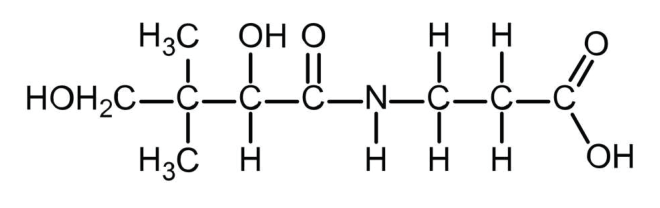
Which of the following functional groups are contained in a molecule of vitamin B5?
1 alcohol
2 aldehyde
3 amide
4 amine
5 carboxylic acid
6 ketone
ဦးထုပ် ရှာနည်း နှစ်ဆင့် — vitamin B5။molecule ကြီးကို ကြောက်စရာ မလိုဘူး။ ဦးထုပ် ရှာနည်း အဆင့် နှစ်ဆင့်ပဲ ရှိတယ်။ vitamin B5 ကို ဆွဲထားတယ်။
① O, N, S ကို ရှာ — O 5၊ N 1။① C နဲ့ H မဟုတ်တဲ့ atom တိုင်း — O, N, S — ကို ရှာပါ (find O, N, S)။ ဒီမှာ O 5 လုံးနဲ့ N 1 လုံး။
② ဘေး ကြည့် — ဘယ်ဆုံး O = alcohol (1)။② atom ရေရုံ မလောက်ဘူး — တစ်ခုချင်း ဘယ် atom နဲ့ single လား double လား ချိတ်လဲ ကြည့်မှ မိသားစု ခွဲနိုင်တယ်။ ဘယ်ဘက်ဆုံးက O က H နဲ့ carbon ပဲ ကပ်လို့ alcohol (1)။
အပေါ်က O–H လည်း C=O မပါတဲ့ carbon ပေါ်မှာ ရှိလို့ alcohol ပါ။
N ဘေးမှာ C=O ရှိတယ် — amine မဟုတ်ဘဲ amide (3)။
C=O carbon ပေါ် OH — carboxylic acid (5)။အောက်ဆုံးက C=O carbon ပေါ်မှာ OH ပါ ကပ်လို့ ketone မဟုတ်ဘဲ carboxylic acid (5)။
aldehyde, amine, ketone မပါဘူး။ ဒါကြောင့် အဖြေက 1, 3 and 5 only။
ပါရာစီတမော ထဲက ဦးထုပ်
paracetamol — benzene ကွင်း၊ O နဲ့ N ရှာ။အကိုက်အခဲ ပျောက်ဆေး paracetamol ကို ဆွဲထားတယ်။ အလယ်က ဆဋ္ဌဂံက benzene ကွင်းပါ (သင်ခန်းစာ 21B)။ O နဲ့ N ကို ရှာကြည့်မယ်။
ring ပေါ် –OH = phenol (OH on ring)။ဘယ်ဘက်က –OH က benzene ကွင်းပေါ် တိုက်ရိုက် ကပ်နေတယ်။ ဒီလို OH ကို phenol (OH on ring) လို့ ခေါ်တယ်။
🤔 The structure of paracetamol is HO–C₆H₄–NH–CO–CH₃. Which functional group is present? (IMAT 2023 Q41)
🔍 မေးခွန်း ဖြည်မယ်
structure = ပုံသဏ္ဌာန် (atom တွေ ချိတ်ပုံ)၊
functional group = ဦးထုပ်၊
is present = ပါတယ်။
မေးနေတာ — –NH–CO– အပိုင်းကို ကြည့်ပြီး ရွေးစရာထဲက ပါတဲ့ ဦးထုပ် တစ်ခုကို ရွေးပါ။
N က C=O carbon နဲ့ တိုက်ရိုက် ကပ်လို့ amide။
amine ဆို N က C=O နဲ့ မကပ်ရဘူး။
C=O ရဲ့ တစ်ဖက်က N ဖြစ်လို့ ketone မဟုတ်၊
C=O carbon မှာ H မရှိလို့ aldehyde မဟုတ်ဘူး။
ညာဘက်က N ဘေးမှာ C=O ရှိတယ် — –NH–CO– က amide ပါ။
N က C=O နဲ့ ကပ် — amine မဟုတ်၊ ketone မဟုတ်။amine မဟုတ်ဘူး — N က C=O နဲ့ ကပ်နေလို့။ ketone လည်း မဟုတ်ဘူး — C=O ရဲ့ တစ်ဖက်က N ဖြစ်နေလို့ (ketone ဆို နှစ်ဖက်လုံး carbon)။
ချုံ့ရေးထားတဲ့ formula ထဲက ဦးထုပ် — IMAT 2016 Q51
📝 IMAT 2016 · Question 51
The formula of a molecule is CH2CHCH2CH2COCH2CHO. Which functional groups given below are present in the molecule?
1 alkene
2 alcohol
3 aldehyde
4 ketone
✍️ formula ကို ချိတ်တွေ ထည့်ပြီး ဖြန့်ရေးကြည့်ပါ — CH₂=CH–CH₂–CH₂–CO–CH₂–CHO။
အစက CH₂=CH မှာ C=C ပါလို့ alkene (1) ✓။
အလယ်က –CO– ဆိုတာ C=O ပါ။ C=O carbon ရဲ့ နှစ်ဖက်လုံးမှာ carbon ရှိလို့ ketone (4) ✓။
အဆုံးက –CHO လည်း C=O ပဲ၊ ဒါပေမဲ့ C=O carbon ပေါ်မှာ H ကပ်နေလို့ aldehyde (3) ✓။
–OH မပါလို့ alcohol ✗။ (CHO ထဲက O ကို OH နဲ့ မရောပါနဲ့ — C=O ပါ။)
ဒါကြောင့် အဖြေက 1, 3 and 4 only။
🎮 Which hat? Sort fast 🔥
Reading and writing names
နာမည်ပေးနည်း — ပင်မ + နေရာ + နောက်ဆက်
နာမည် = ပင်မ + နေရာ + နောက်ဆက်
နာမည်ကို အုတ်ခဲ သုံးခုနဲ့ ဆောက်။ဒီ molecule ကို ဘယ်လို နာမည်ပေးမလဲ (name?)။ နာမည် တစ်ခုကို အုတ်ခဲ သုံးခုနဲ့ ဆောက်တယ်။
① ပင်မ — C 3 လုံး prop + -an။① ပင်မ — ဦးထုပ် ပါတဲ့ carbon ကြိုးမှာ carbon ဘယ်နှလုံးလဲ။ 3 လုံးဆိုတော့ prop၊ single bond တွေပဲ ဆိုတော့ -an (သင်ခန်းစာ 21A)။
② နေရာ — OH က C2 ပေါ်။② နေရာ — ကြိုးကို 1, 2, 3 နံပါတ် တပ်ပြီး ဦးထုပ်က ဘယ် carbon ပေါ်မှာလဲ ကြည့်ပါ။ OH က carbon 2 ပေါ်မှာ။
③ နောက်ဆက် — ဦးထုပ် အမျိုးအစား။ OH ဆိုတော့ -ol။
propan-2-ol — နာမည်ကနေ ပုံ ပြန်ဆွဲနိုင်။သုံးခု ပေါင်းရင် propan-2-ol။ ပုံ တစ်ခုလုံးကို မကြည့်ဘဲ နာမည် ကြည့်ရုံနဲ့ molecule ကို ပြန်ဆွဲနိုင်တယ်။
OH ဘက်က စရေ — propan-1-ol (not 3-ol)။OH က အစွန်းမှာ ဆိုရင် OH ဘက်ကနေ စရေတယ် — နံပါတ် အငယ်ဆုံး ရအောင်ပါ။ ဒါကြောင့် propan-1-ol၊ propan-3-ol မဟုတ်ဘူး (not 3-ol)။
🤔 What is the name of CH₃–CH(OH)–CH₂–CH₃?
🔍 မေးခွန်း ဖြည်မယ်
name = နာမည် — ပင်မ (carbon ဘယ်နှလုံး) + နေရာ (နံပါတ်) + နောက်ဆက်။
မေးနေတာ — carbon 4 လုံး ကြိုးမှာ OH ဘယ် carbon ပေါ်လဲ၊ နံပါတ် အငယ်ဆုံး ဘက်က ရေပါ။
carbon 4 လုံး → butan။
OH ဘက် အနီးဆုံး အစွန်းကနေ ရေရင် OH က carbon 2။
OH ဆိုတော့ -ol — butan-2-ol။
ညာကနေ ရေရင် 3 ဖြစ်လို့ မှားတယ်။
နောက်ဆက် ပြောင်းရင် ဦးထုပ် ပြောင်း
Br (bromine, Z = 35) က period 4၊ group 17 (halogen — Cl ရဲ့ အောက်တစ်ထပ်)။ bromo- ရှေ့ဆက် အဖြစ် နာမည်ထဲ ဝင်တယ်။
ပင်မ တူတူ၊ နောက်ဆက်ပဲ ပြောင်းကြည့်မယ်။ OH ဆိုရင် -ol — ethanol။
–CHO (aldehyde) ဆိုရင် -al — ethanal။–CHO (aldehyde) ဆိုရင် -al — ethanal။ carbon 4 လုံးဆို butanal (CH₃CH₂CH₂CHO)။
–COOH ဆိုရင် -oic acid — ethanoic acid။
ketone → -one — propanone။ketone ဆိုရင် -one — propanone (ketone ဖြစ်ဖို့ carbon 3 လုံး လိုလို့ propanone ကနေ စတယ်)။ carbon 4 လုံးဆို butanone (CH₃COCH₂CH₃)။
amine → ethylamine (ethanamine)။amine ဆိုရင် carbon အုပ်စုကို ethyl လုပ်ပြီး amine တွဲတယ် — ethylamine (အသုံးများ နာမည်)။ စည်းကမ်းတကျ (systematic) နာမည်က ethanamine (ethane ရဲ့ -e နေရာ -amine)၊ IMAT မှာ နှစ်မျိုးလုံး တွေ့ရတယ်။
halogen = ရှေ့ဆက် — bromoethane, 2-chloropropaneBr, Cl လို halogen ကတော့ နောက်ဆက် မဟုတ်ဘဲ ရှေ့ဆက် — fluoro-၊ chloro-၊ bromo-၊ iodo- — bromoethane (CH₃CH₂Br)၊ 2-chloropropane (CH₃CHClCH₃)။
aldehyde, acid — C1 မှာပဲ၊ နံပါတ် မရေး။aldehyde နဲ့ carboxylic acid က အမြဲ အစွန်း carbon (C1) မှာပဲ ရှိလို့ နံပါတ် မရေးဘူး — propanal, ethanoic acid။
🎯 Match each formula to its name
ဦးထုပ် နှစ်ခု ပါရင် — ဘယ်သူ နောက်ဆက် ယူလဲ
suffix တစ်ခုပဲ — acid > ester > ... > amine။ဦးထုပ် တစ်ခုထက် ပိုပါရင် နောက်ဆက် (suffix) ကို တစ်ခုပဲ ယူခွင့်ရှိတယ်။ ဦးစားပေး (priority) အစဉ်: carboxylic acid > ester > amide > nitrile > aldehyde > ketone > alcohol > thiol > amine။
အပေါ်ဆုံး တစ်ခုက နောက်ဆက် ယူတယ်။အပေါ်ဆုံး တစ်ခုက နောက်ဆက် ယူတယ်။ acid ကို carboxy- ရှေ့ဆက် လုပ်ပြီး alcohol ကို -ol ပေးတဲ့ ‘3-carboxypropan-1-ol’ လို နာမည် မှားတယ်။
lactic acid = 2-hydroxypropanoic acidCH₃CH(OH)COOH (lactic acid — နို့ချဉ်ထဲမှာ ပါပြီး ကြွက်သား အားပြင်းပြင်း သုံးလို့ O₂ မလောက်တဲ့အခါ ပိုများလာတဲ့ acid) မှာ COOH နဲ့ OH ပါတယ်။ acid က အပေါ်လို့ -oic acid ယူ၊ OH က hydroxy- ရှေ့ဆက် ဖြစ်ပြီး C2 ပေါ်မှာ → 2-hydroxypropanoic acid။
CH₃COCH₂CH₂OH = 4-hydroxybutan-2-oneCH₃COCH₂CH₂OH — ketone (C=O) က alcohol ထက် အပေါ်လို့ -one ယူတယ်။
ketone ဘက်က ရေရင် C=O က C2၊
OH က C4 → 4-hydroxybutan-2-one။
glycine = aminoethanoic acidH₂NCH₂COOH (glycine — amino acid) — acid က -oic acid ယူ၊ NH₂ က amino- ရှေ့ဆက် → aminoethanoic acid။
amine တစ်ခုတည်းဆိုရင် CH₃CH₂NH₂ = ethylamine (ethanamine)၊
CH₃CH(NH₂)CH₃ = propan-2-amine။
ရှေ့ဆက်: hydroxy-, oxo-, amino-နောက်ဆက် မရတဲ့ ဦးထုပ်တွေရဲ့ ရှေ့ဆက်:
OH → hydroxy-၊
C=O → oxo-၊
NH₂ → amino-။
halogen (chloro-, bromo-) နဲ့ alkyl (methyl-) က ဘယ်တော့မှ နောက်ဆက် မယူဘူး — အမြဲ ရှေ့ဆက်။
🤔 What is the systematic name of HOCH₂CH₂COOH?
🔍 မေးခွန်း ဖြည်မယ်
systematic name = စည်းကမ်းအတိုင်း ပေးတဲ့ နာမည်။ ဦးထုပ် နှစ်ခု ပါလို့ priority က နောက်ဆက် ဘယ်သူ ယူမလဲ ဆုံးဖြတ်တယ်။
မေးနေတာ — COOH နဲ့ OH ထဲ ဘယ်ဟာ နောက်ဆက်၊ ဘယ်ဟာ ရှေ့ဆက်၊ နံပါတ် ဘယ်လဲ။
COOH က priority အမြင့်ဆုံး → -oic acid၊ COOH ရဲ့ C က C1။
C 3 လုံး (propanoic acid)၊ OH က C3 ပေါ် → 3-hydroxypropanoic acid။
alcohol ကို နောက်ဆက် ထားတာ (-ol) မှား ✗။
အကိုင်းနဲ့ molecule ကို နာမည်ပေး — IMAT 2018 Q50
📝 IMAT 2018 · Question 50
What is the correct IUPAC name of this compound?
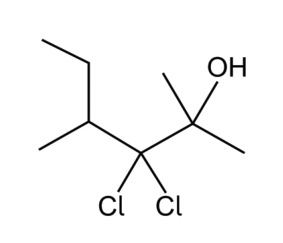
✍️ ပုံကို carbon တွေ ပေါ်အောင် ပြန်ဆွဲထားတယ် (ထောင့်တိုင်း၊ မျဉ်းအဆုံးတိုင်းမှာ carbon တစ်လုံး)။
① OH carbon ကို ဖြတ်တဲ့ အရှည်ဆုံး ကြိုး — ညာအောက် CH₃ ကနေ ဘယ်အပေါ်ဆုံး အထိ carbon 6 လုံး (6 C)။ ဒါကြောင့် hexane။
ထောင်ချောက် — ဘယ်အောက်က CH₃ ဘက် ကွေ့သွားရင် 5 လုံးပဲ ရတယ် (5 C ✗)။ pentan- ပါတဲ့ အဖြေတွေ မှားတယ်။
② OH ရဲ့ နံပါတ် အငယ်ဆုံး ရအောင် OH ဘက် အစွန်းကနေ 1, 2, 3 … ရေပါ။
OH က carbon 2 မှာ → hexan-2-ol (2-ol)။
Cl နှစ်လုံးက carbon 3 ပေါ်မှာ။ နှစ်လုံးဆိုတော့ di- ထည့်ရမယ် — 3,3-dichloro (‘3,3-chloro’ ဆိုတာ မှား)။
ကြိုးထဲ မပါတဲ့ CH₃ (methyl) နှစ်ခုက carbon 2 နဲ့ 4 ပေါ်မှာ — 2,4-dimethyl။
③ ရှေ့ဆက်တွေကို အက္ခရာ အစဉ် (c — chloro၊ m — methyl — di- ကို မရေ) စီပါ: 3,3-dichloro-2,4-dimethylhexan-2-ol။
Reaction types
substitution, addition, elimination, condensation, hydrolysis
ဘောလုံးပွဲ — လူလဲ၊ ထပ်ထည့်၊ ထုတ်
ဘောလုံး အသင်း — လူ ပြောင်းနည်း သုံးမျိုး။ဘောလုံး အသင်း (team) တစ်သင်းကို စဉ်းစားကြည့်ပါ။ ပွဲထဲမှာ လူ ပြောင်းလဲနိုင်တဲ့ အခြေခံ နည်း သုံးမျိုး ရှိတယ်။
တစ်ယောက် ထွက်ပြီး တစ်ယောက် ဝင် — လူလဲ (swap)။
လူ အသစ် ထပ်ဝင် — ထပ်ထည့် (add)။
ဖယ်ထုတ် (take off) — substitution, addition, elimination။လူ တစ်ယောက် ထုတ် — ဖယ်ထုတ် (take off)။ organic molecule တွေလည်း ဒီ အခြေခံ သုံးမျိုး — substitution, addition, elimination — နဲ့ ပြောင်းတယ်။
condensation နဲ့ hydrolysis — စုစုပေါင်း ငါးမျိုး။ရေ ပါတဲ့ နောက်ထပ် နှစ်မျိုးလည်း ရှိတယ်: molecule နှစ်ခု ချိတ်ရင်း ရေ တစ်ခု ထုတ်ပစ်တာ (condensation) နဲ့ ရေ ဝင်ပြီး ချိတ်ကို ဖြတ်တာ (hydrolysis)။ စုစုပေါင်း ငါးမျိုး — ဒီ PART မှာ တစ်ခုချင်း ကြည့်မယ်။
halogenoalkane — C–X မိသားစု
I (iodine, Z = 53) က period 5၊ group 17 (halogen — Br ရဲ့ အောက်)။ atom ကြီးလို့ C–I bond က ရှည်ပြီး အားနည်းတယ်။
C ပေါ် halogen = halogenoalkane (C ပေါ် halogen ကပ်တဲ့ ဓာတ်)alkane ရဲ့ H တစ်လုံးကို halogen (X = Cl, Br, I) နဲ့ အစားထိုးထားတဲ့ compound ကို halogenoalkane (C ပေါ် halogen ကပ်တဲ့ ဓာတ်) လို့ ခေါ်တယ်။
C–X — C δ+၊ X δ− (polar bond)။C–X bond မှာ X က electron ပိုဆွဲလို့ C က δ+ (အပေါင်း နည်းနည်း)၊ X က δ− ဖြစ်တယ် — polar bond။
δ+ C ကို OH⁻ ဝင်တိုက် — ဓာတ်ပြုချင်။δ+ C ကို OH⁻ လို အနုတ် particle တွေက ဝင်တိုက်ကြလို့ halogenoalkane တွေ ဓာတ်ပြုချင်စိတ် များတယ်။
chloroethane, bromoethane, 2-iodopropaneနာမည်: halogen ရှေ့ဆက် + alkane —
CH₃CH₂Cl = chloroethane၊
CH₃CH₂Br = bromoethane၊
CH₃CHICH₃ = 2-iodopropane (I က C2 ပေါ်)။
1°, 2°, 3° — alcohol လိုပဲ ခွဲ။alcohol လိုပဲ X ကပ်တဲ့ C ဘေးက C ကို ရေပြီး 1°, 2°, 3° ခွဲတယ်: RCH₂–X (primary)၊ R₂CH–X (secondary)၊ R₃C–X (tertiary)။ R = carbon ကိုယ်ထည်။
C–I 228 အားနည်းဆုံး — iodoalkane အမြန်ဆုံး။ဘယ် halogenoalkane က အမြန်ဆုံး ဓာတ်ပြုလဲ? C–X bond ကျိုးရ လွယ်လေ မြန်လေ။ ပျမ်းမျှ bond energy (data book): C–Cl 346၊ C–Br 290၊ C–I 228 kJ/mol။ C–I အားနည်းဆုံး → iodoalkane အမြန်ဆုံး။
butane ကြိုးမှာ: iodo > bromo > chloro > fluoro။butane ကြိုး တူတူနဲ့ ယှဉ်ရင် 1-iodobutane အမြန်ဆုံး၊ 1-bromobutane၊ 1-chlorobutane နှေးလာတယ်။ C–F (467 kJ/mol) အခိုင်ဆုံးလို့ 1-fluorobutane က ဓာတ်မပြုသလောက်ပဲ။
polarity ထက် bond energy ပိုအရေးကြီး။C–Cl က ပို polar ဖြစ်ပေမဲ့ bond ခိုင်လို့ နှေးတယ် — ဒီမှာ polarity ထက် bond energy က ပိုအရေးကြီးတယ်။
🤔 Which halogenoalkane is hydrolysed fastest by warm aqueous sodium hydroxide?
🔍 မေးခွန်း ဖြည်မယ်
is hydrolysed = OH နဲ့ အစားထိုး ခံရ၊
fastest = အမြန်ဆုံး၊
warm aqueous = နွေးတဲ့ ရေပျော်ရည်။
မေးနေတာ — C–X bond ဘယ်ဟာ ကျိုးရ အလွယ်ဆုံးလဲ (bond energy ကြည့်)။
C–X bond ကျိုးမှ ဓာတ်ပြုတယ်။
C–I (228 kJ/mol) က အားနည်းဆုံး → 1-iodobutane အမြန်ဆုံး။
C–F က အခိုင်ဆုံး (ဓာတ်မပြုသလောက်)။
တစ်ခု ထွက် တစ်ခု ဝင် — substitution
bromoethane + NaOH (aqueous) — OH⁻ ရောက်လာ။bromoethane (CH₃CH₂Br) ကို NaOH ပျော်ရည် (aqueous) နဲ့ နွေးထားတယ် — OH⁻ ion တွေ ရောက်လာတယ်။
Br က Br⁻ အဖြစ် ထွက်သွားပြီး OH က သူ့နေရာ ဝင်ယူတယ် — ethanol ရတယ်။
one out, one in = substitution (အစားထိုး)တစ်ခု ထွက်ပြီး တစ်ခု ဝင်တာ (one out, one in) ကို substitution (အစားထိုး) လို့ ခေါ်တယ် — ဘောလုံးပွဲ လူလဲတာပါ။
🤔 Predict: which one of the following compounds can be made from ethanol using only a substitution reaction? (IMAT 2011 Q61)
🔍 မေးခွန်း ဖြည်မယ်
predict = ကြိုတင် ခန့်မှန်း၊
can be made from = ကနေ လုပ်လို့ ရတယ်၊
using only = ဒီ တစ်မျိုးတည်း သုံးပြီး။
မေးနေတာ — ethanol ရဲ့ OH ကို တစ်ခု ထွက် တစ်ခု ဝင် နည်းတစ်ခုတည်းနဲ့ ဘယ်ဟာ ရနိုင်လဲ။
OH ကို Br နဲ့ အစားထိုးရင် bromoethane ✔။
ethanal နဲ့ ethanoic acid က oxidation၊ ethene က elimination၊ ethoxyethane (ether) က ethanol နှစ်လုံး ရေ ထုတ်ပြီး ချိတ်တာ (condensation)။
ethanol + HBr → bromoethane။ပြောင်းပြန်လည်း ရတယ်: ethanol ကို HBr နဲ့ ဓာတ်ပြုရင် OH ထွက်ပြီး Br ဝင်လို့ bromoethane ရတယ်။
double bond ပွင့်ပြီး ဝင် — addition
ethene + Br₂ (bromine)။ethene (C=C) နဲ့ လိမ္မော်ရောင် Br₂ (bromine) ကို ရောလိုက်မယ် (သင်ခန်းစာ 21B)။ bromine water နဲ့ စမ်းရင်လည်း လိမ္မော်ရောင် ပျောက်တယ် — C=C ရှိကြောင်း test ပါ။
CH₂Br–CH₂Br — colourless။double bond တစ်ချောင်း ပွင့်ပြီး carbon တစ်လုံးစီမှာ Br တစ်လုံးစီ ဝင်ကပ်တယ် — CH₂Br–CH₂Br။ လိမ္မော်ရောင် ပျောက်သွားတယ် (colourless)။
2 → 1,
nothing leaves = addition (ပေါင်းထည့်)molecule နှစ်ခုက တစ်ခု ဖြစ်ပြီး ဘာမှ မထွက်ဘူး (2 → 1, nothing leaves)။
ဒါကို addition (ပေါင်းထည့်) လို့ ခေါ်တယ်။
propene + HBr → CH₃CHBrCH₃ — addition။propene + HBr လည်း addition ပါ — H နဲ့ Br နှစ်ခုလုံး ဝင်ပြီး CH₃CHBrCH₃ ဖြစ်တယ်။
propene + HBr: H က H များတဲ့ C ပေါ် ရောက်လို့ 2-bromopropane က major (Markovnikov စည်းကမ်း)
Markovnikov — 2-bromopropane major။Br က ဘာလို့ အလယ် C ပေါ် ရောက်လဲ? သင်ခန်းစာ 21B က Markovnikov စည်းကမ်း — H က H ပိုများပြီးသား C (အစွန်း CH₂) ပေါ် ရောက်ပြီး Br က အလယ် C ပေါ် ရောက်တယ်။ 2-bromopropane က major၊ 1-bromopropane က minor။
secondary C⁺ ပိုတည်ငြိမ်လို့။အကြောင်းရင်း: H⁺ အရင် ဝင်ပြီး ဖြစ်တဲ့ C⁺ က C 2 လုံးနဲ့ ဝိုင်းထားတဲ့ အလယ် C (secondary) မှာ ဖြစ်ရင် ပိုတည်ငြိမ်လို့ပါ။
ရေ ဖယ်ပြီး double bond — elimination
ethanol မှာ carbon တစ်လုံးပေါ်က H နဲ့ ဘေး carbon ပေါ်က OH ကို ကြည့်ပါ။
acid နဲ့ အပူပေးရင် အဲဒီ H နဲ့ OH က ရေ (H₂O) အဖြစ် အတူ ထွက်သွားတယ်။
conc. H₂SO₄ 170 °C ဒါမှမဟုတ် Al₂O₃ 300 °C။conditions: conc. H₂SO₄ (ဒါမှမဟုတ် H₃PO₄) နဲ့ 170 °C — ဒါမှမဟုတ် ethanol အငွေ့ကို 300 °C လောက် ပူနေတဲ့ Al₂O₃ (aluminium oxide) ပေါ် ဖြတ်ပို့။
carbon နှစ်လုံးမှာ လက် တစ်ဖက်စီ လွတ်သွားလို့ C=C ဖြစ်ပြီး ethene ရတယ်။
ရေ ဖယ် → C=C = elimination (ဖယ်ထုတ်) — dehydrationmolecule ငယ် တစ်ခု ဖယ်ထုတ်ပြီး double bond ဖြစ်တာကို elimination (ဖယ်ထုတ်) လို့ ခေါ်တယ် — addition ရဲ့ ပြောင်းပြန်ပါ။ ရေ ဖယ်ထုတ်တာမို့ dehydration လို့လည်း ခေါ်တယ်။
AgCl အခဲ ထွက် = precipitation။ion နှစ်ခု ပေါင်းပြီး မပျော်တဲ့ အခဲ ထွက်လာတာကို precipitation (အနည်ထွက်ခြင်း — သင်ခန်းစာ 14) လို့ ခေါ်တယ် — Ag⁺ + Cl⁻ → AgCl အဖြူ အခဲ။ organic ဓာတ်ပြုမှု မဟုတ်ဘူး။
📝 IMAT 2012 Q68 → သင်ခန်းစာ 14 (ဓာတ်ပြုမှု အမျိုးအစား စာရင်း)။
🤔 Consider the following reactions.
1. CH₃CH₂OH → CH₂=CH₂ + H₂O
2. CH₂=CH₂ + Br₂ → CH₂BrCH₂Br
3. Ag⁺(aq) + Cl⁻(aq) → AgCl(s)
Which one of the following types of reaction is NOT included in this list?
🔍 မေးခွန်း ဖြည်မယ်
consider = စဉ်းစားကြည့်၊
types of reaction = ဓာတ်ပြုမှု အမျိုးအစား၊
NOT included in this list = ဒီ စာရင်းထဲ မပါဘူး (NOT ကို သတိ)။
မေးနေတာ — 1, 2, 3 တစ်ခုချင်း အမျိုးအစား ပေးပြီး ဘယ် အမျိုးအစားက တစ်ခုမှ မကိုက်လဲ။
1 — ethanol က ရေ ဖယ်ထုတ်ပြီး C=C ဖြစ်တယ် — elimination။
2 — C=C ပွင့်ပြီး Br₂ ဝင်တယ် — addition။
3 — ion နှစ်ခုက မပျော်တဲ့ AgCl အဖြူ အခဲ ဖြစ်တယ် — precipitation။
atom တစ်ခု ထွက်ပြီး နောက်တစ်ခု အစားဝင်တာ မရှိလို့ substitution က စာရင်းထဲ မပါဘူး။
OH⁻ ရဲ့ လမ်း နှစ်ခု — substitution လား elimination လား
bromoethane + OH⁻ — conditions က ရွေး။bromoethane နဲ့ OH⁻ (NaOH ကနေ) တွေ့ရင် ထွက်ကုန် နှစ်မျိုး ဖြစ်နိုင်တယ် — conditions က ရွေးပေးတယ်။
① aqueous + နွေး → ethanol (substitution)။① NaOH ကို ရေထဲ ပျော် (aqueous) ပြီး နွေးရင် OH⁻ က δ+ C ကို ဝင်တိုက်ပြီး Br⁻ ကို နှင်ထုတ်တယ် → ethanol (substitution)။ ဒီမှာ OH⁻ က nucleophile (electron အတွဲ ပေးပြီး C ကို တိုက်သူ — နောက် အခန်း)။
② ethanol ထဲ + reflux → ethene (elimination)။② NaOH ကို ethanol ထဲ ပျော်ပြီး ပြင်းပြင်း အပူပေး (reflux) ရင် OH⁻ က ဘေး C ပေါ်က H ကို H⁺ အဖြစ် ဆွဲယူ (base အဖြစ်) ပြီး Br⁻ ထွက်ကာ C=C ဖြစ်တယ် → ethene + H₂O + Br⁻ (elimination)။
ရေ → substitution၊ ethanol + အပူ → elimination။မှတ်နည်း:
ရေ → substitution (alcohol)၊
ethanol + အပူ → elimination (alkene)။
tertiary halogenoalkane တွေမှာ C ကို ဝင်တိုက်ဖို့ နေရာ ကျပ်လို့ elimination ပိုဖြစ်တယ်။
🤔 2-Bromopropane is heated under reflux with sodium hydroxide dissolved in ethanol. What is the main organic product?
🔍 မေးခွန်း ဖြည်မယ်
heated under reflux = ပြင်းပြင်း အပူပေး (အငွေ့ ပြန်အေး ကျ)၊
dissolved in ethanol = ethanol ထဲမှာ ပျော်ထား (ရေ မဟုတ်)၊
main = အဓိက။
မေးနေတာ — ဒီ conditions မှာ OH⁻ က substitution လုပ်မလား elimination လုပ်မလား၊ ဘာ ထွက်လဲ။
ethanol ထဲက NaOH + အပူ → elimination: OH⁻ က H⁺ ယူ၊ Br⁻ ထွက်ပြီး C=C → propene။
propan-2-ol က aqueous NaOH (ရေ) နဲ့ နွေးမှ ရတယ်။
ရေ ထုတ်ပြီး ချိတ် — condensation (ester လုပ်နည်း)
ester လုပ်နည်း — ethanoic acid နဲ့ methanol (alcohol) ကို ရောမယ်။
acid ရဲ့ OH နဲ့ alcohol ရဲ့ H ပေါင်းပြီး ရေ (H₂O) အဖြစ် ထွက်သွားတယ်။
–COO– ချိတ် — methyl ethanoate (ester)။ကျန်တဲ့ အပိုင်း နှစ်ခုက –COO– နဲ့ ချိတ်သွားတယ် — methyl ethanoate (ester) ရတယ်။
ရေထုတ် ချိတ် = condensation (ရေထုတ် ချိတ်ခြင်း)molecule နှစ်ခု ချိတ်ရင်း ရေ (ဒါမှမဟုတ် HCl လို molecule သေး) ထွက်တာကို condensation (ရေထုတ် ချိတ်ခြင်း) လို့ ခေါ်တယ်။ ester လုပ်တာကို esterification လို့လည်း ခေါ်တယ်။
conc. H₂SO₄ + အပူ — ⇌။အပြင်းစား H₂SO₄ နည်းနည်း (conc. H₂SO₄) ထည့်ပြီး အပူပေးတယ်။ ပြန်ပြောင်းနိုင်လို့ ⇌ နဲ့ ရေးတယ် (သင်ခန်းစာ 18)။
ရေ ဝင်ပြီး ဖြတ် — hydrolysis
ရေ ဝင် ဖြတ် = hydrolysis (ရေနဲ့ ခွဲခြင်း)condensation ရဲ့ ပြောင်းပြန်က hydrolysis (ရေနဲ့ ခွဲခြင်း) — ရေ ဝင်ပြီး ester ချိတ်ကို ဖြတ်ကာ acid နဲ့ alcohol ပြန်ရတယ်။
ကြိုးရှည် တစ်ခုမှာ ချိတ်တိုင်းကို ရေ တစ်ခုစီက ဝင်ဖြတ်တယ်။
amide ချိတ်လည်း hydrolysis — IMAT 2012 Q67။amide ချိတ်လည်း ဒီလိုပဲ — ရေ တစ်ခုတည်းနဲ့ အလွန် နှေးလို့ acid ဒါမှမဟုတ် base ထည့်ပြီး အပူပေးမှ carboxylic acid နဲ့ amine (ဒါမှမဟုတ် သူတို့ရဲ့ ဆား) ပြန်ကွဲတယ်။ IMAT 2012 Q67 (PART 1) မှာ H₂SO₄ က amide ကို hydrolyse လုပ်တာ ဒါပါ။
enzyme နဲ့ အစာချေ = hydrolysis။အစာအိမ်နဲ့ အူထဲမှာ enzyme တွေက အဆီ၊ protein၊ ကစီဓာတ်ကို ချေဖျက်တာ (ဓာတုနည်း digestion) က hydrolysis ပါ (သင်ခန်းစာ 47)။ ဝါးတာ၊ နယ်တာကတော့ အပိုင်းအစ သေးအောင် လုပ်ရုံပဲ။
🤔 Ethyl propanoate, CH₃CH₂COOCH₂CH₃, is boiled with water and a little dilute acid. Which process happens, and what forms?
🔍 မေးခွန်း ဖြည်မယ်
is boiled with = နဲ့ ဆူအောင် ကျို၊
a little dilute acid = acid ပျော့ နည်းနည်း၊
which process happens = ဘာ ဖြစ်စဉ် ဖြစ်လဲ၊
what forms = ဘာ ရလဲ။
မေးနေတာ — ဖြစ်စဉ်ရဲ့ နာမည်နဲ့ ester ကွဲပြီး ရတဲ့ အပိုင်း နှစ်ခု — နှစ်ခုလုံး မှန်ရမယ်။
ရေ ဝင်ပြီး ester ချိတ်ကို ဖြတ်တာ — hydrolysis။
C=O ဘက် CH₃CH₂CO– က propanoic acid၊ O နောက်က CH₂CH₃ က ethanol ဖြစ်တယ်။
condensation က ပြောင်းပြန် (ရေ ထွက်ပြီး ချိတ်)။
acid ဘက်နဲ့ alcohol ဘက်ကို ပြောင်းပြန် ဖတ်ရင် ethanoic acid + propanol ဆိုတဲ့ အမှား ရတယ်။
ester ကို acid နဲ့ ဖြတ်လား base နဲ့ ဖြတ်လား — ဆပ်ပြာ
methyl ethanoate (CH₃COOCH₃) ကို hydrolysis လုပ်နည်း နှစ်မျိုး ရှိတယ်။
① acid hydrolysis — reversible ⇌။① acid hydrolysis — dilute H₂SO₄ (catalyst) နဲ့ ရေ ထည့်ပြီး reflux။ ethanoic acid နဲ့ methanol ရပေမဲ့ esterification ရဲ့ ပြောင်းပြန် ဖြစ်လို့ ⇌ — အပြည့် မပြီးဘူး (reversible)။
② base hydrolysis (NaOH) — complete။② base hydrolysis — NaOH ပျော်ရည်နဲ့ reflux။ ဖြစ်လာတဲ့ acid ကို NaOH က ချက်ချင်း ဆား (sodium ethanoate — CH₃COO⁻Na⁺) အဖြစ် ပြောင်းလို့ ပြန်မလာနိုင်ဘူး — အပြည့် ပြီးဆုံးတယ် (complete)။
အဆီ + NaOH → glycerol + soap။အဆီ (fat — glycerol ကို fatty acid သုံးခုနဲ့ ester ချိတ်ထားတဲ့ molecule ကြီး၊ PART 4) ကို NaOH နဲ့ ကျိုရင် glycerol နဲ့ fatty acid ရဲ့ sodium salt သုံးခု ရတယ် — ဒါ ဆပ်ပြာ (soap) ပါ။
ဆပ်ပြာ လုပ်ခြင်း = saponification (ဆပ်ပြာ လုပ်ခြင်း)အဆီကို NaOH နဲ့ ဖြတ်ပြီး ဆပ်ပြာ ရတဲ့ ဒီ ဓာတ်ပြုမှုကို saponification (ဆပ်ပြာ လုပ်ခြင်း) လို့ ခေါ်တယ်။
COO⁻ ခေါင်း ရေကြိုက်၊ အမြီး ဆီကြိုက် — အညစ် ဆေး။ဆပ်ပြာ molecule (ဥပမာ C₁₇H₃₅COO⁻ Na⁺ — sodium stearate) မှာ ရေကို ကြိုက်တဲ့ COO⁻ ခေါင်းနဲ့ ဆီကို ကြိုက်တဲ့ carbon အမြီး ရှည် ပါလို့ ဆီနဲ့ ရေကို ပေါင်းပေးပြီး အညစ်အကြေး ဆေးထုတ်တယ်။
🤔 Ethyl ethanoate, CH₃COOCH₂CH₃, is boiled with excess sodium hydroxide solution. What are the products?
🔍 မေးခွန်း ဖြည်မယ်
excess = လိုတာထက် ပိုများ၊
sodium hydroxide solution = NaOH ပျော်ရည်၊
products = ထွက်ကုန်များ။
မေးနေတာ — base နဲ့ ester ဖြတ်ရင် acid ဘက်က ဘာ ဖြစ်လဲ၊ alcohol ဘက်က ဘာလဲ၊ ပြီးဆုံးလား။
NaOH နဲ့ ester ကို ဖြတ်ရင် acid ဘက်က ချက်ချင်း ဆား sodium ethanoate (CH₃COO⁻Na⁺) ဖြစ်ပြီး alcohol ဘက်က ethanol — ပြန်မလာနိုင်လို့ ပြီးဆုံးတယ်။
⇌ နဲ့ acid + alcohol ရတာ acid hydrolysis။
ethoxide ဆား မဖြစ်ဘူး၊ ethene က elimination ရဲ့ ထွက်ကုန်။
organic redox — C ရဲ့ oxidation number ပြန်ရေ
📝 IMAT 2014 · Question 46
The following are some compounds that can be made from ethene, C2H4:
C2H6, C2H5Br, C2H5OH, CH2BrCH2Br, –(CH2CH2)n–
Which one of the compounds is made by oxidising ethene?
✍️ carbon ရဲ့ oxidation number ကို ချိတ် တစ်ခုချင်း ရေတွက်တယ် — H နဲ့ ချိတ်တိုင်း −1၊ O ဒါမှမဟုတ် Br နဲ့ ချိတ်တိုင်း +1၊ C–C က 0 (သင်ခန်းစာ 16)။
ethene မှာ carbon တစ်လုံးစီ H 2 လုံးနဲ့ ချိတ်လို့ −2။
CH₂BrCH₂Br မှာ carbon တစ်လုံးစီ H 2 လုံး (−2) နဲ့ Br 1 လုံး (+1) — −1။ −2 ကနေ −1 တက်လို့ oxidation ✓
C₂H₆ (H₂ ပေါင်းထည့်) မှာ −3 — ကျလို့ reduction။
C₂H₅OH နဲ့ C₂H₅Br မှာ CH₃ က −3 (ကျ)၊ CH₂X က −1 (တက်) — တစ်လုံး ကျ တစ်လုံး တက်လို့ စုစုပေါင်း −4 မပြောင်းဘူး (H₂O, HBr ပေါင်းထည့်တာ)။ polymer (ethene ထောင်ချီ ဆက်ထားတဲ့ ကြိုး — PART 4) မှာလည်း −2 ပဲ။
oxidation = CH₂BrCH₂Br တစ်ခုတည်း၊ C₂H₆ reduction။ဒါကြောင့် ethene ကနေ oxidation နဲ့ ရတာ CH₂BrCH₂Br တစ်ခုတည်း။ C₂H₆ က reduction။ C₂H₅OH၊ C₂H₅Br မှာ carbon တစ်လုံး တက် တစ်လုံး ကျလို့ molecule တစ်ခုလုံး oxidation မဖြစ်ဘူး (net redox မရှိ)၊ polymer မှာ carbon တိုင်း −2 ပဲ။
🤔 Ethanal, CH₃CHO, is oxidised to ethanoic acid, CH₃COOH. What happens to the oxidation number of the carbon bonded to oxygen?
🔍 မေးခွန်း ဖြည်မယ်
is oxidised to = oxidation ဖြစ်ပြီး … ဖြစ်သွား၊
oxidation number = ချိတ် ရေတွက်ပြီး ရတဲ့ ဂဏန်း၊
the carbon bonded to oxygen = O နဲ့ ချိတ်ထားတဲ့ carbon။
မေးနေတာ — အဲဒီ carbon ရဲ့ oxidation number အရင် ဘယ်လောက်၊ နောက် ဘယ်လောက်။
ethanal ရဲ့ CHO carbon: C–H 1 ခု (−1) + C=O (bond 2 ခု၊
+2) + C–C (0) = +1။
ethanoic acid ရဲ့ COOH carbon: C=O (+2) + C–O (+1) + C–C (0) = +3။
+1 → +3 တက်လို့ oxidation။
အဆင့် သုံးဆင့် လမ်းကြောင်း — IMAT 2013 Q50
📝 IMAT 2013 · Question 50
The compound (CH3)2CHCH2NH2 can be synthesised by the following route.
What types of reaction are used in stages 1, 2 and 3?

✍️ အဆင့် 1 — propene ရဲ့ C=C ပွင့်ပြီး H နဲ့ Br နှစ်ခုလုံး ဝင်တယ်၊ ဘာမှ မထွက်ဘူး → addition။ Markovnikov အရ Br က အလယ် C ပေါ် — CH₃CHBrCH₃
အဆင့် 2 — Br ထွက်ပြီး CN (KCN ရဲ့ CN⁻ ကနေ) ဝင်တယ် → substitution။ nitrile ရပြီး C တစ်လုံး ရှည်လာတယ် (PART 1)
အဆင့် 3 — C≡N မှာ H 4 လုံး ဝင်ပြီး CH₂NH₂ (amine) ဖြစ်တယ်။ H ရတာ reduction။ အဖြေ — addition, substitution, reduction
electron အတွဲ ပေးသူ — nucleophile
C–Br — C δ+၊ Br δ−။substitution ဘာလို့ ဖြစ်လဲ ပိုနက်နက် ကြည့်မယ်။ C–Br မှာ Br က electron ကို ဆွဲထားလို့ C က δ+ (အပေါင်း နည်းနည်း)၊ Br က δ− ဖြစ်တယ်။
OH⁻ ရဲ့ lone pair — δ+ C နဲ့ ချိတ်။OH⁻ မှာ lone pair (electron အတွဲ) ရှိတယ်။ δ+ C ကို ဆွဲခံရပြီး electron အတွဲကို ပေးကာ ချိတ်တယ်။
nucleophile (nucleus ချစ်သူ) — OH⁻, NH₃electron အတွဲ ပေးပြီး အပေါင်းဘက်ကို ရှာတိုက်သူကို nucleophile (nucleus ချစ်သူ) လို့ ခေါ်တယ် — OH⁻, NH₃ လိုမျိုး။
Br⁻ ထွက် — nucleophilic substitution။OH ဝင်လာတော့ Br⁻ ထွက်သွားတယ်။ ဒါကို nucleophilic substitution လို့ ခေါ်တယ်။
🤔 Cyanide ions, CN⁻, react with bromoethane to form propanenitrile. What is the role of CN⁻?
🔍 မေးခွန်း ဖြည်မယ်
cyanide ions = CN⁻၊
react with = နဲ့ ဓာတ်ပြု၊
to form = … ကို ဖြစ်စေ၊
role = တာဝန် (ဘာ အလုပ် လုပ်လဲ)။
မေးနေတာ — CN⁻ က electron အတွဲ ပေးသူလား ယူသူလား — အဲဒီ နာမည်။
CN⁻ မှာ lone pair (နဲ့ − charge) ရှိလို့ δ+ C ကို electron အတွဲ ပေးပြီး Br⁻ ကို နှင်ထုတ်တယ် — nucleophile (PART 1 က nitrile ဓာတ်ပြုမှု)။
electron အတွဲ ယူသူ — electrophile
C=C — electron-rich။C=C double bond မှာ electron လေးလုံး စုနေလို့ အနုတ် ကြွယ်တဲ့ နေရာ (electron-rich) ဖြစ်တယ်။
Br₂ ရဲ့ Br δ+ ဖြစ် — electron အတွဲ ယူ။Br₂ နီးလာရင် C=C ဘက်က Br က δ+ ဖြစ်လာပြီး double bond ဆီက electron အတွဲကို ယူတယ်။
electrophile (electron ချစ်သူ) — Br₂, H⁺electron အတွဲ ယူသူကို electrophile (electron ချစ်သူ) လို့ ခေါ်တယ် — Br₂, H⁺ လိုမျိုး။
အဆုံးမှာ Br နှစ်လုံး carbon တွေပေါ် ရောက်တယ် — electrophilic addition။
တတိယ — free radical (Cl·) — UV နဲ့ substitution။တတိယ အမျိုးက free radical (Cl· — electron တစ်လုံးတည်း) — UV အလင်းမှာ alkane နဲ့ substitution လုပ်တာ (သင်ခန်းစာ 21A)။
🤔 In the nitration of benzene (lesson 21B), the particle that attacks the ring is NO₂⁺. What is its role?
🔍 မေးခွန်း ဖြည်မယ်
nitration = NO₂ တပ်ခြင်း၊
the particle that attacks the ring = ring ကို ဝင်တိုက်တဲ့ particle၊
role = တာဝန်။
မေးနေတာ — + charge ပါတဲ့ NO₂⁺ က ring ရဲ့ electron ကို ပေးလား ယူလား — အဲဒီ နာမည်။
NO₂⁺ မှာ + charge ရှိပြီး benzene ring ရဲ့ electron အတွဲကို ယူတယ် — electrophile။
nucleophile က electron အတွဲ ပေးသူ၊ free radical မှာ electron တစ်လုံးတည်း။
🎮 Which reaction type? Sort fast 🔥
Fats, biodiesel and polymers
ester ချိတ် ကြိုးရှည်များ
အိတ်က နှစ်ပေါင်း ရာချီ၊ အသားက နာရီပိုင်း
plastic bag — နှစ်ပေါင်း ရာချီ မပျက်။ပလတ်စတစ်အိတ် (plastic bag) တစ်လုံး လွှင့်ပစ်လိုက်ရင် နှစ်ပေါင်း ရာချီ (hundreds of years) မပျက်ဘဲ ကျန်နေတယ်။
meat — နာရီ အနည်းငယ်နဲ့ ချေ (digested in hours)။အသား (meat) တစ်တုံး စားလိုက်ရင် နာရီ အနည်းငယ်နဲ့ ချေဖျက်ပြီးပြီ (digested in hours)။
နှစ်ခုလုံး chains of small units — ဘာလို့ ကွာလဲ?နှစ်ခုလုံး molecule သေးလေးတွေ ထောင်ချီ ဆက်ထားတဲ့ ကြိုးရှည်တွေပါ (chains of small units)။ ဘာလို့ ဒီလောက် ကွာလဲ? ဒီ PART မှာ ဖြေမယ်။
glycerol + fatty acid 3 ခု — triglyceride
glycerol — C 3 လုံး၊ OH သုံးခု (3 OH)။ဟင်းချက်ဆီ နဲ့ ထောပတ် molecule ကို ဆောက်ကြည့်မယ်။ glycerol မှာ carbon 3 လုံး၊ တစ်လုံးစီမှာ OH — OH သုံးခု (3 OH) ပါတဲ့ alcohol ပါ။
fatty acid (ကြိုးရှည် carboxylic acid) — long chain + COOHfatty acid (ဆီအက်စစ် — ကြိုးရှည် carboxylic acid) က carbon ဆယ်ဂဏန်း ရှိတဲ့ ကြိုးရှည်ရဲ့ အဆုံးမှာ –COOH တစ်ခု ပါတဲ့ carboxylic acid ပါ (long chain + COOH)။
OH တစ်ခုစီ + COOH — 3 H₂O ထွက်။glycerol ရဲ့ OH တစ်ခုစီက fatty acid တစ်ခုစီရဲ့ COOH နဲ့ condensation ဖြစ်ပြီး ရေ molecule သုံးခု (3 water molecules) ထွက်တယ်။
ester ၃ ခု = triglyceride (ester ချိတ် ၃ ခုပါ အဆီ molecule)ester ချိတ် သုံးခုနဲ့ ဆက်ထားတဲ့ molecule ကြီးကို triglyceride (ထရိုင်ဂလစ်ဆာရိုက် — ester ချိတ် သုံးခုပါ အဆီ molecule) လို့ ခေါ်တယ် — အဆီ နဲ့ ဆီ (fat, oil) ပါ (သင်ခန်းစာ 24B)။
📝 IMAT 2019 Q23 → သင်ခန်းစာ 24B။📝 IMAT 2019 Q23 → သင်ခန်းစာ 24B (သက်ရှိ molecule တွေရဲ့ –OH နဲ့ –COOH ဇယား)။
🤔 One glycerol molecule reacts with only TWO fatty acid molecules (a diglyceride forms). How many water molecules are released, and what links form?
🔍 မေးခွန်း ဖြည်မယ်
only TWO = နှစ်ခုတည်း (သုံးခု မဟုတ်)၊
diglyceride = fatty acid နှစ်ခု ချိတ်ထားတဲ့ glycerol၊
released = ထွက်လာ၊
links = ချိတ်။
မေးနေတာ — ရေ molecule ဘယ်နှခု ထွက်လဲ နဲ့ ဘာ ချိတ် ဖြစ်လဲ — နှစ်ခုလုံး။
fatty acid တစ်ခု ချိတ်တိုင်း ester ချိတ် တစ်ခု နဲ့ ရေ တစ်ခု — နှစ်ခု ချိတ်လို့ ရေ 2 ခု၊ ester ချိတ်။
glycerol ရဲ့ OH တစ်ခု လွတ်နေသေးတယ်။
ရေ 3 ခုက fatty acid သုံးခု (triglyceride) အတွက်။
peptide ချိတ်က amino acid ချင်း။
ဆီကနေ ဒီဇယ် — biodiesel (IMAT 2022 Q39)
📝 IMAT 2022 · Question 39
Consider the following general equation that describes one way of synthesising a particular type of BIOFUEL, represented by Y.
X represents a neutral (uncharged) organic molecule involved in the reaction.
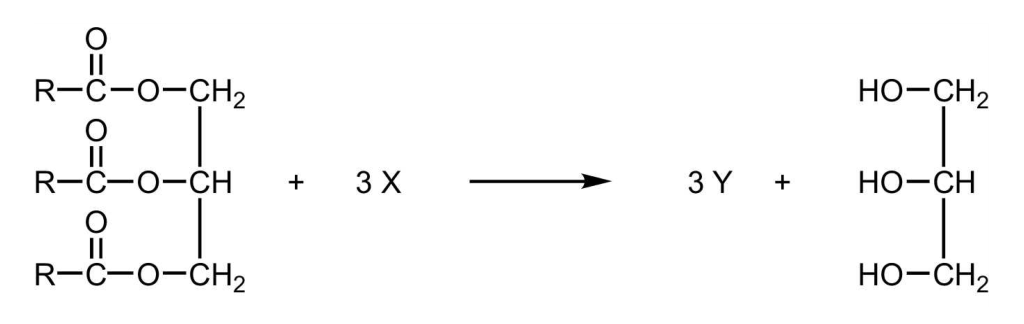
Which of the following statements about the reaction are correct?
1 Addition of an enzyme is an essential condition.
2 Y is an ester.
3 X contains an alcohol group.
✍️ ဘယ်ဘက်က triglyceride (အဆီ/ဆီ) ပါ — glycerol ကို fatty acid သုံးခုနဲ့ ester ချိတ်ထားတယ်။
X သုံးခုနဲ့ ဓာတ်ပြုတယ်။ X က methanol (CH₃OH) လို alcohol ပါ — statement 3 ✓။
ester ချိတ်တွေ အဖော် လဲတယ် — fatty acid တွေက methanol နဲ့ ester အသစ် ဖြစ်သွားတယ်။ Y = fatty acid methyl ester — biodiesel၊ statement 2 ✓။ ဒါကို transesterification လို့ ခေါ်တယ်။
glycerol က ဘေးထွက်ပါ။ စက်ရုံမှာ NaOH/KOH ကို catalyst အဖြစ် သုံးတယ်၊ enzyme (အဆီ ဖြတ်တဲ့ ပရိုတင်း ဓာတ်ကူ) မဖြစ်မနေ မလိုဘူး — statement 1 ✗။ အဖြေ 2 and 3 only။
C=C ပွင့်ပြီး ဆက် — addition polymer
monomer (ကြိုးထဲက အုတ်ခဲ တစ်လုံး) — ethene (C=C)။polymer (ပိုလီမာ — molecule သေးလေးတွေ ထောင်ချီ ဆက်ထားတဲ့ ကြိုးရှည် molecule) က monomer (ကြိုးထဲက အုတ်ခဲ တစ်လုံး) လို့ ခေါ်တဲ့ molecule သေးလေးတွေ ထောင်ချီ ဆက်ထားတဲ့ ကြိုးပါ။ ပထမ နည်း — monomer မှာ C=C ပါရမယ်၊ ethene လိုမျိုး။
double bond ပွင့်ပြီး ချိတ် — nothing lost။ဖိအားနဲ့ catalyst ကြောင့် double bond တွေ ပွင့်ပြီး ဘေးက monomer နဲ့ လက်ချင်း ချိတ်သွားတယ်။ ဘာမှ မထွက်ဘူး (nothing lost)။
addition polymerisation (C=C ပွင့်ပြီး ဆက်တဲ့ နည်း)ဒါကို addition polymerisation (C=C ပွင့်ပြီး ဆက်တဲ့ polymer လုပ်နည်း) လို့ ခေါ်တယ် — addition ကို ထောင်ချီ ဆက်လုပ်တာပါ။
repeat unit –CH₂–CH₂– × n = poly(ethene)။ကြိုးမှာ ထပ်ခါ ပါတဲ့ အပိုင်း (repeat unit) –CH₂–CH₂– ကို ကွင်းထဲ ထည့်ပြီး n ရေးတယ် — poly(ethene)၊ ပလတ်စတစ်အိတ်ပါ။
✍️ chloroethene CH₂=CHCl ဆိုရင် C=C ကို C–C ပြောင်းပြီး ဘေးနှစ်ဖက် လက်ဖွင့် — –CH₂–CHCl–။ poly(chloroethene) = PVC — ရေပိုက်ပါ။
🤔 Which polymer forms from the single monomer CH₂=CH–CH₃ (propene)? Is water released?
🔍 မေးခွန်း ဖြည်မယ်
forms from = ကနေ ဖြစ်လာ၊
single monomer = monomer တစ်မျိုးတည်း၊
is water released? = ရေ ထွက်လား။
မေးနေတာ — propene ကနေ ဘယ် polymer ရလဲ၊ ဆက်တဲ့အခါ ရေ ထွက်လား မထွက်ဘူးလား။
C=C ပါလို့ addition။
double bond ပွင့်ပြီး –CH₂–CH(CH₃)– ထပ်ခါ ဆက်တယ်၊ ဘာမှ မထွက်ဘူး — poly(propene)။
ချိတ်တိုင်း ရေ ထွက် — condensation polymer
a group at both ends — –COOH နဲ့ –NH₂။ဒုတိယ နည်း — monomer နှစ်မျိုးမှာ အစွန်း နှစ်ဖက်စလုံး ဦးထုပ် ပါတယ် (a group at both ends): acid (–COOH) နဲ့ amine (–NH₂)။
H₂O ထွက် — –CO–NH– amide link။acid ရဲ့ OH နဲ့ amine ရဲ့ H ရေ (H₂O) အဖြစ် ထွက်ပြီး –CO–NH– amide link နဲ့ ချိတ်တယ် (water released)။ ကျန်တဲ့ အစွန်းတွေက ဆက်ချိတ်သွားတယ်။
condensation polymer (ချိတ်တိုင်း ရေထွက်တဲ့ polymer) — nylonချိတ်တိုင်း ရေ ထွက်လို့ condensation polymer (ချိတ်တိုင်း ရေထွက်တဲ့ polymer) ပါ — nylon (နိုင်လွန်) ပါ။ (တချို့ လုပ်နည်းမှာ ရေ အစား HCl လို molecule သေး ထွက်တယ်။)
diol + acid — polyester (PET)။amine အစား OH နှစ်ခု ပါတဲ့ alcohol (diol) သုံးရင် ester ချိတ် — polyester — ရေသန့်ဘူး PET ပါ။
protein, ကစီဓာတ် — condensation polymer။protein (amino acid တွေ) နဲ့ ကစီဓာတ် (starch — glucose units တွေ) လည်း condensation polymer တွေပါ — ချိတ်တိုင်း ရေ ထွက်တယ်။
hydrolysis ဖြတ်နိုင် — အသား မြန်၊ အိတ် မပျက်။ဒီ ချိတ်တွေကို ရေက ဖြတ်နိုင်လို့ (hydrolysis) အသား နာရီပိုင်းနဲ့ ချေပြီးတယ်။ poly(ethene) လို addition polymer ရဲ့ C–C ကြိုးကို ရေ မဖြတ်နိုင်လို့ အိတ်က နှစ်ပေါင်း ရာချီ ကျန်တာ။
🤔 Which of the following polymers is formed by addition polymerisation?
🔍 မေးခွန်း ဖြည်မယ်
is formed by = နည်းနဲ့ ဖြစ်လာ၊
addition polymerisation = C=C ပွင့်ပြီး ဘာမှ မထွက်ဘဲ ဆက်တဲ့ နည်း။
မေးနေတာ — ရွေးစရာ ငါးခုထဲ monomer မှာ C=C ပါပြီး ဘာမှ မထွက်ဘဲ ဆက်တာ ဘယ်ဟာလဲ။
phenylethene CH₂=CH–C₆H₅ မှာ C=C ပါလို့ double bond ပွင့်ပြီး ဆက်တယ် — addition၊ ဘာမှ မထွက်ဘူး။
nylon, protein, starch, polyester အကုန် ချိတ်တိုင်း H₂O ထွက်တဲ့ condensation polymer။
polymer ကနေ monomer ပြန်ရှာ — nylon-6,6 နဲ့ polyester
nylon-6,6 — –CO–NH– amide link (polyamide)။nylon-6,6 (နိုင်လွန် ကြိုး၊ အထည်) ရဲ့ ကြိုးမှာ –NH–(CH₂)₆–NH–CO–(CH₂)₄–CO– ဆိုတဲ့ အပိုင်း ထပ်ခါ ပါတယ်။ ချိတ်တွေက –CO–NH– amide link (polyamide)။
link ကို H₂O နဲ့ ဖြတ် — N ဘက် H၊ C=O ဘက် OH။monomer ရှာနည်း: amide link တိုင်းကို ရေ (H₂O) နဲ့ ဖြတ်တယ်လို့ စိတ်ကူး — N ဘက်ကို H ထည့်၊ C=O ဘက်ကို OH ထည့်။
hexane-1,6-diamine + hexanedioic acid — ‘6,6’။ရတာ H₂N–(CH₂)₆–NH₂ (hexane-1,6-diamine — C 6 လုံး၊ အစွန်း နှစ်ဖက် NH₂) နဲ့ HOOC–(CH₂)₄–COOH (hexanedioic acid — C 6 လုံး၊ အစွန်း နှစ်ဖက် COOH)။ ‘6,6’ ဆိုတာ monomer နှစ်ခုလုံး C 6 လုံးစီ ပါလို့။
polyester — –CO–O– ester link။ရေသန့်ဘူး polyester ရဲ့ ကြိုး: –O–CH₂CH₂–O–CO–C₆H₄–CO–။ ချိတ်တွေက –CO–O– ester link။
ပထမ monomer — ethane-1,2-diol။ester link ကို ဖြတ်ပြီး O ဘက် H၊ C=O ဘက် OH ထည့်ရင် monomer နှစ်ခု ရတယ်။ ပထမ HO–CH₂CH₂–OH (ethane-1,2-diol — OH နှစ်ခုပါတဲ့ diol)။
ဒုတိယ — benzene-1,4-dicarboxylic acid။ဒုတိယ HOOC–C₆H₄–COOH (benzene-1,4-dicarboxylic acid — benzene ring ရဲ့ ဆန့်ကျင်ဘက် နှစ်ဖက်မှာ COOH)။
addition polymer — C=C ပြန်ထည့် → propene။addition polymer ဆိုရင်တော့ ဖြတ်စရာ link မရှိဘူး — repeat unit ရဲ့ ကြိုးမ ပေါ်က C နှစ်လုံးကြား C–C ကို C=C ပြန်ပြောင်းရုံပဲ၊ ဘေးက CH₃ လို အကိုင်းတွေ မပြောင်းဘူး: –CH₂–CH(CH₃)– → CH₂=CH–CH₃ (propene)။
🤔 A polymer has the repeat unit –NH–(CH₂)₄–NH–CO–(CH₂)₈–CO–. Which pair of monomers made it?
🔍 မေးခွန်း ဖြည်မယ်
repeat unit = ကြိုးမှာ ထပ်ခါ ပါတဲ့ အပိုင်း၊
which pair of monomers = ဘယ် monomer အတွဲ၊
made it = သူ့ကို လုပ်ခဲ့တာ။
မေးနေတာ — amide link တွေ ဖြတ်ပြီး N ဘက် H၊ C=O ဘက် OH ထည့်ရင် ရတဲ့ monomer နှစ်ခု။
amide link (–CO–NH–) တိုင်းကို ဖြတ်၊ N ဘက် H၊ C=O ဘက် OH ထည့် → H₂N(CH₂)₄NH₂ (diamine) + HOOC(CH₂)₈COOH (diacid)။
diol ဆိုရင် ester link ဖြစ်ရမယ်။
ပလတ်စတစ် ပုပ်ပျက်နိုင်လား — biodegradable
poly(ethene) အိတ် — နှစ် 100 ကျော် မပျက်။poly(ethene) အိတ်ကို မြေကြီးထဲ မြှုပ်ထားရင် နှစ် 100 ကျော် မပျက်ဘဲ ကျန်နေတယ်။
C–C, C–H ချည်း — ester/amide link မရှိ။ဘာလို့လဲ — poly(ethene) ရဲ့ ကြိုးမ က C–C နဲ့ C–H ချည်းပဲ၊ nonpolar။ ရေ ဒါမှမဟုတ် ဘက်တီးရီးယား enzyme တွေ အလွယ် ဝင်ဖြတ်နိုင်တဲ့ ester၊ amide link မရှိလို့ သဘာဝမှာ ပျက်ဖို့ အလွန် ခက်တယ်။
non-biodegradable (သဘာဝအတိုင်း မပုပ်ပျက်)ဒါကြောင့် poly(ethene)၊ poly(propene) လို C–C ကြိုးမ ချည်းပဲ ရှိတဲ့ addition polymer တွေက non-biodegradable (သဘာဝအတိုင်း မပုပ်ပျက်) ပါ။ addition polymer အားလုံး မဟုတ်ဘူး — ကြိုးမ ပေါ်မှာ ဘာ ပါလဲ ပေါ် မူတည်တယ်။
polyester, polyamide — link ကို hydrolysis ဖြတ်နိုင်။polyester နဲ့ polyamide (condensation polymer) တွေမှာတော့ ester/amide link ကို ရေ (acid, base, enzyme နဲ့) hydrolysis နဲ့ ဖြတ်လို့ ရတယ်။
ဖြတ်လို့ ရ ≠ မြန်မြန် ပုပ် — PET, nylon နှေး။ဒါပေမဲ့ ဖြတ်လို့ ရတာနဲ့ သဘာဝမှာ မြန်မြန် ပုပ်တာ မတူဘူး။ PET ရေသန့်ဘူး၊ nylon ကြိုး တွေက မြေထဲမှာ အလွန် နှေးတယ်။ ဘယ်လောက် မြန်လဲက polymer နဲ့ ပတ်ဝန်းကျင် (အပူ၊ ရေ၊ enzyme) ပေါ် မူတည်တယ်။
poly(lactic acid) — လ အနည်းငယ်နဲ့ ပျက် (biodegradable)။ပြောင်းဖူး ကစီဓာတ်ကနေ လုပ်တဲ့ poly(lactic acid) (PLA — Poly Lactic Acid) ခွက်လို polyester ကတော့ စက်ရုံ compost (ပူတဲ့ ဆွေးမြေ) ထဲမှာ လ အနည်းငယ်နဲ့ ပျက်တယ် — biodegradable။
မီးရှို့ — CO₂၊ PVC က HCl အဆိပ် gas။ပလတ်စတစ် မီးရှို့ရင် energy ရပေမဲ့ CO₂ (ကမ္ဘာ ပူစေ) ထွက်တယ်။ PVC လို Cl ပါတဲ့ ပလတ်စတစ်ကနေ HCl လို အဆိပ် gas လည်း ထွက်တယ်။
recycle — အကောင်းဆုံး နည်းလမ်း တစ်ခု။recycle — အမျိုးအစား ခွဲပြီး အရည်ပျော်အောင် ပြန်ချက်ကာ ပစ္စည်းသစ် ပြန်လုပ်တာက အကောင်းဆုံး နည်းလမ်း တစ်ခုပါ။
ပဟေဠိ အဖြေ — link တွေပါပဲ။ပလတ်စတစ်အိတ်က နှစ်ပေါင်း ရာချီ၊ အသားက နာရီပိုင်း ဆိုတဲ့ PART 4 အစက ပဟေဠိရဲ့ အဖြေလည်း ဒီ link တွေပါပဲ။
🤔 Why can nylon slowly be broken down by hydrolysis, while poly(propene) cannot?
🔍 မေးခွန်း ဖြည်မယ်
slowly = ဖြည်းဖြည်း၊
be broken down = ပြိုကွဲ ခံရ၊
while = တစ်ဖက်မှာတော့၊
cannot = မရဘူး။
မေးနေတာ — ကြိုး နှစ်မျိုးရဲ့ ချိတ်ပုံ ဘာ ကွာလို့ ရေက တစ်ခုကိုပဲ ဖြတ်နိုင်လဲ — အကြောင်းရင်း။
nylon ကြိုးထဲမှာ –CO–NH– amide link တွေ ရှိလို့ ရေ (enzyme) က hydrolysis နဲ့ ဖြတ်နိုင်တယ်။
poly(propene) ကြိုးက C–C, C–H ပဲ — ဖြတ်စရာ link မရှိ။
nylon က condensation polymer ပါ။
poly(propene) က ရေထဲ မပျော်ဘူး။
🎮 Addition or condensation polymer? Sort fast 🔥
🔁 ပြန်စစ်မယ် — အဖြေ မကြည့်ခင် စဉ်းစားပါ
🤔 CH₃CH₂COOH belongs to which family?
🔍 မေးခွန်း ဖြည်မယ်
belongs to = … ထဲ ပါဝင်၊
family = မိသားစု (ဦးထုပ် တူတဲ့ အုပ်စု)။
မေးနေတာ — –COOH ဦးထုပ် ပါတဲ့ မိသားစုက ဘယ်ဟာလဲ။
C=O နဲ့ –OH က carbon တစ်လုံးတည်းပေါ် — –COOH — carboxylic acid (propanoic acid)။
🤔 CH₃COOCH₂CH₃ is…
🔍 မေးခွန်း ဖြည်မယ်
is… = ဖြစ်တာက… (စာကြောင်း ဆက်ဖြည့်ပါ)။ –COO– ရဲ့ O နောက်မှာ H လား carbon လား ကြည့်။
မေးနေတာ — ဒီ molecule ရဲ့ မိသားစု (နဲ့ နာမည်)။
–COOH ရဲ့ H နေရာမှာ carbon ကြိုး — –COO– — ester၊ O နောက်က ethyl၊ acid ဘက် ethanoate။
🤔 CH₃OCH₃ is…
🔍 မေးခွန်း ဖြည်မယ်
is… = ဖြစ်တာက…။ O ရဲ့ ဘေး နှစ်ဖက်မှာ ဘာ ကပ်လဲ၊ C=O ပါလား ကြည့်။
မေးနေတာ — ဒီ molecule ရဲ့ မိသားစု။
O က carbon နှစ်လုံးကြား၊ C=O မပါ — ether။
🤔 In CH₃CONHCH₃, the N is bonded to a C=O. The group is…
🔍 မေးခွန်း ဖြည်မယ်
is bonded to = နဲ့ ချိတ်ထား၊
the group = ဦးထုပ်။
မေးနေတာ — N က C=O နဲ့ ကပ်နေတဲ့ ဦးထုပ်ရဲ့ နာမည်။
N က C=O ရဲ့ carbon နဲ့ တိုက်ရိုက် ကပ်လို့ amide (base မဟုတ်)။
N က C=O မပါတဲ့ carbon နဲ့ပဲ ကပ်ရင် amine။
🤔 Which compound fizzes (gives CO₂) with sodium carbonate solution?
🔍 မေးခွန်း ဖြည်မယ်
fizzes = ပူဖောင်း တဖွားဖွား ထွက်၊
gives CO₂ = CO₂ gas ထုတ်၊
sodium carbonate = Na₂CO₃။
မေးနေတာ — Na₂CO₃ ကို ဖြိုနိုင်လောက်အောင် acid ပြင်းတဲ့ ဓာတ်က ဘယ်ဟာလဲ။
Na₂CO₃ ကို ဖြိုနိုင်တာ သုံးခုထဲ အပြင်းဆုံး carboxylic acid ပဲ။
phenol က အားနည်းလွန်းတယ်။
🤔 Bromoethane is warmed with aqueous NaOH. The organic product is…
🔍 မေးခွန်း ဖြည်မယ်
is warmed with = နဲ့ နွေး၊
aqueous = ရေထဲ ပျော်ထား၊
organic product = carbon ပါတဲ့ ထွက်ကုန်။
မေးနေတာ — ရေထဲ OH⁻ + နွေး conditions မှာ ရတဲ့ ထွက်ကုန်နဲ့ ဓာတ်ပြုမှု အမျိုး။
ရေထဲက OH⁻ + နွေး → Br နေရာ OH ဝင် — substitution၊ ethanol။
ethene က ethanol ထဲ + အပူ မှ ရတယ်။
🤔 Which particle acts as a nucleophile?
🔍 မေးခွန်း ဖြည်မယ်
particle = အမှုန် (ion, molecule)၊
acts as = … အဖြစ် အလုပ်လုပ်၊
nucleophile = electron အတွဲ ပေးပြီး + ဘက်ကို တိုက်သူ။
မေးနေတာ — lone pair ပါပြီး electron အတွဲ ပေးနိုင်တဲ့ particle က ဘယ်ဟာလဲ။
OH⁻ မှာ lone pair ရှိပြီး electron အတွဲ ပေးတယ်။
H⁺, NO₂⁺ က electron အတွဲ ယူသူ (electrophile)၊ Cl· မှာ electron တစ်လုံးတည်း။
🤔 C₂H₅OH + HBr → C₂H₅Br + H₂O is…
🔍 မေးခွန်း ဖြည်မယ်
is… = ဒီ ဓာတ်ပြုမှုက … အမျိုးအစား။ ethanol ရဲ့ ဘာ ထွက်ပြီး ဘာ ဝင်လဲ ကြည့်။
မေးနေတာ — ဓာတ်ပြုမှု အမျိုးအစား နာမည်။
OH ထွက် Br ဝင် — substitution။
🤔 Which monomer can form an addition polymer?
🔍 မေးခွန်း ဖြည်မယ်
monomer = ကြိုးထဲက အုတ်ခဲ molecule၊
can form = ဖွဲ့နိုင်၊
addition polymer = C=C ပွင့်ပြီး ဆက်တဲ့ polymer။
မေးနေတာ — C=C ပါတဲ့ monomer က ဘယ်ဟာလဲ။
C=C ပါတာ — chloroethene → PVC။
ကျန်တာက condensation monomer သို့ monomer မဟုတ်။
🎉 ဦးထုပ်၊ နာမည်၊ ဓာတ်ပြု ငါးမျိုး၊ polymer — ရပြီ။🎉 acid၊ ester၊ ether၊ N နဲ့ S ဦးထုပ်တွေ၊ နာမည်ပေးနည်း၊ ဓာတ်ပြုမှု ငါးမျိုး၊ polymer — အကုန် ရပြီ။ အောက်က မေးခွန်းတွေနဲ့ စမ်းကြည့်ပါ။