Membranes and transport (2)
energy မလိုဘဲ ဖြတ်သွားတဲ့ လမ်းများ
Crossing without energy
energy မလိုဘဲ ဖြတ်သွားတဲ့ လမ်းများ
ဆေးရုံ ပဟေဠိ — ရေ သန့် ဘာလို့ မသွင်းတာလဲ?
0.9% saline — 100 mL မှာ NaCl 0.9 g။ဆေးရုံမှာ သွေးကြောထဲ အရည် သွင်းရင် saline (ဆားရည်) ကို သုံးတယ်။ 0.9% saline ဆိုတာ ပျော်ရည် 100 mL တိုင်းမှာ NaCl (ထမင်းစား ဆား) 0.9 g ပျော်နေတာ။
saline ထဲ red blood cell normal။ဒီ saline ထဲမှာ red blood cell (သွေးနီဥ) တွေ normal (ပုံမှန်) အတိုင်း နေတယ်။
pure water သွင်းရင် ရေ ဝင်ပြီး cell ဖောင်းလာ…pure water (ရေ သန့်) ကို အများကြီး သွင်းရင်တော့ ရေတွေ cell ထဲ အတင်း ဝင်ပြီး red blood cell တွေ ဖောင်းလာတယ်…
…burst ကုန်တယ်!…နောက်ဆုံး burst (ပေါက်) ကုန်တယ်! ရေက အန္တရာယ် မရှိဘူး ထင်ခဲ့တာ မဟုတ်လား?
ရေ ဘာလို့ ဝင်ချင်လဲ? ဆား ဘာကြောင့် ကာလဲ?ရေက cell ထဲ ဘာလို့ အတင်း ဝင်ချင်နေတာလဲ? ဆားက ဘာကြောင့် ကာကွယ်ပေးလဲ? ဒီ PART ဆုံးရင် ဖြေနိုင်မယ်။
ATP = cell ရဲ့ energy ဘက်ထရီ။ATP (Adenosine TriPhosphate) က cell ရဲ့ energy ဘက်ထရီ molecule (သင်ခန်းစာ 27B)။
no ATP လမ်း ၃ — diffusion, facilitated, osmosis။အဖြေရဖို့ no ATP (ဒီ ဘက်ထရီ မသုံးဘဲ) ကိုယ့်ဘာသာ ဖြတ်တဲ့ လမ်း သုံးမျိုး သင်မယ် — diffusion၊ facilitated diffusion၊ osmosis။
🔎 ကြိုကြည့်မယ် — red blood cells (သွေးနီဥ)
သွေး တစ်စက် ချဲ့ကြည့် — အနီ ပြားလေး အများကြီး။သွေး တစ်စက်ကို microscope (အဏုကြည့် မှန်ပြောင်း) နဲ့ ချဲ့ကြည့်ရင် အနီရောင် ပြားလေးတွေ အများကြီး တွေ့ရတယ်။ ပဟေဠိထဲက red blood cells (သွေးနီဥ) တွေပါ။
red blood cells (သွေးနီဥ) — သင်ခန်းစာ 48 မှာ အပြည့် သင်မယ်။ဒါ ကြိုကြည့်တာပဲ — red blood cells ကို သင်ခန်းစာ 48 မှာ အပြည့် သင်မယ်။ ဒီ PART အတွက် လိုတာ နှစ်ချက်ပဲ။
ဘေးက ကြည့်ရင် အလယ် ချိုင့်တဲ့ ပြား — oxygen (O₂) သယ်တယ်။ဘေးကနေ ကြည့်ရင် အလယ် ချိုင့်နေတဲ့ ပြားပုံ။ အဆုတ်ကနေ ခန္ဓာကိုယ် အနှံ့ oxygen (O₂) ကို သယ်ပေးတယ်။
အပြင်မှာ membrane တစ်ထပ်ပဲ — cell wall မရှိ။အပြင်ကို membrane တစ်ထပ်ပဲ ဖုံးထားတယ် — အပင် cell လို cell wall (ခိုင်တဲ့ နံရံ) မရှိဘူး။ ရေ အများကြီး ဝင်ရင် ခံမယ့် နံရံ မရှိလို့ ပေါက်တာ — ဒီ PART မှာ ဆက်ကြည့်မယ်။
များရာ ကနေ နည်းရာ — diffusion
concentration — ဘယ် high၊ ညာ low။concentration (ပါဝင်နှုန်း) ဆိုတာ နေရာ တစ်ခုထဲမှာ particle ဘယ်လောက် ကျပ်လဲ။ ဘယ်ဘက်က high concentration၊ ညာဘက်က low concentration။
particle တွေ always moving။particle တွေက always moving (အမြဲ ရမ်းရမ်း လှုပ်နေ) တယ်။ ဘယ်သူမှ မတွန်းပေမဲ့ ဟိုဝင် ဒီတိုက် ဖြစ်နေတယ်။
high → low net movement။ကျပ်တဲ့ ဘက်မှာ particle များလို့ ညာဘက်ကို ကူးတာ ပိုများတယ်။ ရလဒ်က high ကနေ low ဆီ net movement (စုစုပေါင်း ရွေ့မှု) ဖြစ်တယ်။
diffusion (ပျံ့နှံ့ခြင်း) — လက်ဖက်ရည် အရောင်လို။ဒါကို diffusion (ပျံ့နှံ့ခြင်း) လို့ ခေါ်တယ် — ရေနွေးထဲက လက်ဖက်ခြောက် အရောင် မမွှေဘဲ ပြန့်သွားသလိုပဲ။
concentration gradient (ပါဝင်နှုန်း ကွာခြားချက်)high နဲ့ low ကြား ကွာခြားချက်ကို concentration gradient လို့ ခေါ်တယ်။ diffusion က ဘောလုံး တောင်ဆင်း လိမ့်သလို gradient အတိုင်း ဆင်းတယ်။
ATP မလို = passive (energy မလိုတဲ့ လမ်း)တောင်ဆင်းတာ အားမစိုက်ရသလို diffusion မှာ ATP မလိုဘူး။ energy မလိုတဲ့ လမ်းကို passive လို့ ခေါ်တယ်။
🤔 Predict: both sides now have the same concentration. What do the particles do?
🔍 မေးခွန်း ဖြည်မယ်
Predict = ကြိုတင် ခန့်မှန်း။ both sides = နှစ်ဖက်စလုံး။ now have the same concentration = အခု ပါဝင်နှုန်း တူသွားပြီ။
မေးနေတာ — နှစ်ဖက် ညီသွားပြီးနောက် particle တွေ ဘာ လုပ်နေလဲ။
particle တွေ အမြဲ လှုပ်နေတယ် — ညီသွားလည်း ရပ်မသွားဘူး။
ဘယ်ဘက် ကူးတာ ညာဘက် ကူးတာ ညီလို့ net movement သုည ဖြစ်တာ။
equilibrium — ရပ်မသွား၊ net movement သုည။နှစ်ဖက် ညီသွားရင် equilibrium (မျှခြေ)။ particle တွေ completely (လုံးဝ) ရပ်မသွားဘူး — both directions (နှစ်ဖက်စလုံး) ကို equally (ညီညီ) ကူးနေလို့ net movement သုည ဖြစ်တာ။ ဒါ IMAT ထောင်ချောက်ပါ။
ဘာတွေ ဆီ အလွှာကို တိုက်ရိုက် ဖြတ်နိုင်လဲ?
protein မပါ ဖြတ်ချင်ရင် ဆီ core ထဲ ပျော်ရမယ်။membrane ရဲ့ phospholipid bilayer (ဆီ အလွှာ နှစ်ထပ်၊ သင်ခန်းစာ 31A) ကို ဘာတွေ တိုက်ရိုက် ဖြတ်နိုင်လဲ? protein မပါဘဲ ဖြတ်ချင်ရင် ဆီ core ထဲ ပျော်ဝင်နိုင်ရမယ်။
O₂ — သေး၊ non-polar — တန်း ဖြတ် ✓။O₂ က သေးပြီး charge မရှိ (non-polar) လို့ ဆီထဲ ပျော်ပြီး တန်း ဖြတ်ဝင်တယ် ✓။
CO₂ လည်း ✓ — simple diffusion။CO₂ လည်း အတူတူပဲ — cell ထဲကနေ အပြင် ထွက်သွားတယ် ✓။ protein မပါဘဲ ဖြတ်တာကို simple diffusion လို့ ခေါ်တယ်။
Na⁺ လို ion က charge ရှိလို့ ဆီ core က ပြန်ကန်ထုတ်တယ် ✗။
glucose — ကြီး၊ polar — ✗။glucose က ကြီးပြီး polar (charge ခပ်ပါးပါး ပါ) ဖြစ်လို့ သူလည်း မဖြတ်နိုင်ဘူး ✗။
small + non-polar = through lipid၊ ions က protein လို။စည်းမျဉ်း: small + non-polar ဆိုရင် through lipid (ဆီ core ကို တိုက်ရိုက်) ဖြတ်တယ်။ ions နဲ့ ကြီးတဲ့ polar molecule တွေကတော့ protein တံခါး လိုတယ်။
ရေ — သေးပေမဲ့ polar — ချွင်းချက်။ရေ (H₂O) ကရော? ရေ molecule က အရမ်း သေးပေမဲ့ polar (charge ခပ်ပါးပါး ပါ) ဖြစ်တယ်။ ဒါကြောင့် ရေ ချွင်းချက် —
💡 ဆီဆန် သေးတဲ့ ဧည့်သည်ပဲ တံခါး မလို။💡 မှတ်နည်း — ဆီ နံရံကို ဆီ ဆန်တဲ့ (non-polar)၊ သေးတဲ့ ဧည့်သည်ပဲ တံခါး မလိုဘဲ ဖြတ်ဝင်နိုင်တယ်။ ion တွေက protein တံခါး လိုတယ်။
ရေ molecule အနည်းငယ်က အရမ်း သေးလို့ ဆီ core ကို ဖြည်းဖြည်း တိုးဝင်နိုင်တယ် (slow)။ ဒါပေမဲ့ polar ဖြစ်လို့ အများကြီး မြန်မြန် မဖြတ်နိုင်ဘူး။
ရေ အများစုကတော့ aquaporin (ရေ ပြွန် protein) ကနေ တန်းစီ မြန်မြန် ဖြတ်တယ် — အောက်က channel ကတ်မှာ ထပ်တွေ့မယ်။ ဒါကြောင့် ရေကို ‘polar ဖြစ်ပေမဲ့ သေးလို့ ဖြည်းဖြည်း ဖြတ်နိုင်တဲ့ ချွင်းချက်’ လို့ မှတ်ပါ။
🤔 Which of these crosses the phospholipid bilayer directly, by simple diffusion?
🔍 မေးခွန်း ဖြည်မယ်
crosses = ဖြတ်သွားတယ်။ directly = protein မပါဘဲ တိုက်ရိုက်။ by simple diffusion = ရိုးရိုး diffusion နဲ့။
မေးနေတာ — ဒီ လေးမျိုးထဲက ဘယ်ဟာက ဆီ အလွှာ နှစ်ထပ်ကို တံခါး မလိုဘဲ ဖြတ်နိုင်လဲ။
N₂ က O₂ လိုပဲ သေးပြီး non-polar — ဆီ core ထဲ ပျော်ပြီး တိုက်ရိုက် ဖြတ်တယ်။
Cl⁻, Ca²⁺ က charge ရှိ၊ sucrose က ကြီးပြီး polar — protein တံခါး လိုတယ်။
🔎 ကြိုကြည့်မယ် — alveolus, capillary, gill (အဆုတ် နဲ့ ငါးပါးဟက်)
ရင်ဘတ်ထဲ အဆုတ် (lungs) နှစ်လုံး — လေပြွန် အကိုင်းအခက်။ရင်ဘတ်ထဲမှာ အဆုတ် (lungs) နှစ်လုံး ရှိတယ်။ ရှူလိုက်တဲ့ လေက လေပြွန်ကနေ သစ်ကိုင်းလို ခွဲထွက်တဲ့ ပြွန် သေးသေးလေးတွေထဲ ဆင်းတယ်။
ပြွန် အဆုံးမှာ လေအိတ် လေးတွေ — alveolus (လေအိတ်)။ပြွန် အဆုံးတိုင်းမှာ စပျစ်ခိုင်လို လေအိတ် လေးတွေ ရှိတယ်။ တစ်လုံးကို alveolus (လေအိတ်) လို့ ခေါ်ပြီး အများကိန်းက alveoli။
လေအိတ်ကို ပတ်ထားတဲ့ သွေးကြော အသေးဆုံး — capillary။လေအိတ် တစ်လုံးချင်းကို အသေးဆုံး သွေးကြော မျှင်လေးတွေ ပတ်ထားတယ် — capillary (သွေးကြော မျှင်) လို့ ခေါ်တယ်။
O₂ — လေအိတ်ကနေ capillary ထဲက သွေးဆီ diffusion။လေအိတ်ထဲက O₂ က နံရံ ပါးပါးကို ဖြတ်ပြီး capillary ထဲက သွေးဆီ diffusion နဲ့ ဝင်တယ်။ ဘာတွေက ဒါကို မြန်စေလဲ — နောက်ကတ်မှာ ကြည့်မယ်။
ငါး — gill (ပါးဟက်) ရဲ့ filament ပါးပါးတွေက ရေထဲက O₂ ယူ။ငါးမှာ အဆုတ် မရှိဘူး။ ခေါင်းဘေးက gill (ပါးဟက်) မှာ filament (အမျှင်ပြား) ပါးပါးလေး အများကြီး ရှိပြီး ရေထဲက O₂ ကို ယူတယ်။ အဆုတ် နဲ့ gill ကို သင်ခန်းစာ 49 မှာ အပြည့် သင်မယ်။
diffusion ကို မြန်စေတဲ့ အချက် လေးချက်
alveolus ကို blood capillary တွေ ပတ်ထားတယ်။အဆုတ်ထဲက လေအိတ်လေး alveolus (air sac) ကို blood capillary (အသေးဆုံး သွေးကြော) တွေ ပတ်ထားတယ်။
O₂ → blood diffusion — မြန်စေတာ ၄ ချက်။လေအိတ်ထဲမှာ O₂ များ၊ သွေးထဲမှာ နည်းလို့ O₂ → blood diffusion ဖြစ်တယ်။ ဘာတွေက ဒီ diffusion ကို မြန်စေလဲ? လေးချက် ရှိတယ်။
① thin wall — cell တစ်လွှာပဲ။① thin wall — နံရံ ပါးလေ ဖြတ်ရတဲ့ ခရီး တိုလေ မြန်လေ။ လေအိတ် နံရံက cell တစ်လွှာပဲ ထူတယ်။
② surface area ကျယ် — လေအိတ် သန်းရာချီ။② surface area (မျက်နှာပြင်) ကျယ်လေ တစ်ပြိုင်နက် ဖြတ်နိုင်တာ များလေ။ အဆုတ်မှာ လေအိတ် သန်း ရာနဲ့ချီ ရှိတယ်။
③ steep gradient — သွေးက O₂ ချက်ချင်း သယ်ထုတ်။③ steep gradient — သွေးက O₂ ကို ချက်ချင်း သယ်ထုတ်သွားလို့ သွေးထဲ O₂ နည်းနေမြဲ၊ ကွာခြားချက် ကြီးနေမြဲ။
④ temperature — ပူလေ particle တွေ လှုပ်တာ မြန်လေ — အပူက diffusion ကို speeds up (မြန်စေ) တယ်။
💡 alveolus = စပျစ်ခိုင် — SA ကြီး။💡 မှတ်နည်း — alveolus တွေက စပျစ်သီး ခိုင်လို အစုလိုက် ရှိလို့ surface area အကြီးကြီး ရတယ်။ စပျစ်ခိုင် ကြည့်တိုင်း အဆုတ်ကို သတိရပါ။
🤔 A fish gill is split into thousands of thin filaments. Which factor for fast diffusion does this mainly increase?
🔍 မေးခွန်း ဖြည်မယ်
is split into = ... အဖြစ် ခွဲထားတယ်။ thousands of = ထောင်ချီ။ thin filaments = အမျှင်ပြား ပါးပါး။
Which factor … does this mainly increase? = ဒီလို ခွဲထားတာက ဘယ် အချက်ကို အဓိက တိုးစေလဲ။
မေးနေတာ — diffusion မြန်စေတဲ့ လေးချက်ထဲက ဘယ်တစ်ချက်လဲ။
filament တွေ အများကြီး ခွဲထားလို့ ရေနဲ့ ထိတဲ့ surface area ကြီးလာတယ် — အဆုတ်ထဲက alveolus တွေ အများကြီး ရှိတာနဲ့ အတူတူ။
အရွယ် ကြီးလေ ဘာလို့ ခက်လေ — surface area : volume
မျက်နှာပြင်က ဝင်၊ ထုထည်က သုံး — ကုဗတုံးနဲ့ တွက်မယ်။diffusion က cell ရဲ့ မျက်နှာပြင်ကနေ ဝင်ရတယ်။ ဒါပေမဲ့ O₂ ကို သုံးမယ့်သူက cell ရဲ့ ထုထည် (အထဲ တစ်ခုလုံး)။ ဒီ နှစ်ခုရဲ့ အချိုးကို ကုဗတုံး (cube) တွေနဲ့ တွက်ကြည့်မယ်။
cm² = ဧရိယာ၊ cm³ = ထုထည်၊ 1 cm³ = 1 mL။cm² (စတုရန်း စင်တီမီတာ) က 1 cm × 1 cm အကွက် တစ်ကွက်ရဲ့ ဧရိယာ၊ cm³ (ကုဗ စင်တီမီတာ) က 1 cm ကုဗတုံး တစ်တုံးရဲ့ ထုထည် — 1 cm³ = 1 mL (သင်ခန်းစာ 13)။
✍️ 1 cm cube: Surface Area (SA, မျက်နှာပြင် ဧရိယာ) = မျက်နှာ 6 ခု × (1 × 1) = 6 cm²၊ volume (V, ထုထည်) = 1 × 1 × 1 = 1 cm³ → SA : V = 6 : 1
2 cm cube: SA = 6 × (2 × 2) = 24 cm²၊ V = 2 × 2 × 2 = 8 cm³ → 24 : 8 = 3 : 1
3 cm cube: SA = 6 × (3 × 3) = 54 cm²၊ V = 3 × 3 × 3 = 27 cm³ → 54 : 27 = 2 : 1
ကြီးလေ SA:V ငယ်လေ — V side³၊ SA side²။အရွယ် ကြီးလေ SA:V (surface area to volume ratio) ငယ်လေ။ ထုထည်က side³ နဲ့ တက်ပြီး မျက်နှာပြင်က side² နဲ့ပဲ တက်လို့ပါ — ထုထည် 1 cm³ စီကို ကျွေးရမယ့် မျက်နှာပြင် နည်းလာတယ်။
🤔 A cube-shaped cell has sides of 4 µm. What is its surface area to volume ratio?
🔍 မေးခွန်း ဖြည်မယ်
cube-shaped = ကုဗတုံး ပုံ။ has sides of 4 µm = အနား တစ်ဖက်ချင်း 4 µm (micrometre) ရှည်တယ်။
surface area to volume ratio = မျက်နှာပြင် ဧရိယာ နဲ့ ထုထည် ရဲ့ အချိုး (SA : V)။
မေးနေတာ — ဒီ cell ရဲ့ SA : V ကို တွက်ပါ။
SA = 6 × (4 × 4) = 96 µm²၊
V = 4 × 4 × 4 = 64 µm³။
9664 = 1.5 → 1.5 : 1။
cube အတွက် အတိုကောက် — SA:V = 6side = 64 = 1.5။
6 : 1 က 1 µm cube ရဲ့ အချိုး။
💡 ကြိတ်ထားတဲ့ ရေခဲ အရင် ပျော်တယ်။💡 မှတ်နည်း — ဖန်ခွက်ထဲ ရေခဲတုံး ကြီး တစ်တုံး နဲ့ ရေခဲ ခဲ ကြိတ်ထားတာ ယှဉ်ကြည့်ပါ။ ကြိတ်ထားတာ (သေး၊ SA များ) က အရင် အရည် ပျော်တယ်။
👉 agar cube စမ်းသပ်ချက်နဲ့ ကြည့်မယ်။👉 ဒီ အချိုးကို ဓာတ်ခွဲခန်းမှာ မျက်စိနဲ့ မြင်အောင် agar cube စမ်းသပ်ချက်နဲ့ ကြည့်မယ်။
agar cube စမ်းသပ်ချက် — သေးတဲ့ cube အရင် ကြည်
agar + alkali + phenolphthalein — cube တွေ ပန်းရောင်။agar (ပင်လယ်ရေညှိက ရတဲ့ ဂျယ်လီ) ထဲမှာ alkali နဲ့ phenolphthalein (alkali ထဲ ပန်းရောင်၊ acid ထဲ အရောင်မဲ့ ဖြစ်တဲ့ indicator — သင်ခန်းစာ 19B) ထည့်ထားလို့ cube တွေ ပန်းရောင်။
အရွယ် သုံးမျိုး ဖြတ်ထားတဲ့ agar cube တွေကို acid ထဲ နှစ်လိုက်တယ်။
🤔 Predict: the three pink cubes sit in the acid. Which one turns clear all the way through first?
🔍 မေးခွန်း ဖြည်မယ်
sit in the acid = acid ထဲမှာ စိမ်ထားတယ်။ turns clear = အရောင်မဲ့ (ကြည်) ဖြစ်သွားတယ်။ all the way through = အလယ်ထိ တစ်တုံးလုံး။ first = အရင်ဆုံး။
မေးနေတာ — cube သုံးတုံးထဲက ဘယ်တစ်တုံး အရင်ဆုံး တစ်တုံးလုံး ကြည်သွားမလဲ။
acid က မျက်နှာပြင်ကနေ ဝင်ရတယ်။
cube အသေးမှာ ထုထည် တစ်ခုချင်းအတွက် မျက်နှာပြင် အများဆုံး (SA : V အမြင့်ဆုံး) ဖြစ်ပြီး အလယ်ထိ ခရီးလည်း အတိုဆုံး — အရင်ဆုံး ကြည်တယ်။
acid diffusion နဲ့ ဝင် — အသေးဆုံး အရင် အရောင်မဲ့။acid က အပြင်ကနေ အထဲကို diffusion နဲ့ ဝင်လို့ ပန်းရောင် အပြင်ကနေ ပျောက်လာတယ်။ cube အသေးဆုံးက အရင်ဆုံး အကုန် အရောင်မဲ့ ဖြစ်တယ် — cube အကြီးရဲ့ အလယ်မှာ ပန်းရောင် ကျန်နေသေးတယ်။
cell သေးတာ ဒါကြောင့် — ကြီးရင် SA တိုး၊ သွေးနဲ့ ပို့။ဒါကြောင့် cell တွေ သေးသေးလေးတွေပဲ ရှိကြတယ်။ ကိုယ်ကြီးတဲ့ သက်ရှိတွေမှာ diffusion တစ်ခုတည်း မလုံလို့ အဆုတ်၊ အူ အတွန့် (gut folds) တွေနဲ့ SA ကို တိုးပြီး သွေးနဲ့ အဝေးကို သယ်ပို့တယ်။
💡 အာလူး ချပ်ပါး မြန်မြန် ကျက်သလို။💡 မှတ်နည်း — အာလူး ချပ်ပါးလေးတွေ ကြော်ရင် အလုံးလိုက်ထက် မြန်မြန် ကျက်သလို — သေးတဲ့ cube ထဲကို acid အရင် ရောက်တယ်။
👉 ဂဏန်းနဲ့ တွက်တဲ့ စည်းမျဉ်း ရှိတယ်။👉 SA ကြီးလေ မြန်လေ ဆိုတာ သိပြီ။ ဂဏန်းနဲ့ တွက်တဲ့ စည်းမျဉ်း တစ်ခု ရှိတယ်။
🔎 ကြိုကြည့်မယ် — emphysema နဲ့ pneumonia (အဆုတ် ရောဂါ နှစ်မျိုး)
ကျန်းမာတဲ့ အဆုတ် — လေအိတ် သေးသေး အများကြီး၊ နံရံ ပါး။ကျန်းမာတဲ့ အဆုတ်မှာ လေအိတ် သေးသေးလေးတွေ အများကြီး ရှိလို့ surface area ကျယ်ပြီး နံရံ ပါးတယ်။ O₂ မြန်မြန် ဝင်တယ်။
emphysema (လေအိတ် နံရံ ပြိုပျက် ရောဂါ) — area ကျ။emphysema (လေအိတ် နံရံ ပြိုပျက် ရောဂါ) မှာ လေအိတ်ကြား နံရံတွေ ပြိုပြီး အိတ်ကြီး နည်းနည်းပဲ ကျန်တယ်။ surface area ကျသွားတယ်။ ဆေးလိပ်သောက်တာက အဓိက အကြောင်း။
pneumonia (ပိုးဝင်လို့ အဆုတ် ရောင် ရောဂါ) — အိတ်ထဲ အရည်။pneumonia (အဆုတ် ရောင် ရောဂါ) မှာ bacteria ဒါမှမဟုတ် virus ဝင်လို့ အဆုတ် ရောင်ပြီး လေအိတ်ထဲ အရည် ပြည့်တယ်။ O₂ က အရည်ကို ဖြတ်ရလို့ ခရီး ရှည်သွားတယ်။
နှစ်မျိုးလုံး O₂ ဝင်နှုန်း ကျ — Fick's law နဲ့ တွက်မယ်။နှစ်မျိုးလုံးမှာ O₂ ဝင်နှုန်း ကျလို့ အမောဖောက်တယ်။ ဘယ်လောက် ကျလဲ ဆိုတာ နောက်ကတ်က Fick's law နဲ့ တွက်မယ် (ရောဂါတွေကို သင်ခန်းစာ 38 နဲ့ 49 မှာ အပြည့်)။
Fick's law — diffusion မြန်နှုန်းကို တွက်တဲ့ စည်းမျဉ်း
Adolf Fick 1855 — Fick's law (diffusion နှုန်း စည်းမျဉ်း)Adolf Fick (အဒေါ့ဖ် ဖစ်ခ်၊ 1829–1901) — ဂျာမန် ဇီဝကမ္မ ပညာရှင်။ 1855 မှာ diffusion မြန်နှုန်း ဘာနဲ့ ဆိုင်လဲ ဆိုတဲ့ စည်းမျဉ်း ရေးခဲ့တယ် — Fick's law။
ပထမ — surface area ကျယ်လေ မြန်လေ (အပေါ်)။ပထမ အချက် — surface area ကျယ်လေ မြန်လေ။ ဒါကြောင့် အပိုင်းကိန်းရဲ့ အပေါ် (ပိုင်းဝေ) မှာ ထားတယ်။
ဒုတိယ — concentration difference ကြီးလေ မြန်လေ။ဒုတိယ — concentration difference (နှစ်ဖက် ပါဝင်နှုန်း ကွာခြားချက်) ကြီးလေ မြန်လေ။ ဒါလည်း အပေါ်မှာ area နဲ့ မြှောက်ထားတယ်။
တတိယ — thickness ထူလေ နှေးလေ (အောက်)။တတိယ — thickness (ဖြတ်ရမယ့် နံရံ အထူ)။ ထူလေ နှေးလေ — ဒါကြောင့် အောက် (ပိုင်းခြေ) မှာ စားထားတယ်။
rate ∝ (area × difference) ÷ thickness။∝ ဆိုတာ ‘အချိုးကျ တက်ကျ’ (proportional to)။ rate ∝ (area × difference) ÷ thickness — တစ်ဖက် နှစ်ဆ ဖြစ်ရင် rate လည်း နှစ်ဆ။
✍️ အဆုတ် ဥပမာ — မူလ rate (the original rate) ကို 1 ယူမယ်။ area နှစ်ဆ ဖြစ်ရင် rate = 1 × 2 = 2 (နှစ်ဆ မြန်)
နံရံ အထူ နှစ်ဆ (ဥပမာ pneumonia — အဆုတ် ရောင်ရောဂါမှာ လေအိတ်ထဲ အရည် ဝင်) ဆိုရင် rate = 12 = 0.5 — O₂ ဝင်နှုန်း တစ်ဝက် ကျ
emphysema — area ကျလို့ rate ကျ၊ အမောဖောက်။emphysema (လေအိတ် နံရံတွေ ပြိုပျက်တဲ့ ရောဂါ၊ ဆေးလိပ်က အဓိက အကြောင်း) မှာ area ကျလို့ rate ကျတယ်။ ဒါကြောင့် ဒီ လူနာတွေ အမောဖောက်တာ။
🤔 The surface area of an exchange surface triples and its thickness doubles. The concentration difference stays the same. The rate of diffusion becomes…
🔍 မေးခွန်း ဖြည်မယ်
exchange surface = ပစ္စည်း ဖလှယ်တဲ့ မျက်နှာပြင် (ဥပမာ လေအိတ် နံရံ)။ triples = သုံးဆ ဖြစ်တယ်။ doubles = နှစ်ဆ ဖြစ်တယ်။
stays the same = မပြောင်းဘူး။ The rate … becomes… = diffusion နှုန်းက … ဖြစ်လာမယ်။
မေးနေတာ — Fick's law နဲ့ မူလ နှုန်းရဲ့ ဘယ်နှဆ ဖြစ်မလဲ။
area × 3 က အပေါ်မှာ၊ thickness × 2 က အောက်မှာ — 32 = 1.5 ဆ။
6 ဆ က thickness ကိုပါ မြှောက်မိတာ (thickness က စားရမယ်)။
👉 protein တံခါးနဲ့ ions ဘယ်လို ဖြတ်လဲ?👉 အခု protein တံခါးတွေ ကိုင်ပြီး ions တွေကို ဘယ်လို ဖြတ်ခွင့် ပေးလဲ ကြည့်မယ်။
protein ပေါက်ကနေ — facilitated diffusion (channel)
K⁺ — charge ရှိလို့ lipid ✗။K⁺ ion တွေ cell ထဲမှာ များ၊ အပြင်မှာ နည်းတယ်။ ဒါပေမဲ့ charge ရှိလို့ ဆီ core ကို မဖြတ်နိုင်ဘူး — lipid ✗။
channel ပေါက်ကနေ K⁺ high → low စီးထွက်။channel protein က ရေ ပြည့်နေတဲ့ ပေါက် ဖွင့်ပေးတယ်။ K⁺ တွေ အဲဒီ ပေါက်ကနေ high → low (များရာကနေ နည်းရာ) စီးထွက်တယ်။
no ATP = facilitated diffusion (protein အကူနဲ့ diffusion)protein က လမ်းပဲ ဖွင့်ပေးတာ၊ တွန်းမပေးဘူး — gradient အတိုင်း ဆင်းတာမို့ no ATP။ ဒါကို facilitated diffusion (protein အကူနဲ့ diffusion) လို့ ခေါ်တယ်။
channel အများစု — ion တစ်မျိုးပဲ — specific။channel အများစုက ion တစ်မျိုးကိုပဲ ဖြတ်ခွင့်ပေးတယ် — specific (သတ်မှတ်ထားတဲ့)။ K⁺ channel ကို Na⁺ ဖြတ်မရဘူး။
gate ပါ channel — signal ရမှ ပွင့် (nerve)။တချို့ channel မှာ gate (တံခါးရွက်) ပါတယ်။ signal ရမှ ပွင့်တယ် — nerve တွေ ဒီ gate နဲ့ အလုပ်လုပ်တယ် (သင်ခန်းစာ 51)။
ရေ channel = aquaporin (ရေ ပြွန်) — ကျောက်ကပ်မှာ များ။ရေ အတွက် သီးသန့် channel လည်း ရှိတယ် — aquaporin (ရေ ပြွန်)။ ကျောက်ကပ်မှာ အများကြီး ရှိတယ်။
💡 K⁺ channel = K⁺ ပဲ ဝင်ခွင့်ရှိ ဥမင်။💡 မှတ်နည်း — K⁺ channel က K⁺ ပဲ ဝင်ခွင့်ရှိတဲ့ ဥမင်လိုဏ်၊ gate က signal ရမှ ပွင့်တဲ့ တံခါးလိုပဲ။
🤔 Cl⁻ ions leave a cell through an open Cl⁻ channel, from high to low concentration. Which is true?
🔍 မေးခွန်း ဖြည်မယ်
leave a cell = cell ထဲကနေ ထွက်တယ်။ through an open … channel = ပွင့်နေတဲ့ channel ကနေ။ from high to low concentration = များရာကနေ နည်းရာ။
Which is true? = ဘယ်ဟာ မှန်လဲ။
မေးနေတာ — ဒီ ထွက်ပုံ အကြောင်း မှန်တဲ့ ထုတ်ပြောချက် တစ်ခု။
high → low ဆင်းတာမို့ ATP မလို — facilitated diffusion။
channel က specific ဖြစ်လို့ Na⁺ က Cl⁻ channel ကို မသုံးနိုင်ဘူး။
vesicle က အရာ ကြီးတွေအတွက်။
လှည့်တံခါး — facilitated diffusion (carrier)
glucose က ကြီး — outside: high, inside: low။glucose က ion ထက် အများကြီး ကြီးတယ်။ ဒီမှာ outside: high (အပြင်မှာ များ)၊ inside: low (အထဲမှာ နည်း)။
carrier protein က အပြင်ဘက်မှာ glucose ဖမ်းကပ်တယ်။carrier protein က အပြင်ဘက်ကို ပွင့်နေတဲ့ အိတ်ပေါက်ထဲမှာ glucose တစ်လုံးကို ဖမ်းကပ်တယ်။
changes shape — အထဲဘက် ပွင့်ပြီး လွှတ်ပေးတယ်။ပြီးရင် changes shape (ပုံစံ ပြောင်း) ပြီး အထဲဘက်ကို ပွင့်သွားတယ် — glucose ကို အထဲမှာ လွှတ်ပေးတယ်။
🤔 Predict: the carrier moved glucose from high to low concentration. How much ATP did that need?
🔍 မေးခွန်း ဖြည်မယ်
the carrier moved glucose = carrier protein က glucose ကို ရွှေ့ပေးခဲ့တယ်။ How much ATP did that need? = ATP ဘယ်လောက် လိုခဲ့လဲ။
မေးနေတာ — gradient အတိုင်း ဆင်းတဲ့ carrier အတွက် ATP ပမာဏ။
high → low ဆိုတာ တောင်ဆင်းလမ်း — ATP မလိုဘူး။
carrier က လမ်းပဲ ပေးတာ၊ တွန်းမပေးဘူး — facilitated diffusion။
high → low မို့ facilitated diffusion — no ATP။glucose က high → low သွားတာမို့ ဒါလည်း facilitated diffusion ပဲ — no ATP။ protein ပါတိုင်း ATP လိုတာ မဟုတ်ဘူး။
channel fast၊ carrier slower။channel proteins နဲ့ carrier proteins (protein နှစ်မျိုး) ရဲ့ ကွာခြားချက်: channel က ပေါက် ဖွင့်ထားရုံမို့ fast (မြန်)၊ carrier က တစ်လုံးချင်း ပုံပြောင်းရလို့ slower (ပိုနှေး)။
💡 carrier = လှည့်တံခါး — ဥမင်ထက် နှေး။💡 မှတ်နည်း — carrier က ဘူတာရုံ လှည့်တံခါးလို တစ်လုံးချင်း လှည့်ပို့ရလို့ channel (ဥမင်လိုဏ်) ထက် နှေးတယ်။
ရေ ရဲ့ diffusion — osmosis
partially permeable membrane (တချို့ကိုပဲ ဖြတ်ခွင့်ပေးတဲ့ အမြှေး) — dilute | concentrated။ခွက်ကို partially permeable membrane (တချို့ကိုပဲ ဖြတ်ခွင့်ပေးတဲ့ အမြှေး) နဲ့ နှစ်ခန်း ခွဲထားတယ်။ ဘယ်ဘက် dilute (ကျဲ)၊ ညာဘက် concentrated (ပျစ်)။
solute ကြီးလို့ မဖြတ်ရ — solute ✗။solute (ပျော်နေတဲ့ ပစ္စည်း၊ ဥပမာ သကြား) က ကြီးလို့ ဒီ membrane ကို ဖြတ်မရဘူး — solute ✗။
🤔 Predict: the solute cannot cross the membrane. Which way will water move?
🔍 မေးခွန်း ဖြည်မယ်
the solute = ပျော်နေတဲ့ ပစ္စည်း (ဥပမာ သကြား)။ cannot cross = ဖြတ်မရဘူး။
Which way will water move? = ရေက ဘယ်ဘက်ကို ရွေ့မလဲ။
မေးနေတာ — ရေ ရွေ့မယ့် ဦးတည်ရာ (ဘယ်ဘက်ကနေ ဘယ်ဘက်)။
ရေ များတဲ့ dilute ဘက်ကနေ ရေ နည်းတဲ့ concentrated ဘက်ကို ကူးတယ် — osmosis။
water ✓ — dilute ဘက်ကနေ concentrated ဘက် ကူး။water molecule သေးသေးလေးတွေကတော့ ဖြတ်နိုင်တယ် — water ✓ (cell membrane မှာဆိုရင် အများစု aquaporin ကနေ)။ ရေ များတဲ့ dilute ဘက်ကနေ ရေ နည်းတဲ့ concentrated ဘက်ကို ကူးတယ်။
ညာဘက် ရေ တက်၊ ဘယ်ဘက် ကျ — solute မရွေ့။ဒါကြောင့် ညာဘက် ရေမျက်နှာပြင် တက်လာပြီး ဘယ်ဘက် ကျသွားတယ်။ solute တွေကတော့ နေရာ မပြောင်းဘူး။
ရေ ဖြတ်ရွေ့တာ = osmosis (ရေ ဖြတ်ကူးခြင်း) — ATP မလို။ရေ က partially permeable membrane ကို ဖြတ်ပြီး ရွေ့တာကို osmosis လို့ ခေါ်တယ်။ ရေ အတွက် diffusion ပဲ — ATP မလိုဘူး။
ဖြတ်ခွင့် စကားလုံး သုံးလုံး — permeable, impermeable, partially permeable
permeable — ရေ ရော solute ရော ဖြတ်ခွင့် (filter paper, cell wall)။permeable (ဖြတ်ခွင့်ပေးတဲ့) အရာက ရေရော ပျော်နေတဲ့ ပစ္စည်း (solute) တွေရော ဖြတ်ခွင့်ပေးတယ် — ဥပမာ filter paper (စစ်စက္ကူ)၊ အပင်ရဲ့ cell wall။
impermeable — ဘာမှ မဖြတ်ခွင့် (ပလတ်စတစ်)။impermeable (လုံးဝ မဖြတ်ခွင့်) အရာက ဘာမှ မဖြတ်ခွင့်ဘူး — ဥပမာ ပလတ်စတစ် အိတ်။
partially permeable — ရေ ✓ သကြား ✗ — cell membrane။partially permeable (တချို့ကိုပဲ ဖြတ်ခွင့်) အရာက ရေ လို molecule သေးတွေကို ဖြတ်ခွင့်ပေးပြီး သကြား လို molecule ကြီးတွေကို တားတယ်။ cell membrane က ဒီ အမျိုး။
selectively permeable = partially — အဓိပ္ပာယ် တူ။cell membrane ကို selectively permeable လို့လည်း ခေါ်တယ် — protein တံခါးတွေနဲ့ ဘာ ဝင်မလဲ ‘ရွေးချယ်’ လို့ပါ။ ‘partially’ နဲ့ ‘selectively’ — နာမည် နှစ်ခု၊ IMAT မှာ အဓိပ္ပာယ် တူတူ သုံးတယ်။
💡 ဆန်ကာ ဇကာ — ရေ ကျ၊ ဆန်စေ့ ကျန်။💡 မှတ်နည်း — ဆန်ကာ ဇကာလိုပဲ။ ရေ (သေး) ဖြတ်ကျ၊ ဆန်စေ့ (ကြီး) ကျန်တယ်။ partially permeable ဆိုတာ ဇကာ အပေါက် သေးသေးလေးပါ။
👉 Visking tubing နဲ့ osmosis ကို မြင်အောင် ကြည့်မယ်။👉 ဒီ ဇကာ မျိုးကို ဓာတ်ခွဲခန်းမှာ ဘယ်လို သုံးလဲ — Visking tubing နဲ့ osmosis ကို မျက်စိနဲ့ မြင်အောင် ကြည့်မယ်။
Visking tubing — osmosis ကို မျက်စိနဲ့ မြင်ရအောင်
Visking tubing — cellulose ပြွန်၊ partially permeable။ဓာတ်ခွဲခန်းမှာ cell membrane အစား Visking tubing ကို သုံးတယ် (dialysis tubing (ဒိုင်ယာလိုက်ဆစ် ပြွန်) လို့လည်း ခေါ်တယ်) — cellulose နဲ့ လုပ်ထားတဲ့ ပိုက်ပြွန် ပါးပါး၊ အပေါက် သေးသေးလေးတွေ ပါတယ်။ partially permeable ပါ။
sucrose ပျော်ရည် ထည့်၊ glass tube တပ်၊ ရေထဲ စိမ်။tubing ထဲကို သကြား (sucrose) ပျော်ရည် ပျစ်ပျစ် (concentrated solution) ထည့်ပြီး ထိပ်ကို ဖန်ပြွန် (glass tube) သေးသေး တပ်ကာ ရေ ခွက်ထဲ စိမ်ထားတယ်။
ရေ osmosis နဲ့ ဝင်၊ sucrose မထွက်နိုင်။ရေက ရေ သန့် ဖြစ်တဲ့ ခွက်ထဲကနေ (ကျဲ) ရေ နည်းတဲ့ သကြား ပျော်ရည်ထဲ (ပျစ်) osmosis နဲ့ ဝင်တယ်။ sucrose molecule တွေကတော့ ကြီးလို့ အပြင် မထွက်နိုင်ဘူး။ starch (ကစီဓာတ် — glucose ထောင်ချီ ဆက်ထားတဲ့ molecule) ဆိုရင် ပိုကြီးလို့ ဘယ်တော့မှ မထွက်ဘူး။
ဖန်ပြွန်ထဲ အရည် တက်လာ — osmosis သက်သေ။ဝင်လာတဲ့ ရေကြောင့် ဖန်ပြွန်ထဲ အရည် မျက်နှာပြင် တက်လာတယ်။ တက်တဲ့ အမြင့်က osmosis ဖြစ်ကြောင်း မျက်စိနဲ့ မြင်ရတဲ့ သက်သေပါ။
🤔 Visking tubing containing starch and glucose solution is placed in a beaker of water. After 30 minutes, which substance is found in the water outside the tubing?
🔍 မေးခွန်း ဖြည်မယ်
containing = … ပါတဲ့။ is placed in a beaker of water = ရေ ခွက်ထဲ ထည့်ထားတယ်။ After 30 minutes = မိနစ် 30 ကြာပြီးနောက်။
which substance is found … outside the tubing? = tubing အပြင်က ရေထဲမှာ ဘယ် ပစ္စည်း တွေ့ရမလဲ။
မေးနေတာ — tubing အပေါက်ကနေ ဘာ ထွက်လာနိုင်လဲ။
Visking tubing က partially permeable — glucose molecule သေးလို့ အပေါက်ကနေ ထွက်လာတယ်၊ starch က glucose ထောင်ချီ ဆက်ထားတဲ့ molecule ကြီးလို့ အထဲမှာ ကျန်တယ်။
glucose က sucrose ထက်တောင် သေးတယ်။
👉 ရေ ဘယ်ဘက် စီးမလဲ ဂဏန်းနဲ့ — water potential။👉 ရေ ဘယ်ဘက် စီးမလဲ ဆိုတာ ဂဏန်းနဲ့ ဘယ်လို ပြောလဲ? water potential ဆိုတဲ့ ရေရဲ့ ‘အမြင့်’ ကို ကြည့်မယ်။
ရေ ရဲ့ တောင်စောင်း — water potential (ψ)
water potential (ψ — ရေရဲ့ ‘အမြင့်’) — pure water = 0။ရေ ဘယ်ဘက် စီးမလဲ ဆုံးဖြတ်ဖို့ water potential (ψ) ဆိုတဲ့ ရေရဲ့ ‘အမြင့်’ ကို သုံးတယ်။ pure water ရဲ့ ψ = 0 — ပုံမှန် လေထု ဖိအားမှာ အမြင့်ဆုံး။
ψ ကို kPa နဲ့ တိုင် — လေထု ဖိအား ~100 kPa။ψ ကို kPa နဲ့ တိုင်းတယ်။ kPa (kilopascal) က pressure (ဖိအား) ယူနစ် — 1 kPa = 1000 Pa (pascal)။ ကျွန်တော်တို့ ပတ်လည်က လေထု ဖိအားက 100 kPa လောက် ရှိတယ်။
solute ထည့်ရင် ψ 0 အောက် — dilute −200 kPa။ψ ဆိုတာ ရေ ‘ထွက်သွားချင်တဲ့ တွန်းအား’ မို့ ဖိအား ယူနစ်နဲ့ တိုင်းတာ။ solute ထည့်လိုက်ရင် ψ က 0 အောက် ကျသွားတယ် (အနုတ်)။ dilute solution ဆို နည်းနည်းပဲ ကျတယ် — ဥပမာ −200 kPa။
concentrated −500 kPa — solute များလေ ψ နိမ့်လေ။concentrated solution ဆို ပိုကျတယ် — ဥပမာ −500 kPa။ solute များလေ ψ နိမ့်လေ (ပို အနုတ်)။ −500 က −200 ထက် နိမ့်တယ် — 0 နဲ့ ပိုဝေးလို့။
ရေ high ψ → low ψ စီးတယ်။ရေက တောင်ပေါ်ကနေ အောက်ကို စီးသလို high ψ → low ψ (ψ မြင့်ရာကနေ နိမ့်ရာ) စီးတယ်။
dilute → concentrated နဲ့ အတူတူ — ဂဏန်းနဲ့ ပြောတာ။ခုနက ခွက်ပုံ နဲ့ အတူတူပဲ — dilute → concentrated။ ψ က တူညီတဲ့ စည်းမျဉ်းကို ဂဏန်းနဲ့ ပြောတာ သက်သက်ပါ။
💡 ψ = တောင် အမြင့် — 0 ကနေ အောက် ဆင်း။💡 မှတ်နည်း — ψ ကို တောင်ပေါ်က အမြင့်လို မှတ်ပါ — ရေက အမြင့်ဆုံး 0 ကနေ အနုတ် ဘက် အောက်ကိုပဲ လိမ့်ဆင်းတယ်။
🤔 Solution X has ψ = −350 kPa and solution Y has ψ = −120 kPa. Water moves by osmosis…
🔍 မေးခွန်း ဖြည်မယ်
Solution X has ψ = −350 kPa = ပျော်ရည် X ရဲ့ water potential က −350 kPa။ Water moves by osmosis… = ရေက osmosis နဲ့ … ရွေ့တယ်။
မေးနေတာ — X နဲ့ Y ကြား ရေ ဘယ်ဘက်ကနေ ဘယ်ဘက် စီးလဲ။
−120 က −350 ထက် မြင့်တယ် (0 နဲ့ ပိုနီး)။
ရေက high ψ → low ψ — Y ကနေ X။
‘350 က ကြီးလို့ X မြင့်’ ဆိုတာ အနုတ် လက္ခဏာကို မေ့တဲ့ ထောင်ချောက်။
အပင် cell ရဲ့ ψ — ψ = ψs + ψp
ပထမ solute potential (ψs — solute ကြောင့် ကျတဲ့ ψ) — ≤ 0။အပင် cell ထဲက ψ ကို အပိုင်း နှစ်ခု ပေါင်းပြီး ရတယ်။ ပထမ solute potential (ψs) — cell ထဲ ပျော်နေတဲ့ သကြား၊ ဆားတွေကြောင့် ကျသွားတဲ့ ψ။ 0 သို့ အနုတ် အမြဲ။
cell sap ပျစ် — ψs = −800 kPa။ဒီ cell မှာ cell sap (vacuole ထဲက အရည်) ပျစ်လို့ ψs = −800 kPa ဆိုပါစို့။
pressure potential (ψp — wall ပြန်ဖိအား) — +300 kPa။ဒုတိယ pressure potential (ψp) — ဖောင်းလာတဲ့ cell ကို cell wall က ပြန်ဖိတဲ့ ဖိအား။ ရေကို ပြန် ညှစ်ထုတ်ချင်စေလို့ အပေါင်း — ဥပမာ +300 kPa။
✍️ ψ = ψs + ψp = (−800) + (+300) = −500 kPa
cell အပြင်က ပျော်ရည်ရဲ့ ψ = −300 kPa။ −300 က −500 ထက် မြင့်တယ် (0 နဲ့ ပိုနီး)။
ရေ −300 ကနေ −500 ထဲ ဝင် — −300 ရောက်ရင် ရပ်။ရေက high ψ → low ψ — အပြင် (−300) ကနေ cell (−500) ထဲ ဝင်တယ်။ ဝင်လေ cell ဖောင်းလေ ψp တက်လေ၊ cell ψ = −300 ရောက်ရင် net movement ရပ်တယ်။
🤔 A plant cell has ψs = −600 kPa and ψp = +200 kPa. It is placed in a solution with ψ = −700 kPa. What happens?
🔍 မေးခွန်း ဖြည်မယ်
ψs = solute potential၊
ψp = pressure potential။
It is placed in a solution = သူ့ကို ပျော်ရည် တစ်ခုထဲ ထည့်တယ်။
What happens? = ဘာ ဖြစ်မလဲ။
မေးနေတာ — cell ရဲ့ ψ ကို အရင် တွက်ပြီး ရေ ဘယ်ဘက် ရွေ့မလဲ။
ψ = −600 + 200 = −400 kPa။
−400 > −700 ဆိုတော့ ရေက cell ကနေ အပြင် ထွက်တယ်။
−800 က +200 ကို နုတ်မိတာ (ψp ကို ပေါင်းရမယ်)။
‘နှစ်ခုလုံး အနုတ်’ ဆိုတာ ဘာမှ မဆုံးဖြတ်ဘူး — ဘယ်ဟာ ပိုမြင့်လဲပဲ ကြည့်ရတယ်။
red blood cell ကို ရည် သုံးမျိုးထဲ ထည့်ကြည့်
distilled water — ဆား သကြား လုံးဝ မပါ။ပဟေဠိကို ဖြေမယ်။ ဓာတ်ခွဲခန်းက pure water ကို distilled water (ပေါင်းခံရေ) လို့ ခေါ်တယ် — ရေကို ဆူအောင် ကျိုပြီး ရေနွေးငွေ့ကို အေးစေလို့ ပြန်ရတဲ့ ရေ။ ဆား၊ သကြား လုံးဝ မပါဘူး။
အပြင် ကျဲ = hypotonic (အပြင် ကျဲတဲ့ ရည်)red blood cell ကို pure water ထဲ ထည့်ရင် အပြင်က cell ထဲထက် ကျဲတယ်။ ဒီလို ကျဲတဲ့ အပြင် solution ကို hypotonic လို့ ခေါ်တယ်။
ရေ ဝင် — wall မရှိလို့ swells, bursts။water enters (ရေ ဝင်) — ရေက ကျဲတဲ့ အပြင်ကနေ ပျစ်တဲ့ cell ထဲကို osmosis နဲ့ ဝင်တယ်။ red blood cell မှာ cell wall မရှိလို့ swells, bursts (ဖောင်းပြီး ပေါက်) သွားတယ်။
ညီ = isotonic (ညီတဲ့ ရည်) — no change၊ 0.9% NaCl။အပြင်က cell ထဲနဲ့ ပါဝင်နှုန်း ညီရင် isotonic။ ဝင်တဲ့ ရေ ထွက်တဲ့ ရေ ညီလို့ no change (ပုံ မပျက်)။ 0.9% NaCl က red blood cell အတွက် isotonic ဖြစ်တယ်။
အပြင် ပျစ် = hypertonic (အပြင် ပျစ်တဲ့ ရည်) — shrinks။အပြင်က ပိုပျစ်ရင် hypertonic။ water leaves (ရေ ထွက်) — ရေက cell ထဲကနေ အပြင် ထွက်လို့ cell က shrinks (ကျုံ့ပြီး တွန့်) သွားတယ်။
saline 0.9% = isotonic၊ ရေ သန့် = hypotonic။ပဟေဠိ ဖြေပြီ — ဆေးရုံက saline 0.9% ကို သုံးတာ isotonic ဖြစ်လို့ပဲ။ ရေ သန့်က hypotonic ဖြစ်လို့ cell တွေ ပေါက်ကုန်မယ်။
hypo/hyper က the outside solution ကို ပြောတာ။သတိ: hypo / hyper ဆိုတာ the outside solution (အပြင် ရည်) ကို ပြောတာ၊ cell ကို မဟုတ်ဘူး။ ပျစ် ကျဲ ဆိုတာလည်း membrane ကို မဖြတ်နိုင်တဲ့ solute (ဒီမှာ ဆား) ကို ပြောတာ — ဖြတ်နိုင်တဲ့ solute က ရေကို မတွန်းဘူး။ hypo = အပြင် ကျဲ (water entering the cell — ရေ ဝင်နေ)၊ hyper = အပြင် ပျစ် (water leaving the cell — ရေ ထွက်နေ)။
🤔 Red blood cells are put in 0.3% NaCl solution. What happens to them?
🔍 မေးခွန်း ဖြည်မယ်
are put in = … ထဲ ထည့်ထားတယ် (passive)။ 0.3% NaCl solution = 100 mL မှာ ဆား 0.3 g ပါတဲ့ ပျော်ရည် — 0.9% နဲ့ နှိုင်းယှဉ်ပါ။
မေးနေတာ — ရေ ဘယ်ဘက် ရွေ့ပြီး cell တွေ ဘာ ဖြစ်မလဲ။
0.3% က 0.9% ထက် ကျဲတယ် — cell အတွက် hypotonic။
ရေက ကျဲတဲ့ အပြင်ကနေ cell ထဲ osmosis နဲ့ ဝင်လို့ cell တွေ ဖောင်းလာတယ် (ကျဲလွန်းရင် ပေါက်)။
အပင် cell — turgid နဲ့ plasmolysis
အပင် cell — wall ခံထားလို့ မပေါက် — turgid။အပင် cell မှာ ခိုင်တဲ့ cell wall ရှိတယ်။ pure water ထဲမှာ ရေ ဝင်ပြီး vacuole ဖောင်းလာပေမဲ့ wall က ခံထားလို့ မပေါက်ဘူး — turgid (တောင့်တင်း) ဖြစ်တယ်။
ψp က ψs ကို ချေ —
cell ψ = 0၊
ရေ ဆက်မဝင်။ဒီအချိန် wall က ပြန်ဖိတဲ့ ψp က ψs ကို အပြည့် ချေလိုက်လို့ cell ရဲ့ ψ = 0 ဖြစ်ပြီး ရေ ဆက် မဝင်တော့ဘူး။
ψs တစ်ခုတည်းကတော့ ဘယ်တော့မှ အပေါင်း မဖြစ်ဘူး။
strong salt — membrane wall က ခွာ — plasmolysis။strong salt (ဆားရည် ပျစ်ပျစ်) ထဲမှာ ရေ ထွက်လို့ membrane က wall ကနေ ခွာထွက်လာတယ်။ ဒါကို plasmolysis လို့ ခေါ်တယ်။
ဆား ဖြူးရင် ဟင်းရွက် ညှိုး — salted greens go limp။ဟင်းရွက်ကို ဆား ဖြူးထားရင် ညှိုးသွားတာ ဒါကြောင့်ပဲ — salted greens go limp။
💡 မုန်ညင်းချဉ် ဆား နယ်ရင် ပျော့ — plasmolysis။💡 မှတ်နည်း — မုန်ညင်းချဉ် စိမ်ဖို့ ဆား နယ်ရင် ရွက်တွေ ပျော့ခွေသွားတာ — cell တွေ ရေ ဆုံးပြီး plasmolysis ဖြစ်လို့ပဲ။
turgid နဲ့ plasmolysis ကြားမှာ အခြေအနေ နှစ်ခု ရှိသေးတယ်။ turgid cell က membrane နဲ့ wall ကို အားနဲ့ ဖိထားတယ် (ψp အများဆုံး)။
ရေ နည်းနည်း ထွက်ရင် membrane က wall ကို ထိရုံပဲ ထိနေပြီး မဖိတော့ဘူး — flaccid (ပျော့ခွေ) cell၊ ψp = 0။ အပင် ညှိုးတာ ဒီ အခြေအနေ။
ထပ် ထွက်ရင် membrane က ထောင့်တွေမှာ စ ခွာတယ် — incipient plasmolysis (plasmolysis အစ)။ ဒီ အချိန် ψp = 0 မို့ cell ψ = ψs ဖြစ်တယ်။
အပြည့် plasmolysed cell မှာ membrane နဲ့ wall ကြား ကွက်လပ်ကို အပြင်က ပျော်ရည်က ဖြည့်ထားတယ်။ cell wall က freely permeable (လုံးဝ ဖြတ်ခွင့်) မို့ ရေရော solute ရော ဖြတ်ဝင်လို့ပါ။
🎯 Match each solution to what happens
အာလူး ချောင်း စမ်းသပ်ချက် — cell ရဲ့ ψ ကို ရှာနည်း
အာလူး ချောင်းတွေကို sucrose ပျော်ရည် အမျိုးမျိုးမှာ စိမ်။အာလူးကို တူညီတဲ့ ချောင်းလေးတွေ ဖြတ်ပြီး ချိန်တယ်။ sucrose (သကြား) ပျော်ရည် ပါဝင်နှုန်း မတူတဲ့ ခွက်တွေထဲ နာရီဝက် စိမ်ပြီး ပြန်ချိန်တယ်။ mol dm⁻³ = mol/L (သင်ခန်းစာ 13)။
✍️ % change in mass = (နောက် အလေးချိန် − မူလ) ÷ မူလ × 100။ ဥပမာ 2.50 g → 2.80 g: 2.80 − 2.502.50 × 100 = +12 %
0 နဲ့ 0.2 — လေးလာ (+)၊ ရေ ဝင် turgid။ပျော်ရည် ကျဲတဲ့ ခွက်တွေ (0 နဲ့ 0.2) မှာ ချောင်းတွေ လေးလာတယ် (+)။ ပျော်ရည်က ψ မြင့်လို့ ရေ ဝင်ပြီး cell တွေ turgid ဖြစ်တယ်။
0.4–1.0 — ပေါ့ (−)၊ ရေ ထွက်။ပျစ်တဲ့ ခွက်တွေ (0.4 ကနေ 1.0) မှာ ပေါ့သွားတယ် (−)။ ψ နိမ့်တဲ့ ပျော်ရည်ဆီ ရေ ထွက်လို့ — ပျစ်လေ ပိုပေါ့လေ။
အမှတ်တွေကို မျဉ်း ဆက်ဆွဲလိုက်တယ်။
0 ဖြတ်ရာ ~0.3 mol dm⁻³ — isotonic၊ ψ တူ။မျဉ်းက 0 ကို ဖြတ်တဲ့ နေရာ (0.3 mol dm⁻³ လောက်) မှာ အလေးချိန် မပြောင်းဘူး — ရေ ဝင်တာ ထွက်တာ ညီလို့။ ဒီ ပျော်ရည်က အာလူး cell နဲ့ isotonic ဖြစ်ပြီး ψ တူတယ်။
အဲဒီ ψ = အာလူး cell ψ — % change နဲ့ နှိုင်းယှဉ်။ဒီ ပါဝင်နှုန်းရဲ့ ψ ကို ဇယားမှာ ရှာရင် အာလူး cell ရဲ့ ψ ကို ရတယ်။ % change နဲ့ တိုင်းတာ — ချောင်း အရွယ် နည်းနည်း မတူလည်း နှိုင်းယှဉ်လို့ ရအောင်ပါ။
🤔 A potato strip weighs 4.00 g. After 30 minutes in a sucrose solution it weighs 3.70 g. What is its percentage change in mass?
🔍 မေးခွန်း ဖြည်မယ်
potato strip = အာလူး ချောင်း။ weighs 4.00 g = အလေးချိန် 4.00 g။ After 30 minutes in … = … ထဲမှာ မိနစ် 30 စိမ်ပြီးနောက်။
percentage change in mass = အလေးချိန် ပြောင်းတဲ့ ရာခိုင်နှုန်း (+ ဒါမှမဟုတ် −)။
မေးနေတာ — % change ကို တွက်ပါ။
3.70 − 4.004.00 × 100 = −0.304.00 × 100 = −7.5 % (ရေ ထွက်လို့ အနုတ်)။
−8.1 % က နောက် အလေးချိန် 3.70 နဲ့ စားမိတာ — မူလ အလေးချိန်နဲ့ စားရမယ်။
IMAT 2022 — သကြား သုံးမျိုး U-tube
📝 IMAT 2022 · Question 24
The following diagram shows a U-tube at the start of an experiment. It contains two solutions, separated by a membrane. Both solutions contain sucrose, glucose and maltose in water.
The membrane allows the passage of water and all three sugars.
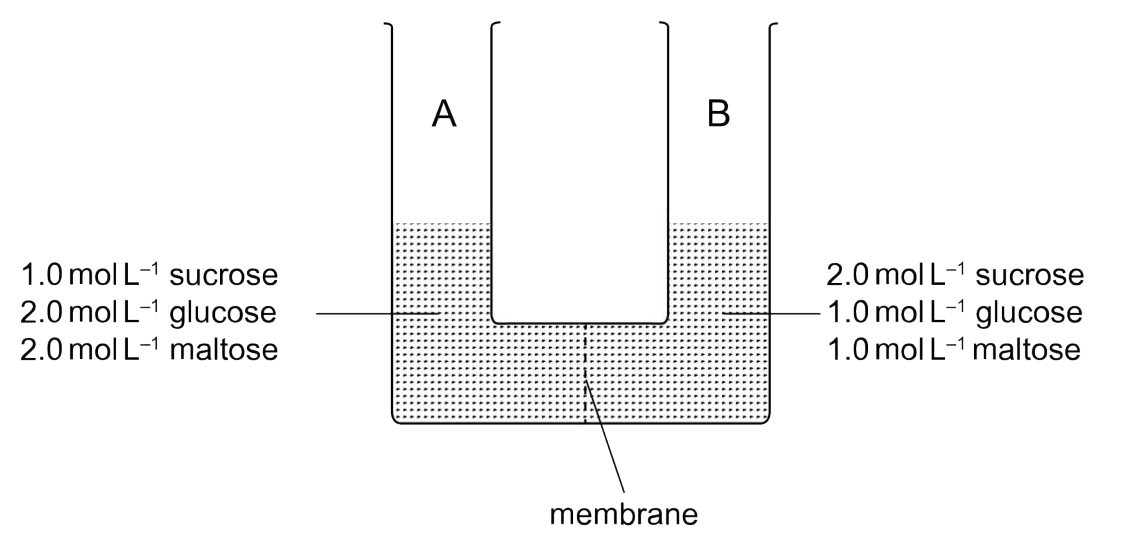
Which option correctly identifies what happens within the first few seconds?
သုံးမျိုးလုံး ဖြတ်နိုင် — တစ်မျိုးချင်း gradient အတိုင်း။membrane က ရေ နဲ့ သကြား သုံးမျိုးလုံးကို ဖြတ်ခွင့်ပေးတယ်။ ဒါဆို သကြား တစ်မျိုးချင်းက ကိုယ့် concentration gradient အတိုင်း သီးခြား diffuse ဖြစ်တယ်။ သကြား သုံးမျိုးကို မပေါင်းနဲ့ — တစ်မျိုးချင်း A နဲ့ B ကို နှိုင်းပါ။
maltose: A မှာ 2.0၊ B မှာ 1.0 — maltose A → B ✓။ ဒါ အဖြေ (option A)။
sucrose B → A — option B မှား။sucrose: A 1.0၊ B 2.0 — sucrose B → A သွားတာ။ ‘sucrose A → B’ (option B) မှား။
glucose A → B — option C, D မှား။glucose: A 2.0၊ B 1.0 — glucose A → B။ ‘glucose B → A’ (option C) မှား။ ရွေ့နေတာ ရှိလို့ ‘no net movement’ (option D) လည်း မှား။
E — A 5.0၊ B 4.0 ပေါင်းပြီး မဆုံးဖြတ်ရ။option E:
စုစုပေါင်း A = 1 + 2 + 2 = 5.0၊
B = 2 + 1 + 1 = 4.0 လို့ ပေါင်းချင်စရာ။
ဒါပေမဲ့ osmosis က solute ကို မဖြတ်ခွင့်ပေးတဲ့ membrane မှာမှ ရေကို တွန်းတာ။
သကြား အားလုံး ဖြတ် — osmosis မတွန်း၊ E (B ↑) ✗။ဒီ membrane က သကြား အားလုံးကို ဖြတ်ခွင့်ပေးလို့ 5.0 နဲ့ 4.0 က osmosis ကို မဆုံးဖြတ်ဘူး။ သကြားတွေ ညီအောင် diffuse ဖြစ်ရုံပဲ — B ဘက် ရေ တက်စေမယ့် အကြောင်း မရှိလို့ E မှား။
🔁 ပြန်စစ်မယ် — အဖြေ မကြည့်ခင် စဉ်းစားပါ
🤔 In diffusion, particles have a net movement…
🔍 မေးခွန်း ဖြည်မယ်
particles = အမှုန်တွေ။ have a net movement… = စုစုပေါင်း ရွေ့မှု … ရှိတယ် (ဝင်တာ နှုတ် ထွက်တာ)။
မေးနေတာ — diffusion မှာ စုစုပေါင်း ရွေ့တဲ့ ဦးတည်ရာ။
high → low၊ gradient အတိုင်း ဆင်း — passive၊ ATP မလို။
🤔 Which of these needs a channel or carrier protein to cross the membrane?
🔍 မေးခွန်း ဖြည်မယ်
needs = လိုတယ်။ a channel or carrier protein = channel protein ဒါမှမဟုတ် carrier protein။ to cross the membrane = membrane ကို ဖြတ်ဖို့။
မေးနေတာ — ဘယ်ဟာက ဆီ အလွှာကို ကိုယ့်ဘာသာ မဖြတ်နိုင်လို့ protein တံခါး လိုလဲ။
Cl⁻ က charge ရှိလို့ ဆီ core က ပြန်ကန်ထုတ်တယ် — protein လိုတယ်။
O₂, CO₂, N₂ က သေးပြီး non-polar မို့ bilayer ကို တိုက်ရိုက် ဖြတ်တယ်။
🤔 A cell has more K⁺ inside than outside. Its K⁺ channels open. Which way does K⁺ move?
🔍 မေးခွန်း ဖြည်မယ်
more K⁺ inside than outside = အပြင်ထက် အထဲမှာ K⁺ ပိုများတယ်။ Its K⁺ channels open = သူ့ရဲ့ K⁺ channel တွေ ပွင့်တယ်။
မေးနေတာ — K⁺ ဘယ်ဘက် ရွေ့မလဲ၊ ATP လိုလား။
K⁺ က အထဲ များ အပြင် နည်း — channel ပွင့်ရင် gradient အတိုင်း အပြင် ထွက်တယ်။
channel ကနေ ဆင်းတာ facilitated diffusion မို့ ATP မလို၊ pump မလိုဘူး။
🤔 A membrane lets water molecules through but stops sucrose molecules. It is…
🔍 မေးခွန်း ဖြည်မယ်
lets … through = ဖြတ်ခွင့် ပေးတယ်။ but stops = ဒါပေမဲ့ တားတယ်။ It is… = ဒီ membrane က … ဖြစ်တယ်။
မေးနေတာ — ဒီလို membrane ကို ခေါ်တဲ့ စကားလုံး။
ရေ လို molecule သေးကို ဖြတ်ခွင့်ပေး၊ sucrose လို ကြီးတာကို တားတာ partially permeable။
cell wall က freely permeable — ရေရော sucrose ရော ဖြတ်တယ်။
🤔 Red blood cells are placed in a 3% NaCl solution (normal saline is 0.9%). What happens?
🔍 မေးခွန်း ဖြည်မယ်
are placed in = … ထဲ ထည့်ထားတယ်။ (normal saline is 0.9%) = ပုံမှန် saline က 0.9% — 3% နဲ့ နှိုင်းယှဉ်ဖို့ ပေးထားတာ။
မေးနေတာ — ရေ ဘယ်ဘက် ရွေ့ပြီး cell တွေ ဘာ ဖြစ်မလဲ။
3% က 0.9% ထက် ပျစ်လို့ အပြင်က hypertonic — ရေ cell ထဲကနေ ထွက်ပြီး cell တွေ ကျုံ့တယ်။
🤔 A plant cell is placed in a concentrated salt solution. What happens?
🔍 မေးခွန်း ဖြည်မယ်
is placed in = … ထဲ ထည့်ထားတယ်။ concentrated salt solution = ဆားရည် ပျစ်ပျစ်။
မေးနေတာ — wall ရှိတဲ့ အပင် cell ကို ပျစ်တဲ့ အရည်ထဲ ထည့်ရင် ဘာ ဖြစ်မလဲ။
အပြင် ပျစ်လို့ ရေ ထွက်ပြီး membrane က wall ကနေ ခွာတယ် — plasmolysis။
wall ခိုင်လို့ အပင် cell မပေါက်ဘူး၊ wall ကိုယ်တိုင် မကျုံ့ဘူး။
Crossing with energy
ATP ပေးပြီး ဖြတ်တဲ့ လမ်းများ
ဓာတ်ဆားရည် ပဟေဠိ — သကြား ဘာလို့ ထည့်လဲ?
ဝမ်းလျှော — ရေ ဆား ဆုံး၊ ORS ပေးတယ်။ဝမ်းလျှောရင် ရေ နဲ့ ဆား အများကြီး ဆုံးတယ်။ ဆရာဝန်က ORS (Oral Rehydration Salts — ဓာတ်ဆားရည်) ပေးတယ်။
packet ထဲမှာ salt (ဆား) ရော glucose (သကြား) ရော ပါတယ်။
သကြား ဘာလို့ ထည့်လဲ?ရေ ပြန်ဖြည့်ချင်တာ — သကြား ဘာလို့ ထည့်တာလဲ? ရေ ဆား သက်သက်ထက် ဘာကြောင့် ပိုကောင်းလဲ?
အူ cell မှာ Na⁺ နဲ့ glucose ကို တွဲသယ်တဲ့ protein ရှိလို့။အဖြေ အတိုက — အူ cell ရဲ့ membrane မှာ Na⁺ (ဆား) နဲ့ glucose ကို အတူ တွဲသယ်တဲ့ protein ရှိလို့ပဲ။ Na⁺ ဆင်းဝင်ရင်း glucose ကို uphill (တောင်တက်) ဆွဲသွင်းတယ်။
Na⁺ gradient ကို ATP pump က ထိန်း၊ ရေ လိုက်ဝင်။Na⁺ ဆင်းဝင်နိုင်အောင် gradient ကို ATP သုံးတဲ့ pump က ထိန်းထားတယ်။ ဆား နဲ့ သကြား ဝင်ရင် ရေ နောက်က လိုက်ဝင်တယ် — ဒီ PART မှာ အသေးစိတ် ကြည့်မယ်။
active transport, cotransport, bulk transport သင်မယ်။ဒီ PART မှာ ATP သုံးတဲ့ active transport၊ ion နဲ့ တွဲသယ်တဲ့ cotransport၊ အိတ်နဲ့ သယ်တဲ့ bulk transport ကို သင်မယ်။
တောင်တက် သယ်ပို့ခြင်း — active transport
📝 IMAT 2012 · Question 43
Which of the following transport mechanisms require the use of protein molecules found in membranes and ATP?
1. Active transport
2. Diffusion
3. Facilitated diffusion
low → high — against the gradient၊ တောင်တက်။တစ်ခါတလေ cell က low (နည်းရာ) ကနေ high (များရာ) ကို သယ်ရတယ် — against the gradient (gradient ကို ဆန့်ကျင်ပြီး)၊ တောင်တက်သလိုပဲ။
carrier protein — ရေပန့်လို pump။ဒီ အလုပ်ကို carrier protein တစ်မျိုးက လုပ်တယ်။ ရေ တင်တဲ့ ရေပန့်လိုမို့ pump (ပန့်) လို့ ခေါ်တယ်။
pump က ATP ခွဲပြီး energy ယူတယ်။တောင်တက်ဖို့ အား လိုသလို pump က ATP ကို ခွဲပြီး energy ယူတယ် (ATP = cell ရဲ့ energy ဘက်ထရီ)။
ATP အများစုကို mitochondria က respiration နဲ့ လုပ်။cell အများစုမှာ ATP အများစုကို mitochondria က oxygen သုံးတဲ့ respiration နဲ့ လုပ်တယ် — glucose ကို oxygen နဲ့ အဆင့်ဆင့် ခွဲပြီး energy ထုတ်တဲ့ ဓာတ်ပြုမှု (မီး မတောက်ဘူး)။
ရပ်ရင် ATP အရမ်း ကျ — pump အတွက် မလောက်၊ pump ရပ်။ဒါ ရပ်ရင် ATP အရမ်း ကျသွားတယ်။ cytoplasm ထဲက oxygen မလိုတဲ့ ပထမ အဆင့်က ATP နည်းနည်း ဆက်ထုတ်နိုင်သေးပေမဲ့ မလောက်လို့ pump တွေ ရပ်သွားတယ်။
pump + ATP = active transport (ATP နဲ့ တောင်တက် သယ်ခြင်း)protein (pump) + ATP နဲ့ gradient ကို ဆန့်ကျင် သယ်တာကို active transport လို့ ခေါ်တယ်။
1 active transport: pump ဆိုတဲ့ protein ✓၊ ATP ✓ — နှစ်ခုလုံး လိုတယ်။
2 diffusion (simple) — protein ✗၊ ATP ✗။2 diffusion: ဒီမှာ simple diffusion ကို ပြောတာ — ဆီ အလွှာကို တိုက်ရိုက် ဖြတ်လို့ protein ✗၊ တောင်ဆင်းမို့ ATP ✗။
3 facilitated — protein ✓၊ ATP ✗ — ထောင်ချောက်။3 facilitated diffusion: channel ဒါမှမဟုတ် carrier protein ✓ ဒါပေမဲ့ တောင်ဆင်းမို့ ATP ✗ — ဒါ ထောင်ချောက်။
နှစ်ခုလုံး ✓ ✓ ဖြစ်တာ 1 only ✓။
IMAT 2017 — cell နှစ်လုံးကြား Q နဲ့ R
📝 IMAT 2017 · Question 27
Two adjacent healthy human cells, X and Y, contain the two molecules Q and R. The concentration of molecule Q in cell X is 4 arbitrary units (a.u.) and in cell Y it is 6 a.u. The concentration of molecule R in both cell X and cell Y is 7 a.u.
Which of the following statements about the net movement of ONLY molecules Q and R between cells X and Y could be correct?
1. Molecules of Q move by facilitated diffusion from cell X.
2. Molecules of Q move by active transport into cell Y.
3. Molecules of R move into and out of both cell X and cell Y.
X မှာ Q = 4၊
Y မှာ Q = 6၊
R = 7 ညီ။cell X မှာ Q = 4၊
cell Y မှာ Q = 6။
R = 7 နှစ်ဖက်လုံး ညီတယ်။ ထုတ်ပြောချက် တစ်ခုချင်း စစ်မယ်။
1 — 4 → 6 diffusion နဲ့ မဖြစ်နိုင် ✗။ပြောချက် 1: Q က X ကနေ ထွက်ပြီး Y ကို facilitated diffusion နဲ့ သွားမလား? 4 → 6 က နည်းရာကနေ များရာ — diffusion နဲ့ မဖြစ်နိုင် ✗။
2 — active transport နဲ့ ဖြစ်နိုင် ✓။ပြောချက် 2: Q ကို active transport နဲ့ Y ထဲ သွင်းတာ — ATP နဲ့ တောင်တက်နိုင်လို့ ဖြစ်နိုင်တယ် ✓။
3 — R ညီ၊ နှစ်ဘက် ရွေ့နှုန်း ညီ၊ net 0 ✓။ပြောချက် 3: R ညီနေတော့ molecule တွေ နှစ်ဖက်လုံး ဝင်ထွက်နေဆဲ၊ X → Y နှုန်းနဲ့ Y → X နှုန်း ညီလို့ net 0 — ဖြစ်နိုင်တယ် ✓ (PART 1 ရဲ့ diffusion ကတ်က equilibrium)။
ဒါကြောင့် အဖြေ 2 and 3 ✓ (option B)။
Na⁺–K⁺ pump — ATP တစ်ခု၊ 3 ထုတ် 2 သွင်း
Na⁺–K⁺ pump — ① 3 Na⁺ bind။အရေးအကြီးဆုံး pump က Na⁺–K⁺ pump။ ပုံမှာ pump တစ်လုံးတည်းက ပုံစံ ပြောင်းသွားပုံကို အဆင့် ငါးဆင့် ကြည့်မယ်။ ① အထဲဘက်ကို ပွင့်နေချိန် cell ထဲက 3 Na⁺ bind (Na⁺ 3 လုံး ဝင်ကပ်) တယ်။
② ATP → ADP + P — P ကို pump ပေး။② pump က ATP ကို splits (ခွဲ) တယ် — phosphate (P) တစ်လုံး pump မှာ ကပ်သွားတယ် — ATP → ADP + P။ ADP = Adenosine Di-Phosphate (phosphate နှစ်လုံး ကျန်)။
③ ပုံ ပြောင်း — 3 Na⁺ out။③ P ကပ်လိုက်တော့ pump ပုံ ပြောင်းပြီး အပြင်ဘက်ကို ပွင့်တယ်။ 3 Na⁺ out — Na⁺ များပြီးသား အပြင်ကို ထုတ်လိုက်တယ်။
④ အပြင်က 2 K⁺ bind (K⁺ 2 လုံး ဝင်ကပ်) တယ်။
⑤ P ပြုတ် — 2 K⁺ in၊ ① ပြန်စ။⑤ P ပြုတ်သွားတော့ pump ပုံ ပြန်ပြောင်းပြီး 2 K⁺ in — K⁺ များပြီးသား အထဲကို ပို့တယ်။ ပြီးရင် ① ကနေ ပြန်စတယ်။
1 ATP: 3 Na⁺ out, 2 K⁺ in။ချုပ်ရင် 1 ATP: 3 Na⁺ out, 2 K⁺ in။ IMAT က 3 နဲ့ 2 ကို ပြောင်းပြန် ထည့်ပြီး ထောင်ချောက် ဆင်တတ်တယ် — ‘3 Na⁺ out’ လို့ မှတ်ပါ။
gradient ၂ ခု — Na⁺ အပြင်၊ K⁺ အထဲ များ။pump ရဲ့ အဓိက အလုပ်က gradient နှစ်ခု တည်ဆောက်တာ — Na⁺ အပြင်မှာ များ၊ K⁺ အထဲမှာ များ။ + charge 3 ထွက် 2 ဝင်လို့ အထဲက နည်းနည်းလေး ပို အနုတ် ဖြစ်တယ်။
အထဲ အနုတ် အဓိက အကြောင်း — K⁺ leak။ဒါပေမဲ့ အထဲ အနုတ် ဖြစ်ရတဲ့ အဓိက အကြောင်းက K⁺ ယိုထွက်တာ (K⁺ leak) — နောက်တစ်ခန်းမှာ ကြည့်မယ်။
🤔 A Na⁺–K⁺ pump uses 300 ATP. How many Na⁺ ions does it move out of the cell?
🔍 မေးခွန်း ဖြည်မယ်
uses 300 ATP = ATP 300 သုံးတယ်။ How many Na⁺ ions = Na⁺ ion ဘယ်နှလုံး။ move out of the cell = cell အပြင် ထုတ်တယ်။
မေးနေတာ — Na⁺ (K⁺ မဟုတ်) ဘယ်နှလုံး ထွက်လဲ။
ATP တစ်ခု → Na⁺ 3 လုံး ထွက်။
300 × 3 = 900။
600 က K⁺ (300 × 2) အရေအတွက်။
🔎 ကြိုကြည့်မယ် — axon, voltmeter, resting potential, neurotransmitter
nerve cell (အာရုံကြော cell) ရဲ့ သတင်းပို့ ကြိုးရှည် — axon။ဦးနှောက်နဲ့ ခန္ဓာကိုယ်ကြား သတင်း ပို့တဲ့ cell ကို nerve cell (အာရုံကြော cell) လို့ ခေါ်တယ်။ သူ့ ကိုယ်ထည်ကနေ ထွက်တဲ့ ကြိုးရှည်ကို axon (သတင်းပို့ ကြိုး) လို့ ခေါ်တယ်။
charge ကွာ = potential (ဗို့အား)၊ volt (V) နဲ့ တိုင်း။အထဲနဲ့ အပြင် charge ကွာနေရင် ဓာတ်ခဲ (battery) ရဲ့ + ထိပ်နဲ့ − ထိပ်လို ‘လျှပ်စစ် ဖိအား’ ကွာခြားချက် ရှိတယ်။ ဒါကို potential (ဗို့အား) လို့ ခေါ်ပြီး volt (V) နဲ့ တိုင်းတယ်။
mV = V ရဲ့ 11000 — voltmeter (ဗို့အား တိုင်း စက်)။mV (millivolt) = volt ရဲ့ 11000။ AA ဓာတ်ခဲ တစ်လုံး 1.5 V = 1500 mV။ voltmeter (ဗို့အား တိုင်း စက်) ရဲ့ ကြိုး တစ်ချောင်းကို axon ထဲ၊ တစ်ချောင်းကို အပြင် ထိုးကြည့်တယ်။
−70 mV လောက် — နားနေချိန် ဗို့အား = resting potential။meter က −70 mV လောက် ပြတယ် — အထဲက အပြင်ထက် 70 mV ပို အနုတ်။ နားနေချိန် ဒီ ဗို့အားကို resting potential (နားနေ ဗို့အား) လို့ ခေါ်တယ် (သင်ခန်းစာ 51)။
axon အဆုံး — neurotransmitter (သတင်း ဓာတု) ကို နောက် cell ဆီ ထုတ်။axon အဆုံးမှာ vesicle (အမြှေး အိတ်လေး) တွေထဲ neurotransmitter (အာရုံကြော သတင်း ဓာတု) ထုပ်ထားတယ်။ သတင်း ရောက်ရင် ကြားက gap ထဲ ထုတ်ပြီး နောက် cell က လက်ခံတယ် — ဘယ်လို ထုတ်လဲ ဒီ PART အဆုံးမှာ တွေ့မယ်။
နားနေတဲ့ nerve — resting potential ကို ဘယ်သူ လုပ်လဲ?
📝 IMAT 2017 · Question 39
Which of the following processes take place during the establishment of a resting potential in the axon of a healthy human neuron?
1. active transport
2. facilitated diffusion
3. respiration
axon at rest — အထဲ −၊ အပြင် +။ကြိုကြည့်ခဲ့တဲ့ axon (nerve cell ရဲ့ သတင်းပို့ ကြိုးရှည်) ကို ပြန်ကြည့်ပါ။ axon at rest (နားနေချိန်) မှာ အထဲ − အပြင် + ဖြစ်နေတယ်။
① Na⁺–K⁺ pump — 1 active transport။ဒီ ကွာခြားချက်ကို ဘယ်သူ လုပ်လဲ? ① Na⁺–K⁺ pump က ATP နဲ့ Na⁺ ထုတ်၊ K⁺ သွင်း — 1 active transport။
② pump သုံးတဲ့ ATP အများစုကို mitochondria က respiration နဲ့ လုပ်ပေးရတယ် — 3 respiration။
③ K⁺ channel ကနေ ယိုထွက် — 2 facilitated diffusion။③ K⁺ တွေ K⁺ channel ကနေ gradient အတိုင်း အပြင်ကို ပြန်ယိုထွက်တယ် — 2 facilitated diffusion။ + ion ထွက်သွားလို့ အထဲ ပို အနုတ် ဖြစ်တယ်။
1, 2 and 3 ✓။ဒါကြောင့် active transport ✓၊ facilitated diffusion ✓၊ respiration ✓ — 1, 2 and 3 ✓။
ဆင်းနေတဲ့ Na⁺ က glucose ကို ဆွဲတင် — cotransport
အူ cell — သွေးဘက်မှာ pump က Na⁺ ထုတ်နေတယ်။အူ နံရံ cell တစ်လုံးကို ကြည့်ပါ — အပေါ် gut (အူထဲ)၊ အောက် blood (သွေး)။ သွေးဘက် မျက်နှာမှာ Na⁺–K⁺ pump က ATP နဲ့ Na⁺ ကို အမြဲ ထုတ်နေတယ်။
mmol/L — 1 L မှာ ပါတဲ့ mmol။ပါဝင်နှုန်းကို mmol/L နဲ့ ပြောမယ်။ mole က particle အရေအတွက် ယူနစ် (သင်ခန်းစာ 13)၊ mmol (millimole) = mole ရဲ့ 11000။ mmol/L ဆိုတာ အရည် 1 လီတာ (L) တိုင်းမှာ ပါတဲ့ mmol အရေအတွက်။
cell ထဲ Na⁺ 12၊ အူထဲ 145 — Na⁺ ဝင်ချင်နေ။pump ကြောင့် cell ထဲမှာ Na⁺ 12 mmol/L ပဲ ကျန်ပြီး အူထဲမှာ Na⁺ 145 mmol/L ရှိတယ် — 12 ဆလောက် ကွာတယ်။ Na⁺ တွေ cell ထဲ ဆင်းဝင်ချင်နေတယ် — ဆည်ထဲက ရေ အောက်ဆင်းချင်သလို။
symport (sym အတူ port သယ်) — 2 Na⁺ + 1 glucose။အူဘက် မျက်နှာမှာ symport (sym = အတူ၊ port = သယ်) carrier ရှိတယ်။ Na⁺ 2 လုံးနဲ့ glucose 1 လုံး အကုန် ကပ်မှ ပုံ ပြောင်းတယ်။
Na⁺ ↓ glucose ↑ — cotransport (နှစ်မျိုး တွဲသယ်ခြင်း)Na⁺ ↓ downhill (gradient အတိုင်း ဆင်းဝင်) ရင်း glucose ↑ uphill (gradient ဆန့်ကျင်) ကို ဆွဲခေါ်သွားတယ်။ ပစ္စည်း နှစ်မျိုး တွဲသယ်တာကို cotransport လို့ ခေါ်တယ်။
secondary active transport (ATP ကို သွယ်ဝိုက် သုံး)symport ကိုယ်တိုင် ATP မသုံးဘူး — pump က ATP နဲ့ လုပ်ထားတဲ့ Na⁺ gradient ကို သုံးတာ။ ဒါကြောင့် secondary active transport (ATP ကို သွယ်ဝိုက် သုံး) လို့ ခေါ်တယ်။
💡 ရေတံခွန် ရေအားနဲ့ ရေစက် ဘီး လည်သလို။💡 မှတ်နည်း — ရေတံခွန် ရေအား (Na⁺ ဆင်း) နဲ့ ရေစက် ဘီး လည်ပြီး ပစ္စည်း (glucose) ကို အပေါ် တင်သလိုပဲ။ ဆည် (gradient) ကို pump က ATP နဲ့ ဖြည့်ထားတယ်။
👉 glucose နောက် ဘယ်သွားလဲ? ORS ဖြေမယ်။👉 cell ထဲ ရောက်လာတဲ့ glucose က နောက် ဘယ်ကို သွားလဲ? ORS ပဟေဠိ ဘယ်လို ဖြေလဲ?
glucose သွေးထဲ၊ ရေ နောက်က လိုက် — ORS ပဟေဠိ အဖြေ
glucose → blood — facilitated diffusion။cell ထဲ glucose များလာတော့ သွေးဘက် carrier ကနေ များရာကနေ နည်းရာ → blood ထွက်သွားတယ် — facilitated diffusion ပဲ။
water follows — osmosis။Na⁺ နဲ့ glucose ဝင်လာလို့ cell ထဲ ပျစ်လာတော့ water follows (ရေ နောက်က လိုက်ဝင်) — osmosis။
ORS = salt + glucose — ရေ လိုက်ဝင်၊ ပဟေဠိ ဖြေပြီ!ORS မှာ salt + glucose ပါတာ ဒါကြောင့် — Na⁺ နဲ့ glucose တွဲဝင်ရင် ရေ လိုက်ဝင်လို့ ဝမ်းလျှောတဲ့ လူ ရေ ပြန်ရတယ်။ ပဟေဠိ ဖြေပြီ!
🤔 A drug blocks the Na⁺–K⁺ pump of gut cells, but the cells still have plenty of ATP. What happens to glucose uptake through the Na⁺–glucose symporter?
🔍 မေးခွန်း ဖြည်မယ်
A drug blocks = ဆေး တစ်မျိုးက ပိတ်ထားတယ်။ but the cells still have plenty of ATP = ဒါပေမဲ့ cell တွေမှာ ATP အများကြီး ရှိနေဆဲ။
glucose uptake = glucose စုပ်ယူခြင်း။ through the … symporter = symport carrier ကနေ။
မေးနေတာ — pump ပိတ်ရင် glucose ဝင်တာ ဘာ ဖြစ်လာမလဲ။
symport က ATP မသုံးဘဲ Na⁺ gradient ကို သုံးတာ။
pump ရပ်ရင် Na⁺ တွေ cell ထဲ ဝင်ပြီး ပြန် မထုတ်နိုင်တော့လို့ gradient တဖြည်းဖြည်း ပျောက်တယ် — glucose ဆွဲတင်တာလည်း ရပ်သွားတယ်။
pump blocked ရင် gradient တဖြည်းဖြည်း ပျောက်၊ glucose ယူတာ ရပ်။ထောင်ချောက်: pump blocked (ဆေးနဲ့ ပိတ်) ရင် Na⁺ gradient ချက်ချင်း မပျောက်ဘဲ slowly (တဖြည်းဖြည်း) ပျောက်တယ်။ ATP ရှိပေမဲ့ glucose စုပ်ယူတာ တဖြည်းဖြည်း ရပ်သွားတယ် — ချက်ချင်း reverses (ပြောင်းပြန် လည်) တာ မဟုတ်ဘူး။
👉 uniport, symport, antiport။👉 carrier တွေကို ‘ဘယ်နှမျိုး၊ ဘယ်ဘက်’ သယ်လဲ နဲ့ နာမည် ပေးတယ် — uniport, symport, antiport။
uniport, symport, antiport — နဲ့ proton pump
uniport (uni = တစ်) — တစ်မျိုး၊ တစ်ဖက်။carrier protein တွေကို ‘ဘယ်နှမျိုး၊ ဘယ်ဘက်’ သယ်လဲ နဲ့ နာမည် ပေးတယ်။ uniport (uni = တစ်) က ပစ္စည်း တစ်မျိုးကို တစ်ဖက်တည်း သယ်တယ် — PART 1 က glucose carrier လိုပဲ။
symport — နှစ်မျိုး ဘက်တူ — Na⁺–glucose။symport (sym = အတူ) က ပစ္စည်း နှစ်မျိုးကို ဘက် တူတူ သယ်တယ် — ခုနက ပုံက Na⁺–glucose symport။
antiport (anti = ဆန့်ကျင်) — Na⁺–K⁺ pump။antiport (anti = ဆန့်ကျင်) က ပစ္စည်း နှစ်မျိုးကို opposite directions (ဘက် ပြောင်းပြန်) သယ်တယ်။ Na⁺–K⁺ pump က antiport ပဲ — Na⁺ ထွက်၊ K⁺ ဝင်။
uni/sym/anti = ဦးတည်ရာ၊ ATP က သီးခြား မေးခွန်း။သတိ — uni / sym / anti က ‘ဦးတည်ရာ’ ကိုပဲ ပြောတာ။ ATP သုံးလား မသုံးလား က သီးခြား မေးခွန်း — Na⁺–K⁺ pump က ATP သုံးတယ်၊ glucose uniport က မသုံးဘူး။
🤔 A red blood cell carrier moves Cl⁻ into the cell and HCO₃⁻ out of it at the same time, with no ATP. Which describes this carrier?
🔍 မေးခွန်း ဖြည်မယ်
moves Cl⁻ into the cell and HCO₃⁻ out of it = Cl⁻ ကို အထဲ သွင်းပြီး HCO₃⁻ ကို အပြင် ထုတ်တယ်။ at the same time = တစ်ပြိုင်နက်။ with no ATP = ATP မသုံးဘဲ။
မေးနေတာ — ဦးတည်ရာ (uni/sym/anti) နဲ့ ATP နှစ်ခုလုံး မှန်တဲ့ ဖော်ပြချက်။
Cl⁻ ဝင်၊ HCO₃⁻ ထွက် — ဘက် ပြောင်းပြန်ဆိုတော့ antiport။
ATP မသုံးဘူးလို့ ပြောထားလို့ ‘splits ATP’ မဟုတ်ဘူး။
uni / sym / anti က ဦးတည်ရာ၊ ATP က သီးခြား မေးခွန်း။
👉 ATP နဲ့ H⁺ ထုတ်တဲ့ pump။👉 ပုံရဲ့ ညာဘက်ဆုံး protein ကို ကြည့်ပါ — ATP နဲ့ H⁺ ကို ထုတ်တဲ့ pump တစ်မျိုး။
🔎 ကြိုကြည့်မယ် — phloem နဲ့ companion cell (အပင်ရဲ့ သကြား ပို့ ပြွန်)
အရွက်က နေရောင်နဲ့ သကြား လုပ် — အမြစ်ဆီ ပို့ရ။အပင်ရဲ့ အရွက်တွေက နေရောင် သုံးပြီး သကြား လုပ်တယ်။ နေရောင် မရတဲ့ အမြစ်၊ အသီး တွေလည်း သကြား လိုလို့ ပို့ပေးရတယ်။
ပင်စည်ထဲက သကြား ပို့ ပြွန် — phloem။ပင်စည်ကို ချဲ့ကြည့်ရင် cell တွေ အဆက်ဆက် ဆက်ထားတဲ့ ပြွန် ရှိတယ်။ cell ကြား နံရံမှာ ဇကာလို အပေါက်တွေ ပါတယ်။ ဒီ ပြွန်ကို phloem (သကြား ပို့ ပြွန်) လို့ ခေါ်တယ်။
ဘေးက ကူညီ cell — companion cell (အဖော် cell)။ပြွန် ဘေးမှာ ကပ်နေတဲ့ cell လေးကို companion cell (အဖော် cell) လို့ ခေါ်တယ်။ သူက ATP လုပ်ပြီး သကြားကို ပြွန်ထဲ သွင်းပေးတယ်။
sucrose (သကြား) ပျော်ရည် ပြွန်ထဲ စီး — သင်ခန်းစာ 56။သကြားက sucrose ပုံစံနဲ့ ပျော်ရည် အဖြစ် ပြွန်ထဲ စီးပြီး အမြစ်၊ အသီး ဆီ ရောက်တယ်။ phloem ကို သင်ခန်းစာ 56 မှာ အပြည့် သင်မယ်။ သကြား ဘယ်လို သွင်းလဲ — နောက်ကတ်က proton pump။
proton pump — ATP နဲ့ H⁺ ထုတ်၊ ပြန်ဝင်ရင်း သကြား ဆွဲ
proton pump (H⁺ ထုတ် pump) — ATP နဲ့၊ အမြစ်မှာ များ။proton pump — proton ဆိုတာ H⁺ (electron ဆုံးသွားတဲ့ hydrogen atom)။ ဒီ pump က ATP ခွဲပြီး H⁺ ကို cell အပြင် ထုတ်တယ်။ အပင် အမြစ် cell တွေမှာ အများကြီး ရှိတယ်။
အစာအိမ် H⁺–K⁺ pump — omeprazole က ပိတ်တယ်။အစာအိမ် နံရံ cell တွေမှာလည်း H⁺–K⁺ pump (antiport) က H⁺ ကို အစာအိမ်ထဲ ထုတ်ပြီး acid လုပ်တယ်။ အစာအိမ် အက်ဆစ် ကျဆေး (omeprazole) တွေက ဒီ pump ကို ပိတ်တာ။
💡 H⁺ ဆည် — ပြန်စီးရင် sucrose ဆွဲသွင်း။💡 မှတ်နည်း — H⁺ pump က ဆည်ထဲ ရေ တင်ထားသလို၊ ပြန်စီးဆင်းတဲ့ H⁺ က ရေစက်ဘီးလို sucrose ကို ဆွဲသွင်းတယ်။
🤔 Predict: a root cell pumps H⁺ out with ATP. H⁺ flows back in through a symport carrying nitrate (NO₃⁻). How is nitrate taken up?
🔍 မေးခွန်း ဖြည်မယ်
root cell = အမြစ် cell။ pumps H⁺ out with ATP = ATP နဲ့ H⁺ ကို ပန့်ထုတ်တယ်။ flows back in = ပြန် စီးဝင်တယ်။ carrying nitrate = nitrate ကို တွဲသယ်ပြီး။
How is nitrate taken up? = nitrate ကို ဘယ်လို စုပ်ယူလဲ (passive)။
မေးနေတာ — nitrate ဝင်တာ ဘယ် သယ်ပို့နည်းလဲ။
nitrate ကိုယ်တိုင် ATP မသုံးဘူး — pump က ATP နဲ့ လုပ်ထားတဲ့ H⁺ gradient ကို သုံးလို့ secondary active transport။
sucrose နဲ့ အတူတူ။
H⁺–sucrose symport — phloem ထဲ သကြား သွင်း။ထုတ်ထားတဲ့ H⁺ တွေ ပြန် ဆင်းဝင်ချင်တယ်။ H⁺–sucrose symport ကနေ ဝင်ရင်း sucrose ကို ဆွဲခေါ်လာတယ် — အပင်က phloem ထဲ သကြား သွင်းတဲ့ secondary active transport။
👉 bacterium လောက် ကြီးရင်ရော?👉 molecule တွေ မဟုတ်ဘဲ bacterium တစ်ကောင်လုံး လောက် ကြီးရင်ရော? protein တံခါးထဲ မဆံ့ဘူး။
ထုပ်ပြီး သွင်း — endocytosis
white blood cell က bacterium ကို ဘယ်လို စားလဲ?bacterium (ဘက်တီးရီးယား တစ်ကောင်) လောက် ကြီးတဲ့ ပစ္စည်းက protein တံခါးထဲ မဆံ့ဘူး။ white blood cell (သွေးဖြူဥ) က ဒါကို ဘယ်လို စားလဲ?
membrane ကို လက်တွေလို ဆန့်ထုတ်ပြီး bacterium ကို ဝိုင်းဖက်တယ်။
vesicle ထဲ သွင်း = endocytosis (အထဲ သွင်း)လက်တွေ ပြန်ဆုံတော့ bacterium က membrane အိတ် — vesicle — ထဲ ရောက်ပြီး cell ထဲ ဝင်သွားတယ်။ ဒါကို endocytosis (အထဲ သွင်း) လို့ ခေါ်တယ်။
lysosome ချေ — phagocytosis (‘cell စား’)lysosome (enzyme အိတ်) လာပေါင်းပြီး bacterium ကို ချေဖျက်တယ် (သင်ခန်းစာ 29A)။ အစိုင်အခဲကို စားတာမို့ phagocytosis (‘cell စား’) လို့ ခေါ်တယ်။
အရည် စက်လေးကို ဒီလိုပဲ ဆွဲသွင်းရင်တော့ pinocytosis (‘cell သောက်’)။
membrane ကို ရွှေ့ ကွေး ပြင်ရတာမို့ ဒီလမ်းတွေ ATP needs (ATP လိုတယ်)။
💡 phago = စား၊ pino = သောက်။💡 မှတ်နည်း — phagocytosis က cell ‘စား’ (အစိုင်အခဲ)၊ pinocytosis က cell ‘သောက်’ (အရည်) — ထမင်း စားတာ နဲ့ ရေ သောက်တာလို မှတ်ပါ။
လက်ခံ protein နဲ့ ရွေးဖမ်း — receptor-mediated endocytosis
LDL — cholesterol နဲ့ ဆီတွေ သယ်တဲ့ lipid-protein အလုံး။cholesterol က ရေမှာ မပျော်လို့ သွေးထဲမှာ အလုံးလေးတွေနဲ့ သယ်တယ်။ အလုံး အလယ်မှာ cholesterol နဲ့ ဆီတွေ၊ အပြင် အခွံက phospholipid နဲ့ protein။ ဒီ အလုံးကို LDL (Low-Density Lipoprotein — သိပ်သည်းဆ နိမ့် lipid-protein အလုံး) လို့ ခေါ်တယ်။
LDL receptor က LDL ကို မှတ်မိ ဖမ်း — သော့လို ကိုက်။cell membrane မှာ LDL ကို မှတ်မိပြီး ဖမ်းတဲ့ LDL receptor protein တွေ ရှိတယ် — သော့နဲ့ သော့ခလောက်လို ကိုက်တယ်။
clathrin ကပ်တဲ့ coated pit ထဲ LDL ကပ်။receptor တွေ အုပ်စု ဖွဲ့ပြီး membrane ခွက် (pit) တစ်ခုထဲ စုနေတယ်။ ခွက်ရဲ့ cytoplasm ဘက်ကို clathrin ဆိုတဲ့ protein အခွံ ကပ်ထားလို့ coated pit လို့ ခေါ်တယ်။ LDL လာကပ်တယ်။
receptor-mediated endocytosis (receptor ကနေ ရွေးသွင်း)ခွက် နက်လာပြီး ထိပ်ပိတ်ကာ ပြတ်ထွက်လို့ coated vesicle ဖြစ်တယ်။ receptor နဲ့ ကပ်တဲ့ ပစ္စည်းပဲ ဝင်လို့ receptor-mediated endocytosis (လက်ခံ protein ကနေ ရွေးသွင်း) လို့ ခေါ်တယ်။ ATP လိုတယ်။
ရှားတဲ့ ပစ္စည်း တစ်မျိုးကို receptor နဲ့ ရွေးဖမ်း စုသွင်း။phagocytosis က bacterium လို ကြီးတဲ့ အစိုင်အခဲကို စား၊ pinocytosis က အရည်ကို ပါသမျှနဲ့ မရွေးဘဲ သောက်တယ်။ ဒီလမ်းကတော့ သွေးထဲ နည်းနည်းပဲ ရှိတဲ့ ပစ္စည်း တစ်မျိုးကို သီးသန့် receptor နဲ့ ရွေးဖမ်းပြီး အများကြီး စုသွင်းနိုင်တယ်။
🤔 Cells take in iron carried by the protein transferrin: transferrin binds specific receptors that gather in coated pits. Which process is this?
🔍 မေးခွန်း ဖြည်မယ်
take in iron = သံ (iron) ကို သွင်းယူတယ်။ carried by the protein transferrin = transferrin ဆိုတဲ့ protein က သယ်လာတဲ့။
binds specific receptors = သီးသန့် receptor တွေနဲ့ ကပ်တယ်။ that gather in coated pits = coated pit ထဲ စုနေတဲ့။
မေးနေတာ — ဒီ ဖြစ်စဉ်ရဲ့ နာမည်။
သီးသန့် receptor နဲ့ ရွေးဖမ်းပြီး coated pit ကနေ vesicle နဲ့ သွင်းလို့ — LDL နဲ့ အတူတူ receptor-mediated endocytosis။
pinocytosis က မရွေးဘဲ အရည် သောက်၊ phagocytosis က အစိုင်အခဲ ကြီး စား။
👉 LDL ကို ဘယ်လို သုံးလဲ? receptor ပျက်ရင်?👉 vesicle ထဲ ရောက်လာတဲ့ LDL ကို cell က ဘယ်လို သုံးလဲ? receptor ပျက်ရင် ဘာဖြစ်လဲ?
LDL ဘယ်ရောက်လဲ — နဲ့ receptor ပျက်ရင် (FH)
endosome ထဲ LDL ခွာ — receptor ပြန်သုံး။vesicle က အရင် endosome (ခွဲပို့တဲ့ အမြှေး အိတ်) နဲ့ ပေါင်းတယ်။ အထဲ အချဉ် နည်းနည်း ပိုလို့ LDL က receptor ကနေ ခွာထွက်တယ်။ receptor တွေက vesicle နဲ့ membrane ဆီ ပြန်သွားပြီး ထပ် သုံးတယ်။
LDL → lysosome — ချေပြီး cholesterol ထုတ်။LDL ကတော့ lysosome (enzyme အိတ်) ဆီ ရောက်ပြီး ချေဖျက်ခံရကာ cholesterol ကို ထုတ်ပေးတယ် — cell က membrane ဆောက်ဖို့ သုံးတယ်။
FH — မျိုးရိုး gene ချို့ယွင်း၊ receptor အလုပ် မလုပ်။familial hypercholesterolaemia (FH, မျိုးရိုး cholesterol မြင့်ရောဂါ) မှာ မျိုးရိုး gene ချို့ယွင်းလို့ LDL receptor က LDL ကို ကောင်းကောင်း မဖမ်းနိုင်ဘူး။ အများစုက LDL receptor gene ကိုယ်တိုင်၊ တချို့က တခြား gene။
သွေးထဲ LDL cholesterol မြင့် — နှလုံး ရောဂါ အန္တရာယ် တက်။LDL cell ထဲ ကောင်းကောင်း မဝင်နိုင်လို့ သွေးထဲ LDL cholesterol မြင့်ပြီး နှလုံး သွေးကြော ရောဂါ ငယ်ငယ်နဲ့ ဖြစ်နိုင်ခြေ များတယ်။
👉 အပြင် ထုတ်ရင် vesicle လမ်း ပြောင်းပြန်။👉 cell ထဲကနေ ပစ္စည်းကို အပြင် ပြန်ထုတ်ချင်ရင်ရော? vesicle လမ်းကိုပဲ ပြောင်းပြန် သုံးတယ်။
ထုပ်ပြီး ထုတ် — exocytosis
📝 IMAT 2014 · Question 39
Which of the following can produce vesicles?
1. RER
2. Golgi
3. Cell surface membrane
ပြန်ထုတ်တဲ့ လမ်းကို ကြည့်မယ်။
RER ပေါ်က ribosome က insulin ဆောက် — vesicle နဲ့ Golgi ဆီ။RER (Rough Endoplasmic Reticulum — ribosome တွေ ကပ်နေလို့ ကြမ်းနေတဲ့ အမြှေးပြွန် ကွန်ရက်၊ သင်ခန်းစာ 29A) ပေါ်က ribosome တွေက protein (ဥပမာ insulin) ကို ဆောက်တယ်။ ပြီးရင် RER အမြှေးကနေ vesicle လေး ထွက်လာပြီး Golgi ဆီ ပို့တယ်။ nucleus (ဗဟိုချက်) က protein ကို မဆောက်ဘူး — ညွှန်ကြားချက် DNA ကို သိမ်းထားတာ။
vesicle Golgi နဲ့ ပေါင်း — ပြင်ဆင်၊ စီ၊ ပြန်ထုပ်။RER က လာတဲ့ vesicle က Golgi နဲ့ ပေါင်းတယ်။ Golgi က protein ကို ပြင်ဆင်၊ ဘယ်ကို ပို့မလဲ စီစဉ်ပြီး vesicle အသစ်ထဲ ပြန်ထုပ်တယ် (သင်ခန်းစာ 29A)။
Golgi ကလည်း vesicle အသစ် တစ်လုံး ထုတ်ပြီး cell membrane ဆီ ပို့တယ်။
exocytosis (အပြင် ထုတ်) — ATP လို။vesicle က cell membrane နဲ့ ပေါင်းပြီး insulin ကို အပြင် သွန်ထုတ်တယ်။ ဒါကို exocytosis (အပြင် ထုတ်) လို့ ခေါ်တယ်။ ATP လိုတယ်။
vesicle → membrane ထဲ ပေါင်းဝင်။vesicle → membrane — vesicle ရဲ့ အမြှေးက cell membrane ထဲ ပေါင်းဝင်သွားတယ်။
RER, Golgi, cell surface — 1, 2 and 3။vesicle ထုတ်တဲ့ နေရာ သုံးခုလုံး ✓: RER (Golgi ဆီ ပို့)၊ Golgi (exocytosis အတွက်)၊ cell surface membrane (endocytosis မှာ အတွင်းကို ခွက်ဝင်) — 1, 2 and 3။
IMAT 2018 Q26 — သင်ခန်းစာ 40။IMAT 2018 Q26 ကို သင်ခန်းစာ 40 မှာ ဖြေမယ်။ ဒီမှာ exocytosis အသစ် တစ်ပုဒ် —
🤔 A nerve cell releases a neurotransmitter into the gap between two nerve cells. How does the neurotransmitter leave the cell?
🔍 မေးခွန်း ဖြည်မယ်
releases = ထုတ်လွှတ်တယ်။ into the gap between two nerve cells = nerve cell နှစ်ခုကြား ကွက်လပ်ထဲ။
How does … leave the cell? = cell ထဲကနေ ဘယ်လို ထွက်လဲ။
မေးနေတာ — neurotransmitter ထွက်တဲ့ နည်းလမ်း။
neurotransmitter ကို vesicle ထဲ ထုပ်ထားပြီး vesicle က cell membrane နဲ့ ပေါင်းကာ အပြင် သွန်ထုတ်တယ် — exocytosis၊ ATP လိုတယ်။
endocytosis က အထဲ သွင်းတဲ့ လမ်း။
Na⁺–K⁺ pump က ion နှစ်မျိုးပဲ သယ်တယ်။
ဘယ်လမ်းနဲ့ ဖြတ်လဲ — မေးခွန်း 4 ခု
1 huge? — vesicle + ATP။ပစ္စည်း တစ်ခု ဘယ်လို ဖြတ်လဲ မေးရင် ဒီ အစဉ်အတိုင်း မေးပါ။ 1 huge? — bacterium, အရည်စက် လောက် ကြီးရင် vesicle + ATP (endocytosis / exocytosis)။
2 low → high? — active transport။2 low → high? — gradient ဆန့်ကျင်ရင် active transport။ pump က ATP ကို တိုက်ရိုက် ခွဲသုံးရင် primary၊ cotransport က pump လုပ်ထားတဲ့ ion gradient ကို သုံးရင် secondary။
3 water? — ရေ ဆိုရင် osmosis။
4 small, non-polar? — simple diffusion။4 small, non-polar? — O₂, CO₂ လို ဆိုရင် simple diffusion (protein မလို)။
ကျန် ion / polar အများစု — facilitated diffusion၊ ATP မလို။ကျန်တာ Na⁺, K⁺ လို ion နဲ့ glucose လို polar molecule အများစုက ဆီ အလွှာကို ကိုယ့်ဘာသာ မဖြတ်နိုင်လို့ channel ဒါမှမဟုတ် carrier protein ကနေ facilitated diffusion နဲ့ ဖြတ်တယ် — ATP မလို။
🎯 Match each transport method to its feature
👤 လူပုဂ္ဂိုလ်များ
1855 Fick — diffusion မြန်နှုန်း ∝ (area × difference) ÷ thickness။
🔁 ပြန်စစ်မယ် — အဖြေ မကြည့်ခင် စဉ်းစားပါ
🤔 For each ATP used, the Na⁺–K⁺ pump moves…
🔍 မေးခွန်း ဖြည်မယ်
For each ATP used = ATP တစ်ခု သုံးတိုင်း။ moves… = … ကို ရွှေ့တယ်။
မေးနေတာ — ion ဘယ်နှလုံး၊ ဘယ်ဘက် (in = အထဲ၊ out = အပြင်)။
‘3 Na⁺ out’ — 3 Na⁺ ထုတ်၊ 2 K⁺ သွင်း။
🤔 In the Na⁺–glucose symport, Na⁺ and glucose move…
🔍 မေးခွန်း ဖြည်မယ်
In the … symport = symport carrier မှာ။ Na⁺ and glucose move… = Na⁺ နဲ့ glucose က … ရွေ့တယ်။
မေးနေတာ — နှစ်မျိုးရဲ့ ဦးတည်ရာ (ဘက်တူလား၊ ပြောင်းပြန်လား၊ ဘယ်ဘက်လဲ)။
sym = အတူ — Na⁺ ရော glucose ရော ဘက် တူတူ cell ထဲ ဝင်တယ်။
ပြောင်းပြန် သယ်တာက antiport။
🤔 Which is an example of secondary active transport?
🔍 မေးခွန်း ဖြည်မယ်
an example of = … ရဲ့ ဥပမာ တစ်ခု။ secondary active transport = ATP ကို သွယ်ဝိုက် သုံးတဲ့ active transport။
မေးနေတာ — ATP ကိုယ်တိုင် မခွဲဘဲ ion gradient နဲ့ တောင်တက်တဲ့ ဥပမာ။
glucose က Na⁺ gradient ရဲ့ energy နဲ့ ဝင်တာ — ATP ကို သွယ်ဝိုက် သုံးလို့ secondary။
Na⁺–K⁺ pump က ATP ကို ကိုယ်တိုင် ခွဲလို့ primary၊ O₂ နဲ့ K⁺ channel က passive။
🤔 A pancreas cell makes and secretes the enzyme amylase. Which route does the enzyme take?
🔍 မေးခွန်း ဖြည်မယ်
pancreas cell = ပန်ကရိယ cell။ makes and secretes = လုပ်ပြီး အပြင် ထုတ်တယ်။ the enzyme amylase = starch ကို ခွဲတဲ့ enzyme။
Which route does the enzyme take? = enzyme က ဘယ် လမ်းကြောင်း အတိုင်း သွားလဲ။
မေးနေတာ — လုပ်တဲ့ နေရာကနေ အပြင် ရောက်တဲ့အထိ အစဉ်။
protein ကို RER မှာ ဆောက်၊ vesicle နဲ့ Golgi ဆီ ပို့၊ Golgi က ပြင်ဆင်ပြီး vesicle အသစ်နဲ့ cell membrane ဆီ ပို့ကာ exocytosis နဲ့ ထုတ်တယ်။
nucleus က DNA ကို သိမ်းတာ — protein မဆောက်ဘူး။
🤔 A white blood cell engulfs a bacterium. This is…
🔍 မေးခွန်း ဖြည်မယ်
white blood cell = သွေးဖြူဥ။ engulfs = ဝိုင်းဖက်ပြီး မျိုချတယ်။ a bacterium = ဘက်တီးရီးယား တစ်ကောင်။ This is… = ဒါက … ဖြစ်တယ်။
မေးနေတာ — ဒီ ဖြစ်စဉ်ရဲ့ နာမည်။
အစိုင်အခဲ ‘စား’ = phagocytosis (endocytosis တစ်မျိုး)။
အရည် ‘သောက်’ = pinocytosis။
exocytosis က အပြင် ထုတ်တာ၊ facilitated diffusion က molecule သေးသေး protein ကနေ ဖြတ်တာ။
🤔 A plant cell has ψ = −400 kPa. The solution around it has ψ = −250 kPa. Water moves…
🔍 မေးခွန်း ဖြည်မယ်
The solution around it = cell ကို ဝိုင်းထားတဲ့ ပျော်ရည်။ Water moves… = ရေက … ရွေ့တယ်။
မေးနေတာ — cell နဲ့ အပြင် ပျော်ရည်ကြား ရေ ဘယ်ဘက် ရွေ့လဲ။
ရေက ψ မြင့်ရာကနေ နိမ့်ရာ စီးတယ်။
အနုတ် ကိန်းမှာ 0 နဲ့ ပိုနီးတာက ပိုကြီးလို့ −250 kPa က −400 kPa ထက် မြင့်တယ် — အပြင်ကနေ cell ထဲ ဝင်တယ်။
osmosis မှာ ATP မလိုဘူး။
🎉 membrane၊ ဖြတ်နည်း ၅ မျိုး၊ saline နဲ့ ORS — ရပြီ။🎉 membrane ရဲ့ အပိုင်းတိုင်း၊ ဖြတ်နည်း ငါးမျိုး၊ saline 0.9% နဲ့ ORS ပဟေဠိ နှစ်ခု — အကုန် ရပြီ။ အောက်က quiz နဲ့ စမ်းကြည့်ပါ။