Organelles: the cell as a factory (2)
ဓာတ်အား ပေးစက် နှစ်လုံး နဲ့ မျိုချခံ bacteria
Mitochondria, chloroplasts and the swallowed bacteria
ဓာတ်အား ပေးစက် နှစ်လုံး နဲ့ မျိုချခံ bacteria
Mitochondrion — membrane နှစ်ထပ် ဓာတ်အားပေးစက်
ATP ထုတ်သူ = mitochondrion (ATP ထုတ်တဲ့ ဓာတ်အားပေး)နှလုံးက တစ်နေ့ အကြိမ် တစ်သိန်းလောက် ခုန်တယ်။ ခုန်တိုင်း ATP (cell ရဲ့ energy ဓာတ်ခဲ — သင်ခန်းစာ 27B) သုံးတယ်။ O₂ ရှိရင် ATP အများစုကို ထုတ် (making) ပေးတာ mitochondrion (ATP ထုတ်တဲ့ ဓာတ်အားပေး အခန်း) ပါ။
outer membrane မှာ porins — leaky။သူ့မှာ membrane နှစ်ထပ် ရှိတယ်။ outer membrane (အပြင် အမြှေး) မှာ porins ဆိုတဲ့ protein ပေါက်လေးတွေ ပါလို့ အသေး molecules အများစု ဝင်ခွင့် ရတယ် — ယိုတယ် (leaky)။ ဒါပေမဲ့ ဘာမဆို ဖြတ်တာ မဟုတ်ဘူး — protein လို molecule ကြီးတွေ မဖြတ်နိုင်ဘူး။ membrane တိုင်းက lipid နှစ်လွှာ — single (တစ်လွှာတည်း) မဟုတ်ဘူး။
inner membrane က very selective — H⁺ မဖြတ်အောင်။inner membrane (အတွင်း အမြှေး) ကတော့ ဘာ ဝင်ခွင့် ပေးမလဲ အရမ်း ရွေးတယ် (very selective)။ H⁺ ion တွေ လွတ်လွတ် မဖြတ်နိုင်အောင် ထိန်းထားရလို့ပါ (သင်ခန်းစာ 45)။
🤔 The inner membrane carries the machines that make ATP. Predict: what would folding this membrane many times do?
🔍 မေးခွန်း ဖြည်မယ်
carries = သယ်ထားတယ် (ပေါ်မှာ ရှိတယ်)။ machines that make ATP = ATP ထုတ်တဲ့ စက်လေးများ။ Predict = ကြိုတင် ခန့်မှန်းပါ။ folding … many times = အကြိမ်ကြိမ် ခေါက်ချိုးရင်။
မေးနေတာ — အတွင်း အမြှေးကို အများကြီး ခေါက်ထားရင် ဘာ ရလဒ် ထွက်မလဲ။
ခေါက်လေ မျက်နှာပြင် ကျယ်လေ — ATP စက် ပိုထည့်နိုင်လေ။
အတွင်း အမြှေးက ရွေးချယ်တာ မပြောင်းဘူး၊ DNA က matrix ထဲမှာ။
နောက် အဆင့်မှာ ကြည့်ပါ။
ခေါက်ချိုး = cristae (အတွင်း အမြှေး ခေါက်ချိုးများ)inner membrane က အထဲကို ခေါက်ချိုး လေးတွေ ခေါက်ထားတယ်။ သူတို့ကို cristae (mitochondrion အတွင်း အမြှေးရဲ့ ခေါက်ချိုးများ) လို့ ခေါ်တယ်။ ခေါက်လေ မျက်နှာပြင် များလေ၊ ATP စက် (ATP machines) ပိုထည့်နိုင်လေ။
ကြားက နေရာ = intermembrane space — membrane မဟုတ်။membrane နှစ်ထပ်ကြားက နေရာကို intermembrane space (အမြှေး ကြားနေရာ) လို့ ခေါ်တယ်။ ⚠ ဒါ ‘တတိယ membrane’ မဟုတ်ဘူး — နေရာ (space) ပဲ။
matrix (အတွင်းဆုံး အရည်) — DNA ring နဲ့ 70S ပါ။အတွင်းဆုံး အရည်ကို matrix (mitochondrion အတွင်းဆုံးက အရည်) လို့ ခေါ်တယ်။ ထူးဆန်းတာက — သူ့ထဲမှာ ကိုယ်ပိုင် DNA ring (ကွင်း) နဲ့ အသေး 70S ribosomes (S = အရွယ် ယူနစ်၊ သင်ခန်းစာ 28) ရှိနေတယ်။
💡 cristae ခေါက်လေ ATP များလေ။💡 မှတ်နည်း — mitochondrion = ဘောလုံးအိတ်ထဲက ခေါက်ထားတဲ့ ကြိုးဝိုင်း — cristae ခေါက်လေ ATP များလေ။
👉 ဒီ အခန်း တစ်ခုချင်းမှာ glucose ကနေ ATP ဘယ်လို ထွက်လာလဲ ကြည့်ရအောင်။
🔎 ကြိုကြည့်မယ် — glucose ကနေ ATP: glycolysis, link reaction, Krebs cycle (သင်ခန်းစာ 45 မှာ အပြည့်)
glycolysis (cytoplasm မှာ glucose ထက်ခြမ်း ခွဲ)အဓိက အဆင့် (stages) လေးဆင့် ရှိတယ်။ ပထမ ခွဲ (splitting) တာ mitochondrion အပြင်ပါ — cytoplasm ထဲမှာ glucose တစ်လုံးကို 2 pyruvate (ထက်ခြမ်း အပိုင်း) အဖြစ် ခွဲတယ်။ ဒီ အဆင့်က glycolysis (cytoplasm ထဲမှာ glucose ကို ထက်ခြမ်း ခွဲခြင်း) ပါ။
pyruvate က mitochondrion ထဲ matrix အထိ ဝင်လာတယ်။
matrix ထဲ pyruvate → acetyl CoA၊ ပြီးမှ Krebs cycle က ဖြို၊ CO₂ ထုတ်။matrix ထဲမှာ Krebs cycle က pyruvate ကို တိုက်ရိုက် မဖြိုဘူး။ အရင် link reaction (ဆက်ပေးတဲ့ အဆင့်) က pyruvate ကနေ CO₂ တစ်လုံး ဖြုတ်ပြီး acetyl CoA (acetyl အုပ်စု တင်ထားတဲ့ CoA ကား၊ သင်ခန်းစာ 26) အဖြစ် ပြောင်းတယ်။ ပြီးမှ acetyl CoA က Krebs cycle (ဘီး လှည့်သလို ဆက်တိုက် ဓာတ်ပြု စက်ဝိုင်း၊ သင်ခန်းစာ 45) ထဲ ဝင်ပြီး ဖြိုခံရကာ CO₂ ထပ်ထွက်တယ် — ကိုယ် ထွက်သက်ထဲက CO₂ ပါ။
cristae ပေါ် ATP synthase လည်ပြီး ATP most။ဖြိုရင်း ရတဲ့ energy နဲ့ cristae ပေါ်က pump တွေက H⁺ ကို membrane ကြားထဲ ပန့်တင်တယ်။ H⁺ ပြန်စီးရင် ATP synthase တာဘိုင် လည်ပြီး ATP ထုတ်တယ် — ATP အများဆုံး (most) ဒီမှာ။ ဒီ နောက်ဆုံး အဆင့်ကို oxidative phosphorylation (သင်ခန်းစာ 27B) လို့ ခေါ်တယ်။
ဒီ အဆင့်က O₂ လို — ဒါကြောင့် အသက်ရှူရတာ။ဒီ နောက်ဆုံး အဆင့်က O₂ လိုတယ် (needs O₂)။ pump လမ်းကြောင်း အဆုံးမှာ O₂ က electron နဲ့ H⁺ ကို လက်ခံပြီး ရေ (H₂O) ဖြစ်သွားတယ်။ O₂ မရှိရင် pump တွေ ရပ်ပြီး H⁺ မစုတော့လို့ ATP synthase လည်း ရပ်တယ် — ATP synthase ကိုယ်တိုင်က O₂ ကို တိုက်ရိုက် မသုံးဘူး။ ဒါကြောင့် ကျွန်တော်တို့ အသက်ရှူရတာ။
cellular respiration (cell ထဲ အစာ ဖြို ATP ထုတ်)ဒီ အလုပ် တစ်ခုလုံးကို cellular respiration (ဆဲလ် ထဲမှာ အစာကို ဖြိုပြီး ATP ထုတ်ခြင်း) လို့ ခေါ်တယ်။ ဒီ ပုံက O₂ သုံးတဲ့ လမ်း ပါ — O₂ မရှိရင် glycolysis လောက်ပဲ ဆက်သွားပြီး ATP နည်းနည်းပဲ ရတယ် (သင်ခန်းစာ 45)။ ⚠ glycolysis က mitochondrion ထဲမှာ မဖြစ်ဘူး — cytoplasm မှာ ဖြစ်တယ်။
🤔 A poison stops the ATP synthase on the cristae. Which stage can still make a small amount of ATP?
🔍 မေးခွန်း ဖြည်မယ်
A poison stops = အဆိပ် တစ်ခုက ရပ်စေတယ်။ on the cristae = cristae ပေါ်မှာ ရှိတဲ့။ can still make = ဒါတောင် ဆက် ထုတ်နိုင်သေးတဲ့။ a small amount = နည်းနည်း။
မေးနေတာ — ATP synthase ရပ်သွားတဲ့ အခါ ATP နည်းနည်း ဆက်ထုတ်နိုင်တဲ့ အဆင့် (stage)။
ATP synthase ပိတ်ရင် cristae ပေါ်က ATP အများဆုံး အဆင့် ရပ်တယ်၊ Krebs cycle လည်း နောက်မှာ ပိတ်မိသွားတယ် (သင်ခန်းစာ 45)။
mitochondrion အပြင် cytoplasm ထဲက glycolysis ကတော့ ATP နည်းနည်း ဆက်ထုတ်နိုင်တယ်။
💡 အပြင်မှာ ခွဲ၊ အထဲမှာ ဖြို၊ ခေါက်ချိုးမှာ ATP။💡 မှတ်နည်း — ‘အပြင်မှာ ခွဲ၊ အထဲမှာ ဖြို၊ ခေါက်ချိုးမှာ ATP’ — cytoplasm → matrix → cristae။
IMAT 2026 Q26 (respiration ရဲ့ အဓိက နေရာ) ကို သင်ခန်းစာ 45 မှာ ဖြေမယ်။
👉 ဒါဆို cell တိုင်းမှာ mitochondria အရေအတွက် တူလား?
ဘယ် cell မှာ mitochondria အများဆုံးလဲ
red blood cell မှာ mitochondria 0။အလုပ် များလေ ATP လိုလေ၊ mitochondria များလေ။ ရင့်ပြီးသား (mature) red blood cell (သွေးနီဥ) မှာ mitochondria 0 — သူ သယ် (carries) တဲ့ O₂ ကို ကိုယ်တိုင် မသုံးမိအောင်ပါ။
cheek cell — အလုပ် နည်းလို့ few။cheek cell (ပါးအတွင်း cell) က အလုပ် နည်းလို့ mitochondria နည်းနည်း (few) ပဲ။
lymphocyte မှာလည်း နည်းတယ်။lymphocyte (သွေးဖြူဥ တစ်မျိုး) မှာလည်း နည်းတယ် — nucleus ကြီးပြီး cytoplasm နည်းတယ်။
heart muscle cell — mitochondria ကျပ်ကျပ် ပြည့်။heart muscle cell (နှလုံး ကြွက်သား cell) ကတော့ တစ်သက်လုံး မနား ကျုံ့နေရတယ်။ mitochondria တွေ ကျပ်ကျပ် ပြည့်နေတယ်။
ထုထည်ရဲ့ သုံးပုံ တစ်ပုံ (13) လောက်အထိ mitochondria ဖြစ်နိုင်တယ်။နှလုံး ကြွက်သား cell မှာ ထုထည်ရဲ့ သုံးပုံ တစ်ပုံ (13) လောက်အထိ mitochondria ဖြစ်နိုင်တယ်။ ဒါ ခန့်မှန်း တန်ဖိုးပါ — cell နဲ့ မျိုးစိတ် အလိုက် ကွာတယ်။
sperm midpiece, liver, kidney tubule — many။ATP အများကြီး သုံးတဲ့ တခြား cell တွေ — sperm midpiece (သုတ်ပိုး လည်ပင်း၊ အမြီး ရိုက်ဖို့)၊ liver cell (ဓာတု အလုပ် များ) နဲ့ kidney tubule (ကျောက်ကပ် ပြွန်) cell — သူတို့မှာလည်း များ (many) တယ်။
🤔 Which cell would you expect to contain more mitochondria than a cheek cell?
🔍 မေးခွန်း ဖြည်မယ်
would you expect = ခန့်မှန်းကြည့်ရင်။ contain more … than a cheek cell = ပါး cell ထက် ပိုများများ ပါတဲ့။ stores fat = အဆီ သိုထားတယ်။ surface = မျက်နှာပြင်။
မေးနေတာ — ATP ပိုလိုလို့ mitochondria ပိုများမယ့် cell။
ငှက် ပျံရင် တောင်ပံ ကြွက်သားက မနား ကျုံ့ရလို့ ATP အများကြီး လို — mitochondria များတယ်။
red blood cell မှာ 0၊ အရေပြား အပြင်ဆုံး cell သေနေပြီ၊ အဆီ သိုတဲ့ cell က ATP နည်းနည်းပဲ သုံးတယ်။
💡 အလုပ်သမား များလေ မီးစက် များလေ။💡 မှတ်နည်း — ‘အလုပ်သမား များလေ မီးစက် များလေ’ — နှလုံးက ညဘက် မအိပ်တဲ့ စက်ရုံ။
IMAT 2011 Q45 ကို သင်ခန်းစာ 48 မှာ ဖြေမယ်။IMAT 2011 Q45 (mitochondria အများဆုံး cell) ကို သင်ခန်းစာ 48 မှာ ဖြေမယ်။
👉 energy အစ နေရောင် — chloroplast ထဲ သွားမယ်။👉 animal cell က အစာကို ဖြိုပြီး ATP ယူတယ်။ အစာထဲက energy အစက နေရောင် — အပင်ရဲ့ chloroplast ထဲ သွားမယ်။
Chloroplast — နေရောင် စက်ရုံ
chloroplast (နေရောင်နဲ့ သကြား ဆောက်တဲ့ အခန်း)အပင်ရဲ့ အစိမ်းရောင် အပိုင်း (အရွက်) cell တွေ နဲ့ algae (ရေညှိ) မှာ chloroplast (နေရောင်နဲ့ သကြား ဆောက်တဲ့ အစိမ်းရောင် အခန်း) ရှိတယ်။ မြေအောက် အမြစ် cell တွေမှာတော့ အလင်း မရလို့ ပုံမှန် မရှိဘူး။
plastid မိသားစု ထဲက photosynthesis လုပ်တဲ့ တစ်မျိုး။သူ့အလုပ်ကို photosynthesis (အလင်း energy နဲ့ သကြား (sugars) ဆောက်ခြင်း၊ သင်ခန်းစာ 44) လို့ ခေါ်တယ်။ membrane နှစ်ထပ် ပါတဲ့ အပင် အိတ် မိသားစုကို plastid လို့ ခေါ်ပြီး chloroplast က အဲဒီထဲက တစ်မျိုးပါ။ plastid တိုင်း photosynthesis မလုပ်ဘူး — ဥပမာ အာလူးထဲမှာ starch သိုတဲ့ plastid တွေ ရှိတယ်။
ပြားလေး = thylakoid (ဒင်္ဂါးပြား အမြှေး အိတ်)အထဲမှာ ဒင်္ဂါးပြား လို ပြားပြား membrane အိတ်လေးတွေ ရှိတယ်။ တစ်ပြားကို thylakoid (chloroplast ထဲက ဒင်္ဂါးပြား အမြှေး အိတ်) လို့ ခေါ်တယ်။
ထပ်ထားတာ = granum (thylakoid အထပ်၊ grana)thylakoid တွေ ဒင်္ဂါးထပ်သလို ထပ်ထားတဲ့ တစ်ထပ်ကို granum (thylakoid တွေ ထပ်ထားတဲ့ အထပ်၊ အများကိန်း grana) လို့ ခေါ်တယ်။
chlorophyll က light ဖမ်း၊ H₂O ခွဲပြီး O₂ ထုတ်တယ်။thylakoid membrane ပေါ်မှာ အစိမ်းရောင် chlorophyll က light (အလင်း) ကို ဖမ်းတယ်။ ဖမ်းထားတဲ့ energy နဲ့ ရေ (H₂O) ကို ခွဲပြီး O₂ ထုတ်တယ် — ကျွန်တော်တို့ ရှူတဲ့ O₂ ပါ။
H⁺ pump က H⁺ ပန့်၊ ပြန်စီးရင် ATP — ဆည်လို။အလင်း energy နဲ့ thylakoid membrane ထဲက H⁺ pump တွေက H⁺ ကို thylakoid space (အိတ်ရဲ့ အတွင်း) ထဲ ပန့်ထည့်တယ်။ ATP synthase ကို ဖြတ်ပြီး ပြန်စီးရင် ATP ထွက်တယ် — ဆည်က ရေကျပြီး မီးထွက်သလိုပဲ။
stroma (thylakoid ပတ်လည် အရည်) — CO₂ → သကြား။thylakoid တွေ ပတ်လည်က အရည်ကို stroma (chloroplast ထဲက thylakoid ပတ်လည် အရည်) လို့ ခေါ်တယ်။ ဒီမှာ enzymes တွေက လေထဲက CO₂ ကို ဖမ်းပြီး အလင်း အဆင့်က ရတဲ့ ATP နဲ့ hydrogen သယ်ကား ကို သုံးကာ သကြား ဆောက်တယ်။ ပထမ ထွက်တာက carbon သုံးလုံး ပါတဲ့ သကြား အသေး ပါ၊ အဲဒီကနေမှ glucose နဲ့ starch ဆောက်တယ် (သင်ခန်းစာ 44)။
starch သိုထား၊ DNA ring နဲ့ ribosome ရှိတယ်။သကြား အပိုကို starch (ကစီဓာတ်) အစေ့ အဖြစ် သိုထား (stores) တယ်။ stroma ထဲမှာလည်း ကိုယ်ပိုင် DNA ring နဲ့ ribosome အသေးတွေ ရှိတယ် — mitochondria လိုပဲ။
🤔 In a mitochondrion, pumps in the inner membrane move H⁺ from the matrix into the space between the two membranes. Where is the H⁺ concentration highest?
🔍 မေးခွန်း ဖြည်မယ်
pumps … move H⁺ from the matrix into the space = pump တွေက H⁺ ကို matrix ကနေ ကြားနေရာထဲ ရွှေ့တယ်။ concentration = တစ်နေရာမှာ စုနေတဲ့ ပမာဏ (ပြင်းအား)။ highest = အများဆုံး။
မေးနေတာ — H⁺ အများဆုံး စုနေတဲ့ နေရာ။
chloroplast မှာ pump က H⁺ ကို thylakoid space ထဲ စုသလို mitochondrion မှာ pump က matrix ကနေ intermembrane space ထဲ စုတယ်။
ပန့်ထည့်တဲ့ ဘက်မှာ အများဆုံး — ပြန်စီးဆင်းရင် ATP ထွက်တယ် (သင်ခန်းစာ 45)။
💡 thylakoid ဒင်္ဂါး၊ granum ဒင်္ဂါးထပ်၊ stroma ရေကန်။💡 မှတ်နည်း —
thylakoid = ဒင်္ဂါးပြား၊
granum = ဒင်္ဂါးထပ်၊
stroma = ဒင်္ဂါးထပ်တွေ ပတ်လည်က ရေကန်။
IMAT 2021 Q34, 2026 Q25 ကို သင်ခန်းစာ 44 မှာ။IMAT 2021 Q34 (H⁺ pump ဘယ်မှာ) နဲ့ IMAT 2026 Q25 ကို သင်ခန်းစာ 44 မှာ ဖြေမယ်။
👉 နှစ်ခုလုံး ၂ ထပ်၊ DNA ring — ဘာလို့လဲ?👉 mitochondria နဲ့ chloroplast နှစ်ခုလုံး membrane နှစ်ထပ်၊ ကိုယ်ပိုင် DNA ring — ဘာလို့လဲ? ရှေးဟောင်း ပုံပြင် တစ်ပုဒ် ရှိတယ်။
မျိုချခံရတဲ့ bacteria — endosymbiosis
ရှေးက host cell နဲ့ aerobic bacterium ရှိတယ်။အရမ်း ရှေးကျတဲ့ အချိန် (လွန်ခဲ့တဲ့ နှစ်ပေါင်း သန်း ထောင်ချီ) မှာ host cell (အိမ်ရှင် cell) ကြီး တစ်လုံးနဲ့ O₂ သုံးတတ်တဲ့ aerobic bacterium (O₂ သုံး bacterium) အသေး တစ်ကောင် ရှိတယ်။ bacteria တွေက prokaryotes (nucleus မရှိတဲ့ cell, သင်ခန်းစာ 28) ပါ။
မျိုပြီး ဆက်နေ = endosymbiosis (cell ထဲ အတူ နေခြင်း)cell ကြီးက bacterium ကို membrane နဲ့ ခြုံပြီး မျို (engulfed) လိုက်တယ်၊ ဒါပေမဲ့ မချေဖျက် (not digested) ဘဲ ဆက် နေခွင့် ပေးတယ် — endosymbiosis (ဆဲလ် တစ်လုံးထဲမှာ တခြား သက်ရှိ တစ်ခု အတူ နေထိုင်ခြင်း) လို့ ခေါ်တယ်။ ကြာလာတော့ နှစ်ဖက်လုံး အကျိုး ရပြီး တစ်ခုကို တစ်ခု မှီခိုလာတယ် — host က ATP ရ၊ bacterium က အစာ နဲ့ ကာကွယ်ရာ ရတယ်။
inner = bacterium ပိုင်၊ outer = host ခြုံတုန်းက။ဒါကြောင့် membrane နှစ်ထပ် ဖြစ်နေတာ — inner (အတွင်း) က bacterium ကိုယ်ပိုင်၊ outer (အပြင်) က host cell ခြုံတုန်းက ပါလာတာ။
🤔 If mitochondria really were once free-living bacteria, which feature would you predict they still have?
🔍 မေးခွန်း ဖြည်မယ်
If … really were once = တကယ်လို့ ဟိုးအရင်က ဖြစ်ခဲ့ရင်။ free-living bacteria = သီးသန့် လွတ်လွတ် နေတဲ့ bacteria။ still have = အခုထိ ရှိနေဆဲ။
မေးနေတာ — bacteria ကနေ လာခဲ့ရင် mitochondria မှာ ကျန်နေမယ့် bacteria လက္ခဏာ။
bacteria မှာ DNA ring ရှိတယ် (သင်ခန်းစာ 28)။
bacterium က လာရင် mitochondrion ထဲမှာလည်း DNA ring ကျန်ရမယ် — တကယ်ပဲ ရှိတယ်။
bacteria မှာ nucleus မရှိ၊ cellulose နံရံ မရှိ။
သက်သေ 1 — bacterium လိုပဲ DNA ring (ကွင်း DNA) ရှိတယ်။
သက်သေ 2 — bacterium လိုပဲ 70S ribosomes (အသေး စက်လေးတွေ) ရှိတယ်။
သက်သေ 3 — mitochondrion က ထက်ခြမ်း ကွဲ ပွားတယ်။သက်သေ 3 — cell က mitochondrion အသစ် မဆောက်ဘူး၊ ရှိပြီးသား တစ်ခုက ထက်ခြမ်း ကွဲပြီး ပွားတယ် — bacterium လိုပဲ။
bacterium → mitochondrion၊
cyanobacterium → chloroplast။အချိန် ကြာလာတော့ ဒီ bacterium က mitochondrion ဖြစ်လာတယ်။
chloroplast ကလည်း အလင်းသုံး bacterium (cyanobacterium) ကနေ ဒီလိုပဲ လာတာ။
⚠ nucleus ၂ ထပ် ပေမဲ့ မျိုထားတာ မဟုတ်ဘူး။⚠ nucleus ကလည်း membrane နှစ်ထပ် ရှိပေမဲ့ မျိုထားတာ မဟုတ်ဘူး — cell ရဲ့ membrane ခေါက်ဝင်ပြီး ဖြစ်လာတယ်လို့ ယူဆတယ်။ သူ့မှာ DNA ring၊ 70S မရှိဘူး။
💡 mitochondrion = ကိုယ်ပိုင် အင်္ကျီ စာအုပ် ပါ ဧည့်သည်။💡 မှတ်နည်း — mitochondrion = အိမ်ထဲ ခေါ်ထားတဲ့ ဧည့်သည် — ကိုယ်ပိုင် အင်္ကျီ (inner membrane)၊ ကိုယ်ပိုင် စာအုပ် (DNA ring) ပါလာတယ်။
မျိုချမှု နှစ်ကြိမ် — mitochondria အရင်
မျိုတာ နှစ်ကြိမ် — mitochondria အရင်၊ chloroplast နောက်မှ။မျိုချမှုက တစ်ကြိမ်တည်း မဟုတ်ဘူး၊ အစဉ်လိုက် နှစ်ကြိမ် ဖြစ်ခဲ့တယ်လို့ ယူဆကြတယ် — mitochondria အရင်၊ chloroplast နောက်မှ။ host cell မှာ nucleus အရင် ရှိနေပြီလား၊ mitochondria အရင် ရောက်လာလား ဆိုတာကိုတော့ သိပ္ပံပညာရှင်တွေ အခုထိ ငြင်းခုံနေဆဲ — ဒါကြောင့် ပုံမှာ nucleus (?) လို့ ရေးထားတယ်။ မှတ်ရမှာက mitochondria အရင် ဆိုတာပါ။
ပထမ — aerobic bacterium → mitochondria။ပထမ အကြိမ် — aerobic bacterium ကို မျိုလိုက်တယ်။ သူ့ မျိုးဆက် အားလုံးမှာ mitochondria ပါလာတယ်။
animals နဲ့ fungi မှာ mitochondria ပဲ။အဲဒီ cell ကို ဘိုးဘေး (ancestors) အဖြစ် ဆင်းသက်လာတဲ့ animals (တိရစ္ဆာန်) နဲ့ fungi (မှို) မှာ mitochondria ပဲ ရှိတယ်။
🤔 Animals have mitochondria but no chloroplasts. Predict why.
🔍 မေးခွန်း ဖြည်မယ်
have … but no … = ရှိတယ်၊ ဒါပေမဲ့ မရှိဘူး။ Predict why = ဘာကြောင့်လဲ ခန့်မှန်းပါ။ ancestors = ဘိုးဘေး။ took in = မျိုယူခဲ့တယ်။
မေးနေတာ — animal မှာ chloroplast မရှိတဲ့ အကြောင်းရင်း (မျိုချမှု နှစ်ကြိမ် ပုံပြင်ကို သတိရ)။
ပထမ မျိုချမှု ပြီးမှ cell တချို့ကပဲ cyanobacterium ကို ထပ်မျိုတယ်။
animal နဲ့ fungus ရဲ့ ဘိုးဘေးက ဒုတိယ အကြိမ်မှာ မပါခဲ့ဘူး။
အပူချိန်၊ နေရာ၊ ချေဖျက်တာ ဘယ်ဟာမှ အကြောင်း မဟုတ်ဘူး။
ဒုတိယ — cyanobacterium → chloroplast — plants မှာ both။ဒုတိယ အကြိမ် — mitochondria ရှိပြီးသား cell တချို့က cyanobacterium ကို ထပ်မျိုတယ်။ သူ chloroplast ဖြစ်လာပြီး plants နဲ့ algae ဆီ ရောက်တယ် — နှစ်မျိုးလုံး (both) ရှိတယ်။
⚠ plant လည်း respiration လုပ်လို့ mitochondria လိုတယ်။⚠ plant cell မှာ chloroplast ရှိလို့ mitochondria မလိုဘူး ထင်ရင် မှားတယ်။ ညဘက်ရော နေ့ဘက်ရော အပင်က respiration (အစာ ဖြိုပြီး ATP ထုတ်ခြင်း) လုပ်ရလို့ mitochondria ဆက်ထားတယ်။
💡 ဓာတ်အားစက် အရင်၊ ဆိုလာ နောက်မှ။💡 မှတ်နည်း — ‘ဓာတ်အားစက် အရင် ဝယ်၊ ဆိုလာ နောက်မှ တပ်’ — mitochondria အရင်၊ chloroplast နောက်မှ။ ဆိုလာ တပ်ပြီးလည်း ဓာတ်အားစက် မရောင်းဘူး။
👉 ‘circular DNA’ ကို စာမေးပွဲက ဘယ်လို လှည့်မေးလဲ ကြည့်ရအောင်။
စာမေးပွဲ — circular DNA ဘယ်မှာ ရှိလဲ
📝 IMAT 2020 · Question 34
Which of the following healthy cells contain circular DNA?
1 Escherichia coli
2 Saccharomyces cerevisiae (yeast)
3 human liver cell
အပေါ်က မေးခွန်းကို ကိုယ်တိုင် အရင် ဖြေပါ။ ✍️ 1 E. coli က bacterium — သူ့ chromosome ကိုယ်တိုင်က DNA ring ✓
2 yeast (မုန့်ဖောက်ဆေး မှို) က eukaryote — nucleus ထဲမှာ ring မဟုတ်ပေမဲ့ သူ့ mitochondria ထဲမှာ ring ရှိတယ် ✓
3 liver cell (လူ့ အသည်း cell) — mitochondria အများကြီး၊ တစ်ခုချင်းမှာ ring ✓
ဒါကြောင့် 1, 2 and 3။ mitochondria နဲ့ chloroplast ထဲမှာလည်း ring ရှိလို့ ‘circular DNA = bacteria ပဲ’ လို့ ထင်တာ ထောင်ချောက်ပါ။
🤔 Which organelle contains RNA but not DNA? (IMAT 2016 Q25)
🔍 မေးခွန်း ဖြည်မယ်
contains RNA but not DNA = RNA ပါတယ်၊ DNA မပါဘူး — နှစ်ခုလုံး မှန်ရမယ်။ organelle = cell ထဲက အခန်း/အစိတ်အပိုင်း။
မေးနေတာ — RNA ရှိပြီး DNA လုံးဝ မရှိတဲ့ organelle တစ်ခု။
ribosome = rRNA + protein၊ DNA မပါ။
mitochondrion နဲ့ chloroplast မှာ DNA ring ရှိတယ်။
nucleolus က rRNA gene (DNA) ပတ်လည်မှာ ဖြစ်တာ။
SER မှာ RNA ရော DNA ရော မရှိဘူး။
ribosome — RNA ပါ DNA မပါ၊ nucleolus — DNA ပါ။ဆင်တူ ထောင်ချောက် — ribosome မှာ RNA ပါပြီး DNA မပါဘူး။ nucleolus ကတော့ rRNA ထုတ်ပြီး ribosome အပိုင်းတွေ စုဆောက်တဲ့ နေရာ — အဲဒီ rRNA ရဲ့ gene တွေ (DNA) အဲဒီမှာ စုနေလို့ DNA ပါတယ်။ mitochondrion (mito) မှာ DNA ring။
စာမေးပွဲ ပုံစံ — skin cell ထဲမှာ ဘာတွေ ရှိလဲ
IMAT 2018 Q26 ကို သင်ခန်းစာ 40 မှာ — skin cell နဲ့ စမ်းမယ်။IMAT 2018 Q26 ကို သင်ခန်းစာ 40 မှာ ဖြေမယ်။ ဒီမှာ skin cell (အရေပြား cell) နဲ့ ထောင်ချောက် တစ်ခု စမ်းမယ်။ အသက်ရှင်တဲ့ cell ပါ — အရေပြား မျက်နှာပြင် (surface) က cell တွေကတော့ သေနေပြီ။
🤔 Which statements about a healthy human skin cell are correct?
1. It contains the gene for insulin.
2. It contains circular DNA.
3. It releases insulin by exocytosis.
🔍 မေးခွန်း ဖြည်မယ်
healthy human skin cell = ကျန်းမာတဲ့ လူ့ အရေပြား cell။ contains the gene for = ... ရဲ့ gene ပါတယ်။ releases … by exocytosis = vesicle နဲ့ အပြင် ထုတ်တယ်။
မေးနေတာ — စာကြောင်း 1, 2, 3 တစ်ကြောင်းချင်း မှန်/မှား စစ်ပြီး မှန်တာတွေ အားလုံး။ gene ရှိတာ နဲ့ protein ထုတ်တာ ခွဲပါ။
nucleus ရှိတဲ့ cell တိုင်းမှာ gene အစုံ ပါလို့ insulin gene ရှိတယ် ✓၊ mitochondria ထဲမှာ DNA ring ✓။
gene ကို ပိတ်ထားလို့ insulin မဆောက်၊ မထုတ်ဘူး ✗ — 1 and 2 only။
✍️ 1 — nucleus ရှိတဲ့ ကိုယ့် cell တိုင်းမှာ gene အစုံ ပါတယ်။ skin cell မှာ insulin gene ရှိပေမဲ့ ပိတ် (OFF) ထားတယ် ✓
2 — skin cell မှာလည်း mitochondria ရှိပြီး တစ်ခုချင်းထဲမှာ DNA ring ရှိတယ် ✓
3 — gene ပိတ်ထားလို့ insulin မဆောက်ဘူး။ မဆောက်ထားတာကို exocytosis နဲ့ ထုတ်လို့ မရဘူး ✗
ဒါကြောင့် 1 and 2 only။ ‘gene ရှိတာ’ နဲ့ ‘gene ဖွင့်ပြီး protein ထုတ်တာ’ မတူဘူး။
💡 gene ရှိတာ ≠ သုံးတာ။💡 မှတ်နည်း — အိမ်တိုင်းမှာ ဟင်းချက်စာအုပ် အပြည့် ရှိပေမဲ့ တစ်အိမ်က မုန့်ဟင်းခါး ပဲ ချက်တယ် — gene ရှိတာ ≠ သုံးတာ။
👉 PART 1 ကို ပြန်စစ်မယ်။
🔁 ပြန်စစ်မယ် — အဖြေ မကြည့်ခင် စဉ်းစားပါ
📝 2024 Q10 ရဲ့ စကားလုံး —
formation = ဆောက်ခြင်း၊
methylation of sugars = သကြားပေါ် methyl (CH₃) အုပ်စု တပ်ခြင်း၊
microbodies = peroxisome လို membrane တစ်ထပ် အိတ်သေးလေးများ။
🤔 Which process occurs within mitochondria? (IMAT 2024 Q10)
🔍 မေးခွန်း ဖြည်မယ်
process = ဖြစ်စဉ်။ occurs within = ... ရဲ့ အထဲမှာ ဖြစ်တယ်။ ရွေးစရာ စကားလုံး (formation, methylation, microbodies) ကို မေးခွန်း အပေါ်က 📝 မှာ ကြည့်ပါ။
မေးနေတာ — mitochondria ရဲ့ အထဲမှာ ဖြစ်တဲ့ ဖြစ်စဉ် တစ်ခု — အပြင်မှာ ဖြစ်တာ မဟုတ်ဘူး။
link reaction နဲ့ Krebs cycle (matrix)၊ ATP synthase (cristae) — cellular respiration ရဲ့ အဓိက အပိုင်းတွေ mitochondria ထဲမှာ ဖြစ်တယ်။
glycolysis က cytoplasm မှာ၊ photosynthesis က chloroplast မှာ။
🤔 Mitochondria have: (adapted from IMAT 2024 Q20)
🔍 မေးခွန်း ဖြည်မယ်
very selective = ဘာ ဝင်ခွင့် ပေးမလဲ အရမ်း ရွေးတဲ့။ intermediate = အလယ်က။ a single lipid layer = lipid တစ်လွှာတည်း။ with no proteins = protein လုံးဝ မပါတဲ့။
မေးနေတာ — mitochondrion ရဲ့ membrane အရေအတွက်နဲ့ သဘော မှန်တဲ့ ဖော်ပြချက်။
membrane နှစ်ထပ်ပဲ — အပြင် (porin ပါလို့ ယိုတယ်) နဲ့ အတွင်း (very selective)။
ကြားက intermembrane space က membrane မဟုတ်ဘူး။
membrane တိုင်းမှာ phospholipid နှစ်လွှာ နဲ့ protein ပါတယ်။
🤔 Which stage of respiration needs O₂?
🔍 မေးခွန်း ဖြည်မယ်
stage = အဆင့်။ respiration = အစာ ဖြိုပြီး ATP ထုတ်ခြင်း။ needs O₂ = O₂ လိုတယ်။
မေးနေတာ — glucose ကနေ ATP ခရီးမှာ O₂ သုံးတဲ့ အဆင့်။
O₂ ကို cristae ပေါ်က နောက်ဆုံး အဆင့် က သုံးတယ်။
glycolysis (glucose → pyruvate) က O₂ မလိုဘူး။
🤔 Where in a chloroplast is CO₂ built into sugar?
🔍 မေးခွန်း ဖြည်မယ်
Where in a chloroplast = chloroplast ရဲ့ ဘယ်နေရာမှာလဲ။ is CO₂ built into sugar = CO₂ ကို သကြား အဖြစ် တည်ဆောက်တာ၊ ဘယ်သူ လုပ်လဲ မပြောထားဘူး။
မေးနေတာ — CO₂ ကနေ သကြား ဆောက်တဲ့ chloroplast ထဲက နေရာ။
stroma ထဲက enzymes တွေက CO₂ ကို ဖမ်းပြီး သကြား (နောက်မှ glucose) ဆောက်တယ်။
thylakoid membrane က အလင်း ဖမ်းပြီး O₂ ထုတ်တဲ့ နေရာ။
🤔 Which structures in a plant cell are surrounded by a double membrane? (adapted from IMAT 2023 Q16)
🔍 မေးခွန်း ဖြည်မယ်
structures = အစိတ်အပိုင်းများ။ are surrounded by = ... နဲ့ ပတ်လည် ဝိုင်းထားတယ်။ a double membrane = membrane နှစ်ထပ်။ plastid = chloroplast ပါတဲ့ အပင် အိတ် မိသားစု။
မေးနေတာ — option တစ်ခုထဲက သုံးခုလုံး membrane နှစ်ထပ် ရှိရမယ်။
နှစ်ထပ် ရှိတာ nucleus, mitochondria, plastid (chloroplast) သုံးခုပဲ။
Golgi, ER, vacuole, lysosome က တစ်ထပ်၊ ribosome မှာ membrane မရှိဘူး။
🤔 Which of the following statements is correct? (adapted from IMAT 2025 Q28)
🔍 မေးခွန်း ဖြည်မယ်
all contain DNA = အားလုံးမှာ DNA ပါတယ်။ Only = ... ပဲ။ holds = ထိန်းသိမ်းထားတယ်။ protein synthesis = protein ဆောက်ခြင်း။ Prokaryotes = nucleus မရှိတဲ့ bacteria လို cell။
မေးနေတာ — DNA ဘယ်မှာ ရှိလဲ မှန်ကန်တဲ့ စာကြောင်း တစ်ကြောင်း။
DNA ရှိတဲ့ နေရာ သုံးခု — nucleus, mitochondria, chloroplast။
RER, Golgi စတာတွေမှာ DNA မရှိ။
prokaryote မှာ nucleus မရှိ (သင်ခန်းစာ 28)။
🎯 Match each word with its meaning
The skeleton, joints and whole-cell exam skills
cell ငြမ်း၊ cell ချင်း ချိတ်ပုံ နဲ့ cell တစ်ခုလုံး စာမေးပွဲ ကျွမ်းကျင်မှု
🔎 ကြိုကြည့်မယ် — cell ခွဲခြင်း: prophase, spindle, pole, metaphase (သင်ခန်းစာ 32 မှာ အပြည့်)
cell ခွဲခါနီး chromosome တွေ X ပုံ ခွေလာ = prophase။ကိုယ် ကြီးလာတာ၊ ဒဏ်ရာ ကျက်တာ — cell တစ်လုံးက နှစ်လုံး ခွဲလို့ပါ။ မခွဲခင် DNA ကို မိတ္တူ ကူး (copied) ထားလို့ chromosome တစ်ခုချင်းက တူတဲ့ အခြမ်း နှစ်ခု အလယ်မှာ ချိတ်နေတဲ့ X ပုံ ဖြစ်နေတယ်။ တူတဲ့ အခြမ်း တစ်ခုစီကို chromatid လို့ ခေါ်တယ် — အမွှာ နှစ်ခုမို့ sister chromatids (ညီအစ်မ chromatid နှစ်ခု)။ X ပုံက DNA molecule တစ်ခုတည်း မဟုတ်ဘဲ မိတ္တူ နှစ်ခု ကပ်နေတာပါ။
ပထမ အဆင့်မှာ X တွေ ခွေပြီး တိုတို ထူထူ ဖြစ်လာတယ်။ခွဲခြင်းရဲ့ ပထမ အဆင့်မှာ chromosome တွေ ခွေပြီး တိုတို ထူထူ မြင်ရလာတယ်။ ဒီ အဆင့်ကို prophase (cell ခွဲခြင်း ပထမ အဆင့်) လို့ ခေါ်တယ်။
cell ရဲ့ အစွန်း နှစ်ဖက် = pole။cell ရဲ့ ဘယ်ညာ အစွန်း နှစ်ဖက်ကို pole (ဝင်ရိုးစွန်း) လို့ ခေါ်တယ် — ကမ္ဘာလုံးရဲ့ မြောက်ဝင်ရိုးစွန်း၊ တောင်ဝင်ရိုးစွန်း လိုပဲ။
pole ကနေ ကြိုးတန်း = spindle၊
X တွေ အလယ်မှာ တန်းစီ = metaphase။pole တစ်ဖက်စီကနေ protein ကြိုး အရှည်တွေ ထွက်လာပြီး X တစ်ခုချင်းကို လာဖမ်းတယ်။
ဒီ ကြိုးတန်း အစုကို spindle (chromosome ဆွဲတဲ့ ကြိုးတန်း) လို့ ခေါ်တယ်။ prophase ပြီးတော့ ကြိုးတွေက X တွေကို cell အလယ်မှာ တန်းစီအောင် ဆွဲထားတယ် — ဒီ အဆင့်က metaphase (chromosomes အလယ်မှာ တန်းစီတဲ့ အဆင့်၊ သင်ခန်းစာ 28) ပါ။
ကြိုး တိုသွား — X ရဲ့ အခြမ်း နှစ်ခု pole ဆီ ဆွဲခွဲ။ကြိုးတွေ တိုသွားတော့ X တစ်ခုချင်းရဲ့ အခြမ်း နှစ်ခုကို pole နှစ်ဖက်ဆီ ဆွဲခွဲ (pulled apart) တယ်။ ခါးက ကျဉ်းပြီး cell နှစ်လုံး ဖြစ်တယ် — တစ်လုံးချင်းမှာ chromosome အစုံ ပါတယ်။
❓ ဒီ spindle ကြိုးကို ဘာနဲ့ လုပ်ထားလဲ — ဒီ PART မှာ ရှာမယ်။🔎 ဒါ ကြိုကြည့်တာပဲ — အဆင့်တိုင်းကို သင်ခန်းစာ 32 မှာ အပြည့် သင်မယ်။ ဒီ PART ရဲ့ မေးခွန်းက — ဒီ spindle ကြိုးကို cell က ဘာနဲ့ လုပ်ထားလဲ?
Cytoskeleton — ကြိုး သုံးမျိုး
cytoskeleton (cell ထဲက ပရိုတင်း ကြိုး အရိုးစု) — 7 nm actin။cell က ရေအိတ် ပျော့ပျော့ မဟုတ်ဘူး၊ အထဲမှာ protein ကြိုး ငြမ်း ရှိတယ် — cytoskeleton (ဆဲလ် ထဲက ပရိုတင်း ကြိုး အရိုးစု)။ အပါးဆုံး ကြိုးက microfilament (အများကိန်း microfilaments) — actin protein ပုတီး ကြိုး၊ 7 nm။
microfilament — shape နဲ့ movement၊ myosin နဲ့ ကျုံ့။microfilament က cell ရဲ့ ပုံ (shape) ကို ထိန်းတယ်၊ cell ကို ရွေ့ (movement) စေတယ်။ muscle (ကြွက်သား) မှာ myosin နဲ့ တွဲပြီး ကျုံ့တယ်။
intermediate filament — 10 nm၊ ကြိုး လိမ်လို ခိုင်။အလယ်အလတ် ကြိုးက intermediate filament — 10 nm၊ ကြိုး လိမ် လို ခိုင်တယ်။
ဆွဲအား ခံ — keratin က ဥပမာ။ဆွဲအား ခံ (resists pulling) ပေးတယ်။ ဆံပင် နဲ့ အရေပြား cell ထဲက keratin (သင်ခန်းစာ 25) က ဥပမာ ပါ။
microtubule — tubulin hollow ပြွန်၊ 25 nm။အထူဆုံးက microtubule — tubulin protein အလုံးတွေ စီထားတဲ့ အခေါင်းပေါက် ပြွန် (hollow)၊ 25 nm။
🤔 The drug colchicine stops microtubules from forming. Predict what goes wrong in a dividing cell.
🔍 မေးခွန်း ဖြည်မယ်
stops microtubules from forming = microtubule မဖြစ်လာအောင် တားတယ်။ goes wrong = မှားသွားတယ်/ပျက်တယ်။ a dividing cell = ခွဲနေတဲ့ cell။
မေးနေတာ — microtubule မရှိရင် cell ခွဲတဲ့ အချိန် ဘာ အလုပ် ပျက်မလဲ။
cell ခွဲတဲ့အခါ chromosome တွေကို နှစ်ဖက် ဆွဲတဲ့ ကြိုး (spindle) က microtubule နဲ့ ဆောက်ထားတယ် — microtubule မရှိရင် ဆွဲမခွဲနိုင်ဘူး။
နောက် အဆင့်မှာ ကြည့်ပါ။
microtubule = tracks, spindle, cilia ရဲ့ အူတိုင်။microtubule က အိတ်လေးတွေ သွားတဲ့ ရထားလမ်း (tracks)၊ cell ခွဲရင် ခရမ်းချောင်း (chromosome) ဆွဲတဲ့ spindle (ကြိုးတန်း)၊ cilia (အမွေး) ရဲ့ အူတိုင် ဖြစ်တယ်။
⚠ myosin, dynein = motor၊ collagen ≠ cytoskeleton။⚠ myosin နဲ့ dynein က ကြိုး မဟုတ်ဘူး — ကြိုးပေါ် လမ်းလျှောက်တဲ့ motor (မော်တာ) protein တွေ။ collagen ကလည်း cell အပြင်က ကြိုး ဖြစ်လို့ cytoskeleton မဟုတ်ဘူး။
💡 7 → 10 → 25 — ပါးရာက ထူရာ။💡 မှတ်နည်း — 7 → 10 → 25: ချည်ကြိုး → ကြိုးလိမ် → ရေပိုက် — ပါးရာကနေ ထူရာ။
👉 အထူဆုံး ကြိုး microtubule ရဲ့ အလုပ်တွေကို အနီးကပ် ကြည့်မယ်။
Microtubule — ရထားလမ်း၊ spindle၊ centriole၊ cilia
kinesin က microtubule ပေါ် vesicle သယ် — ATP ကုန်။microtubule က ရထားလမ်း (track) ပါ။ kinesin ဆိုတဲ့ motor protein (လမ်းလျှောက် ပရိုတင်း) က ခြေထောက် နှစ်ချောင်းနဲ့ လမ်းလျှောက်ပြီး vesicle ကို သယ်တယ် — ATP ကုန်တယ်။
microtubules spindle က chromosomes ဆွဲခွဲတယ်။cell ခွဲတဲ့အခါ microtubules တွေ spindle ဖြစ်လာပြီး chromosomes တွေကို နှစ်ဖက် ဆွဲခွဲ (pulled apart) တယ် — PART 2 အစက 🔎 ပုံ။
centriole (ပြွန်ကြိုး 9 × 3 အချောင်းလေး)animal cell မှာ microtubules စထွက်တဲ့ နေရာထဲက အချောင်းလေးကို centriole (ပြွန်ကြိုး သုံးချောင်းတွဲ ကိုးစုနဲ့ ဆောက်ထားတဲ့ အချောင်းလေး) လို့ ခေါ်တယ်။ ဖြတ်ကြည့်ရင် သုံးချောင်းတွဲ ကိုးစု — 9 × 3။
လှုပ်တဲ့ cilia, flagella — 9 + 2၊ dynein က လျှော → bends။လှုပ်ရှားတဲ့ cilia (အမွေးလေး) နဲ့ flagella (အမြီး) ရဲ့ အူတိုင်ကလည်း microtubules — အပြင်က နှစ်ချောင်းတွဲ ကိုးစု နဲ့ အလယ်က နှစ်ချောင်း — 9 + 2။ dynein (motor protein) က ATP သုံးပြီး ဘေးချင်း microtubule တွဲတွေကို တစ်ခုပေါ် တစ်ခု တွန်းလျှောတယ်။ တွဲတွေက ချိတ်ထားလို့ လျှောမထွက်ဘဲ ကွေး (bends) သွားတယ်။ ⚠ မလှုပ်တဲ့ အာရုံခံ cilium (primary cilium) အများစုမှာတော့ အလယ်က နှစ်ချောင်း မပါ — 9 + 0။ လေပြွန် (airways) ထဲမှာ cilia တွေက ဖုန်နဲ့ ပိုး ကပ်နေတဲ့ ချွဲ (sticky fluid) ကို လည်ချောင်းဘက် ရိုက်ပို့ (sweep) တယ်။
🤔 A person's cilia have no working dynein. What problem would you expect in their airways?
🔍 မေးခွန်း ဖြည်မယ်
no working dynein = အလုပ်လုပ်တဲ့ dynein မရှိဘူး။ What problem would you expect = ဘာ ပြဿနာ ဖြစ်မယ် ထင်လဲ။ airways = လေပြွန်များ။ swept out = ရိုက်ထုတ်ခံရတယ်။
မေးနေတာ — cilia မကွေးနိုင်ရင် လေပြွန်ထဲမှာ ဖြစ်မယ့် ပြဿနာ။
dynein က cilia ကို ကွေးပြီး ရိုက်ခတ်စေတယ်။
မရှိရင် cilia မလှုပ် — လေပြွန်ထဲက ချွဲကို အပြင် မပို့နိုင်လို့ ရောဂါ ပိုး ဝင်လွယ်တယ်။
💡 centriole 9×3၊ cilia 9+2။💡 မှတ်နည်း — centriole = ‘သုံး’ (triplet) ကိုးစု၊ cilia = ‘နှစ်’ ကိုးစု + အလယ် နှစ် — 9×3 နဲ့ 9+2။
👉 cell ခွဲခါနီး centriole တွေ ဘာလုပ်လဲ ကြည့်မယ်။
Centrosome — spindle ဆောက်တဲ့ ဗဟို
centriole ၂ ချောင်း + protein အလွှာ = centrosome (ပြွန်ကြိုး စတင်ရာ)centriole နှစ်ချောင်း ထောင့်မှန်ကျ တွဲထားပြီး protein အလွှာ ပတ်ထားတဲ့ အစုကို centrosome (ပြွန်ကြိုး စတင်ရာ ဗဟို) လို့ ခေါ်တယ်။ microtubules တွေက centriole ကိုယ်တိုင်ကနေ မဟုတ်ဘဲ ပတ်လည်က protein အလွှာကနေ စထွက်တယ်။ animal cell ရဲ့ nucleus ဘေးမှာ ရှိတယ်။
centrosome ၂ ခု ကွဲ — poles ဆီ ရွေ့တယ်။cell မခွဲခင် centrosome ကို နှစ်ခု ပွားထားတယ်။ ခွဲခြင်း ပထမ အဆင့် (🔎 ပုံက prophase) မှာ နှစ်ခုက cell ရဲ့ နှစ်ဖက် (poles — ဝင်ရိုးစွန်း) ဆီ ရွေ့သွားတယ်။
microtubules ထုတ်ပြီး spindle ဆောက်တယ်။တစ်ခုချင်းက microtubules တွေကို နေရောင်ခြည်လို ထုတ်ပြီး spindle ကို ဆောက်တယ်။
plant — no centrioles ပေမဲ့ spindle ဆောက်နိုင်။ပန်းပွင့်တဲ့ အပင် cell တွေမှာ centrioles မရှိဘူး (no centrioles)။ ဒါပေမဲ့ nucleus ပတ်လည်ကနေ microtubules ထွက်ပြီး spindle ဆောက်နိုင်တယ် — centrioles မရှိလည်း cell ခွဲနိုင်တယ်။
💡 centrosome = မီးပန်း ဗဟို။💡 မှတ်နည်း — centrosome = ပွဲတော် မီးပန်း ဗဟို — နှစ်ဖက်ကို ပြေးပြီး ကြိုး (spindle) ထုတ်တယ်။
👉 အကုန် စုနေတဲ့ cell — sperm။👉 ဒီ organelle တွေ အကုန် တစ်ကောင်တည်းမှာ စုနေတဲ့ cell ရှိတယ် — ကူးခတ်နေတဲ့ sperm။
sperm တစ်ကောင်ထဲက organelle တွေ
📝 IMAT 2015 · Question 39
Place the following structures in a human sperm cell in descending order of size (left to right):
1. mitochondria
2. nucleus
3. ribosome
sperm ခေါင်းမှာ nucleus — အဖေ့ DNA ထက်ဝက်။မေးခွန်းကို အရင် ဖြေကြည့်ပါ။ sperm (သုတ်ပိုး) ရဲ့ ခေါင်းမှာ nucleus ကြီး တစ်လုံး ရှိတယ် — အဖေ့ DNA ထက်ဝက် ပါတယ်။
acrosome (enzyme ဦးထုပ်) — egg အလွှာ ဖောက်တယ်။ခေါင်းရှေ့ဆုံးမှာ acrosome (sperm ခေါင်းထိပ်က enzyme ဦးထုပ်) ရှိတယ်။ Golgi က လုပ်ထားတဲ့ lysosome လို အိတ်ပါ — egg (မျိုးဥ) ပတ်လည်က အလွှာကို ဖောက်ဖို့ သုံးတယ်။
midpiece (လည်ပင်း) မှာ mitochondria — ATP ပေး။ခေါင်းနဲ့ အမြီးကြားက လည်ပင်းကို midpiece (sperm ရဲ့ လည်ပင်း) လို့ ခေါ်တယ်။ mitochondria တွေ ပတ်ထားပြီး အမြီး ရိုက်ဖို့ ATP ပေးတယ်။
အမြီး flagellum (9 + 2) — ကွေးပြီး ကူးတယ်။အမြီးက flagellum — microtubules (9 + 2) နဲ့ ဆောက်ထားတယ်။ dynein က microtubule တွဲတွေကို တွန်းလျှောလို့ အမြီး ကွေးပြီး ကူးနိုင်တယ် — အဲဒီ အတွက် ATP ကို midpiece ထဲက mitochondria က ပေးတယ်။
✍️ အရွယ် ယှဉ်မယ် — nucleus ≈ 5 µm၊ mitochondrion ≈ 1 µm၊ ribosome ≈ 0.025 µm (25 nm — အလင်း မှန်ဘီလူးနဲ့ မမြင်ရ)။
အကြီးကနေ အသေး (descending) — nucleus (2), mitochondria (1), ribosome (3) → 2, 1, 3
👉 cell ချင်း ဘယ်လို ချိတ်လဲ?👉 cell တစ်လုံးချင်း ပြီးပြီ။ cell အချင်းချင်း ဘယ်လို ချိတ်ပြီး အလွှာ ဖြစ်လာလဲ?
Cell junctions — အိမ်နီးချင်း cell တွေ ချိတ်ပုံ
အူ cell ကြား အရည် leak ရင် ရွေးခွင့် ဆုံးမယ်။အူ အတွင်းနံရံမှာ cell တွေ ကပ်ကပ် စီထားတယ်။ cell နှစ်လုံးကြားက ကြားလမ်းကနေ အရည် ယို (leak) ဝင်ရင် ဘာဝင်မလဲ ရွေးခွင့် ဆုံးသွားမယ်။
tight junction (cell ၂ လုံးကြား ဇစ်လို ပိတ်တဲ့ ချိတ်)ဒါကို တားဖို့ cell membrane နှစ်ခုကို ဇစ်လို ချုပ်ထားတာ tight junction (ဆဲလ် နှစ်လုံးကြားကို ဇစ်လို ပိတ်တဲ့ ချိတ်) ပါ။ အများစု ဝင်ချင်ရင် cell ကိုယ်တိုင်ကို ဖြတ်ရတယ်။
desmosome (သံမှိုလို ချိတ်) — fibres နဲ့ အား ပျံ့။ဆွဲအား ခံရတဲ့ အရေပြား cell တွေမှာ သံမှို (rivet) လို ချိတ်ထားတဲ့ desmosome (ဆွဲအား ခံဖို့ ဆဲလ် ချင်း သံမှိုလို ချိတ်တဲ့ ချိတ်) က intermediate filament ကြိုး (fibres) တွေနဲ့ အားကို ပျံ့စေတယ်။
🤔 Heart muscle cells must contract together, so ions must flow straight from one cell's cytoplasm into the next. Predict the kind of junction needed.
🔍 မေးခွန်း ဖြည်မယ်
must contract together = တပြိုင်နက် ကျုံ့ရမယ်။ so = ဒါကြောင့်။ flow straight from … into the next = တစ်လုံးကနေ နောက်တစ်လုံးထဲ တိုက်ရိုက် စီးဝင်။ junction = cell ချင်း ချိတ်။
မေးနေတာ — ion တိုက်ရိုက် ကူးနိုင်ဖို့ လိုတဲ့ ချိတ် အမျိုးအစား။
ion တွေ တိုက်ရိုက် ကူးဖို့ cytoplasm နှစ်ခုကို ဆက်တဲ့ protein ပြွန်ပေါက် လိုတယ် — နောက် အဆင့်က gap junction ပါ။
ဇစ်က ပိတ်တာ၊ သံမှိုက ချိတ်တာ။
gap junction (ion ကူးတဲ့ ပြွန်ပေါက်) — နှလုံး တပြိုင်နက်။cell ချင်း သတင်း ပို့ဖို့ protein ပြွန်ပေါက် gap junction (ဆဲလ်ချင်း ion ကူးနိုင်တဲ့ ပြွန်ပေါက်) ရှိတယ်။ cytoplasm နှစ်ခုကို ဆက် (joining) ပေးတဲ့ protein channel (ပြွန်ပေါက်) ပါ။ ions တွေ တိုက်ရိုက် ကူးလို့ နှလုံး cell တွေ တပြိုင်နက် ကျုံ့နိုင်တယ်။
plasmodesmata (အပင် နံရံ ဖောက် ဆက်ပေါက်များ)plants (အပင်) မှာ cell wall ထူထူ ရှိလို့ wall ကို ဖောက်ထားတဲ့ ပေါက် plasmodesmata (အပင် နံရံကို ဖောက်ထားတဲ့ ဆဲလ်ချင်း ဆက်ပေါက်များ) က gap junction လို အလုပ်လုပ်တယ်။
💡 tight ဇစ်၊ desmosome သံမှို၊ gap ပြွန်။💡 မှတ်နည်း —
tight = ဇစ် (ပိတ်)၊
desmosome = သံမှို (ချိတ်)၊
gap = ပြွန် (ကူး)။
👉 အခု စာမေးပွဲ စစ်ဆေးရေးမှူး လုပ်မယ် — ‘ဒီ နေရာမှာ သကြား ရှိလား?’
စစ်ဆေးရေးမှူး 1 — သကြား ဘယ်မှာ ရှိလဲ
📝 IMAT 2017 · Question 26
The following structures are found in plant cells:
1. cell wall
2. cell membrane
3. nucleolus
4. mitochondrion
Which cell structures might contain molecules containing carbohydrate monomers?
မေးခွန်းကို အရင် ဖြေကြည့်ပါ။ ✍️ carbohydrate monomer = သကြား အလုံး တစ်လုံး (glucose, ribose, deoxyribose)။ ပုန်းနေတဲ့ နေရာ သုံးမျိုး — ‘cellulose’၊ ‘glyco-’ (protein/lipid ပေါ် သကြား)၊ DNA/RNA/ATP (deoxyribose/ribose)။
1 cell wall = cellulose = glucose ကြိုး (chain) ✓
2 cell membrane = glycoprotein နဲ့ glycolipid ပေါ်က သကြား ✓
3 nucleolus = rRNA ထဲက ribose ✓
4 mitochondrion = DNA (deoxyribose)၊ ATP (ribose) ✓
ဒါကြောင့် 1, 2, 3 and 4။
IMAT 2016 Q37 ကို သင်ခန်းစာ 24B မှာ ဖြေခဲ့ပြီ။
🤔 Which of these structures in an animal cell contain sugar units in their molecules?
1. ribosomes
2. glycogen granules
3. cholesterol in the membrane
🔍 မေးခွန်း ဖြည်မယ်
contain sugar units in their molecules = သူတို့ molecule ထဲမှာ သကြား အလုံး ပါတယ်။ granules = အစေ့ အလုံးလေးများ။
မေးနေတာ — 1, 2, 3 တစ်ခုချင်း သကြား ပါ/မပါ စစ်ပြီး ပါတာ အားလုံး။
ribosome ထဲက rRNA မှာ ribose သကြား ပါတယ် ✓၊ glycogen က glucose ကြိုး ✓။
cholesterol က steroid lipid — သကြား မပါဘူး ✗။
👉 နောက် စစ်ဆေးမှု — ‘ဒီမှာ protein ရှိလား?’
စစ်ဆေးရေးမှူး 2 — protein နဲ့ enzyme ဘယ်မှာ ရှိလဲ
peptide bond က protein ရှိရာ နေရာတိုင်း ရှိတယ်။amino acid ချင်း ချိတ် (peptide bond) က protein ရှိရာ နေရာတိုင်းမှာ ရှိတယ်။ IMAT 2018 Q28 ကို သင်ခန်းစာ 25 မှာ ဖြေခဲ့ပြီ — ဒီမှာ ပုံစံ အသစ်။
🤔 Which of the following contain peptide bonds?
1. the spindle fibres of a dividing cell
2. the phospholipids of the cell membrane
3. the enzyme catalase in a peroxisome
4. the cellulose of a plant cell wall
🔍 မေးခွန်း ဖြည်မယ်
peptide bonds = amino acid ချင်း ချိတ် — protein ရှိရင် ရှိတယ်။ spindle fibres = chromosome ဆွဲတဲ့ ကြိုး။ catalase in a peroxisome = peroxisome ထဲက enzyme။
မေးနေတာ — 1 မှ 4 ထဲက protein ပါတာ (peptide bond ရှိတာ) အားလုံး။
spindle = microtubule = tubulin protein ✓၊
catalase = protein enzyme ✓။
phospholipid နဲ့ cellulose မှာ amino acid မပါလို့ peptide bond မရှိ ✗ — 1 and 3 only။
✍️ 1 spindle ကြိုး = microtubule = tubulin protein ✓
2 phospholipid = fatty acid အမြီး နှစ်ချောင်း နဲ့ phosphate ခေါင်း (သင်ခန်းစာ 24B)၊ amino acid မပါ ✗
3 catalase = H₂O₂ ဖျက်တဲ့ protein enzyme ✓ (enzyme အများစု protein၊ RNA enzyme တချို့လည်း ရှိ)
4 cellulose = glucose ကြိုး (သင်ခန်းစာ 24B)၊ amino acid မပါ ✗
ဒါကြောင့် 1 and 3 only။
🤔 (IMAT 2021 Q28) Which cell structures contain biological catalysts?
1. cytoplasm
2. nucleus
3. mitochondria
🔍 မေးခွန်း ဖြည်မယ်
biological catalysts = သက်ရှိ ဓာတ်ကူပစ္စည်း = enzyme။ contain = ပါဝင်တယ်။
မေးနေတာ — cytoplasm, nucleus, mitochondria ထဲက enzyme ရှိတဲ့ နေရာ အားလုံး။
cytoplasm မှာ glycolysis enzyme၊ nucleus မှာ DNA ကူးရေးတဲ့ enzyme၊ mitochondria မှာ Krebs enzyme နဲ့ ATP synthase — သုံးခုလုံး။
enzymes ရှိရာ — cytoplasm, nucleus, mitochondria။biological catalyst (သက်ရှိ ဓာတ်ကူပစ္စည်း၊ သင်ခန်းစာ 26) ဆိုတာ ဓာတ်ပြုမှုကို မြန်စေပြီး ကိုယ်တိုင် မကုန်သွားတဲ့ enzyme ပါ။ enzymes အများစုက proteins ပါ — ribosome ထဲက rRNA လို RNA enzyme (ribozyme) တချို့လည်း ရှိတယ် (29A)။ ဓာတ်ပြုမှု ဖြစ်တဲ့ နေရာတိုင်း — cytoplasm (glycolysis)၊ nucleus (transcription)၊ mitochondria — မှာ enzyme ရှိတယ်။
👉 cell ပုံပေါ်က အမှတ်အသား ဖတ်တာ ကြည့်မယ်။👉 နောက်ဆုံး စာမေးပွဲ ကျွမ်းကျင်မှု — cell ပုံ တစ်ပုံပေါ်က အမှတ်အသားတွေ ဖတ်တာ။
စာမေးပွဲ — cell ပုံပေါ်က P Q R S T
📝 IMAT 2021 · Question 27
The diagram represents an animal cell with five organelles labelled P, Q, R, S and T.
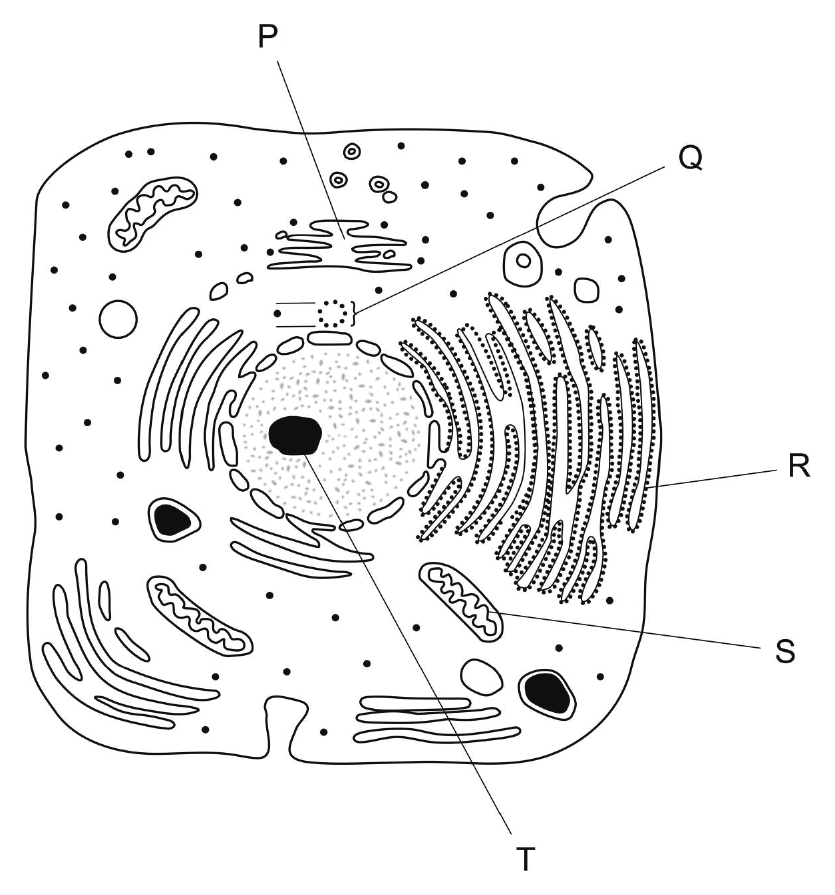
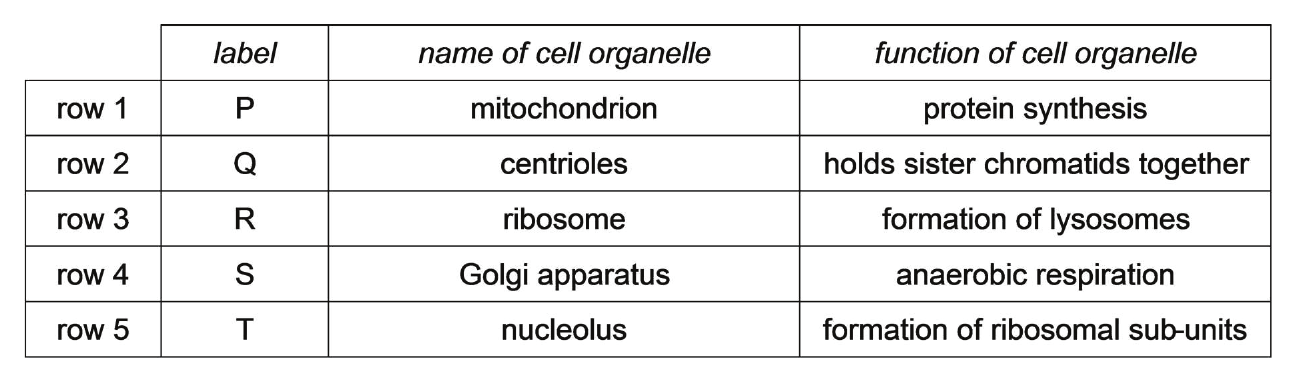
Which row correctly matches the label with the name and function of the cell organelle?
✍️ မေးခွန်းကို အရင် ဖြေကြည့်ပါ။ နည်းလမ်း — row တစ်ခုချင်း ① အမှတ် ဘာလဲ
② နာမည် မှန်လား
③ အလုပ် မှန်လား စစ်ပြီး ✗ တစ်ခု တွေ့တာနဲ့ ဖြတ်ပါ။
row 1: P က ပြားချပ် အိတ်ထပ် — Golgi၊ mitochondrion မဟုတ်ဘူး။ protein ဆောက်တာ (protein synthesis) ကလည်း ribosome အလုပ် ✗
row 2: Q က centrioles မှန်တယ်၊ ဒါပေမဲ့ သူ့အလုပ်က spindle စတင်တာ၊ chromatid ကိုင်တာ မဟုတ်ဘူး ✗
row 3: R က ribosome ကပ်ထားတဲ့ ပြားတွေ — rough ER၊ ribosome တစ်လုံး မဟုတ်ဘူး။ lysosome ထုတ်တာကလည်း Golgi ✗
row 4: S က cristae ပါတဲ့ mitochondrion — Golgi မဟုတ်ဘူး။ သူက O₂ သုံး (aerobic) respiration လုပ်တယ် ✗
row 5: T က nucleus ထဲက အလုံး — nucleolus၊ ribosome subunits ဆောက်တယ် ✓ → row 5
👉 cell wall သုံးမျိုး ဘယ်လို ကွာလဲ?👉 row စစ်နည်းကို နောက်တစ်ပုဒ်မှာ ပြန်သုံးမယ်။ အရင် — cell wall သုံးမျိုး ဘယ်လို ကွာလဲ?
နံရံ သုံးမျိုး — plant၊ fungus၊ bacterium
wall ရှိသူ — plant, fungus, bacterium။cell wall (နံရံ) ရှိတဲ့ သက်ရှိ သုံးမျိုး — plant (အပင်)၊ fungus (မှို၊ မုန့်ဖောက်ဆေး လို) နဲ့ bacterium။ ပုံ ဆင်တူပေမဲ့ နံရံရဲ့ ဓာတု မတူဘူး။
အပင် — cellulose (သကြားကြိုး ကပ်ထားတဲ့ အမျှင်)အပင် နံရံကို cellulose (သကြားကြိုးရှည်တွေ ဘေးချင်း ကပ်ထားတဲ့ အမျှင်) နဲ့ ဆောက်ထားတယ် (သင်ခန်းစာ 24B)။
မှို — chitin (N ပါ သကြားကြိုး)၊ ပုစွန်ခွံမှာလည်း။မှို နံရံကို chitin (N ပါတဲ့ သကြားကြိုး) နဲ့ ဆောက်ထားတယ်။ ပိုးကောင် နဲ့ ပုစွန် အခွံထဲမှာလည်း chitin ပါတယ်။
N (nitrogen, Z 7) — period 2၊ C ရဲ့ ညာဘက်။ chitin ရဲ့ သကြား တစ်လုံးချင်းမှာ N ပါလို့ cellulose နဲ့ ကွာတယ်။
bacteria — peptidoglycan (သကြားကြိုး ပိုက်ကွန်)bacteria နံရံကို peptidoglycan (သကြား ကြိုးတွေကို ပရိုတင်း တံတား တိုလေးတွေနဲ့ ချိတ်ထားတဲ့ ပိုက်ကွန်) နဲ့ ဆောက်ထားတယ် (သင်ခန်းစာ 28)။
အပင် starch၊ မှို glycogen၊ bacteria တချို့ glycogen။သကြား (sugars) သိုပုံလည်း ကွာတယ် — အပင်က starch နဲ့ သို (stores) တယ်၊ မှိုက တိရစ္ဆာန် လိုပဲ glycogen နဲ့ သိုတယ်၊ bacteria တချို့လည်း glycogen နဲ့ သိုတယ်။
penicillin က peptidoglycan ကိုပဲ တားလို့ bacteria ပဲ ထိ။penicillin (bacteria သတ်ဆေး) က bacteria ရဲ့ peptidoglycan နံရံ ဆောက်တာကိုပဲ တားတယ်။ လူ့ cell မှာ peptidoglycan မရှိ (cell wall လုံးဝ မရှိ) လို့ မထိဘူး၊ မှို (chitin) နဲ့ အပင် (cellulose) ကိုလည်း မထိဘူး။
🤔 A new drug blocks the enzyme that builds chitin. Which organisms would have their cell walls weakened?
🔍 မေးခွန်း ဖြည်မယ်
blocks the enzyme that builds chitin = chitin ဆောက်တဲ့ enzyme ကို ပိတ်တယ်။ would have their cell walls weakened = cell wall အားနည်းသွားမယ့်။
မေးနေတာ — cell wall ကို chitin နဲ့ ဆောက်ထားတဲ့ သက်ရှိ အုပ်စု။
chitin နံရံ ရှိတာ မှို (fungi) ပဲ။
bacteria က peptidoglycan၊ အပင်က cellulose၊ animal cell မှာ နံရံ မရှိဘူး။
ပိုးကောင်လို animal တချို့ရဲ့ အခွံကိုလည်း ထိနိုင်ပေမဲ့ အဲဒါ cell wall မဟုတ်ဘူး။
💡 cellulose စက္ကူ၊ chitin ပုစွန်ခွံ၊ peptidoglycan ကွန်။💡 မှတ်နည်း —
‘အပင် = cellulose (ဝါဂွမ်း/စက္ကူ)၊
မှို = chitin (ပုစွန်ခွံ)၊
bacteria = peptidoglycan (ပိုက်ကွန်)’။
👉 မှို cell နဲ့ bacterium ခွဲခိုင်းတဲ့ မေးခွန်း။👉 နောက်ဆုံး ‘ဘယ် row မှန်လဲ’ တစ်ပုဒ် — မှို cell နဲ့ bacterium ကို ခွဲခြားခိုင်းတာ။
စာမေးပွဲ ပုံစံ — yeast လား bacterium လား
P = yeast (မှို)၊
Q = bacterium။IMAT 2014 Q40 ကို သင်ခန်းစာ 28 မှာ ဖြေခဲ့ပြီ။
ဒီမှာ fungus (မှို) နဲ့ စမ်းမယ်။ P က yeast (မုန့်ဖောက်ဆေး မှို)၊ Q က bacterium။
🤔 P is a yeast cell and Q is a bacterium. Which row is correct for both P and Q?
1. P: cell wall of chitin / Q: cell wall of peptidoglycan
2. P: chloroplasts / Q: 70S ribosomes
3. P: no mitochondria / Q: plasmids
4. P: stores starch / Q: circular DNA
5. P: 70S ribosomes in its cytoplasm / Q: a nucleolus
🔍 မေးခွန်း ဖြည်မယ်
correct for both P and Q = P အတွက်ရော Q အတွက်ရော မှန်ရမယ်။ row = ဇယား အတန်း။ stores starch = starch နဲ့ သိုတယ်။ plasmids = bacteria ရဲ့ DNA ကွင်း အသေးလေးများ။
မေးနေတာ — row တစ်ခုထဲမှာ P ဘက်ရော Q ဘက်ရော ✓ ဖြစ်တဲ့ row။
row 1 မှာ နှစ်ဖက်လုံး ✓။
yeast မှာ chloroplast မရှိ၊ mitochondria ရှိ၊ glycogen နဲ့ သို၊ cytoplasm ထဲမှာ 80S ribosome ရှိတယ်။
bacteria မှာ nucleolus မရှိဘူး။
✍️ row တစ်ခုမှာ P ရော Q ရော မှန်မှ ရွေးမယ်။ row 1: မှို နံရံ chitin ✓၊ bacteria နံရံ peptidoglycan ✓
row 2: yeast က အလင်း မသုံးတဲ့ မှို — chloroplasts မရှိ ✗
row 3: yeast က eukaryote — mitochondria ရှိတယ် ✗
row 4: မှိုက starch နဲ့ မသိုဘဲ glycogen နဲ့ သိုတယ် ✗
row 5: yeast ရဲ့ cytoplasm ထဲက ribosome က 80S (70S က သူ့ mitochondria ထဲမှာပဲ)၊ bacteria မှာ nucleolus လည်း မရှိ ✗
နှစ်ဖက်လုံး ✓ ဖြစ်တာ row 1 တစ်ခုတည်း။
🔁 ပြန်စစ်မယ် — အဖြေ မကြည့်ခင် စဉ်းစားပါ
🔁 29A ကို ပြန်သတိရ — rough နဲ့ smooth endoplasmic reticulum (ER)၊ Golgi၊ lysosomes၊ peroxisomes။
🤔 A pancreas cell makes and exports large amounts of insulin. Which organelles would you expect to be especially plentiful?
🔍 မေးခွန်း ဖြည်မယ်
makes and exports = ဆောက်ပြီး cell အပြင် ပို့တယ်။ large amounts = အများကြီး။ especially plentiful = အထူး များများ ရှိတဲ့။
မေးနေတာ — export protein ကို ဆောက်ပြီး ထုပ်ပိုးတဲ့ organelle နှစ်ခု။
export protein ဆောက်ဖို့ RER၊ ထုပ်ပိုး ပို့ဖို့ Golgi များရတယ်။
SER က lipid၊ lysosome က ချေဖျက်ရေး၊ animal cell မှာ chloroplast မရှိဘူး။
🤔 Which cytoskeleton fibre, about 7 nm wide and made of actin, pinches a dividing animal cell in two?
🔍 မေးခွန်း ဖြည်မယ်
about 7 nm wide = အကျယ် 7 nm လောက်။ made of actin = actin နဲ့ လုပ်ထားတဲ့။ pinches … in two = ညှစ်ပြီး နှစ်ပိုင်း ဖြတ်တယ်။
မေးနေတာ — အကျယ်နဲ့ protein အမည် နှစ်ခုလုံးနဲ့ ကိုက်တဲ့ ကြိုး အမည်။
actin ကြိုး (7 nm) = microfilament။
animal cell ခွဲပြီးခါနီး actin ကြိုးတွေ myosin နဲ့ တွဲပြီး ခါးပတ် ကွင်း ဖြစ်ကာ ခါးကို ညှစ်ဖြတ်တယ်။
microtubule က spindle၊ intermediate filament က ဆွဲအား ခံ၊ collagen က cell အပြင်။
🤔 What are the principal parts of the cytoskeleton? (adapted from IMAT 2024 Q25)
🔍 မေးခွန်း ဖြည်မယ်
principal parts = အဓိက အစိတ်အပိုင်းများ။ cytoskeleton = cell ထဲက ပရိုတင်း ကြိုး အရိုးစု။ ⚠ ကြိုး (fibre) နဲ့ ကြိုးပေါ် လမ်းလျှောက်တဲ့ motor protein ကို ခွဲပါ။
မေးနေတာ — cytoskeleton ကို ဖွဲ့တဲ့ ကြိုး အမျိုးအစား အားလုံး။
ကြိုး သုံးမျိုးပဲ — microtubule, microfilament, intermediate filament။
myosin, dynein, kinesin က motor protein၊ actin က microfilament တစ်မျိုးတည်း၊ collagen နဲ့ cellulose က cell အပြင်မှာ။
🤔 Which intracellular structure is composed of microtubules? (IMAT 2024 Q19)
🔍 မေးခွန်း ဖြည်မယ်
intracellular = cell အတွင်းက။ is composed of = ... နဲ့ ဖွဲ့စည်းထားတယ်။
မေးနေတာ — microtubule တွေနဲ့ ဆောက်ထားတဲ့ cell အတွင်း အစိတ်အပိုင်း။
centriole = microtubule 9 × 3။
nucleus, Golgi, ER က membrane နဲ့ ဖွဲ့ထားတာ၊ nucleolus က DNA/RNA/protein အစု။
🤔 Which polymer is found in a plant cell wall but not in a fungal or a bacterial wall?
🔍 မေးခွန်း ဖြည်မယ်
polymer = အလုံးလေးတွေ ကြိုးရှည် ချိတ်ထားတဲ့ molecule ကြီး။ found in … but not in … = ... မှာ ရှိတယ်၊ ... မှာ မရှိဘူး။ fungal = မှိုရဲ့။
မေးနေတာ — အပင် နံရံမှာ ရှိပြီး မှို နံရံ၊ bacteria နံရံ မှာ မရှိတဲ့ polymer။
အပင် = cellulose၊
မှို = chitin၊
bacteria = peptidoglycan။
glycogen က နံရံ မဟုတ်ဘူး။
🤔 Which junction holds skin cells together against pulling, using intermediate filaments?
🔍 မေးခွန်း ဖြည်မယ်
holds … together = အတူ ချိတ်ထားတယ်။ against pulling = ဆွဲအားကို ခံပြီး။ using intermediate filaments = intermediate filament ကြိုးတွေကို သုံးပြီး။
မေးနေတာ — ဆွဲအား ခံဖို့ cell ချင်း ချိတ်တဲ့ junction အမည်။
သံမှိုလို ချိတ်ပြီး intermediate filament နဲ့ ဆွဲအားကို ပျံ့စေတာ desmosome။
gap junction က ion ကူးပေါက်၊ tight junction က ဇစ်ပိတ်။
🤔 Why does a mature red blood cell have no mitochondria?
🔍 မေးခွန်း ဖြည်မယ်
mature = ရင့်ပြီးသား။ have no = မရှိဘူး။ use up = ကုန်အောင် သုံး။ carries = သယ်တယ်။ too heavy = အရမ်း လေးတယ်။
မေးနေတာ — ရင့်ပြီး red blood cell မှာ mitochondria မရှိတဲ့ အကြောင်းရင်း။
ရင့်ပြီး red blood cell မှာ mitochondria 0 — သယ်တဲ့ O₂ ကို ကိုယ်တိုင် မသုံးမိအောင်ပါ။
ATP ကို glycolysis နဲ့ နည်းနည်း ရတယ်၊ nucleus လည်း မရှိဘူး။
🎯 Match each structure with what it is made of
🎉 ATP၊ DNA ring၊ cell ငြမ်း — အားလုံး သိပြီ။🎉 ကတိ ပြည့်ပြီ — insulin ခရီး (29A)၊ ATP ဘယ်မှာ ထွက်လဲ၊ mitochondria ထဲမှာ ဘာလို့ DNA ring ရှိလဲ၊ cell ငြမ်းနဲ့ ချိတ် — အားလုံး သိပြီ။ အောက်က မေးခွန်းတွေနဲ့ စမ်းကြည့်ပါ။
🔁 ဝေါဟာရ ပြန်နွှေး — နေရာဟောင်းကို ခုန်ကြည့်
29A ရဲ့ ဝေါဟာရ (nucleus, ER, Golgi, lysosome) ကို 29A ရဲ့ 🔁 မှာ ပြန်နွှေးပါ။
glycolysis — cytoplasm ထဲ glucose ခွဲ၊ matrix ထဲ acetyl CoA ပြောင်းပြီး Krebs cycle ဖြို၊ cristae ပေါ် ATP အများဆုံး။
centrosome — centriole နှစ်ချောင်း၊ pole နှစ်ဖက် ရွေ့ပြီး spindle ဆောက်။
acrosome — enzyme ဦးထုပ်၊ midpiece — mitochondria ပတ်ထားတဲ့ လည်ပင်း။
cristae — mitochondrion အတွင်း အမြှေး ခေါက်ချိုး၊ ATP စက် နေရာ။
thylakoid — အလင်း ဖမ်းတဲ့ ဒင်္ဂါးပြား၊ stroma — CO₂ → သကြား။
endosymbiosis — bacterium မျိုထားလို့ mitochondrion/chloroplast ဖြစ်လာ (DNA ring, 70S, ထက်ခြမ်းကွဲ)။
cytoskeleton — microfilament 7 nm, intermediate 10 nm, microtubule 25 nm။
tight junction ဇစ်၊ desmosome သံမှို၊ gap junction ပြွန်။
cellulose အပင်၊ chitin မှို၊ peptidoglycan bacteria။